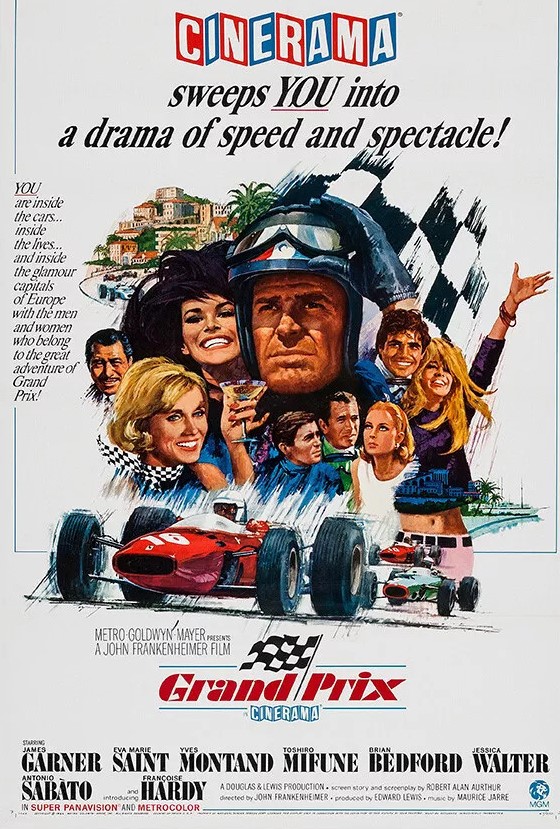
Grand Prix (1966) *****

If ever there was a case to be made for six-track stereophonic sound or, for that matter, split screen Grand Prix would form the first line of defense. That it was made in Cinerama 70mm was merely a bonus. Most roadshow movies start with an overture, a ten-minute or so musical introduction that would thematically at least give the audience some indication of the picture they were about to watch. Thrumming and roaring engines formed the montage opening to Grand Prix, a noise that almost shook a cinema to its foundations.

Cinerama had been built on its ability to create almost primeval effects. There was always a downward rush, a runaway train, a roller coaster, something to set an audience on the edge of its seat in pure exhilaration. But the visual had nothing on the aural and what set Grand Prix apart was danger, that constant thrum of engines rising to impossible crescendos. Split screen allowed the director to tell several stories at once as competitors chased each other round perilous circuits at a time when death was a racing driver’s constant companion and in fact of the thirty-two professional participants including Graham Hill, Jim Clark, Juan Fangio and Jack Brabham five were dead within two years of the movie’s completion. Nobody needed to remind an audience how hazardous the sport was, they could read about the continuous carnage in the newspapers, but what was less easy to convey, although such events were well attended, was the pure thrill of being at a race meeting. Grand Prix set out to rectify that problem.
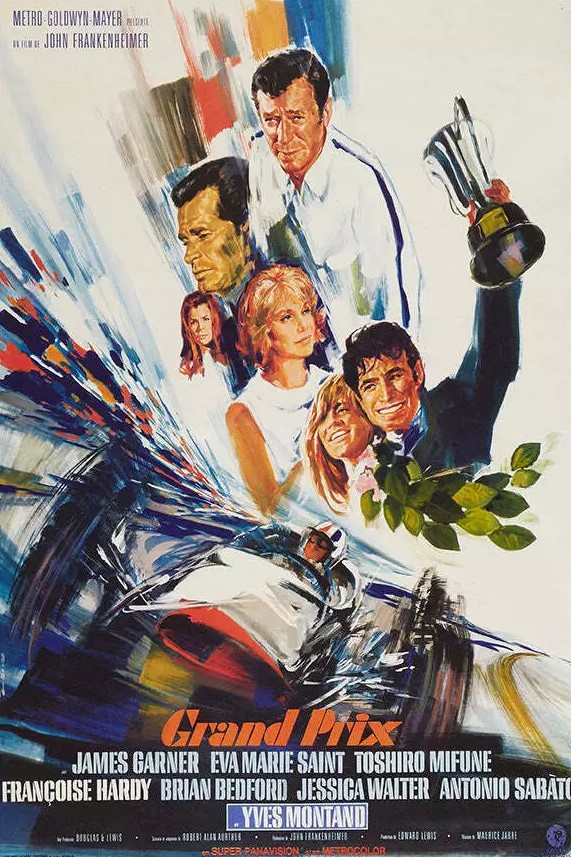
At nearly three hours long it had room to tell several stories and in that respect it was more of an ensemble picture than something like Lawrence of Arabia (1962) which took even more time to tell just one story. Many of these stories came to an abrupt end as the character died in an accident.

Steve McQueen and Paul Newman, both racing aficionados, were front runners for the leading role but it went instead to James Garner, also a racer who did all his own driving (though not necessarily at the speeds indicated). And to properly represent the competition it required an international flavor so other drivers were played by Yves Montand (The Wages of Fear, 1953) in a part first offered to Jean-Paul Belmondo and Antonio Sabato (in his second film) with Adolfo Celi (Thunderball, 1965) as the Ferrari boss and Toshiro Mifune (Seven Samurai, 1954) as a Japanese team owner. Swedish star Harriet Andersson (Through a Glass Darkly, 1961) was cast as the female lead but dropped in favour of Eva Marie Saint (Exodus, 1960) in a role turned down by Monica Vitti (Modesty Blaise, 1966).

Garner and Saint had previously worked together in thriller 36 Hours (1964) and it said a lot for his marquee credentials that he was still best known for The Great Escape (1963). Although he had reached top billing status, films like The Art of Love (1965) and Mister Buddwing (1966) did not deliver commercially. Saint’s career had been as peripatetic after Exodus (1960) as before, star of All Fall Down (1962) but third-billed in The Sandpiper (1965) and second-billed in The Russians Are Coming, The Russians Are Coming (1966), the latter two both big hits.
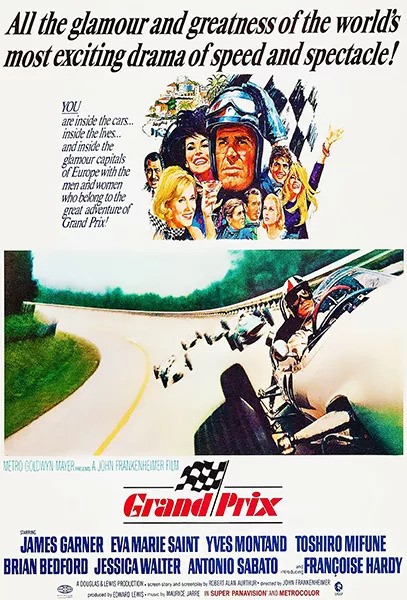
Frankenheimer had directed Saint in All Fall Down and enjoyed a distinguished career with The Birdman of Alcatraz (1962), The Manchurian Candidate (1962) and Seven Days in May (1964) although the high regard in which he was generally held was somewhat tarnished by The Train (1965) and thriller Seconds (1966), the latter a spectacular flop. Grand Prix was not only the biggest film of his career, though The Train had given him a grounding in action, but also his first in color.  The movie was filmed on existing legendary circuits with Formula 3 racing cars adapted to look like Formula 1 and a thousand other incidental details including an appearance by a Shelby Mustang (with Carroll Shelby as technical adviser) that made it an accurate depiction of the sport. Eighteen cameras were used to film the races.

The narrative arc follows the Grand Prix season and while the actual competition dominates the movie it is against the background of the emotional turmoil the sport wreaks on the drivers and the wives and girlfriends who have to live with the knowledge that their partners might not come home at the end of the day. Garner is considered too reckless for the top spot in a racing team and in a bid for redemption signs for a new company. Former world champion Montand is coming to the end of his career. English actor Brian Bedford makes his mainstream movie debut as a driver recovering after a horrific crash caused by Garner. The emotional subplots comprise Garner having an affair with Bedford’s wife (Jessica Walter); Montand embarking on an affair with Saint who plays a magazine writer, with French actress  Francoise Hardy (better known as a chanteuse) involved with Sabato. In addition, there are some telling sequences in which the drivers unload about their fears.

Frankenheimer does a terrific job in marshalling all the effects and the minute details, and the fact that there is no big star in the mix makes the battles between the characters more realistic.  
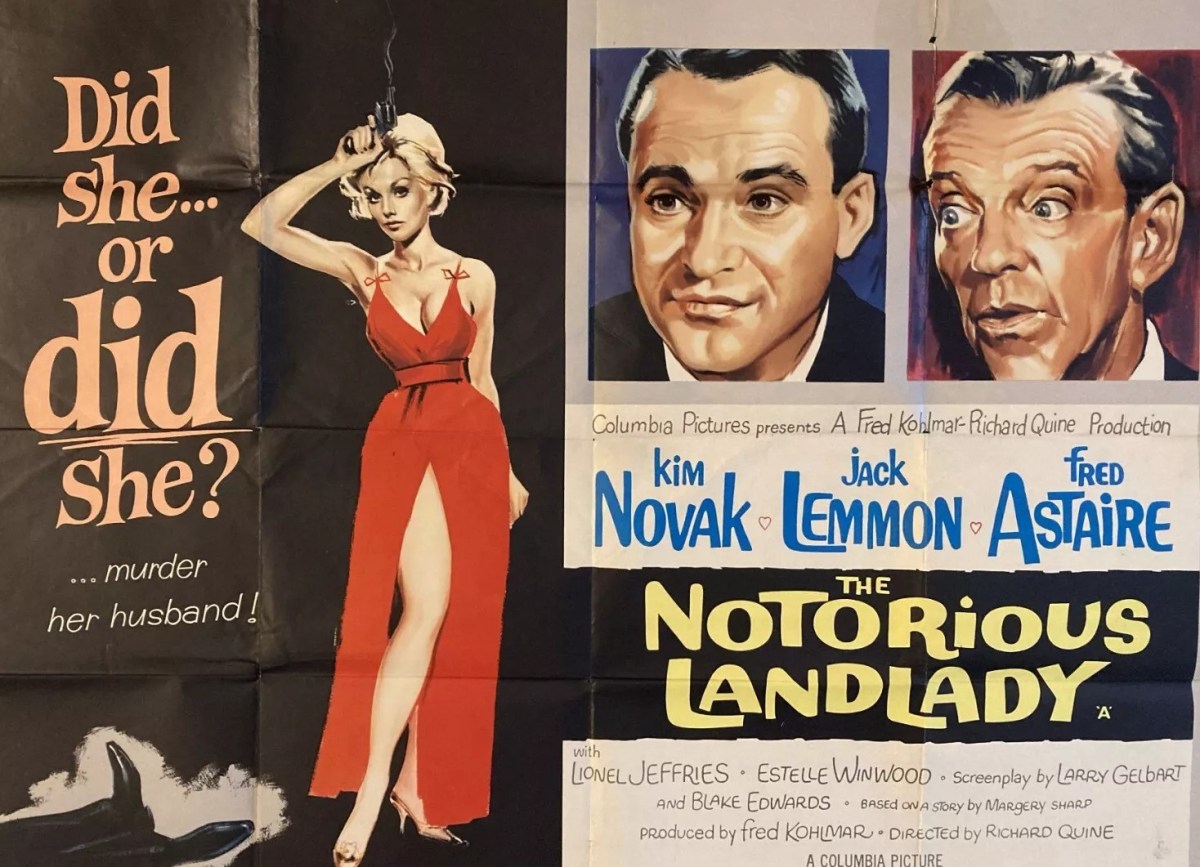
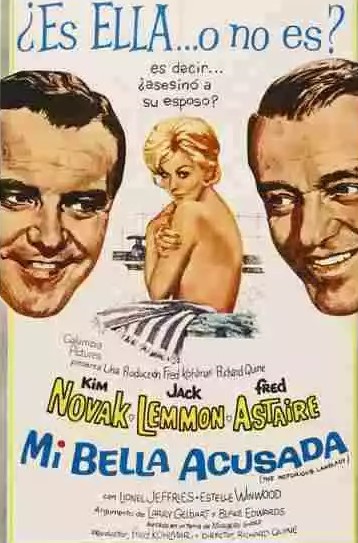
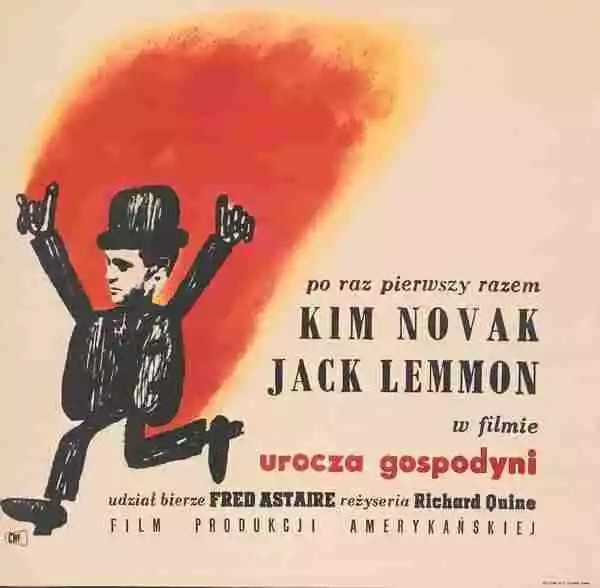
The Notorious Landlady (1962) **

Botched job. Not an all-out stinker. Something that should easily have worked – and didn’t. Thanks to the principals involved. Biggest finger of blame points at Jack Lemmon (How To Murder Your Wife, 1965), who jitters and jabbers, arms waving, eyeballs swivelling, classic example of over-mugging the pudding.

But Kim Novak (Strangers When We Meet, 1960) is as bad for the opposite reason. She’s completely insipid. Sure, she’s meant to be playing someone frightened out of her wits but she could as easily be worrying about how to lay the table for all the energy we get.

Director Richard Quine (Strangers When We Meet)  hardly gets off scot-free for allowing this to happen as well as quite bizarre shifts in tone from a fog-wreathed London straight out of Sherlock Holmes, to a denouement with Novak naked in the bath – Lemmon averts his eyes but the camera and hence the audience doesn’t – and a climax straight out of the Keystone Cops. I know Quine had a fling with Novak but it looks like he’s trying to share her physical charms with all and sundry, scarcely a scene goes by where’s she’s not in her underwear, night-time apparel, soaking wet one way or another or wearing revealing outfits. The “Notorious Cleavage” might have been a better title.

As I say, this should have worked. The story is straightforward enough, a mystery, red herrings aplenty, mysterious lurking figures, enough twists to give it edge.

Diplomat William Gridley (Jack Lemmon), newly arrived from the States, comes to view an apartment to rent in Mayfair only to find landlady Mrs Hardwicke (Kim Novak) most unwelcoming. Unfortunately for her, it’s love at first sight for him, so she can do no wrong. Which is unfortunate for him, for she is suspected of murdering her husband. That doesn’t sit well with Gridley’s boss Ambruster (Fred Astaire) who feels staff should be completely above board and not risk the good name of the U.S. by consorting with film noir style damsels.

Ambruster is already in cahoots with Inspector Oliphant (Lionel Jeffries) and it’s not long before Gridley is enrolled to act in an undercover capacity, sneaking into her bedroom, finding a gun in a drawer and overhearing suspicious phone calls all the while continuing to romance her. Meanwhile, he’s woken up in the middle of the night with her playing an organ. He’s such a clumsy clot he manages to set fire to a garage, which attracts front page headlines and puts his career in jeopardy.

Anyway, various red herrings later and Ambruster somewhat mollified after falling for Hardwicke’s charms himself, we discover that her husband isn’t missing after all, but when he turns up, she shoots him dead and so ends up in court charged with his murder. His death, while convenient, is treated as accidental.

But the fun’s only just beginning. What could have been a shade close to film noir or the kind of romantic thriller Hitchcock turned out in his sleep, now takes a quite bizarre turn. It transpires that her husband, a thief, has hidden stolen jewels in a candelabra which, because she’s short of cash, she has sold to a pawnshop. This emerges in the aforementioned bathtub contretemps. But Hardwicke is being blackmailed by the witness whose evidence cleared her. Said witness has made off with the jewels and now plans to kill off the real witness. So they all end up at a retirement village in, where else, Penzance. Gridley has to save the real witness from being run off the edge of a cliff in a wheelchair while Hardwicke and the fake witness would have had a real old catfight if either of them could have managed to land a punch, instead of hitting the ground or falling backwards into bushes, so the entire climax suddenly takes a distinct comedic turn.

There’s not even a decent performance from Fred Astaire (The Midas Run, 1969) or Lionel Jeffries (First Men in the Moon, 1964) to lift proceedings. In fact, the best performance comes from villain Miles Hardwicke (Maxwell Reed) who rejoices in lines like, “ I like you better when you’re frightened.”   

Written by Larry Gelbart (The Wrong Box, 1966) and Blake Edwards (The Great Race, 1965), which would make you think comedy, and that this was a spoof in the wrong directorial hands, except that Edwards was responsible for Experiment in Terror / Grip of Fear (1962) so knew how to extract thrills.

Coulda been, shoulda been – wasn’t.

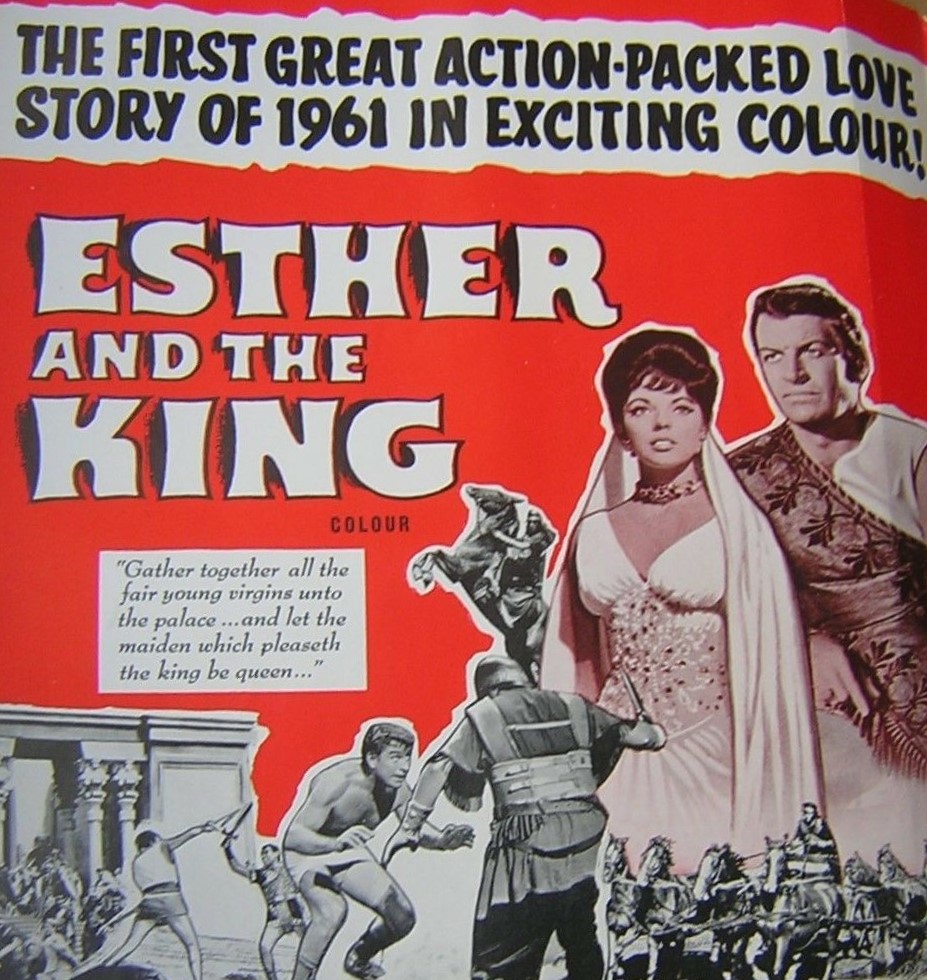
Esther and the King (1960) ***

Taking a Biblical tale as a starting point veteran director Raoul Walsh (White Heat, 1949) stirs up heady brew of intrigue, rebellion, politics and romance. Returning home victorious, King Ahasuerus (Richard Egan) discovers his wife Queen Vashti (Danielle Rocca) has committed adultery and that his minister Klydrathes (Renato Baldini) has been squeezing the people blind with punitive taxes, hanging them for non-compliance.

Casting his wife aside, the king seeks a new bride. Since he has conquered all the known world except Greece, marriage to make a political alliance is not an option, so, given women are treated as mere chattels and the king is all-powerful, all the likely virgins are rounded up including Hebrew Esther (Joan Collins) on her wedding day.

Her husband-to-be Simon (Rik Battaglia) kicks off, attacks Klydrathes and becomes a wanted man. The queen’s lover and the king’s chief minister Prince Haman (Sergio Fantoni) attempts to fix the bridal selection, inserting his hardly-virginal choice Keresh (Rosalba Neri) into the proceedings while attempting to murder clear favorite Esther. When that fails, Haman plots to usurp the crown. With the Hebrews facing possible annihilation, Esther is put in the position of giving in to the kind in order to save her people. As her serenity soothes the savage beast, her initial hate turns to growing attraction.

Meanwhile, Simon is on a rescue mission and Prince Haman cooks up a devilish plot that will see the Hebrews blamed for passing on military secrets to the king’s enemies. Naturally, all hell eventually breaks loose.

More a drama than a typical big-budget DeMille offering, with battles taking place off-screen action is limited to a few chases and skirmishes. There is a fair amount of sin on show what with a tribe of concubines at the king’s disposal, a whipping, a striptease by Vashti in a last gasp attempt to win back the king, some very seductive dancing routines by female slaves who, at times, look as if they were coached by Busby Berkeley. Substantial amounts appear to have been spent on costumes and production design, so historical atmosphere is well captured. Once you realise there’s not going to be any kind of big battle or major action center piece common to the Biblical genre, it’s easy to sit back and enjoy the political machinations, the initial torment of Esther, introduced as a rebellious soul, and the king, more at home with soldiers, shaking off his despondency at marital betrayal as he responds to Esther’s coaxing.

Richard Egan (300 Spartans, 1964) is a thoughtful king, showing very little temper, possibly because he doesn’t need to with everyone, beyond the conspirators, cowering in his presence.   Regal and stately suits him fine rather than the more common explosions were accustomed to seeing from people in that line of work. The top-billed Joan Collins (Seven Thieves, 1960) has a difficult role. Normally, you would expect expressions of passion or depths of anguish, but the rebellion she displays at the start soon disappears when she enters the palace and is helpless to change the situation except by, initially against her will, accepting the king’s desires. In that sense, her portrayal is understandable but the understated performance gets in the way of a woman who is supposed to be devastated by the loss of her husband and then trapped by the needs of her people into making the marriage.

Sergio Fantoni (Von Ryan’s Express, 1965) excels as the spurned lover and Rik Battaglia (The Conqueror of the Orient, 1960) as the schemer. Rosalba Neri (Top Sensation, 1969) and Danielle Rocca (Behold a Pale Horse, 1964) both make striking appearances. Look out also for Gabriele Tinti (Seven Golden Men, 1965).

It was the end of the line for Irish actor Dennis O’Dea (The Fallen Idol), making his final film, and also, at least temporarily, for Joan Collins. She was coming to the end of her seven-year Twentieth Century fox contract but fell out with the studio after being rejected for Cleopatra, and on the evidence here you can see why. She been top-billed in The Sea Wife (1957) above Richard Burton and The Wayward Bus (1957) above Jayne Mansfield, but gradually fell down the pecking order. After leaving Fox, she only made five more films during the decade. Director Raoul Walsh made only another two. 

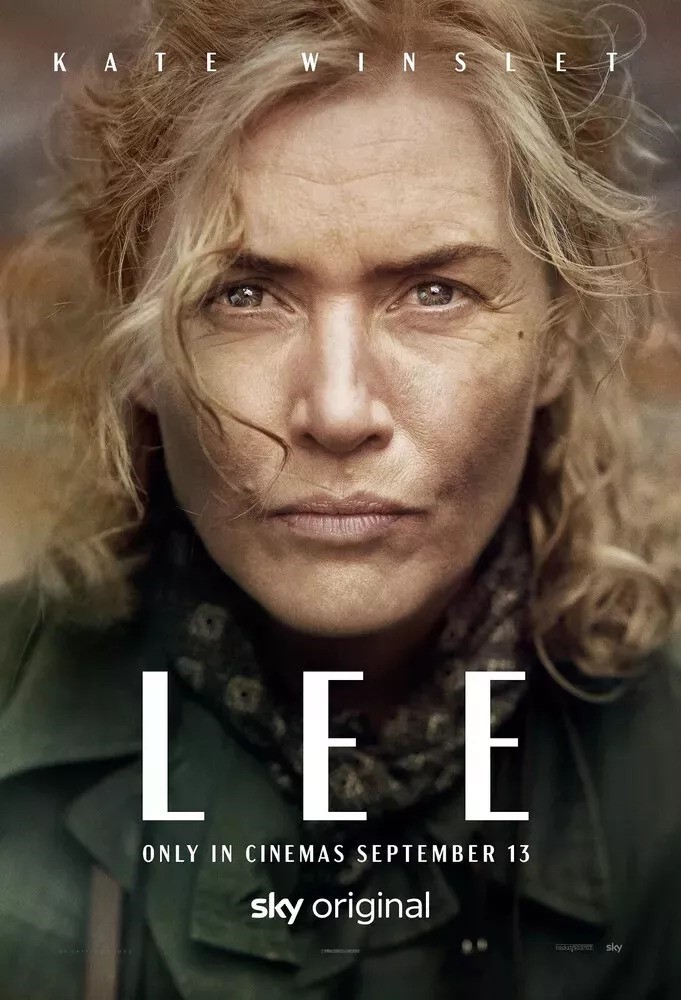
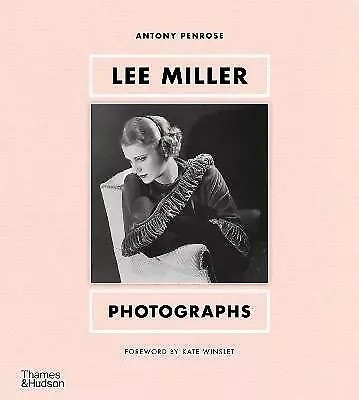
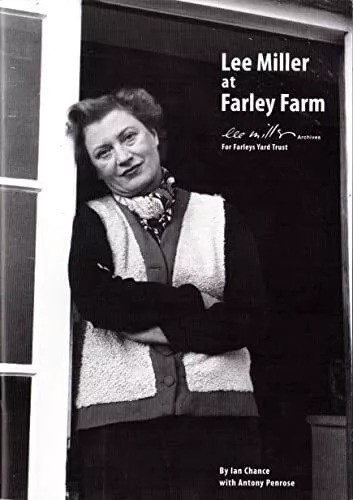
Lee (2024) *** – Seen at the Cinema

Would have worked better as a documentary. Bit puzzled too by the deceit of the structural device, flashing back from her war years to being interviewed by an apparent journalist in old age at her country cottage. Seems an interesting conceit that he turns out to be her son Antony (Josh O’Connor) and she’s able to turn the tables and ask what she was like as a mother (not good, apparently, Antony grew up feeling he was an imposition). But also a standard biopic trope as he uses her famed photos to stimulate memories. But then, presumably in the interests of honesty (or who knows what) the credits blow these sequences to pieces by pointing out that her son didn’t have a scoobie about her war activities until after the death a forage in the attic turned up boxes of her photos. What the heck, artistic license and all that.

My other quibble, since I’m in that sort of mood, is that the ageing process seems to have passed our star Kate Winslet by. Sure, she’s dabbed on a bit of oldie make-up for her later years but the crow’s nest of lines around her eyes are noticeably prominent for a woman just turned thirty in the immediate pre-war year.

Still, on with the show, in which her pre-war fame as a surrealist is also ignored, as is her liaison with Man Ray, or that before she took up with another surrealist Roland Penrose (Alexander Skarsgard) she had been married to –  and not divorced from – an Egyptian businessmen. The thrust of the movie is her war years as Vogue correspondent. There’s a bit of falling back on characters skitting around in the background (Cecil Beaton, for example) and keeping us up-to-scratch on timescale, invasion imminent etc.

Misogyny is fairly rampant, the British squeamish about sending women unnecessarily to the front line, the Yanks less so. Though Lee Miller is treated, for dramatic purposes, as the only female war correspondent, breaking through the usual class ceiling, in fact the Yanks had squads of them including Martha Gellhorn and Mary Welsh, third and fourth wives of Ernest Hemingway, respectively, Kathleen Harriman, Dixie Tighe and Helen Kirkpatrick, and Tania Long, none of whom would be unknown to Miller since she posed for a photo with the gang in 1943.

There was nothing subtle about Lee Miller, she said it like it was, a hard-drinking what used to be known as a free spirit, an euphemism for embracing a love-‘em-and-leave-‘em mentality. But there’s some subtlety here, a scene of her peeling potatoes revealing more about male expectation than any verbal punch-up with any officious male, being covered with supposedly invisible paint by Roland more effective in catching sexual attraction than the rest of her let-it-all-hang-out persona.

The only problem is that the concentration camp scenario has been dealt with by any number of far superior films and her staggering back with shock at the sight of the piled-up corpses not compensation enough. I don’t know enough about war photographers to compare what she captures through the lens with the dozens of others doing the same job. By the time her photos of the Holocaust were printed in American Vogue, Richard Dimbleby and Edward Murrow had delivered radio devastating reports and anonymous military photographers supplied tons of evidence against the Nazis.

I’m not sure it actually helps her case that she took a bath, naked, in Hitler’s bath.

Kate Winslet (Ammonite, 2020) almost single-handedly keeps the movie on course, but it lacks impact as a war picture, and the idea that nobody other than Lee was taking note of the suffering of the British during the Blitz seems a bit of a stretch. Pick of the support is most definitely Andrea Riseborough as the doughty British Vogue editor, every bit as tough if not as outspoken as Miller. Josh O’Connor (Challengers, 2024) spends all his time looking soulful for no reason I can divine. Marion Cottillard (La Vie en Rose, 2007) is wasted.

Ellen Kuras directed from a script by Liz Hannah (All the Bright Places, 2020), Marion Hume (movie debut) and John Collee (Monkey Man, 2024).

Movie not as hard-nosed as Winslet.

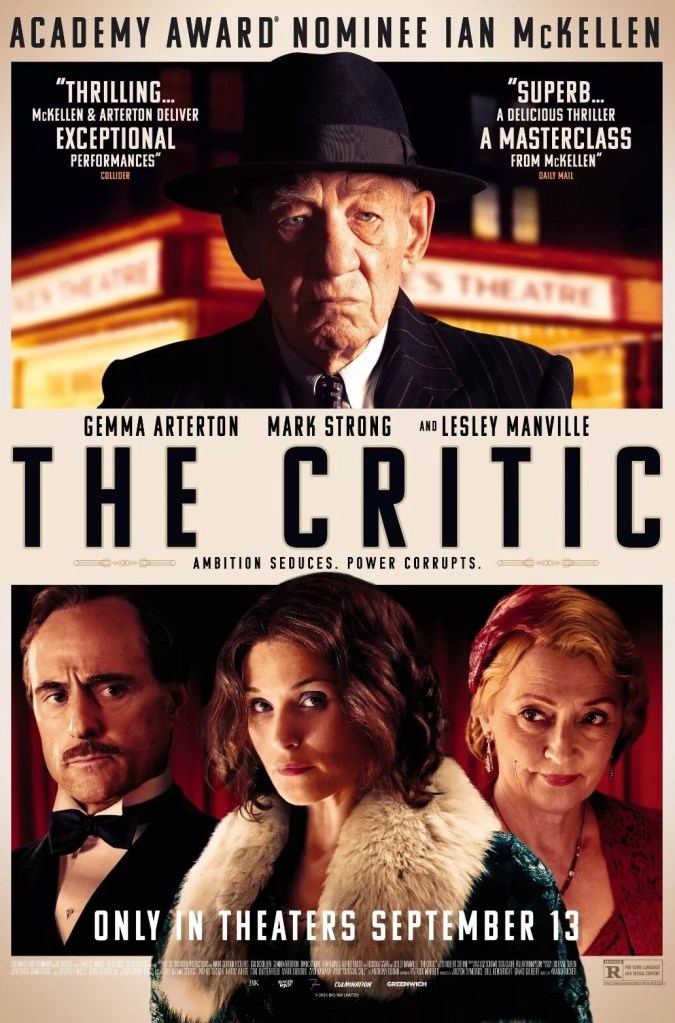
The Critic (2024) ** – Seen at the Cinema

Can we get over all this “national treasure” (a favorite of Britain) baloney, please? If we’re going to drag our esteemed acting knights of the realm out of their armchairs (you notice I didn’t say retirement because actors almost never officially retire, Kathy Bates and Gene Hackman to the contrary) could we please give them something more than an opportunity to overact and turn themselves into ripe old hams at the age of (in this case) eighty-five. Sir Ian McKellen (Gandalf and Magneto to you and me) deserves better.

Because there’s nothing at all in this beyond Falstaffian monster Jimmy (Ian McKellen), the eponymous theater critic, relishing his power and taking revenge when’s on the verge of losing it. Frankly, if this was called The Tie-Pin Killer, the serial murderer in the book on which this is based, and Jimmy, as in that book, was relegated to a bit part, albeit a juicy one, it might have been a lot more interesting.

While it touches upon 1930s London Fascists and the plight of the homosexual (a criminal offence to participate) these are kind of tossed into the scenario as if to placate an audience who might complain this is very thin gruel indeed. Presumably, we are somehow meant sympathize with this cruel, odious, character because from time to time he finds himself confronted by blackshirts, who take a dislike to his black companion Tom (Alfred Enoch), who acts as his secretary and presumably not anything else because Jimmy prefers “rough trade.”

In revenge for being fired, he sets up actress Nina (Gemma Atterton) to seduce his employer David Brooke (Mark Strong). Blackmail’s the tool of reinstatement. Apart from general actor insecurity, it’s not entirely clear why Nina should be so determined to keep in Jimmy’s good books. There’s some unbelievable stuff about becoming attracted to acting through reading his articles, which seems quite bizarre since his nasty reviews would put people off going, as he proudly explains is one his aims.

So Nina prostitutes herself for a good review. Yep, must happen all the time. And despite her supposed success – these are, after all, West End plays she is starring in – she lives in a bedsit where hot water is rationed. But she is, romantically, in a bind. She’s just dumped her married lover Stephen (Ben Barnes) whose wife Cora (Romola Garai) just happens to be the daughter of Brooke.

And although Brooke’s wife is “bonkers” (though that’s very much on the periphery) he’s that old-fashioned upper class English gent who only feels shame at adultery when he’s caught out and then of course does the right thing which is to blow his brains out. Which leaves Nina racked with guilt which drives her, as it would, back into the arms of Stephen only for him (another adulterer with principles) to reject her on the grounds that she slept with his father-in-law. When Nina begins to talk about confessing to her role in conspiracy, what’s an upstanding chap to do but drown her in the bathtub?

In the original book Jimmy was a minor character.

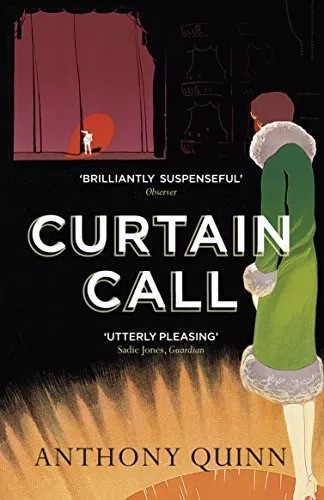
Crikey, and we complain about the plotting in the multiverse. This is just bonkersverse. Presumably, Oscar-nominated screenwriter Patrick Marber (Notes on a Scandal, 2007) happened upon Anthony J. Quinn thriller Curtain Call in which Jimmy exists on the periphery of the actual narrative though as a larger-than-life character and decided to forget the whole tie-pin killer thing and rearrange the tale so it revolved around McKellen in the hope nobody would notice, in the midst of McKellen roistering and boistering to his heart’s content, the lack of any sensible tale.

You could certainly have more easily hooked it on Nina, who falls into the Patrick Hamilton category of easily-led character on the edge with impulse inclined to cut her adrift.

If you want ham, McKellen’s your man, none of the subtlety which has impelled other performances. Gemma Atterton (The King’s Man, 2021) has a few moments tormented by conscience but the part is woefully underwritten. This is the reined-in Mark Strong (Tar, 2022) rather the one with the veins standing out on his neck. Lesley Manville (Mrs Harris Goes to Paris, 2022), potentially another future national treasure, has a brief role as does Romola Garai (Atonement, 2007).

Maybe wanting to burnish his artistic credentials, director Anand Tucker (Leap Year, 2010) is predisposed to the extreme close-up and for viewing a scene in extreme long shot through a corridor, window or door.

Jimmy would give have slated this.

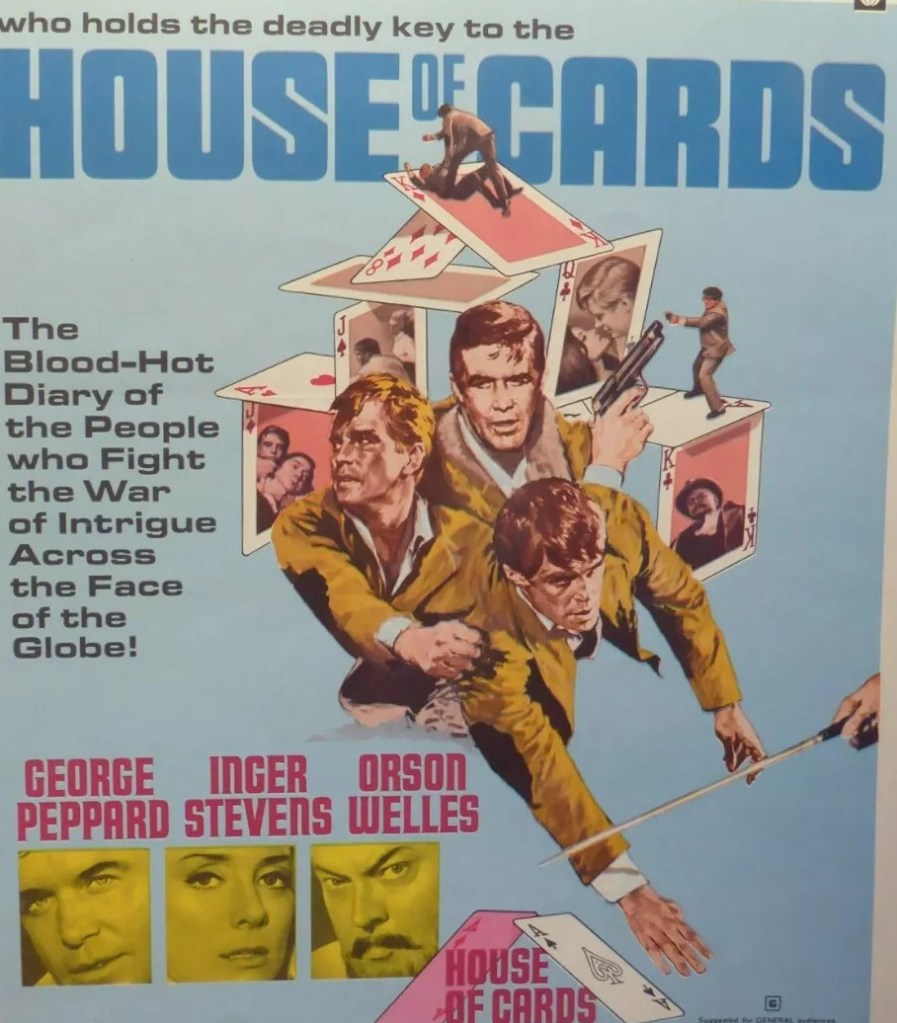
House of Cards (1968) ***

American boxer Reno Davis (George Peppard) stumbles on an international conspiracy when hired by rich widow Anne de Villemont (Inger Stevens) in Paris to look after her eight-year-old son Paul (Barnaby Shaw). All roads eventually lead to Rome and a showdown with arch-conspirator Leschenahut (Orson Welles) in this thriller which throws in a couple of measures of Gaslight (1944) and, more obviously, North by Northwest (1959), to the extent of Anne being an icy blonde of the Eva Marie Saint persuasion and the couple, on the run, sharing a compartment on a train.

The boy’s previous tutor has been murdered. After months in a sanatorium, Anne, paranoid about her son being kidnapped, is in virtual house arrest in the family mansion, watched over by arrogant psychiatrist Dr Morillon (Keith Michell) who has diagnosed her as unstable, neurotic and a danger to the boy.

After an assassin on a bridge on the Seine takes potshots at Reno and Paul, Reno is framed for murder but escaping from the police returns to the mansion to find it empty, the furniture covered in dust sheets. I half-expected Reno to be told that the job was all in his imagination and that Anne did not exist, but instead finds out that mother and son have been taken to a castle in Dijon, in reality a fortress with a platoon of armed guards. Only Paul has been already been transported to Italy. So it’s attempted rescue, imprisonment, escape, fistfights, chase, clever moves and countermoves, twists and double twists as Reno and the still icy Anne head for Rome.

In among the mayhem are a few humorous moments, a play on the Trevi fountain scene from La Dolce Vita, a monk mistaken for a killer, a bored girl only too happy to be taken hostage, an over-familiar American who gives away valuable secrets because he mistakenly believes Reno is a co-conspirator, Dr Morillon making the error of treating Reno as a servant. And characters involved in assisting escape extract a high price, one seeking financial reward, another that her husband be killed in the process. There is also a flirtatious but spiky maid Jeanne-Marie (Perette Pradier) and a couple of excellent reversals.

Reno is somewhat innovative in the weaponry department, the hook of a fishing rod, for example, while the son is rather handy with a pistol. But given the opposition are armed with machine guns, knives and swords that seems only fair.

George Peppard seems to have found his niche in this one, dropping the innate arrogance of The Blue Max (1965) and Operation Crossbow (1965), no chip on the shoulder, a good bit more attractive as a screen presence, a nice line with the ladies, more than able to take care of himself, a sprinkling of wit, completely at ease. Inger Stevens comes off well though her psychological problems and concerns for her son get in the way of any burgeoning romance with Peppard. But she has quite a range of emotions to get through, from wondering if she is mad, to dealing with the controlling family, and letting go of her son enough to allow the boy to bond with Reno, and despite her vast wealth down-to-earth enough to see a toothbrush as an essential when on the run.

Orson Welles (Is Paris Burning?, 1966), as ever, looms large over everything, with dialog so good you always have the impression he improvised on the spot. Keith Michell, a couple of years away from international fame in BBC mini-series The Six Wives of Henry VIII (1970), does a very good turn as the psychiatrist.

John Guillermin, who directed Peppard in The Blue Max, has a lot to do to keep the various balls in the air, especially keeping track of a multiplicity of characters. The screenwriting team of Harriet Frank Jr. and Irving Ravetch (Hud, 1963) pulled this one together from the novel by Stanley Ellin. Francis Lai’s memorable score is worth a mention, with distinctive themes for various parts of the story.

Eva Renzi (Funeral in Berlin, 1966) was originally down for the part of Anne and Italian actress Rosemary Dexter (Romeo and Juliet, 1964) has a small part.

Doesn’t quite come off .

Behind the Scenes: “Number One” (1969)

Apart from Ben-Hur and El Cid, most of Charlton Heston’s movies in the 1960s were domestic box office disappointments. Despite this, he was deemed to be still flying high at the marquee, placed seventh in the annual star rankings just as negotiations began in 1967 for Pro (the title changed to Number One just a few months before release). Given there was little interest in American sports in the rest of the world, it was deemed a gamble. That was not just reflected in the budget – a miserly $1.15 million- but in Heston’s salary of $200,000. He and director Tom Gries (Will Penny, 1968) agreed to “work at substantially lower incomes in exchange for a bigger percentage.”

But to make any decent money, of course the movie had to be a big hit. Compare that to the $750,000 he stashed away for The Hawaiians (1970), admittedly after Planet of the Apes (1968) hit the jackpot, but still. From The War Lord, Heston had “learned actors should not put their own money into scripts,” but taking a pay cut appeared a more sensible route.

The movie was a long time coming to fruition. Initially, the idea had been rejected by National General and Martin Ransohoff of Filmways who worked with MGM. By April 1966, Heston was dejected. “Nothing stirring on Pro,” he recorded in his journal. But he understood the need not to “peddle the project” since “it tarnishes my image as an eminently in-demand actor.” Franklin Schaffner (Planet of the Apes) was initially keen, but dropped out after United Artists insisted on smaller fees against a bigger back end, star, director and producer to share 75 per cent of the profits, the kind of deal you get offered “when you want to make a film more than a studio does.” Tom Gries (Will Penny, 1968) was the next directorial target.

By June 1967, the deal was done for Heston, Gries and Selzer. ”I’m damned if know who will write the script,” noted Heston, “No one very expensive, I guess.” In July, he was in San Diego “investigating pro footballers in their natural habitat.” The NFL agreed to allow the New Orleans Saints to participate. David Moessinger had written two screenplays, Daddy-O (1958) and The Caper of the Golden Bulls (1967), but struggled to meet Heston’s expectations.

The actor felt the writer hadn’t “succeeded in dramatizing the most difficult and the most important element of the story. Why Caitlin feels as he does.” His wife, Lydia, agreed. “If women’s can’t relate to the story, then it’s just a picture about a football player and we’re in trouble.” UA had set a deadline and the screenplay would decide whether it was a go or no. Heston planned to get Gries to work on the script, and he subsequently nailed the vital scene.

Even when UA gave the go-ahead there were problems integrating the shooting schedule with that of the Saints which would require filming training camp in summer 1968 and the rest in the fall. Bob Waterfield was teaching Heston how to quarterback. Soon he would have “delusions of adequacy.”  But the training took its toll in the shape of a pulled muscle. In his first proper game, he was “blitzed” 16 times. He ended one day “taped and doped, in the traditional bed of pain.”

Meanwhile, casting proceeded. Heston had “mixed feelings” about Eva Marie Saint (The Stalking Moon, 1968) and Joanne Woodward (Big Hand for a Little Lady, 1966). Suzanne Pleshette (A Rage to Live, 1965) was considered as well as Jean Simmons (Rough Night in Jericho, 1967) – “I think she’d be good for it,” noted Heston. Finally, he pushed for Jessica Walter (Grand Prix, 1966) – “old enough to be plausible as the wife, young enough to manage the flashbacks” – only to find Gries not so keen and preferring Anne Jackson (How to Save a Marriage and Ruin Your Life, 1968). When the situation was resolved in favor of Walter, Heston discovered she was being lined up for a television drama about pro football. The second female lead went to Diana Muldaur.

Meanwhile, Heston was having trouble with Gries. “His attitude towards this film…is very questionable…perhaps it has to do with his recent achievements as a director in theatrical films…he’s finding the wine a bit heady.” Gries fell behind schedule, but finished ahead of it, saving about $30,000. An important scene showing Walters and Heston in bed before the wedding didn’t work and was cut.

Keeping tabs on the budget was producer Walter Selzer, who had worked with the star on The War Lord (1964) and Will Penny, and, would team up with him again for The Omega Man (1971), Skyjacked (1972), Soylent Green (1973) and The Last Hard Men (1976). “You have to be realistic about the subject matter,” said Selzer. “Every story has a certain price and if you try to cheat on your requirements it shows on screen.” That said, he was king of the penny pinchers. “We didn’t use a single piece of new lumber,” he boasted, meaning they didn’t built a single set, instead adapting or re-using old ones.

On location, he negotiated “locked-in” costs, “a flat pre-arranged price” for variety of elements which had a tendency to become variable, increasing costs, such as space on a sound stage, equipment and the editing suite. Cameraman Michel Hugo had to agree to shoot in any weather. “This is very important. Very often a cameraman will refuse to shoot if the weather is questionable, claiming the shots won’t match and then you have the whole company idle for a day when on location.” He nailed down composer Dominic Frontiere (Hang ‘Em High, 1968), paying him a flat fee, with Frontiere left with the task and cost of hiring an orchestra and rehearsal and recording space.

Despite showing his rear end in Planet of the Apes, Heston was touchy about the sex scene. “It’s not really a nudie scene but an intensely sexual scene,” he explained, “There’s not a bare breast seen.” Heston had enough controversy elsewhere. As president of the Screen Actors Guild he appeared not to note the irony that while he was pocketing hundreds of thousands of dollars a picture, he could complain that extras were the cause of the “major increase in costs” of movies.

He was also accused of being hypocritical, signing for Eagle at Escombray, directed by Alexander Mackendrick, to be made by CBS while at the same time, as union leader, pressurizing the Department of Justice to prevent television companies such as ABC and CBS entering the movie business. (It was never made.) For that matter, he shouldn’t have been trying to get National General to fund Pro either, since it owned a cinema chain, and that, too, went against previous Department of Justice rulings.

While Heston like the movie – “some of the best contemporary work I’ve done” – UA did not. The title changed to Number One. By the time the movie appeared, in August 1969, Heston couldn’t have been hotter, thanks to the unexpected success of Planet of the Apes. So the world premiere in New Orleans was allocated a full array of razzamatazz – in the parade were the New Orleans football team, its mascot, cheerleaders and a stream of antique cars, but there was a fire in Heston’s hotel.

Box office was less rosy. There was a decent $179,000 from 32 in New York, a “big” $9,000 in Washington, a “hotsy” $24,000 in Baltimore (and $20,000 in the second week), a “neat” $12,000 in San Francisco and a “trim” $27,000 in St Louis but mostly the figures were “mild”, “okay”, or “fair.” Outside of first run it couldn’t run up any juice. Estimated rentals were $1.1 million, so just about break-even, but United Artists, understandably despite Heston’s contention that it was about a man not American football, refused to give it any meaningful release overseas.

SOURCES: Charlton Heston, The Actor’s Life, Journals 1956-1976 (Penguin, 1980); “All-American Favorites of 1966,” Box Office, March 20, 1967, p19; “Charlton Heston Denies Conflict Between Eagle Role, SAG Policy,” Box Office, January 15, 1968, pW3; “Sports, Flop-Prone Theme Still Dared,” Variety, September 25, 1968, p2; Army Archerd, “Hollywood Cross-Cuts,” Variety, December 18, 1968, p22; Army Archerd, “Hollywood Cross-Cuts,” Variety, February 5, 1969, p34; “Number One Parade To Precede Premiere,” Box Office, August 18, 1969, pSE5; “Falling Stars,” Variety, September 3, 1969, p70; “Critics Wrap Up,” Variety, September 24, 1969, p26; “Variety Box Office Charts Results 1969,” Variety, April 29, 1970, p26.  Weekly box office figures – Variety, 1969 : August 27, September 3, September 10, September 17, September 24

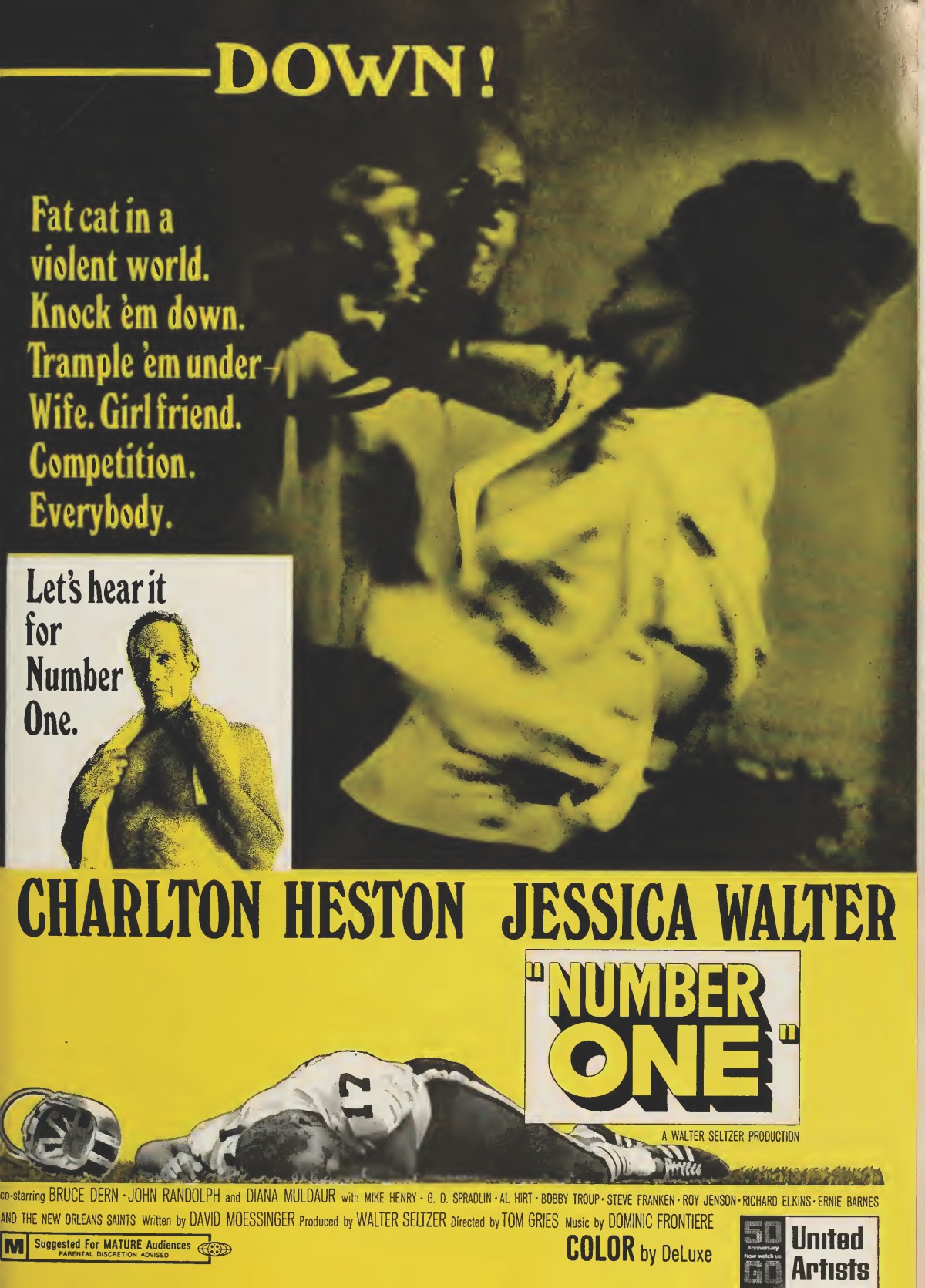
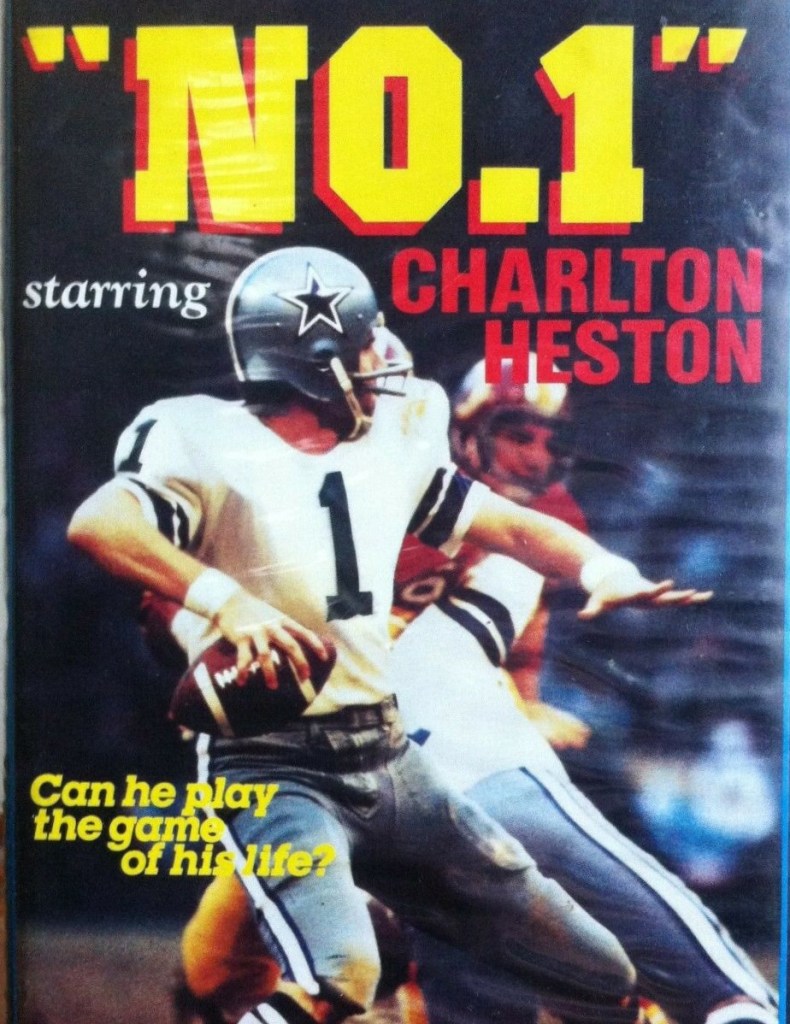
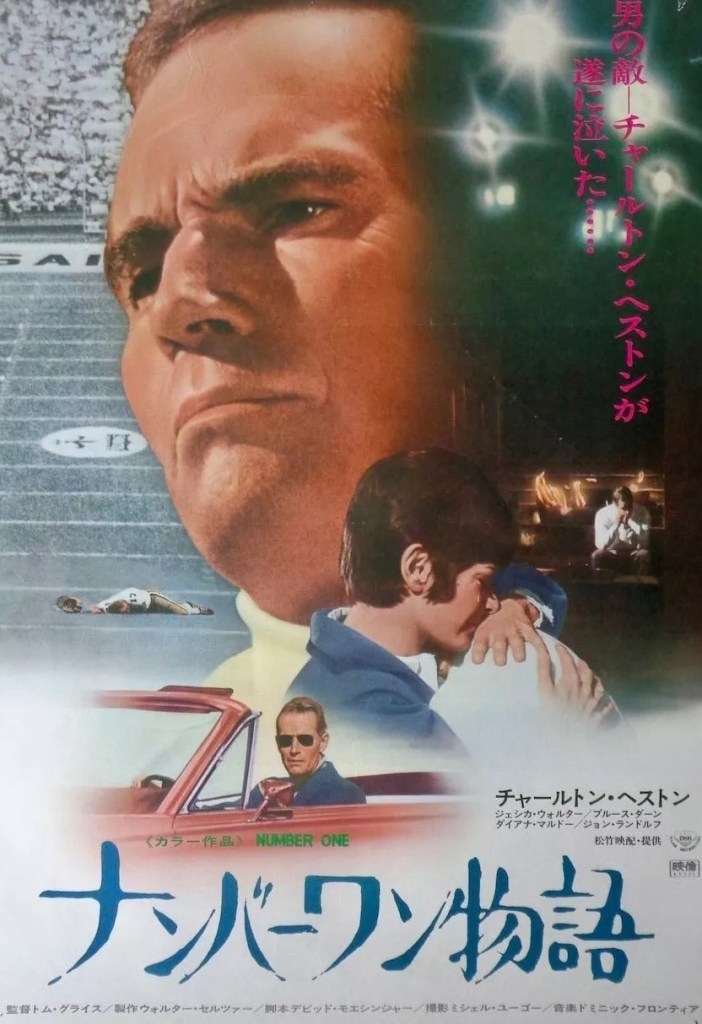
Number One / Pro (1969) ****

Quite possibly Charlton Heston’s best performance – as an ageing pro footballer refusing to bow down to the inevitable. Ron Catland (Heston) has much in common with Ned Merrill (Burt Lancaster) in The Swimmer (1968) as characters who believe they have been let down by the American Dream. And like that picture, plot is in short supply, it’s mostly a character study with sideswipes at the realities and inanities of American football.

An injury puts star quarterback Catland’s career in doubt. The media write him off, a younger quarterback Kelly (Richard Elkins) is waiting in line, while former colleague Ritchie Fowler (Bruce Dern) offers him a job in his car leasing business, or he could opt for a second career in computers, but Catland wants the only life he has ever known to go on forever.

There’s nothing inherently likeable about Catland. In fact, he’s downright mean most of the time, in part because of the falsity of his profession, management buttering you up when it’s contract time, then on your back once you have re-signed. He’s got a hero’s arrogance, has ignored from the outset the coach’s instructions, at odds with independent fashion-designer wife Julie (Jessica Walter), no children to shore up their marriage. Hardly surprising he drifts into another affair, “an occupational hazard” his wife calls it, this time with the fey Ann (Diana Muldaur) who owns a tennis shop.

You are probably familiar with the kind of football picture which climaxes with a last-minute touchdown or the more realistic movies like North Dallas Forty (1979) or the superlative Any Given Sunday (1999) where nonetheless the focus is on winning and characters are ramped up for dramatic effect. Or you might imagine Hollywood had been routinely churning out football movies like Knute Rockne All-American (1940) and Jim Thorpe All American (1951) for decades. But strangely enough the movie industry had not focused on this particular sport for well over a decade until the NFL documentary They Call It Pro Football (1967) and comedy Paper Lion (1968).

Number One sets out to set the record straight on the reality of being a football hero. And it’s by far the most realistic of the species. For every good-looking gal wanting to pass him a note on a napkin in a restaurant there are plenty fans turning on him for refusing to sign an autograph. For every sports reporter writing a puff piece, there are others tearing him to pieces in print.

The documentary-style approach by director Tom Gries (100 Rifles, 1969) serves the film well. This is a different kind of football team to the later fictional depictions. It’s a lonely life for a start. The players are rivals, not comrades.  There’s little camaraderie. The dressing room is like a morgue. No practical jokes and tomfoolery. No over-the-top team talk by the coach and thank goodness no padre who pretends to walk every aching mile in their shoes. Any exhortation is almost a plea. Injury is mostly ignored. Legs are constantly strapped up. And when your career is over you might be reduced to bumming a loan from a current star. The politics are brutal.

New Orleans Saints cooperated with the production so the game scenes come across well though not obviously with the razzamatazz of Any Given Sunday and Heston has the physique for a sportsman. Primarily a television writer, David Moessinger (The Caper of the Golden Bulls, 1967) only crafted two films in the 1960s and this, the second and last, was an unusual effort, as the character twists and turns trying on the one hand to escape the cage of his career and on the other determined to squeeze the last drop out of his golden imprisonment.

Catlan still sees himself (at the age of 40, no less) as the best quarterback in the business and simmers with anger that his body is letting him down and that he has nothing in place to fill the gap that abandoning the game will create. Underneath the volatility is a hole of pain. There’s no sense either that he has enjoyed his time at the top, just that it has always one way or another been a struggle.

Although the movie was marketed with Heston as an aggressive individual, in fact it calls for a far wider range of emotions from Heston, and for this part he delivers in spades. Jessica Walter (Grand Prix, 1966)  gives as good as she gets, Bruce Dern (Hang ‘Em High, 1968) as the fast-talking salesman and Diana Muldaur (The Swimmer, 1968) are excellent. But this is Heston’s film. It’s more of a reflective piece, none of the dramatic highs and lows of other football pictures.

Crooks and Coronets / Sophie’s Place (1969) **

The concept of “national treasure” – perhaps in itself a purely British conceit – wasn’t invented back in the day but if it had Dame Edith Evans would fall into the same coveted category as Maggie Smith and Judi Dench do today. She was certainly among the most honored of British thespians in the 1960s – Oscar nominations for Tom Jones (1963), The Chalk Garden (1964) and The Whisperers (1967) – so what she’s doing in this unfunny mess is anybody’s guess. She was 80 at the time and while easily the best thing in it, the switch between battiness and cleverness is hardly new.

Everyone is oh so British, including the gangsters led by Frank (Harry H. Corbett), and it should be the old trope of Yanks not coming to grips with English life and customs, which sometimes can strike a note, but instead the set-up is so dire and the acting so uninspiring. Warren Oates (The Thief Who Came to Dinner, 1973) is at his worst – when I tell you his best scene is his discomfort at having to hold a plate and cup-and-saucer at the same time, you’ll guess why. Telly Savalas attempts to be charming but it just comes off as an overheated version of his usual thug.

Story is lame. Herbie (Telly Savalas), just out of the slammer, finds he is in hock to mob boss Nick (Cesar Romero), so with buddy Marty (Warren Oates) sets off for England to fleece Lady Sophie Fitzmore (Edith Evans) only to discover that her stately pile is also in hock (you want to discover about British death duties, this is the one for you). British mob boss Frank doesn’t like the idea of the Yanks infringing on his territory, so is keeping a close watch and in the end decides to raid Sophie’s joint himself, by which time the Yank villains have become so enamored of Sophie that they’re on her side and set up the kind of defense that would have been axed from cockanamie comedies like The Great Race (1964) for not being funny enough. Sure, Edith Evans in goggles and racing in on a biplane looks good on paper but not when the thugs scatter like the Keystone Cops.

Edith Evans was exceedingly wary of the movies. She only made 14 – and just six pre-1960 and two of those in the silent era – in all those decades when she was otherwise devoting her time to the theater and best remembered by movie audiences for The Importance of Being Earnest (1952). According to Sir Laurence Olivier she only gave the movies another bash when her memory started failing her and the notion of only having to remember a few lines at a time exerted its attraction.

While she’s good fun here, she’s saddled with mutton for co-stars. Telly Savalas (The Assasination Bureau, 1969) theoretically wins his first leading role, but in fact that went to Edith Evans and better actors than him had faded away in Dame Edith’s slipstream. Quite what Warren Oates thought he could do with the part is anybody’s guess because he does nothing.

Written and directed by Jim O’Connelly (The Valley of Gwangi, 1969).

Rob Peace (2024) *** – Seen at the Cinema

Breaking Bad Goes to Yale. Or Good Guy Does Bad In Order To Do Good. Can’t say the current title is any more inviting than those – I guess this character isn’t at all known outside the U.S. where a book was written about him (it’s “based” on a true story, we are told) – but at least gives more of an idea of the level of complication we’re dealing with. The film lacks the sharp ironic intelligence required to make such a complex tale work and direction is so shapeless, diffuse, at times that it’s hard to keep going. And it falls prey to the Martin Scorsese trope of the voice-over telling us more about what’s going on in a character’s mind than his interplay with other characters. Yet, this is an interesting story and you wish it had been better told.

On the one hand any time the eponymous character gets into a financial snit he just falls back on drug dealing. On the other, though you could argue his father is a victim of blatant racism, Rob (Jay Will) never plays this particular card. We are constantly told he has a special gift for bringing people together, but the only evidence of that is when weed is on the table and in his entrepreneurial dealings which revolve around making a fortune from refurbishing empty homes in the neighborhood.

Blame the structure for the fact it appears to bounce around all over the place. A few neatly-placed flashbacks would have solved the problem, focused on present, rather than taking us on a near 20-year stretch mapping out an entire life. Rob, mathematical whizzkid, growing up in a tough locale, gets sent to private school for black kids run by a white priest, courtesy of single mom (Mary J. Blige) working three jobs, and manages to get some sort of scholarship to Yale where he’s got the kind of brain apparently capable of the radical thinking scientific breakthroughs require. Unfortunately, the only breakthrough he makes is of the Breaking Bad kind, setting up a lab on the premises, selling a better class of dope to his classmates.  

When his dope-dealing father Skeet (Chiwetel Ejiofor, who also directs) is jailed for murder, Rob – who, by the way, has changed his name so no one will make the connection with the jailbird – takes up his case, through a loophole gaining his father a few weeks of freedom. Then he turns to dope-dealing to fund a lawyer to argue his father’s case and also to fund the experimental drugs required to keep his old man alive when he succumbs to brain cancer.

Put front and center those two elements would have been enough for  a very sharp drama, especially as Rob begins to doubt his father’s innocence after discovering he was physically abusive to his mother. The best scene in the movie, spoiled by some over-acting by Ejiofor, is when the dying father realizes his son has these doubts.

There’s an awful grey area at the heart of the movie. You’d have thought someone of Rob’s intelligence could have dug up the court records and presented  more evidence pointing towards his father’s innocence and that he’s been the victim of a fit-up and it kind of skates over the supposed racist element here but common sense tells you it’s not going to be a white guy that’s infiltrated somehow this black enclave and shot dead two black women.

Towards the end of the picture one of his buddies points out that it’s not the duty of the son to look after the wayward father, and that aspect, the almost saintly aspect, isn’t dealt with much either.

A lot of scenes could be cut. One sequence of him playing water polo would be enough, one of him mooching around smoking dope, one of carving the turkey etc. Nobody appears honest enough. His mom doesn’t tell him her husband was a violent man or ask why the son is wasting his life, risking his future, for the man who after all abandoned him. And just exactly why is never gone in to. Rob himself doesn’t question his own ethics, returning to the life he is presumably trying to escape in order to fund the lawyer and the doctors suggests a lack of self-awareness. There’s none of the chutzpah that made American Gangster (2007) so riveting. You can see a life being thrown away through self-justified crime. He goes back to the drug-dealing when his real estate company goes bust during the sub-prime mortgage scandal, incurs the wrath of the full-time drug-dealers who fear he’s invading their turf and kill him.

I’m not sure how you deal with ambiguity in a movie but one way is not to ignore it.  

On a poor day for moviegoing, on a double double bill, this was the second best picture I saw all day, way behind a return to the sumptuous Count of Monte Cristo, but way ahead of the buffoonish mess of Beetlejuice Beetlejuice and the nonsense of Afraid.

Could sure do with a remake so an interesting tale could be more sharply told.

Discover WordPress

A daily selection of the best content published on WordPress, collected for you by humans who love to read.

The Atavist Magazine

by Brian Hannan

WordPress.com News

The latest news on WordPress.com and the WordPress community.