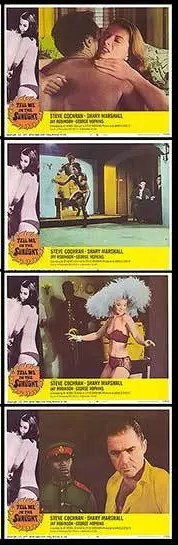
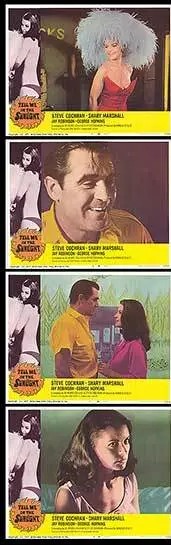
Tell Me in the Sunlight (1967) ****

Had this emanated from France or Italy or arrived bearing an arthouse imprimatur it might well have gained some critical traction. Not just because it is as far from the screen persona of star Steve Cochran (Mozambique, 1964) as you could get, but since this is largely a tale of loneliness and with some quite imaginative touches.

In a cramped apartment so small there’s nowhere to sit and eat Julie (Shary Marshall) sets out a picnic on the floor for merchant seaman Dave (Steve Cochran), the fare modest in the extreme, nothing more than heated-up soup from a tin. There’s an unlikely trigger point – a light switch that doesn’t work. In anticipation of Dave’s return, she not only bakes a “Welcome Home” cake but has painted on the walls an idyllic scene of the house she expects the couple to occupy.
But there’s a central issue. They’re both itinerants, Dave due to his job, and presumably not having an ounce of the settling-down bug, and Julie because she drifts from man to man, primarily out of necessity. She’s an exotic dancer and although she initially denies it – and he has to pretend to believe her in order to grease the wheels of incipient romance – she accepts financial favor from customers to the nightclub. In fact, she has a current boyfriend, Paul (Harry Franklin), a distinguished-looking doctor, an older man much fussed over by the club management due to the amount he spends.

The meet-cute’s been done before – they are both at the scene of an accident involving a young boy. They stroll away together. Their conversation is not intense, and the only way we realize that he has struck a spark is when she returns to her night-time gig sand is fined for arriving late. He watches her striptease act, and waits for her and they do some more strolling before returning to her flat, where she rustles up the picnic but before affairs can take a sexual turn she falls asleep in his arms.
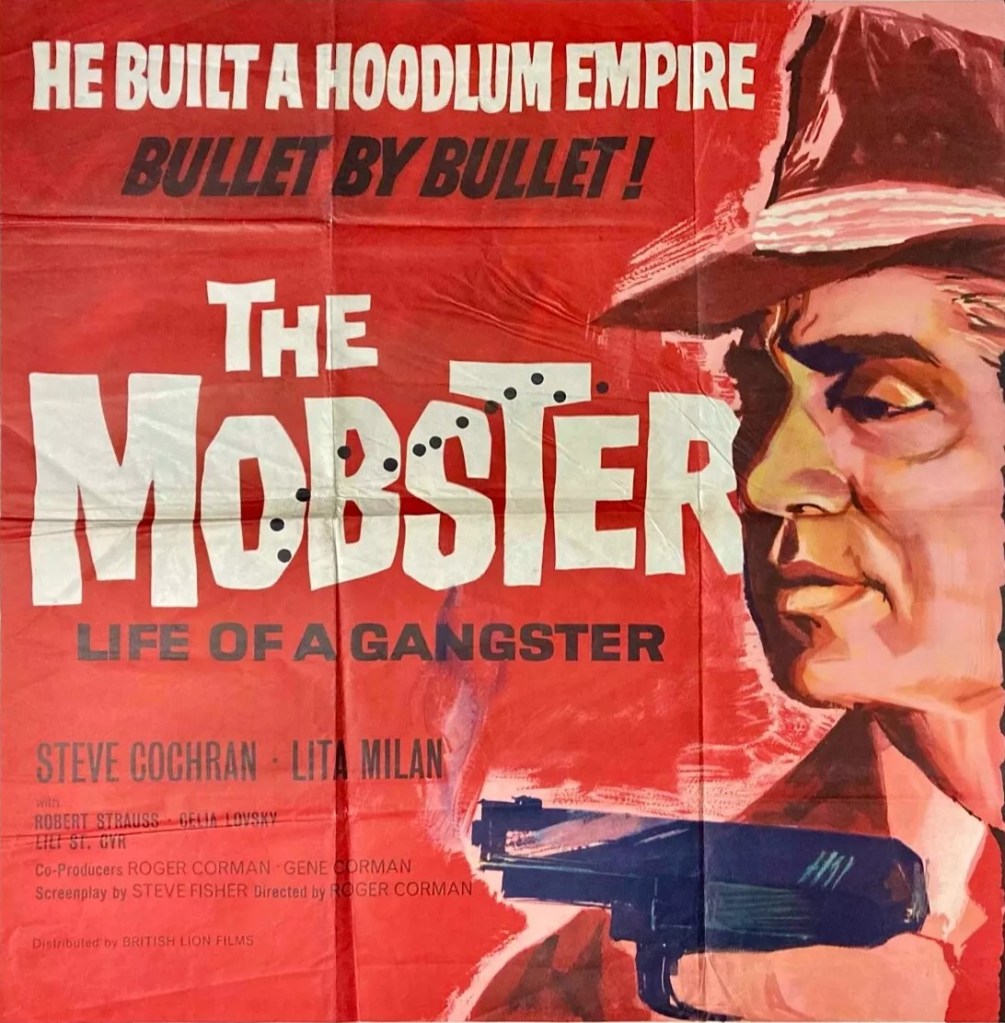
More in keeping with the Steve Cochran screen persona.

This is very desultory stuff, no nudity or even obvious sex, and in the context of Hollywood output scarcely qualifying as a romantic drama, but place it in the European arthouse sphere and it proves much more rewarding from the very fact that nothing is overplayed. Little is even outwardly stated. Without a word suggesting this, both realize this is a chance to change random lives.

While there’s no commitment either side, when he leaves for a temporary job on another ship, he asks her to see him off on his midnight flight. That would mean her skipping a shift and to do so would risk being fired. At the last minute, she turns up. When she leaves as his plane is announced as imminently departing, he follows her for one last fleeting kiss and spots her outside in the arms of another man.

Unaware of this, she decorates her apartment in the manner described. He returns in a bad mood, gets drunk and on appearing at her apartment notices someone else must have fixed the light switch, tosses money on the floor and they make love as a financial transaction.

In the morning while she is distraught, he remains furious, scoffing at her painting on the wall and the cake. She explains that while the man at the airport was indeed her former lover Paul, he was only there in the capacity of a friend, who had driven her out, the only way she had of skipping out of the club and returning before being spotted and fined or dismissed. In any case she has been fired because the rejected Paul has abandoned the club and his absence has reduced the nightly take. And she paid for the light switch to be fixed.

Theoretically, in the hope of a happy ending, they reconcile. But a future together seems unlikely after the events of the previous night, which showed both in their true character, he as a paying customer, she as a paid sex worker. Neither show capacity for change, certainly not to find the kind of work that might bring marital stability.

Loneliness is the theme, how to cover up the cracks in fragile lives. In his job, women are non-existent, the only time he will meet one is on shore leave, and if he’s not shelling out for sex, he’s trying to pick up a vulnerable woman as is shown in the opening scene. As much as she needs extra dough to buffer her existence, she also needs someone to hold her at night.

This should have received some recognition at the time. Steve Cochran’s directorial debut was not accorded the same interest as other actors who had turned to direction such as Frank Sinatra (None but the Brave, 1965), Laurence Harvey (The Ceremony, 1963) or John Wayne (The Alamo, 1960).  As an actor Cochran wasn’t on the critical radar, his tough guy roles hardly on a par with those of Humphrey Bogart or Richard Widmark who found greater fame.

However, the biggest obstacle to critical recognition was that Cochran died before they movie could be released and it took another two years before it hit movie screens by which time he was long forgotten.

Not only is the direction tone perfect but so is Cochran’s acting. Although strictly a B-movie actress, Shary Marshall (The Street Is My Beat, 1966) is very effective.

An unsentimental realistic drama that doesn’t fall into the traps of either into exploitation or melodrama

This is one of those forgotten pictures that is well worth a look.
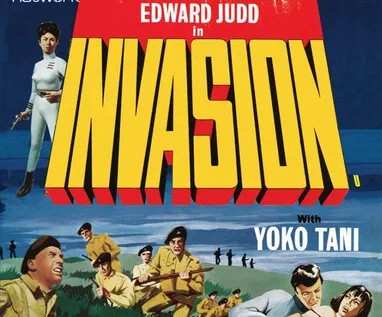
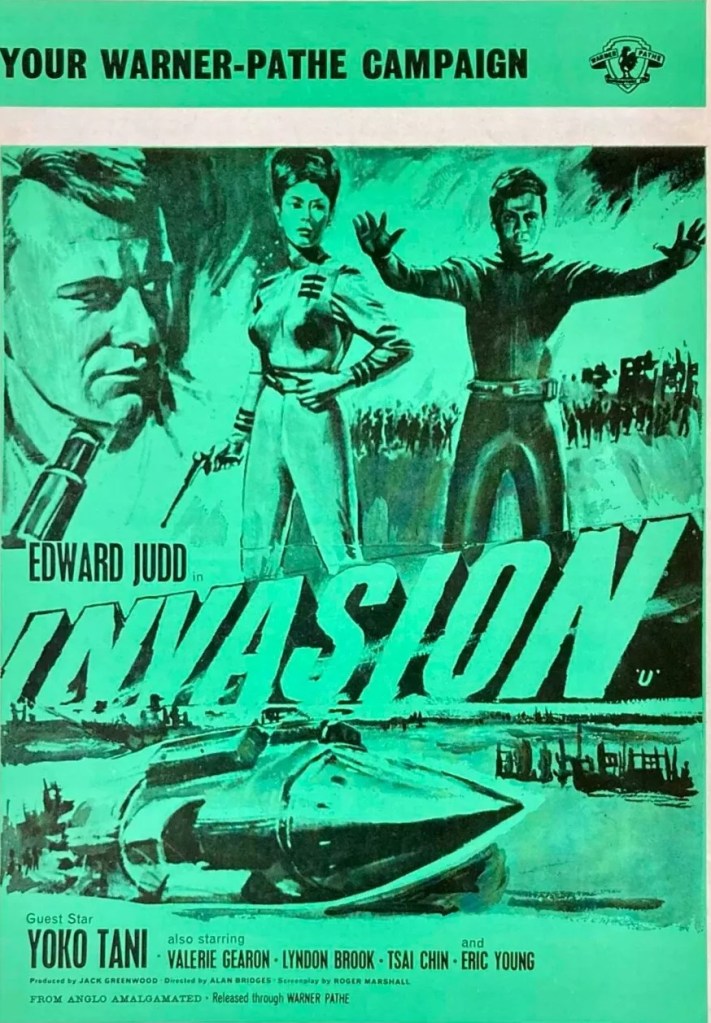
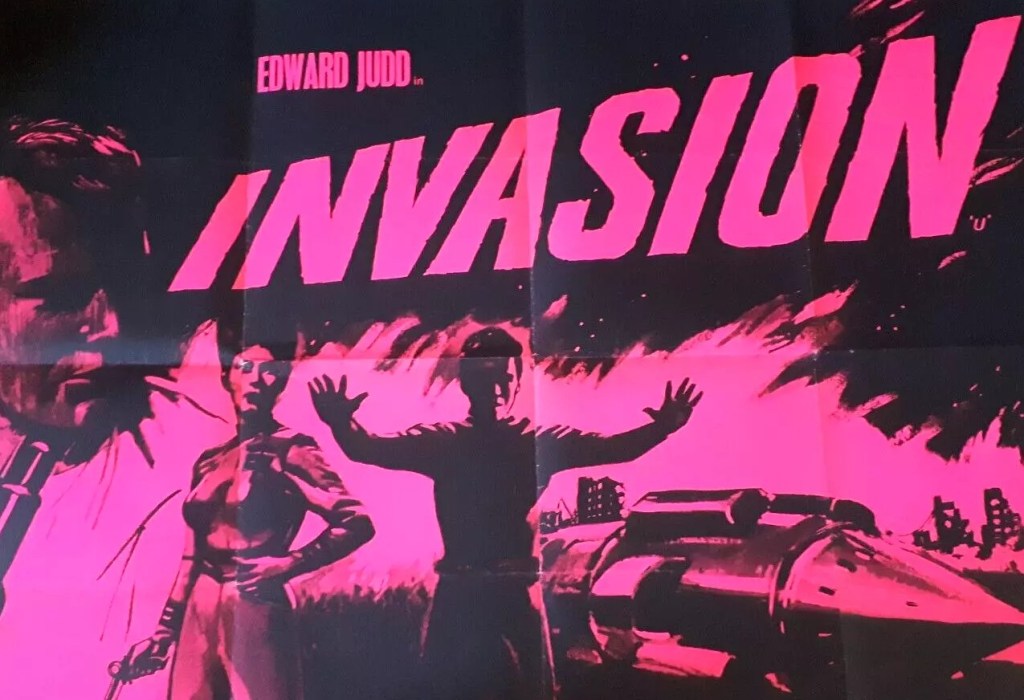
Invasion (1966) ****

Style is just about the only weapon in the directorial armory to mitigate against lack of budget. Or you can rely on a narrative twist. But in sci fi you’re inevitably going to come a cropper in this era and on a low budget when it comes to the special effects.

As director Alan Bridges would later prove in bigger budgeted efforts like The Hireling (1973) and Out of Season (1975) he was a genius at building atmosphere. Here, he also makes very effective use on the long shot. Not in the usual dramatic fashion of depicting a vista, but in building tension.

There’s a fabulous sequence which is superbly done given the budget. There’s a car crash. We see a window exploding. Next shot shows a man dead and bloodied sprawling over the hood. The car has crashed about a hundred yards away from a hospital where the main character Mike (Edward Judd) is standing outside. Instead of cutting to his face to register the shock, the camera stays where it is just to the side of the car so we can see the corpse and in the background watch Mike’s reaction. But he doesn’t race towards the camera. He moves in puzzled fashion, glancing around, even taking a step backward.

So where another director would in effect have speeded things up – crash, onlooker reaction – Bridges slows it all down. That’s the real purpose of the long shot. To waste vital seconds. To slow everything down.

There’s a reason why Mike is so slow on the uptake. Because there’s nothing for the car to crash into. There’s not a tree or a wall to get in the way of the moving car. This is the moment Mike works out there’s a force field surrounding the hospital, generated by the strange patient inside, who needs protection from his pursuers.

Sure Bridges uses long shot for budgetary reasons, to have all his characters in the same space without having to spend money on close-ups, but most of the time it’s for atmosphere and effect. There’s another great long shot of seated hospital patient Blackburn (Anthony Sharp) viewed from the other end of a long corridor. He’s in shock not just because he’s knocked down a pedestrian in unseasonal fog during the night but because he was with his mistress at the time and there is bound to be consequence.

And perhaps because his lover urged him not to stop, so that will change the dynamics of their relationship. And perhaps because the person he knocked done is so strange, walking around in some kind of plastic uniform in the middle of the road as if he didn’t know where he was going.

We’ve had decades now for movie makers to find ways of indicating the imminent arrival of aliens, and usually they’re able to call on bigger budgets and scenes of television reports to do so, witness Independence Day (1996) or Arrival (2106) and even have the luxury of delaying such action until they can introduce some of the characters.

Here, Bridges manages that in minimalist fashion. And without delay. Soldiers manning a radar station notice the radar misses a beat, on the road Blackburn’s vehicle inexplicably and momentarily stalls while in motion, in the hospital an iron lung inexplicably stops pumping oxygen into the inert patient for a moment. We don’t realize it until some time later but that’s the sign of arrival.

In the hospital the foreigner (Eric Young) is found to have a metal plate in his head. He appears surprised that women do as they’re told. The building begins to become unbearably hot. When the stranger awakens, we discover he is, in fact, an alien, from a distant planet, strayed from his course. He was escorting two female prisoners.

And sure enough every now and then we get a glimpse of the female pair outside in close-fitting uniforms. Phone lines are down. The rising heat threatens the chances of survival of the hospital’s 300 patients. Hospital chief Carter (Lyndon Brook), going for help, is the one who dies in the car crash.

Very snippy doctor Claire (Valerie Gearon), severe haircut indicating a no-nonsense personality, interrogates the alien and gets far more out of him than Mike or Carter. Meanwhile, Mike works out that the force field is less effective with water, so he escapes via the sewer, finds the alien’s power pack and returns so the alien can leave and find his spaceship, though by now they know he is an escaped convict not an officer of alien law.

And this is the kind of picture when a fellow undertaking superhuman activity, like crawling along a sewer and hauling himself out the other end, doesn’t do this in the blithe fashion of a hero. He is exhausted, staggering, completely wrung out.

Oddly enough, the special effects, given the budget, stand up. The alien takes off in his rocket but another alien craft shoots him down.

Despite the storyline with the feminist angle and the twist of alien being bad guy and not good guy, there’s not enough here sci fi-wise for it even to get an honorable mention in the list of great low-budget sci fi movies.

The fact that it deserves any mention at all – and it fully deserves one – is down to the direction. There’s a throbbing score by Bernard Ebbinghouse (Prudence and the Pill, 1968) that helps maintain tension. And the hospital staff, mostly called upon to sweat and be at the end of their tether, come over as very human, Edward Judd (First Men in the Moon, 1964) and Valerie Gearon (Nine Hours to Rama, 1963), especially. Roger Marshall (Theatre of Death, 1967) wrote the screenplay.

But Alan Bridges is the star.

Minor gem.

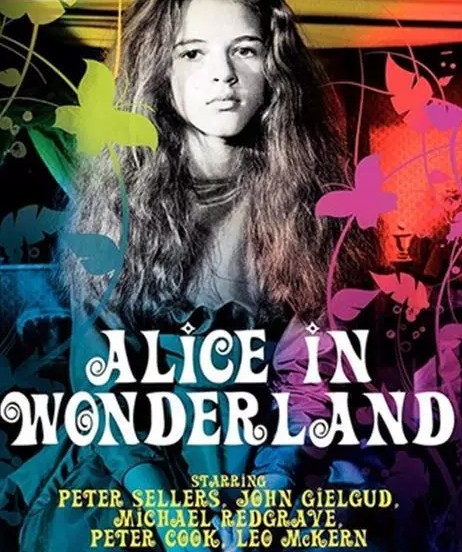
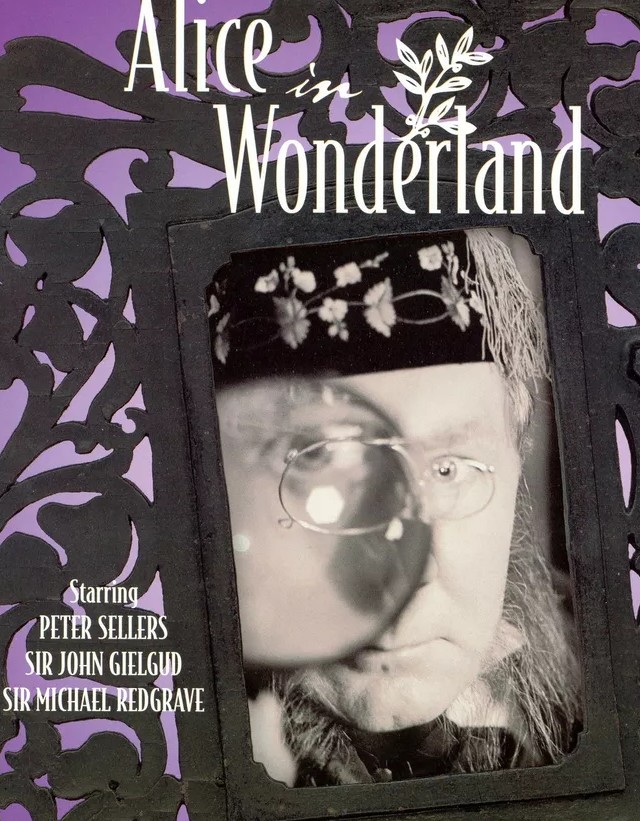
Alice in Wonderland (1966) **

Young bucks wanting to make a bigger splash are apt to rampage through sacred texts and treat unwary audiences to avant-garde notions. Thus, Jonathan Miller (Take a Girl Like You, 1970), in his debut, set aside all expectations and in fairness purists had decried Walt Disney’s 1951 telling of the Lewis Carroll classic. In truth audiences weren’t so in love with the Disney version either, an unusually low hitter for the company, and one that only really found its niche when reissued to catch a whiff of the stoned hippies who had drooled over 2001: A Space Odyssey (1968).

This 1966 reimagining might have been buried in the vaults after its initial showing except that Jonathan Miller went on to become something of a British institution, renowned directed of opera and stage plays, writer and presenter of a number of highly-regarded television projects and a regular on the talk show circuit. That his career had begun in sensational fashion, one of the hands on the tiller of the satirical Beyond the Fringe stage show (a hit in the West End and Broadway) and television program, meant that when he decided to spread his wings into the movies, no expense was spared.

Big stars flocked. What other neophyte could attract stars of the caliber of Peter Sellers (The Pink Panther, 1964), John Gielgud (Khartoum, 1966), Michael Redgrave (Goodbye, Mr. Chips, 1969), Leo McKern (Bunny Lake Is Missing, 1965), Peter Cook (The Wrong Box, 1966) and playwright Alan Bennett (The Madness of King George, 1994)? All admittedly in small parts but that was the nature of the all-star enterprise.

And that would have been fine if they had all been employed to supply the voices. Or if audiences had the fun of trying to determine who was who when hidden under the ton of make-up required to turn them into White Rabbits or Mock Turtles or Caterpillars or Lobsters cutting a quadrille.

But Miller had determined that not only was the Disney version short of the mark but for too long readers had missed the entire point of the Lewis Carroll book. He decided the point of the story wasn’t humor at all, nor a succinct exploration of the pitfalls of language, but about a young girl adrift in a adult world of confusion. So that was bye-bye to the cuteness.

He even broke a cardinal role. Alice doesn’t fall down a rabbit hole. The whole thing is a dream.

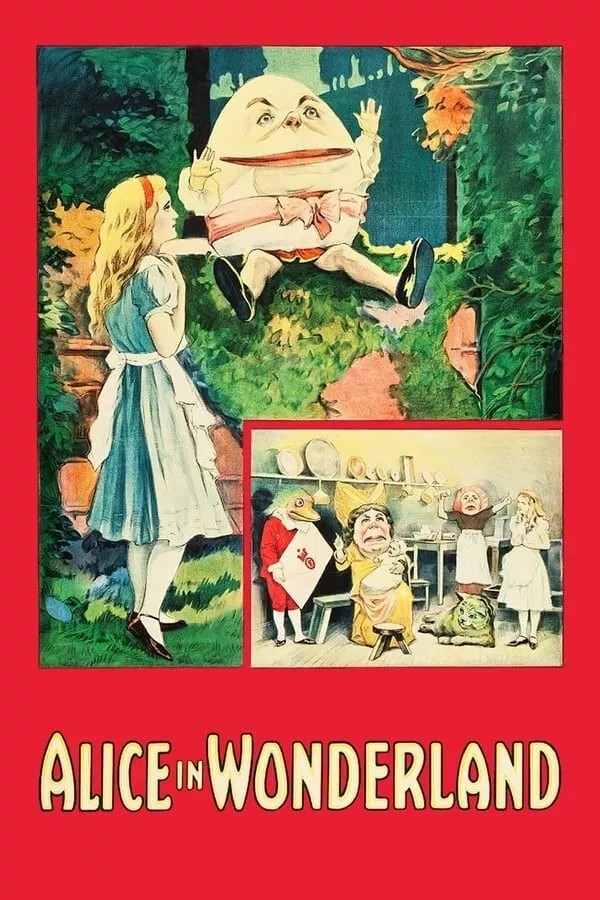
They’ve been adapting the book since the early days of cinema. This poster dates from 1915.

So you need to listen carefully to find out, with the lack of make-up, which actor is playing which fantasy character. And this isn’t set in any fantasy world either, certainly far removed from the famous illustrations that accompanied the book. It takes place in Victorian times which, yes, reflects the era in which the book was written, but, no, seems an extremely odd decision to give what is still fantasy some kind of realism.

It’s as if the director didn’t really have the courage of his convictions. That said, if he was catering to the arthouse mob, it’s got that kind of cinematic sensibility, with voice-over and unusual compositions.

Just to help you out, let me tell you that Peter Sellers plays the King of Hearts, John Gielgud the Mock Turtle, Michael Redgrave the Caterpillar, Alan Bennett the Mouse, Finlay Currie the Dodo, Leo McKern the Duchess and Peter Cook the Mad Hatter. The part of Alice went to 13-year-old Anne-Marie Mallik who never made another movie.

While it retains enough of the original to be recognizably based on the book – with all the catchphrases, “off with their heads” etc – the locale is just totally at odds with the story. And while it’s a tonic to hear the mellifluous tones of John Gielgud uttering the author’s immortal words, it would have been better just to hear his voice.

My guess is this is only still available because Miller made such a name for himself. You can catch it on Talking Pictures.

Curiosity or mess, it’s hard to decide.

https://www.facebook.com/TalkingPicturesTV/videos/easter-on-tptv/654499693946106

Behind the Scenes: How “Zulu” (1964) Flopped in the USA

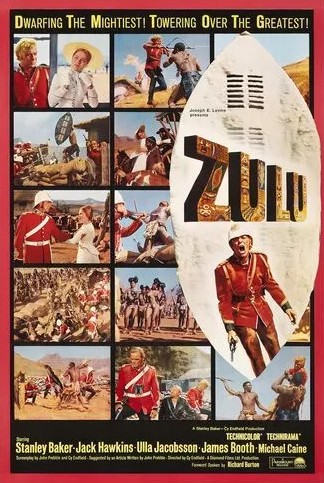
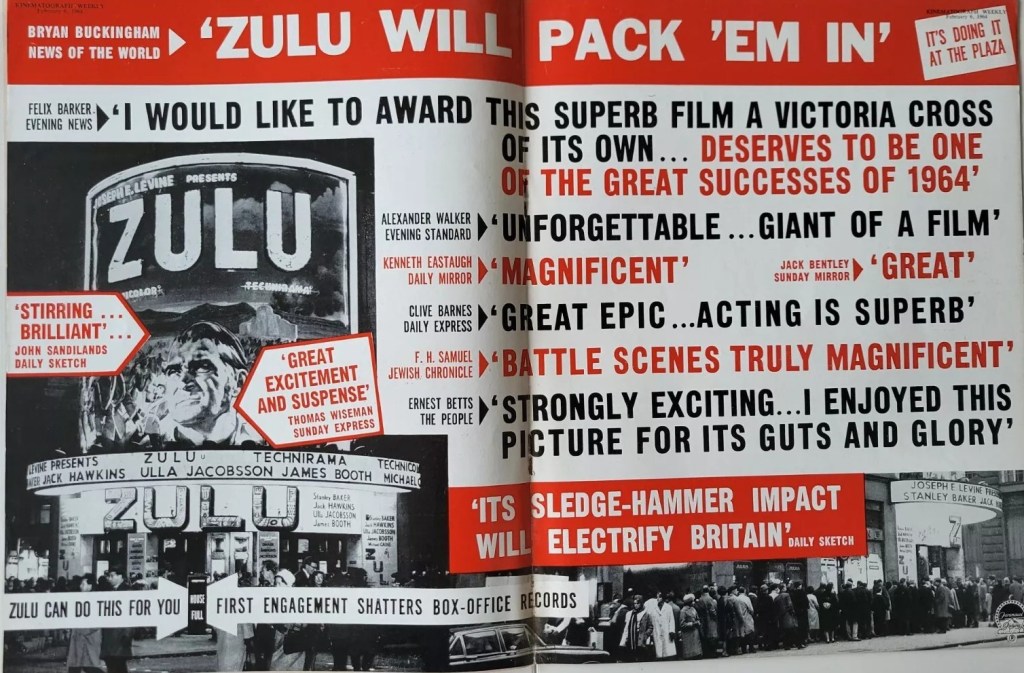
With all the (deserved) appreciation of Zulu, it’s hard to imagine it was a massive flop in the United States. Independent producer Joe Levine planned a double whammy for summer 1964 – The Carpetbaggers, an adaptation of the sizzling Harold Robbins bestseller, and Zulu. He even arranged for Zulu to follow The Carpetbaggers into the prestigious Palace first run cinema in New York. Spending big, Levine whipped up a huge marketing campaign for Zulu, which had notched up record grosses in the UK. There was a double-page spread in Variety in January 6 and again in February 10. One million promotional badges were distributed. A featurette “Great Battles in Film” was sent to 100 television stations.

Levine had a great line for the media. “I haven’t had time to read the script but I liked the title.” Subsequently, he told reporters he had read the script on a Friday and bought it the following Monday.

It had opened at the end of January at the Plaza in London’s West End and reports of its record-breaking $26,000 opening were expected to generate high hopes among U.S. cinema owners. Like The Carpetbaggers, it was distributed by Paramount. By April it had earned a record $638,000 in London alone, including $155,000 in a nine-week run at the Plaza.

Levine had form in finding success from the most unlikely projects. He had launched the low-budget Italian-made Hercules (1958) on the American public. Audiences weren’t quite unsuspecting given the fortune he had spent on promotion. It was money well spent and quickly went into profit. So the prospect of selling a British film about a battle nobody had ever heard of and, except for Jack Hawkins in a supporting role, starring unfamiliar names, did not faze Levine.

But the two films could not have been further apart. Where The Carpetbaggers stormed to $862,000 from 25 theatres in the New York area, Zulu could only manage $190,000 from 30 in Los Angeles. Zulu scored well in first run in Detroit – an $18,000 opening at the 2996-seater Palms, a second week of $16,000 and running two more weeks. There was a “smash” $15,000 in the 606-seater Loop in Chicago first run for starters and another three weeks but then it was quickly consigned to drive-ins. It registered $16,000 at the 1909-seat Pilgrim in Boston, $10,000 in openers in Cincinnati, $6,000 in Portland and $7,500 in Buffalo. It held well in Providence at the 2200-seat Majestic, first week of $7,000, second week of $5,000.

But there was only $8,000 from nine houses in Denver and $80,000 from 13 in Kansas City. Failure to find a niche was not for want of trying. In successive weeks in Los Angeles, it was supported by Nicholas Ray epic 55 Days At Peking, comedy Ensign Pulver, and Viking adventure The Long Ships.

To salvage something, Levine send it out, within a couple of months of initial release, as the support film to Italian-made Yesterday, Today and Tomorrow starring Italian sexpot Sophia Loren, possibly one of the strangest movie programs of all time.

In the annual box office rankings, The Carpetbaggers placed second. To get into the Variety annual chart, you needed to make more than $1m in rentals (the amount the studio received after the cinema had taken its cut). Seventy-eight movies managed this. Zulu was not one of them. 

But even the poorest box-office performer has an afterlife. So in 1965 Zulu was pushed out again anywhere that would have it. That meant it supported some odd, not to say ugly, bedfellows – exploitationer Taboos of the World in Kansas City, The Three Stooges in The Outlaws Is Coming in Phoenix, B-western Stage To Thunder Rock in Long Beach, How to Stuff a Wild Bikini in Des Moines and Rhino in Abilene. They liked it in Long Beach where it supported both Circus World and That Man from Rio. It was the second feature to None but the Brave in Provo, Utah, and to two more successful Joe E. Levine movies, Yesterday, Today and Tomorrow in Ironwood, Michigan, and Marriage, Italian Style in Corpus Christi, Texas. Triple bills being a staple of drive-ins, it was seen with Viva Las Vegas and Beach Party in Tucson.   

But it was not just support meat. Almost a year after its release, it topped the bill in Helena, Montana, with Robert Mitchum in Man in the Middle as support. In Chester it was the main attraction with Homicidal in support. In Weimar, Texas, it was supported by Tarzan the Magnificent and in Bridgeport by First Men on the Moon. At the Cecil theater in Mason City, Iowa, it played on its own, as it did in Colorado Springs where it was advertised as “in the great tradition of Beau Geste” (supply your own exclamation marks.)

But it was not done yet. Exhibitors in San Mateo had a soft spot for Zulu in 1966. It played there seven times, as support to The Great Race, Marlon Brando western Appaloosa, Fantastic Voyage (in two theaters), What’s Up Tiger Lily?,  The Leather Boys and Lawrence of Arabia. Abilene brought it back twice, for a re-match with Rhino and then in a double bill with Kimberley Jim starring singer Jim Reeves when it was promoted as “a true story of the Zulu tribe.” Fremont cinemas also ran in twice – with Return of the Seven and Fantastic Voyage. In Troy and Bennington it rode shotgun with Elvis in Harum Scarum. In Charleston it supported Arabesque, in Winona The Second Best Secret Agent  and in Long Beach What Did You Do in the War, Daddy?

The highlight of 1967 had to be a double bill with The Daleks (Dr Who and the Daleks) in Delaware, or perhaps the teaming with Batman in Cumberland, Maryland, or El Cid in Ottawa. Zulu returned twice to Fremont to support Africa Addio and John Sturges’ Hour of the Gun. In Modesto it played with Where The Spies Are. In Long Beach it was put on at a pop concert where the headline act was Organized Confusion (anybody remember them?). These three years of repeated showings hardly counted as a proper reissue, but it did cast an interesting light on what may – or may not – have turned into something of a cult film. In Britain, where it was a smash hit, it was reissued on the ABC circuit in 1967 and 1972. While it was largely unwelcome in the U.S., worldwide was a different story, bringing in $9 million in grosses.

SOURCES: 1964:  Variety – U.S. box office figures: June 24, July 1, July 8, July 15, July 22, July 29, august 5, September 2, October 6. Information about other bookings comes from local newspapers.

Behind the Scenes: Selling “Zulu” (1964) – The Pressbook

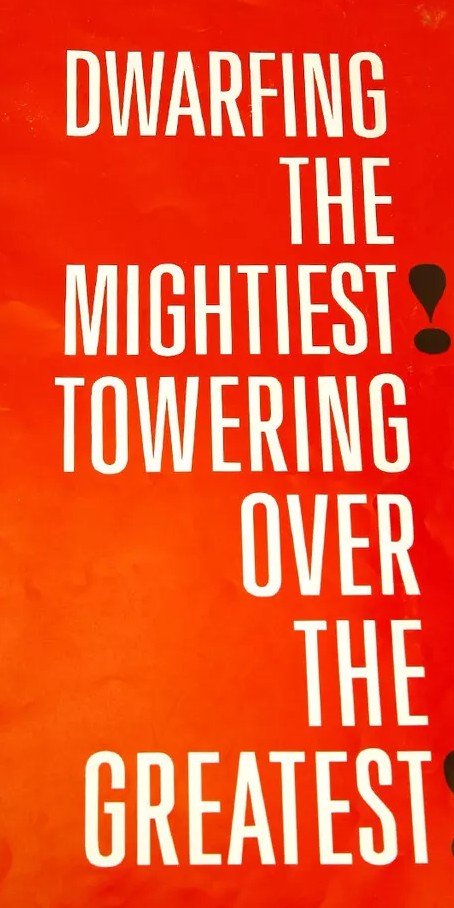
“Dwarfing the Mightiest! Towering over the Greatest!” wasn’t just the movie’s tagline. It could have easily been used to describe the Pressbook. This folded out into a colossal 40 inches wide  by 20 inches high, one of the biggest pressbooks ever produced.

The marketing team produced an impressive list of ideas. Cinema managers were urged to get war correspondents and war heroes involved and to blow up photos of the Victoria Cross. Hanging on the name of the star was a “Baker’s Dozen” competition, inviting people to list the thirteen movies featuring Stanley Baker. Quite how they thought a promotion involving banks would go down is anybody’s guess. Especially as this was the notion: “Zulus are allowed as many wives as they want, provided they can afford to pay for them. The price ranges between six and twenty head of cattle per wife. For an interesting tie-in, get local banks to display money and other barter materials. Give them a montage of still from the picture to display.” Culturally tone-deaf doesn’t cut it.

To attract children there was a coloring-in competition and a school study guide. The movie was available in 70mm Super Technirama so there was a special advertisement linked in to that for cinema going down that route.

Other taglines included: “The supreme spectacle that had to come thundering out of the most thrilling continent!” and “These are the days and nights of fury and honor and courage and cowardice that an entire century of empire-making and film-making can never surpass!”

And in case hyperbole wasn’t enough, one of the ads spelled out the exciting details. “The Massacre of Isandlwana! The Mating Song of the Zulu Maidens! The Incredible Siege of Ishiwane! Night of the 40,000 Spears! Days That Saved a Continent! Mass Wedding of 2,000 Warriors and 2,000 Virgins! Amid the Battle’s Heat…the Flash of Passion!”

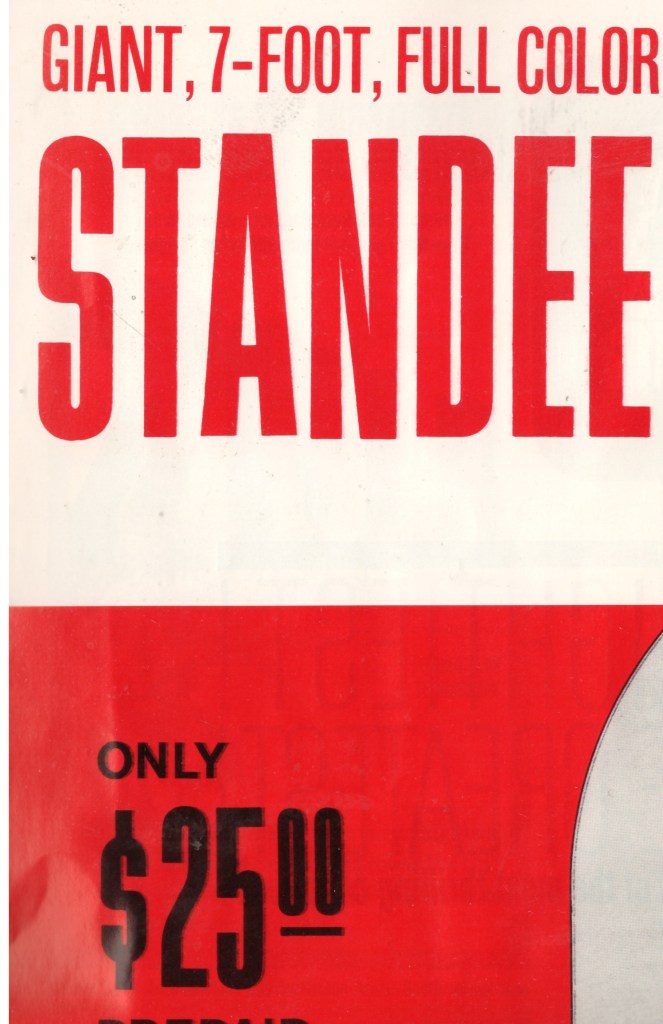
There was a seven-foot high standee and a three-foot 3D illuminated standee.

To help sell the picture to local journalists, little articles were planted that could hook an editor’s interest. For example, when director Cy Endfield glimpsed some soldiers firing their rifles left-handed, he stopped filming, because British soldiers were required to shoot right-handed. The film was shot in the shadows of the Darkensberg Mountains. The river which flowed past Rorke’s Drift was slower than it had been at the time of the battle so the course was altered and dammed to increase the flow. Out of sight of the cameras but essential to filming were the modern villages constructed to house cast and crew, stores, catering and compounds for horses and oxen.

The cast were on set at 6.30am for make-up. The Zulus spent more time in make-up than the British soldiers, as the costume department ensured every aspect of their outfits was historically correct. A total of 100lb of small colored beads was crafted by made by local women for the maidens to wear. A primitive method of making necklaces, strung together with animal sinew and rolled by hand, was employed incorporating a further 100lb of wild syringa seeds which were dyed.

The warrior loincloths of softened animal skins were made the traditional way using stones aqnd animal fat. Shields were also made from animal skin. The teeth of tigers and baboons formed their necklaces. They kept snuff in a small gourd worn round the waist. The purpose of a porcupine quill tucked into their hair was to extract thorns after a long march.

Three cameras were utilized to shoot the blaze that burned down the hospital. “Undress rehearsal” was the name given to the marriage ritual scenes of bare-breasted women.

Though Michael Caine was being touted for stardom, as far as the Pressbook was concerned he was relegated to section below Jack Hawkins, James Booth and Ulla Jacobsen who had smaller parts. The movie was a notable change for Jack Hawkins, who saw action in World War Two. Instead of playing his usual hero, he was a weakling and drunk. It was the second English-language film for Swede Jacobsen after Love Is a Ball / All This and Money Too (1963).

Zulu (1964) *****

The technical excellence is substantially under-rated. Not just the aural qualities – the approaching enemy sounding like a train – and the reverse camera and uplifted faces registering awe that later became synonymous with Steven Spielberg, but the greatest use of the tracking camera in the history of the cinema. So what could otherwise be a rather static movie given it revolves around a siege is provided with almost continuous fluidity.

It’s perhaps worth pointing out, in relation to accusations of jingoism, that the British had relatively few battles to celebrate – Agincourt in the Middle Ages, Waterloo in 1815, El Alamein in 1942. But the Crimean War, in which Britain was on the winning side, was remembered for the disastrous Charge of the Light Brigade. Dunkirk in 1940 was a defeat and in cinematic terms D-Day was seen as heavily favoring of the Americans. Although there had been a corps of British World War Two pictures, these generally focused on individual missions (The Dam Busters, 1955) or characters (Reach for the Sky, 1956). And in fact the defense of Rorke’s Drift was preceded by a resounding defeat at the hands of the Zulus at Isandlwana.

Tactically, too, the Zulus are smarter. Their leader is only too happy to sacrifice dozens of his troops in order to gauge the British firepower, their snipers probe for weaknesses in the British defences, their troops feint to attract fire and waste bullets.  The Zulus are too clever to attack where the British want.

This is not even your normal British army. Rorke’s Drift is a supply station and hospital. Its upper class commander Lt Bromhead (Michael Chard) idles his time away going big game hunting. The more down-to-earth Lt Chard (Stanley Baker) is there in his capacity as an engineer, erecting a pontoon bridge over the river. Neither has been in battle.

It’s surprisingly realistic in its depiction of the common soldier as having other interests beyond fighting. Private Owen (Ivor Emmanuel) is more concerned about the company choir, Byrne (Kerry Jordan) more focused on his cooking than bearing arms, and farmer Private Thomas (Neil McCarthy) spends his time cuddling a calf. Hook (James Booth) is a troublemaker and slacker and surgeon Reynolds (Patrick Magee) inclined to mouth off to his superior officers. The Rev Witt (Jack Hawkins) turns out to be a drunken hypocrite. His pious daughter (Ulla Jacobsen) is shocked when the men try to steal a kiss

Beyond a fleeting glimpse of victorious forces at Isandlwana, the Zulus are introduced in a sequence of harmony, a tribal ritual preceding a marriage ceremony, lusty singing and dancing scarcely setting up what is to come. It’s more like the by-now traditional section where the main characters in a movie set in an exotic land are introduced to aspects of local culture. Various characters attest to their military exploits.

But after that, tension cleverly builds. Witt raises the alarm, a bunch of cavalry irregulars refuse  to stay and fight, the sound of the pounding “train” of the approaching army (an idea imitated for the oncoming unseen German tanks in Battle of the Bulge, 1965) and then the awesome shot of the thousands of Zulus adorning a hilltop make it unlikely the garrison can survive, especially given the inexperience of Chard and Bromhead, the latter of the civil “old boy” old school, and their inherent rivalry. Nor are the commanders typical. Chard may be gruff but he’s not arrogant and the soft-spoken Bromhead is the antithesis of every British officer you’ve ever seen on screen.

As the camera continues its insistent prowl, many sequences stand out – the battle of the battle hymns (“Men of Harlech” from the Brits); the bandage unravelling from the leg of wounded Swiss; the blackened wisps of canvas on the burning wagons at Isandlwana; the trembling voice of Color Sgt Bourne (Nigel Green) in the post-battle roll call; “he’s a dead paperhanger now”; the frantic bayonets digging holes in the walls of the hospital to escape; the final “salute” by the defeated Zulus; the torrential firepower the defenders inflict when three units fire in turn.

There’s a scene you’ll remember from The Godfather (1972) when Michael Corleone and the baker’s son stand guard outside the hospital and the baker’s hand shakes when he tries to light a cigarette whereas Michael notes that his own is perfectly steady. That has its precedent here. Chard’s hand shakes loading bullets into his pistol but later, battle-hardened, it does not.

There’s no glory in war as the surgeon constantly reminds the leaders and Bromhead, expecting to exult in triumph, instead feels “sick and ashamed.”

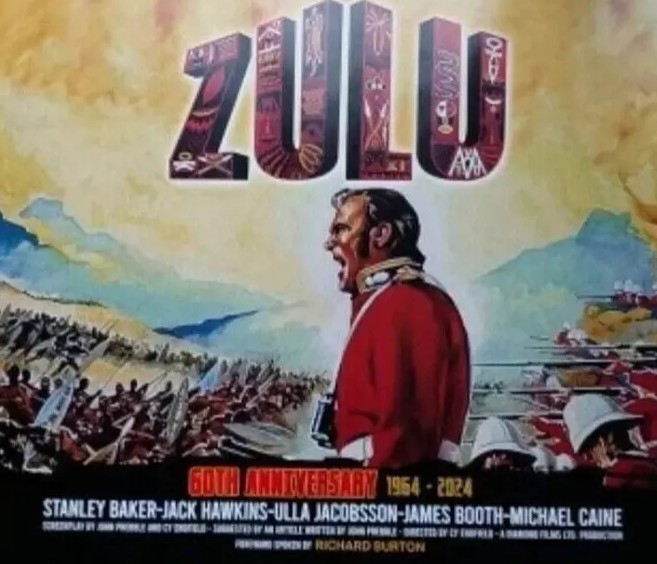
Terrific performances all round, mighty score by John Barry, written by director Cy Endfield (Sands of the Kalahari, 1965) and Scottish historian John Prebble (Culloden, 1964). The high point of Endfield’s career. Despite his character’s prominence Michael Caine was low down the billing, and despite the movie’s success stardom did not immediately beckon and he had to wait until The Ipcress File (1965) and Alfie (1966) for that.

I hadn’t see this in a long while and expected to come at it in more picky fashion. Instead, I thought it was just terrific.

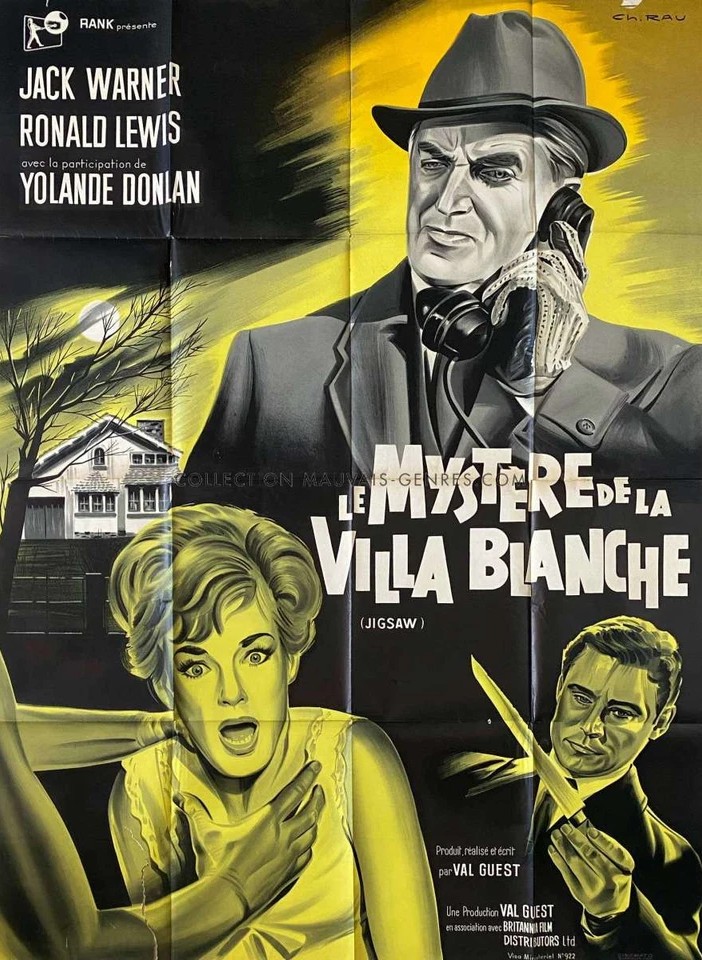
Jigsaw (1962) ***

Unusual crime picture even for the period. Most of these British pictures focused on the crime or an innocent caught up in nefarious activity, not just a straightforward police procedural before the term was even invented. In fact, the plodder was more likely to be a private eye or gifted amateur like Hercule Poirot or Miss Marple.

The title doesn’t refer to mystery but the painstaking element of putting all the pieces together and most likely still not being able to complete the puzzle – as occurs here until the very last scene and even then by pure accident. There are no sudden sparks of insight and the detectives don’t have the luxury of gathering all the suspects in a room Agatha Christie style. In fact for most of the movie not only can they not settle on a suspect they’re struggling to identify the victim. And this being when forensics didn’t exist except for fingerprints, there’s nothing even from that area to help.

At first Detective Inspector Fred Fellowes (Jack Warner) and Det Sgt Jim Wilks (Ronald Lewis) are investigating a break-in at a real estate office. Nothing’s been taken except leases, which suggests someone who either wants to get out of a lease or who doesn’t want their handwriting identified. After an exceptionally long haul it proves to be the latter. A lead takes them to a house in Brighton where they find the corpse of a woman with the initials JS.

I doubt if any police pictures of the period went into as much detail in following clues as this. Hunting for the killer the police interview taxi drivers, delivery men, garage mechanics, grocery clerks, truck drivers working construction, hardware and vacuum cleaner salesmen. Searching for the victim they check out beauty parlors, factories, pawnbrokers, airlines and hairdressers. The only clues are a gray car with a bent wing mirror – but even when they can identify the make it turns out there are thousands in the country – the contents of a vacuum, perfume smells on a pillow, particles of bone found in a furnace. Finally, with an old-fashioned trick Fellowes finds a name – Jean Sherman (Yolande Donlan) – and an address.

But Jean Sherman isn’t dead, though it transpires that she had a one-night stand in the murder house with a man she identifies as Campbell. But they can’t find Campbell either. They do alight on dodgy vacuum cleaner salesman Clyde Burchard (Michael Goodliffe), who has a previous conviction for indecency. Despite being identified by the delivery driver, it turns out he just had sex with the dead woman and nothing else.

Eventually, Fellowes finds Ray Tenby (John Barron) who is identified by Jean. He had picked her up after killing the other woman, Joan (Moira Redmond), and had sex with her in the next room to the corpse. But they can’t prove Tenby didn’t act in self-defense, and it’s only by that piece of unexpected luck that they can pin it on him.

Although most of the dialog focuses on the investigation there are some clever remarks. A journalist pressing a beat cop for information is told that leaving his car running unattended is an offence. Jean’s hardline father (John Le Mesurier) initially decries his daughter’s behaviour as immoral to the point of almost disowning her until, discovering she is dead, he bursts into tears.

With the amount of mileage the investigation covers, this could be done within the usual hour-and-a-bit of the standard British B-movie so it stretches a proper feature length. As written and directed by Val Guest (Assignment K, 1968), it’s not particularly stylistic, nor does it stretch tension too far, but it is still engrossing in the accumulation of detail.

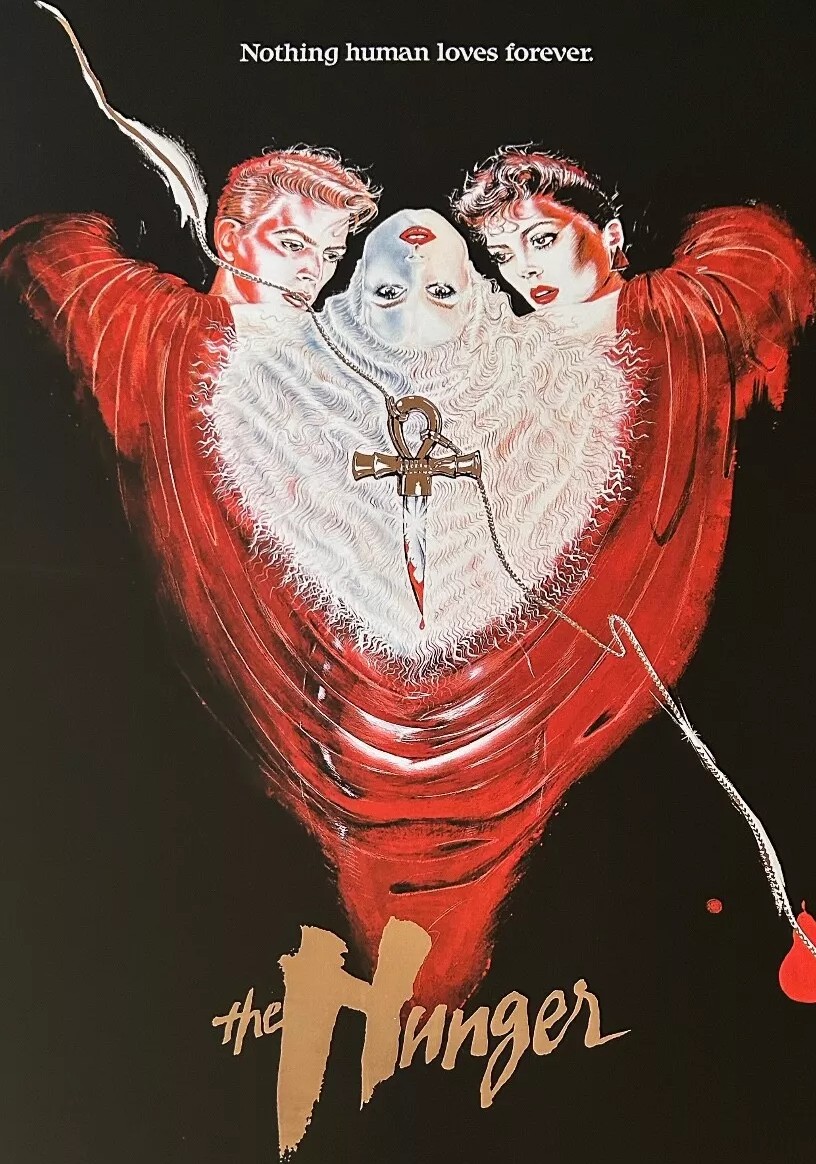
The Hunger (1983) ****

With this weekend’s Sinners claiming to reinvent the vampire picture, I thought it time to look back at a movie that genuinely did reimagine the vampire genre, though hardly acclaimed at the time.

Elegant, atmospheric, subtle. Never thought I’d be stringing those words together to describe an offering from uber-director Tony Scott (Top Gun, 1986). Add in “slow” and this is a director reinvented. Did I mention “short?” This clocks in just over the hour-and-a-half mark. So what  might have driven an audience to distraction if stretched out over a languorous two hours twenty minutes, say, or longer, as would be par for the course in these more self-indulgent times, is not an issue.

If this has become a cult, it’ll be for all the wrong reasons. A vampire picture that doesn’t play by the rules, a lesbian vampire movie that steers clear of Hammer sexploitation, a lesbian movie featuring two top marquee names, or just any picture that features David Bowie.

There’s an inherent sadness to the whole exercise, an elegiac feel comparable to the likes of The Wild Bunch (1969).  Miriam Blaylock (Catherine Deneuve) and husband John (David Bowie) are so stylish and have no truck with growing those oh-so-out-dated fangs that you are willing them to succeed especially as there’s no sign of a crucifix-wielding vampire hunter.

You might wonder why the cops haven’t been alerted to a spate of killings, throats cut in serial killer modus operandi fashion, but really there’s so much else going on – emotional, not action, you understand – that its absence isn’t worth commenting upon.

So first up is betrayal – and from a serial betrayer at that – as John realizes that while he has been promised eternal life by Miriam, who’s somewhere in the region of two millennia old, she can’t guarantee eternal beauty. So when he starts to suffer from ageing, cracks begin to show in their relationship. And whether he’s aware of this or not, she’s already lining up a replacement, the classical music student Alice (Beth Ehlers) they both tutor. And when John knocks her out of the equation, his pursuit of eternal youth or at least a reversal of the ageing process leads Miriam to a spare, scientist Sarah (Susan Sarandon).

The connection between the two women is initially so subtle that Sarah picks up the telephone imagining Miriam on the other end when the phone hasn’t even rung. Sarah is perturbed/excited to discover she has gay tendencies, especially when she’s already in a strong heterosexual relationship. And she’s not that keen, either, on discovering that she has been co-opted into the vampire fraternity.

Most of this has moved along in almost dreamy style so, that come the end, a sudden burst of twists  takes you by surprise. You’ll find echoes to  the priestess in Game of Thrones when the aged John seeks to kiss his lover. And John’s discovery at the end that’s he’s part of an undead harem carries over to the climax of Christopher Nolan’s The Prestige (2006).

Anyone looking for cheap kicks from the lesbian sex scene is going be disappointed, this is sex arthouse-style with wafting curtains getting in the way, and pleasure delivered in subtle rather than orgiastic fashion.

Tinged with a sense of loss, and pervaded by sadness, this is a complete outlier in the Tony Scott portfolio, especially the pace which is completely at odds with the fast-editing style for which he is best known. At the same time, tension remains high, in part because you don’t really know what Miriam is up to, and because these are new ground rules by which the vampires play, not least in their enjoyment of style and fashion, the kind of garb favored by the likes of Christopher Lee only employed as pretense and not by one of the main players.

Catherine Deneuve (Mayerling, 1968) was a Hollywood irregular, not seen there in six years since March or Die (1977), and it’s surprising, never mind her choice of couture, what sophistication a French accent brings to a vampire movie. Susan Sarandon was an ideal fit for the European feel of the picture, having cut her teeth with Louis Malle on Pretty Baby (1978) and Atlantic City (1981). David Bowie spends most of the movie under a sheet of make-up so you need to get in quick for your Bowie fix, and for that short period he is quintessential Bowie.

Written by debutant James Costigan and Michael Thomas (Ladyhawke, 1985) from the Whitley Streiber bestseller.

But this is Tony Scott’s (Enemy of the State, 1998) triumph, work that you’ve never seen before and never seen since, making you wonder why he never continued in this vein.


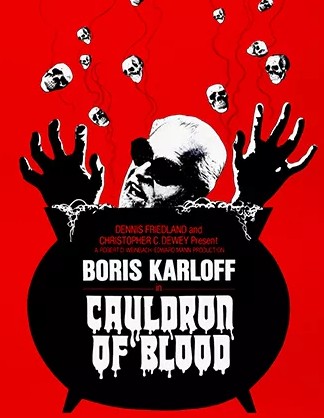
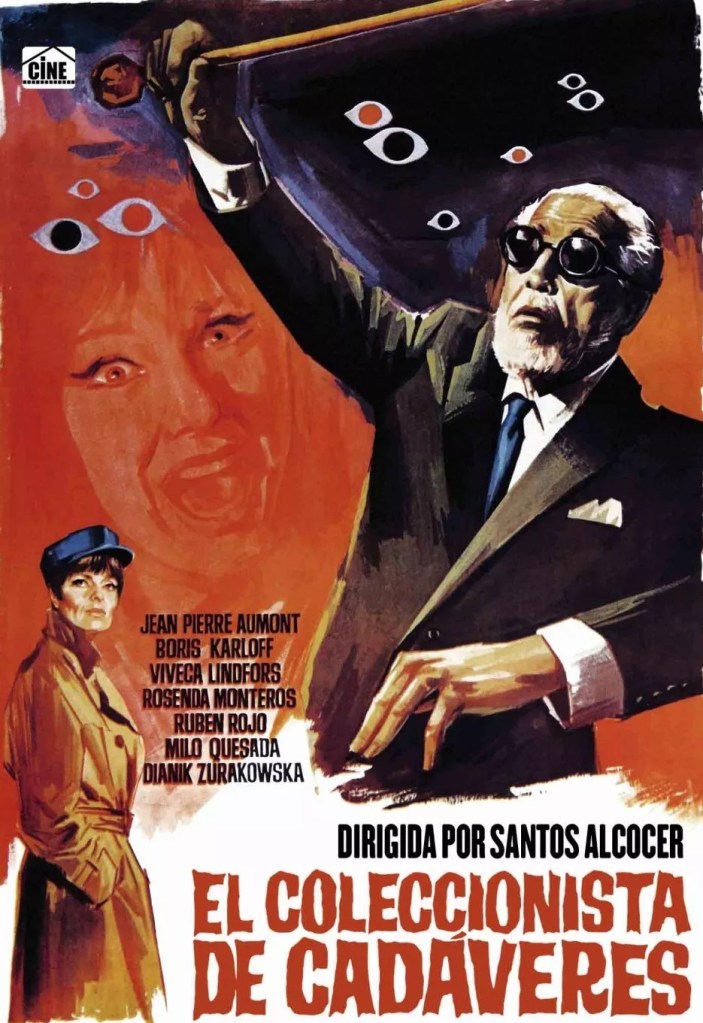
Cauldron of Blood / Blind Man’s Bluff / The Corpse Collector (1968) ***

Superior “lost” horror picture that suffered from minimal initial release and is now rapidly entering the cult dominion. Effective and occasionally very stylish entry to the genre. Apart from Boris Karloff (The Sorcerers, 1967) playing against type, it’s not populated by the usual horror actors but a surprisingly mainstream cast including suave Frenchman Jean-Pierre Aumont (Castle Keep, 1969), Swede Viveca Lindfors (Sylvia, 1965) and Mexican Rosenda Monteros (The Magnificent Seven, 1960). In keeping with a new trend mostly personified in the espionage division, a woman is the villain of the piece.

Begins with an excellent sequence that twists on audience expectation. A young woman sunbathing on a deserted beach is viewed through a telescope. A hand touches her cheek, arousing her from her slumber. You expect her to react, and she does but not as much as you would imagine. It’s only the old guy who rents out beach umbrellas telling her he’s closing shop. We cut to someone in a trench coat with a garotte. It’s not the girl he stalks, but the old fella.

Surprising number of effective scenes beginning with a terrifying nightmare sequence of a young girl being whipped and then attacked by a skeleton. Outside of the dream landscape, a mute maid is whipped.  And a clever note when a young woman pours a glass of red wine, like blood, into her bath, prefiguring trouble to come. There’s a monkey crouched in the beams of a mansion impervious to various nefarious episodes taking place below. And some trick photography of a girl running only to disappear, captured in an overhead shot. A killer dresses up in a skeleton costume.

Journo Claude (Jean-Pierre Aumont) arrives to interview blind sculptor Franz (Boris Karloff) who lives in seclusion and is cared for by wife Tania (Viveca Lindfors). Claude tackles the rumor that the reason for Franz’s very realistic sculpture is that he uses human bones, a suggestion that is batted away.

Claude makes the acquaintance of artist Valerie (Rosenda Monteros) and her nude model Elga (Dyanik Zurakowska), encounters old drunken buddy Pablo (Ruben Rojo) and unleashes his entrepreneurial instinct, planning with other villagers to buy up all the property and cash in on the tourist boom he expects to generate by his coverage of the sculptor.

It’s not just poor old guys who are disappearing; Pablo’s dog is also for the garotte. And all is not well in the sculptor’s household. He accuses his wife of trying to kill him, but botching the job, resulting in his blindness. “I am not your prisoner, you are mine,” he claims, pointing to the fact that he now requires so much care. Later, he accuses her of salting away his money.

The mansion has an underground lair where Tania bleaches bones in a cauldron (like the scene in Jaws, 1975, where sharks undergo similar treatment) and where she meets her lover Shanghai (Milo Quesada) who carries out the killings as well as the occasional rape. Franz believes his wife is merely indulging in a bit of grave robbing to supply him with carcasses for his art.

Suspicions are not raised in the village though Valerie, who turns out to have practical experience of the mechanics of sculpture, reckons too much smoke emanates from the Franz chimney. Elga and Pablo are next to fall victim. When Valerie discovers Pablo’s body, she is added to the list.

And that sets up a quite splendid three-part climax. Racing to the rescue, Claude uses his car as a battering ram to enter the house and then engages in fisticuffs with Shanghai. But, in another twist, that fight takes a helluva time to reach a conclusion so that Valerie remains trapped and with legs bound and drugged must tackle Tania on her own. Meanwhile, the blind sculptor tries to take on his wife. This is a marvelous section where she dupes him with various noises.

Jean-Pierre Aumont is outshone by both Viveca Lindfors and Rosenda Monteros.

Quadruple hyphenate Edward Mann (Island of Terror, 1966) – writer, producer, director and composer of the theme tune – has a splendid time leading the audience astray and producing some moments of sheer terror.

Buona Sera Mrs Campbell (1968) ****

Works a treat. And works like clockwork, the set-up so meticulous, it doesn’t put a comedic foot wrong and even allows space, at exactly the right time, for the ticking timebomb to be sorted out. Gags galore. Sight gags, sound gags and observational gags, but most, unusually, are snippy, the kind of sharp remarks that people make under tension. And, heaven help us, there’s farce, and that works, too. It rarely does in American movies because it’s usually an adaptation of a Broadway play and the movie director feels hidebound by stage conventions. Here, this is an original screenplay, so writer-director Melvin Frank (Strange Bedfellows, 1963) works to his own beat.

You’ll remember the “who’s the father” narrative ploy from Mamma Mia (2008) – though this preceded the Abba bash by four decades. Twenty years after the Yanks liberated an Italian village in World War Two they are back to commemorate the event. Amongst the soldiers, three men desperate to meet the daughter, Gia (Janet Margolin), they each think they sired with Carla (Gina Lollobrigida) and have been supporting with monthly cheques ever since. They don’t know about each other’s involvement but between them have provided an excellent upbringing for Gia who speaks perfect English, having attended American School in Geneva, with enough left over for Carla to live in a fancy house with a maid.

The guys are a disparate bunch. Justin (Peter Lawford) is a philanderer whose wife Lauren (Marian McCargo) dare not let him out of her sight. Phil (Phil Silvers) has a brood and hardly escapes emotional Shirley (Shelley Winters) without one – or all – being attached. The loudmouth exuberant Walter (Telly Savalas) has to bite his tongue when wife Fritzie (Lee Grant) constantly reminds him she hasn’t provided her with a child, when, secretly, he believes she’s the infertile one and Gia the proof.

Initially, this goes the way you expect – and then it doesn’t, confounding all audience expectations. Carla, who had planned to skip town until the celebrations are over, is forced by other circumstances to remain. She’s involved in two subplots – Gia is planning to run off with an older married man to Brazil, and Gina can’t resist the opportunity to get one over on the sniffy local Contessa (Giovanna Galletti). Actually, there’s three subplots if you include Gina trying to keep hold of handsome lover Vittorio (Phillipe Leroy), who initially fears one of the returning soldiers will sweep Carla off her feet and whisk her off to the States, but then becomes very dismissive of her taste in men.

When the secret is revealed, rather than turning on their deceitful husbands, the women are full of praise for them. But that’s only because it’s not the whole secret. They think they discover that out of the goodness of their hearts the men have been sending cash to Carla in memory of their (fictitious) colleague Eddie Campbell who died in the war. The guys, meanwhile, turn against Carla when they become aware of each other’s existence and the fact that not so much just that they have been rooked, collectively, out of $200,000 but that they have individually been helping to bring up what could be another man’s child. Gia, too, on learning of the deceit, is furious and runs away, leaving Carla distraught.

When the true secret emerges, naturally there’s one almighty bust up, with wives and husband and daughter all railing against Carla until Vittorio steps in and explains just what a wonderful mother she has been.  This neatly steps over the timebomb, just what possessed Carla to have sex with three men in ten days beyond that they pumped up her ego and brought her food and treats.

There are some brilliant scenes – the streetwalker, the hospital, the car horn that doesn’t work, the missing laundry, the mean Contessa finding a clever way to put down Carla – but mostly it’s held together with the stiffest of glues by an inspired performance by Gina Lollobrigida. Telly Savalas (The Assassination Bureau, 1969) is the pick of the others, playing against type.

Class act from Melvin Frank.

Discover WordPress

A daily selection of the best content published on WordPress, collected for you by humans who love to read.

The Atavist Magazine

by Brian Hannan

WordPress.com News

The latest news on WordPress.com and the WordPress community.