I am a published author of books about film - over a dozen to my name, the latest being "When Women Ruled Hollywood." As the title of the blog suggests, this is a site devoted to movies of the 1960s but since I go to the movies twice a week - an old-fashioned double-bill of my own choosing - I might occasionally slip in a review of a contemporary picture.
A 1960s novelist lucky enough to hit the bestselling jackpot could generally count upon another financial bounty when Hollywood came calling. Bestsellers came with the double bonus of a ready-made story and a ready-made audience. From the outset the industry had recognised the benefit of making pictures out of properties that had already gained a wide readership, hence the continual adaptation of Shakespeare and Dickens from the silent era onwards.
The combined hardback and paperback sales in the U.S. could amount to a couple of million copies, with double that number or more overseas, and of course some books hit the stratosphere – Gone with the Wind, The Grapes of Wrath, Peyton Place and Valley of the Dolls, for example. Publishers had learned to slap one of two taglines – either “Now a major motion picture” or “Soon to be a major motion picture” – on new paperbacks which appeared to give a book greater status among the reading public while at the same time acting as advance buzz for a movie, paving the way for an onslaught of movie tie-ins.
Alfred Hitchcock became the main selling point for “Marnie” once his name was attached to the film of the book.
In the 1960s, there were not only many more bookstores than there are now, but paperbacks were also widely available in department stores, newsagents, corner shops and kiosks. In fact, it was estimated there were as many as 125,000 outlets for books. Much as they had done with fan magazines Hollywood latched on to anything that would act as free marketing, book covers in shop windows provided a free promotional boost, in effect the publishers doing the studios’ job for them. As the cost of marketing continued to rise, movies made from bestsellers, with their significant public awareness, were seen as a very effective investment.
For a studio, books were often a cheaper investment than an original screenplays. Although some books were sold for substantial sums a good number were purchased for relatively small fees prior to publication with the author receiving further sums dependent on book sales and/or audience figures – Valley of the Dolls was sold in this fashion much to author Jacqueline Susann’s later chagrin.
From the Annual Top Ten Bestsellers, every year except 1965 the number one bestseller was turned into a movie. About four books a year on average from the top ten were made into pictures. The best year for books into films was 1962 when nearly three-quarters of the books achieving an annual top ten ranking ended up on the big screen. These were Ship of Fools (film released in 1965), Youngblood Hawke (1964), Fail Safe (1964), Seven Days in May (1964), The Prize (1963), The Agony and the Ecstasy (1965) and The Reivers (1969).
Bestsellers clearly created their own momentum and studios snatching up the movie rights tended to strike while the iron was hot, all except one of these 1962 bestsellers being filmed within three years of publication.
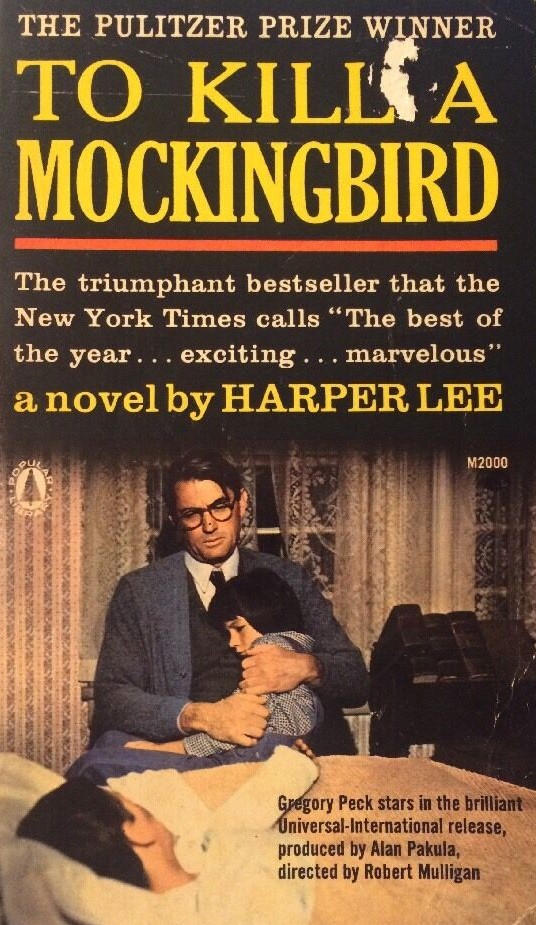
Sales of the third best-selling novel of 1961 were boosted the following year by the addition of Gregory Peck’s photo on the front cover.The gap between initial hardover publication, first paperback publication and the movie tie-in edition suited publishers who felt they would get a third bite of the cherry with the movie edition. The movie edition would usually be published several weeks prior to a film’s release serving as a teaser for the picture.
Six films were adapted in 1965 and five in 1963. Most went into speedy production. Of the 1963 contingent – The Shoes of the Fisherman (released in 1968), The Group (1966), Caravans (1978), The Sand Pebbles (1966) and The Battle of the Villa Florita (1965) – three fell into the three-year bracket while one took five years to hit the screen and Caravans, although taking more than a decade to reach the screen, was actually on MGM’s production list for most of the 1960s.
Half those from the 1965 Top Ten list were as promptly made into pictures – Up the Down Staircase (1967), The Green Berets (1968) and Arthur Hailey’s Hotel (1966). Taking a slower route were John Le Carre’s The Looking Glass War (1970), Ian Fleming’s The Man with the Golden Gun (1974) and Morris West’s The Ambassador (1984).
Of course, there was no guarantee that moviegoers would respond to a film of a bestselling book or in the quantities required to turn a profit. Even being the year’s number one bestseller could not shield a property from the vagaries of the movie business. Advise and Consent (filmed in 1962), The Agony and the Ecstasy and The Shoes of the Fisherman – all the top-selling books of their particular year – failed to make much of an impact at the box office. On the other hand, Valley of the Dolls (1968) and Airport (1970) most certainly did.
It is also worth noting that with the sole exception of Cleopatra (1963), none of the number one films at the box during the 1960s was an original screenplay. They all originated in another medium, either publishing or Broadway.
The movie tie-in was a different aspect of the publishing business and will be covered in a future Blog. And so might be novelizations.
Hitchcock wanted to follow Torn Curtain (1966) with Frenzy – initially with an American setting – and spent $75,000 on a screenplay but his paymasters Universal nixed the idea. Stuck for another project and hating idleness, Hitchcock rummaged through the studio’s outstanding list of properties and came up with Topaz because it was “better than nothing” and “he was getting to the point where he would consider anything, pretty well, just to continue exercising his craft.” The Donald Spoto version has it that Hitchcock’s wife Alma “approached Lew Wasserman, begging him to find a project to get her husband back to work.”
Nonetheless this hardly had “desperate” written all over it, as some have argued, not with Universal willing to stump up $4 million, his biggest budget to date. With a political backdrop similar to Torn Curtain, the director aimed for “espionage with an emotional relationship” like Notorious (1946).
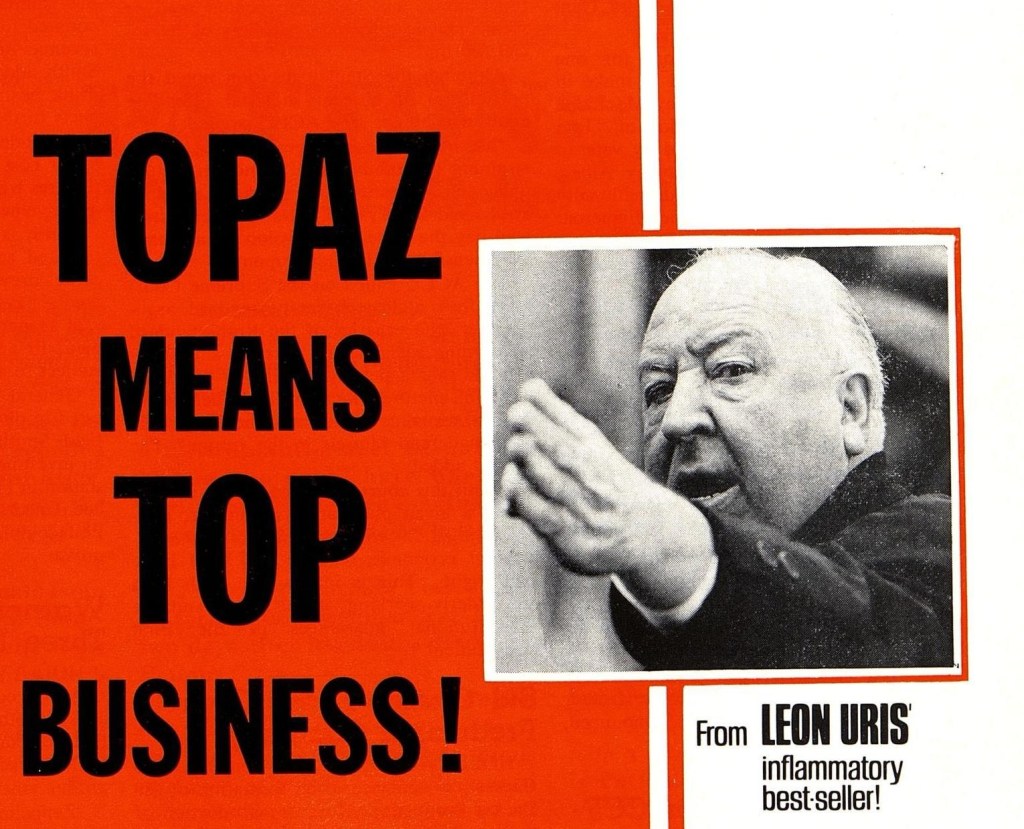
Hitchcock hired Topaz author Leon Uris (Exodus) to write the screenplay. Uris had some experience in this field have written the screenplays for Gufight at the O.K. Corral (1957) and adapted his own Battle Cry. Uris was far more high-powered writing partner than Hitchcock had been used to, considering himself as much a master of his own genre as the director was of his. He had such a high opinion of himself that he wrote the lyrics to a song “Topaz” to go out as a sales gimmick for the publication of the book. And was formidable in other ways. He had been the first author to deny the hardback publisher a share, as was traditional, of both paperback and movie rights.
Incidentally, Universal only picked up the project on second go-round. Uris had originally sold the movie rights for $500,000 to British businessmen Shel Talmy and Sir William Piggott. But the Bank of England refused to sanction the deal because Britain had just devalued the pound sterling and it did not wish such a large sum of money to leave the country.
It was unlikely that Hitchcock and Uris would hit it off. The relationship got off to a difficult start when Hitchcock tried to install the author “in a little office in his cottage” while Uris held out for his own private domain in the studio’s executive building. Uris “made a fight” out of other little things in order to exert his own authority. Perhaps to get his own back, Hitchcock forced Uris to undergo a crash-course in Hitchcock films, watching the director’s output with the director providing a personal commentary. Uris called it “a drill in self-aggrandizement.” The partnership failed to gel and Uris was off the project.
But Hitchcock recognized that Uris had been correct in some of his assessments of the director’s approach and realizing he was out of touch with modern espionage arranged to receive briefings from top intelligence operators including George Horkan, former deputy inspector general of the CIA.
Next up for screenwriting duties was Samuel Taylor (Vertigo, 1958). Hitchcock dropped Uris’s flashbacks to World War Two and insisted on building up the Cuban section, altering the Uris plotline and making Rico Parra (John Vernon) “a sympathetic, almost tragic figure.”
The most memorable scene in the picture – the death of Juanita – was never properly scripted and instead relied on the genius of Hitchcock’s cinematic inspiration. “Although it was a death scene,” said Hitchcock, “I wanted it to look very beautiful.” It was also a piece of technical (of the old-fashioned kind) wizardry. The director had attached five pieces of thread to her gown. The threads were held by five men positioned off-camera. As Juanita fell, “the men pulled the threads and her robe splayed out like a flower that was opening up.”
Hitichcock’s biographers continued to insist that the director was caught short by the production process. The picture’s main problem, according to Taylor, was that “Hitch was trying to make something as if he had Ingrid Bergman and Cary Grant in it.” To accommodate a major Hollywood star would have meant changing the entire plot to accommodate the desire of a big star to be included in more of the action. Bankable international stars like Yves Montand (Z, 1969) and Catherine Deneuve (Belle de Jour, 1967) were passed over in favor of relative unknown Frederick Stafford (OSS 117, Mission for a Killer, 1965), a late starter in the movie business, but bringing a certain elan to any part, and old dependables like John Forysthe (The Trouble with Harry, 1955).
But Hitchcock had already decided to ditch big stars and would not have been looking for a Bergman/Grant equivalent while working through the screenplay. Prior to production he announced he would “cast unknowns to give the film more authenticity.” And he already planned to take a less-than-heroic look at the spy game. He had been disappointed at the ending of Torn Curtain. “I would personally preferred to have the hero suffer qualms about behaving like a professional spy and I would have ended the film with his disgust at his own position.”
Biographers also asserted that the opposition of the French government came as something of shock. Not true either. It was obvious to all that the film would annoy the French. Asked about this issue in a press conference, Hitchcock joked, “I shall disguise myself as thin man.” The French government, clearly not sharing the Cahiers du Cinema blind faith in the director, complained the script was anti-French and refused permission to shoot in France and although the issue was finally resolved after top-level discussions shooting was delayed.
Coupled with an almost documentary-style approach and the fact that some of his most acclaimed films – Shadow of a Doubt (1943), Strangers on a Train (1951), The Trouble with Harry and Psycho (1960) – had been made without big stars, he seemed to be taking no great risk.
Roberto Contreros as the Cuban police chief Vernon was also a last-minute replacement, called in for Aram Katcher, who had shot all his scenes and didn’t realise this had occurred until, having been lined up for television talk shows, he discovered he had ended up on the cutting room floor.
The key role of Juanita was not cast until a few days before her scenes were to be shot. Hitchcock had turned up his nose up at various suggestions and found fault with every actress interviewed. “She will show up,” said Hitchcock. And at the last minute she did. The German-born Karin Dor (You Only Live Twice, 1965) had Latin features and fluent English.
Huge sets were built on the Universal lot for the Harlem hotel, a mansion in Virginia, a Cuban street and La Guardia airport, but for a Cuban hacienda Hitchcock had to look no further than director Clarence Brown (National Velvet, 1944) who made available his home.
Hitchcock had planned that Topaz would include his first modern love scene, that is with the actors fully topless. That notion was scuppered when Hitchcock was informed that both principals had significant surgical scars on their torsos.
The climax was not in the book either – an old-fashioned duel in a soccer stadium. But Hitchcock did not shoot it. His wife Alma had suddenly fallen ill and Hitchcock left the filming of the scene to Herbert Coleman. Test audiences rejected the ending. Interestingly, the main reason the original ending was changed was due to adverse reaction at the San Francisco preview. There had been an unholy scramble for tickets, primarily from youngsters, among whom Hitchcock’s stock was riding high – and far higher than any other director among the older generation. So it may have been that he was brought down to earth by the very audiences that were otherwise praising him to the stars.
Under pressure from Universal, Hitchcock shot another more cynical ending, Devereux (Frederick Stafford) and the French traitor Granville (Michel Piccoli) waving each other off as they boarded planes for Washington and Moscow, respectively. To pacify the French, who might object to a traitor getting off scot-free, Hitchcock devised a third ending, utilised from existing footage, which suggested Granville committed suicide.
There was enormous debate at the studio over which ending to use. The result was, inevitably, compromise. Different versions were shown. So what ending you saw depended on where and when you viewed the film. Between a 142-minute preview screening in London – it was released in Britain prior to America – and a 126-minute release a week later the ending changed to the suicide. Biographers claimed British distributor Rank lopped 20 minutes off the picture, but since the 142-minute version was a rough cut the editing was not quite as brutal as it sounds. The suicide was seen in France and America. The duel version can be seen on a DVD.
The one I saw, in case you are interested, had the pair waving each other off at the airport which I thought an excellent and wholly believable ending, given that most famous British traitors did escape.
Nor was there outright condemnation of the finished picture. The New York critics, the most influential in the country, were split. Vincent Canby, the most highly-regarded mainstream critic of the time, gave it a rave review in the New York Times. (Canby placed it number seven on his year’s top ten). Two others – the New York News and the New York Post – gave it favorable reports. The three magazines who gave it gave it the thumbs-down – Newsday, New York and Cue – had significantly smaller circulations than the newspapers. Universal had no concerns about its potential, releasing it during the busy Xmas period.
However, it didn’t help that the film came out just as the lionization of Hitchcock had begun. The Truffaut book had begun to win admirers, Hitchcock was awarded an honorary Oscar in 1968 and elected to the French Order of Letters in 1969. Critics, except in France naturally, felt it was vastly inferior to his previous work. As a consequence, when his career began to be reassessed, biographers began to look for reasons why this film did not meet with their approval, forgetting that they had been mauling him for most of the decade.
He must have been ill, was one assumption. According to biographer Patrick McGilligan: “Photographs taken during the filming of Marnie show an almost trim and dapper man; in contrast…in 1968 (he) was again far overweight, pink-cheeked from drinking and transparently depressed with the realization that time, always his cruelest enemy, was closing in.” It would take quite a photographer to make Hitchcock look trim and dapper but the almost purple prose employed here by McGilligan serves his purpose of explaining why Topaz fell below, in his view, the director’s normal high standards.
John Russell Taylor, Hitchcock’s official biographer, commented: “He (Hitchcock) has declined to discuss the film beyond making it clear that he regards it as a complete disaster, whatever some of his wilder admirers may say in its favor.”
But this would not the be the first good – not to say excellent – movie produced in difficult or traumatic circumstances. Since Hitchcock was the most fastidious of directors and liked the movie he made to be a mere reflection of the movie that had already unspooled in his head a long time before, his antipathy towards the picture clearly comes from his unhappiness at his loss of control, rather than, I would guess, any genuine horror that he had made an atrocity. As a Hollywood veteran, and especially one who had worked with David O. Selznick, he would be more than familiar with the need to re-edit pictures after previews. Perhaps he felt he was beyond all that.
Whatever the case, don’t let the inevitable inanities of Hollywood production and post-production, or the carping of critics, put you off an enjoyable film.
SOURCES: Patrick McGilligan, Alfred Hitchcock, A Life in Darkness and Light, (Harper Collins, 2003), p682-695; John Russell Taylor, Hitch, The Life and Work of Alfred Hitchcock, the Authorised Biography (Faber and Faber, 1978), p279-281; Donald Spoto, The Dark Side of Genius, The Life of Alfred Hitchcock, (De Capo Press, 1983), p498-503; “Leon Uris Forces Publishing Yield Better Terms to Successful Writers,” Variety, November 23, 1966, p28; “Cuffo Disk to Promote Uris Upcoming Topaz,” Variety, September 20, 1967, p49; “Bank of England Asks Pic Savvy,” Variety, December 13, 1967, p8; “Hitchcock-Uris Reveal Topaz as De-Politicized,” Variety, May 8, 1968, p32; “Hitchcock To Produce Topaz for Universal,” Box Office, May 13, 1968, p17; “Says Actor: U’s Kindness Hurts,” Variety, April 30, 1969, p7; “Hitchcock London Bow Exudes More Mystery Than Pic Itself,” Variety, November 12, 1969, p30; “NY Critics Dec 24-31,” Variety, December 24, 1969, p4; “Time for Year’s 10 Best Lists,” Variety, December 31, 1969, p7.
Authentic, atypical, engrossing, this grittier Hitchcock mixes the realism of Psycho (1960) and Marnie (1964) with the nihilism of The Birds (1963), a major departure for a canon that previously mostly spun on innocents or the falsely accused encountering peril. The hunt for a Russian spy ring by way of the Cuban missile crisis forms the story core but the director is more interested in personal consequence and even the villain suffers heart-rending loss. Betrayal is the other key theme – defection and infidelity go hand in hand.
The tradecraft of espionage is detailed – dead letter drops, film hidden in typewriting spools, an accidental collision that is actually a sweet handover. In a transcontinental tale that shifts from Copenhagen to New York to Cuba to Paris, there is still room for classic sequences of suspense – the theft of secret documents in a hotel the pick – and Hitchcock at times simply keeps the audience at bay by employing dumbshow at key moments.
In some respects the director was at the mercy of his material. In the documentary-style Leon Uris bestseller (almost a procedural spy novel), the main character is neither the trigger for the plot nor often its chief participant and is foreign to boot. So you could see the sense of employing a cast of relative unknowns, otherwise an audience would soon grow restless at long absences from the screen of a Hollywood star of the caliber of a Cary Grant or Paul Newman. It is a florist (Roscoe Lee Browne) who carries out the hotel theft, a small resistance cell the spying on Russian missiles in Cuba, a French journalist who beards one of the main suspects, not the ostensible main character, French agent Andre Devereux (Frederick Stafford), not his U.S. counterpart C.I.A. operative Michael Nordstrum (John Forsythe) nor Cuban villain Rico Parra (John Vernon).
Unusual, too, is the uber-realism. The main characters are fully aware of the dangers they face and of its impact on domestic life and accept such consequence as collateral damage. It is ironic that the Russian defector is far more interested in safeguarding his family than Devereux. Devereux’s wife (Dany Robin), Cuban lover Juanita (Karin Dor) and son-in-law (Michel Subor) all suffer as a result of his commitment to his country. And that Juanita (Karin Dor), leader of the Cuban resistance cell, is more of a patriot than the Russian, refusing to defect when offered the opportunity. Hitchcock even acknowledges genuine politics: the reason a Frenchman is involved is because following the Bay of Pigs debacle in 1961 American diplomats were not welcome in Cuba.
In terms of bravura Hitchcock, the pick of the scenes are the hotel theft and the death of one of the principals, filmed from above.
I have steered clear of this film for over half a century. I saw it on initial release long before the name Hitchcock meant anything to me. But once it did I soon realized this film did not easily fit into the classic Hitchcock and the critics on whom I relied had always represented it as shoddy goods. So I came to it with some trepidation and was surprised to find it so engrossing.
Frederick Stafford (O.S.S. 117: Mission for a Killer, 1965) was excellent with an insouciance reminiscent of Cary Grant and a raised eyebrow to match that star’s wryness. John Vernon, who I mostly knew as an over-the-top villain in pictures such as Fear Is the Key (1972), was surprisingly touching as the Cuban bad-guy who realizes his lover is a traitor. And there is a host of top French talent in Michel Piccoli (Belle de Jour, 1967), Philippe Noiret (Justine, 1969) Dany Robin (The Best House in London, 1969) and Karin Dor (You Only Live Twice, 1967).
As you are possibly aware, three endings were shot for this picture and I can’t tell you which I saw without spoiling the plot. If you want to know, read tomorrow’s Blog.
In any case, this is worth seeing more than just to complete a trawl through the entire Hitchcock oeuvre, a very mature and interesting work.
The Golden Age of American mystery writers like Raymond Chandler and Dashiell Hammett was well served by Hollywood in pictures like The Thin Man (1934), The Maltese Falcon (1941) and The Big Sleep (1946). But the next generation was not. Apart from Ross MacDonald’s Lew Archer – renamed for Hollywood purposes – in Harper (1966) and to a lesser extent The Drowning Pool, a whole generation of fictional detectives came unstuck in the movies, among them John D. MacDonald’s Travis McGee (Darker Than Amber, 1970) and Ed McBain’s Steve Carella (Fuzz, 1972) while Robert B. Parker’s Spenser only got as far as television. Richard Stark did better than most, but only courtesy of Point Blank (1967) with Lee Marvin – renamed Walker – as series character Parker.
Parker was an unusual character for a long-running crime series in that he was a hard-boiled thief rather than a private eye or cop. He was exceptionally ruthless and women only featured in his life once the job was done so a difficult character around whom to spin a tale. And he was not a man who needed to show how tough he was, reputation and physique already did that, so Jim Brown having to throw his weight around in the film to intimidate this fellow criminals was not necessary and not in the book and was only added to the movie to explain Brown’s leadership credentials.
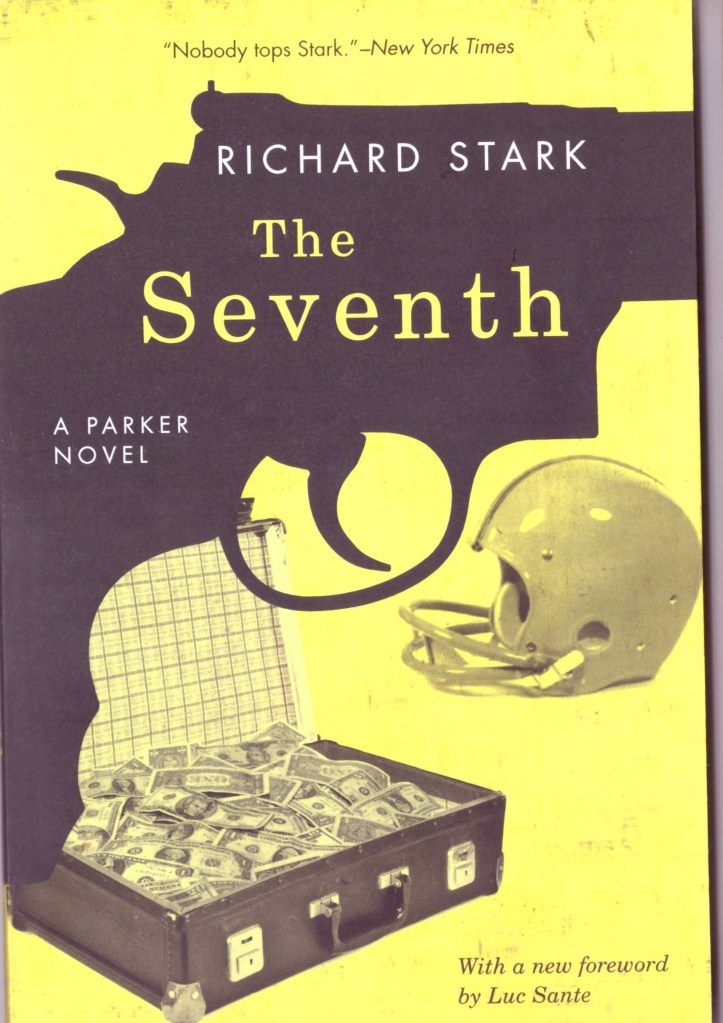
The book was originally known as “The Seventh.”
The book was called The Seventh – Parker’s share of the split, everyone getting an equal share which was always the tradition in Parker’s world. Since the author refused to sign away the rights of his character when he sold his books to Hollywood, the movies always featured a lead called something other than Parker. In The Split Jim Brown played a guy called McClain. The books often followed a chronology so McClain being broke at the start of The Split was a consequence of the previous book in the series Jugger.
The film has a completely different structure to the book. The Split follows the usual heist dynamic – planning, robbery, consequence. The book starts at the opposite end and begins with the robbery proceeds already stolen and Parker having to investigate his partners to find out who did it or alternatively how and why the deed was accomplished. In the book his girlfriend Ellie (Diahann Carroll in the film) is a temporary hook-up and since she is dead at the outset, there’s no element of romance. But since a movie needs more than that, Ellie is given a different backstory, the much stronger one of his estranged wife.
The minute a book was sold to Hollywood, the publishers slapped a “soon to be a major motion picture” strapline across the cover and printed a new edition. So studios were already benefitting from free advance publicity.
There are wholesale name changes from book to film. The book’s Harry Kifka is changed to Dan Kifka (Jack Klugman), Bert Clinger becomes Abe Clinger (Ernest Borgnine), Bob Negli is transformed into Dave Negli (Donald Sutherland). Arnie Feccio becomes Marty Gough (Warren Oates). The cop is Dougherty not Brill (Gene Hackman). There are other changes. Clinger doesn’t own a gym; he did own a movie theatre but ended up in jail for trying to burn it down for the insurance. You couldn’t get a greater difference between the Negli in the book and Donald Sutherland, the original character being under five-feet tall, over a foot shorter than Sutherland, and he’s the one – not Gladys (Julie Harris) – who came up with the idea of robbing the football stadium and although cocky he’s not a cold-blooded assassin.
The book basically follows Parker tracking down his fellow criminals one by one at the same time as keeping one step ahead of the investigating detective which is effectively the third act of the movie. The heist is told in flashback, but with less specialization required from the personalities involved. In some respects book and film arrive at the same conclusion but by different means. The movie has to flesh out characters but in devoting so much time to the planning and execution of the robbery, not sufficient time is left for the subsequent hunt for the man who has stolen their loot which goes some way to explain why the ending appears so rushed.
Several of Richard Stark’s “Parker” books have been filmed beginning with Point Blank (1967) based on The Hunter and remade as Payback (1999) with Mel Gibson. Others are: French Mise a Sac (1967) based on The Score, The Outfit (1973) with Robert Duvall, Slayground (1983) starring Peter Coyote and Parker (2013) from the novel Flashfire and starring Jason Statham and Jennifer Lopez. Richard Stark was the pseudonym of Donald E. Westlake whose other filmed novels included The Hot Rock (1972) with Robert Redford and George Segal, The Bank Shot (1974) starring George C. Scott and What’s the Worst That Could Happen (2001) with Martin Lawrence.
I can highly recommend the Parker series. The stories are taut and the quality of writing on a par with Chandler and Hammett. Stark expends much detail on weaponry and the details of planning the heists. Sometimes Parker gets away with the robbery, sometimes he does not, and there are always unexpected developments.
The Seventh is very hard to get hold of. Most of the copies available even on ebay are expensive so your best bet, if you are interested, is this omnibus edition of five books.
You could not have a more explosive start. In the wake of the seismic slap Sidney Poitier delivered to an arrogant white man in In the Heat of the Night (1967) heist mastermind McClain (Jim Brown) bursts out of the traps by: picking a down-and-dirty knuckle-duster of a fight with hardman Bert (Ernest Borgnine); ramming a limo driven by Harry (Jack Klugman); locking technical wizard Marty (Warren Oates) in an electronic cell; and bracing marksman Dave (Donald Sutherland). It turns out these are all auditions for a $500,000 robbery from the Los Angeles Coliseum during a football match. Nonetheless, the point is made. Despite explanation for the ferocity it scarcely masks the fact that here was a hero unwilling to take any crap from anybody.
The Split follows the classic three acts of such a major crime: recruitment, theft, fall-out. Gladys (Julie Harris) sets up the daring snatch, entrusting a down-on-his-luck McClain – attempting reconciliation with divorced wife Ellie (Diahann Carroll) – with pulling together a gang with particular sets of skills. The clever heist goes smoothly, the cache smuggled out in a gurney into a stolen ambulance, itself hidden in a truck, and spirited away to Ellie’s apartment until the ruckus dies down.
But someone else has a different plan. The stolen money is stolen again. McClain, responsible for its safekeeping, is blamed for its loss, while he suspects all the others. Adding to the complications is a corrupt cop (Gene Hackman). So it’s cat-and-mouse from here on in, McClain dodging bullets as he attempts to clear up the mess, find the loot and evade the cops.
British release in a double bill with “Woman without a Face” originally released in the U.S. as “Mister Buddwing.”
The title refers to the way the way the money is intended to be shared out but it could as easily point to a film of two halves – recruitment/robbery and fall-out. The first section has several stand-out moments – a split-screen credit sequence, Marty’s desperate strip inside the cell to prevent the electronic door closing, an asthma attack mid-robbery, the beat-the-clock element of the heist, Dave’s targeting of tires to create the massive gridlock that facilitates escape. Thereafter, the tension grows more taut, as the thieves fall out with murderous intent.
One of the joys of the picture is watching a bunch of actors on the cusp. Jim Brown (The Dirty Dozen, 1967) was in the throes of achieving a stardom that would soon follow for Hackman (Bonnie and Clyde, 1967), Sutherland (also The Dirty Dozen) and Oates (Return of the Seven, 1966). Brown is tough and cynical in the Bogart mold, a loner with lashings of violence in his locker. Of the supporting cast, Sutherland’s funny maniac, complete with mordant wit, is the pick and he has the movie’s best line (“The last man I killed for $5,000. For $85,000 I’d kill you seventeen times.”) Hackman reveals an intensity that would be better showcased in The French Connection (1971) and Borgnine, Oscar-winner for Marty (1955) reverts to his tough guy persona. Having said that, you only get glimpses of what they are capable of.
Making the biggest step-up is Scottish director Gordon Flemyng whose last two pictures were Dr Who and the Daleks (1965) and Daleks’ Invasion Earth A.D. 2150 (1966). He helms the picture with polish and confidence, allowing the young bucks their screen moments while wasting little time in getting to the action and pulling off a mean car chase.
Crime writer Richard Stark’s (pseudonym of Donald E. Westlake) was careful to sell the rights to his books one-by-one so that no single studio could acquire his iconic thief Parker. That accounted for him being renamed Walker in Point Blank (1967), Edgar in Pillaged (1967) and McClain in The Split, which was based on Stark’s The Seventh (that fraction being the character’s share of the loot).
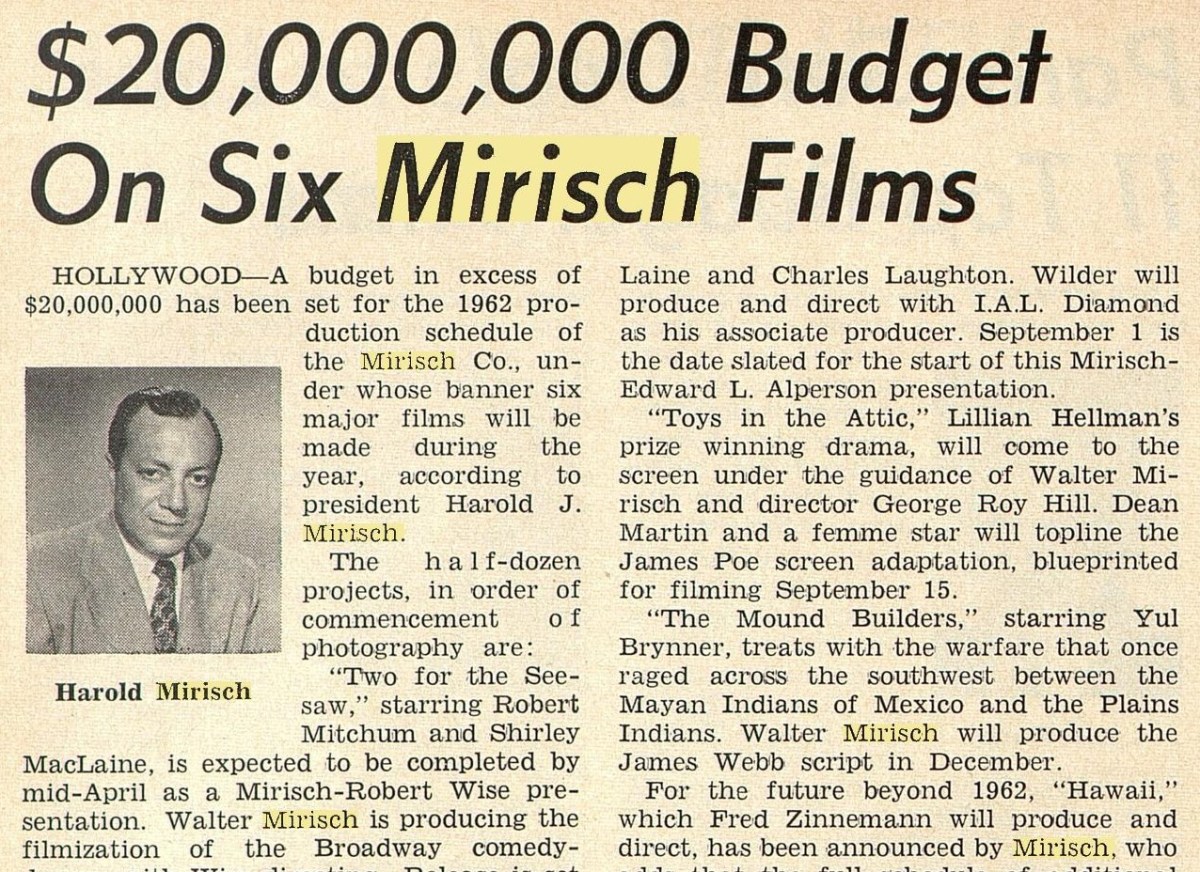
The Mirisch Brothers, the first of what would be called the “mini-majors,” ushered in a Hollywood production revolution in the 1950s by employing a number of cute devices. They paid over-the-odds for top directors and actors – $750,000 apiece for John Wayne and William Holden for The Horse Soldiers (1959) plus $250,000 for John Ford, for example. They gave them greater control over scripts and the finished pictures. Possibly as an attractive a hook, they handed out a bigger share of the profits.
This approach went down very well with the talent – lucrative long-term pacts were struck with Yul Brynner, Billy Wilder and John Sturges among others – less so with rival studios who complained their generosity was driving up costs at a time when Hollywood was on the brink of collapse with major studios teetering on the edge of bankruptcy as, thanks to television, audiences plummeted.
Walter Mirisch was the name best known to moviegoers since he worked as producer on the company’s output. Harold was best known to the studios since he was the guy who set up the deals and found the funding. Marvin was the backroom boy who ensured the whole process kept ticking over.
Mirisch had secured a deal with United Artists to supply a series of pictures, the first contract calling for 20 movies. Generally, the company was lauded by the trade press as innovative thinkers producing a stream of noteworthy movies such as Some Like it Hot (1959), The Magnificent Seven (1960), The Great Escape (1963), Irma La Douce (1963) and later pictures like The Russians Are Coming, The Russians Are Coming (1966), Hawaii (1966), In the Heat of the Night (1967) and The Thomas Crown Affair (1968). As independent producers they had more than their fair share of Oscar successes.
But like every player in Hollywood, they employed sleight of hand, convincing the media that they were highly successful operators when the reality was exactly the opposite.
The Wisconsin Center for Film and Theater Research, part of the University of Wisconsin, holds a vast archive relating to United Artists. Within that archive, I was able to source the materials that cast an alternative light on the Mirisch Brothers’ initial foray into the Hollywood big-time.
The figures revealed that the first 20 pictures – including Some Like it Hot, The Great Escape and Irma La Douce – in the Mirisch-United Artists deal racked up a cumulative $8 million loss.
In fact, one of the factors driving down the company’s potential profitability was the amount of money it gave away in profit-share. In addition, the bigger profits in the movie business were often to be found in distribution and exhibition. For a start, about 50% of box office revenue found its way into the exhibitor’s pockets. From what was left over, another big chunk went to the distributor, in this case United Artists, and once profit-participants had been paid off, there was sometimes remarkably little finding its way back into the Mirisch Brothers’ coffers.
For example, Some Like it Hot, which according to these figures generated a total of $12.9 million in domestic and foreign rentals* (i.e. what’s left after exhibitors have taken their share), racked up less than half a million dollars in profit for the Mirisch Brothers. The Magnificent Seven earned three times as much overseas as in the U.S. so though viewed as a flop at home it ended up with $321,000 in the bank. The Great Escape brought in a profit of $326,000 on total rentals of $11 million while Irma La Douce topped that with $440,000. The latter picture illustrated a typical problem for Mirisch in that at the outset they were bound to share profits with three other partners. The Apartment (1960) delivered Mirisch’s biggest profit of $1.09 million.
But those were the only films – out of the 20 launched in Mirisch’s first few years of operation – to turn a profit. The other 15 all hit the buffers. That was not a healthy win-lose ratio at all. That three-quarters of the Mirisch picks turned into losers was hardly cause for celebration.
Some of the losses were stratospheric for the time. The Children’s Hour (1961), with Audrey Hepburn picking up a colossal upfront fee, was in the red to the tune of $2.7 million. The loss on The Horse Soldiers amounted to $1.8 million with Billy Wilder’s ill-fated One, Two, Three (1961) suffering a $1.5 million loss and Toys in the Attic (1963) turning into a $1.2 million liability. Stolen Hours (1963) with Susan Hayward added nearly $1 million to the company’s overall debt. Even Elvis Presley, at that point a guaranteed box office draw, offered no respite – the loss on Kid Galahad (1962) above $430,000 and that of Follow That Dream (1962) $195,000.
So you might be wondering with such a poor ratio of hits to flops why the Mirisch Brothers managed to stay in the game. Well, before the final figures were in on the contract to deliver the first 20 pictures, United Artists were already committed to a further 20 movies, some of which were already in production. But there were two other elements acting in Mirisch’s favor. The first was that exhibitors were desperate for new movies, the industry only beginning by 1963 to turn a financial corner, and it was expected that Mirisch would have learned from its mistakes and stop underwriting expensive pictures (which turned out to be untrue).
But second, and more importantly, the Mirisch losses did not impact so badly on United Artists. That studio made the bulk of its revenue from distribution. Even if a picture was a flop, UA’s 30% distribution fee was based on the gross, so a movie that maybe ended up as an overall financial flop could still generate enough revenue to keep UA happy.
Also, UA, now seeing record profits from the likes of its investment in Tom Jones (1963) and on the brink of a James Bond bonanza, could afford to carry its production partner. So Mirisch kept on pretending it was a huge success and the trade press kept on believing it.
* These figures do not including television sale or future reissues. But initial television sales in the early 1960s averaged about half a million dollars for successful movies. What television would pay was based on the original domestic gross (i.e. perceived popularity). Only a couple of pictures, most notably The Magnificent Seven, significantly added to their initial release income through reissue. So it is extremely unlikely that the Mirisch Brothers would have gone into profit on those first 20 pictures through reissues and television sales in the 1960s, and doubtful if they would have even halved the losses.
SOURCE: “Mirisch Pictures First 20 Picture Deal,” Appendix II, United Artists Archive, Wisconsin Center for Film and Theater Research; “Mirisch and UA Sign New 3-Year Contract,” Box Office, June 12, 1961, 8; “Multi-Million Deal,” Box Office, May 22, 1961, p20; “Irma La Douce Is Split four Ways from Start,” Box Office, June 11, 1962, W-2; “Billy Wilder To Produce Three Films for Mirisch,” February 5, 1963, p12.
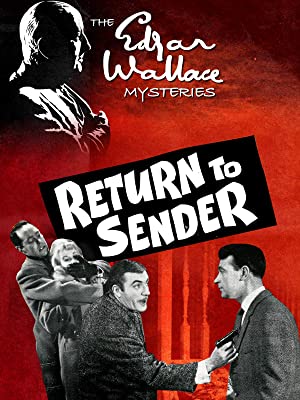
The B-film’s B-film. Where American B-pictures invariably focused on sleaze, sci-fi, horror or violence, their British counterparts often exuded class with solid acting, clever plots, excellent though simple sets and good composition. Edgar Wallace, the world’s most prolific writer, had regained sudden popularity thirty years after his death, and movies made from his works made ideal subjects for B-pictures fed into the British double-bill system. His thrillers are all story, racing along with twist after twist.
On the verge of being arrested for fraud, high-class businessman Dino Steffano (Nigel Davenport) hits on blackmail as a means of forcing investigator Robert Lindley (Geoffrey Keen) to drop the case. He sets up associate Mike Cochrane (William Russell) to fake photographs involving sexy Lisa (Yvonne Romain) and Lindley in compromising positions. So Lisa, pretending to hold vital evidence, lures him to her flat where this can be staged.
Meanwhile Lindley’s daughter Beth (Jennifer Daniel) chats up Cochrane after overhearing him asking questions about her father’s cottage. Cochrane has history with Lindley, an 18-month prison sentence the result of a previous encounter. He also resents Steffano over previous double-dealing and is planning to take his own revenge while carrying out the master plan.
I doubt if you will be able to see the twists coming. Suffice to say, nothing is what it seems. The closer Lindley gets to uncovering the mystery, the darker it becomes and the more danger he appears to be in. Even when characters reveal their plans, you can be sure they will have a different one up their sleeve. Steffano’s exceptional charm masks his ruthlessness. While Lindley is dogged, he is no match for the slinky Lisa who can play the vulnerable female with ease. Artist Beth treasures her independence so much that it takes her down some devious alleys, especially when trying to pump Cochrane for information. And it all leads to a terrific climax, involving further twists and double-dealing.
Most of this is played out in classy apartments with log fires burning and Steffano drinking brandy and smoking cigars, or on a yacht, or Lindley’s equally splendid chambers.
The cast are either up-and-coming movie stars or destined for small-screen fame. Many of these Edgar Wallace thrillers would prove stepping stones for new talent.
Nigel Davenport (The Third Secret, 1964) is the pick and would become an accomplished supporting actor in films like Play Dirty (1969). Yvonne Romaine had already made a splash in The Frightened City (1961) and would go on to play the female lead in Devil Doll (1964) and The Brigand of Kandahar (1965). Geoffrey Keen (Dr Syn, Alias The Scarecrow, 1963) would make a bigger impact on television in Mogul (1965-1972). As would William Russell (The Great Escape, 1963) who went on to become a long-running sidekick of Dr Who (1963-1965). Jennifer Daniel became a horror favorite with the female lead in The Kiss of the Vampire (1963) and The Reptile (1966).
Making his movie debut director John Hales clearly benefits from a couple of decades as an editor in films like The Seventh Veil (1945) and Village of the Damned (1960) and he nips quickly from one scene to another to keep the plot ticking along while showing some gift for framing characters within a scene.
I should point out you will easily find flaws. Strictly speaking, if you know your British police procedural, Lindley would not be an investigator, and it would not be too hard to find strains of implausibility showing. But that should not detract from this enjoyable movie.
British studio Anglo Amalgamated churned out these Edgar Wallace thrillers as double-bill fodder and, even though compromised in the budget department, they were generally well-made. Wallace was a brand-name, the country’s best-selling author on account of his 200-plus novels, most still in print long after his death, and a byword for a good read. American networks edited the features down to fit into a television series. So if you are hunting these down make sure you get the original features rather than the edited versions.
You could try this sampler on Amazon Prime but if you like what you see you would be better to buy one of the box sets.
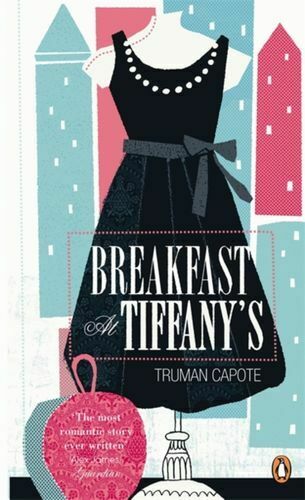
For a start the book – a novella really, scarcely topping the 100-page mark – by Truman Capote was set during the Second World War. And the book’s narrator Paul (George Peppard in the film) is more of an observer in the vein of in Nick Carraway in The Great Gatsby and as such is not privy to every action of Holly Golightly (Audrey Hepburn) rather than, say, the redoubtable Dr Watson who, as confidante of Sherlock Holmes, can faithfully record his every action.
So the first task set screenwriter George Axelrod was to update the picture to the contemporary era of the early 1960s. Fashion-wise, this proves a tremendous boon, allowing the director the give Holly her iconic look. And it does permit more leeway with acceptable sexual mores. However, while in both book and film Paul is an aspiring writer, in the book he is initially unpublished, while in the film he has had a book of short stories published, but is living as a gigolo. In the book he is an innocent 19-year-old, mouth clearly agape at Holly’s shenanigans, while in the film he is clearly more mature.
Since Hollywood is intent on providing a happy ending, it was essential for the screenplay to make Paul an acceptable suitor rather than a young swain largely in awe of the captivating Holly.
Axelrod did not have to do much to capture the book’s Holly. In fact, he appropriated wholesale chunks of dialogue. Capote had done such a wonderful job of describing her unique personality that it made a lot of sense to retain her vocabulary and diction.
Axelrod turns Paul into a more dramatic figure, such that he is able to both challenge himself and Holly, emerge from his own self-destructive trap, and develop his own narrative arc, and play a more significant role in Holly’s life, so that the romantic possibilities, which appear distant in the book, can be more easily realized.
The input of other characters is enlarged or diminished. The Japanese neighbor Mr Yunioshi (Mickey Rooney), who only appears at the beginning of the book, is called into more extensive comedic duties by the screenwriter. Mag Wildwood (Dorothy Witney), only seen in passing in the film, has a more significant role in the book, becoming for a time Holly’s flatmate and rival in love. There is no room in the film for Madame Spanella, held responsible in the book for informing the police about Holly’s arrangement with the gangster. For structural reasons, Axelrod is also able to dispense with bar owner Mr Bell, a pivotal character at the book’s opening.
Otherwise, the book acts as a pretty useful treatment, from which the screenwriter need only occasionally depart. Sometimes this is for clarification. In the film Holly insists her marriage to Doc was annulled whereas in the book this is far from clear, leaving her open to charges of bigamy. Axelrod turns into dialogue some of Paul’s observations and turns some dialogue into scenes. In addition, in the book Holly becomes pregnant by her Brazilian lover, thus expecting marriage to automatically follow.
The couple do steal masks from a dime store, but do not visit Tiffany’s together to have the cheap ring inscribed, but the scene has its origins elsewhere in the book. Nor does Paul in the book introduce Holly to the public library and though he finds evidence of her mugging up on South America it is only in the film that that becomes a scene.
The book avoids the happy ending Hollywood was so desperate to reach. Holly goes off on her own. The cat is chucked out of the cab and although a remorseful Holly immediately chases after it, she is too late.
The notion that a creature as wild and individual as Holly Golightly would submit to marriage to an impoverished writer seems a fantasy too far. Unhappy endings were not unknown in Hollywood, look at Casablanca, but for whatever reason Paramount or Blake Edwards dictated otherwise.
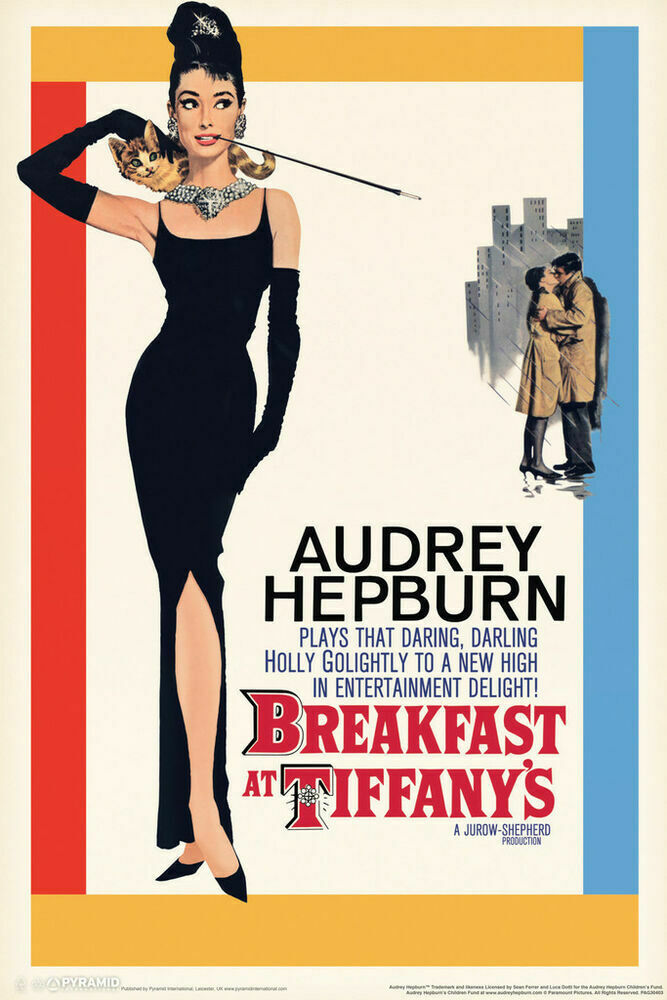
Reassessment sixty years on – and on the big screen, too – presents a darker picture bursting to escape the confines of Hollywood gloss. Holly Golightly (Audrey Hepburn) is one of the most iconic characters ever to hit the screen. Her little black dress, hats, English drawl and elongated cigarette holder often get in the way of accepting the character within, the former hillbilly wild child who refuses to be owned or caged, her demand for independence constrained by her desire to marry into wealth for the supposed freedom that will bring, contradictory demands which clearly place a strain on her mental health.
Although only hinted at then, and more obvious now, she is willing to sell her body in a bid to save her soul. Paul Varjak (George Peppard), a gigolo, being kept, in some style I should add with a walk-in wardrobe full of suits, by wealthy married Emily (Patricia Neal), is her male equivalent, a published author whose promise does not pay the bills. The constructs both have created to hide from the realities of life are soon exposed.
There is much to adore here, not least Golightly’s ravishing outfits, her kookiness and endearing haplessness faced with an ordinary chore such as cooking. the central section, where the couple try to buy something at Tiffanys on a budget of $10, introduce Holly to the New York public library and boost items from a dime store, fits neatly into the rom-com tradition.
Golightly’s income, which she can scarcely manage given her extravagant fashion expenditure, depends on a weekly $100 for delivering coded messages to gangster Sally in Sing Sing prison, and taking $50 for powder room expenses from every male who takes her out to dinner, not to mention the various sundries for which her wide range of companions will foot the bill.
Her sophisticated veneer fails to convince those whom she most needs to convince. Agent O.J. Berman (Martin Balsam) recognizes her as a phoney while potential marriage targets like Rusty Trawler (Stanley Adams) and Jose (Jose da Silva Pereira) either look elsewhere or fear the danger of association.
The appearance of former husband Doc (Buddy Ebsen) casts light on a grim past, married at fourteen, expected to look after an existing family and her brother, and underscores the legend of her transformation. But the “mean reds” from which she suffers seem like ongoing depression, as life stubbornly refuses to conform to her dreams. Her inability to adopt to normality is dressed up as an early form of feminism, independence at its core, at a time when the vast bulk of women were dependent on men for financial and emotional security. Her strategy to gain such independence is dependent on duping independent unsuitable men into funding her lifestyle.
Of course, you could not get away in those days with a film that concentrated on the coarser elements of her existence and few moviegoers would queue up for such a cinematic experience so it is a tribute to the skill of director Blake Edwards (Operation Petticoat, 1959), at that time primarily known for comedy, to find a way into the Truman Capote bestseller, adapted for the screen by George Axelrod (The Seven Year Itch, 1955), that does not compromise the material just to impose Hollywood confection. In other hands, the darker aspects of her relationships might have been completely extinguished in the pursuit of a fabulous character who wears fabulous clothes.
Audrey Hepburn is sensational in the role, truly captivating, endearing and fragile in equal measure, an extrovert suffering from self-doubt, but with manipulation a specialty, her inspired quirks lighting up the screen as much as the Givenchy little black dress. It’s her pivotal role of the decade, her characters thereafter splitting into the two sides of her Golightly persona, kooks with a bent for fashion, or conflicted women dealing with inner turmoil.
It’s a shame to say that, in making his movie debut, George Peppard probably pulled off his best-ever performance, before he succumbed to the surliness that often appeared core to his later acting. And there were some fine cameos. Buddy Ebsen revived his career and went on to become a television icon in The Beverley Hillbillies. The same held true for Patricia Neal in her first film in four years, paving the way for an Oscar-winning turn in Hud (1963). Martin Balsam (Psycho, 1960) produced another memorable character while John McGiver (Midnight Cowboy, 1969) possibly stole the show among the supporting cast with his turn as the Tiffany’s salesman.
On the downside, however, was the racist slant. Never mind that Mickey Rooney was a terrible choice to play a Japanese neighbor, his performance was an insult to the Japanese, the worst kind of stereotype.
The other plus of course was the theme song, “Moon River,” by Henry Mancini and Johnny Mercer, which has become a classic, and in the film representing the wistful yearning elements of her character.
CATCH IT ON THE BIG SCREEN: This is a restoration of the classic. The Showcase chain is showing it all this week in various cinemas throughout the United Kingdom (I caught it last week at my local Showcase). It is also showing in Barcelona on July 26; Amsterdam on July 31-August 3; Stockholm on August 5; and Gent, Belgium, on August 6.
A company called Park Circus – which has offices in London, Paris, Los Angeles and Glasgow – has the rights to the reissue and if you want to find out if the picture will be showing in your neck of the woods at a later date you can contact them on info@parkcircus.com
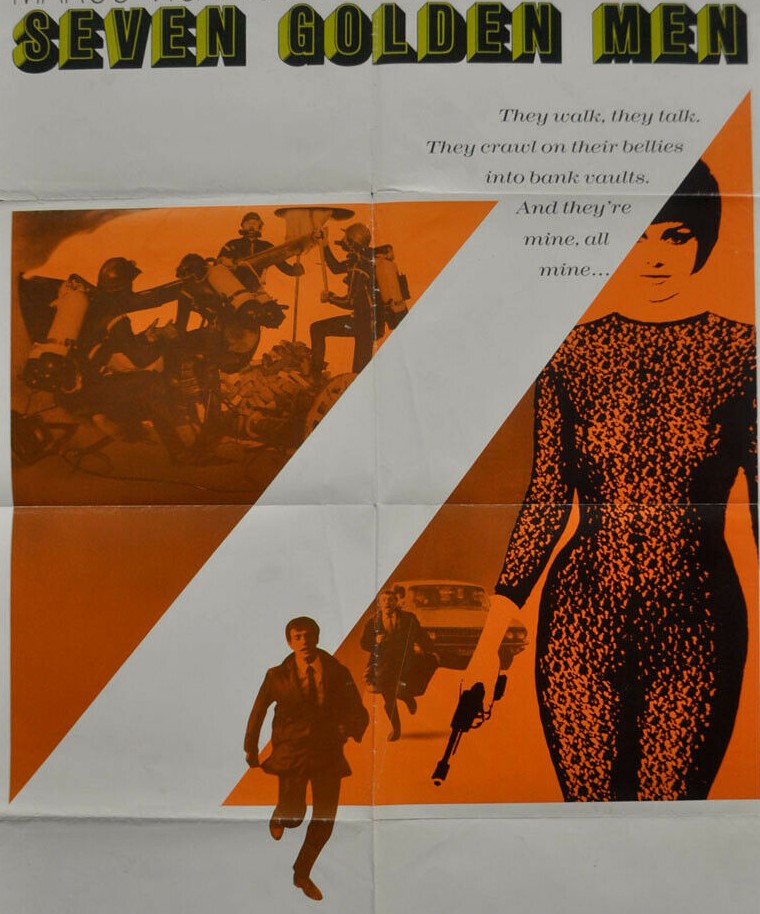
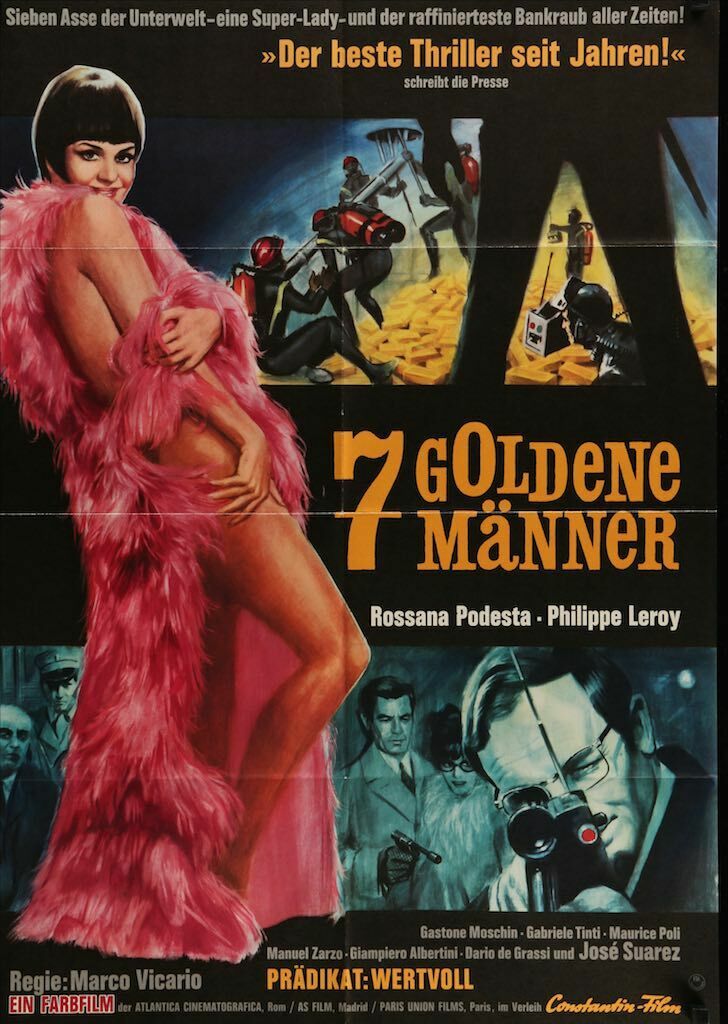
Very stylish caper picture that dispenses with the recruitment section, the ingenious hi-tech robbery accounting for the first half, escape and double-cross the second, a slinky Rosanna Podesta (the eponymous Helen of Troy, 1956, in case you’ve forgotten, and also appearing in Sodom and Gomorrah, 1962) an added attraction/distraction. The Professor (Phillippe Leroy), in bowler hat and umbrella, orchestrates the gold bullion theft from an uber-secure bank using hidden microphones, cameras and a host of electronic equipment, the inch-perfect heist organized to mathematical precision and timed to the second.
His team, disguised as manual workers, dig under the road, don scuba gear to negotiate a sewer, drill up into the gigantic vault and then suck out the gold bars using travelators and hoists. Giorgia (Podesta), sometimes wearing cat-shaped spectacles, a body stocking and other times not very much, causes the necessary diversions and plants a homing device in a safety deposit box adjacent to the vault. Occasionally her attractiveness causes problems, priests in the neighboring block complaining she is putting too much on show.
It’s not all plain sailing. A cop complains about the workmen working during the sacrosanct siesta, a bureaucrat insists on paperwork, a radio ham picks up communication suggesting a robbery in progress, the police appear on the point of sabotaging the plan.
But the whole thing is brilliantly done, the calm professor congratulating himself on his brilliance, Giorgia seduction on legs. The getaway is superbly handled, the loot smuggled out in exemplary fashion, its destination designed to confuse. Then it is double-cross, triple-cross and whatever-cross comes after that, and with every reversal no idea what is going to happen next. It is twist after twist after twist. Some of the criminals are slick and some are dumb so as well as the high drama there are moments of exquisite comedy.
Italian writer-director Mario Vicario (The Naked Hours, 1964) handles this European co-production with considerable verve and although, minus the normal recruitment section, we don’t get to know the team very well except for The Professor and Giorgia each is still given some little identity marker and in any case by the time they come to split the proceeds we are already hooked. Frenchman Phillippe Leroy (Castle of the Living Dead, 1964) is the standout as a mastermind in the British mold, a stickler for accuracy, calm under pressure, working with military discipline. Podesta (also The Naked Hours) has no problem catching the camera’s attention or playing with the emotions of the gang to fulfill her own agenda. The gang is multi-national – German, French, Italian, Spanish, Portuguese, Irish – with only Gabriel Tinti likely to be recognized by modern audiences.
And there is a terrific score by Armando Trovajoli (Marriage Italian Style, 1964) that changes mood instantly scene by scene. One minute it is hip and cool jazz, the next jaunty, and then tense.










 The Magnificent 60s