I am a published author of books about film - over a dozen to my name, the latest being "When Women Ruled Hollywood." As the title of the blog suggests, this is a site devoted to movies of the 1960s but since I go to the movies twice a week - an old-fashioned double-bill of my own choosing - I might occasionally slip in a review of a contemporary picture.
You may be aware that I am partial to a triple bill on my weekly Monday trip to the cinema. I’m rather an indiscriminate cinemagoer and generally just see what’s available, though it’s true return trips to view Top Gun: Maverick have helped paper over cracks in the current distribution malaise. Sometimes a triple bill can reveal unsung gems, sometimes I am rowing against the critical tide in my opinions and sometimes, not too often thank goodness, I end up seeing movies with few redeeming qualities. That was the circumstance this week.
FALL
So now I know. If I need to get a mobile phone dropped 2,000 feet without it breaking into pieces, the thing to do is stuff it inside a cadaver. That’s one of the more outlandish suggestions in this climbing picture two-hander that for most of the time is quite gripping.
So as not to have to spend the first anniversary of her husband’s death sozzled in booze and despair, Becky (Grace Caroline Currey) agrees to partner YouTube click-hound Hunter (Virginia Gardner) in scaling an extremely high disused radio mast. Becky, a mountaineer, had watched her husband fall to his death, so is pretty iffy about the expedition. When they reach the top they can’t get down again since the ladder they climbed has disintegrated. Although there was mobile phone reception at ground level, there’s none this high up. Hunter has 60,000 followers and reckons if only her phone reached the ground it would automatically activate so they toss it down in a shoe stuffed with a bra.
That doesn’t work nor does firing a flare pistol to alert two guys in a nearby RV – all they are alerted to is the girl’s vehicle which they promptly steal. The girls are trapped without water or drone, both stuck 50ft below on radio dishes. At one point you think this is going to go in an entirely different – murderous – direction after Becky discovers Hunter had an affair with her husband. But they manage to get over that hiccup. Recuing their water and drone results in Hunter being out of action as far as further climbing goes and it’s up to Becky to reach the top of the mast and recharge the drone from the power there, fending off a passing vulture.
There’s definitely one weird bit where it turns out that Hunter, who you imagined was up there all the time supporting a defeatist Becky, is already dead. But, luckily, the corpse provides the cavity in which to bury the mobile phone. I’m not sure much of a human body survives a drop of 2,000 ft, certainly not enough to safeguard a phone, but that’s the way this plays out.
A great mountaineering film is always a welcome find in my book. This isn’t great but it’s certainly passable. And while Becky is more interesting than the gung-ho Hunter, the pair, emotions almost spinning out of control, make a very watchable pair.
Grace Caroline Curry aka Grace Fulton (Shazam!, 2019) does well in her first starring role and Virginia Gardner (Monster Party, 2018) is as convincing. Jeffrey Dean Morgan (Rampage, 2018) has a small role. A novel take on the mountaineering sub-genre, it’s kudos to director Scott Mann (Heist, 2015) – who co-wrote the screenplay with Jonathan Frank (Final Score, 2018) that I spent a lot of time wondering just how the hell they managed to make it look so realistic.
THE FORGIVEN
Note to studios, no matter how much you plan to tart up a modern version of Appointment in Samarra – aka a tale of unavoidable fate – you ain’t going to get anywhere if it’s filled with entitled obnoxious characters. The worst of it is this is well-made.
Functioning alcoholic doctor David Henninger (Ralph Fiennes) knocks down and kills young Muslim boy Driss (Omar Ghazaoui) while on the way with wife Jo (Jessica Chastain) to a hedonistic weekend party in Morocco hosted by Richard Galloway (Matt Smith) and his partner Dally (Caleb Landry Jones). There are hints that Driss was planning to hijack the tourists, but while his death is deemed an accident by the local cops, David agrees to go back with the boy’s father Ismael (Abdellah Taheri) and observe the local funeral rites and possibly pay the father off.
While her husband is away Jo has a one-night stand with serial seducer Tom (Christopher Abbott) while the rest of the party – including Lord Swanthorne (Alex Jennings) and assorted beautiful men and woman – trade bon mots and make racist and sexist remarks. While the arrogant David changes his perspective and accepts his fate, there is not, himself included, a single likeable person in the whole of the tourist contingent which makes it impossible to care what happens to anybody. Written and directed by John Michael McDonagh (Calvary, 2014) it spends all its time trying to make clever points, not realizing the audience has long lost interest.
THREE THOUSAND YEARS OF LONGING
Note to studios, if you’re going to indulge an action director in a vanity project, make sure he hires actors who don’t just drone on. It might also help if the director could decide what story he wants to tell, and not essentially present a voice-over narrative of stuff that happened in the past, no matter how exotic the timescale.
I was astonished to discover there actually is a job called narratologist. Alithea (Tilda Swinton) is a dried-up old stick of a narratologist who summons up the dullest genie/djinn in movie history known – no names, no pack drill – just as The Djinn (Idris Elba) who proceeds to bore the audience to death with his stories of how he came to end up in a bottle.
There’s a bundle of academic nonsense about storytelling, a swathe of tales that sound like rejects from The Arabian Nights, and a lot of unconnected characters. The invention of director George Miller (Mad Max: Fury Road, 2015) just isn’t inventive enough and the visuals just aren’t arresting enough. I’m assuming this got greenlit on the basis Miller would turn in a couple more in the Mad Max franchise.
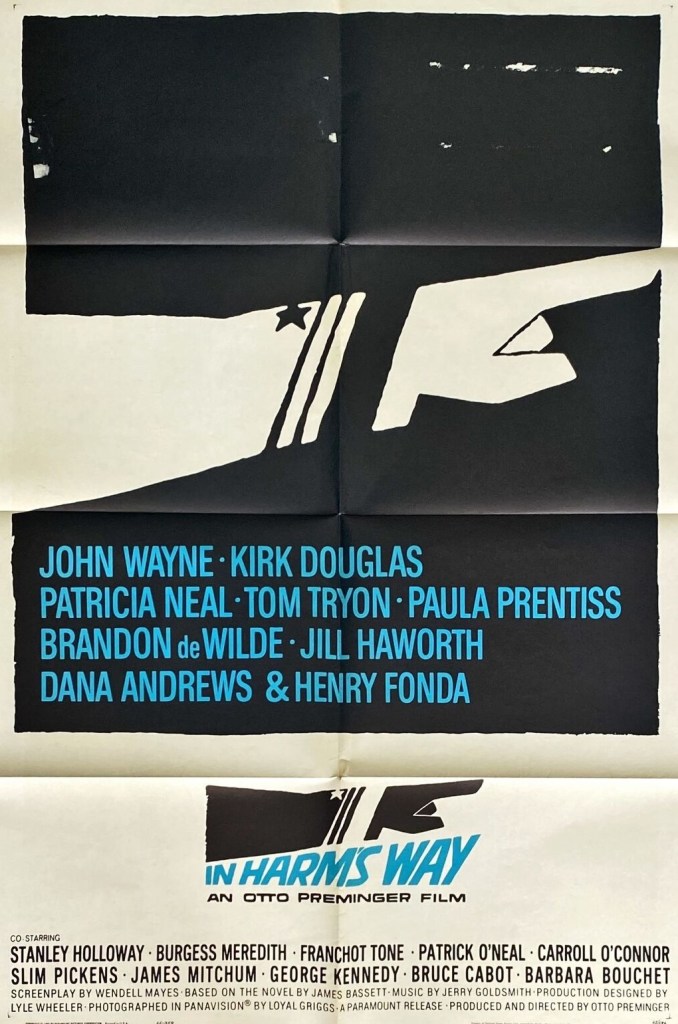
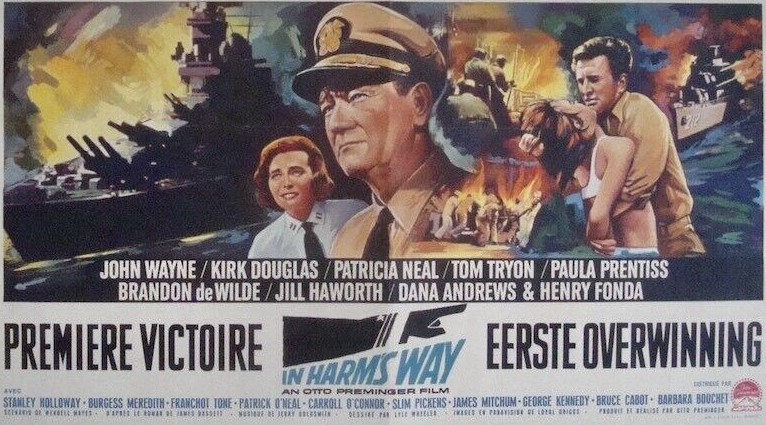
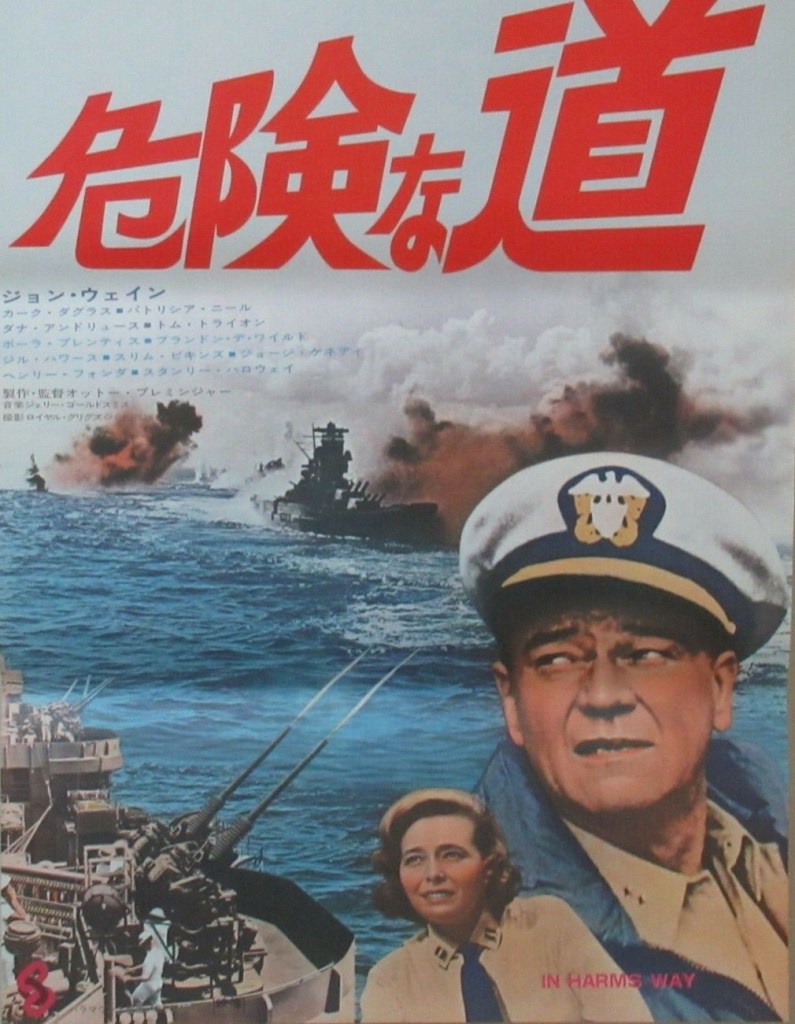
In October 1962 Otto Preminger bought the rights to Harm’s Way, a thumping big bestseller by Ronald Basset with a host of characters and sub-plots which serve, like Advise and Consent by Allen Drury, to analyse an American institution, in this case the Navy, pre- and post-Pearl Harbor. In some respects, it was an odd choice, Preminger better known for pictures that filleted such august institutions, The Cardinal (1964) exposed the inner workings of the Catholic Church. On the other hand, it rubbed shoulders quite happily with Exodus (1960), a tale of battle against the odds.
Preminger’s aim was to blunt the current onslaught of movie pessimism with a picture that ended on an optimistic note. He observed: “We are attacked, we are unprepared in every way, and manage by sheer guts, character and resourcefulness to start to work out of it.” He concluded that such action “should remind us and perhaps other people that there is never any reason to give up or to give in to anything that is not right or dignified.”
Celebrated Saul Bass poster.
“One of the reasons I made In Harm’s Way,” explained the director, “is that it is a big step away from most of the films I have made so far. I try not to repeat myself too much…not to make pictures in just one category…I was very fascinated by the characters and the story..,(which) shows that people will act even if they are unprepared and don’t want war.”
Wendell Mayes (Advise and Consent, 1962) started on the screenplay right away, taking it so far as embarking on a rewrite with the director in London. But the project was unexpectedly shelved for a couple of years. In the meantime Preminger assigned a different writer, Richard Jessup. But when the concept received the director’s full attention once again Mayes was at the wheel and with a different approach. “I had a fresher point of view and did many things that were not in the book at all. I think we improved it for that reason, since we had quite forgotten the novel.”
But collaboration with Preminger was exacting. “We sat together and and worked over almost every line,” explained the director. “I always work very closely with the writer on the screenplay…There is one man, the independent producer-director, who from very beginning takes the whole responsibility and has complete autonomy. I feel responsible for the script: I engaged the writer and I worked with him. Like I direct actors, I feel a director also directs the script.”
In particular, into sharper focus came the son, Jeremiah (played in the film by Brandon de Wilde) of Rockwell Torrey (John Wayne). In the book he had been a passing, insignificant character, who quickly befriended his father. “He had no feelings about the fact that his father had left his mother, and we changed that in the script,” said Mayes. This provided not just a source of dramatic tension but a more mature role for Wayne, who had to express regret for the estrangement, all his fault. (Although the idea of a son enlisting against the mother’s wishes reflect a similar situation in Rio Grande, 1950).
Wayne was Preminger’s first choice. “Because it has passive elements, a strong actor like Wayne is ideally cast,” said the director. Despite being sent an incomplete script, the star signed up – for $500,000. “I don’t look for stars and I don’t avoid them,” he said. The leading roles in Bunny Lake Missing (1965) and The Cardinal (1964) went to relative unknowns. “I would not ask John Wayne to play, say, a coward because his image is not the image of a coward, or have him play a Greek philosopher…He at least fulfilled all my expectations more than I could possibly hope for. Kirk Douglas, too, came to my mind almost immediately.”
The movie should have ended up at Columbia which had funded the director’s last two movies and would back Bunny Lake. But Preminger had just struck a deal for seven pictures with Paramount and in January 1964 that agreement was announced with the re-titled In Harm’s Way (a phrase associated with John Paul Jones).
Mayes completed the new draft two months later with the rest of the cast now assembled, including Preminger contract players Tom Tryon (The Cardinal) and Jill Haworth (Exodus) who replaced original choice Carol Lynley (Bunny Lake). Keir Dullea turned down the part of Jeremiah. Advise and Consent’s Henry Fonda came on board as the overall Navy commander at the expense of Chill Wills who was fired after shooting had begun.
One uncredited recruitment was Hugh O’Brian (Africa, Texas Style, 1967) who undertook the part of Liz Eddington’s lover. “He played a role as a favor without compensation,” recalled Preminger. “He did not want billing and only asked that I give some money to a charity. I needed somebody who was a secure actor and right for the part because I used a complete beginner (Barbara Bouchet) for the girl he plays opposite. And if I used some other young actor with her, people would have felt that this couple would disappear almost immediately at the beginning of the film. It was important to me to establish this young couple as an important episode at the beginning of the film and he helped that.”
The director spent three days scouting locations in Hawaii but decided to shoot in black-and-white because “ a picture like this has much more impact and you can create more of the feeling, the illusion of reality, than when you shoot it in color.” False guns mounts were attached to more recent ships since the older relevant vessels were no longer available.
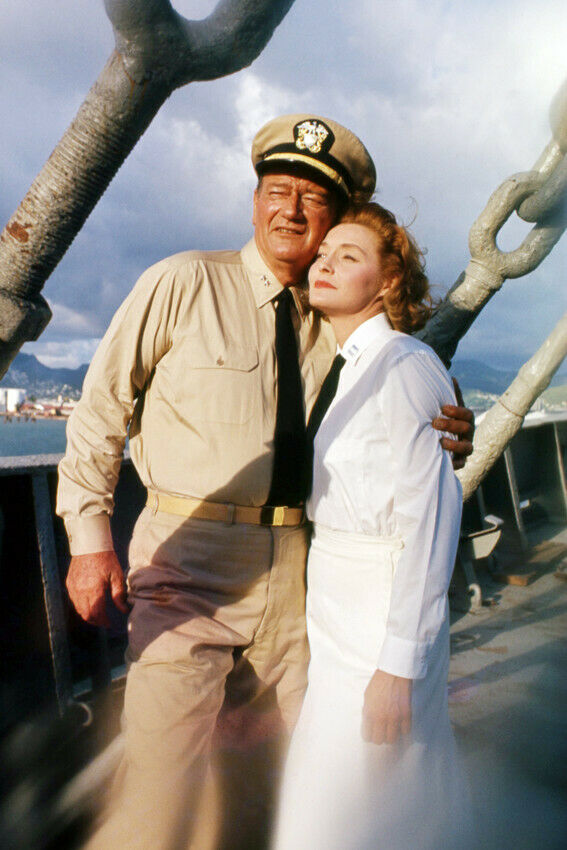
Wayne with co-star Patricia Neal.
Shooting started on June 23. The biggest issue was transportation, drivers getting lost reaching locations for the night-for-night sequences. Preminger struggled to meet his shooting schedule and the movie was soon over budget thanks to long hours, Sunday working and extra local staff. Even so, the Hawaii shoot came in 17 days ahead of schedule. Five days were assigned for shooting at sea. Larger than usual miniatures – some as much as 55ft long – were shot over a month on a lake in Mexico and in the Gulf of Mexico, the battle of Leyte Gulf costing an estimated $1 million. “I needed the real horizon,” said Preminger.
Some scenes were proving impossible to capture first time out. A second unit had two attempts filming a car going over a cliff, a marine landing was spoiled by water on the lens, and technical problems prevented Preminger achieving a “mystic-hour shot” of a plane taking off. Part of the director’s problem was his insistence on rehearsal. “I could make every picture in ten days if I slough it. Some actors just need more time and more rehearsal.”
Despite observers expecting – perhaps hoping – for volatile confrontation between the director and star, the pair enjoyed a cordial relationship based on mutual respect. Of Wayne, Preminger commented that he was “the most cooperative actor, willing to rehearse, willing to do anything as long as anybody. I was surprised really how disciplined a professional Wayne is and he liked this particular part very much.”
From Wayne’s perspective, “He had my respect and I had his respect. He is terribly hard on the crew and he’s terribly hard on people that he thinks are sloughing. But this is a thing that I can understand because I’ve been there (directing The Alamo) and I know that if a fellow comes on and he’s careless and he hasn’t thought at all about his…I come ready and that he appreciated that. I was usually there ahead of him on the set and he couldn’t believe that. So we had a really nice relationship.”
It was surprising Wayne remained on such an even keel since he was beginning to suffer from the cancer that would eventually kill him. “He looked ill,” Tryon remembered, “He was coughing badly, I mean, really awful. It was painful to see, so God knows what it was like for him. He’d begin coughing in the middle of a scene and Preminger would have to stop filming.” Although he refused to consult a doctor during filming, he agreed to a check-up once shooting of his role was complete, three weeks earlier than scheduled. He may indeed have owed his life to Preminger’s speedy shooting.
Kirk Douglas had a bone to pick with Preminger after the director stole the glory of being the first director to publicly announce, on Exodus, that he had employed a blacklisted writer, pre-empting Douglas who had done the same for Spartacus (1960). Although Douglas didn’t rank Preminger as a director he enjoyed a good relationship with him except for one minor confrontation.
Douglas got on well with Wayne: “There was a mutual respect…We got along quite well…He was a strange fellow. I’ll never forget the talk we had about my playing in Lust for Life (1956). Although emotionally we were not close and politically we were antipodal he asked me to work with him several times.” (Not entirely true – Douglas would have been the driving force for their collaboration on Cast a Giant Shadow in 1966 and he fell out spectacularly with Wayne on The War Wagon in 1967).
But others suffered from Preminger’s notorious temper, Tom Tryon in particular. The bullying became so bad Kirk Douglas once walked off the set. Douglas advised Tryon to fight back but Tryon could not pluck up the courage. Chill Wills who endured Preminger at his “absolute worst” did stand up to him and was fired. Patrick O’Neal turned on actors who refused to fight their corner. “Stand up to him once and find out he’s a human being,” was his advice.
Myth has it that Paula Prentiss’s role was truncated after she fell foul of the director but rumour was baseless. In fact, Prentiss was another of the director’s defenders, claiming he was “absolutely wonderful to work with. For a scene to work, tension needs to be put into a scene. There have to be genuine efforts to make the scene work. And Preminger understood this and was able to get much conflict and tension into the scenes.” And he was not all tough talk. She recalls him as particularly gentle guiding her through the scene where she asks her husband to make her pregnant.
Although surpassing the original $5 million budget, it was not by much, an extra $436,000. The Production Code had objected to the phrase “screw the captain,” a line Preminger refused to remove and despite further protest from the censor, who threatened to withhold the precious official approval,the director got his way. Preminger had shot the scene where Barbara Bouchet was dancing topless from the rear but the still photographs were sensational enough for publication in Playboy in its May 1965 issue.
The decision to shoot in black-and-white probably accounted for the picture’s relatively poor box office. Its length and the all-star cast should have qualified it for roadshow. (It was roadhsow for all of one day at two prestigious new York first houses; the next day it went continuous, but you could advance book a seat for an extra 50 cents). It was a sign of how quickly audience perceptions had changed that only three years previously the black-and-white The Longest Day had appeared as a roadshow and proved a resounding hit.
As a result of Wayne’s illness The Sons of Katie Elder was postponed. Preminger moved onto a smaller project, Bunny Lake Is Missing and Douglas reverted to top billing for The Heroes of Telemark (1965). Tom Tryon never worked for Preminger again and after top-billing in The Glory Guys (1965) faded from Hollywood view, re-emerging as the bestselling author of The Other. Paula Prentiss shifted sideways into television with He and She (1967-1968) and Jill Haworth made very few films after this, of which most were horror.
SOURCES: Chris Fujiwara, The World and Its Double, The Life and Work of Otto Preminger (Faber and Faber, 2008), p317-329; Scott Eyman, John Wayne, The Life and Legend, (Simon & Schuster, 2015) p385-387; Maurice Zolotow, Shooting Star, A Biography of John Wayne (Simon & Schuster, 1974) p361-362; Michael Munn, John Wayne: The Man Behind the Myth (Robson Books, 2003) p254-255; Kirk Douglas, The Ragman’s Son (Simon & Schuster, 2012), p387-381; Ian Cameron, Mark Shivas, Paul Mayersberg, “Interview with Otto Preminger,” Movie 13 (Summer 1965), p15-16; Patrick McGilligan, Backstory 3, p266; Otto Preminger, “Keeping Out of Harm’s Way,” Films and Filming, June 1965, p6; Newsweek, April 20, 1964; New York Herald Tribune, October 17, 1965, p55.
Preminger at a peak, the more I watch this picture, not just the more impressed I become but the more I want to watch it again – three times, as it happens, for this review. A tale of heroism populated by morally wounded heroes, the undertone of critique for the Naval establishment dealt with in brilliant narrative fashion, terrific pacing, one of John Wayne’s very best performances, Kirk Douglas not far behind, great action scenes, and one of the few movies to fulfil this director’s original intent.
You can, of course, argue that it’s the height of political PR. Just as the Americans managed with The Alamo and the British with Dunkirk, the aim was to turn defeat into victory, so this moves beyond the humiliation of Pearl Harbor to the victories beyond. But in some sense Pearl Harbor is just the prologue to a stiffer examination of men at war, rather than sailors taken to task over the complacency that left them so open to cataclysmic attack.
And while there’s a number of sub-plots, these are more expertly handled than I can recall in many another lengthy big-budget picture, no endless cutting between major and minor characters, but the minor characters only entering the frame when they have a dramatic part to play.
Captain “Rock” Rockwell (John Wayne) falls foul of his superiors for basically being in command of a ship sunk by a torpedo. On a technical point, he’s stripped of command, and reduced to a desk job, a casualty of the peace-time hierarchy determined to find someone to blame, only returning to active duty – and promoted to Admiral – when more war-oriented figures are put in charge.
The desk job gives him time to romance feisty nurse Lt. Maggie Haines (Patricia Haines) who has the cojones to take charge of the budding relationship. She happens to share an apartment with another nurse, the much younger Ensign Annalee Dorne (Jill Dorne) who is dating entitled Ensign Jeremiah Torrey (Brandon de Wilde), Rock’s estranged son.
Jeremiah works for slimy glory-hunter Commander Neal Owynn (Patrick O’Neal), a former U.S. Congressman using his political skills to worm his way into the office of by-the-book Vice Admiral Brodick (Dana Andrews). Rock shares his apartment with Commander Egan Powell (Burgess Meredith), a thrice-married playboy, high up in Navy intelligence.
Rock’s second-in-command is Commander – junior to a captain in case you don’t understand the U.S. Navy ranking system – Paul Eddington, a hothead whose mourning for dead wife Liz (Barbara Bouchet) results in him also being reduced to a desk job and exiled to the Pacific. On the fringes of the story are Lt. Commander “Mac” MacConnell (Tom Tryon) and pregnant wife Beverley (Paula Prentiss).
How all these characters enmesh is the consequence of a quite brilliant screenplay by Wendell Hayes (Advise and Consent, 1962). Rockwell and Eddington both seek redemption, the former to prove his Naval worth and regain the affection of his son, the latter to absolve himself for his terrible actions.
You can always tell the hero in war films because they are so rarely a physical casualty of war, all the others are killed and wounded but hardly ever the hero, so it takes something for the Hollywood Hero of the Century to play a character who is wounded not once but twice, and for the early part of the picture walks around with his arm in his sling (not quite an echo of the way he holds his arm in The Searchers, but evoking the same internal conflict).
The only supposed out-and-out hero is MacConnell, but his inaction at the beginning of the movie fails to prevent the death of Eddington’s wife. And his heroism largely takes place off-screen and it’s worth noting that Rock doesn’t raise a rifle or pistol in anger (or even get into a punch-up as was the actor’s wont in other films). Being in charge he’s removed from the core action even if suffering the consequences of battle. In a marvellous touch of irony, Rockwell is the most passive hero to hit the screen. It’s an incredibly bold and self-confident director who would even think of luring audiences into an action picture starring the Hero of the Century and then denying him a single moment of screen glory.
Much has been written about the cinematic arc John Ford took in the beginning and ending of The Searchers, the symbolic opening and closing of doors, but since Preminger is long out of critical favor nobody’s has bothered to notice how much of this film concerns cinematic echo.
To take the most obvious example, the first witnesses of the airborne Japanese attack on Pearl Harbor are illicit pair Liz Eddington and her paramour (Hugh O’Brian) and towards the end it’s her husband Paul, by this point guilty of horrendous behaviour, who leads the airborne fightback against the enemy.
A beach – where Liz and escort make love – is how the director initially pushes the audience towards sympathising with the drunken Eddington. A beach is where we later learn to despise him, as he brutally rapes Ensign Dorne. And it doesn’t take much to work out that his wife’s exuberant wildness explains Eddington’s initial attraction to her, not realising that psychologically it provides him with an excuse for his own darker wildness, initially restricted to self-destruction but when it truly emerges it’s to the detriment of an innocent.
And that’s before we get on to Rockwell as the messenger of death, delivering the bad news to wives, and then being on the receiving end after his son dies in battle. And finally, the political peace-time high-ups get their come-uppance in actual war.
It’s insulting – as some have suggested – that the performance of John Wayne (The Hellfighters, 1968) is the result of undiagnosed cancer when in fact this is a finely nuanced role of a high-ranking figure living out in his life in regret, at times quite shamefaced about abandoning his son at a very early age. Preminger cracked down on Wayne’s habit of splitting his lines in two, so those typical pauses we have come to expect are in large part gone, and it helps the movie’s pacing. For most of the movie the character is saddled with consequence. That passivity that the director saw as essential to the role is virtually present all the time.
Preminger wrings a different performance, too, from Kirk Douglas (A Lovely Way to Die, 1968), equally laden with regret, but not enough to prevent him lashing out and the actor is accorded two quite stunning scenes, the first as he broods in silence over his wife, but for the second, prior to raping Ensign Dorne, the stone-cold look on his face suggests a serial killer held at bay for too long and now about to explode.
Burgess Meredith (Hurry Sundown, 1967) is another brought to directorial heel, his more common scene-stealing and vowel-stretching also eliminated, but in exchange given a larger-than-life character on which to expend screen energy. The entire cast is good-to-excellent and it’s jam-packed: Patricia Neal (Hud, 1962), Tom Tryon (The Cardinal, 1964), Paula Prentiss (Man’s Favorite Sport, 1963), Brandon De Wilde (Shane, 1953), Jill Haworth (Exodus, 1960), Dana Andrews (The Satan Bug, 1965), Franchot Tone (Advise and Consent, 1962), Patrick O’Neal (Stiletto, 1969), George Kennedy (Cool Hand Luke, 1967), Henry Fonda (Battle of the Bulge, 1965), Barbara Bouchet (Danger Route, 1967) and Stanley Holloway (My Fair Lady, 1964) Many of the supporting cast were also playing against type – Prentiss as the young wife falling to pieces, Andrews and O’Neal as slippery political types, Holloway a guerrilla, and perhaps most interesting off Neal, not the typical woman left behind when the man goes off to war but, in her role as nurse, entering harm’s way herself.
And despite criticism of the miniatures used in sea scenes while that might have been obvious on the big screen you don’t notice it on the small screen. The action scenes are very well-done for the time, and quite unusual in that by and large it’s the Americans who appear shell-shocked not the enemy.
Cramming this much narrative into the overall arch of Pearl Harbor and retaliation against the Japanese, while bringing so many different characters to the fore with clear dramatic purpose is an amazing achievement, screenwriter Wendell Mayes (Advise and Consent) doing the heavy lifting in this department.
But Preminger the director is very much to the fore, in his composition and use of the camera for long tracking shots (a particular favorite of mine) such as at the beginning. A riveting watch full of splendid acting. Shooting it in black-and-white might have at one time appeared to date the picture but instead it has rendered it ageless. Five stars without a doubt.
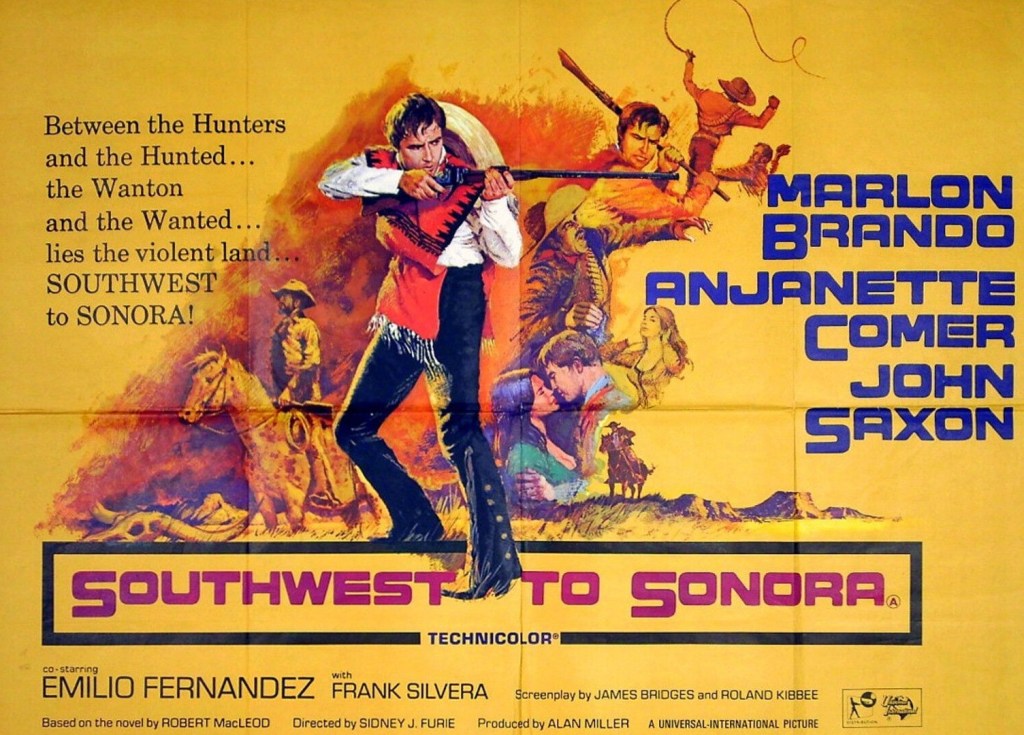
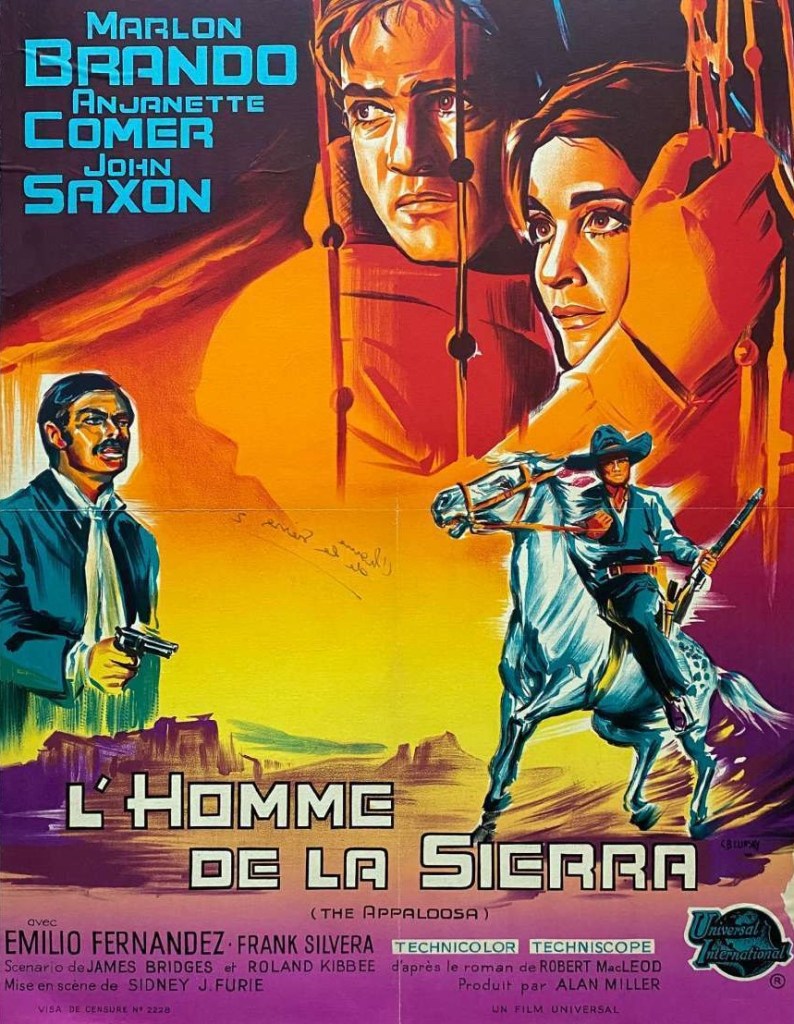
High expectation can kill a picture. Low expectation can have the opposite result. I came at The Appaloosa with the latter attitude in mind. I knew the picture had been a big flop and that critics had carped – as they had done through most of the 1960s – about the performance of Marlon Brando.
Neither was director Sidney J. Furie’s style to everyone’s taste. And it seemed an odd subject – Texan takes on Mexican warlord to recover a stolen horse. It is surely a slow burn, but it certainly worked well beyond my anticipation. There’s not much more to the story than two guys fighting over a horse.
First of all, Brando’s performance came across as natural, not mannered. Secondly, this was a real character. He was not a John Wayne striding into action to protect the underdog or a woman or out of some goddam principle.
At first it did seem odd that Matt Fletcher (Marlon Brando) placed so much importance on the horse given that said warlord Chuy Meena (John Saxon) had offered him a more than fair price for it. But in one brilliant two-minute scene, expertly directed and with virtually no close-ups – the actor caught mostly with his back to the camera or in silhouette – we discover why. Fletcher has been such a disappointment to his father that bringing home such a quality animal was proof that he had made something of himself. A buffalo hunter to trade, he was on the verge of starting a new life.
The second aspect of this intriguing picture was that Medena placed so much importance on a horse when he could easily buy any horse he wanted. But he was faced with losing face. His wife Trini (Anjanette Comer) had tried to escape from him on the horse and the only remedy was to persuade the watching federales that Fletcher had previously sold him the horse.
When Fletcher refuses, Medena takes the horse by force. Fletcher, in retaliation, and to save his own sense of pride, tries to take it back. He is not represented as a superhuman John Wayne or savage Clint Eastwood, but an ordinary guy who soon finds himself out of his depth. So ordinary that the first time he aims his rifle he misses the target by a mile.
Nor is he burdened with an over-enlarged empathy gland. He not only refuses to help Trini, but steadfastly refuses to take her with him, not even as far as the border, until in another of the film’s lengthy scenes she explains the reasons for her escape attempt.
Few films have exceeded it for atmosphere. This Mexico is grim, pitiless. Hostility and suspicion are endemic. Women are abused and discarded. The standout scene is Medena and Fletcher arm-wrestling over scorpions, played out against a soundtrack of scraping chairs and the poisonous insects scrabbling on the table.
This brooding western is enhanced by the best brooder in the business. And Brando is matched by Sidney J. Furie’s (The Ipcress File, 1965) gift – or affliction depending on your point of view – for the unusual camera angle. Here I think the former is on show. John Saxon (Istanbul Express, 1968), making his name as a specialist in bad guys, creates one his best. Anjanette Comer (Guns for San Sebastian, 1968) is worth a watch. Keep your eye out for Emilio Fernandez (The Wild Bunch, 1969) and Alex Montoya (The Flight of the Phoenix, 1965).
James Bridges (writer-director of The China Syndrome, 1979) and Roland Kibbee (Valdez Is Coming, 1971) wrote the screenplay based on the novel by Robert MacLeod, also responsible for the source western for 100 Rifles (1969).
When you watch this and The Chase (1966) together it’s hard to see what on earth got the critics so rattled about Brando’s mid-decade performances. This is realistic acting at his best. Where John Wayne or Clint Eastwood present a superhuman screen persona, even if for part of a picture they are downtrodden, Brando was happy to play very human characters. In both pictures he is just an ordinary joe – forced into action by circumstance.
Actors taking the hyphenated route were quite a fad in the 1960s. Mostly, primarily for tax purposes, they turned themselves into actor-producers. But some went all-out for artistic glory, saddling themselves with the task of directing the movies in which they starred, by this point in the decade John Wayne (The Alamo, 1960) and Marlon Brando (One-Eyed Jacks, 1961) the most celebrated examples. Despite lacking that pair’s box office pulling power, Laurence Harvey (Butterfield 8, 1960) threw his hat into the ring with this often compelling, atmospheric, but occasionally pretentious, offering.
Irishman Sean McKenna (Laurence Harvey) is in prison in Tangiers – “a city of money” – for one crime he did commit (bank robbery) and one he did not (shooting a guard dead during the robbery). Although facing an imminent death penalty for the murder, he refuses to name the killer. Local prosecutor Le Coq (Ross Martin) is intent on making him an example while the prison warden (John Ireland) pleads for clemency, especially as it is suspected the inmate is innocent.
Astonishing to imagine now but this went out on general release in Britain as the lead film in a double bill with “Lilies of the Field.”
Meanwhile, McKenna’s girlfriend Catherine (Sarah Miles) and his brother Dominic (Robert Walker Jr) plan an audacious escape. The brother is not altogether altruistic. His price is half the hidden loot and Catherine, that part of the deal sealed when she submits to sex with him.
Dominic gains entry to the prison disguised as a priest, swapping clothes with his brother, so that when sirens sound to announce potential intrusion by Dominic’s sidekick Nicky (Lee Patterson), Sean can simply walk out unharmed. However, when Seans learns of the price to be paid he doesn’t thank Catherine for her noble sacrifice but turns against both. Dominic, now on the run and chased by the police, is virtually burned alive when his car explodes.
My apologies but in order to properly discuss this picture I’m going to have to take you through to the end. So SPOILER ALERT.
Dominic is so badly burnt in fact that he is unrecognizable and the police (decades before DNA would disprove such an assumption) believe he is actually his brother. Dominic is faced with “the ceremony” – an ironic tittle if ever there was one – in which he is strapped to a wooden throne and shot by firing squad. Despite his brother’s betrayal, and the fact that his death would set Sean free, Sean decides it would better to “prevent the unjust killing of an innocent man” and gives himself up, too late, as it happens, to spare Dominic, but allowing Sean, in a Pieta-style gesture, to carry the corpse into the prison courtyard and announce “my brother died for me.”
Not quite the ending you would expect, not least because religious allegory has been distinctly missing from the proceedings unless you count the somewhat dotty Father O’Brian (Jack MacGowran) who spends most of his time delivering soliloquies unless you count cars, cows and mules as potential conversationalists.
You get the impression the ending was what attracted the director to the tale, and though it is quite a stunning climax, cinematically as well as thematically, Harvey has, like so many debutants, determined to make a big point. “There’s a little bit of God in everyone,” pronounces Fr O’Brian with a saintly air, which would beg the question of when the Good Lord channelled his inner bank-robber.
For all the film’s flaws there are several pluses. The atmosphere “of chilly hell” (to steal a quote about another book) is well done, footsteps echo off stone floors and cobbles, nobody in this black-and-white feature is seen without a dose of noir lighting, resulting in long shadows and aerial shots of tiny figures swarming. While everyone else over-acts for no apparent reason except directorial inexperience, when Sarah Miles (Term of Trial, 1962) overacts, lips constantly a-quiver, words delivered in gasps, she has every right to, since her character has succumbed to the most evil kind of temptation for the best sort of reason.
The only other interesting character, beyond the stock ones populating the prison, is lonely landlord Ramades (Carlos Casaravilla) who has outlived his four lives and whose rooms abut the prison and where Catherine takes refuge while the escape is going on. He senses her tension, but mistakes the cause, assuming she is here to wait for the shots announcing her husband’s death as a means of “sharing his punishment,” quite a piece of psychological insight for an ordinary guy. And there’s also a creepiness about the whole scene, a sense that she might have to give herself to him as well in order to prevent him wandering too far from the bedroom where he might discover Dominic putting into action a crucial part of the escape plan.
Among the flaws: no real tension, especially in terms of the escape, not enough directorial understanding that much more could be gained from greater focus on Catherine’s dilemma, the obvious lack of a body in the burning car, the fact that the Irishman shows no signs of an Irish accent, the priest’s scenes which provoke hilarity more than reverence, and as much as it is a strength the ending appears out of nowhere.
Robert Walker Jr (The Happening, 1967) is too much of a lightweight for this role, but John Ireland (55 Days at Peking, 1963) and Ross Martin (Experiment in Terror, 1962) excel. Look out for Fernando Rey (The French Connection, 1970).
Valiant effort by Harvey who only directed one other time, on his last film Welcome to Arrow Beach / Yellow-Head Summer (1973), plus a stint filling in for Anthony Mann who died during the filming of A Dandy in Aspic (1968). For The Ceremony Harvey was a quadruple hyphenate – actor-producer-writer-director – for he also contributed enough dialogue to claim a screen credit along with Ben Barzman (The Blue Max, 1966) who adapted the novel by Frederic Grendel.
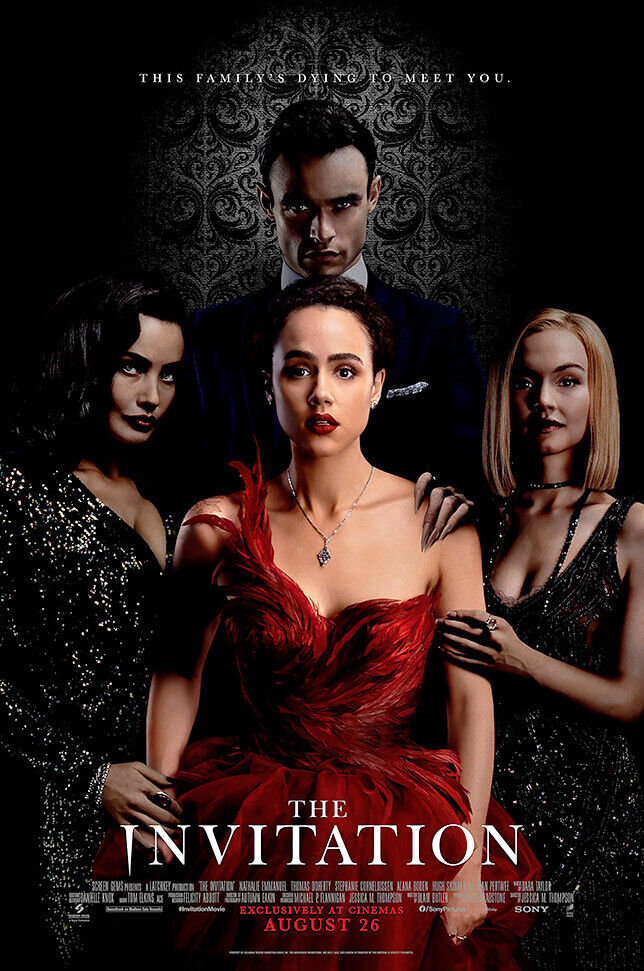
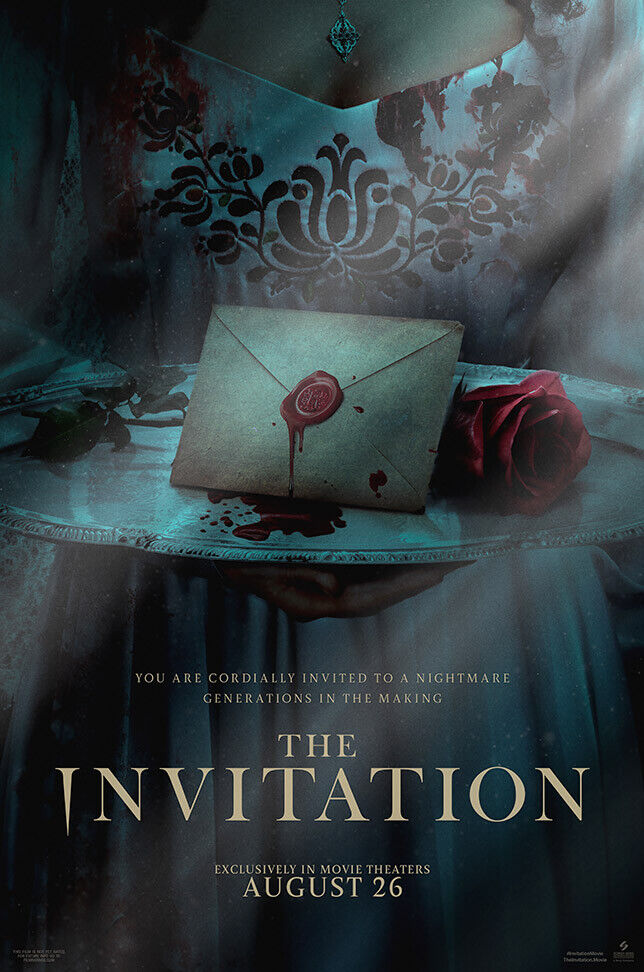
Two words – “Whitby” and “Carfax” – hint at what’s coming but luckily have no resonance for impoverished New York ceramics artist Evie (Nathalie Emmanuel) who takes up an invitation to visit long-lost relatives in an English mansion of significant splendour. Immediately taken by her host, lord of the manor Walt (Thomas Docherty), who comes across like a Regency buck, she finds herself a surprising guest of honour for a forthcoming wedding.
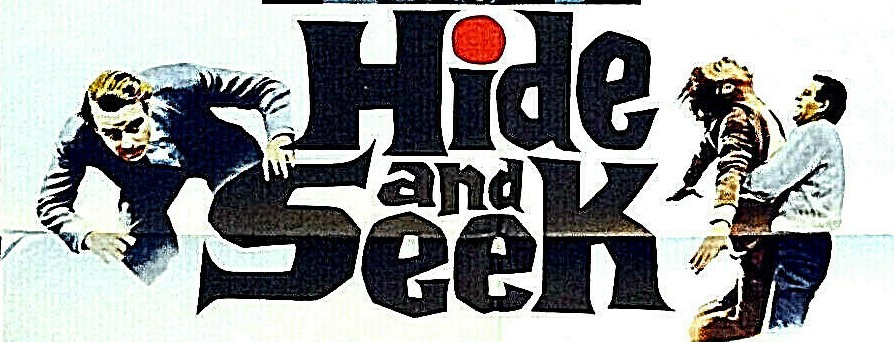
Head butler Mr Fields (Sean Pertwee) and the statuesque Viktoria (Stephanie Cornelissen), another guest, are snippy but the others, a smorgasbord of three influential European families, make her welcome. A nightmare and a few things unexplained drive her into the arms of the sympathetic Walt and before she knows it, she has agreed, in jest, to marry him. “The Big Reveal” – a subject of the last two posts – is well-paced giving Evie time to react to her unexpected circumstances. Like Hide and Seek (1964) she has been led into a trap of her own making, millennial entitlement coupled with the chance to mix with the rich and famous enough to do the trick.
She, it transpires, is the bride of a very particular individual and despite her efforts to escape it will be a very red wedding.
If there had been no mention of Whitby and Carfax – and I don’t remember anything in the trailer – I would have been completely unprepared for what followed, at least in the vampiric context, for the other goings-on did not tilt the viewer in that direction. The romance was refreshingly modern, with various reversals, including Evie standing up for menials who had fallen foul of the butler, and for herself against belittlement by Viktoria.
The ice-house, a mainstay of such buildings prior to refrigeration, also turns out to be fit for purpose and in another twist Walt favours the harem approach to marriage.
Considerably less savage than your modern horror picture, and definitely a shade more romantic, I can see why it would go down poorly with the modern horror cognoscenti but I felt it was very well directed, much more in the classic tradition of pacing, character development and twist. And it has an excellent ending that I suspect might kick-start a sequel.
Nathalie Emmanuel – best known from a stint in Game of Thrones and F9: The Fast Saga (2021) – will surely be elevated to stardom after her first leading role. A big-screen natural, she carries the picture effortlessly, and even though effectively playing the innocent abroad, there are few moments where the character is out of her depth, tribute to her innate acting skills. This could have gone wrong in so many ways, but her performance evokes natural sympathy while at the same time you would not make the mistake of pitying her.
A bright future also awaits Thomas Doherty (High Strung Free Dance, 2018) who carries off his role with style and except until necessary does not hint at the real character underneath the charm. Sean Pertwee (The Reckoning, 2020) shows he can glower with the best of them but Stephanie Corneliussen, in her movie debut, makes an excellent queen bitch and her whimpering sidekick Alana Boden (Uncharted, 2022) proves anyone can turn nasty given the right amount of prodding.
Big shout out to Scottish actress Carol Ann Crawford – better known as the dialect coach for Outlander – as the maid who sets Evie right. I do believe I was at university with her.
Director Jessica M. Thompson (The Light of the Moon, 2017) does an excellent job of keeping a tight rein on proceedings and even when all hell is about to break loose ensures that the ensuing havoc is carried out with some style. Blair Butler (Polaroid, 2019) knocked out the screenplay.
My only gripe is that Emmanuel and Doherty make such a fine couple – with the kind of screen charisma that is in short supply these days – it was a shame that the story had to take a turn into horror rather than continue (forgive the pun) in the romantic vein.
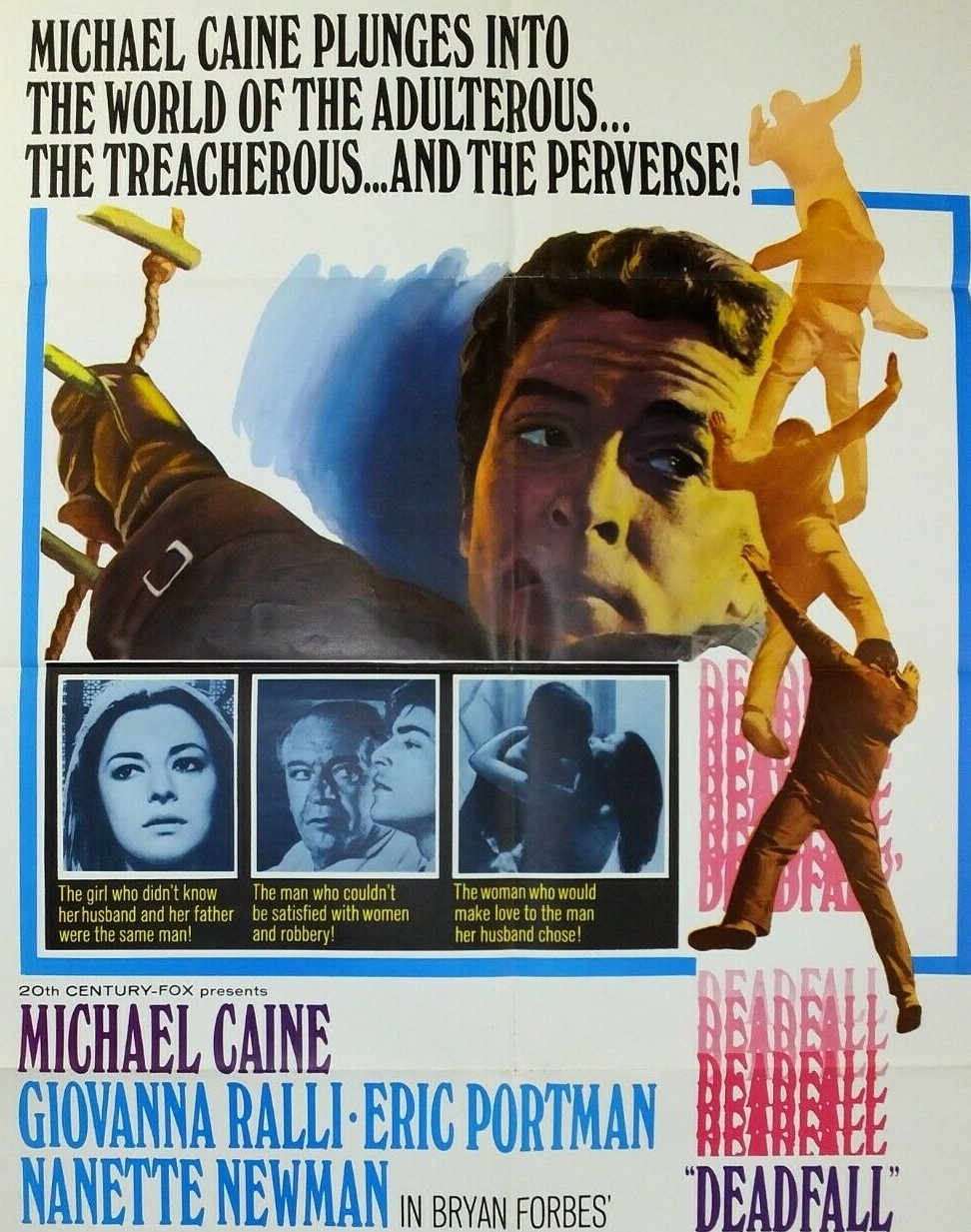
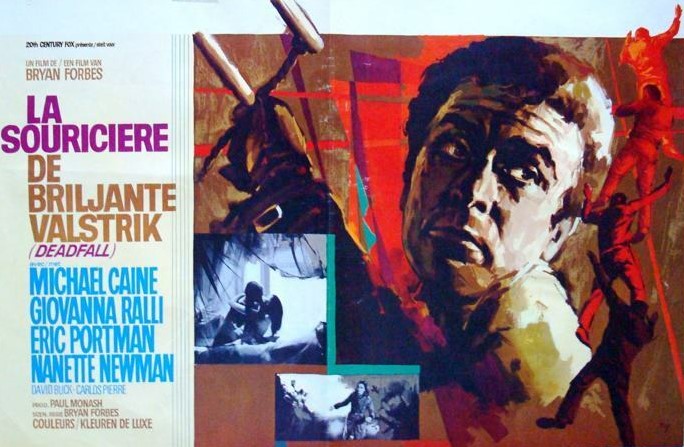
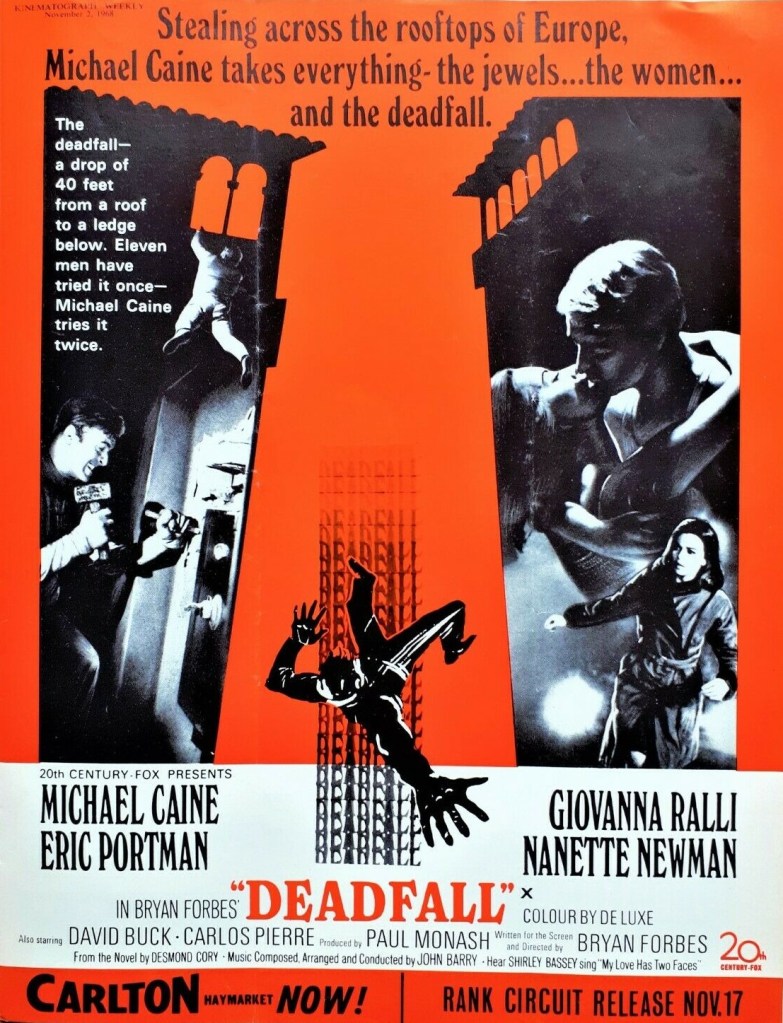
“The Big Reveal” comes too late to save this heist-cum-melodrama. It can’t make up its mind whether it wants to join the canon of superlative 1960s caper pictures – in which case it needed to make a greater effort on the cat burglary front – or whether it’s an odd addition to the menage a trois category, in which case it needed characters you could actually believe. Worst of all, it contains one of the great artistic follies, a robbery carried out in time with an orchestra playing one of the great John Barry compositions, “Romance for a Guitar and Orchestra.”
The only problem, there’s no dramatic reason for this. Since the concert is miles away from the robbery, it’s not as if the music drowns out the shenanigans. Director Bryan Forbes (King Rat, 1965) shoots himself in the foot. It’s too clever a device by half, even if the music is intended as a counterpoint to the robbery’s more dramatic themes or the silence which had become a trope.
Cat burglar Henry (Michael Caine) forms a business partnership with elderly safecracker Moreau (Eric Portman) and falls for his wife Fe (Giovanna Ralli). The husband-wife relationship is off to begin with, he preferring males, and the wife admitting she doesn’t always find men attractive, though quite what she is hinting at is never made clear. The target is millionaire Salinas (David Buck), whom Henry is investigating to the point of pretending to be an alcoholic so he can get to know Salinas in a sanatorium.
Any other movie would get straight to the point – draw up plans and get on with it. But here, for no real reason except delay, Moreau wants them to do a trial run, a safecracking job on the mansion of the kind of couple who drive off in a posh car to attend a concert. The effort put into the planning isn’t really up to scratch, not when compared to the likes of Topkapi (1964) – to which every heist film of the era was measured – or Gambit (1966) or even the less well-known The Happy Thieves (1960) or Seven Thieves (1960).
Apart from some cat burglary skills the whole episode is perfunctory, guard dogs knocked out by drugs. The background music, the aforementioned John Barry opus, just about kills off any prospect of tension. It only sparks into life when Moreau admits the safe is beyond him and Henry has to prise it out of the wall and cart it to the waiting car.
The second heist would have been far more interesting had we known from the start that Salinas welcomes burglary attempts, seeing it as some kind of duel of wits with malfeasants.
In between the two robberies there is time enough – too much time in fact – for Henry and Fe to get it together, for Fe to run off and then return only to learn in The Big Reveal the kind of despicable man her husband is. The movie can’t even deal with the incestuous sub-plot and just lets it hang there. But by that stage you couldn’t care less. Fe isn’t the type of femme fatale to bother crossing the road for, the romance seems too prescribed and the downbeat ending makes no sense.
I’m only giving this any points at all really because it stars Michael Caine (Hurry Sundown, 1967) and features a lengthy slice of John Barry music. Caine has been in enough duds for sure, but this doesn’t have the ring of one of his doing-it-for-the-money numbers or a stab at the Hollywood big-budget scene. Caine is good enough and Eric Portman (The Bedford Incident, 1965) is an interesting study. But it just doesn’t gel, not just let down by Giovanna Ralli (The Caper of the Golden Bulls, 1967) but by the pretentious direction and dramatic miscalculation of Bryan Forbes.
Forbes’ wife Nanette Newman (The Wrong Box, 1966) makes a puzzling appearance in a small role with no dramatic credibility. Leonard Rossiter (Deadlier than the Male, 1967) provides another cameo. For many the high spot will be to see John Barry in the flesh, conducting the orchestra playing his composition.
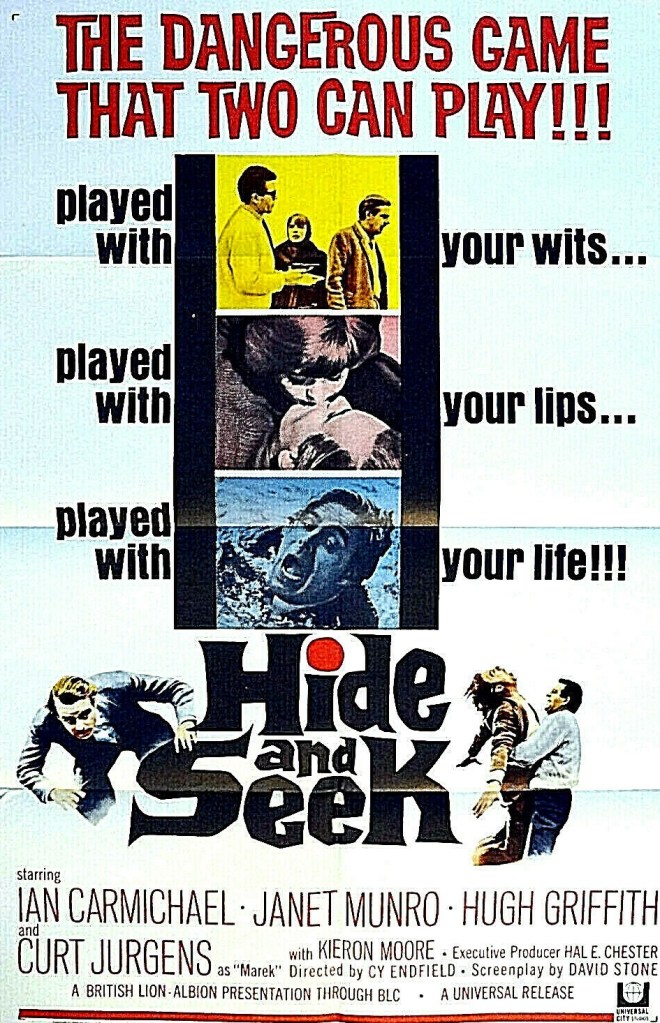
Too many peculiarities for a small British B-picture that just about makes it over the line after “The Big Reveal.” You can start with the fact that, ostensibly, this was director Cy Endfield’s follow-up to his blockbusting Zulu (1964). In fact, it had been made long before, but sat on a shelf for a year, and only released to cash in on Zulu. And you can see why studio British Lion didn’t know what to do with it.
Diving down a 39 Steps thriller-sized rabbit hole, baffled professor saddled with adventurous female go on the run searching for answers to, wait for it, a crime which hasn’t actually been committed. There’s action on a train, some comedy as the worlds of academia and the sophisticated fast set collide, romance on a barge, Cold War skullduggery, too much chess, a bit of welcome role reversal, a cliff-top fight, and some dry wit that might have fitted better into a straightforward romantic comedy. And it ends with a twist of such audacity that it would either come as a relief to a bewildered audience or send them home frustrated at such a denouement.
Rocket scientist David Garrett (Ian Carmichael) becomes embroiled in not even really a plot when he attempts to return a box, containing an inordinate amount of loot, to its owner, chess grandmaster Dr Melnicker (George Pravda). Luckily, a clue in the form of a chess move takes him to a posh London house in fashionable Chelsea where he encounters the slinky Maggie (Janet Munro) and after hiding in a sandpit in a children’s playground to evade pursuers he ends up on a train with her heading north to a place called Flamboro.
But, wait, his pursuers are also on the train, so naturally the couple have to jump off, fall into a river and hitch a lift on a passing barge whose owner Wilkins (Hugh Griffith) proves most obliging. Indeed, Maggie is even more obliging, taking the lead in bedding the shy professor. Things get interesting when Maggie, at a road sign, takes David in the completely opposite direction to Flamboro. That works for about ten seconds until a henchman Paul (Kieron Moore) captures them at gunpoint.
Rather than just shooting David dead he decides it would be cleaner to chuck him over a cliff. Luckily, David is a shade pluckier than you might expect. After winning this cliff-top tussle and shocked at having chucked a man over a cliff he is even more astonished to discover he is stranded, Maggie having made off in the car. Luckily, a passing policeman on a bicycle ensures David makes it safe to Flamboro, which turns out to be a huge mansion perched on a cliff.
My guess is by now you are so hooked by this story that you’ll want me to reveal The Big Reveal. Well, the whole thing turns out to be a trap. Melnicker, the pursuing thugs, Paul (who, you’ll not be too astonished to learn, ain’t dead) and even Maggie have all been plotting to bring David here so that he can be kidnapped and handed over to a submarine arriving the following day. You see, David has been so outspoken (has he?) against his masters that everyone will put his disappearance down to defection. It’s all been a cleverly worked-out chess move as chief baddie Hubert (Curd Jurgens) takes pains to point out.
But our David isn’t exceptionally brainy for nothing and finds a way to outwit the bad guys with Maggie, by now repenting of her bad ways and fallen in love, along for the ride.
So what’s gone wrong? The casting, unfortunately, for one thing. Star Ian Carmichael (School for Scoundrels, 1960), better known for comedy, doesn’t quite make the switch to more straightforward thriller. And Curd Jurgens (Psyche ’59, 1964), whom you might expect to add some gloss, doesn’t appear till the end.
Worse, the film doesn’t find the right tone, too much comedic British observation, and not enough of the hero being in genuine jeopardy. Only a clueless professor would run from the thugs. If the big twist had occurred halfway through and the audience had time to wonder whose side Maggie was on and feel David was in in genuine danger it might have hit the bullseye because, oddly enough, the romance is believable in a Hot Enough for June (1964) kind of way, where innocent male is scooped up by a more worldly female way above his league.
But the role reversal is fun. She’s the one who goes to his rescue when he falls in the river, she’s the seductress, and gets to tell him he looks better “when he’s cross” (a line more typically with slight variations falling to the male) and delivers the movie’s one cracker: “Being a man you have no respect for a mink coat.” She would be an ideal candidate for femme fatale if only the director had let us in on the story quicker, but she’s certainly an astute lure.
Because I wasn’t expecting much, I have probably been a shade less critical than if I was viewing it as a follow-up to Zulu. In the end, it’s passable enough, especially if you are willing to see how clever it’s been.
As I mentioned Ian Carmichael (Lucky Jim, 1957) is the weak link but former Disney protégé Janet Munro (Swiss Family Robinson, 1960), now blossomed in sexy fashion, steals the show and on this performance you might be surprised she did not have a more illustrious career but she had a heart condition and died prematurely at the age of 38. Curd Jurgens was at the early stages of inventing his villainous persona. The other characters are merely pawns in the plot so end up as stock villains. Cy Endfield’s genuine follow-up to Zulu was worth seeing – Sands of the Kalahari (1965).
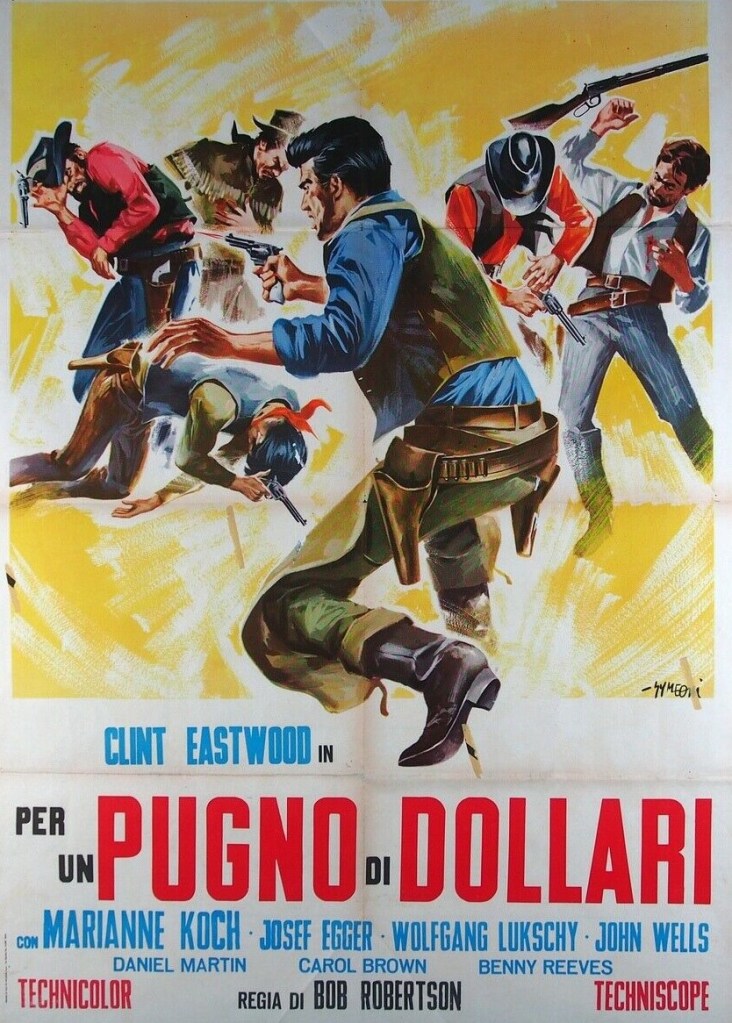
Breezy western debut that created five legends: announced the arrival of a new directorial force in Sergio Leone; bestowed screen stardom on Clint Eastwood; instantly created a new mini-genre in the Spaghetti western; provided a platform for the distinctive music of Ennio Morricone; and best of all from the producers’ perspective made a mountain at the box office. You could add in a cavalier attitude to corpses and adding a notch to the development of that 1960s standby, the anti-hero. From now on the good guy could be a bad guy or so morally ambiguous as not to make a difference.
Look no further than the opening scene to note the alternative Leone approach to the western. An anonymous stranger (Clint Eastwood) arriving in town, observes, while drinking water from a well, a gang torment a small boy by firing bullets at his feet. Indifference to the taboo subject of violence to children became a Leone trademark, most evident when children are slaughtered in Once Upon a Time in the West (1969). Most astonishing of all here, the stranger, ostensibly our hero, does not intervene despite, as we shall soon discover, being a ferocious shot.
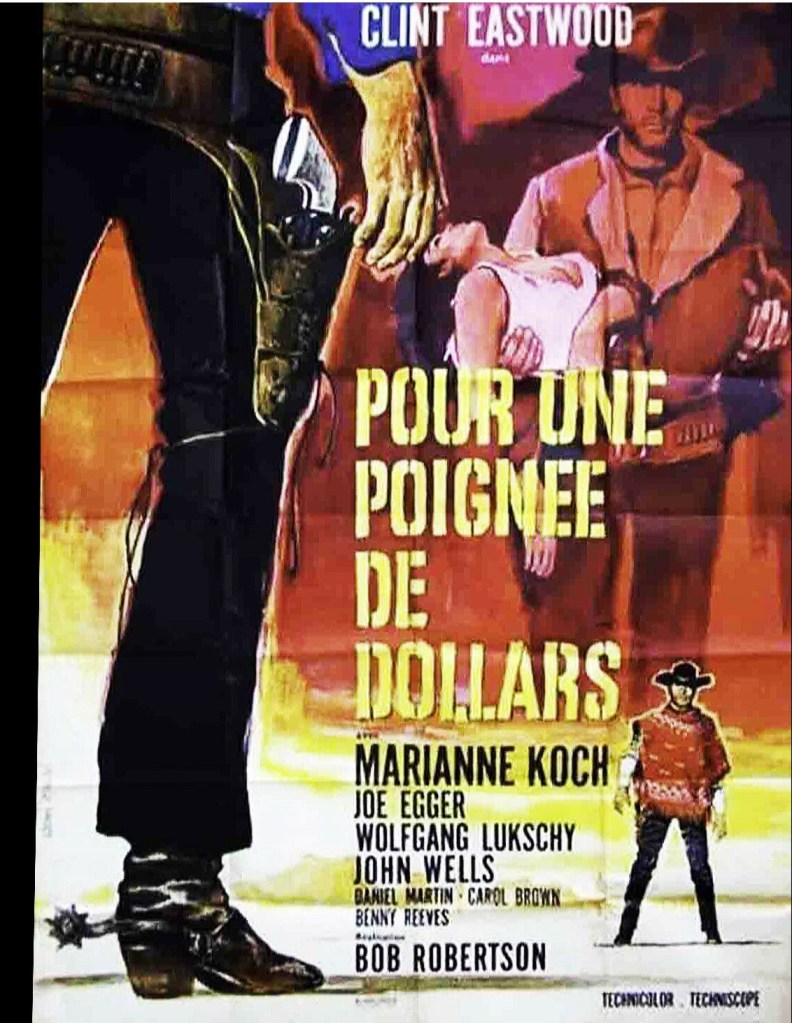
Who the heck is this Bob Robertson? A pseudonym for Sergio Leone, as if Robertson was particularly any better known than the debut director.Daniel Martin, oddly enough, is correct, but John Wells, Carol Brown and Benny Reeves are all made up.
Instead he learns that the child is being kept from his imprisoned mother Marisol (Marianne Koch), who has been taken from her husband Julio (Daniel Martin) by Ramon Rojo (Gian Maria Volonte). Rather than directly intervene a a good hero should, the stranger decides to profit from the situation. Realizing there are two opposition factions in town, the Rojos and the Baxters, he decides to play them off against each other, taking money in turn from each, demonstrating his credentials by shooting four men. That the Baxter clan includes the town sheriff (Wolfgang Lukschy) shows how powerful the Rojos have become.
In fact the stranger doesn’t orchestrate a straightforward shoot-em-up as you might expect but cleverly gets them to kill each other first of all by arranging for both families to confront each other in a makeshift cemetery where the stranger has deposited the bodies of two men, the supposed survivors of a massacre of Mexican soldiers escorting a gold shipment. The Rojos win this round.
After appearing as nothing but a ruthless opportunist, the stranger now turns into a hero, freeing Marisol, reuniting her with husband and son, and giving them money to go away. This kind act does not go unnoticed, the stranger captured and tortured, the Baxters massacred on the assumption he was acting on their behalf. The stranger escapes in a coffin, fashions himself some chest armour in a tin mine, and confronts the remaining Rojos in an old-fashioned, though with a typical Leone twist, gunfight.
Setting aside the body count, which enraged traditionalists, including the vast majority of critics who would later endorse the even more violent blood-letting of The Wild Bunch (1969), the trio of Leone, Eastwood and Morricone put their innovative stamp on the western.
Stylistically, it was in a class of its own (until, at last, Leone outdid himself with the further adventures of The Man with No Name and Once Upon a Time in the West). The operatic elements which feature so strongly in his later work, are here confined to the plethora of close-ups, more like portraits and extremely well-lit, the circular camera movement for the climax (again, more evident in Once Upon a Time in the West), and the stillness before the shoot-out, the way tension builds through nothing happening for a considerable amount of time, not through characters shifting to more advantageous position, but simply while the camera sits and broods.
Leone cut out exposition, generally a large part of the beginning of any western, the stranger having no emotional involvement in the situation. A normal western would focus on the forcibly estranged husband attempting to free the imprisoned wife, perhaps as in The Magnificent Seven (1960) hiring someone to do it for him. The stranger, in effect, sets out to profit from misery.
And he doesn’t say much. A character this monosyllabic would be a supporting actor in a traditional western, perhaps fulfilling a comic role or given some elaborate emotional back story for why words were so precious he wouldn’t spend them.
And he’s definitely iconic. In a later scene, Leone has Eastwood materializing out of the swirling dust in a scene that would easily have fitted the traditional western. But for the most part, he relies on audience reaction to a character who dresses in far from traditional fashion, most notably with his poncho and cigars. The western hero didn’t squint either. He walked not situations with his eyes open, indicative of his boldness and ability to face any situation.
Leone avoids classic western confrontation, the one-on-one scenes that usually occur close to the start where the hero either exhibits prowess or is humiliated. In what might be called “the Chicago Way” not only does nobody come to a gunfight with a knife, the bad guys come mob-handed.
Sure, that means the hero is shown to be even more deadly with a pistol, but it also permits Leone to extend the action by focusing not just on two opposing characters but a number of different faces. There are some other motifs at play in Leone’s debut – women are not all as submissive as Marisol, Consuelo, the Baxter matriarch, on hiring the stranger, says “I’m rich enough to appreciate the men my money can buy,” her power and wealth finding later echo in Once Upon a Time in the West.
Last but not least, is the Morricone sound. There had been great western themes before, plaintive as in High Noon (1952) and The Alamo (1960) or stirring like The Big Country (1958) and The Magnificent Seven (1960), but this appeared to arrive from a different orchestral planet.
If ever a movie could claim ownership of the title “a star is born” it’s this one. Perhaps it has remained so special because the triumvirate of Leone, Eastwood and Morricone had such illustrious careers, this merely a starting point rather than, as if often the case when Hollywood anoints a new star, the highlight.
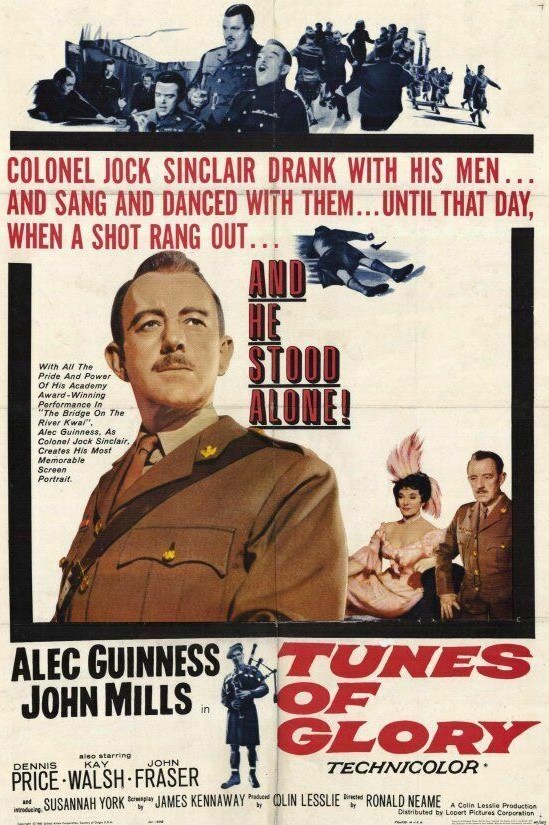
Fans of Succession will appreciate this power struggle in a Scottish army regiment set in 1948. In a reverse of The Godfather (1972) where the Corleones complain about needing a “wartime consigliore,” here the powers-that-be have decided this unnamed distinctly Highlander company requires a commanding officer with skills more appropriate to peace time.
Major Jock Sinclair (Alec Guinness) has been in charge of the battalion since the North Africa campaign in World War Two when the original commander was killed. But he has never been promoted to full Lt. Col. Naturally, having been in charge for six years, he feels the job should be his. At a time when the currency of command was wartime experience he’s less than pleased when he loses out to Col. Barrow (John Mills) who spent most of the war as a Japanese POW.
It doesn’t help that they are complete opposites. Sinclair is a tough, hard-drinking, attention-seeking Scotsman who enlisted as an ordinary soldier and rose through the ranks winning two medals for courage during the conflict. Barrow is Oxford-educated English upper-class, a lecturer at Sandhurst Military Academy, and recalls his war experience with terror rather than the braggadocio of Sinclair. Worse, he doesn’t drink.
It doesn’t take long for the pair to clash. Sinclair, who has ruled as much by preying on weakness as force of personality, is quick to start to look for flaws in his opponent’s make-up. Barrow feels discipline has been slipping and enforces tougher measures. That might make him unpopular but an army is built on discipline so soldiers can hardly complain.
But Barrow slips up by misreading the men. He chooses the worst of all issues to make a stand. For the first post-war official barracks party, Barrow insists the soldiers embark on traditional Highland dancing in regulation fashion rather than in their normal exuberant, not to say rowdy, manner. The soldiers are infuriated when Barrow insists they take lessons.
He has just lit the fuse. Naturally, nothing goes according to plan. Barrow is humiliated, Sinclair triumphant. But victory does not turn out the way Sinclair expected.
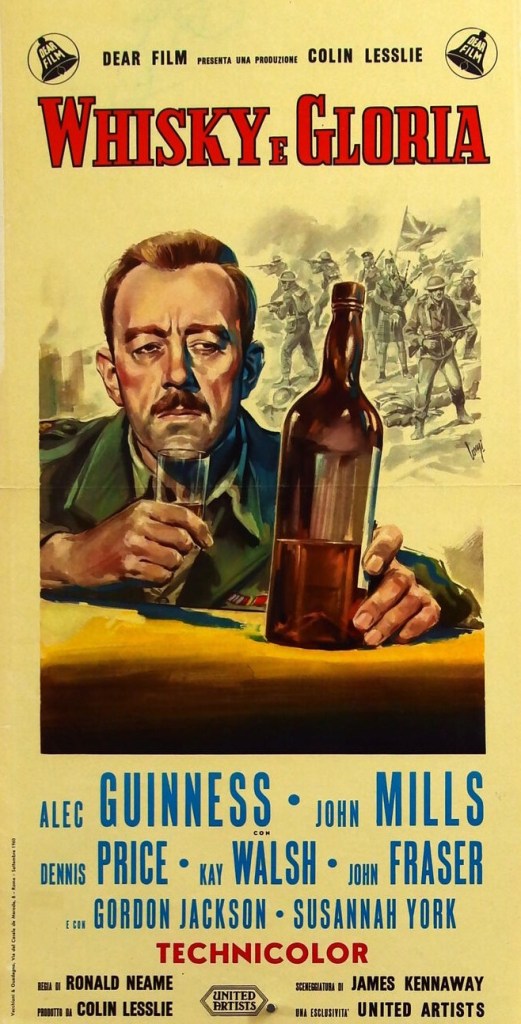
Somewhat cynical rebranding of the film in Italy as “Whisky and Glory,” possibly trying to cash in on the success of “Whisky Galore” and also misleading in suggesting actual conflict with the fighting in the background.
The main thrust of the narrative, as you might expect, is the stand-off between Sinclair and Barrow and the tensions felt all round, as would be the case in any business (Succession, now, of course the classic example) when a new boss takes control. While everyone might expect, and perhaps fear, change, in the military (as in the navy) there is always the danger, should the new broom try to sweep too clean, of mutiny.
This might not amount to a raising of arms. But there are other effective methods of mounting opposition – laxity, questioning or outright refusal to obey orders – or giving the new chief the cold shoulder. Here, in the background, are other simmering tensions. Not everyone is comfortable with Sinclair’s very laddish approach to command, the back-stabbing and double-dealing Major Charles Scott (Dennis Price) ready to pounce at any opportunity.
Sinclair is also having to deal with his daughter Morag (Susannah York) asserting her independence, having the temerity not just to take a boyfriend, Corporal Fraser (John Fraser), but one from the ranks rather than the officer class. And he feels the harsh tongue of his own paramour Mary (Kay Walsh).
Emotional isolation is rarely commented upon in matters of the armed forces and yet it is so much a driving force. If not adequately compensated by camaraderie, a man at the top can be very lonely indeed, and prone to the most vicious self-torment.
Director Ronald Neame (The Prime of Miss Jean Brodie, 1969) superbly invokes an army atmosphere away from the more usual battleground backdrop. The picture is anchored by brilliant performances all round and a roll-call of strong supporting characters. An unflinching look at power, especially leadership and the personal toll it takes. And it was astonishing that the movie could hit the target so well without relying on the usual round of sex, violence or that old stand-by the comic subordinate. It also probes the issues of what happens – in any industry – when the wrong person is put in charge. No less an authority than Alfred Hitchcock called it “one of the best films ever made.”
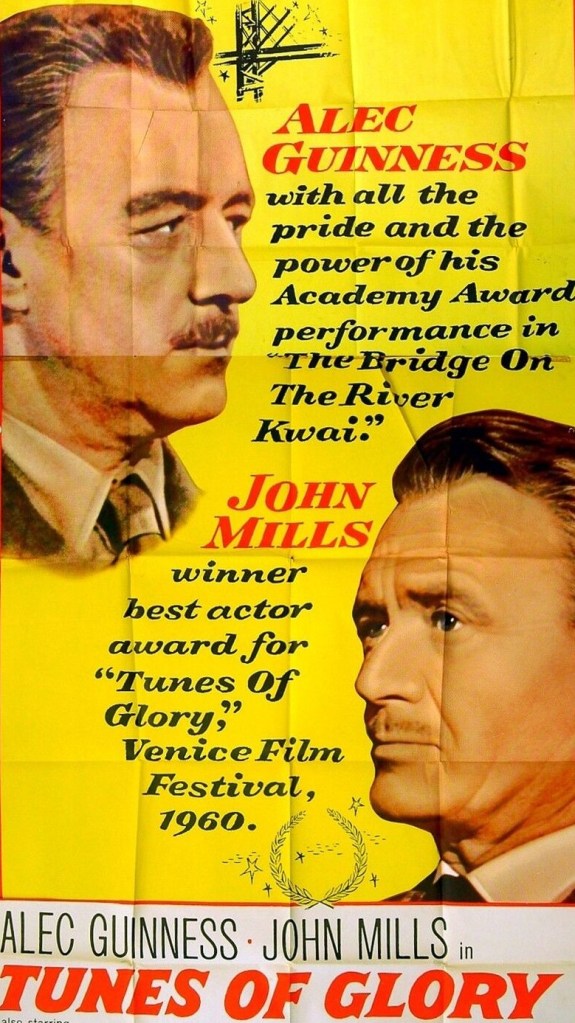
The sparring between Oscar-winning Alec Guinness (The Quiller Memorandum, 1966) and John Mills (The Family Way, 1966), who won the Best Actor Award at the Venice Film Festival for this role, is of the highest quality. Dennis Price (The Comedy Man, 1964) is the pick of the support while Susannah York (Sands of the Kalahari, 1965) makes an auspicious debut.
Few films could boast a better supporting cast: former British leading lady Kay Walsh (A Study in Terror, 1965), Gordon Jackson (The Ipcress File, 1965), Duncan Macrae (Best of Enemies, 1961), John Fraser (Tamahine, 1963), Gerard Harper (Adam Adamant Lives!, 1966-1967, TV series) and Peter McEnery (The Moon-Spinners, 1964).
James Kennaway (The Shoes of the Fisherman, 1968) wrote the screenplay based on his own novel.






 The Magnificent 60s