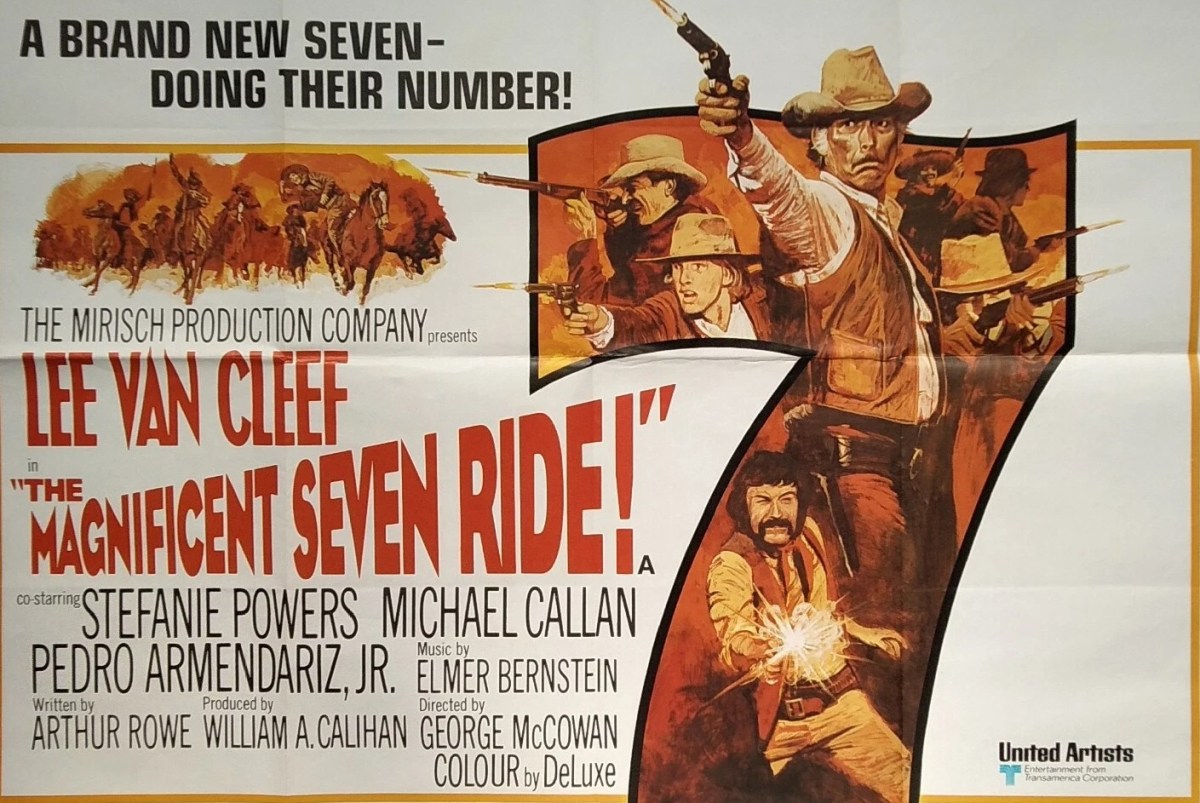
Independent production company Mirisch had enjoyed spectacular success in the 1960s both at the box office and the Oscars. Commercial successes included The Magnificent Seven (1960) and sequels, The Apartment (1960), West Side Story (1961), The Great Escape (1963), Hawaii (1966) despite its huge budget, and In the Heat of the Night (1967). Walter, who did the legwork on the production side – his brothers Harold and Marvin were more backroom boys – picked up the Oscar for In the Heat of the Night and two other films he was involved in won Best Picture. Their films were solely distributed through United Artists, with whom they had a profitable relationship for most of the decade. But cracks were beginning to show in the 1970s and in the final reckoning after a meltdown at the box office Mirisch and UA went their separate ways in 1974. Harold had died in 1968 and Marvin pulled back, leaving Walter to go it alone with Universal, with some success – Midway (1976) and Same Time, Next Year (1978).
The demise of the original Mirisch came as their business was spiralling out of control. With a total loss of $32.6 million covering 13 films made for United Artists between 1966 and 1972, it was small wonder it spelled the end of the road for the independent company. Norman Jewison musical Fiddler on the Roof, an adaptation of the Broadway hit, was one of only three movies to end up in the black, clocking up $6.8 million profit. Return of the Seven (1966) starring Yul Brynner earned a meager $37,000 in profit from cinema exhibition and its overall profitability of $588,000 depended on $1.6 million from sales to television. The Magnificent Seven Ride! (1972) with Lee Van Cleef only made a small profit of $236,000 thanks to television and even counting in sales to the small screen Guns of the Magnificent Seven (1969) didn’t reach that benchmark.
Television played a significant role in keeping losses down to $32.6 million. Fiddler on the Roof went to television for $3 million, The Hawaiians / Master of the Island (1970) starring Charlton Heston, a sequel to Hawaii, and They Call Me Mister Tibbs for $1.3 million and The Organization $1.1 million, respectively, the latter two films relying on Sidney Poitier reprising his role from In the Heat of the Night.
Various deductions, not always obvious to outsiders, come off the top of rentals and television sales. First there are the distribution fees paid to United Artists, then marketing costs, finance, and profit shares – Brynner and Poitier were on percentages as was Jewison (on a whopping 20 per cent), and these were often paid out against overall rentals rather than actual profits.
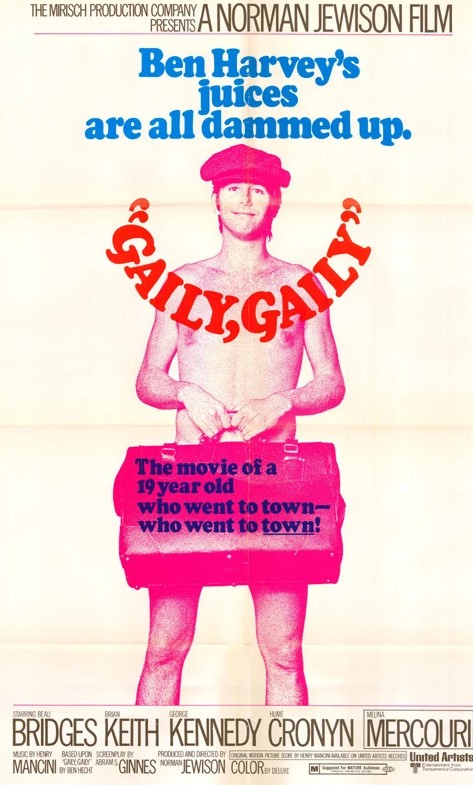
In an alarming shift from the glory days of the 1960s, Mirisch presided over some out-and-out disasters. Jewison’s rites-of-passage Gaily, Gaily / Chicago, Chicago (1969) starring newcomer Beau Bridges (The Fabulous Baker Boys, 1989) in his first top-billed role and Greek Oscar nominee Melina Mercouri (Topkapi, 1964) went completely down the tubes, racking up a colossal $10.3 million loss. The Hawaiians / Master of the Islands directed by Tom Gries (Will Penny, 1968) wasn’t far behind – $8.3 million in the red.
The Billy Wilder (The Apartment) touch couldn’t save The Private Life of Sherlock Holmes (1970) starring Robert Stephens (The Prime of Miss Jean Brodie, 1969) from plummeting to a $7.5 million deficit. George Peppard western Cannon for Cordoba (1970) co-starring Giovanni Ralli (Deadfall, 1968) haemorrhaged $3.1 million. Heist comedy Some Kind of Nut (1969), directed by the renowned triple Oscar nominee Garson Kanin (Where It’s At, 1969) and toplining Dick Van Dyke (Divorce American Style, 1967) and Angie Dickinson (Jessica, 1962) faced a shortfall of $3 million.
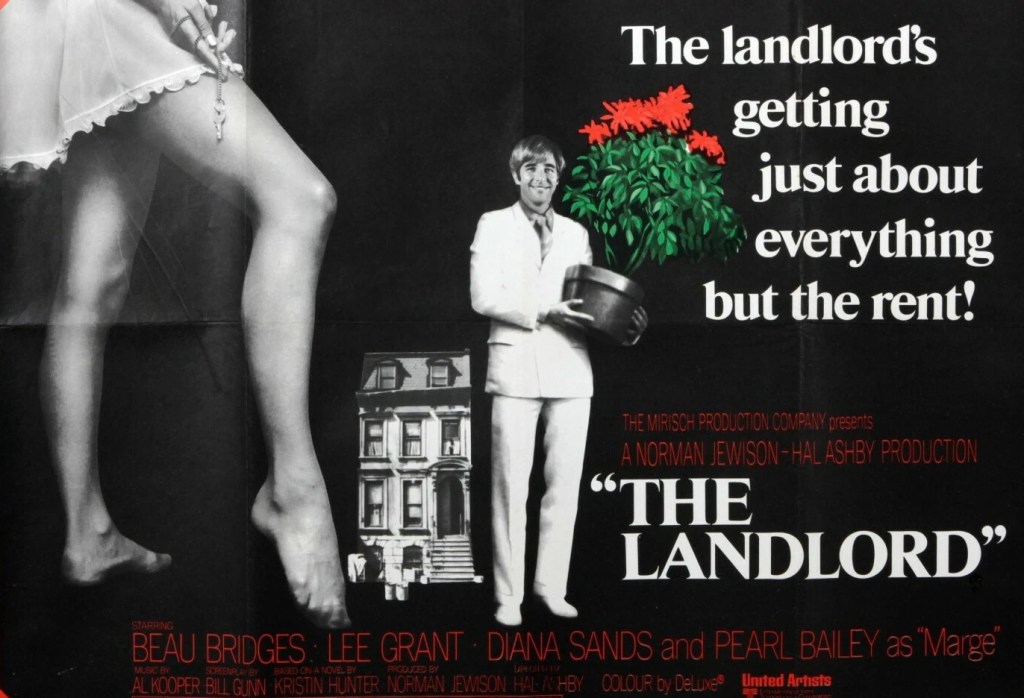
Beau Bridges was also the luckless star of Hal Ashby’s debut The Landlord (1970) which went down to the tune of $2.5 million. School drama Halls of Anger (1970) starring Calvin Lockhart (Cotton Comes to Harlem, 1970) as a tough teacher was $1.8 million in the red. Jacqueline Bisset (Bullitt, 1968) in her first top-billed role in The First Time (1969) wasn’t a big enough attraction to prevent this tumbling into a $973,000 quagmire.
Even Sidney Poitier at the peak of his fame was no hedge against box office calamity. They Call Me Mister Tibbs was $1 million below breakeven and The Organization $500,000.
It didn’t help the Mirisch bottom line that it had invested $5.1 million in projects that were never made, although half of this was accounted by The Bells of Hell Go Ding-A-Ling-A-Ling, a Gregory Peck (Mackenna’s Gold, 1969) starrer directed by David Miller (Lonely Are the Brave, 1962) that was abandoned in 1966 in the face of extreme weather conditions with $2.7 million already spent. The studio has also lavished $1.2 million on I Do, I Do without a single foot of film shot. John Sturges spent $267,000 unsuccessfully trying to put together The Yards of Essendorf in 1969 that would have, variously, starred Steve McQueen or Warren Beatty (plus Ursula Andress and Jean-Paul Belmondo) in another World War Two venture. Sturges also wasted $68,000 on Richard Sahib to feature Spencer Tracy and Alec Guinness and $15,000 on The Artful Dodger, a sequel to The Great Escape.
Other projects sucking the well dry with nothing to show for it were Bandoola with an elephant as an unlikely World War Two hero to be filmed in Pakistan ($208,000 spent), Chinese Detective Story ($82,000) aka The Dragon Master with George Peppard lined up, The Egyptologist ($140,000), The Judgment of Corey ($185,000) with director Peter Yates (Bullitt), The Mutiny of Madame Yes ($110,000) with Ronald Neame (The Prime of Miss Jean Brodie) attached, Nothing to Lose ($92,000) to be helmed by Franklin Schaffner (Planet of the Apes, 1968), Andrew V. McLaglen (Bandolero! 1968) signed up for Warhorse ($39,000) and Snatch ($239,000).
The poor run continued into 1972 when Billy Wilder’s Avanti (1972) with Jack Lemmon, while not in the dire financial straits of the famous sleuth, still dropped $1.8 million.
SOURCE: William Bernstein, “United Artists Office Rushgram,” July 16 1973 (United Artists Archive, Wisconsin University.)

 The Magnificent 60s