The Way West (1967) ****

How this crispy-told beautifully-mounted character-driven western ever languished among the also-rans is beyond me. I suspect the specter of John Ford hung heavily over it in the eyes of critics at the time but it more correctly belongs to the cycle of Cecil B. DeMille westerns that told stories with a true historical bent. Often detrimentally compared to How the West Was Won (1963), which told a similar tale of endeavor, this movie deliberately lacks that movie’s inflated drama in which every incident was built up, not least influenced by the need for Cinerama effect, rather than seeking an authentic truth.

Plainly put, the difference is here there are no charges, no races, no fording of rivers in the wrong places. Native Americans are treated with respect. Above all, an epic crossing of the continent with fully-loaded wagons is necessarily going to be slow, risk avoided at all costs, and yet this is not without incident or character arc. In fact, the script is terrific, not just dialog that rings true, but among the elements brought into play are male rivalry, clash with authority, guilt, young love, revenge, vision, justice, America in embryo. That the movie maintains a stately pace, no fistfights descending into brawls, and a shock ending indicate a director in charge of his material.

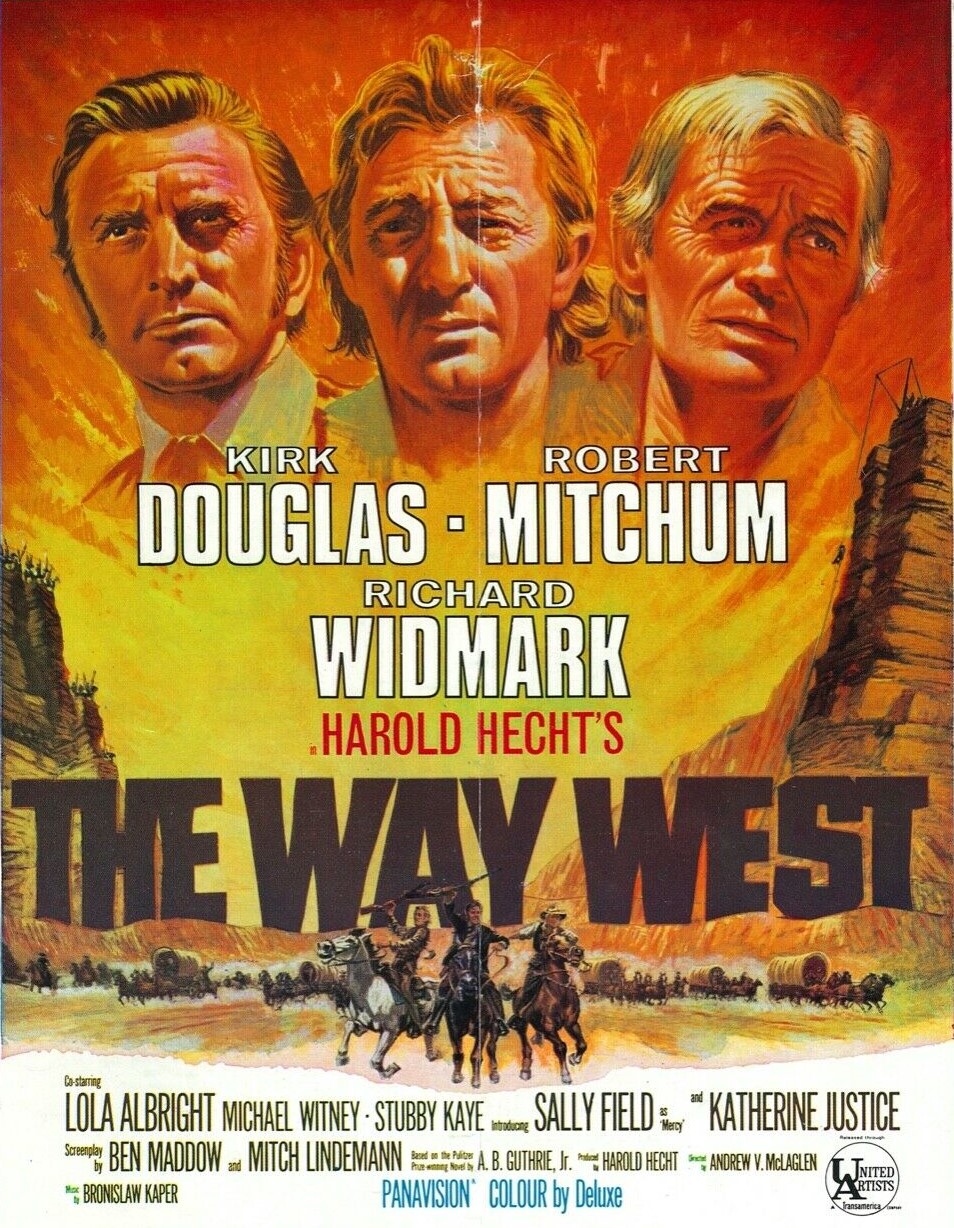
Based on A.B. Guthrie’s Pulitzer Prize-winning novel set in 1843, the first wagon train heads for Oregon under the iron rule of Senator William Tadlock (Kirk Douglas) and guided by a scout with failing eyesight in Dick Summers (Robert Mitchum), both men widowed and in emotional limbo, and in the cantankerous company of Lije Evans (Richard Widmark) and his glamorous wife Rebecca (Lola Albright). There’s a stowaway (Jack Elam), a preacher who can’t afford the price of transportation, an illicit love affair between the vibrant and lusty Mercy (Sally Field) who “hankers after any three-legged boy” but makes eyes at married man Johnnie Mack (Michael Witney), and enough obstacles to keep less determined settlers from reaching their promised land.

Tadlock is the visionary, a politician suffering from an overblown estimation of his self-worth,  who “might have been President except for a woman,” ruthless, valuing only his own ideas. “Point the way,” he tells Summers, “don’t gall me with opinions.” For fear it might interfere with his role as commander, he hides his vulnerability. There’s a plaintive moment when he shares his vision of a city with Rebecca, on the one hand full of his own importance, on the other clearly needing the pat on the back. Later, an occasion of death sees him falling prostate with grief on a grave and on breaking his own laws demands to whipped. The over confident blustering individual is by the end almost suicidal. What is a leader if there is no one to lead?
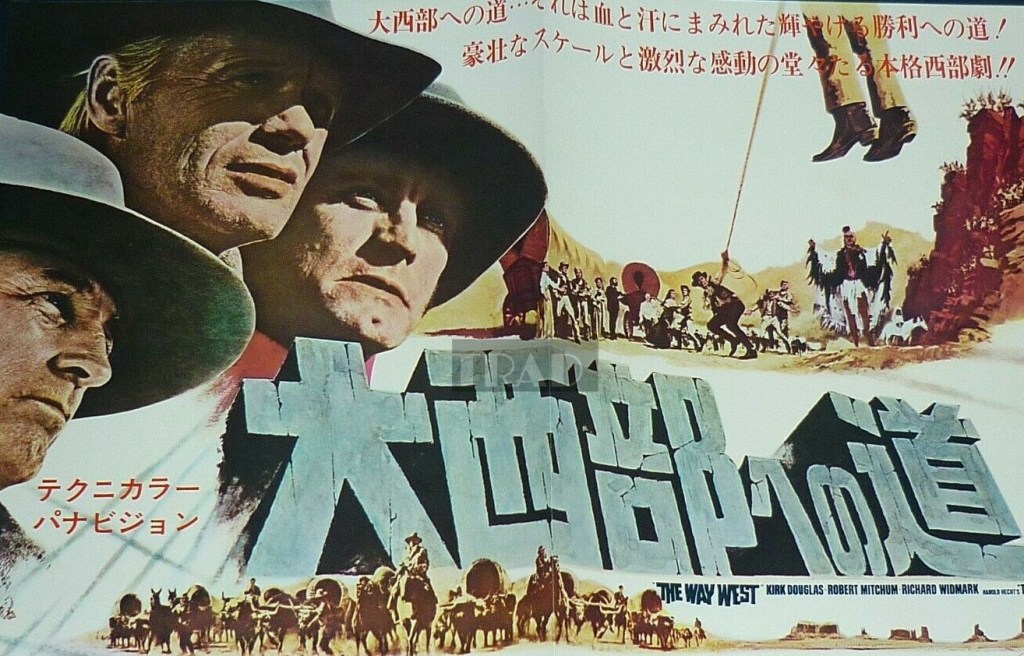
Summers stoically accepts his infirmity, constantly dropping his head so his eyes are hidden from sight under his hat as if his ailment could be easily detected, mourning the loss of his Native American wife, and while full of Western lore as easily passing on gentle wisdom about love, and his “lucky necklace” to an unrequited lover, but still accused of unworldliness, “for a smart man you ain’t got a lick of sense.”  Evans bristles at any authority, believing independence means he goes his own way, especially if that permits the freedom to get drunk at a time of his choosing, and especially once he realizes such lack of inhibition riles the repressed Tadlock. But his fondness for alcohol triggers an incident that almost costs his son his life.

Celebrations he started catch the attention of the nearby Sioux and in the communal drunkenness a Native American child is accidentally killed. In the best scene in the film battle Sioux seeking justice and intent on attack are thwarted only by the “sacrifice” of the killer.

The picture is packed full of incident, many characters coming alive in a single shot or with one line of dialog. A woman tramps on her husband’s foot to prevent him challenging Tadlock’s authority. A woman with a baby retorts that she is afraid when bolder settlers facing potential Native American attack assert the opposite. The bravest man in the camp, the first volunteer to be lowered down a canyon, dies when his rope snaps.  

There are any number of reversals. Buffalo, instead of being a danger and prone to stampede, create a dust cloud to hide behind. Rivers are crossed at sensible points, rapids avoided. An African American whips a white man. A boy becomes a man through honor rather than violence. Stories, large and small, play out in a succinct script.  
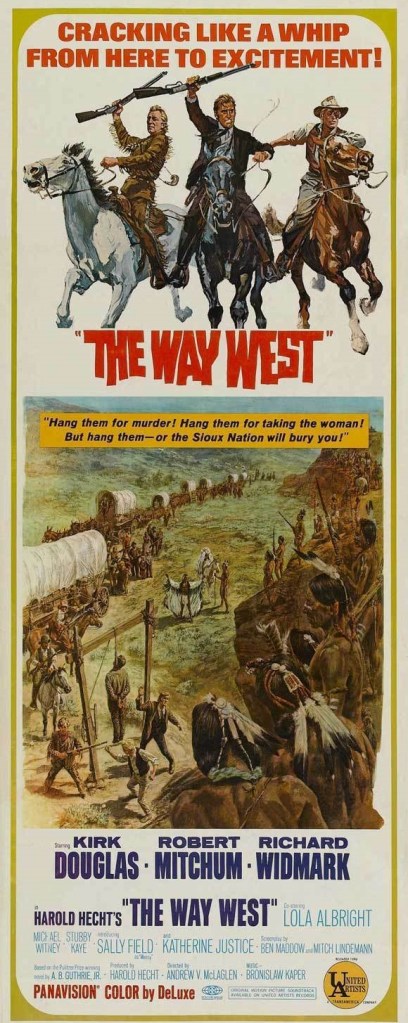
Kirk Douglas (The Arrangement, 1969) is superb as a man whose iron core deserts him. Robert Mitchum (Secret Ceremony, 1969), in almost a supporting role, excellent in full awareness that the sight on which his reputation and job depend will vanish, brings a subtlety to his performance that would be recognized as ideal for Ryan’s Daughter (1970). Richard Widmark (The Bedford Incident, 1965), who is generally simmering, gets to mix in a bit of fun in with the simmering.

Lola Albright (A Cold Wind in August, 1961) swaps seductiveness for sense. In her debut Sally Field (Smokey and the Bandit, 1977), filled with zip and zest, sparkles as the lusty young woman and it’s astonishing to realize she would not make another movie for nearly a decade while another debutante Katherine Justice (Five Card Stud, 1968) finds her inner fire when it’s too late.  There’s supporting talent a plenty – Jack Elam (Once Upon a Time in the West, 1968), Stubby Kaye (Cat Ballou, 1965), Harry Carey Jr. (The Undefeated, 1969) and William Lundigan (The Underwater City, 1962) in only his second film of the decade.

Director Andrew V. McLaglen (The Rare Breed, 1966) captures the correct tone for the film, making up for the essential slow pace with brilliant use of widescreen, coaxing great performances from all concerned. Screenwriters Ben Maddow (The Chairman, 1969) and Mitch Lindemann (The Careless Years, 1957) compress Guthrie’s tome with considerable skill.  

Woefully underrated at the time and since, this deserves reassessment. This is a truer version of how the west was won. And I surely can’t be alone in demanding that McLaglen’s talent be more properly recognized.

You might be interested to know there are two other articles on this film – a “Behind the Scenes” and a “Book into Film.”
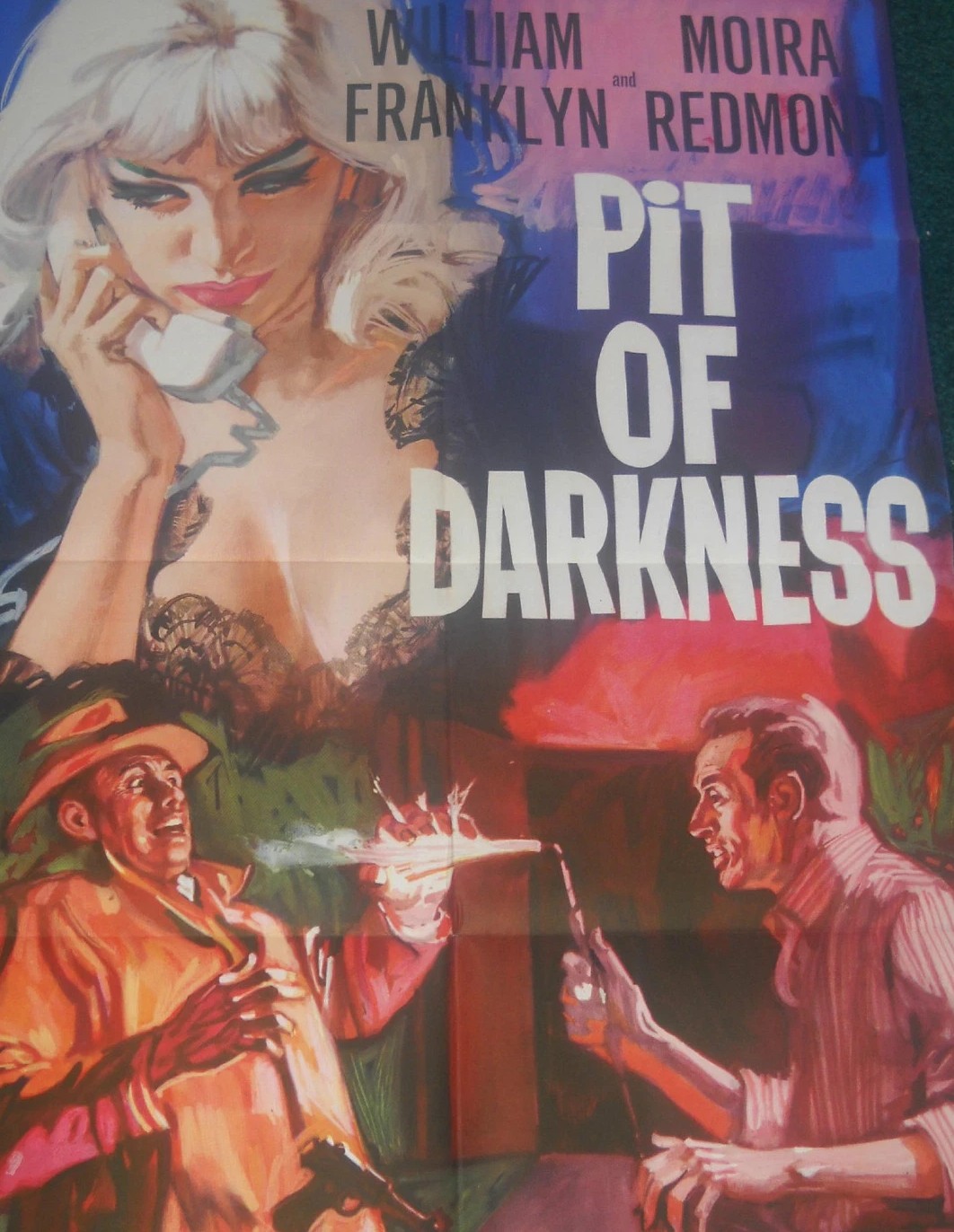
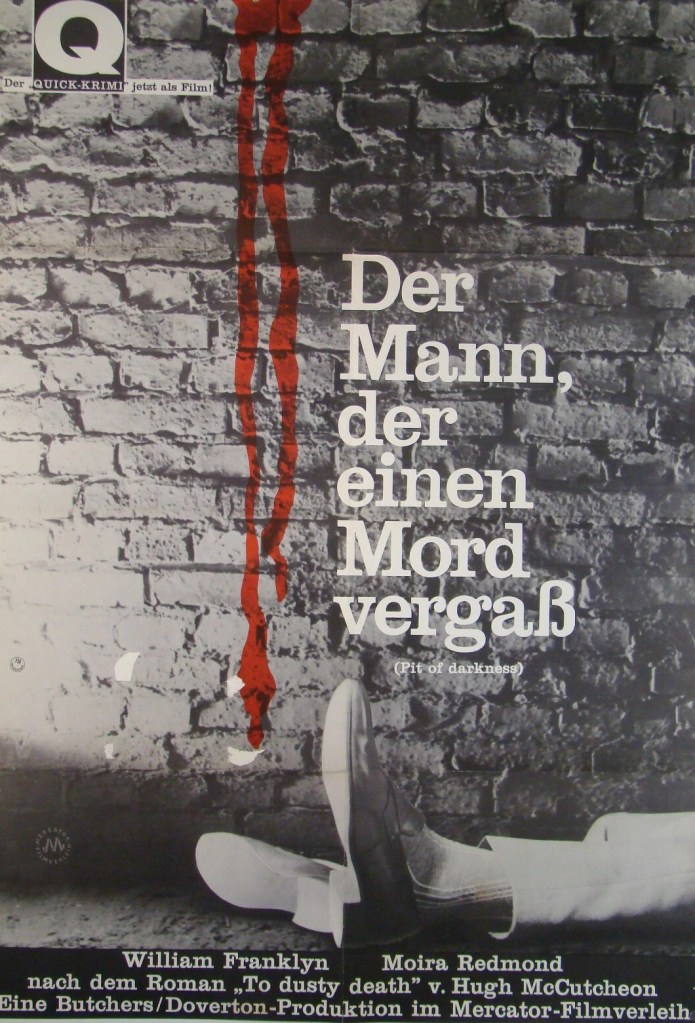
Pit of Darkness (1961) ****

Occasionally I get to wondering when one of these British crime B-pictures is exceptionally well-plotted, refreshing and above all logical, whether it might have benefitted from grander treatment Hollywood-style. You could easily see Cary Grant or Gregory Peck wriggling around in this one and with a Grant or Peck involved they’d be accompanied by a glamor puss of the Sophia Loren, Deborah Kerr vintage. And that would put the whole movie in an entirely different light and ensure it wasn’t lost for decades, as was the fate of this one.

What struck me most about the opening section here, an attitude maintained for about half the picture, was that the actress wife Julie (Moira Redmond) of amnesiac Richard (William Franklyn) didn’t believe for a minute his story that he couldn’t remember where he’d been for the last three weeks. There wasn’t an ounce of sympathy. That struck me as an entirely believable reaction. Rather than going all soppy at his return, she reckoned he’d run off with another woman and only came back because the affair had gone sour.  

And it doesn’t help his case that he was found unconscious on a piece of London waste ground where four days before the private detective she had hired to find him was discovered murdered. Then there are the suspicious phone calls, leaving him to deny the existence of anyone called Mavis.

But just when we start to believe him, suddenly we don’t. He seems to be too familiar with the Mavis who calls him and agrees to meet her at a remote cottage. And then we’re back on his side, as he just avoids being blown up in the cottage. But he leaves his hat behind.

And he doesn’t own up to Mavis about being nearly killed and gives a spurious reason for buying a new hat and not keeping the old one. So we’re on her side, something is going on for sure. And then back on his, when someone tries to sideline him in a hit-and-run accident.

In turn, he’s suspicious of everyone, including his wife, and his colleagues at work, especially Ted (Anthony Booth) who seems an unlikely candidate to have won the heart of his delectable secretary Mary (Nanette Newman).

He works for a firm that makes safes and whatever’s going on appears to be linked to a burglary that occurred in his absence involving one of the safes the company made. Eventually, Julie comes round to his way of thinking. Clues lead him to a nightclub, whose mysterious owner Conrad (Leonard Sachs) somehow seems familiar. He encounters Mavis, a dance hostess, and she agrees to help him but when he goes round to her apartment finds a corpse. There’s something distinctly odd going on in the building across the street from his office. On further investigation, he uncovers an assassin. Luckily, our man is armed with the office pistol and the villain is chucked from the roof.

But, still, nothing makes much sense, even though bit by bit memory is returning. He realizes he shouldn’t have been found unconscious on the waste ground, but dead, murder only interrupted by the sudden arrival of a gang of boys.

But in retracing his steps in order to unlock the lost memories he finds himself undergoing a perilous process a second time. He works out that he was kidnapped and locked in a cellar in the club. When he confronts Conrad, that instigates a repeat.

Conrad locked him away and when bribery and the seductive wiles of Mavis didn’t work, Conrad convinced Richard that his wife was in danger if he didn’t go along with the burglary. And Conrad isn’t one to let a good opportunity go to waste, so second time around, using the same threat that worked the last time, he forces Richard to commit another burglary. But this time there’s a catch and one that Richard’s secretary hasn’t known about to pass on to Ted.

So the bad guys are caught, and in the way of the obligatory happy ending the audience is left to assume that the police will ignore his part in the robbery and the death of the man on the roof.

Not just exceptionally well-plotted, but the addition of the marital strife, the suspicious wife, adds not just to the tension but makes it all the more believable and turns the amnesia trope on its head.

Having wished for a Cary Grant or a Gregory Peck, I have to confess I was more than satisfied with William Franklyn (The Big Day, 1960) who managed to look innocent and guilty at the same time. Certainly Deborah Kerr would have managed more in the acerbic look department than Moira Redmond (The Limbo Line, 1968) but I have no complaints.

Interesting support cast at the start of their careers, so Anthony Booth (Corruption, 1968) displays just a hint of his later trademark sarcastic snarl and there’s no chance for Nigel Green (The Ipcress File, 1965)  to put his steely stare into action or effect his drawl. Nanette Newman (Deadfall, 1968) has little to do except look fetching. Leonard Sachs was taking time off from presenting TV variety show The Good Old Days (1953-1983).

More kudos for the script than the direction this time for Lance Comfort (Blind Corner, 1964).

Given it’s from the Renown stable. I would normally have expected to come upon this picture on Talking Pictures TV, so I was surprised to find it as one of the latest additions to Amazon Prime.

First class.

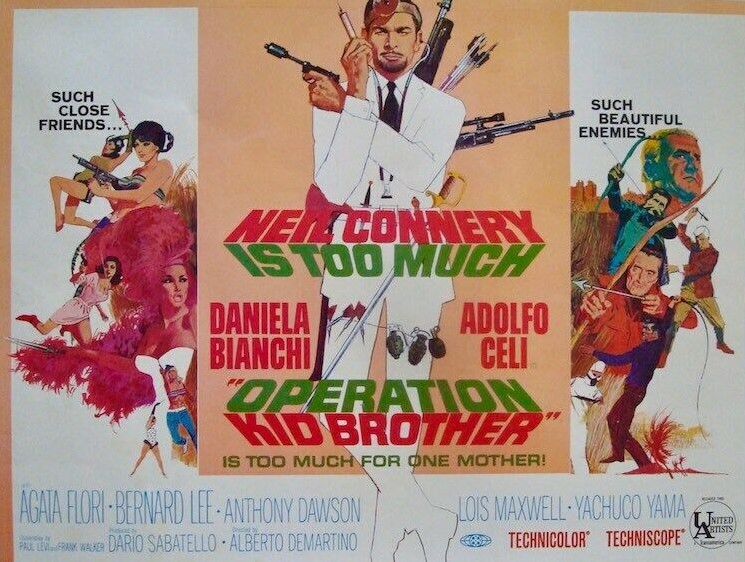
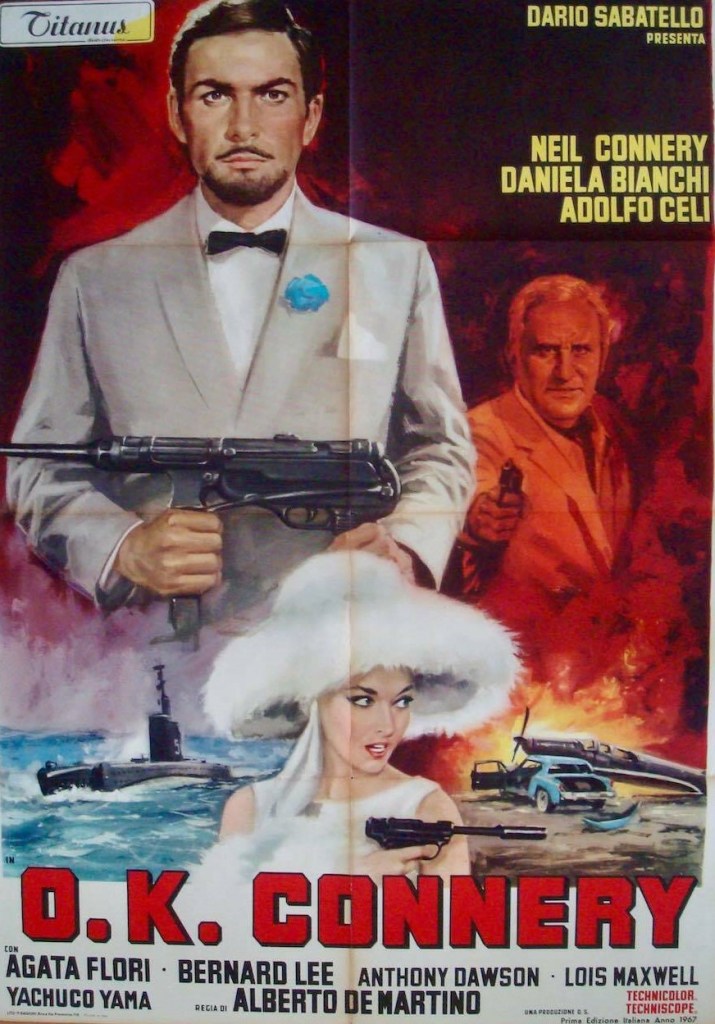
Operation Kid Brother / O.K Connery (1967) ***

Half a century ago it would have blasphemy to do anything but mock this oh-so-obvious James Bond rip-off. That was the year, if you remember, when another bigger-budgeted spoof, Casino Royale, took an almighty chunk out of the box office of You Only Live Twice.  Where the former had a multitude of Bonds, Operation Kid Brother settled for the premise that its main character was the brother of the famed secret agent.

Far from being a disaster, it is, to use the alternative title, “O.K.”, and in parts more than acceptable, especially in its anticipation of ideas that would later become Hollywood tropes: packages concealed in the brain (Total Recall, 1990 and Johnny Mnenomic, 1997), driverless cars (from The Love Bug, 1968, to Tomorrow Never Dies, 1997, and beyond), electronic global blackout and its current equivalent the gravity wave (Moonfall, 2022), and even a poison ploy that popped up in The Princess Bride (1987). Perhaps you could also reference The Bourne Identity (2002), the newspaper weaponized there could be traced back to the harmless belt here. And if you want to get really contemporary – the hero has a superpower: hypnotism. Bear in mind too that sly references to “the other guy” were made in On Her Majesty’s Secret Service (1969), the first in the series not to feature Sean Connery.

Dr Neil Connery (Neil Connery) belongs to the sub-genre of innocents caught up in espionage (Hot Enough for June, 1964). As with the main character, this is more of an affectionate pastiche of the Bond films than any attempt to make fun of the series. This Connery is a plastic surgeon from Edinburgh (birthplace of his real-life brother Sir Sean) who has invented a method that permits secrets to be carried inside the brain – in essence viewed as an “impregnable safe.”

Bond alumni include Adolfo Celi (Largo in Thunderball, 1965), Daniela Bianchi (From Russia with Love, 1963), Anthony Dawson (Blofeld in From Russia With Love), Bernard Lee (M in the original series) and Lois Maxwell (Miss Moneypenny). Apart from a villainous female gang masquerading as the Wild Pussy Club, a reference to Pussy Galore in Goldfinger (1964) and a few sly references to the brother, the film is played straight.

Megalomaniacs Alpha (Anthony Dawson) and Beta (Adolfo Celi) belong to secret organization Thanatos intent on global domination by stealing atomic nuclei that will send magnetic waves across the world. Using intellect more than brawn, and with a sideline in lip-reading, Connery becomes involved because he can unlock the secrets hidden in the mind of Yachuko (Yee-Wah Yang), who is then kidnapped by Maya (Daniela Bianchi).

In Britain it was inexplicably released with a film that had an “adults only” certificate.

The costumes are slightly outre, Beta out of his depth in red leather, Maya in a hazard suit, Connery susceptible to kilts while Beta’s female yacht crew are decked out (pardon the pun) in tartan mini-skirts and pompoms. There is clever reversion to old-fashioned weaponry as archers assemble to assault the lair.

But all in all it is enjoyable. Yes, some of the pleasure derives from the twists on the Bond clichés, but Connery, complete with his brother’s pursing of the lips, is a decent enough stand-in. Daniela Bianchi (Special Mission Lady Chaplin, 1966), Adolfo Celi (In Search of Gregory, 1969) and the no-longer-deskbound Lois Maxwell (The Haunting,1963) join in the fun without making fun of the concept.

The direction by Alberto De Martino (Dirty Heroes, 1967) is competent but in the absence of a bigger budget perhaps exhilaration is too big an ask. The typical Italian production technique of lip-synching once the movie is completed does distance the picture.  Three writers stitched the enterprise together – Frank Walker, in his only screenplay, Stanley Wright (Marenco, 1964) and Paulo Levi (Seven Guns for the MacGregors,1967).

Ebay is your best bet for a DVD of this one.

Check out also the “Behind the Scenes” article on this picture.

Night of the Following Day (1969) ***

As his popularity in the 1960s faded, Marlon Brando was often called upon to save, or greenlight, a picture unworthy of his talent. Except that director Hubert Cornfield failed to extract enough tension from a kidnap thriller with an inbuilt deadline and a double-crossing sub-plot this might have been one to rise out of the mediocrity.

It’s not unknown for strangers working together on a robbery to adopt pseudonyms, colors in the case of Reservoir Dogs (1992) or cities as in Spanish television hit The Money Heist. Here they are known by their designated tasks, which seemed a nod towards artistic pretension at the time. Even so, the gang have too many frailties for taking on a caper like this, the pressure of a deadline and the publicity their crime attracts exacerbating the situation. So kidnapping a millionaire’s daughter (Pamela Franklin) are: Chauffeur (Marlon Brando), in on the job because he owes a favour to Friendly (Jess Hahn), whose sister Blonde (Rita Moreno) is also the chauffeur’s drug-addict girlfriend, the psychopathic Leer (Richard Boone) and a pilot (Al Lettieri).

All except the pilot are holed up in a remote beach house in France. The first signs of cracks show when Blonde is so drugged up she fails to collect her colleagues from a small local airport and, when suspecting the chauffeur of having sex with the girl, she explodes in a tantrum. And because she can’t get her story straight she attracts the attention of a local cop (Gerard Buhr). Despite making a good job of calming down the terrified girl, Leer has other plans for her which the Chauffeur is constantly trying to thwart. At various points various people try to quit. At various points romantic and family ties are pulled tight.

The details of the cash hand-over are well done as is the unexpected double-cross and the diversion allowing them to escape but about ten minutes of the running time is people driving around in cars, only at the later stages to any useful dramatic purpose, time that would been better spent filling us in on the characters. Most of the tension derives from a gang with two loose cannons and certainly the wait for the confrontation between Chauffeur and Leer is worthwhile.

The biggest plus point is Marlon Brando (The Chase, 1966) and even – perhaps because of – sporting a blonde wig and black tee-shirt remains a compelling screen presence. He might have been slumming it but he is certainly believable as the minor criminal way out of his depth. It’s a mistake to think of him as intended to exude menace along the line of Quint in The Nightcomers (1971) because this is actually a complicated role. On the one hand he clearly never wanted to be involved, participation triggered by a sense of honor, trying to keep his girlfriend and the kidnappee safe while at the same time happy to resort to considerable violence to achieve his ends.

The malevolent Boone (The Arrangement, 1969) almost steals the show, beginning as the voice of reason and gradually succumbing to his inner vices. The love interest benefits from Brando and Moreno (West Side Story, 1961), also in blonde wig, being ex-lovers in real life and it takes little to ignite the anger in Moreno. But her portrayal of the addict who cannot stay off her chosen poison long enough to carry out a simple task is excellent. Pamela Franklin (The Prime of Miss Jean Brodie, 1968) has little to do except look scared and she has one revealing scene when in attempting to seduce the Chauffeur sets up the prospect of a different kind of liaison with Leer.

Hubert Cornfield had not directed a picture since Pressure Point (1962) which acted as a decent calling-card and showed how good he was at creating tension between opposing individuals. Instead of focusing here on the characters, Cornfield seems more interested in the visuals, none of which as it turns out are particular arresting and in one instance virtually impossible to see what is going on.

Not so much a curiosity as a masterclass in how to blow a once-in-a-lifetime gig with Marlon Brando and what not to do with a thriller.

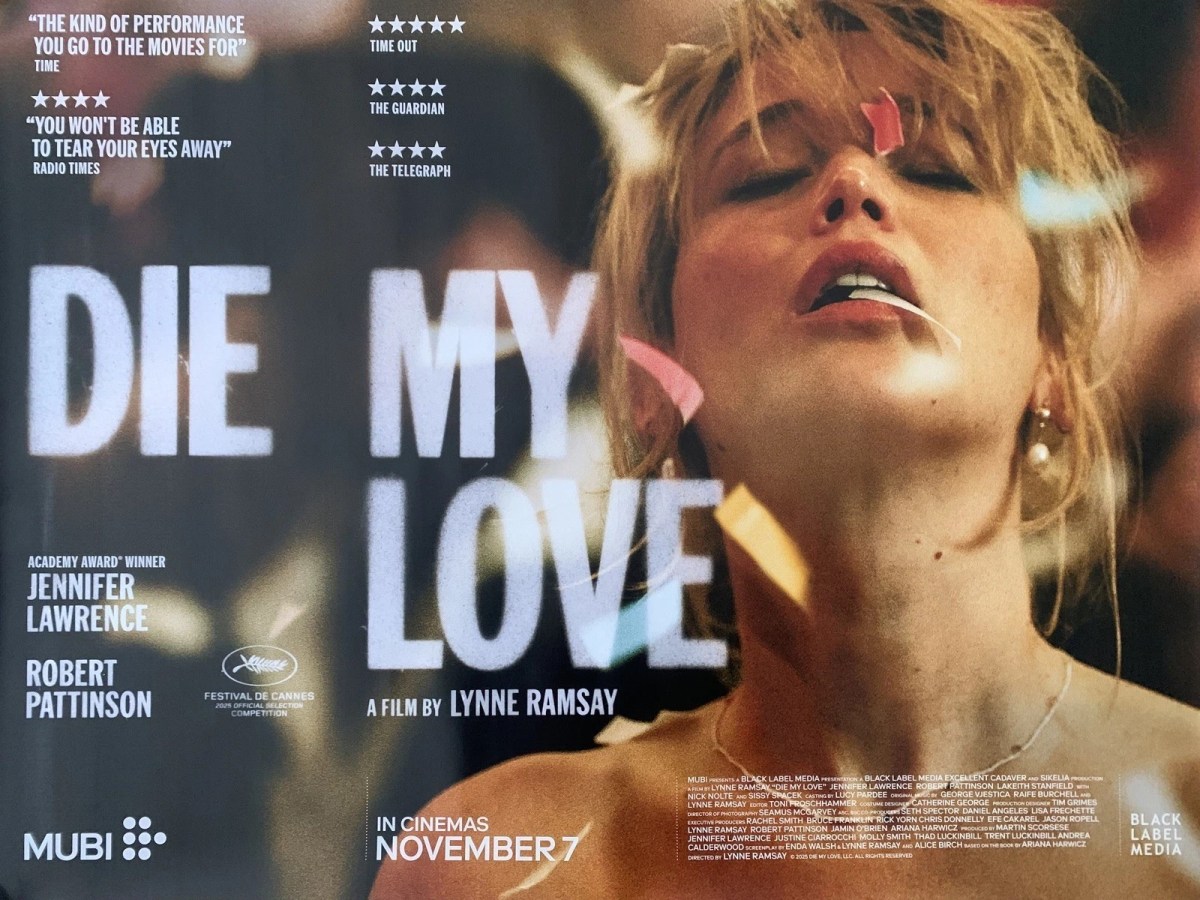
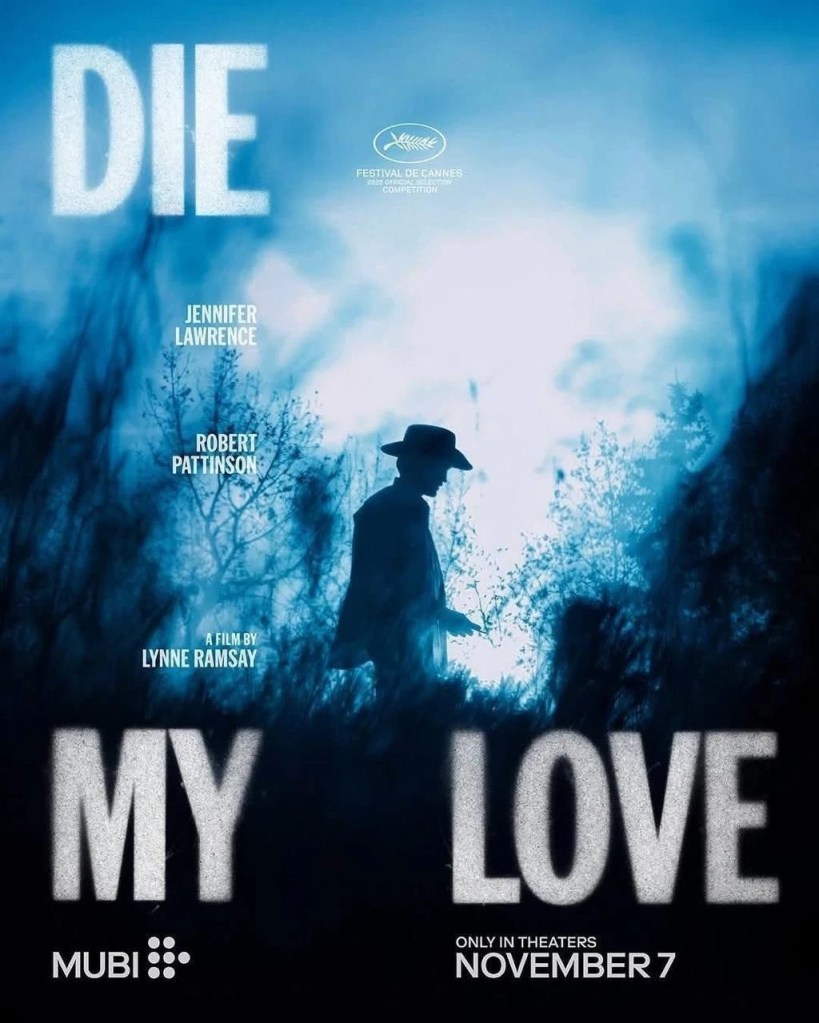
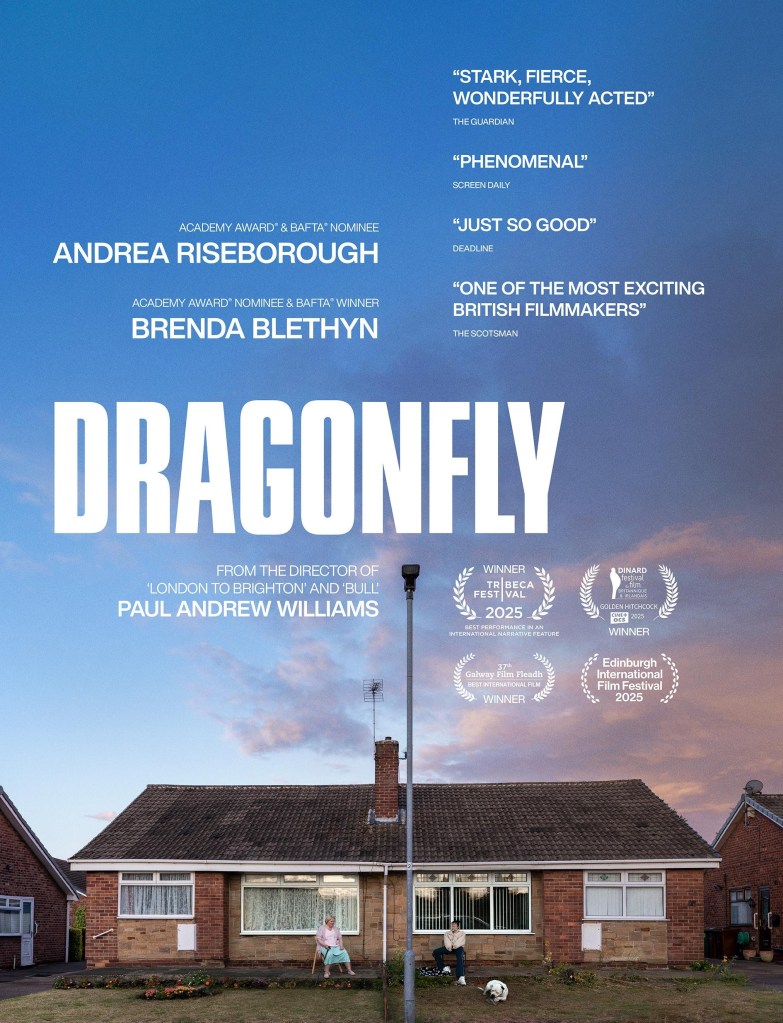
Die, My Love (2025) * and Dragonfly (2025) * – Seen at the Cinema and A Stinker of a Double Bill

I can’t be the only one knocked sideways – if we were still awake – by a bizarre climax that pays homage to Daenerys Targaren of Game of Thrones, the dragon queen who could walk naked through fire. Given our heroine here, Grace (Jennifer Lawrence), has plenty other examples of easier ways to die – her uncle committed suicide by sticking a shotgun up his ass, she kills a really annoying dog with a shotgun and her mum or it could be her mother-in-law (it’s one of these pictures where relationships are vague) Pam (Sissy Spacek) is given to carrying a shotgun while out on midnight perambulations, it’s an odd choice. Especially as she’s the one that sets the woods on fire. Quite why she needs to tramp naked into the flames is anybody’s guess unless, as I mentioned, it’s a homage.

Used to be that Oscar buzz was the icing on the cake, the chance, once awards season kicked in, for worthy vehicles to pick some more box office dough. Now it seems to be the entire cake and the promise of seeing a potentially Oscar-winning performance has become the main marketing plank of way too many pictures. Performance used to be linked to narrative with the latter taking precedence. Now narrative is way down the line of considerations.

It’s entirely possible that Jennifer Lawrence and Robert Pattinson ended up here because they were short of offers having fallen from the box office heights. Lawrence has been in one flop after another – Passengers (2016), Mother! (2017), Red Sparrow (2018), Don’t Look Up (2012), No Hard Feelings (2023) – since The Hunger Games quartet and Joy (2015). So we’re talking a solid decade of box office turkeys. Apart from The Batman (2022), Robert Pattinson hasn’t done much better. So you’d think both would be aiming to consolidate their fading box office attraction rather than taking time out for this self-indulgent nonsense.

Grace and Jackson (Robert Pattinson) are a hot-for-each-other couple who take up residence in a house you are led to believe is remote but turns out to be a pram’s walk from shops. In a very vague sort of way you are led to believe that they’re here because Grace wants solitude to write the Great American novel. He’s got a job, but that’s vague too, except he’s on the road a lot and it’s hinted that he’s having one-night stands and also hinted that she’s had an affair with a neighbor.

All that’s pretty much by-the-by as the main tale appears to be a study of post-natal depression. But that hardly rings true. There’s clearly been a lot wrong long before the baby arrives and it’s not as if she doesn’t bond with the baby – if anything it’s Jackson who doesn’t bond and clearly feels so left out of the equation that he buys a particularly noisy attention-seeking dog. The house isn’t a mess the way it might be for a manic depressive.

But every now and then Grace goes bananas, smashing up the bathroom, charging though a solid pane of glass and her sharp tongue awaits anyone who attempts a friendly overture. So, we’re just waiting? For what? Some explanation of her madness? Some narrative thread?

Too bad, there’s nothing here except Jennifer Lawrence doing what she thinks might garner an Oscar. Robert Pattinson overacts and director Lynne Ramsay (We Need To Talk About Kevin, 2011) does nothing to stop either.

**

Dragonfly

A glorified television film. Not even that, a blown-up out of all proportion episode of a soap. You can see where this is going from the outset. The director aims to take swipes at all sorts who don’t deserve it in the hope of striking up some sympathy for a murderous Colleen (Andrea Riseborough) who does a kindly turn for elderly widowed neighbor Elsie (Brenda Blethyn). Both are lonely, though Colleen has a brute of a dog for company. They become friends and except for Colleen’s murderous instincts this would have ended badly anyway once the younger woman starts stealing.  

That it goes another way is blamed on middle-class meddling. Elsie’s son John (Jason Watkins), who doesn’t visit nearly often enough, doesn’t trust the friendly neighbor and realizing that the brute of a dog is actually a dangerous outlawed dog informs the cops who destroy it. In revenge, Colleen murders John and then slits her wrists in Elsie’s kitchen.

Whaat? Yes, whaaaat? Who greenlit this? As much about loneliness as Die, My Love is about post-natal depression. Essentially, it’s a gentle two-hander that, if it had only been about a gentle friendship developing between two lonely souls, wouldn’t have been greenlit at all. Writer-director Paul Andrew Williams (Song for Marion, 2012) has a point to make, although for the life of me I can’t work out what that is except give people on benefits a cushy number and they’re liable to slaughter someone. 

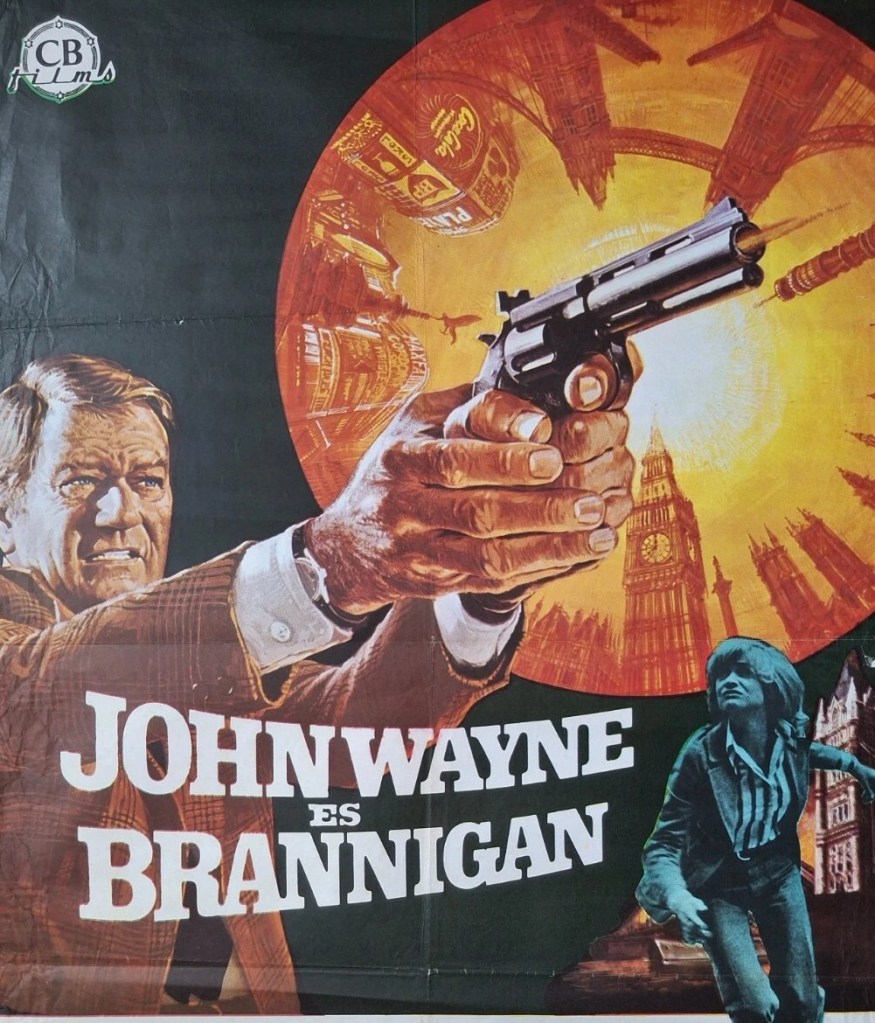
Brannigan (1975) ***

File under guilty pleasure. And bear in mind in the early 1970s there was no such thing as the police procedural, certainly not as we know it today, when cops have the benefits of DNA, increased forensics and computer technology. Hollywood in this era didn’t waste time with endless knocking on doors or collecting massive amounts of minutiae in the hope of uncovering a clue.

Generally speaking, cops of this period had two things in common. They were mavericks and they constantly fought authority usually represented by some dumb superior. Normally the narrative consisted of the character taking on the  persona of a bull in a china shop and thundering towards a main objective, the more set pieces to demonstrate said bullish tendencies the better, and if in the course of apprehending a criminal he can deliver a catchphrase such as “make my day” or, as here, “knock, knock,” so much the better.

John Wayne had made eight westerns in a row and having turned down Dirty Harry (1971) ventured into the cop genre with McQ (1974) and came straight back for seconds here.

Brannigan (John Wayne) has been shipped over to London to bring back under the extradition treaty Mob gangster Larkin (John Vernon) which would be pretty straightforward except the Brits don’t keep such prisoners in custody – Larkin swans around in a white Rolls Royce – and in any case he’s in custody of another kind, having been kidnapped by some British hoods.

In terms of authority Brannigan battles the sappy Brits who won’t allow him to carry a gun and do things the Chicago way. Luckily, for the picture, top cop Commander Swann (Richard Attenborough) is not the standard stiff-upper-lip buffoon but as likely to pitch in when the fisticuffs begin. There are a couple of excellent car chases and one stunt of French Connection (1971) quality when two cars go sailing over the gap in a raised Tower Bridge. This is a London mixing glory and grit, posh residences and ancient buildings share screen time with rundown docklands. And the movie has the sense not to go all May-December on us and while a certain affection builds up between the U.S. cop and his driver Jennifer (Judy Gesson), it doesn’t teeter into unlikely romance.

The plot’s clever. While in a sauna having a massage Larkin is knocked out cold and bundled into a sweatbox by two apparent delivery guys and then smooth attorney Fields (Mel Ferrer) acts as the go-between, delivering Mob ransom money to the kidnappers, the price increasing with every failed rescue attempt, until the kidnappers are sitting on a cool million. Naturally, there’s some double-crossing and the cops have one tiny magic bullet to use to their advantage.

So mainly the fun is watching Brannigan charge around in a British china shop, mostly bypassing British rules. There’s a subplot involving a hitman hunting Brannigan and even when in a normal cop movie you might think, fair’s fair, the policeman should be able to defend himself with a weapon, that doesn’t equate with the British rules, so you have our hero able to point out that if he wasn’t armed to the teeth Jennifer would be dead, while Swann does his best to insist that it would be better for the young lass to end up on a mortuary slab than British cops go rampaging around with guns.

There’s some gentle fun in poking at British tradition – the obligatory wearing a tie in certain upmarket establishments – and in Swann having to translate to a waitperson Brannigan’s breakfast order.

Except when standing up for rules, Swann is great value, a good match for the American, both in tempering his ruthlessness, and matching him punch-for-punch in a brawl.

Apart from the action sequences, John Wayne is permitted to grow old gracefully, his dialog rarely filled with barbed retorts or salty words and there’s quite nice acting on the Duke’s part when he’s called upon to demonstrate his special skill, which is “reacting”.

Richard Attenborough (Only When I Larf, 1968) has a ball, and not before time, able to let some of the usual repressed intensity burst out. Judy Geeson (The Executioner, 1970) must have been delighted to find a part that didn’t involve her taking off her clothes and she’s afforded some of the best lines. John Vernon (Topaz, 1969) is his usual hardass but Mel Ferrer (The Fall of the Roman Empire, 1964) has a good stab at a bad guy.

Not in the same league as director Douglas Hickox’s Sitting Target (1972). Written by Christopher Trumbo (The Don Is Dead, 1973), William McGivern (The Wrecking Crew, 1968), Michael Butler (The Gauntlet, 1977) and William Norton (The Scalphunters, 1968).  

Erroneously tabbed as a box office disappointment, this was made on a budget of $2.6 million but cleared $7 million in rentals (the studio share of the box office) plus another $1.5 million from television.

Obviously, if you’re in the Clint Eastwood camp this falls short, but otherwise it’s enjoyable stuff.

Secret Ceremony (1968) ***

Few stars were as willing to trade their glamorous screen persona for a decent role as Elizabeth Taylor, here eschewing the trademark hip swivel, low cut dresses and elegant costumes for a clumping walk, frumpy look and eating with her mouth full. After a chance meeting on top of a bus with rich waif Cenci (Mia Farrow) middle-aged prostitute Leonora (Elizabeth Taylor) swaps a dingy bedsit for life in a massive mansion, cupboards stuffed full of furs, all her needs met. Cenci seeks a mother; Leonora, whose daughter drowned aged ten, seeks a child substitute.

Soon Leonora is prisoner to a fantasist, her own identity swamped by Cenci’s needs, accepting the role of “mummy” as the price of a life of luxury until she learns that what appears so freely given can be as easily taken away. This cloistered life is creepy. Cenci has rape fantasies. To a pair of interfering and thieving aunts, Leonora pretends to be Cenci’s dead mother’s cousin.

The fantasy conjured is threatened by the presence of Cenci’s poet stepfather Albert (Robert Mitchum) who intends to become the girl’s legal guardian. He talks like a child molester, “the extraordinary purity of my longings,” but given the depth of Cenci’s fantasies Leonora initially discounts inappropriate behavior on his part especially when Cenci wishes to become inappropriate with her. If Leonora stands in Albert’s way it is only to have the girl – and her wealth – to herself.  

A psychological drama that appears more like a stage play in structure, skirting around core issues in favor of later revelation, and in essence making a good effort at dealing with behavioral problems which would find greater currency today – inherited mental illness, PTSD, low self-esteem, abuse, and incest. Though the last area is hard to specify, on the basis that, technically, Albert is a stepfather rather than a father, underage sex would appear to be more likely.

In an era when permissiveness virtually ensured audience shock, director Joseph Losey makes a decent stab at presenting the impact of sex on the vulnerable, despite her apparent steely exterior Leonora damaged by life as a sex worker, Cenci pretending to be younger as if that can sustain her innocence, not realizing how appealing that would be to a predator.

At once hypnotic and impenetrable, this is director Joseph Losey (The Servant, 1964) at his best, a story that by its subject matter must remain obscure, a mother-daughter relationship that should be twisted but reveals nothing but tenderness, ending for a time the torment of the  emotionally unfulfilled, but when bonds appear to be strengthened they are fragmenting. However, the film is let down by the script and the somewhat grand guignol setting. Losey is wonderful at times with nothing to say just a prowling camera, only two lines of dialog exchanged in the first 15 minutes. You would certainly file it under “eclectic.”

The two main performances are electric. This is Taylor at her powerhouse best, her profession not glamorized as in Butterfield 8 (1968) and no male to bring to heel, and her last scene with Cenci is extremely touching. This was a bold role, too, for Mia Farrow after the success of Rosemary’s Baby (1967) turned her into a box office star. She brings believability to a difficult role, especially as she is far from the spoiled child one might expect.

Robert Mitchum fans must have received the fright of their life to see their hero not just with uncomely beard but portraying a sinister character, not an out-and-out villain which would have been acceptable, but fast forward a couple of years and you can see evidence here of the kind of portrayal he would evince in Ryan’s Daughter (1970). Look out for Peggy Ashcroft (The Nun’s Story, 1959) in a smaller role, her first film in nearly a decade.

Check out the “Behind the Scenes” article for this film.

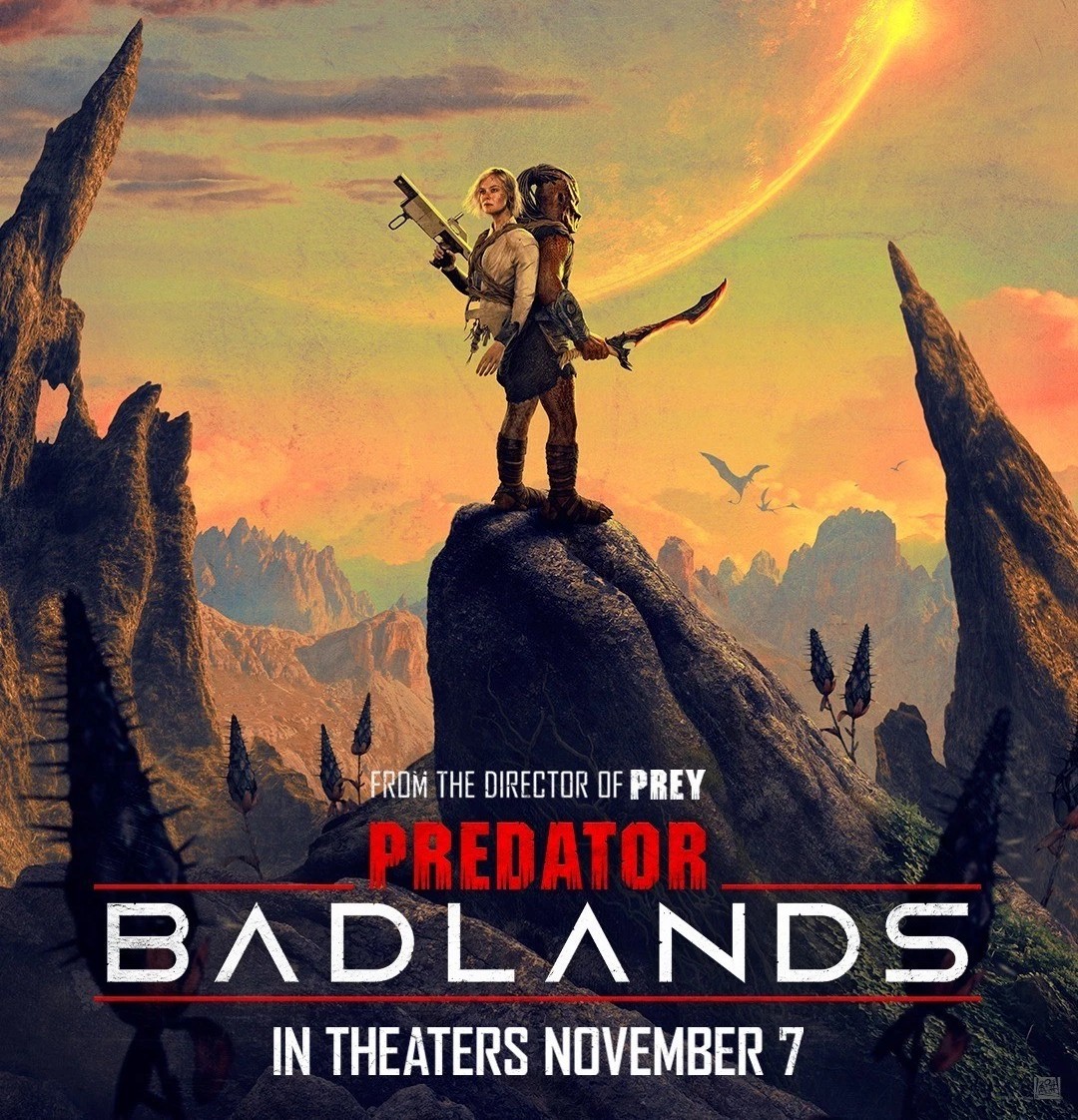
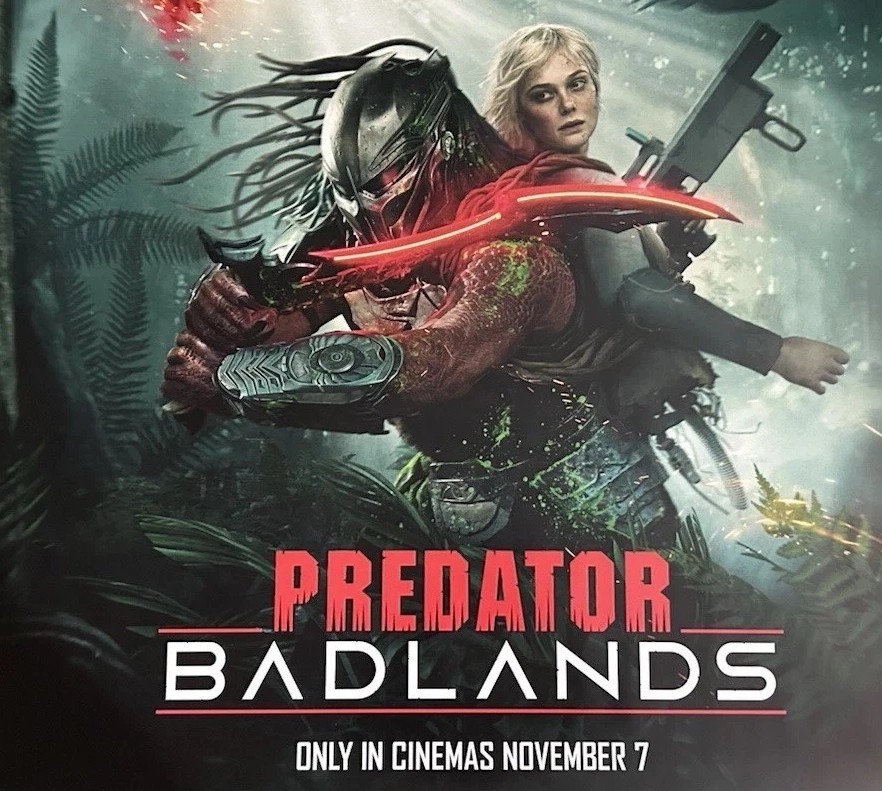
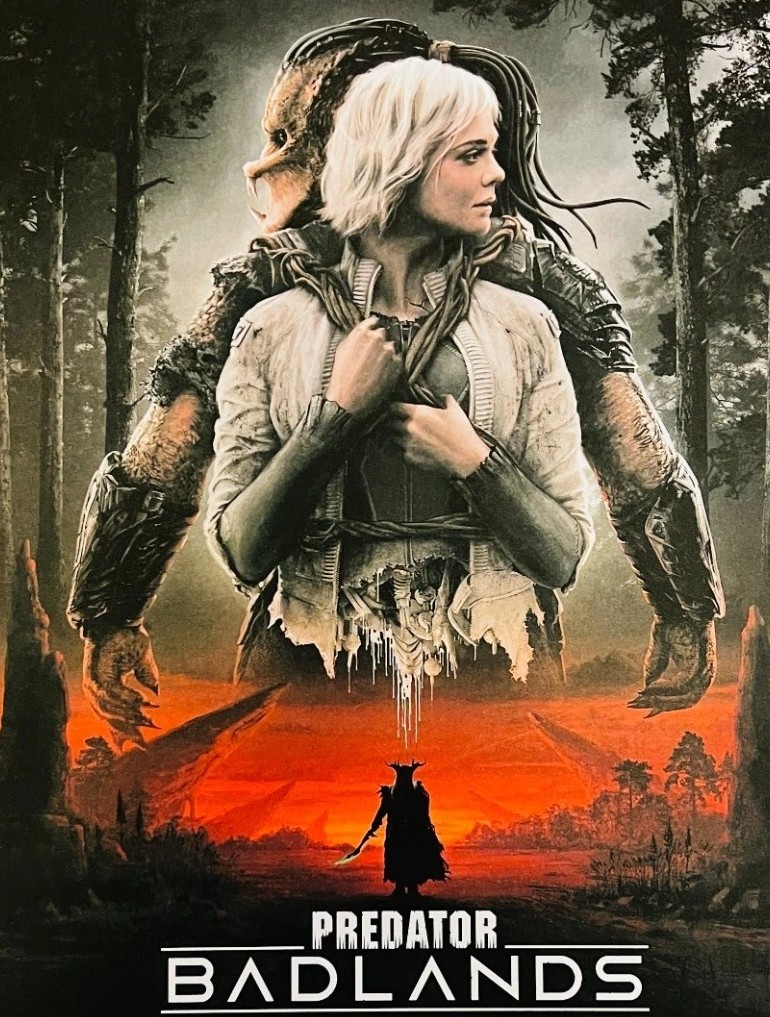
Predator Badlands (2025) **** – Seen at the Cinema

In possibly the most audacious pivot in sci fi here’s a movie minus any human characters. The leading character Dek (Dimitrius Schuster-Koloamatangi) is a monster straight out of the Alien back catalog and he is accompanied on his journey through the titular badlands by an android Thia (Elle Fanning), though one programmed with feelings though only for scientific purposes, and a mini-monster Bud (Rohinal Naharan) who when he’s not being fierce is quite cute.

The tale, however, has recognizably human dimensions. Dek is the runt of the litter and since weakness is despised in his clan he is scheduled to be terminated by his big brother, who can’t bring himself to do it so it’s left to his ruthless father to kill the protective brother. Meanwhile, Dek escapes to a distant planet, Genna, where everything is lethal including the grass. He hopes to prove his worth by killing the biggest monster in the universe, Kalisk. He teams up with a legless android Thia who has formed an affection of a sibling nature for a fellow synthetic Tessa (Elle Fanning).

The monsters encountered are pretty impressive and the landscape, whose rock formations suggest ragged versions of the spaceship that houses the aliens in the Alien series, is a visual treat. Though originally regarding Thia as nothing more than a “tool”, and happy to abandon whenever her usefulness ends, Dek ends up reacting in quite human fashion to her.

So if you’ve come expecting an extension of the Predator franchise where the monster merely exists to hunt down anyone in its path and you don’t get a glimpse of its character beyond the slicing and dicing this isn’t for you. But if you are open to a refreshing take on the monster universe, there’s plenty to enjoy.

And given the drought of audience-friendly pictures this last couple of months, an action picture with some emotional notes is more than welcome and thank goodness it hasn’t come with critics touting it for Oscar glory.

Turning the previous concept on its head, young Dek is the hunted not the hunter. He doesn’t have to go far to encounter venom, everything that moves or grows is dangerous. He’s got the moves and a scimitar that seems to owe something to a weapon from a different universe – the light saber. Even so, it’s often only by luck that he survives.

His teaming with Thia falls into a more conventional trope, the buddies who start out as enemies and/or the brain vs brawn combo. Thia speaks every language on the planet which helps when he is linguistically confounded. And Bud plays the unwelcome recruit which dates back to The Magnificent Seven (1960) and way before, though he turns out to play a significant part. There’s even time for some humor as when Thia’s disembodied legs stride down the street and go into vexatious action.

Given we’re dealing with non-humans, there’s a surprising emotional upside and a pay-off that provides a neat twist and suggests a sequel.

It would be non-stop action except for the interplay between hero and his “tool” and the emotional elements that spurt up every now and then. On the action alone it would be well worth your bucks, but the other elements take it a level above.

While Elle Fanning’s (A Complete Unknown, 2024) double turn isn’t as in-depth as that of Michael B Jordan in Sinners (2025) it’s still pretty good and had this been another kind of picture her misplaced affection for her scientifically-generated sibling  might have received greater emphasis.

The stripped down and pedal-to-the-metal narrative is driven by director Dan Trachtenberg (10 Cloverfield Lane, 2016) who would be one of the few directors to genuinely deserve the “visionary” tag so carelessly thrown around. He had a hand in the screenplay along with Patrick Aison (Prey, 2022) based on the Predator characters invented by Jim and John Thomas.

Hot stuff.

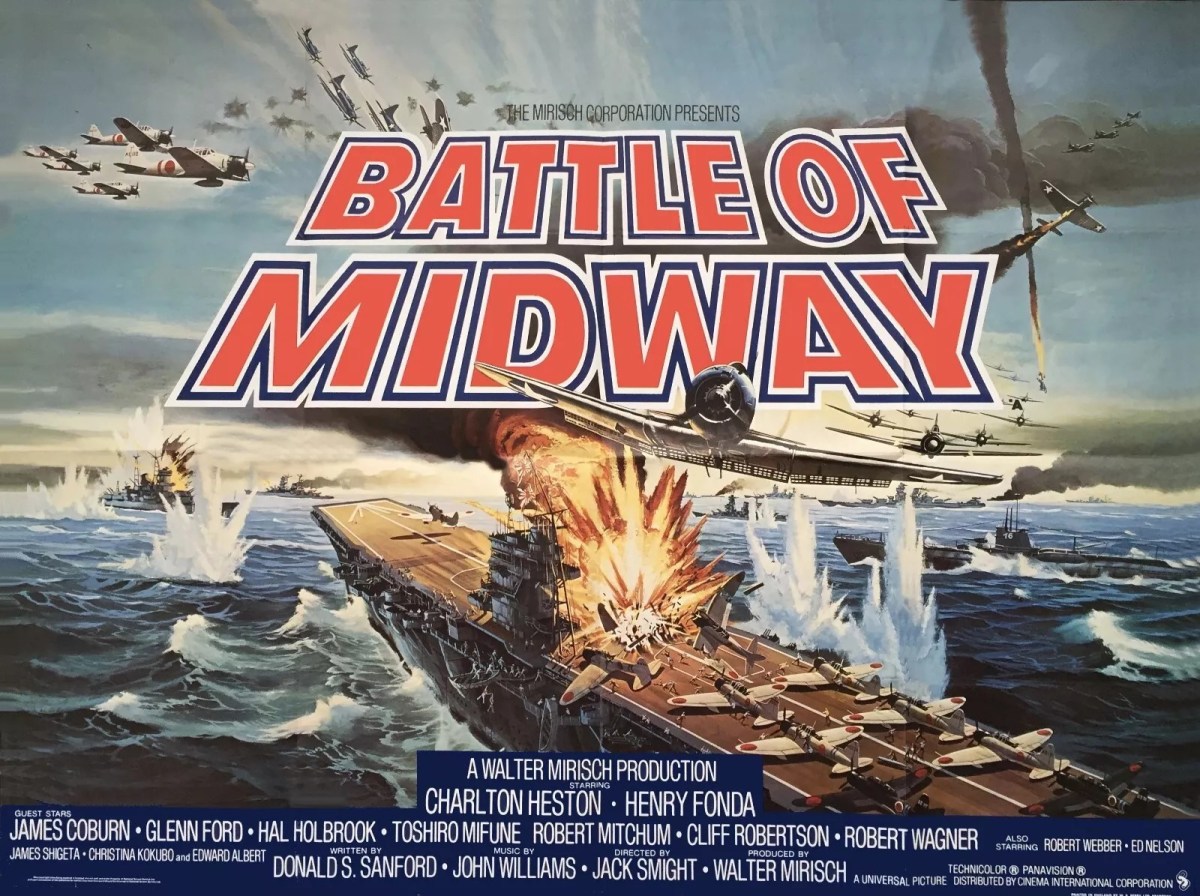
Behind the Scenes: “Battle of Midway” (1976)

Mirisch could easily lay claim to be the top independent production outfit of the 1960s generating hits like The Magnificent Seven (1960),  West Side Story (1961), The Great Escape (1963), The Pink Panther (1964) and its sequel A Shot in the Dark (1964), The Russians Are Coming, Russians Are Coming (1966), In the Heat of the Night (1967) and The Thomas Crown Affair (1968) plus a shelf load of Oscars and Oscar nominations. But dependence on a partnership with Billy Wilder in the 1970s and a more lackluster performance at the box office – with the noted exception of Fiddler on the Roof (1971) – spelled the end of its 17-year relationship with United Artists, which was reeling from financial losses and under new management.

The company found a new partner in Universal which had a series of deals with other major producers like Alfred Hitchcock, Zanuck and Brown (Jaws, 1975) and George Seaton (Airport, 1970). Mirisch was not in any financial trouble, having severed ties with UA after Mr Majestyk (1974), a major success abroad, and recovered its development costs for Wheels, based on the Arthur Hailey novel but the script rejected by UA, from Universal which turned it into a mini-series.

The Universal deal was initially not as good as that enjoyed at UA. Universal charged a twenty-five per cent overhead whereas UA had charged nothing and Universal was now doing direct deals with directors rather than relying on the likes of Mirisch to tie up the talent.

Many years before, Mirisch had commissioned a script on the Battle of Midway from Donald S. Sanford who specialized in war pictures but of the distinctly low-budget variety – Submarine X-1 (1968), The Thousand Plane Raid (1969) and Mosquito Squadron (1969), none of which had enjoyed any success. 

Though all of the Mirisch war pictures had concentrated on Europe, Walter Mirisch, generally the creative driving force for the production company, in his previous incarnation with Allied Artists had some experience of the Pacific War, having produced Flat Top / Eagles of the Fleet (1952), set around an aircraft carrier during the Battle of Leyte Gulf, and was an avid reader of books about the Second World War.

John Ford and Louis de Rochmont had made documentaries about the Pacific naval battles. UA rejected the script twice, a shrewd move in the end because Tora! Tora! Tora! (1970) lost a packet for Twentieth Century Fox. The Sanford screenplay had initially taken more of a documentary approach but after gaining the interest of Charlton Heston, who had starred in Mirisch’s The Hawaiians (1970), the script was tweaked.

Programming a war picture was a risk for the studio. There hadn’t been a big-budget war picture in five years. And while Patton (1970) and Kelly’s Heroes (1970) ended up on the right sight of the ledger book, Tora!, Tora! Tora! and Too Late the Hero (1970) were stiffs.

Mirisch signed a two-picture deal with Universal, for Midway and Wild Card with a screenplay by Elmore Leonard (Mr Majestyk). Mirisch proposed to reduce costs by using footage from naval archives, converting the original 16mm film to 35mm. The producer also  took footage from Japanese film Storm over the Pacific / I Bombed Pearl Harbor (1960) – the rights cost him $96,000. Footage of the Pearl Harbor attack in Tora! Tora! Tora! doubled for shots of the attack on Midway Island.   A clip of the Dolittle raid on Tokyo from Thirty Seconds over Tokyo (1944) was used in the credit sequence after “subjecting it to a sepia bath.”

After the success of Earthquake (1975), Heston was back in the top ranks of box office stars and his involvement guaranteed the green light. The U.S. Navy offered its support, not surprising since Midway was considered its greatest success.

John Guillermin (The Towering Inferno, 1974) was hired to direct and Stirling Silliphant (In the Heat of the Night) signed up for a screenplay rewrite. Mirisch had determined to employ the all-star-cast device that had been an essential ingredient of many of the 1960s roadshow pictures, kicking off with Henry Fonda (The Boston Strangler, 1968), by now pretty much a spent force at the box office – he hadn’t made a picture in three years – but still a well-known name. 

The amount of work involved for the other stars was minimal – mostly just one day – and, astutely, Mirisch called on stars who had worked for him in the past and who, like James Coburn (The Great Escape), Cliff Robertson (633 Squadron, 1964) and Christopher George (The Thousand Plane Raid) owed him something in terms of a career leg-up. Others included Robert Mitchum (The Sundowners, 1960), Robert Wagner (The Biggest Bundle of Them All, 1968) and Tom Selleck in an early role. Mitchum was the first of these stars to sign up, in March 1975, six weeks before the scheduled start date of April 27, followed two days later by Coburn.

Toshiro Mifune (Red Sun, 1971) headed up the Japanese cast and proved so meticulous in his preparations that he had his uniform made by Japanese tailors. The white gloves he wore had a finger shortened on the left hand because his character Admiral Yamamoto was missing a pinky. However, despite coaching in English by actress Miko Taka (Walk, Don’t Run, 1966), his dialog was revoiced by Paul Frees. 

Guillermin demanded a bigger budget to accommodate more airplanes and equipment and a longer shooting period. Two months before filming was due to start, Mirisch put his foot down and told the director he couldn’t accommodate his requests as Universal had only provided funding on the basis of Mirisch’s original idea. Guillermin walked. As far as the public was concerned, the parting of the ways was due to a “conflict of schedules.” Jack Smight, who had directed Airport ’75 (1974), a box office success and also starring Heston, was his replacement.

The Navy lent aircraft carrier U.S.S. Lexington – the last remaining World War Two carrier – while it was at sea training pilots as long as the shoot didn’t interfere with those exercises. A limited number of World War Two vintage planes – in great condition having been cared for by their owners – were permitted on board. The Navy charged the crew for accommodation – Mirisch was housed in Admiral Strean’s quarters – and meals. “We had a detailed contract with the Navy,” recalled Mirisch, “in which we agreed to stay out of their way when asked.”

On board, the crew filmed scenes, some silent and others with dialog, and “made plates for rearview projection and aerial shots of our vintage planes so positioned that we could print them into flights of six or nine.” Charlton Heston, Glenn Ford (Rage, 1966) and Hal Holbrook (The Group, 1966) were aboard and the shoot went well.  A scene involving Henry Fonda was shot at Pensacola. The Florida coast stood in for the Pacific. Additional exteriors were filmed in Los Angeles at Long Beach and Point Dune with interiors at Universal.

The construction of the interiors for the Japanese aircraft carriers was so authentic Mirisch was later asked to reassemble the set for the Smithsonian Institute for a presentation there. The interpolation of the old footage was crucial and it was planned in advance where such shots would appear. The old footage was precut and scenes were shot with actors with “scene missing” in those sequences into which the old footage could be dropped. Other devices were used to ensure the background in the old footage was more lively.

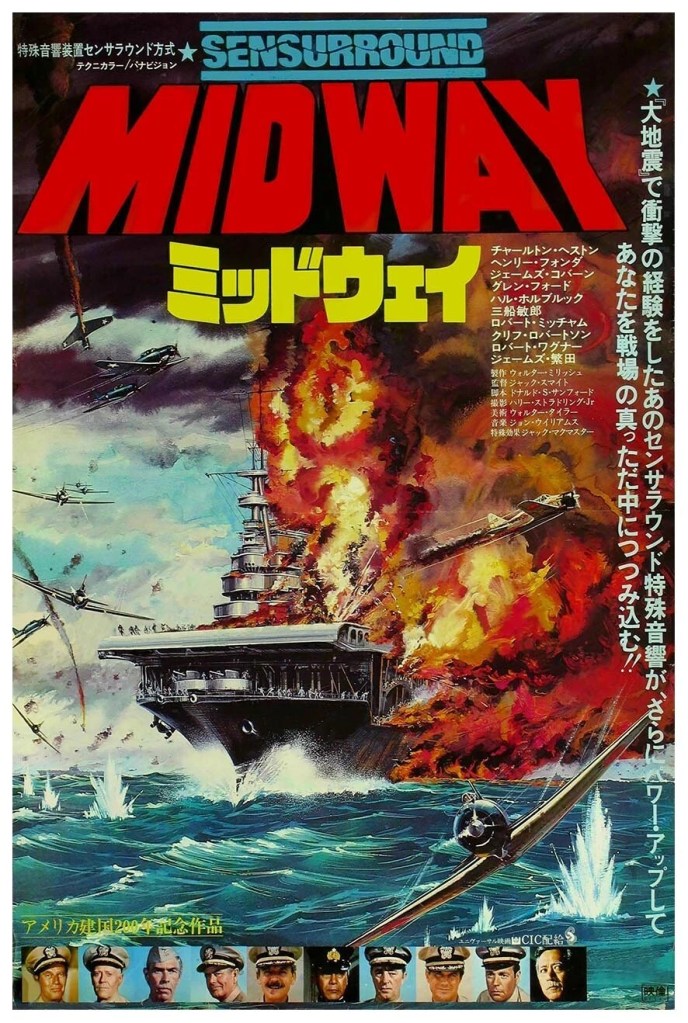
The final element was in cinematic presentation. Sensurround, a precursor of Imax, had been introduced with great success by Universal to Earthquake and this added greater realism to the battle scenes. While limited to those theaters which had installed the expensive equipment, and although the roadshow was long gone, it created an “event” aspect to those viewing it in that system. In his autobiography Mirisch suggested the addition of Sensurround was last minute and sparked  by the success of Earthquake. But, in fact, Universal had announced a year in advance of opening that Battle of Midway would utilize Sensurround.

Some cinema owners were outraged at the stock footage, whose proposed inclusion had been kept from them when they went into the blind-bidding process at the start of the year. Mirisch countered that there was no alternative. “A great many aircraft,” he argued, “used in the battle no longer exist.” Universal’s terms were stiff – a minimum nine-week run starting at a 70/30 split for the first three weeks in the studio’s favor, a $75,000 advance guarantee from cinemas and 5% of the gross for use of Sensurround.

With the budget kept as low as a reported $4 million it was a massive hit, picking up $20.3 million in rentals (what the studio retains of the box office gross) – sixth in the annual box office league beaten only by Oscar-winner One Flew over the Cuckoo’s Nest, All the President’s Men with Robert Redford and Dustin Hoffman, demonic The Omen, Walter Matthau baseball comedy The Bad News Bears and Mel Brooks’ Silent Movie and just ahead of such offerings as Sidney Lumet’s Dog Day Afternoon with Al Pacino, and comedy Murder by Death but nearly doubling the take of the more critically-acclaimed Taxi Driver, Clint Eastwood western The Outlaw Josey Wales and thriller Marathon Man also starring Hoffman. The final domestic figure amounted to $21.8 million.

Foreign figures were astonishing, especially in Japan, where its gross exceeded $4 million. The benefits of the promotional tour undertaken by Heston in the Far East were soon obvious – in Manila it beat both Jaws and Earthquake. In the annual box office league there and Hong Kong, it ranked third. In Italy it proved a “big surprise”, coming in fourth behind King Kong, Taxi Driver and a local offering.

While a successful movie could expect to benefit from television viewings – this was before the video revolution – the movie had an unusual afterlife. NBC, which had bought the rights, wanted the film to be longer, so it could be shown over two nights, thus increasing advertising and setting it up as a more prestigious event. Largely by adding plotlines to the Heston character, the running time increased by nearly an hour, which proved a bonus for the future home screening revolution. 

“Of all the films that I have made,” noted Mirisch, “it produced the greatest amount of profit.”

SOURCES: Walter Mirisch, I Thought We Were Making Movies Not History (University of Wisconsin Press, 2008) pp324-339; “Readying Midway,” Variety, February 5, 1975, p6;  “Universal in New Shake,” Variety, July 23, 1975, p3; “Admiral Mitchum,” Variety, March 12, 1975, p18; ”Jap Feature Footage Inserted into Midway,” Variety, June 6, 1976, p7;  “Midway Big in Manila,” Variety, August 11, 1976, p24; “Big Rental Films of 1976,” Variety, January 5, 1977, p14; “Jaws Led Bangkok,” Variety, February 9, 1977, p39;  “International,” Variety, June 29, 1977, p35.

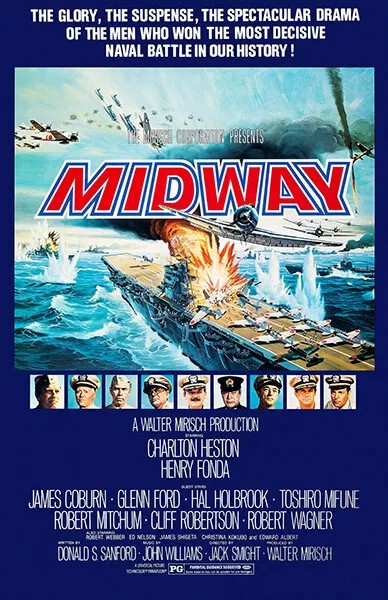
Battle of Midway (1976) ****

Even-handed documentary-style tale recounting of the most famous U.S. naval battle of all time, a turning point in the struggle for control of the Pacific in 1942. Both sides make mistakes, luck and judgement play an equal part.

I’d always assumed Midway was some abstract geographical position without any idea of its strategic importance – did the name mean it was halfway between the U.S. (or Hawaii) and Japan? But here I learned it was an actual island that the Japs planned to invade and the Americans intended to stop them. In some senses, it was bait, a way to draw the U.S. Navy out of Pearl Harbor. But the bait ran both ways. If the Yanks could coax the enemy out into the Pacific, they had a chance of gaining an advantage, even though the Americans were inferior in shipping tonnage.

The Japs have been stung into action by the audacious American bombing of Tokyo. Admiral Yamamoto (Toshiro Mifune) uses the perceived threat of further attacks to gain official approval for his plan to invade Midway.

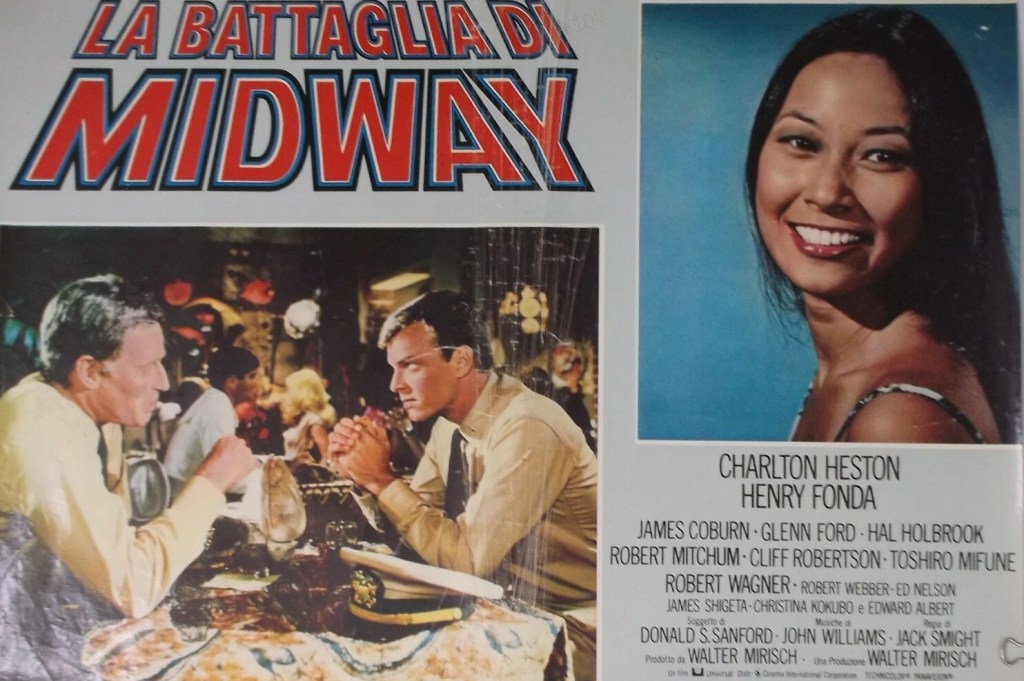
This is strictly a male show. However, in a bid to lower the testosterone levels a romantic subplot is inserted. The aviator son, Lt Thomas Garth (Eddie Albert), of top aide and former pilot Captain Matthew Garth (Charlton Heston) has an American-born lover Haruko (Christina Kobuko) of Japanese descent who’s being investigated for espionage and subsequently interned. On intervening, the father digs up a hodgepodge of racism – from both sides, Haruko’s parents against her forming a relationship with a non-Japanese. But the plan backfires causing a breakdown between father and son.

But that’s very much on the fringes and although it raises interesting cultural aspects, the movie concentrates mostly on the nuts-and-bolts of heading into a major engagement.

American intelligence, headed by Commander Joe Rochefort (Hal Holbrook), gets wind of the planned attack. But the clues are scant – the old trope of increased radio traffic not enough to convince – and while the audience knows the Japs are on the move with a mighty naval force including four top-class airplane carriers, the Americans remain ignorant almost until it’s too late.

Luckily, Admiral Nimitz (Henry Fonda), heading up the American naval contingent, is keen to inflict a blow on the enemy, even though he’s limited to two carriers and another just out of the repair yard. Each side relies on spotter planes to detect the enemy. But the Japanese, by imposing radio silence, shoot themselves in the foot, unable to switch tactics until too late. The hunch plays an important part.

There’s rarely much opportunity for individual heroics on a ship under fire, beyond rescuing someone. The fighter pilots are a better bet, especially since some of their forays are nearly suicidal given the firepower they attract. Matt Garth, who for most of the picture is an upscale backroom boy, is called into action with unexpected results.  

Most battle films tend to concentrate on the heroics often at the expense of understanding in any detail what’s going on. Thankfully, this is different. We are kept informed of every change in the conflict. And whereas you might think that dull, in fact I wouldargue that it adds substantially to the tension, and the fact that the only one of the commanders who looks as if he could throw a punch (Robert Mitchum) in the manner of John Wayne is confined to his bed thus forcing the movie to concentrate as much on brain as brawn.

Audiences at the time welcomed all the talking and this was a substantial hit. Snippets of old war footage were carefully sewn into the lining of the action, bringing the kind of authenticity that moviemakers reckoned moviegoers craved. For me, there was more than enough going on already.

Nimitz’s decision to go for broke rather than dive for cover results in victory but he’s no gung-ho commander, rather presented as a thoughtful but determined individual. The lack of backstage effort especially in the communications department was partly to blame for the humiliation of Pearl Harbor but here these guys share the glory.

Boasting the kind of all-star cast that used to be the hallmark of the 1960s roadshow, this has a bunch of top-notch actors, albeit most just flit in and out of the picture. Charlton Heston (Planet of the Apes, 1968) effortlessly shoulders the main burden with Henry Fonda (Once Upon a Time in the West, 1969) the fulcrum of all decision-making. Robert Mitchum (The Way West, 1967) , James Coburn (Our Man Flint, 1966), Glenn Ford (Rage, 1966), Cliff Robertson (The Devil’s Brigade, 1968) and Toshiro Mifune (Red Sun, 1971) all feature.

Jack Smight (Harper / The Moving Target, 1966) directs from a script by Donald S Sanford (Mosquito Squadron, 1969).

Thoroughly engrossing.

  • I’m doing a Behind the Scenes tomorrow.
Discover WordPress

A daily selection of the best content published on WordPress, collected for you by humans who love to read.

The Atavist Magazine

by Brian Hannan

WordPress.com News

The latest news on WordPress.com and the WordPress community.