The Slender Thread (1965) ****

Hollywood paranoia in the 1970s ensured that any type of electronic surveillance was treated with suspicion. Cops, too, were almost certain to be corrupt. Although he would subscribe to such paranoia and implicit corruption in Three Days of the Condor (1973), in his movie debut director Sydney Pollack turns these concepts on their head.

Crisis center volunteer Alan (Sidney Poitier) faces a battle against time to save potential suicide Inga (Anne Bancroft), using his own powers of empathy and persuasion, but helped more than a little by dedicated policemen and the system of tracking calls. On the one hand the ticking clock ensures tension remains high, on the other Alan own’s battle with his nascent abilities brings a high level of anxiety to the proceedings especially as we learn of the particular circumstances driving Inge.

Alan is studying to be a doctor and he carries within him the arrogance of his profession, namely the power to cure. But that is within the realms of the physical. When it comes to dealing with the mental side of a patient he discovers he is ill-equipped. The intimacy he strikes up with Inga ensures he cannot seek relieve by handing over the problem to anyone else, the fear being that the minute he introduces another voice the spell will be broken. His medical training means only that he knows far better than a layman the effect of the pills the woman has taken and can accurately surmise how long she has to live. In the process he experiences a wide range of emotions from caring and sympathetic to angry and frustrated.

By sheer accident Inga’s otherwise loving husband, Mark (Steven Hill), skipper of a fishing vessel, has discovered that their son is not his. On being rejected, she has nothing to live for.

The simple plotline is incredibly effective. The two main characters never meet but we discover something of Inga’s life through flashbacks as her life gradually unravels and elements of insanity creep in. Alan, meanwhile, is shut in a room, relying on feedback from colleagues such as psychiatrist Dr Coburn (Telly Savalas) and others monitoring the police investigation attempting to discover where she is. 

The fact that there actually was a suicide crisis center operating in Seattle (where the film is set) will have come as news to the bulk of the audience for whom suicide was a taboo subject and virtually never discussed in public or in the media. The fact that the telephone network could be used so effectively to trace calls would not have been such a surprise since it was an ingredient of previous cop movies, but it had never been so realistically portrayed as here, results never instant but the  consequence  of dogged work.

Initially, the movie treats Seattle as an interesting location with aerial shots over the credits and other scenes on the shore or seafront, but gradually the picture withdraws into itself, the city masked in darkness and the principals locked in their respective rooms.

Sidney Poitier is superb, having to contain his emotions as he tries to deal with a confused woman, at various times thinking he is over the worst only to discover that he is making little headway and if the movie had gone on for another fifteen minutes might have reflected how impotent he had actually been. Anne Bancroft (The Pumpkin Eater, 1964) matches him in excellence, in a role that charts her disintegration.

The fact that their character never met and that their conversations were conducted entirely by telephone says a lot about their skills as actors in conveying emotion without being in the same room as the person with whom they are trying to communicate. Telly Savalas (The Dirty Dozen, 1967) delivers a quieter performance than you might expect were you accustomed to his screen tics and flourishes. Ed Asner (The Venetian Affair, 1966) and Steven Hill, in his last film for 15 years, are effective.

The bold decision to film in black-and-white pays off, ensuring there is no color to divert the eye, and that dialog, rather than costumes or scenery, dominates. Pollack allows two consummate actors to do their stuff while toning down all other performances, so that background does not detract from foreground.

Winning the Oscar for Lilies of the Field (1963) had not turned Sidney Poitier into a leading man and in fact he took second billing, each time to Richard Widmark, in his next two pictures.  Anne Bancroft was in similar situation after being named Best Actress for The Miracle Worker (1962) and although she took top billing in The Pumpkin Eater (1964) it was her first film after her triumph and, besides, had been made in Britain. And for both 1967 would be when they were both elevated to proper box office stardom. Written by Stirling Silliphant (In the Heat of the Night, 1967) based on a newspaper article by Shana Alexander.

Given the greater awareness of suicide today, this will strike a contemporary chord.

As the High Noon of the psychological thriller this more than delivers. Gripping stuff. And it’s worth considering the courage required to undertake such subject matter for your first movie.

o

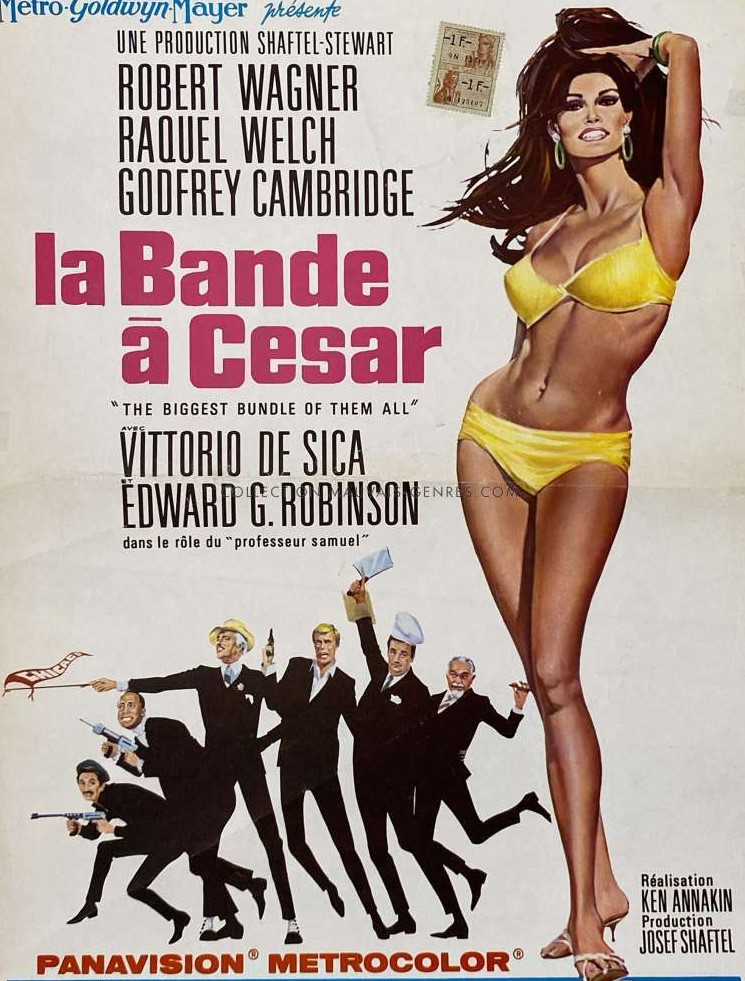
The Biggest Bundle of ‘Em All (1968) ***

Bunch of incompetent crooks kidnap an impoverished Mafia boss who pays his ransom by setting up a major heist. By a stroke of casting alchemy this brings together Cesare (Vittorio De Sica), the epitome of old world Italian charm, knock-out gangster’s moll and scene-stealer-in-chief Juliana (Raquel Welch) replete with scanty knock-out outfits and criminal mastermind Professor Samuels (Edward G. Robinson). In order to acquire the funds necessary to steal $5 million of platinum ingots from a train – the plan involving a tank and an WW2 bomber – the crew, initially headed by American Harry (Robert Wagner), need to carry out smaller jobs.

Problem is, none of them are any good, not even Cesare, who has lost his flair and botches an attempt to rob an old flame of her jewels. They can’t even carry out a simple theft from a restaurant. The heist itself is pretty spectacular and innovative. And the movie is quirky, with a darker edge. While there are few belly laughs, the light tone is enough to carry the gentle humor, mostly inspired by the misplaced team, amateurs for various reasons, not necessarily outright lawbreaking, on the run. These include London Cockney mechanic Davey (Davy Kaye), chef Antonio (Francesco Mule) distracted by hunger at every turn, cowardly violinist Benny (Godfrey Cambridge) and Joe (Mickey Knox) with a helluva brood to feed.

The story does a good bit of meandering, as does the camera, much of its focus on the voluptuous charms of Juliana, but the hurt pride of Cesare and the grandiose machinations of the professor keep it on course. The Italian settings, incorporating grand villas and ruins, do no harm either. The heist is terrific and there is a final twist you may or may not see coming. The interplay of characters works best when it involves Juliana, who attempts to twist Cesare around her little finger, that tactic mutual it has to be said, who keeps the professor on his toes by dancing with him in a disco, and it soon becomes apparent that she has the upper hand over loverboy Harry.

You could be forgiven for thinking the title refers to Raquel Welch – a cinematic infant at this stage with only One Million Years B.C (1966) in her locker – especially when her cleavage and looks receive such prominence, but the caper is classy and different. As well as being obvious she is both sinuous and seductive and clearly has a mind of her own, possibly the most criminally intent of the entire outfit, with weapons the others lack. By this point, she had invented the pop-out bikini, pictures of which had flooded Europe, making her the pin-up par excellence, but those who came to simply gawp quickly realised there was talent behind the body.

De Sica (The Shoes of the Fisherman, 1968) constantly plays around with the idea of being a defunct godfather and Robinson (Grand Slam, 1967) is the antithesis of the gangster roles on which his fame relied. Robert Wagner (Banning, 1967) is less effective, miscast and out of place in such august acting company and losing out to welch in every scene.

This was a considerable change of pace for British director Ken Annakin after Those Magnificent Men in Their Flying Machines (1965) and Battle of the Bulge (1965) and he brings to this the comedy of the former coupled with the narrative complications of the latter, wrapping everything up in an easy inviting style that makes the most of his stars and the locations. Screenwriter Sy Salkowitz was a television veteran (Perry Mason, The Untouchables et al) , this marking his first venture into the big screen.        

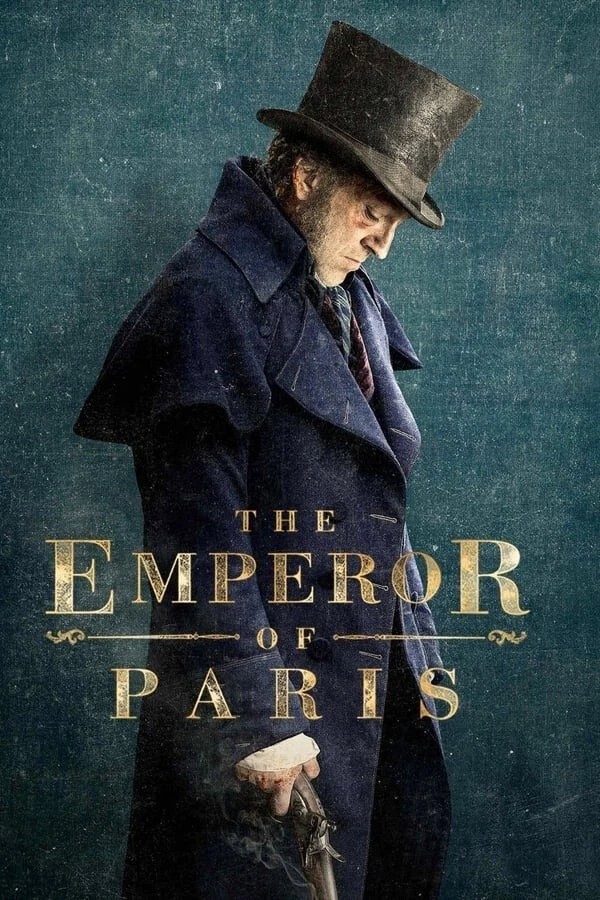
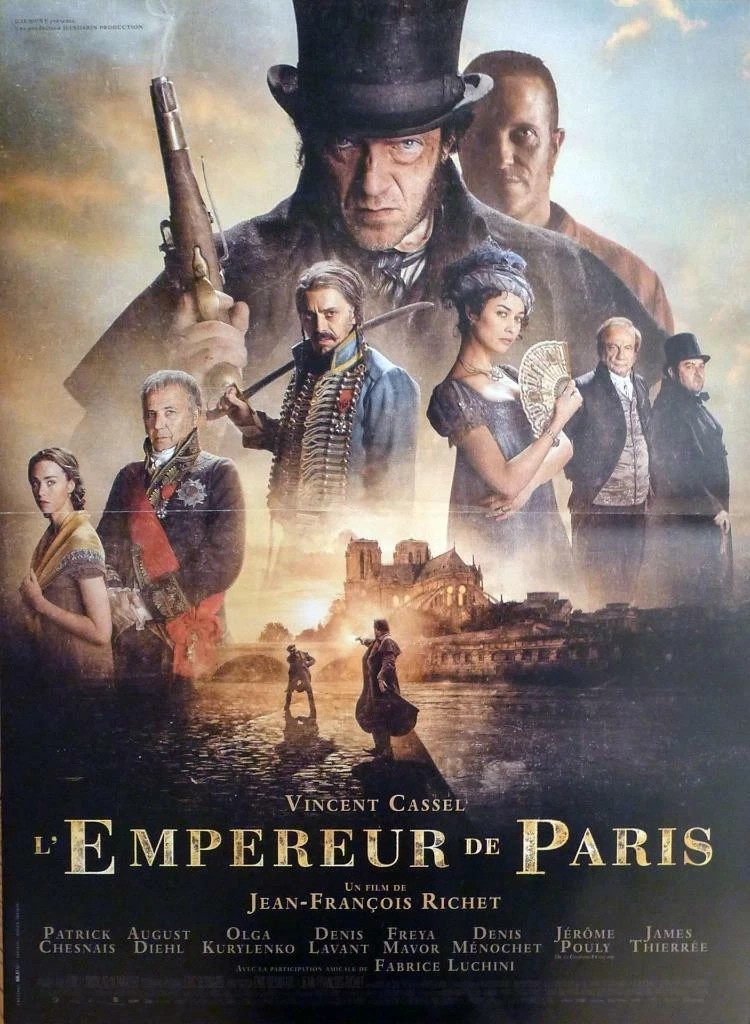
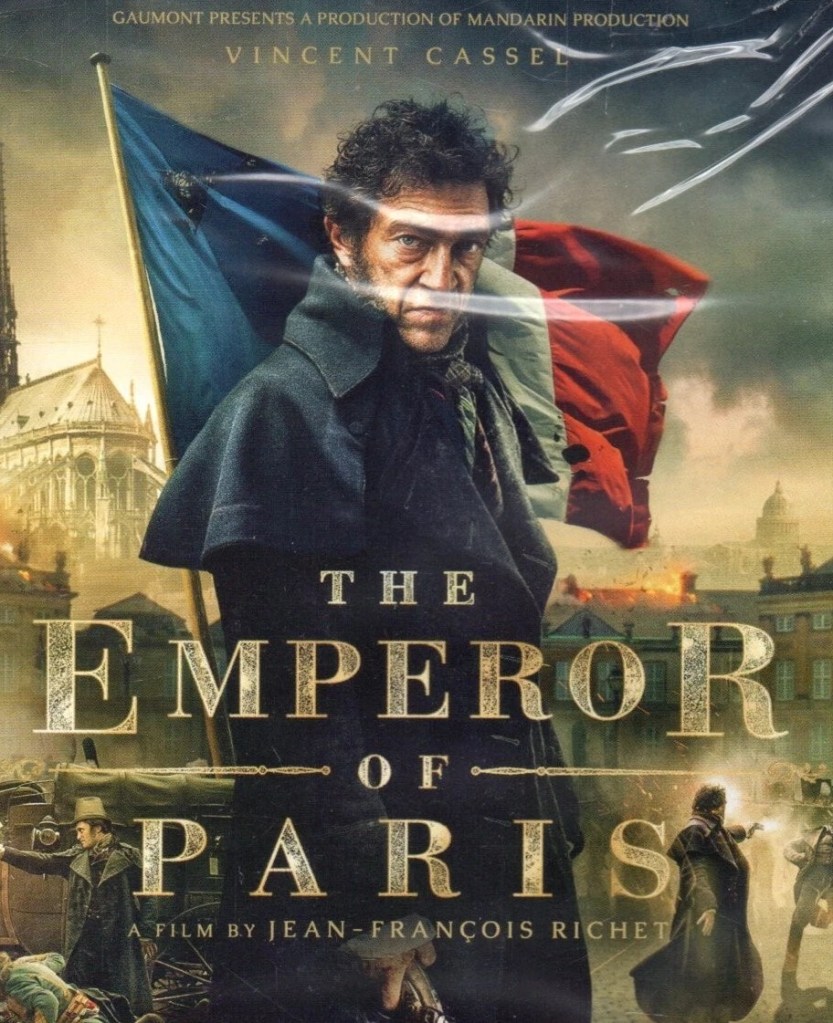
The Emperor of Paris (2018) ***

France has been particularly successful in attracting a global movie audience for its literary and real-life legends. There have been over 20 big screen versions of  The Three Musketeers, six of The Hunchback of Notre Dame, over a dozen of Les Miserables, and Napoleon Bonaparte has been the object of stars like Marlon Brando and directors such as Ridley Scott. But one legendary French figure has failed to connect. Underworld thief-taker Vidocq has attracted little interest outside his homeland. Even Douglas Sirk’s Hollywood version A Scandal in Paris (1948) starring George Sanders failed to crack the international market.

The Emperor of Paris is the latest iteration. I came across it while scrolling through Amazon Prime’s small catalog and since it starred Vincent Cassel (Mesrine, 2008), inheritor of the Jean-Paul Belmondo mantle, I gave it a go.

Set in Napoleonic times, Vidocq’s fame as a criminal relied on his ability to escape from the toughest prisons. After his last escape in 1805, when everyone believed him dead, he turns legit, building up a business as a fabric retailer. But later he turns into a highly successful thief-taker, hired by the police as an unpaid detective to clean up the streets of Paris on the basis that he will be granted amnesty. The officials dangle him on a string of promise for a heck of a long time.

While the legend of Vidocq rests on him becoming known as the father of modern criminology, the founder of Surete Nationale and setting up the first detective agency, this tale focuses more on action than detection – and presumably the boring bureaucracy that entails. Much of the information about criminals comes from Vidocq’s own experience, those of his accomplices and from informants, willing or otherwise.

There’s nothing sophisticated about the French cops, little more than night watchmen or official thugs who prefer interrogation to detection, and this is filthy twisty-street Paris before Haussman got his hands on it and recreated it with boulevards and broad expanse.

Vidocq knows more than the police where the bad guys hide out though some of them, like the celebrated American mobsters of the Prohibition era, are more likely to vaunt their notoriety, as with sadistic gang leader Maillard (Denis Lavant). And as ever when a hero ventures too close, the bad guys are apt to take extreme measures to gain revenge.

The harsh tale is leavened by the introduction of petty thief and prostitute Annette (Freya Mayor) who never manages to get Vidocq, who trusts nobody, to commit to a relationship, and social climber and arch seducer Baroness Roxane (Olga Kurylenko).

Vidocq himself is something of an enigma, soft spoken, dour, a loner, penned in by all his suspicions and led a merry dance, it has to be said, by high-ranking officials determined to deny him just reward. Betrayal, unexpected alliances and cold-blooded killings keep the narrative on a constant simmer. In one of the standard tropes, Vidocq assembles his own team, of criminals. The sets are excellent and the action pretty much non-stop

The role is tailor-made for Vincent Cassel, the best of the bad boy good boys, who mostly has to look surly and dispense his own version of justice. Denis Lavant (Holy Motors, 2012) is a memorable villain and August Diehl (Bonhoeffer: Pastor, Spy, Assassin, 2024) makes meaty work of best friend turned enemy. Freya Mavor (Marie Antoinette TV series, 2025) is both crafty and romantic while Olga Kurylenko (Thunderbolts, 2025) is mainly the former.

This has the feel of a two-parter, with the more interesting part of the tale in criminology terms still to come, but so far there’s been no sign of a sequel.

Directed by Jean-Francois Richet (Mesrine) who collaborated on the screenplay with Eric Besnard (Wrath of Man, 2021).

While nowhere near as compelling as Mesrine, it’s still a fascinating tale and Cassel is always good to watch.  

Catch it on Amazon Prime.

Behind the Scenes: From Big Screen Failure to Small Screen Redemption

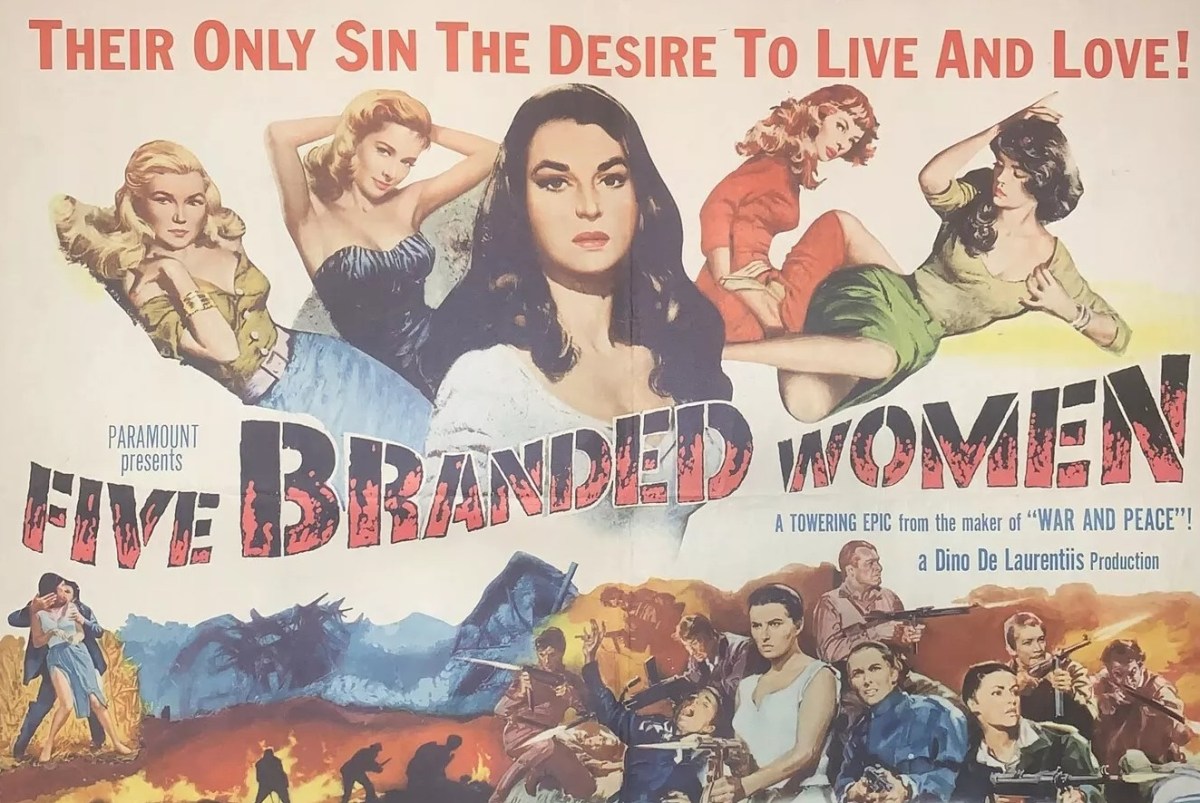
Despite a heady concept and some excellent acting, Martin Ritt’s Five Branded Women (1960) – reviewed yesterday – was a flop on initial release. So television studios were not exactly lining up to provide it with its small screen premiere. In fact, the length between big screen release and small screen showing had been so truncated by that point (The Magnificent Seven, for example, out the same year was seen on television within two years of release) that it could have been shown on television any time from 1962 to 1966, and probably would have been had initial performance suggested there was a big audience awaiting its small screen premiere.

The other possibility for a flop was that between cinema release and television screening, the stars had gone on to better things so a small screen showing could be promoted off the back of a current big screen success or, better still, series of successes. But that wasn’t the case with Five Branded Women. Star Silvana Mangano had meant little to US moviegoers since Bitter Rice (1949). Jeanne Moreau’s sizzle at the arthouse box office had diminished and the limited success of Viva Maria (1965) was put down to the presence of her compatriot Brigitte Bardot. Vera Miles hadn’t appeared in a movie since The Man Who Shot Liberty Valance (1962). Barbara Bel Geddes was a long way from career revival in Dallas and all she had to show for the intervening years was a small part in By Love Possessed (1961) and a single episode in television. Italian Carla Gravina had no U.S. imprint at all. As a leading actor, Van Heflin was a busted flush.

So there was some consternation when Five Branded Women took ninth place in the television rankings for movies receiving their television premiere between 1966 and 1968. There was just no accounting for it. The same could be said for Your Cheatin’ Heart (1964) which was one place ahead of Five Branded Women. Star George Hamilton had not made it big, the film was an indifferent performer at the box office and its subject, Hank Williams, was long dead.

But television had a knack of providing unlikely redemption for movies that generally ended up on the wrong side of the box office. Cliff Robertson who headed the cast of PT 109 (1963) was still in the category of rising star with no breakout hits to suggest he was capable of rising to greater things. While 633 Squadron (1964) had done reasonable business, thriller Masquerade (1965) and war picture Up from the Beach (1965) had done so badly he was demoted to second billing in The Honey Pot (1967), incidentally another flop. He did achieve a breakthrough with Charly in 1968 but PT 109 was shown on television the year before. So how did that happen? You could maybe point to the continuing popularity of dead President John F. Kennedy, whose wartime heroism this movie recalled, but he had been dead when the movie first came out and that didn’t send it shooting to the top of the box office charts. On the television charts this came in one place behind Five Branded Women, although 633 Squadron could only manage a distant 92nd.

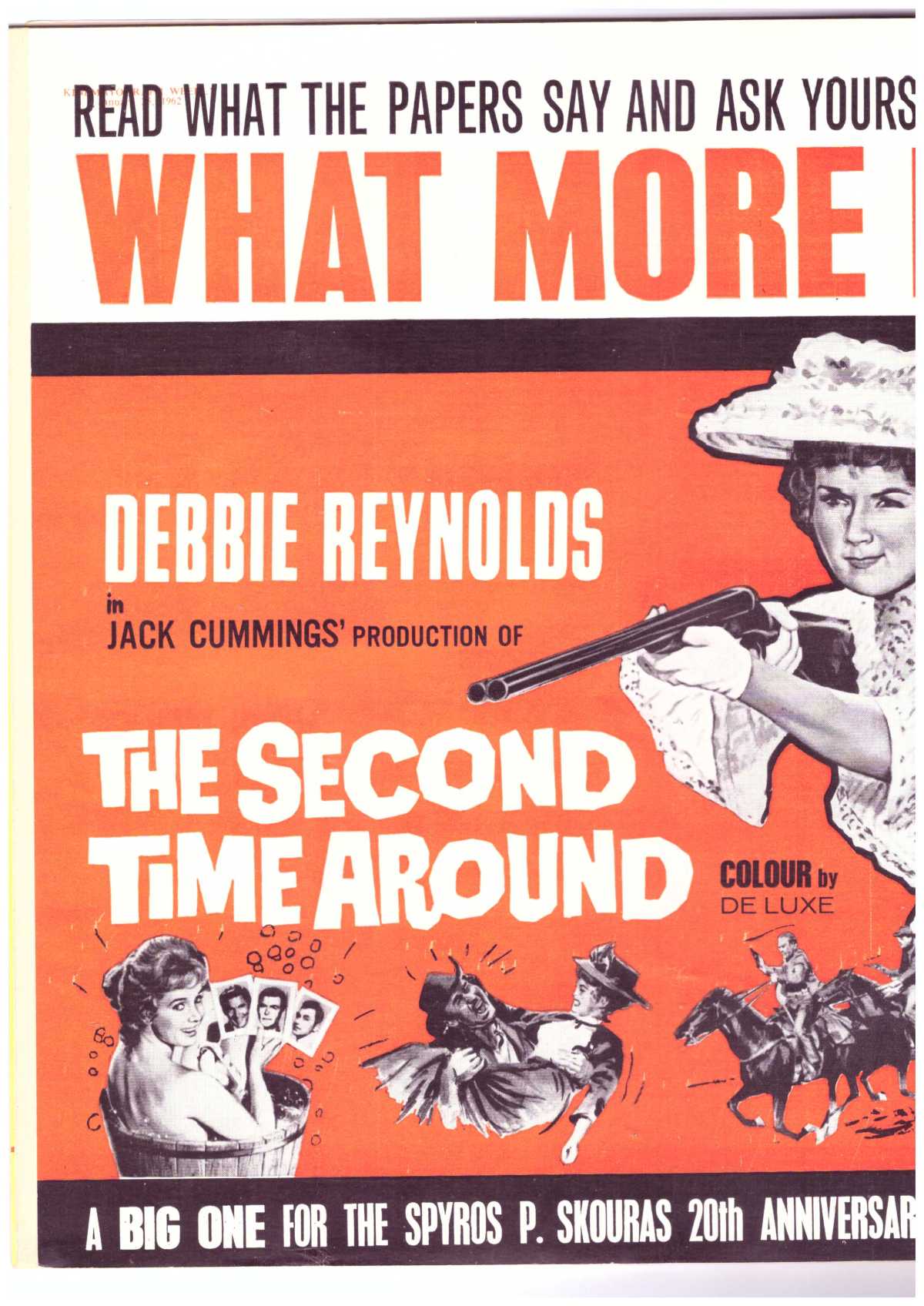
There were other surprises. Second Time Around (1961) placed 15th. But star Debbie Reynolds was still a genuine box office attraction after The Unsinkable Molly Brown (1964) and the unexpected success of The Singing Nun (1966).

Otherwise, the biggest hitters on television were Alfred Hitchcock, Elvis Presley and Doris Day. Hitchcock topped this particular chart with The Birds (1963), though presumably somewhat censored. His North by Northwest (1959) took 14th spot, Marnie (1964) placed 26th and Rear Window (1958) 39th.

Elvis Presley placed 11th with Roustabout (1964), 21st with Blue Hawaii (1961), 25th with Tickle Me (1965) and 41st with Fun in Acapulco (1963). Doris Day clocked in at 12th with That Touch of Mink (1962), 19th with Send Me No Flowers (1964), 23rd with The Thrill of It All (1963) and 35th with Move Over, Darling (1963).

Television had paid record sums to acquire the likes of Bridge on the River Kwai (1957) and The Robe (1963), taking second and sixth positions, respectively, and undoubtedly helped by the ongoing success of director David Lean (Doctor Zhivago, 1965) and Richard Burton (Who’s Afraid of Virginia Woolf, 1966).

Others in the top then were Cat on a Hot Tin Roof (1958), which had been successfully reissued in cinemas in a double bill with Butterfield 8 (1960), both headlining Elizabeth Taylor, to capitalize on her Oscar-winning turn in Who’s Afraid of Virginia Woolf. This came in third followed by The Great Escape (1964) and John Wayne as McLintock (1963) with Maureen O’Hara. Lilies of the Field (1963) was seventh.

The Made-for-TV films were beginning to make an impact. The Doomsday Flight (1966), released theatrically overseas, was 17th, one spot ahead of The Longest Hundred Miles (1967) with rising stars Doug McClure and Katharine Ross and seven ahead of Fame Is the Name of the Game (1967) with Tony Franciosa (Fathom, 1967) and Jill St John (Tony Rome, 1967).

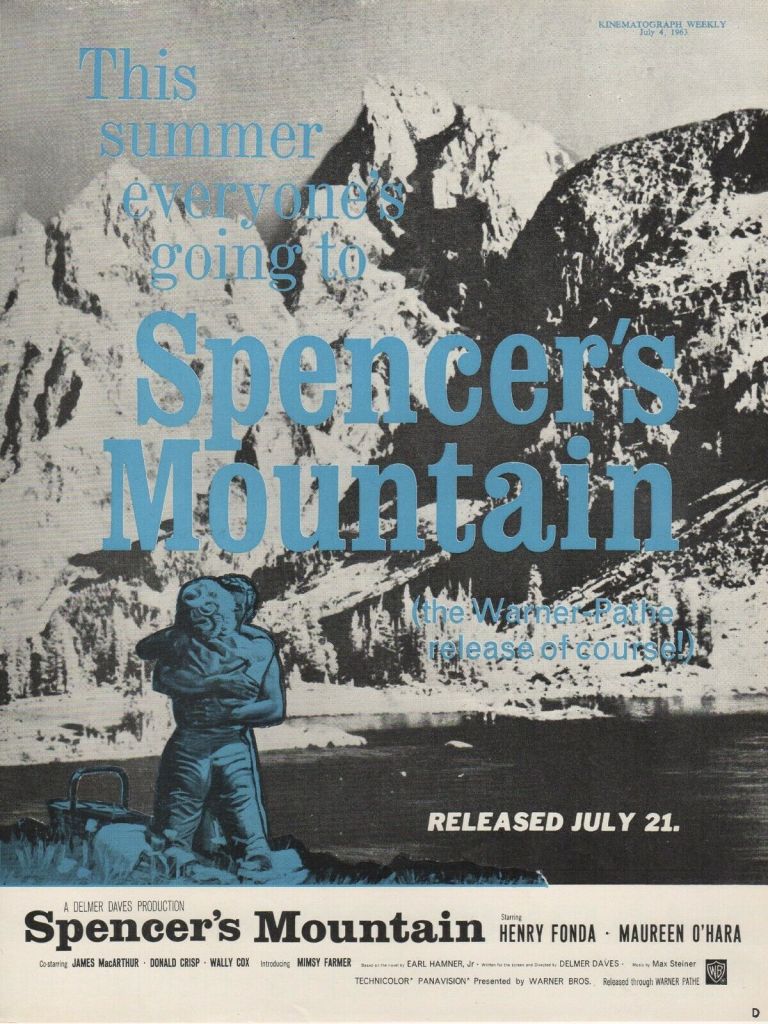
Other notable small screen results were registered by Natalie Wood-Warren Beatty starrer Splendor in the Grass (1961) which took 12th spot, Shirley MacLaine and an all-star cast in What A Way To Go (1964) in 16th, Susan Hayward Oscar-winning weepie I Want To Live (1958) in 21st, and Henry Fonda and Maureen O’Hara in Spencer’s Mountain (1963) in 23rd.

SOURCE: “All Network Prime Time Features” (Seasons 1966-1967 and 1967-1968),” Variety, September 11, 1968, p47.

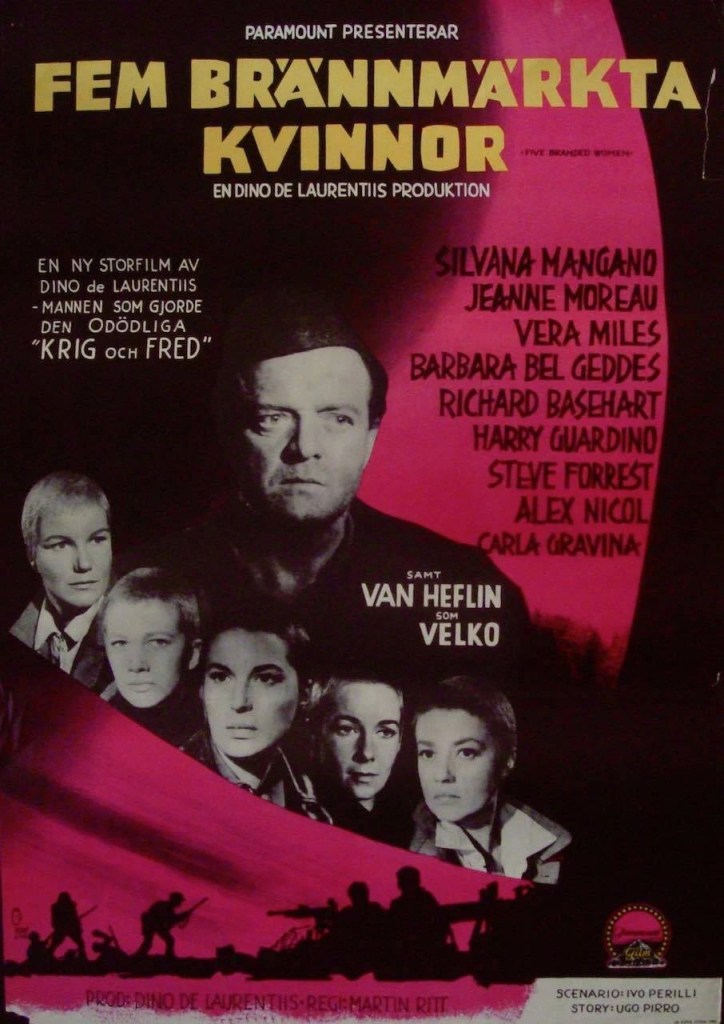
Five Branded Women (1960) ****

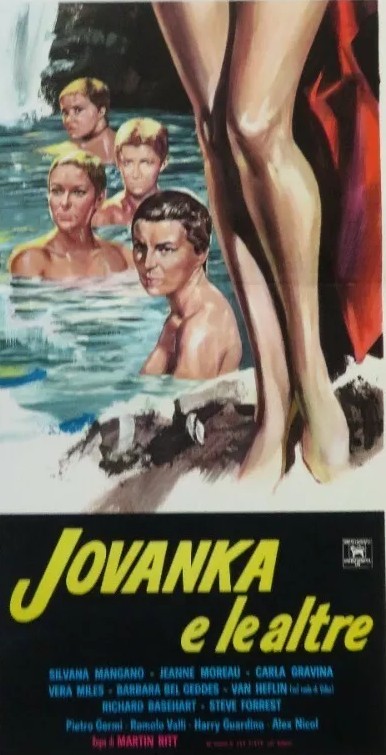
Should have qualified as that rare thing – an all-star female cast. Italian Silvana Mangano had led the arthouse revolution and kickstarted the importing of sexy Italians in international hit Bitter Rice (1949), Jeanne Moreau was a leading light in the French New Wave (and another sexy import to boot)  as star of Les Liaisons Dangereuses/Dangerous Liaisons (1959), Vera Miles was hot after Psycho (1960), rising star Barbara Bel Geddes (Vertigo, 1958) another Hitchcock protegee. Never mind that the story was a serious one, the redemption of female collaborators in Yugoslavia in World War Two, there was still time for what had become very much a western genre cliché, the inability of any woman not to strip off at the sight of a waterfall – here all five go skinny dipping.

The narrative should have been clearcut as redemption tales generally are: miscreant finds salvation. But this one is pretty muddled up and the moral confusion gets in the way. While some of the women such as Ljubo (Jeanne Moreau) have sex with the occupying Germans to prevent a brother being sent to a work camp, others such as Jovanka (Silvana Mangano) simply fall in love or like widow Marja (Barbara Bel Geddes) are desperate for a child. All five have been conquests of German lothario Sgt Keller (Steve Forrest) who is castrated by the partisans. The women are humiliated by the partisans who shave their heads and the Germans cast them out of the town, Daniza (Vera Miles) part of the quintet though she denies having sex with Keller.

Like “Deadly Companions” the marketeers major on the promise of female nudity in a pool.

But it’s not just the Germans who are apt to have predatory notions about women. A pair of armed collaborators consider them fair game and attempt to rape Jovanka and Ljubo. Partisan Branko (Harry Guardino) – ostensibly in the category of good guy – attempts to rape Jovanka then seduces Daniza. The lovers are later executed by the partisans for breaking the rule not to have sex with each other. And this is where it gets mixed up. The pair were meant to be on guard when they started having sex. In consequence, three Germans sneaked into their camp and nearly caused disaster. Despite that, Jovanka, who believes she was unfairly treated in the first place in being denied love just because there was a war on, still insists that they shouldn’t be condemned for ordinary human desire.

The movie works best when it sticks to straightforward redemption or is character-driven. Given the chance Jovanka turns into an effective partisan, cutting down Germans with a machine gun, preventing rape of herself and Ljubo by shooting the attackers with a captured pistol. But she rejects an attempt at reconciliation by partisan leader Velko (Van Heflin), the one who had cut off her hair, blaming him for her unnecessary humiliation. He later tries to make amends, by trying to keep her out of brutal action.

Despite taking up arms, the women remain vulnerable to smooth-talking men. Ljubo takes prisoner Capt Reinhardt (Richard Basehart), who might fall into the “good German” category since he isn’t like Keller, was a professor of philosophy and generates sympathy because his wife died in an air raid. Taking his word of honor, Ljubo unties him. She thinks he will be exchanged for a partisan prisoner. But he knows the truth – there are no partisan prisoners available for exchange because the Germans kill them. So he tries to escape, and she machine guns him in the back.

By this point Ljubo is far from a soft touch, not likely to prattle on about women being free to love the enemy or their compatriots, and is the one who shoots Daniza as part of a firing squad when it is left to her or Jovanka to do so.

What saves it is the brutal realism of war, this predates the vengeful citizens who at war’s end would take revenge on local women who slept with any occupying Germans (Malena, 2000, showed this repercussion in Italy and it was the same throughout France). There’s certainly an innocence about female desire and Jovanka defending her right to have sex, though, surely, there would have been shame involved in having sex with even a Yugoslavian before marriage in what would still have been a devout country. So a complex defiant woman, refusing to bow down to male-enforced rules. But there’s a male corelative. Branko equally refuses to obey any rules, and his actions cause harm.

In terms of acting, Silvana Mangano and Jeanne Moreau are streets ahead of their American counterparts, and complement each other, Mangano loud and outspoken, Moreau quiet and brooding. Harry Guardino (Madigan, 1968), Richard Basehart (The Satan Bug, 1965) and Van Heflin (Once a Thief, 1965) are the pick of the males.  

Martin Ritt (The Spy Who Came in from the Cold, 1965), who liked to back a cause, has chosen an odd one here, and after a slow start it picks up. Written by Ivo Perilli (Pontius Pilate, 1962) from the book by Ugo Pirro.

Easily leads the pack of the women-in-wartime subgenre and despite, or bcause of, the moral confusion still well worth a look.

Staircase (1969) ***

A huge flop at the time given both Richard Burton and Rex Harrison trousered $1 million. Now, primarily of historical interest, hailing from a time when homosexuals could be jailed. A man dressing up in woman’s clothing, as here, could be summoned in front of the magistrates. It’s the kind of movie that would work better if, as with the American idiom, the dialog of two people of any sex engaged in a long-term relationship was spattered with brilliant one-liners rather than a series of sarcastic putdowns.

Even so, there’s more here than originally met the eye. The fact that the hairdressers Charlie (Rex Harrison) and Harry (Richard Burton) have remained, like a married couple, together for twenty years says a lot about their enduring, if fractious, relationship. While Charlie has a daughter he never sees – and never wants to – Harry pines after a child. And there is some gentle complaint about why, in the eyes of the law, Harry would neither be permitted to adopt a child not to love a man, but those aspects are never in your face except that Charlie is awaiting his summons for the crime outlined above.

There’s not as much mincing and preening as you’d expect. Charlie is the better looking and has retained his good looks with the help of considerable pampering but Harry has lost his hair thanks to alopecia and rather than wearing a wig opts for a bandage.

It’s one of those movies where nothing happens based on a play (by Charles Dyer) where nothing happens, what little tension there is reliant on waiting (for the summons and the threat of an appearance by Charlie’s daughter). But while the stage can get away with two actors at the top of their game (Paul Scofield and Patrick Magee in London’s West End, Eli Wallach and Milo O’Shea on Broadway), that’s a far harder trick to pull off on screen.

So it’s to the credit of both actors than they make it work and we empathize with their immediate and ongoing circumstances. While Charlie sees his role as being the scathing dismissive one, leaving Harry to be supportive and apparently still in love, nonetheless his true feelings come out when he thinks his partner has had a heart attack.

In male-female terms, this would come across as just another middle-aged couple stuck in a humdrum marriage, and indeed there’s nothing elevated about the relationship between Charlie and Harry who live a very working class life in London’s East End, the former’s ambitions to become an actor long since dashed.

There’s not much director Stanley Donen (Surprise Package, 1960) can do to open up the play beyond sticking a few of the scenes outdoors and there’s one sequence that would raise eyebrows these days when Charlie ogles half-naked male teenagers playing in the sun. The worst reason for adapting a play for Hollywood is that, unless farce raises its head or there’s a string of one-liners or hilarious circumstance, the verbosity plays against the possibility of there being outstanding cinematic sequences. Luckily, it ends with one, when Harry takes a frightened Charlie by the arm.

I’m not sure I’d actually recommend it because there’s not much going on and the performances are not in the Oscar league, but it is much better than I thought. Rex Harrison (The Honey Pot, 1967) has the showier role, Richard Burton (Anne of the Thousand Days, 1969) reining himself in.

Commercially, nobody came out of this well. Rex Harrison didn’t make another film for eight years, Burton finding it more difficult to extract a million bucks from producers, and Stanley Donen continuing his run of poor box office. And harder for any British audience to take this seriously once comic pair Morecambe and Wise started sharing a bed in their sketches.

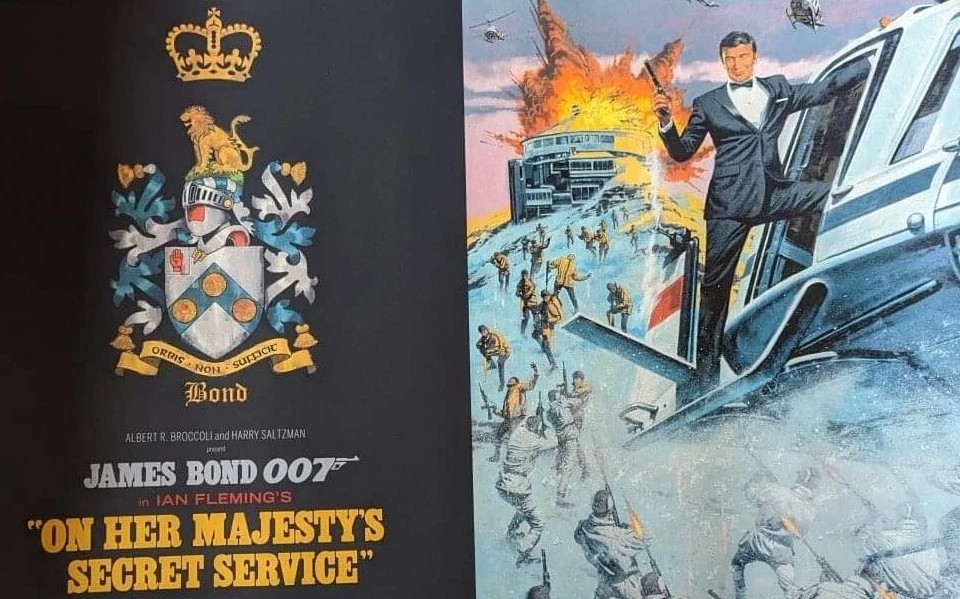
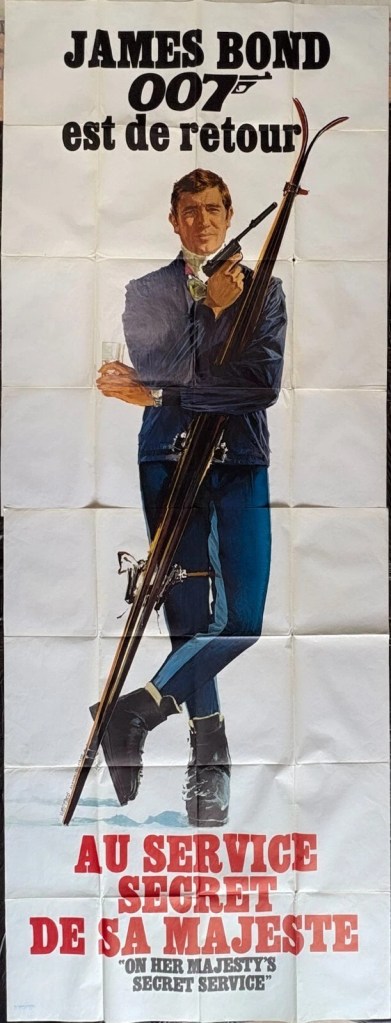
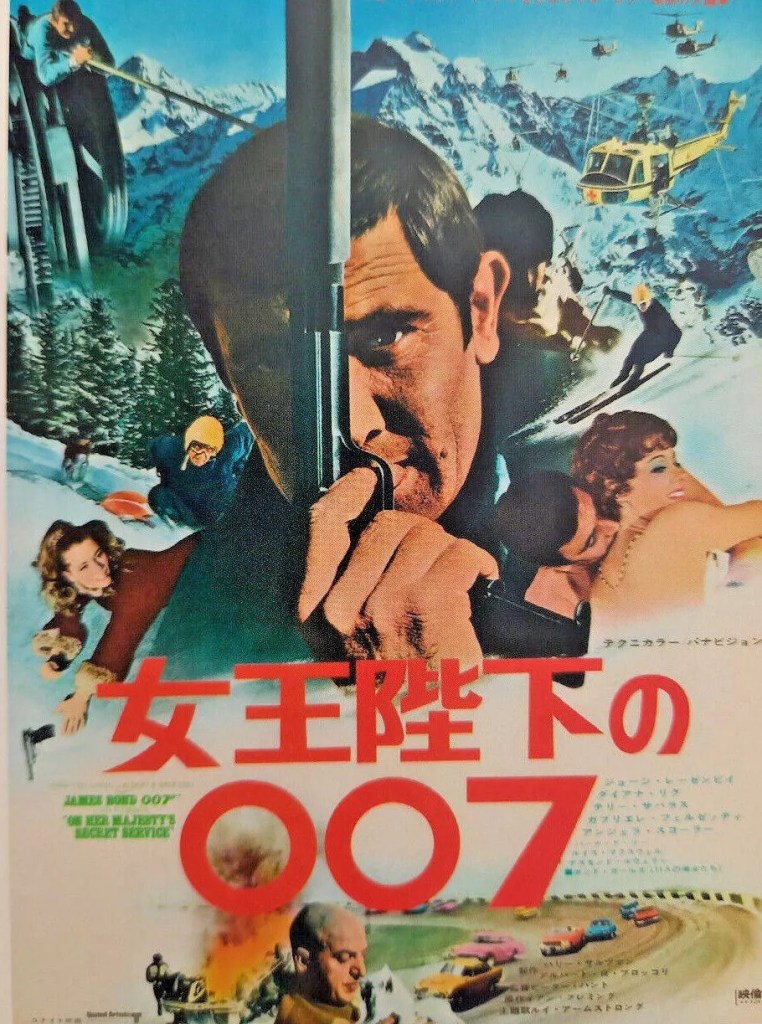
On Her Majesty’s Secret Service (1969) ***

Holds a special place in my movie heart because it was the first James Bond film I ever saw and the first soundtrack I ever bought. Having, by parental opposition, been denied the opportunity to see any of the previous instalments and therefore having little clue as to what Sean Connery brought to the series I wasn’t interested in the fact that he had been replaced. I can’t remember what my younger self thought of the downbeat ending but on the current re-view felt that a rather cursory storyline was only saved by the stunning snow-based stuntwork, two races on skis, one on a bobsleigh, car chase on ice and the kind of helicopter framing against the sun that may well have inspired Francis Ford Coppola in Apocalypse Now (1979).

The heraldic subplot bored me as much to tears as it did the assorted dolly birds (to use a by-now-outlawed phrase from the period) and I was struggling to work out exactly what global devastation could be caused by his brainwashed “angels of death” (the aforementioned dolly birds). This is the one where Bond threatens to retire and gets married. Given the current obsession with mental health, the bride has a rather more contemporary outlook than would have been noted at the time. We are introduced to her as a wannabe suicide. Good enough reason for Bond to try and rescue her from the waves, and her mental condition not worthy of comment thereafter.

Turns out she’s the feisty spoiled-brat daughter Tracy (Diana Rigg) of crime bigwig Draco (Gabriele Ferzetti) and Bond persuades that Mr Big to help him snare the bigger Mr Big Blofeld (Telly Savalas), hence the convoluted nonsense about heraldry. There’s the usual quotient of fisticuffs and naturally James Bond doesn’t consider falling in love with Tracy as a barrier to seducing a couple of the resident dolly birds.

I takes an awful long time to click into gear but when it does the stunt work – perhaps the bar now having been raised by Where Eagles Dare (1968) – is awesome. Apart from an occasional bluescreen for a close-up of Bond, clearly all the chases were done, as Christopher Nolan likes to say, “in camera.” And there’s about 30 minutes of full-on non-stop action.

Pre-empting the future eyebrow-raising antics of Roger Moore, I felt George Lazenby was decent enough, bringing a lighter touch than Connery to the proceedings without his inherent sense of danger (which Moore also lacked). Diana Rigg, I felt was miscast, more of a prissy Miss Jean Brodie than a foil for Bond, even if this one was a substitute for the real thing. It was a shame Honor Blackman in Goldfinger (1964) had taken the slinky approach but that would have worked better to hook Bond than earnestness.  

I’m not entirely sure how Blofeld planned to employ his angels of death but the prospect of a gaggle of dolly birds gathering in fields or rivers and being capable of distributing enough toxic material to destabilize the world seems rather ill-thought-out.

Theoretically, this is meant to be one of the better ones in the series but that’s mostly based on the doomed romance and the downbeat ending and I guess that Diana Rigg (The Avengers, 1965-1968) supposedly brought more acting kudos than others in the female lead category. Adopting something close to her Avengers persona would have been more interesting but I guess she was fighting against being typecast.

If you get bored during the endless heraldry nonsense, you can cast your eye over the assortment of Bond girls who include Virginia North (The Long Duel, 1967), Angela Scoular (The Adventurers, 1970), Joanna Lumley (Absolutely Fabulous, 1992-2012), Catherine Schell (Moon Zero Two, 1969), Julie Ege (Creatures the World Forgot, 1971), Anouska Hempel (Black Snake, 1973) and Jenny Hanley (Scars of Dracula, 1970), who, as graduates from this particular talent school, made a greater impact in entertainment than many of their predecessors.

Second unit director Peter Hunt made his full directorial debut but focussed more on his speciality – action – than the drama. Written by series regular Richard Maibaum (Dr No, 1962) and Simon Raven (Unman, Wittering and Zigo, 1971) and more faithful than usual to the Ian Fleming source novel.

Top marks for the action, less so for the rest.

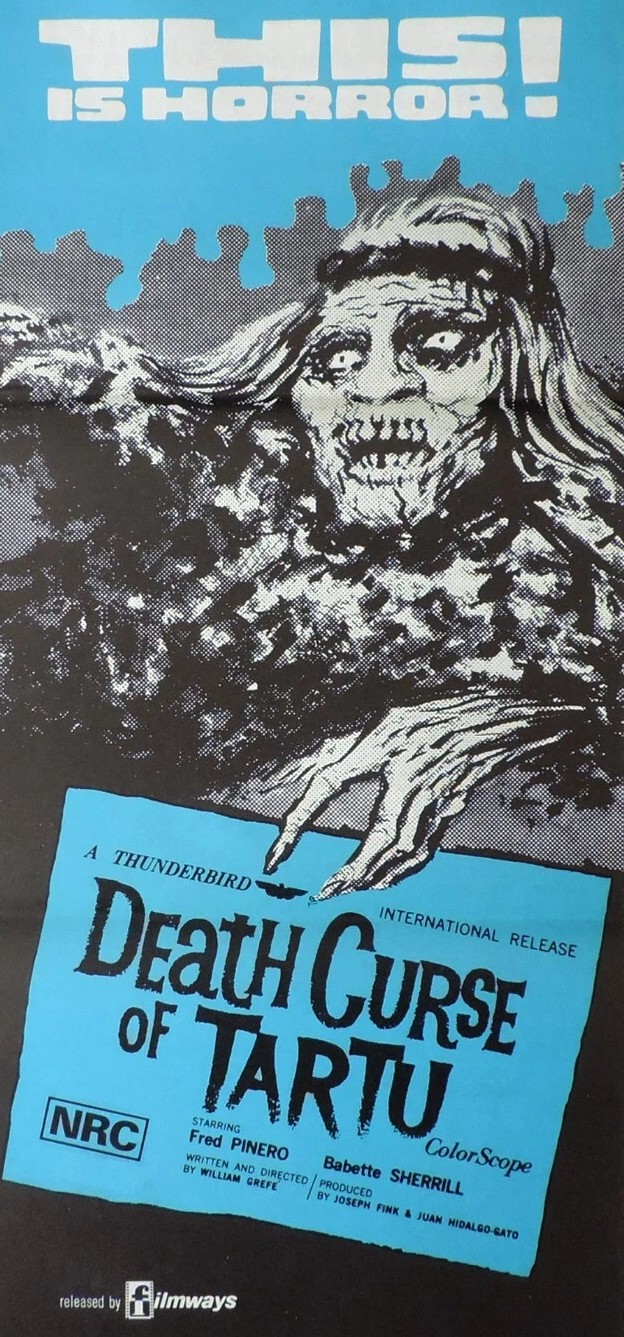
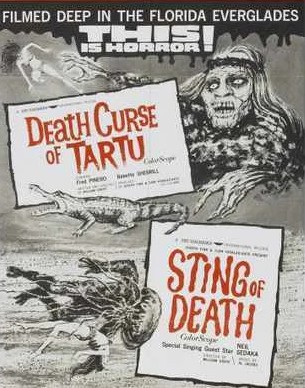
Death Curse of Tartu (1966) **

Absolute hoot. I often think it’s a shame we can’t admit to enjoying a really good bad picture and here we have a gem in the So Bad It’s Good category.

If you have a notion for the kind of movie where actors have to wrap rubber snakes around their necks and pretend to strangle themselves, or do a passable imitation of being eaten alive by a non-existent shark, manage to position themselves in a tree so they can fall into the open mouth of a stationary model alligator, or foolishly go where even devils fear to tread, this one is for you.

This wasn’t even the kind of schlocky picture that scraped out onto the release circuit in flea-ridden cinemas – it had a one-week engagement at the ABC Regal in Glasgow city centre, Scotland, one of the city’s two main first run venues.

It’s the Florida Everglades version of the Old Dark House and comes replete with umpteen warnings. Already people have gone missing in this particular area of interest, reputedly an ancient Native American burial ground. But that doesn’t stop explorer Sam Gunter (Frank Weed) continuing his solo expedition against the advice of local guide (Bill Marcus) who warns of ghostly chants and drums and of finding the imprint of tiger feet.

Sam’s pretty chuffed with himself to uncover an archaeological find, a stone whose significance is unclear. Anyways, poor Sam has not taken into account the presence of deadly snakes that can slither through the undergrowth and (holy moly!) overturn a kettle and then climb a tree and ambush him and suffocate him to death – though who wouldn’t be suffocated if instead of trying to remove said creature from around your neck your task as an actor was to pull the damn reptile as tight as possible so it looks like it’s impossible to escape. This is a mighty predatory creature and must just be protecting its territory because it makes no effort to eat its prey.

Sam’s disappearance doesn’t put off archaeology lecturer Ed Tison (Fred Pinero) and wife Julie (Babette Sherrill) who are escorting four students on their first dig. Luckily, the youngsters – Johnny (Sherman Hayes), Tommy (Gary Holtz), Cindy (Mayra Gomez) and Joan (played by Maurice Stewart!! according to imdb) –  are already paired off, so there’s time for a bit of necking and dancing.

But it’s not long before the larking about turns into peril. Frolicking in the water ain’t such a good idea when there’s a stray shark about (presumably culled from stock footage) and the actors, who have presumably taken thrashing-about lessons, manage to churn up the water sufficiently to suggest they have been attacked.

Meanwhile, every now and then, we have been favored with shots of some gruesome creature coming to life. Given that, according to legend, he was capable to turning himself into a tiger, it’s a fair enough conclusion that he was the marauding shark, whose appearance in the Everglades would otherwise be too mysterious this side of chemical pollution or atomic accident.

The monster takes human form and begins pursuing the remaining intruders. Although Ed has a bolt-action rifle he’s not much of a marksman so their pursuer is able to happily maraud and his target hasn’t enough wits about her to snatch the knife he has embedded in a tree – and thus defend herself – so naturally enough she ends up in quicksand (or gradually going down on her knees in a patch of sandy water so it looks like she’s sinking). It’s lucky there is quicksand because that provides the narrative solution as to how Ed is going to escape the monster. The girl can be given a helping hand to get out of the quicksand, but the monster, after being thrown in, is denied assistance. But before he can be sucked under, he turns into a skeleton.

This has some historical significance in the horror genre, being at the forefront of what was known as the “regional” subgenre where movies were made in remote spots on miniscule budgets often with amateur actors. Writer-director William Grefe (Sting of Death, 1966) conjured up enough of these pictures to enter the esteemed halls of cult, but he was significant for another reason. At a time when movies were in short supply, the exhibitors had decided to enter the production game and funded The Checkered Flag (1963), directed by Grefe, under the auspices of Motion Picture Investors.

Nothing more was expected of the actors than that they could put on a good show of dying. Fred Pinero, Gary Holtz and Babette Sherrill had appeared in Sting of Death, but that was the extent of their acting careers. Frank Weed made one other movie. It was another decade before Mayra Gomez made another picture but by then she was on her way to a career as a television presenter, for which she received a Spanish lifetime achievement award.

If there was a separate ranking system for So Bad It’s Good films this would be hitting at least the four-star mark. As it is under my current system, it has to be marked down, which is a shame because there’s a heck of a lot of fun to be had here.

Come September (1961) ***

The quite superb concept that underpins the traditional unsettling of Rock Hudson is sabotaged by the inclusion of an unnecessary generation gap element and because one of the youngsters is singer Bobby Darin that throws a musical spanner into the works. The basic set-up is that Lisa (Gina Lollobrigida), the Italian lover of wealthy American Robert (Rock Hudson), is fed up with the part-time nature of their relationship. Although their affair dates back six years, it only lasts for the one month (September) he vacations each year in his luxurious villa on the Ligurian coast.

She’s so annoyed at his lack of commitment that she’s about to marry posh Englishman Spencer (Ronald Howard), that imminent event only put off by the unexpected earlier-than-usual arrival of Robert. Matters are further complicated because his enterprising Italian butler Maurice (Walter Slezak) hires out the villa to paying guests for the other eleven months. To explain the owner’s sudden arrival, Maurice persuades his guests to go along with the notion that Robert is a former owner fallen on hard times deluded into thinking he still possesses the property.

The guests are a gaggle of young women, including psychology major Sandy (Sandra Dee) who proceeds to analyze Robert, and they are herded around by formidable chaperone Margaret (Brenda de Banzie) who prevents Lisa sneaking into her lover’s bedroom.

So enough plot to be getting on with. You’d assume Spencer is going to turn up, maybe with his equally formidable sisters, to cause ructions at the villa. Lisa appears to enjoy making Robert wait the way he has kept her wait, so a gentle shift in power, and there’s going to be an inevitable bust-up so we expect a quick shift into the will-she-won’t-she scenario. Plus, there’s the whole issue of Robert claiming back his villa and dealing with the over-entrepreneurial Maurice.

Instead, the second act enters a whole new realm. Unless one of the girls was going to make a play for Robert, there’s not much reason for them to be there except for the nuisance value and to allow Margaret to flex her authority. An unwelcome quartet of young men, led by Tony (Bobby Darin), embark on the equally unwelcome task of wooing of the young ladies, Tony having his eyes on Sandy. Although various romantic entanglements are enacted, that’s not what takes center stage.

Instead, the bulk of the middle section scarcely involves the Robert-Lisa quandary and instead it’s devoted to an endless battle between Tony and Robert as the younger specimen attempts to prove he is mentally and physically superior. Now the one element that had made these Rock Hudson comedies work was his helplessness. He may occasionally be smart or wealthy but the whole point of these stories was for a woman to run rings around him or at the very least drag him way out of his comfort zone.

Seeing Robert best Tony – endlessly – takes the shine off the picture and it’s not until Robert is revealed as a sanctimonious hypocrite, living by a double standard, that the movie catches fire again as Lisa storms off in a huff and we can settle down to some good old-fashioned will-she-won’t-she.

This proves a very successful change of pace for Gina Lollobrigida, and she reveals herself to be such a splendid comedienne that it became part of her repertoire – reunited with Hudson for Strange Bedfellows (1965) and leading a pack of men a merry dance in Buona Sera Mrs Campbell (1968).

There’s nothing particularly wrong with Rock Hudson. He’s good comedy value, but the second act ruins it. Bobby Darin (Pressure Point, 1962) and Sandra Dee (A Man Could Get Killed, 1966) act as if they’re in a completely different movie, of the frothy beach variety. Walter Slezak (The Caper of the Golden Bulls, 1967) is an adept scene-stealer. Look out for Joel Grey (Cabaret, 1972) in an early role and Brenda de Banzie (I Thank a Fool, 1962).

Directed by Robert Mulligan (The Stalking Moon, 1969) with a screenplay by Oscar-winning Stanley Shapiro (Bedtime Story, 1964) and Maurice Richlin (All in a Night’s Work, 1961).

A hybrid that rocks the wrong boat.

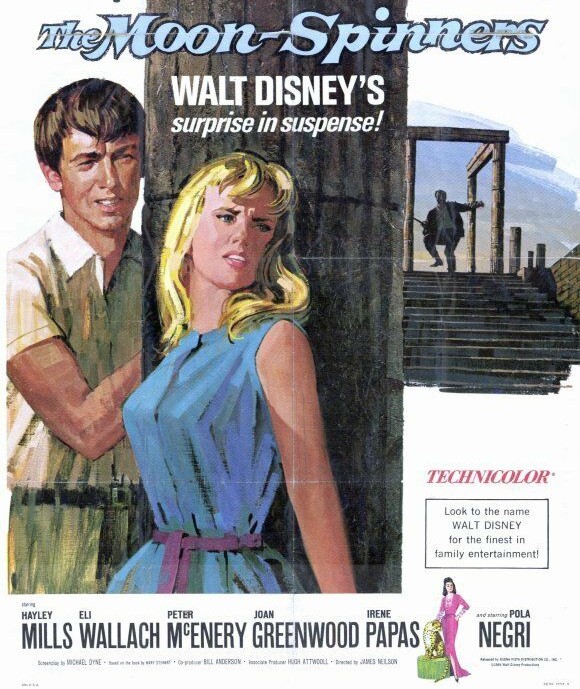
The Moon-Spinners (1964) ***

Every new Hayley Mills film was an exercise in transition. Would audiences allow the successful child star – the first for a generation – to grow up? Or would they turn against her as they had Shirley Temple? And would her paymasters Disney in the penultimate film in her contract assist her by offering more mature roles or insist she remained the cute kid? She had already ventured into more adult territory with the British-made The Chalk Garden (1964).

Set on the island of Crete, what starts out as typical Disney travelog – traditional Greek wedding and annual festival parade – soon morphs into darker sub-Hitchcockian territory. Nikki (Hayley Mills) on holiday with her aunt (Joan Greenwood), a collector of folk songs, becomes mixed up with skin diver Mark (Peter McEnery) who appears to be on the trail of a local man Stratos (Eli Wallach). Young love looks set to blossom except for the villainy afoot. The picture holds on to its various mysteries for too long so exposition comes in a flood in the second act while the third act introduces a new set of characters including British consul (John Le Mesurier) and wealthy yacht owner Madame Habib (legendary silent star Pola Negri).

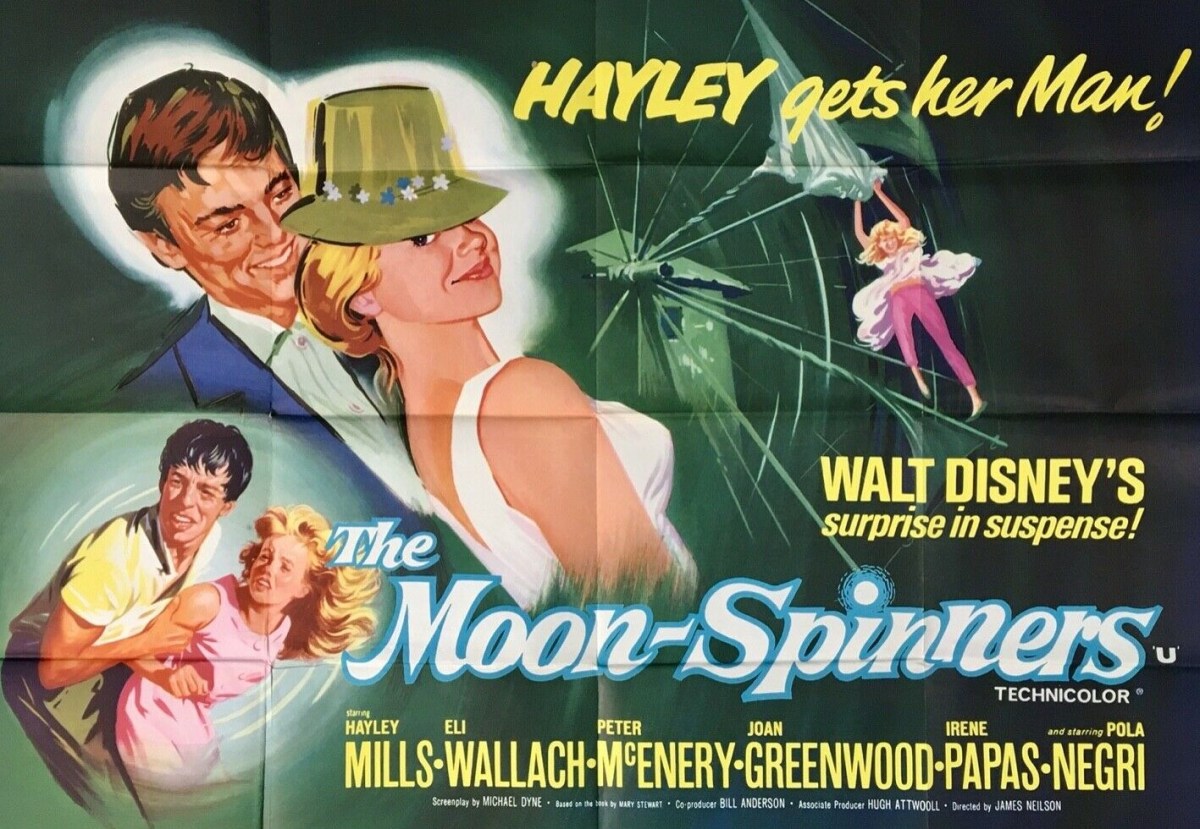
Hayley looks far more well-endowed in the poster than in real life and these days the advert would certainly raise eyebrows for sexualizing a 14-year-old character.

Along the way some excellent scenes feature: a nerve-tingling high-wire stunt on a revolving windmill, a punch-up on a speeding boat, the drunken wife (Sheila Hancock) of the consul, feral cats in an ancient monument, an old woman thinking she is going crazy when a bottle moves seemingly of its own volition, a hearse doubling as an ambulance, a cowardly leopard and a belter of a slap meted out by Nikki. Mark, physically inhibited by a gunshot wound, has to cede investigation into the nefarious activities to Nikki who in any case has already played the independence card.

Getting all the necessary information to the audience and ensuring various characters are properly introduced without the whole enterprise turning into a turgid mess is a tricky proposition but director James Neilson is equally at home with complicated plot and multi-character scenario from Dr Syn, Alias the Scarecrow (1963) and with Mills from Summer Magic (1963). And he lets mystery and action take precedence over budding romance, the kiss when it comes hardly going to make an audience swoon, and uses the traditional Greek elements to build up atmosphere.

All in all entertaining enough, especially if viewed as Saturday matinee material, but it’s clear that the leading roles would have worked better if played by older characters as was the case with the source novel by Mary Stewart. Hayley Mills (Pollyanna, 1960) makes a game stab at putting forward a more grown-up persona but relies far too much on the acting tricks that got her into the child-star business in the first place. Even so, once she exerts her independence, she becomes more believable although the idea of a teenager solving a crime creates more problems than it solves in attracting an adult audience.

In his first leading role Peter McEnery (Beat Girl, 1960) impresses. Villainy is a stock in trade for Eli Wallach (The Magnificent Seven, 1960) but here he dials down the brutality. Irene Papas (The Guns of Navarone, 1961) plays his sister and were it not for her husky voice Joan Greenwood  (Tom Jones, 1963) would have been a dead ringer for a dotty aunt. It’s a treat to see a famed silent star Pola Negri (Shadows of Paris, 1924) putting in an appearance. Character actors John Le Mesurier (The Liquidator, 1965), Andre Morrell (The Vengeance of She, 1968) and Sheila Hancock (Night Must Fall, 1964) complete the British contingent. For British television writer Michael Dyne this proved his sole screenplay.

Catch Up: you can follow Hayley Mills’ unfolding career on the Blog through reviews of Pollyanna, In Search of the Castaways (1963), The Truth about Spring (1965), Sky, West and Crooked / The Gypsy Girl (1966), The Trouble with Angels (1966), adult breakthrough The Family Way (1966), Pretty Polly / A Matter of Innocence (1967) and Twisted Nerve (1968).

Discover WordPress

A daily selection of the best content published on WordPress, collected for you by humans who love to read.

The Atavist Magazine

by Brian Hannan

WordPress.com News

The latest news on WordPress.com and the WordPress community.