All-Time Top 50

It’s five years now since I started this Blog.  This little exercise that I generally undertake twice a year reflects the films viewed most often since the Blog began in June 2020. There’s no shaking Ann-Margret, a brace of her movies embedded in the top three, though the sequence has been punctured by the sudden arrival of Anora (2024) and followed by Pamela Anderson as The Last Showgirl (2024), both films making the highest ranking of any contemporary films I’ve reviewed, though I hated the former and adored the latter.  

The figures in brackets represent the positions in December 2024 and New Entry is self-explanatory. I’ve expanded the list from 40 movies to 50, which still represents a small fraction of the 1600 pictures I’ve reviewed since I started.

  1. (1) The Swinger (1966). Despite shaking her booty as only she knows how, Ann-Margret brings a sprinkling of innocence to this sex comedy.. 
  2. (New Entry) Anora (2024). Mikey Madison’s sex worker woos a Russian in Oscar-winner.
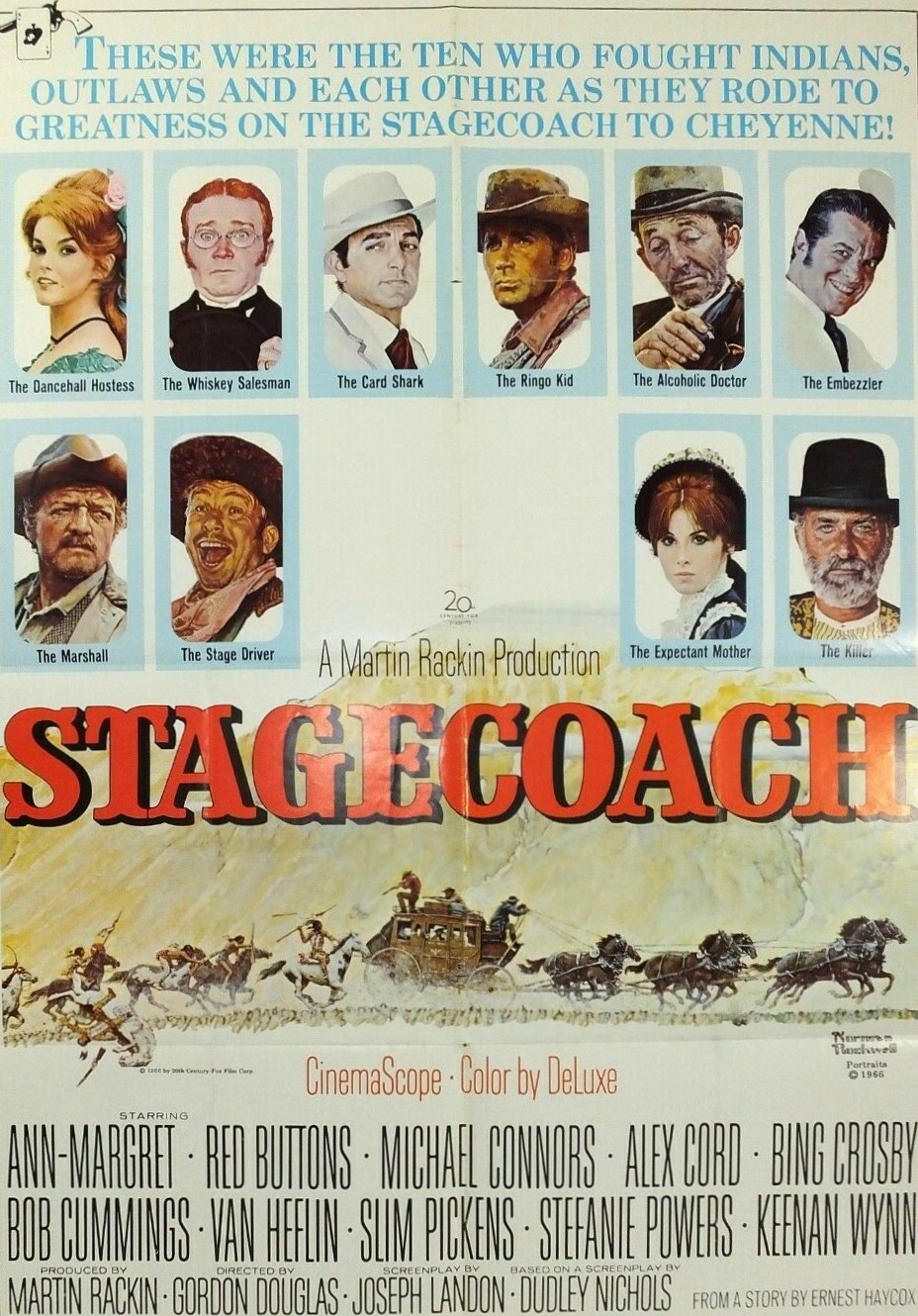
  3. (2) Stagecoach (1966). Under-rated remake of the John Ford western. But it’s Ann-Margret who steals the show ahead of Alex Cord in the role that brought John Wayne stardom.  
  4. (New Entry)) The Last Showgirl (2024). Pamela Anderson proves she can act and how in this touching portrayal of a fading Las Vegas dancer.
  5. (4) In Harm’s Way (1965). Under-rated John Wayne World War Two number. Co-starring Kirk Douglas, Patricia Neal, Tom Tryon and Paula Prentiss, director Otto Preminger surveys Pearl Harbor and after.
  6. (3) Fraulein Doktor (1969). Grisly realistic battle scenes and a superb score from Ennio Morricone help this Suzy Kendall vehicle as a World War One German spy going head-to-head with Brit Kenneth More and taking time out for romantic dalliance with Capucine.
  7. (5) Fireball XL5. The famous British television series (1962-1963) from Gerry and Sylvia Anderson, now colorized. “My heart will be a fireball…”
  8. (6) Once Upon a Time in the West (1969). Along with The Searchers (1956) now considered the most influential western of all time. Sergio Leone rounds up Claudia Cardinale, Henry Fonda and Charles Bronson and that fabulous Morricone score.
  9. (New Entry) Squad 36 / Bastion 36 (2025). Corruption and interdepartmental rivalry fuel this French flic directed by Olivier Marchal.
  10. (7) Jessica (1962). Angie Dickinson doesn’t mean to cause trouble but as a young widow arriving in a small Italian town she causes friction, so much so the local wives go on a sex strike..
  11. (20) Young Cassidy (1965). Julie Christie came out of this best, winning her role in Doctor Zhivago as a result. Rod Taylor as Irish playwright Sean O’Casey.
  12. (8) Thank You Very Much/ A Touch of Love (1969). Sandy Dennis dazzles as an academic single mother in London impregnated by Ian McKellen.
  13. (10) Baby Love (1969). Controversy was the initial selling point but now it’s morphed into a morality tale as orphaned Linda Hayden tries to fit into an upper-class London household.
  14. (30) The Girl on a Motorcycle / Naked under Leather (1968). How much you saw of star Marianne Faithfull depended on where you saw it. The U.S. censor came down heavily on the titular fantasizing heroine, the British censor more liberal. Alain Delon co-stars. These says, of course, you can see everything.
  15. (9) Pharoah (1966). Polish epic set in Egypt sees the country’s ruler at odds with the religious hierarchy.
  16. (24) A Dandy in Aspic (1968). Cold War thriller with Laurence Harvey as a double agent who wants out. Mia Farrow co-stars.  
  17. (31) Claudelle Inglish (1961). Diane McBain seeks revenge for being stood up at the altar in the Deep South.
  18. (New Entry) The Family Way (1966). Hayley Mills comes of age in this very adult drama. Co-starring her father John Mills and Hywel Bennett.
  19. (12) Vendetta for the Saint (1969). Prior to James Bond, Roger Moor was better known as television’s The Saint. Two television episodes combined sees our hero tackle the Mafia.
  20. (15) Go Naked in the World (1961). Gina Lollobrigida finds that love for a wealthy playboy clashes with her profession (the oldest). Look out for highly emotional turn from the usually taciturn Ernest Borgnine.
  21. (13) The Appointment (1969). Inhibited lawyer Omar Sharif discovers the secrets of wife Anouk Aimee in under-rated and little-seen Italian-set drama from Sidney Lumet.
  22. (New Entry) Istanbul Express (1968). Gene Barry plays a weird numbers game in spy thriller that sets him up against Senta Berger.
  23. (19) Pressure Point (1962). Nazi extremist Bobby Darin causes chaos for psychiatrist Sidney Poitier. Stunning dream sequences.
  24. (25) Pendulum (1968). Fast-rising cop George Peppard accused of murdering unfaithful wife Jean Seberg
  25. (11) The Sins of Rachel Cade (1961) Angie Dickinson (again) as African missionary falling foul of the natives and Commissioner Peter Finch. Roger Moore (again) in an early role.
  26. (16) Diamond Head (1962). Over-ambitious hypocritical landowner Charlton Heston comes unstuck in love, politics and business in Hawaii. George Chakiris, Yvette Mimieux and France Nuyen turn up the heat.
  27. (27) Fathom (1967). When not dodging the villains in an entertaining thriller, Raquel Welch models a string of bikinis as a skydiver caught up in spy malarkey.
  28. (36) Prehistoric Women / Slave Girls (1967). Martine Beswick attempts to steal the Raquel Welch crown as Hammer tries to repeat the success of One Million Years B.C
  29. (18) The Golden Claws of the Cat Girl (1968). Cults don’t come any sexier than Daniele Gaubert as a French cat burglar.
  30. (14) The Sisters (1969). Incest rears its head as Nathalie Delon and Susan Strasberg ignore husbands and lovers in favor of each other. 
  31.  (17) Moment to Moment (1966). Hitchcockian thriller set in Hitchcock country – the South of France – as unfaithful Jean Seberg is on the hook for the murder of her lover.  Also featuring Honor Blackman. 
  32. (New Entry) Age of Consent (1969). Helen Mirren frolics nude in her debut as the freewheeling damsel drawn to disillusioned painter James Mason.
  33. (28) Farewell, Friend / Adieu L’Ami (1968). A star is born – at least in France, the States was a good few years behind in recognizing the marquee attractions of Charles Bronson. Alain Delon co-stars in twisty French heist thriller featuring Olga Georges-Picot and Brigitte Fossey.
  34. (35) Horizon: An American Saga – Chapter 1 (2024). Kevin Costner’s majestic western that became one of the biggest flops of the year was underrated in my opinion.
  35. (New Entry) Genghis Khan (1965). Omar Sharif as the titular warrior up against Stephen Boyd. Co-starring James Mason and Francoise Dorleac. Robert Morley is hilariously miscast as the Chinese Empteror.
  36. (26) Once a Thief (1965). Ann-Margret again, in a less sexy incarnation, as a working mother whose ex-jailbird thief Alain Delon takes a detour back into crime.
  37. (29) Woman of Straw (1964). More Hitchockian goings-on as Sean Connery tries to frame Gina Lollobrigida in a dubious scheme.
  38. (New entry) The Demon / Il Demonio (1963). Extraordinary performance by Daliah Lavi in Italian drama as she produces the performance of her career.
  39. (New entry) Guns of Darkness (1962). David Niven and Leslie Caron on the run from South American revolutionaries.
  40. (New Entry) Operation Crossbow (1965). George Peppard is the man with the mission in Occupied France during World War Two. Co-stars Sophia Loren.
  41. (34) She Died with Her Boots On / Whirlpool (1969). More sleaze than cult. Spanish director Jose Ramon Larraz’s thriller sees kinky photographer Karl Lanchbury targeting real-life MTA Vivien Neves.  
  42. (21) Can Heironymus Merkin Ever Forget Mercy Humpe and Find True Happiness? Fellini would turn in his grave at the self-indulgence of singer Anthony Newley who manages to lament that women falling at his feet cause him so much strife. Joan Collins co-stars.
  43. (23) The Chalk Garden (1964). Wild child Hayley Mills, trying to break out of her Disney straitjacket, duels with governess Deborah Kerr.
  44. (New Entry) Dark of the Sun / The Mercenaries (1968). Rod Taylor’s guns-for-hire break out the action in war-torn Africa. Jim Brown and Yvette Mimieux co-star.
  45. (New entry) La Belle Noiseuse (1991). Emmanuelle Beart is the mostly naked model taking painter Michel Piccoli to his artistic limits.
  46. (New Entry) A Fine Pair (1968). Rock Hudson and Claudia Cardinale join forces for a heist picture.
  47. (33) Lady in Cement (1969). Raquel Welch models more bikinis as the gangster’s moll taken on as a client by private eye Frank Sinatra in his second outing as Tony Rome.
  48. (New Entry) Carry On Up the Khyber (1968). The most successful of the Carry On satires poking fun at the British in India.
  49. (New Entry) The Venetian Affair (1966). Robert Vaughn investigates spate of suicide bombs. Elke Sommer provides the glamor.
  50. (22) The Secret Ways (1961). The first of the Alistair MacLean adaptations to hit the big screen features Richard Widmark trapped in Hungary during the Cold War. Senta Berger in an early role.


Bring Her Back (2025) ****

Reincarnation gets a bad rep. You could say the same for belief in angels. And of all the weird things to repurpose is the word “grapefruit.”

It used to be easy to define entries to the horror genre as old school (legacy creatures like vampires and werewolves and legacy situations like the old dark house and its modern equivalent). But now in addition we’ve had decades of torture porn, sexuality equating to grisly murder, and more recently high concept and arthouse. The latter two occasionally intertwine, which generally means slow-burn rather than shock jump.

Given Hollywood’s dependency on superheroes and their ever-increasing budgets, no surprise enterprising directors have been turning to the low-budget attractions of horror, where reduced cost equates to limited financial exposure, and creatives are given their head often to devastating effect – witness The Black Phone (2021), Smile (2022) and M3gan (2022).

But we’ve also been introduced to a new generation of sadistic villains, some who wreak havoc through the best of intentions, others, such as Heretic (2024) charmingly demented.

There’s been nobody quite as psychotic as award-winning counsellor Laura (Sally Hawkins) who’s in the kidnapping and fostering business for nefarious purpose. There’s no point trying to work out what’s going on in her head, though we are provided with enough tantalizing clues, because the only person it makes any sense to is Laura.

The title, unfortunately, gives too much away and you can guess from the outset that Laura is in the revival game. Her daughter has drowned and she seeks a replacement. Into her lap fall orphan brother-and-sister Andy (Billy Barratt) and Piper (Sora Wong) struggling to get over the gruesome death of their father.

While ostensibly bonding with the pair through a night of partying, in reality she’s setting up Andy for humiliation (she pours her own urine on him while he sleeps so she can accuse him of wetting the bed), disorientation (playing upon his fears) and ultimately turning his sister against him (Piper believes her brother whacked her in the eye while asleep) and if none of that works then just plain doing away with him. Piper is only partially sighted so her idea of what’s going on is restricted.

But while Andy wrestles with all this and visitations from his dead father, in the background is mute kid Oliver (Jonah Wren Philips) and with his every appearance he steals the show, and that’s despite a convincing performance by double Oscar-nominee Sally Hawkings (The Shape of Water, 2017).

Shaven-headed, mute and locked in his room he resembles an angelic lost boy. But he’s starving and is apt at a moment’s notice to start chomping through wood or his own arm. He’s been fed some demonic nonsense and will not cross over the white painted circle surrounding the remote house. And when he can’t escape he turns turtle and has convulsions.

I’m not sure what rules surround kids in horror films and Jonah is way too young to be able to see the result but standing and crawling around drenched in blood with open scars and teeth missing I’m wondering just how he would be able to go to sleep at night (though, I guess he’s aware it’s prosthetic blood and obviously make-up completing the illusion). So the most demonic child since The Exorcist (1973) and it’s his image that will stick in your mind long after you’ve escaped the cinema.

There are plenty neat touches, the best being that Piper escapes a drowning by calling out “mom”, the title Laura has wanted to hear ever since her daughter passed away.

But slow-burn and certain arthouse aspects might put off the general horror fan.

Sally Hawkins and Jonah duke it out for most memorable turn and if you were going purely on the acting Sally would win, but movies are as much about the image as the word and on that score the boy wins hands down.

The Philippou twins, Danny and   Michael, (Talk to Me, 2022) direct with the former responsible for the screenplay along with Bill Hinzman, his regular collaborator.

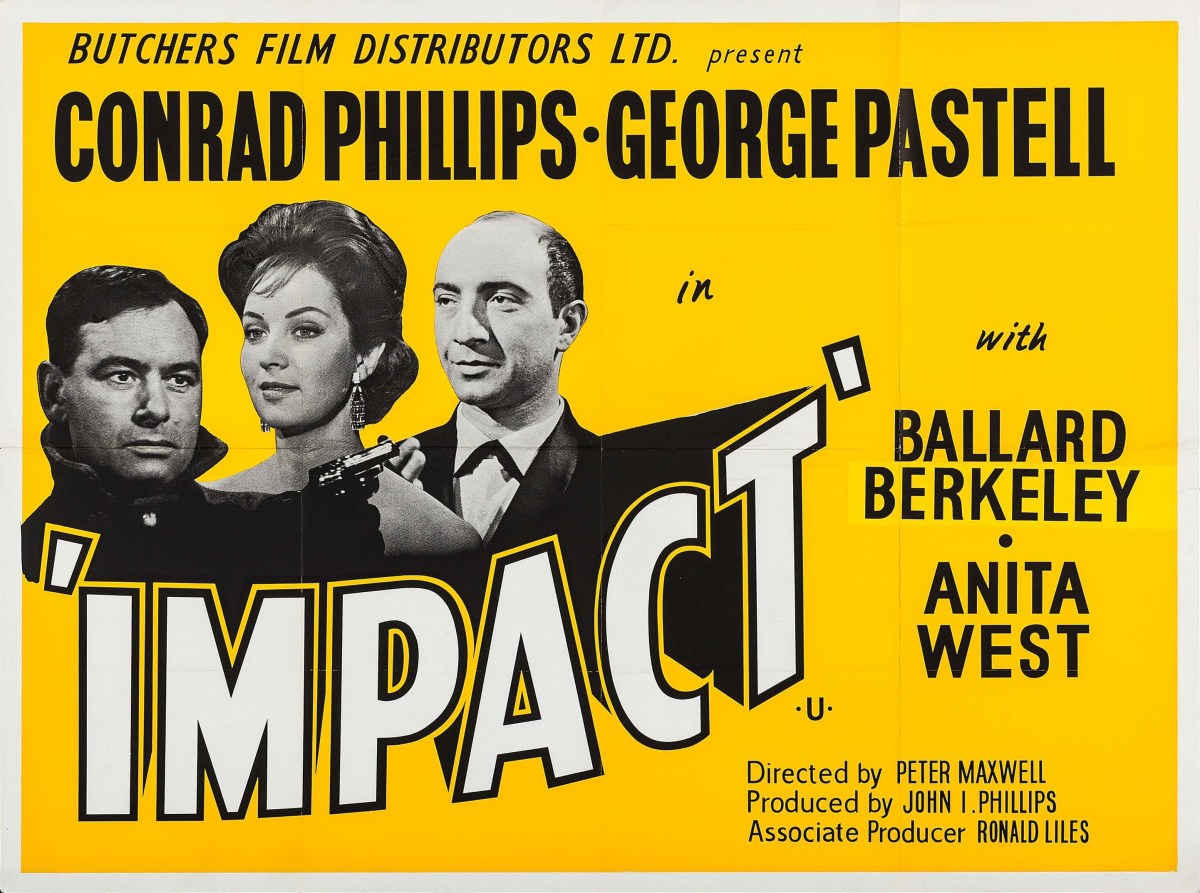
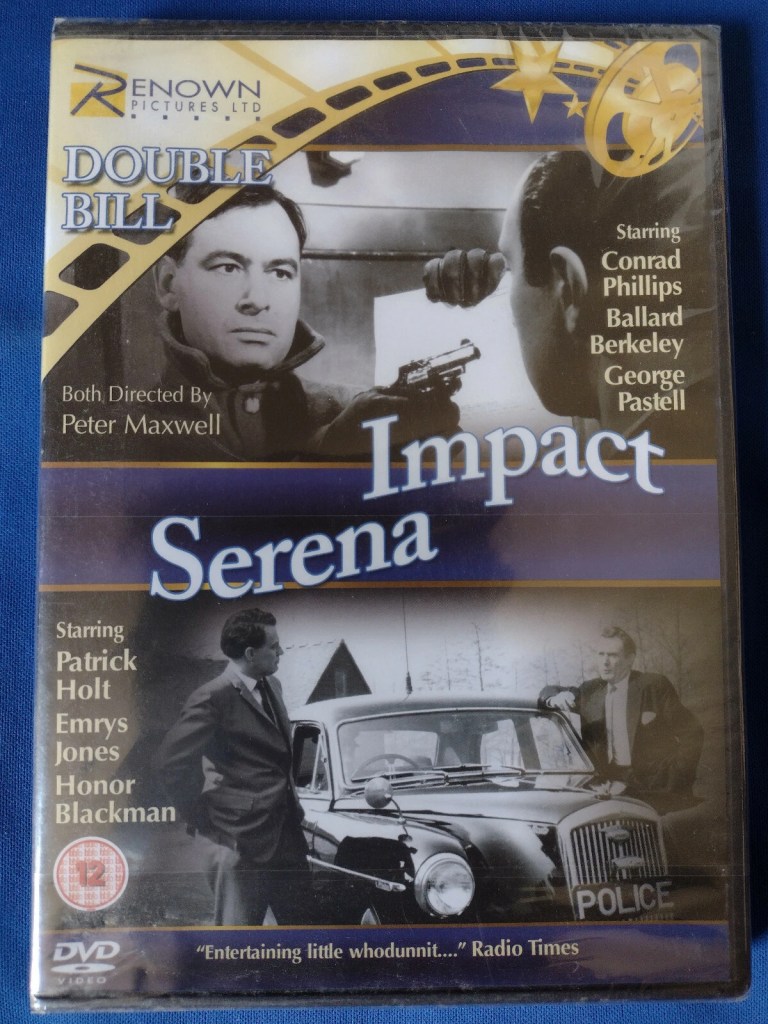
Impact (1963) ***

I enjoy a demanding supremely-acted fluently-directed movie with possibly a hint of Oscar reward as much as the next person. But last thing at night, I often prefer something that makes no demands at all except paying attention to a twisty narrative. And that’s where Talking Pictures TV comes in, with its string of low-budget crime pictures made by British indie outfit Renown.

The twist here is an unusual one. Gangster Mr Big, Sebastian “The Duke” Dukelow (George Pastell), alerted by girlfriend Melanie (Anita West), a cabaret singer in his nightclub, to the work of journalist Jack (Conrad Philips), determined to expose the crook, decides to put him out of the action. But not in the normal way of fitting him with a cement boot and dropping him in the Thames. Instead he frames him or a robbery and Jack ends up doing two years in jail, losing his job, but not girlfriend Diana (Linda Marlowe), in the process.

In prison he bonds with cellmate Charlie (John Rees), who holds a grievance against The Duke. When he hatches his own revenge plan, it appears Charlie is all in.

Or is he? Out of jail, Charlie has gone straight with a job in a refrigeration depot. Jack, meanwhile, has no job and festers away. Any chance Jack has of getting the best in a one-to-one confrontation with The Duke is knocked on the head when he realizes how closely guarded the crook is. So Jack makes do, in the meantime, with making The Duke jealous by dancing with Melanie.

And who’s side is Charlie on? Charlie approaches The Duke with a deal. In return for some cash, he will reveal Jack’s revenge plan.

So now the twist is in. Jack is lured by Charlie into the refrigeration plant where The Duke proceeds to lock him inside one of the units where he will conveniently freeze to death.

But will he? Not when Charlie, secretly pressing an array of control buttons, sets him free and they turn the tables on The Duke, sticking him inside the freezing compartments until he signs a confession releasing Jack of any involvement in the robbery. Meanwhile, as it happens, Jack and Charlie find a way to stitch up The Duke and his gang, ensuring they will be arrested for diamond smuggling, a crime of which they are entirely innocent.

Pretty much all narrative, but with well-drawn characters. You wouldn’t expect a well-heeled highly moral reporter like Jack, even if wrongfully convicted, to turn to crime himself. Nor, now unemployable, to make a living by placing stories sympathetic to The Duke in the newspapers.

And The Duke proves exceptionally savvy. To muddy the waters, he donates £1,000 to cover Jack’s legal fees and has all manner of highly sophisticated surveillance and protection devices to keep tabs on his empire.

The women, too, are well drawn. Melanie constantly pokes fun at her scary lover, and is not above making him jealous by coming close to smooching with Jack. And Hilda (Jean Trend), the editor’s ineffectual secretary, working her romantic way through the ranks of the reporters, knows that her legs ensure she will never be out of work. On the other hand Diana has relatively little to do dramatically.

Conrad Phillips (The Switch, 1963) and George Pastell (The Long Duel, 1967) enjoy an interesting duel. Anita West (Shadow of Treason, 1964) steals the acting honors ahead of Linda Marlow (The Big Zapper, 1973).

Directed by Peter Maxwell (Serena, 1962) from a screenplay concocted by himself and the star.

An easy late-night watch.

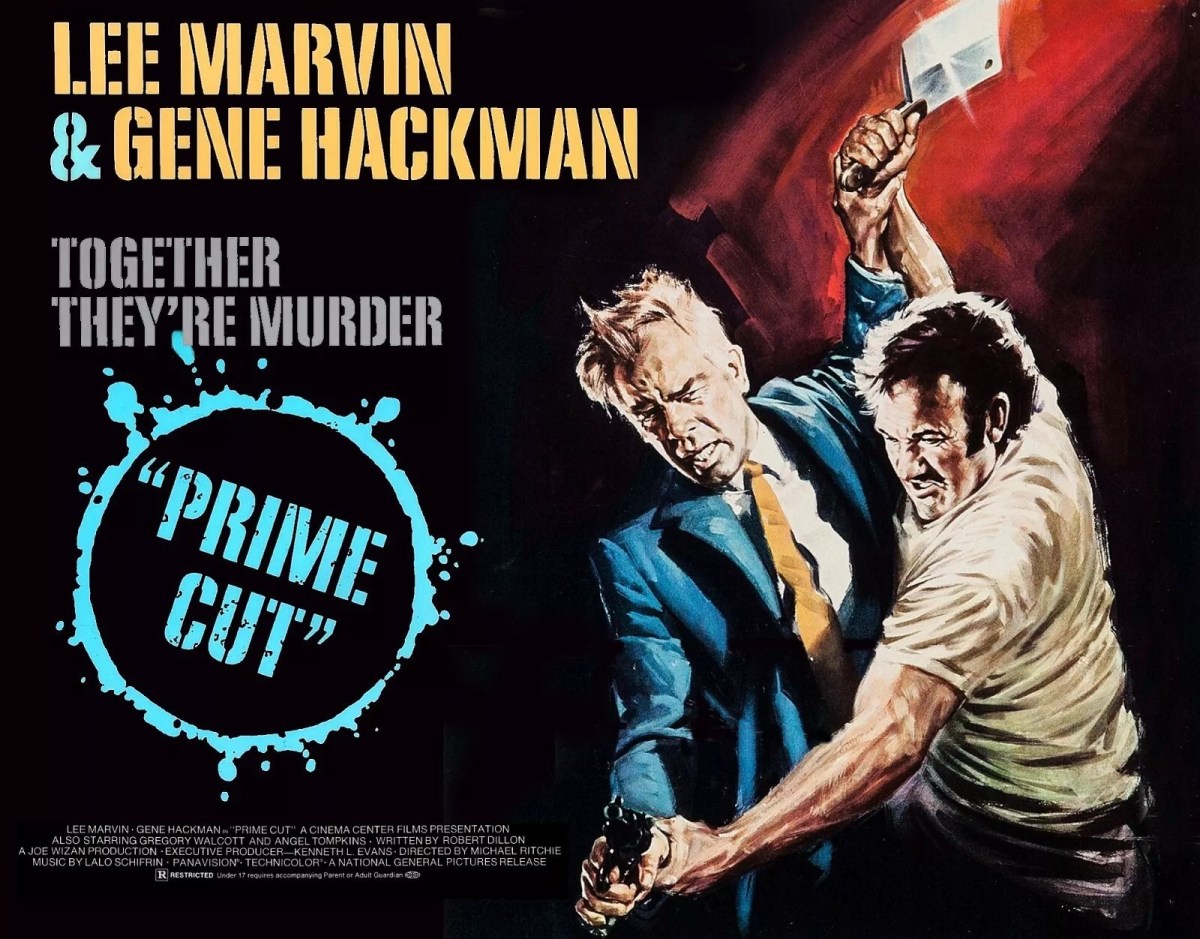
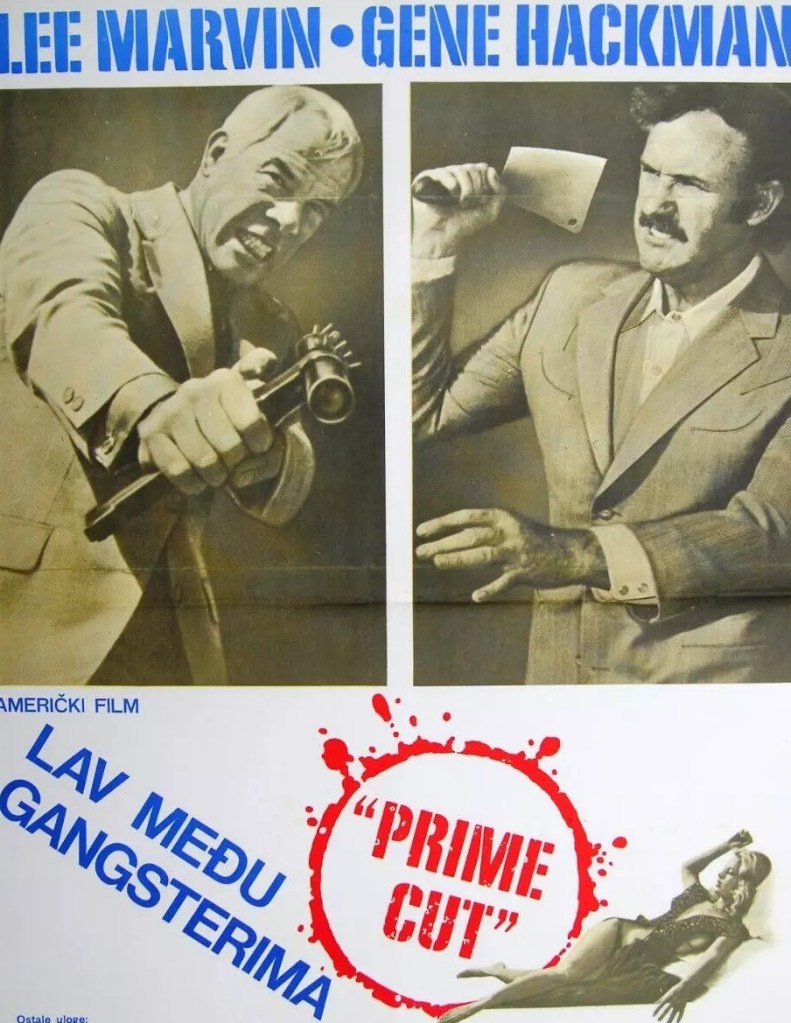
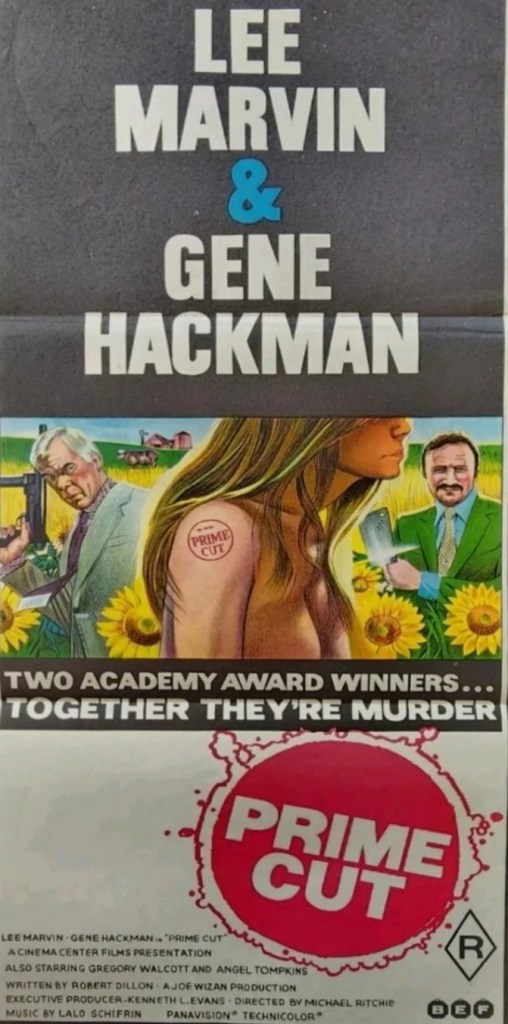
Prime Cut (1972) ****

Unusually nuanced thriller. Unusually lean, too, barely passing the 90-minute mark. There’s a Hitchcockian appreciation of the danger lurking in wide open spaces. And the background is the Middle America of annual fairs, marching bands, pie-eating competitions, rural pride in farming and marksmanship.

But there’s an undercurrent that will strike a contemporary audience. The contempt of big business for its customers. The sex trafficking, too, will sound an all-too-common note especially as the young women come from an orphanage set in the heart of homespun America in what appears to be a streamlined service.

In the actual screen credits, Hackman was not above the title.

We shouldn’t at all take to hitman Nick (Lee Marvin) except that he’s got a code of honor and sparing with words. He’s been sent from Chicago to Kansas to sort out with what would later be termed “extreme prejudice” Mafia boss and meat-packer Mary Ann (Gene Hackman) who’s been skimming off the top. As back-up Nick is handed a trio of young gunslingers anxious to prove themselves while his faithful chauffeur owes Nick his life.

Mary Ann doesn’t just have a factory, he has a fort, a posse of shotgun-wielding henchman standing guard. So Nick has to plunge right in and confront the miscreant. As well as dealing with animal flesh, Mary Ann has a side hustle in sex trafficking, displaying naked women in the same straw-covered pens as his beef.

Responding to a whispered “help me” by Poppy (Sissy Spacek) Nick buys her freedom, but Mary Ann isn’t for knuckling down to the high-ups in Chicago and since he’s already despatched a handful of other hoods sent on a similar mission as Nick he’s intent on turning the tables.

The action, when it comes, is remarkably low-key and all the more effective for it. Swap a crop duster for a combine harvester and the head-high prairie corn for the usual city back streets and you realize someone has dreamed up a quite original twist on the standard thriller. No need for a car chase here to elevate tension, it’s already a quite efficient slow burn.

By the time this came out Hackman had won an Oscar for “The French Connection” (1971), Marvin already in that exalted league thanks to “Cat Ballou” (1965)

This could be an ode to machinery. The entire credit sequence is devoted to the way machines chew up cow flesh and turn it into strings of sausages and the like. The combine harvester chews up and spits out an entire automobile, grinding the metal through its maw. And then there’s the machinery of business, the ability, at whatever cost, to give the public what it wants, in whatever kind of flesh takes its fancy.

You’ll remember the combine harvester sequence and the shootout in the cornfields, but you will come away with much more than that. Remember I mentioned nuance. Sure Mary Ann is an arrogant gangster and you’d think with hardly an ounce of humanity, but that’s until you witness his relationship with his simple-minded brother Weenie (Gregory Walcott). That could as easily have fallen into the trap of cliché sentimentality. Instead, there’s roughhouse play between the pair and it’s all the more touching for being realistic.

There’s a tiny scene where one of the young hoods asks Nick to meet his mother, in the way of a young employee wanting to show off that he was working for a top man. And Nick also goes out of his way to praise what’s on offer at the fair from a couple of women anxious for praise.

One of the tests of a good actor is what they do when they enter an unfamiliar room. Your instinct and mine, like ordinary people, would be to look around not just lock eyes on the person you’ve come to meet. So when Poppy wakes up in a luxurious hotel room she doesn’t go into all that eye-rubbing nonsense, but instead marvels at her surroundings. And although she hangs on his every word – and his arm – Nick isn’t in the seduction business, instead spoiling the young woman with expensive clothes.

There are several other scenes elevated just by touches. The credit sequence ends with a shoe appearing among the meat being processed – Mary Ann’s victims don’t sleep with the fishes but with the sausages. Poppy recalls a childhood spent in a rural wonderland, squirrels, rabbits, the splendors of nature, and reveals a lesbian relationship with another orphan Violet that is the most innocent description of love and sexual exploration you’ll ever hear.

Violet is the victim of multiple rapists. Weenie has passed her onto a bunch of down-and-outs for the price of a nickel. When Nick unclenches her clenched fist you’ll be horrified to see how many nickels tumble out.

Lee Marvin (Point Blank, 1967) is at his laconic best and Sissy Spacek (Carrie, 1976) makes a notable debut but Gene Hackman (Downhill Racer, 1969) overplays his hand.

Director Michael Ritchie (Downhill Racer) was on a roll, following this with The Candidate (1972), Smile (1975), The Bad News Bears (1976) and Semi-Tough (1977) before the execrable The Island (1980) badly damaged his career.

Written by Robert Dillon (The French Connection II, 1975).

Well worth a look.

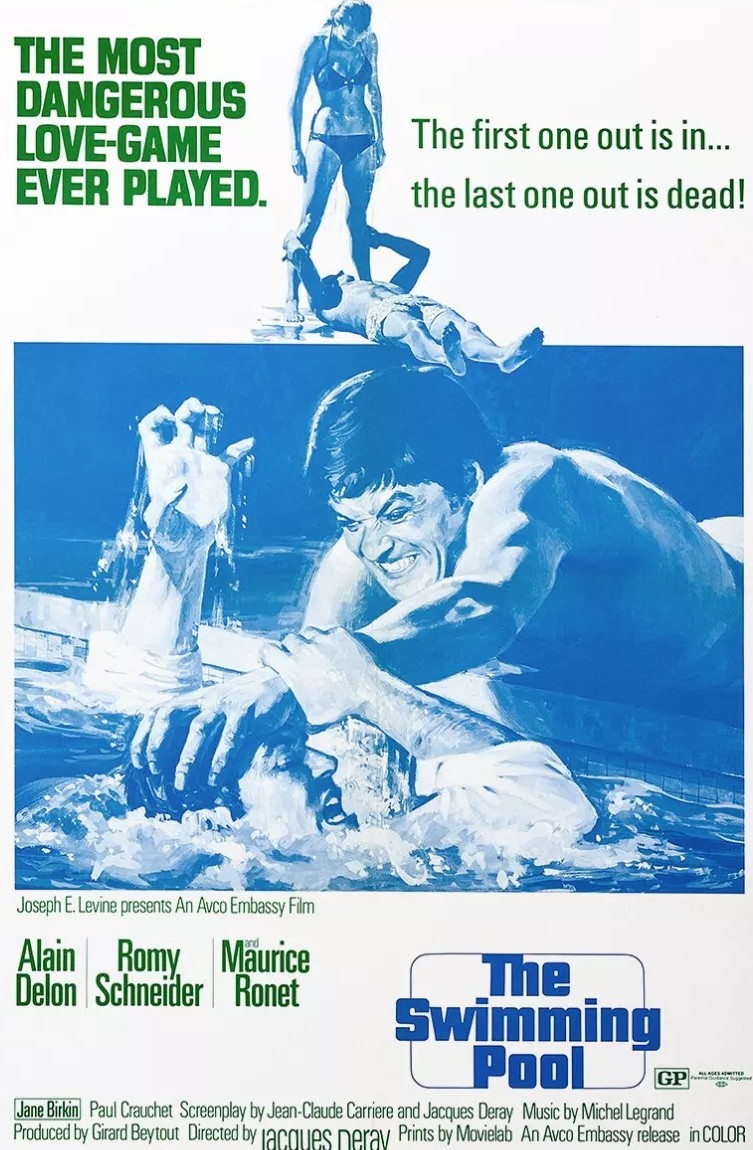
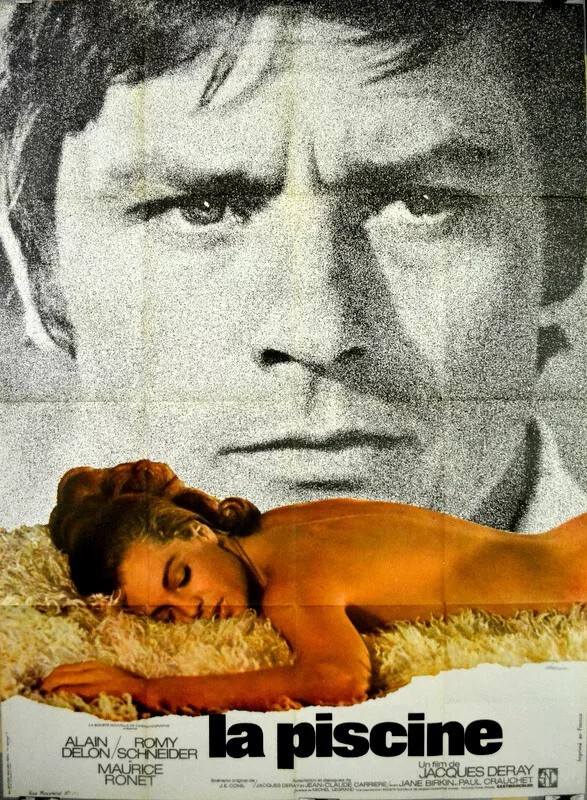
The Swimming Pool / La Piscine (1969) ****

A drunk falls into a swimming pool in the middle of the night and drowns. He has already crashed his car into the gate post of the villa. There’s no sign of foul play. No sign of the fact that his attempts to clamber out are hindered by someone holding his head down under the water until he loses consciousness.

The perfect murder? Well, no, actually, because in the aftermath of the murder, recovering alcoholic killer Jean-Paul (Alain Delon) does about the dumbest thing you’ve ever seen. And that significantly detracts from what otherwise is a superb examination of sexual tension and hidden secrets.

So instead of leaving the corpse of best friend Harry (Maurice Ronet) floating fully clothed in the titular pool, Jean-Paul decides it would look better if it appeared that Harry had foolishly gone for a late night swim. So he pulls the dead guy out, strips off his clothes and decks him out in swimming trunks and slides him back into the watery grave.

He hides the sodden clothes somewhere and at the side of the pool puts a small stack of fresh clothes stolen from Harry’s wardrobe – he was a guest at the villa. But for some reason in pulling off Harry’s shirt he omits to remove his expensive watch which isn’t waterproof. Inspector Leveque’s (Paul Crauchet) suspicions are aroused by that simple fact. Although, theoretically, Harry might have been too drunk to notice, even though, obviously, the watch strap and the bulky watch would have caught on his shirt sleeve as he was taking off the item of clothing.

So the cop, in examining the clothes, is mightily surprised to discover they are fresh, unworn, not a sign of sweat or crumpled-ness, which is odd given Harry had been out dancing and enjoying himself for hours.

Psychologically, most of the aftermath is not just whether the cold-blooded killer – the otherwise very handsome, relatively charming writer Jean-Paul – will get away with it  but whether his girlfriend Marianne (Romy Scheider), who has her own suspicions, will stand by him.

They have enjoyed a very intense sexual relationship and she clearly adores him. But she’s also the ex-lover of Harry and when Jean-Paul’s old pal, who is decidedly smooth with the ladies, turns up, the old sexual jealousy is rekindled. Either to get revenge or because he’s in any case that way inclined Jean-Paul has been making discreet moves on Harry’s eighteen-year-old daughter Penelope (Jane Birkin) who clearly despises her father.

We discover that Jean-Paul owes a great deal of his success to Harry who nurtured him through a severe depression that ended in attempted suicide. Rather than making Jean-Paul eternally grateful, it’s turned him into a spoiled brat, focused primarily on his own needs and without a loyal bone in his body when it comes to women.

For quite a while it looks like record producer Harry is going to steal away Marianne, if only for a brief affair, as Jean-Paul gives in to the sulks. But since Jean-Paul is already eyeing up Penelope, you would have thought any slip by Marianne would provide him with justification.

The murder is spur-of-the-moment. Jean-Paul has been drinking again and when Harry turns up drunk and launches into an attack on Jean-Paul’s character and hidden past, that’s when he ends up in the pool. Every time he tries to get out, Jean-Paul pushes him back in and eventually holds his head down underwater.

And he might have got away with the perfect murder except for stripping the body and forgetting about the watch, but when he decides to end his relationship with Marianne, the focus switches to whether she will betray him or not. There are a couple of twists on that score at the end.

So severely flawed psychological thriller. I’m guessing you could argue that anyone who kills someone out of the blue could easily be suffering from the kind of brain overload that prevents him thinking straight, but I didn’t fall for it. It would have been as easy to continue with the psychological stuff enough with Marianne maybe finding the wet clothes and facing the same choices that she eventually does.

What does elevate it are the performances. Austrian actress Romy Scheider (Otley, 1969), who had previously had an affair with Delon, is superb as a woman not sure if she has any principles given she is so easily in the thrall of attractive men. Although Alain Delon (Le Samourai, 1967) had played bad guys and immoral sorts before, this still feels like a fresh approach, the watchful, withdrawn calculating killer masquerading as something else.

Maurice Ronet (Lost Command, 1966) and Jane Birkin (Blow-Up, 1966) make significant contributions.

And director Jacques Deray (Borsalino, 1970) would have turned out another masterpiece had the movie not stumbled over the oddness of the murder. Written by the director, Alain Page (in his debut) and Jean-Claude Carriere  (Viva Maria!, 1965).

Excepting the murder mishmash, superb.

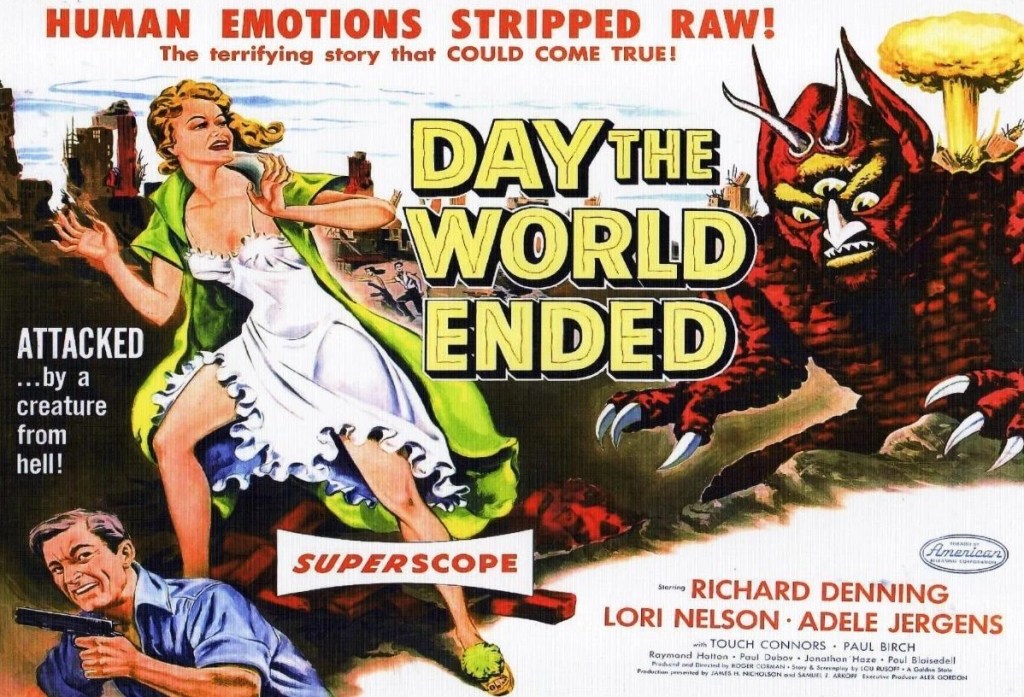
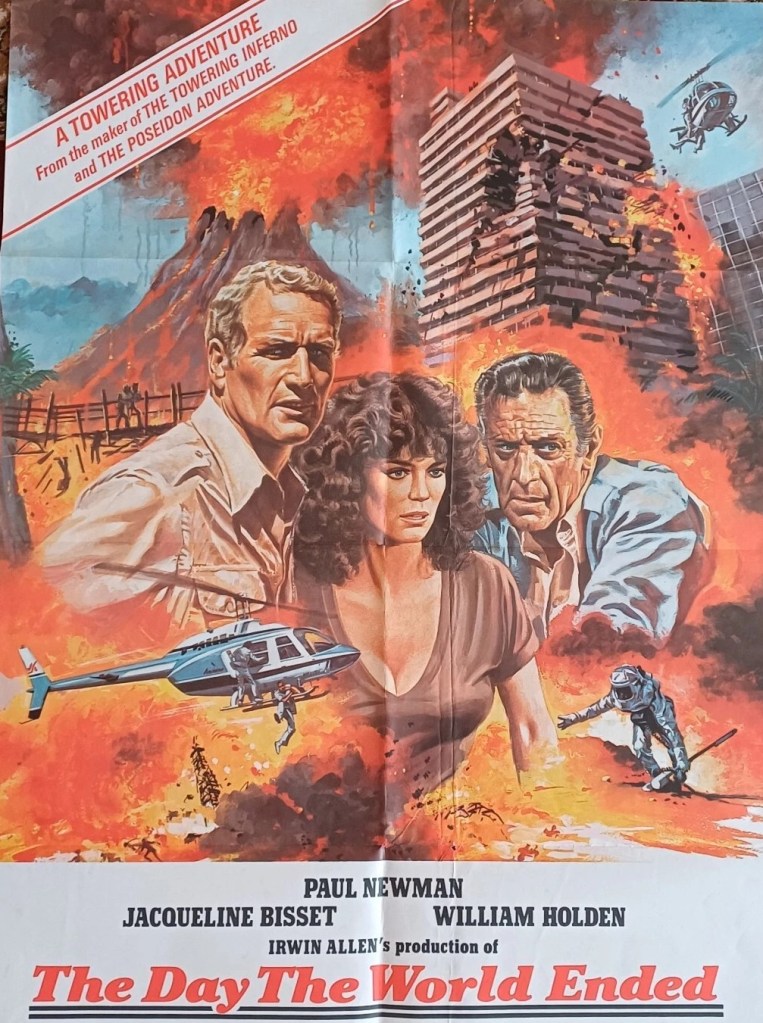
The Day the World Ended / In the Year 2889 (1967) ***

Come the apocalypse, you’d want  someone like Capt Ramsay (Neil Fletcher) in your corner. He’s not the kind to be surprised by the sudden onset of a nuclear holocaust. He’s prime boy scout – always prepared. Not only has he got three months of supplies put by and his own generator but he’s picked a spot where it’s more likely he’ll survive. I wish I could show his scale model that demonstrates just how far-sighted he’s been.

His house is in a valley surrounded by cliffs full of lead ore which will remain immune to radiation. Apart from a separate source of fresh water, the lake on his doorstep is heated from underground which creates an updraft to keep away radiated clouds.

The original from 1955.

Only three things nibble away at his confidence: he’s planned on safeguarding three people – himself, daughter Joanna (Charla Doherty) and her fiancé Larry – so any unforeseen arrivals could deplete supplies; rain which could be contaminated; and mutants.

Larry hasn’t survived but five others have – Steve (Paul Petersen) and his already radiated brother Granger (Max W Anderson), small-time hood Mickey (Hugh Feagin) and his exotic dancer girlfriend Jada (Quinn O’Hara), and alcoholic rancher Tim (Bill Thurman). Plus whatever else is on the prowl out there. Granger doesn’t appear an immediate threat though he’s received levels of radiation that should have killed him. On the plus side, he can go weeks without eating or drinking. On the minus side, he’s got a hankering for fresh raw meat, but luckily not badly enough to resort to cannibalism.

Now that the absent Larry has upset his plans for the continuation of the human race, Capt Ramsay decides his daughter should pair up with geologist Steve. She’s certainly drawn to him but keeps on hearing a strange voice which she imagines to be Larry. But Mickey determines that if there’s any procreation to be done, it’ll be with him and Joanna and even though, theoretically, she’s out of his league, he works out that if he bumps everyone else off she won’t have a choice.

Meanwhile, something’s prowling out there in the dark. Luckily, it’s always dark when the creature goes prowling so we make do with barely a glimpse of whatever the director can come up with monster-wise on a tiny budget. We get a better idea of the possible mutant outcomes because the good captain was in charge of a ship carrying animals out of an H-Bomb test site and took the opportunity to make illustrations of what he saw, which was mostly emaciated bodies with sharp teeth and claws.

Mostly, we’re waiting for rain or for Mickey to begin slaughtering everyone. It’s just as well that mutants keep their distance because then tension can play out via sexual jealousy, the stern captain brooking no dissent – he also knocks on the head lewd dancing and the drinking of illicit liquor – and the gradual accumulation of the fearful.

The biggest disaster this later Irwin Allen effort faced was at the box office. I reviewed it some time ago.

Had it gone down the more straightforward slasher route, Joanna would be the ideal final girl with Jada more likely to be an early victim courtesy of her profession. In fact, both make perfect foils. Joanna stands up to her father who’s inclined to prevent, by force if necessary, any visitors from entering the house while Jada tries to make her boyfriend stick to a lovers’ code of honor.

Scottish actress Quinn O’Hara (A Swingin’ Summer, 1965) should have stolen the picture given her juicy role but it’s Hugh Feagin (in his debut), all razor cheekbones and slits for eyes, and Charla Doherty (Take Her She’s Mine, 1963) who snatch what little kudos there is going.

Larry Buchanan (The Naked Witch, 1961) directs this remake of the 1955 movie from a screenplay by Harold Hoffman (The Black Cat, 1966) and Lou Rusoff (Panic in the Year Zero, 1962).

While there’s not a huge amount to recommend it, it is interesting enough given the director has to concentrate more on character than gore.

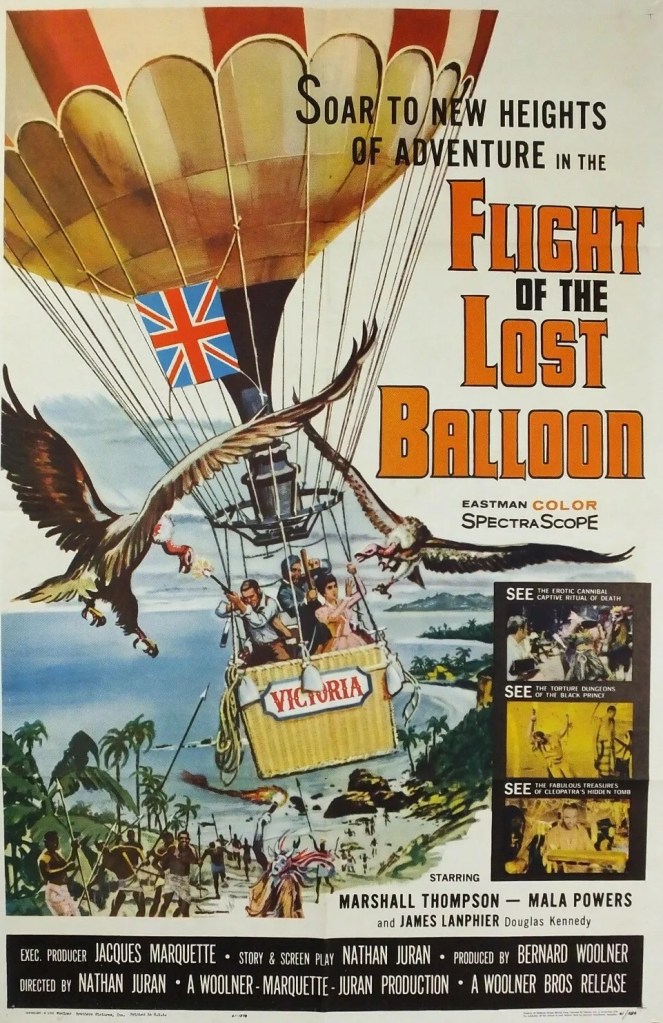
Flight of the Lost Balloon (1961) **

Fantasy enjoys considerable leeway if its fantastical elements make up for lack of character development and narrative scope. This Jules Verne rip-off – it appeared a few months before Five Weeks in a Balloon – hardly even qualifies as a travelog given the background is simply superimposed and the various locales simplistic in the extreme. And not much point employing condors as a tool of attack unless you’ve got Ray Harryhausen to hand. Even with gorillas and cannibals on the loose and villains putting the heroine on the rack it still falls short of the requirements of a standard Saturday matinee.

Explorer Sir Hubert Warrington (Douglas Kennedy) is imprisoned in darkest Africa for refusing to disclose the whereabouts of the fabled Cleopatra treasure. News of his misfortune reaches London courtesy of a character known only as the Hindu (James Lanphier) who hitches a ride back on a balloon navigated by scientist Dr Joseph Faraday (Marshall Thompson) and carrying as passenger Warrington’s fiancée Ellen (Mala Powers) daughter of financier Sir Adam Burton (Robert Gillette).

Since Ellen is closer in years to Joseph than her fiancé and they are going to be thrown together through trial and tribulation you can assume come journey’s end there might be a tussle among the men for her affections. The Hindu has no intention of helping rescue Warrington since he has been behind his imprisonment. Instead, the Hindu reckons Warrington will spill the beans if he sees his fiancée tortured.

Warrington laughs out loud at such presumption and claims he only romanced Ellen to get backing from her father. But, of course, you reckon, he would say that. Except when she is captured and tortured he doesn’t bat an eyelid. Luckily, this is the kind of picture where guards are easily overcome and escape is a foregone conclusion. Plus, since aforementioned fiancé has proved himself unworthy, the way is clear for a Joseph-Ellen match.

Writer-director Nathan Juran, an Oscar-winner for art direction, has done much better than this.  Siege of the Saxons (1963), First Men on the Moon (1964) and East of Sudan (1964) are all vast improvements on his debut so clearly he learned some lessons. What he needed to brush up on was obvious, better locales, more interesting characters, and more intriguing narrative rather than stock versions of all three.

There’s not much Mala Powers (Fear No More, 1961) or Marshall Thompson (Clarence, the Cross-Eyed Lion, 1965) can bring to such cliché under-written roles and the Culturally Inappropriate Police would be on the case of James Lanphier.

And, unfortunately, it doesn’t even have enough going for it to earn a place in the much-prized so-bad-it’s-good category.

I watched it so you don’t have to.

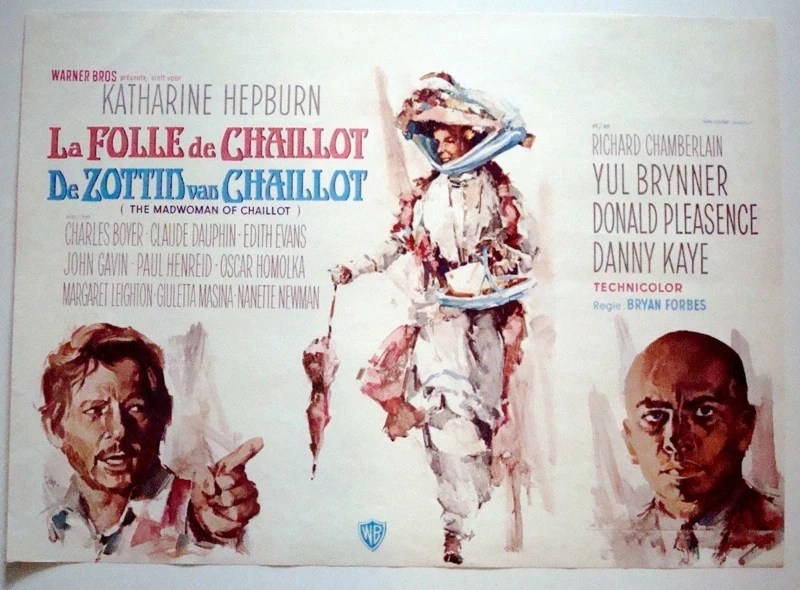
The Madwoman of Chaillot (1969) **

This has been lost for decades – and with good reason. Even Katharine Hepburn fresh from an Oscar-winning turn in The Lion in  Winter (1968) can’t save this and to be honest I’m struggling to see why anyone wanted to make it in the first place beyond newcomer Commonwealth United intent on making a splash. That it made nothing of the kind is down to a variety of reasons.

First of all, it’s clearly intended as some kind of broad satire on financiers and the kind of get-rich-quick schemes that prey on the ill-informed. Secondly, you might as well have called it Eccentrics Assemble from the number of oddballs present. Thirdly, director Bryan Forbes (King Rat, 1965) works on the principle that he doesn’t need to explain anything – least of all provide important characters with actual names – because it would all be obvious to an intelligent audience. Lastly, and possibly most important of all, since it doesn’t fit into any obvious genre it just jumps between a bunch of them, including the Absurd.

In fact, some of the better sections are driven by absurd situation or observation. Countess Aurelia – the titular madwoman – points out that the Futures market consists of buying something that doesn’t exist and selling it when it does. A policeman tries to save a man who hasn’t drowned by applying the techniques used to save a person who has drowned. You get the gist? I didn’t.

The basic story concerns a bunch of millionaires attempting to acquire the mineral rights to the land underneath Paris because The Prospector (Donald Pleasance) has discovered oil. Did he drill for it? Did tar deposits rise to the surface? Nope, he has detected the existence of oil by sampling water that has been sourced from the ground.

He involves a bunch of Disparate Anonymites, all designated by occupation or title, thus The Chairman (Yul Brynner), The Reverend (John Gavin), The General (Paul Henreid), The Commissar (Oskar Homolka) and The Broker (Charles Boyer) who spend most of the time sitting outside a café complaining.

The Broker is something of an oddity, being both entrepreneur and revolutionary, all set to direct his nephew Roderick (Richard Chamberlain) to explode a bomb in Paris. Naturally, when this plan fails what else is there for Roderick to do but fall instantly in love with waitress Irene (Nanette Newman).

If this isn’t barmy enough for you, Aurelia is stuck in the past, rereading a newspaper from decades ago, while one of her friends Constance has an invisible dog and another Gabrielle an invisible lover. You can see where this is going. If so, you’re doing better than me.

Aurelia, who gets wind of the scheme from Roderick and The Ragpicker (Danny Kaye), decides to exterminate the financiers by luring them into her cellar. Why she didn’t prevail on Roderick to provide her with another bomb to blow them up is anybody’s guess.

Anyway, before she can do the necessary luring, she conducts a mock trial, finding the financiers guilty of everything that anybody with a scintilla of sense would be fully aware of and hardly need such a heavy-handed lecture.

Everyone comes out of this with egg on their face. The only reason it doesn’t get no stars at all is that anything has to be better than Orgy for the Dead (1965) and Anora (2023) and the only reason it isn’t given the one-star rating of that picture is because Katharine Hepburn is in the cast and even though, as I said, she can’t save it, but I wouldn’t to put her in the same category as the nudie horror.

Bryan Forbes and Oscar-winning screenwriter Edward Anhalt (Becket, 1964) expanded the original play by Jean Giraudoux.

YouTube, where this is showing, clearly believed nobody would get to the end of it because it’s absolutely riddled with adverts, literally one every couple of minutes.

Behind the Scenes: What’s On Snapshot, London, April 25, 1970.

Roadshow, which was intended to alleviate the industry’s financial woes, caused chaos to the standard release pattern. The original system had been straightforward – new film is shown first in the biggest cinemas in the biggest cities, gets a repeat showing at a second-run house (and depending on the size of the city might move over to a third theater) and then spreads out into neighborhood venues and from there to the smaller towns. Depending on the size of the country and how long it lasts in first run it could easily take a year to complete its release.

Roadshow changed all that. Since first run, given the size of the cinemas and the elevated admission prices, accounted for as much as 60-70 per cent of a movie’s revenues, it made sense to find a way of keeping pictures in the most expensive cinemas. So roadshows did just that. Movies that opened in roadshow were not permitted to go out on general release until their roadshow potential had been exhausted. And precisely because roadshow movies sought out the biggest houses in a city they took up much of the space available for any kind of release.

That created backlog of two kinds: first, movies unable to enter the release system until played out at roadshow; and second, ordinary movies delayed – or denied – first run exposure because there were too few cinemas left. Which went part of the way to explain why your local cinema was apt to be running exploitation vehicles of various kinds.

In April 1970, for example, London’s West End – Britain’s prime premiere locale – was chock-a-block with long-running movies. In the previous decades, movies that ran for more than a week would be termed “holdovers” in America and “retained by public demand” in Britain. Now, they were retained for at least a “season” (twelve weeks).

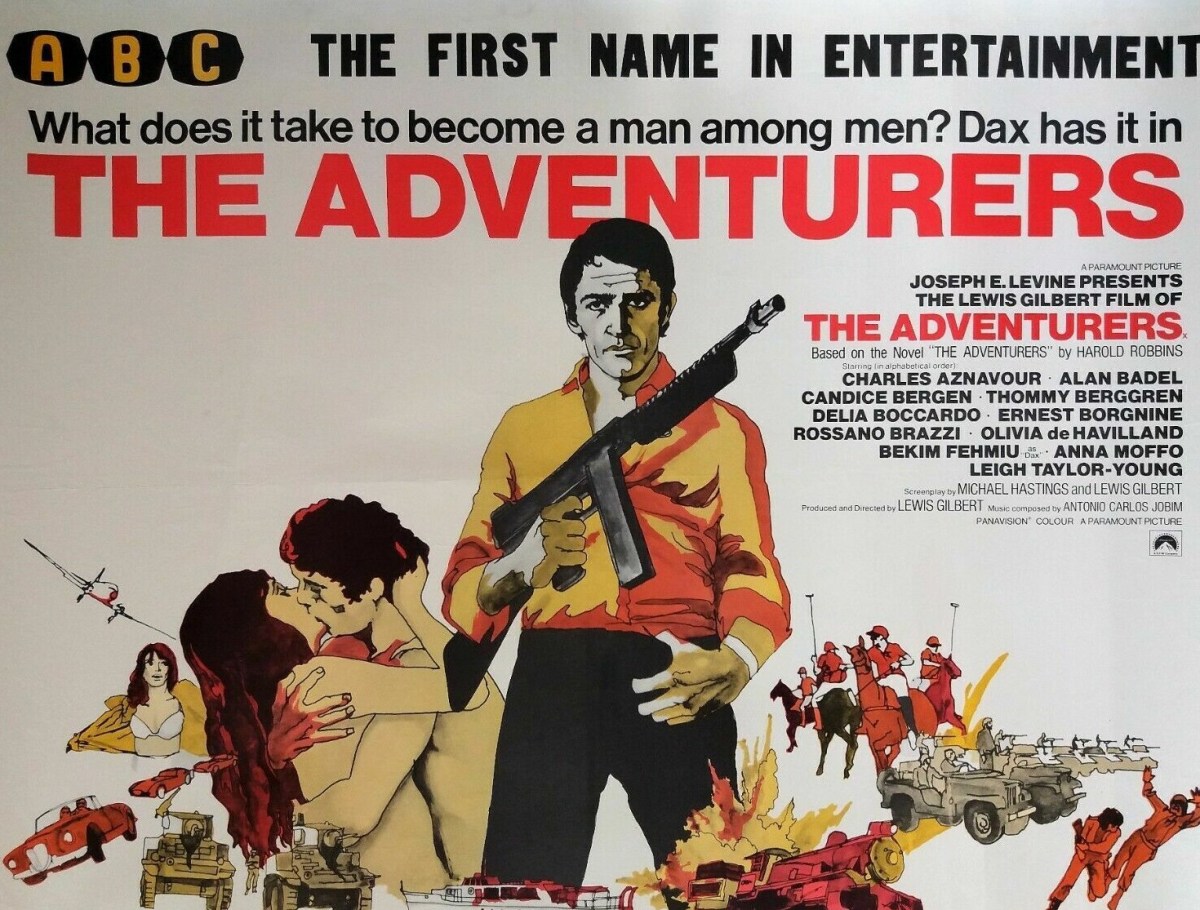
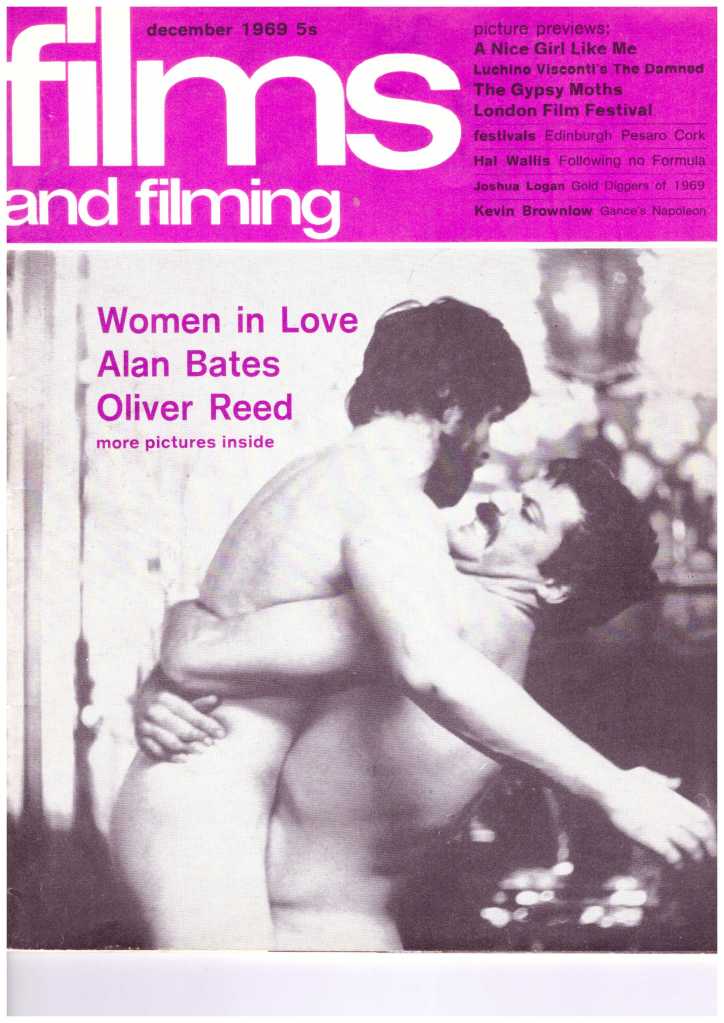
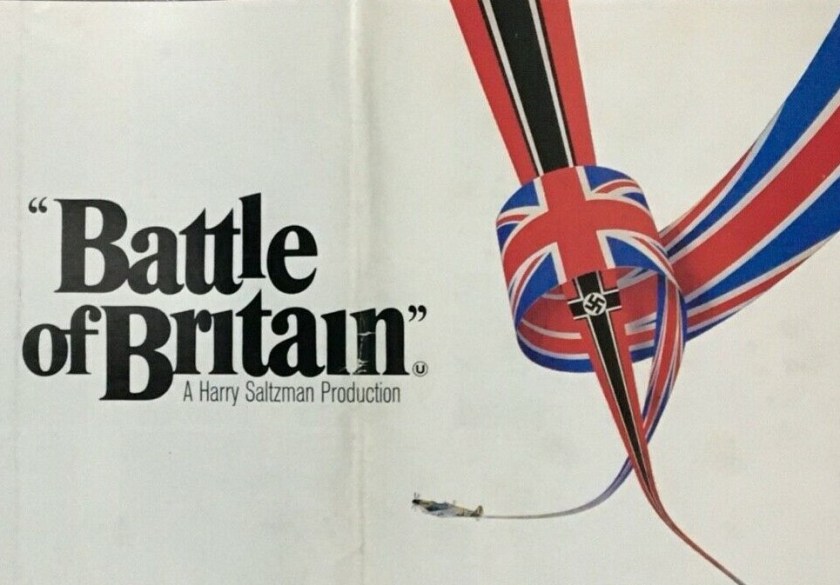
The capital’s biggest house the Odeon Leicester Square (1994 seats) was in the eighth week of showing Richard Burton historical drama Anne of the Thousand Days. World War Two epic Battle of Britain had completed its 31st week at the Dominion (1654 seats). Oscar-winning musical Oliver! had already played over a year at the Leicester Square Theatre (1407 seats) and was now into its 66th week. The Odeon March Arch (1360 seats) was in the 17th week of Hello, Dolly! It was also 17 weeks and counting for reissue Ben-Hur at the Casino-Cinerama (1127 seats) and Paint Your Wagon was in its 14th stanza at the Astoria (1121 seats). Making its debut – a 70mm print and in roadshow – was The Adventurers at the 820-seat Plaza (and in continuous performance at the 972-seat Paramount). Rounding out the roadshow contingent were Women in Love, 23rd week at the 631-seat Prince Charles, and The Lion in Winter, 68th week at the 600-seat Odeon Haymarket.

So, nine major cinemas tied up for roadshow. Outside of those, few cinemas that could match them in size and prestige, were left for non-roadshow items. Antonioni’s Zabriskie Point was in the sixth week at the 1366-seat Empire and the equally offbeat Entertaining Mr Sloane at the 1159-seat Carlton. The 1004-seat Pavilion presented the second week of the double bill Chicago, Chicago and Popi.  The 760-seat Columbia was in the sixth week of Walter Matthau comedy Cactus Flower and the Odeon St Martins Lane (735-seats) offered The Last Grenade starring Stanley Baker in its fifth and final week.  

The 570-seat Rialto hosted week two of the offbeat Mumsy, Nanny, Sonny and Girly while The Ritz was in the 10th (and final) week of reissue double bill Point Blank/The Cincinnati Kid. Arthouse the Curzon (546-seats) had been co-opted to help out, in its 6th week of Bob and Carol and Ted and Alice. And some holdovers had found unusual homes – Midnight Cowboy in its 12th week at the 154-seat Cinecenta 4 and Alice’s Restaurant in week ten at the 318-seat Windmill. And you might count the Classic Piccadilly in among the quasi-roadshows since Easy Rider had now clocked up 33 weeks and no end in sight.

Had it not been for the financial tsunami that engulfed Hollywood at the cusp of the 1960s/1970s the roadshow might well have continued eating up screens and causing further release chaos. Studios and those exhibitors who owned roadshow screens were delighted by roadshow, the rest of the industry not so much, except when a movie like Butch Cassidy and the Sundance Kid came out of nowhere and cleaned up.

SOURCE: Bill Altria, “Box Office Business,” Kinematograph Weekly, April 25, 1970, p10.

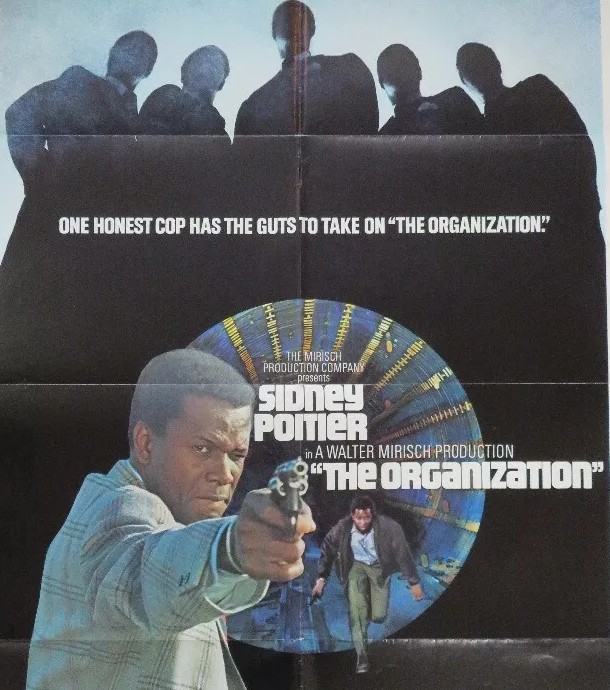
The Organization (1971) ***

Just Stop Drugs would have been the title had the movie come out today. A bunch of urban guerillas, each scarred by personal or family-related experience with drugs, on the basis that the authorities are doing too little and cops in any case too open to corruption, decide to take the battle to “the man.”  

Starts with an excellent heist opening, conducted for the most part in silence, and pretty inventive at that. One guy pole-vaults over the gate of a factory. The rest of the gang turn up with what these days is called an aerial work platform but is most recognizable to the rest of us as a version of a fireman’s turntable ladder. So they hoof it up the ladder to the fourth or fifth floor, bringing with them a captive who’s got the keys to a safe. When he refuses to cooperate, they dangle him out the window.

Every now and then we cut to a woman in the street. At first she looks like a witness, but when she doesn’t go racing to call the police, it’s clear she’s either a fascinated observer or a lookout. From what’s otherwise a very ordinary factory, the gang remove millions of dollars worth of heroin and blow up the gates.

When eventually Det Lt Virgil Tibbs (Sidney Poitier) appears on the scene, it’s not to investigate a robbery but a homicide. The captive is dead. It looks like suicide until they discover he’s been shot by two different guns. Tibbs is also puzzled by the timescale. There were also 20 minutes between the gates being blasted open and the cops arriving. It takes longer to run up and down the stairs.

But then Tibbs gets a break. The gang calls him in, want him to work with them to bring down “the organization.” Which puts the detective in a tricky spot. He’d be conniving with known thieves, possibly murderers.

After this excellent and intriguing start, the movie doesn’t so much go downhill but tie itself up in knots. In the first place Tibbs doesn’t do much actual detection. Pretty much all the legwork is done by the gang who put themselves out there as bait to try and snag the Mr Bigs of the drug world.

The gang are a do-gooder version of The Magnificent Seven. Tibbs ends up doing little more than following their leads. Most of the time the movie focuses on the various members of the gang, who are variously beaten up, tortured or killed. Just to keep us on edge and promote the notion that the force is riddled with corruption a police captain commits suicide.

Tibbs is more interesting when he’s being outsmarted by his son who’s on the verge of learning the facts of life. The child’s got the best line in the picture. We are introduced to him coming out of a lecture at school on sex in which he declares no interest. Dad and Mum (Barbara McNair) get into a minor tizz over who’s best suited to fill him in on the realities of life. Later, Tibbs discovers an erotic magazine in the boy’s belongings. When confronted, the boy explains he isn’t bored by sex just by a lecture on it.

Anyways, the gang proves more successful in luring out the mobsters, Juan (Raul Julia) especially adept at coming up with the game plan. Naturally, the bad guys don’t play by the rules he’s set down and Annie (Lani Miyazaki), the only female member of the gang, ends up in the drink. The nightwatchman (Charles H. Gray) is the victim of a drive-by shooting.

When Tibbs does get down to working things out on his own, his investigation leads him to the alcoholic wife (Sheree North) of the nightwatchman who is independently wealthy of her husband.

When, finally, Tibbs gets his hands on two of the Mr Bigs this being the Cynical 1970s there’s no happy ending, the pair when arrested rubbed out by a sniper.

So interesting stuff, but, unfortunately, most of the interest doesn’t lie with Tibbs. He’s pretty much an onlooker. As a story, the movie would have done better to leave him out altogether and set up the narrative as the urban revolutionaries trying to take down the drug dealers.

But you’ll enjoy some talent spotting. Raul Julia (Kiss of the Spider Woman, 1985) and Ron O’Neal (Super Fly, 1972) lead the pack ahead of Daniel J. Travanti (Hill St Blues, 1981-1987) and Bernie Hamilton (Starsky and Hutch, 1975-1979).

Sidney Poitier, in his final outing as Tibbs, is fine with not much to do and Barbara McNair, (Stiletto, 1969) as usual is underused.

Directed by Don Medford (The Hunting Party, 1971) from a screenplay by James R Webb (Alfred the Great, 1969) based on the John Ball bestseller.

An oddity in the genre and more enjoyable if you ignore the central character.

Discover WordPress

A daily selection of the best content published on WordPress, collected for you by humans who love to read.

The Atavist Magazine

by Brian Hannan

WordPress.com News

The latest news on WordPress.com and the WordPress community.