Audiences were likely disgruntled to discover that out of a heavyweight cast boasting the likes of Omar Sharif (Doctor Zhivago, 1965), Yul Brynner (The Magnificent Seven, 1960), Rita Hayworth (Circus World/The Magnificent Showman, 1964), Senta Berger (Cast a Giant Shadow, 1966) and Stephen Boyd (Genghis Khan, 1965), that the heavy lifting was done by a couple of supporting actors in Trevor Howard (Von Ryan’s Express, 1965) and E.G. Marshall (The Chase, 1966).
Most of the all-star cast barely last a few minutes, Stephen Boyd’s character killed in the opening sequence, Senta Berger and Rita Hayworth putting in fleeting appearances as junkies. Like many of the gangster pictures of the decade, it’s set up as a docu-drama, giving the down’n’dirty, courtesy of United Nations which funded the picture, on the international drugs trade.
Benson (Stephen Boyd) heads up an infiltration operation targeting drug suppliers in Iran, where poppies “grow wild as weeds.” Though quickly bumped off, and the goods he’s purchased stolen, he’s replaced by Col Salem (Yul Brynner) who has the Bond-esque notion of enriching the opium with radiation and then tracing it using Geiger counters.
When that scheme fails, it’s down to agents Sam Lincoln (Trevor Howard) and Coley Jones (E.G. Marshall) to hunt down the drugs. Considering themselves unlikely lotharios, they compete over women and play a neat game of stone-scissors-paper to decide who is assigned which task, varying from chatting up Linda (Angie Dickinson), the gorgeous widow of Benson, or searching her room. Linda isn’t all she seems, not least she may not be a widow, carries a gun, and turns up in too many unsavory dives to be on the side of the angels.
Given drug-dealing was not the rampant business it later became, audiences might not be so shocked to discover that opium was transported by cargo ship and refined in Naples before being shipped all over the world. Possibly as interesting is the use of ancetic anhydride in the refining process. As Sam and Coley trudge across half of Europe, from Naples to Geneva to Nice, the audience is filled in on the details of the drug business and they latch on to a Mr Big, Serge Marko (Gilbert Roland).
There’s a hard realism about the project – though not to the levels of The French Connection (1971) -: nightclub dancer needing make-up to hide the tracks on her arms; Marko’s wife (Rita Hayward) stoned out of her skull; director Terence Young (Dr No, 1962) pulling a fast one Hitchcock-style in killing off Sam; and, despite a climax which sees Coley collar Marko, it ends with a pessimistic air – “someone else to take his place.” There’s a good fistfight on a train, and you’ll have guessed what Linda is up to. But there’s an odd softer centre, the movie taking a couple of breaks to highlight the singing of Trini Lopez and female wrestlers.
Before virtue-signalling was invented this was a do-gooder movie, the cameo players signing up for a buck, Grace Kelly on hand for the introduction. These days it stands as an almighty alarm that was scarcely heeded, not as the drug-fuelled counter-culture was about to burst onto the world, and with middle-class drop-outs championing the illicit there was little chance of the warning being heeded.
More like The Longest Day (1962) than Lawrence of Arabia (1962) in its use of the all-star cast. Still manages to make its points with the least amount of lecturing and hectoring.
Terence Young comes into his own in the action highpoints. Written by Jo Eiseinger (Oscar Wilde, 1960) and Jack Davies (Gambit, 1966) from an idea by Ian Fleming.
Christopher Nolan (Oppenheimer, 2023) revels in sleight-of-hand, if only by mixing up time frames, but even he isn’t intellectually smart enough to overcome the deficiency that ensured this picture failed to emulate the commercial success of all his other movies. And it revolves not around what you do to dupe an audience. An audience wants to be duped and isn’t so concerned if how the duping is achieved is never revealed, which is, of course, core to the business of the stage magician. Part of the success of this picture is that Nolan gives away stage secrets, even, if you were playing close enough attention, giving away the main reveal of one of the two dueling stage magicians.
But one of these revelations cuts so close to the bone the audience loses its sympathy for both the main characters, Alfred Borden (Christian Bale) and Robert Angier (Hugh Jackman). By the time we understand just how ruthless this pair are to the extent of risking marriage/romantic attachment for the sake of either getting one over on the opponent or maintaining the central deceit of their act, we have already become too squeamish to care overmuch. And the twists which come with increasing regularity which are supposed to take our breath away are defused by the ticking time bomb.
And the miscalculation pivots on who you can kill in a movie. Henry Fonda cold-bloodedly slaughtering an innocent child in Once Upon a Time in the West (1969) set a new high/low for onscreen barbarity, but that was excused because it demonstrated just what a villain this character was. Since then a virtual industry has grown up over inventing more creative ways in which people can be killed.
One of the standard ploys of the stage magician is to make a canary in a cage disappear in front of your very eyes only for said canary, minus cage, to reappear moments later to thunderous applause. Turns out the cage is collapsible and it vanishes into a space hidden in a table. The canary? It is squashed to death in the cage. It’s a different canary that magically reappears.
So all through the picture canaries are squashed, sometimes we see the cages being emptied of dead canaries, and workrooms filled with canaries waiting to be squashed.
What happens after this somehow pales into insignificance. Here we have a business that requires murdering God knows how many canaries every night of the year. It doesn’t take much intelligence among the easily duped moviegoer to work out how many canaries both magicians have ruthlessly despatched.
So when they get around to killing each other’s loved ones, or shooting off each other’s fingers or ruining each other’s acts, your stomach has already been turned and although the darkest of dark narratives has long been a theme of the movies, this, and not fitting into the exploitation B-picture genre where it would more comfortable reside, sucks the sympathy out from under the director’s feet and all his later sleight-of-hand, as ingenious as it is, counts for very little.
There’s certainly tragedy here and of the kind that only Shakespeare could conjure. In order to safeguard the integrity of his act – the secrecy paramount to its success – loving husband Borden is forced to pretend to his loving wife Sarah (Rebecca Hall) that he has a mistress, resulting in distraught wife killing herself. Though discreetly done, scarcely glimpsed in the final sequence, Angier has embarked on the murderous spree essential to concealing the mechanics of his famous trick, The Transported Man.
That it works at all, and splendidly to a large extent, is down to Nolan’s traditional time-shift sleight-of-hand and installing in the middle of this brouhaha the wise Cutter (Michael Caine) whose tempered diction brings the movie unexpected gravitas. When he speaks you tend to believe. The minute the other pair open their mouths you are suspect.
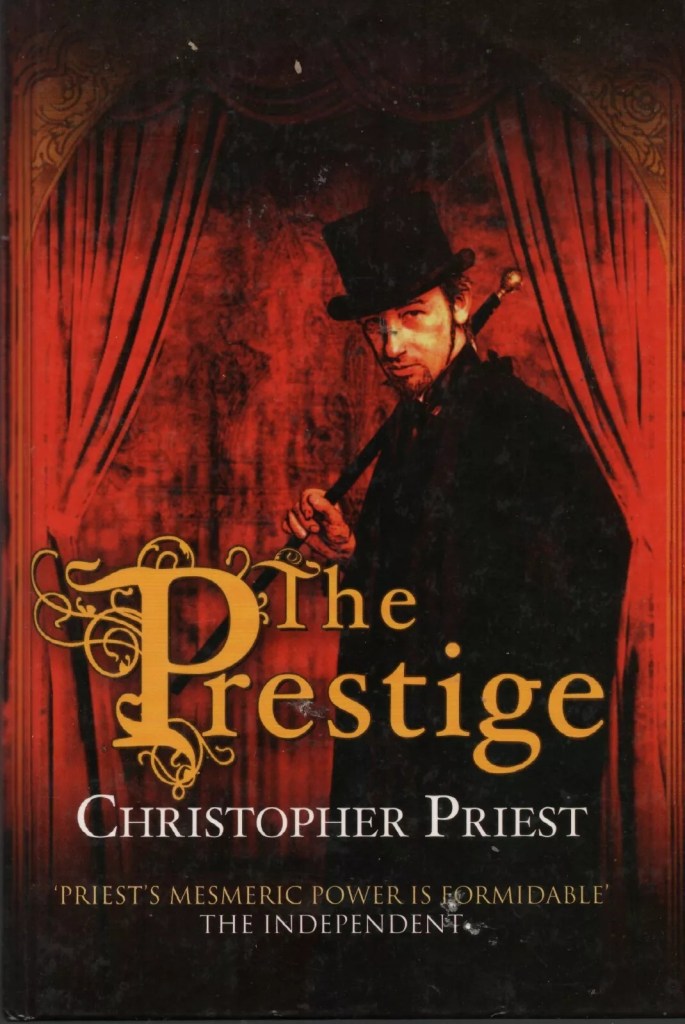
Just for his calmness Michael Caine (Interstellar, 2014) steals the picture from Christian Bale (Ford v Ferrari / Le Mans ’66, 2019) and Hugh Jackman (Deadpool and Wolverine, 2024). Rebecca Hall (Godzilla v Kong: The New Empire, 2024)and Scarlett Johansson (Fly Me to the Moon, 2024) are at opposite ends of the feminine divide, the former unable to cope with deceit, the latter manipulating it to her own ends. The director and brother Jonathan adapted the Christopher Priest award-winning novel.
Setting aside the canaries and the difficulties of presenting all-consuming obsession, this remains an intriguing work, possibly the darkest area into which the director ever ventured.
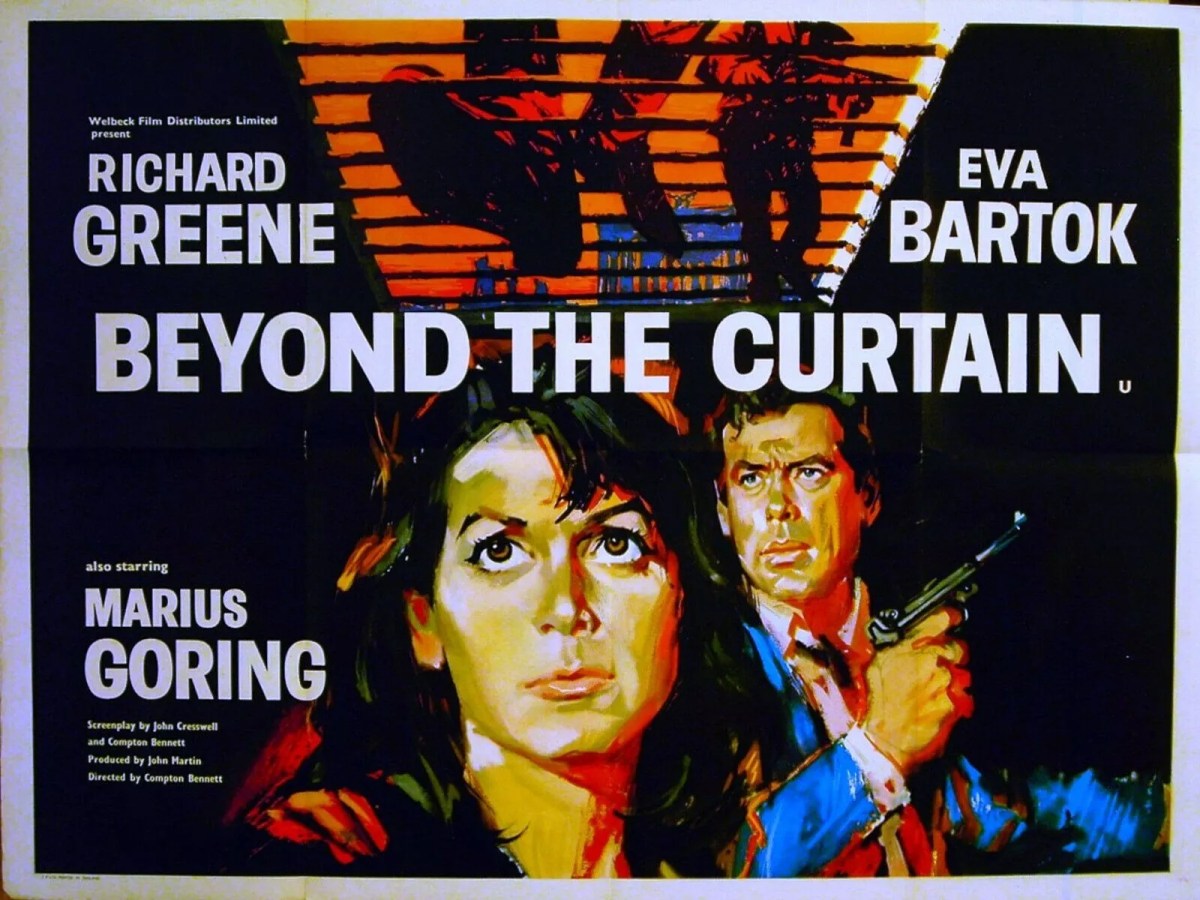
Richard Greene had been a childhood idol as that dashing hero Robin Hood in long-running British television series (The Adventures of Robin Hood, 1955-1960) and movie Sword of Sherwood Forest (1960) so I was rather at a loss to discover that his career appeared to stumble thereafter. Only one movie in seven years and then a short stint as the hero in The Blood of Fu Manchu (1968) and The Castle of Fu Manchu (1969). What I hadn’t realized given his eternal youthful demeanor was that he was already approaching 40 when he first donned the tights for Robin Hood and that he was coming to the end of a reasonable stint as a leading man in both Hollywood and domestically.
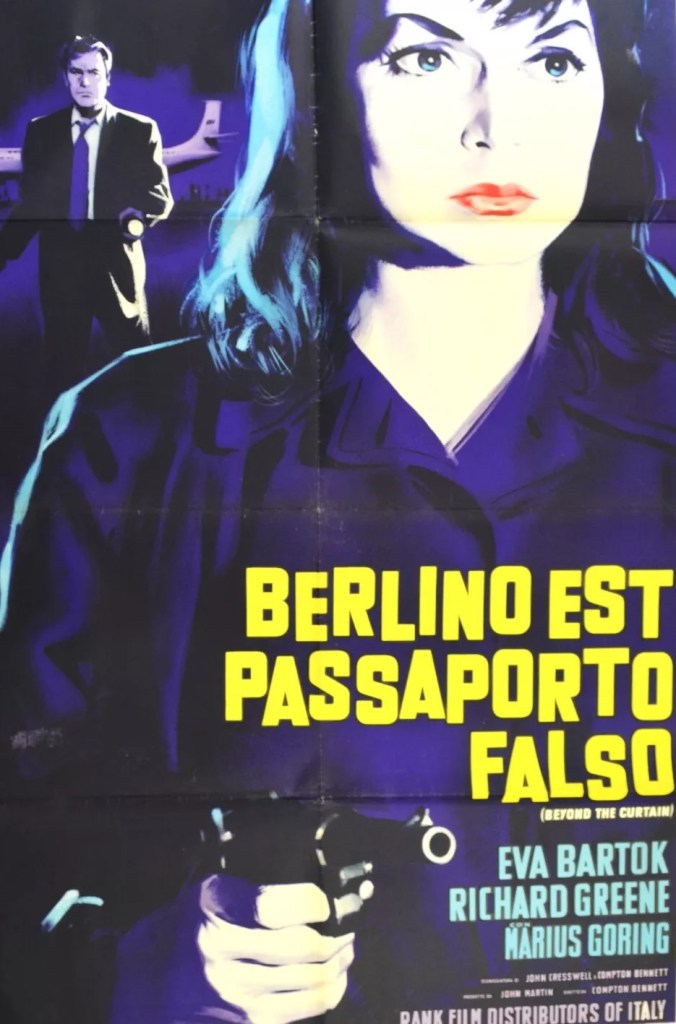
So I shouldn’t really have been surprised that he turned up in this Cold War B-picture. Precisely because he was the star the movie didn’t make the inroads it should have done, given the subject matter and the sensitive playing of Hungarian female lead Eva Bartok (Blood and Black Lace, 1964) whose career was equally foundering after a promising start as Burt Lancaster’s squeeze in The Crimson Pirate (1951).
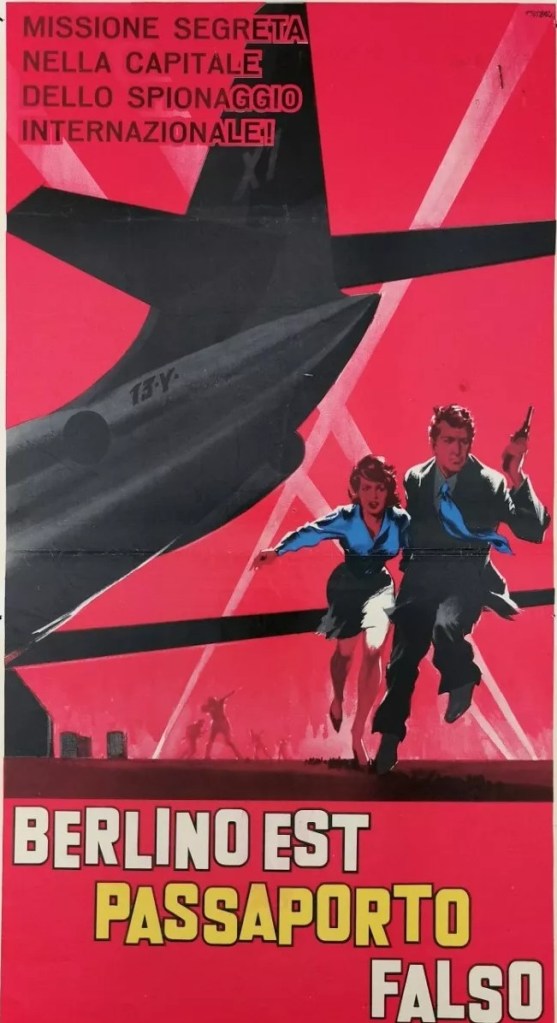
Audiences were probably baffled by the technicality on which the story pivots. As the Cold War begins – the titular Curtain is The Iron Curtain – air space was as important a national border as land and venturing into foreign air space was construed as deliberate provocation.
East German stewardess Karin (Eva Bartok), a refugee in Britain from her home country, is arrested when her airplane touches down in East Germany after losing its way in a storm. Pilot fiancé Capt Jim Kyle (Richard Greene), who is let go by the Soviet-influenced authorities, returns to East Germany to try to rescue her.
This resonates more than it did at the time when the Berlin Wall was not yet in existence and the Cold War consisted more of saber-rattling than anything as perilous as the Cuban Missile Crisis. And there’s a definite Kafkaesque tone. Karin is treated as a traitor for attempting to flee her native land and is equally used as bait by her captors to attempt to draw out of hiding her dissident brother Pieter (George Mikell). Outside of Kyle, there’s a sense of romantic revenge, old friend Hans (Marius Goring) now leading the forces hoping to entrap her brother.
There’s plenty of the usual escape ploys, and the atmosphere has noir-antecedents with lighting that exploits shadow and night. And while the thriller aspects work well enough, especially the exciting climax in a tunnel, they carry less impact than the emotions. Karin is terrified of not just being held against her will and interrogated by the fierce secret police, but the prospect of repatriation – or more likely imprisonment – in a country she now despises and had managed to escape is proof that you can’t go home again.
If you remember the scene in Doctor Zhivago (1965) of Omar Sharif after the war returning to his palatial apartment and finding it filled up with other occupants and his family relegated to a very small space, this is its precedent. Karin’s family home is ruled by a sinister landlady-cum-busybody-cum-informant and her suicidal mother (Lucie Mannheim) lives in the attic and suffers delusions. The despair of living in a totalitarian regime comes across very well.
While reminiscent of elements of The Third Man (1949) and thoroughly overtaken in the espionage genre by the likes of The Spy Who Came in from the Cold (1965) and The Quiller Memorandum (1966), this makes it mark by concentrating on entrapment and lack of freedom.
Richard Greene is in his element as the dashing hero, but he’s outshone by Eva Bartok who has much more to lose.
Final feature of British stalwart Compton Bennett (King Solomon’s Mines, 1950) who injects occasional style into proceedings. Written by the director and John Cresswell (Spare the Rod, 1961) from the bestseller by Charles F Blair and A.J. Wallis.
This big-screen version of a small-screen hero is as pleasant a diversion as you can get. Nostalgia pretty much gives it a free pass and in any case the action, which punctuates the drama at regular intervals, was always going to be budget-restricted. Despite being in almost constant danger the insouciance of gentleman thief Simon Templar dictates that the pace is no more than languid.
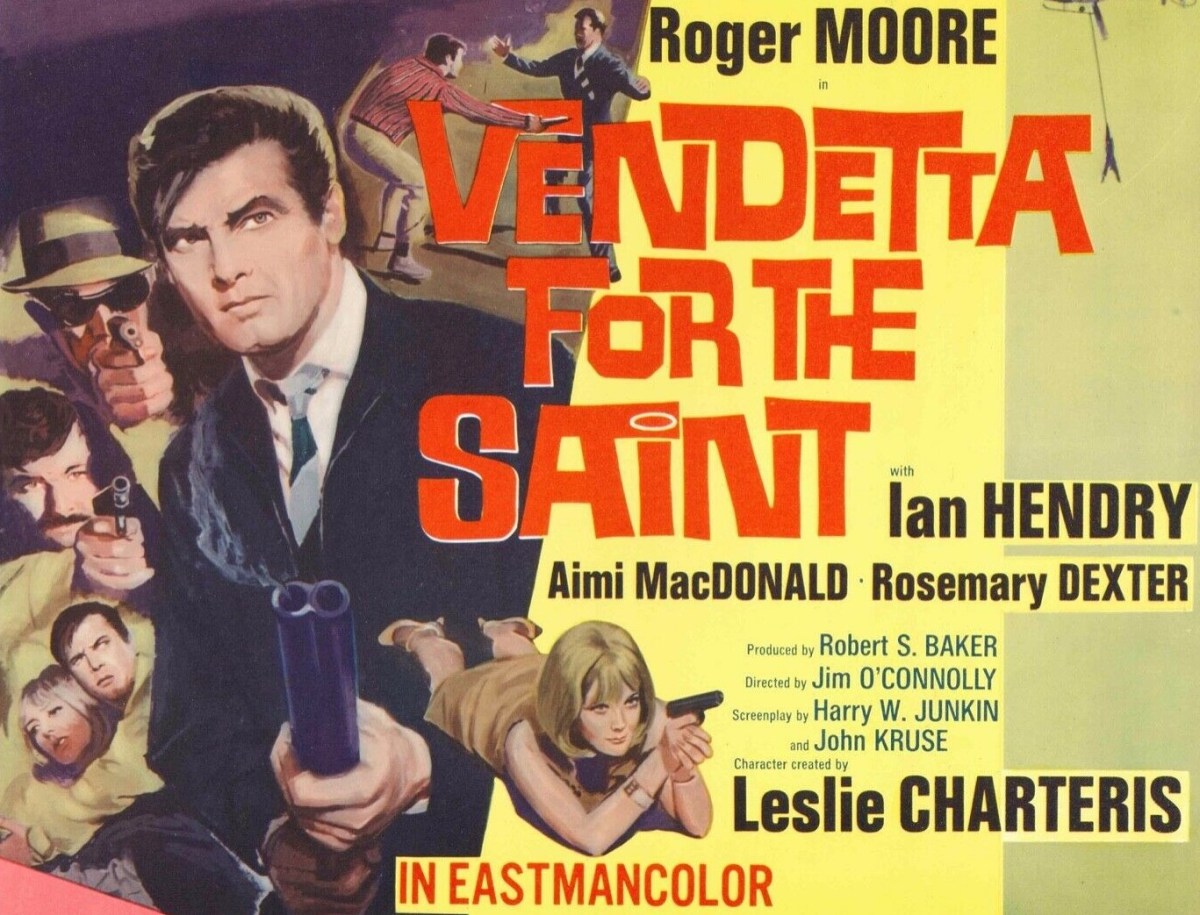
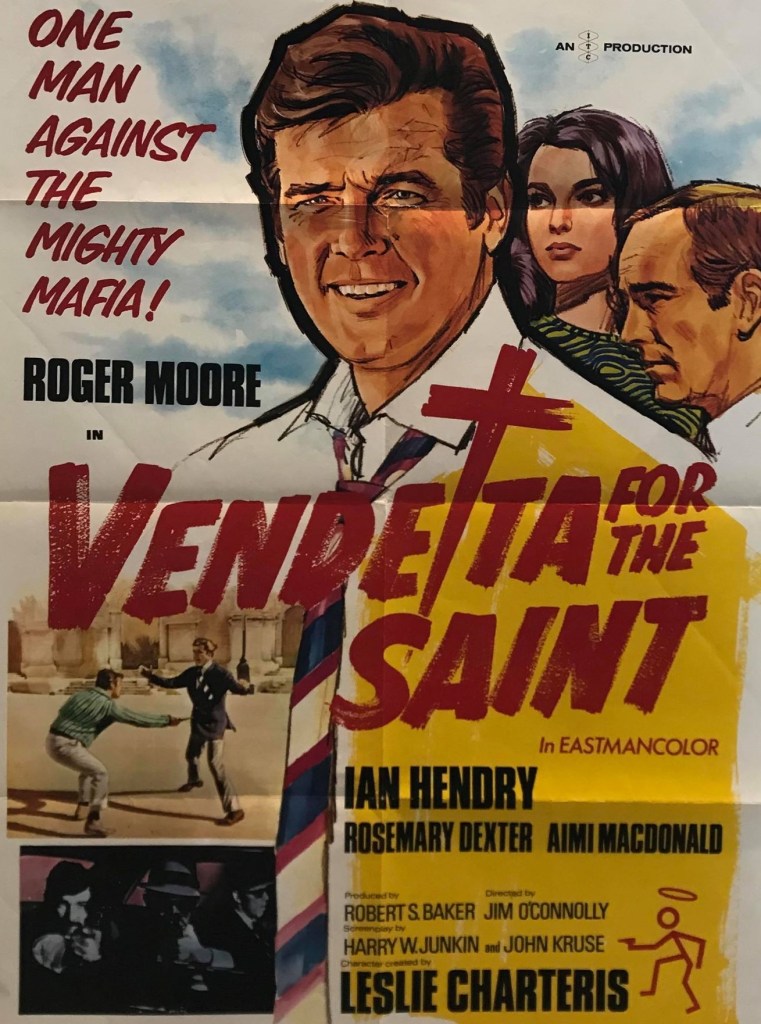
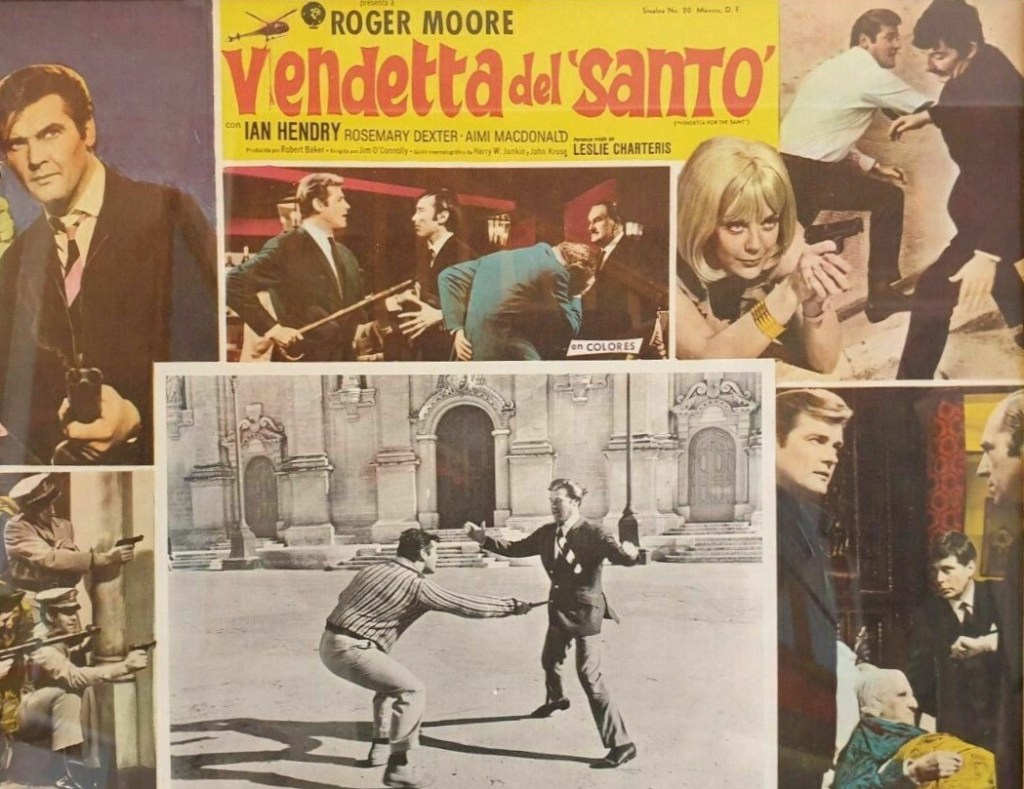
As the title suggests, we’re in Mafia country, Templar (Roger Moore) drawn into a Cosa Nostra succession scenario as the result of a casual encounter with former bank clerk Houston (Fulton Mackay), later found dead. Houston has cast doubts on the real identity of Mafia Don Destiamo (Ian Hendry), one of several contenders to become the next Mafia overlord. Templar sneaks into Destiamo’s world by pursuing his niece Gina (Rosemary Dexter). Although outwardly respectable, Destiamo a bit too fond of using his cigar as a weapon of disfigurement, threatening his blonde English moll Lily (Aimi MacDonald) in this fashion.
Part of Templar’s attraction is that, although he has a nefarious side, he is happy to walk those mean streets and has a strict moral code. And he moves in such elevated circles that he has a nodding acquaintance with dying Mafia chieftain Don Pasquale (Finlay Currie) who has yet to pick his successor.
The other part of his attraction is that he’s played with such suaveness by Roger Moore. For a good chunk of the time someone is trying to knife him, shoot him, blow him up, capture him, jab him with a truth serum, and generally trying to stop him. In fending off such attacks, or out-smarting the villains, there’s rarely a hair out of place. It’s not so much devil-may-care as devil-is-wasting-his-time with such an imperturbable fellow.
Although the action is pretty straightforward, Templar is not above a clever ruse – jamming a bus in a gateway preventing his pursuers continuing the chase – nor an old one such as tying sheets together to climb out of a window. While Malta stands in for Italy, the locations still look authentic enough, ancient stone buildings, the occasional horse pulling a cart. When the action/drama eases up, there’s always pleasant scenery.
Following MGM’s success in stitching together into a movie two episodes of The Man From U.N.C/L.E. television series (which of course had pinched the idea from Walt Disney’s cinematic re-presentation of Davy Crockett episodes) it was no surprise that ATV, then under the control of future movie mogul Sir Lew Grade (Raise the Titanic, 1980), decided to adopt the same idea. Although The Saint had been showing on British television since 1962, by the end of its run in 1969 it had stepped up to bigger budgets, 35mm and colour. Given each episode lasted around 50 minutes, it was relatively simple to devise a two-part programme shown over consecutive weeks on ITV in Britain and then release it throughout the rest of the world as a feature film. The first such project was The Fiction Makers (1968) followed by Vendetta for the Saint.
Roger Moore’s movie career had been in limbo since Romulus and the Sabines (1961) and there’s no doubt that his performance as Simon Templar and later in another glossier British television series The Persuaders (1971-1972) made him a candidate for James Bond. While his interpretation of Templar, especially the wry delivery, does bear some similarities to his incarnation as 007, that only holds true as long as you set aside the year’s supply of Brylcreem dumped on his hair, the shoulder-padded shoulders and the fact that he had not yet perfected his trademark move, the raising of the single eyebrow.
While no match for the quips prevalent in James Bond, Canadian screenwriter Harry W. Junkin – best known for his television work, his only other movies being a similar melding of television episodes of The Persuaders – and John Kruse (Hell Drivers, 1957) – had some neat one-liners. Despite the obvious limitations, director Jim O’Connelly (Berserk, 1967) does a decent enough job.
But Moore carries the show. Ian Hendry makes a passable villain but not a passable Italian. In general, not surprisingly since most characters were played by British actors, the accents are all over the place though Moore, courtesy of squiring Luisa Mattioli (later his wife) manages to deliver his Italian lines in an acceptable accent. Otherwise, the only one who comes close is Rosemary Dexter (The Shoes of the Fisherman, 1968) and that’s because she was Italian. Worth checking out in the supporting cast are Finlay Currie (Ben Hur, 1959) and Fulton Mackay (BBC series Porridge, 1974-1977).
You can find a lot wrong with this without looking very hard but if you switch off your over-critical faculties you will be pleasantly surprised.
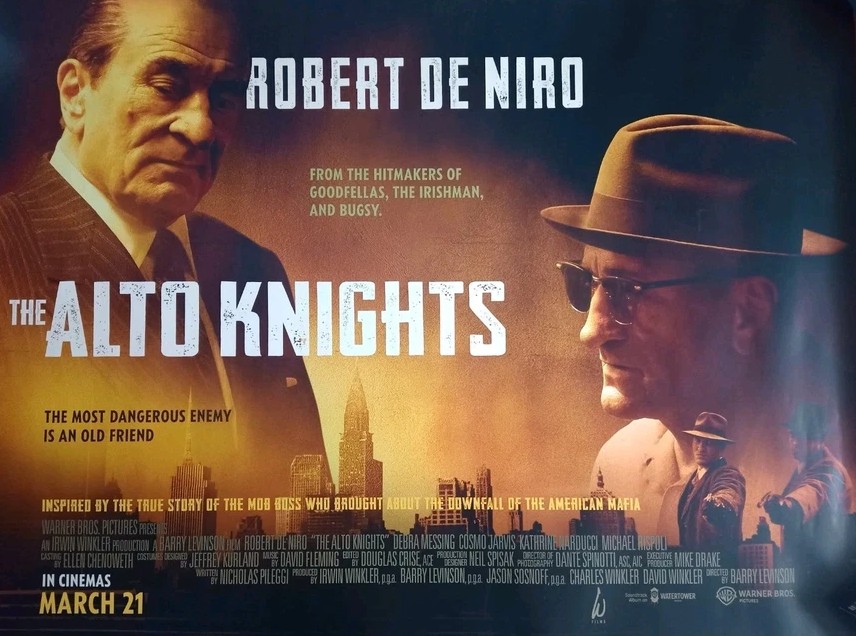
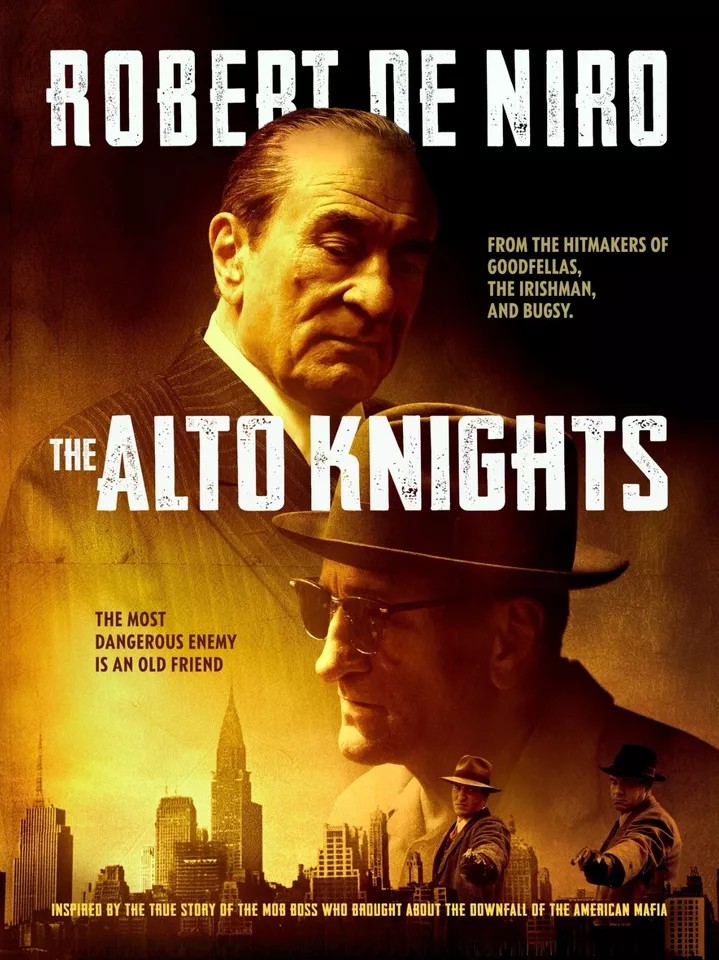
There’s a fabulous story buried inside this box office disaster. A Mafia boss rats out his colleagues so he can enjoy retirement. Instead of dwelling on this and the dramatic opportunities it opens up, instead we are given an info-dump. The betrayal meant that the United States woke up to the fact that the Mafia was a nationwide organization and not, as proposed by J Edgar Hoover, merely a localized east coast outfit.
I wasn’t particularly bothered by the gimmick – though it’s surely “enough already” for fly-by-night technical tricks – of Robert De Niro playing two gangster rivals, Frank Costello who runs the empire handed on a plate to him by Vito Genovese while the latter was in exile. Two simple pieces of prosthetics, false nose for Frank, false chin for Vito, plus the more rudimentary disguise of hat and spectacles for Vito makes this notion work without any need to call it into question. The fake chin stiffens the actor’s lips and once he dispenses with the arm-waving that is key to the De Niro screen persona, the characters are portrayed with measurable differences.
What needs called into question is the ramshackle construction. Voice-over for me is lazy. You can’t fit information into the story in dramatic fashion? Then too bad, drop it. You can’t just shoehorn it in and hope for the best. And all this shifting about with timelines, WTF? It’s crazy to try and condense a history of the Mafia up till the late 1950s when the movie would work much better dumping the historical malarkey and concentrating on the main story.
Vito returns to New York after a long absence and wants to reclaim his kingdom. Frank is naturally reluctant to give up an empire he has expanded and controlled for so long. Frank is more temperate, Vito distinctly temperamental. The fact they were boyhood buddies and made their bones together should have merited a single line of dialog rather than drawn-out montages and a bucket of voice-over.
Frank is happily married to Bobbie (Debra Messing) with no kids. Vito marries Anna (Kathrine Narducci) then bumps off his wife’s ex-husband for the kind of slight a paranoid is prone to. Majoring in violence, Vito rebuilds his empire and for the last piece of the jigsaw organizes a hit on Frank. The hitman misses. That should have cued all-out warfare. Instead, Frank tries to keep the peace. His solution when all else fails and planned retirement is jeopardized is to tip the nod to the New York cops that representatives of every nationwide family is going to assemble in a particular place all at the same time. Cue the cops solving Frank’s problem by imprisoning Vito and tons of his (relatively-speaking, of course) innocent compadres.
But instead of sticking to the bones of what’s an interesting (and ironic if irony is your thing) narrative – insane hunger for power and revenge – the story bounces around like it’s been chucked inside a lottery drum only for bits and pieces of a longer and more complicated but less interesting story to fly out at different times.
The movie does make the point that without battalions of crooked cops and politicians on the take the Mafia would never have mushroomed. There are a couple of outstanding sequences, the cocky Frank volunteering to testify rather than, like all the other gangsters, taking the Fifth at a Senatorial Inquiry and a marvellous scene about the golden Bible of the Mormons that stands alongside the “You Talkin’ to Me?” and “You think I’m funny?” scenes from previous gangster classics.
De Niro gets one thing wrong in his impersonation of the gangsters. It’s virtually impossible for an 81-year-old actor to carry off the physicality of the 66-year-old Frank and the 60-year-old Vito. At least there’s no attempt to portray gangsters as mythical characters.
Not the swansong director Barry Levinson (Rain Man, 1988) was hoping for. Nicholas Pileggi (Goodfellas, 1990) wrote the script.
Nobody’s going to bet $45 million on Robert De Niro again, no matter how many roles he plays.
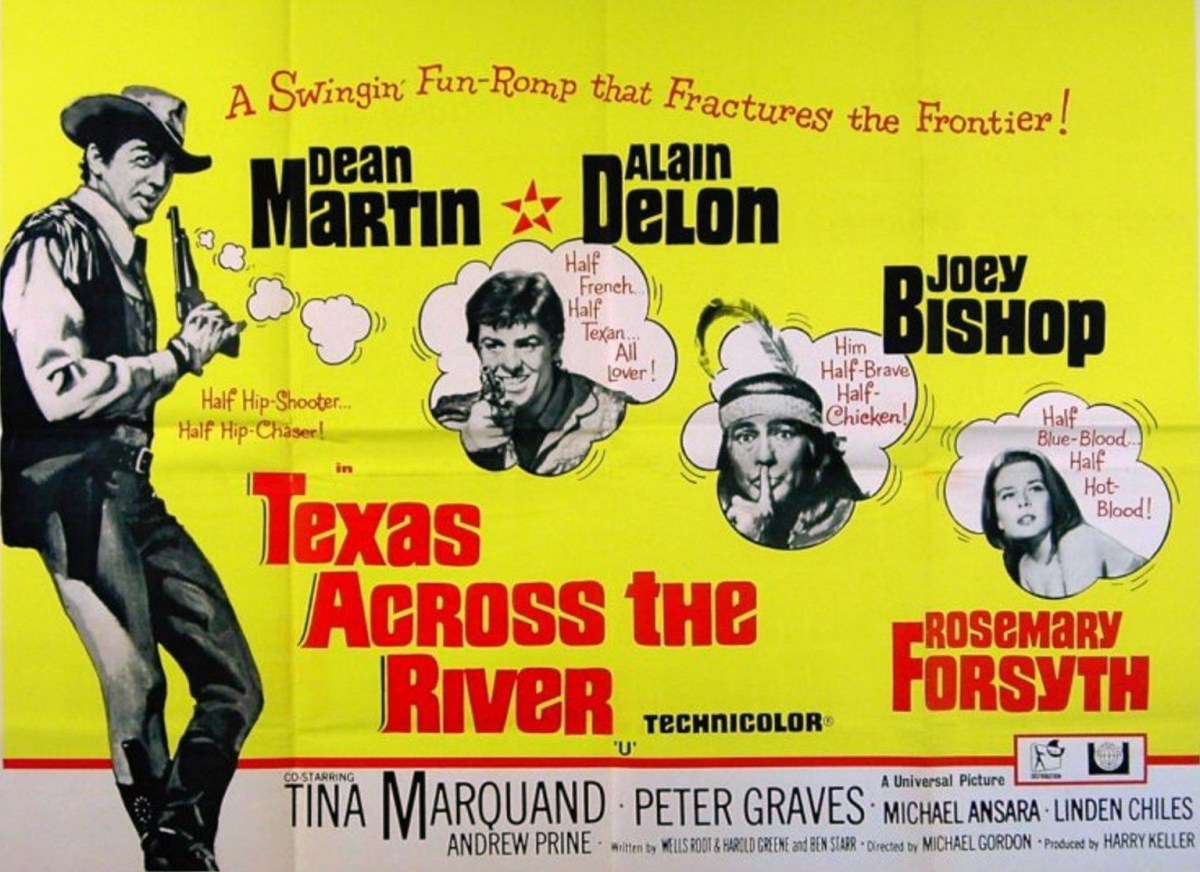
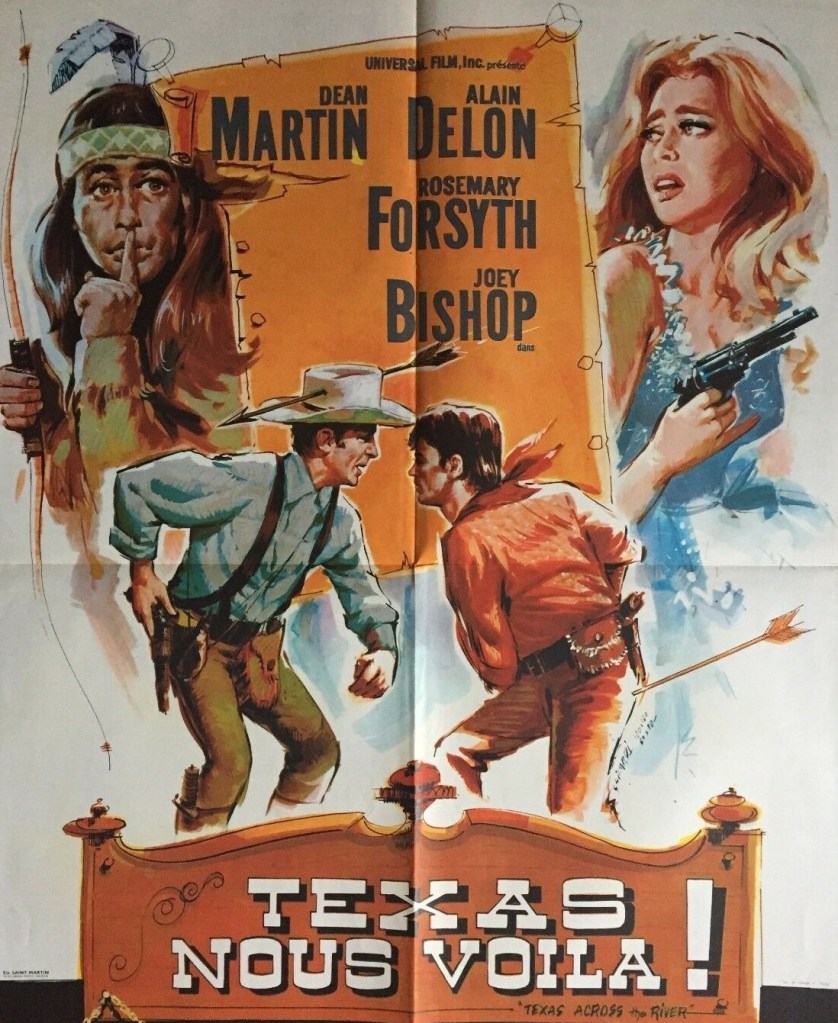
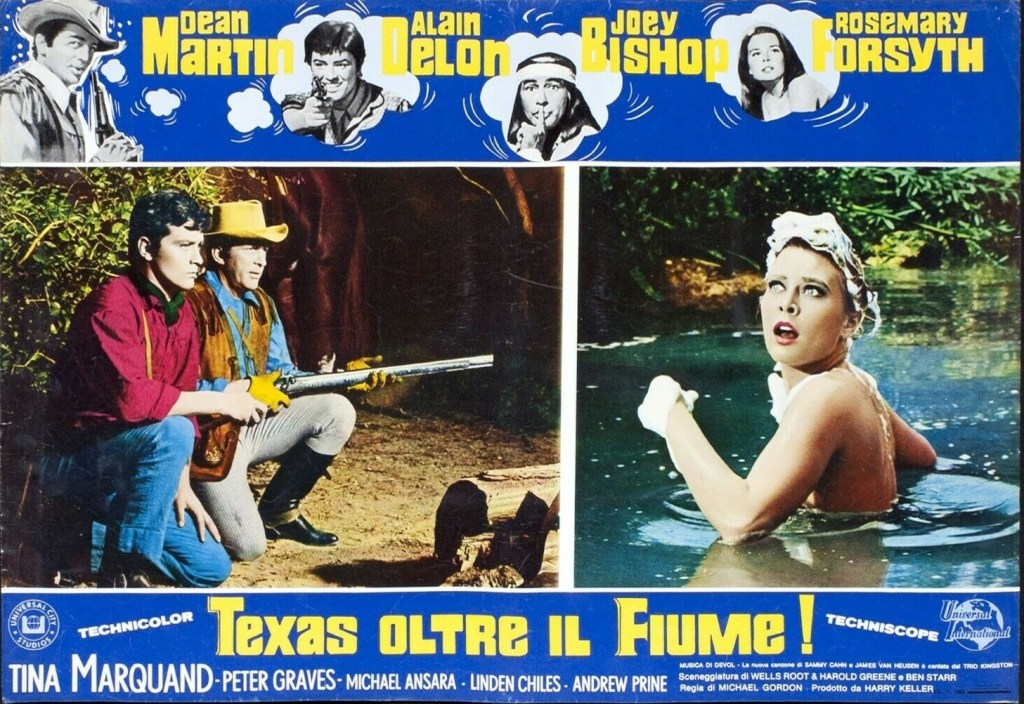
Excellent comedy western mixing dry wit and occasional slapstick to joyous effect. The wedding between Spanish duke Don Aldrea (Alain Delon) and Louisiana belle Phoebe (Rosemary Forsyth) is interrupted by her previous suitor Yancy (Stuart Cottle) who is killed in the resulting melee. Escaping to Texas, Don Aldrea’s marksmanship leads settler Sam (Dean Martin) to recruit him to help fight raiding Comanches. Romantic entanglement ensues when the Don rescues Native American Lonetta (Tina Marquand) and Sam has more than a passing interest in Phoebe.
It is so tightly structured that nothing occurs that doesn’t have a pay-off further down the line. Bursting with terrific lines – including a stinger of a final quip – and set pieces, it pokes fun at every western cliché from the gunfight, the cavalry in hot pursuit, and fearsome Native Americans to the snake bite and the naked bathing scene. Incompetence is the order of the day – cavalry captain Stimpson (Peter Graves) issues incomprehensible orders, chief’s son Yellow Knife (Michael Linden) cannot obey any.
The Don, with his obsession with honor and his tendency to kiss men on the cheeks, is a comedy gift. Despite his terrific head of hair, he is stuck with the moniker “Baldy” and every time he is about to save the day he manages to ruin it. Sam is the kind of guy who thinks he is showing class by removing his spurs in bed while retaining his boots. His sidekick Kronk (Joey Bishop), a mickey-take on Tonto, mostly is just that, a guy who stands at the side doing nothing but delivering dry observations.
Lonetta is full of Native American lore and has enough sass to keep the Don in his place. “What is life with honor,” he cries to which she delivers the perfect riposte, “What is honor without life?” Phoebe is a hot ticket with not much in the way of loyalty.
Two sequences stand out – the slapping scene (whaat?) and a piece of exquisite comedy timing when Sam, Phoebe and the Don try an iron out a complicated situation.
Good as Dean Martin (Rough Night in Jericho, 1967) is the picture belongs to Alain Delon (Once a Thief, 1965) and I would argue it is possibly his best performance. Never has an actor so played against type or exploded his screen persona. Delon was known for moody, sullen roles, cameras fixated on his eyes. But here he is a delight, totally immersed in a role, not of an idiot, but a man of high ideals suddenly caught up in a country that is less impressed with ideals. If he had played the part with a knowing wink it would never have worked.
Martin exudes such screen charm you are almost convinced he’s not acting at all, but when you compare this to Rough Night in Jericho it’s easy to see why he was so under-rated. Joey Bishop (Ocean’s 11) is a prize turn, with some of the best quips. Rosemary Forsyth (Shenandoah, 1965) is surprisingly good, having made her bones in more dramatic roles, and Tina Marquand (Modesty Blaise, 1966) more than holds her own. Michael Ansara (Sol Madrid, 1968) played Cochise in the Broken Arrow (1956-1958) television series. Under all the Medicine Man get-up you might spot Richard Farnsworth. Peter Graves of Mission Impossible fame is the hapless cavalry leader.
Director Michael Gordon (Move Over, Darling, 1964) hits the mother lode, the story zipping along, every time it seems to be taking a side-step actually nudging the narrative forward. He draws splendid performances from the entire cast, knowing when to play it straight, when to lob in a piece of slapstick, and when to cut away for a humorous reaction, and especially keeping in check the self-indulgence which marred many Rat Pack pictures – two of the gang are here, Martin and Bishop. There’s even a sly nod to Sergio Leone spaghetti westerns when the electric guitar strikes up any time Native Americans appear. Frank De Vol (Cat Ballou, 1965) did the score. Written by Wells Root (Secrets of Deep Harbor, 1961), Ben Starr (Our Man Flint, 1966) and Harold Greene (Hide and Seek, 1964).
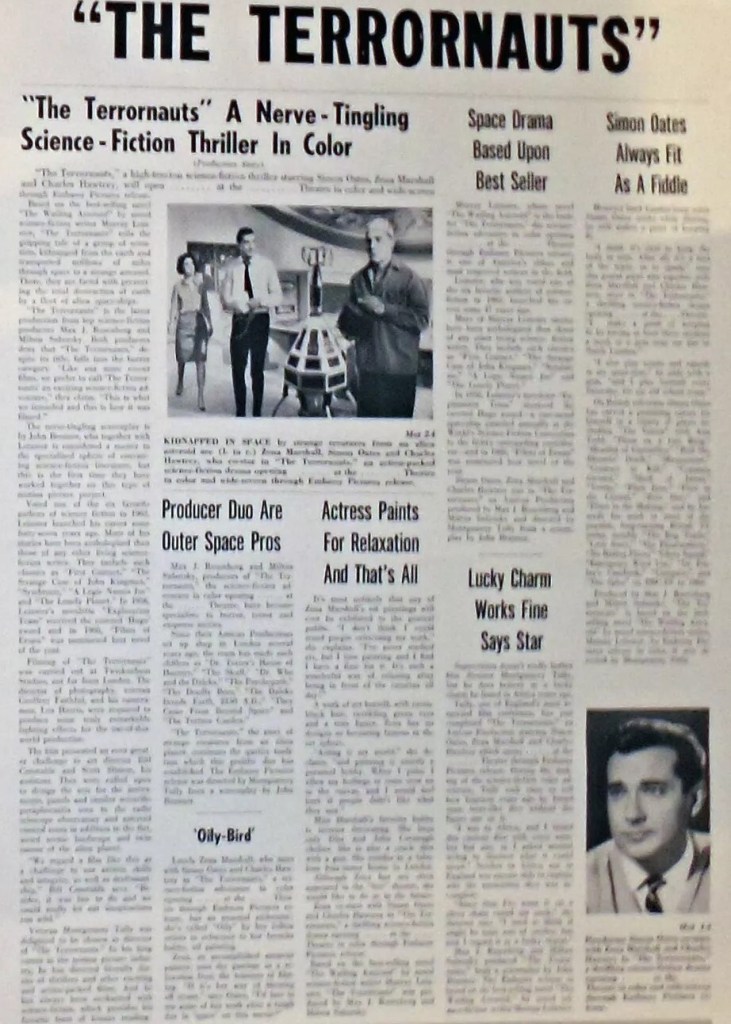
Unless you’re a sci-fi buff of a certain vintage, you probably haven’t heard of Murray Leinster who wrote The Wailing Asteroid on which The Terrornauts is based. Which is a shame because he was one of the giants of science fiction of the golden age. Time magazine called him The Dean of Science Fiction.
For a contemporary audience his name is of considerable significance because he invented the concept of the multiverse. In those days it was called a parallel universe or an alternate history but it amounted to the same thing. And he did so nearly a century ago – in 1934 in fact.
He was second only to H.G. Wells in originating science fiction concepts. He was the first, for example, to imagine meeting an alien culture that was as advanced as our own. He explored themes of mutual distrust, mutual assured destruction, and aliens as superior beings. He also invented the idea of the Internet and man-eating plants.
In The Wailing Asteroid, Leinster draws upon many of the ideas he was first to promulgate.
We have alien encounter. We have the fear that as a consequence terror might be brought back to Earth. We have a species that has evolved far beyond human experience.
We have the same kind of instant absorption of knowledge that occurs through the Internet. The little blocks that our hero finds might as well be called Miniature Googles.
You could also argue that what the space explorers discover is akin to The Sentinel that features in 2001: A Space Odyssey, released in 1968. And you could also view the asteroid as a life-affirming alternative to the hovering destructive Death Star of Star Wars filmed a decade later.
The Terrornauts is a rarity because only a handful of Leinster books were ever filmed. But he was very important to the movies in another way, at the forefront of an invention – front projection – that changed the way movies were made in the 1960s.
At this point, production entity Amicus was as well known for its sci fi output as its horror thanks to Dr Who and the Daleks (1965) and Daleks Invasion Earth 2015 A.D (1966).
So when Embassy Pictures knocked on the door and offered a flat fee of around half a million dollars for a science fiction double bill, Amicus was delighted. Hammer sold its horror pictures as double bills, a complete program more attractive to an exhibitor and more lucrative for a producer than half a program.
Amicus contracted to make The Terronauts and They Came from Beyond Space. They weren’t big enough to have stars under contract, nor the first port of call should a director or star have a pet project that required funding.
Their modus operandi was to trawl through the hundreds of novels published every year, either in pre-publication galley form, or when printed. Max Rosenberg claimed to read 500 books a year. “The basic job of a producer,” explained his partner Milton Subotsky, “is to find properties.” That was how they came across The Wailing Asteroid.
It was occasionally part of the deal in Hollywood that when a studio bought a best-seller, the author was given the opportunity to write the screenplay. But that wasn’t the case here.
Instead, Amicus turned to another science fiction author. John Brunner was as prolific as Leinster. Brunner got the gig because he mixed in the same social circles as Subotsky. Mostly, he wrote conventional space opera and it was only after his experience on The Terrornauts that he acquired a bigger name in science fiction, after winning a Hugo Award in 1969.
The first casualty was the title. The Wailing Asteroid was not as catchy as The Terrornauts. And Brunner had no qualms about scrapping most of the original narrative. He telescoped the time frame. The action in the book takes place over several months, not a couple of days. The book involves multiple countries. Leinster’s novel was set in the United States, but Brunner made the characters British and added the comedy – no tea lady or accountant in the original. And there’s no humor either. He changed the hero’s occupation from design engineer to scientist, and dumped the incipient hesitant romance between Joe and Sandy. But he brings in the notion of scientists hunting for intelligent life in space.
Nor does Leinster’s book involve little green men, robots or human sacrifice. That’s all Brunner’s doing. He turns what was really a concept novel, an exploration of ideas more akin to 2001: A space Odyssey and Planet of the Apes. Brunner shifts it from what if to alien abduction.
Budget shaped the picture. The first four reels are slow and full of dialog because dialog can be shot much quicker and more cheaply than action. Low budgets didn’t bother Amicus. “I defy any other picture making company,” proclaimed Rosenberg, “to turn out that sort of picture with the budget we are under.” He added, “We make pictures for a price and I think we’re better at it than anybody else.”
Amicus had something of a stock company, Freddie Francis, for example, the in-house director, had helmed four pictures, the same number as Peter Cushing headlined. Christopher Lee starred in two, Robert Bloch contributed four scripts and Elizabeth Lutyens scored two pictures. But only Lutyens was retained here.
Amicus handed The Terrornauts to veterans, the majority involved were over 50 years of age. Cinematographer Geoffrey Faithful was 74, author Murray Leinster 71, supporting actor Max Adrian 64, special effects guru Les Bowie 64, director Montgomery Tully 63, composer Elizabeth Lutyens 61.
It would prove the last hurrah for female lead Zena Marshall, Montgomery Tully would bow out later that year after Battle Beneath the Earth and Geoffrey Faithful would only make another two pictures.
The Terrornauts and They Came from Beyond Space were not filmed in October-December 1966 as has been widely reported. Instead, production took place earlier in the year. According to British trade magazine Kine Weekly’s Shooting Now section, The Terrornauts was first to go before the cameras at Twickenham Studios, on June 13 1966 and still featured on its production chart on August 3. Filming on They Came from Beyond Space in the second last week of September continued also at Twickenham until the week of November 3.
Though to some observers the amount spent on The Terrornauts was very little, in fact the £87,000 budget was nearly double the amount spent on City of the Dead and slightly more than The Skull. Admittedly, there were special effects to consider but to offset that the stars came cheaper than the likes of Peter Cushing and Christopher Lee.
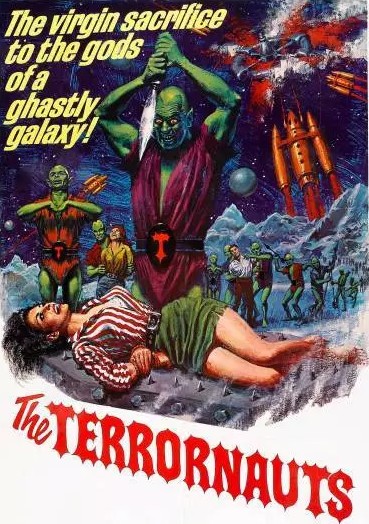
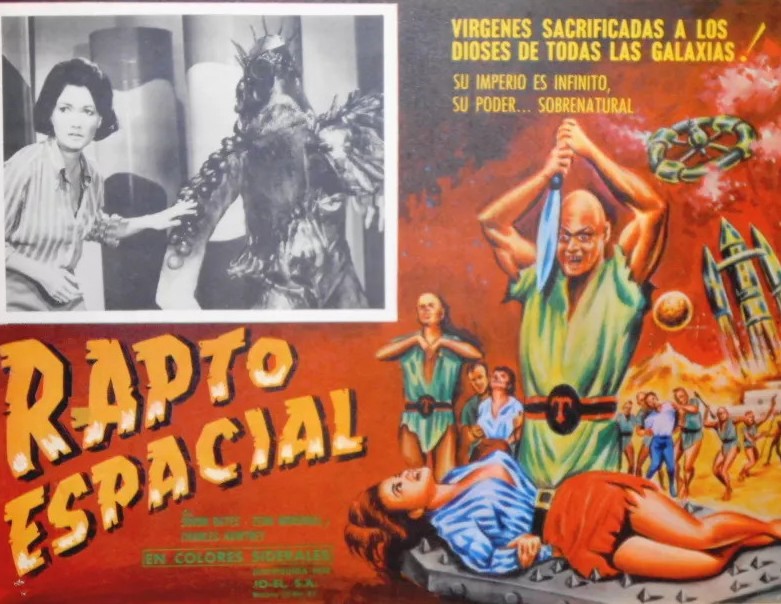
For a time it looked as if Embassy expected The Terrornauts to prove the more popular picture. It ran a one-page advertisement in trade newspaper Variety for The Terrornauts in April 1967 claiming it would be available to rent the following month. The image of Zena Marshall being held down by aliens was accompanied by the tagline – “the virgin sacrifice to the gods of a ghastly galaxy” They didn’t run any adverts for They Came from Beyond Space.
I’m sorry to have to tell you this is a condensed version of the audio commentary by me that accompanies the spanking new DVD released by Vinegar Syndrome – I’m sure you’ll forgive me another small plug – and it’s on special offer.
The easiest ways to acquire cult status are a) to be impossible to find and b) in a genre piece add in the unexpected. In this case, although originally devised as the support feature to They Came from Beyond Space (1967), in an Amicus sci fi double bill, this was denied initial release in Britain and other parts of the world and only seen fleetingly thereafter.
The genre upset is in two parts. First, we have the notion of aliens coming to the assistance of Earth. Secondly, for foreign audiences, it upends ideas of Englishness. Overseas moviegoers would have become used to the arrogant upper class characters, the bowler hats, tourist landmarks, Cockneys out for a “larf”, and probably never actually heard a genuine British accent in their lives because the diction was so incomprehensible it was usually dubbed.
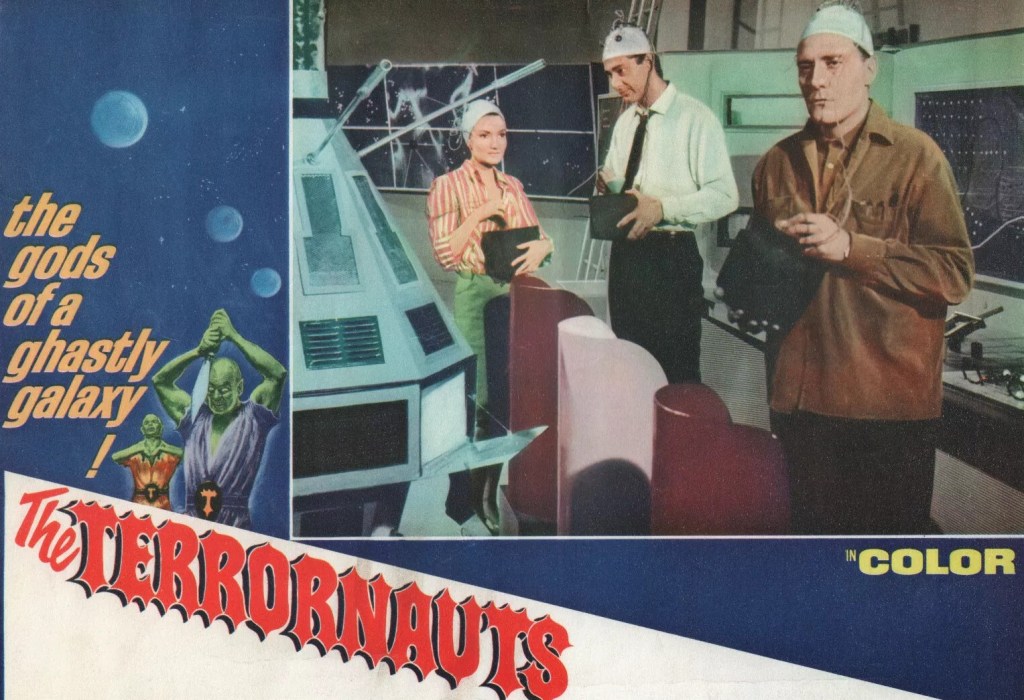
Here we have two very recognizable, in British terms, types – the tea lady Mrs Jones (Patricia Hayes) always ready with down-to-earth wisdom, and bureaucracy in the shape of interfering bean-counter Joshua Yellowlees (Charles Hawtrey, taking a break from Carry On duties). They provide a supply of gentle comedy, unusual for the genre.
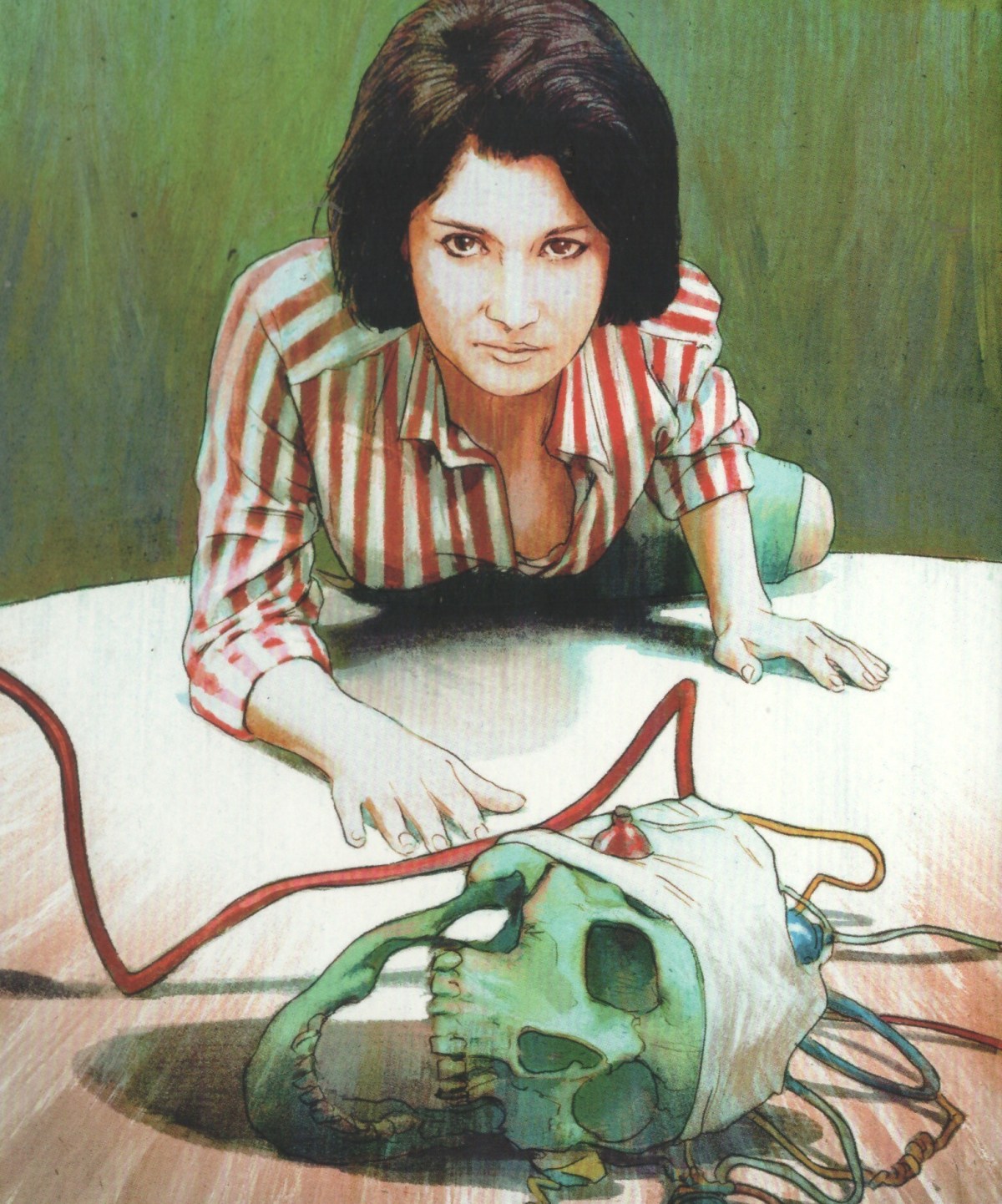
Along with Dr Joe Burke (Simon Oates), Ben Keller (Stanley Meadows) and Sandy Lund (Zena Marshall), working in radio telescope laboratory seeking signals from outer space, they are kidnapped by aliens. Apart from an odd-shaped robot, on the alien craft they encounter nobody but are still set intelligence tests and then step through a transporter which lands them on an alien planet but one which is strangely familiar to Burke from a childhood incident on an archaeological dig in France. These aliens of the little green men variety are not so accommodating and it would come as no surprise that they elect Sandy for sacrifice. When she’s rescued and they’re all safely back on the alien craft, a greater danger materializes. Earth is going to be obliterated by another set of aliens, deadly enemies of the ones who are so helpful, and the Earthlings have to master the alien weaponry to defeat them and save Earth.
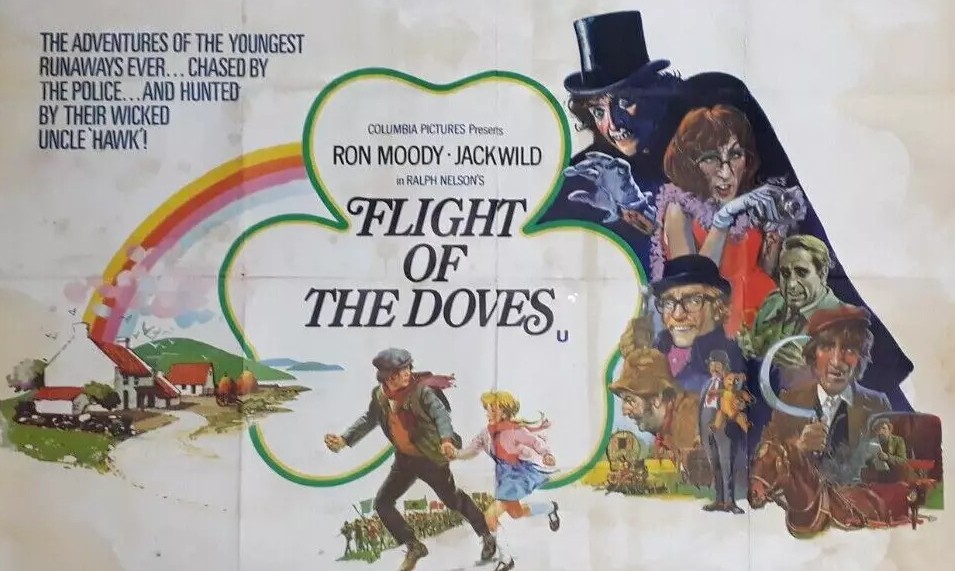
Saw “The Terrornauts” on original UK release when it was support to “Flight of the Doves.”
There are two twists at the end, one ending in speculative fashion, the other on a comedic note. The transporter returns to Earth and the same spot as Burke had his odd encounter, though nobody commenta on this. But to undercut that climax, the space travelers are arrested for trespass by a French gendarme. There’s no great acting and, in truth, it’s the oddball supporting players who steal the show, and Patricia Hayes would later achieve considerable fame as Edna, The Inebriate Woman (1971). This was the swansong for Zena Marshall (The Switch, 1963) and the penultimate picture of veteran Montgomery Tully (Fog for a Killer, 1962). Written by sci fi author John Brunner from the novel The Wailing Asteroid by Murray Leinster. Score by Elizabeth Lutyens (The Skull, 1965).
This is more thoughtful than the general run of sci fi B-movies, and the special effects, considering the tiny budget, are acceptable. Had it enjoyed more success Amicus might well have continued down this route rather than the horror portmanteau for which they were associated, for by the time this movie was made, their efforts were split evenly between horror and sci fi and their biggest hits had been the big screen Dr Who adaptations.
Though They Came from Beyond Space was seen more widely in Britain as the support to Rank release The High Commissioner/ Nobody Runs Forever, The Terrornauts sat on the shelf. It was given a very limited release as one of three potential supports to Flight of the Doves (1971) which is how I saw it at the Gaumont first run cinema in Glasgow. And that was because Simon Oates had starred in hit BBC ecological thriller Doomwatch (1970-1972). In the United States, it had a sporadic cinema release, very little evidence of first run, but very quickly became a late-night television favorite.
If you accept the comedy and aren’t fussed to not be battling monsters, this is a very interesting diversion from the sci fi norm and well done with the budget.
Vinegar Syndrome has just brought this out on DVD.
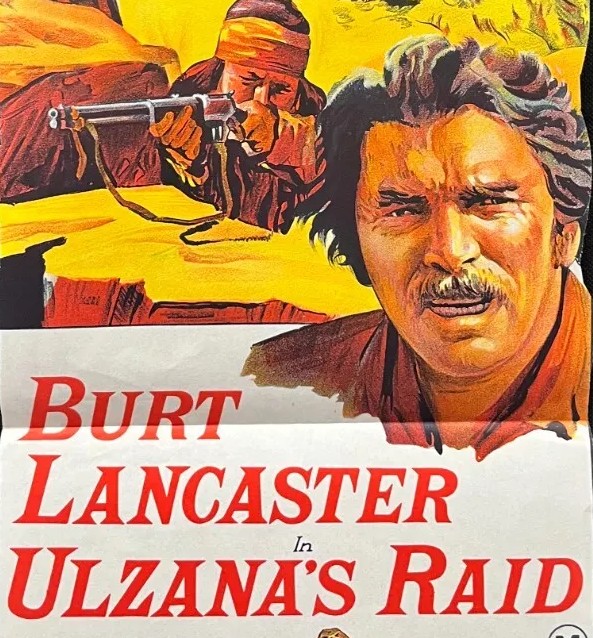
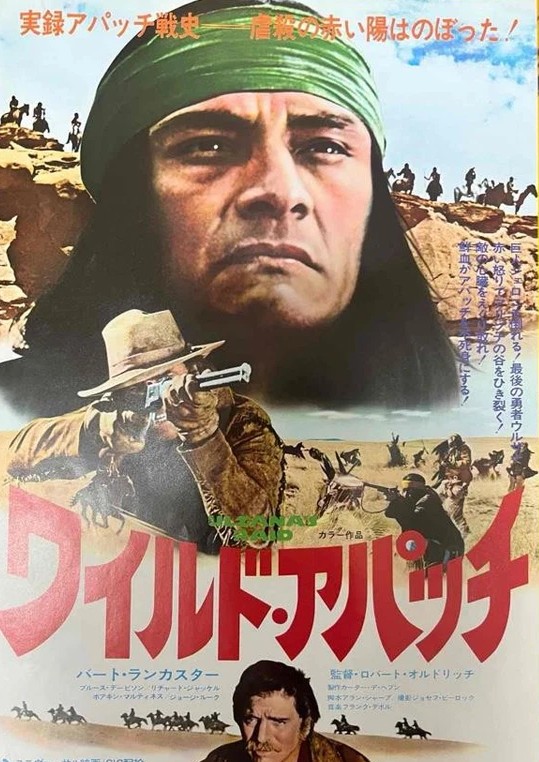
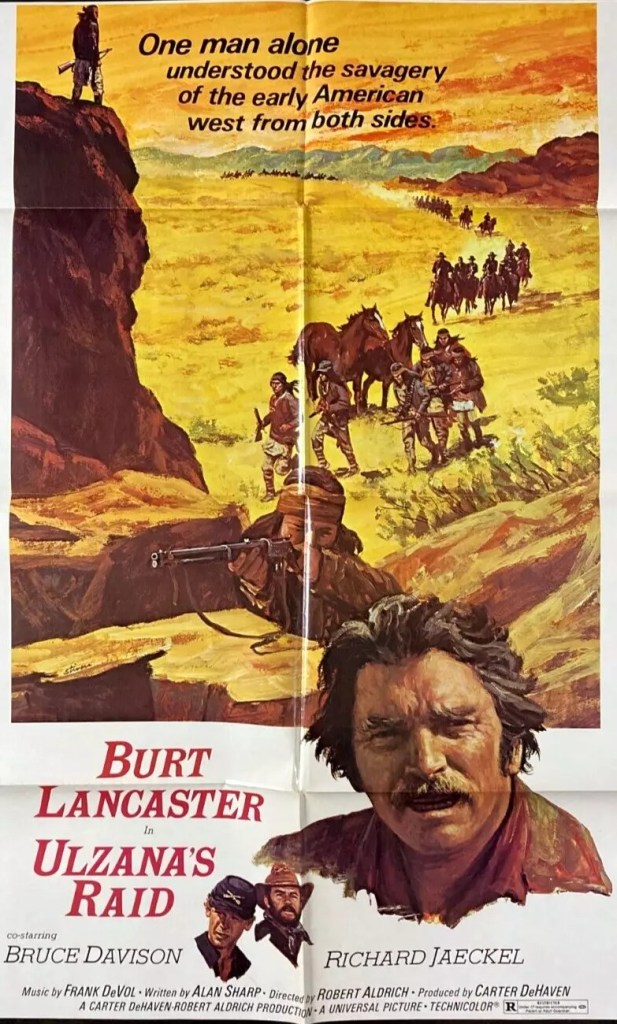
Still stands up as an allegory for the Vietnam War, superior American forces almost decimated by a small band of Apaches engaging in guerilla warfare. After the consecutive flops of Castle Keep (1969) and The Swimmer (1969), Burt Lancaster had unexpectedly shot to the top of Hollywood tree on the back of disaster movie Airport (1970) and consolidated his position with a string of westerns, which had global appeal, of which this was the third. After the commercial high of The Dirty Dozen (1967), director Robert Aldrich had lost his way, in part through an ambitious attempt to set up a mini-studio, his last four pictures including The Legend of Lylah Clare (1968) and The Killing of Sister George (1969) all registering in the red.
Riding a wave of critical acclaim was Scottish screenwriter Alan Sharp whose debut The Last Run (1971) turned on its head the gangster’s last job trope, and its lyrical successor The Hired Hand (1971) had stars and directors queuing up. Here he delivers the intelligent work for which he would become famous, melding Native American lore with a much tougher take on the Indian Wars and the cruelty from both sides.
The narrative follows two threads, the duel between Ulzana (Joaquin Martinez), who has escaped from the reservation, and Army scout MacIntosh (Burt Lancaster); and the novice commander Lt DeBuin (Bruce Davison) earning his stripes. In between ruminations on Apache culture, their apparent cruelty given greater understanding, and some conflict within the troops, bristling at having to obey an inexperienced officer, most of the film is devoted to the battle of minds, as soldiers and Native Americans try to out-think each other.
Shock is a main weapon of Aldrich’s armory. There’s none of the camaraderie or “twilight of the west” stylistic flourishes that distinguished Butch Cassidy and the Sundance Kid (1969) or The Wild Bunch (1969). This is a savage land where a trooper will shoot dead the female homesteader he is escorting back to the fort rather than see her fall into the hands of the Apaches, following this up by blowing his own brains out so that he doesn’t suffer the same fate.
What such fate entails is soon outlined when another homesteader is tortured to death and another woman raped within an inch of her life, the fact that she survives such an ordeal merely a ploy to encourage the Christian commander to detach some of his troops to escort her safely home and so diminish his strength. Instead, in both pragmatic and ruthless fashion, she is used as bait, to tempt the Apaches out of hiding.
The Apaches have other clever tools, using a bugle to persuade a homesteader to venture out of his retreat, and are apt to slaughter a horse so that its blood can contaminate the only drinking water within several miles.
Key to the whole story is transport. The Apaches need horses. These they can acquire from homesteaders. Once acquired, they are used to fox the enemy, the animals led across terrain minus their riders, to mislead the pursuing cavalry and set up a trap. MacIntosh and his Native American guide, Ke-Ni-Tay (Jorge Luke), uncover the trickery and set up a trap of their own. However, the plan backfires. Having scattered the Apache horses, the Apaches redouble their determination to wipe out the soldiers in order to have transport.
There’s a remarkable moment in the final shootout where the soldiers hide behind their horses on the assumption that the Apaches will not shoot the horses they so desperately need. But that notion backfires, too, when they are ambushed from both sides of a canyon.
The twists along the way are not the usual narrative sleight-of-hand but matter-of-fact reversals. The soldiers do not race on to try and overtake their quarry. To do so would over-tire the horses, and contrary to the usual sequences of horsemen dashing through inhospitable terrain, we are more likely to see the soldiers sitting around taking a break. Ulzana is not captured in traditional Hollywood fashion either, no gunfight or fistfight involving either MacIntosh or the lieutenant. Instead, it’s the cunning of Ke-Ni-Tay that does the trick.
There are fine performances all round. Burt Lancaster is in low-key mode, Bruce Davison (Last Summer, 1969) holds onto his Christian principles so far as to bury the Apache dead rather than mutilate them, as was deemed suitable revenge by his corps, but his ideas of extending a hand of friendship to the enemy are killed off. Richard Jaeckel (The Dirty Dozen) communicates more with looks exchanged with MacIntosh than any dialog. Robert Aldrich is back on song, but owes a great deal to the literate screenplay.
Quentin Tarantino acclaimed this and I can’t disagree.
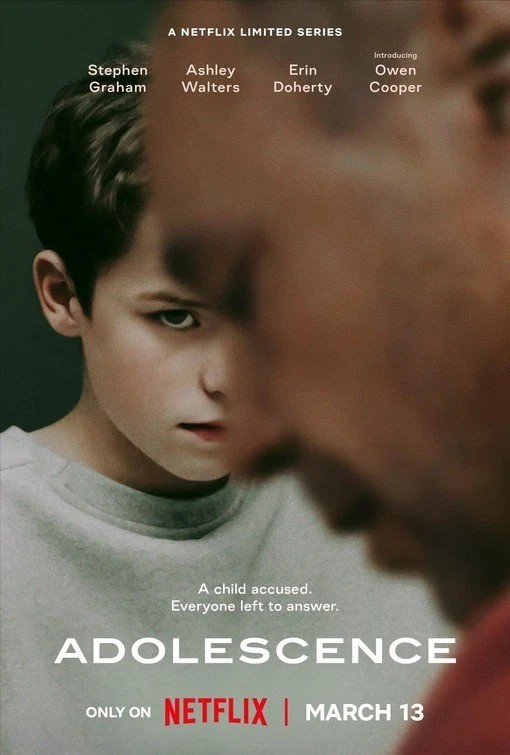
As riveted as I was by the first two episodes, I was bored rigid by the last two which consisted of waiting for simmering father Eddie (Stephen Graham) and 13-year-old son Jamie (Owen Cooper) to explode. That was no big surprise for the mouthy father had been on a short fuse from the outset, but the son, excepting of course he had knifed a female schoolmate to death, had been working hard on presenting an earnest innocent face.
While the much-vaunted one-take technical breakthrough (??) works well enough in the first two episodes it falls apart in the final two as tension completely evaporates. It was always going to be a big ask to maintain any real kind of tension in a series where we know from the start that Jamie is guilty as charged. The CCTV evidence provides all the confirmation we need, although for some reason Detective Inspector Luke Bascomb (Ashley Walters) wants to drag everything out because he lacks a motive for the murder.
Back in the Hollywood Golden Age, characters were always coming in and out of doors – and, if you recall, one of the greatest images put on film revolved around John Wayne and a door (The Searchers, 1956, if you need a reminder) – but then someone decided we could dispense with all that and just start scenes in rooms. Movies were also keen on people walking down a street – that created ambience, atmosphere, location, whatever, and helpful if they were headed for a western shootout – and television, for budgetary reasons, has tons of sequences of conversations outside during a stroll.
The notion that cinema verite camerawork involving walking endlessly along corridors adds much to a television series beyond bragging rights is misplaced. It comes in handy during the school scenes when the backdrop is teachers barely able to contain riotous kids. It seems a bit odd to expect television audiences who prefer character and story to be asked to applaud these endless walks – and takes lasting a solid hour – just because the director has worked out a way to jump from one character to another without cutting.
Apart from the initial identifying of the murderer, it takes a heck of a long time to go anywhere else. There’s a heinous attempt to make the victim responsible for her own death, she made fun of the younger boy for daring to think he was in her league – or age group – to ask her out. The motivation for the killing appears to revolve around Jamie, in full predator glory, hoping that in taking advantage of a moment of her personal humiliation, that she will relent.
The first two episodes set a high bar in police procedural, especially when answers are not forthcoming and the kids can give two fingers – or worse – to any figure of authority. The moment where Jamie gives vent is damaged by the fact that the psychiatrist Briony (Erin Docherty) is so ineffective.
As you might have guessed, social media is to blame, but any hint of inadequate parenting the director treats like an unexploded bomb best to avoid.
There’s not much character development, the DI farts in the car, a security guard is ignored in his attempts to spark up conversation with Briony, cop’s son Adam (Amari Bacchus) is subject to constant low-level bullying, and there’s a terrible attempt to make Eddie more empathetic by recalling his early dating.
Stephen Graham (Boiling Point, 2023) being both co-writer (with Jack Thorne, Toxic Town, 2025) and a producer probably led to him having more scenes than necessary. Directed by Philip Barantini (Boiling Point) who should win the Oscar for choreography.
Owen Cooper, in his debut, is by far the standout.
Netflix is hoping for kudos for this but it feels like one of those European arthouse movies long on style and short on substance.


 The Magnificent 60s