Behind the Scenes: “Shalako” (1968)

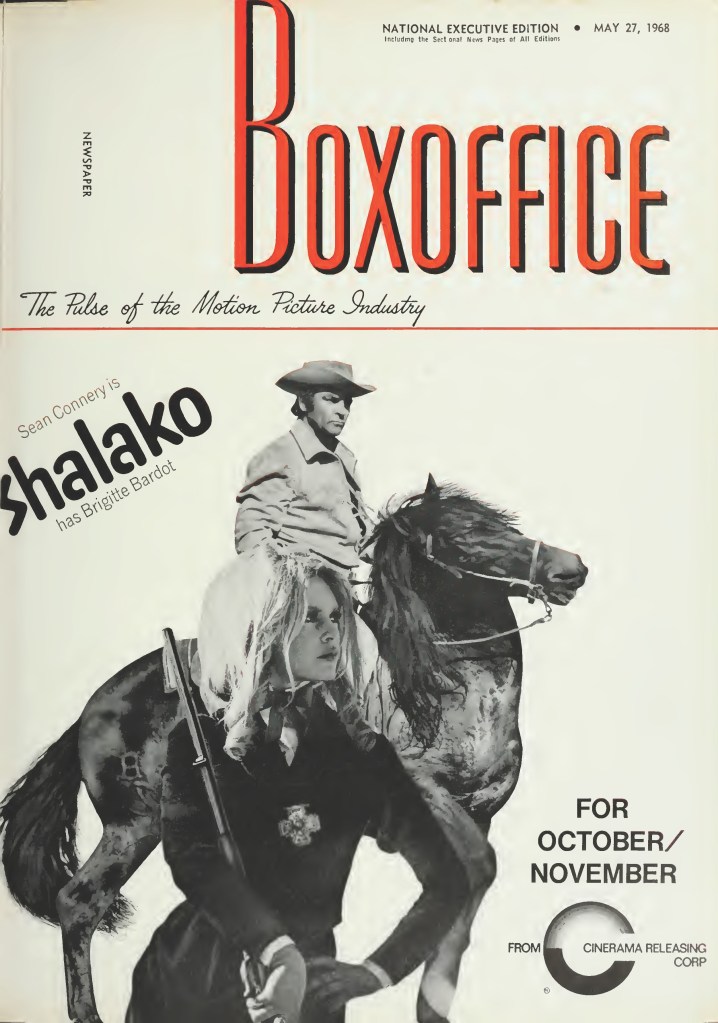
If you ever wondered just how a producer earns his crust, the convoluted process to make Shalako would provide a test case. British publicist turned producer Euan Lloyd had little on his calling card to gain entry to Hollywood, not even with the stars in tow for the project. Having worked for several years as a production assistant with Warwick Films, the British-based outfit headed by Cubby Broccoli and Irving Allen, he transitioned to associate producer on The Secret Ways (1961) but didn’t earn the moniker of producer until he pulled together an all-star cast for The Poppy Is Also A Flower (1966). Although released theatrically in Europe it was in reality a made-for-television number and screened as such in the United States.

So, actually, he was very much a neophyte producer. But early in his career he had become fast friends with Alan Ladd (Shane, 1953) and since they shared a love of westerns the actor had put him in touch with bestselling western author Louis L’Amour who was so taken with the Englishman’s enthusiasm he granted him a free option on any one of his un-filmed novels. Lloyd chose Shalako. “I could identify with that subject as it’s about a bunch of Europeans on safari in the West,” said Lloyd. (In fact, though as yet unfilmed, it was not as though nobody had tried. A report in Box Office magazine dated August 19, 1963, stated that Richard Carr was working on a screenplay for producer George Golitsin set for Universal).
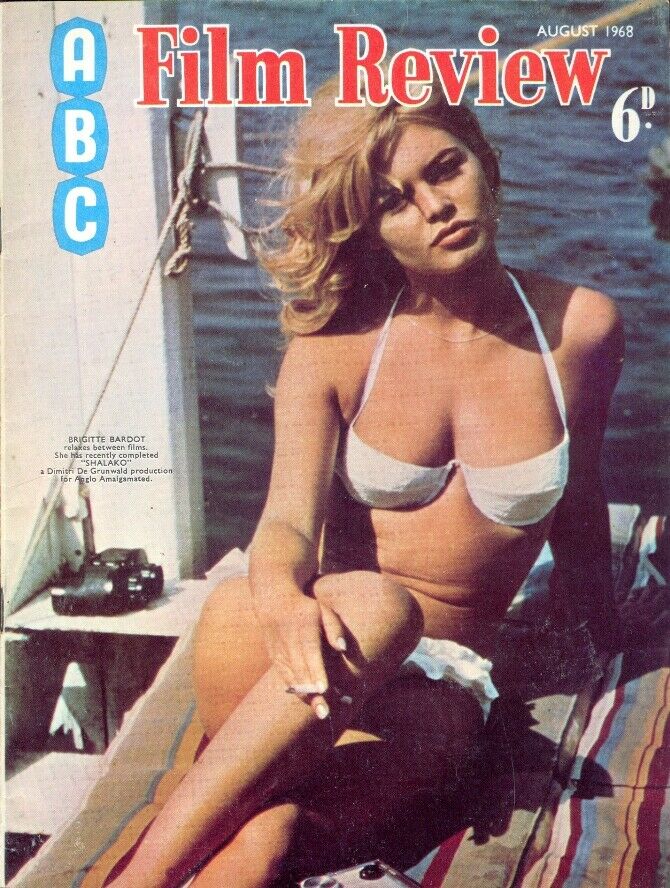
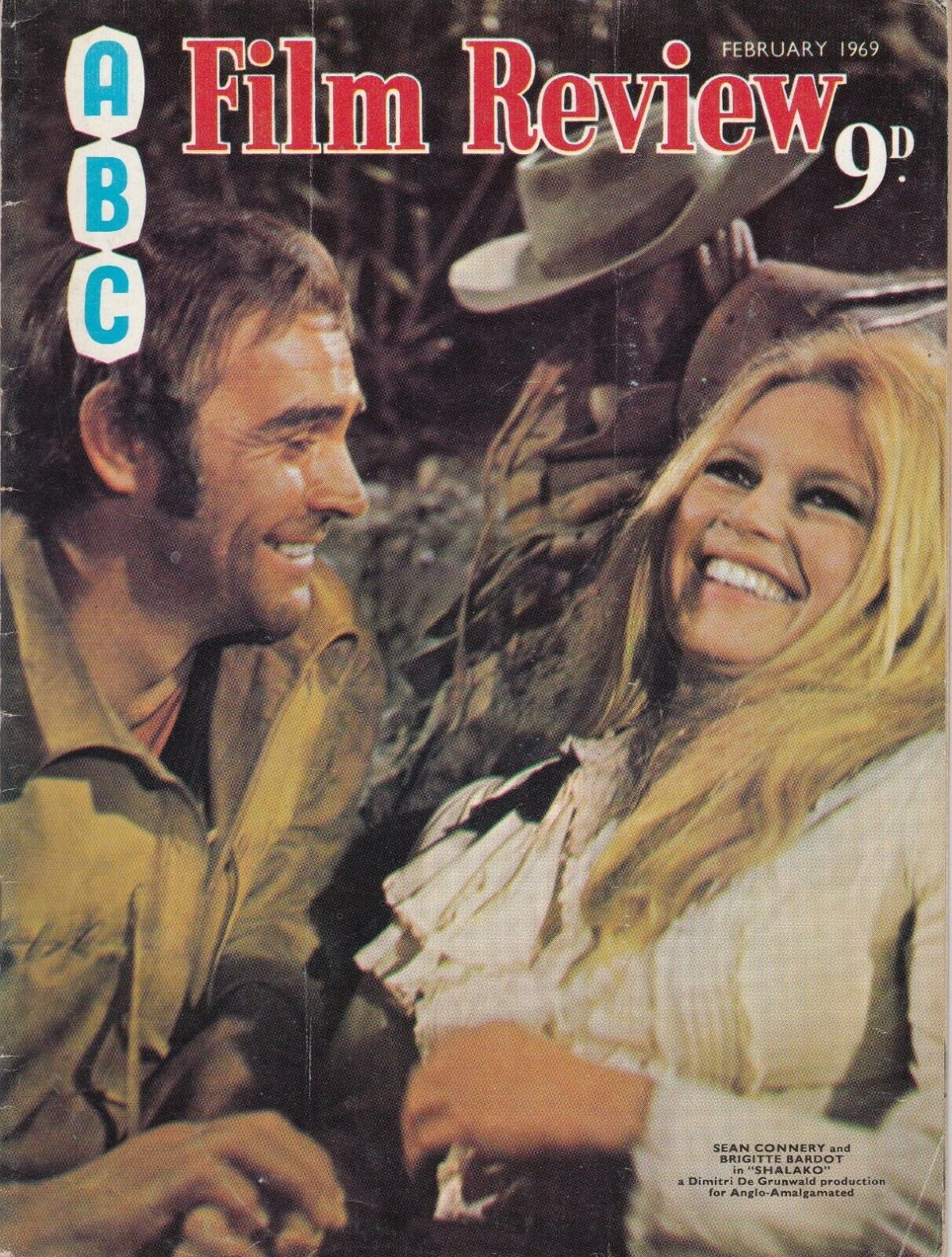
No connection to Shalako but little excuse necessary to showcase BB’s figure apparently.

On the production side, it would give him the excuse he required to put together a cast of non-Americans, stars from different nationalities who could open the distribution doors to significant European countries like France and Germany. His original starring pair were Henry Fonda (Firecreek, 1968) and Senta Berger, whom he knew from The Secret Ways and The Poppy Is Also A Flower. “Privately, she was the antithesis of the character she played in The Secret Ways…she came to mind as a very likely countess.”

He recruited Edward Dymytrk (Mirage, 1965), having got to know the director, a fugitive from the Communist witch hunt in the U.S., on the set of the British-made So Well Remembered (1947). Dmytryk had worked with Fonda on Warlock (1959). While appreciating Lloyd’s interest and keen to work again with Dmytryk, Fonda warned that he was not a strong enough marquee name to get the project off the ground.

To cover his back and using the names of his two stars and director, Lloyd set about pulling together finance from European sources. Although such co-productions were becoming  more common, Lloyd must have set some kind of record by pre-selling the movie, in the end, to 36 different bodies. But still it wasn’t enough. Without an American partner, the movie was no-go. Fonda proved the sticking point and in 1967 Lloyd decided to go for broke with a bigger cast (Fonda was pretty gracious about being dumped, “I did warn you,” he said).
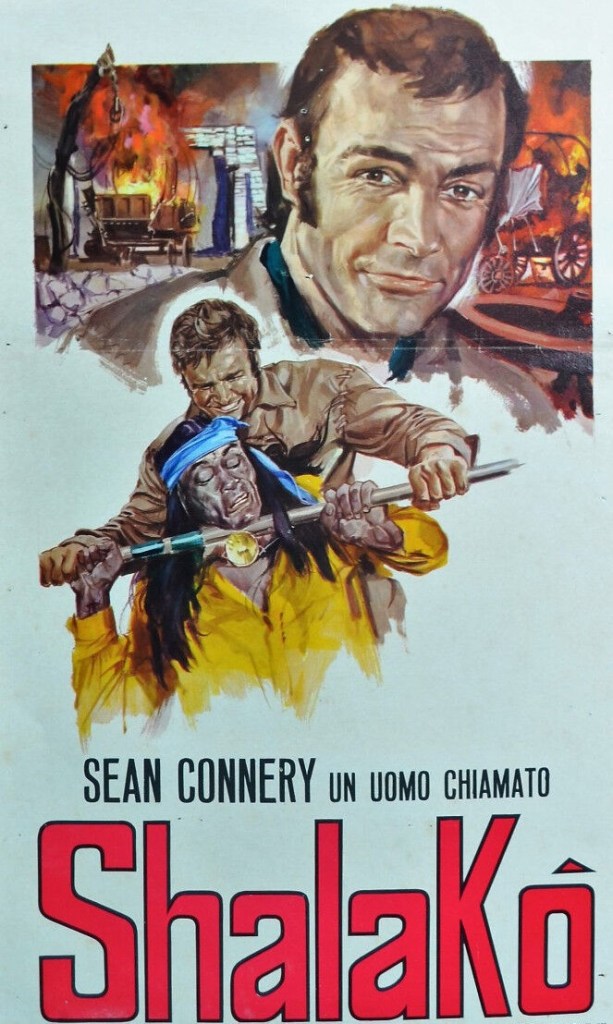
Sean Connery was not even initially on the list of proposed stars until Louis L’Amour alerted Lloyd to the length of the queues to see the latest Bond blockbuster (quite how a producer didn’t know that might be considered a mystery). Connery was incommunicado, filming a documentary in Scotland, but Lloyd managed to get in touch and seven weeks later he had what he believed, based on the Bond box office, was the biggest star in the world.

Part of the attraction for Connery of course was that for the first time he was receiving a salary ($1.2 million in total) commensurate with his box office. But it turned out as far as Hollywood was concerned, Connery had been taken in by his own publicity, studios pointing out that his non-Bond movies, Marnie (1964),  The Hill (1965) and A Fine Madness (1966) had not approached his Bond box office.

Nor was Brigitte Bardot a golden name on the U.S. cinema scene. Until the mid-decade reissue of La Dolce Vita (1960), her first starring role And God Created Woman (1956) held the record for the biggest imported movie. But since them, except for Viva Maria (1966), her movies had been relegated to arthouses, hardly worth risking for a $400,000 salary – she was in Variety’s list of Top Ten Overpriced Stars.

Three major studios rejected the movie. Assuming all the majors would take the same view that “Connery will never make it away from Bond,” Lloyd targeted a mini-major, the kind of neophyte outfit that might pony up to get a big name on its forthcoming schedule, a way of proving it could play with the big boys. ABC, an offshoot of the television network, was hooked, paying $1.4 million for the privilege.

Trevor Howard, Karl Malden, Claire Bloom and Ingrid Pitt was all considered for roles. Even without them, as well as Bardot, the movie, in terms of credits, had the look of one of those all-star epics so beloved in the 1960s: Jack Hawkins (Lawrence of Arabia, 1962), Stephen Boyd whom Lloyd knew from being associate producer on Genghis Khan (1965) and German star Peter van Eyck (Station Six Sahara, 1963). And if Bardot wasn’t enough to get journalist tongues wagging, Connery would also be reunited with Honor Blackman from Goldfinger (1964). The cast also included Woody Strode (The Professionals, 1966), famed 1940s western star Don ‘Red’ Barry (The Adventures of Red Ryder, 1940) and English comedian Eric Sykes (The Plank, 1967).

Mexico was first choice of location until the devalued peso rendered it too expensive. Almeria in Spain, location of choice of many a spaghetti western, was the alternative. The biggest problem pre-shooting was that, to get into character, Connery had decided to grow a Mexican moustache, presumably not aware that moustaches were verboten for stars after The Gunfighter (1950) sank at the box office reputedly because Gregory Peck wore one.  In the end, without the subject becoming a thorny issue, Connery shaved it off. He spent two weeks learning to ride under the tuition of Bob Simmons, a stunt arranger on the Bond pictures, so he could, indeed, sit as tall in the saddle as the great western stars. “He was a very proficient horseman by the time we started,” commented co-star Eric Sykes, “He looked as if he had been riding all his life.”

Meanwhile, Jack Hawkins (Masquerade, 1965) had undergone an operation for throat cancer and though he could speak his words were accompanied by a kind of belch and the voice for which he was so famous had disappeared. By coincidence Lloyd heard what he thought was Hawkins voicing a beer commercial. The distinctive tones belonged to Charles Gray (The Devil Rides Out, 1968) and he re-voiced Hawkins’ lines.

Despite Connery’s assertions to the contrary – his famous quote “she’s all girl but…all on the outside” was viewed as a detractory statement – Lloyd insisted it was a happy set. “I had absolutely no trouble from the cast during shooting and Sean and Brigitte performed perfectly and in harmony. Eddie Dmytryk was a man who knew exactly what he wanted and how to get it. The co-stars liked him enormously.”

Other sources paint a different picture, pointing to tension between Connery and Bardot over who was the bigger star, between Bardot and former lover Boyd, and between Connery and Dmytryk over the script. According to Eric Sykes, sitting beside Connery in between takes, the actor “would tear half a page or even a whole page of dialog out of his script…He was editing his part as he went along, apparently without reference to the director…One scene in particular with him and Brigitte Bardot, a long scene where they were sitting around a pool….it went on and on for about eight minutes…Sean’s editing turned it not a slick two- or three-minute scene…Eddie (Dmytryk) did not challenge it because when he saw what Sean had done he knew it was right.”

A big success in UK and Europe, it was a flop in the U.S. where ABC recorded a $1.2 million loss, but since every area was sold separately it is doubtful this shortfall would need to be repaid by the producer so counting the income from other sources it would have gone into profit. Incidentally, Connery was pictured wearing a moustache when the movie had its premiere and he was actually one of the few major stars who regularly wore a moustache in pictures and there are those who attribute his career longevity to cultivating a beard while still in his prime.

SOURCES: John Parker, Sean Connery, 1930-2020, The Definitive Biography (Bonnier Books, 2020) p171-176; Mac Mcsharry and Terry Hine, “The Way West,” Cinema Retro, Issue #2 May 2005, p38-42.
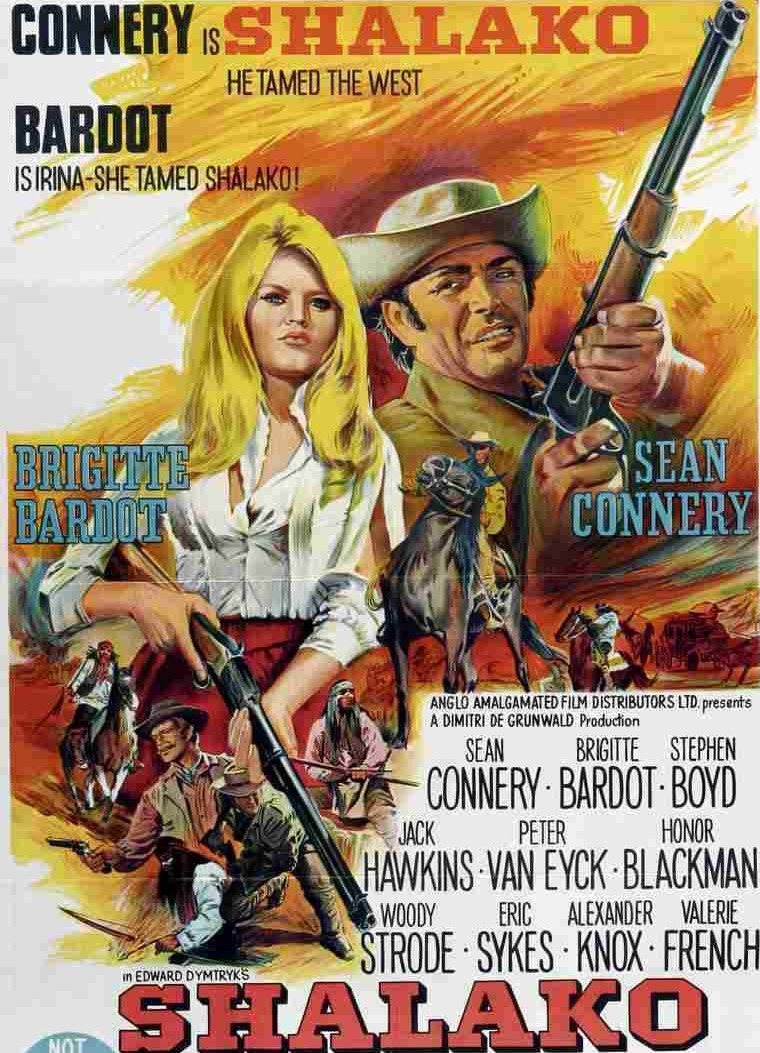
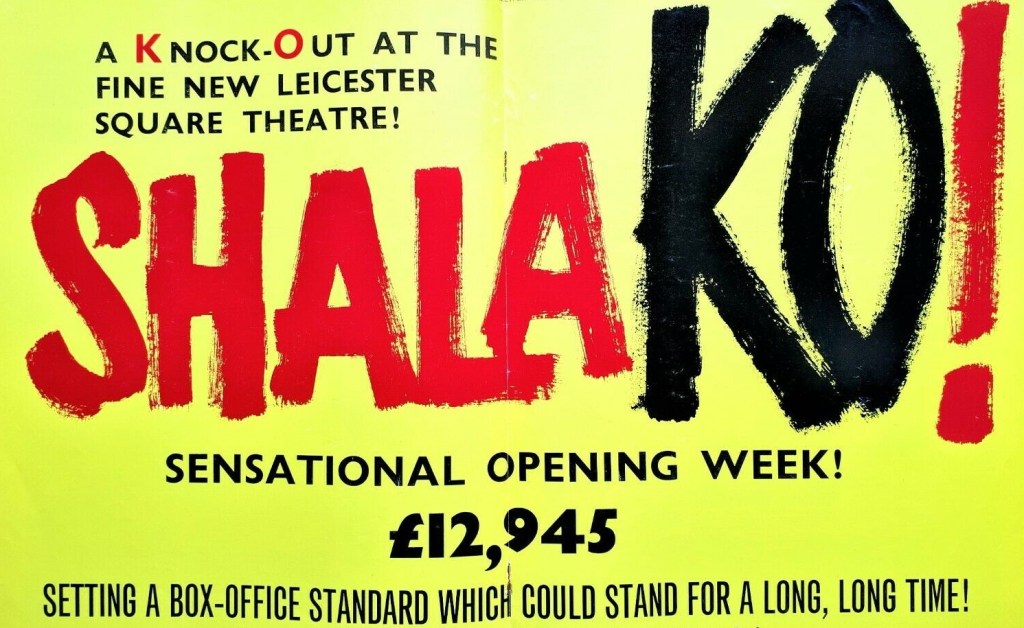
Shalako (1968) ***

It’s a gripping and unusual opening. The jangling noise of metal beating upon metal. A trapped mountain lion surrounded by a posse of unkempt men. The beast driven into a killing zone. The camera ends up on a classy blonde in a top hat, Irina (Brigitte Bardot), drawing a bead on the animal. But as she shoots so does rugged cowboy Bosky (Stephen Boyd) and you can be sure his aim is more deadly. It wouldn’t do to have an upper-class European lady to be mauled to death by a vicious creature just because her ego got the better of her.

Except that’s not the opening. Instead, that’s sacrificed for a dumb theme tune and a few minutes over the credits watching titular hero Shalako (Sean Connery) doing what exactly? Nothing exciting that for sure. We see him riding I guess to prove he can sit as tall in the saddle as the stars of the genre like Alan Ladd, John Wayne, Gary Cooper, James Stewart, as if nobody expected James Bond to be able to complete such a transition. There’s a bit of waking up, more riding, drinking from a dirty stream, and more riding while composer Jim Dale struggles to find lyrics that rhyme with Shalako.

There’s a bit more exposition before Shalako does anything meaningful. We are introduced to a fistful of Europeans on a hunting party complete with butler (Eric Sykes) and guzzling champagne and escorted by a bunch of mean-looking cowboys looking on in envy though I doubt any would acquire a taste for champagne.

Then the real action starts. A bit’s been missed out explaining just why Irina took off on her own with just one man as escort to continue hunting and nobody thought fit to warn her this was Apache country. We know she’s in trouble because her escort is just about dead and Apaches are gathering. Enter Shalako to save the day. The first piece of dialogue between the most handsome man in the world and the screen’s most beautiful woman, a movie made just so Connery, at his Bond peak, and Bardot, in her most expensive picture, could strike sparks off each other,  is hardly something to treasure. It’s almost priceless for its mundanity. “You all right?” grunts Shalako. “Yes,” replies the breathless heroine.

But trust the British to bring that epitome of British moviemaking, the class war, to that most democratic of movie species, the western. It’s ironic that in the country where freedom is a given  – slavery long since abolished in the period this movie was set – members of the hunting party are fettered. Irina is little more than bait. You might as well have staked her out, hoping to snare German aristocrat von Hallstatt (Peter van Eyck). Marriage would cure the financial woes of her debt-ridden sister Lady Daggett (Honor Blackman) and husband Sir Charles (Jack Jawkins). Von Hallstatt doesn’t believe in making romantic overtures, it would be, like so many aristocratic marriages, a contract of convenience; he acquires beauty, she gets wealth.

To complicate matters Lady Daggett has a roving eye which has settled on Bosky, and to complicate matters even further, nobody should be firing rifles, even if only for sport, in Apache territory. It’s not long before the Apaches take umbrage and launch an attack. And it takes even less time for Bosky and his buddies to take off, leaving their charges poorly defended in a makeshift fort.

It takes way too long to sort out all these plot machinations and get to the meat of the story which is finding a way of putting Connery and Bardot together and when they are not the movie trundles along without much in the way of screen sparks. It could have done with an entirely different scenario. Something akin to Soldier Blue (1970) would have worked a treat, with roles reversed of course back to the traditional of experienced male tending the inexperienced female as they battle through enemy territory.

You needed to get this pair together – and quick – for the movie to find any steam at all. As it is, it’s somewhat laborious. While the action sequences are well done and Shalako scores in the western lore department, you wouldn’t have thought a mountaineering subplot could have produced so few thrills, its only purpose, plot-wise, to ensure that von Hallstatt acquires some credibility (he’s the mountaineer) and that the group can reach a plateau whose main attraction, as lovers of westerns will already be aware, is a pool where in the great Hollywood tradition a woman can disport herself half-naked. Shalako, in sneaking up on her, comes across like a bit of a peeping tom.

Sean Connery (The Hill, 1965) is convincing enough as a cowboy. He certainly doesn’t look out of place on a horse but it takes far too long for the expected romance to begin. Brigitte Bardot (Viva Maria!, 1965) is better than you might expect as a sharpshooter, but not quite in the fiery class of a Claudia Cardinale (The Professionals, 1966) or even Maureen O’Hara (The Rare Breed, 1965) and she’s not really given the dialog necessary to fully establish the independence of her character.

Director Edward Dmytryk (Mirage, 1965) does his best with an overly-complicated script and some cumbersome set-pieces and it would have worked far better if a few characters and reams of sub-plot had been chucked aside to bring the stars together quicker. While Connery does the riding and shooting well enough he lacks the grizzled lived-in face of his famed western predecessors and I get a sense of him trying too hard. And, as I said, it wouldn’t have taken much to pep up Bardot.

Having complained about the subsidiary characters, they are all well-drawn. Stephen Boyd (The Big Gamble, 1961) makes on helluva mean cowboy, Honor Blackman (Moment to Moment, 1966) is excellent as a predatory female. Aristocratic pair Peter van Eyck (Station Six Sahara, 1963) and Jack Hawkins (Masquerade, 1965) are the kind of actors who can denote fallen status with facial expression rather than requiring lumps of dialog. But Eric Sykes (The Plank, 1967) is really a British in-joke.

James Griffith and screenwriting partner Hal Hopper had previously worked on Russ Meyer epics like Lorna (1965). The original story came from  a novel by Louis L’Amour (Catlow, 1971).

Out-with his guise as James Bond, Connery – excepting Robin and Marian (1976) and Cuba (1979) – was not one of the screen’s great lovers so this would have been the perfect chance  to hone those particular credentials. But like the entire picture this was a missed opportunity. When the best scene is the brutal suffocation of Honor Blackman and not the two stars canoodling, you can see the target was missed by miles.

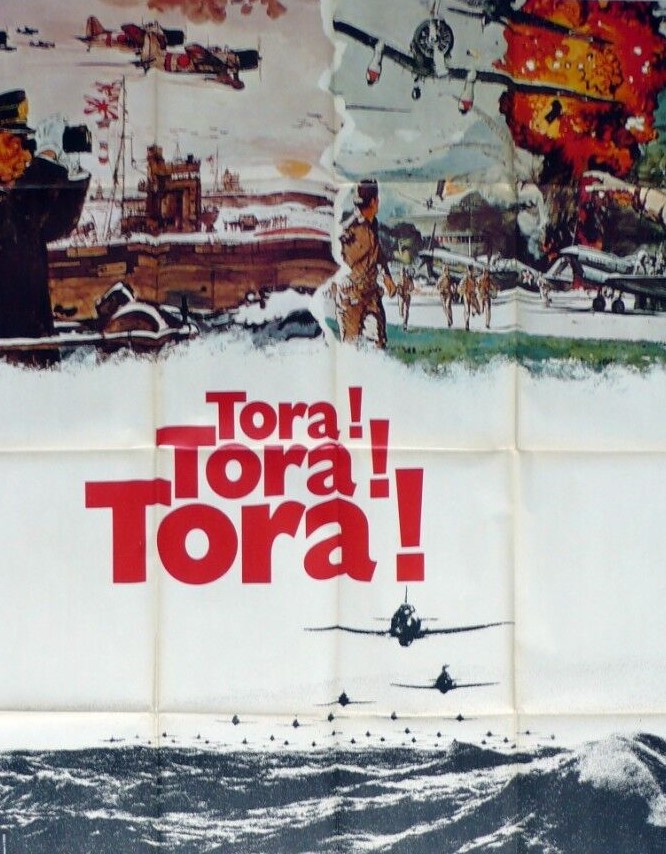
Behind the Scenes: “Tora! Tora!” Tora!” (1970)

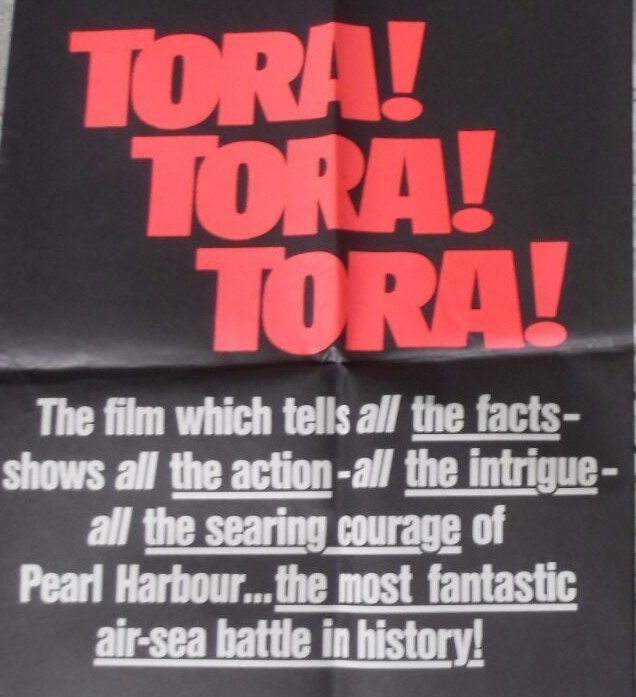
In cinematic terms director Richard Fleischer’s work on a Pearl Harbor project had begun in 1962, for a proposed movie called Zackary, the true story of an American spy living in Japan prior to the infamous attack. Fleischer signed a one-year contract with Dino de Laurantiis, the Italian producer behind the director’s previous movie Barabbas (1962). Italian screenwriters had a crack at the tale, then, in a foretaste of things to come, de Laurentiis turned to a Japanese writer whose idea of a screenplay was restricted to a document less than two pages in length. And so began one of the director’s periods in movie purgatory.

After Zackary was abandoned, Fleischer was put to work on four other concepts, none of which made their way to the screen. Worse, the pay-checks stopped coming and Fleischer sued Dino for a million dollars. Next up was The Nightrunners of Bengal from the bestseller by John Master for Samuel Bronston (El Cid, 1961). That, too, ended up in the courts.

If those rollercoasters weren’t enough, Fleischer revived his career with Fantastic Voyage (1966) and nearly sunk it with the financially disastrous Doctor Dolittle (1967), resuscitated his standing again with The Boston Strangler (1968) and dug another commercial hole with Che! (1969).

But he was the first port of call when producer Elmo Williams and his paymaster Darryl F. Zanuck, for whom Fleischer had made The Big Gamble (1961), decided on the biggest gamble in Hollywood history outside of Gone with the Wind (1939) and Cleopatra (1963).  In some respects Fleischer was on board as makeweight. For the undeniable directorial star of the show was intended to be legendary Japanese helmsman Akira Kurosawa (Seven Samurai, 1954). Never mind that the vast bulk of the global paying public had never heard of him, let alone pronounce his name, Kurosawa undoubtedly represented a critical coup. American critics responsible for building appreciation of him in academic circles were unlikely to lambast him for working with Hollywood, especially as, in the even-handed manner of this project, Kurosawa would be telling the story of the attack on Pearl Harbor from the Japanese point-of-view.

In fact, it wasn’t so much one epic, as two parallel films, telling the tale from opposing perspective, edited together.

But just getting to the filming stage had required research of Cecil B. DeMille proportions. Dr Gordon Prang of Maryland University had spent years on the subject, interviewing every participant on either side. He broke down the research into a daily accounting of the year prior to December 7, 1961, and a second-by-second analysis of the day before the attack. Every incident used in the film came from this research.

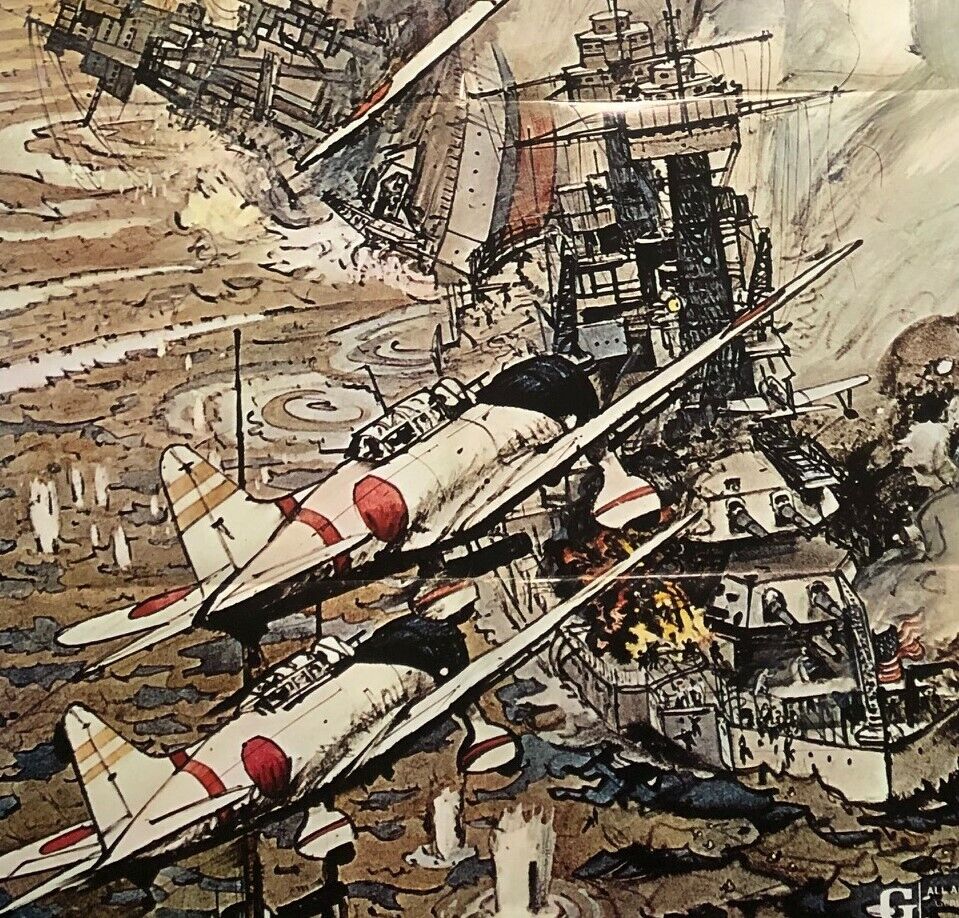
The bigger problem was assembling a Japanese fleet. Only one destroyer remained of the Japanese World War Two taskforce. The rest had been sunk. To do the movie justice, Twentieth Century Fox had to someow conjure up – just from the Japanese side – six aircraft carriers and the 353 aircraft they transported plus another 27 vessels that made up the escort. Whether the U.S. Navy would have been keen on lending a hand, it wouldn’t be much help either in providing the necessary material since most of its fleet from that period had long since been mothballed.

A million dollars was spent on a set that comprised half a battleship that could float and be towed. The rest was miniatures, but given the scale, most of these would come in around the 40-foot mark. There were 19 Japanese miniatures and 10 American.  

There were no Japanese Zero planes either. So 28 Vultee AT-6 aircraft were stretched six feet and adapted to resemble the Japanese plane. The production team raided the country for Flying Fortresses, P-40s and VT-13s that could serve the purpose if reconditioned. Dozens of vehicles from the era period were rescued from junkyards and repaired, restored and repainted.

Coordinating the work of the two directors was always going to be the main problem. How would the styles fit? For the scheme to work did one of Fleischer or Kurosawa have to assume supreme commander status? It didn’t help that neither could speak the other’s language. The few meetings held between the two directors were entirely about the Kurosawa section of the screenplay. To Fleischer’s astonishment, at the rather aggressive nudging of Elmo Williams, Kurosawa made concessions.

Fleischer came up with the practical solution to melding the two separate movies. His suggestion was: don’t do it. He intended showing the Americans as sloppy and overly-relaxed while Kurosawa wanted to emphasize the spit and polish of the Japanese Navy. The contradictory approaches would make each section appear such opposites as to make the entire production seamless.

Surprisingly, the studio won some cooperation from the U.S. government in the shape of the loan of an aircraft carrier. But such goodwill did not go unnoticed and the studio was forced to repay the Defense Department $515,000 for its use. But, in general, the Government was not inclined to cooperate, wanting paid for everything they supplied.  Off-duty soldiers and sailors were received standard Hollywood fees to act as extras. Every piece of machinery had to be rented. Tugs, Elmo Williams soon discovered, were available only at extortionate cost.

Water explosions were not only time-consuming but if the production encountered too much delay they become waterlogged and didn’t explode. Extras found it hard not to react to the explosions all around and just as difficult to wait for cues.

The biggest, most expensive and most spectacular, scene was the one battleship, the USS Nevada, that somehow managed to escape the harbor only to be attacked by dive-bombers. As mentioned, the only battleship constructed was only half-built. Part of what was missing were the engines. So it needed to be towed into position and allowed to drift on the current past five strategically-placed cameras with dozens of waters explosions synchronized to split-second timing. There were explosions on the deck, too, and stuntmen ready to be blown overboard. The planning and choreography required to show all hell breaking loose was staggering. The sequence was so expensive it would be impossible to re-stage.

Disaster on a movie set does not require everything possible to go wrong. Just one thing. In this case the ship got underway sooner than expected. With everyone on set working to sight cues, naturally they just did what was expected. Except it was unexpected. And the worst kind of unexpected. The water was ripped apart by explosions, the stuntmen were diving into the water, bullets and bombs were raining everywhere.

And the cameras had not turned an inch. The battle was half over before anything was photographed.

Fleischer and Williams had no alternative but to send their footage to the labs anyway. It would be processed overnight and screened the next morning to studio bosses. Fleischer expected to be fired. Luckily, they had filmed sufficient action for Zanuck to send a congratulatory telegram.

But the Fleischer experience – his section of the movie came in ahead of time – was nothing as bad as the Japanese one.  Kurosawa hired business tycoons with no acting experience for “all but the leading roles” in the hope they would finance his next picture. He was as obsessive over detail as David Lean, shutting down production to repaint the set or replace a set of books on a wall. Kurosawa’s production also required a fake battleship, at a cost of $1.6 million. He built it wrong. The rate of filming was catastrophically slow. An unhappy atmosphere turned disastrous when the director turned on an assistant. The upshot was the most feted Japanese director of all time was fired.  

Fleischer blamed the studio for forcing Kurosawa to work in the Hollywood manner, interfering with the work of a director who had achieved his fame by being autonomous. The only scene filmed by Kurosawa that ended up in the picture was that of the American ambassador in the US embassy in Tokyo.

Unsurprisingly, many took issue with the notion of making the film at all. In the U.S., Representative John M. Murphy called it “an affront to americans fighting in vietname…every ethical standard is besmisrched by the Hollywood-Pentagon hook-up to produce a film glorifying the Japanese attack on Pearl Harbor.2  

One of the last 70mm roadshows and erroneously viewed as a financial disaster on account of its performance in the United States, in fact the movie made a reasonable profit from its global release and, of course, a fortune in the course of its lifetime, counting television, DVD and streaming.

SOURCES: Richard Fleischer, Just Tell Me When To Cry, (Carroll and Graf, 1993) p227-233, 273-287; “Controversy Boils Up As Tora! Opens,” Desfret News, September 25, 1970, p8C.

Behind the Scenes: When Box Office Booms, United Artists 1968

Without a James Bond to guarantee a winner, major studio United Artists invested so wisely in production in 1968 that it virtually doubled its investment. From 30 films costing a total of $60 million, the studio hit the target with rentals of $115 million.

This was in large part due to a relative newcomer, a certain Clint Eastwood. UA’s share of the costs of the final film in the Sergio Leone trilogy The Good, The Bad and the Ugly had amounted to just $972,000 and that bought it the distribution rights to most of Europe, the US and the rest of the world. The picture was a hit Stateside with $5.2 million in rentals (the studio share of box office gross once the cinema had taken its cut) and it took in another $5 million at the global ticket wickets. The grand total of $10.2 million was ten times the cost, and this was before Easy Rider the following year made cost-to-profit ratio a significant measure of success.

But UA had also forked out $1.67 million to make Eastwood’s first American western, Hang ‘Em High directed by Ted Post with Inger Stevens as the female lead.  That racked up just over $6 million in the domestic market with another $3 million overseas, totalling $9.04 million.

But whereas those in the know, based on returns for the first two spaghetti westerns, could have predicted a solid audience response to the Clint Eastwood duo, that was hardly the case for a low-budget comedy with two stars whose movie careers had largely derailed.

Although a major star on television thanks to I Love Lucy, and a considerable power in television production – her company Desilu produced Mission Impossible, Star Trek and The Untouchables –  Lucille Ball was a spent force in the movies. She hadn’t made a picture in five years – Critic’s Choice (1963) flopped – and only two in the last decade. While still in demand, Henry Fonda was more likely to play second lead – to Richard Widmark in Madigan (1968) or James Stewart in Firecreek (1968) – or a supporting role in a big budget film and on those rare occasions when he was top-billed, Welcome to Hard Times (1967), the movie flopped.

Yours, Mine and Ours was based on a non-fiction best-seller, a melding of gigantic proportions of two families, totalling a dozen children. The comic opportunities were obvious to writer-director Melville Shavelson, back on home ground after Israeli war epic Cast a Giant Shadow (1966). A feel-good comedy without any sex was what Disney did, not a studio known for breaking boundaries. If nobody expected much, even if Ball could drag in her television fans, Hollywood had forgotten about the forgotten audiences, the older generation left out in the cold by the spate of movies mainlining on sex and violence. It proved the ideal antidote to the previous year’s The Graduate.

Made for just $1.7 million (plus $455,000 deferred, payable only if the movie went into the black) it was outrageously successful, knocking up $13 million in global rentals. Foreign audiences were less taken but by then nobody cared for it had scored over $11 million in rentals in the U.S, placing ninth in the annual box office league.

Although it cost considerably more – $4.3 million – UA pulled out another plum with Steve McQueen-Faye Dunaway romantic thriller The Thomas Crown Affair which ransacked the global box office to the tune of $11.2 million in rentals.

Whereas, excepting the latter, all these had been low-budget gambles, UA took an almighty risk with musical Chitty Chitty Bang Bang, the closest it came to James Bond given they shared the same author in Ian Fleming. Dick Van Dyke was in Mary Poppins form, but co-star Shirley Anne Howe was no Julie Andrews. The budget was a whopping $11.9 million, more than double the cost of its next most expensive production, The Charge of the Light Brigade. It just about sneaked home, earning rentals of $14.8 million. While, technically, the studio’s biggest hit at the box office, in terms of profit it lagged way behind.

Another risky venture was war film The Devil’s Brigade starring an out-of-favor William Holden who hadn’t had a hit since the start of the decade. Budgeted at $4.7 million there were some anxious moments at UA HQ when the domestic tally was just $3.85 million but audiences overseas were more welcoming and, in the end, the global tally of $8.6 million made it a certified hit. 

The $3 million spent, respectively, on comedy The Party starring Peter Sellers and western The Scalphunters with Burt Lancaster also hit the profit lode, the former with a global pot of $4.5 million, the latter $4.75 million.

There was also shrewd investment in overseas films. Beatles animated feature Yellow Submarine torpedoed $3.6 million on a budget of $1.1 million. British coming of age sex drama Here We Go Round the Mulberry Bush cost just $602,000 but pulled in $2.5 million. A couple of French arties hit home runs. Claude Lelouche’s Vivre Pour Vivre with Yves Montand and Candice Bergen racked up $4.4 million but cost only $561,000 and Truffaut’s The Bride Wore Black brought in rentals of just over $2 million on a budget of $747,000.

Out of 30 films, 17 ended up in profit, which was a pretty good result for an industry that was about to hit the financial buffers from overspending. With budgets averaging just $2 million the studio reduced the risk factor. While UA had built a successful business in the 1950s and 1960s by paying top dollar to stars, ceding control and financing vanity projects, now it was less inclined to gamble on unproven marquee value. Only Steve McQueen, Faye Dunaway, Burt Lancaster, Peter Sellers and William Holden had the kind of box office track record that would have studios lining up to match their fees. 

SOURCE: “United Artists Corporation and Subsidiaries Motion Picture Negative Costs for Pictures Released in the Year Ended December 28, 1968,” United Artists Files, University of Wisconsin.

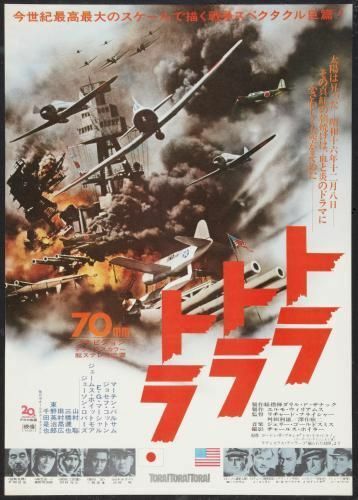
Tora! Tora! Tora! (1970) *****

Thankfully devoid of the empty triumphalism that marred In Harm’s Way (1965) and Pearl Harbor (2001) and the gritty backs against the wall heroism and snatching some kind of victory from the jaws of defeat of The Alamo (1960) and Zulu (1964), and with a documentary-style approach much more acceptable these days than then, there is an immense amount to appreciate and absorb in this last-gasp 70mm roadshow from a financially flailing Twentieth Century Fox.

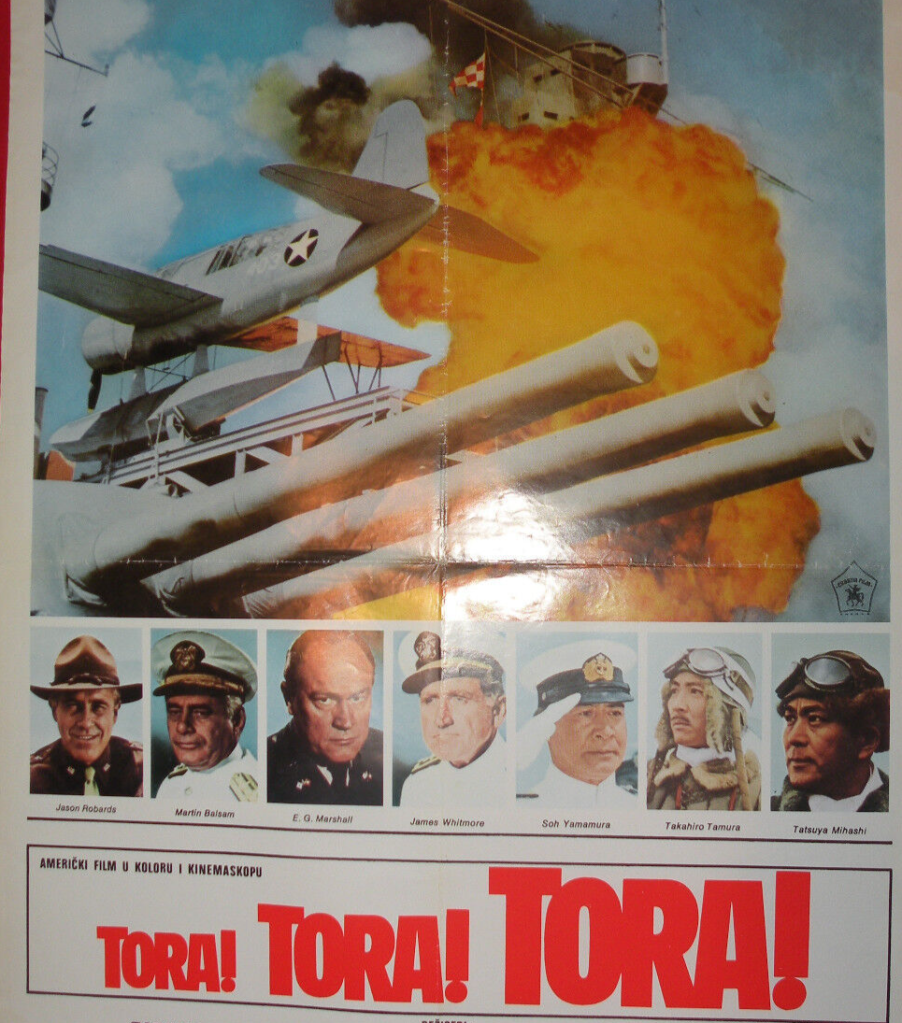
Shorn, too, of the traditional all-star cast bar Jason Robards (Hour of the Gun, 1967) – who might not count – nor the regiment of rising talent stuffed into such epics in the hope one might catch the eye and float to the top. And there’s no room to ram in a distracting romance such as in the previous and future films focusing on the military disaster. Instead, stuffed with dependable supporting players like Martin Balsam (Harlow, 1965), E.G. Marshall (The Chase, 1966) and James Whitmore (The Split, 1968) stops audience rubber-necking in its tracks, unlike producer Darryl F. Zanuck’s previous The Longest Day (1962), in favor of forensic analysis of what went wrong in the defence and what went so brilliant right in the attack.

Like most of the best war epics – The Longest Day, Battle of the Bulge (1965), taking an even-handed approach in presenting both sides of the battle, except here you could argue considerably more time is spent with the Japanese, beginning with the opening credits where the camera floats in and around a giant battleship.  Despite the sudden attack which went against all the traditions of war – a timing error apparently – the Japanese are presented as honorable and even arguing against going to war as well as worrying about the consequences of poking the tiger.

And there is none of the endless owing and scraping and not attempting to rise above your station in the traditional Western-view of the Japanese. Here, from the outset, superior officers are questioned possibly in manner that would be permitted among the opposing forces.

The first half is given up to the superb organisation of the attack, including the bold use of using aerial torpedoes – proven to work by the British in an earlier assault on a harbor without the apparent depth of water required – and contrasting it with the general U.S. ineptness, bureaucracy, interdepartmental battles and overall lack of preparation even though several personnel believed an attack imminent. The Yanks had even broken the Japanese codes so could easily have taken heed of obvious omens, had working radar on site though its employment was handicapped by being limited to three hours a day and initially lacking a means of communicating findings. Someone had even worked out that the Japanese would need six aircraft carriers to mount an attack and that the ideal time would be early morning on a weekend, someone even predicting an attack down to the exact time except a week out.

Of course, the U.S. at this point was not at war and so could be excused switching off in the evening or being uncontactable in the morning because they were still out carousing from the night before or sedately riding a horse. While there is a growing sense of alarm, the chain of command is woefully stretched often in the wrong direction and at one point stops before it reaches the President.

Fearful of sabotage, the Americans shift planes away from the perimeter of airfields smack bang into the runway where they can be more easily destroyed. Perhaps the greatest irony is that in shifting the U.S. fleet from its home base in San Diego, the Americans made such an attack possible.

When it gets under way, the battle scenes are superb, especially given none of the CGI Pearl Harbor could call upon, and yet with the U.S. aircraft carriers by luck still at sea failed to deliver a killer blow for the Japanese.

It’s handled superbly by director Richard Fleischer (The Boston Strangler, 1968), Kinju Fukasaku (Battle Royale, 2000) and Toshio Masuda (The Zero Fighter, 1962).  The American flaws are dramatized rather than being dealt with by info-dump. Larry Forester (Fathom, 1967) and long-time Akira Kurosawa confederates Hideo Oguni (Ikiru, 1952) and Ryuzo Kikushima (Yojimbo, 1961) fashioned a sharp screenplay from mountains of material.

Long rumored to be a box office flop it turned out to have made a decent profit, albeit not in the U.S.

The documentary approach adds immensely to the movie and it remains one of the all-time greats precisely because of the lack of artificial drama.

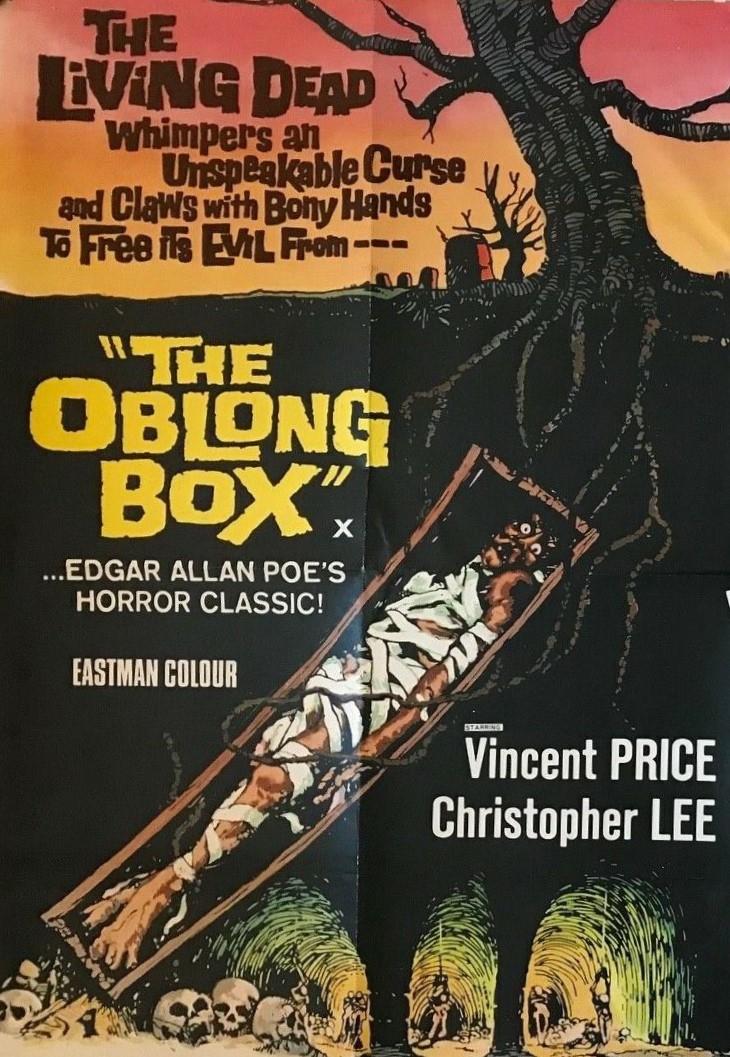
The Oblong Box (1969) ***

Vincent Price and Christopher Lee – two scions of 1960s horror – together, yet anyone expecting a clash of the giants would be sorely disappointed as they only share one short scene. This is a typical American International Pictures venture, based even more typically on an Edgar Allan Poe story, with some stylistic direction – the extreme close-up never more effectively utilized – from Gordon Hessler in his third feature.

Given that German-born Hessler (Catacombs/The Woman Who Wouldn’t Die, 1965) was a last-minute substitute for English director Michael Reeves (Witchfinder General, 1968), he made an exceptionally good job of a complicated plot. The production was even more complicated than that since it was originally intended as a Spanish co-production to be shot in Spain. And at one point writer Lawrence Huntingdon (The Vulture, 1966), who did have form as a director (Death Drums Along the River, 1963), was reportedly also carrying out producer-director duties.

What seems like a mishmash of different stories – African sorcery, grave-robbing, disfigurement, forgery, blackmail, lifetime imprisonment, medical experiment, buried alive, a monster in a scarlet mask – soon comes together in a tense tale of retribution and revenge.

Nineteenth century English aristocrat Julain Markham (Vincent Price) has withdrawn to his country manor, for unknown reasons distancing himself from his fiancée Elizabeth (Hilary Dwyer), but in reality to conceal from the world the fact that he has locked up his own brother, Sir Edward (Alister Williamson). When the brother, a disfigured monster, escapes he embarks on a murder spree.

The various storylines keep the narrative sufficiently entangled to sustain tension. Despite what may appear to a modern audience as primitive special effects, several scenes are bone-chilling largely through directorial manipulation. The Gothic look – graveyards, castles, the village – adds to the atmosphere. The violence was trimmed in America to avoid an “R” rating, but led to the film being banned in Australia.

There is more overt sexuality than normal, a scheming whore Heidi (Uta Levka) tempting a man with her bare breasts, and maid Sally (Sally Geeson) entranced by the monster.

The various plot strands appeared to confuse critics at the time and even now the film receives comments that it is “vague” but at a time when Hammer’s output usually comprised a straightforward – and somewhat limited narrative – I found AIP’s approach to this picture a welcome development. The slowly emerging story set the film up as much as a thriller as a horror.

It’s a bit of a reversal for Vincent Price (Witchfinder General, 1968) to be playing the good guy but that works to the movie’s advantage because you spent most of the time thinking this is just a scam and at some point he will show his true colors. Hilary Dwyer (Witchfinder General) is excellent and Sally Geeson (What’s Good for the Goose, 1969) is an example of the type of woman attracted to rather than revulsed by a killer.

Well worth a look if only to enjoy the distinctive Hessler style.

Blow-Up (1966) ****

Movies can break all sorts of rules but they can’t cheat.

A film has to stick to an internal logic. For example, it can’t portray a photographer so obsessed with his calling that he even takes a camera with him to an antique shop and starts shooting off roll and after roll capturing the area’s rundown streets but then the one time he really could do with a camera – to prove there is a corpse at his feet – he is somewhat remiss. Especially when that the movie turns on that plot point.

Setting aside what’s a somewhat contrived snapshot of “Swinging London” there’s a lot to admire here. The absence of music for one thing. Most of the movie runs without musical accompaniment, a bold move since so often we rely on the soundtrack to provide guidance for a scene or an overlay for the entire film. Here, Michelangelo Antonioni (Zabriskie Point, 1970) makes us falls back on our own interpretation.

David Hemmings (The Charge of the Light Brigade, 1968), all mop-top and intense stare, is a high-flying high-living fashion photographer in the David Bailey mold (casual sex with wannabe models a perk) who turns investigator on being confronted in a park by Vanessa Redgrave (Hemmings’ adulterous love interest in The Charge of the Light Brigade) after taking snaps she wants back. Tension is sustained by her sudden appearance at his studio, willing to pay with her body for the return of the photos, and then by Hemmings’ careful, photo-by-photo blow-up-by-blow-up analysis that slowly comes closer to the truth.

Everything in his world is judged through a lens, as if he can capture elusive truths, and he has aspirations to being more than a mere fashion adjunct, having spent time taking portraits of down-and-outs. He judges Redgrave as he would a model, she has a good stance and sitting posture. Even by the standards of the permissive society, he is a bit of sexual predator, taking advantage of two giggly model wannabes – Jane Birkin (Wonderwall, 1968) and Gillian Hills (Three, 1969).

But the photography scenes are well done and Antonioni captures the intimacy between model and photographer that create the best images. If you want to see what a model brings to modeling check out real-life model Veruschka posing in an outfit held together by the thinnest of threads, bringing to life the much-touted notion that a model makes love to a camera. If you can get past the cheat and the deliberate obtuseness this creates – and the tsunami of artistic interpretations it inspired about the director’s intent – then it remains intriguing.

This isn’t Hemmings’ greatest work – Fragment of Fear is much better – but it certainly provided him with a marketable movie persona. Redgrave is excellent as the nervy woman willing to do what is required and the movie might have worked better had she had been allocated more screen time and their duel had continued through other scenes. But then that would have been Hitchcock and not Antonioni.  

Sarah Miles (The Ceremony, 1963), Peter Bowles (The Charge of the Light Brigade) and John Castle (The Lion in Winter, 1968) have small parts. The film certainly captures the electricity of a photo shoot between a skilled photographer and pliant model, but it also works as an extended metaphor about the elusiveness of cinematic truth.

Despite my misgivings about the “cheat,” an intriguing and satisfying exploration of an artist seeking to jettison the fripperies of his art yet unable to avoid the temptation of enjoying the easy sexual benefits.

Nightmare (1964) ****

Now this is what you’re looking for when you take an unguided tour into the British B-movie. A tight gripping thriller with a parcel of twists, clever character perspective, some stunning cinematography, and pivoting on perception of insanity.

The opening is a cracker. Teenager Janet (Jennie Linden) stumbles along a dark prison-like corridor with little light hearing someone call her name. Entering a door, she spies a woman in a white nightgown lurking in the corner. She responds to the gentle calling. But once she lets the door close behind her and can’t get out, the woman screams that now they are both mad. And that’s just the first, atmospherically brilliant, nightmare.

Janet is soon removed from her posh boarding school, her constant nightmares too frightening for the other pupils. Driven home in a Rolls-Royce, accompanied by teacher Mary (Brenda Bruce) she passes the asylum where her mother is an inmate, but is surprised to find her legal guardian, charming lawyer Henry (David Knight), isn’t there to greet her. Instead there’s a nurse, Grace (Moira Redmond).

We soon learn she’s been effectively orphaned by her mother, who killed her father, Janet, eleven at the time, witnessing the murder. But without any proper home life, looked after primarily by kindly chauffeur John (George A. Cooper) and maternal maid Anne (Julie Samuel) and with the married Henry often absent, there’s little done to quieten down her obsession that she will follow her mother into madness.

The movie takes her perspective, watching her watching out for mystery, or in her point of view as she catches fleeting glimpses of a woman in white. The apparition looking only too realistic, not dashing out of view but turning and apparently beckoning Janet on and it doesn’t take much to push a disordered mind further out of kilter, leading to attempted suicide. Imagining Henry’s wife is the ghost, she stabs her to death.

End of Act One. Start of Twist No 1. You would expect the movie to follow Janet to the asylum where she would be reunited with her mother, knowing she had inherited those terrible genes, trapped in her insanity. But it goes somewhere more delicious instead.

Turns out nice Henry is not very nice at all. He contrived a situation to be rid of his wife and marry lover Grace instead. But, once married, it is Grace who becomes disturbed and the movie follows a similar arc in the second half. Unexplained goings-on. She believes Henry has another, secret, lover and is trying to drive his new wife crazy. She finds strange cigarettes in his pocket, a barman at a hotel recognizes him even though he claims never to have been there before.

The marriage quickly deteriorates although she stands her ground, telling him in no uncertain terms that she won’t put up with any philandering and slapping his face. He is charm itself, easily turning aside her insinuations and from his casual and disarming manner it’s easy to believe he is perfectly innocent. Of course, that’s before Janet’s doll turns up and locked doors open and there’s an apparition.

The beauty of this picture is the atmosphere, the intensity of the camera, the concentration on two vulnerable females, convinced by genuine or imagined guilt that they will succumb to the madness that appears to pervade this particular house. You think it’s going down one route and are annoyed you didn’t see the next twist coming.

There’s the kind of cinematic repetition that enamored critics of more critically acclaimed pieces like The Searchers (1956). It’s almost as though there’s a beam of insanity identifying the next victim. And that’s helped immeasurably by the lighting which allows no shadow on faces. Like an inverted film noir, where the light has nowhere to go, no atmospheric shadow to create, except to land square on the faces of those involved. This would be the Old Dark House except never has a building been so illuminated, not bright throughout, the illumination predisposed to land on faces rather than rooms.

There are a couple of finely composed scenes, one viewed through a staircase, neat revelations, visual and verbal, a fabulous ending with one character screaming and a telephone dangling off the hook.

You might be astonished to discover this is a Hammer picture. Nary a monster in sight. But then little is scarier than what happens inside the mind, when imagination runs riot without external assistance. That the victim is a teenager, prone to the mood swings of that age, makes it easier for Jennie Linden (Women in Love, 1969) to ramp up the emotions without her seeming too barmy from the outset. David Knight (The Devil’s Agent, 1962) is excellent, conniving he may be but the general demeanor of bonhomie never slips into stage villain. But Moira Redmond (The Limbo Line, 1968) is the pick as she morphs from accomplished accomplice to prospective victim.

Tightly written by Jimmy Sangster (Maniac, 1963), characters fully evolved, twists cleverly concealed, and with excellent direction by Freddie Francis (The Skull, 1965), not just the visuals but in drawing out of a fairly standard set of actors exactly what he needs to make this tick.

Well worth a look. A much under-rated B-picture.

Youtube has an excellent print.https://www.youtube.com/watch?v=EJizyBez6A0&t=1064s

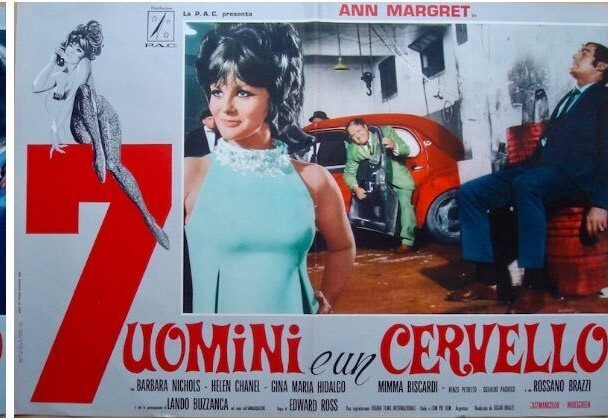
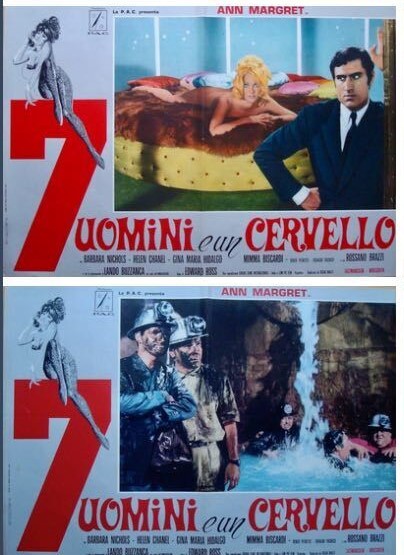
Criminal Affair/Seven Men and one Brain / 7 Uomini et un Cervello (1968) ***

After Murderers Row (1967), Ann-Margret flipped Hollywood the finger. At one point in the early 1960s contracts had been oozing from every pore, multiple deals with multiple studios, even one to star opposite Frank Sinatra. And despite showing considerable acting talent as a mother rather than moll in Once A Thief (1965), the career she had envisaged had not materialized.

In part, her reign as a glamor queen had been usurped by Raquel Welch, who had out-bikinied her in One Million Years B.C. (1966) and Fathom (1967), or by the slimmer versions of beauty emanating from Britain in the shape of Julie Christie or from French exile in the shape of Jane Fonda.. But mostly, you would say, her box office hadn’t matched her salary and she was learning fast that promise can only take you so far. So, she took a leaf out of La Welch’s book, and headed for Italy, for a three-year four-picture sojourn.

She was probably the biggest Hollywood star to head there during the whole decade, not the never-was-es and has-beens who usually made the Transatlantic crossing. But if she had thought she would get the pick of the roles, juicy parts directed by top arthouse names, she was sadly mistaken. It was clear Hollywood-on-the-Tiber viewed it the other way round, and saw her as adding some box office pizzazz to, by Hollywood standards, less well-made productions. This was her final effort.

I never thought I’d be saying this but in Criminal Affair Ann-Margret gets in the way of a neat heist thriller that occasionally slips into the broad Italian comedy unbeloved by everyone outside Italy. But this one does have a clever premise and like many of the best robbery movies the set-up is intriguing.

Criminologist professor Simpson (Rossanno Brazzi), classes filled with more adoring female students than Indiana Jones, has more than an academical interest in his subject, having planned and executed one jewel theft, and in traditional gangster fashion pulled a fast one on his confederates.  As luck would have it, his bosses grant him an all-expenses paid sabbatical to Buenos Aires where he plans to pull off the crime of the century.

FYI, that ain’t Ann-Margret on the bed and, despite the opportunity to get her soaking wet as was always a prerequisite regarding women when water was introduced, she doesn’t appear in the sewer scene either.

Accompanying him is mooning secretary Leticia (Ann-Margret) who prefers sporting herself in sexy ensembles or nothing at all to attract his attention rather than undertaking the more mundane tasks her job title might suggest. All to no avail, so it would seem, although she does, without her knowledge, play a vital role in his plan, as do some parakeets.

Academic profile opening doors, Simpson is able to scour police files to find his team, with one particular set of skills, that they can sing and properly for the grand plan is to stage a robbery at the opening night of La Traviata in the city, attended by the high and mighty who have paid colossal sums for the privilege.

He enrols other accomplices such as Georgette (Helene Chanel) whose task is divert the owner of the box overlooking the stage for which Simpson has another use. Her presence and that of the diva (Barbara Nichols) enrages Leticia, who resorts to swimming naked in the pool, flirting with the muscular butler and when that fails bombarding Simpson with dinner plates.

The use of the sewer is something of a heist trope, although there’s an original method of covering up the drilling and explosion, but mostly through misdirection we don’t quite work out how Simpson is going to fleece the opera house. Improbable a ruse as it is, nonetheless, as befits his high opinion of himself, the concept is a work of genius. Complications arise when the jewel robbers pursue him to Argentina. The film pretty much dispenses with the other heist trope, of spending much time on the character development of his new thieving team, beyond some obvious comedy.

The fact that Leticia has little to do deprives the picture of any reason for her presence, except as a dupe, physical attributes a distraction when necessary, and her lack of awareness that she is playing a key role leads to the movie’s sting in the tail.

But, in terms of the way the heist plays out, any actress could have played the part. It didn’t need to be Ann-Margret. And there’s not even any excuse, in a movie where singing is central, for her to sing. It’s possibly the most redundant role she ever took on. A bit more screenplay could have fixed that, had her character been developed along the lines of that of La Welch in her Italian-made heist picture The Biggest Bundle of Them All which appeared the same year.

And it might have better just to concentrate more on Rosanno Brazzi  (The Battle of the Villa Florita, 1965) because he has mother issues, carries his absent-minded personality disguise well, and allocate more time to the intricacies of the plot and his pursuers. Viewed just as a heist picture without the unnecessary diversions of the female lead and the comedy it pretty much makes the grade. On the other hand Ann-Margret’s existence might simply have been that since he was also director he couldn’t carry the acting side of the picture on his own.

No doubt, though, I will have to check out, for your benefit, Ann-Margret’s other Italian trio.

You can catch this on Youtube though the print is a bit washed-out. https://www.youtube.com/watch?v=Swf2yWL6E4Q

Grenfell (2023) ****

The single take has been the Holy Grail of directors ever since Alfred Hitchcock just about managed to use it for the entirety of Rope (1948). A quarter of a century on critics were raving about the complete one-take circle Michelangelo Antonioni achieved in The Passenger (1975) and half a century later for Sam Mendes’s  1917 (2019).  Every now and then an audacious director tries to earn kudos by employing the single take for long periods or editing a film in such a way as to get the same effect.

Oscar-winning British director Steve McQueen (12 Years A Slave, 2013) has jumped to the top of that particular technical tree by shooting all of Grenfell in one single mostly silent aerial take. I happen to be a big fan of the single take, much as I thoroughly enjoy reading long sentences in books. And for the same reason: the result is often hypnotic.  

The movie opens in the sky a good distance from London to which the camera moves in stately progression. Below is traditional English countryside cut up by long avenues of trees. As we approach the city of London, all that divides the close-packed houses are other houses, although, it being England, there are still swathes of green.

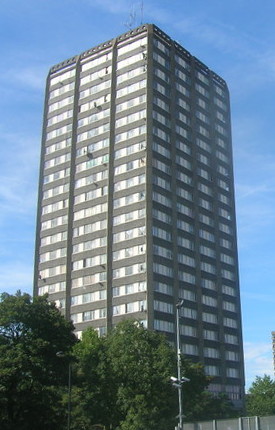
This is what Grenfell looked like in 2009. Now it’s windowless and blackened.
Photocredit: Robin Sones, CC BY-SA 2.0, https://commons.wikimedia.org/w/index.php?curid=59911338

We take a right as we fly over Wembley Station, the soccer fan’s Holy Grail, home of the F.A. Cup Final, international football matches and countless rock concerts including the legendary Live Aid (most recently replicated in Bohemian Rhapsody, 2018).  Gradually, in the distance appears something untoward. We are not close enough to the ground to see when buildings have lost their sheen, but high enough so that they still seem solid. But up ahead, coming slowly into view, is a jarring spectacle.

A charred skyscraper. Grenfell Tower. The remains of a devastating fire that in June 2017 killed 72 inhabitants. Some of the lower floors are white, which makes the upper floors stand out in sharper contrast. What work is going on is hard to determine – there’s a crane and men working on scaffolding. Maybe they are just adding more white panels to cover up the ruin, some kind of PR exercise to rid the city of the monstrosity and the memory of what happens when money talks and warnings are ignored.

The building is a rarity for such a devastating fire. After blazes with such a high death toll, there’s not much left of a structure, usually an empty shell, or as with the 9/11 Twin Towers nothing at all. This was a different kind of fire. Faulty easily-combustible plastic “cladding” – “siding” to use the American term as in the ubiquitous “aluminum siding” that Richard Dreyfuss and Danny DeVito sold in Tin Men (1987) – caused the catastrophe, allowing flames to race up the sides, emanating toxic smoke, too quickly for those inside to escape.

The camera takes a few turns around the building and you can glimpse the dead interior and imagine the lives once lived.

It’s not a long film. Only 24 minutes, and a chunk of that taken up with just getting there. Now it stands as a monument to injustice. Though the building lies within a prosperous London borough, only the poor lived here, and possibly might have only done so until they could be kicked out and the building demolished by a more normal means so that upmarket apartments could be sold to richer people.

As the camera rotates round the building, coming at it from slightly different angles, and without music to infuse it with deceptive grandeur, the result is less hypnotic than disorientating and your mind has to work hard to snatch at the images being shown, taking a while to realize that there’s going to be no coup de theatre, no grandstand finish, no sigh of relief – none of the “oh, that’s what it’s all about” that accompanies some opaque arthouse picture.

It ends as it begins with a blank screen, no credits.

It’s something of a cult film. There’s only one print and it’s only showing in one cinema, and not the kind you find in a multiplex, just a space within the Serpentine Gallery in Hyde Park in London. Admission is free and there are several showings at day. It was self-funded by McQueen, who had links to the Grenfell community, went to art school nearby and ran a stall at a market not far away. But it’s not intended for commercial purpose. There might not even be a DVD or end up on a streaming channel as I guess part of the experience is to see it with a group of people and all come out shell-shocked to the foyer and stare at the list of the names of the victims.

It’s running in London till May 10 so maybe if you’re over for the Coronation of King Charles you might just happen upon it. I was in London on Sunday past visiting my son and he had arranged the tickets. He’s pretty good at this sort of thing, one other time I saw him he had got tickets to see that eternally-long film about clocks (whose name I forget) at the Tate.  I doubt if anyone’s going to fly thousands of miles just to see it, but my guess is it will eventually go on tour and be shown in one museum after another.

Unlike the Twin Towers, there’s no one group to blame, but like the worst of ordinary disasters it’s a combination of various corporations and community officials whose watchword is greed or disinterest rather than common humanity.

Discover WordPress

A daily selection of the best content published on WordPress, collected for you by humans who love to read.

The Atavist Magazine

by Brian Hannan

WordPress.com News

The latest news on WordPress.com and the WordPress community.