If Benedict Cumberbatch or Leonardo DiCaprio or Brad Pitt had essayed this role Oscar voters would already be sharpening their pencils, especially as dramatic weight gain (Robert DeNiro in Raging Bull) seems to attract more sympathy than dramatic weight loss (Christian Bale, The Machinist). Although Mark Wahlberg (Uncharted, 2022) has a brace of Oscar nominations to his name, this movie seems to have struck out with most critics due to prejudice against organised religion. And that’s a shame because Wahlberg gives the performance of his career as a self-destructive boxer who finds redemption in becoming a rebel priest.
Atheist Stuart Long (Mark Wahlberg) is a whip-smart, charming, cocky loser. But when it comes to lifestyle choices he hasn’t the brains of a toad. Washed up as a boxer, he decides, as one does, that he has missed his vocation – he should be an actor. So off he hoofs to California, taking a job in a supermarket, on the basis (obviously) that one of the customers is bound to work in the movies and provide the lucky break. Instead, he falls for Carmen (Teresa Ruiz) only to discover she is an avowed Catholic, so serious about religion there would none of that sex-before-marriage nonsense.
So smitten is Stuart that he agrees to get baptised and then proving a holy hell of a parishioner questions priests about everything sacred, dropping F*** bombs left, right and center. But when he almost dies in a drunken accident, he decides to turn his life around the hard way and determines to become a priest. That’s another almighty battle in the acceptance stakes, and his take on religion is certainly not what the Catholic Church expected, but just when it looks as if he is going to achieve his ambition he is diagnosed with an incurable wasting disease.
Three hankies at the ready? No way. This is not one of the lovestruck teenager dying of cancer pictures, but a thoughtful and hilarious account of, effectively, stoicism. I knew nothing about the story on which this is based and half-expected either a miracle cure or that Carmen would announce herself pregnant, having done the whole sex-before-marriage thing, and scupper his chances of a life of chastity helping others.
Instead, Stuart is the kind of guy whose suffering infuses others with a dynamic to accept their own, often as miserable, life. And he’s so far from a saint that nobody could be lobbying the Pope on his behalf. I’ve no idea why this has been tagged “faith-based” which seems to spell box office doom especially Stateside. Anyone wanting to know what religion means to someone for whom religion means a lot would learn a huge amount from this picture. Stuart challenges everyone – and that includes the Almighty – but in a very real and often very funny way.
Yes, there is discussion of doctrine, but this part is fascinating, as Stuart pulls apart long-held tenets and tackles one of the apparent hallmarks of the faith in the U.S. – that no disabled person is allowed to stand on the altar. That he’s not the one who personally mounts a campaign to change this, since he’s so accepting of the will of God, and that it’s left to others, helps make this movie character-based rather than virtue-signalling.
This is best I have ever seen Wahlberg, not just because of how far he goes, body-wise, but because it is an incredibly assured performance, the fast-talking screen persona given the bullet, and in its place a realistic human being who begins to understand the benefits of humility over brashness. If it wasn’t for religion Stuart would have been one of life’s washed-up characters, ending up like his father Bill (Mel Gibson) at the bottom of a bottle.
Mel Gibson, now firmly in the Nicolas-Cage-straight-to-dvd league, turns in a superb performance as the bitter father and the Oscar-nominated Jackie Weaver (The Silver Linings Playbook, 2012) is excellent as the buttoned-down lost mother. Teresa Ruiz (The Marksman, 2021) is every bit as good. Cody Fern (Eden television series, 2021) as a buttoned-up priest who doubts his faith is one to watch and you might spot, under all his priestly garb and smug expression, Malcolm McDowell (A Clockwork Orange, 1971).
Given the emphasis on equality I’m surprised writer-director Rosalind Ross has not received more acclaim, if any at all from what I can gather, for what is a very assured debut. And I can only hope this is not because she committed the terrible sin, apparently, of attempting to make a sincere picture about the effect of religion on peoples’ lives. In Hollywood’s Golden Era all sorts of unlikely priests, step up Bing Crosby et al, and stars like Gary Cooper (The Pride of the Yankees, 1942) died of incurable diseases and the crowds would line up, but somehow this kind of storyline has become a box office affliction rather than carrying a banner for the kind of character-based straightforward story audiences used to love.
MGM wasn’t the first studio to hit upon the idea of re-editing episodes of a television series into a movie for cinema release. Small-screen The Lone Ranger had spawned The Legend of the Lone Ranger (1952) and Disney had stitched together episodes from its Davy Crockett franchise to create Davy Crockett, King of the Wild Frontier (1955) and Davy Crockett and the River Pirates (1955). The Challenge for Rin Tin Tin (1957) derived from The Adventures of Rin Tin Tin, Frontier Rangers (1959) born out of Northwest Passage, the Texas John Slaughter series the basis for five movies shown between 1960 and 1962, Crimebusters (1962) originated from Cain’s Hundred and Lassie’s Great Adventure (1963) from five episodes of the eponymous series.
But all these movies had one major disadvantage. Like their source material, they appeared in black-and-white. The Disney pair mined some box office gold, but primarily as matinee material. The rest were fillers, scheduled for the bottom half of a double bill and aimed at suburban and small-town cinemas and drive-ins desperate for anything to fill out a program. And all were nothing cruder than editing two or more episodes together to make a feature film.
MGM took a different approach. Instead of merging two different episodes, albeit starring the same stars, the studio decided to take one episode and expand it, filling out the story with subplots and extra characters and spicing up proceedings with levels of sex and violence that would not be tolerated on mainstream television. As important, it would be shot in color to make it stand out from the television series being shown in black-and-white.
First picture in the trial scheme was To Trap a Spy (changed form the initial To Catch a Spy), an expanded version of the television pilot known as The Vulcan Affair, and as well as series leads Robert Vaughn (The Magnificent Seven, 1960) and David McCallum (The Great Escape, 1963) toplined future Bond femme fatale Luciana Paluzzi (Thunderball, 1965). A second movie was culled from The Double Affair which had been screened on November 17, 1964, with an European star with a considerable pedigree in Senta Berger (Major Dundee, 1965).
Since MGM had no idea whether the spy series, launched in the U.S. on NBC on 22 September 1964, would catch on abroad, where in any case stations paid comparatively little to screen top American shows, its initial idea was to release films only for the foreign market.
In fact, the studio didn’t wait to see if the BBC could make a hit out of the debuting The Man from U.N.C.L.E. series and shunted out To Trap a Spy before the series even screened in Britain. And lacking momentum from television, it went out as the support on the ABC circuit in Britain to The Americanization of Emily (1965) starring Julie Andrews and James Garner.
At that time, the ABC chain was not beholden to the double bill idea. In fact, more than half the annual weekly releases went out as solo affairs. A double bill was more likely to suggest that there were doubts over the pulling power of the main film. There was no way of judging the box office appeal of any film put out in the lower half of a double bill.
The odd thing was that if MGM had held off pressing the button on the circuit release, To Trap a Spy would have demonstrated box office success. At the same time as the double bill was simultaneously released at nationwide first run theaters, To Trap a Spy opened in London’s West End in May 1965 at the 529-seat Ritz and delivered the best business MGM had enjoyed there for two years. It returned to the 556-seat Studio One, also in the West end, in October that year as the top attraction in a double bill that included Glenn Ford-Henry Ford western The Rounders (1965) and in its fifth week took in an excellent $5,600 and a few weeks later shifted back to the Ritz.
Between released the first and second Uncle pictures, MGM had launched a major marketing campaign on the back of the launch of the series on BBC. One marketing gimmick, inviting the audience to write in for The Man from U.N.C.L.E. certificates, brought in over half a million applications. MGM splashed out $85,000 marketing The Spy with My Face (1965). Again, the movie went out in an ABC circuit release – in July 1965 – as part of a double bill, with Son of a Gunfighter (1965), but this time the Uncle film topped the bill. Launched in the West End at the much larger 1,330-seat Empire it took $22,000 in its opening week. Nationally, “it was far and away above average for a top-grossing picture in the UK.”
To Trap A Spy and The Spy with My Face each grossed $2 million in the UK market. By January 1996, a third Uncle film had launched in the British market, One Spy Too Many, based on the two-episode Alexander the Great Affair which had screened in America in September 1965. This time MGM held off from ABC circuit release until mid-February until One Spy Too Many had cleaned up in January in the West End, $25,000 at the Empire, helped along by a Xmas merchandizing bonanza that saw the country flooded with memorabilia, paperbacks, three singles and an album. It broke studio records in 91 of the 125 situations it first played.
The success of the first pair pointed up the potential U.S. box office from these featurized episodes and MGM put together the double bill The Spy with My Face/To Trap a Spy on the assumption that the films at the very least would pick up business outside first run venues where bigger-budgeted pictures dominated and provide respite for showcase (wide release) theaters, drive-ins and small cinemas suffering from product shortage. The bigger a hit a movie became, whether roadshow or not, the longer it took to move down the food chain.
MGM was also inspired by the merchandizing boom generated by the television. A toy gun was well on its way to notching up sales of two million, and there were in addition, games, puzzles, trading cards, costumes and masks and chewing gum.
The MGM was entering a very crowded espionage market. Not only had Thunderball taken the top off the box office with an explosive debut in Xmas 1965, but any new entrant into the field in 1966 would come up against such spy behemoths as Columbia’s Our Man Flint (1966) and The Silencers (1966) from Twentieth Century Fox as well as more offbeat spy numbers like Paramount’s The Spy Who Came in from the Cold (1965) and other pictures aiming for a slice of the cake like Where the Spies Are (1966) with David Niven and That Man in Istanbul (1965).
Variety magazine was sniffy about the double bill’s prospects – “for the least discriminating audiences” was its take on To Trap a Spy although Box Office deemed it “far better story-wise” than The Spy with My Face.
Advert in “Variety” (May 27, 1964, p41) announcing the new series.
The Spy with My Face/To Trap a Spy gained surprising traction in first run, even though MGM was demanding a 50 per cent share of the box office. In some cities it ran smack bang into the openings of one or other of the biggies while Thunderball played for months on end. Even so, the results were surprisingly good. Leading the single cinema first run bows was $24,000 – equivalent to $214,000 now – in Chicago (and a second week of $18,000). Boston audiences delivered $16,000 (plus $11,000 second week), Detroit $18,000 (and $12,000). It ran for three weeks in Washington D.C., Philadelphia and Providence and two weeks in St Louis, Buffalo, St Louis, San Francisco and Cleveland.
There were one-week bookings at other major cities like Seattle, Pittsburgh, Minneapolis and Cincinnati. Except in Portland (“drab” first week and “dull” the second) and Seattle (“okay”) the box office verdict varied from “potent,” “virile” and “sock” to “nice,” “fine,” and “pleasant.” Box Office magazine reckoned that in Hartford the duo produced revenues over three times the average and in Memphis twice the average.
Following first run, it would go into wider breaks in these various cities. Some cities ignored first run and opted for a straight “showcase” (wide release) bow, New York leading the way with $104,000 – $928,000 equivalent today – from 25 cinemas, Kansas City bringing in $35,000 from 10 in week one and $25,000 from 10 in week two, and Baltimore good for $40,000 from 18. In new England cinemas and drive-ins united for a multiple run release hat “rang up some of the briskest business of the winter months despite the adverse weather conditions.” The only downside was the Pacific chain of drive-ins refusing to show the double bill on the grounds that previous experience of showing movies adapted from television series had “brought patron beefs” and that its own tests had not worked.
Even when The Man from U.N.C.L.E. series ended after three-and-a-half seasons, MGM continued bringing out movies, eventually totalling eight in all. The others were: One of Our Spies Is Missing (1966), The Spy in the Green Hat (1966), The Karate Killers (1967), The Helicopter Spies (1968) and How to Steal the World (1968).
Towards the end of the decade the Easy Rider (1969) phenomenon prompted a brief vogue for box office analysts to point to low-budget pictures generating the biggest profit. Nobody tended to include the first three Uncle films in this equation regardless of the fact that, costing an original $200,000 per episode plus extra for reshoots and editing, they were, on a profit-to-cost basis, extraordinarily successful, easily bringing home revenues in the region to 10-15 times their budgets.
SOURCES: Allen Eyles, ABC: The First Name in Entertainment (CTA, 1993), p123; “Another Uncle Sequel As O’Seas Theatrical,” Variety, September 23, 1964, p79; “Uncle Gets 3rd Whirl As O’seas Feature,” Variety, January 27, 1965, p26; “International Soundtrack,” Variety, May 26, 1965, p26; “Toys from Uncle,” Variety, June 30, 1965, p42; “Uncle Stunt in London Is Metro Hit,” Variety, December 8, 1965, p23; “Metro Sees Uncle TV Stanzas As B.O. Kin to James Bond in Theaters,” Variety, February 2, 1966, p1; Review, Variety, February 16, 1966, p18; Review, Box Office, February 21, 1966, pB11; “Box Office Barometer,” Box Office, March 14, 1966, p22; “One Spy Looms MGM Leader in Britain,” Variety, March 20, 1966, p29; “Drive-Ins in New England Preparing To Solve Springtime Problems,” Box Office, March 21, 1966, pNE4; “Pacific Prefers Not To Follow Video,” Variety, April 20, 1966, p24; “Box Office Barometer,” Box Office, June 20, 1966, p14; “How Uncle in Great Britain Clicked Via Tie-Ups with Tele,” Variety, June 22, 1966, p17; “Uncle TV Conversions Boffo at B.O. Theatrically O’Seas,” Variety, March 20, 1968, p4; Box Office figures taken from the weekly edition of Variety in the “Picture Grosses” section on the following dates: in 1965 on November 10 and December 8, in 1966 from February 2 until June 1; and August 18, 1966.
“Tedium in tumbleweed,” was the verdict of Time’s magazine’s critic. That was hardly the intention of Sergio Leone, Dario Argento (then just a critic) and Bernardo Bertolucci (Before the Revolution, 1964) after they met just before Xmas 1966 in a projection booth for a screening of The Good, the Bad and the Ugly and decided to try and write the quintessential western. This was a strange notion given that a) Leone had already revolutionized the western and b) on the completion of the last of the “Dollars” trilogy, had avowed to give up westerns and in consequence turned down Hang ‘Em High (1968).
When their six-month collaboration only produced 80 pages of script, Leone turned to Sergio Donati who finished it off in 25 days, adding such essential elements as the fly tormenting Jack Elam at the railway station, turning Morton into a cripple and giving him the motif of the ocean, and many others. Donati claimed, “The best thing I did was give a meaning to the story…This railroad which unites one ocean to the other is the end of the frontier, the end of adventure.” The completed screenplay drew on such influences as Johnny Guitar (1954), John Ford’s The Iron Horse (1924), The Searchers (1956) and The Man Who Shot Liberty Valance (1962), John Sturges’ The Magnificent Seven (1960), George Stevens’ Shane (1953) and a dozen pictures besides.
With a budget of $5 million, equally shared between Euro-International – flush from being the Italian distributor of German sex education film and box office smash Helga (1967) – and Paramount at the height of its European investment cycle, it would be the most expensive movie made in Italy since Dino de Laurentiis greenlit The Bible (1966). Twelve times as expensive as Leone’s debut western A Fistful of Dollars (1964) – the set of Flagstone alone cost more than that film’s entire budget – it would be shot at Cinecitta in Rome as well as on location in Almeria, Spain, and the iconic Monument Valley.
“Creative geography” had been utilized to find a connection between the famed Western landmark and the new town of Sweetwater. Prior to filming, Leone had undertaken a guided tour of Monument Valley and returned able to pinpoint exactly where Ford had made use of the location in the ten westerns he had shot there. Leone was the highest-remunerated, picking up $750,000 and 10 per cent of the profits with Claudia Cardinale on $500,000, but the others nowhere near such salaries.
It was Bertolucci who had persuaded the director to give Jill (Claudia Cardinale) the pivotal role. In Leone’s previous films, women were side-lined. But now Jill would run the gamut of all the roles typically allocated to different women in westerns from the reformed whore, submissive woman, object of lust and chattel to the spitfire and woman who took charge. More, she represented, “the promise of the West.” She was central to the plot and sole survivor at the end after Harmonica (Charles Bronson) departed with Frank (Henry Fonda), Cheyenne (Jason Robards) and Morton (Gabriele Ferzetti) all dead.
When Leone wooed her for the role, he acted out the entire film in her presence, using the music to give her an insight into her character. “While I listened,” she recalled, “I understood every moment of the film shot by shot.” During filming of her scenes, Leone replayed her theme music. “This helped me concentrate, remove myself from the world.”
Although Leone and Clint Eastwood had fallen out during the shooting of The Good, the Bad and the Ugly, the actor agreed to meet to discuss the role of Harmonica, but in the end Eastwood rejected the part, perhaps because the monosyllabic character was too close to The Man With No Name. Other names in the frame were James Coburn (The Magnificent Seven), Terence Stamp (The Collector, 1963), Rock Hudson and Warren Beatty (Kaleidoscope, 1966). The last actor Paramount was interested in was Charles Bronson who was regarded as nothing more than a steady supporting actor. Leone’s insistence was because the actor had a “face made of marble.” He would not be required to act much, just represent an immoveable object, capable of expressing the sadder side of his character through his harmonica.
Henry Fonda was Leone’s first choice for the “ignoble assassin” but the actor prove hard to recruit, the director thwarted first of all by the star’s agent, then put off by the original script and only persuaded by old friend Eli Wallach that this might represent opportunity. However, when the actor came prepared he came prepared for the wrong picture, sporting the moustache traditionally worn by the villain, and, worse, concealing the baby blue eyes which the director coveted with dark lenses.
Although accepting the exceptional stage talents of Jason Robards whose only foray into the genre at that point had been box office flop A Big Hand for the Little Lady (1966), Donati believed he had the kind of presence that did not “translate to the big screen,” especially lacking the kind of eyes the director required for close-up. Leone disagreed, believing he was tailor-made for the role of Cheyenne. The first interview was not a success, the alcoholic actor arriving drunk. Only warnings of financial consequence ensured the star remained sober during filming.
Shooting was scheduled for April-June 1968. The first scene on the agenda was the love scene between Cardinale and Robards, which accounted for two days shooting. Paramount’s eager marketing team promoted these as the first sex scenes the director had filmed, ignoring the fact that sequences showing Eastwood in bed with a woman had been shot for For a Few Dollars More and The Good, the Bad and the Ugly, although they had not made it into the final cut. It took four days to film the shoot-out at Cattle Corner, three hours alone devoted to capturing the drip of water onto Woody Strode’s head and hat. Composer Ennio Morricone had already written a theme to cover the period of the gunmen waiting, but instead opted for the exaggerated sounds such as chalk scraping on a blackboard and the insistent fly. A jar of flies were kept for this purpose but in the end only one sufficed.
Although length became an issue outside of Italy and Parisian fist-run cinemas, Paramount was already planning for a 150-minute picture. In the end the 168-minute Italian cut was shaved by 24 minutes for the U.S. release, outside of a roadshow the longest western sent into general release, and therefore a risky prospect. The idea that Paramount got cold feet over the American release does not stand up. It was part of a major promotion on a huge sign above Times Square that promoted four of the studio’s upcoming offerings – the others being Goodbye, Columbus, True Grit and Those Dangerous Young Men in their Jaunty Jalopies. It was launched in New York on Memorial Day (not as big a box office day then as now but still a major U.S. holiday) in first run cinemas two weeks ahead of the rest of the country.
In fact, its first week’s box office there ranked it the western of the year so far, beating The Stalking Moon,100 Rifles and Support Your Local Sheriff. The New York figures were actually the best results for a western for the entire year with the exception Butch Cassidy and the Sundance Kid and True Grit, outgrossing the likes of the more critically-successful The Wild Bunch and more marketing-friendly Mackenna’s Gold. However, its initial New York audience appreciation was rarely not matched elsewhere, Boston being one exception. Some cinemas found it difficult to market, the Berlin Drive-In in Hartford, for example, tying-in with country-and-western music on a local radio station. While some smaller cinemas called for another 30 minutes in cuts, others proclaimed “this is what the public wants.” Once upon a Time in the West finished tenth for the year among westerns and a disappointing 47th overall in Variety’s annual rentals chart.
While it also flopped in Britain and, given the budget, proved a disappointment in Italy, not on a par with The Good, the Bad and the Ugly, it posted 14.8 million admissions in France, making it the seventh-best performing picture of all time. By 1984 it ranked eleventh on the all-time German rental champs list, above Star Wars and The Empire Strikes Back. In Switzerland in 1987 it came eighth on the all-time chart, easily the oldest title on the list. It was a video “blockbuster” in German homevideo setting a new sales record in 1984.
However, for such a commercial and critical failure, reassessment in the U.S. was not long in coming. In 1973, the Beverly Canon in Los Angeles launched its new “Classics At Midnight” programme with Once Upon a Time in the West, Harold and Maude and Repulsion. The prospect of the first showing in the U.S. of the full-length version captured all the headlines at the 1980 New York Film Festival. There were occasional revivals: in Toronto at Easter 1973 and Washington and New York among others in 1984, and Washington in 1985.
It was named the best western ever made by British newspaper The Guardian newspaper and film magazine Empire. In the Sight and Sound once-in-a-decade Critics Poll in 2012 it placed third in the western category behind The Searchers and Howard Hawks’ Rio Bravo (1959). With the results of a new poll out this year I wonder if it will ascend to the top spot.
SOURCES: Brian Hannan, The Gunslingers of ’69: Western Movies’ Greatest Year (McFarland, 2019); Christopher Frayling, Sergio Leone: Something To Do with Death (Faber and Faber, 2000); Christopher Frayling: Once Upon a Time in Italy (Thames & Hudson, 2005); Christopher Frayling, Once upon a Time in the West: Shooting a Masterpiece (Reel Art Press, 2019); “Huge Sign on Times Square Plugs Paramount Product,” Box Office, May 5, 1969, pA2; “West Tie Up With WEXT,” Box Office, June 16, 1969, pNE2; “Box Office Barometer,” Box Office, July 14, 1969, pA4; “The Big Rental Films of 1969,” Variety, January 7, 1970, p15; “The Exhibitor Has His Say,” Box Office, July 6, 1970, pA3; “Beverly Canon To Offer Midnight Classics,” Box Office, April 13, 1973, pW1; “Scorsese Speaks on Saving Prints,” Variety, October 8, 1980, p6; “CIC Video Preps Low-Ticket Bow for Raiders,” Variety, March 21, 1984, p47; “All-Time German Rental Champs,” Variety, March 7, 1984, p336; “With Plenty of Film Buffs, NYC Is Reissue Heaven,” Variety, December 12, 1984, p74; “Box Office Barometer,” Box Office, October 1, 1985, p43-44; “All-Time Swiss Top Ten,” Variety, October 21, 1987, p498.
A masterpiece to savor. The greatest western ever made. Sergio Leone’s movie out-Fords John Ford in thematic energy, imagery and believable characters and although it takes in the iconic Monument Valley it dispenses with marauding Native Americans and the wrecking of saloons. That the backdrop is the New West of civilisation and enterprise is somewhat surprising for a movie that appears to concentrate on the violence implicit in the Old West. But that is only the surface. Dreams, fresh starts are the driving force. It made a star out of Charles Bronson (Farewell, Friend, 1968), turned the Henry Fonda (Advise and Consent, 1961) persona on its head and provided Claudia Cardinale (Blindfold, 1965) with the role of a lifetime. And there was another star – composer Ennio Morricone (The Sicilian Clan, 1969)
New Orleans courtesan Jill (Claudia Cardinale) heads west to fulfil a dream of living in the country and bringing up a family. Gunslinger Frank (Henry Fonda), like Michael in The Godfather, has visions of going straight, turning legitimate through railroad ownership. Harmonica (Charles Bronson) has been dreaming of the freedom that will come through achieving revenge, the crippled crooked railroad baron Morton (Gabriele Ferzetti) dreams of seeing the ocean and even Cheyenne (Jason Robards) would prefer a spell out of captivity.
The beginnings of the railroad triggers a sea-change in the West, displacing the sometimes lawless pioneers, creating a mythic tale about the ending of a myth, a formidable fable about the twilight and resurgence of the American West. In essence, Leone exploits five stereotypes – the lone avenger (Harmonica), the outlaw Frank who wants to go straight, the idealistic outlaw in Cheyenne, Jill the whore and outwardly respectable businessman Morton whose only aim is monopoly. All these characters converge on new town Flagstone where their narratives intersect.
That Leone takes such stereotypes and fashions them into a movie of the highest order is down to style. This is slow in the way opera is slow. Enormous thought has gone into each sequence to extract the maximum in each sequence. In so doing creating the most stylish western ever made. The build-up to violence is gradual, the violence itself over in the blink of an eye.
Unusually for a western – except oddities like Five Card Stud (1968) – the driving force is mystery. Generally, the western is the most direct of genres, characters establishing from the outset who they are and what they want by action and dialogue. But Jill, Harmonica and Cheyenne are, on initial appearances, mysterious. Leone takes the conventions of the western and turns them upside down, not just in the reversals and plot twists but in the slow unfolding tale where motivation and action constantly change, alliances formed among the most unlikely allies, Harmonica and Cheyenne, Harmonica and Frank, and where a mooted alliance, in the romantic sense, between Jill and Harmonica fails to take root.
There’s no doubt another director would have made shorter work of the opening sequence in Cattle Corner, all creaky scratchy noise, in a decrepit railroad station that represents the Old West, but that would be like asking David Lean to cut back Omar Sharif emerging from the horizon in Lawrence of Arabia (1962) or Alfred Hitchcock to trim the hypnotic scenes of James Stewart following Kim Novak in Vertigo (1958). Instead, Leone sets out his stall. This movie is going to be made his way, a nod to the operatic an imperative. But the movie turns full circle. If we begin with the kind of lawless ambush prevalent in the older days, we end with a shootout at the Sweetwater ranch that is almost a sideshow to progress as the railroad sweeps ever onward.
No character performs more against audience expectation than Jill. Women in westerns rarely take center stage, unless they exhibit a masculine skill with the gun. There has rarely been a more fully-rounded character in the movies never mind this genre. When we are introduced to her, she is the innocent, first time out west, eyes full of wonder, heart full of romance. Then we realize she is a tad more mercenary and that her previous occupation belies her presentation. Then she succumbs to Frank. Then she wants to give up. Then she doesn’t. Not just to stay but to become the earth mother for all the men working on the railroad.
Another director would have given her a ton of dialogue to express her feelings. Instead, Leone does it with the eyes. The look of awe as she arrives in Flagstone, the despair as she approaches the corpses, the surrender to the voracious Frank, the understanding of the role she must now play. And when it comes to close-ups don’t forget our first glimpse of Frank, those baby blue eyes, and the shock registering on his face in the final shoot-out, one of the most incredible pieces of acting I have ever seen.
And you can’t ignore the contribution of the music. Ennio Morricone’s score for Once Upon a Time in the West has made a greater cultural impact than even the venerated John Williams’ themes for Star Wars (1977) and Jaws (1975) with rock gods like Bruce Springsteen and Metallica among those spreading the word to successive generations and I wonder in fact how people were drawn to this big-screen showing by the opportunity to hear the score in six-track Dolby sound. There’s an argument to be made that the original soundtrack sold more copies than the film sold tickets.
The other element with the music which was driven home to me is how loud it was here compared to, for example, Thunderball (1965), which as it happens I also saw on the big screen on the same day. Although I’ve listened to certain tracks from the Bond film on a CD where the context is only the listener and not the rest of the picture, I was surprised how muted the music was for Thunderball especially in the action sequences. Today’s soundtracks are often loud to the point of being obstreperous, but rarely add anything to character or image.
One final point, Once Upon a Time in the West was reissued not as some kind of retrospective for the director but in memory of the composer.
A belated entry into the Cold War thriller genre that appeared to have peaked with Dr Strangelove (1964), Fail Safe (1964) and Seven Days in May (1964). The Bedford Incident, filmed in black-and-white with a less-than-stellar cast nonetheless holds its own as an examination of men under pressure, a cat-and-mouse actioner, as well as a stark warning of the dangers of nuclear war. Perhaps you could not find a more contemporary theme,
Capt Eric Finlander (Richard Widmark) is a maverick U.S. Navy destroyer commander hunting down Russian submarines should they stray into territorial waters. He has been passed over for promotion, despite having previously successfully forced a Russian sub to the surface. Into his meticulously-run ship are dropped photo journalist Ben Munceford (Sidney Poitier) – re-teamed with Widmark after The Long Ships – and Lt. Commander Chester Potter (Martin Balsam), a ship’s doctor. In effect, their presence is a simple device to put Widmark under the spotlight, in some respects to challenge his operational methods, and, as a narrative device, to provide an excuse to tell the audience everything they need to know. Among the ship’s crew are young ensign Ralston (James MacArthur) and former German former U-boat commander Commodore Wolfgang Schrepke (Eric Portman) who acts as an advisor.
The newcomers are afforded insight into how this ship is run and into its hunting methods, for example, dredging up waste from the sea in order to examine it for evidence of a Russian presence. There is a bundle of interesting technical data – a submarine has to surface for air, as another example – and the soundtrack mostly consists of endless sonar. Apart from the German, who appears to subsist on Schnapps, the crew is unusually top-quality, the sick bay deserted, the enterprise run under wartime conditions, every person on board dedicated to fulfilling the captain’s every wish.
The tension is in triplicate. First of all, there is the obsessive captain who could at any time just explode; secondly, there is the hunt for the submarine replete with tactical maneuvers and hunches; and finally, always in the background, there is the nuclear element and the fear that untoward action could trigger a holocaust. And there’s also time to take down a peg or two the holier-than-thou visitors, Dr Potter revealed as a civilian medic returning to the service as a refuge, Munceford as a rather spoiled individual who complains when dangerous maneuvers interrupt his shower. Schrepke has the unenviable task of trying to rein in his boss, Ralston one of the few on board finding the pressure hard to handle.
But Widmark steals the show. His over-acting often stole the show when he had a supporting role, but this is a finely nuanced performance. An admirable, instinctive commander, he is loved by his men (such adoration not easily won) with a gift for battle and outfoxing an opponent, often barely containing his own tension. It would have been easy to ramp up the pressures he felt in the way of Humphrey Bogart as Captain Queeg in The Caine Mutiny (1954) but there’s a big difference between a man about to crack and one who loves battle and is desperate to score victory.
Sidney Poitier (Duel at Diablo, 1966) is excellent in a more relaxed role, combative only in matters of intelligence, and probably benefitting from not having to carry the picture. James MacArthur (The Truth about Spring, 1964) shows acting maturity is moving away from the easier Disney roles in which he came to prominence. Character actor Martin Balsam (Harlow, 1965) excels as always in this kind of role, a man with hidden weakness. Eric Portman (The Man Who Finally Died, 1963), somewhat typecast as a German officer, is given a deeper role where villainy is not his only ace. If you keep your eyes peeled you might spot a fleeting glimpse of The Dirty Dozen (1967) alumni Donald Sutherland, as part of the medical crew, and Colin Maitland as a seaman.
The top-billed Richard Widmark turned producer on this one, as he had done for The Secret Ways (1961), not so much as to greenlight a pet project but to keep a place at Hollywood’s high table just when that seemed to be slipping out of his grasp after the commercially disastrous John Ford roadshow Cheyenne Autumn (1964). In truth, Widmark’s position as an outright star appeared questionable. He seemed to transition all too easily between top billing (Warlock, 1959, The Long Ships, 1964) and second billing (Two Rode Together, 1961, Judgement at Nuremberg, 1961, and Flight from Ashiya 1964).
But the billing oddity from today’s perspective if to find Sidney Poitier – coming off an Oscar win for Lilies of the Field (1963) and later a box office smash in his annus mirabilis of To Sir, With Love (1967), Guess Who’s Coming to Dinner (1967) and In the Heat of the Night (1967) – subordinate to Widmark in the credits department. The Long Ships featured the same billing arrangement.
Also putting his neck on the line was James B. Harris who was making the jump to director from producer of Stanley Kubrick’s The Killing (1956), Paths of Glory (1957) and Lolita (1962). Screenplay honors go to James Poe (They Shoot Horses, Don’t They, 1969) who adapted the bestseller by Mark Rascovich.
Harris makes a sound debut, the decision to film in black-and-white paying off, and enough going on through personality clash and the sub hunt to keep the pace taut. Authenticity was added by filming aboard naval vessels (although British in this case) and what little model work there is does not look out of place. A bigger budget would have made better use of the actual hunt (as The Hunt for Red October, 1990, later proved) but sound effects rather than visual effects suffice. I had not at all expected the shock ending. Another point in this film’s favor is that the threat of nuclear apocalypse has not gone away and the fact remains that the world as we know could disappear at the touch of a button.
Stars rarely get to choose when they want to retire. Usually, the phone stops ringing, or they slide down the credits until no one can remember who they once were, or they end up in terrible international co-productions, or like Tyrone Power (Solomon and Sheba) they die on the job or, like Spencer Tracy, because of it. Cary Grant, on the other hand, went out at the top, or near enough. If you are more generally familiar with Grant through Hitchcock thrillers or Charade (1963), you might have forgotten his comedy expertise, or that his entire output in the 1960s, including this one and excepting The Grass Is Greener (1960) were box office hits, not forgetting he ended the 1950 with three outstanding winners in Houseboat (1958), North by Northwest (1959) and Operation Petticoat (1959) so there was no doubting his marquee pulling power.
He was a master of the double take and the startled expression and he needs that here in what is sometimes a pretty funny farce. The set-up is peculiar. Sir William Rutland (Cary Grant), a businessman landing in Tokyo two days before the 1964 Olympic Games with nowhere to stay and ends up – platonically, I should add – on the couch of Christine (Samantha Eggar) and later sharing his room with Steve (Jim Hutton), an athlete equally lacking in the forward planning department. (Excluding the Olympics, of course, the film has a similar concept to The More the Merrier, 1943).
There’s no great plot and no great need for one. Grant’s main purpose is to play Cupid to Hutton and Eggar and steer her stuffy fiancé, an ambassador going by the moniker of Julius D. Haversack (John Standing), out of their way. But it says a lot for Grant’s talent that not much plot is required. He is just so deft, whether he is playing top dog or being beaten at his own game by a rather resilient Steve, who shows quite a talent for quick-fire verbal duels..
There is only a wee bit of stereotype, overmuch bowing mainly and a Russian shot-putter, but some other Japanese customs are more interesting, yellow flags to cross the road, for example. There are a couple of brilliant visual gags, one involving trousers, another Sir William getting locked out of the apartment, and a terrific payoff in a Japanese restaurant. It might seem odd – to fans of Grant – that he delegates romance to Steve but the age different between Christine and Sir William was over 30 years. Instead, he ensures that romance between Christine and Steve runs its true course, which while that is satisfying enough, is a bit like removing John Wayne from the final shootout in a western. Oh, and there is a reason for the Olympic Games setting.
Grant appeared so eternally young that he could probably still have pulled off the romance especially as his interaction with the pernickety Christine (she and fiance equally matched in this department) carries all the Grant romantic hallmarks. Imagine Doris Day in the role of Christine and you have a solid romance that would work well despite the age difference, as it had in the previous films pairing the stars.
You could argue Grant was pretty young for a swansong, certainly by Hollywood standards. He was only 62 and had two decades left, it turned out, to live. He was far more sprightly than many stars of his age and with the right vehicles could probably have gone for at least another six or seven years. His peer John Wayne had starring roles well into his seventies, but James Stewart’s last top-billed picture (Fools Parade, 1971) came when he was 63. So it was probably an astute decision of Grant, who had seen the likes of Gary Cooper and Clark Gable make unexpectedly early mortal exits, the former aged 59, the latter 67. Grant was 62 when the film appeared so quite rightly delegates romance to Hutton, which is a shame because his (non-romantic) interaction with the pernickety Christine. Except for thrillers, Grant did not need great directors, he knew comedy inside out and here the accomplished Charles Walters (High Society, 1956) has the sense to let him get on with it.
Samantha Eggar (The Collector, 1965) was a rising star but it seemed a mistake to take on a role that made obvious comparisons with Doris Day. Jim Hutton (Major Dundee, 1965) is a revelation, not the dour dog of later The Hellfighters (1968) and The Green Berets (1968), but showing true comedic talent. In his movie debut, Sol Saks delivered the screenplay based on the original The More the Merrier story which had earned Robert Russell and Frank Ross an Oscar nomination.
From attending to director Michael Winner’s parking meter and falling foul of the British film censor to interviewing David Lean at the National Film Theatre in London, Tony Sloman’s autobiography casts a fascinating light on the British film industry. A marvellous string of anecdotes relating to Othello (1965), One Million Years B.C. (1966), Chitty, Chitty, Bang, Bang (1968), Wonderwall (1968), De Sade (1969) and cult television series The Prisoner (1968) are augmented by insights into the less well-known aspects of how movies are made.
Most commonly associated with the sound and editing departments, he also directed two British sex films Sweet and Sexy (1971) and Not Tonight, Darling (1971). In addition, he is also a walking encyclopaedia on film – he later lectured on the subject – and a riveting part of the book involves how he fell in love with the movies. I’ve read countless biographies of actors and directors who made it big in pictures and rarely, if ever, do their stories focus on their love of the medium, of the films they saw when growing up and the experiences that entailed. So the first part of this book plays off to the soundtrack of inveterate filmgoing in the 1950s at his local cinema in London and then up to the West End, one expedition to view a revival of Gone with the Wind ending up instead with the saucier Femmes de Paris (1953).
Getting into the business was very difficult for a tailor’s son from Streatham and, having determined to become a film editor, even attending evening film classes failed to open any doors until he responded to a newspaper advert and became a dispatch boy and soon after an editor for a small suite of cutting rooms in Soho in the same building as Private Eye magazine, thus beginning a long apprenticeship in this particular discipline, working in all the British studios from biggies like Shepperton, Elstree and Pinewood to smaller outfits such as Merton Park.
Except for this book I would be unaware of the how menial are some of the tasks essential for a film to be made. One of his earliest jobs was to attend the screening of rushes and “tick the selected takes in the rushes notebook…and then after numbering them break them out in script order for the editor to assemble the next day in the cutting copy.” He learned not to count frames or measure length when dictating a particular cut but to put himself in the position of the character and the audience, how much of what they see needs to be shown to register.
One of the refreshing elements of this biography is that the author is happy to own up to professional and personal mistakes. As he didn’t drive he was unable to synchronise car engine sounds in the correct manner. He got into trouble for labelling cans containing film in pen and not stencil. As a result of personal mishap, he learned the hard way never to film anything without a continuity person present.
His second directorial effort“Not Tonight Darling” was renamed “Frustrated Wives.”
And he has a fan’s delight at meeting stars in the flesh, walking down the street with a David Niven determined to be swamped by fans, recounting that Maximilian Schell is shorter than expected, James Mason taller. He reveals that Dana Andrews’ favorite of his own films is not a Hollywood classic like Laura (1944) or The Best Years of Our Lives (1946) but the lesser known Three Hours to Kill (1954) because when the producer ran out of cash he paid the actor in Mexican artefacts that came to be worth a quarter of a million dollars. Former silent film star Bessie Love tried to convert him to Christian Science when the author would have rather she reminisced about her days in early Hollywood. Eating in a restaurant in Cannes he watched at another table Federico Fellini and Luchino Visconti share a bowl of bouillabaisse and later bumped (literally) into Graham Greene and encountered in the hills working as barman a former camera operator for Jean Renoir.
He met the entire Dirty Dozen at lunch in the studio canteen, heard Maggie Smith swear and enjoyed an up-close-and-personal encounter with Raquel Welch over the moviola “pressing closer to me in that tiniest of bikinis.” Working with Ray Harryhausen on One Million Years B.C. (1966) “my main function with him was to be his own personal soundstage at Elstree with the moviola…to see where his newly-shot material would go into the sequence as cut…Ray needed to see them over and over and do frame counts before shooting his effects.” On the same film he was responsible for writing “dialogue” – in other words” a series of grunts and sounds that would match up with the actor’s mouth movement.”
There are other fascinating nuggets. He played an unsung part in the success of The Prisoner, coming up with the ideal piece for the beginning of the Arrival episode – the “Radetzky March.” He had an unusual job title, too, “Film Librarian,” which consisted of getting all the back projections which had already been filmed ready for the actual set. Supplying library material as and when, shooting inserts, and matching new film to location work. “The secret of finding music for mute material was not merely finding music that was appropriate but to find music that would positively enhance the image to which it would be matched.”
There are other fascinating nuggets. Donald Sutherland was revoiced in his role in Oedipus the King (1968) but after the success of Mash (1970) his original voice was put back in. The first screening of Wonderwall (1968) was for the Beatles because George Harrison had expressed an interest in writing the score. In the course of this when his Indian-style slippers were ruined by rain someone on the set whipped up for him a “customized pair of cardboard shoes made from Technicolor delivery boxes.” Composer John Barry was set to co-finance a film called The Jam but the screenplay was shown to Jean-Luc Godard who promptly went out an made Weekend (1967).
“Sweet and Sexy” was renamed “Foursome” for the U.S. market, even though no such activity takes place. At one point Scottish actress Quinn O’Hara had been engaged to U.S. pop star Fabian.
He shared a flat with Michael Billington (Alfred the Great, 1968) – who holds the record for most auditions for the role of James Bond. Billington was a lover of Liza Minelli, Barbara Broccoli and Quinn O’Hara and was slated to direct Sloman’s first film but when he was offered a starring role in the UFO series (1970-1971), Sloman took over the directorial reins and recruited as leading man Billington’s UFO stand-in Robert Case. Quinn O’Hara (Cry of the Banshee, 1970), Billington’s girlfriend, had the female lead. It began life with the relatively harmless title of City Suite.
But when it was funded by Miracle Films, the title changed to City, Sweet and Sexy and finally plain old Sweet and Sexy (though it goes by the name of Foursome on imdb). What the Americans called “sexploitation.” The initial budget only ran to £15,000 but was increased to £20,000. But when submitted to the British Board of Films Censors in October 1970, it was refused a certificate unless 40 minutes were cut. After nearly 18 months of wrangling it was finally granted an X-certificate – minus 21 offensive minutes – and the 69-minute picture finally opened at the Cameo Royal in London in March 1972.
Sloman had better luck with his second feature, Not Tonight Darling (1971) – also known as Frustrated Wives. Luan Peters (Lust for a Vampire, 1971) came on board as star and Sloman had the good luck to snare pop band Thunderclap Newman, who had enjoyed a big hit with “Something in the Air”, for the score. There were also appearances by Jason Twelvetrees, who had also been in Sweet and Sexy, Fiona Richmond (Let’s Get Laid, 1978) and James Hayter (A Challenge for Robin Hood, 1967).
The book ends in the early 1970s and I can only hope Tony Sloman is hard at work on a second volume as his memoirs are a welcome antidote to the raft of books about big stars which are often far less entertaining. An excellent read, especially if you are interested in the behind-the-scenes aspects of movie making.
EXTRA: This is not in the book but I did a bit of digging on my own account to see if any of his movies were ever screened in the U.S. I found out, as noted in the article above, that “Sweet and Sexy” was released in the U.S. as “Foursome”. Despite the concerns of the British film censor, it was not that out of line otherwise it would not have received an “R” rating when it could easily have been rated “X.” I couldn’t find any sign of a review, either in “Variety” or “Box Office,” the two main trade magazines. But I did find some evidence that it had been screened in some big cities.
It was distributed by AIP in the U.S, and C-P in Canada. “Variety” and “Box Office” had different methods of measuring revenue. The former simply listed the gross. But the latter employed a different approach. It related the receipts for each film according to the average weekly take of a particular cinema. This was in some senses a better idea. Strong figures might not necessarily mean a good result if that cinema was used to movies knocking up big numbers.
In January 1972 “Foursome”, playing solo, had a “sexy” opening week, according to “Variety,” at the 1,200-seat Midtown in Philadelphia (tickets priced at $1.50-$3.00) with $14,000 (equivalent to $96,000 today) followed by s second week of $9,500. The same month, supported by “Freedom to Love” (1969), a documentary about sexual behavior, “Foursome” ran for three weeks at the 609-seat World (tickets $1.25) in Chicago. The first and third weeks both accounted for $3,800 but the second week was tops with $4,000. In April there was a “lusty” (presumably intended ironically) $3,100 at the 2,809-seat Loews Downtown (tickets $2.00-$2.50) in Dayton where it played solo.
In August at the 676-seat Suburban World (tickets $2.25) in Minneapolis it scored a “fair” $4,000, again the only film on the program. In December it turned up at the 250-seat Playhouse (tickets $2.50) in Washington, as the supporting feature this time to “Together” (1971) starring Marilyn Chambers and directed by Sean S. Cunningham, later responsible for the first “Friday the 13th ” (1980). The outcome was a “sharp” $4,500. By comparing seating capacity and ticket prices you can get a better idea of the film performed.
Box Office magazine marked performance on a percentage basis against a basic mark of 100, which represented an average week. According to this magazine, the movie was also to be found in Hartford where it scored 175 (i.e. almost double the average week’s takings), New Haven (175), Boston (150) and Buffalo (100). The takings in Minneapolis were no great shakes according to this method of analyzing results, reaching only 100 on the magazine’s measuring system.
Box Office also noted a couple of outings in Canada, where it played as the supporting feature to “Love Me Like I Do” (1970) starring Dyanne Thorne, later immortalised as “Ilsa”. However, Canada appeared not to subscribe to the percentage system. Instead, in Winnipeg at the Downtown in March 1972 it was judged “very good” while in Toronto at the Coronet in November 1972 it was judged “fair.”
SOURCES: “Variety” – January 12, 1972, p8; January 26, 1972, p10; April 5, 1972, p14; August 30, 1970, p14; December 6, 1972; p14. “Box Office” – September 11, 1972, pB4; “Box Office Barometer,” September 18, 1972 pB4; November 6, 1972, p16; November 13, 1972, pK2; March 5, 1973, pK3.
Disturbing tale about grooming marking the debut of Linda Hayden could not more accurately reflect changes in public perception from over half a century ago. What had originally seemed a movie about a young woman wreaking havoc on a middle-class family is now more easily recognized as a more sympathetic study of a young girl denied familial attention attempting to find a stable and welcoming home.
After the suicide of her mother (Diana Dors) Luci (Linda Hayden) is taken in by Robert (Keith Barron), a highly successful doctor and ex-lover of her mother, and his wife Amy (Ann Lynn). His marriage to sophisticated housewife Amy is distinctly rocky. They live in a fabulous three-storey house on the bank of the Thames with son Nick (Derek Lamden), a typical teenager the same age as Luci but who is sexually naive, confused and hypersensitive. Amy comforts Luci when the young girl has terrible nightmares and ends up sleeping in the same bed until she realizes how inappropriate is such behavior.
Nick chances his arm with Luci but is continually rejected, not surprisingly since his approach is more than a tad creepy, spying on her in the bathroom, entering her bedroom when she is naked, leching after her in the garden. Robert is the only one to try and keep his distance and in the absence of her own father becomes the subject of a father fixation.
Conditioned to accept the advances of older men finds her in potentially unsavory situations in a cinema, a club, and with a friend of the couple (Dick Emery). That she apparently welcomes such attention reveals the depth of her grooming, not just forced to watch her mother make love, but, as suggested in a flashback, the mother complicit in not preventing her lovers making a play for her. If Luci appears sexually confident that only disguises her inner turmoil, a desperate need to be loved, lack of proper parenting and setting of boundaries and having chanced on a proper home determined to do whatever it takes to remain there.
It is actually Ann who is the disturbing element, eventually overcoming her own inhibitions and not only seducing the girl but telling her that if she wants to remain in the house she will need to twist Robert round her little finger. And the only way she knows how to do that is follow her mother’s example and exploit her sexuality. If Luci appears exploitative in the context of the family that is only because they are not privy – as is the audience – to the depth of her nightmares, the constantly reappearing image of her mother dead in the bath, her mother’s leering lovers. Even when she goes over-the-top with make-up or clothing there is an innocence to such behavior, little more than a young woman testing boundaries and trying to find her way. Any intelligent assessment of what is going on would clearly see the child as the victim.
The grandeur of her new potential home bears no comparison to the poky working-class council house she occupied up north. For a child with such an impoverished upbringing, she is fairly grounded. She is not the wild child you might expect from her upbringing. She fits well into family life, happy to listen to classical music, and to Ann’s astonishment can actually cook breakfast and knows how to lay a table, skills her spoiled son patently lacks.
Considerable efforts are made to make each character more rounded. Robert hates his wife’s sophisticated parties and is an insomniac judging from the stack of books on his bedside. The guilt he feels for abandoning Luci’s mother, apparently his one true love, in favor of ambition, is exacerbated by Luci’s presence that reminds him not only of a path wrongly chosen but of what he has lost, that relationship ripped asunder when abortion entered the frame.
Ann clearly needs to project success, expensive clothes and champagne the least of their lifestyle, and with little outlet for pent-up emotion and a need to mother settles on Luci as the object of, initially at last, her affection. Nick hides his cigarette ends in a matchbox, would accept Luci as just a friend, occasionally rising to the role of protector, delighted to be seen in the company of a beautiful girl. Teenage fantasy in other words but with an edge of entitlement that goes too far.
In her debut Linda Hayden (Taste the Blood of Dracula, 1970) is superb in an extremely difficult role and it was a shame that it was the sexual part of her portrayal that made its biggest impact on future movie producers rather than the sensitivity of her performance, the look in her eyes when she is shown her bedroom for the first time is amazing. Also making a movie debut Keith Barron (Nothing But the Night, 1973) lacks the mellifluous tones that were later his hallmark and his performance as unloved husband and guilty ex-lover is very well observed.
Ann Lynn (I’ll Never Forget Whatsisname, 1967) has the most challenging role of a woman tortured by desire she has until now kept hidden or under control. Derek Lamden did not make another movie. Diana Dors (Hammerhead, 1968) has a fleeting role.
It wasn’t the fault of director Alasdair Reid that uber-producer and marketing kingpin Joseph E. Levine (The Carpetbaggers, 1964) wanted to sell a different movie from the one that was made, focusing on titillation and turning Luci’s sexual confusion into something predatory. The idea that this movie is a sexualized film noir is a marketing trick. Closer re-examination reveals that Luci is entering a disturbed household, one she lacks the skills to negotiate and is in reality the exploited one.
In fact, Reid (Something to Hide, 1972) did a very commendable job. He made some bold decisions especially relating to sound. The opening credits are accompanied by the sound of a dripping tap that would turn into a cascade of water. That would become a recurring motif, along with steam. Most scenes lacked music. Although most nightmares are image-driven, the initial one is full of clashing sound as well as disturbing sights. As the movie hits its stride, a clever device is adopted, showing disturbing images outside the house that are actually, you quickly discover, another nightmare. Mostly the camera remains fairly static but it occasionally swoops to represents anxiety from one point-of-view. The bulk of the story takes place in the house but when the camera goes outside, to a disturbing scene on the river for example there are original ideas, one character speaking through a megaphone.
Passed by the British censor with an X-certificate then and an 18-certificate DVD today, it still has the power to shock. However as far as I can see it was last classified in 1994 and I have written to the BBFC to see if that classification should still stand.
I became an instant fan of Ennio Morricone after watching dance troupe Pan’s People performing on BBC TV’s weekly Top of the Pops to Hugo Montenegro’s version of The Good, the Bad and the Ugly when it topped the singles charts in Britain in 1968. Sure, there had been successful theme songs in the charts before like Shirley Bassey’s rendering of Goldfinger, but never a pure instrumental and not a wailing guitar. This is quite simply an extraordinary documentary, and although it comes with an indulgence of anecdotes, what is considerably more compelling is the concentration, in accessible fashion, on the artist’s compositional skills. I could have watched four hours of this, never mind that clocking in at 156 minutes it’s already on the lengthy side for a documentary.
Morricone should never have been a film composer or a composer of any kind. He was too poor. His father was a trumpet-player and Morricone only took up music, designated instrument the trumpet, because his father believed a good trumpet player would always make a living and provide for his family. He was not a good trumpet player. At least, not at the start. Given that once orchestras and dance bands went out of favor, trumpet playing would have been a precarious existence, it was lucky his father’s insisted he also study harmony and composition. He won a place at a conservatoire, where the pupils, all except him, were the sons and daughters of the wealthy elite. And a conservatoire in those days was academically inclined, intending to produce classical composers and players, not people who would work as arrangers and composers of pop songs or commit the unpardonable sin of writing for the movies.
Morricone, always prolific, started working as an arranger of pop tunes for the RCA label in Italy and then for RAI, the Italian state television. But he was also an innovator and many of his songs began with a distinctive sound rather than the music being merely a backdrop to the song. He founded an experimental music group, making music out of anything but a musical instrument. You can see the benefits of that inquiring mind from the first 20 minutes of Once Upon a Time in the West (1968), for me his compositional masterpiece and my favorite western.
When he started working for Sergio Leone, he realized they had once been classmates. Leone came to him because Morricone had already written music for Italian westerns. Of course, the collaboration became legendary. As you will be aware, Leone liked the music recorded before filming began and played it during filming. While an interesting approach, I always thought it odd, until I witnessed, here, Robert De Niro making an entrance in one scene of Once Upon a Time in America (1984).
While his themes were often complex, he had a genius for catching the ear of the listener. Many scenes showed Morricone with voice and fingers tapping out a theme you will instantly recognize because all his best work was instantly recognizable. Although an extremely shy person, he was not above walking out – or threatening to do so – if a film was not going according to plan, if a director insisted on making a change or incorporating other material. Nor, for such a genius, was he full of self-confidence. Eventually, he relied on his wife as a listening board to decide if his work was any good. For what he called the “triumphant” scene from The Untouchables (1987), where cops brandishing shotguns prompted by Sean Connery burst in on bootleggers, he supplied nine ideas for director Brian De Palma, who proceeded to use the one Morricone considered the weakest. Other times, he was the one suddenly requiring an extra piece of work, calling upon Joan Baez to supply lyrics at the last minute to his theme for Sacco and Vanzetti (1971) that became the memorable “Here’s To You.”
One of the most enjoyable elements of the movie is seeing concert renditions of his themes, “Here’s To You” with a massive choral ensemble making the hairs on the back of your head stand on end. You could probably make a case for Morricone reinventing the chorus, paving the way for such practitioners as Hans Zimmer. Until then, there was many a heavenly chorus, but Morricone found better use for a chorus. And you could also argue that he influenced the likes of Ridley Scott (Gladiator, 1999) in using female opera singers to introduce a completely new sound to movies.
One of Morricone’s stated aims was to use music to bring something else out of a scene, not to merely provide a relevant sound. So for the death of Sean Connery in The Untouchables or the baby carriage scene his music goes completely against what you are watching but nonetheless adds a deeper understanding. We also see how he folds different themes into the one piece of music.
There are a number of very moving sequences, when Morricone, for example recalls his father – he would not use a trumpet in his compositions until his father died – or when he explains his hurt at being made to feel an outcast by his classical peers, and there is one extraordinary moment when one of those who has disdained him writes a letter asking forgiveness for having so under-rated his work. And certainly there is clear petulance at being passed over for the Oscar for The Mission (1986), a piece of work that director Roland Joffe said made the movie a completely different experience. Morricone complained that half the music that won Herbie Hancock the Oscar for Round Midnight (1986) was actually old, rather than new, music.
My favorite anecdote is how Gillo Pontecorvo, hearing heard a piece of music Morricone had composed for The Year of the Cannibals (1970) promptly stole it for his own Queimade/Burn (1969) before settling, after an argumemt, for a similar piece. Actors, composers and directors in the anecdote queue include Quentin Tarantino (The Hateful Eight, 2015) , Clint Eastwood, Terence Malick (Days of Heaven, 1978), Dario Argento (Four Flies on Grey Velvet, 1971), John Williams, Hans Zimmer, Oliver Stone (U Turn, 1997) Marco Bellochio (Fists in the Pocket, 1965) and Bernardo Bertolucci (1900, 1976).
Morricone’s film music changed over the decades. Following the westerns were giallos, marked by dissonance rather than melody, then Hollywood came calling. I hadn’t quite realized what an audience Morricone commanded – over 70 million albums sold. He had hit singles In Italy – A Fistful of Dollars ranked fourth in the charts, For a Few Dollars one place below, “Here’s To You” also fourth. In Britain, “Chi Mai” reached the second spot; in France “Man with Harmonica” from Once Upon a Time in the West went to number one, as did “Chi Mai” while “Here’s To You” was at number two. And, of course, his music has been adopted by a host of rock bands, most notably Bruce Springsteen and Metallica.
Director Giuseppe Tornatore, who has a special place in the Morricone catalog thanks to Cinema Paradiso (1988), has produced a magnificent tribute to the genius. In my half century of regular cinema going, there are four composers I rank above all the rest, John Barry, John Williams, Hans Zimmer and Ennio Morricone, but of them all, the latter is the number one for not just his enormous output – 500 scores including 29 in one year – and his wide range of melodies, but because they are so many memorable pieces. Once Upon a Time in the West is never off my CD player and especially gets worn out in the car. For sheer enjoyment this is an undeniable five-star treat.
I am sure this will end being streamed somewhere but I urge you to try and catch it at the cinema, the effect will be lost on the small screen of the massed choruses or Morricone conducting in vast amphitheaters.
The movie Cinderella story to end all movie Cinderella stories. Quite how The Wicker Man came to earn its cult status given that for more than a decade it was hardly screened is quite a remarkable tale. An occult picture that as authoritative a producer as Michael Deeley (Blade Runner, 1982) deemed one of the ten worst films of all time – and without even the compensation of falling into the “so bad it’s good” category.
Most people who saw it during its original British release did so by default. They had gone to see Nicolas Roeg’s Don’t Look Now (1973) with top stars Donald Sutherland and Julie Christie and tagged onto that box office hit – and critical smash – was this other movie critics had dismissed. That it surfaced at all was because British Lion put it out on the lower part of a double bill in order to legitimately defray its costs by snipping off some of the revenue accrued by Don’t Look Now.
It certainly wasn’t that the Nicolas Roeg picture needed a helping hand on the box office front. Prior to opening, Don’t Look Now had already covered its $1.2 million budget by selling off foreign rights with Paramount taking it for the United States. Despite having the same budget of $1.2 million, The Wicker Man, did not attract the same foreign interest, or indeed any foreign interest. and for the time being was put on the shelve. British Lion had been sold to EMI who put Deeley in charge and his assessment of The Wicker Man‘s worth put paid to any prospect of a high-end launch.
Don’t Look Now opened, minus The Wicker Man, in October 1973 at the London West End’s most prestigious cinema, the Odeon Leicester Square and in phenomenal fashion. An opening week $32,000 (equivalent to $126,000 these days) was bettered by a second week of $44,000 ($174,000 equivalent). A further two weeks brought in $41,000 and $35,000 respectively (or about close on to a total of $600,000 in today’s money).
Advertisement that ran in the “Variety” trade paper on November 16, 1977.
Then it switched, still minus The Wicker Man, virtually next door to the equally prestigious 1,402-seater Leicester Square Theater. An opening salvo of $29,000 dropped just $1,000 in the second week. A six-week run garnered $138,000 ($546,000 equivalent). Four weeks into that run it also opened at the 1,394-seat Metropole, this time as a double bill with The Wicker Man. It wasn’t a genuine double bill. A proper double bill consisted of two films of roughly equal standing that might both have premiered in the West End, top billing given to the movie that had performed best at the box office.
The Wicker Man had been on quite a different trajectory to Don’t Look Now. Despite it being promoted in “a savvy publicity ploy” at the Cannes Film Festival in May 1973 with a 30ft high “wicker man” set on fire on the Croisette, once Michael Deeley took control, replacing Peter Snell, also producer of The Wicker Man, he had no intention of giving a solo launch. By piggybacking on a hit movie, it was guaranteed to bring in some income.
However, initially, it seemed a disastrous idea. The Metropole double bill opened in mid-December 1973 to a miserly $5,300, second week no better, just $4,900.
But then something extraordinary happened. The third week was through the roof, a whopping $13,700. Over seven weeks it snapped up $57,000 (equivalent to $225,000 today). It wasn’t that surprising, however, since in the first two weeks it was still showing at the Leicester Square Theatre, but once the Metropole was the only option, the figures jumped up. Assuming revenue would taper off, in the fifth week of the Metropole run it began playing simultaneously at the 1,883-seat Odeon Kensington – probably to coincide with the general release – where the first week raked in $16,800. It continued at this cinema for six weeks, bringing in another $57,000.
Let the fun begin: Ingrid Pitt does a blade runner.
And even then it wasn’t done. Towards the end of February the double bill switched to the 600-seat Odeon Haymarket, also in the West End. and opened with $6,000. A decent enough tally for a movie that had been on the market for over four months, but it turned out that except for its eighth and final week, that amount was the lowest it grossed. It ran out with a similar sum to the other two cinemas, $56,200. And then it moved again to the 150-seat Cinecenta 3, just off Leicester Square in London’s West end for a final flourish of $5,300 in two weeks, the second week improving on the first. All told, the double bill grossed $175,100 in the West End (just under $700,000 at today’s figures). The double bill also went out on general release on the Odeon circuit in Britain at the start of February 1974 – and not in December 1973 as has been argued (the London West End screenings were what would be termed “pre-release” activity).
How much of the double bill’s success could be attributed to The Wicker Man is not that difficult to calculate. As we have seen, Don’t Look Now was already an enormous success before it took on a perhaps-unwanted partner. Not every Odeon general release required a supporting feature, often a short would do. Without another film on the program, Don’t Look Now would have received more daily showings which could boost receipts and at the very least been more profitable for not having to share the box office.
Whereas Don’t Look Now sailed into New York on a tide of box office and critical glory at the 549-seat Sutton with a first week tallying $30,000 and had massed $110,000 in five weeks, The Wicker Man was deemed a massive flop. British Lion wrote it off to the tune of $470,000, a substantial amount.
There was no chance of British Lion fobbing off the more astute Americans with the notion of The Wicker Man running as the stablemate of Don’t Look Now. Major U.S. distributors bought pictures that had been hits on release in their home country. Perhaps not surprisingly, the main contender for the rights was Roger Corman, a horror specialist, and he thought he could make it work if the film was editing from the original 102-minutes to 86-minutes, a timing that make it more appealing in a double bill. But Corman could not meet EMI’s terms.
However, it was bought in 1974 for American release by the Beechwood Properties – which Variety mispelled as “Beachhead Corp” but only initially as as a tax shelter. However, Beechwood succeeded in drumming up a distributor, National General Corporation which distributed John Wayne movies Rio Lobo (1970) and Big Jake (1971) as well as Little Big Man (1971) and Le Mans (1971), The Getaway (1972) and The Life and Times of Judge Roy Bean (1972). NGC was taken enough by the movie to pay EMI $300,000 for the rights.
But then NGC hit a financial brick wall and pulled out and the project passed on to Warner Brothers after it picked up the top prize at the International Festival of Fantasy and Science Fiction. As a prelude to a release, Warner Brothers submitted it to the American censor where it earned an “R” (restricted) rating in keeping with its British X-certificate. Warner Brothers test-marketed the shortened version as a solo feature with 24 prints playing the San Diego and Atlanta regions. But when the movie failed to attract an audience it was deemed a flop and shelved.
And in summer 1974 it was officially shelved.
Christopher Lee with flowing locks.
So it sat in limbo for another three years before in 1977 Cinefantastique magazine dubbed it “The Citizen Kane of Horror Pictures” and devoted a 32-page spread to it in its Vol 6 No 10 issue, so determined it had uncovered a work of genius that it took out a substantial advertisement in U.S. trade paper Variety. That appeared to elicit some distributor interest and it was purchased in 1977 from Beechwood by New Orleans company Abraxas, headed by Stirling Smith, John Alan Simon, and Ron and Micheline Weinberg. Abraxas got the rights for a song – just $20,000.
But then the Weinberg’s split from Abraxas and set up a company (I am presuming) called International Films. It looked like they were licensed to show The Wicker Man, which they did in a kind of hit-and-run strategy, racing all over the country with the movie in the back of the car, and renting it out to around 30 arthouses, presumably assuming the “Citizen Kane” tag might attract an audience.
Distributed under the banner Summerisle Films, some of these showings were indeed propitious. In January 1979 at the 300-seat Lumiere in San Francisco with tickets priced at $4 it knocked up a “boffo” $19,000 (equivalent to a meaty $75,000 now). There was none of the steep fall-off either that you might expect. The second week hauled in an excellent $15,500 ($59,000 today) and the nine-week run brought in total of $93,000 (a very good $368,000 in today’s terms). It was deemed so successful that it achieved in exhibitor parlance a “move-over,” transferring to the 300-seat Cento Cedar.
Results were similar in Los Angeles. At the 763-seat Los Feliz Westland 1, also primarily an arthouse, it racked up opening week figures of $19,000 and after six weeks had powered to $61,900 plus another $37,000 from a two-week run at four suburban houses. There was a decent performance in Seattle, close on $40,000 in a five-week run at the 700-seat Crest. Enough to counter a poor showing in Minneapolis at the 461-seat World where it opened to a “slow” $2,000. And excepting that result, the prospects must have looked rosy.
That is, until the wheels came off.
International Films turned out to be beset by financial problems. Weinberg had been due to pay Abraxas a total of $150, 000 by December 1978, paid off in three tranches, an initial amount of $30,000 by December 1977, another $50,000 by June 1978 and the the remaining sum by December of the same year. When the debt was not settled, Abraxas took Weinberg in court in July 1979 and the outcome was that the rights reverted back to Abraxas, now headed by Smith and Simon. And that was timely from a publicity perspective for the movie had just been named Best Horror Picture and Best Screenplay by the Academy of Fantasy and Horror Films.
So Abraxas started all over again, sticking to the precedent of opening it in arthouses. But it looked like they sold off regional rights for the movie appeared under different distributors, Horror Films as well as Abraxas and the original Summer Isle banner April 1980 saw The Wicker Man set a new house record at the 200-seat Orson Welles III in Boston with a $15,000 opening and over the next eight weeks it locked up a hefty $73,500 ($256,000 equivalent). The same month it hit New York, but an excellent opener of $21,000 at the 533-seat Paramount dropped to just $9,000 in the second week, then $4,400 in the third and $4,000 in the last. In December it scored $7,500 at the 150-seat Cerberus II in Washington D.C, finishing with $16,000 for three weeks.
In January 1981 it was the last movie shown in a 12-week season of revivals at the 560-seater Fine Arts in Kansas City and, despite registering only a “mild” $3,500, it moved over the Watts Mill 2 for a $3,200 opener and an $8,400 total over four weeks. But a four-screen “showcase” in Miami produced a “remote” $3,700. There was some publicity derived for being selected, eight years after initial launch in Britain, at the Cleveland International film Festival.
But success in the independent field required momentum and despite excellent results in a handful of cinemas, The Wicker Man never really took off.
Salvation came via another route – video. Without VHS and then DVD it is doubtful if the movie would ever have achieved its current cult status. It’s not the first film to hit the ground running in the video format after a less than stellar performance in the cinema. I doubt that anyone, years after it was first shown, believed The Wicker Man had a hidden pot of gold. But my guess is the video rights cost little and in the burgeoning market where taste was not stifled by choices made at a cinema chain head office it was a film that finally found an audience.
SOURCES: “Michael Deeley Replaces Snell at Brit Lion,” Variety, April 11, 1973, p4; “Doing The Cannes-Cannes,” Variety, May 23, 1973, p26; “Form Beachhead Corp To Handle Wicker Man,” Variety, Jan 2, 1974, p4; “This Week’s Code Tags,” Variety, April 24, 1974, p4; “Wicker Man Wins Top Prize at Fantasy Fest,” Variety, May 1, 1974, p7; “British Lion 6 Months Slips to 890G,” Variety, January 29, 1975, p39; Advert, Variety, November 16, 1977, p38; Stuart Byron, “Something Wicker This Way Comes,” Film Comment, November-Dcember 1977; “Abraxas Corp Sues Ronald Weinberg,” Variety, April 18, 1979, p5; “Enjoin Weinberg Re Wicker Man,” Variety, Jul 4, 1979, p35; “Cleveland: 45 Titles: 3 Situations,” Variety, April 1, 1981, p24; “Metropolis Strikes Deal with Magnum,” August 10, 1988, p34. Box office figures all from the following issues of weekly Variety: Oct 24, 1973-April 24, 1974; October 5, 1977; March 21, 1979, April 11, 1979; April 18, 1979; April 25, 1979; May 7, 1979; April 23, 1980; December 3, 1980; February 4, 1981; April 1, 1981; May 20 1981.


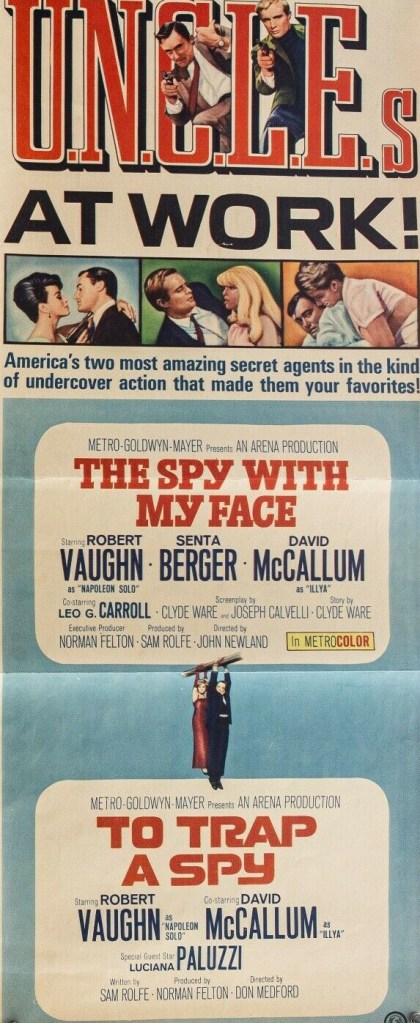

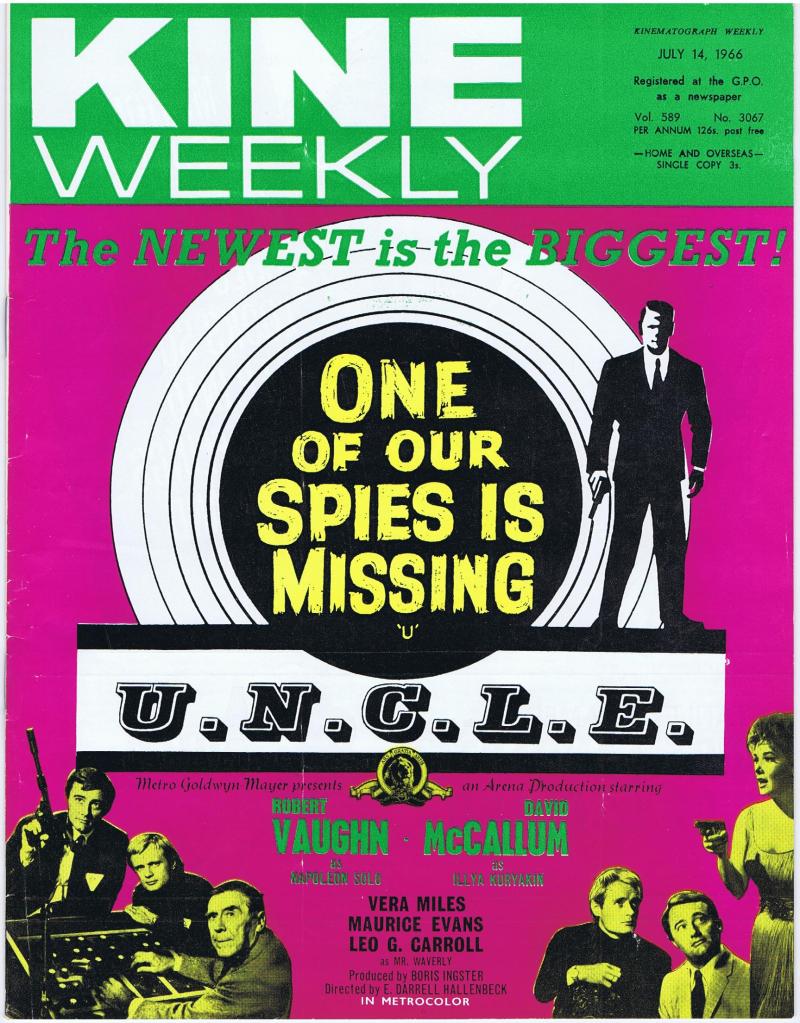


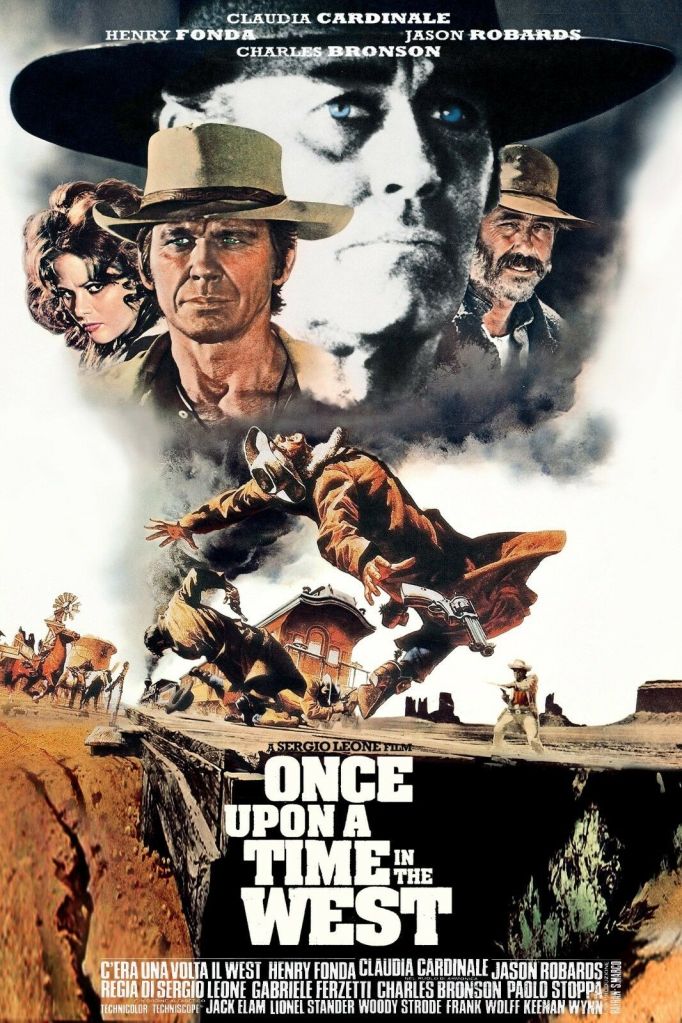


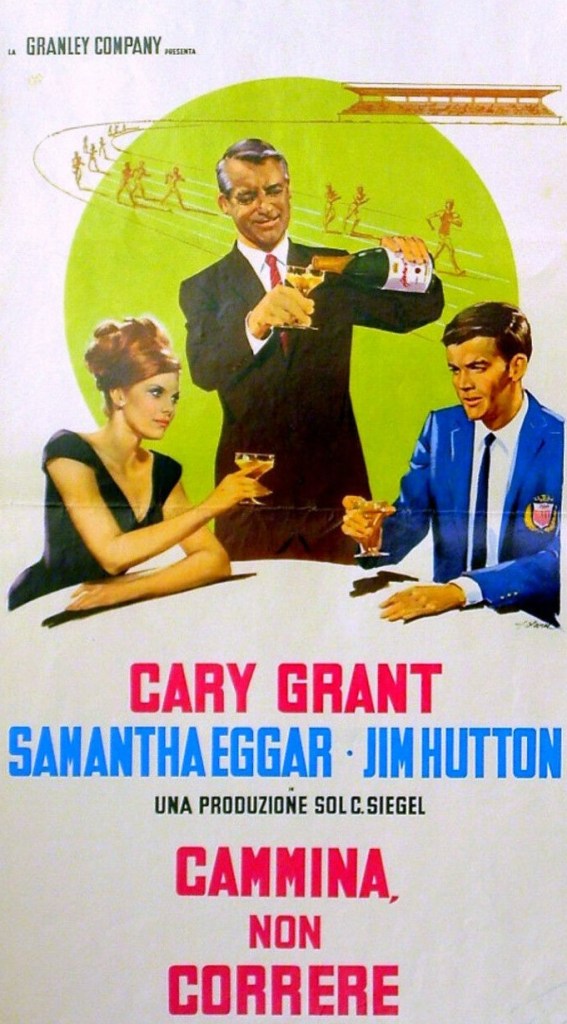
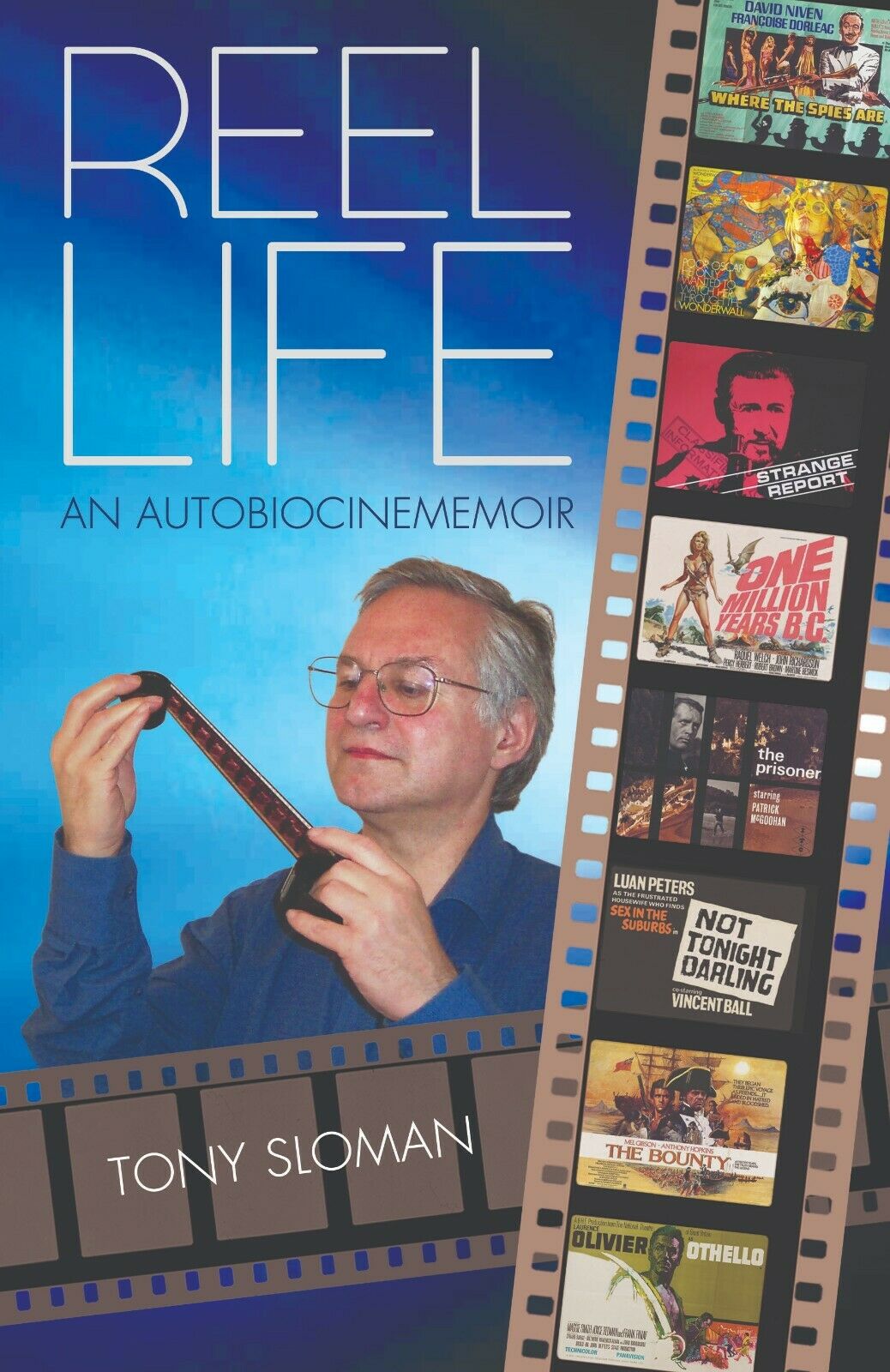
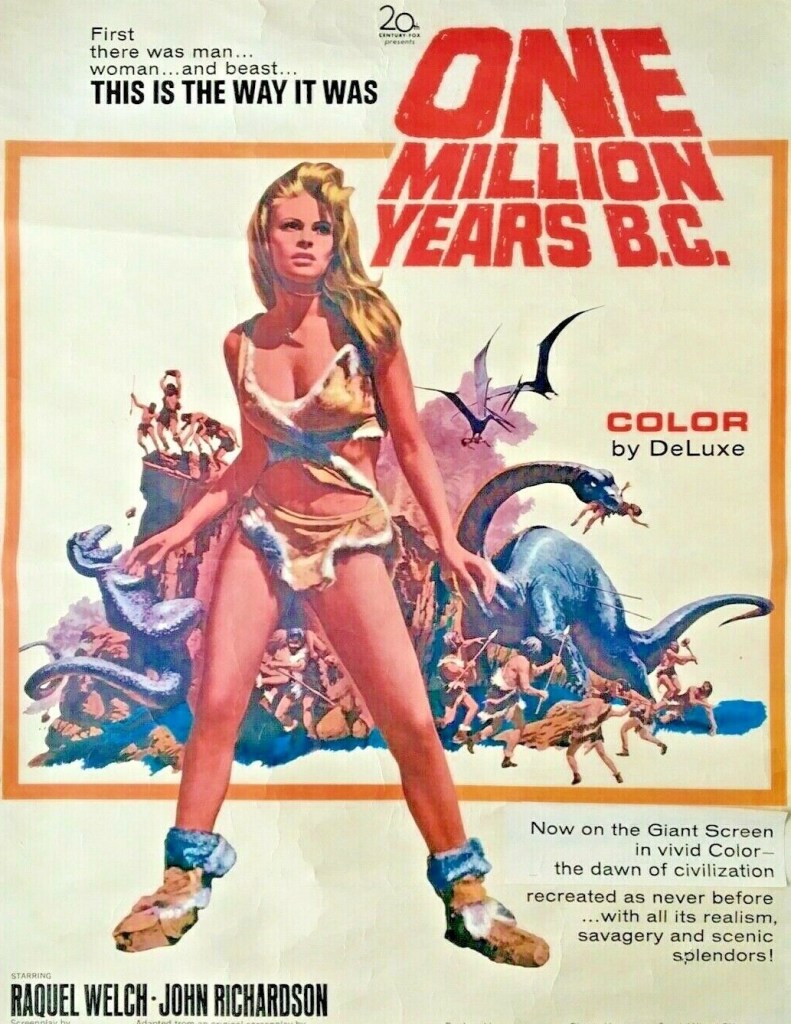
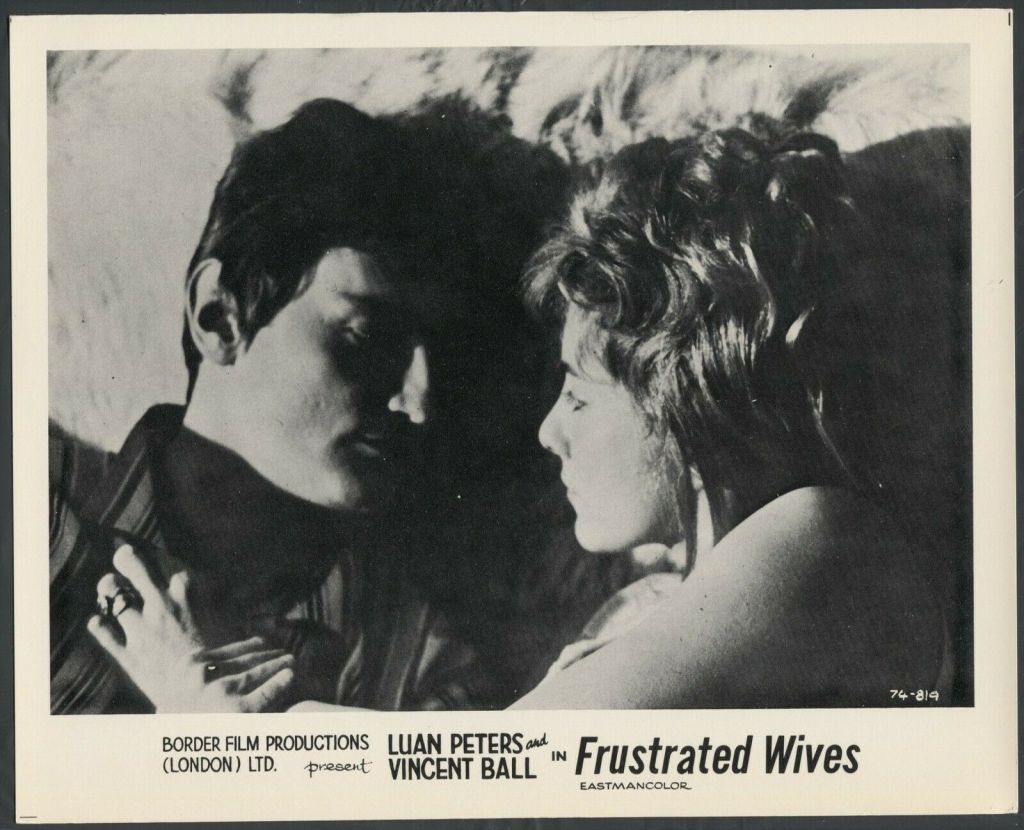
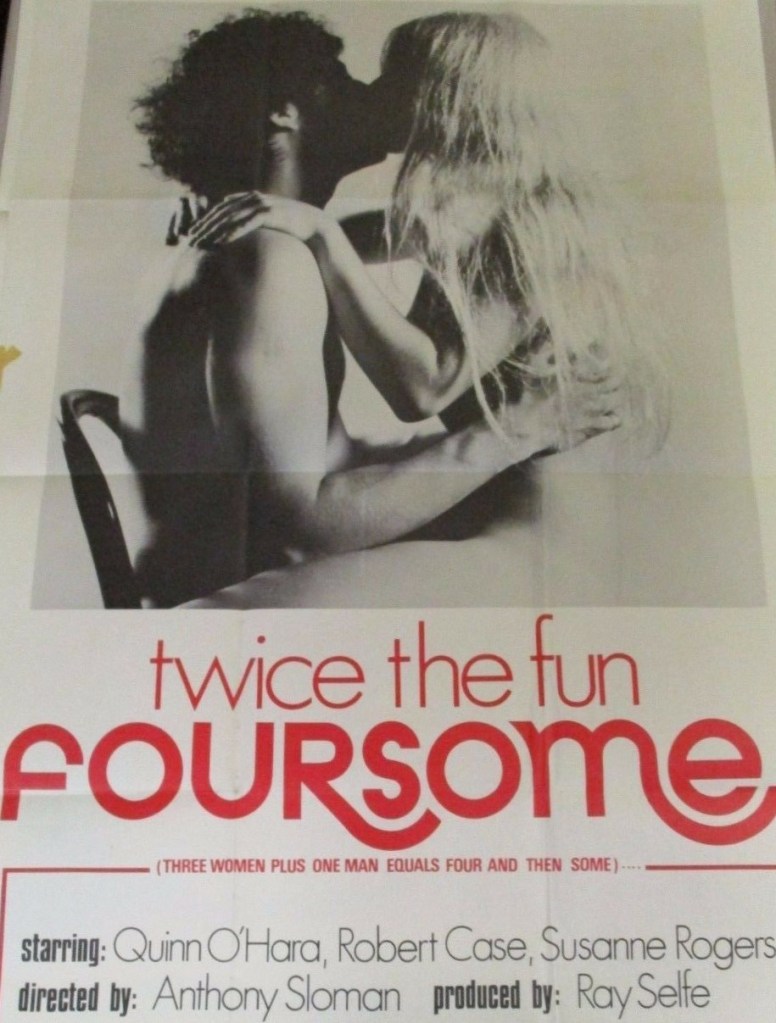
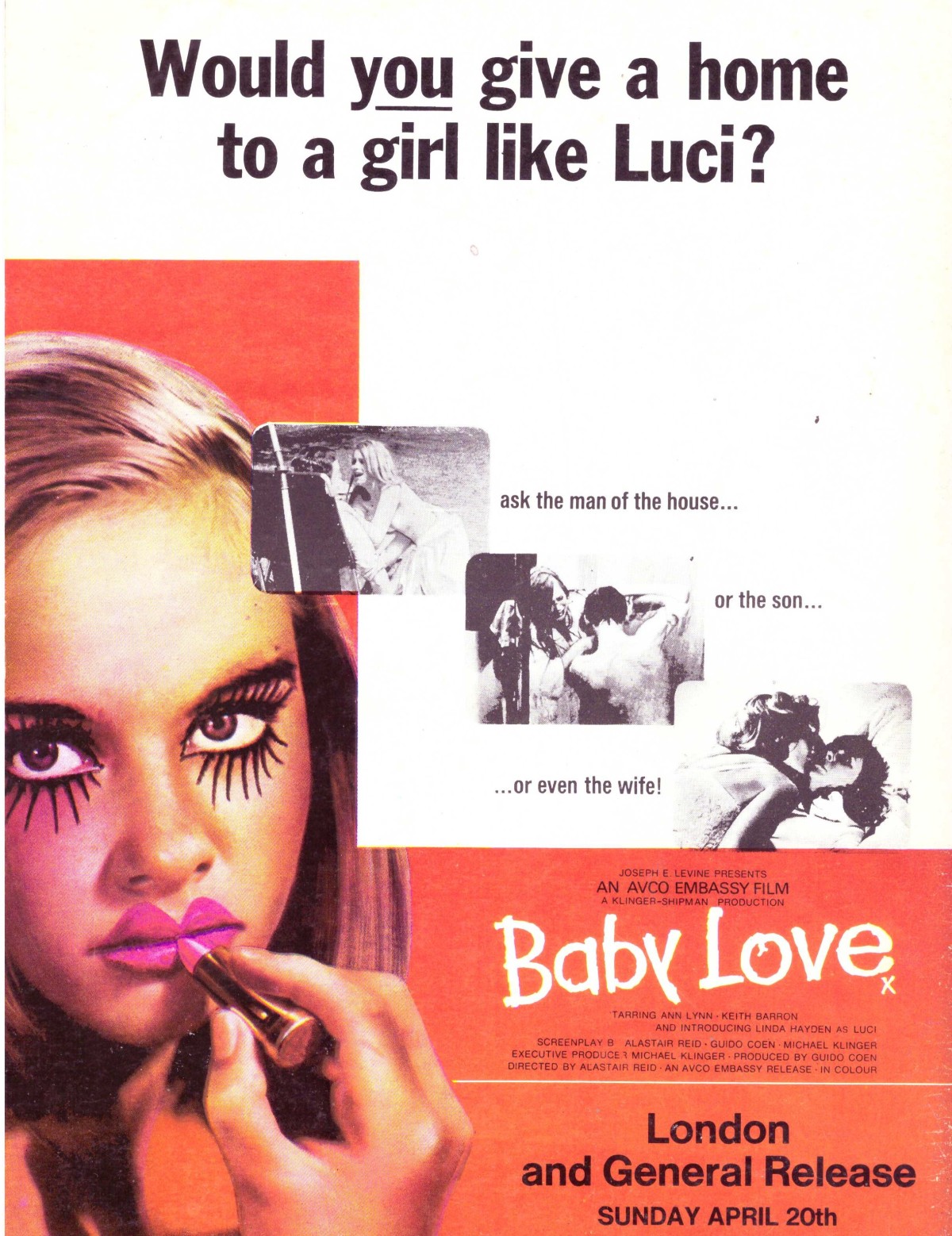
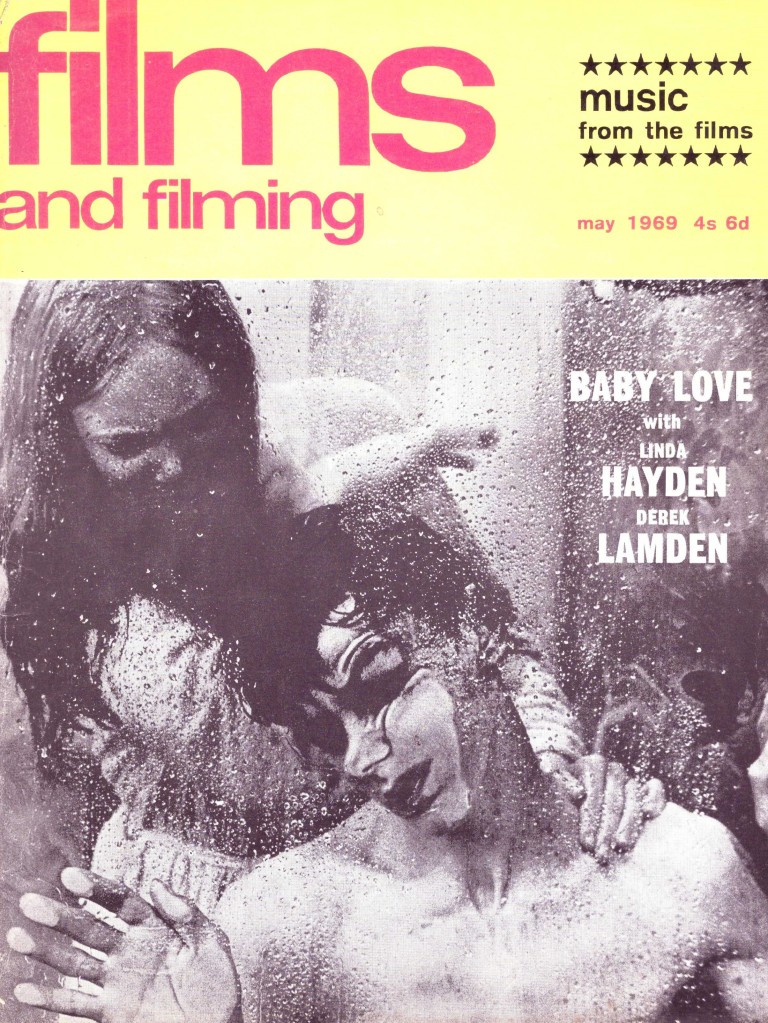
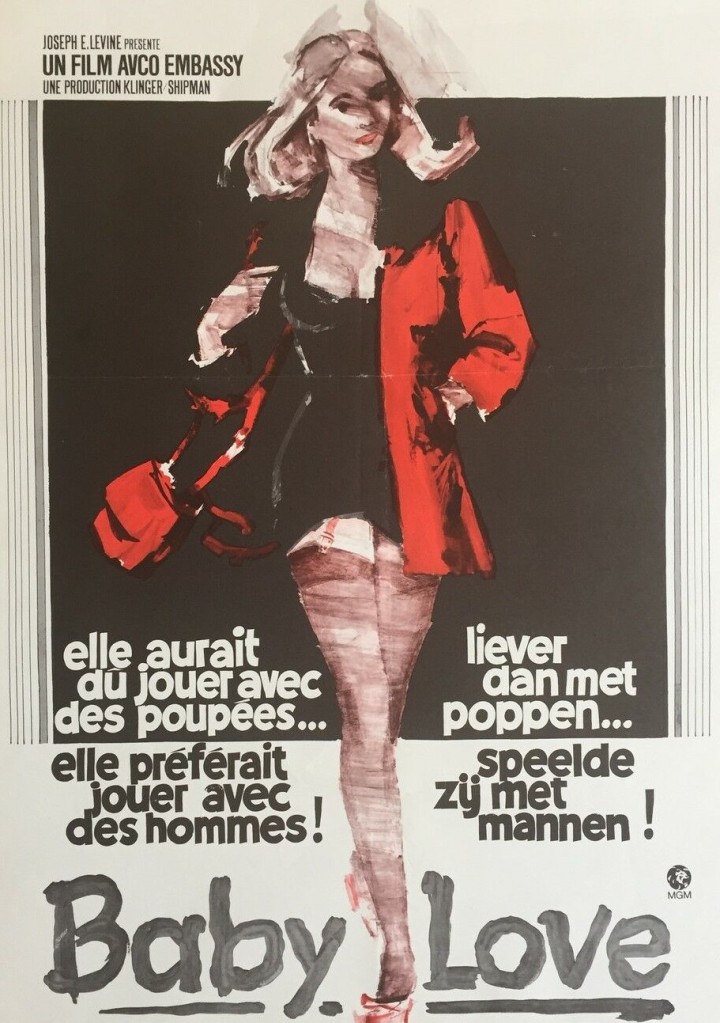
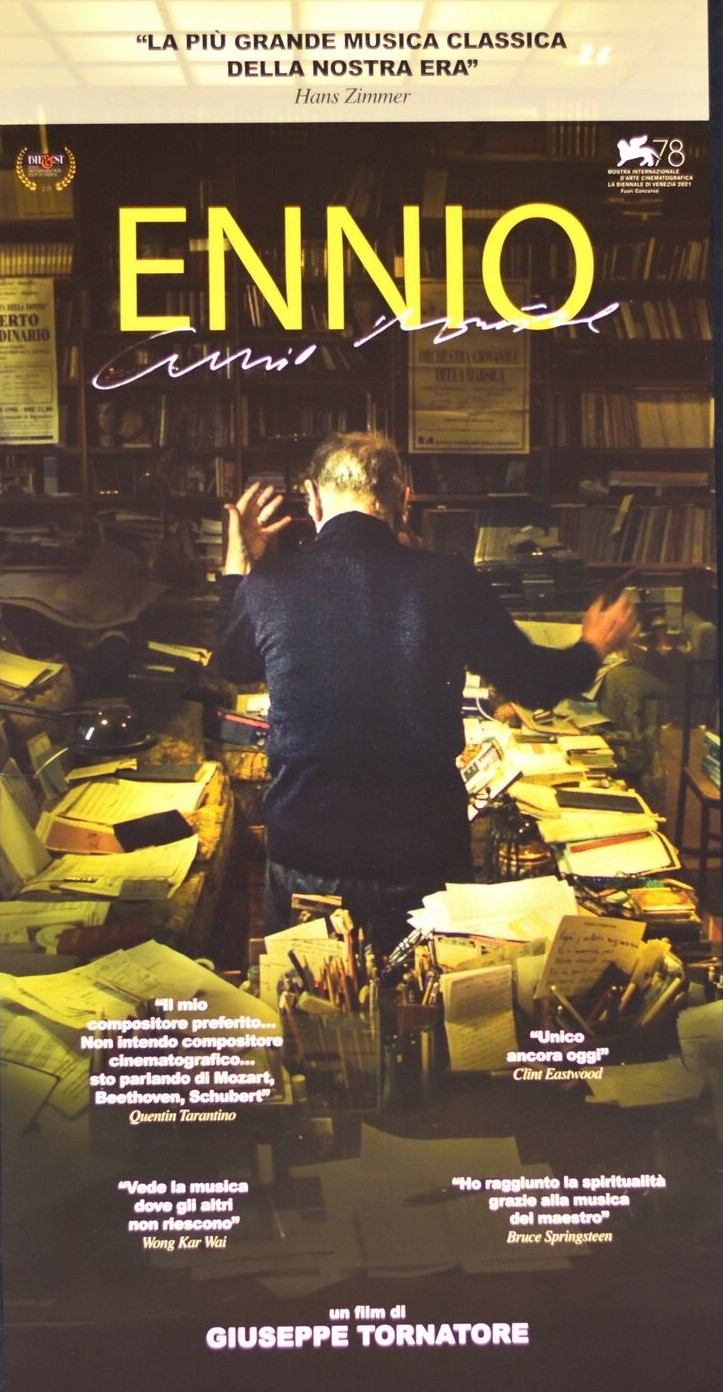
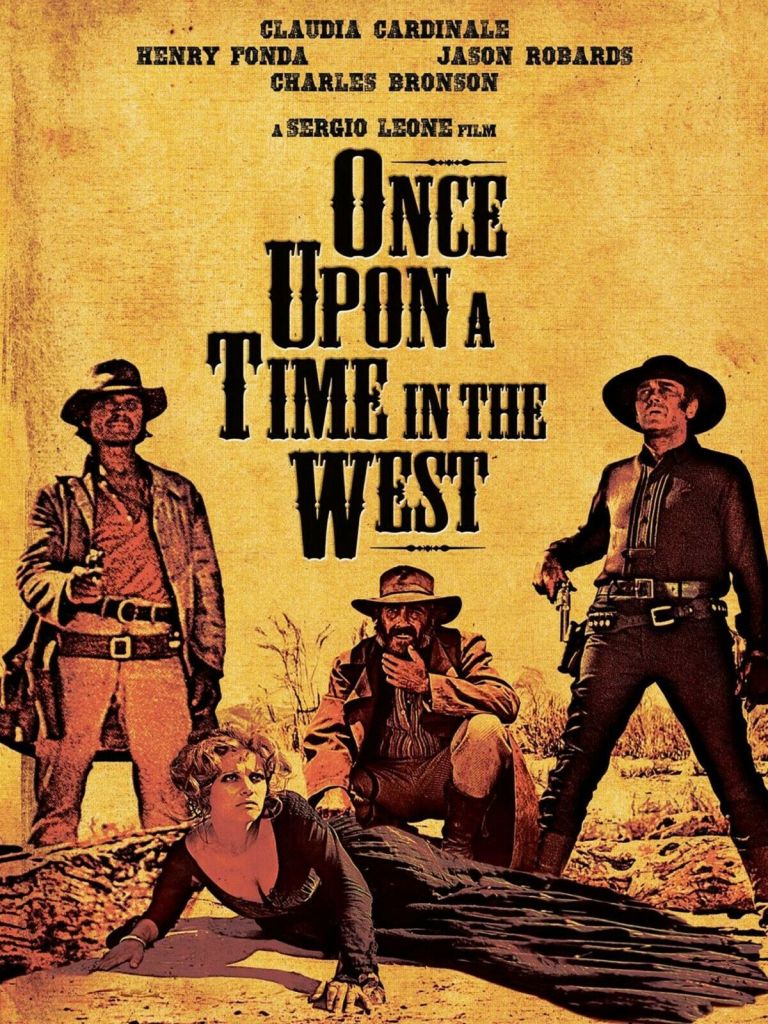


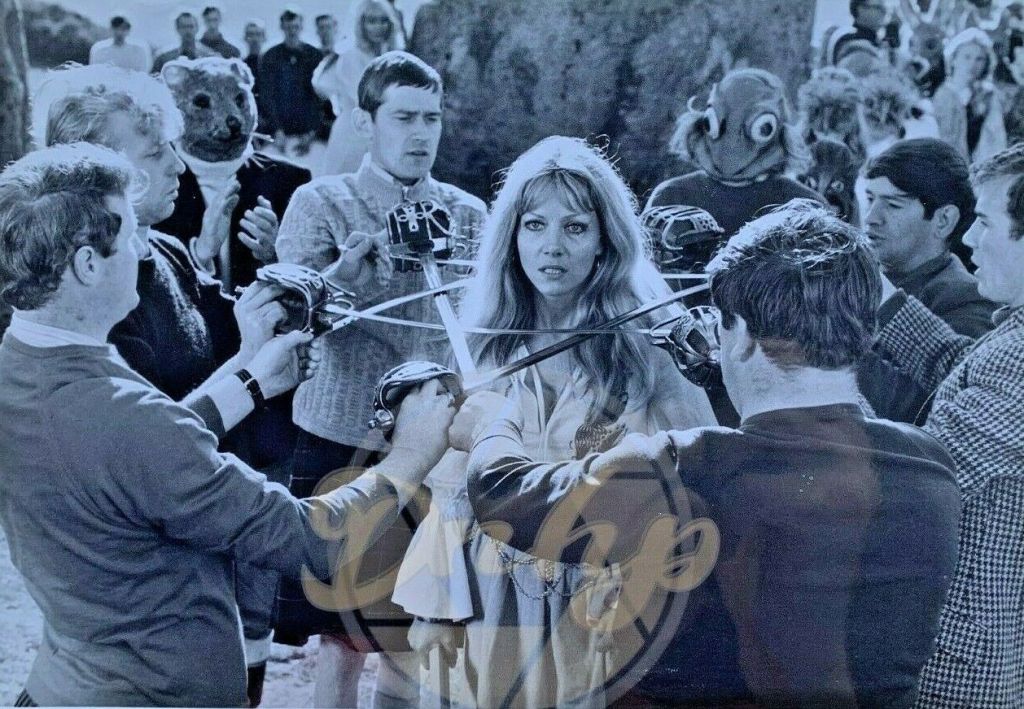
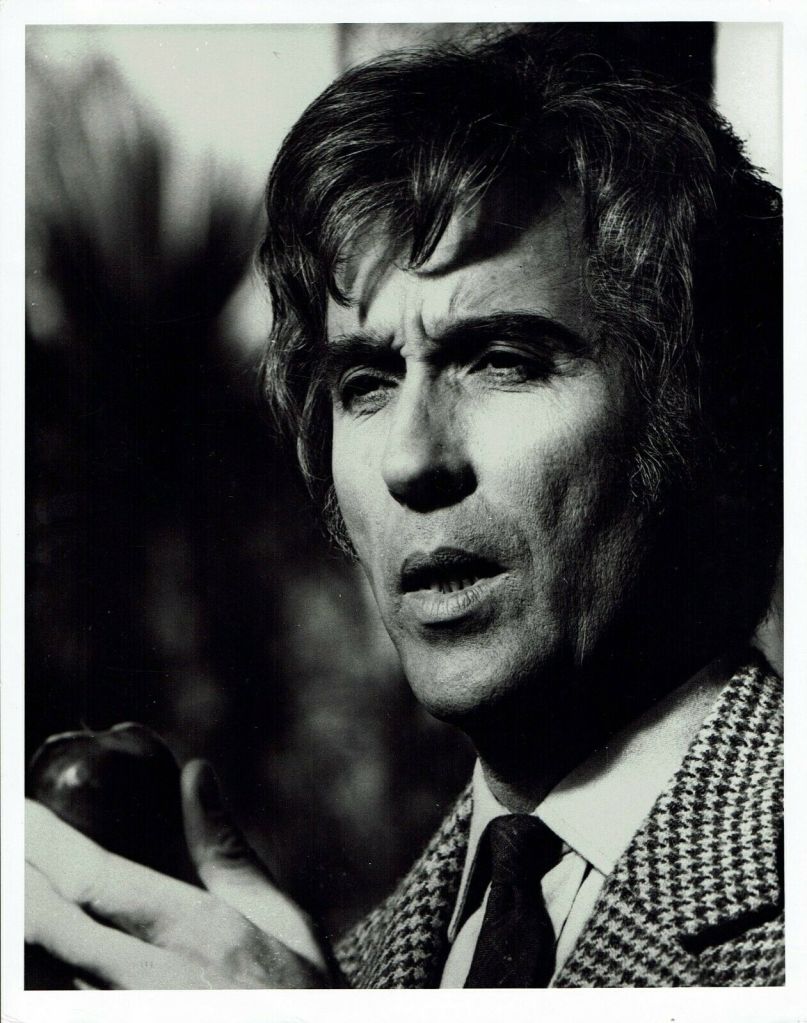
 The Magnificent 60s