Now revealed as the first film seen by Quentin Tarantino – at the age of five.
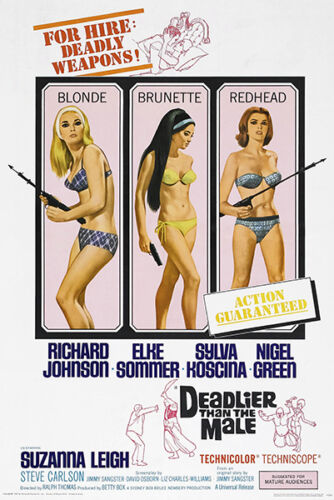
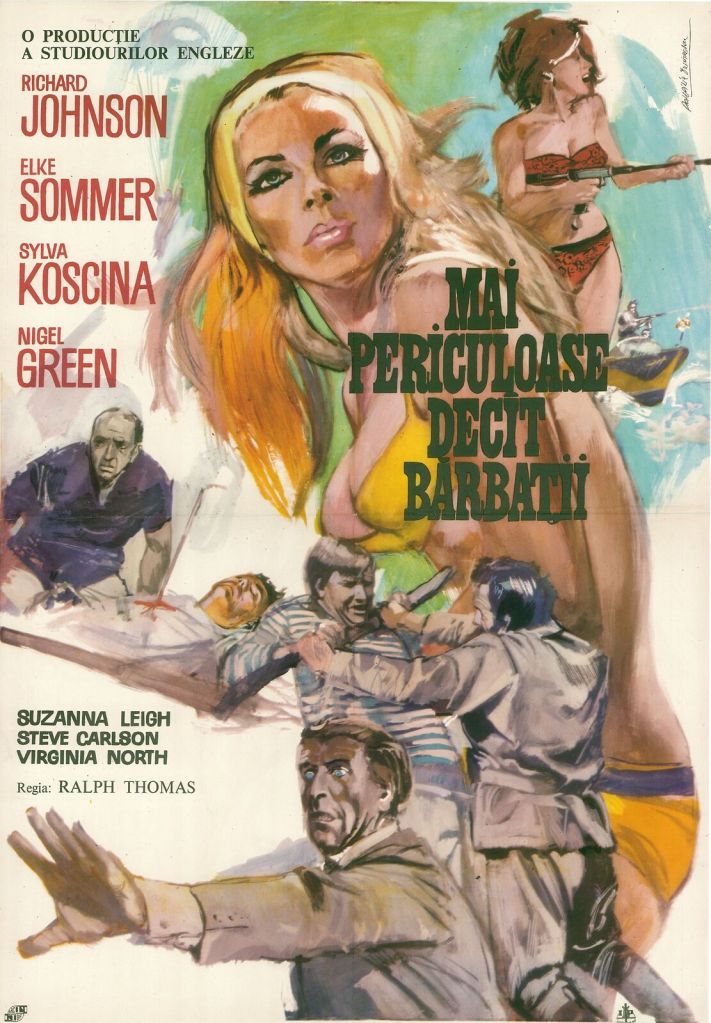
For a movie intended to set up a series character in the vein of James Bond, it was ironic that it was the women who stole the show, not just from their tendency to turn up in bikinis but for their outrageous villainy. Irma (Elke Sommer) and Penelope (Sylva Koscina) are the seductive assassins in the hire of Carl Petersen (Nigel Green) who has designs on an Arab oil empire. On her own Irma dispatches mogul Henry Keller (Dervis Ward) then the pair – emerging from the sea like a pair of latter-day Ursula Andresses – harpoon his colleague Wyngarde (John Stone).
Soon Hugh Drummond (Richard Johnson), investigating the death of Wyngarde, becomes a target and that sets him off, with nephew Robert (Steve Carlson) in tow, to the Mediterranean and the yacht of oil-rich King Fedra (Zia Mohyeddin) where, of course, the girls lie in wait.
Dispensing with the gadgets – except for one item employed by the villainesses – and gimmicks of Bond, but retaining the quips, this is a fun ride with a more down-to-earth leading man – like the early Bonds – smarter girls, a more old-fashioned mystery, a hefty thug Chang (Milton Reid) in the Oddjob mold, a castle doubling as the villain’s lair, a suave master criminal, some detective work, and a super scene involving giant robotic chess men.
The bickering between Irma and Penelope, who is not just a tad sadistic but a kleptomaniac especially as far as her partner is concerned, coupled with their overweening confidence, makes them much more human than any Bond Girl and the character traits explored have a pay-off at the climax. Equally interesting are the mind games, Drummond vs. Peterson but also Drummond vs. Irma. And that the female baddies see it as points on their scoreboard to seduce Drummond rather than the other way round.
Drummond is every bit as capable a seducer as Bond and equally ruthless, stripping a suspect naked. Petersen is also a clever character, faking his own death and running a very smooth operation, and certainly his recruitment techniques are second to none.
Some ideas were certainly ahead of their time, the chess men are the equivalent of a modern computer game while the human bomb has, unfortunately, entered the modern lexicon and there are enough female serial killers around to prevent anyone believing they are always (to use an outmoded sexist phrase) the gentle sex. However, in the middle 1960s, the concept that women would be partial to murder and torture not to mention repeatedly seducing males went so much against the grain of the male authority figures that the British censor slapped an X-certificate on the movie.
Shakespearian actor Richard Johnson was a one time MGM contract player, but his only previous top-billed outing was the Italian-made The Witch (1966). He certainly made a splash with this character, investing it with a great deal more gravitas than Flint or Helm. The Teutonic Elke Sommer (The Venetian Affair, 1966) is brilliant as one half of the assassin tag-team with a batch of one-liners for every occasion. Sylva Koscina (A Lovely Way To Die, 1968), nose always put out of joint, almost steals the show. Nigel Green (Tobruk, 1967), while his usual sardonic self, has the playfulness of the rich and powerful.
Steve Carlsen, in his movie debut, doesn’t make much of an impact in a largely lame role. Zia Mohyeddin has a more interesting part as the oil kingpin wanting to help his people. As you can expect in a spy picture there are a host of beautiful women – Suzanna Leigh (The Lost Continent, 1968) a defector, Virginia North, also making her debut, Justine Lord (Night after Night after Night, 1969), and Didi Sydow in her only screen appearance.
The light comedy experience of director Ralph Thomas (Doctor in Distress, 1963) comes is very handy, as his sense of comic timing is excellent, but, perhaps learning from his previous brush with espionage in Agent 8¾ / Hot Enough for June (1964) brings a bigger punch to the action scenes. And it’s a bold ploy to start with an action sequence revolving around Irma and Penelope rather than our star man.
The screenplay was a team effort – Jimmy Sangster (The Devil-Ship Pirates, 1964), taking a break from Hammer duties, David D. Osborn (Maroc 7, 1967) and Liz Charles-Williams, making her screen debut – all involved. This was familiar territory for composer Malcolm Lockyer (Five Golden Men, 1967). British pop act The Walker Brothers had a hit with the theme tune.
This is more fun than camp, not a send-up of the genre like Derek Flint and Matt Helm, but a spy picture with a believable leading men and excellent villains. But the plot is more centred on filthy lucre rather than global control and there is a genuine understanding of how businesses work – takeovers, mergers, dirty dealings – though small wonder Petersen would like to be shot of pedantic boardroom nuisances like Bridgenorth (Leonard Rossiter) – wouldn’t we all?
Bulldog Drummond was an international crime-buster invented by “Sapper,” the pen-name of H.C. McNeile. Bulldog Drummond had been a Hollywood mainstay for over four decades, the twenty-plus pictures attracting stars like Ronald Colman (Bulldog Drummond, 1929, and Bulldog Drummond Strikes Back, 1934), Ray Milland (Bulldog Drummond Escapes, 1937), Walter Pidgeon (Calling Bulldog Drummond, 1951) and a young Ralph Richardson (The Return of Bulldog Drummond, 1934). But the notion, in the Swinging Sixties, of tagging any leading man by the moniker of ‘Bulldog’ did not seem like a good idea, so the character underwent wholesale reinvention and his nickname is never mentioned.
The title comes from a line in a poem by Rudyard Kipling, The Female of the Species. That was the original title of the film and also of a Sapper book.
You can get his on a double bill with the sequel Some Girls Do from Network at a very reasonable price. Will be reviewing Some Girls Do next.
At the age of 19 while working on the “Glasgow University Magazine” I managed to gain an audience with director Lindsay Anderson just after the release of “O Lucky Man!”in 1973. That was at the same time as I did an interview with Albert Finney (previously printed in the Blog). While Finney graciously agreed to a sit-down interview in a nearby café, Anderson was not quite so obliging and the interview was more of a guerrilla affair as I kept on ambushing him while he was working on a new play by David Storey at the Royal Court Theatre in London. To consider Anderson as a film director first and foremost that would be to ignore his exceptional work on the stage – at that time he had completed three full-length feature films compared to five times as many stage productions. This article was published in the October 1973 edition of “Glasgow University Magazine” and runs here in an edited version.
“AROUND LINDSAY ANDERSON: LIVE AT THE ROYAL COURT”
Lindsay Anderson, one of Britain’s foremost film directors, co-founder of the short-lived film magazine Sequence, pioneer of the “Free Cinema” movement, maker of Corn Flakes commercials, was back at work in the theatre – where for over a decade he has established a notable reputation – working on The Farm, the fifth David Storey play to be under his direction.
“When Lindsay Anderson comes to the Royal Court, it’s an event,” says his assistant Hugh Thomas, who had roles in If.. and O Lucky Man!. “He makes everyone work three times as hard. He’s an impossible perfectionist, but he’s very fair.”
Many times during the day you will hear Anderson asking the rehearsing staff: “Why can’t it be better?” and demanding of the photographer John Haines, who is taking the photographs for the official press release, if he is satisfied with the lighting. And if the photographs are okay, how okay is that? Anderson demands precision, concision, honesty, loyalty, total commitment. If you don’t possess these, then don’t go near him. Garrulousness is not tolerated; once a conversation has been milked of its essence, Anderson will cut it short, turning his attention to something else. That is not to say he is not capable of carrying on two or three conversations at once.
If you are clumsy or nervous, Anderson’s attitude will exacerbate your condition. Hugh Thomas is nervous: there is a little dance when they are talking a few feet away from each other – when Thomas speaks he moves quickly, a couple of steps forward; when he stops, he jumps back. There is not, however, any bowing. When he questions you there can be no dishonesty. He will shoot a question at you without warning, demanding an answer which will satisfy him. When Thomas told Anderson I had seen the actor’s performance in Diary of a Madman at the Close Theatre in Glasgow), the director asked if I like it. I said I thought it was good. What did that mean, Anderson demanded. Okay? No, I said, I enjoyed it. Good, was it? Quite good, yes.
Later he demanded to know of me who Rosa Luxemborg was (there is a reference to her in the Storey play). Can you say, yes, I know, and hope that you will not be pursued? Or do you say no, realising that he brooks no lie. And even though he is mildly contemptuous that as a student I am unaware of this personality, he is willing to explain to me her importance. (She was a socialist revolutionary and economist).
Anderson is a great general: he has lunch while working, refusing to let any minor details slip past him. If his army is not good, he will make it so. If it is good, he demands better. He chases after production staff to ensure all the cast get tea. The production is midway through its run so his work today is tightening up various aspects. The previous night had seen a couple of calamities. First was a delay in an actor changing costume. Anderson demanded to see the dresser but was informed that she was not present that afternoon because she was not paid to work until evening. Anderson berated the management. “If they wish to put on plays of the calibre with this cast, they have to pay for it. A change of costume is as important as anything else,” he said. At the previous night’s performance, the man whose task was to raise the theatre curtain had fallen asleep at his post. Anderson told me that had the curtain not been raised in time he would have gone on stage and apologised to the audience.
“I’m very pernickety about detail on the stage. I think it draws the audience out to you.” A David Storey play usually requires a great deal of detail. For The Contractor (1969), Anderson painstakingly rehearsed his cast in the erection of a tent that was the basis of the action. Home (1970) was more austere, but a completeness, because the details had been filled in. The Changing Room (1971), set in the dressing room of a rugby league team, was a masterpiece of naturalism.
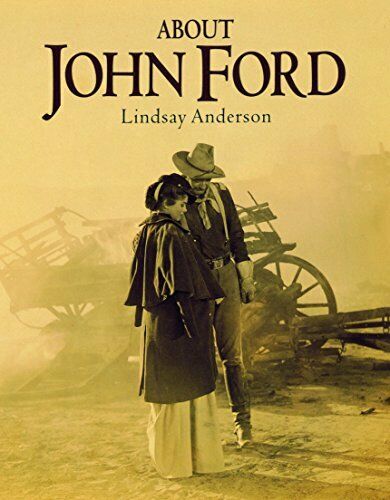
Born in Bangalore, India, 1923, son of a British officer, but three-quarters Scottish – to which he attributes his moral intransigence and refusal to compromise. In the magazine Sequence he lashed out at the British cinema and swore blind by John Ford (he would later write a book on the director). He won an Oscar for the documentary short Thursday’s Children. In 1956 he organised a season at the National Film Theatre (the precursor of the BFI) in London to show the work of new film makers, incurring a great deal of hostility in the process.
But initial acclaim came from the stage. His second production (the play) The Long and the Short and the Tall (by Willis Hall and Keith Waterhouse) at the Royal Court (in 1959) was a major success and he remained there for the next few years, directing plays like Serjeant Musgrave’s Dance (by John Arden, 1959) and an adaptation of Gogol’s Diary of a Madman (1963).
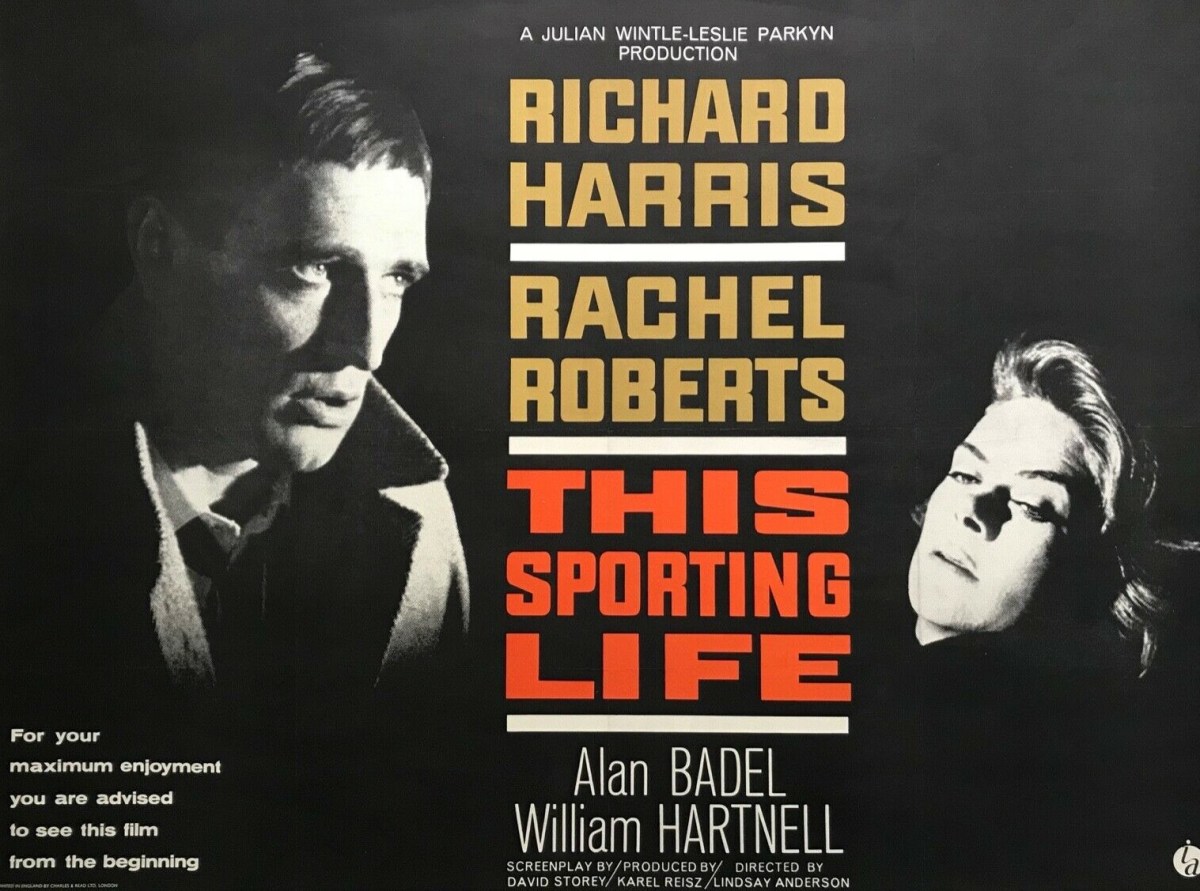
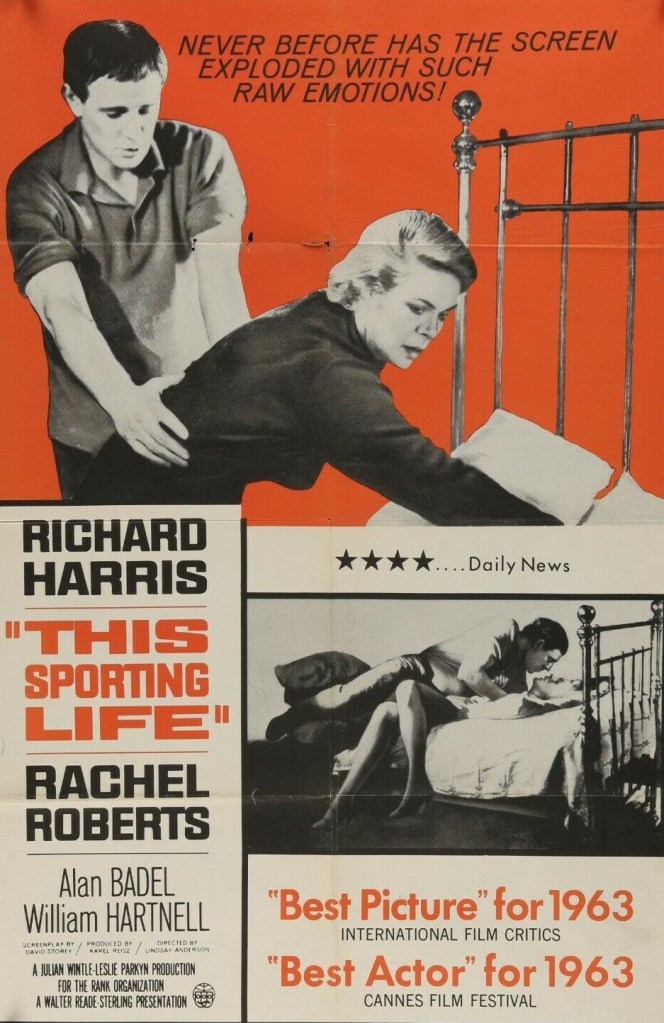
With the commercial success of Tony Richardson’s Saturday Night and Sunday Morning (1960), the commercial cinema was ready to accept his powerful film This Sporting Life (1963) from a screenplay by David Storey based on his own novel. Although the rugby background to the film was rough and hard, Anderson was up to it, producing a movie about the ambiguity of Frank Machin (superbly played by Richard Harris) who has a tortured impossible affair with his landlady – as bleak as the puritan frustrated north in which it is set.
Anderson continued working in the theatre, in television commercials, venturing into cinema only when he found it possible to do so without losing artistic freedom. He emerged with two short films, The White Bus, from a Shelagh Delaney screenplay, and The Singing Lesson, made in Poland, by which period he was already work of the script of If… with David Sherwin. He was originally attracted to the script’s original title The Crusaders with its overtones of “idealism, struggle and the world well lost.” He also had the guiding lights of John Ford, Jean Vigo and Bertolt Brecht. “When I worked on the original script with David Sherwin,” he said, “we divided it into chapters. I think we felt from the beginning that If… would be an epic film in the Brechtian sense of the word.”
The basic tensions between hierarchy and anarchy, independence and tradition, liberty and law were highlighted in that semi-autobiographical account of a public school and the three rebels, old-fashioned heroes without being aware of it – who spout “we must be free or die” – who arrive at their own beliefs and stand up for them against the world, if necessary. There are symbolic instances of love and war before the final action set against the ritual of the (school’s annual) Crusaders Day. Mick (played by Malcolm MacDowell) and friends are fighting with their backs against the wall when the Establishment counter-attacks. It is one of the most liberating sequences ever shot, this defeat.
The decision to shoot some of the sequences in monochrome was partly a financial one since the director of photography Miroslav Ondriceck felt he could not guarantee on his lighting budget to produce an overall colour scheme. Anderson incorporated this into the artistic structure of the film, creating the necessary atmosphere of poetic licence while preserving a classic shooting style. Anderson believes it is his job to create the film, his prerogative as an artist. He refuses to go along with modern ideas that the audience creates a film for itself. What interests him most are the qualities of rhythm, balance and composition with a simple technique.
With a Cannes Grand prix for If… Anderson returned to the theatre of David Storey. “We have a very easy relationship and a very good one. I don’t work with him on the writing of his plays and we make very few changes. The first of his plays I did (In Celebration, 1969) was cut a great deal and Home was cut in rehearsal. But David knew that was necessary and we did it with the actors. On a production like The Farm, he comes to the rehearsals and attends the auditions and he enjoys that and if I ever need to refer to him I do. Sometimes he has suggestions to make which are very good and actually he can cut corners for us, certain things he understands better and can explain to us more quickly. There are other things he doesn’t particularly understand because he writes intuitively, too, and we just have to work them out.”
In Celebration and The Farm are plays about families and very obviously about Storey’s own family. Anderson commented: “I remember when we were doing In Celebration it was most painful. On the evening when his parents came to see it David was very worried. I went to Constance Chapman who was playing the mother sand said ‘play her nice.’ How much is from real life I wouldn’t like to guess. Jesus Iscariot, the first novel by his brother (Anthony Storey, also a rugby player), is a cruder form of In Celebration with the child that died at birth etc.”
After lunch the cast comes in to be given notes on the previous evening’s performance. Anderson is very thorough. He told me: “It’s very difficult to tell people they’re good. It’s a director’s failing.” A couple of minutes later, he added, “I think the beginning of Act Three was very good – there you are.” As the actors go away to get changed, Anderson does comment on Bernard Lee who plays the working-class father. “I think he’s brilliant. Bill Owen (who played a similar role in The Contractor and In Celebration) wasn’t convincing enough. It’s hard to cast this (kind of) part because all the elderly actors in England come from a different class, a pre-war class when the working-class weren’t actors. Larry (Olivier) can put on accents but it’s all acting. But John (Gielgud) is very human, very warm. When he comes on he is the character; when he cries in Home it is John crying.”
He is not too pleased with the treatment meted out by Warner Brothers to O Lucky Man! and there is a sense he is reining himself in. “Since I signed a contract to make a film that was two hours and seven minutes long and delivered one that was three hours long I wasn’t in a very good position. It wasn’t my picture. It belonged to Warner Brothers.” Perhaps he is being a bit unfair. He had a budget of $1.5 million for O Lucky Man! as opposed to the £250,000 from Paramount for If…which arrived 56 hours before shooting was about to begin after Columbia suddenly withdrew their support. Perhaps he had a better time than he supposes.
Like the black leather jacket he has been wearing since If… Anderson works with people he can rely on, with whom he has worked before. Malcolm MacDowell who played Mick in If… plays Mick again in O Lucky Man! this time as a naïve coffee-salesman who strikes it lucky in several veins and each time a prospect collapses shifts to new ground, ending up with a smile that is an acceptance of reality but not necessarily compromise. The faces Mick meets are the same actors playing multiple roles, actors Anderson has used before – Ralph Richardson from Home, Arthur Lowe from If… and This Sporting Life, Rachel Roberts from the latter film. Cinematographer Miroslav Ondricek from The White Bus and If… is also on board.
Much of what Anderson brings to bear in constructing a film bears comparison to his stage work and vice-versa. “When I read a play for the first time, I don’t spend an awful lot of time analysing it. I just read it and receive an impression. I usually choose things instinctively anyway. Naturally, if a play is good it’s worth experiencing a number of times but certainly I hope that anyone coming to see a production for the first time is going to have a clear and full understanding of the play than just by reading it or certainly than I did when I read it for the first time. The process of putting a play on the stage is the process of understanding and interpreting it. That is very different from experience of actually sitting and seeing a play directed and performed in front of you.”
The brusque, short, thick-set man whose teeth you never see is still on the ball as the afternoon draws to a close and, eclectic to the last, starts whistling the theme tune of John Ford’s 1944 war picture They were Expendable.
Star Albert Finney and director Karel Reisz of Saturday Night and Sunday Morning (1960) turned it down. Director Lindsay Anderson, screenwriter David Storey, author of the novel on which the film was based, and star Rachel Roberts all suffered from massive doubt in their own abilities.
Anderson was the last of a generation that included Reisz and Tony Richardson (Tom Jones, 1963) to make a movie. He was better known as film critic and theatre director. As far as the screen went, he had got only as far as five episodes of The Adventures of Robin Hood for television, and some documentaries and shorts. If he was going to make a movie it almost certainly depended on finance from British production outfit Woodfall which had backed Reisz and Richardson. However, Woodfall was outbid for the rights to This Sporting Life and Anderson only came into the frame when Reisz rejected the idea of directing the movie in favor of turning producer and giving Anderson his opportunity.
Cover of the Danish program.
“I was not sure I was up to it,” confessed Anderson. Theoretically a tale of a rugby footballer Frank Machin’s (name changed from the Arthur Machin of the book) rise and fall, Anderson wanted to explore the novel’s “dark poetry” and the ambiguities of the a central character who was by turn overbearing and sensitive and involved in a “tortured, impossible relationship.”
However, Storey, also making his movie debut, struggled with the script. Until the sudden success of This Sporting Life, the aspiring artist had lived a debt-ridden life as a supply teacher (17 schools in three-and-a-half years) in poverty-stricken London boroughs, writing his novels on train journeys north to fulfill his contract to play professional rugby. Reprinted prior to publication This Sporting Life, his debut novel, received excellent reviews and won the inaugural U.S. MacMillan Award worth $7,500.
When the film industry came sniffing Storey took tea with Stanley Baker at the Dorchester Hotel, lunched with Tony Richardson at the Trocadero and was wooed by director Joseph Losey at his Knightsbridge flat. Initial expectations were that the rights would go for £3,000, but a bidding war between Woodfall and Rank sent the bill up to £10,000 with the latter emerging victorious. Karel Reisz agreed to become producer on condition he could choose director, writer and cast. He introduced Storey to Anderson and to an initially interested Albert Finney.
Cover of the first edition of the British hardback.
Storey, a working-class son of a coal miner, and Anderson stood at different ends of British class divide. Initially suspicious of each other, they had opposite temperaments. “Lindsay was an optimist,” explained Storey,” I was a reclusive, and when in doubt, morbid.” Even after Storey completed a treatment and the pair went north to scout locations, the project remained in doubt, in part because Anderson did not understand the book and had a “curious lack of confidence” and in part because Storey resisted reshaping the material into something “new.” In fact, Anderson’s lack of confidence was so deep it took several months before he actually signed his contract.
Storey, too, suffered from revisiting the area where he had grown up. The death of a sibling cast a devastating shadow over the rest of his life, the Wakefield rugby ground in fact “scarcely a stone’s throw “from the child’s grave. “Wakefield was being opened up to me in a way I had never known before,” explained Storey, referring to the grand houses visited as possible locations whose exteriors he had glimpsed while working as a marquee laborer.
Despite “exhaustive consultations” with Anderson and Reisz, the script failed to gell. “I felt the authority I wanted was not there,” commented Anderson. Although actors are often decried for interfering with the script, in this case it was star Richard Harris who arrived at the solution.
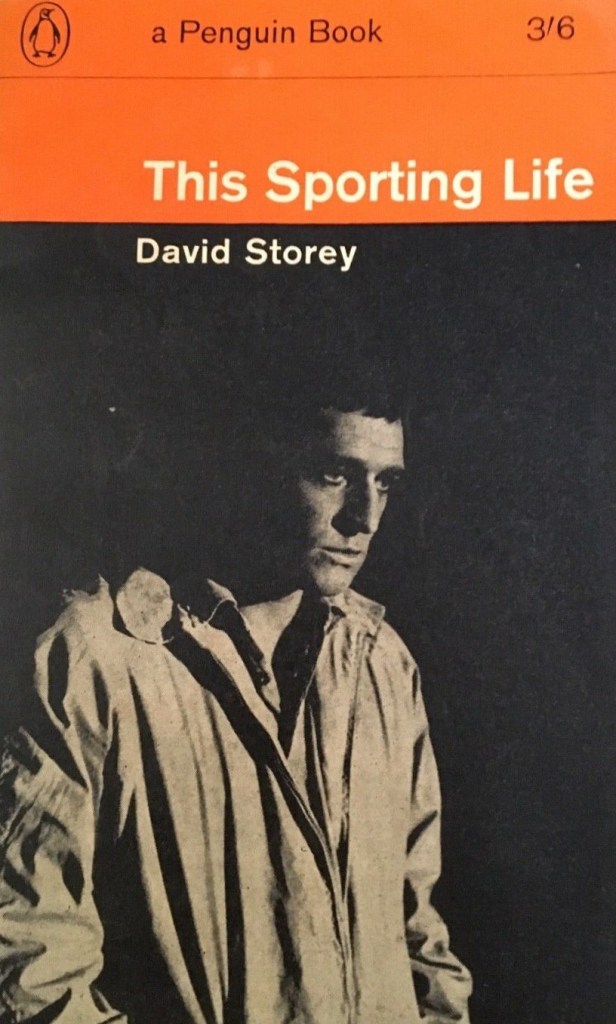
British paperback film tie-in.
Anderson had been attracted to Harris from seeing him in the stage adaptation of J.P. Donleavy’s The Ginger Man. The director flew off to Tahiti where Harris was filming Mutiny on the Bounty (1962) to be met at the airport at five in the morning by the actor, “ his 18th century seaman’s hair down to his shoulders, bursting to tell me what he thought of the script we had sent him.”
Anderson recalled, “Within ten minutes we were at it…we talked and argued right through the day. I quickly realized he was right…we had lost what was most unique and brilliant in the novel…it was Richard, who, with passionate intransigence, brought us back to the book…in the evening after his shooting on the Bounty we sat in his bungalow going through the script and his own heavily-annotated copy of the novel…and slowly a conception emerged which began to satisfy us.”
Storey agreed with the new look which basically followed a subjective point-of-view rather than being cluttered by the novel’s flashbacks. “With an unequivocal endorsement of the book and the rejection of a script which had wearied me more than I’d imagined, I found rewriting the script in the manner in which the book had been written, from the inside looking out rather than the outside looking in, a surprisingly exhilarating task…Once Richard Harris had become identified with the part …the material was no longer a problem.”
Retaining that subjectivity was Anderson’s biggest issue An Oxford scholar, he had little innate understanding of Frank Machin’s world and in consequence “was liable to slip into an objective view of scenes that needed to be presented through Machin’s own temperament.” Harris proved instrumental in keeping the director on course.
Rachel Roberts twice turned down the role – Mary Ure (Look Back in Anger, 1959) was also in the frame with four other actresses – and failed to turn up for a screen test. Karel Reisz once commented how odd it was that “the two films that made this great-hearted flamboyant woman best-known (the other being Saturday Night and Sunday Morning) were ones in which she played withdrawn, bleak, ungiving women. Rachel’s great talent was to sink her personality into the part without losing access to her own sensuality. You felt the tension.”
Of This Sporting Life, Reisz added, “She had great doubts about her ability to play Mrs Hammond because she’s a very held back, undemonstrative woman. A passionate person, certainly, but someone who’s turned puritanical through so much constant repression of her feelings. Rachel was afraid of this: she didn’t know out of which part of herself to play the role.”
Lindsay Anderson was as unsure as Roberts: “She didn’t appear to me to be the Mrs Hammond character…Rachel was anything but repressed.” Actress Sybil Williams remembered finding a whole sheaf of notes in Rachel’s script about “the Mrs Hammond character she appeared to be playing so intuitively.” Said Anderson, “Richard Harris was bit awed by Rachel. She could acquit herself with a first-rate reading in just a couple of takes. Richard took a few more to feel he had got it right. Rachel’s security as an actress made him feelmore respectful towards her.”
The scenes between Harris and Roberts were endlessly rehearsed, involving a full 10 days prior to shooting and then during evening and weekends while in production. Roberts was playing a woman “whose feelings, though fierce, are almost continually suppressed: the relationship deepens without self-explanation…through incessant conflict…It called for an actress of exception ‘interior’ quality with real wildness within as well as the capacity for an iron restraint.”
Somewhere in the BBC archive is a programme, never aired, about the making of the film shot for its Monitor arts strand, although Storey was interviewed later on the show by Huw Wheldon, later BBC managing director.
Although Lindsay Anderson only made four more movies, the most memorable being If…(1968), and David Storey never wrote another screenplay, the pair achieved considerable success together when the author turned to writing plays such as Home (1970) and The Changing Room (1971), set in a rugby club.
If This Sporting Life appears to have two main characters driven by demons, part of the explanation as to how such creatures emerged from David Storey’s imagination can be found in his riveting memoir A Stinging Delight which traces a core of depression from his earliest days through to the times in later life when he was in and out of mental hospitals. Rachel Roberts also suffered from mental illness and committed suicide in 1980.
SOURCES: Lindsay Anderson, “Sport, Life and Art,” Films & Filming, February 1963, pages 17-20; David Storey, A Stinging Delight (Faber, 2021), pages 217-218, 221-223, 227-231, 233, 240-242; No Bells on Sunday, The Journals of Rachel Roberts, Edited with a documentary biography by Alexander Walker, Pavilion, 1984, pages 37, 55, 56, 58.
What began as the last gasp of the British New Wave working class kitchen sink drama has now after a six-decade gap resolved into a struggle over political and sexual ownership. Macho athlete Frank Machin (Richard Harris) jibes against his paymasters at a Yorkshire rugby league club – in similar fashion to Charlton Heston in Number One (1969) – while trying to hold sway over widowed landlady Margaret (Rachel Roberts). While documenting the class divide over which British writers and directors obsess, Lindsay Anderson’s debut takes a wry look at power.
Machin belongs to the Arthur Seaton (Saturday Night and Sunday Morning) class of loudmouth boors, determined to take as much as they can, riding roughshod over anyone who gets in their way, even attacking players of his own team. Although a fan favorite, his position at the club still requires backing from the moneyed directors, support that appears go awry when he rejects overtures from Mrs Weaver (Vanda Godsell), wife of a board director (Alan Badel). While Margaret eventually succumbs, her actions fill her with shame, the presents he buys making her feel like a kept woman.
Both Machin and Margaret are the rawest of creatures, forever appearing ready to topple into some emotional crevasse of their own making. At a time when marriage was the rock of society and women had little independence, a woman could dwindle away in face of scorn from neighbours, while a man lacking emotional intelligence would crumble in the face of his own fears.
The non-linear narrative blurs some aspects of the story. There is no reference to Machin’s background save that he was once a miner and still works somewhere unspecified to supplement his footballer’s income. He rejects the paternalism of ageing scout Johnson (William Hartnell) while appears to be seeking to resolve maternal issues, the widow with two small children at least a decade older, and although he could easily afford better accommodation refuses to move out.
His obsession with Margaret is never properly explained, except by her, who sees him as acting like an owner. Equally, Margaret is the opposite of the women in virtually every movie of the period, for whom marriage is the sole ambition. Whether she still grieves over the loss of her factory worker husband, who may have committed suicide, or loathes Machin’s dominant nature is never explained. It might have been better if they had married for unhappy husbands and wives tend to give each other both barrels, emotions never concealed. Or she could be in the throes of an undiagnosed depression – author David Storey suffered from this all his life – expressed as anger.
Machin is the other side of the British Dream – the assumption that anyone who escapes going down the pits or the mindless grind of the factory will automatically enjoy happiness. While Machin revels in his celebrity, he has no idea how to make his life happier. This is in contrast to the other footballers who either enjoy womanizing and drinking or are married or engaged and accept the unwritten rules of the game rather than fighting everyone.
There is plenty grime on show, and the football field has never been so pitilessly portrayed, and as a social document the movie fits in well to the small sub-genre of films depicting working class life, but the picture’s thrust remains that of two opposites who will clearly never meet except in the delusional head of Machin.
Power is demonstrated in various ways. Weaver has the clout to give Machin a hefty signing-on fee against the wishes of the board, Weaver’s wife takes her pick of the footballers to satisfy her sexual needs, Machin believes he is entitled to berate waiters in an upmarket restaurant, while Margaret is demeaned by accepting his present of a fur coat.
As ever with these films of the early 1960s there is a wealth of acting talent. Both Harris and Roberts were Oscar-nominated. Others making a splash in the cast were Alan Badel (Arabesque, 1966), Colin Blakely (The Vengeance of She, 1968), Jack Watson (The Hill, 1965), and if look closely you will spot double Oscar-winner Glenda Jackson (Women in Love, 1969). Future television stalwarts included William Hartnell (the first Doctor Who), Arthur Lowe (Dad’s Army, 1968-1977), Leonard Rossiter (Rising Damp, 1974-1978), Frank Windsor (Softly, Softly, 1966-1969) and George Sewell (Paul Temple, 1969-1971).
Lindsay Anderson (If… 1969) no doubt believed he was making an excoriating drama about the class struggle, but in fact has delivered a classic thwarted love story. David Storey wrote the screenplay based on his own novel.
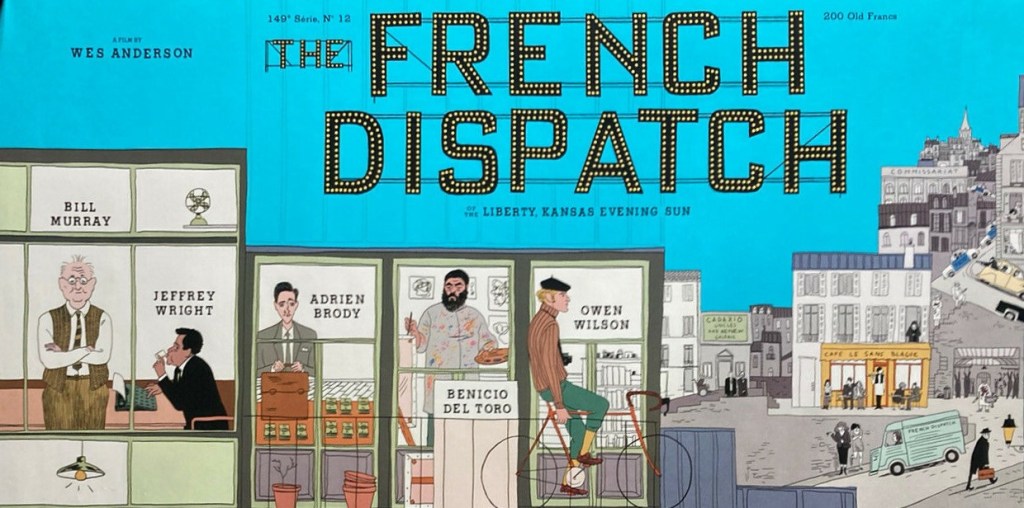
It can only be ironical that Wes Anderson’s wonderfully idiosyncratic, evocative, often hilarious, picture – featuring ex-pats writing for an American magazine in the style of the New Yorker – is located in the French town of Ennui (translation: “boredom”) because it is anything but, a continuous stream of imaginative and inventive scenes, settings and characters. Where other directors make aspects of history their own (Ridley Scott, David Lean) and others lay claim to greatness by inverting genres (Quentin Tarantino), Anderson’s genius lies in creating worlds nobody else could lay claim to. Although this particular film covers just a triptych of tales, you can easily imagine Anderson has another hundred or so stories at his fingertips, all contained in his own unique universe.
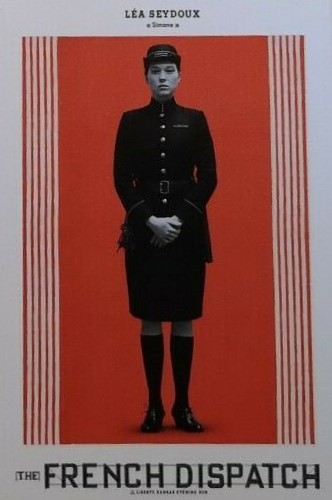
You can see why actors queue up to work with him for he allows them to develop highly-individual characters far removed from their denoted screen personas. Some like Timothy Chamalet, Benicio del Toro, Jeffrey Wright and Lea Seydoux take advantage of this freedom to conjure deliciously realised human beings, while others such as Owen Wilson and Tilda Swinton let the opportunity slip or appear in the picture so briefly (Elisabeth Moss, Henry Winkler, Bob Balaban) as to make little impact. Even headliner Bill Murray, who bookends the show, is given to more inventiveness than usual, breaking up his usual deadpan delivery to make an occasional emphatic point.
While mostly this zips along, when Anderson occasionally stops for breath the effect is electric, for example a static camera taking in the back of a tenement through which we see by virtue of various windows a waitperson’s exhausted ascent. Mostly, the tales follow their own internal logic, but when forced into a genre corner, such as a shoot-out, Anderson resorts to pure zest. And while the narrative is mostly driven by voice-over, this takes on different aspects, from a loquacious raconteur (Jeffrey Wright) to a droning lecturer (Tilda Swinton).
Clearly planning to keep one step ahead of critics who claim his movies run out of steam, Anderson heads off that issue by filming three short unconnected stories. Del Toro and Seydoux head up the best item which sees a psychotic murderer embark on an artistic career that hooks art dealer (Adrien Brody). Those who expect Anderson to spring surprises might still be taken aback when it transpires that the nude model (Seydoux) of the prisoner (Del Toro) is in fact his gaoler. Having opened a box of twists, Anderson continues in this wild vein. Narrators attempting to impose a semblance of normality generally find themselves at odds with their subject matter. In the second tale, as off-beat a student revolutionary as you could find, Chamalet breathes as much life into the character as he appeared stultified in trying to create a real person in the misfiring Dune (2021). Crime is not usually best served best by asides and droll self-importance but Wright, in the final story, manages to tie up in knots what should a taut kidnapping tale.
If you come looking for star turns by Bill Murray and Oscar-winner Frances McDormand, you will be sorely disappointed but if you willing to settle for an energetic, fresh, nostalgic take on an imaginary France, with plenty laugh out loud moments, you should come away well satisfied. Of course whether the French will feel as insulted as by television show Emily in Paris remains to be seen but I’m sure the Hungarians did not take The Grand Budapest Hotel (2014) too literally.
I notice that this received a platform release in the States and broke per-cinema box office records in the process and I wonder what might have been the fate of The Last Duel (2021), regardless of its budget, had it opted for a similar launch approach.
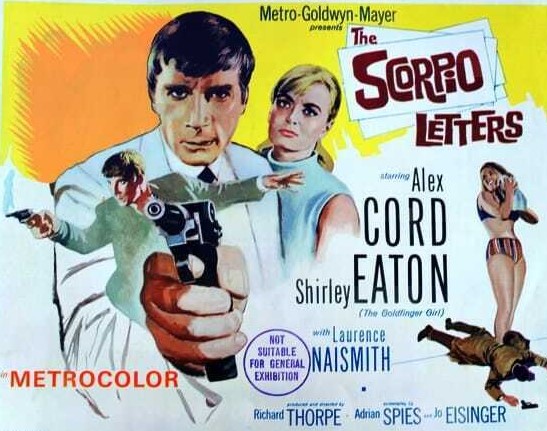
Desultory spy thriller with over-complicated story that’s worth a look mostly for the performance of Alex Cord (Stiletto, 1969). I can’t say I was a big fan of Cord and I certainly didn’t shower him with praise for his role as a disillusioned Mafia hitman in Stiletto. But now I’m wondering if I have been guilty of under-rating him.
Normally, critics line up to acclaim actors if they deliver widely differing performances – Daniel Day-Lewis considered the touchstone in this department after Room with a View and My Beautiful Launderette opened in New York on the same day in 1985. But usually screen persona rarely changes, amounting to little more than a heightened or amalgamated version of the actor’s character or features. Once Charles Bronson, for example, started wearing his drooping mustache he was never seen without. Actors may grow old, but never bald.
The macho mustachioed Cord of Stiletto is nowhere in sight. In fact, in The Scorpio Letters minus moustache and resisting attempts to reveal his musculature, he is almost unrecognizable. In this picture Joe Christopher (Alex Cord) is flip, resentful, thoughtful, occasionally pedantic, more natural than many of the crop of Hollywood new stars being unveiled at the time, and for once as a transplanted American in London rather scornful of British traditions. There’s a realistic flourish here, too, he is so poorly paid – and on a temporary contract – that he has to take the bus. And although he is an ex-cop fired for brutality, that level of violence ain’t on show here. Virtually the opposite of the character Cord created for Stiletto, I’m sure you’ll agree. So full marks for versatility and talent.
Unfortunately, the rest of the movie is not up to much, at the very bottom of the three-star review category, almost toppling into two-star territory. Christopher is investigating the death of a British agent who was the subject of a blackmail attempt. By coincidence – or perhaps not – another part of British Intelligence is investigating the same death and this brings Christopher into contact with Phoebe Stewart (Shirley Eaton) and eventually they work together to unravel a list of codenames and uncover the conspiracy with a bit of risk to life and limb.
But the pay-off doesn’t work despite all the exposition attempting to build it up and you’re left with a kind of drawing-room drama rather than exciting spy adventure. It’s determinedly London-centric with red buses, red postboxes, Big Ben, and The Horse Guards all putting in an appearance. The scene shifts to Paris and Nice without a commensurate heightening of tension. Despite a couple of neat scenes – a chase held up behind a wedding party, an irate German chef, an interrogation in a wine cellar – it’s much too formulaic.
Cord apart, Shirley Eaton (Goldfinger, 1964) adds some glamour, but her rounded portrait depicts a character with warmth rather than oozing sex. This is the kind of film that should be awash with character actors and up-and-comers but I recognized few names except for Danielle De Metz (The Karate Killers, 1967), Oscar Beregi (Morituri, 1965) and Laurence Naismith (Jason and the Argonauts, 1963).
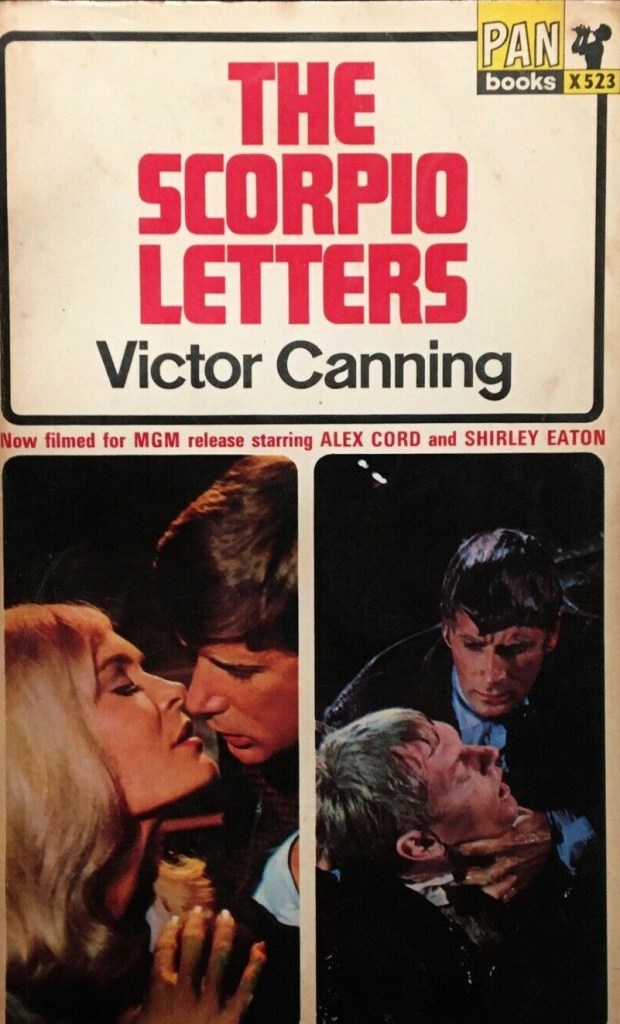
One-time top MGM megger Richard Thorpe (The Truth about Spring, 1965) was coming to the end of a distinguished career which had included Ivanhoe (1952) and Knights of the Round Table (1953). This was his penultimate film. The appropriately-named Adrian Spies (Dark of the Sun, 1968) wrote the screenplay based on the Victor Canning thriller. Making his movie debut was composer Dave Grusin (Divorce American Style, 1967)
Albeit made on a budget of just $900,000, MGM intended the picture for theatrical release but with a short cinema window to make it available for a speedy showing on ABC TV. It was originally scheduled for a May 1967 theatrical release but MGM, contractually obliged to deliver the picture within a specified time to television, could not fit in an American release. So it made its debut in the “Sunday Night at the Movies” slot on February 19, 1967, and was shown in cinemas abroad. Nor was it shown first on U.S. television because the studio believed it to be a disaster. Reviews were positive. Variety (February 22, 1967, page 42) called it “very hip.”
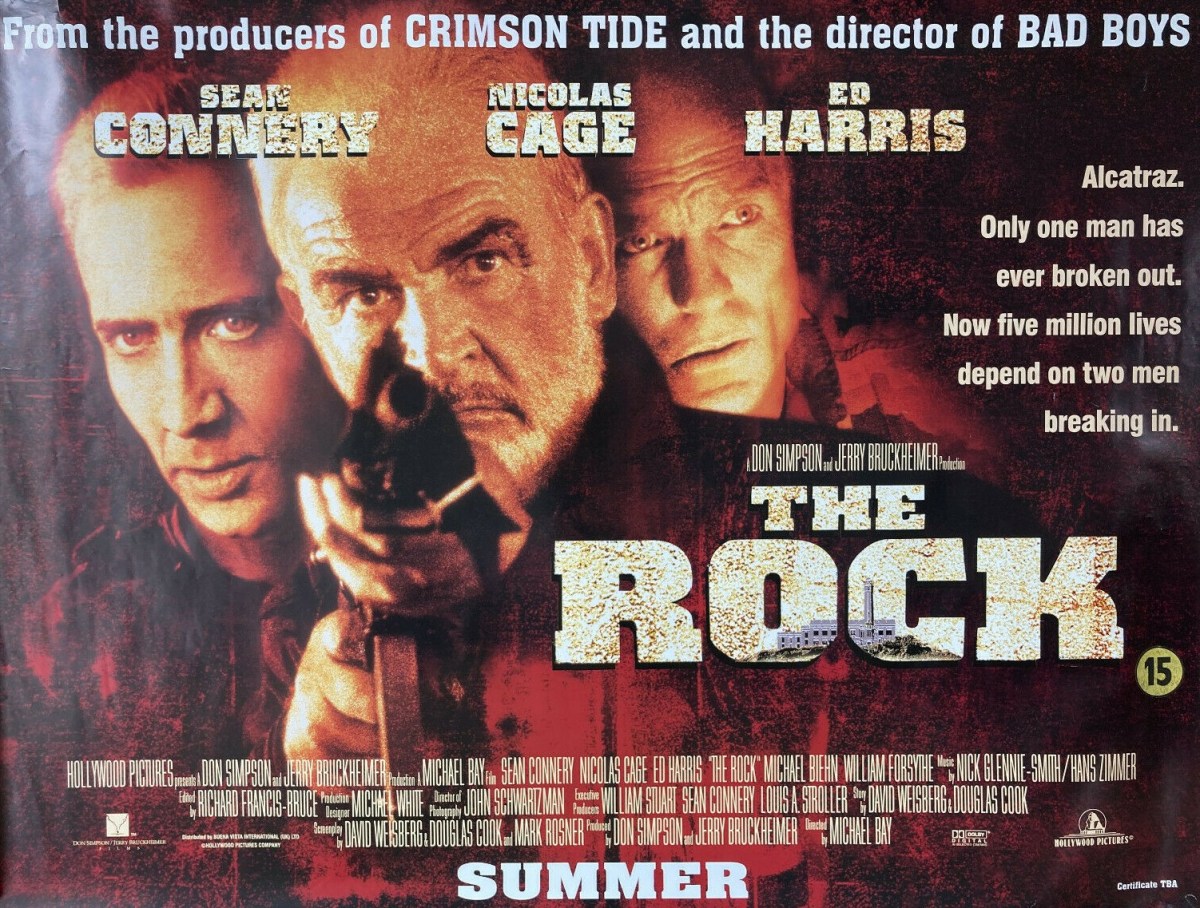
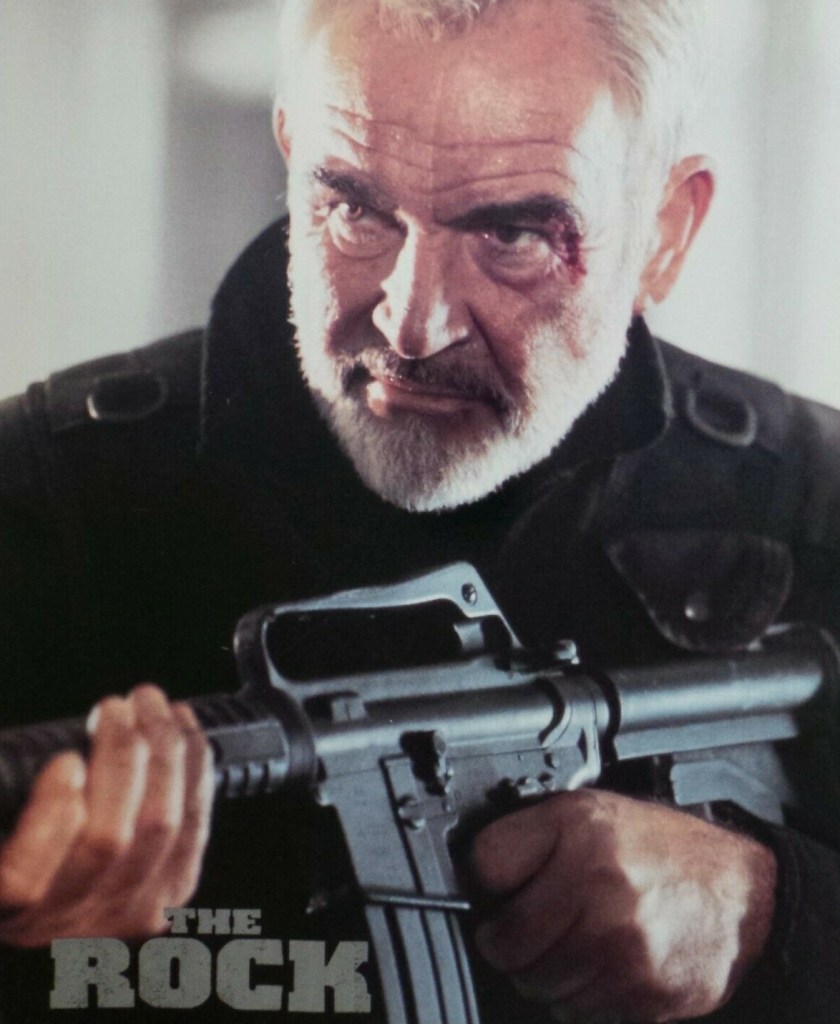
Amazingly, there’s been no 25th anniversary razzamatazz for this pulsating piledriver of an action movie, a stone cold classic. Instead of the standard breaking out of Alcatraz, a brilliant reversal sees a crack military team of U.S. Navy SEALS trying to break in to stop maniac martinet General Hummel (Ed Harris) devastating San Francisco with stolen missiles containing nerve gas. Notwithstanding his iconic turn as James Bond and Oscar acclaim for The Untouchables (1987), this is surely Sean Connery’s best, if not boldest, performance, the calm at the heart of the storm, exuding a riveting screen persona. No other star of his calibre would have allowed themselves to be seen at the start with such lack of dignity, not just shackled but with dirty exceedingly long hair.
Not only is it a brilliant entrance but such is director Michael Bay’s mastery of his material that he makes audiences wait 25 minutes for it while he sets up the terror that awaits the city from a rain of terrifying gas, Hummel as a ruthless legendary officer with a point to prove and allows Nicolas Cage to break out of his initial geek. Backed by a classic battering ram of a score by Hans Zimmer and Nick Glennie-Smith and an outstanding battalion of supporting players, Bay never lets up the high-pitch tension, finding his stylistic way with slo-mo, helicopters swaying in the sky, brutal stand-offs.
Former British spy John Mason (Connery), the only man alive who has broken out of Alcatraz, is released from prison to lead the break-in, Hummel holding hostages as well as his weaponry. Never has a star done so much with so little, using a coin to discover his nemesis F.B.I. director Womack (John Spencer) and with nothing more than a piece of string engineers his own escape from a San Francisco hotel that leads to a riveting car chase ending in wanton destruction and a touching scene reuniting Mason with a long-lost daughter (Clare Forlani). That such a cracking movie bothers with emotional hooks – academic FBI chemical expert Stanley Goodspeed also has his girlfriend in harm’s way – shows the screenwriter skill in bringing greater character depth. Except for his daughter, Mason would have made another escape from Alcatraz at the first opportunity.
What appears mission impossible becomes mission impossible too far when Hummel’s men slaughter the military invasion leaving the unlikely duo of Mason and Goodspeed to save the city – and their own lives when the equally ruthless operation overseers determine it’s better to completely liquidate Alcatraz rather than risk the missiles being fired.
And without Cage as the mild-mannerd scientist stepping up to the action plate, this would be a different picture, over-dominated by Connery. Cage delivers a multi-layered performance, from the emphatic strum of a guitar string to his flickering fingers and the brilliant delivery of the humdrum line “in the name of Zeus’s butthole.” He shifts from fearful geek who has left his gun behind to determinedly hunting down Mason in a car chase and then finding a true action mojo on the rock.
Given this top-notch performance, it’s proof of Connery’s star power that he easily steals the picture. Suspicious, clever, ruthless, soft-hearted when it matters, he mentors Goodspeed, though not always gently, “losers always whine about their best, winners go home and f*** the prom queen.”
Odd as it might be to say about a Michael Bay picture, this is layered too. From the conflict between Mason and Womack, the nuanced performance by the essentially honorable Hummel, brilliant character development – like Hilts in The Great Escape Mason the loner eventually persuaded to help the general cause – the transition of Goodspeed from goofy oddball to saviour, speedy edits, some cracking images, a script dipped in paranoia (references to Roswell, the Kennedy assassination, black ops and secret military slush funds) and a stack of one-liners. All this delivered in passing as this high-speed train of an action blockbuster thunders along the line.
The whole enterprise is bolstered by a top-notch supporting cast led by the Mason-hating John Spencer (stepping up from a supporting role in L.A. Law, 1990-1996), David Morse (The Green Mile, 1999), eternal heavy William Forsythe (J. Edgar Hoover in The Man in the High Castle, 2018-2019) getting the chance to lighten his load, Michael Biehn (Aliens, 1986), John C. McGinley (Any Given Sunday, 1999) and Bokeem Woodbine (Queen and Slim, 2019). Two young actresses show tremendous promise – Clare Forlani capitalised on this break with Meet Joe Black (1998) but it proved less of a Hollywood calling card for Vanessa Marcil (Goodspeed’s fiancé), her best work coming in television (Las Vegas, 2003-2008). This was Mark Rosner’s only screenplay from a story by Douglas Cook and David Weisberg. who collaborated on Double Jeopardy (1999).
It was also Michael Bay’s calling card to enter the high-octane world of big-budget blockbusters like Armageddon (1998). While his career had as many ups as downs, this is unquestionably his action masterpiece, a no-holds-barred non-stop adrenaline spike.
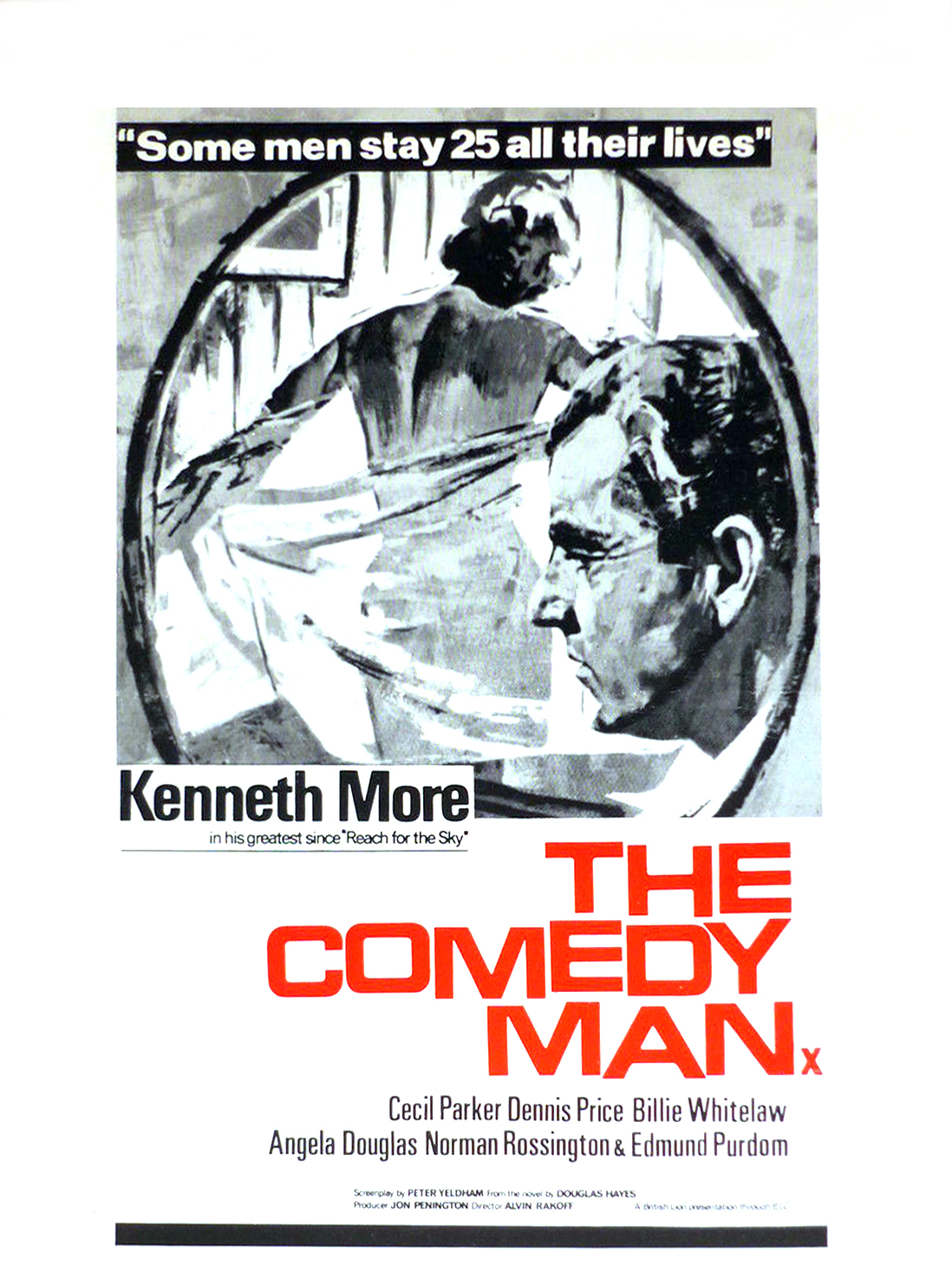
Unemployed actor Chic Byrd (Kenneth More) clings to his sanity through a series of rejections in this realistic portrayal of life as a stage actor. Even humor fails to leaven despair as he fails for the most part to even achieve auditions, reduced to a job as Santa Claus in a department store and acting in television commercials while a friend Julian Baxter (Edmund Purdom) suddenly shoots to fame in the movies.
Chic has never been a success, his name never adorning a West End marquee, trundling round one English repertory theatre after another, living in one tiny leaking apartment after another. And now, on the wrong side of forty, knocking on disillusion’s door, feels life has passed him by. The price of failure is high, another failed thespian Jack (Alan Dobie) commits suicide. Chic still has charm enough to revive an old relationship with fellow actor Judy (Billie Whitelaw) and deflower virgin Fay Trubshaw (Angela Douglas).
It’s a well-rounded character. While living on scraps, he still takes taxis. He pawns valuables. While Judy between acting jobs works as a waitress, he feels that is beneath him. To some extent he has coasted, too many easy love affairs getting in the way of the hard work required to build a serious career.
There is some sharp observation: sleazy agent (Dennis Price) operating a casting couch and feeling free to maul every girl in sight, even Fay; extras go on strike in a film; rain washes out location shooting; a shocked young girl watches as a man cuts in on her male dancing partner; no female backside within reach remains un-slapped; the platoon of out-of-work actors keep up each others’ spirits.
This was a strange case of life imitating art. Kenneth More’s career was on the slide. From Genevieve (1953) to Sink the Bismarck (1960) by way of Doctor in the House (1954) and Reach for the Sky (1956), More had combined comedic charm with stiff-upper-lip heroics to achieve massive success at the British box office. But his career had gone into tailspin after he offended the boss of Rank, not just one of the top British studios but owner of one of the top cinema chains. He remained under contract to Rank without receiving any work.
With its depiction of life in the raw – plus enough sex and swearing to command an “X” certificate – it should have been a shoo-in for acceptance as part of the British New Wave, for whom work and unemployment were essential elements. It could have revived More’s career, shifted critical and audience perception. But it did neither.
At this point Canadian director Alvin Rakoff was more of a television stalwart than movie maker, but he does elicit a poignant performance from More, fills the background with incident and steers the picture clear of the maudlin. Readers of this Blog will be familiar with Peter Yeldham who wrote the screenplay – from the novel by Douglas Hayes – since he was also responsible for The Liquidator (1965), Bang! Bang! You’re Dead! (1966) and Age of Consent (1969).
Cecil Parker has a cameo as a befuddled ageing actor on the scrounge, supporting actor Norman Rossington (Tobruk, 1967) again makes an impact as a neighbor whose chat-up lines fail to strike a chord with sophisticated actresses, and Frank Finlay appears in a bit part. Billie Whitelaw is excellent as the old flame who acts as Chic’s conscience while Dennis Price takes his usual charm down a seedier road. But it’s More’s film and it is something of an eye-opener even though seen by so few.
Although completed in 1962, the film was shelved for 18 months as original distributor Hal Christie of Albion Films struggled to find a place for it in the release system. More was especially vexed as he had deferred his salary so would not be paid until the film turned a profit which it was never going to do sitting on a shelf. With his career now mostly dependent on independent production, More now , typically, vented his anger on this filmmaking sector complaining to Variety that “they were little men running around in small, stupid, circles”
The picture had cost $500,000 but $300,000 of that came from a loan from the National Film Finance Corporation, a government scheme which had a habit of investing in duds. When it was finally released in 1964, it was ironic that it went out on the lower half of a double bill with another film that had been shelved for even longer – three years – Peter Brooks’ The Lord of the Flies. Doubly ironic, it was Rank that paired them.
This was More’s final starring role so it is an unusual swansong and a shame, really, that he did not attempt this kind of picture in his heyday when it could have expanded his career.
By the way, unless Imdb has changed it since I told them, More does not play a character called “Chick” because his surname is Byrd. He plays a character called “Chic” because that is standard British shortening of the first name Charles, as in Chic Murray.
Couldn’t be more excited and thought I would share my excitement with you as the idea that someone has finally written a book on The Great Escape – one of the quintessential movies of the 1960s – has filled me with delight. The book isn’t out till November 7 but I thought I’d give you all a bit of advance notice in case you wanted to buy it yourself or alert someone to the prospect of a Xmas present.
This was the film where Steve McQueen really took on the trappings of Mr Cool. The fantastic motorbike escape will forever be an action highlight. Many of the supporting cast went on to movie or television stardom including Charles Bronson (Death Wish), James Coburn (Our Man Flint), David McCallum (The Man from Uncle) and Gordon Jackson (the butler Hudson in Upstairs, Downstairs). Director John Sturges marshalled the various story strands with dexterity and delivered an iconic picture high on tension. And of course there was the fabulous theme tune by Elmer Bernstein.
Can’t wait to read what author Dana Polan makes of it all. His name might be unknown to you but he has published books on The Sopranos, Pulp Fiction and director Jane Campion.
It’s decently priced, too – University of California Press has this at £20/$24.95 as an ebook and £20/$24.95 for the paperback but I see that Amazon is offering it for less.
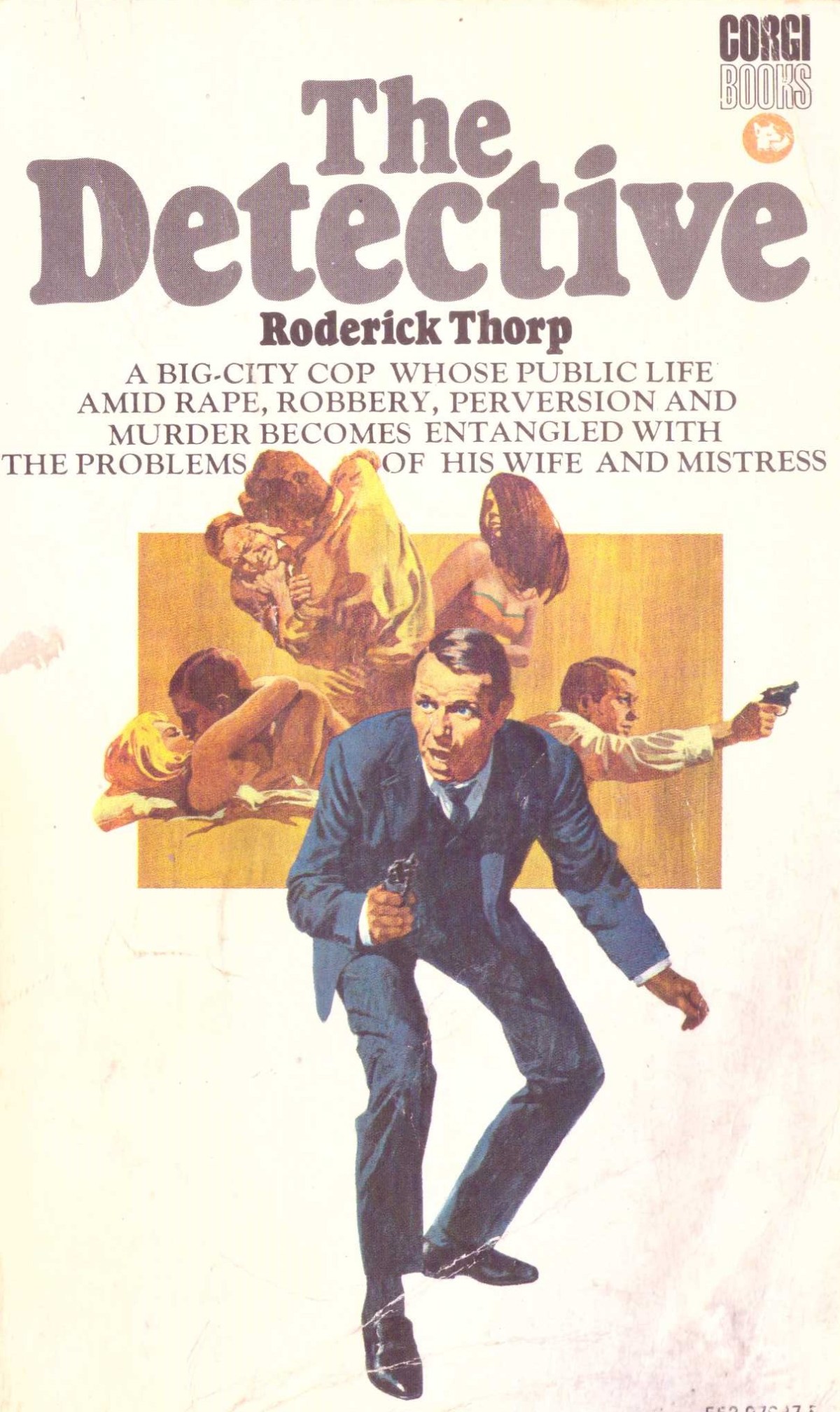
Screenwriter Abby Mann (Judgement at Nuremberg, 1961) had his work cut out adapting Roderick Thorp’s tombstone of a novel that ran to over 500 pages. The first job was to make the book – set mostly in the 1940s – contemporary. The book’s fictional locations of Port Smith and Manitou were transposed to New York. Joe Leland was younger in the book – in his mid-30s compared to the 50-plus Frank Sinatra.
And while the principals remained the same, the screenwriter employed some distinctive structural sleight of hand to keep apart the two investigations occupying Leland, the murder of a homosexual and the apparent suicide of a businessman. In the book the first investigation takes place in the past and is told in a long, detailed, flashback, while the suicide case takes up the present. For the film Mann relocated both crimes to the same timeframe, with the suicide simply following on to the murder.
But there was one distinct change. When Leland in the book investigates the suicide, he is doing so as a private eye, not a cop. He had resigned from the force after seeing a criminal sent to the electric chair. A minor alteration was also involved in the suicide case in that the widow Norma (Jacqueline Bisset in the film) was six months pregnant in the book.
More significantly was the swapping over of the sexual characteristics of Leland’s estranged wife (Lee Remick in the film) and the widow. In the film Remick is the nymphomaniac. In the book, it is the other way round, although Norma, after marriage, has that tendency under control.
Although Leland is a decent enough policeman, he makes none of the overt pitches for decency that occur in the film. That is all Abby Mann’s invention. And the scene in the picture where Leland objects to the stripping of a suspect is lifted from another episode in the book, one in which Leland has no involvement. While incorporating minor aspects from the book such as the annoying politician and civic corruption, Mann invented the atmosphere of the police station, the friction between the various cops and Leland’s ruthless ambition.
As I noted in my Blog on the novel A Cold Wind in August (published in 1960), fiction writers had far greater flexibility as regards sexuality than movie makers and Thorp’s 1966 novel reflects that trend. Although the book falls into the category of police procedural, and Thorp himself worked for his father’s detective agency, the sprawling canvas offers as much insight into human relationships as crime and investigative processes.
In some respects this is a textbook adaptation, stripping away the various layers of a dense book to focus on the essential narrative, then both trimming and expanding the main relationships to suit the new plotline. Virtually unspoken in both book and film are Leland’s reaction to the situations that have arisen as a result of his action, not because the writer in either circumstance was dodging the issues, but because both reader and moviegoer could work it out for themselves without introducing melodrama where it was not required.











 The Magnificent 60s