Behind the Scenes: “The Terrornauts” (1967)

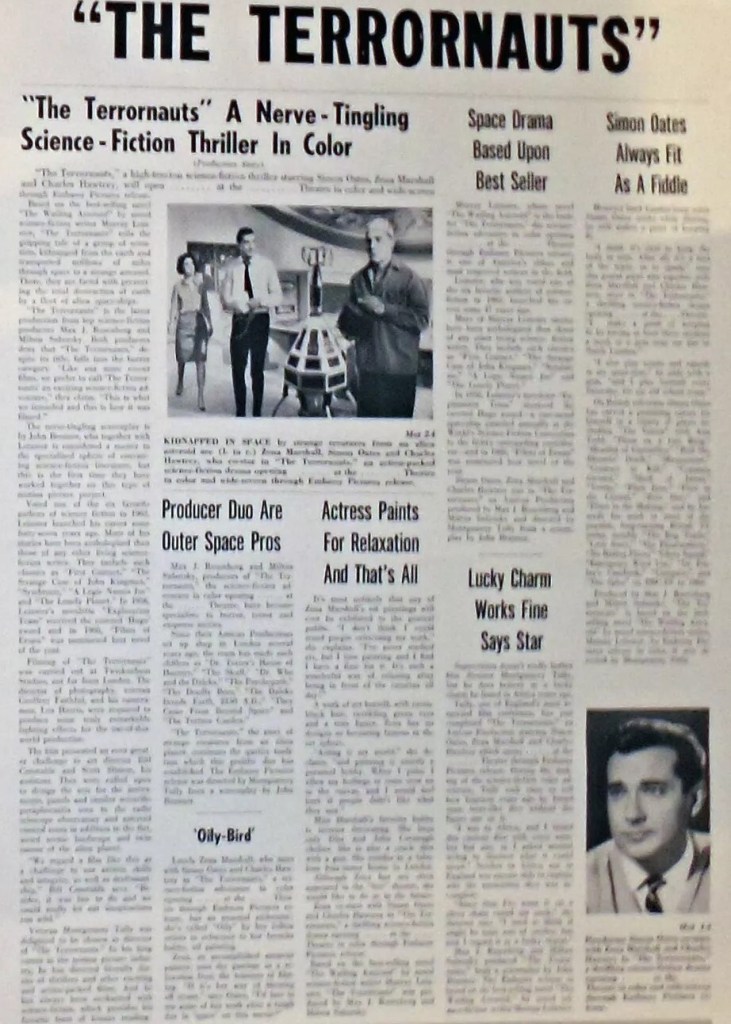
Unless you’re a sci-fi buff of a certain vintage, you probably haven’t heard of Murray Leinster who wrote The Wailing Asteroid on which The Terrornauts is based. Which is a shame because he was one of the giants of science fiction of the golden age. Time magazine called him The Dean of Science Fiction.

For a contemporary audience his name is of considerable significance because he invented the concept of the multiverse. In those days it was called a parallel universe or an alternate history but it amounted to the same thing. And he did so nearly a century ago – in 1934 in fact.
He was second only to H.G. Wells in originating science fiction concepts. He was the first, for example, to imagine meeting an alien culture that was as advanced as our own. He explored themes of mutual distrust, mutual assured destruction, and aliens as superior beings. He also invented the idea of the Internet and man-eating plants.

In The Wailing Asteroid, Leinster draws upon many of the ideas he was first to promulgate.

We have alien encounter. We have the fear that as a consequence terror might be brought back to Earth. We have a species that has evolved far beyond human experience.

We have the same kind of instant absorption of knowledge that occurs through the Internet. The little blocks that our hero finds might as well be called Miniature Googles.

You could also argue that what the space explorers discover is akin to The Sentinel that features in 2001: A Space Odyssey, released in 1968. And you could also view the asteroid as a life-affirming alternative to the hovering destructive Death Star of Star Wars filmed a decade later.

The Terrornauts is a rarity because only a handful of Leinster books were ever filmed. But he was very important to the movies in another way, at the forefront of an invention – front projection – that changed the way movies were made in the 1960s.
At this point, production entity Amicus was as well known for its sci fi output as its horror thanks to Dr Who and the Daleks (1965) and Daleks Invasion Earth 2015 A.D (1966).

So when Embassy Pictures knocked on the door and offered a flat fee of around half a million dollars for a science fiction double bill, Amicus was delighted. Hammer sold its horror pictures as double bills, a complete program more attractive to an exhibitor and more lucrative for a producer than  half a program.  

Amicus contracted to make The Terronauts and They Came from Beyond Space. They weren’t big enough to have stars under contract, nor the first port of call should a director or star have a pet project that required funding.

Their modus operandi was to trawl through the hundreds of novels published every year, either in pre-publication galley form, or when printed. Max Rosenberg claimed to read 500 books a year. “The basic job of a producer,” explained his partner Milton Subotsky, “is to find properties.”  That was how they came across The Wailing Asteroid.

It was occasionally part of the deal in Hollywood that when a studio bought a best-seller, the author was given the opportunity to write the screenplay. But that wasn’t the case here.

Instead, Amicus turned to another science fiction author. John Brunner was as prolific as Leinster. Brunner got the gig because he mixed in the same social circles as Subotsky. Mostly, he wrote conventional space opera and it was only after his experience on The Terrornauts that he acquired a bigger name in science fiction, after winning a Hugo Award in 1969.

The first casualty was the title. The Wailing Asteroid was not as catchy as The Terrornauts. And Brunner had no qualms about scrapping most of the original narrative. He telescoped the time frame. The action in the book takes place over several months, not a couple of days. The book involves multiple countries. Leinster’s novel was set in the United States, but Brunner made the characters British and added the comedy – no tea lady or accountant in the original.  And there’s no humor either. He changed the hero’s occupation from design engineer to scientist, and dumped the incipient hesitant romance between Joe and Sandy. But he brings in the notion of scientists hunting for intelligent life in space.

Nor does Leinster’s book involve little green men, robots or human sacrifice. That’s all Brunner’s doing. He turns what was really a concept novel, an exploration of ideas more akin to 2001: A space Odyssey and Planet of the Apes. Brunner shifts it from what if to alien abduction.

Budget shaped the picture. The first four reels are slow and full of dialog because dialog can be shot much quicker and more cheaply than action. Low budgets didn’t bother Amicus. “I defy any other picture making company,” proclaimed Rosenberg, “to turn out that sort of picture with the budget we are under.” He added, “We make pictures for a price and I think we’re better at it than anybody else.” 

Amicus had something of a stock company, Freddie Francis, for example, the in-house director, had helmed four pictures, the same number as Peter Cushing headlined. Christopher Lee starred in two, Robert Bloch contributed four scripts and Elizabeth Lutyens scored two pictures. But only Lutyens was retained here.

Amicus handed The Terrornauts to veterans, the majority involved were over 50 years of age. Cinematographer Geoffrey Faithful was 74, author Murray Leinster 71,  supporting actor Max Adrian 64, special effects guru Les Bowie 64, director Montgomery Tully 63, composer Elizabeth Lutyens 61.

It would prove the last hurrah for female lead Zena Marshall, Montgomery Tully would bow out later that year after Battle Beneath the Earth and Geoffrey Faithful would only make another two pictures.

The Terrornauts and They Came from Beyond Space were not filmed in October-December 1966 as has been widely reported. Instead, production took place earlier in the year. According to British trade magazine Kine Weekly’s Shooting Now section, The Terrornauts was first to go before the cameras at Twickenham Studios, on June 13 1966 and still featured on its production chart on August 3. Filming on They Came from Beyond Space in the second last week of September continued also at Twickenham until the week of November 3.  

Though to some observers the amount spent on The Terrornauts was very little, in fact the £87,000  budget was nearly double the amount spent on City of the Dead and slightly more than The Skull. Admittedly, there were special effects to consider but to offset that the stars came cheaper than the likes of Peter Cushing and Christopher Lee.

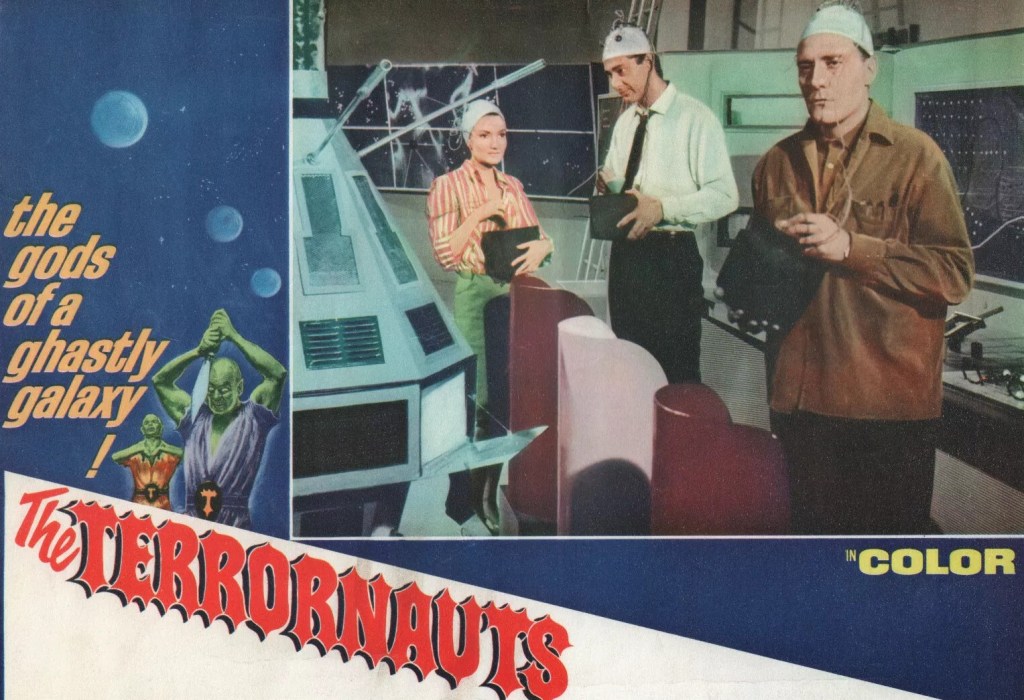
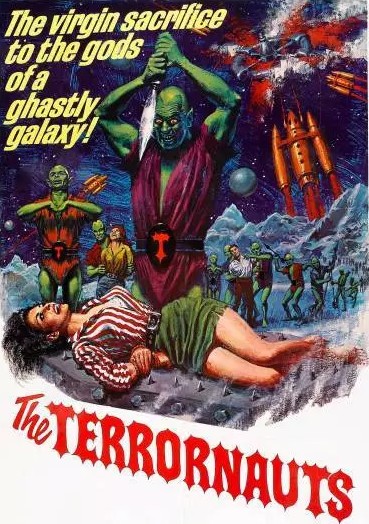
For a time it looked as if Embassy expected The Terrornauts to prove the more popular picture. It ran a one-page advertisement in trade newspaper Variety for The Terrornauts in April 1967 claiming it would be available to rent the following month. The image of Zena Marshall being held down by aliens was accompanied by the tagline – “the virgin sacrifice to the gods of a ghastly galaxy” They didn’t run any adverts for They Came from Beyond Space.

I’m sorry to have to tell you this is a condensed version of the audio commentary by me that accompanies the spanking new DVD released by Vinegar Syndrome – I’m sure you’ll forgive me another small plug – and it’s on special offer.
The Terrornauts (1967) ***

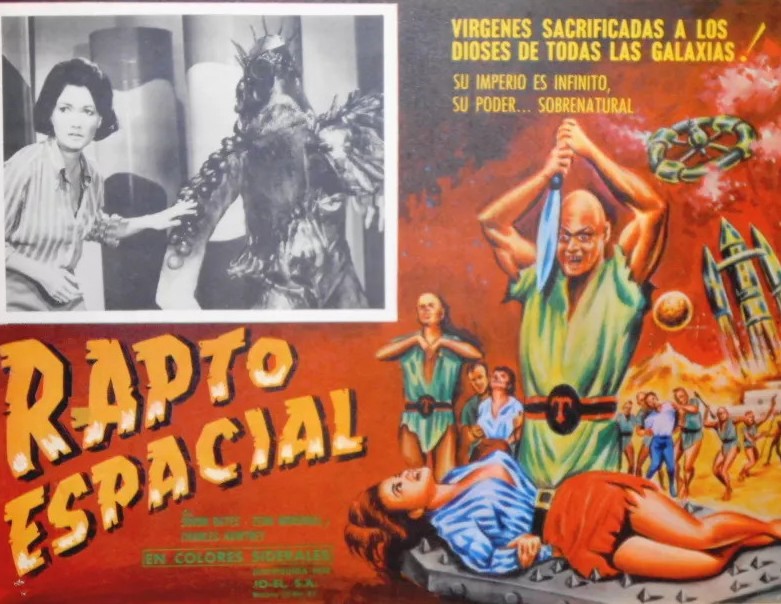
The easiest ways to acquire cult status are a) to be impossible to find and b) in a genre piece add in the unexpected. In this case, although originally devised as the support feature to They Came from Beyond Space (1967), in an Amicus sci fi double bill, this was denied initial release in Britain and other parts of the world and only seen fleetingly thereafter.

The genre upset is in two parts. First, we have the notion of aliens coming to the assistance of Earth. Secondly, for foreign audiences, it upends ideas of Englishness. Overseas moviegoers would have become used to the arrogant upper class characters, the bowler hats, tourist landmarks, Cockneys out for a “larf”, and probably never actually heard a genuine British accent in their lives because the diction was so incomprehensible it was usually dubbed.

Here we have two very recognizable, in British terms, types – the tea lady Mrs Jones (Patricia Hayes) always ready with down-to-earth wisdom, and bureaucracy in the shape of interfering bean-counter Joshua Yellowlees (Charles Hawtrey, taking a break from Carry On duties). They provide a supply of gentle comedy, unusual for the genre.

Along with Dr Joe Burke (Simon Oates), Ben Keller (Stanley Meadows) and Sandy Lund (Zena Marshall), working in radio telescope laboratory seeking signals from outer space, they are kidnapped by aliens. Apart from an odd-shaped robot, on the alien craft they encounter nobody but are still set intelligence tests and then step through a transporter which lands them on an alien planet but one which is strangely familiar to Burke from a childhood incident on an archaeological dig in France. These aliens of the little green men variety are not so accommodating and it would come as no surprise that they elect Sandy for sacrifice. When she’s rescued and they’re all safely back on the alien craft, a greater danger materializes. Earth is going to be obliterated by another set of aliens, deadly enemies of the ones who are so helpful, and the Earthlings have to master the alien weaponry to defeat them and save Earth.

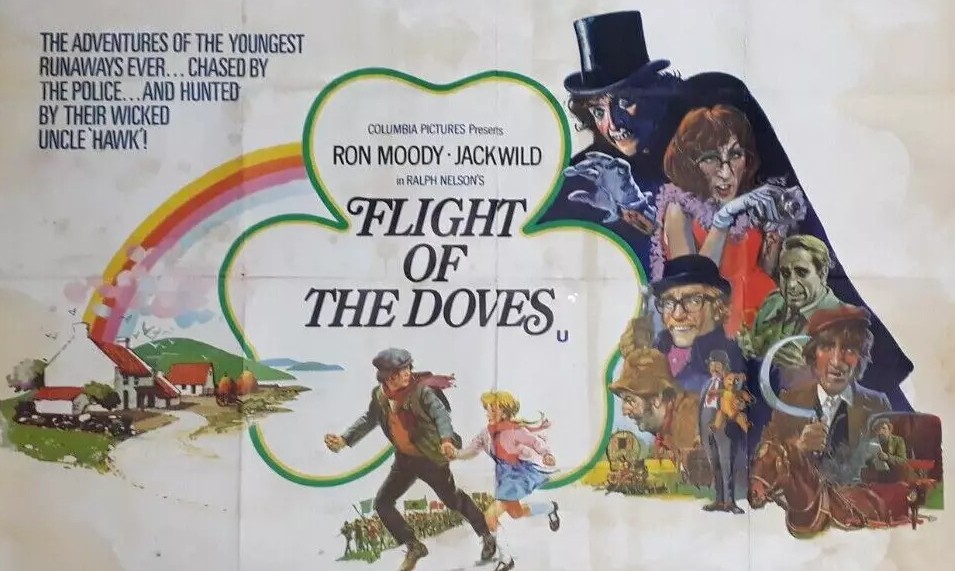
Saw “The Terrornauts” on original UK release when it was support to “Flight of the Doves.”

There are two twists at the end, one ending in speculative fashion, the other on a comedic note. The transporter returns to Earth and the same spot as Burke had his odd encounter, though nobody commenta on this. But to undercut that climax, the space travelers are arrested for trespass by a French gendarme. There’s no great acting and, in truth, it’s the oddball supporting players who steal the show, and Patricia Hayes would later achieve considerable fame as Edna, The Inebriate Woman (1971). This was the swansong for Zena Marshall (The Switch, 1963) and the penultimate picture of veteran Montgomery Tully (Fog for a Killer, 1962). Written by sci fi author John Brunner from the novel The Wailing Asteroid by Murray Leinster. Score by Elizabeth Lutyens (The Skull, 1965).

This is more thoughtful than the general run of sci fi B-movies, and the special effects, considering the tiny budget, are acceptable.  Had it enjoyed more success Amicus might well have continued down this route rather than the horror portmanteau for which they were associated, for by the time this movie was made, their efforts were split evenly between horror and sci fi and their biggest hits had been the big screen Dr Who adaptations.

Though They Came from Beyond Space was seen more widely in Britain as the support to Rank release The High Commissioner/ Nobody Runs Forever, The Terrornauts sat on the shelf. It was given a very limited release as one of three potential supports to Flight of the Doves (1971) which is how I saw it at the Gaumont first run cinema in Glasgow. And that was because Simon Oates had starred in hit BBC ecological thriller Doomwatch (1970-1972). In the United States, it had a sporadic cinema release, very little evidence of first run, but very quickly became a late-night television favorite.

If you accept the comedy and aren’t fussed to not be battling monsters, this is a very interesting diversion from the sci fi norm and well done with the budget.

Vinegar Syndrome has just brought this out on DVD.

The Switch (1963) ***

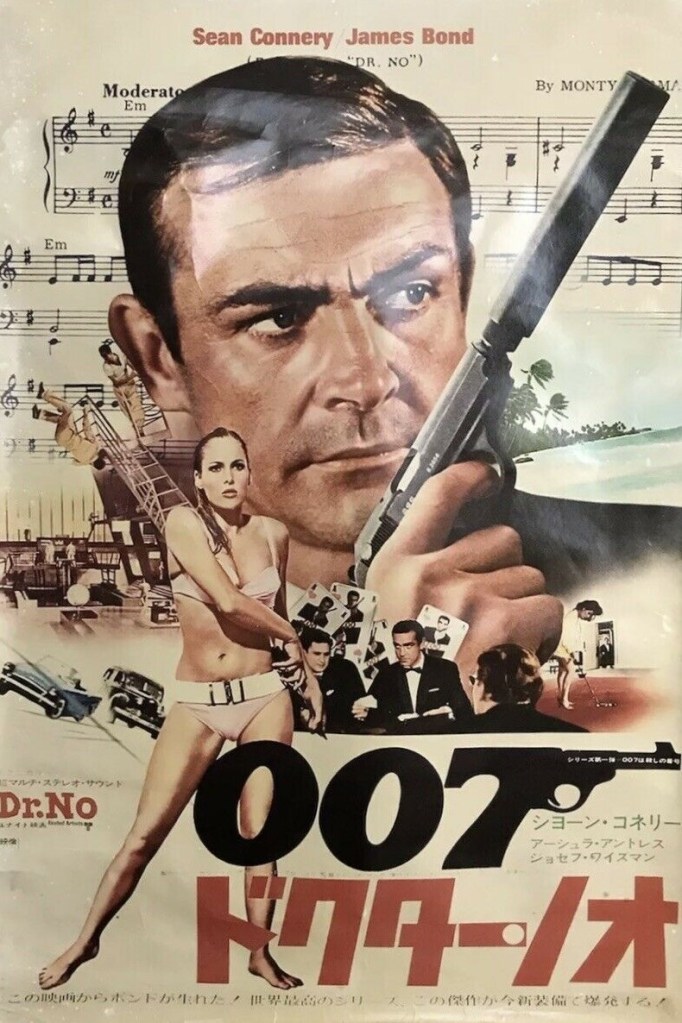
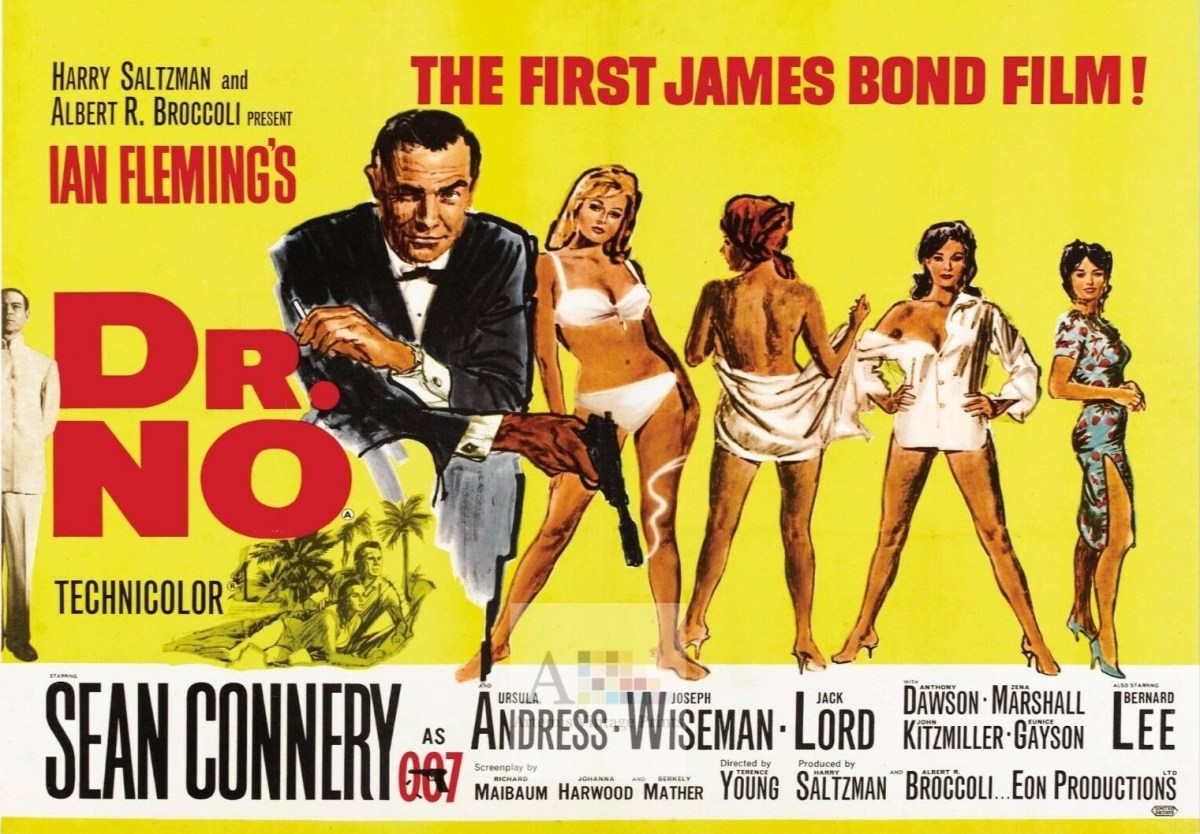
Dr No (1962) was more famous for kick-starting nascent careers – step forward Sean Connery and Ursula Andress – rather than reviving careers that had looked dead and buried as was the case with Zena Marshall. I had just come across Ms Marshall in her last picture, The Terrornauts (1967), a cult sci fi from Amicus, that I had been asked to provide an audio commentary for (you’ll have to wait till next year for that) and was intrigued to discover that, while never becoming a big star, she had managed to eke out a decent living since her debut in Caesar and Cleopatra in 1945. She’d never achieved much more than rising star status, B-movies more her line. She hadn’t made a picture in five years until Dr No but thereafter managed leading lady once a year until her retirement.

Director Peter Maxwell (Serena, 1962) fell into much the same movie backwater but still had the knack of generating interesting narratives. The screenplay turns on some interesting realism, an unusual gadget (especially for this genre)  as well as a couple of entertaining happenstances and in  Zena Marshall one of two very self-assured females who light up a picture otherwise peppered with dour males.

The eagle-eyed among you will have noted that I’ve used a still from “Dr No” as the main picture. Similarly, this is one of Zena Marshall’s earlier movies.
Extant posters of “The Switch” are non-existent, it appears.

A joint police and customs operation has snared a smuggler in a sting. But, almost immediately after Inspector Tomlinson (Dermot Walsh) and Customs Agent Bill Craddock (Anthony Steel) latch onto their prey, their informant ends up in the River Thames and they hit a dead end trying to find the Mr Big behind the high-class watch smuggling racket.

Meanwhile model Carolyn (Zena Marshall), on holiday in France, is taken for a romantic meal by seductive Frenchman Lecraze (Arnold Diamond) while his colleagues stuff her petrol tank with watches.

Takes a while for Carolyn to become a suspect. There’s quite a lot of fun to be had from unexpectedly inept gangsters. When she returns home, she finds her flatmate’s cousin John Curry (Conrad Phillips) having a bath. With his car parked in her garage, she finds somewhere else to stay. His car is mistakenly stolen, as is the car she exchanges at the garage while the original one she brought back from France is in for repairs. The crooks repeatedly steal the wrong car.

Eventually, the cops break open her petrol tank and find the hidden watches. Although under suspicion she is freed, and, being a confident young lass, and quite accustomed to men of all ages taking her out for dinner and buying her presents, is nonetheless surprised when her latest admirer John presents her with his firm’s latest invention, a miniature radio transmitter hidden inside a cigarette case.

Which is just as well because the Frenchman reappears and kidnaps Carolyn hoping to find out from her what happened to her car. Meanwhile, the cops dig up gangster’s moll Janice (Dawn Beret) whose boyfriend is mixed up in the villainy and has herself unwittingly brought stolen goods into the country in her petrol tank after being chatted up by a smooth Frenchman. She’s a cheeky young thing,  as self-assured as Carolyn, suggesting to the straight-laced inspector that if he’s not doing anything at the weekend they could get married.

Meanwhile, John has teamed up with the good guys while they manage to survive Janice’s stream of quips and attempt to track down the kidnapped Carolyn. She doesn’t manage to hold out for long, not when Mr Big removes the gloves.

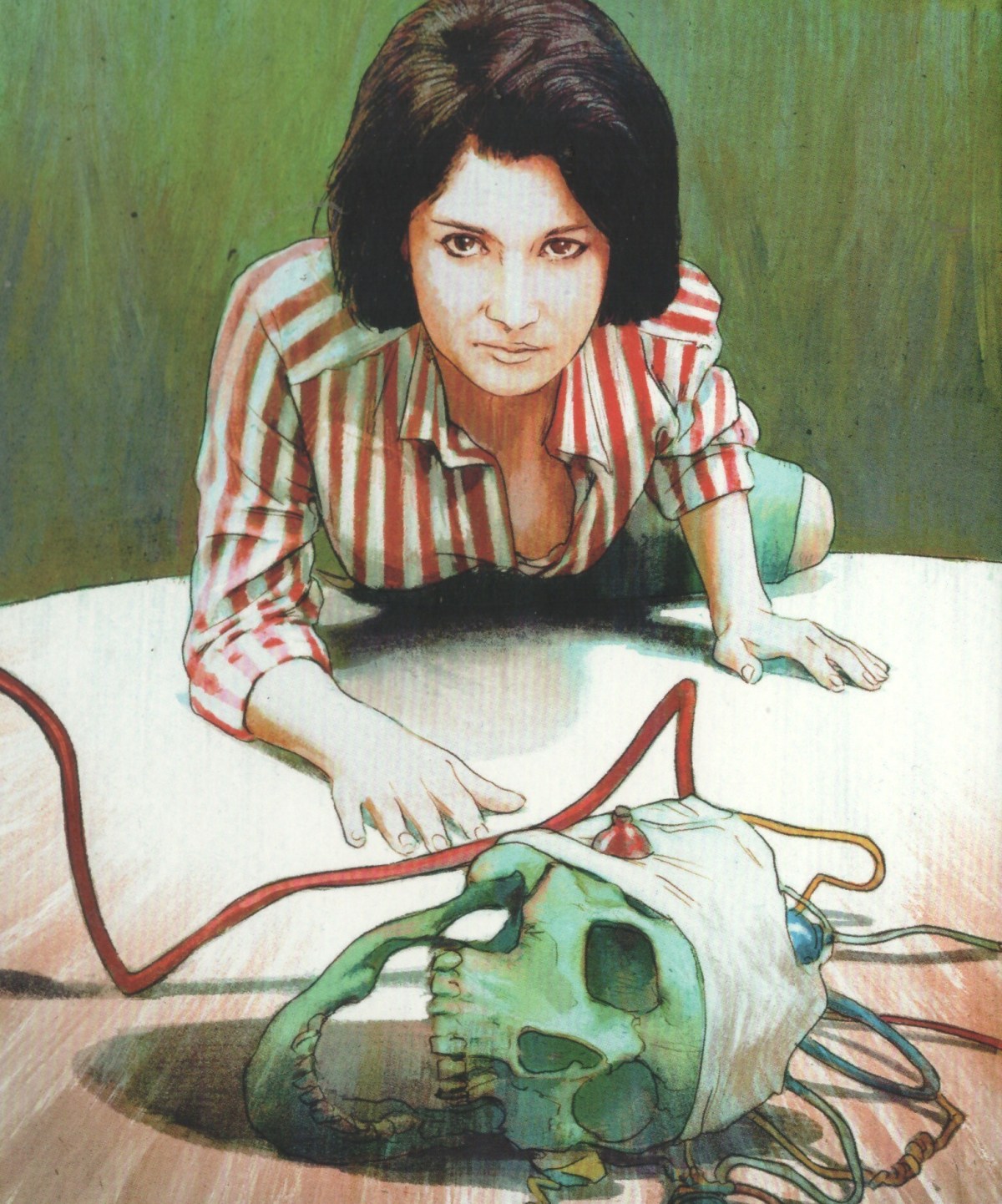
All in all, it’s cleverly done, playing all the time with audience expectation, not just the cocky confidence of the two women, who are clearly accomplished at leading men astray, but the quirks of the storyline – including a failed escape up a chimney – the details of the smuggling operation, and the introduction of the James Bond-style gadget. There’s even some cheeky self-awareness, John seen sitting up in bed reading the movie tie-in edition of Dr No which features Zena Marshall on the cover.

Apart from Zena Marshall, there’s an interesting cast. Anthony Steel (The Story of O, 1975), husband of Anita Ekberg, was just back from a stint in Rome. Conrad Phillips (The Secret Partner, 1961) had played William Tell in the television series and Dermot Walsh Richard the Lionheart in similar. It marked the last screen appearance of Susan Shaw (Fire Maidens from Outer Space, 1956) and perky Dawn Beret (Victim, 1961) looked promising. In bit parts look out for Carry On regular Peter Butterworth  and Rose Alba (Thunderball, 1965)

This sat on the shelf for a year before going out on the Odeon circuit as support to spy picture Hot Enough for June/Agent 8¾ (1964) starring Dirk Bogarde.

Except for horror, Britain didn’t stoop to having B-Movie Queens, but if they had Zena Marshall would wear the crown.

Dr No (1962) *****

Minus the gadgets and the more outlandish plots, the James Bond formula in embryo. With two of the greatest entrances in movie history – and a third if you count the creepy presence of Dr No himself at the beds of his captives – all the main supporting characters in place except Q, plenty of sex and action, plus the credit sequence and the theme tune, this is the spy genre reinvented.

Most previous espionage pictures usually involved a character quickly out of their depth or an innocent caught up in nefarious shenanigans, not a man close to a semi-thug, totally in command, automatically suspicious, and happy to knock off anyone who gets in his way, in fact given government clearance to commit murder should the occasion arise. That this killer comes complete with charm and charisma and oozes sexuality changes all the rules and ups the stakes in the spy thriller.

 Three men disguised as beggars break into the house of British secret service agent Strangeways (Tim Moxon) and kill him and his secretary and steal the file on Dr No (Joseph Wiseman). A glamorous woman in a red dress Sylvia Trench (Eunice Gayson) catches the eye of our handsome devil “Bond, James Bond” (Sean Connery) at a casino before he is interrupted by an urgent message, potential assignation thwarted.

We are briefly introduced to Miss Moneypenny (Lois Maxwell) before Bond is briefed by M (Bernard Lee) and posted out immediately – or “almost immediately” as it transpires – to Jamaica, but not before his beloved Beretta is changed to his signature Walther PPK and mention made that he is recovering from a previous mission. But in what would also become a series signature, liberated women indulging in sexual freedom, and often making the first move, Ms Trench is lying in wait at his flat.

Another change to the espionage trope, this man does not walk into the unknown. Suspicion is his watchword. In other words, he is the consummate professional. On arrival at Jamaica airport he checks out the waiting chauffeur and later the journalist who takes his picture. The first action sequence also sets a new tone. Bond is not easily duped. Three times he outwits the chauffeur. Finally, at the stand-off, Bond employs karate before the man takes cyanide, undercutting the danger with the mordant quip, on delivering the corpse to Government house, “see that he doesn’t get away.” 

Initially, it’s more a detective story as Bond follows up on various clues that lead him to Quarrel (John Kitzmiller), initially appearing as an adversary, and C.I.A. agent Felix Leiter (Jack Lord) before the finger of suspicion points to the mysterious Dr No and the question of why rocks from his island should be radioactive. Certainly, Dr No pulls out all the stops, sending hoods, a tarantula, sexy secretary Miss Taro (Zena Marshall) and the traitor Professor Dent (Anthony Dawson) to waylay or kill Bond.

But it’s only when our hero lands on the island and the bikini-clad Honey Rider (Ursula Andress) emerges from the sea as the epitome of the stunning “Bond Girl” that the series formula truly kicks in: formidable sadistic opponent, shady organization Spectre, amazing  sets, space age plot, a race against time. 

It’s hard not to overstate how novel this entire picture was. For a start, it toyed with the universal perception of the British as the ultimate arbiters of fair play. Yet, here was an anointed killer. Equally, the previous incarnation of the British spy had been the bumbling Alec Guinness in Our Man in Havana (1959). That the British should endorse wanton killing and blatant immorality – remember this was some years before the Swinging Sixties got underway – went against the grain.

Although critics have maligned the sexism of the series, they have generally overlooked the female reaction to a male hunk, or the freedom with which women appeared to enjoy sexual trysts with no fear of moral complication. Bond is not just macho, he is playful with the opposite sex, flirting with Miss Moneypenny, and with a fine line in throwaway quips.

Director Terence Young is rarely more than a few minutes away from a spot of action or sex, exposition is kept to a minimum, so the story zings along, although there is time to flesh out the characters, Bond’s vulnerability after his previous mission mentioned, his attention to detail, and Honey Rider’s backstory, her father disappearing on the island and her own ruthlessness. The insistently repetitive theme tunes – from Monty Norman and John Barry – was an innovation. The special effects mostly worked, testament to the genius of production designer Ken Adam rather than the miserable budget.

Most impressive of all was the director’s command of mood and pace. For all the fast action, he certainly knew how to frame a scene, Bond initially shown from the back, Dr No introduced from the waist downwards, Honey Rider in contrast revealed in all her glory from the outset. The brutal brief interrogation of photographer Annabel Chung (Marguerite LeWars), the unexpected seduction of the enemy Miss Taro and the opulence of the interior of Dr No’s stronghold would have come as surprises. Young was responsible for creating the prototype Bond picture, the lightness of touch in constant contrast to flurries of violence, amorality while blatant delivered with cinematic elan, not least the treatment of willing not to say predatory females, the shot through the bare legs of Ms Trench as Bond returns to his apartment, soon to become par for the course.

Future episodes of course would lavish greater funds on the project, but with what was a B-film budget at best by Hollywood standards, the producers worked wonders. Sean Connery (The Frightened City, 1961) strides into a role that was almost made-to-measure, another unknown Ursula Andress (The Southern Star, 1969) speeded up every male pulse on the planet, Joseph Wiseman (The Happy Thieves, 1961) provided an ideal template for a future string of maniacs and Bernard Lee (The Secret Partner, 1961) grounded the entire operation with a distinctly British headmaster of a boss.

Masterpiece of popular cinema.

Dr No (1962) *****

Minus the gadgets and the more outlandish plots, the James Bond formula in embryo. With two of the greatest entrances in movie history – and a third if you count the creepy presence of Dr No himself at the beds of his captives – all the main supporting characters in place except Q, plenty of sex and action, plus the Maurice Binder credit sequence and the theme tune, this is the spy genre reinvented.

Most previous espionage pictures usually involved a character quickly out of their depth or an innocent caught up in nefarious shenanigans, not a man close to a semi-thug, totally in command, automatically suspicious, and happy to knock off anyone who gets in his way, in fact given government clearance to commit murder should the occasion arise. That this killer comes complete with charm and charisma and oozes sexuality changes all the rules and ups the stakes in the spy thriller.

 Three men disguised as beggars break into the house of British secret service agent Strangways (Tim Moxon) and kill him and his secretary and steal the file on Dr No (Joseph Wiseman). A glamorous woman in a red dress Sylvia Trench (Eunice Gayson) catches the eye of our handsome devil “Bond, James Bond” (Sean Connery) at a casino before he is interrupted by an urgent message, potential assignation thwarted.

We are briefly introduced to Miss Moneypenny (Lois Maxwell) before Bond is briefed by M (Bernard Lee) and posted out immediately – or “almost immediately” as it transpires – to Jamaica, but not before his beloved Beretta is changed to his signature Walther PPK and mention made that he is recovering from a previous mission. But in what would also become a series signature, liberated women indulging in sexual freedom, and often making the first move, Ms Trench is lying in wait at his flat.

In another change to the espionage trope, this man does not walk into the unknown. Suspicion is his watchword. In other words, he is the consummate professional. On arrival at Jamaica airport he checks out the waiting chauffeur and later the journalist who takes his picture. The first action sequence also sets a new tone. Bond is not easily duped. Three times he outwits the chauffeur. Finally, at the stand-off, Bond fells him with karate before the man takes cyanide, undercutting the danger with the mordant quip, on delivering the corpse to Government house, “see that he doesn’t get away.” 

Initially, it’s more a detective story as Bond follows up on various clues that leads him to Quarrel (John Kitzmiller), initially appearing as an adversary, and C.I.A. agent Felix Leiter (Jack Lord) before the finger of suspicion points to the mysterious Dr No and the question of why rocks from his island should be radioactive. Certainly, Dr No pulls out all the stops, sending hoods, a tarantula, sexy secretary Miss Taro (Zena Marshall) and the traitororous Professor Dent (Anthony Dawson) to waylay or kill Bond.

But it’s only when our hero lands on the island and the bikini-clad Honey Rider (Ursula Andress) emerges from the sea as the epitome of the stunning “Bond Girl” that the series formula truly kicks in: formidable sadistic opponent, shady organization Spectre, amazing  sets, space age plot, a race against time. 

It’s hard not to overstate how novel this entire picture was. For a start, it toyed with the universal perception of the British as the ultimate arbiters of fair play. Here was an anointed killer. Equally, the previous incarnation of the British spy had been the bumbling Alec Guinness in Our Man in Havana (1959). That the British should endorse wanton killing and blatant immorality – remember this was some years before the Swinging Sixties got underway – went against the grain.

Although critics have maligned the sexism of the series, they have generally overlooked the reaction of the female audience to a male hunk, or the freedom with which women appeared to enjoy sexual trysts with no fear of moral complication. Bond is not just macho, he is playful with the opposite sex, flirting with Miss Moneypenny, and with a fine line in throwaway quips.

Director Terence Young is rarely more than a few minutes away from a spot of action or sex, exposition kept to a minimum, so the story zings along, although there is time to flesh out the characters, Bond’s vulnerability after his previous mission mentioned, his attention to detail, and Honey Rider’s backstory, her father disappearing on the island and her own ruthlessness. The insistently repetitive theme tunes- from Monty Norman and John Barry – were innovative. The special effects mostly worked, testament to the genius of production designer Ken Adam rather than the miserable budget.

Most impressive of all was the director’s command of mood and pace. For all the fast action, he certainly knew how to frame a scene, Bond initially shown from the back, Dr No introduced from the waist downwards, Honey Rider in contrast revealed in all her glory from the outset. The brutal brief interrogation of photographer Annabel Chung (Marguerite LeWars), the unexpected seduction of the enemy Miss Taro and the opulence of the interior of Dr No’s stronghold would have come as surprises.

Young was responsible for creating the prototype Bond picture, the lightness of touch in constant contrast to flurries of violence, amorality while blatant delivered with cinematic elan, not least the treatment of willing not to say predatory females, the shot through the bare legs of Ms Trench as Bond returns to his apartment soon to become par for the course.

Future episodes of course would lavish greater funds on the project, but with what was a B-film budget at best  by Hollywood standards, the producers worked wonders. Sean Connery (The Frightened City, 1961) strides into a role that was almost made-to-measure, another unknown Ursula Andress speeded up every male pulse on the planet, Joseph Wiseman (The Happy Thieves, 1961) provided an ideal template for a future string of maniacs and Bernard Lee (The Secret Partner, 1961) grounded the entire operation with a distinctly British headmaster of a boss.

Discover WordPress

A daily selection of the best content published on WordPress, collected for you by humans who love to read.

The Atavist Magazine

by Brian Hannan

WordPress.com News

The latest news on WordPress.com and the WordPress community.