Behind the Scenes: The Box Office Bump

Ancillary – the famed “long tail” – has all but disappeared. Used to be movie studios could count on up to 90 per cent of a picture’s overall earnings coming after it had completed its initial run in the cinemas. Until streaming cut off ancillary at the pass,  that long tail consisted of an extraordinary number of revenue streams. Once a film was out of the cinemas, and assuming it wasn’t going to return in a steady reissue pattern like the James Bond or Disney movies or blockbusters such as Star Wars, its ancillary journey would begin with VHS/DVD (of which there were several sub-streams), then television (again, sub-divided into network, cable, syndication, and specialist operations like Turner) and then you could still be talking remake. Plus, you could bunch up an entire library of old pictures and sell them on again. The beauty of the system was that when movies hit whatever ancillary segment, there was rarely any such thing as an outright buy. Movies were leased. That meant every three or four years they could be sold all over again.

The forerunner of ancillary was network television. Television had begun mopping up old movies by the bucketload in the 1950s, and in such quantities that the attraction of old movies on the small screen prevented audiences seeking out new movies on the big screen and in part accounted for the steady decline of the moviegoing habit. By the 1960s, networks were beginning to fork out big bucks for individual pictures – Cleopatra (1963) going for several million.  

By the 1970s, the income from a television showing of a movie could exceed what it had made at the cinema. For United Artists, in the period 1970-1972 (this covers the dates films were made not when released), television sales, calculated on an overall annual basis, brought in at least an extra 24 per cent on top of revenue from cinema release. That figure came from 1970, but in 1971 that shot up to 38 per cent and the following year dipped slightly to 37 per cent. And that was just for the United States. Although other countries tended to pay a lot less for movies, they still paid something and in total might bring in half as much again.

The ancillary gold mine had started to pay off big time. In the 1960s, the amounts networks ponied up for television rights depended very much on initial box office, the assumption being there was some obvious correlation between the numbers who would go to see a particular movie at the cinema and the size of the subsequent television audience. And while it was true the biggest cinematic blockbusters tended to attract the biggest television audiences, it was soon equally clear that television audiences were as segmented as much as cinema ones and therefore the amounts paid by networks for individual movies began to show sharp  divergence.

There was no doubting that James Bond ruled the television roost as far as UA was concerned in 1970-1972. Diamonds Are Forever and Live and Let Die, regardless of U.S. box office – the former earning $20 million in rentals (the studio’s share of the box office), the latter $16.2 million – were each sold to American television for the same, princely, sum of $5.2 million, by far and away the most any movie pulled in.

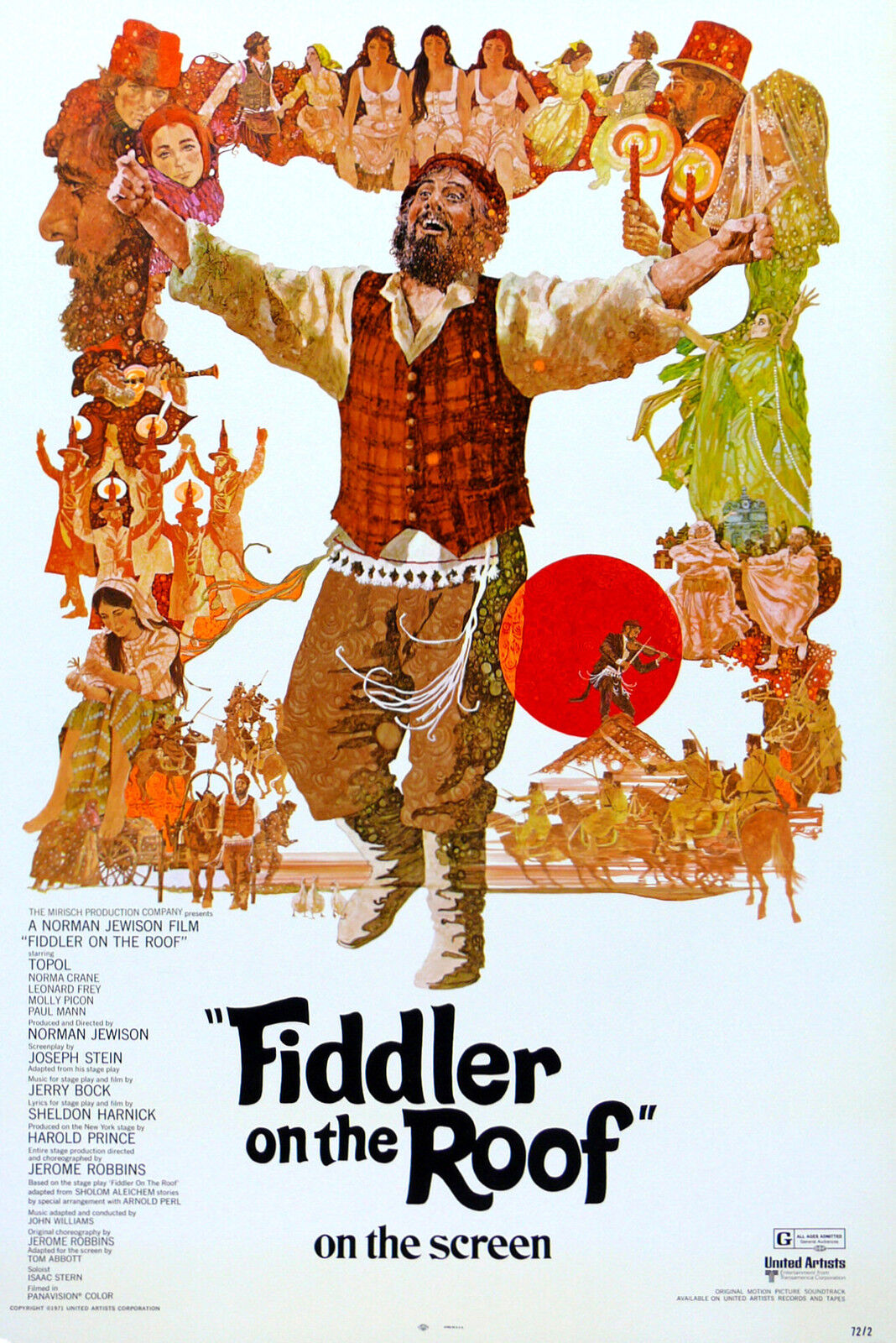
Not far behind was Fiddler on the Roof which netted $5.12 million. But here’s the kicker – the musical earned more than both Bonds put together, a colossal $37 million in rentals. but in terms of attracting a television audience was considered a weaker proposition than both. But musicals were believed to be somehting of a golden goose for television, otherwise how to acocunt for Tom Sawyer which cost networks $2.76 million. Comparatively speaking, that made no logical sense because it had only taken in $5 million in rentals. But family-friendly fare was so rare it had networks duking it out for the rights. A third musical Man of La Mancha went to television for $1.7 million having racked up just$3.7 million at the cinema.

Conversely, networks weren’t remotely interested in films with a sex theme, no matter how well they had done at the box office. Last Tango in Paris had harnessed a colossal $16 million in rentals but was worth only $120,000 (yes, that’s right, $120,000) to any television station willing to show it (heavily cut of course). It didn’t even matter if you took a comedic approach to sex. Woody Allen’s Everything You Wanted To Know About Sex hauled in $8.2 million at the cinema but only $130,000 from television. But maybe Woody Allen was the problem. Bananas, with a highly-profitable $3.3 million at the box office, could only manage less than half a million from television, the comedian perhaps considered an acquired taste which not enough of the public had acquired.

But television, rather than being viewed as the perennial enemy, was often seen as salvation for under-performing movies, maybe not recouping the entire negative costs but going some way to stem the flow of red ink. And perhaps the more interesting statistics relate to those pictures which earned more from television than they did in their entire U.S. cinema run.

Michael Winner espionage thriller Scorpio headlined by Burt Lancaster and Alain Delon notched up $1.35 million at the cinema but $1.56 million from television. Similarly, Robert Altman’s critically-acclaimed The Long Goodbye with Elliott Gould as the iconic private eye picked up a mere $1 million at the U.S. cinema compared to $1.51 million from a network. Another private eye caper, Hickey and Boggs, teaming Robert Culp (who also directed) and Bill Cosby from a Walter Hill script, had snapped up just $900,000 from cinemas but $1.2 million from television. Cops and Robbers hoisted $1.32 million in small screen larceny as against $1.2 million elsewhere.

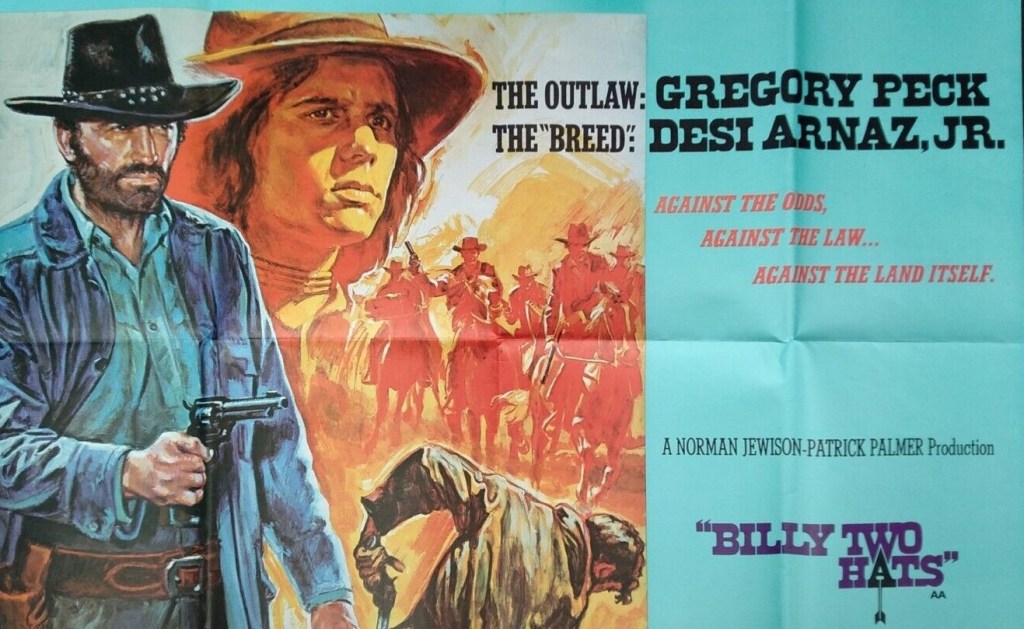
Westerns The Magnificent Seven Ride, the fourth in the series, and Ted Kotcheff’s Billy Two Hats starring Gregory Peck and with a script from Scotsman Alan Sharp, both did better financially from television than cinema. The former’s small screen take was $1.16 million compared to $750,000 from the cinema, the latter $1.15 million compared to $440,000. But for The Hunting Party with a top-line cast of Gene Hackman, Candice Bergen and Oliver Reed it went the other way, the $460,000 from television going hardly any way to offset the paltry $800,000 from cinemas.

It’s possible that star power, and weighted towards veterans, counted more in television. As well as Scorpio, Lancaster westerns Valdez Is Coming and Lawman tucked away $1.47 million and $1.5 million, respectively, from their television outings.

SOURCE: “Results of Distribution of Released Pictures (by production year),” MCHC 82, Box 1, Folder 8, The United Artists Archive, University of Wisconsin.

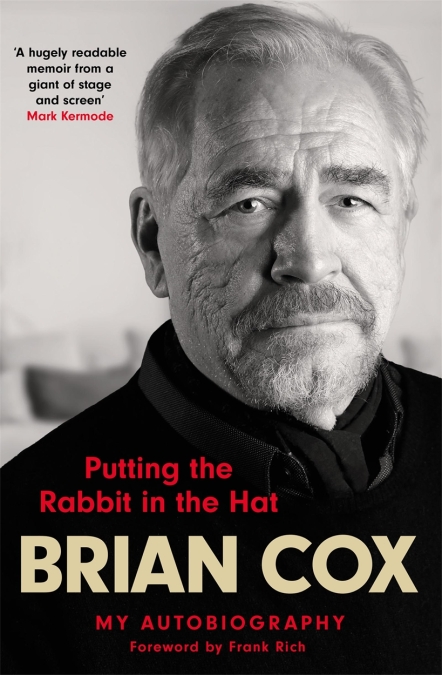
The “Succession” Man – Brian Cox

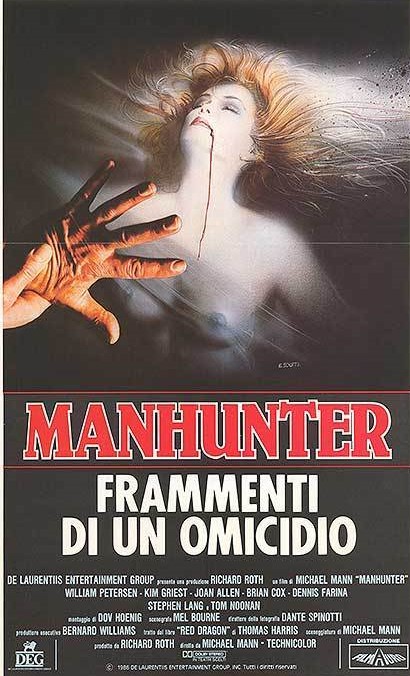
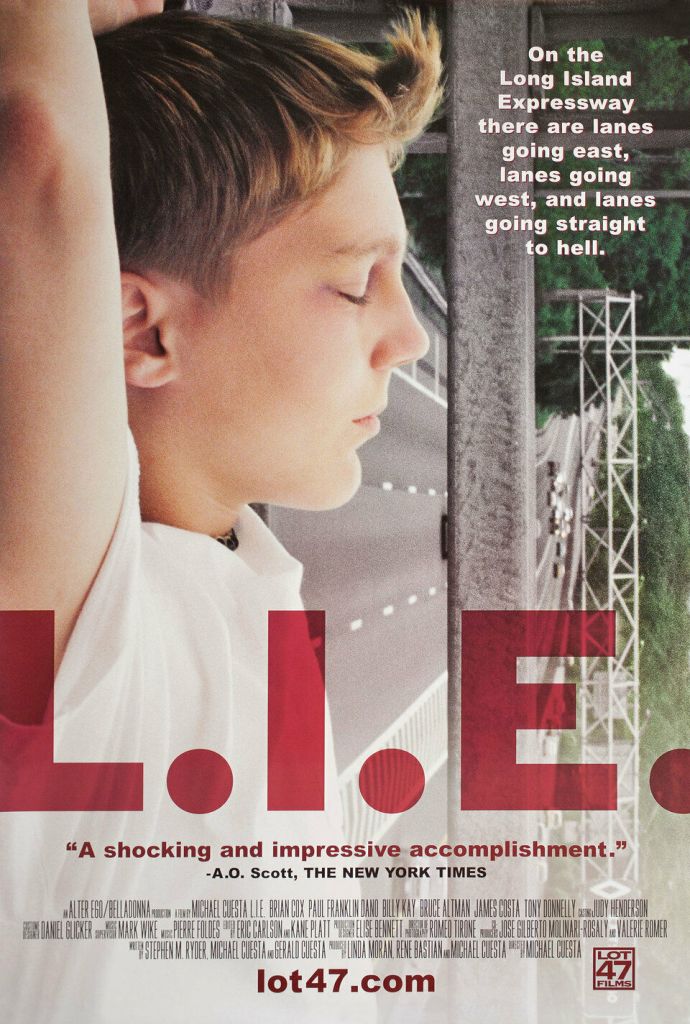
If you find that most movie star biographies concentrate on gossip at the expense of genuine insight to the craft of acting, then this one is for you. For the bulk of his film career, Cox, outside of such films as Manhunter (1986), L.I.E (2001) and Churchill (2017), has been in the main a supporting player and not even the kind of supporting actor regularly commended by Oscar voters, rather the type of artist whose face you recognize and welcome in small but important parts. Probably you will be unaware that he was more of a titan on stage, winning two Olivier awards – the British equivalent of the Tonys – and nominated another twice as well as wins and nominations for theatrical productions in America.

So he makes no distinction between the various mediums – film, television, stage – in detailing the development of his craft.  His first seminal moment came from the David Storey play In Celebration when director Lindsay Anderson having spent 90 minutes trying to slow the actor down for one segment eventually in frustration explained to the actor the reason for takings things slowly: his character returning home for the first time in years would spend time reacquainting himself with the house, taking in what had changed and what was familiar. In other words, “I learned to be a character rather than describing or acting it.”

When he moved into films, he had enough self-awareness to realize he was never going to be the leading man (even in the cult Manhunter, he was billed third or fourth in the credits) and determined he was “going to earn my wage as a character actor and that what I really wanted to do was create characters similar to those I loved from the old films… (where) characters just zing at you, no matter how small the part.”

He also appreciates his co-stars, especially the superstars. Of Keanu Reeves, he pointed out: “Despite choosing interesting work and being an interesting guy, he still had a reputation as a bit wooden…He took himself off to a small theatre in Canada and played Hamlet. He stuck at it and he’s actually become quite good over the years. He’s become rather good because he’s learned his job.” He has similar praise for Brad Pitt. “Like Keanu the initial appeal is all about the heartthrob looks, so he’s had to learn on the job; he’s had to dedicate himself to his craft…I love that ambition, that dedication, not to be better looking or more famous or have a sexier partner, but to be a better actor.”

When an actor has 234 credits in film and television you can tell instantly he’s a character actor. While occasionally Cox has appeared in high profile ventures – Braveheart (1995), X2 (2003), Troy (2004), and Rise of the Planet of the Apes (2011) – more often you would find him turning in bit parts in smaller pictures that you have possibly never heard of like The Water Horse (2007), Citizen Gangster (2011) and Morgan (2016).  Sometimes he pulled out a television plum, Nuremberg (2000) for which he won an Emmy or British comedy Bob Servant Independent (2013).   

With such a variety of movies, he has a wealth of anecdotes. He took over the role intended for Dustin Hoffman in The Long Kiss Goodnight (1996) and replaced Tommy Lee Jones in Chain Reaction (1996). He has stories to tell about Sir Laurence Olivier, Kevin Costner, Morgan Freeman, Samuel L. Jackson, Harvey Weinstein, Steven Seagal. Woody Allen, Scarlett Johansson, Mia Farrow, John Schlesinger and a dozen others.  

But he doesn’t like Quentin Tarantino or the acting of Sir Ian McKellen. “I really don’t have much time for Quentin Tarantino. I find his work meretricious. It’s all surface. Plot mechanics in place of depth. Style where there should be substance. I walked out of Pulp Fiction.’ Of McKellen he observes: “He is a master of what I’d call front-foot acting. It’s very effective…but it doesn’t quite fulfil what I believe is one of the key functions of acting.”

He was paid $10,000 for Manhunter while Anthony Hopkins walked away with a million for Silence of the Lambs (1991). He turned down Pirates of the Caribbean (2003) and Game of Thrones. Terrorists nearly boarded his plane during 9/11. His  mother suffered from mental illness. His father died when he was young.

After a half century of as many downs as ups and little likelihood that publishers would be knocking on his door for his autobiography, he suddenly became a massive star thanks to Succession. Supreme acting skills that had been ignored by the Hollywood cognoscenti were crucial to Logan Roy becoming one of television’s most popular – and hated – characters. His great talent is stillness, to be able to convey myriad emotion without speaking a word.  

But publishing an autobiography is not the true mark of success. Being in demand is. As well as future series of Succcession, he already has in the can the following films – The Jesuit, Skelly, Prisoner’s Daughter and Mending the Line and is currently shooting The Independent, in all of which he is either top-billed or second-billed, a far cry from sixth or seventh billing in supporting roles.

Discover WordPress

A daily selection of the best content published on WordPress, collected for you by humans who love to read.

The Atavist Magazine

by Brian Hannan

WordPress.com News

The latest news on WordPress.com and the WordPress community.