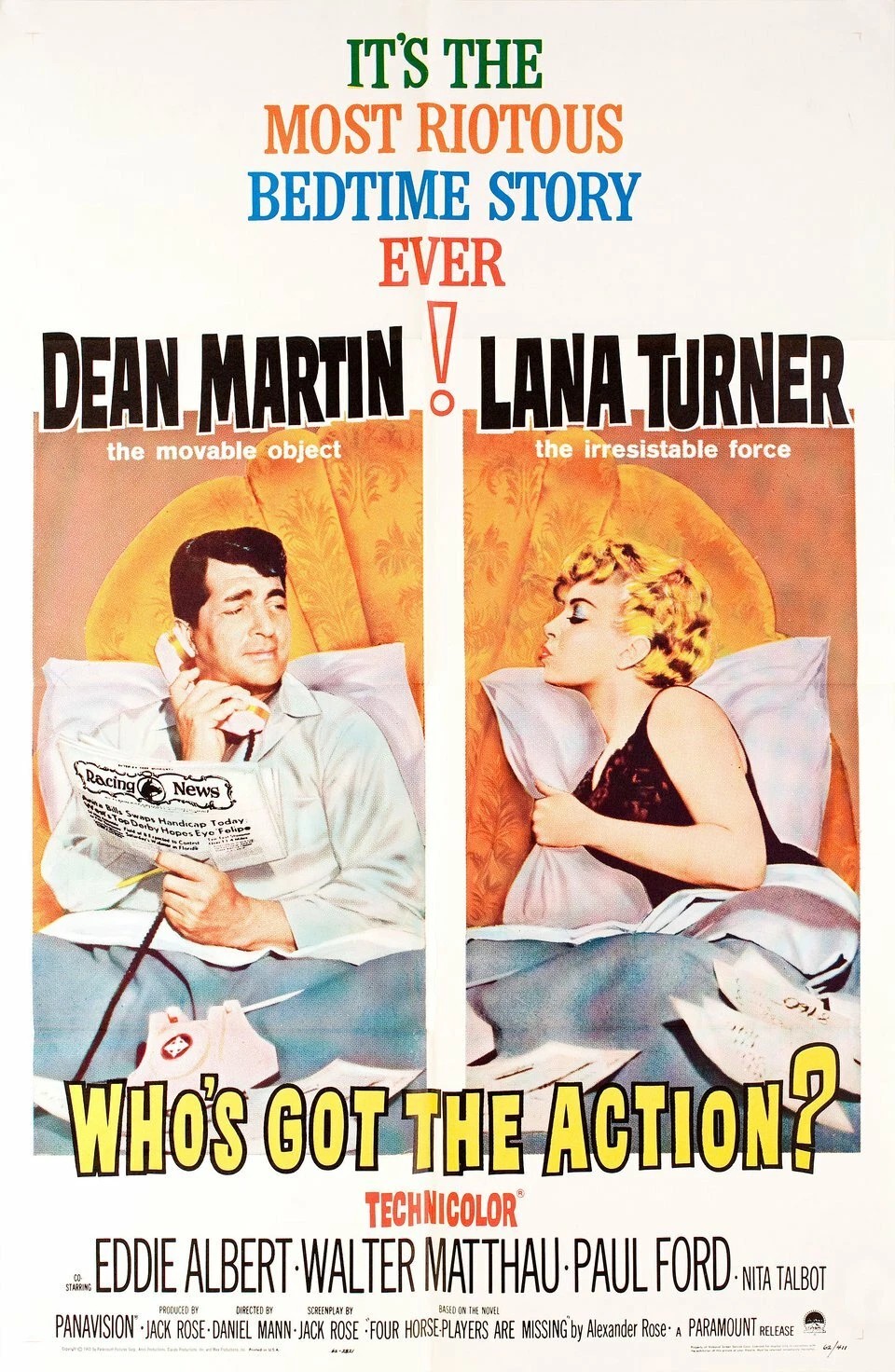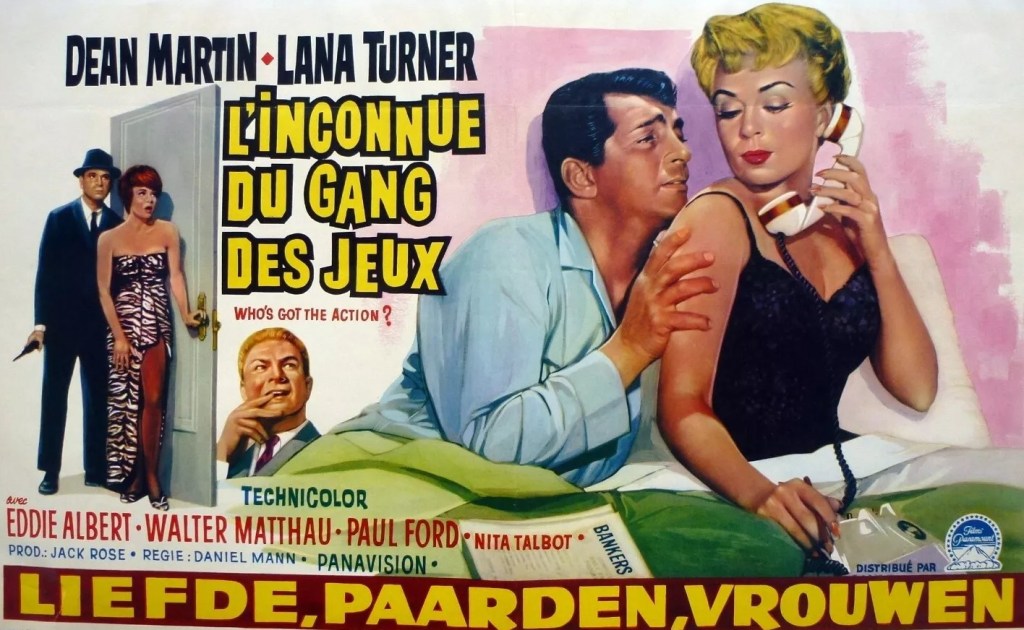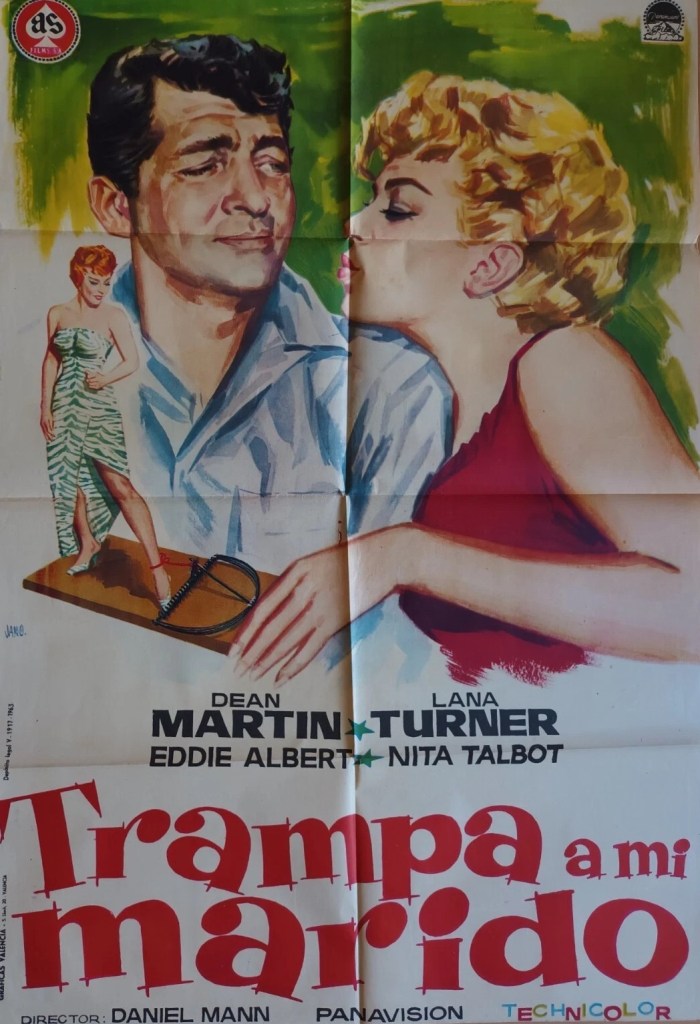
Who’s Got the Action (1962) ***

Complication. The keenest weapon in the screenwriter’s armory. And the most overused and, conversely, not employed to its greatest potential. Generally, it’s the only device for a romance – boy meets girl, (enter complication as…) boy loses girl, boy gets girl. But, just occasionally, it appears with some skill, layer after layer of deft complication until a whole story is tied up in acceptable and believable knots.

Before we get into all that it’s worth pointing out how language changes. These days mention of “action” will carry connotations of a sexual nature, so, just to be clear, here we’re talking about gambling, betting on horses, the mythical sure thing. And if you want to take a more cosmic perspective, we can apply the scientific rule that every action has a re-action, in other words consequence.

Attorney Steve Flood (Dean Martin) has a gambling addiction. He’s $8,000 in the hole to illegal bookie Clutch (Lewis Charles). Steve’s wife Melanie (Lana Turner) comes up with a clever idea to wean him off his addiction, by creating a fictional bookie, so that her husband’s losses will come to nothing. So she calls in Steve’s partner Clint Morgan (Eddie Albert) triggering Complication No 1. Clint’s always had the hots for Melanie and hopes to take advantage of Steve’s problems, helping her out by agreeing to act as the mythical bookie.

And that would be fine except for Complications No 2 and No 3. Instead of losing, as has been the trend, Steve wins big on his first bet, so now Melanie has to find a large chunk of dough. In dumping Clutch, Steve has come to the attention of mobster Tony Gagouts (Walter Matthau) who’s wondering about the mysterious new bookie queering his pitch and denying him a good customer (such is the definition of a loser).

Steve’s gambling success creates Complication No 4, attracting the interest of a pair of judges who are happy to stake the gambler, whose winning streak shows no sign of stopping.

Complication No 5 – Melanie turns to nightclub singer Saturday Knight (Nita Talbot), her next door neighbor and girlfriend of Tony, for help in raising cash and she obliges by buying some of the couple’s furnishing while Melanie also pawns jewelry.

Complication No 6 is created by Tony, who, trying to trace the rival bookie, installs a wiretap that leads him to the Flood apartment. And that should be the end of the tale, and little chance of a happy ending, except for Complication No 7. Tony has incriminated himself via the wiretaps and with an attorney ready to exploit the situation, it all works out fine, original debt to the gangster wiped out and the mobster blackmailed into marrying Saturday.

Now, with so many complications and sub-plots, this isn’t a Dean Martin picture the way the Matt Helm series is, especially not with a co-star like Lana Turner (By Love Possessed, 1961) who, not weighed down by the kind of heavy romantic tangle that seemed her remit at this point of her career, has the chance to steal a good deal of the limelight.

But the strong supporting case also do their best to chisel scenes away from the big stars. Eddie Albert’s (Captain Newman M.D., 1963) idea of a seductive lunch is a cracker and Nita Talbot (Hogan’s Heroes series, 1965), fashion ideas like Audrey Hepburn on speed, can’t help but play up to the camera. Walter Matthau is trying out a characterization for Charade (1963).

The beauty of this is that the narrative follows a neat logic. You can’t just muscle in on the illegal gambling business.

Director Daniel Mann ( A Dream of Kings, 1969) whips up an entertaining Runyonesque comedy from a screenplay by Jack Rose (It Started in Naples, 1960) based on a novel by namesake Alexander Rose   who you might have spotted wearing his acting hat in The Hustler (1961).

They seemed to be a lot better at these effortless concoctions back in the day.

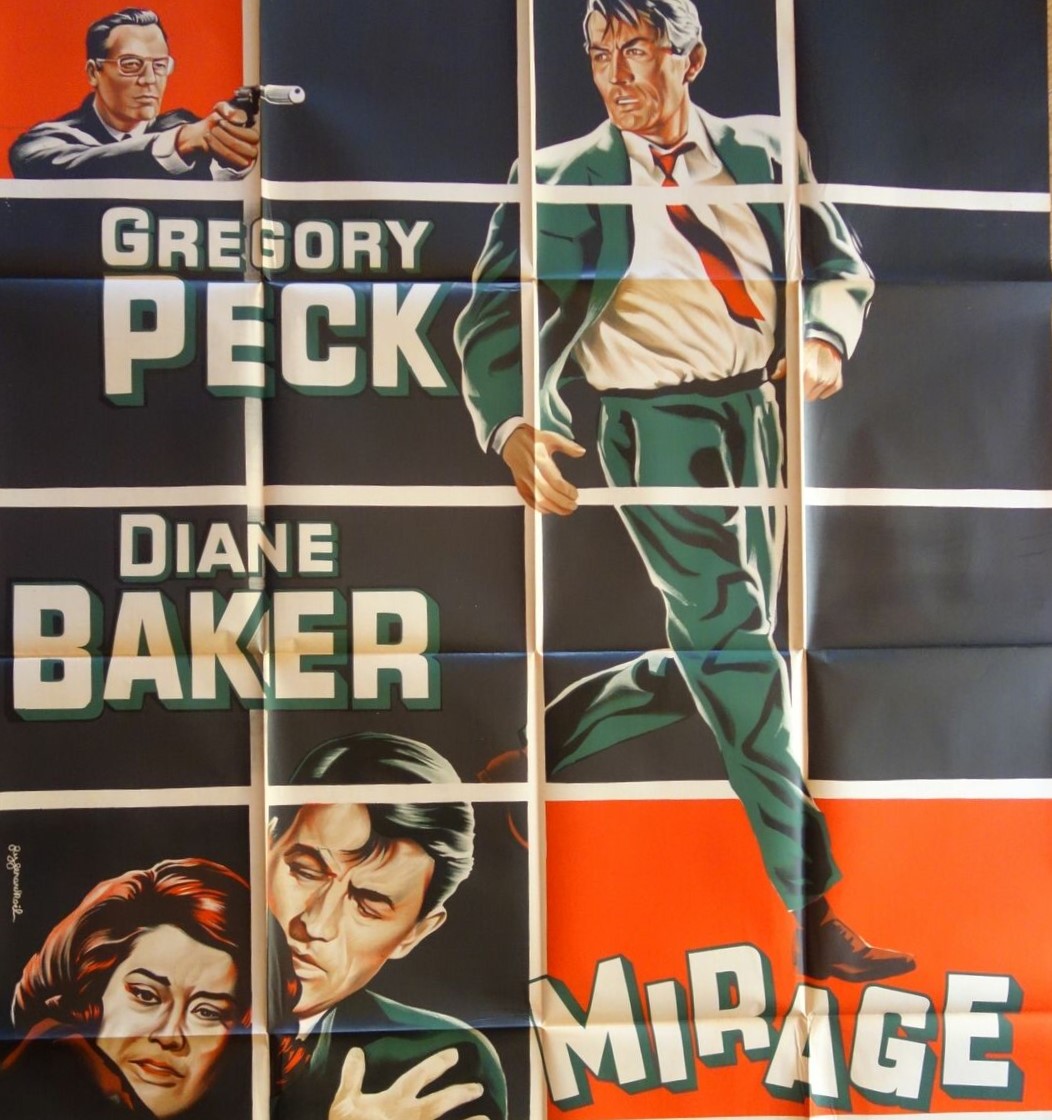
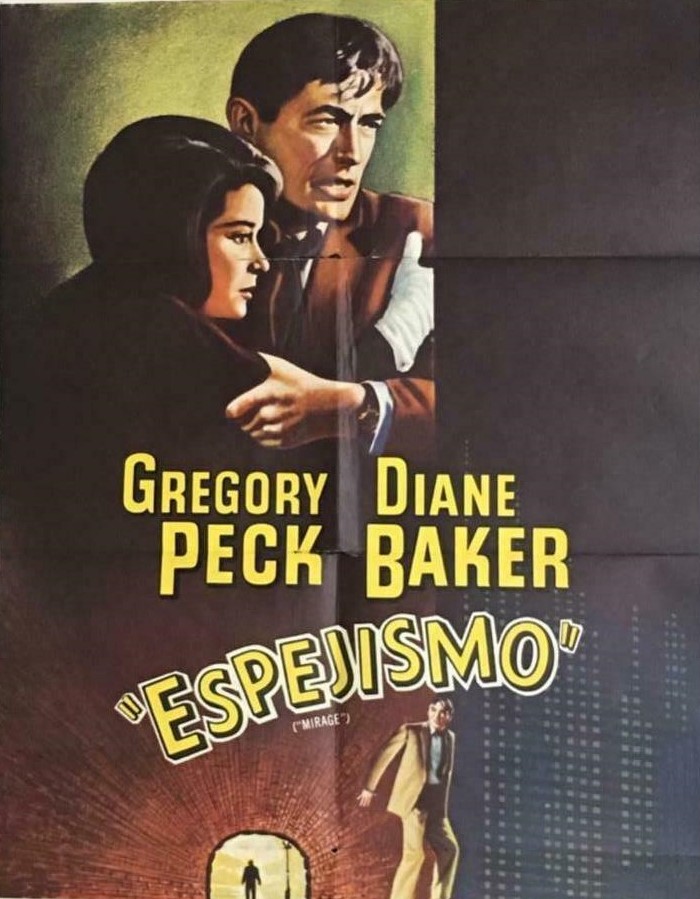
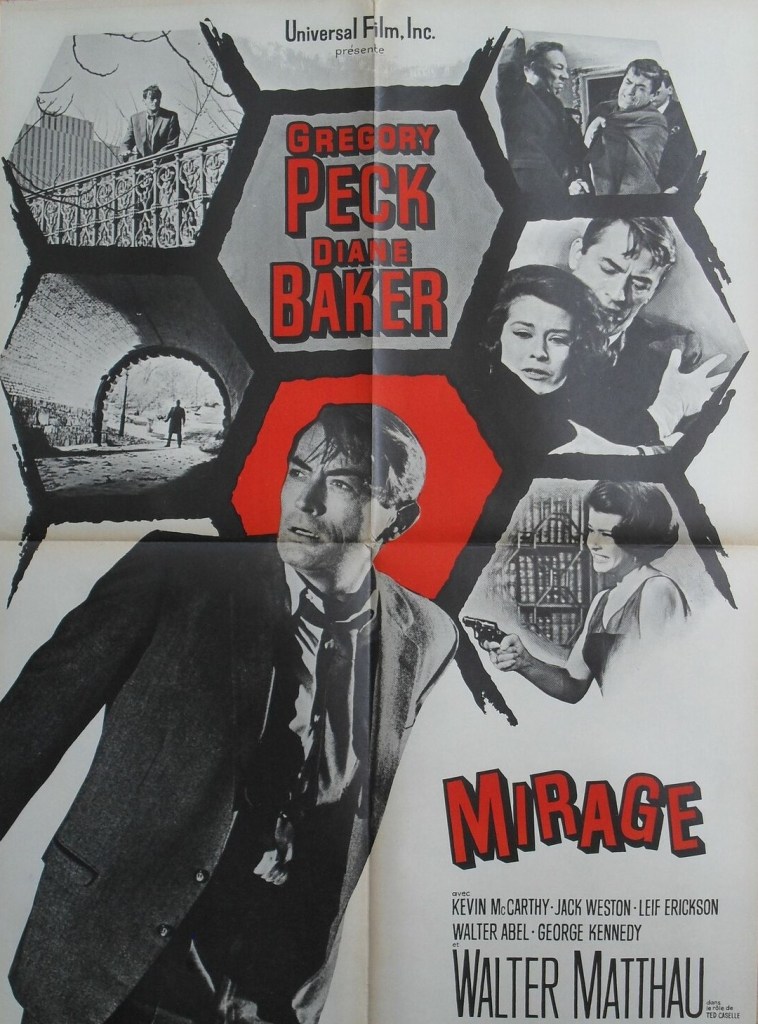
Mirage (1965) ****

“I owe you some pain,” barks the heavy to hero in one of the memorable lines in this classy thriller with surprisingly contemporary overtones. Underlying this tale of amnesiac David Stillwell (Gregory Peck) recovering his memory are themes of personal commitment, commitment to cause (“if you’re not committed to anything you’re just taking up space”), of individuals taking a stand against powerful forces seeking to thwart democracy, and of malevolent pandemic, the oldest of them all, greed, that infects even the most philanthropic enterprises.

The structure is brilliant. To every question David Stillwell (Gregory Peck) asks in trying to establish his identity, the answers are mystifying. He doubts his sanity and is plunged into a  life-threatening conspiracy.   

The film opens superbly. The camera pans across a New York skyline at night, every skyscraper lit up. Suddenly, one of the buildings goes dark. Cut to confusion inside as workers deal with the electricity cut-out. Among them Stillwell who is surprised to meet a woman on the stairs, Shela (Diane Baker), who not only recognizes him but seems to know a lot about him that is unfamiliar to him. They end up in the fourth level of the basement and on leaving discover that Charles Colvin (Walter Abel), a name that’s only vaguely familiar to Stilwell, has committed suicide by jumping from the building.

When he gets home to his apartment he is accosted by gunman Lester (Jack Weston) who tells him “The Major” wants to see him. Stillwell escapes but on reporting the incident to the police can’t remember his date of birth. After his amnesia being rejected by a psychiatrist he turns to private eye Ted Caselle (Walter Matthau) who takes up the case. But in Stillwell’s apartment a fridge he recalls as being empty is now full, the same with a dispatch case, the opposite with a closet, and in the building where he thinks he works there is now a wall where his office should be.

Stillwell believes he was employed as a cost accountant without a notion what that job entails. The building has no fourth level. Another gunman Willard (George Kennedy) is also in pursuit. Corpses pop up with increasing regularity. To add to the mystery, nobody actually wants him dead. He is too valuable alive. He has a secret only he doesn’t know what. The police connect him to the suicide.

And so the movie plays out brilliantly, with the audience only knowing what Stillwell knows, as confused as he, until piece by piece the jigsaw comes together although at times with cunning sleight-of-hand the pieces are the wrong shape or, worse, don’t fit the jigsaw in hand. There’s an emotional jigsaw to be put back together too, one that requires proper commitment, Shela’s “togetherness is not enough” could have been a mantra for today’s generation.

All the time Shela bobs in and out, hard to tell whether she is a victim or conspirator, whether to be trusted or merit suspicion, and she has an interesting philosophy of her own in terms of the trapped and caged.

As in the best thrillers we have been given the clues all the time, just not realized them for what they were, and in a series of brilliant scenes you cannot help but applaud the entire mystery is carefully stitched together. You will never in a million years guess the cause of Colvin’s mysterious death.

The ending is satisfying on a variety of levels. Yes, mystery solved, the secret Stillwell holds a good one, but the climax involves characters taking sides, displaying commitment, challenging their consciences, circumstances reflecting very much the world in which we find ourselves now.

One of the beauties of the movie is how it plays with our expectations. Peck has done amnesia before in Hitchcock’s Spellbound (1945) but since then his screen persona has been men of upstanding character, Atticus Finch in To Kill a Mockingbird (1962) the personification, confusion not a trait readily identified with him. Equally, the heavies look anything but,  Jack Weston small and rotund, George Kennedy bespectacled and slim.

Diane Baker, enigmatic throughout, far from the glamorous thriller female lead (think Audrey Hepburn in Charade or Sophia Loren who partnered Peck on Arabesque or Claudia Cardinale in Blindfold teamed with Rock Hudson), describes herself as a “lonely woman with a low opinion of herself due to many mistakes.” In the middle of the high tension, with Stillwell being pursued by cops, there is a wonderful scene where a little girl lets him hide in her apartment and on making him coffee it turns out to be the pretend coffee little girls make.

Gregory Peck (Arabesque, 1966) is superb, his face absorbing shock at his condition, at once welcoming unravelling mystery at the same time as doubting its source, wending his way through a past he cannot believe is true, a personality that occasionally appears abhorrent, and having to make the same decisions that he feared making in the past. Diane Baker (Marnie, 1964) has a difficult role, introspective where most heroines in this kind of film are more voluble, and frightened of her own vulnerability.

You can see from here how much George Kennedy bulked up for his breakthrough movie Cool Hand Luke (1967). Walter Matthau, too, was a stage away from interesting supporting roles to full-blown star in The Fortune Cookie (1966). Jack Weston might have been rehearsing his role as the stalker in Wait until Dark (1967). I am not going to mention the other sterling supporting players since that will give the game away.

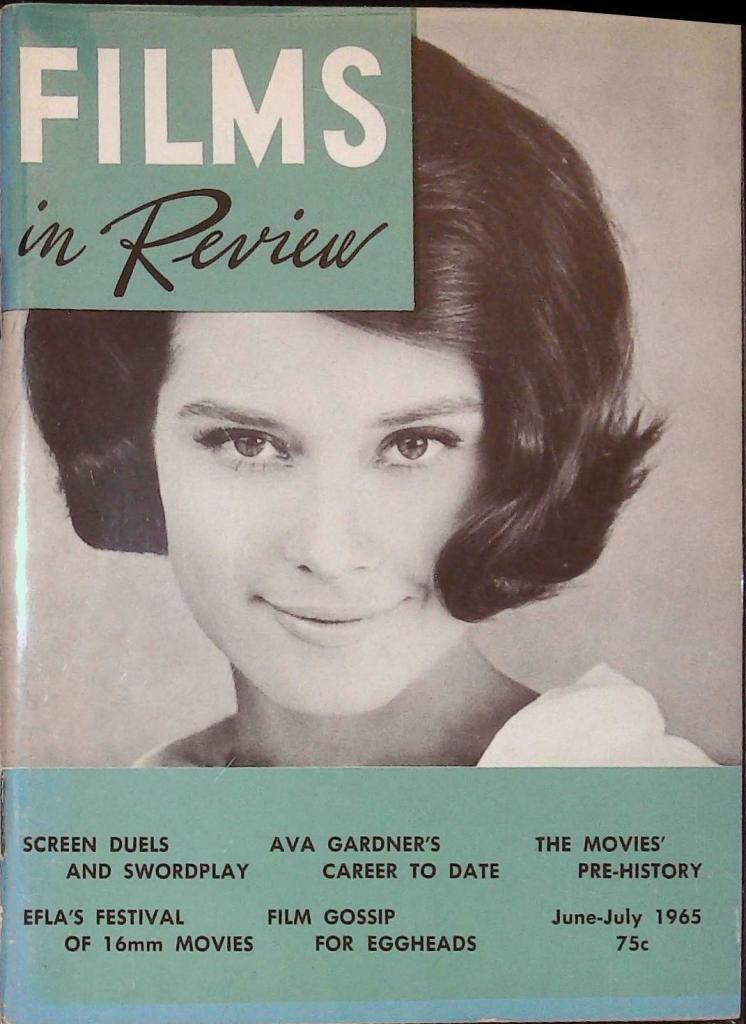
Diane Baker makes the cover of Films in Review magazine.

Veteran director Edward Dymytryk (Alvarez Kelly, 1966) is on song, stringing the audience along beautifully, extracting wonderful performances, not frightened to give the film deeper meaning. The theme of commitment, of standing up to malevolent forces, seems an odd one for a straightforward thriller but it reflected Dmytryk’s experience as a victim of the anti-Communist witch-hunt of the 1950s.  

On the debit side, I can’t see any reason why this was made in black-and-white and it certainly served to put off the public, the film’s box office poor, but I dispute the criticism of what appeared too-frequent flashbacks. Rather than re-emphasizing plot points for the audience, I saw this instead as Stillwell holding up a mirror to a memory he doubted he could trust.  

Top-notch screenplay by Peter Stone who knows his way around this genre, having previously written Charade and with Arabesque round the corner, from the novel called Fallen Angel by ,surprisingly, given he is best known for Spartacus, Howard Fast under the pseudonym Walter Ericson. At least a dozen quotable lines included this cracker relating greed to a pandemic: “You’re a carrier, you infected him and he died from it.”

All told, an excellent thriller with modern resonance.

Oddly enough, Mirage was remade a couple of years later as Jigsaw (1968), directed by James Goldstone and starring Harry Guardino.

P.S. I see you that the “I owe you” line was adapted for use by Willow in the Buffy, The Vampire Slayer TV series. There’s even a link to that scene on YouTube. Glad to see it has found some kind of immortality. It’s the kind of line that should be a gimme for t-shirt manufacturers.  

Candy (1968) **

Ode to the male gaze. Once a cult vehicle, this will struggle to find favor these days what with its backward attitudes. Virtually impossible to excuse the rampant self-undulgence. The sexually exploited naïve Ewa Aulin in the title role didn’t even have the benefit of being turned into a star. The satire is executed with all the finesse of a blunderbuss. And while, theoretically, picking off a wild range of targets, if this movie has anything to say it’s to point out how easy it is for men to deify themselves at the slightest opportunity.

Not much of a narrative more a series of sketches slung together with the slightest connecting thread. Most its appeal lies in watching huge marquee names make fools of themselves. Or, if you’re that way inclined, seeing how much nudity will be imposed on the star, intimacy  rarely consensual, clothes usually whipped off her.  

Teenager Candy (Ewa Aulin) has father issues, daddy (Jack Austin) being a dumb angst-ridden teacher. Randy poet McPhisto (Richard Burton) drives a class of schoolgirls into a frenzy with his lusty reading, inveigles Candy into his chauffeur-driven car, ends up in her basement drunkenly humping a mannequin while Mexican gardener (Ringo Starr) with an accent as coruscating as that of Manuel from Fawlty Towers assaults her on pool table.  Scandalized father packs her off to his twin brother in New York, that notoriously safe haven for nymphettes, while on the way to the airport they are almost driven off the road by the gardener’s vengeful biker sisters (Florinda Balkan et al).

For no apparent reason she is hitching a lift on a military plane commanded by randy Brigadier Smight (Walter Matthau) who, on the grounds that he hasn’t had sex for six years, commands her to remove her clothes for the good of the nation. In the Big Apple, rock star surgeon Dr Krankheir (James Coburn), entering the operating theater to the same kind of waves of acclaim as McPhisto, finds an excuse to have her undress and submit to him, this just after she’s managed to avoid the attentions of her randy uncle. It should come as no surprise that Krankheit treats women as his personal property to the extent of branding them like cattle.

In due course, she encounters a gang of mobsters, an underground movie director and a hunchback (Charles Aznavour) who, in return for her showing pity for his condition, proceeds to rape her. She is arrested. Guess who wants to frisk her. Naturally, when she escapes she runs into a bunch of drag queens.   

Then she finds sanctuary in a semi-trailer truck, home to guru Grindl (Marlon Brando). He’d be convincing enough as a mystic except he, too, finds an excuse to rip her clothes off. There are more cops to contend with and another guru, facial features obscured by white clay. If they’re going to have sex then naturally it must be in a Hindu temple. Turns out the latest person to take advantage of her is her father but he’s been handed a get-out-of-jail-free card because by now he’s brain damaged.

This might all be a dream/nightmare. Candy might even be an alien. It’s dressed up in enough psychedelia to sink a battleship and its highly likely that any lass as gullible as Candy will find herself at the mercy of any man, so in that context it carries a powerful message. I’m sure many beautiful young girls will attest to the truth that men feel they have the right to paw anyone who comes their way without asking permission. And the other message is just as powerful – how many young actresses have been seduced by thoughts of fame to disport themselves in this fashion only to find that all the industry wants is their nudity not their acting talent.

You might say that the target is so obvious it hardly needs pointing out but the MeToo campaign will beg to differ and you would hope that Hollywood has wised up. It’s just a shame that the satire is so heavy-handed. The military and the medical profession are sorely in need to answering tough questions. Unfortunately, this picture doesn’t ask any. It’s like an endless casting couch.

Directed by Christian Marquand (Of Flesh and Blood, 1963) in, thankfully, his final picture, from a screenplay by Buck Henry (The Graduate, 1967) and Terry Southern (Dr Strangelove, 1962) based on the novel by Southern and Mason Hoffenberg. Nobody comes out of this well and it’s rammed full of cameos from the likes of Elsa Martinelli (The Belle Starr Story, 1968), John Huston (Myra Breckenridge, 1970), Anita Pallenberg (Performance, 1970), Marilu Tolo (Bluebeard, 1972) and boxer Sugar Ray Robinson.

Ewa Aulin (Start the Revolution Without Me, 1971) isn’t given much of chance, her character whimsical, pallid and submissive and she didn’t become a major marquee name.

A mess.

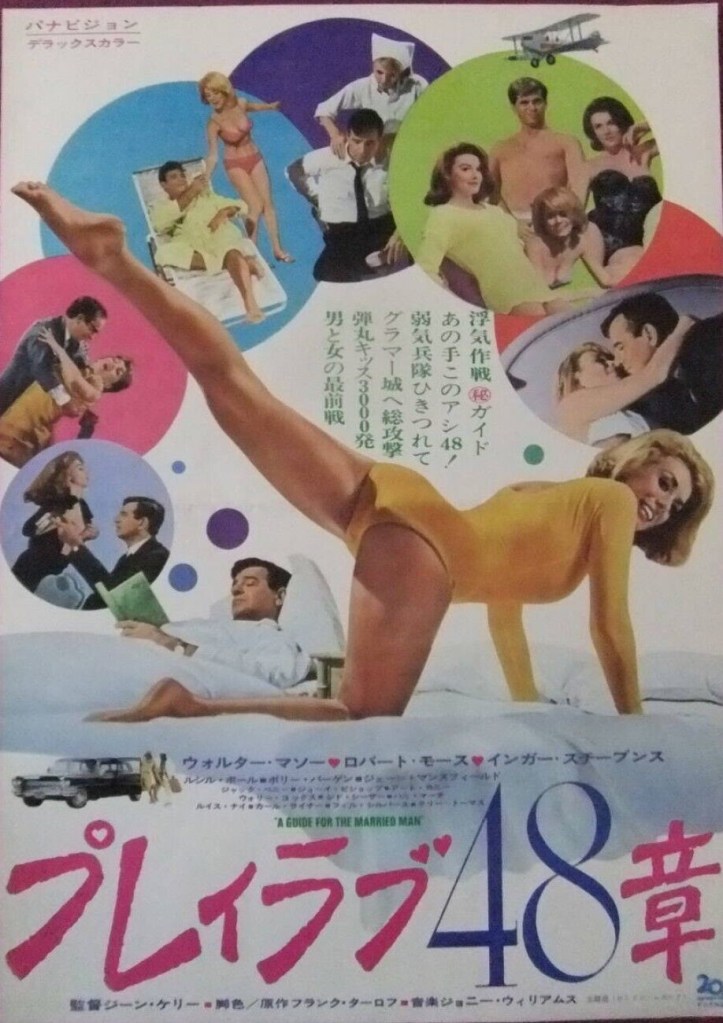
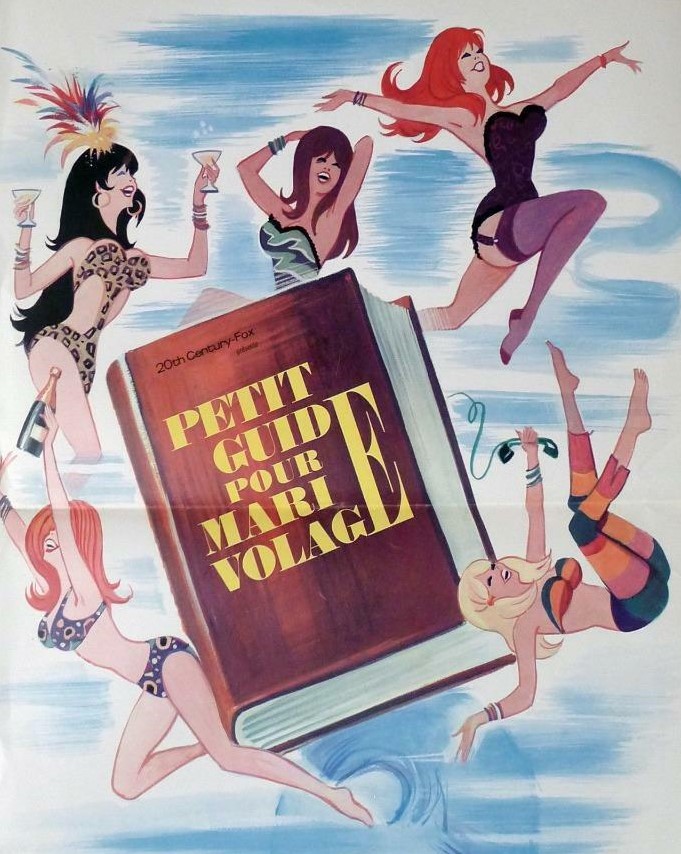
A Guide for the Married Man (1967) **

Little has dated as badly as this male supremacy sexist hogwash. While Billy Wilder can manage to inject some sophistication and even elegance into the thorny subject of adultery and male philandering (The Apartment, 1960), director Gene Kelly has little to offer but crudity.

Walter Matthau (The Fortune Cookie, 1966), top-billed for the first time, does little more than act as listener to neighbour Ed (Robert Morse), supposed expert on wifely deception and link man to a series of lame unconnected sketches featuring a battalion of cameo stars.

It’s more likely to be remembered for being the final film Jayne Mansfield (Playgirl after Dark/Too Hot to Handle, 1960) made before her premature death. Her episode might well sum up the depths of hilarity this opus stoops to – the compelling issue of what to do when your illicit companion loses her bra in your bedroom.

Perhaps the only amusing note is the notion that this has come from the pen of the Oscar-winning Frank Tarloff (Father Goose, 1964), responsible also for the source novel, drawing on the experiences of a bunch of “swingers” reputedly enjoying to the full the sexual excesses of the decade, a decidedly middle-aged gang intent on not leaving all the fun to the hippies and the liberated young

The women here are straight out of The Stepford Wives template of female docility, existing only to please their men, any passing woman automatically in the stunner bracket intent on demonstrating every wiggle possible. Worse, one is so weak that she can be easily manipulated into believing that she did not, in fact, catch her husband in bed with another woman once the wily man falls back on that old political adage of plausible deniability.

What makes the antics of Paul (Matthau) and Ed so reprehensible is that their wives are trusting knock-outs in the first place. Ruth (Inger Stevens), Paul’s other half, not just a keep-fit fanatic but a fabulous cook, able to present a superb meal on a miniscule budget.

So we are meant, I suppose, to sympathize with Paul’s flawed efforts at beginning an extra-marital affair. Or at the very least laugh at his failures, rather than mock his inadequacies as a husband. Paul’s main target is divorcee Irma (Sue Anne Langdon) but it’s no surprise Ed beats him to the punch. There’s an old-fashioned morality lesson at the end but I was hoping, instead, for a twist whereby smug Paul discovered his wife was playing away from home. Although, admittedly, that would be out of character for Ruth.

You might get through this if cameos are your thing and you want to spent a whole movie waiting for an appearance by It’s A Mad, Mad, Mad, Mad World (1963) alumni Sid Caesar, Jack Benny, Phil Silvers and Terry-Thomas plus the likes of Lucille Ball (Yours, Mine and Ours, 1968), Polly Bergen (Kisses for My President, 1964), Art Carney (Harry and Tonto, 1974), Carl Reiner (The Russians Are Coming, The Russians Are Coming, 1966), Linda Harrison (Planet of the Apes, 1968) and Jeffrey Hunter (Custer of the West, 1967).

Walter Matthau just about keeps this afloat and lucky for his career he had The Odd Couple (1968) up next. Inger Stevens (Firecreek, 1968) is wasted.

This was a box office riot on initial release, but times have changed. Gene Kelly (Hello, Dolly!, 1969) directs with a leaden hand. 

Guide to a Slimeball might be a better title.

The Fortune Cookie / Meet Whiplash Willie (1966) ***

It’s the miracle of cinema. A supporting actor whom you might have glimpsed in a variety of roles over the preceding years suddenly appears as if by magic in a new screen persona and is hailed as a new star. One such was Walter Matthau. From the lecherous neighbor in Strangers When We Meet (1960), good guy in Lonely Are the Brave (1962), bad guy in Charade (1963) and Mirage (1965) and tetchy arrogant analyst in Fail Safe (1964), as if undergoing metamorphosis he creates the slimy, grouchy, crouchy, greedy lawyer duping his brother-in-law in Billy Wilder’s too-obvious satire The Fortune Cookie, beating the top-billed  Jack Lemmon (How To Murder Your Wife, 1965) into a cocked hat.

It doesn’t help Lemmon that this most physical of actors is physically constrained for the bulk of the picture, trussed up within an inch of his life as the key ingredient in a million-dollar insurance scam. And Matthau makes the most of the opportunity, dominating the screen not just with his octopus-like arms, but with his facial expressions, his snarling and growling and snapping, as if this was in fact a one-man movie. He’s so dominant that you almost forget Lemmon, an unavoidable force in most of his movies, is there.

And it’s true that television cameraman Harry Hinkle (Jack Lemmon) is a patsy, duped by his adulterous wife Sandy (Judi West), conned by ambulance-chasing lawyer Willie Gringrich (Walter Matthau) into believing that exaggerating the injury he suffered from colliding with pro football player Boom Boom (Ron Rich) will bring her scurrying back. Never mind that while on the phone apparently going with her ex-husband’s fantasies, we can see her current boyfriend in the background lying abed or taking a shower.

But then Willie has everyone figured out. He can play highball or lowball, he knows every trick in the book and if you try to challenge him he can quote chapter and verse on every personal injury claim over the last century that would favor the victim. And he expects his opposite numbers to play dirty too, and uses to his own advantage the microphones and cameras they have planted in the apartment where Harry is purportedly recuperating.

There’s not much more to the picture than to enjoy Willie hoodwinking everybody in sight. But he’s such a performer to watch that you will be rooting for him rather than his sad sack brother-in-law who you know has paid-up membership of the Suckers Union.

Not for the first time, foreign distributors felt they were saddled with an unworkable title so in
the UK it became Meet Whiplash Willie even though the idea of the con of the whiplash
injuries in supposed car accidents was more prevalent in the US than Britain.

There’s some neat observations of the way law firms work, and the way medical experts refuse to commit in case they are later sued for a wrong diagnosis, and there’s some cute stuff about nuns with the gambling habit and seeing Boom Boom fall apart with guilt. But given the movie’s running time and the talent involved – script by Billy Wilder and I.A.L. Diamond (Some Like it Hot, 1959) and directed by the said Wilder –  it’s not as funny as it could be and sometimes it feels like they’re scraping the barrel to squeeze out an unfunny joke.

But it hardly matters. This could be Fail Safe and with this Walter Matthau persona on the loose you wouldn’t care tuppence if the Russians bombed the hell out of everyone as long as Matthau was in the middle of the action, working out how to chisel a bigger piece for himself, and playing everyone for the dumb schmucks they are.

After this Walter Matthau – as unlikely a mainline star as Lee Marvin or Charles Bronson – never looked back. Unlike other major stars he never had to be completely trustworthy and was almost virtually responsible for bringing a severe dose of cynicism to the forefront of American acting. He could charm you if he set out to do so, but you better keep your wits about you because the chances are he would be robbing you blind.

If The Odd Couple (1967) set the seal on one of Hollywood’s greatest comedy partnerships, The Fortune Cookie was where it all began. Lemmon isn’t bad, just out-acted, and we’ve seen his whiny/forlorn/dumb act many times before. Judi West (A Man Called Gannon, 1968) has the other plum role as the blonde who is anything but dumb and would have proved an ideal partner for Gringrich except he would have seen through her too easily. Ron Rich (Chubasco, 1968) plays the only other character who isn’t spun out of a cliché.

Below par Wilder redeemed by heavenly performance by Matthau.

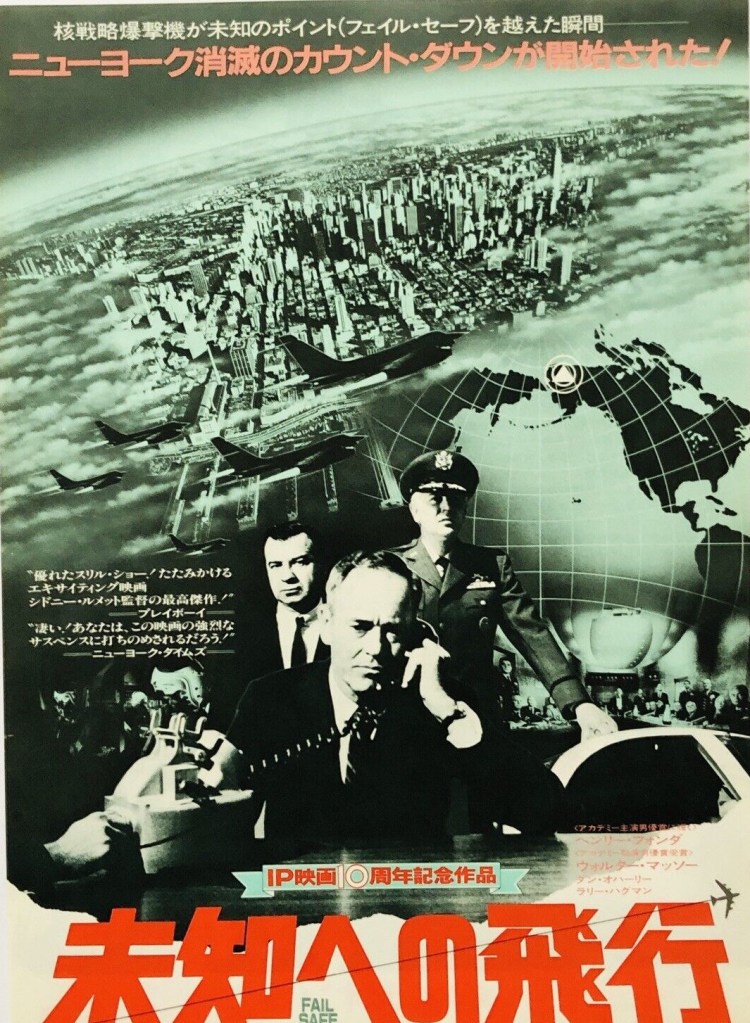
Fail-Safe (1964) *****

Given unexpected heft by current concerns over AI. Human error, it appears, is more simple to correct than computer malfunction. Once a course of action commences, machines have no way of checking it. And paranoia is the first casualty of truth. Bear in mind this was shockingly contemporary at the time it was made, the world in constant fear of nuclear war, the Cold War, that seemingly endless stalemate doing little to pacify terror.

Those whose job it ease the best outcome in the event of nuclear war were always inclined to rationalize staggering death tolls. So we begin with a late night discussion in which political analyst Dr Groeteschele (Walter Matthau) makes the argument that in the event of war, the country with the fewest casualties is the winner and in a nod to the ironic suggests the most likely survivors would be the worst type of convict, imprisoned underground, and office workers protected from the blast by being surrounded by filing cabinets crammed full of paper.

Just before the real drama begins there’s a neat scene where a women, turned on by a powerful man, makes a move on the doctor only to be slapped into place, sternly told by the prim analyst that he’s not of “her kind.” That’s not the only human element in the tale. the highest levels of secrecy may force top-level Army and Government executives to sacrifice families.

For no accountable reason, jets with nuclear warheads shift into an attacking position on the Russian border, the target if not stopped Moscow. The planes are unstoppable once they commence attack, unable to turn away from a strict sequence of pre-determined action. Not even the personal intervention by the President (Henry Fonda) of the United States can affect the outcome, the pilots already trained to ignore such an action on the grounds that the  enemy could be imitating the President’s voice.

When the planes fail to turn back, the only option is for the Americans to blow their own planes out of the sky, an action that appears not just inconceivable to the Army personnel but treasonable. High-rankings officers ruthless trained for battle and to observe the protocol of obeying orders find this unconscionable.

Three dramas take place at once. On the ground the Army chiefs try to explore every option to avoid the unthinkable while battling with their own consciences at what appears to be the only way out. The President on the hotline to the Russian premier has to circumvent natural suspicion that this is a cunning ploy by the Yanks and then come to some agreement with the Russians on the assumption that Moscow may yet come under attack. We, the audience, are playing out the third element in our minds, a series of terrifying what if scenarios with indescribable consequence.

I’m not going to reveal the shock ending because it came as a hell of a shock to me, given I’d not seen the picture in decades.

It’s brilliantly-made with almost futuristic sets and noir lighting and the President effectively physically imprisoned, and not just by his conscience, stuck in a featureless cell presumably in the pits of the White House arguing the toss with the Russian chief, his only companion the translator (Larry Hagman) whose face seems to get greyer and greyer as he transmits worse and worse news.

Dr Groeteschele makes matters worse, at least to a pacifist left-wing viewer (though an opposite view would be taken by the hawks), by urging the President to take advantage of computer error and “first strike” and blow Russia to pieces, assuming that indulging in the attack option will result in fewer casualties in America, and thus, following his earlier projections, not just win the war but rid the word of the fear of nuclear war.

While the style is documentary, it’s a riveting watch. The tension is unbearable. Some like Col Cascio (Fritz Weaver) succumb to the pressure while the commanding General Black (Dan O’Herlihy) retains a stolid soldierly presence.  

Sidney Lumet (The Pawnbroker, 1964) doesn’t put a foot wrong. Taking the line – rather than in The Bedford Incident (1965) of the wrong man with his finger on the button – of the right man trying to make the best of a botched job, he delivers a just superb picture. Walter Bernstein (The Magnificent Seven, 1960) does a terrific job in delivering a taut screenplay from a more meandering novel by Eugene Burdick and Harvey Wheeler.        

There probably couldn’t be a more prescient movie for today.

Behind the Scenes: Sherlock Holmes and Other Stories, Thumbs Up or Thumbs Down, United Artists 1966 – Part Two

Although Billy Wilder had written a script based on The Life of Sherlock Holmes, he was not considered as its director. Mirisch was looking at a budget in the region of $2 million, which would rule out any big star. However, there were issues with the Conan Doyle Estate which was in the process of firing up other movies based on Sherlock Holmes, A Study in Terror (1965) being the most recent. That had been the brainchild of Henry Lester and perhaps to general astonishment these days Mirisch had  agreed Lester would be allowed to make more Sherlock Holmes pictures as long as they remained very low-budget, on the assumption, presumably, that the marketplace would treat them as programmers rather than genuine competition.

However, Mirisch and UA retained the upper hand as regards the Conan Doyle Estate and “could cut him (Lester) off at such time as we have made definite plans to proceed.”

There was another proviso to the deal. The Estate would agree to forbid any further television productions unless Mirisch decided it wished to go down the small screen route itself. It was odd that Mirisch had eased Billy Wilder out of the frame given the mini-major had enjoyed considerable success with the director on Some Like it Hot (1959) and The Apartment (1960), a commercial partnership that would extend to The Fortune Cookie (1966).

Instead, Mirisch lined up British director Bryan Forbes who would be contracted to write a screenplay based on the Wilder idea. The sum offered – $10,000 – was considered too low, but it was intended as enticement, to bring Forbes into the frame as director. If Forbes refused to bite, “the only other name suggested and agreed upon was that of John Schlesinger.”  Although David Lean was mooted, UA were not in favour. Mirisch didn’t want to risk paying for a screenplay before there was a director in position.

The offer of the Sherlock Holmes picture was seen as a sop to Forbes. At this meeting, Mirisch had canned The Egyptologists, a project which Forbes believed had been greenlit. And why would he not when he was being paid $100,000 for the screenplay. In bringing the project to an untimely close Mirisch hoped to limit its financial exposure to two-thirds of that  fee. Should Forbes balk at Sherlock Holmes, he was to be offered The Mutiny of Madame Yes, whose initial budget was set at $1.5 million, plus half a million for star Shirley Maclaine. Another Eady Plan project, this was aimed to go before the cameras the following year. If Forbes declined, then Mirisch would try Norman Jewison with Clive Donner and Guy Hamilton counted as “additional possibilities.”

As for Billy Wilder he had much bigger fish to fry. He was seeking a budget of $7.5 million to adapt into a film the Franz Lehar play The Count of Luxembourg to pair Walter Matthau and Brigitte Bardot. Should Matthau pass, Wilder would try for Cary Grant (whose retirement had not yet been announced) or Rex Harrison. Both sides played negotiation hardball. UA currently in the hole for $21 million for The Greatest Story Ever Told (1965) and Mirisch, having pumped $13 million into the yet-to-be-release Hawaii (1966), didn’t want to commit to another unwieldy expensive project. So Mirisch insisted the project advance on a “step basis” allowing UA to reject the project after seeing the screenplay. Wilder countered by insisting that if it went into turnaround he, rather than the studio, would have the right to hawk it elsewhere (generally, studios tried to recover their costs if a movie was picked up by another studio). But Wilder was also in placatory mood and even if UA rejected this idea he was willing to work with the studio on a Julie Andrews project called My Sister and I.

However, UA and Mirisch were all show. “After Billy left the meeting,” read the minutes, “it was agreed we would not proceed with The Count of Luxembourg since we did not want to give Billy the right to take it elsewhere if United Artists did not agree to proceed.” Harold Mirisch was detailed to give Billy the bad news, but use a different excuse.

Mirisch was also on the brink of severing links with Blake Edwards. Negotiations for a new multiple-picture deal were to be terminated, which would mean the director would only earn his previous fee of $225,000 for What Did You Do in the War Daddy? It was also sayonara for Hollywood agent Irving Swifty Lazar, whose current deal was not working out to the studio’s satisfaction.

Other long-term deals with directors were under discussion. While its previous John Sturges movie, The Hallelujah Trail (1965), had flopped, UA was still keen on the Mirisches pursuing a long-term deal with the director, feeling that he was a “good picture-maker with the right project.” To that end, it was suggested Mirisch reactivate Tombstone’s Epitaph, but emphasising Stuges had to bring the cost down.

At this point nobody knew Norman Jewison was embarking on all almighty box office roll – The Russians Are Coming, The Russians Are Coming set to hit the screens, In the Heat of the Night at screenplay stage, so Mirisch was prescient in trying to put together a long-term deal with the director. Wind on Fire and Garden of Cucumbers were seen as tentpoles for a multi-picture deal. Mirisch had already agreed a $50,000 producer’s fee for Wind of Fire, payment of one-third of which was triggered for supervising the screenplay.

The meeting also gave the greenlight to Death, Where Is Thy Sting-A-Ling, a project that would be later mired in controversy with shooting ultimately abandoned. The go-ahead was given with the proviso the Mirisches secured the services of Gregory Peck or an actor of his stature.  Budget, excepting Peck’s fee, was just over $3 million and it was another one hoping to take advantage of the Eady Plan.

This kind of production meeting was probably more typical than you would imagine, studios trying to keep talent sweet while not committing themselves to dodgy product. It’s perhaps salutary to note that of the projects under discussion, only a handful found their way onto cinema screens. Garden of Cucumbers (as Fitzwilly), How To Succeed in Business, having met budget restraints, and Tombstone’s Epitaph (as Hour of the Gun) with James Garner all surfaced in 1967 and Inspector Clouseau the following year. Neither of the Steve McQueen projects survived nor the pair proposed by Billy Wilder. High Citadel, Saddle and Ride, The Narrow Sea, The Great Japanese Train Robbery, and The Cruel Eagle failed to materialize. Billy Wilder eventually made The Private Life of Sherlock Holmes under the Mirisch auspices but not until 1970. 

Charade (1963) *****

Arguably the slickest thriller ever made. Two stars at the top of their game, three rising stars giving notice of their talent, more twists than you could shake a Hitchcock at, the chance to frighten the life out of the most fashionable actress of her generation, and standout scene after standout scene.

Three characters are presented upfront as bad guys, but whole enterprise is so laden with suspicion you are not all surprised when the finger points at Peter (Cary Grant) and Reggie (Audrey Hepburn), not least because Peter keeps changing his name, but also because audiences with lingering memories of film noir could easily imagine Reggie as a femme fatale especially when she comes on to a man whose got three decades on her.

Basic story: Reggie returns from a ski holiday where she met divorced Peter to find her husband dead and Parisian apartment empty. She is menaced by three men – Tex (James Coburn), Herman (George Kennedy) and Leopold (Ned Glass) – convinced she knows the whereabouts of $250,000 they lay claim to. Bartholomew (Walter Matthau) of the C.I.A. also stakes a claim. Tex has a nasty habit of throwing lighted matches at her, Herman threatening her with his steel hand. And there are doubts about Peter, initially perceived as a savior.

It is a film of such constant twists, you never know quite where you are, and forced to follow the lead of a befuddled and confused Reggie you question everything, so it’s an unsettling watch. Given the permutations, you could easily come up with a number of different endings.

And although this is virtually thrill-a-minute stuff it has the most endearing light romance, full of beautifully-scripted sparkling cross-purpose banter, and managing to work in marvellous scraps of Parisian atmosphere, some tourist-hinged (a market, boat ride on the Seine), others (a subway chase) less exhilarating. At times, Reggie turns spy and comes up with clever ruses to evade pursuit.

You can have this amount of conflict – baffling clues, perplexed French Inspector Grandpierre (Jacques Marin) kidnap, rooftop fight – without corpses soon mounting up. Alleviating the tension are a myriad of little jokes: a small boy with a water pistol, time out in a night club to play the rather frisky orange game, Peter showering with his clothes on. The romance might have helped except every time Reggie trusts Peter he gives her good reason to distrust him. And, of course, she could as easily have squirreled the money away herself.

The whole ensemble is delivered with such style and attention to detail (a bored man at a funeral clips his nails, cigarettes are expensive in France, voices echo when a boat passes under a bridge, phone booths are both refuges and traps) that it’s as if every single second was storyboarded to achieve the greatest effect.

It’s not just the entrance of the bad guys, door slamming in an empty church, that signals a director alert to every nuance, but the fact they all proceed, in different ways, to check Reggie’s husband is actually dead. A man has drowned in his bed. “I sprained my pride,” explains Peter after coming off worse in a fight. Apart from the core tale of suspicion, betrayals, theft and murder, everything else in the thriller genre is completely revitalized, in dialog and visuals this is nothing you have ever seen before.

The principals invest it with a rare freshness. Cary Grant (Walk, Don’t Walk, 1966) and Audrey Hepburn (Two for the Road, 1967) are such natural screen partners you wonder why (expense apart) the exercise was never repeated. And in typical John Wayne fashion, to minimise the May-December romance element, it’s Hepburn who makes all the running in that department, and you get the impression that she had been married to an older man anyway. Grant’s character is surprisingly adept at the old fisticuffs while Hepburn is more feisty than helpless, and devious, too, not above using the old screaming routine as a device to bring Grant running for romantic reasons.

James Coburn has his best role since The Magnificent Seven (1960), Walter Matthau (Lonely Are the Brave, 1962), at this point not considered comedian material, brings very human touches to his role, and George Kennedy (Mirage, 1965) presents a memorable villain.

And that’s not forgetting an absolutely outstanding score by Henry Mancini (Hatari!, 1962), jaunty one minute, romantic the next, and for the most thrilling sequences creating the type of effect David Shire achieved in All the President’s Men (1976) of steadily mounting tension rather than instruments shrieking terror. And the Saul Bass-style title credits were actually conceived by Maurice Binder of James Bond fame.

Outside of his musicals, this is the peak of Stanley Donen’s (Two for the Road) career. The gripping screenplay was the work of Peter Stone (Mirage), based on a story by Marc Boehm (Help!, 1965).

One of the few twist-heavy thrillers that rises effortlessly above the material.

Lonely Are the Brave (1962) ***

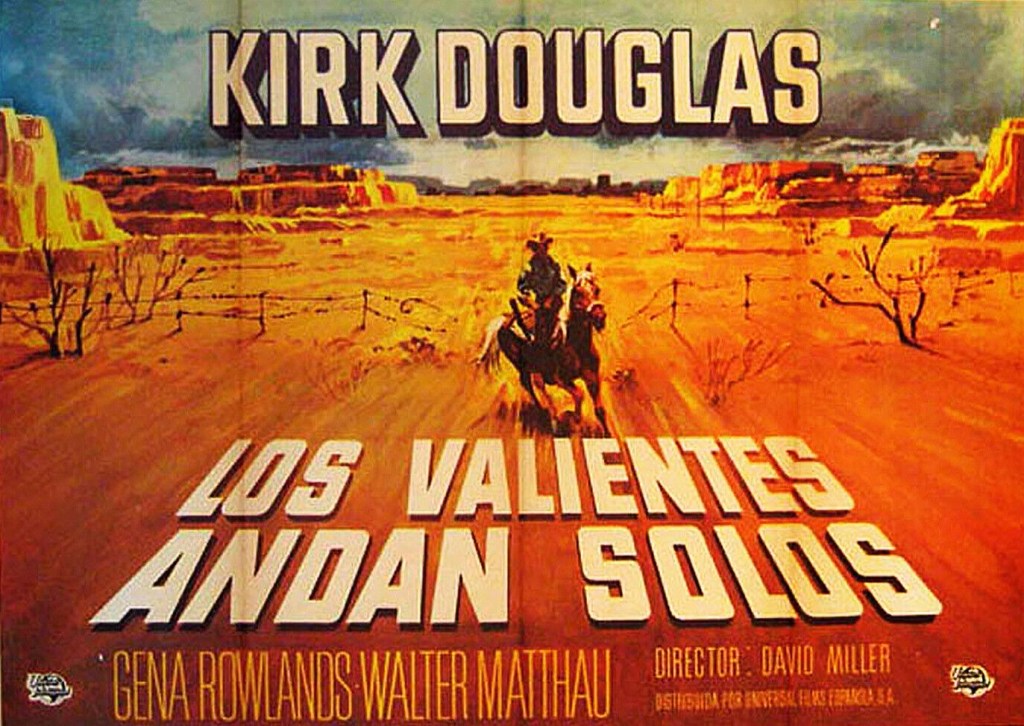
Wannabe blood brother to The Misfits (1961) but more like a distant cousin, cowboy out-of-time yarn too pre-emptive for its own good.  Freedom-loving, don’t-fence-me-in Jack Burns (Kirk Douglas) falls foul of the law by escaping prison and is pursued into the hills by competent and sympathetic Sheriff Morey Johnson (Walter Matthau) who is saddled with an incompetent law enforcement team out of their depth up against a true man of the west. You can see the end coming a mile off, a truck that interrupts the narrative for no particular reason.

The only problem for me are certain inconsistencies.  A man who refused to be tamed tames a wild horse, his freedom coming at the expense of a captive animal, hobbled overnight to prevent escape. And instead of leading a frightened beast across a busy highway rides him in clear danger.

And I don’t get this voluntary incarceration malarkey, highly principled though it appears, breaking into jail in order to break out a friend Paul (Michael Kane) who just wants to serve out his relatively short sentence instead of being faced with a longer one as an escapee.

Jack won a Purple Heart in Korea but although he was 22 when World War Two broke out there’s no mention of that war record. And it seems a bit of an unlikely cliché that you can still break out of prison in the 1960s with just small hacksaw.

David (Hammerhead, 1968) Miller’s film tries too hard to make a very obvious point, forgetting that it was cowboys like Jack who turned the West into the antithesis of freedom. There are some unexpected touches. Jack, wanting to start a brawl as a means of being arrested, finds himself with a tougher customer than he envisaged, a World War Two veteran who doesn’t take prisoners. There’s a nod towards immigrants swarming into America. Paul, knowing he has crossed a line in the contemporary world, just wants to pay his debt and move on, rather than trying to disappear into a fantasy life. Cops, with all the modern accoutrements, find themselves undone by a man with old world skills.

R.F.D. stands for Rank Film Distributors, patting itself on the head for getting
the picture off to a good start in the London West End.

Once the movie heads into the hills, which is what all this lengthy preamble is for, it becomes more interesting, if only because in what is intended to be a game of cat-and-mouse, the cop cats are revealed as the mice.

But Kirk Douglas, having lit a fire for freedom in Spartacus (1961), seems more intent on going down a similar route than creating a proper character. And, as usual, given he is top-billed, reveals acting insecurity, or arrogance, trying to steal every scene, tipping back his hat just one of his many bits of business to ensure the audience eye follows him.  

On the plus side is some notable playing by Walter Matthau (Mirage, 1965), encumbered with a bunch of lazy cops who spend more time eating and sleeping than doing their job and easily outgunned in the wilderness by a cowboy for whom it spells home.  Gena Rowlands (Machine Gun McCain, 1969) is impressive as Paul’s worn-down wife with a soft spot for Jack though she finds it hard to stand by a dumb man. George Kennedy (Cool Hand Luke, 1967) makes a mean sadistic cop. And there’s an early role for Carroll O’Connor (The Devil’s Brigade, 1968). If you’re talent-spotting Bill Bixby (television’s The Incredible Hulk, 1977-1982) is a helicopter pilot.

Kirk Douglas and business partner Edward Lewis were the producers and hired the former blacklisted Dalton Trumbo (Spartacus) to script Edward Abbey’s novel Brave Cowboy.

I thought the title was a bit of misnomer: Lonely Are the Foolhardy might be more accurate.

Discover WordPress

A daily selection of the best content published on WordPress, collected for you by humans who love to read.

The Atavist Magazine

by Brian Hannan

WordPress.com News

The latest news on WordPress.com and the WordPress community.