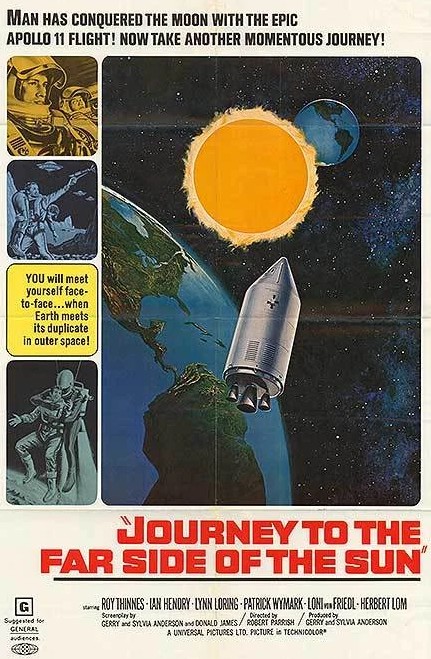
Journey to the Far Side of the Sun / Doppelganger (1969) ****

Bring Gerry and Sylvia Anderson into the equation and it’s a straightforward free pass of the cult kind. For the fanboys, the inventors of Supermarionation (Thunderbirds Are Go!, 1966) live on an exalted plane immune from criticism. however, sci fi buffs have tended to be less than impressed by the pair’s first venture into (to use a Walt Disney phrase) “live-action.” So response swings between these extremes. I fit into neither category so I come at this with something of an open mind and for a variety of reasons found it a far more enjoyable experience than I had anticipated, though I hazard a guess that on the big screen the flaws in the special effects would have been more obvious.

Some aspects even have a contemporary chime, the X-ray security screening machines, for example, and the fact that there’s no such actual entity called Europe and if you want to advance a project you have to navigate your way through the representatives of several countries as well as the hovering financial weight of the United States, bristling at being asked to pay more than its share but worried about being excluded.

And there’s no ice-cool scientific boffin. Instead we have the choleric, not to mention bombastic, Jason Webb (Patrick Wymark). Nor do non-combatants scoot through training. The rigors potential astronauts are put through in the likes of The Right Stuff (1983) or Apollo 13 (1995) are nothing to the body-wringing and mind-blowing experience of John Kane (Ian Hendry).

His companion space buddy Col John Ross (Roy Thinnes) is well-drawn for a sci fi adventure. He’s worried that exposure to radiation and worse in space has knocked his masculinity on the head, his wife Sharon (Lynn Loring) complaining it has left him sterile. Though it turns out she’s a wily creature, secretly using contraception.

We also get a spy, Dr Hassler (Herbert Lom), and it’s not so much that he has a gadget – a mini camera secreted in a false eyeball – than the detail involved in him retrieving the film. In most movies there would be no gap between the reveal of the gadget and the production of its secrets. But here Dr Hassler has to go through a whole procedure, dipping the eyeball into four solutions and dabbing it with this and that, before he can view a single frame.

The picture breaks down into a straight three-act vehicle. The first section getting to lift off, then the journey including the kind of phantasmagorical event you found in 2001: A Space Odyssey (1968) and which even Christopher Nolan relied upon in Interstellar (2014), and arrival.
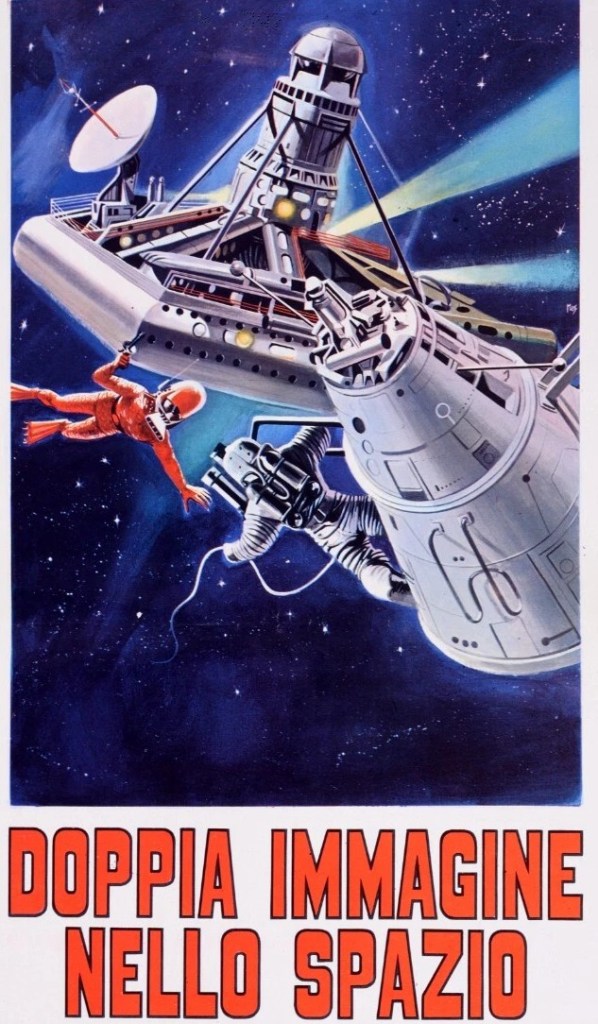
Most sci fi movies play fast and loose with audiences, rarely remaining true to the logic of their invented worlds or concepts. This sticks to its original notion even if that means ending up with a distinctly downbeat ending. Initially, the astronauts are searching for a new planet, whose orbit is similar to Earth, but on the other side of the sun. This being the year 2068, distance is no object and they reckon it’s a six-week return trip.

But what the astronauts discover on arrival at the new planet is a nightmare situation, that in terms of ability to drive you mad skews close to enigmatic British TV series The Prisoner (1967) or Lost (2004-2010) before it jumped the shark. Ross and Kane have landed on a doppelganger planet and the movie takes this world to its logical conclusion. It’s the real parallel universe, or multiverse in the current vernacular, except everything happens the same as on Earth.

So the choleric Webb initially accuses the astronauts of cowardice, to have turned back and failed to complete their mission which would have led them to our Earth. Doppelganger literally means mirror image which eventually explains why writing goes left to right and everything is a step out of normal kilter. Identical except not quite. And stuck in a world where everything that seems real is one step away from your known reality. The kind of situation that would have been created by a mad scientist intent on torturing minds.

Ross determines to attempt to return to Earth but that means connecting what remains of his spaceship with a space vessel made on the new planet but the parts that should fit exactly don’t fit because they have designed in mirror fashion. So that’s it for your chances of a happy ending.

Left me with a nightmare feeling, the ultimate what if. As far as stings in the tail go, comparable with Planet of the Apes (1968).

For the concept as much as the clever detail, I’ve given it a higher mark than maybe it deserves.
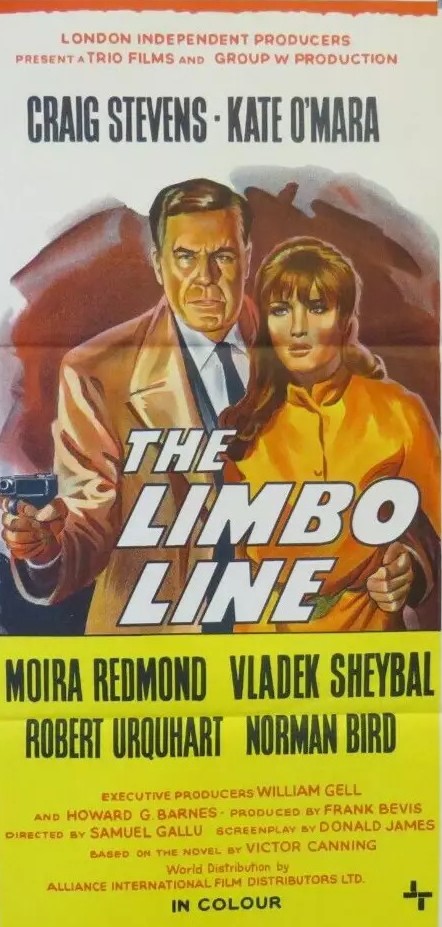
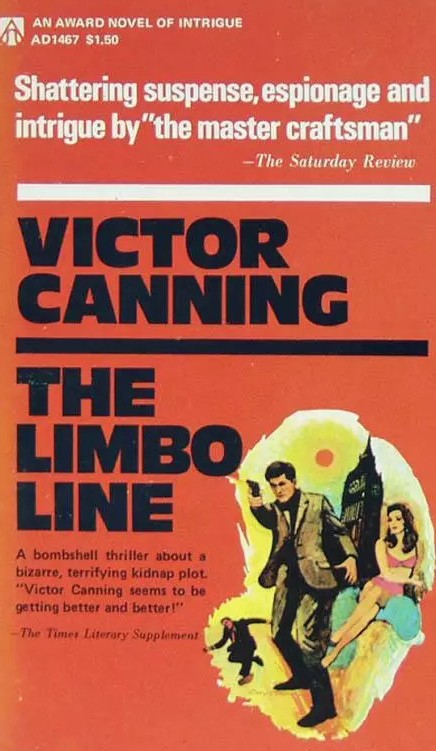
The Limbo Line (1968) ***

Should have been  a classic. The bleakest espionage tale of the decade ends up, unfortunately, in the wrong hands. Betrayal – personal and professional – underlines a sturdy enough narrative of defection, kidnap and rescue, infected with a spread of interesting characters far from the genre cliché.

We open with blonde Russian femme fatale Ludmilla (Moira Redmond), as sleek as they come, killing off her lover once she discovers his true intent. She works for the “Limbo Line,” an organization headed by Oleg (Vladek Sheybal) which whisks Russian defectors back to their home country. In romantic fashion, she inveigles herself into the lives of those who may be, for personal gain, about to take a wrong turn in the service of their country.

Richard Manston (Craig Stevens), meanwhile, is an operative of an undetermined secret unit, getting cosy with Russian ballerina Irina (Kate O’Mara), a defector, in the hope that she will become the next target for Oleg and thus lead him to his quarry. Responding to his amorous advances, she has no concept of this ulterior motives.

But he’s not the only one in the two-timing racket. Oleg lives high on the hog, a lifestyle financed by holding back remuneration due his operatives, who not only want better paid for the risks they are taking, but draw the line at murder. Ludmilla, meanwhile, uses intimacy with Oleg as a way of keeping tabs on him for her superiors.

Everyone, however, is operating under a new code of restraint. Arms limitation talks between the Superpowers currently taking place mean that neither side wants to be publicly seen to be working in the shadows. Hence, the no-holds-barred methods of both Manston and Oleg are frowned upon. Manston and Ludmilla have more in common than one would normally find in the spy movies of the period, the end justifying the means taking precedence over any personal interest in a lover.

The dangerous romantic elements would have been better dealt with in the hands of a more accomplished director. As it is, Samuel Gallu (Theatre of Death, 1967) has his hands full keeping track of a fast-moving tale as Irina is whisked by boat, bus and petrol tanker to Germany, hidden in such confined spaces the more cautious operatives fear she will die.

Nor, despite his fists, is Manston as good as you would expect from a heroic spy, battered to bits by his opposite number, himself imprisoned in the tanker, becoming a pawn to be sold to the highest bidder.

It’s in the tanker that Irina realizes her lover is deceitful, only using her as bait. Similarly, Oleg doesn’t realize he is every bit as dispensable to the ruthless Ludmilla who wishes to avoid public exposure and is only interesting in taking Irina back to Russia where she will be “re-educated.” Chivers (Norman Bird) looks like the nicer sidekick for Manston, the type to demonstrate fair play, except when he has to drown a suspect in a bath. He has the best line in the film, an ironic one at the climax.

The action, while overly complicated, is well done, none of the over-orchestrated fistfights taking place in odd locations. Chivers has a knack of turning up in the nick of time, but he’s the cleverer of the two.

An actress of greater skill than Kate O’Mara (Corruption, 1968) would have brought greater depth to the betrayed lover, but she does well enough to stay alert during the helter-skelter action. Craig Stevens (Gunn, 1967) was never going to be the right fit for a character required to show considerable remorse at his own actions.

The hard core of political reality, the constant betrayal of both innocent and guilty, the shifting sands of romance sit only on the surface and a better director would have brought them more into the foreground, eliciting better performances for deception incurred in the line of duty at the expense of the personal life.

It’s never a good sign when the bad guys are the more interesting characters and while you might expect Vladek Sheybal (Puppet on a Chain, 1970) to steal the show, he is usurped by Moira Redmond (Nightmare, 1964). A bigger budget would have also offered better reward, but even so Gallu comes up with more interesting camera angles than you might expect.  Based on the bestseller by Victor Canning (Masquerade, 1965), he was helped in the screenwriting department by television writer Donald James.

You watch this thinking what might have been.

Discover WordPress

A daily selection of the best content published on WordPress, collected for you by humans who love to read.

The Atavist Magazine

by Brian Hannan

WordPress.com News

The latest news on WordPress.com and the WordPress community.