
Hollywood isn’t known for its sensitivity, and this is one of those major misjudgements. An incredibly rich family, ripe with entitlement, find World War Two tough going, in the main because as in Counterpoint (1968), they consider themselves exempt. Being Argentinians, they are neutral.
Unfortunately, it just so happens, with that wealthy person’s penchant for flaunting their wealth in the world’s richest cities, they end up in Paris on the eve of war, ignoring the warning of family patriarch (Lee J. Cobb) who is convinced the titular “four horsemen of the apocalypse” (war, conquest, death and pestilence, in case you don’t know your Bible) are on the march. Not that we see much of that in the French capital, except in newsreel, details of the war delivered in snippets of dialog (“haven’t you heard about Dunkirk?”), and street-loads of refugees.

Because, don’t you know it, our major players, the Desnoyers and Laurient families, are largely immune. Man-about-town and Argentinian art connoisseur Julio Desnoyers (Glenn Ford) – ignoring the entreaties of his father Marcelo (Charles Boyer) to scarper – is making a move on married Frenchwoman Marguerite Laurient (Ingrid Thulin), bored by newspaper editor husband Etienne (Paul Heinreid) who spends way too much time worrying about impending war.
Julio is so rich that even after the German invasion sends the poor of the city – and its Jewish population – racing about terrified for their lives, he can swan around, enjoying fine food in top-class restaurants much as before and even has the temerity to tell a high-ranking German General von Kleig (George Dolenz) that his wealth makes him immune. The general reckons that his rank gives him any woman he wants. “She’s mine,” is Julio’s rather misogynistic retort when the general attempts to appropriate Marguerite.
Meanwhile, though Julio is still slow to catch on, his sister Chi Chi (Yvette Mimieux) has only gone and joined the Resistance and Etienne has also upset the new masters, so Julio has to go begging cousin Heinrich (Carl Boehm), who has exploited his German origins to achieve military high rank, to provide them with a get-out of-jail-free card.

When Etienne is released, Marguerite is initially inclined to stick with Julio until guilt gets the upper hand. Julio, with no lover to keep him happy, eventually throws his lot in with the Resistance, but there’s no happy ending for anyone.
Director Vincente Minnelli (Two Weeks in Another Town, 1962) is terrific at marshalling his set pieces, using widescreen to excellent advantage, cramming extra bodies in at the edges, but since these sequences tend to be little more than extended talk-fests – the activities that got Chi Chi and Etienne imprisoned are ignored – no amount of directorial skill in the world is going to salvage a movie so weighted down with dead wood.
Glenn Ford (Rage, 1966) does his very best to give the viewer something to hold onto. He avoids every shade of angst in his determination to have as much as fun as possible regardless of any situation. He’s scarcely had the chance to be so carefree on screen and he is at his charming best, and he does lift what is otherwise a somber encounter.
Ingrid Thulin (Return from the Ashes, 1965) has her moments, especially when her diplomatic skills prevent a party being ruined, and she enjoys some flighty repartee with Ford, but once the romance gets heavy her personality undergoes a U-turn and she’s holding onto angst for dear life. And there’s a twist in her character that makes no sense. When Etienne emerges from prison a broken man, she gives him both barrels, and declares her love for Julio only for shortly after to recant and dump Julio. Seems mighty insensitive and bordering on cruelty to deal her husband such a blow when he has been tortured by the Nazis. Though she might not have been so forgiving had she worked out just why Etienne was freed and Chi Chi not.
After the colossal success of Ben-Hur (1959), which set the roadshow ball rolling, MGM was on a remake crusade. As well as Ben-Hur, it had remade Cimarron (1960) – the original 1931 version an Oscar-winner and hot box office. The fact that that flopped didn’t deter the studio. The silent version of The Four Horsemen of the Apocalypse (1921), set against the background of World War I, transformed Rudolph Valentino into a superstar and netted MGM a fortune. The new version sank like a stone, perhaps because it was too wordy for roadshow, or perhaps, more likely, Judgement at Nuremberg (1961) had taken a bolder look at World War Two.
A mis-hit.
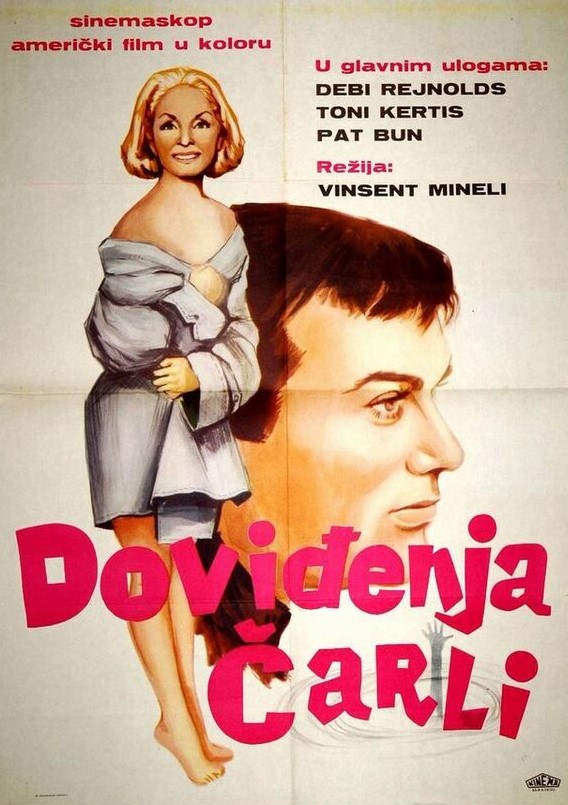
REVIEWED PREVIOUSLY IN THE BLOG: Glenn Ford in Experiment in Terror (1962), Love Is a Ball (1963), Advance to the Rear / Company of Cowards (1964), Fate Is the Hunter (1964), The Money Trap (1965), Is Paris Burning? (1966), Rage (1966), The Last Challenge / The Pistolero of Red River (1967), A Time for Killing (1967), Day of the Evil Gun (1968), Heaven with a Gun (1969; Ingrid Thulin in Return from the Ashes (1965); Yvette Mimieux in The Time Machine (1960), The Wonderful World of the Brothers Grimm (1962), Diamond Head (1962), Joy in the Morning (1965), The Reward (1965), The Caper of the Golden Bulls (1967), Dark of the Sun (1968), The Picasso Summer (1969); Vincente Minnelli directed Two Weeks in Another Town (1962) and Goodbye Charlie (1964).




 The Magnificent 60s