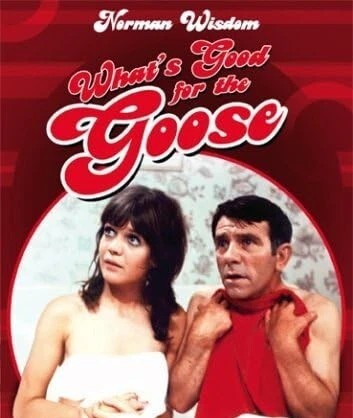
What’s Good for The Goose / Girl Trouble (1969) ***

One of those comedies that works best in a time capsule and far more interesting for the coincidences and anomalies of those involved. What are the chances, you might ask, of sisters playing roughly the same role in two entirely different movies, one a comedy the other a drama, in the same year. We’ve got Sally Geeson here, in her debut, playing a free loving hitchhiker picking up an older married man and we’ve got her slightly more experienced sister Judy Geeson (Here We Go Round the Mulberry Bush) as a free loving hitchhiker picking up older married man Rod Steiger in Peter Hall’s Three into Two Won’t Go (1969).

This proved the final starring role for Norman Wisdom (A Stitch in Time, 1963), at one time a huge British box office star, who had been infected by that disease that seems to always hit comedians, of wanting to play it straight. While there is some comedy, it’s sorely lacking in the kind of physical comedy, the pratfalls and such, with which Wisdom made his name.
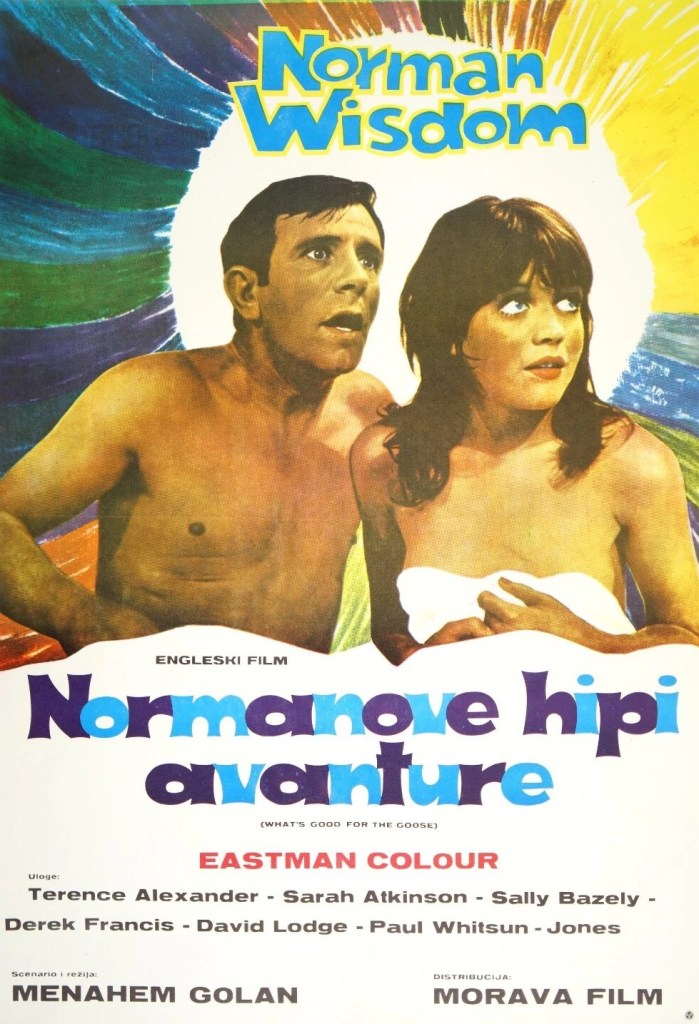
And there’s another name to conjure with – Menahem Golan. More famous, eventually, for foisting on the general public a string of stinkers under the Cannon umbrella and taking over the British cinema chain ABC before going spectacularly bust. What’s his role in all this? He’s the creative force, would you believe, wearing his writer-director shingle, in his first movie outside Israel. And if that’s not enough, the producer is Tony Tenser, also trying to change direction, switching from the horror portfolio which with his outfit Tigon had made its name and into a different genre.

And if you want another name slipped in, what about Karl Lanchbury, playing a nice guy in contrast to the creepy characters he tended to essay in the likes of Whirlpool / She Died with Her Boots On (1969).

Time capsule firmly in place we’re in a Swinging Britain world where young girls listen to loud rock music (though don’t take drugs) and go where the mood takes them, free travel easily available through the simple device of hitchhiking.

Timothy Bartlett (Norman Wisdom) is a bored under-manager drowning in a sea of bureaucracy and turned off by wife Margaret (Sally Bazely) who goes to bed wearing a face mask and with her hair in curlers. On the way to a business conference he picks up two hitchhikers, Nikki (Sally Geeson) and Meg (Sarah Atkinson), becoming smitten with the former, making hay at a night club where his “dad dancing” is the hit of the evening. He slips into the counterculture, wearing hippie clothes, generally unwinding, doing his thing, and sharing his bed with Nikki.
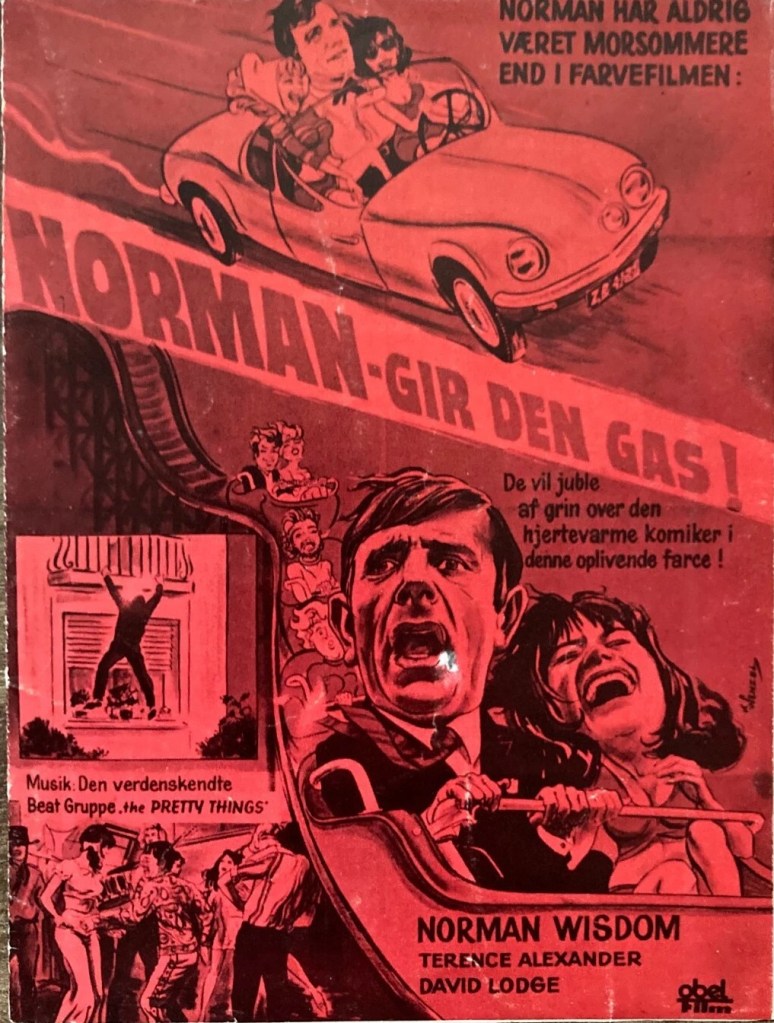
You can tell he’s going to get a nasty shock and just to put that section off we dip into a completely different, almost “Carry On” scenario, where his efforts to sneak Nikki in his bedroom are almost foiled by an officious receptionist. Eventually, she invites all her hippie pals to make hay in his hotel room while she makes out with Pete (Karl Lanchbury),a man her own age, and Timothy is told in no uncertain terms the essence of free love is that she doesn’t hang around with a man for long, in this case their affair only lasted two days.

It’s the twist in the tail that generally makes this work. Rather than moan his head off or believe he is now catnip to young ladies, Timothy, unshackled from convention, uses his newfound freedom to woo his wife.

So, mostly a gentle comedy, and good to see Norman Wisdom not constantly having to over-act and twist his face every which way but loose, even though this effectively ended his career. The teenagers enjoy their freedom without consequence (nobody’s pregnant or addicted to drugs) and there’s a fairly good stab at digging into the effortless joys of the period. Sally Geeson (Cry of the Banshee, 1970) didn’t prove as big a find as her sister and her career fizzled out within a few years.

As an antidote to the Carry On epidemic, this works very well.

A gentle comedy.

 You can catch this on YouTube courtesy of Flick Attack.
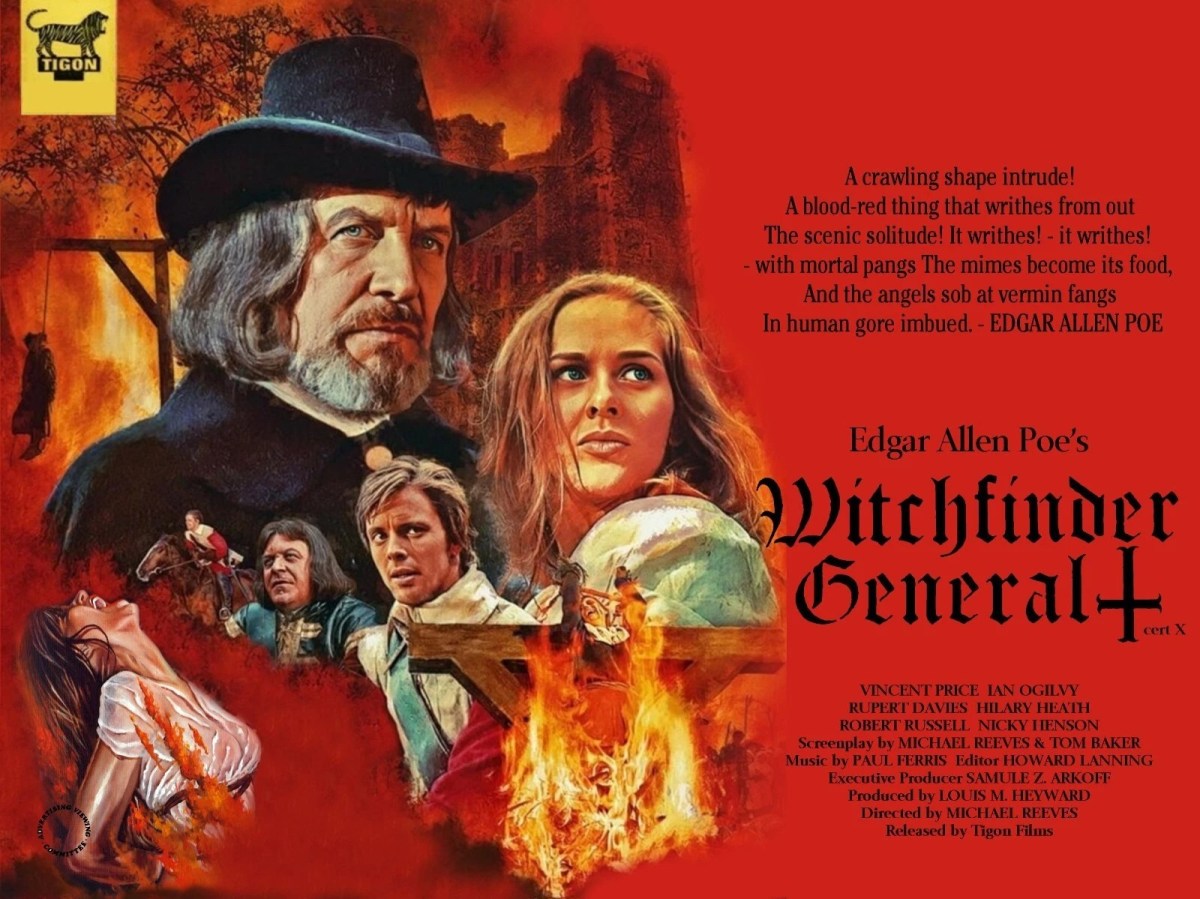
Behind the Scenes: “Witchfinder General” / “The Conqueror Worm” (1968)

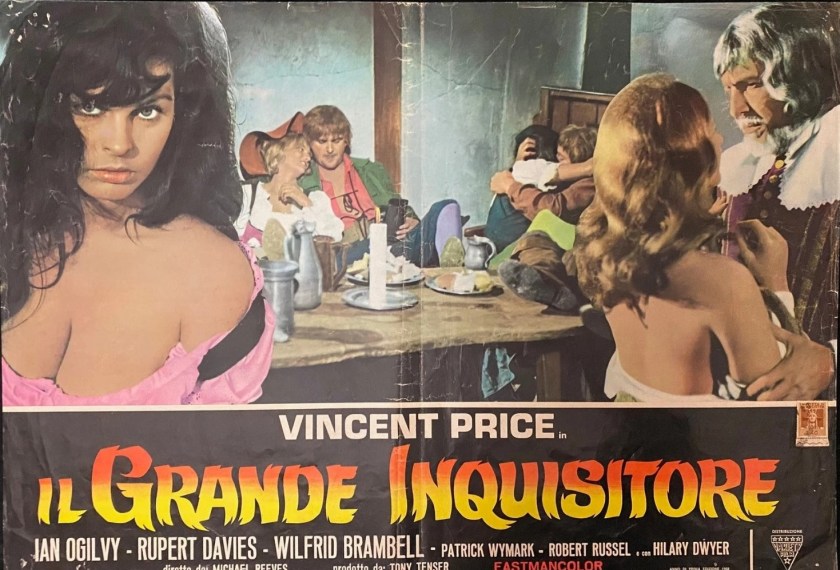
Truth was the first casualty. Matthew Hopkins, the character played in the film by Vincent Price, was 27 when he died in 1647. He had been hunting witches for three years. Price was 57 when the movie appeared. Co-star Ian Ogilvy, aged 25, would have been a better fit, though he lacked the menace. Oliver Reed, who had the swagger and the scowl, would have been the ideal candidate, age-wise, since he was just turning 30. And the movie might well have benefitted from presenting Hopkins as a young grifter who through force of personality and cunning held a country to ransom.

Price wasn’t director Michael Reeves’ (The Sorcerers, 1967) first choice. In fact, he originally wanted buddy Ogilvy, who had played opposite Boris Karloff in The Sorcerers. When that idea failed to float with Tony Tenser – previously head of Compton Films – now boss of British horror outfit Tigon, a challenger to the Hammer crown, Reeves pivoted to Donald Pleasance who, although better known as a supporting actor in the likes of The Great Escape (1963), had headlined Roman Polanski’s chiller Cul de Sac (1966). But when Tenser did a deal with American International Pictures, the U.S. mini-studio insisted on contract player Vincent Price, the mainstay of their Edgar Allan Poe output, with 16 previous films (out of 74) for the company.

Twenty-one-year-old Hilary Dwyer (The Oblong Box, 1969), under contract to Tigon, made her movie debut. Rupert Davies (The Oblong Box) was a seasoned veteran while Nicky Henson (Here We Go Round the Mulberry Bush, 1967) was a potential breakout star.

Tigon was a relatively new entrant to the horror scene, founded in 1966 by Tenser. Its second picture was The Sorcerers; this would be its fourth. Tenser has bought, pre-publication, the rights to Ronald Bassett’s novel Witchfinder General, published in 1966. Director Reeves faced something of a deadline once Tenser finalized the £83,000 budget. AIP chipped in £32,000 which included a £12,000 fee for Price. While it was Tigon’s biggest film to date, it was pin money for AIP.

The film needed to begin shooting by September 1967 at the latest to avoid the worst of the British cold weather. But the screenplay proved too unpleasant for the taste of the British censor. Reeves had already begun the screenplay with Tom Baker (The Sorcerers) with Donald Pleasance in mind portraying “a ridiculous authority figure” and had to quickly revamp it for Price. The laws of the period required a green light for the script from the British Board of Film Censors, who were repulsed by a “study in sadism” which dwelt too lovingly on “every detail of cruelty and suffering.”

That draft was submitted on August 4, 1967. The second draft, submitted on August 15, proved no more appealing. A third, substantially toned-down version, was approved. This resulted in the elimination of gruesome details of the Battle of Naseby and a change to the ending.

Production began on September 18, 1967. Star and director clashed. Reeves refused to go and meet Price on arrival at Heathrow Airport and told him, “I didn’t want you, and I still don’t want you, but I’m stuck with you.” The star was riled by the director’s inexperience. When told to fire a blank pistol while on horseback, Price was thrown from his horse after the animal reared up in shock at the sound. Price, in real-life a very cultured person, was surprised at Reeves’ attitude because in general he got on with directors.

Price turned up drunk on the last day of shooting, the filming of his character’s death scene. Reeves was planning revenge and told Ogilvy to really lay into the star. But the producer, anticipating trouble, ensured Price was well padded.

Reeves was better known for his technical rather than personal skills. Ogilvy commented: “Mike never directed the actors. He said he knew nothing about acting and preferred to leave it up to us.” That wouldn’t square with him falling out with Price over his interpretation of the character. And Hilary Dwyer saw another side of Reeves. “He was really inspiring to work with,” she said, “And because it was my first film, I didn’t know how lucky I was.” She would work with Price again on The Oblong Box and Cry of the Banshee (1970).

Tony Tenser, egged on by AIP’s head of European Productions, shot additional nude scenes in the pub sequence for the German version, A continuity error was responsible for the freeze-frame ending. There was a short strike when the production fell foul of union rules. Producer Philip Waddilove and his wife Susi were occasionally called upon to act.

Two aircraft hangars near Bury St Edmunds in Suffolk were converted for the interiors while a wide variety of locations were utilized for exteriors including Lavenham Square in Suffolk, the coast at Dunwich, also in Suffolk, Black Park in Buckinghamshire, Orford Castle in East Anglia, St John The Evangelist Church in Rushford, Norfolk, and Kentwell Hall in Long Melford on the Essex-Suffolk border. When the operation could not afford a camera crane, the crew improvised with a cherry picker.

Despite the tension on set, Price was pleased with his performance and the overall film. He praised the film in a 10-page letter. Price remarked, “I realized what he wanted was a low-key, very laid-back, menacing performance. He did get it but I was fighting him every inch of the way. Had I known what he wanted I would have cooperated.”

AIP retitled it The Conqueror Worm for U.S. release, hoping to snooker fans into thinking this fell into the Edgar Allan Poe canon, since the title referred to one of the author’s poems, part of which was recited over the credits.

The movie was generally lambasted by critics for its perceived sadistic approach, but is now considered cult. It was a big box office hit, especially considering the paltry budget, gaining a circuit release in the UK – “very good run beating par by a wide margin” – and despite being saddled with the tag of “unlikely box office prospects” by Variety did better than expected business in New York ($159,000 from 28 houses), Los Angeles (a “lusty” $97,000 from 16) and Detroit ($35,000 from one). The final U.S. rental tally was $1.5 million placing it ahead in the annual box office charts of such bigger-budgeted efforts as Villa Rides starring Yul Brynner and Robert Mitchum, Anzio with Mitchum again, James Stewart and Henry Fonda in Firecreek and Sean Connery and Brigitte Bardot in Shalako.

SOURCES: Benjamin Halligan, Michael Reeves (Manchester University Press) 2003; Lucy Chase Williams, The Complete Films of Vincent Price (Citadel Press, 1995); “Big Rental Films of 1968,” Variety, January 8, 1969, p15; Steve Biodrowski and David Del Valle, “Vincent Price, Horror’s Crown Prince,” Cinefantastique, Vol 19;  Bill Kelley, “Filming Reeves Masterpiece Witchfinder General,” Cinefantastique, Vol 22; “Box Office Business,” Kine Weekly, June 1, 1968, p8; “Review,” Variety, May 15, 1968, p6. Box office figures – Variety, May-August 1968.

Behind the Scenes: “The Blood Beast Terror” (1968)

Sherlock Holmes vs Sherlock Holmes was the initial tantalizing casting prospect. Basil Rathbone, the most venerated actor to don the distinctive deerstalker, and Peter Cushing, just signed up by the BBC for a new 16-episode series, the former signed to play the villain, the latter his nemesis in a film that started out with the title of The Death’s-head Vampire, the first film by a new production shingle Tigon Films.

While Tigon was new, with a distinctive logo, its driving force was well-known British producer Tony Tenser who with partner Mike Klinger had initially specialized in exploitation pictures with titles such as Naked as God Intended (1961) and London in the Raw (1964). The pair split after the artistic and commercial success of Roman Polanski’s Cul de Sac, Tenser initially setting up under his own name for Mini-Weekend/Tomcat (1966), mining the exploitation vein as before, and The Sorcerers (1967) a new venture into the horror market. Expanding the business with fresh capital and new partners, Tigon was born.

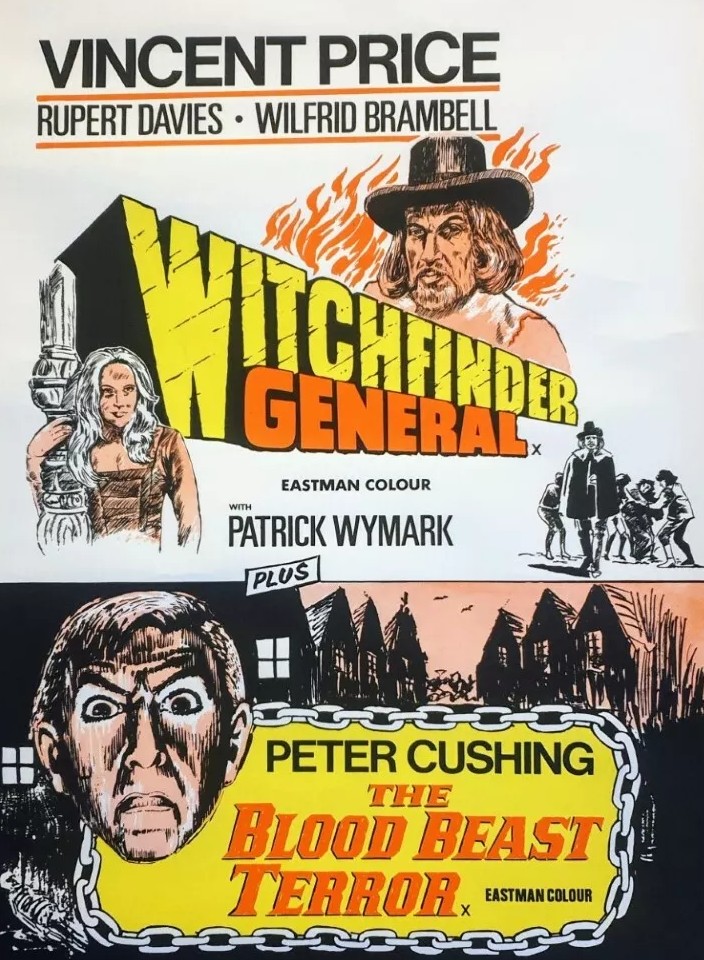
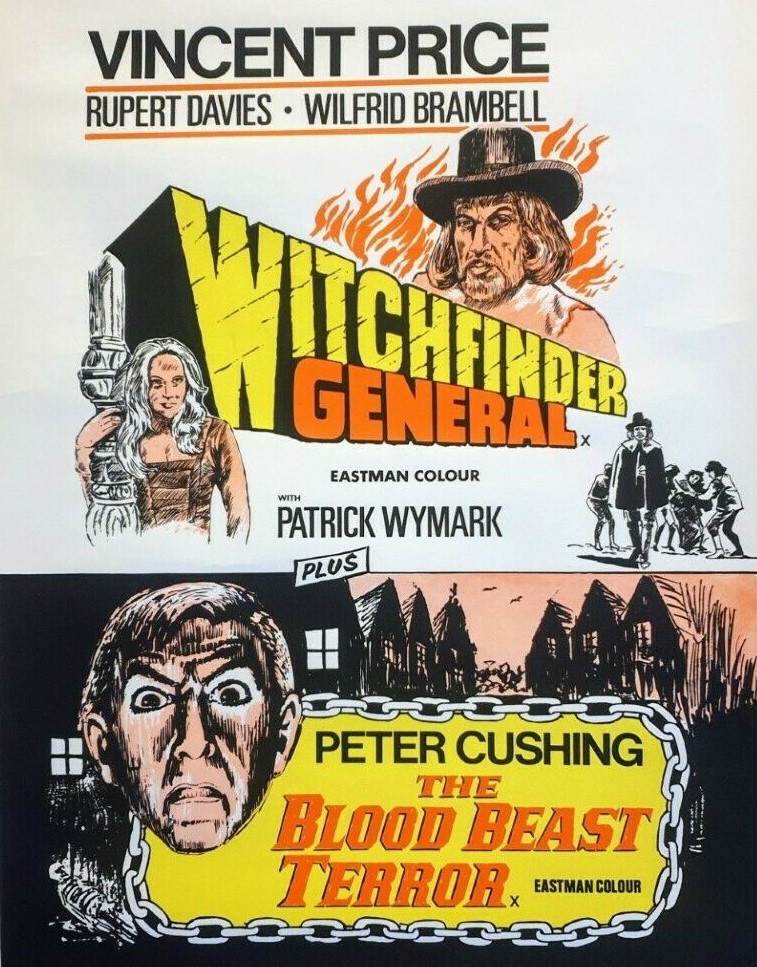
Supporting feature to “Witchfinder General” on ABC circuit release in Britain.

Explaining the new departure, Tenser said, “Films needs to be inexpensive. They need to sell, they need to appeal to an international audience, and one subject that always finds a market is horror.” Horror budgets were low, the genre did not require big stars, and the films had a surprisingly long shelf life.

First movie on the new company’s agenda was not The Death’s-head Vampire. Instead, Tenser had hooked Raquel Welch for a ghost story The Devil’s Discord to be produced by her husband Patrick Curtis, who had performed a similar task on The Sorcerers, and star Peter Cushing (The Skull, 1965). When that fell through, he held onto Cushing for a proposed Horror of Frankenstein and when that also bit the dust turned to him for The Death’s-head Vampire on a budget of just £40,000 (about $100,000). Offered the choice of playing villain Dr. Mallinger or Detective Inspector Quennell, the actor plumped for the “goodie,” Basil Rathbone lined up for the other role. The concept of older man/younger woman with action concentrated on an isolated house and the surrounding countryside was a horror trope.

Vernon Sewell (Strictly for the Birds, 1964), entering his third decade as a director, had worked with Cushing on Some May Live (1965) and was primarily known for low-budget and B-movies, and more importantly from Tenser’s perspective, sticking to a budget without any artistic pretensions or improvisation. He didn’t waste time on anything that would not be captured by the lens. He was calm on set, “nothing fazed him.” Cushing was a kindred spirit, never complaining, except famously, on this picture, when he told Sewell it was the “worst picture” he had ever made. The pair, however, had a very good working relationship to the extent that Sewell never offered Cushing any advice on the role –“he didn’t need my input.”

The Sherlock Holmes connection is promoted in this poster.

Just over two weeks before the August 1967 start date, Basil Rathbone died of a heart attack. Robert Flemyng, the last-minute replacement, was Cushing’s opposite, complaining all the time. The cast was rounded out by 32-year-old Doctor Who star Wanda Ventham (mother of actor Benedict Cumberbatch) and 18-year-old Vanessa Howard whose career highpoint thus far had been a duet with Cliff Richard for a television presentation of Aladdin (1967).

Interiors were shot at Goldhawk Studios, a converted three-story building in London’s Shepherd’s Bush, with exteriors at Grims Dyke, the former home of W.S. Gilbert, in north-west London. The 19th century manor house had lain empty since 1963.

Roger Dickens, who had cut his teeth on Thunderbirds Are Go! (1966) and worked on 2001: A Space Odyssey (1968) and would be later lionized for the mini-beast bursting out of John Hurt’s stomach in Alien (1979) was responsible for creating the monster. The model for the giant larvae was a much simpler task than creating a believable female giant insect. He took a mold of Ventham’s face, giving the features a repellant slant,  using costume jewelry for the eyes, adding a furry cap and two-foot long antennae, a representation  that would only really work if you scarcely saw the creature. For art designer Wilfred Woods his woods set turned into a disaster when the trees wilted and lost their leaves.

Opinions differ as to whether Tenser interfered with production. He saw his role during the film process to ensure that the project followed the script. “Sometimes you can put something in a film which will hinder the selling, sometimes you need to put something in which will help the selling.”

Comedian Roy Hudd, playing the morgue attendant, thought the script so awful he was delighted to work with Cushing on improvements. 

When John Ford’s boast that he never shot an extra foot of film in order to prevent a producer turning in a different film has resulted in many a masterpiece, the same did not hold true for Sewell. Sticking so close to the script, not filming anything that was not absolutely necessary meant that the movie was too short. Editor Howard Lanning commented: “I put in everything that was available. Even with expanding the lecture scene and the amateur dramatics as long as possible, to the detriment of pace, the picture clocked in at just 81 minutes, not the length expected of a main feature.

To ensure the movie came in at the required length, Tenser added the African sequence at the beginning (an extra five minutes) and re-shot the morgue material (two more minutes), encouraging Cushing and Hudd to improvise. The final product was over-budget and a week late. The version shown to the censor was 87 minutes though the official running time was a minute longer.

Tenser now deemed the working title as insufficient, preferring “something catchy and something that told people what you were selling.” His first stab at a new title was Blood Beasts from Hell. But in the final analysis it was altered to The Blood Beast Terror. Hoping to sell it to a circuit as a main feature it was originally shown in a double bill with Castle of the Living Dead, but despite the supposedly attractive title, audiences were not interested. To cut his losses, the film was repackaged as the support to another Tigon production Witchfinder General (1967) which meant Tenser would not have to share receipts with another distributor.

The Blood Beast Terror did not prove so sellable overseas either. It was shelved in France until 1971, although, sold for a flat fee, it did well in South America. A.I.P. who had U.S. distribution rights to Witchfinder General – title altered to The Conqueror Worm – had no interest in The Blood Beast Terror but it was picked up by Pacemaker Pictures who were also in title-changing mood and released it in summer 1969 as Vampire Beast Craves Blood on a double bill with Curse of the Blood Ghouls (1964).

Tenser’s predictions of long shelf life were correct. In Britain, the movie was reissued on a late night double bill with The Secret of Blood Island (1961), and then was revived with The Devil’s Hand (1961) before being re-teamed with Witchfinder General on a Sunday’s-only screening. Although none of these would be circuit releases in the sense of a nationwide day-and-date opening, they were nonetheless likely to get reasonable bookings to fit specific engagement profiles. In the States where there was endless demand for horror triple- and quadruple bills and all-nighters, The Blood Beast Terror received ongoing bookings.

SOURCES: John Hamilton, “The Making of the The Blood Beast Terror,” Little Shoppe of Horror, Issue No 43, p67-91; John Hamilton, “Regretting Nothing: John Sewell, Little Shoppe of Horror, Issue No 43, p92-98.

The Blood Beast Terror (1968) ***

As the title suggests there’s a vampiric element, and there’s not a great deal unusual in that, Hammer having successfully revived interest in bloodsuckers. What is unusual, however, and a couple of years before that studio’s The Vampire Lovers (1970) is the idea of female empowerment. Previously, the sole purpose of a damsel in a horror picture was to lay bare a convenient bosom for a passing thirsty creature, or, have their clothing disarrayed and let out a scream when a monster pounced.

The twist here is that the vampire is a woman, Clare (Wanda Ventham), and men who are the victims except on the occasions when her father Dr Mallinger (Robert Flemyng) hypnotizes young women in order to give the creature a blood transplant. The beast exists as a creature and then morphs into Clare. For a time it looks as if Clare is merely possessed, but in reality appears much more as if she is enjoying being the beast, abandoning the enforced respectability of the times, luring men into the forest to have her rapacious way with them, the men naturally thinking they are in for a romantic tryst rather than being targeted by a predator.

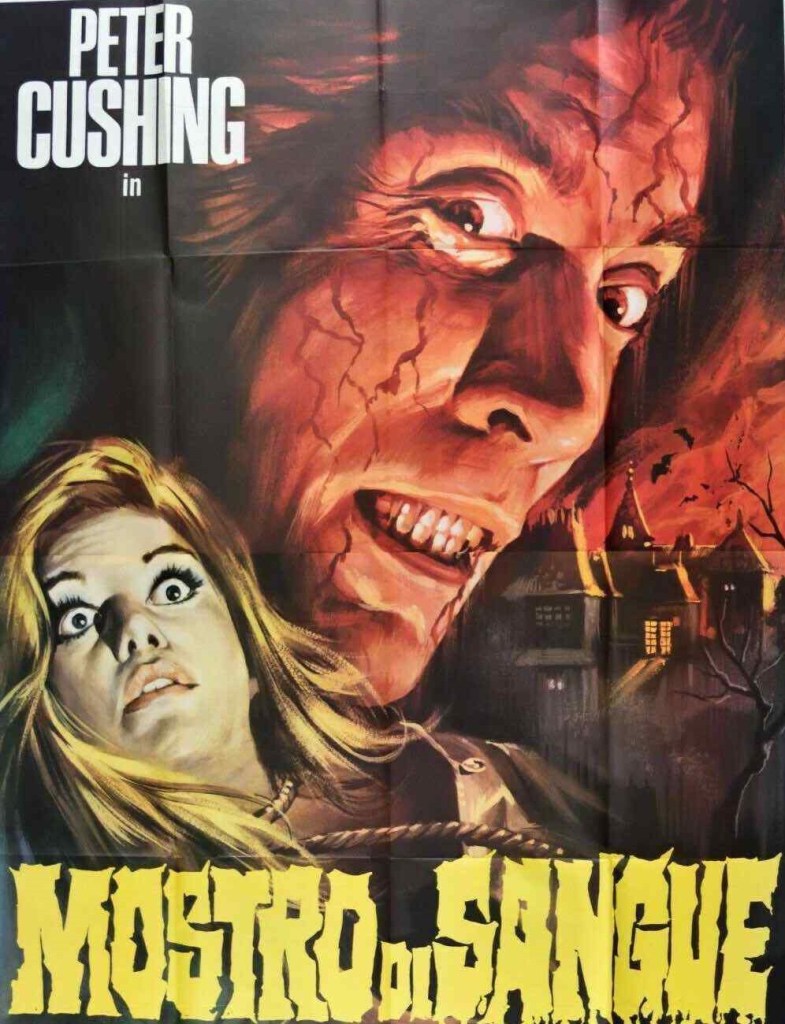
Continuing the theme of misleading the audience, this poster cleverly suggests that it’s a man who is the beast and the woman who are the victims.

There’s a wonderful scene that gives an insight into her mindset. Her friends put on a little play. Her role is the monster, a part she seizes with relish.

It’s one of those films you have to work out backward. In standard horror fashion it leaves the twist till close to the end and it would have been far more interesting if we had discovered at the outset that Clare was the beast, leading the men for the most part a merry dance, outwitting Inspector Quennell (Peter Cushing) and her adoring father Dr. Mallinger (Robert Flemyng).  

The inspector, faced with a growing pile of corpses drained of blood, is baffled throughout, no Sherlock Holmes clever deductions here, and it naturally would not occur to any of the males, beyond Dr Mallinger who is in on the secret, to imagine a woman capable of not just committing such crimes but of exerting such power over a man. The story glosses over the genetics, it’s a version of Frankenstein obviously, but the background to it is missing, and I can see why. There has to be some mystery.

Hitchcock could not have done a better job of misleading the audience. For a start the story is told entirely through the male perspective. And it’s set up as a murder mystery, Quennell our lead as he dances from one corpse to the other, helped along in his information accumulation by lugubrious mortuary attendant  (Roy Hudd), who is, ironically, as hungry as the beast, but for normal food rather than blood, always seen devouring something. Mallinger is not a mad professor either, but a distinguished one, celebrated in his field, giving lectures and attracting proteges like Britewell (William Wilde).

Initial British release double bill cleverly bringing together Peter Cushing and Christopher Lee –
though in separate pictures.

Although his daughter acts as laboratory assistant, Mallinger is hardly aware that his daughter is sizing up every male visitor as a potential victim.

The posters give away that the creature is a giant moth, and by and large the special effects (no CGI available of course) pull this off, the creature usually just glimpsed or seen from the distance, and the possibility that Mallinger is aware of what he is harbouring apparent when he enters a cellar wearing a leather hood and carrying a whip.

Tony Tenser’s production company Tygon has acquired cult status, in part for having the temerity to take on British horror giant Hammer at the height of its powers in the 1960s, and in part from the distinction of its output, making such films as The Sorcerers (1967) with Boris Karloff, Peter Cushing as Witchfinder General (1968) and Karloff, Christopher Lee and Barbara Steele in The Crimson Cult/ The Curse of the Crimson Altar (1968). Tenser ploughed a different furrow to Hammer at a time when that studio was also expanding into bigger-budgeted movies such as One Million Years B.C. (1966).

Capably not to say cleverly director by veteran Vernon Sewell (The Crimson Cult) it is miles ahead of its time and generally delivers the goods. Peter Cushing (The Skull, 1965) is excellent as usual, Robert Flemyng (The Deadly Affair, 1967) proves a more interesting scientist than usual, steering clear of any craziness.

Wanda Ventham in her first leading role provides a fascinating character study, but you have to work backwards as I said, to realize just how good she is, the way she has, for Victorian times, her father under her thumb, and the seductive glances she casts at men, not to mention the ease with which she assists her father in his diabolical experiments without him realizing why she is so enamored. Female monsters had evolved from creatures before – in Cat People (1942), Snake Woman (1961) and Hammer’s The Reptile (1966) – but this was a more rapacious example of the species. Vanessa Howard (Some Girls Do, 1969) has a small role and you can spot Scottish character actor Glynn Edwards (Zulu, 1963) and television comedian Roy Hudd in his movie debut.

Screenwriter Peter Bryan (The Brides of Dracula, 1960), something of an expert in the horror field, turns the whole genre on its head with the gender politics examined here.

Discover WordPress

A daily selection of the best content published on WordPress, collected for you by humans who love to read.

The Atavist Magazine

by Brian Hannan

WordPress.com News

The latest news on WordPress.com and the WordPress community.