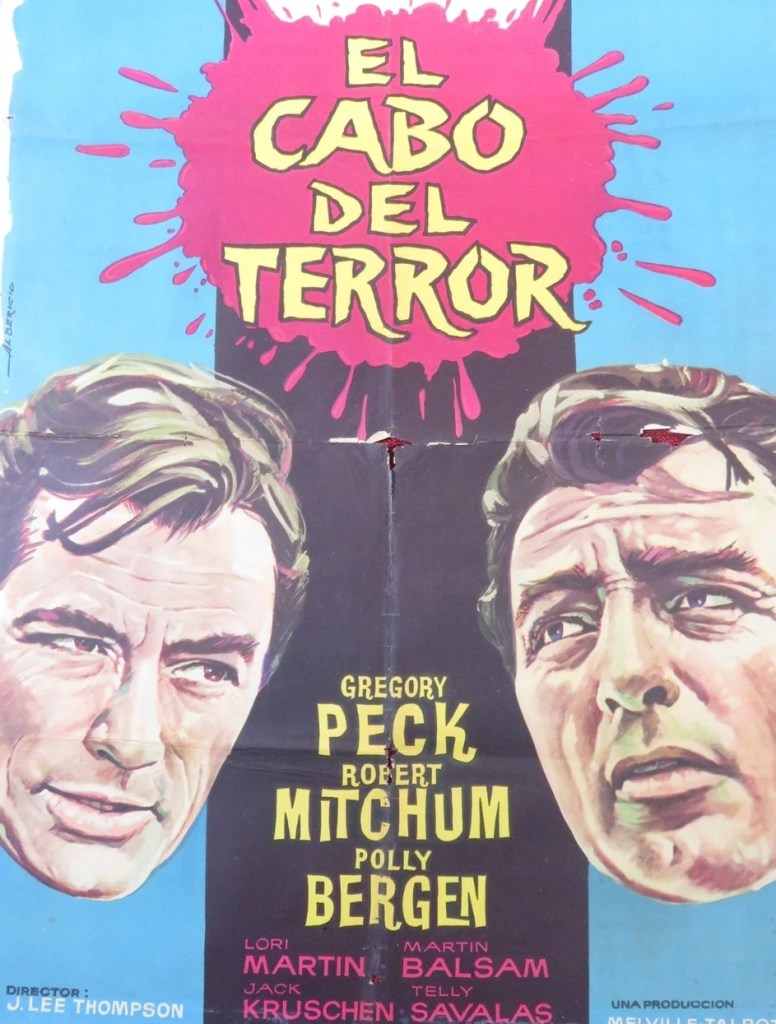
Beau Geste (1966) ***

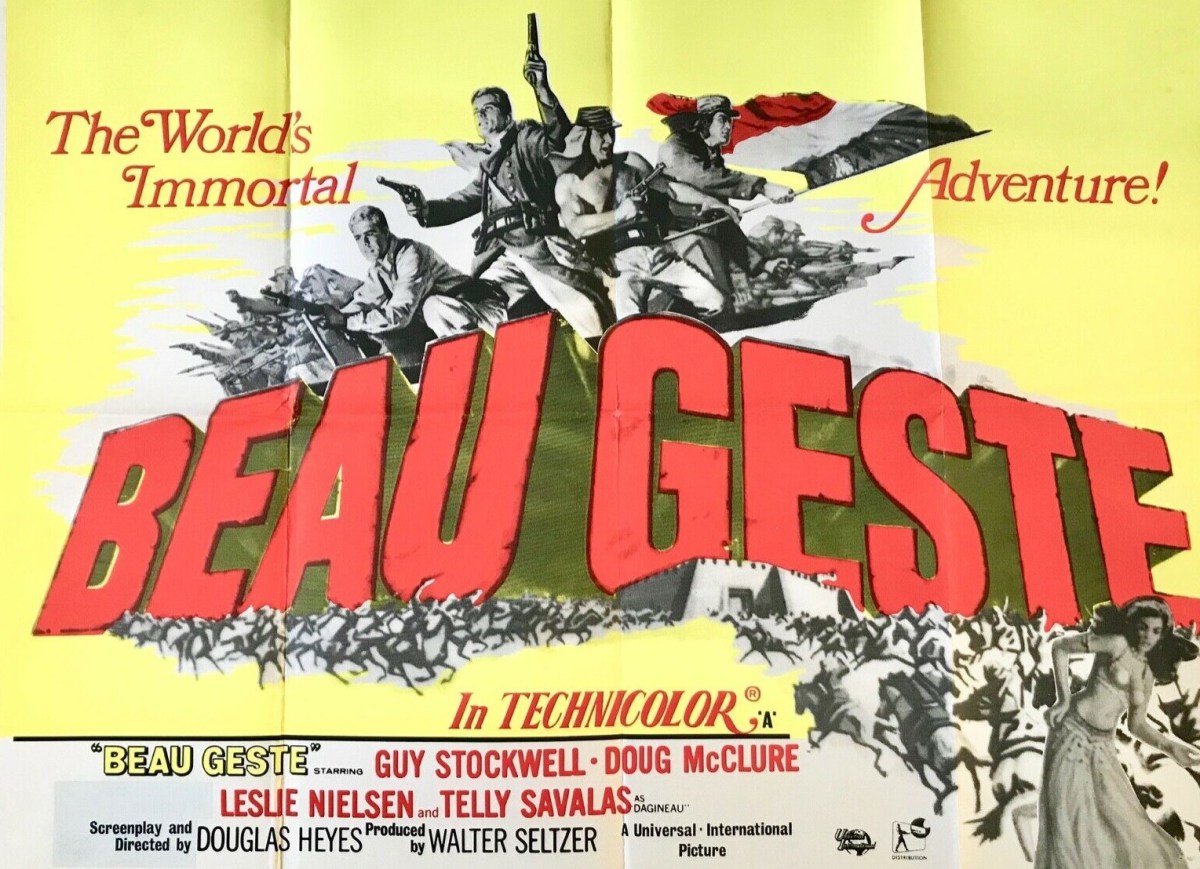
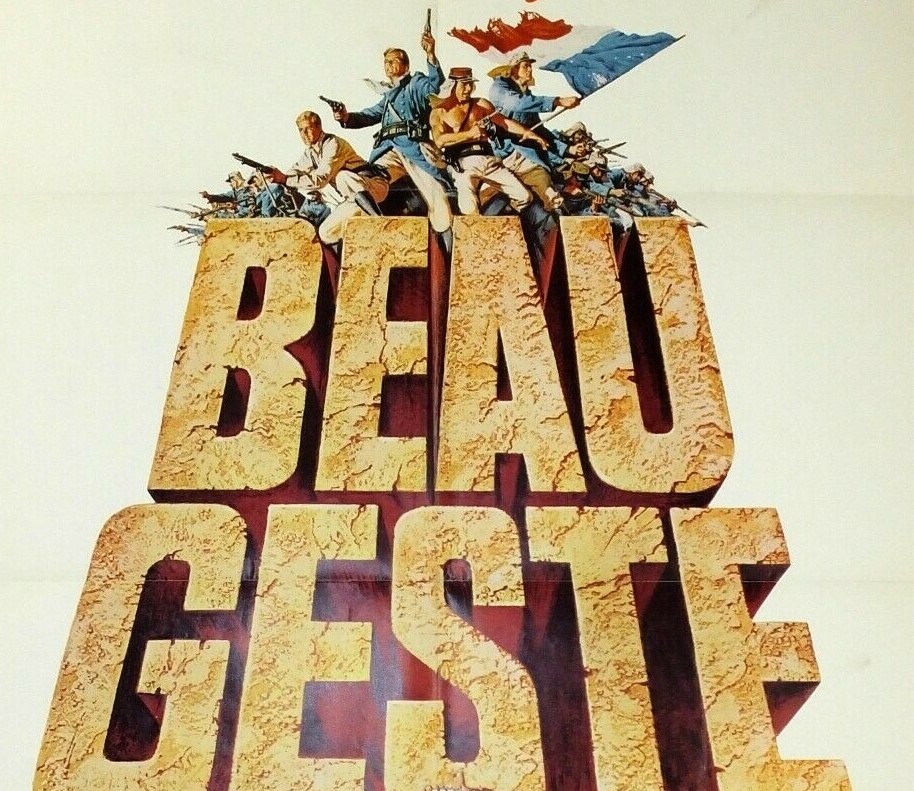
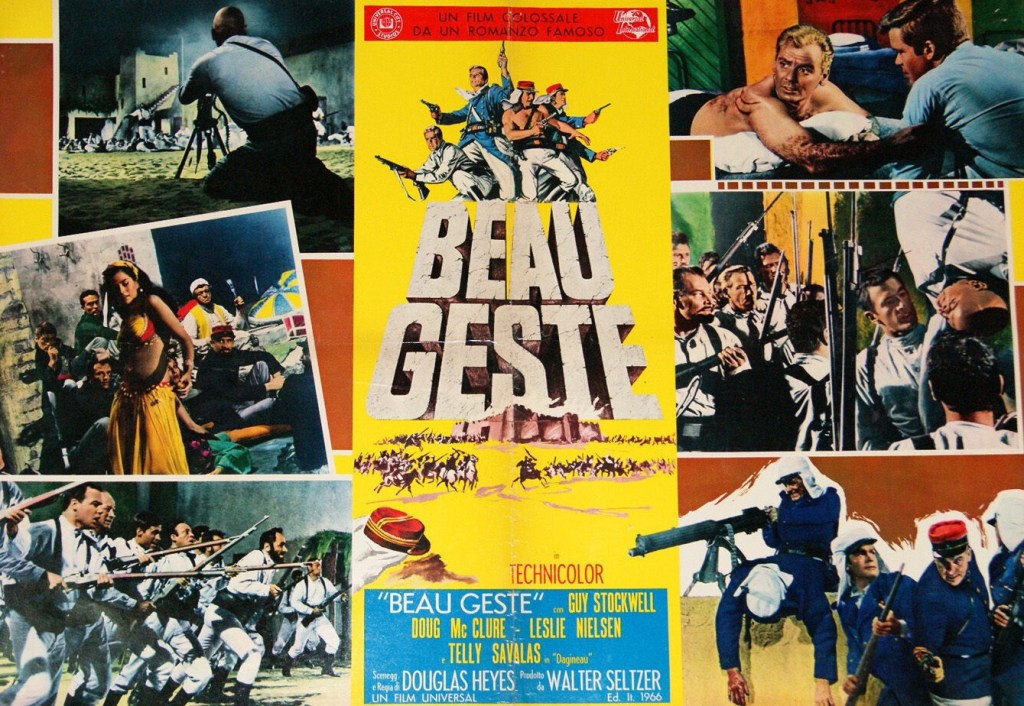
Two brothers battle inhospitable terrain, warring tribes and a sadistic sergeant major in a  remake of the classic tale. The title translates as “noble and generous gesture” and is a pun on the name of hero Michael Geste (Guy Stockwell), an American hiding out in the French Foreign Legion in shame for being involved, innocently as it happens, in embezzlement. His attitude is markedly different to the “scum of the earth” who make up the battalion and his quick wit and refusal to kowtow make him a target for Sgt Major Dagineau (Telly Savalas), a former officer busted to the ranks.

Dagineau delights in imposing hardship and devising mental torture, making some recruits including Geste walk around blindfold at the top of a cliff. Geste’s resistance to his superior is almost suicidal and he even volunteers to take a whipping on behalf of his comrades. “It’s me he wants,” says Geste, “if not now the next time.” At another point he is buried up to his neck in the blazing sun.

Joined by his brother John (Doug McClure), the battalion sets out as a relief force for a remote fort but when commanding officer Lt De Ruse (Leslie Nielsen) is seriously wounded, the sergeant-major takes charge. Under siege from the Tuareg tribe, honor, treachery, mutiny, fighting skills and courage all come into play in a final section.

The action and the various episodes and confrontations are strong enough and Geste has a good line in witty retort, but blame the casting for the fact that it turns into Saturday afternoon matinee material. It was always going to be a stretch to match Gary Cooper, Ray Milland and Susan Hayward from the 1939 hit version.

Stagecoach, remade the same year, was able to rustle up a bona fide box office star in Ann-Margret (Viva Las Vegas, 1964) and a host of supporting players with considerable marquee appeal including Bing Crosby (Robin and the 7 Hoods, 1964), Robert Cummings (Promise Her Anything, 1965) and Van Heflin (Cry of Battle, 1963). Nobody in the cast of Beau Geste could compare. Apart from the Spanish-made Sword of Zorro (1963), Guy Stockwell usually came second or third in the credits, as did Doug McClure (Shenandoah, 1965) while Telly Savalas, despite or because of an Oscar nomination for The Birdman of Alcatraz (1962), was viewed as a character actor.

But that was the point. Universal gambled on turning the latest graduates from its talent school into major box office commodities. The set pieces and the action are well handled and while there are excellent lines especially in the verbal duels between hero and villain, it’s not helped by the most interesting character being Dagineau, who, despite his failings, accepted his fall from grace, worked his way back up the career ladder, believing brutality the only way to control the soldiers, and in the end out of the two is the one who has the greater sense of honor, refusing to allow a lie to befoul the truth, rejecting the notion of when the legend becomes fact print the legend, And it’s a shame that the movie has to present his character in more black-and-white terms rather than invest more time in his background or accept his version of reality.   

Telly Savalas (The Scalphunters, 1968) steals the show with a performance of considerable subtlety. Guy Stockwell (Tobruk, 1967) is little more than a stalwart, the heroic hero, with little sense of the irony of his situation. Doug McClure (The King’s Pirate, 1967) presents as straighforward a matinee idol. If you only know Leslie Neilsen from his later spoof comedies like Airplane! (1980) you will be surprised to see him deliver a dramatic performance as the drunken commander who still insists, in an echo of El Cid, in rising from his sick bed to lead his troops. Normally this kind of macho movie – The Magnificent Seven (1960) and The Dirty Dozen (1967) prime examples – throws up burgeoning talent who go on to make it big. It’s one of the disappointments here that this does not occur.

This was the second and final movie of Douglas Heyes (Kitten with a Whip, 1964).  

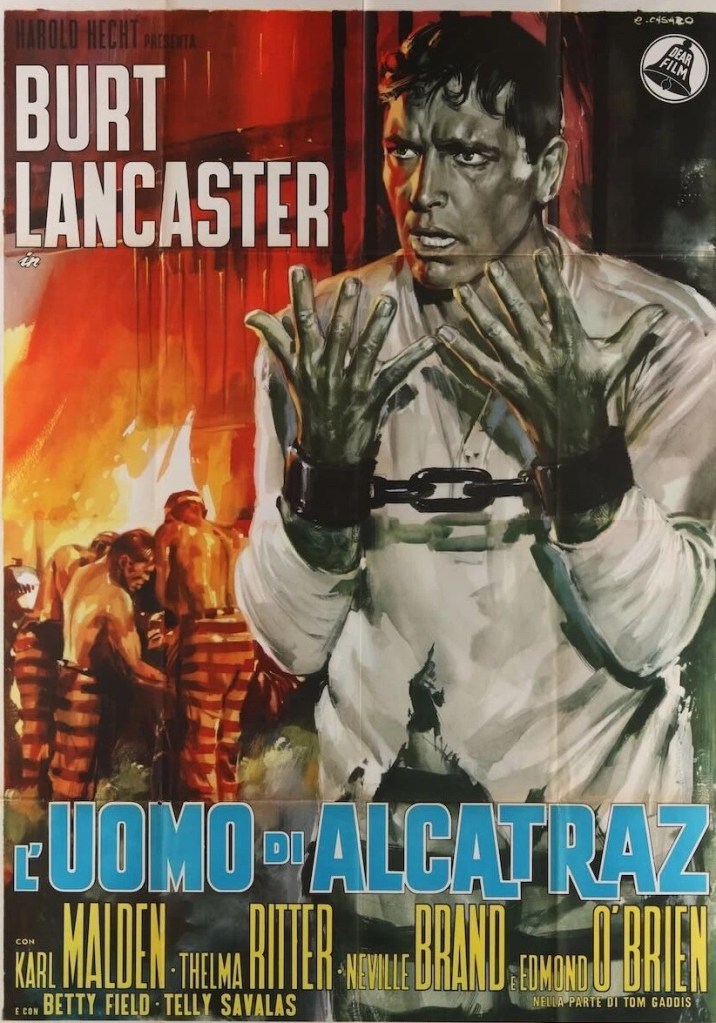
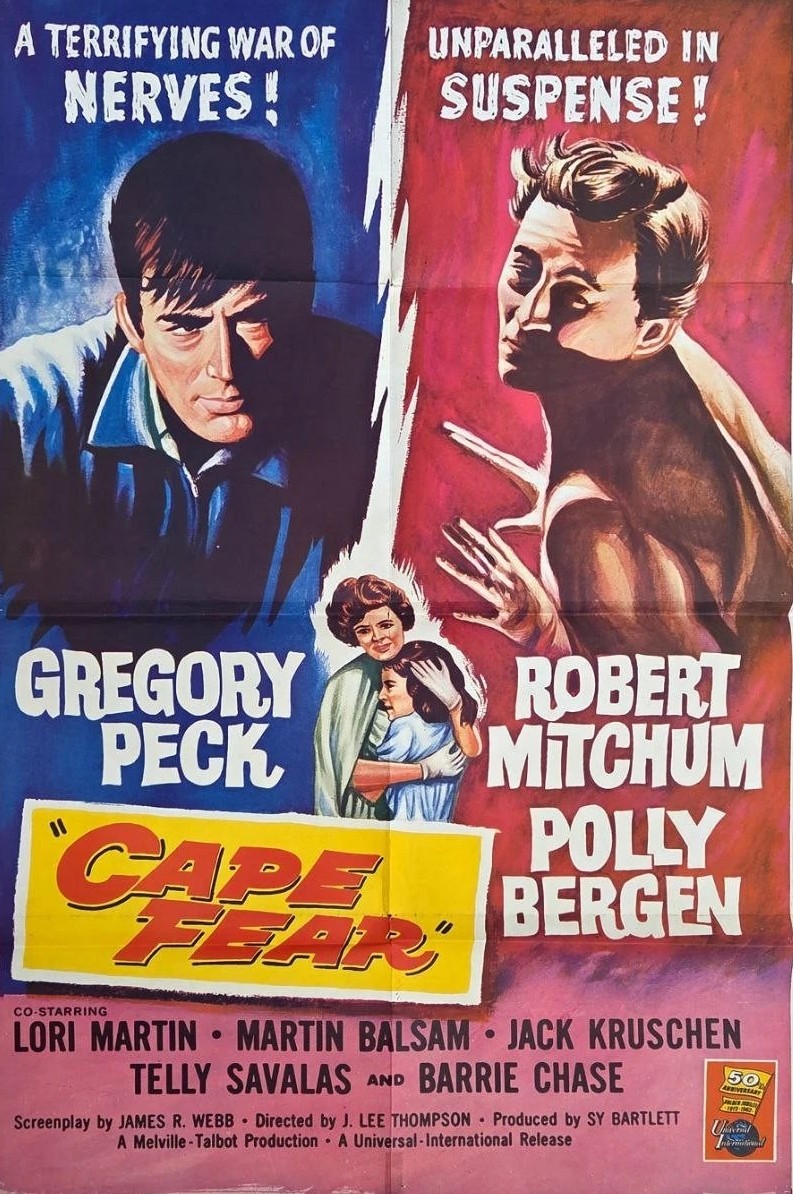
Birdman of Alcatraz (1962) ****

It always helps a prison picture if your character has been wrongfully convicted (The Shawshank Redemption, 1994) or is incarcerated through an unfortunately set of circumstances including self-destructive tendencies (Cool Hand Luke, 1967). Whatever the case, the malevolence of the wardens or the emergence of his own engaging personality will ensure that your character is sprinkled with enough sympathy to transform into our hero.

But that’s not the case here and it takes a strong chunk of bravura acting from Burt Lancaster (Elmer Gantry, 1960) to pull this off.

Oddly, this works in the main not because it’s your typical prison picture with endless confrontations with guards and preventing your dignity being sliced and diced by a ton of humiliating actions. Walt Disney couldn’t have done a better job of hooking the audience with its nature true-life approach. I guarantee you will be chuckling to watch a newborn chick trying to shuck off the top half of its egg.

Robert Stroud (Burt Lancaster), a pimp, was certainly no innocent, a two-time killer, who only escapes execution through the efforts of his mother (Thelma Ritter) in persuading U.S. President Woodrow Wilson to commute his sentence. However, there is an evil Catch-22 which infuriated prison governor Harvey Shoemaker (Karl Malden) invokes. While awaiting sentence, and assuming execution is inevitable because he murdered a prison guard in front of hundreds of witnesses, the local judge has decreed that Stroud should be kept in solitary confinement.

Shoemaker, nettled by Stroud’s defiance, interprets that as being able to keep the prisoner in solitary confinement for the rest of his term – which amounts, as it happens, to 40 years. None of this bugs Stroud that much. He’s averse to human companionship, as likely to bully a cellmate and cause ructions elsewhere, and certainly not ever going to give in to the prison system with its endless rules.

The marketeers have taken some liberties with the title. But Alcatraz is certainly a bigger lure to moviegoers than Leavenworth. By the time Stroud reaches Alcatraz he’s devoid of birds. All the breeding activity takes place in Leavenworth.

And while there are aspects of Stroud’s character you will never warm to, he’s got us hooked the minute he embarks on the bird breeding, in part because it’s the antithesis of his character to be so humane, and in part because the dedication involved in painstakingly building cages or other toys (a little wooden chariot a bird is taught to drive) from nothing but wooden boxes with rudimentary tools he has fashioned himself is wondrous to behold. That section of the movie is just enthralling.

Although he’s rescued a chick from a broken nest that lands in the prisoner courtyard during a storm, it takes him a while to cotton on that the bird needs fed, which he does with his version of a toothpick. He coaxes the frightened bird to fly and eventually starts breeding the damn things, persuading a new governor to allow him to buy birdseed and encourages his hobby, so much so that after extensive study Stroud becomes a noted ornithologist with a couple of publications to his name. His case became widely known after a bird researcher Stella Johnson (Betty Field) publicizes his activities and eventually marries him.

But when he’s shifted to Alcatraz, he encounters Shoemaker who forbids the birds. So Stroud starts to write a history of the U.S. penal system. Despite being prone to violence, he is instrumental in ending a prisoner uprising. He is never released, despite various petitions.

So while there’s no happy ending it’s an absorbing picture. Burt Lancaster is at the top of his form, winning another Oscar nomination. Telly Savalas (Crooks and Coronets, 1969), playing another prisoner, was also nominated. Karl Malden (One Eyed Jacks, 1961) is an excellent foil and any time Thelma Ritter (A New Kind of Love, 1963) pops up she steals the show.

While it’s on the long side for a prison picture and lacks the epic quality that the 150-minute running time would suggest, director John Frankenheimer (The Manchurian Candidate, 1962) takes an almost documentary approach to his subject. You might call it an intimate epic. Screenplay by Guy Trosper (The Spy Who Came in from the Cold, 1965) from the book by Thomas E. Gaddis.

Standout show from Lancaster.

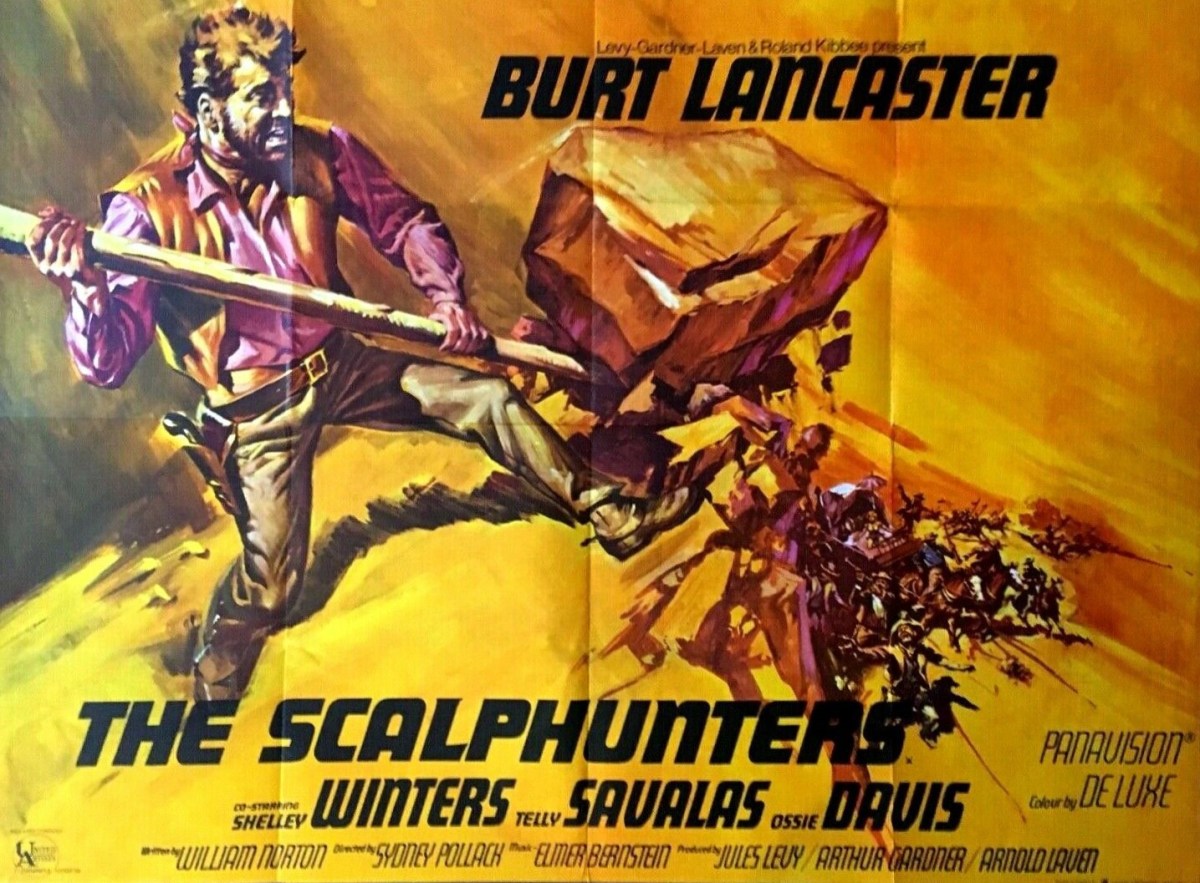
The Scalphunters (1968) ****

If ever a film deserves reassessment, this is it. This western, marketed as a vehicle for Burt Lancaster in the wake of hugely successful The Professionals (1966), sees the star playing  cussed trapper Joe Bass trying to retrieve furs stolen first by Native Americans and then by outlaws. That the serious race issues tackled here were dressed up in very broad comedy and typical western action ensured it missed out on the kind of recognition that critics would assign a straightforward drama and lost its rightful place as a pivotal picture of the decade.

In theory, a somewhat unusual Burt Lancaster western. In reality something else entirely. For large chunks of the movie Lancaster is absent as the story follows the fortunes of Black slave Joseph Lee (Ossie Davis) as he achieves not just freedom but genuine equality. Joseph is introduced as a slave of the Kiowa, left behind when the Indians steal Joe Bass’s furs. In compensation for his loss, Bass plans to sell Lee in the slave market in St Louis and in the meantime enrols him to help recover his furs.

However, a band of outlaws, specializing in collecting Native American scalps (hence the title) and selling them at $25 a time, get to the furs first as a by-product of a raid on the Kiowas. In pursuit with Bass, Lee falls into a river at the outlaw encampment and becomes the slave of Jim Howie (Telly Savalas) who also aims to sell him. Lee plans to escape until discovering Howie’s large troop is headed for Mexico where the slave would automatically become free. With clever talk, beauty-treatment skills and knowledge of astrology and ecology, Lee insinuates himself into the wagon of Howie’s paramour Kate (Shelley Winters).

With Bass still in pursuit, there are several excellent action scenes as the outnumbered trapper seeks to outwit Howie who turns out to be just as devious. But the main question is not whether Bass will recover his stolen property but which side will Lee pick. Will he act as spy to help Bass get back his furs or will he disown Bass and remain with the murderous genocidal gang who could provide a prospct of freedom? Either in the company of Bass or Howie, he is constantly reminded of his status, taking a beating from one of Howie’s thugs, Bass refusing to share his whisky because he views him not just as a slave who “picked his master” but as a coward refusing to fight back when attacked and beaten up.

The film comes to a very surprising ending but by that time through his own actions Lee is accepted as an equal by Bass and the issue of slavery dissolved. In effect, it is a tale of self-determination. Lee effects liberty by taking advantage of situations and standing up for his own cause.

Lee is one of the most interesting characters to appear on the western scene for a long time. Exactly where he acquired his education is unclear and equally hazy are how – and from where – he escaped and how he ended up as slave of the Commanches before they traded him to the Kiowa. However he came to be in the thick of the story, his tale is by far the most original. But he’s not the only original. The fearless Bass was an early ecological warrior with an intimate understanding of living off the wild, not in normal genre fashion of killing anything that moves, but in knowing how to find sustenance from plants. That in itself would endear him to modern lovers of alternative lifestyles.

Normally the derogatory term “scalphunters” would be reference to Native Americans, but here it is American Americans who exploit this market. Despite being the leader of a vicious bunch, Howie turns out to be a bit of a romantic and Kate a bit more interested in the world than your average female sidekick.

Director Sydney Pollack (The Slender Thread, 1965) does a marvelous job not just in fulfilling action expectations and taking widescreen advantage of the locations but in allowing Lee to take center stage when, technically, according to the credits, Ossie Davis was only the fourth most important member of the cast. Burt Lancaster was approaching an acting peak, following this with The Swimmer (1968) and Castle Keep (1969), happy to take risks on all three pictures, especially here where for most of the movie he is outwitted and ends up in a mud bath.

Both Telly Savalas (Sol Madrid, 1968) and Shelley Winters (A House Is Not a Home, 1964) rein in their normal more exuberant personas.  Savalas, in particular, cleaves closer to his straightforward work in The Slender Thread than the over-the-top performance of The Dirty Dozen (1967). Winters, usually feisty, is here more winsome and vulnerable, apt to be taken in by sweet-talking men.

But Ossie Davis (The Hill, 1965) is the standout, his repartee spot-on. It is a hugely rounded performance, one minute wheedling, the next sly, boldness and cowardice blood brothers, and while his brainpower gives him the advantage over all the others he is only too aware that such superiority counts for nothing while he remains a slave.

It’s dialog rich and it’s a shame it wasn’t a big hit for that would have surely triggered a sequel – especially in the wake of the following year’s buddy-movie Butch Cassidy and the Sundance Kid – because the banter between Lee and Bass is priceless. For the dialog thank the original screenplay by future convicted gun-runner William W. Norton (Brannigan, 1975), father of director Bill Norton (Cisco Pike, 1971).

Go see.

The Slender Thread (1965) ****

Hollywood paranoia in the 1970s ensured that any type of electronic surveillance was treated with suspicion. Cops, too, were almost certain to be corrupt. Although he would subscribe to such paranoia and implicit corruption in Three Days of the Condor (1973), in his movie debut director Sydney Pollack turns these concepts on their head.

Crisis center volunteer Alan (Sidney Poitier) faces a battle against time to save potential suicide Inga (Anne Bancroft), using his own powers of empathy and persuasion, but helped more than a little by dedicated policemen and the system of tracking calls. On the one hand the ticking clock ensures tension remains high, on the other Alan own’s battle with his nascent abilities brings a high level of anxiety to the proceedings especially as we learn of the particular circumstances driving Inge.

Alan is studying to be a doctor and he carries within him the arrogance of his profession, namely the power to cure. But that is within the realms of the physical. When it comes to dealing with the mental side of a patient he discovers he is ill-equipped. The intimacy he strikes up with Inga ensures he cannot seek relieve by handing over the problem to anyone else, the fear being that the minute he introduces another voice the spell will be broken. His medical training means only that he knows far better than a layman the effect of the pills the woman has taken and can accurately surmise how long she has to live. In the process he experiences a wide range of emotions from caring and sympathetic to angry and frustrated.

By sheer accident Inga’s otherwise loving husband, Mark (Steven Hill), skipper of a fishing vessel, has discovered that their son is not his. On being rejected, she has nothing to live for.

The simple plotline is incredibly effective. The two main characters never meet but we discover something of Inga’s life through flashbacks as her life gradually unravels and elements of insanity creep in. Alan, meanwhile, is shut in a room, relying on feedback from colleagues such as psychiatrist Dr Coburn (Telly Savalas) and others monitoring the police investigation attempting to discover where she is. 

The fact that there actually was a suicide crisis center operating in Seattle (where the film is set) will have come as news to the bulk of the audience for whom suicide was a taboo subject and virtually never discussed in public or in the media. The fact that the telephone network could be used so effectively to trace calls would not have been such a surprise since it was an ingredient of previous cop movies, but it had never been so realistically portrayed as here, results never instant but the  consequence  of dogged work.

Initially, the movie treats Seattle as an interesting location with aerial shots over the credits and other scenes on the shore or seafront, but gradually the picture withdraws into itself, the city masked in darkness and the principals locked in their respective rooms.

Sidney Poitier is superb, having to contain his emotions as he tries to deal with a confused woman, at various times thinking he is over the worst only to discover that he is making little headway and if the movie had gone on for another fifteen minutes might have reflected how impotent he had actually been. Anne Bancroft (The Pumpkin Eater, 1964) matches him in excellence, in a role that charts her disintegration.

The fact that their character never met and that their conversations were conducted entirely by telephone says a lot about their skills as actors in conveying emotion without being in the same room as the person with whom they are trying to communicate. Telly Savalas (The Dirty Dozen, 1967) delivers a quieter performance than you might expect were you accustomed to his screen tics and flourishes. Ed Asner (The Venetian Affair, 1966) and Steven Hill, in his last film for 15 years, are effective.

The bold decision to film in black-and-white pays off, ensuring there is no color to divert the eye, and that dialog, rather than costumes or scenery, dominates. Pollack allows two consummate actors to do their stuff while toning down all other performances, so that background does not detract from foreground.

Winning the Oscar for Lilies of the Field (1963) had not turned Sidney Poitier into a leading man and in fact he took second billing, each time to Richard Widmark, in his next two pictures.  Anne Bancroft was in similar situation after being named Best Actress for The Miracle Worker (1962) and although she took top billing in The Pumpkin Eater (1964) it was her first film after her triumph and, besides, had been made in Britain. And for both 1967 would be when they were both elevated to proper box office stardom. Written by Stirling Silliphant (In the Heat of the Night, 1967) based on a newspaper article by Shana Alexander.

Given the greater awareness of suicide today, this will strike a contemporary chord.

As the High Noon of the psychological thriller this more than delivers. Gripping stuff. And it’s worth considering the courage required to undertake such subject matter for your first movie.

o

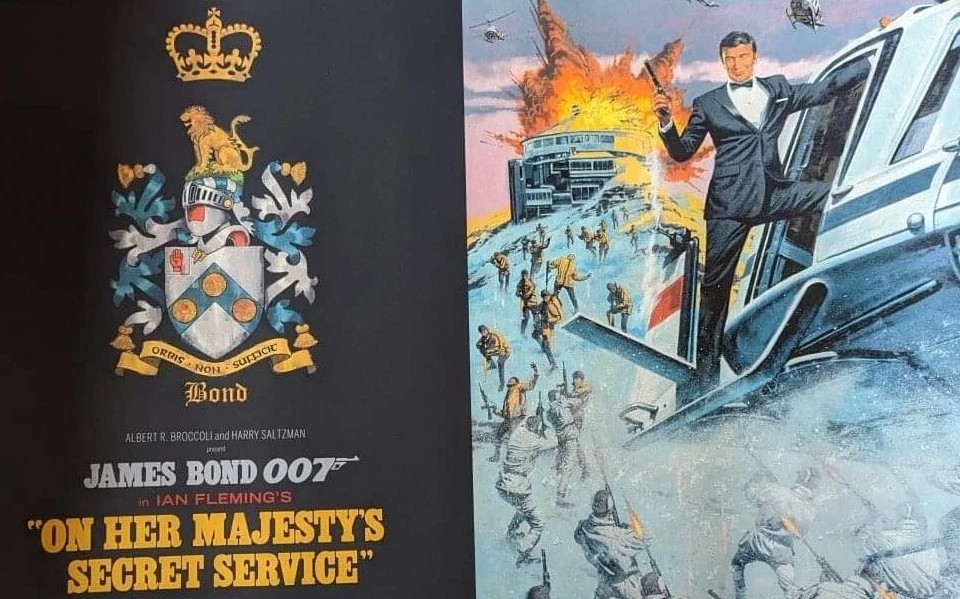
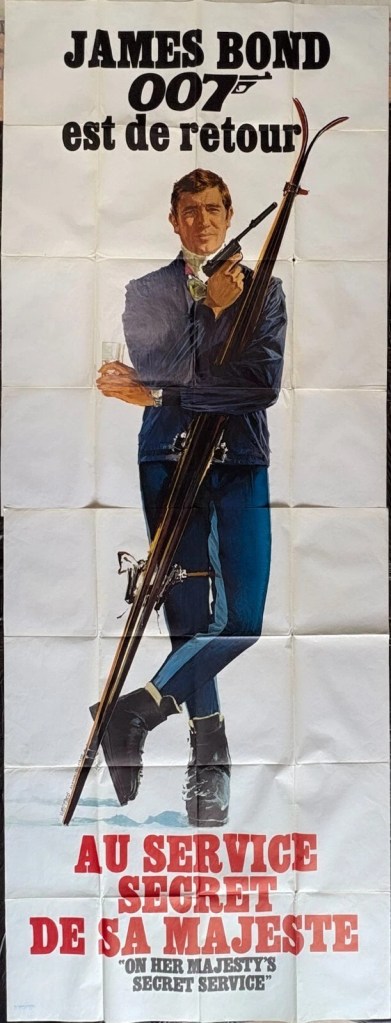
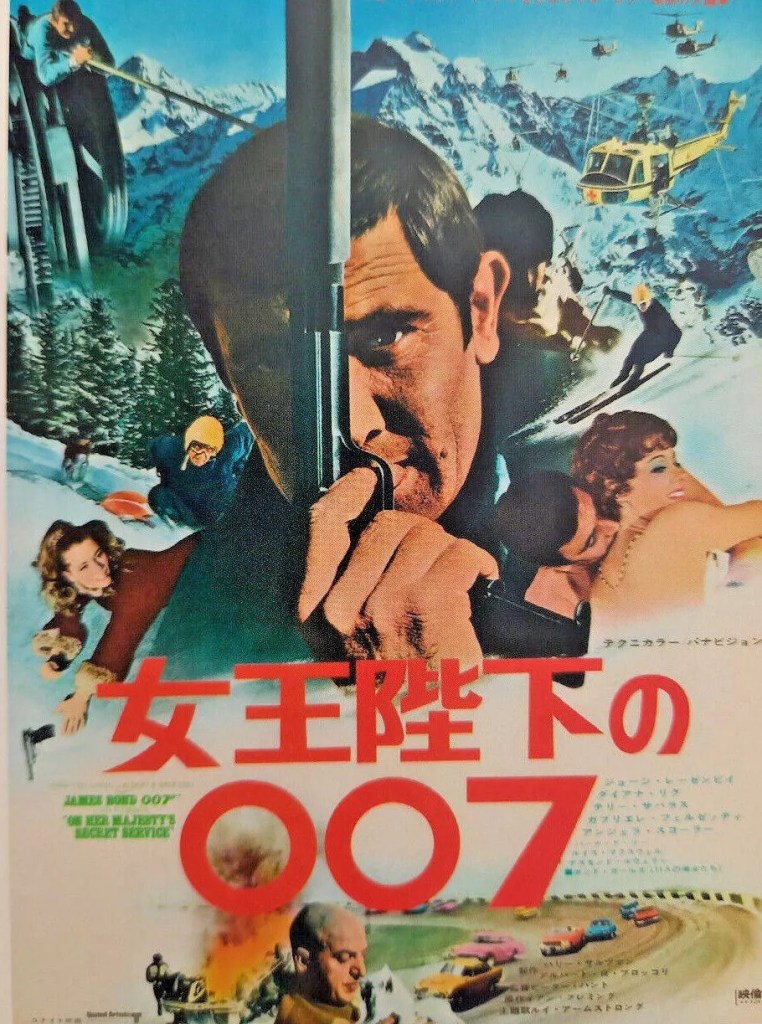
On Her Majesty’s Secret Service (1969) ***

Holds a special place in my movie heart because it was the first James Bond film I ever saw and the first soundtrack I ever bought. Having, by parental opposition, been denied the opportunity to see any of the previous instalments and therefore having little clue as to what Sean Connery brought to the series I wasn’t interested in the fact that he had been replaced. I can’t remember what my younger self thought of the downbeat ending but on the current re-view felt that a rather cursory storyline was only saved by the stunning snow-based stuntwork, two races on skis, one on a bobsleigh, car chase on ice and the kind of helicopter framing against the sun that may well have inspired Francis Ford Coppola in Apocalypse Now (1979).

The heraldic subplot bored me as much to tears as it did the assorted dolly birds (to use a by-now-outlawed phrase from the period) and I was struggling to work out exactly what global devastation could be caused by his brainwashed “angels of death” (the aforementioned dolly birds). This is the one where Bond threatens to retire and gets married. Given the current obsession with mental health, the bride has a rather more contemporary outlook than would have been noted at the time. We are introduced to her as a wannabe suicide. Good enough reason for Bond to try and rescue her from the waves, and her mental condition not worthy of comment thereafter.

Turns out she’s the feisty spoiled-brat daughter Tracy (Diana Rigg) of crime bigwig Draco (Gabriele Ferzetti) and Bond persuades that Mr Big to help him snare the bigger Mr Big Blofeld (Telly Savalas), hence the convoluted nonsense about heraldry. There’s the usual quotient of fisticuffs and naturally James Bond doesn’t consider falling in love with Tracy as a barrier to seducing a couple of the resident dolly birds.

I takes an awful long time to click into gear but when it does the stunt work – perhaps the bar now having been raised by Where Eagles Dare (1968) – is awesome. Apart from an occasional bluescreen for a close-up of Bond, clearly all the chases were done, as Christopher Nolan likes to say, “in camera.” And there’s about 30 minutes of full-on non-stop action.

Pre-empting the future eyebrow-raising antics of Roger Moore, I felt George Lazenby was decent enough, bringing a lighter touch than Connery to the proceedings without his inherent sense of danger (which Moore also lacked). Diana Rigg, I felt was miscast, more of a prissy Miss Jean Brodie than a foil for Bond, even if this one was a substitute for the real thing. It was a shame Honor Blackman in Goldfinger (1964) had taken the slinky approach but that would have worked better to hook Bond than earnestness.  

I’m not entirely sure how Blofeld planned to employ his angels of death but the prospect of a gaggle of dolly birds gathering in fields or rivers and being capable of distributing enough toxic material to destabilize the world seems rather ill-thought-out.

Theoretically, this is meant to be one of the better ones in the series but that’s mostly based on the doomed romance and the downbeat ending and I guess that Diana Rigg (The Avengers, 1965-1968) supposedly brought more acting kudos than others in the female lead category. Adopting something close to her Avengers persona would have been more interesting but I guess she was fighting against being typecast.

If you get bored during the endless heraldry nonsense, you can cast your eye over the assortment of Bond girls who include Virginia North (The Long Duel, 1967), Angela Scoular (The Adventurers, 1970), Joanna Lumley (Absolutely Fabulous, 1992-2012), Catherine Schell (Moon Zero Two, 1969), Julie Ege (Creatures the World Forgot, 1971), Anouska Hempel (Black Snake, 1973) and Jenny Hanley (Scars of Dracula, 1970), who, as graduates from this particular talent school, made a greater impact in entertainment than many of their predecessors.

Second unit director Peter Hunt made his full directorial debut but focussed more on his speciality – action – than the drama. Written by series regular Richard Maibaum (Dr No, 1962) and Simon Raven (Unman, Wittering and Zigo, 1971) and more faithful than usual to the Ian Fleming source novel.

Top marks for the action, less so for the rest.

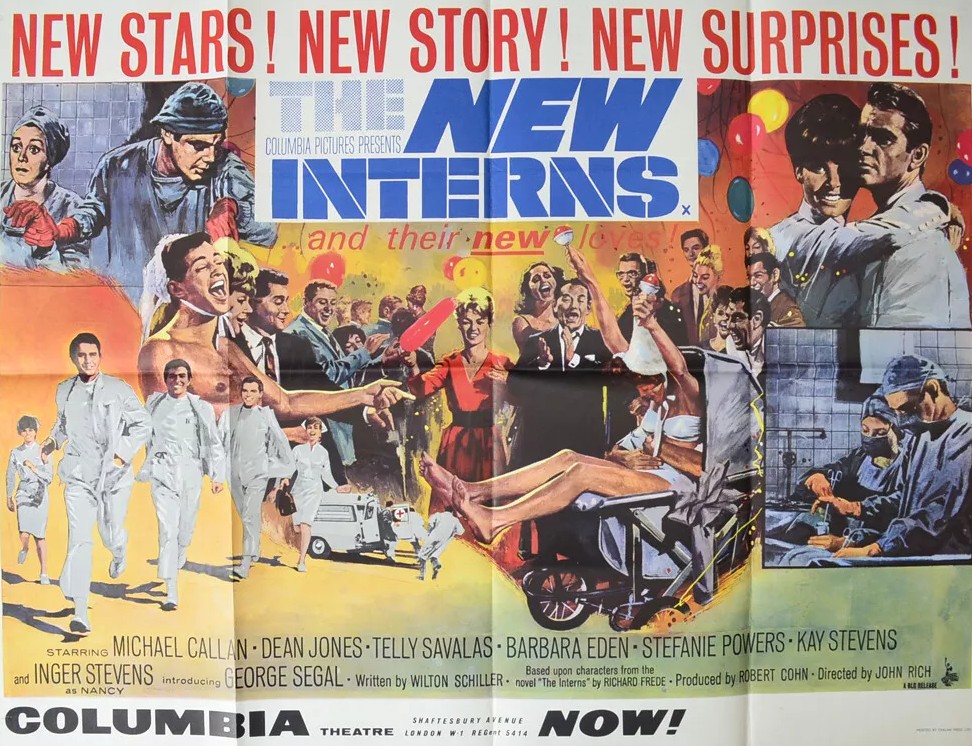
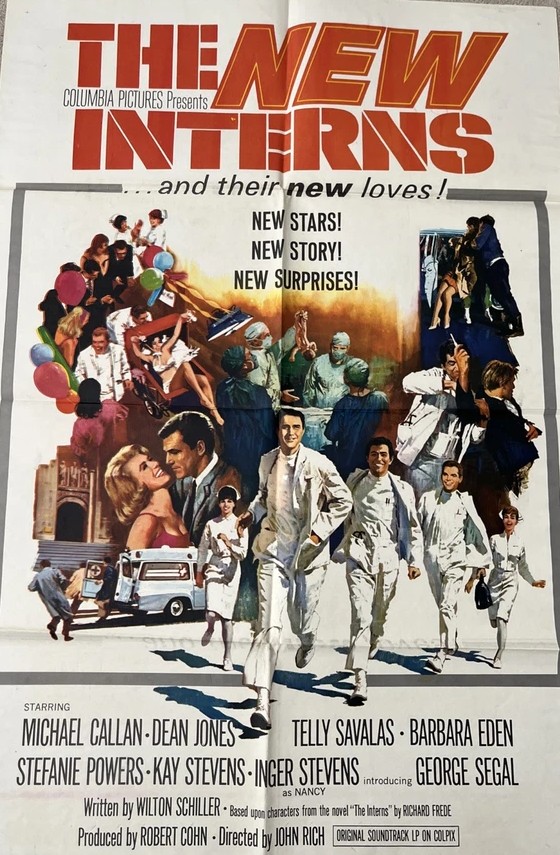
The New Interns (1964) ***

Columbia had turned this series into a glorified New Talent Contest. It didn’t spend much cash buffing up the sequel in terms of narrative or characters, so it’s mostly enjoyable to see just how well the studio was at spotting talent. In that regard this outing was as profitable as the original. This marked the debut of George Segal (The Quiller Memorandum, 1966) who quickly became a major marquee name. Also brought into the mainstream was Inger Stevens (Five Card Stud, 1968). Receiving a welcome career boost was rising star Dean Jones, though Disney (The Love Bug, 1967) rather than Columbia took better advantage of his skills, and in the comedic rather than the dramatic vein.

Various stars reprised their roles including top-billed Michael Callan (You Must Be Joking, 1965), signed up to a long-term deal. But most of the others in this category made their names through television. Telly Savalas (The Assassination Bureau, 1969) was the cop Kojak (1973-1978); Stefanie Powers (Warning Shot, 1967) flourished as The Girl from U.N.C.L.E. (1966-1967) and in Hart to Hart (1979-1984); and Barbara Eden went quickly into I Dream of Jeannie (1965-1970).

The upshot is that, depending on your taste, you might end up talent spotting yourself, shrieking with glee at spotting an old favorite, or perhaps so many of them, in what was, effectively, an all-star (of the minor kind) cast and paying less attention to the various storylines.

Most of the narrative energy revolves around various characters coming together in romantic entanglement – Dr Alec Considine (Michael Callan), while more inclined to play the field, ends up with Nurse Laura Rogers (Barbara Eden); despite initially being at odds Dr Tony Pirelli (George Segal) and social worker Nancy Terman (Inger Stevens) hook up; and various other romances are short-lived.

Outside of this, newlyweds Dr Lew Worship (Dean Jones) and wife Gloria (Stefanie Powers) discover he is sterile. The more powerful sequence relates to Nancy being sexually assaulted by juvenile delinquents who grew up in the same tough neighbourhood as Tony. As you might expect, the thugs end up in hospital and cause a fracas in which Alec is injured.

Tony has all the best lines. Invited to chance his arm with the nurses, he snaps that he didn’t come to the hospital to “learn to kiss.” Pushed out of the way by resident Dr Riccio (Telly Savalas) he retorts that he didn’t come to deliver messages. And so on, the most driven of the new intake, and the most surly, his initial encounter with Nancy has him upbraiding her for crying in front of a patient.

Decent soap opera as soap operas go, but without the more challenging aspects of the original. In an era when the series movie was beginning to take shape – primarily in the espionage arena – you can see why Columbia thought this might run and run and eventually the studio had another go at the concept, but this time as a television series.

Directed by John Rich (Boeing, Boeing, 1965) and written by big screen debutant Wilton Schiller from the bestseller by Richard Frede.

George Segal and Inger Stevens are the standouts.

Buona Sera Mrs Campbell (1968) ****

Works a treat. And works like clockwork, the set-up so meticulous, it doesn’t put a comedic foot wrong and even allows space, at exactly the right time, for the ticking timebomb to be sorted out. Gags galore. Sight gags, sound gags and observational gags, but most, unusually, are snippy, the kind of sharp remarks that people make under tension. And, heaven help us, there’s farce, and that works, too. It rarely does in American movies because it’s usually an adaptation of a Broadway play and the movie director feels hidebound by stage conventions. Here, this is an original screenplay, so writer-director Melvin Frank (Strange Bedfellows, 1963) works to his own beat.

You’ll remember the “who’s the father” narrative ploy from Mamma Mia (2008) – though this preceded the Abba bash by four decades. Twenty years after the Yanks liberated an Italian village in World War Two they are back to commemorate the event. Amongst the soldiers, three men desperate to meet the daughter, Gia (Janet Margolin), they each think they sired with Carla (Gina Lollobrigida) and have been supporting with monthly cheques ever since. They don’t know about each other’s involvement but between them have provided an excellent upbringing for Gia who speaks perfect English, having attended American School in Geneva, with enough left over for Carla to live in a fancy house with a maid.

The guys are a disparate bunch. Justin (Peter Lawford) is a philanderer whose wife Lauren (Marian McCargo) dare not let him out of her sight. Phil (Phil Silvers) has a brood and hardly escapes emotional Shirley (Shelley Winters) without one – or all – being attached. The loudmouth exuberant Walter (Telly Savalas) has to bite his tongue when wife Fritzie (Lee Grant) constantly reminds him she hasn’t provided her with a child, when, secretly, he believes she’s the infertile one and Gia the proof.

Initially, this goes the way you expect – and then it doesn’t, confounding all audience expectations. Carla, who had planned to skip town until the celebrations are over, is forced by other circumstances to remain. She’s involved in two subplots – Gia is planning to run off with an older married man to Brazil, and Gina can’t resist the opportunity to get one over on the sniffy local Contessa (Giovanna Galletti). Actually, there’s three subplots if you include Gina trying to keep hold of handsome lover Vittorio (Phillipe Leroy), who initially fears one of the returning soldiers will sweep Carla off her feet and whisk her off to the States, but then becomes very dismissive of her taste in men.

When the secret is revealed, rather than turning on their deceitful husbands, the women are full of praise for them. But that’s only because it’s not the whole secret. They think they discover that out of the goodness of their hearts the men have been sending cash to Carla in memory of their (fictitious) colleague Eddie Campbell who died in the war. The guys, meanwhile, turn against Carla when they become aware of each other’s existence and the fact that not so much just that they have been rooked, collectively, out of $200,000 but that they have individually been helping to bring up what could be another man’s child. Gia, too, on learning of the deceit, is furious and runs away, leaving Carla distraught.

When the true secret emerges, naturally there’s one almighty bust up, with wives and husband and daughter all railing against Carla until Vittorio steps in and explains just what a wonderful mother she has been.  This neatly steps over the timebomb, just what possessed Carla to have sex with three men in ten days beyond that they pumped up her ego and brought her food and treats.

There are some brilliant scenes – the streetwalker, the hospital, the car horn that doesn’t work, the missing laundry, the mean Contessa finding a clever way to put down Carla – but mostly it’s held together with the stiffest of glues by an inspired performance by Gina Lollobrigida. Telly Savalas (The Assassination Bureau, 1969) is the pick of the others, playing against type.

Class act from Melvin Frank.

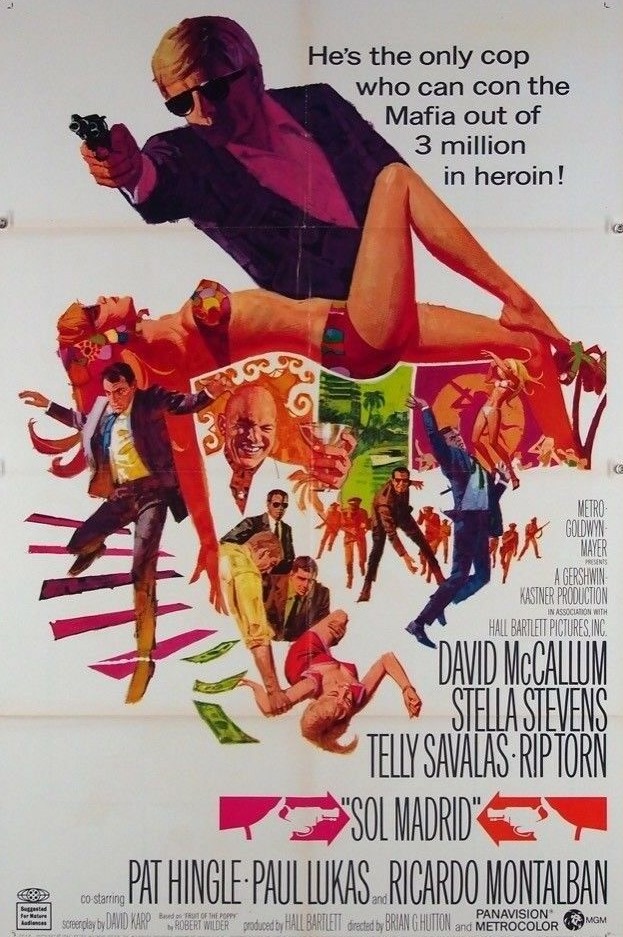
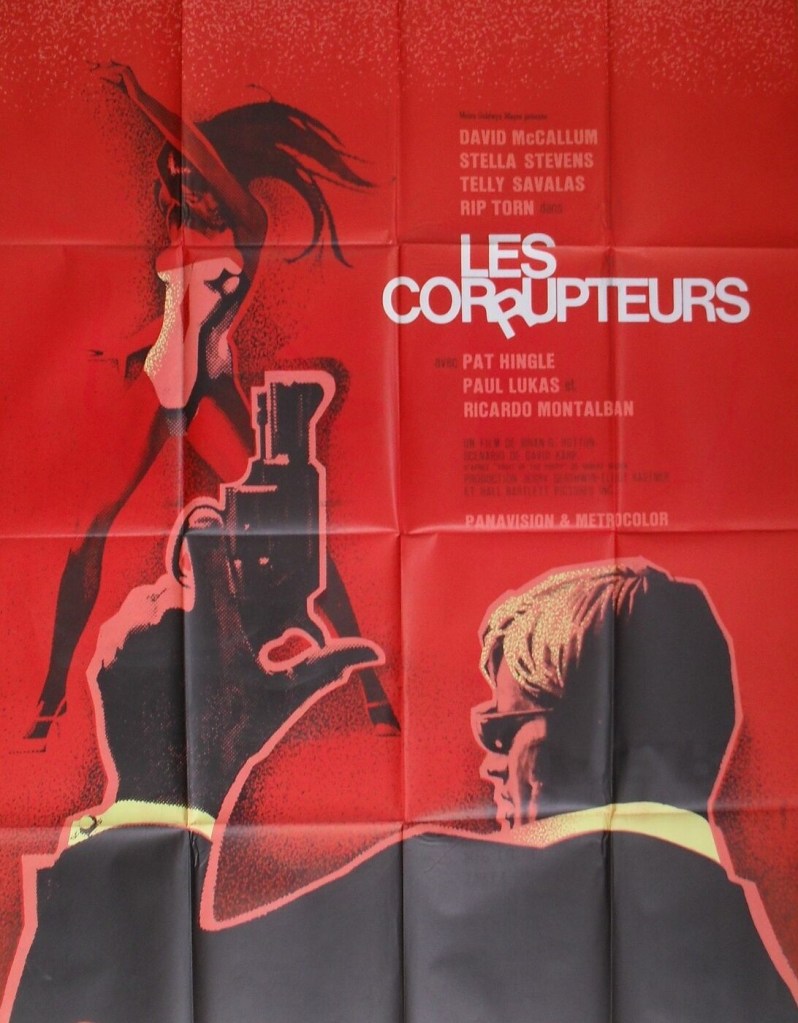
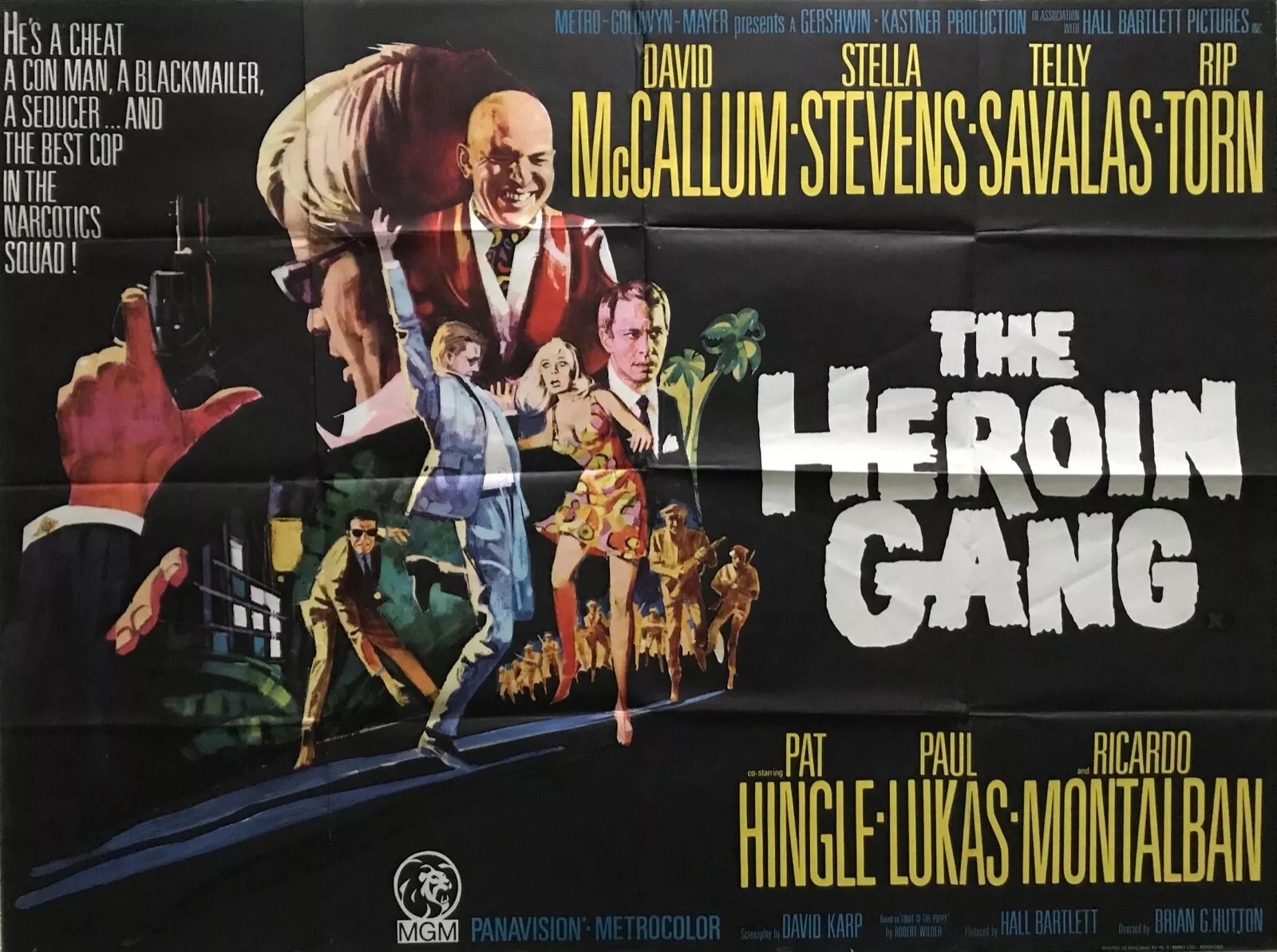
Sol Madrid / The Heroin Gang (1968) ***

Was it David MacCallum’s floppy-haired blondness that prevented him making the jump to movie action hero because, with the ruthlessness of a Dirty Harry, he certainly makes a good stab at it in this slightly convoluted drugs thriller? Never mind being saddled with an odd moniker, the name devised surely only in the hope it would linger in the memory, Sol Madrid (David MacCallum) is an undercover cop on the trail of the equally blonde, though somewhat more statuesque, Stacey Woodward (Stella Stevens) and Harry Mitchell (Pat Hingle) who have scarpered with a half a million Mafia dollars. Mitchell is the Mafia “human computer” who knows everything about the Cosa Nostra’s dealings, Woodward the girlfriend of Mafia don Villanova (Rip Torn).

Sol tracks down Woodward easy enough and embarks on the audacious plan of using her share of the loot, a cool quarter of a million, to fund a heroin deal in Mexico with the intention of bringing down both Mexican kingpin Emil Dietrich (Telly Savalas) and, using the on-the-run pair as bait, Villanova. A couple of neat sequences light this up. When Sol and Woodward are set upon by two knife-wielding hoods in a car park, he employs a car aerial as a weapon while she taking refuge in a car watches in terror as an assailant batters down the window. Sol has hit on a neat method of transferring the heroin from Tijuana to San Diego and that is filled with genuine tension as is the hand-over where Sol with an unexpected whipcrack slap puts his opposite number in his place.

Meanwhile, Villanova has sent a hitman to Mexico and when that fails turns up himself, kidnapping Woodward and planning a degrading revenge. Most of the movie is Sol duelling with Dietrich, suspicion of the other’s motives getting in the way of the trust required to seal a deal, with Mitchell, who has taken refuge in Dietrich’s fortified lair, soon being deemed surplus to requirements. Various complications heighten the tension in their flimsy relationship.

Sol Madrid is Dirty Harry in embryo, determined to bring down the gangsters by whatever means even if that involves going outside the law he is supposed to uphold, incipient romance with Woodward merely a means to an end.

David MacCallum (The Great Escape, 1963) certainly holds his own in the tough guy stakes, whether trading punches or coolly gunning down or ruthlessly drowning enemies he is meant to just capture, and trading  steely-eyed looks with his nemesis.

It’s a decent enough effort from director Brian G. Hutton (Where Eagles Dare, 1968), but is let down by the film’s structure, the expected confrontation with Villanova taking far too long, too much time spent on his revenge with Woodward, for whom audience sympathy is slight. Just at the time when Hollywood was exploring the fun side of drug taking – Easy Rider just a year away – this was a more realistic portrayal of the evil of narcotics.

It is also quite prescient, foreshadowing both The Godfather Part II (1974) in the way Villanova has modernised the organisation, achieving respectability through money laundering, and the all-out police battles with the Narcos. And there is a bullet-through-the-glasses moment that will be very familiar to fans of The Godfather (1972), and you will also notice a similarity between the feared Luca Brasi and the Mafia hitman Scarpi (Michael Conrad) here.

The action sequences are excellent and fresh. Think Madeleine cowering in terror as the car window is battered in No Time to Die (2021) and you get an idea of the power Hutton brings to the scene of a terrified Woodward hiding in the car. Incidentally, you might think MacCallum was more of a secret agent than a cop with the cold-blooded ruthlessness with which he dispatches his enemies.

Stella Stevens (Rage, 1966) is the weak link, too shrill and not willing to sully her make-up or hair when her role requires degradation. Her role is better written (“I never met a man who didn’t want to use me”) than Stevens can deliver and she gets a clincher of final one. Telly Savalas (The Dirty Dozen, 1967) surprises by delivering a playful villain, though the trademark laugh is in occasional evidence whereas Rip Torn is all villain. Ricardo Montalban (Madame X, 1966) is Sol’s Mexican sidekick and Paul Lukas, a star of the Hollywood “golden age”, puts in a fleeting appearance. Written by David Karp (Che!, 1969) and Robert Wilder (The Big Country, 1958).

Proved a winner for Brian G. Hutton – next gig Where Eagles Dare. Less so for David MacCallum – next outing The Mosquito Squadron (1969).

Has its moments.

Crooks and Coronets / Sophie’s Place (1969) **

The concept of “national treasure” – perhaps in itself a purely British conceit – wasn’t invented back in the day but if it had Dame Edith Evans would fall into the same coveted category as Maggie Smith and Judi Dench do today. She was certainly among the most honored of British thespians in the 1960s – Oscar nominations for Tom Jones (1963), The Chalk Garden (1964) and The Whisperers (1967) – so what she’s doing in this unfunny mess is anybody’s guess. She was 80 at the time and while easily the best thing in it, the switch between battiness and cleverness is hardly new.

Everyone is oh so British, including the gangsters led by Frank (Harry H. Corbett), and it should be the old trope of Yanks not coming to grips with English life and customs, which sometimes can strike a note, but instead the set-up is so dire and the acting so uninspiring. Warren Oates (The Thief Who Came to Dinner, 1973) is at his worst – when I tell you his best scene is his discomfort at having to hold a plate and cup-and-saucer at the same time, you’ll guess why. Telly Savalas attempts to be charming but it just comes off as an overheated version of his usual thug.

Story is lame. Herbie (Telly Savalas), just out of the slammer, finds he is in hock to mob boss Nick (Cesar Romero), so with buddy Marty (Warren Oates) sets off for England to fleece Lady Sophie Fitzmore (Edith Evans) only to discover that her stately pile is also in hock (you want to discover about British death duties, this is the one for you). British mob boss Frank doesn’t like the idea of the Yanks infringing on his territory, so is keeping a close watch and in the end decides to raid Sophie’s joint himself, by which time the Yank villains have become so enamored of Sophie that they’re on her side and set up the kind of defense that would have been axed from cockanamie comedies like The Great Race (1964) for not being funny enough. Sure, Edith Evans in goggles and racing in on a biplane looks good on paper but not when the thugs scatter like the Keystone Cops.

Edith Evans was exceedingly wary of the movies. She only made 14 – and just six pre-1960 and two of those in the silent era – in all those decades when she was otherwise devoting her time to the theater and best remembered by movie audiences for The Importance of Being Earnest (1952). According to Sir Laurence Olivier she only gave the movies another bash when her memory started failing her and the notion of only having to remember a few lines at a time exerted its attraction.

While she’s good fun here, she’s saddled with mutton for co-stars. Telly Savalas (The Assasination Bureau, 1969) theoretically wins his first leading role, but in fact that went to Edith Evans and better actors than him had faded away in Dame Edith’s slipstream. Quite what Warren Oates thought he could do with the part is anybody’s guess because he does nothing.

Written and directed by Jim O’Connelly (The Valley of Gwangi, 1969).

The Interns (1962) ***

Patients are a nuisance to be tolerated on the route to wealth in this superior soap opera that sees young doctors wrestling with ambition and ethics. Although also concluding that impending lofty status will snare them an attractive bride, they find women less biddable than expected, romance proving the trickiest of all procedures.

The main cast of four men and one woman are played by a roster of hotly-tipped newcomers, including future Oscars winners and nominees and the elusive Haya Harareet (The Secret Partner, 1961). Director David Swift, accustomed to handling multiple characters in the likes of Pollyanna (1961), keeps the pot boiling and although some storylines lead to obvious conclusions the screenwriters bring sufficient imagination to the various strands.

The story unfolds over the one year the doctors spend in a general hospital, where the patients are liable to be drunk and obstreperous, before taking up residencies elsewhere. As you might expect, the main characters divide into the good and the arrogant. Heading the latter are Alec Considine (Michael Callan) who cheats on girlfriend Mildred (Anne Helm) with older nurse Vicky (Katharine Baird) in order to gain through her connections a residency at a highly prestigious hospital.

Matching him in the cocky stakes is John Paul Otis (Cliff Robertson), charming to old ladies but willing to risk his career to bed movie actress Lisa (Suzy Parker). The good guys are Lew Worship (James MacArthur) who is seduced into the supposed backwaters of obstetrics and Sid Lackland (Nick Adams), an all-round good egg who falls for a patient Loara (Ellen Davalos).

The most interesting of the young doctors, however, is single mother Madolyn Bruckner  (Haya Harareet) who takes on surgeon Dominic Riccio (Telly Savalas) at every turn. Riccio spends his time berating his charges and, in particular, has a downer on female doctors. At every encounter, despite his vicious tongue, she refuses to back down.

But it is the patients, in particular Arnold Auer (Peter Brocco) and Loara, who blow a hole in the myth of hospitals. In the best scene in the film, Auer, suffering from a degenerative illness that will turn him into a vegetable, takes over from the doctor in giving his own awful diagnosis. His pleas for clemency from his ordeal, in essence assisted suicide, create an ethical dilemma for the young doctors who did not realize that modern medicine could prolong rather than curtail patient suffering.

Auer’s anguished wife Emma (Angela Clarke) flits in and out of the picture as she buttonholes any doctor willing to listen to a new cure she has discovered. While the more hard-hearted doctors can inure themselves to his agony, a savage turn of events finds them all caught up in a situation that could jeopardize their future careers.

Although Loara has an incurable disease and has more or less given up, Lackland’s effervescent good humor and determination that surgery can resolve all health issues brings her hope and if you were in her condition possibly the last thing you would want would be a cheerleading doctor on your side, but in this instance it brings succor and in the doctor’s case forces him to rethink his priorities.

Probably the last thing the doctors – and the audience – expected was to come up against such stubborn, free-thinking women. While Bruckner appears to fly the flag for female independence, she has solid support from Lisa who spends most of the picture rejecting Otis’s advances on the grounds that even when he becomes rich he will be too poor for her liking. Eventually, Vicky forces Considine to choose. Shy nurse Gloria (Stefanie Powers) shocks Worship by putting global travel ahead of marriage. But she’s not as shocking as the bespectacled inhibited Olga (Carroll Harrison) who loses her inhibitions in style at a wild party.

Theoretically, a film about young doctors having a romp, in reality a thoughtful and thought-provoking picture, tackling issues that would have been taboo at the time and removing the submissive tag that daunted most movie female characters in the movies.

Those who succeeded in later winning Oscar favor were Cliff Robertson, Best Actor for Charly (1968), and Nick Adams and Telly Savalas, both nominated for Best Supporting Actor, the former in Twilight of Honor (1963) and the latter in The Birdman of Alcatraz (1962).

Robertson was the pick of the bunch, a star in his own right graduating from 633 Squadron (1964) and Masquerade (1965) to J.W. Coop (1971) which he also directed. But largely, the stars did not fulfil initial promise. The peak of Michael Callan’s movie career was reprising his role in The New Interns (1964), star in British director Michael Winner’s You Must Be Joking! (1965) and second male lead in Cat Ballou (1965). James MacArthur had a steady movie career before an epic run in television series Hawaii Five-O (1968-1979). Nick Adams switched between film and television before his premature death in 1968.  Haya Harareet made only one more film, The Last Charge (1962). In a bit part here, this is the same Brian G. Hutton who went on to greater things as a director, most notably Where Eagles Dare. (1968).

Although primarily in television, the less-heralded stars enjoyed greater ongoing success. Mainly a strong supporting actor, Telly Savalas had only one stab at a starring role (Land Raiders, 1970) before achieving worldwide fame as Kojak (1973-1978).  Stefanie Powers was television’s The Girl from U.N.C.L.E. (1966-1967) and later Hart to Hart (1979-1984). Buddy Ebsen (who plays the older Dr Sidney Wohl) went straight into a nine-year run of The Beverley Hillbillies

Directed with considerable care and awareness of relevant issues by David Swift (Pollyanna, 1961) who co-wrote the screenplay with Water Newman (The Magnificent Seven, 1960) from the novel by Richard Frede. It spawned sequel The New Interns and a TV series. Some reports have The Interns as the biggest of the year for Columbia, but that would only be correct if you were only able to exclude the massive box office for Lawrence of Arabia.

Still a soap, but an interesting one.

Discover WordPress

A daily selection of the best content published on WordPress, collected for you by humans who love to read.

The Atavist Magazine

by Brian Hannan

WordPress.com News

The latest news on WordPress.com and the WordPress community.