Corruption (1968) ***

Admit it, you always wanted to discover what went on behind Peter Cushing’s chilly British reserve. The man who appeared to be constantly tormenting that nice Dracula or donning a deerstalker to outwit countless villains or battling otherworldly creatures like the Daleks or just a dependable character who in the unconventional Sixties knew right from wrong.

Of course, our Peter had occasionally come unstuck, the duped bank manager in Cash on Demand (1961) but even as Baron Frankenstein he never revealed a demonic side even as he  created monsters who had a tendency to run wild, always civil to the last, stiff upper lip never quavering.
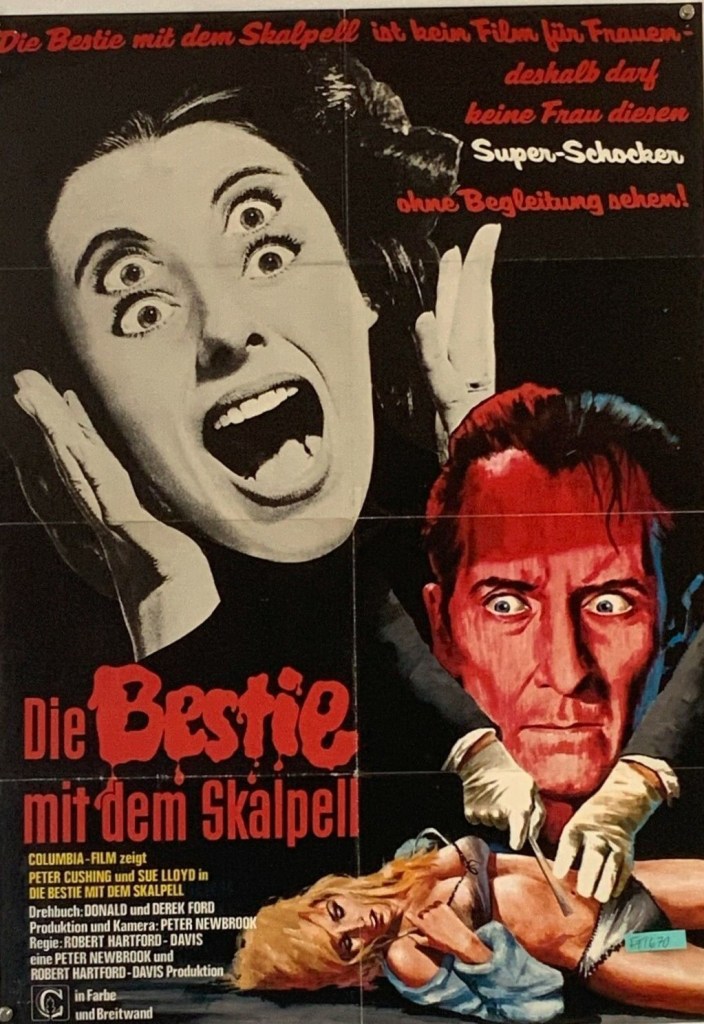
So it’s something of a surprise to see him cast in the first place as the older man lusting after a younger woman. Sir John Rowan (Peter Cushing) is a highly esteemed surgeon who has fallen for model-cum-flighty-piece Lynn (Sue Lloyd) and although he sticks out like a sore thumb at a typical Swinging Sixties party full of gyrating lithe young women he is happy to put up with it for the sake of his girlfriend.

But Lynn has a strong independent streak, she’s not the submissive lass who might have been content to swoon at the feet of such a highly intelligent man, and objects to his attempts at control and can’t resist the chance to show her allure to all and sundry by giving in to the temptation to pose for louche photographer Mike (Anthony Booth), and, as it happens, the assembled throng.

Sir John isn’t going to stand for such brazenness, starting a fight with Mike that ends in a dreadful accident, destroying half Lynn’s face. Naturally, plastic surgery being the coming thing and Sir John capable of turning his hand to anything he’s able to fix up her face good and proper.

Except it’s a temporary measure, something to do with the pituitary gland, and it turns Sir John into a serial killer. There’s no mystery to it, no detective scouting around trying to put together clues, the question soon becomes can Sir John keep it up and what psychological damage is inflicted on Lynn as she comes to the realization that the beauty she had taken for granted, setting aside the predations of age which are still some way off, could vanish in an instant leaving her shrieking in a mirror.

Things get out of hand when they head for the country and fresh victims and find themselves trapped in a home invasion by a gang as gormless and vindictive as the pair from The Penthouse. It doesn’t end the way you’d expect because there’s a twist in the tail that you might accept as par for the course in the unconventional cinematic Sixties or you might just put the producers down for wanting to have their cake and eat it.

Still, it’s good while it lasts. Cushing certainly reveals a different side to his screen persona, and I can’t remember ever seeing him truly in love or indulging in a passionate screen kiss, and certainly to see his murderous side emerge is quite a treat, no scientific excuse to mask his behavior.

And it’s equally good to see Sue Lloyd (The Ipcress File, 1965) in another of those roles where she displayed considerable independence.  As an added bonus future Hammer Queen Kate O’Mara (The Horror of Frankenstein, 1970), here cleavage well hidden, turns up as Lynn’s sister.  You might also spot Vanessa Howard (Some Girls Do, 1969) and Marianne Morris (Vampyres, 1974). Anthony Booth (Girl with a Pistol, 1968) was trying to shake off the shackles of BBC comedy Till Death Us Do Part

Robert Hartford-Davis (The Black Torment, 1964) does pretty well unsheathing the beast within the context of a vulnerable older man. Derek Ford wrote the screenplay with his brother Donald before he decided the sex film was his way to British film legend. The version released abroad contains more gore and sex than when the British censor had its wicked way.
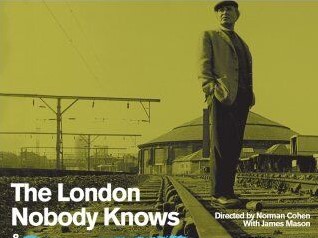
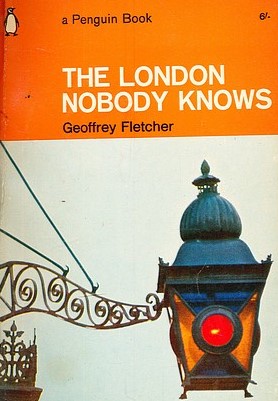
The London Nobody Knows (1967) ****

Poverty is hardly an attractive movie subject. But in the light of Where the Crawdads Sing being accused of Hollywoodizing poverty, this is far grittier reminder of the grim reality.

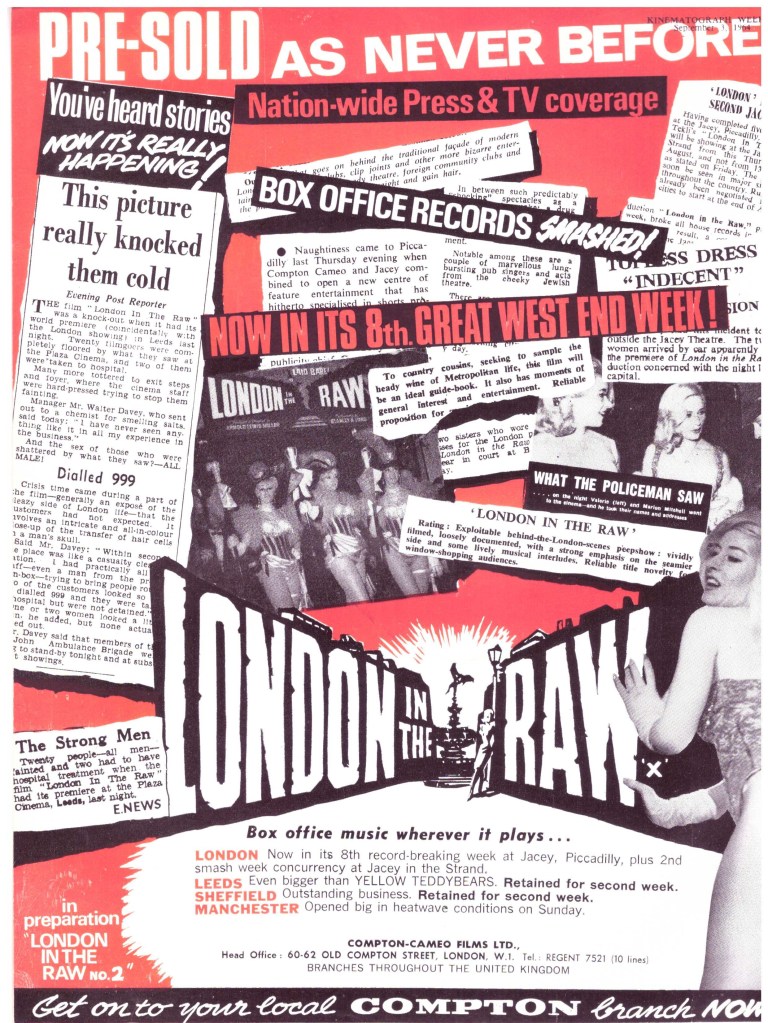
Unexpectedly, documentaries hit a rich box office seam in the 1960s. But these were not the earnest features of the Man of Aran (1934) variety that elated the arthouse crowd or even Disney’s humor-leavened True-Life animal tales. No, documentaries in this decade mainlined the exploitative vein. West End Jungle (1961), Mondo Cane (1962) and London in the Raw (1964) had a very high cost-to-profit ratio.

The London Nobody Knows does not appeal to the prurient. It is a gritty riposte to the Swinging Sixties tourist-bedazzled London of Carnaby St fashion, pop music, red buses, Buckingham Palace and Big Ben. But to lure in an audience the camera intially focuses on the kind of travelogue that purports to show the different side to a well-known locale, before it delves into the terrible poverty which sections of the population could not escape.

Fronted by an actor – unusual then but standard now – in James Mason (Age of Consent, 1969) it begins with a diatribe against the way modern soulless architecture has destroyed significant parts of traditional London, ignoring for the most part that it swept away slums. The actor, bedecked in tweed jacket, polished brown shoes, flat cap and rolled-up umbrella, is in sharp contrast to the often decayed parts of the capital he strolls round.

Initially, what he turns up is almost quiz-question material. A victim of Dr Crippen who had a connection to the abandoned Bedford music hall theatre, home to giants like Marie Lloyd and where artist Walter Sickert was an avid attendee, the backyard in Spitalfield where Jack the Ripper disposed of one of his victims. We visit Clink St, site of a famed prison, which gave its name to “the clink,” and the Roundhouse Theater, originally a  turntable for railway engines. Near the Savoy a man goes through the act of lighting a street gas lamp.

There’s a now-defunct egg-breaking plant, a business that carried out that chore on an enormous scale for chefs, and various bustling markets a-brim with the range of fresh food – eels squirming in their tanks, piles of fruit and vegetables – we only see these days in European or Asian markets. And there’s a look in passing at the type of fashions on parade when people don’t have a personal dresser, strange mixtures of outfits that were all the rage.

And then we come to the grim heart of forgotten London, a land of forgotten people, the homeless or near enough. Homelessness was not the issue it is now. The BBC play Cathy Come Home (1966) made a star out of Carol White, triggering a debate on the issue, highlighted by the formation the same year of homeless charity Shelter. But Cathy Come Home hardly touched the surface and after all it was fronted by a glamorous star.

There’s nothing glamorous about the awful, defeated often toothless faces here. Loss never looked so raw. Some don’t even find a park bench to spend the night but sprawl on the grass or fall asleep standing up leaning against a wall. Nothing so temporary as even a cardboard box available.  

Others eke out a living as buskers – again, not the acceptable occupation it is now – a man dressed in a pirate outfit doing a demented tap dance. Some are not quite homeless, living in a shared dormitory on bunk beds in a Salvation Army hostel for six shillings and sixpence a night (a third of one pound sterling) or if they are flush a private room for 63 shillings a week.

Mention when seeking employment that your abode is the Salvation Army Hostel and you’ll never be offered a job. It’s a stigma. The sole perk here – what with spitting and drinking and gambling outlawed – is breakfast, but comprising porridge or fried egg, tea and two slices of toast, a meager repast by Full English standards.  

The alcoholics drink something blue – methylated spirits probably – but the last vestiges of hope disappeared long ago except for one forlorn aged tramp who aims “to see if I could better myself…in a better way.”

The camera lingers on lived-in faces as though this was not a motion picture but the work of a photographer recording for posterity lives long worn away.

Oddly enough, there’s none of the self-pity that would predominate today. And there’s no blaming either. Circumstances are not investigated, though it’s obvious most took a wrong possibly alcoholic turn in their lives, were once gainfully employed but through unemployment were at the mercy of a system that didn’t yet exist to sustain them through this kind of tribulation.

Irish director Norman Cox had previously worked uncredited on London in the Raw, but the success of his mainstream breakthrough, the movie adaptation of television comedy series Till Death Us Do Part (1968), probably gave him carte blanche to undertake this though nothing else in his later portfolio – Confessions of a Pop Performer (1975), Stand Up Virgin Soldiers (1977) – approached this depth. Geoffrey Fletcher wrote the screenplay based on his own book published in 1965.

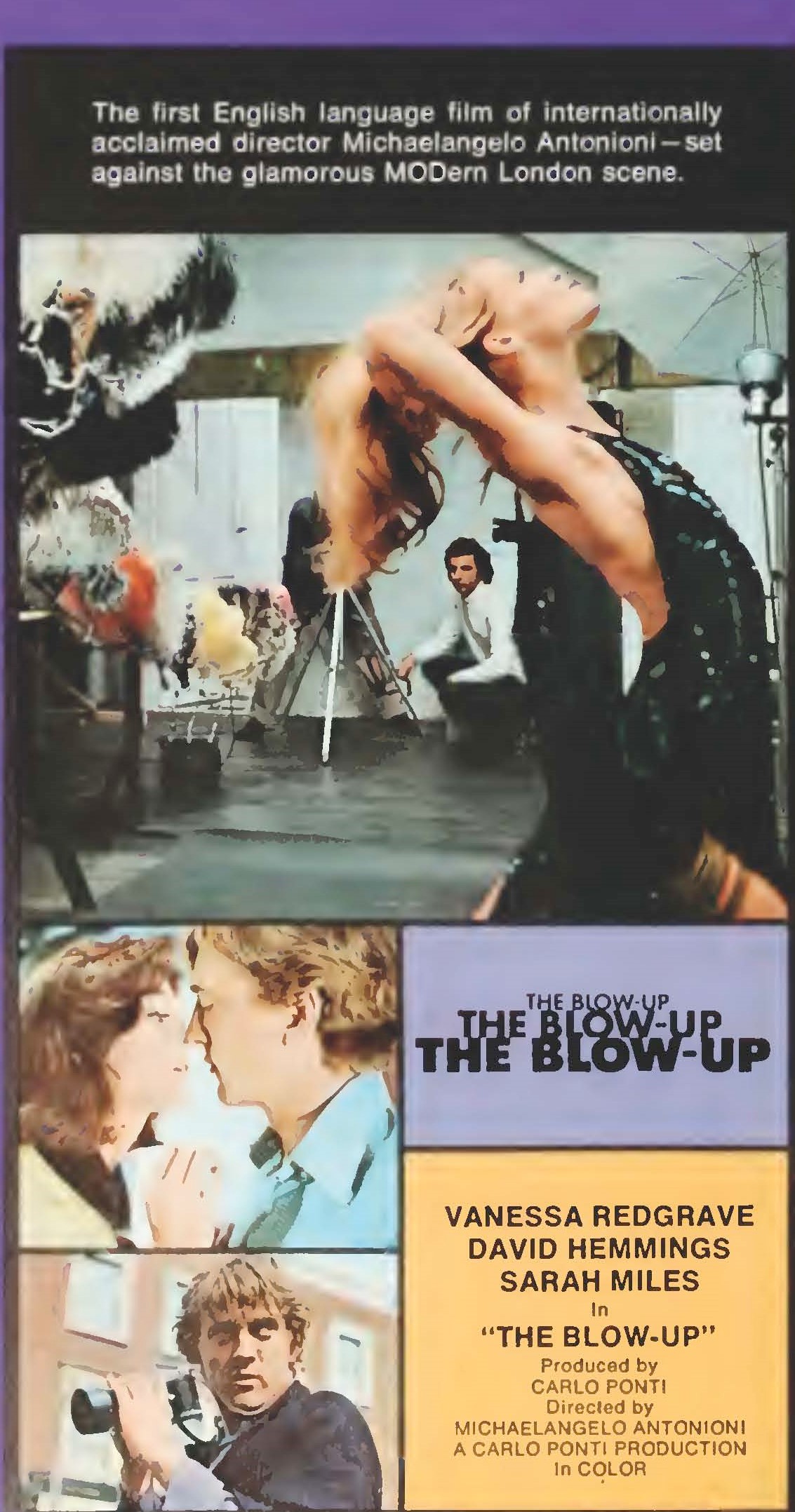
Blow-Up (1966)***

Movies can break all sorts of rules but they can’t cheat.

A film has to stick to an internal logic. For example, it can’t portray a photographer so obsessed with his calling that he even takes a camera with him to an antique shop and starts shooting off roll and after roll capturing the area’s rundown streets but then the one time he really could do with a camera – to prove there is a corpse at his feet – he is somewhat remiss. Especially when the movie turns on that plot point.

Setting aside what’s a somewhat contrived snapshot of “Swinging London” there’s a lot to admire here. The absence of music for one thing. Most of the movie runs without musical accompaniment, a bold move since so often we rely on the soundtrack to provide guidance for a scene or an overlay for the entire film. Here, Antonioni makes us falls back on our own interpretation.

David Hemmings, all mop-top and intense stare, is a high-flying high-living fashion photographer in the David Bailey mold (casual sex with wannabe models a perk) who turns investigator on being confronted in a park by Vanessa Redgrave after taking snaps she wants back. Tension is sustained by her sudden appearance at his studio, willing to pay with her body for the return of the photos, and then by Hemmings’ careful, photo-by-photo blow-up-by-blow-up analysis that slowly comes closer to the truth.

Everything in his world is judged through a lens, as if he can capture elusive truths, and he has aspirations to being more than a mere fashion adjunct, having spent time taking portraits of down-and-outs. He judges Redgrave as he would a model, she has a good stance and sitting posture. Even by the standards of the permissive society, he is a bit of sexual predator, taking advantage of two giggly model wannabes.

But the photography scenes are well done and Antonioni captures the intimacy between model and photographer that create the best images. If you can get past the cheat and the deliberate obtuseness this creates – and the tsunami of artistic interpretations it inspired about the director’s intent – then it remains intriguing.

This isn’t Hemmings’ greatest work – Fragment of Fear is much better – but it certainly provided him with a marketable movie persona. Redgrave is excellent as the nervy woman willing to do what is required and the movie might have worked better had she had been allocated more screen time and their duel had continued through other scenes. But then that would have been Hitchcock and not Antonioni.   I’d have given it a higher score except for the cheat.

Discover WordPress

A daily selection of the best content published on WordPress, collected for you by humans who love to read.

The Atavist Magazine

by Brian Hannan

WordPress.com News

The latest news on WordPress.com and the WordPress community.