
Sublime climax but you need persistence to get through the fog of red herrings. Genre mash-up that flits precariously between whodunit and horror as we slip from a convent of nefarious nuns living in a vast stately home, where half-naked girls pose for photo sessions, and secret messages are smuggled out, to a pre-giallo masked killer with a drowning obsession liable to jump out. Luckily, there’s an equally impressive grand hotel nearby, thankfully minus nuns, but where killers still roam.
I had mistakenly assumed horror because “Trygon” is close to “Tygon,” the British horror outfit taking a more outré approach to the genre than staid old Hammer, and because of the random killings, and a man, Luke (James Culliford), son of the mansion owner Livia Emberday (Cathleen Nesbitt), in the habit of dressing up in weird garb and chopping the heads off flowers with a sword and inclined, in a fit of pique, to smash precious china heirlooms. And because there’s a fair bit of business with a coffin, this being the kind of movie where mourners lean into the casket and kiss the corpse.

If it is, indeed, a corpse. Zombies, anyone? I wouldn’t have been surprised. This is jam-packed with sumptuous misleading incident. Especially, as, for most of the proceedings, it seems like we’re stuck in a detective tale with an inspector who’s clearly never lived a minute in Britain judging from his glowing tan. He’s investigating a missing colleague (Allan Cuthbertson) seen in the opening sequence snooping around the mansion before being passed furtive notes through the gates by a young nun, later rigorously stripped of her habit.
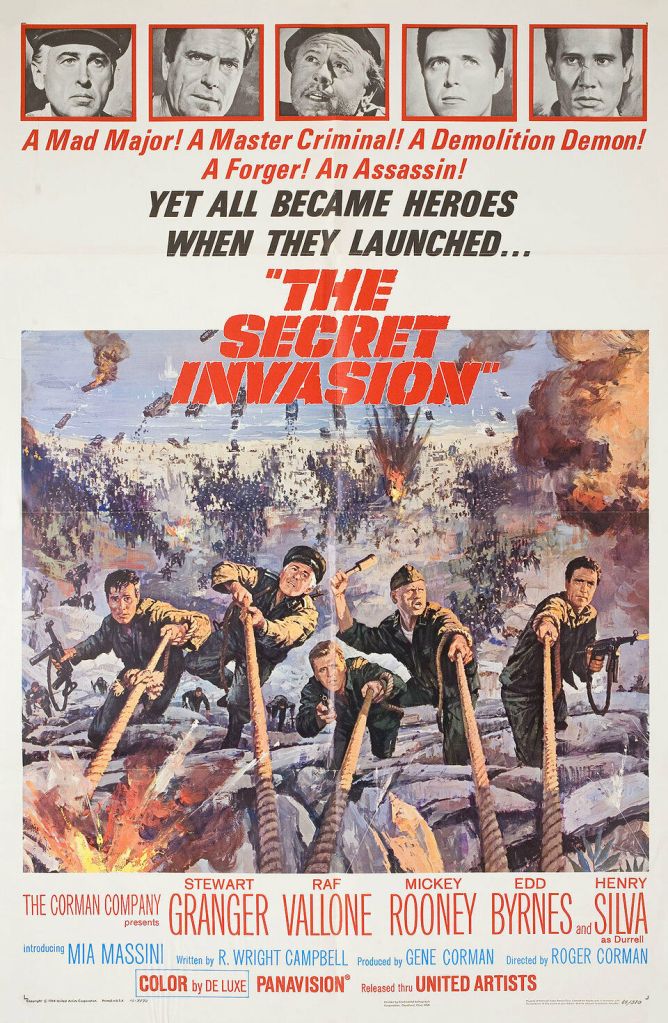
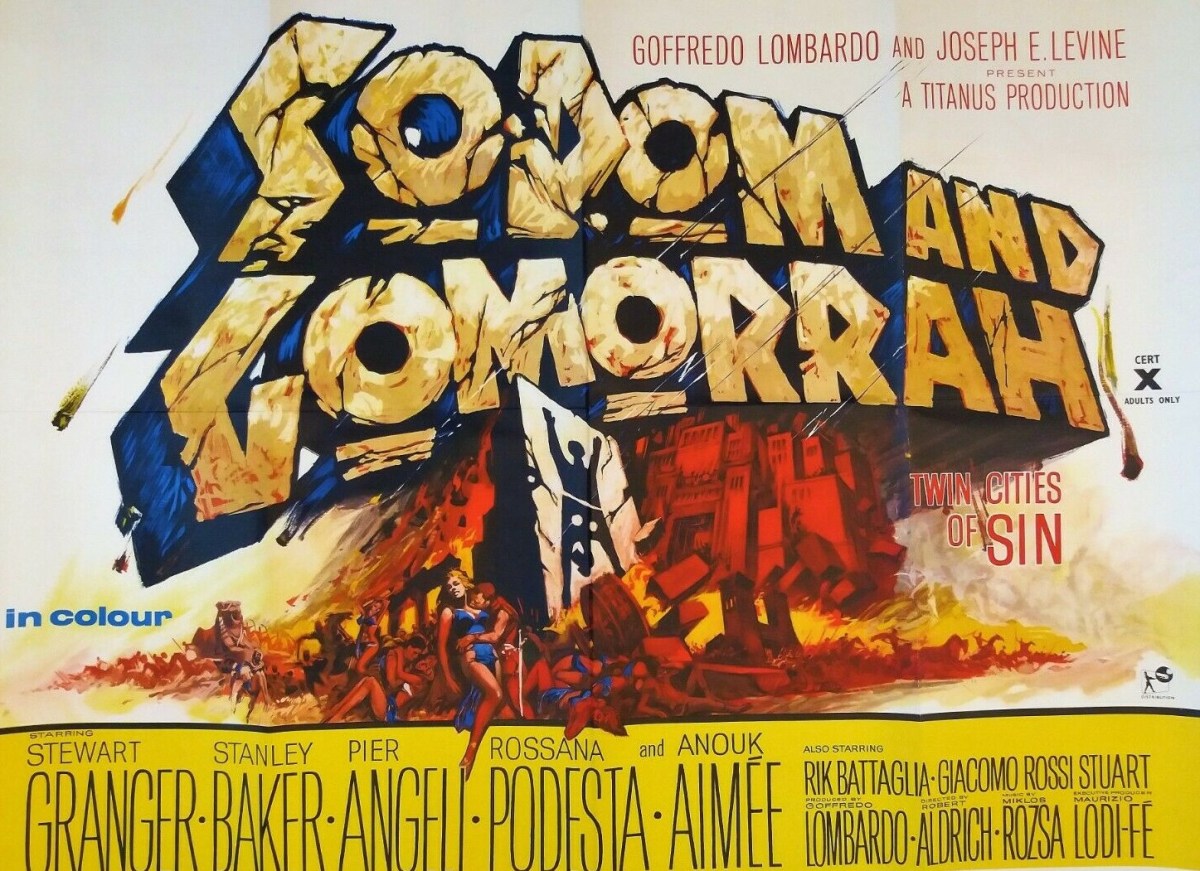
The tan’s probably the giveaway since the immaculately turned-out Supt Cooper-Smith (Stewart Granger) fancies himself as a ladies’ man, first with French receptionist Sophie (Sophie Hardy) who expects a bit of coaxing seduction, and then with Livia’s daughter Trudy (Susan Hampshire), the photographer, who doesn’t, keener on a speedier route into a man’s affections.
By the time the dust begins to settle, and the top cop harbors suspicions about a dockside warehouse owned by swivel-eyed Hubert (Robert Morley) – although Cooper-Smith’s investigation technique revolves around plying young women with brandy – we’re drifting between the notion of some mad cult operating in the convent and Luke as the most likely serial killer given his determination to “play” with young women.
But, in fact, just as we’re being lulled into a sense of false security and the idea that we’ve seen this all before, director Cyril Frankel (On the Fiddle, 1961) springs the first of several audacious twists. The idea that the stately home is a front for a gang of thieves might, on the face of it, appear ludicrous except for the skill with which they carry out the heist and that the criminal mastermind is Livia, assisted by equally cunning daughter.

They have imported – in a coffin – a top French safecracker whose tool of choice is the kind of weapon that Thunderbolt and Lightfoot would have envied, if not a villain of James Bond proportions, and although the armament doesn’t spew out laser beams, it has sufficient firepower to render vulnerable the toughest safe. Naturally, Livia organises the break-in to coincide with nearby building works where the thunder of pneumatic drills will drown out any gun fire.
The thieves turn up outside the appointed bank in what appears an official security van, but from the boxes they carry into the target they produce gas masks and proceed to immobilize anyone inside. They’re after gold bullion because, under the guise of manufacturing large candlestick holders for sale to tourists at the stately home, Livia has set up a gold-smelting operation, pouring liquified gold into the base of the candlestick, trademark Trygon. Having re-disguised the French safecracker as a corpse and placed him in a coffin ready for the surreptitious trip home, ruthless Livia instead dumps him into the Thames to drown.
It’s pure luck that our police lothario happens upon the truth and discovers the smelting basement whereupon – twist number two – the delectable Trudy reveals herself to be the serial killer. She kills for “fun” and relishes the prospect of knocking off an “arrogant” male and one too susceptible to her charms to recognize her femme fatale sensibilities
The giallo-esque killings are highlights, one victim drowned in a baptismal font, another in a bathtub. That female’s kicking and screaming isn’t enough, what with the radio turned up loud, to attract the attention of the nubile Sophie next door luxuriating in a bubble bath. But death by piping hot liquid gold takes some beating. And that’s not the sole reason for the X-certificate since the movie taunts the censor in Blow-Up (1966) – minus the attendant hullabaloo – fashion with a brief glimpse of naked female breast.
The prospective audience might have expected a supernatural outcome given director Frankel’s previous outing The Witches (1966) and had they been alerted to the fact that the source material (uncredited) was written Edgar Wallace might have come prepared for some of the twists.
This is the kind of movie that needs to be viewed backwards because it’s only at the end that you work out what it’s all about and how skilfully the audience has been duped. An object lesson and one that, for example, Zoe Kravitz (Blink Twice, 2024) should have watched to learn how to suck an audience in.
When you consider the movie in reverse, you realize this is really about an exceptionally clever heist and two women who are more than a match for any man. The males here are definitely disposable.
If you wondered why I gave this is a four-star rating rather than the more obvious three stars, it’s because of what’s mostly unsaid, the iceberg of psychology floating beneath the surface, the one that says that British audiences would not tolerate a top-class female criminal gang capable of pulling off a fantastic heist and without compunction killing off any man, including co-workers, who gets in their way. Had it begun from the POV of Lydia and Trudy planning the robbery, and dealt with Cooper-Smith et al as simply hazards of the profession, it might have made a terrific heist picture but then all the fun of the twists and the pulling the wool over audience eyes would be missed.
Susan Hampshire (The Three Lives of Thomasina, 1963) belies her Disney persona with a chilling portrait of an exceptionally smart femme fatale. Stewart Granger (The Last Safari, 1967) looks as if he views the whole boring process of detection as nothing more than the opportunity to try out some chat-up lines.
Cyril Frankel makes no pretence at being a great stylist, but he more than makes up for it by the teasing structure, some of the costumes, the atmosphere and the twists. Derry Quinn (Operation Crossbow, 1965) and Stanley Munro, in his movie debut, devised the screenplay based on a book by Edgar Wallace
Watch – and marvel.








 The Magnificent 60s