The Scalphunters (1968) ****

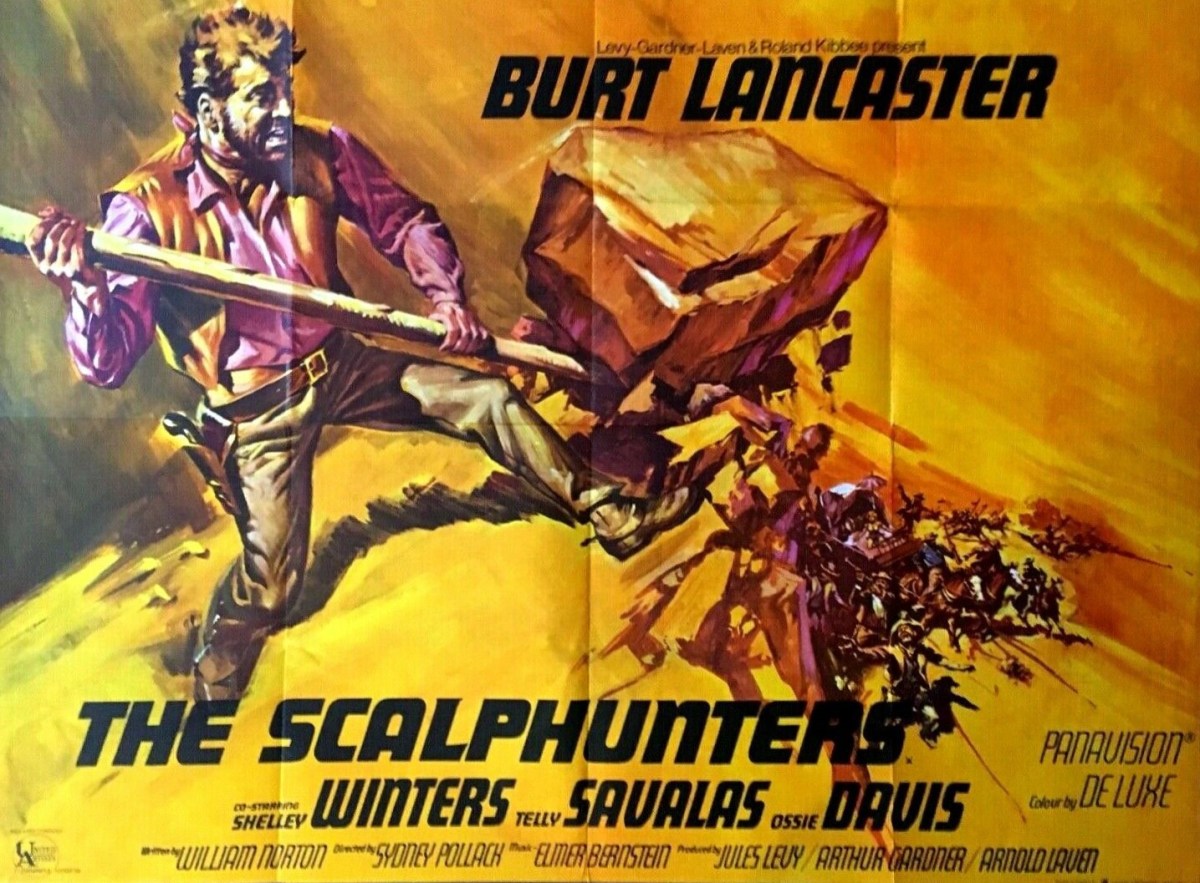
If ever a film deserves reassessment, this is it. This western, marketed as a vehicle for Burt Lancaster in the wake of hugely successful The Professionals (1966), sees the star playing  cussed trapper Joe Bass trying to retrieve furs stolen first by Native Americans and then by outlaws. That the serious race issues tackled here were dressed up in very broad comedy and typical western action ensured it missed out on the kind of recognition that critics would assign a straightforward drama and lost its rightful place as a pivotal picture of the decade.

In theory, a somewhat unusual Burt Lancaster western. In reality something else entirely. For large chunks of the movie Lancaster is absent as the story follows the fortunes of Black slave Joseph Lee (Ossie Davis) as he achieves not just freedom but genuine equality. Joseph is introduced as a slave of the Kiowa, left behind when the Indians steal Joe Bass’s furs. In compensation for his loss, Bass plans to sell Lee in the slave market in St Louis and in the meantime enrols him to help recover his furs.

However, a band of outlaws, specializing in collecting Native American scalps (hence the title) and selling them at $25 a time, get to the furs first as a by-product of a raid on the Kiowas. In pursuit with Bass, Lee falls into a river at the outlaw encampment and becomes the slave of Jim Howie (Telly Savalas) who also aims to sell him. Lee plans to escape until discovering Howie’s large troop is headed for Mexico where the slave would automatically become free. With clever talk, beauty-treatment skills and knowledge of astrology and ecology, Lee insinuates himself into the wagon of Howie’s paramour Kate (Shelley Winters).

With Bass still in pursuit, there are several excellent action scenes as the outnumbered trapper seeks to outwit Howie who turns out to be just as devious. But the main question is not whether Bass will recover his stolen property but which side will Lee pick. Will he act as spy to help Bass get back his furs or will he disown Bass and remain with the murderous genocidal gang who could provide a prospct of freedom? Either in the company of Bass or Howie, he is constantly reminded of his status, taking a beating from one of Howie’s thugs, Bass refusing to share his whisky because he views him not just as a slave who “picked his master” but as a coward refusing to fight back when attacked and beaten up.

The film comes to a very surprising ending but by that time through his own actions Lee is accepted as an equal by Bass and the issue of slavery dissolved. In effect, it is a tale of self-determination. Lee effects liberty by taking advantage of situations and standing up for his own cause.

Lee is one of the most interesting characters to appear on the western scene for a long time. Exactly where he acquired his education is unclear and equally hazy are how – and from where – he escaped and how he ended up as slave of the Commanches before they traded him to the Kiowa. However he came to be in the thick of the story, his tale is by far the most original. But he’s not the only original. The fearless Bass was an early ecological warrior with an intimate understanding of living off the wild, not in normal genre fashion of killing anything that moves, but in knowing how to find sustenance from plants. That in itself would endear him to modern lovers of alternative lifestyles.

Normally the derogatory term “scalphunters” would be reference to Native Americans, but here it is American Americans who exploit this market. Despite being the leader of a vicious bunch, Howie turns out to be a bit of a romantic and Kate a bit more interested in the world than your average female sidekick.

Director Sydney Pollack (The Slender Thread, 1965) does a marvelous job not just in fulfilling action expectations and taking widescreen advantage of the locations but in allowing Lee to take center stage when, technically, according to the credits, Ossie Davis was only the fourth most important member of the cast. Burt Lancaster was approaching an acting peak, following this with The Swimmer (1968) and Castle Keep (1969), happy to take risks on all three pictures, especially here where for most of the movie he is outwitted and ends up in a mud bath.

Both Telly Savalas (Sol Madrid, 1968) and Shelley Winters (A House Is Not a Home, 1964) rein in their normal more exuberant personas.  Savalas, in particular, cleaves closer to his straightforward work in The Slender Thread than the over-the-top performance of The Dirty Dozen (1967). Winters, usually feisty, is here more winsome and vulnerable, apt to be taken in by sweet-talking men.

But Ossie Davis (The Hill, 1965) is the standout, his repartee spot-on. It is a hugely rounded performance, one minute wheedling, the next sly, boldness and cowardice blood brothers, and while his brainpower gives him the advantage over all the others he is only too aware that such superiority counts for nothing while he remains a slave.

It’s dialog rich and it’s a shame it wasn’t a big hit for that would have surely triggered a sequel – especially in the wake of the following year’s buddy-movie Butch Cassidy and the Sundance Kid – because the banter between Lee and Bass is priceless. For the dialog thank the original screenplay by future convicted gun-runner William W. Norton (Brannigan, 1975), father of director Bill Norton (Cisco Pike, 1971).

Go see.

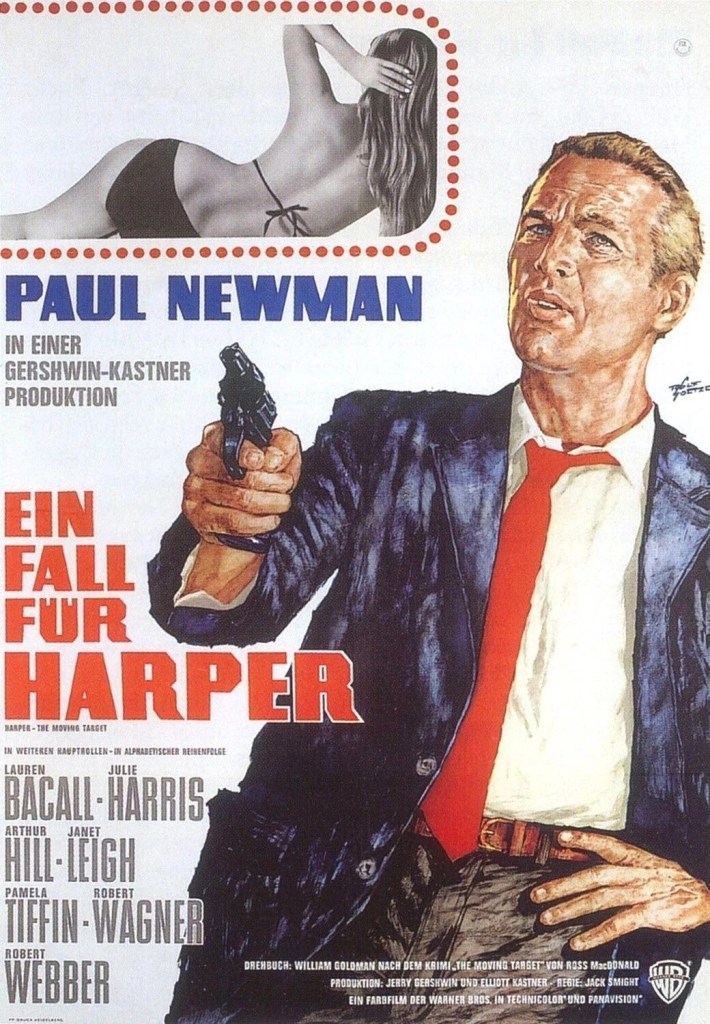
Harper / The Moving Target (1966) ****

Inventive screenplay by William Goldman (Masquerade, 1965), the ideal combination of witty lines and others that strike to the heart, and Paul Newman’s most naturalistic performance, and a family at each other’s throats, create a genuine addition to the private eye genre. Punch-ups are limited, generally the sleuth comes out worse, his skull an easy target apparently for any villain wanting to give him a good biff.

Most people remember the celebrated credit sequence. But, in fact, most people do not. They remember that this is a guy who will reuse old coffee grinds, which is as good a character definition as you’re going to get. But the opening sequence says much more – he sleeps in a pull-out couch, he falls asleep with the television on, dunking his face in ice suggests a hangover, and – the killer – he sleeps in his office. You won’t forget the ending either, the freeze frame, as fed-up Harper (Paul Newman) just gives up on the stupidity of mankind. And just before that there’s a delicious moment when crippled mother Elaine Sampson (Lauren Bacall) trills to the daughter she loathes Miranda (Pamela Tiffin) in a voice that would denote happiness but is anything but, “I’ve got some news for you,” as she looks forward to informing the child that the father she adores and that Elaine equally loathes is dead.

Not surprisingly, Harper’s on the verge of divorce from wife Susan (Janet Leigh), but he still hankers after being a knight in shining armor, those few days every year when he puts the world to rights rather than chasing down errant husbands in seedy hotel rooms.

The tale is a tad convoluted, involving initially tracking down Elaine’s estranged missing millionaire husband that turns into kidnapping and then murder with a side order of a fake cult headed by Claude (Strother Martin) that’s a front for an illegal immigrant operation, and going through the gears, character-wise, with malicious wife, an extremely flirtatious Miranda who gets her come-uppance when she tangles with Harper, faded alcoholic star Fay Estabrook (Shelley Winters) and junkie Betty (Julie Harris) sometime lover of lothario pilot Allan Taggert (Robert Wagner).

Two distinctive thugs Dwight Troy (Robert Webber) – Fay’s husband – and Puddler (Roy Jenson) offset the dumbest of dumb cops led by Sheriff  Spanner (Harold Gould) and lovesick attorney Albert Graves (Arthur Hill), Harper’s longtime buddy, who pines for Miranda.

Torture comes in two guises – the junkie gets the treatment from Dwight and Harper is put through the wringer listening to the endless whining of Fay as he tries to pump her for information. Harper avoids beatings and takes beatings and various characters bounce through doors with a gun – both Taggert and Graves save Harper from being shot.

Harper’s got a slick way about him, but mostly his charm is used to weasel information. He hasn’t got enough of it left to work on his wife.

When Harper’s not racing his sports car along twisting mountain roads, the action shifts to a cult temple, the docks and an abandoned oil tanker. Even when Harper works out who’s in on the kidnapping, it turns out he’s now got a murder to solve since someone’s bumped off the kidnappee.

Despite the endless complications, this whizzes along, helped enormously by Paul Newman’s (Cool Hand Luke, 1967) winning characterization. He’s brought a new trick to his acting arsenal, mastering a method of not listening to a conversation by tilting his head away from the speaker, and there’s a number of novel gestures. The scene where he rejects Miranda is a cracker. Tough guy running short of a soft center, he makes a very believable human being. And he’s got his work cut out because Lauren Bacall (Shock Treatment, 1964) is on scene-stealing duties. As is Pamela Tiffin (The Pleasure Seekers, 1964) though she can hardly match the older woman for arch delivery.

It’s a top-notch cast all the way down. Fans of Strother Martin (Cool Hand Luke) will enjoy his fake healer, Arthur Hill (Moment to Moment, 1966) is engaging, Robert Wagner (Banning, 1967) adds another notch to his rising star bow while Robert Webber (Don’t Make Waves, 1967) emanates menace with his “old stick” routine. Shelley Winters (The Scalphunters, 1968) is a great lush, Julie Harris (The Split, 1968) a junkie trying to pretend she’s not and Janet Leigh (Psycho, 1960), having kicked her husband out, still hoping he might come back in more acceptable form.

Jack Smight (The Third Day, 1965) directs with some zap. This should have had everyone singing the praises of crime writer Ross MacDonald, who in inventing the character (Lew Archer in the original) had inherited the Raymond Chandler mantle, but instead they came away whistling Dixie for screenwriter William Goldman.

Class act.

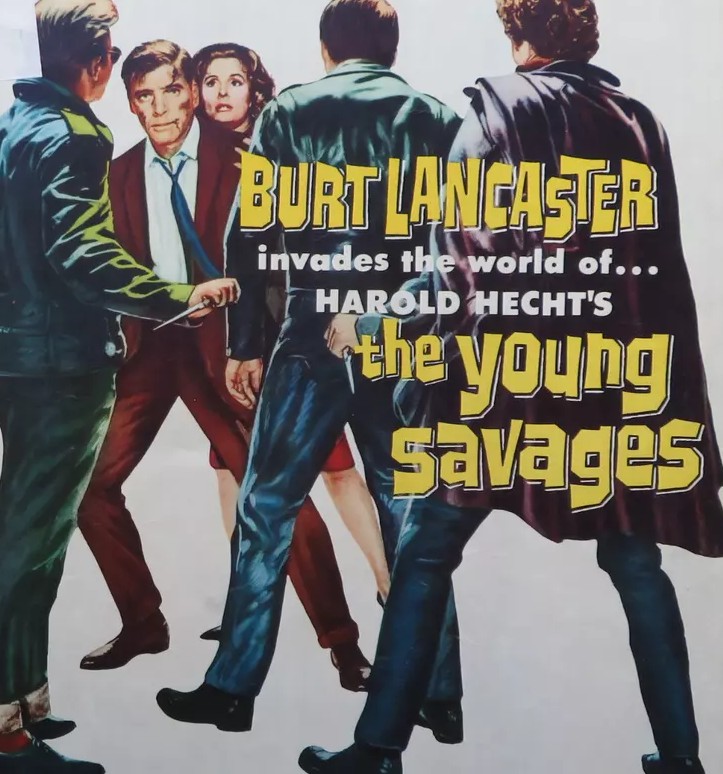
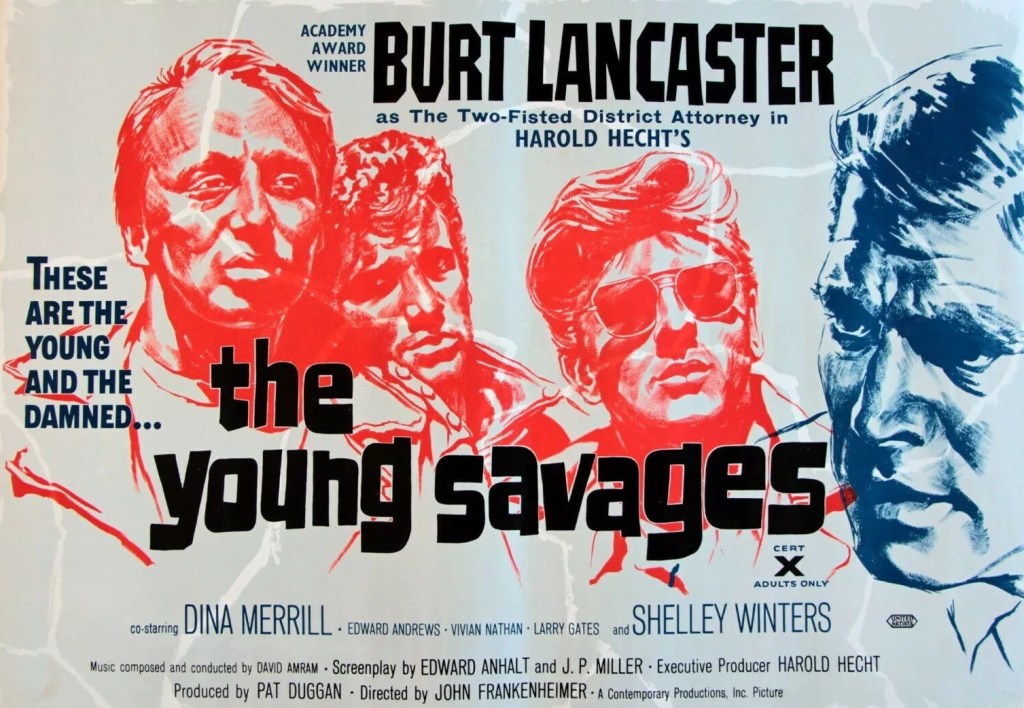
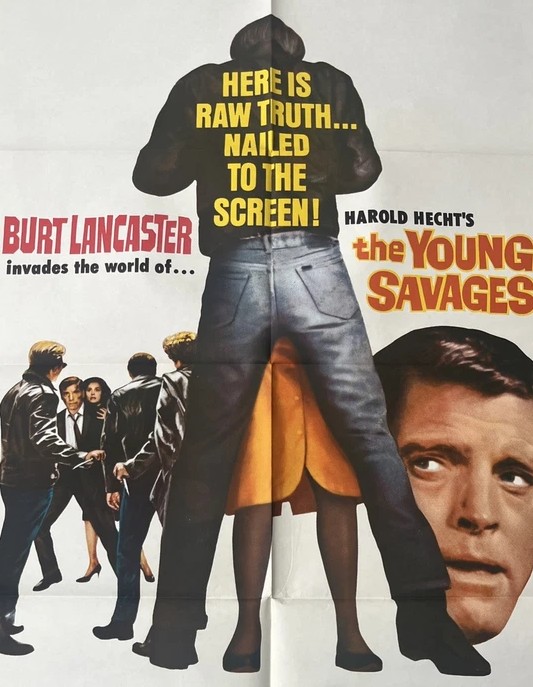
The Young Savages (1961) ****

You have to put out of your mind any thoughts about West Side Story, released the same year and also dealing with teenage gangs in New York. But whereas the musical tapped into Shakespeare and tugged at audience heartstrings with a tragic love story, The Young Savages is what used to be called an “issue picture,” a realistic portrayal of a growing problem in society.

Rather than the sullen relatively harmless rebels of Rebel without a Cause (1955) or this decade’s Easy Rider (1969), the question of youth disenfranchisement and the growth of a culture, here majoring in violence, at an opposite extreme to social norms, was beginning to take hold. Where earlier immigrants emerging from New York housing hellholes had tended to graduate to straightforward crime, which occasionally spilled over into the main street, now youths were engaging in turf wars, knives rather than machine guns the weapon of choice, which took place in full view of a terrified population.

Oddly enough the movie opens with the same motif as West Side Story, the feet of a gang, but rather than expressing their frustration through dancing, these feet, belonging to three members of the Italian-American Thunderbirds mob, are marching through the streets of New York, brushing aside passersby, knocking over toy prams, on their way to kill a member of the rival Puerto Rican Horseman gang.

When arrested, they claim self-defense. The only flaw in that argument is the victim Roberto Escalante (Jose Perez) is blind.  Naturally, there is a public outcry and calls for the death penalty. Prosecutor Hank Bell (Burt Lancaster), who had grown up in the same streets as the gangs but managed to make a life for himself outside its confines, is hellbent on extracting the maximum punishment. Bell was born Bellini but changed his name to hide his background, make it easier for him to serenade Vassar graduates and advance his career.

That leads to complications, and it’s hard to say which is the more compelling. His more liberal wife Karin (Dina Merrill), the Vassar item, is appalled. District attorney Dan Cole (Edward Andrews), who fancies his chances as a politician, faces public backlash if he doesn’t take tough action. And Hank had a romantic fling in the past with the mother Mary DiPace (Shelley Winters) of one of the accused.   

But Hank hasn’t quite thrown off the shackles of his upbringing, and though currently an upstanding member of society, he finds his principles taking a battering when he is himself attacked and discovers just how easy it is to resort to violence. Karin, too, finds her liberal attitude shot to pieces when she is also attacked.

Even without personal involvement of the husband and wife in being forced to face up individually to the violence pervading the city, the focus is on the exploration of how such violence becomes endemic in those parts of society left behind in the pursuit of the Great American Dream.

There’s plenty issues to deal with: poverty for a start, lack of ethnic tolerance, hatred of one immigrant group to another, politicians making capital out of the situation, parents powerless to prevent their children growing up as hoodlums, youngsters seeking identity and respect from joining a gang, and the growth of the gangs themselves as a social dynamic.

As you might expect, there are no easy answers. In fact, there are no answers at all. A movie like this can only lift the stone without being able to effect what’s happening underneath. But in some respects, that’s the aim of the issue picture, an early type of virtue-signaling. None of the issues raised have gone away, more likely they’ve just got worse.

But that’s not to downplay the film’s impact. There’s an inherent honesty here in the decision of debutant director John Frankenheimer (The Manchurian Candidate, 1962) not to take sides.    

Burt Lancaster (The Swimmer, 1969) delivers another excellent performance. Dina Merill (Butterfield 8, 1960) thrives in a solid role and Shelley Winters (A House Is Not a Home, 1964) is effective. Watch out for the debut also of Telly Savalas (The Assassination Bureau, 1969).  Written by Edward Anhalt (Becket, 1964) and J.P. Miller (Days of Wine and Roses, 1962) from the bestseller by Evan Hunter, who had explored similar youth issues in The Blackboard Jungle filmed in 1955.

Still powerful stuff.

Buona Sera Mrs Campbell (1968) ****

Works a treat. And works like clockwork, the set-up so meticulous, it doesn’t put a comedic foot wrong and even allows space, at exactly the right time, for the ticking timebomb to be sorted out. Gags galore. Sight gags, sound gags and observational gags, but most, unusually, are snippy, the kind of sharp remarks that people make under tension. And, heaven help us, there’s farce, and that works, too. It rarely does in American movies because it’s usually an adaptation of a Broadway play and the movie director feels hidebound by stage conventions. Here, this is an original screenplay, so writer-director Melvin Frank (Strange Bedfellows, 1963) works to his own beat.

You’ll remember the “who’s the father” narrative ploy from Mamma Mia (2008) – though this preceded the Abba bash by four decades. Twenty years after the Yanks liberated an Italian village in World War Two they are back to commemorate the event. Amongst the soldiers, three men desperate to meet the daughter, Gia (Janet Margolin), they each think they sired with Carla (Gina Lollobrigida) and have been supporting with monthly cheques ever since. They don’t know about each other’s involvement but between them have provided an excellent upbringing for Gia who speaks perfect English, having attended American School in Geneva, with enough left over for Carla to live in a fancy house with a maid.

The guys are a disparate bunch. Justin (Peter Lawford) is a philanderer whose wife Lauren (Marian McCargo) dare not let him out of her sight. Phil (Phil Silvers) has a brood and hardly escapes emotional Shirley (Shelley Winters) without one – or all – being attached. The loudmouth exuberant Walter (Telly Savalas) has to bite his tongue when wife Fritzie (Lee Grant) constantly reminds him she hasn’t provided her with a child, when, secretly, he believes she’s the infertile one and Gia the proof.

Initially, this goes the way you expect – and then it doesn’t, confounding all audience expectations. Carla, who had planned to skip town until the celebrations are over, is forced by other circumstances to remain. She’s involved in two subplots – Gia is planning to run off with an older married man to Brazil, and Gina can’t resist the opportunity to get one over on the sniffy local Contessa (Giovanna Galletti). Actually, there’s three subplots if you include Gina trying to keep hold of handsome lover Vittorio (Phillipe Leroy), who initially fears one of the returning soldiers will sweep Carla off her feet and whisk her off to the States, but then becomes very dismissive of her taste in men.

When the secret is revealed, rather than turning on their deceitful husbands, the women are full of praise for them. But that’s only because it’s not the whole secret. They think they discover that out of the goodness of their hearts the men have been sending cash to Carla in memory of their (fictitious) colleague Eddie Campbell who died in the war. The guys, meanwhile, turn against Carla when they become aware of each other’s existence and the fact that not so much just that they have been rooked, collectively, out of $200,000 but that they have individually been helping to bring up what could be another man’s child. Gia, too, on learning of the deceit, is furious and runs away, leaving Carla distraught.

When the true secret emerges, naturally there’s one almighty bust up, with wives and husband and daughter all railing against Carla until Vittorio steps in and explains just what a wonderful mother she has been.  This neatly steps over the timebomb, just what possessed Carla to have sex with three men in ten days beyond that they pumped up her ego and brought her food and treats.

There are some brilliant scenes – the streetwalker, the hospital, the car horn that doesn’t work, the missing laundry, the mean Contessa finding a clever way to put down Carla – but mostly it’s held together with the stiffest of glues by an inspired performance by Gina Lollobrigida. Telly Savalas (The Assassination Bureau, 1969) is the pick of the others, playing against type.

Class act from Melvin Frank.

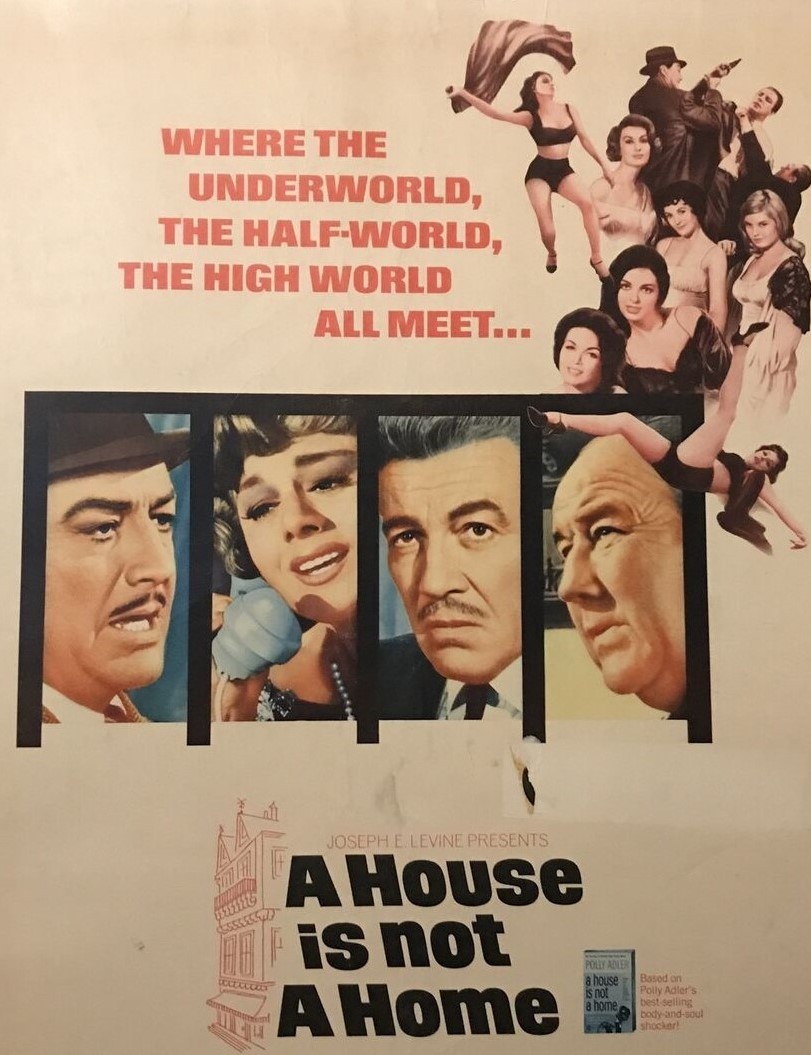
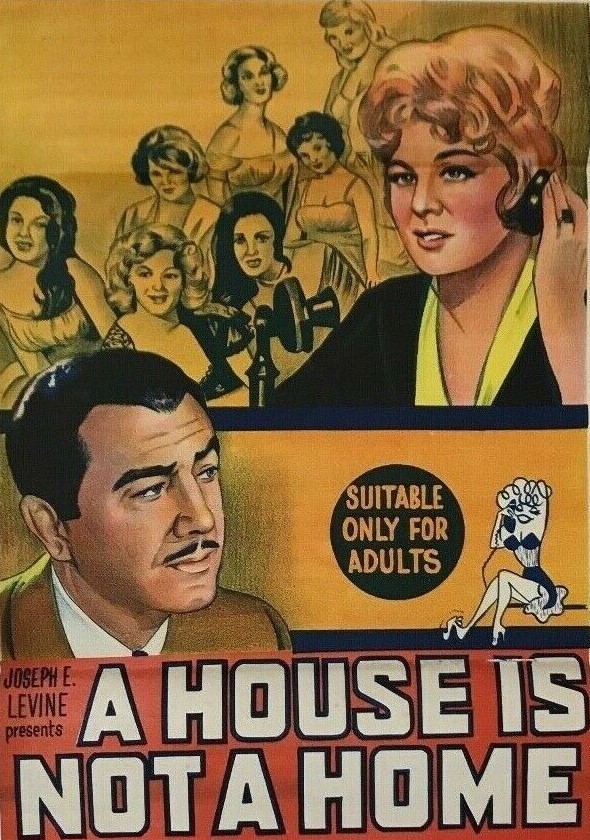
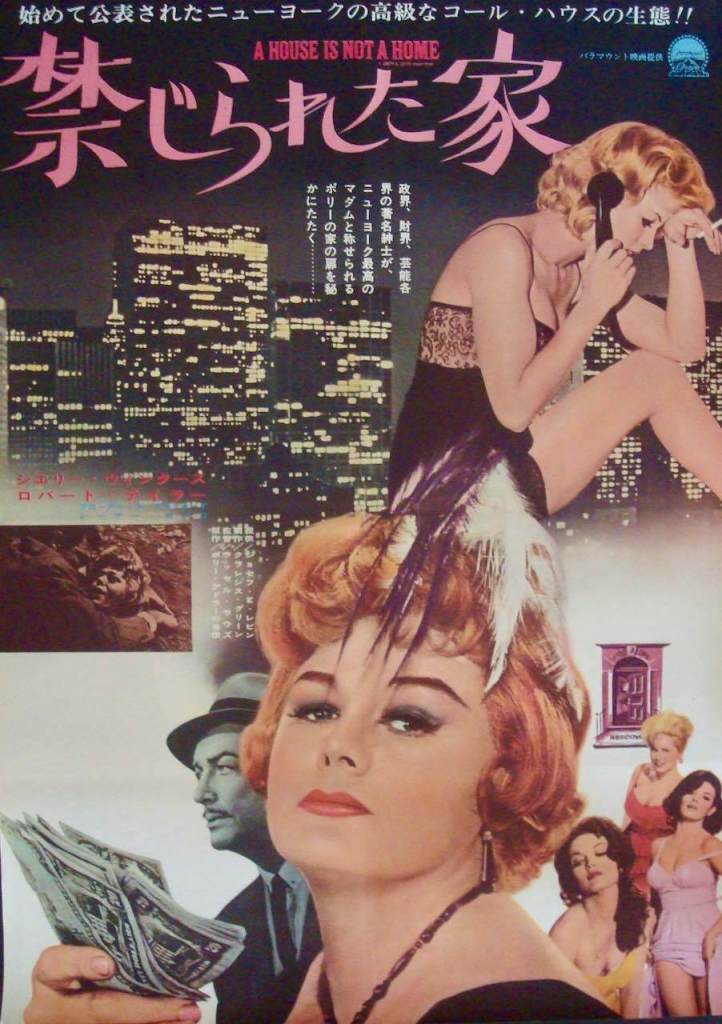
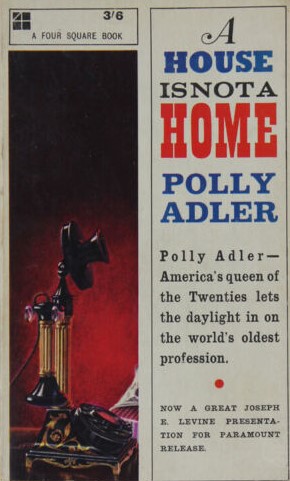
A House Is Not A Home (1964) ***

While perhaps best remembered these days as the debut film for Raquel Welch (One Million Years BC, 1966), the rest of the film is worth a look.

Hypocrisy had its heyday in The Roaring 20s when prohibition made bootleggers millionaires, helped bankroll other criminal activities like prostitution and encouraged cops and politicians to seek their share of the loot. The biography of real-life madam Polly Adler (Shelley Winters) covers all elements of corruption.  

Thrown out of her own home after being raped, she finds a knight in shining armor in the shape of bootlegger Frank Costigan (Robert Taylor) and is soon, at first apparently innocently, pimping out her friends. The reality of what becomes her profession is not ignored, the word “whore” bandied around, with one girl, Madge (Lisa Seagram), turning junkie as a result, another, Lorraine, committing suicide. Like Go Naked in the World (1961) Polly realizes that true love has no place in her world, a relationship with musician Casey (Ralph Taeger) unsustainable.

Adler, in her many voice-overs, explains why vulnerable women become sex workers – poverty, lack of family and lack of hope is her take on it – and she professes to view it as a business and preferable to working in a factory for pitiful wages, but the movie is at its best in linking the nether worlds of infamy and showing that the woman is always the loser.  

While any attempt to properly portray the period is hampered by lack of budget, it does provide an array of interesting and occasionally real-life characters, Lucky Luciano (Cesar Romero) for example. A brothel proves an ideal location meeting place for crooks and politicians, the latter easily bought by contributions to their campaign funds. Nor are cops   shy about asking for donations to their Xmas funds, or using the facility.

The Adler operation puts a glossy shine on the shady business since all her girls are glamorous. But still the movie pulls no punches except in the case of the madam herself, presented too often as an innocent and as a person who never sold her own body and who saw nothing wrong in taking as much advantage of the vulnerable girls in her employ as the  clients who paid for them.    

Oscar-winner Shelley Winters (The Chapman Report, 1962), more often a supporting player at this point in the 1960s than the star, grabs the role with both hands and although unconvincing as the younger girl delivers a rounded performance minus the blowsy affectations that marred much of later work. One-time MGM golden boy Robert Taylor, pretty much in the 1960s reduced to television (The Detectives, 1959-1962) and low-budget pictures, shows a glimpse of old form as the smooth bootlegger.

Cesar Romero (Oceans 11, 1960) and Oscar-winner Broderick Crawford (All the Kings Men, 1949) head up a checklist of old-timers filling out the supporting cast. Future director Lisa Seagram (Paradise Pictures, 1997) as the junkie hooker makes the biggest impact among the girls.

A flotilla of wannabes made up Polly’s girls. Apart from Raquel Welch, the only one to break into the big time was Edy Williams (Beyond the Valley of the Dolls, 1970). In the main they comprised beauty queens – Amede Chabot (Miss America), Danica d’Hondt (Miss Canada) and Leona Gage (Miss Universe) who had a small part in Tales of Terror (1962). Otherwise Sandra Grant became the most famous – for marrying singer Tony Bennett. Patricia Manning had the most screen experience, second-billed in The Hideous Sun Demon (1958), bit parts in television shows, and fourth-billed in The Grass Eater (1961). Inga Nielsen would later turn up as bikini fodder in The Silencers (1966), In Like Flint (1967) and The Ambushers (1967).

Director Russell Rouse (The Fastest Gun Alive, 1956) was better known for the screenplay of D.O.A. (1949) and had a story credit for Pillow Talk (1959). In fairness, although the film has no great depth, Rouse keeps it ticking along via multiple story strands although occasional lapses into comedy do not work. Written by Rouse and Clarence Greene (The Oscar, 1966) based on Adler’s autobiography.

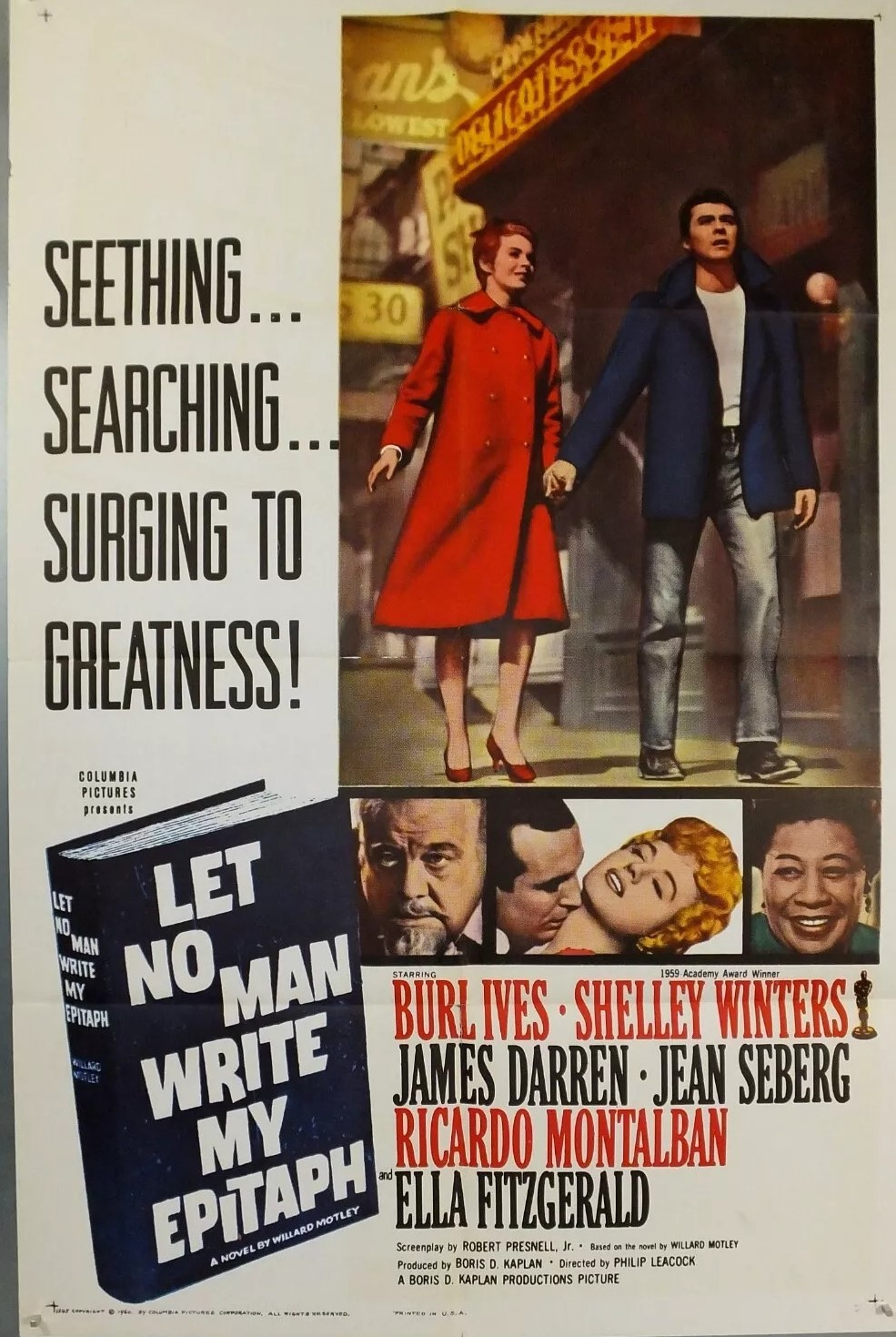
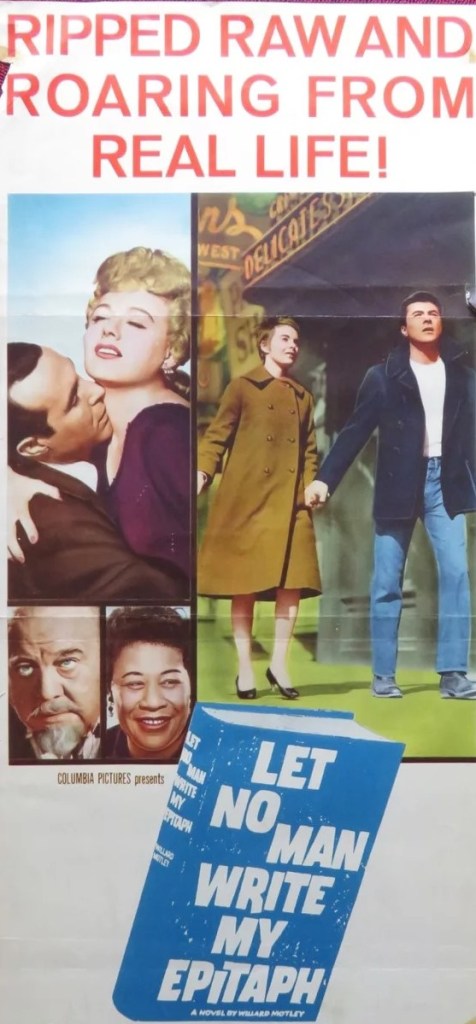
Let No Man Write My Epitaph (1960) ***

You can decamp to Europe all you like and even make a flashy bow in a hit French picture but that still won’t stop Hollywood hauling you back and treating you like a contract player. Thus it was with Jean Seberg. The toast of France and of arthouses worldwide for Breathless (1960) but relegated to ingenue here.

In truth, this had all the makings of an edgy drama given it was littered with alcoholics and drug addicts and pimps and heroin dealers. Set in the roughest part of Chicago, the shining light was Nick (James Darren), piano prodigy, weighted down not just by his surroundings but by memory of his murderer father who died in the elecric chair.

Single mom Nellie (Shelley Winters), not decent barmaid material because she refuses to allow customers to grope her, nonetheless ends up working as a B-girl and part-time sex worker to support Nick and pay for his ambition.

The motley gang promising to keep Nick out of harm’s way include alcoholic Judge Sullivan (Burl Ives), drug addict chanteuse Flora (Ella Fitzgerald), reduced to singing in deadbeat bars, ex-con George (Bernie Hamilton) and goodtime aloholic Fran (Jeanne Cooper). Unfortunately, Nick can’t keep himself out of harm’s way, responding too readily with his fists – not apparently noticing how risky that might be for his future – to the barbs and slurs meted out.

Nellie thinks she’s turned a corner when she hooks up with Louis (Ricardo Montalban). In her neck of the woods everyone’s shady so if he’s involved in the numbers or some other racket, she’s not that perturbed. But he’s spotted the stash in her bankbook, set aside to pay for her son’s tuition when he gets into music school, and gets her hooked on drugs to separate her from her dough.

Nick just thinks her erratic behavior is the kind of drunkenness he encounters every day. An old buddy of his father, Grant (Philip Ober), a lawyer, deciding to make restitution for not getting his father off the murder charge, eases the way into Nick getting an audition for music school. And this is where Jean Seberg comes in, as Grant’s daughter, whose only role is to believe in Nick. So much for swanky Paris!

Naturally, everything comes unstuck. Protecting Nick, George ends up on a charge, not saved by the judge riding to his alcoholic rescue, summoning up his previous oratorical skills to plead the case but only for so long as it takes for him to tumble to the ground in a drunken haze. When Nick discovers that Louis has got his mum hooked, he tackles the thug only to come out the worse, and end up hogtied in a garret. It’s up to the big man, i.e. the judge, to come to the rescue again. He’s the kind of man mountain that you can plug with several bullets and still he comes after you with his lethal hands to strangle the life out of you.

Made a decade later, this would have been much grittier, with tougher-minded directors happy to grind the audience in the residue filth and would probably have dumped some of the faithful retainers who come across like a Hollywood picture from the 1940s, the kind of save-the-day angels who always lingered on the edges of villainy ready to poke their heads above the parapets of degradation in the hope of snatching a glimpse of redemption.

It might have helped if singer James Darren (The Guns of Navarone, 1961) looked as if he could actually play the piano. A bit too cute in places and concentrating more on the only non-addict means too much bypassing of the generational consequences of addiction.

Oscar-winner Burl Ives (The Brass Bottle,1964) is the standout but that’s not saying much in a picture where the other actors pretty much stand by their existing screen personas. Shelley Winters (The Scalphunters, 1968) sways between tough and whiny, Ricardo Montalban (Sweet Charity, 1969) disappears behind his tough guy demeanor. You wouldn’t notice Jean Seberg.

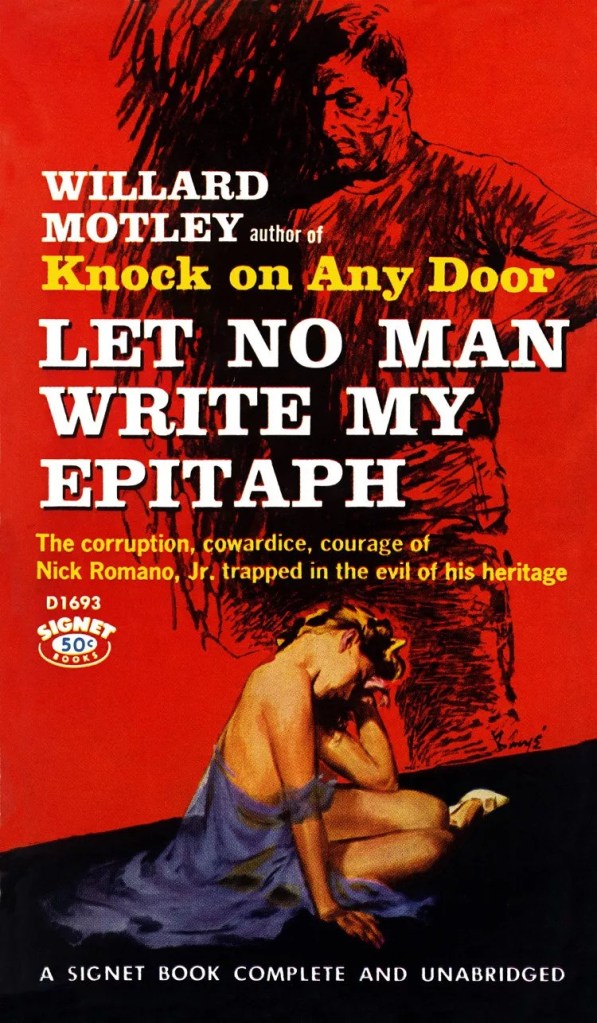
Directed  by Philip Leacock (Tamahine, 1963) from a script by Robert Presnell Jr (The Third Day, 1963) from the bestseller by Willard Motley.

Wannabe neo-noir but not tough enough to qualify.

The Chapman Report (1962) ***

In the 1950s new talent was largely bloodied via small parts in big movies. In the 1960s, the easier route was to first build them up as television stars. This picture represents the nadir of that plan – female roles filled with established talent, males roles with actors who had made their names in television. And, boy, does it show, to the overall detriment of the picture.

Warner Bros even had the temerity to top-bill Efrem Zimbalist Jr (hauled in from 77 Sunset Strip, 1958-1964) over more famous actresses. Zimbalist Jr at least had some marquee value after starring in low-budget A Fever in the Blood (1961) and second male lead in the classier By Love Possessed (1961) and Ray Danton (The Alaskans, 1959-1960) had played the title role in B-picture The George Raft Story (1961), but Ty Hardin was unknown beyond Bronco (1958-1962) and Chad Everett drafted in from The Dakotas (1962-1963).

Little surprise, therefore, that director George Cukor (Justine, 1969) concentrated his efforts on the females in the cast. But it was curious to find Cukor taking on this sensationalist project based on the surveys of sexuality that had taken the country by storm. Had it been made by a less important studio than Warner Bros it would have been classed as exploitation.

The bestseller by Irving Wallace on which it was based was a take on the Kinsey Report a decade before and others of the species and, theoretically at least, opened up the dry material of the more scientific reports into how men and women behaved behind closed doors.

Amazing that this was passed by the Production Code since dialog and action are pretty ripe. Interviewed women are asked about “heavy petting” and how often they have sex and if they find the act gratifying. One interviewer crosses the line and has an affair; these days that would be viewed as taking advantage of a vulnerable woman. And there’s a gang rape.

Given the movie’s source Cukor takes the portmanteau approach, four women undergoing different experiences. The problem with this picture is that there’s little psychological exploration. Women are presented by their actions not by their thought patterns or by their treatment by their husband.

In what, in movie terms, is the standout section, Naomi (Claire Bloom), an alcoholic nymphomaniac, is so desperate for attention she throws herself at the delivery boy (Chad Everett), then at a married jazz musician (Corey Allen), with devastating effect, as he hands her over to his buddies, causing sufficient degradation that she commits suicide. Since we first come across her crying in bed, sure signs of depression, these days you would expect more exploration of her psychiatric state.

Similarly, the widowed Kathleen (Jane Fonda) has been tabbed frigid by her husband and nobody thinks to call into question his inadequacies as a sex partner rather than hers. Here it’s put down to daddy issues and growing up in a household heavy with morality.

Kathleen is taken aback by the researcher even asking her about sex, “physical love” the technical term, rather than a purer kind but her consternation at the questions being posed in very cold-hearted manner by an anonymous voice – researcher hidden behind a wall – does reveal how ill-equipped some people are to even talk about sex. Her story develops into some kind of happy ending, despite the fact that her interviewer Radford (Efrem Zimblist Jr) would be busted these days for taking advantage.

Teresa (Glynis Johns) is convinced by the interviewer’s tone that the simple normality of her own marriage must be abnormal and so, determined to fit in, embarks on a clumsy attempt to  seduce footballer Ed (Ty Hardin), coming to her senses when it comes to the clinch.

The interview also has a major impact on the adulteress Sarah (Shelley Winters). After confessing her affair to husband Frank (Harold J. Stone) she rushes off to lover, theater director Fred (Ray Danton), only to find, to her astonishment, that he’s a married man. Her husband accepts her back.

To keep you straight, the “good” women are dressed in white, the “bad” ones in black. The filming is distinctly odd. The man behind the wall is filmed with no ostentation, but the style completely changes when the director turns to the women who often end up in floods of tears.

Claire Bloom (Two into Three Won’t Go, 1969) and Jane Fonda (Barbarella, 1968) are the standouts because they have the most emotion to play around with. Oscar-nominated Glynis Johns (The Cabinet of Caligari, 1962) is the comic turn. Over-eager over-confident Oscar-winner Shelley Winters (A House Is Not a Home, 1964) gets her come-uppance. None of the men make any impact.

The book took some knocking into shape. Perhaps because, of the four names on the credits only one had signal screenwriting experience, Don Mankiewicz (I Want to Live, 1958). For the others, better known for different occupations in the business, this was their only screenwriting credit. Wyatt Cooper was an actor married to Gloria Vanderbilt, Gene Allen art director on many Cukor pictures and production designer on this, and Grant Stuart was a boom operator though not on this picture.

Best viewed through a time capsule.

Wild in the Streets (1968) ***

Far more prophetic than you would have ever thought possible in acknowledging the growing power of the young, the pandering of politicians to them, and the unexpected ability of youth to see through politicians and set their own agenda. Plus, Christopher Jones gives the kind of performance that had David Lean rushing to sign him up for Ryan’s Daughter  (1970).

It was prescient, too, of its time, not just the notion that the young could lead the way in opposition to political forces.   

And what top pop star has not believed they could harness their global following for the greater good – Live Aid the classic example – and once you’ve bedded your way through the known female universe and sampled every drug known to man there has to be something else that’s going to grab your attention. And, for once, a movie star makes a very credible pop star.

Max Frost (Christopher Jones), channelling his inner Jim Morrison, is on top of the world, a phenomenon, the biggest thing since Elvis and The Beatles. His rebellious streak emerges at an early age. And where other nutcases would torture animals or pull the legs off spiders or play with matches, he blows up the family car. But he’s something of a statistician and reacts to the notion that there are more young people than old people – 52 per cent of the population is under 25 – by writing a song about it, a song that turns into a protest that segues into a movement.

Aspiring politician Fergus (Hal Holbrook) thinks he can harness what he perceives as a dumb youngster with fans so dumb they will ape his every command. His vote-winning idea is to campaign on a platform of lowering the voting age from 21 to 18, not that revolutionary an idea since ever since American men were shipped off the Vietnam there had been similar calls along the lines of too young to vote but not too young to die.

Max pretends to back him but instead demands the voting age be reduced to 14. This being politics, there’s negotiation, and the compromise is reducing the age to 15. The ever-read Max has songs covering whatever age is agreed.

Bandmember Sally LeRoy (Diane Varsi) is elected and gets a law passed to lower the voting age. Fearing youth and somehow assuming Max will curb their worst excesses, older politicians support his bid for the Presidency (as you may know, anyone in the U.S. can become President even if they lack political experience) but once he gains power he turns on them and forces through a law making retirement compulsory at 30. And goes about, Heaven help us all, doing good, albeit with a dictatorial agenda.

But the fairly straightforward satire, puffed out with endless scenes of public demonstration, works very well, and not just because the power of youth is demonstrated everywhere today, not least among Hollywood mavens who seem unable to make anything that doesn’t appeal to that age group, but because the brain behind the scheme are actually pretty smart. The group is presented as  clever all round, their excessive income down to the business acumen of Billy (Kevin Coughlin) so the band have no chance of ending up penniless, ripped off by everyone in sight. Sally is a former child star so she’s been taken advantage of already and ain’t going to let it happen again.  There’s a clever sting in the tale that takes the campaign to its logical conclusion.

It’s great fun seeing grizzled politicians being outsmarted by Max and his cohorts and for the older population to, unwittingly, get a taste (no pun intended) of what it’s like to be young. Audiences went for this in a big way since it presented an alternative universe, part sci-fi but also with some imminently achievable aims, some of which came to fruition. Hollywood was brought to heel the following year after Easy Rider, only in retrospect anyone realizing that the rescue from box office oblivion of 2001: A Space Odyssey (1968) by spaced-out hippies was a turning point not a one-off.  The voting age was lowered a couple of years later.  These days, of course, nobody needs elected or has to pass a law for changes to be made, and far quicker than if they had to go through the political process. Developments nobody voted for have been forced through by the court of public opinion, though sometimes by the very minorities that were once outside the existing power base.

Christopher Jones (Three in the Attic, 1968) delivers his best performance in what turned out to be a very short career. Shelley Winters (A House Is Not a Home, 1964) gives another scene-stealing turn and on back-up are Hal Holbrook (All the President’s Men, 1976) , in only his second movie, Diane Varsi in her biggest role to date, Millie Perkins (The Diary of Anne Frank, 1959) and an early showing from Richard Pryor.

Barry Shear (The Karate Killers, 1967) directed from a screenplay by Robert Thom (Death Race 2000, 1975).

You could probably go through this ticking off what predictions have come true and it’s more powerful now than it was at the time.

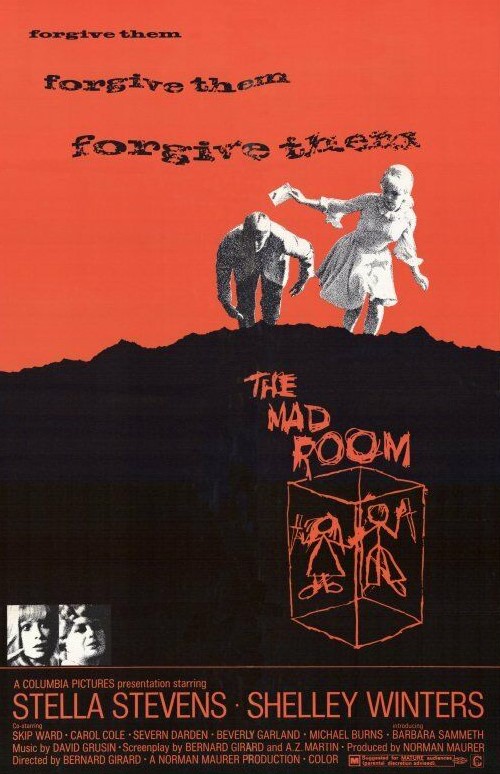
The Mad Room (1969) ***

Tight little thriller lifted by excellent performances from Stella Stevens and Shelley Winters focusing on murders a dozen years apart. Mandy (Barbara Sammeth) and older brother George (Michael Burns), incarcerated in a mental institution after the murder of their parents, the twist being nobody can discover which child was responsible, are released into the custody of big sister Ellen (Stella Stevens), secretary to wealthy widow Mrs Armstrong (Shelley Winters) and betrothed to her son Sam (Skip Ward).

While concealing the children’s past, Ellen persuades Mrs Armstrong to offer them lodgings, that arrangement coming unstuck when the kids demand a room where they can go “to work things out.”  Armstrong is a bit barmy, engaged on building beside her home a museum to her husband, hence contractors and construction workers on site, and a horde of “ladies who lunch” involved in fundraising. She has also appropriated masseur Armand (Lou Kane), husband of alcoholic Mrs Racine (Beverly Garland), to fulfil her sexual needs.

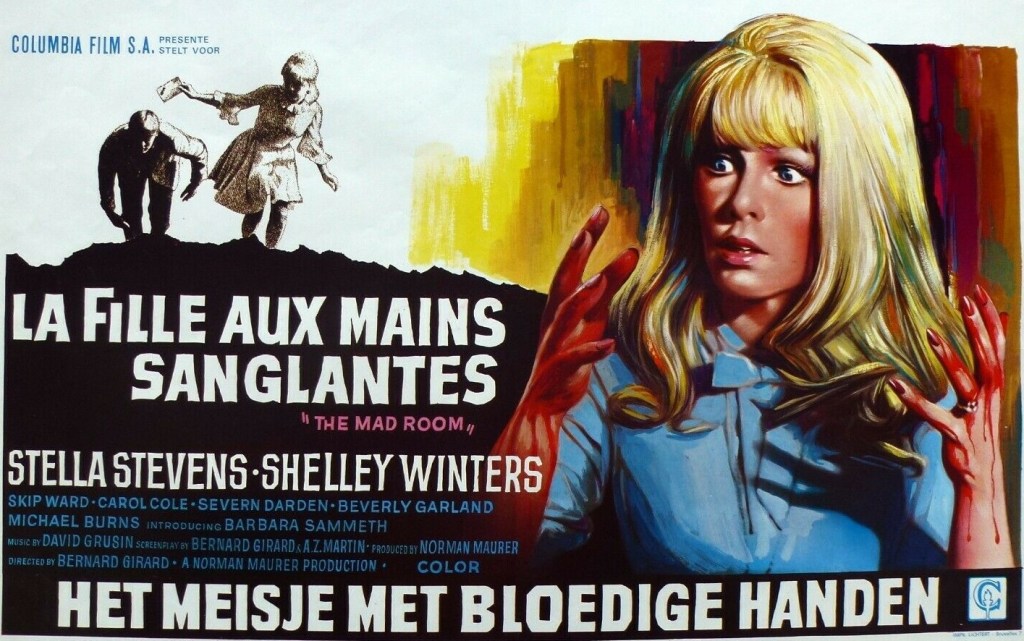
Don’t worry – the poster doesn’t give the game away.
The blood comes from Stella Stevens discovering the corpse.

When Mrs Armstrong threatens to chuck the kids out, she comes to a sticky end, and the question is raised again of whether Mandy or George are responsible. Mandy is the more highly-strung, stubborn and likely to challenge authority. George appears predatory, stalking the maid. Both are convinced the other is guilty.

Meanwhile, Ellen undertakes to remove the body and pretend Armstrong met her death by accident at a beauty spot, no mean feat given the palaver caused by the builders outside and the constant need for construction decisions and the unexpected arrival of a posse of ladies including the alcoholic Mrs Racine intent on raising merry hell.

It’s part whodunit, part nutcases-on-the-loose, part film noir, part slasher picture,  and part grand guignol. Hands are severed and blood is used to daub flowers on the walls. It’s tense enough even before Armstrong’s demise. She’s not only a loony, but untrustworthy, selfish, capricious and demanding, and it’s as much as Ellen can stand to constantly iron out all the loose ends in her employer’s life. But she sounds believable, an earnest do-gooder even while conspiring against what she sees as Ellen’s gold-digging.

Ellen, life thrown into turmoil after the death of her overbearing impoverished parents and only now building a new identity removed from the shadow of the children, faces the prospect of losing her ideal future. While it would have suited her for the children never to be released, she exhibits surprisingly a strong emotional attachment to her siblings, willing to both shelter and protect them, and conceal again their crimes.

Initial tension revolves around a chase, savage dogs, a shifty maid and Ellen dealing with the manipulative Mrs Armstrong, holding her own long enough until she is safely married, while further pressure builds with the necessity to cover up the murder, explain Mrs Armstrong’s absence, cope with the sudden influx of people and ascertain who has the murderous tendencies. There are some excellent scenes and twisty payoffs, and quite a bit of misdirection – the chase, rabid dogs, a childish song – and some inspired drama such as Mrs Racine letting rip, and Mrs Armstrong’s growing puzzlement.

Stella Stevens (Sol Madrid, 1968), normally eye candy or in a supporting role, is a revelation as Ellen, creating a grounded personality, with several changes of emotion and except for being a little pop-eyed on occasion carries off the part tremendously well and not falling prey to the temptation of grandstanding. Shelley Winters (A House Is Not a Home, 1964), who knows all about playing larger-than-life characters, tones it down here, even the obvious nuttiness reined in.

Michael Burns (That Cold Day in the Park, 1969) is the better of the two younger actors, while Barbara Sammeth’s (Foul Play, 1978) stiffness could be put down to inexperience – this was her debut. Otherwise former horror queen Beverly Garland (Stark Fear, 1962), one-time horr

Book into Film – “A House Is Not A Home” (1964)

Hollywood biopics tended to follow one of two routes – overcoming circumstances or falling victim to circumstances. Polly Adler’s autobiography A House Is Not A Home fitted into neither category. It was more of a survivor’s guide and if there was any element of triumph it was within an unsavory profession and one that sailed too close to the nether worlds of the Prohibition gangster.

The film stuck to a shorter time frame than the book, kaleidoscoping certain events and characters, highlighting an inevitably impossible romance and adding a gangster subplot, while acting as an expose of civic corruption, cops especially rubbing their noses in the financial trough.

Dramatic license is taken throughout the film, for example Adler (Shelley Winters in the film) was not rescued in the book by future lover Casey Booth (Ralph Taeger), who was in any case a pseudonym, but first met him when he drank himself unconscious in her brothel. Lucky Luciano (Cesar Romero) makes only a brief appearance in the book. Both film and book skip present Adler as businesswoman first and victim second.

Adler’s unflinching attitude to the business is core to both book and film but inevitably a movie made in Hollywood in the mid-1960s enjoyed less freedom in matters relating to sex than a book published a decade before. In some respects it’s a shame that the film was shot  in such prohibitive times. Had it been made today either as a movie or mini-series it would have had a more decent chance of telling a better story and bypassing the pressing issues of morality, as was the case with Molly’s Game (2017), another true story, about a woman heading up a multi-million-dollar illegal gambling racket.

The book tells a fascinating story and casts a light on troubled times. Adler came to the U.S. as an immigrant at the age of 13, was raped by her workplace supervisor, thrown out of her home and went into the pimping business by accident before setting up her own brothel. But she did quit and operated instead as a lingerie retailer before being duped out of her savings. Thereafter, back in the sex worker business, she made a point of hiring only the most beautiful girls and her career path  demonstrated a fascinating understanding of business, especially her grasp of marketing, as she moved from the gangster world into high society.

There were busts along the way and she went out of business for over a year when implicated in the Seabury vice investigations of 1930-1931 and for a time afterwards was bankrolled by gangster Dutch Schultz. And although Adler worked her way up to notable personality and enjoyed the attention of artists and members of high society who used her premises almost as a salon, she did not run shy of spelling out the worst aspects of the life.

Loneliness was a key factor. It was impossible to retain a relationship except a destructive one with a pimp or gangster. Poverty, lack of education, poor home environment, lack of love and early exploitation were the reasons women became sex workers. Suicide – loss of hope – was common as was drug use. A high-class brothel was a long way from the type of operation where women were expected to service 25 men a day – a record of their activity kept by a “lace curtain” of holes punched into a sheet – but yet, inevitably, that was the final destination for the high-class girls once age or drugs or alcohol took its toll.

 “To outsiders it seems hypocritical and hair-splitting for a madam to make a distinction between herself and a pimp,” said Adler who maintained she did not fall into the latter category because her girls kept more of the money they earned and she did not take on inexperienced girls whereas a pimp seduced girls into the life and kept them there often by hooking them on drugs. 

Much like Don Corleone in The Godfather, morality did not enter the equation. “If I was to make a living as a madam, I could not be concerned either with the rightness or wrongness of prostitution considered either from a moral or criminological standpoint.”

Unlike the bulk of women employed as sex workers, the Adler story had a happy ending. After being busted in 1943 and undergoing a public humiliation on vacation, she retired from the business, went to university and wrote her biography which turned into a bestseller. She died in 1962, two years before the film appeared.

Discover WordPress

A daily selection of the best content published on WordPress, collected for you by humans who love to read.

The Atavist Magazine

by Brian Hannan

WordPress.com News

The latest news on WordPress.com and the WordPress community.