Nuremberg (2025) **** – Seen at the Cinema

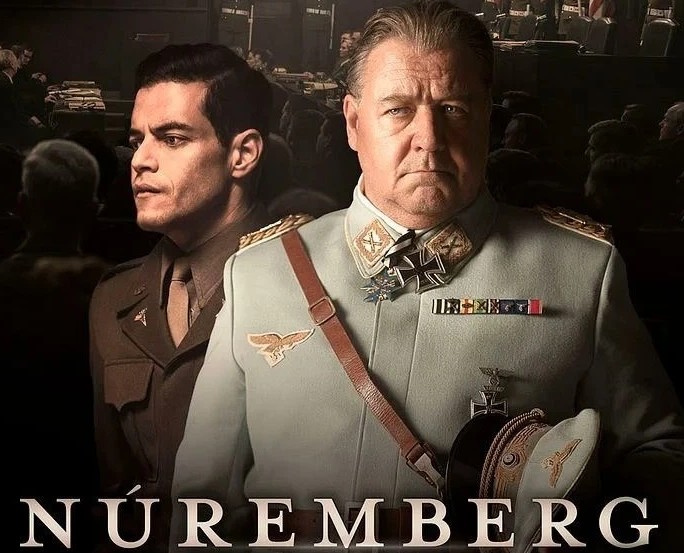
Richly satisfying drama of the kind they don’t make any more. For a start writer-director James Vanderbilt isn’t spoiling everything by preening with the camera, trying to draw attention to himself at the expense of what is a very solid narrative. Where you might expect all the hypocrisy to be laid at the door of the Nazi High Command, in fact it’s evenly spread, two prime examples among the legal team hoping to bring Hitler’s second-in-command Goering (Russell Crowe) to his knees. And although lazy journalists, and even lazier marketeers, are hyping Crowe (The Exorcism, 2024), if they took a closer look they would find four other performances worth more than a passing mention.

Of course, everyone knows how this ends. Or do they? Theoretically, it’s about making an example of Goering and the other top Germans who greenlit the Holocaust. But, in fact, the reality is that it has never ended, and that other rulers, in the same almighty positions of power as the Nazis, have continued to commit genocide long after Hitler’s regime was disbanded.
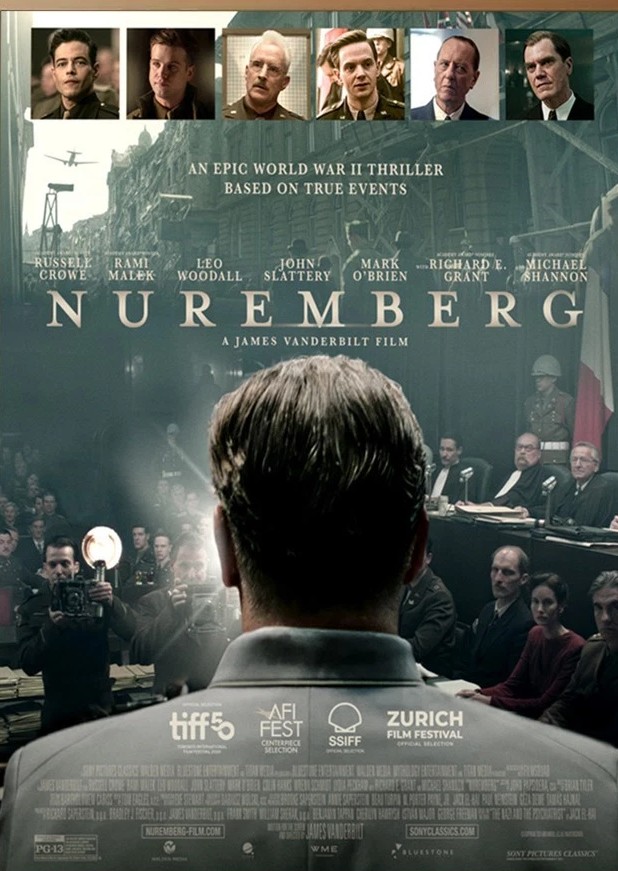
Like Judgement at Nuremberg (1961) this in part sets out to discover what was it about the German character that permitted them to carry out their atrocities. Psychiatrist Dr Kelley (Rami Malek) commits professional suicide by determining that there was nothing, particularly unique about the Germans and that given the right circumstances it could as easily happen in the United States or any other civilized country.  

Although it’s promoted as a duel between Goering and Kelley, there’s more at stake. The whole concept of war crimes for a start, the idea that a group of countries can legally arbitrate in the affairs of another country, here the USA, Britain, France and Russia must come to together to argue the case against Germany. Nobody wants to get their hands dirty should the whole idea fall flat on its face, so Justice Jackson (Michael Shannon), leading the American legal attack, could as easily be fall guy as hero.

Goering is more humanized than Kelley. Following an unusual meet-cute, there’s an opportunity – but the director doesn’t fall for it – to set up Kelley in a romantic relationship with journalist Lila McQuaide (Lydia Peckham) but instead the card tricks that appeared to melt her heart become a different magical metaphor. Goering is a doting husband and father and Kelley becomes surreptitiously involved with his loving wife and piano-playing daughter. And despite appearing smart in his profession, Kelley is out of his depth with women, given a sharp lesson by Lila.

Kelley has taken on this job in the hope of writing a bestseller about his experience. Jackson expects to be nominated to the Supreme Court. Goering just wants to stay alive. Kelley takes the measure of Goering far better than the intellectually arrogant Jackson. In fact, Kelley is fearful that if Jackson doesn’t tread carefully, then Goering will wipe the floor with him.

The prosecutors have a few clever tricks up their sleeve. Kelley, under the guise of befriending Goering, uncovers his legal plan, which stops the German in his tracks.

But only for a moment. Goering is such a smooth operator that he skewers Jackson and it takes the last-minute intervention from languid Brit Sir David Maxwell-Fyfe (Richard E. Grant) to save the day.

There’s a fifth peripheral character here in Sgt Howie Triest (Lee Woodall), a German-speaking American, who has two of the best scenes. In a reversal of the usual trope where it’s the hero in an idle moment who divulges his past, here it’s the supporting actor. And where Kelley has only pretended compassion with Goering its Triest who provides another condemned German with the dignity to walk to the gallows.

Usually when you have a writer-director, the writer aspect is subservient to the director, but here James Vanderbilt (Truth, 2015) is fully in command of the narrative without resorting to tricksiness. The screenplay is littered with cutaways that maintain the tension as the story leaps ahead from one narrative point to the other. There’s a classical structure here, Vanderbilt laying the ground rules, what’s a stake for everyone, heightening the tension as it plays out, and throwing a few spanners in the expected works to keep it brimful of twists right to the end.

Virtually everyone gets the chance to be haughty, virtually everyone thinks they have a winning hand and how hopes are dashed makes for a terrific tale.

For sure, Crowe is ahead in the lazy journalist’s eyes in terms of plaudits, but Rami Malek (The Amateur, 2024) runs him close and in the supporting actor stakes it’s a toss-up between Michael Shannon (Death by Lightning TV mini-series, 2025), who switches from confidence to despair in the twinkle of an eye, and Lee Woodall (One Day TV mini-series, 2024) who waits and waits and waits before snipping in and stealing chunks of the picture.

Adapted by Vanderbilt from a book by Jack El-Hai.

For once, zippy dialog and nippy narrative merge. Supremely confident direction turns this into an engrossing, adult, movie.
Behind the Scenes: Edward Zwick Uncensored

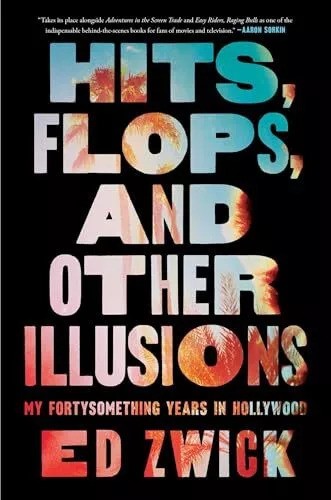
“I will never forget how casually Maria (Schneider of Last Tango in Paris fame) unbuttoned Joey’s shirt to hold her breast in one hand while eating a bagel with the other,” is just one of the memorable lines in director Ed Zwick’s (of Glory fame) memoir,  a very candid portrait of working in Hollywood. Glamor and grit ride side by side as he goes from being a celebrity-struck newcomer to dragging tears out of Harvey Weinstein, hearing all about Julia Roberts’s love life, endless battles on set with Brad Pitt, being offered a beer by Paul Newman in the star’s house and digging into the untapped emotional reservoir of Tom Cruise.

His mentor, director Sydney Pollack, allowed Zwick to observe as he prepped Out of Africa (1985). Pollack had a complicated relationship with Robert Redford. The star “was infallibly late.” Opposite personalities. Pollack was “voluble, excitable and punctilious” while Redford was “taciturn, laconic and laid-back.” Dealing with a proper star can be disconcerting. Asked what it was like to direct Barbra Streisand in A Star Is Born (1976), Frank Pierson said, “I wouldn’t know.”

Pollack offered Zwick sound advice about screenwriting. “Plot is the rotting meat the burglar throws to the dogs so he can climb over the fence and get the jewels, which are the characters.” Zwick’s first script, with writing partner Marshall Herskowitz, for Tri-Star, was a drama, Drawing Fire, about a Secret Service agent’s relationship with a corrupt cop. Dustin Hoffman wanted to play the lead. In conversation, Hoffman took “damn long to get to the point.” His involvement collapsed over his fee.

Jonathan Demme was originally slated for About Last Night (1986), an adaptation of David Mamet’s play Sexual Perversity in Chicago. When he pulled out, Zwick got the gig. If stars Rob Lowe and Demi Moore seemed very comfortable with the intimate scenes, that was because they had previously been an item. The movie did surprisingly well.

For a follow-up, Zwick passed on Thelma and Louise (1991) in favor of a different road picture, Leaving Normal (1992), originally set to star Cher and Holly Hunter. Jessica Lange entered the frame when Cher dropped out. After Hunter quit, Zwick signed up Christine Lahti and Meg Tilly. The picture bombed.

Next up was Shakespeare in Love with a script by Marc Norman and Tom Stoppard to star Julia Roberts who, as it happened, couldn’t help falling in love with her co-stars, that included by now Kiefer Sutherland, Dylan McDermott and Liam Neeson. To play William Shakespeare, she wanted Daniel Day-Lewis, sending him a card that said, “Be My Romeo,” but he was already committed to My Left Foot. Casting for her co-star was cancelled while she maintained that, actually, Day-Lewis had agreed. Only, when Zwick contacted him, that turned out to be fantasy.

With casting renewed, Zwick and Roberts saw, among others, Ralph Fiennes, Russell Crowe. Hugh Grant, Colin Firth and Sean Bean. But none clicked with the star, although oddly enough she later teamed with Grant in Notting Hill (1999). It could conceivably have gone ahead with Paul McGann. A full screen test was arranged. However, it was obvious at that point that Roberts hadn’t nailed her English accent. She quit, leaving Universal $6 million out of pocket.

The movie remained in cold storage for two years. Then Harvey Weinstein came calling. But not at the price Universal demanded. For the next few years, Zwick kept trying to interest actors with the requisite marquee heft such as Kenneth Branagh, Winona Ryder, Jude Law, even Mel Gibson and Johnny Depp. By coincidence, Ryder was best buds with Gwyneth Paltrow and showed her the script. Since Paltrow was Weinstein’s go-to actress, she convinced the producer to come back in. But the consequence of that was that Zwick was pushed out. Or so Weinstein believed, until he was sued. Which meant that when the movie was awarded Best Picture at the Oscars Zwick was on the stage.

Comments Zwick wryly, “ As I stand there…listening to Harvey’s prepared, saccharine, self-serving acceptance, it occurs to me to shove him over the edge of the stage into the orchestra pit. Faced with the choice of committing an act of violence before a worldwide audience of 100 million movie fans or false modesty, I make the wrong choice.”

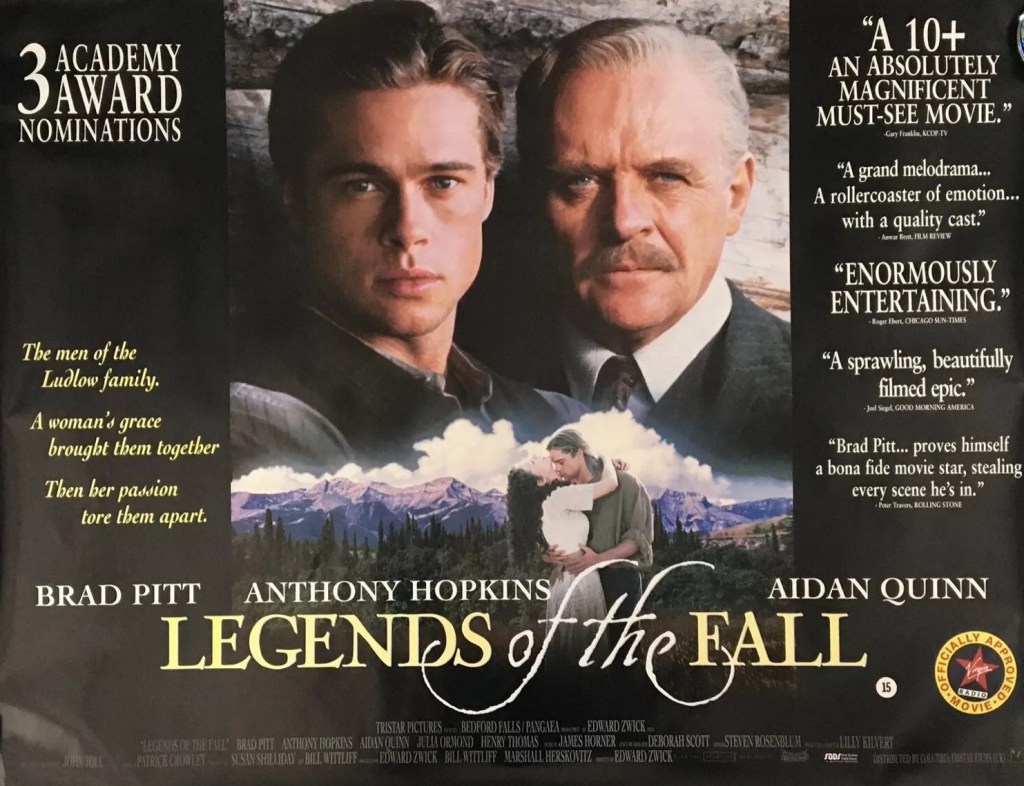
Alvin Sargent (Paper Moon, 1973) signed up for a “hefty fee” to adapt Jim Harrison’s novella Legends of the Fall (1994). Not only was he “maddeningly slow” but after a year’s work he “hadn’t been able to figure out how to do it.” William D. Wittliff (Country, 1984) was next to take a crack before Zwick called on Marshall Hershowitz’s wife Susan Shilliday – who had been story consultant and story editor on Zwick’s television show thirtysomething – to do a rewrite. Tom Cruise and Robert Duvall were briefly interested. Brad Pitt rode to the rescue.

“It’s not enough,” muses Zwick, “that a movie star be handsome; good-looking actors are a dime a dozen. And it’s not just the way the light and shadow plays on someone’s bone structure. It’s the unmistakeable thing behind their eyes, suggesting a fascinating inner life. We don’t know what’s going on inside their heads, but we definitely want to and that’s enough.”

Pre-production Tri-Star got cold feet and demanded Zwick knock $2 million off the budget. Instead, the director and Pitt halved their fees in exchange for a bigger backend. Four weeks before shooting was due to commence, they were short of a female lead, though Paltrow, among others, had read for the part, ending up with relative newcomer Julia Ormond (The Baby of Macon, 1993). Days before shooting, Pitt quit. Or tried to. He could go as long as he paid all the costs of preparation. So Pitt remained. After two weeks of shooting, Zwick was $1 million over budget, largely due to costume issues.

“There are all sorts of reasons an actor will pick a fight,” notes Zwick, and he had more than his fair share of them with Pitt. Although the movie’s resultant commercial success doubled both their salaries, they didn’t talk for a year – and never worked together again.

Denzel Washington didn’t want to do Courage under Fire (1996) until Zwick introduced the idea of Post Traumatic Stress Disorder, a new idea at the time. Matt Damon really did almost fall out of a helicopter. As Washington and Damon did a scene together “it was as if a spell had been cast over the set,” all watching the birth of new screen great. Screen improvisation isn’t all about fashioning new lines. It’s about an actor finding “emotion in an authentic way.” For the scene where Washington returns home, Zwick placed a bike along the walkway. Washington’s reaction to this unexpected obstacle was to pick it up and set it upright.

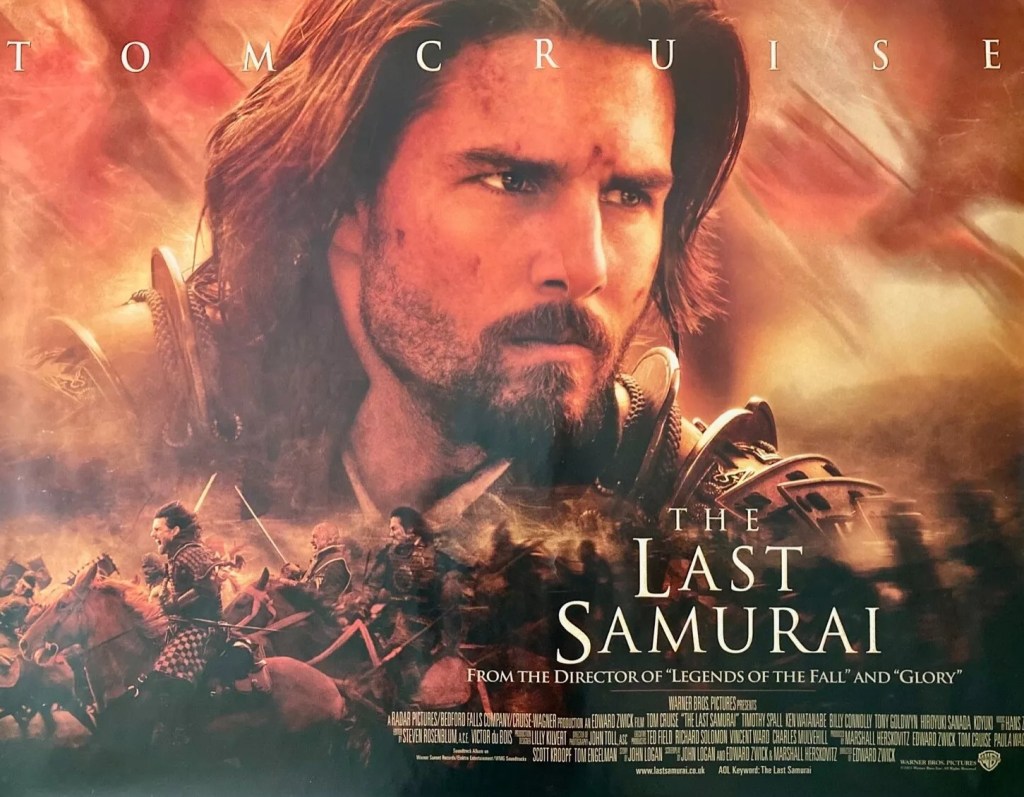
Tom Cruise originally passed on the John Logan script for The Last Samurai (2003) that Zwick felt was “still uncooked.” Uncooked or not, Russell Crowe, incidentally, was interested  in the Japanese lead. Zwick did a rewrite. Cruise liked the rewrite. “What struck me most as I got to know him was his insatiable appetite to keep improving.” Cruise was one of the actors whose involvement was an automatic green light for a studio. After completing another draft with  Hershowitz, Zwick got a call to go see Robert Towne (Chinatown, 1973). He went in dread. Towne “had an informal arrangement with Tom whereby he sometimes quietly rewrote his movies.” Instead of confrontation, Towne was encouraging. “Apparently, he just wanted to take my measure.”

There’s an animatronic horse – costing a million bucks – that appears for a few seconds in The Last Samurai in order for it to appear to the audience that in fact a horse was falling on Tom Cruise for a scene that would not have been possible, in the days before CGI, just with a stuntman. Zwick’s biggest problem on the picture was how to puncture Cruise’s self-assurance, get him to the “right emotional place…to touch some vulnerable part in him.” Zwick realized that simply asking the actor to go deeper wouldn’t work. It would look forced.

So just before shooting the critical scene, Zwick asked Cruise about his eight-year-old son, Connor. “I watched as he looked inward, and a window seemed to open and his eyes softened.” Zwick gently nudged him into position. “Go.”

Movie fans often wonder how a director gets into the movies. Usually, each tale is as odd as the last, a lucky break, meeting the right studio executive at the right time, coming across a studio hungry for your type of picture just at the ideal moment. Zwick has an odd an introduction. Living in Paris on a fellowship to observe experimental theater, he managed to creep onto the set of Love and Death (1975) and pepper Woody Allen with questions and he had a sneak preview of the Annie Hall (1977) script.

On returning to the U.S., he was accepted onto the American Film Institute’s director program. There were 26 pupils in the class, Zwick was one of six invited back for a second year. There, he struck up a lifelong friendship with Marshall Hershowitz. While studying, he read 10 scripts a week for United Artists, fell in with a merry band of more experienced Hollywood hands including Paul Schrader, Michael and Julia Phillips and Oliver Stone. After an improbable series of coincidences, he got  was employed as story editor for the tv series Family (1976-1980). Still aiming for a movie slot, he watched in horror as David Puttnam (Chariots of Fire, 1981) lasted for only six minutes of a private screening of Zwick’s 30-minute student film.

There’s not one of Zwick’s movies where he doesn’t regale you with an interesting anecdote about a star. More importantly, he provides insights into how movies are made, often touching on details that would not be obvious to anyone outside the business.

Ed Zwick, Hits, Flops and Other Illusions, My Fortysomething Years in Hollywood (Gallery Books) is available in print and kindle.

Thor (2022) **** – Seen at the Cinema

It was time someone took the piss out of the MCU. Just as well Marvel decided to do it for themselves. The result is a hoot.

Finding gainful employment for the universe’s dumbest superhero is no joke, but in a welter of visual and verbal gags the studio celebrates his stupidity. I was laughing from the outset and I didn’t stop and from the mad recaps to the giant goats, Thor (Chris Hemsworth) treating his weapons as if they had the power to upset him, his ignorance of the devastation he wreaks, and non-PC references to orgies and the size of his manhood, the inevitable Marvel save-the-world plot takes second place to humor.

Asgard has been turned into a tourist attraction, terrible actors perform sagas in tacky productions to entertain visitors, until Gorr (Christian Bale) the god-killer, having been allocated in normal mysterious fashion and in Excalibur-style the Necrosword, comes calling, kidnapping children, packing them off to the Shadow Realm as a means of luring Thor. Fortunately, lost love Jane Foster (Natalie Portman), unfortunately dying of cancer, reappears in his life, though, on the debit side, she steals his hammer, causing him to turn to his axe. There’s hammer hocus-pocus, the usual lengthy daft exposition, but that’s offset by Thor, sensitive soul that he is, feeling he has to woo the discarded axe.

Also recruited are Asgard king Valkyrie (Tessa Thompson) and stone-man Korg. First port of call, naturally, is Omnipotence City where all the top gods hang out, including Zeus (Russell Crowe), the top god of all. Unwilling to help them out when there are delectable maidens hanging on his every word and orgies to enjoy, Zeus foolishly picks a fight and loses his lightning bolt.

But that’s enough of the madcap fun. Now it gets serious in the usual annoying way, redemption and its alter-ego sacrifice required at every turn, as you try to keep up with the new ideas suddenly introduced, the Bifrost and Eternity, and have to remind yourself of the rules regarding the axe and sword and the various pitfalls awaiting the characters. But the first half has given the movie sufficient energy to woosh you through the second half.

I’m not sure of The Avengers recruitment policy and how Thor ever fitted in and it’s just as well his cohorts in this adventure, part of the way at least, are the equally demented Guardians of the Galaxy phalanx led by the vain and vainglorious Star Lord (Chris Pratt). I always felt the rest of the MCU mob, albeit they occasionally deliver a good quip or two, were just too serious a bunch, what with all the saving-the-universe-and-beyond malarkey whereas Thor and Star Lord are blood brothers, daft specimens, useless at romance and anything serious, good for nothing except a good scrap.

There are a whole bunch of stand-out comic scenes – Thor looking to Star Lord of all people for advice on matters of the heart, the goats leading the space craft crash-landing into a planet. Admittedly, excepting the serious bits at the end, this is far more light-hearted than anything else in the MCU and thankfully sticking to the one universe rather than the multi-universe departures of late.

Chris Hemsworth (Thor: Ragnarok, 2017) as usual is superb, just the right bombast and imbecility coupled with vulnerability and sweetness, his clipped delivery at odds with his befuddlement, his eve-of-battle speeches would have Churchill turning in his grave. But Russell Crowe (Unhinged, 2020), with his mangled Greek accent, matches him in the dumb stakes. Natalie Portman (Lucy in the Sky, 2019) makes a welcome return and Tessa Thompson (Passing, 2021) proves a good side-kick to both. Christian Bale (Ford vs. Ferrari, 2019) bring his malevolent A-game as a memorable villain. Watch out for cameos from Matt Damon (The Last Duel, 2021), Melissa McCarthy (Superintelligence, 2020), Luke Hemsworth (Death of Me, 2020) and Sam Neill (Jurassic World: Dominion, 2022).

Director Taika Waitiki (Thor: Ragnarok , who also voices Korg, does a quite brilliant job of combining action and comedy. He also takes credit for the screenplay along with Jennifer Kaytin Robinson (Unpregnant, 2020).

My Five-Star Picks for the First Year of the Blog

It’s a been a fabulous year for watching the movies and my pictures of the year (the first full year of the Blog running from July to June, I hasten to add) make up an eclectic collection ranging from historical epics, dramas and westerns to horror, thrillers and comedy. Although this is my chosen decade, many of the films I was seeing for the first time so it was interesting to sometimes come at a film that had not necessarily received kind reviews and discover for one reason or another cinematic gems. There was no single reason why these pictures were chosen. Sometimes it was the performance, sometimes the direction, sometimes a combination of both.

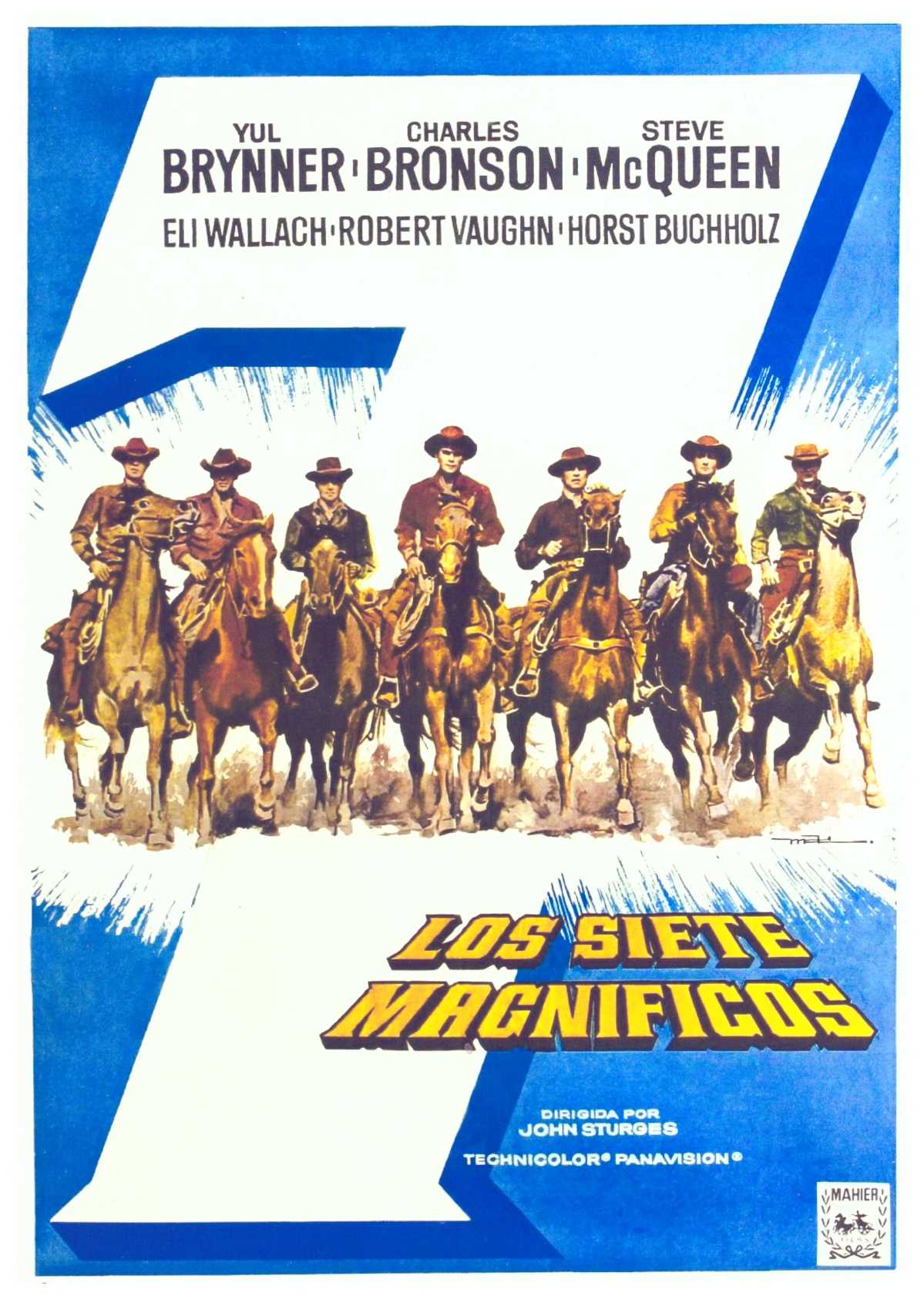
The westerns I most enjoyed came from either ends of the decade – John Wayne and Rock Hudson in magnificent widescreen spectacle The Undefeated (1969) and Yul Brynner, Steve McQueen, Charles Bronson, James Coburn and the team in The Magnificent Seven (1960).

There was another ensemble all-star cast in J. Lee Thompson war film The Guns of Navarone (1961) one of the biggest hits of the decade with Gregory Peck, Anthony Quinn, David Niven, Stanley Baker et al.

Horror brought a couple of surprises in the shape of Daliah Lavi as the Italian peasant succumbing to The Demon (1963) and Peter Cushing menaced by The Skull (1965).

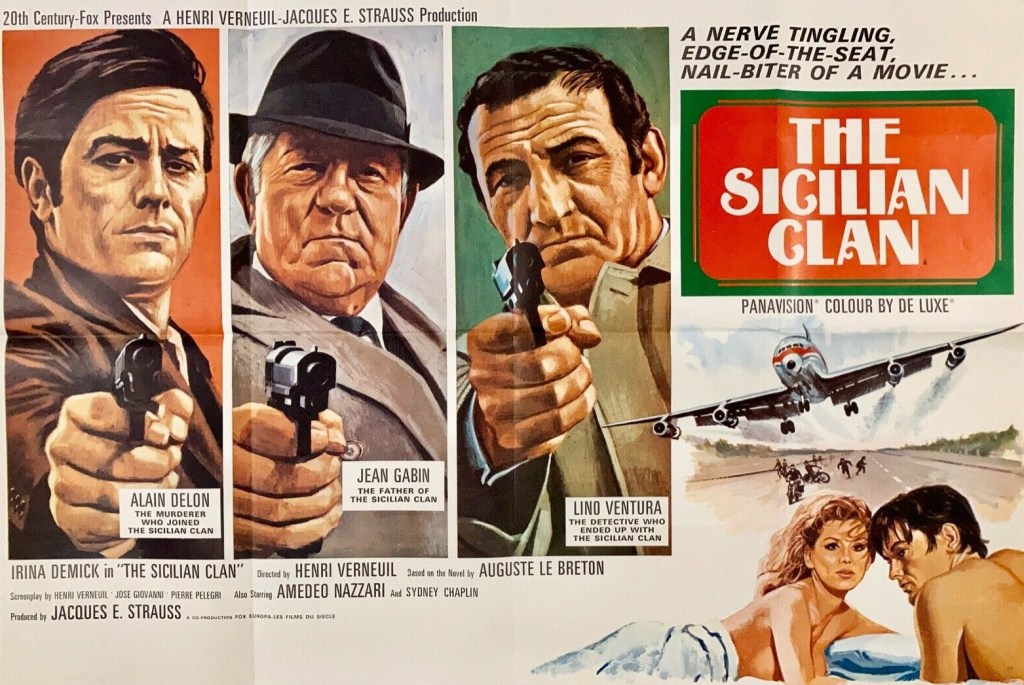
Not surprisingly perhaps Alfred Hitchcock headed the ranks of the five-star thrillers, but surprisingly to some, this was in the shape of Marnie (1964) with Sean Connery and Tippi Hedren rather than some of his decade’s more famous / infamous productions.  Heading the romantic thrillers was the terrifically twisty Blindfold (1965) with Rock Hudson and Claudia Cardinale teaming up to find a missing scientist. The Sicilian Clan (1969) proved to be a fine heist picture in its own right as well as a precursor to The Godfather with a topline French cast in Alain Delon, Lino Ventura and Jean Gabin.

Only one comedy made the five-star grade and what else would you expect from Billy Wilder’s Some Like It Hot (1959), slightly outside my chosen remit of films from the 1960s, but impossible to ignore the chance to see Marilyn Monroe, Tony Curtis and Jack Lemmon strutting their stuff on the big screen. For the same reason I had the opportunity to re-evaluate Ridley Scott’s Oscar-winning historical epic The Gladiator (2000) that gave Hollywood a new action hero in Russell Crowe. Stylish contemporary sci-fi chiller Possessor (2000), from Brandon Cronenberg,  was another one seen on the big screen, one of the few in this year of the pandemic.

Most people would certainly put Paul Newman as prisoner Cool Hand Luke (1967) in this elevated category but, to my surprise, I found several other dramas fitted the bill. The clever sexy love triangle Les Biches (1968) from French director Claude Chabrol made his name. Burt Lancaster turned in a superlative and under-rated performance in the heart-breaking The Swimmer (1968) about the loss of the American Dream. Rod Steiger, on the other hand, was a hair’s-breadth away from picking up an Oscar for his repressed turn as The Pawnbroker (1964).

Two films set in the Deep South also made the list – Marlon Brando in Arthur Penn’s depiction of racism in small-town America in The Chase (1966) with an amazing cast also featuring Jane Fonda and Robert Redford, and Michael Caine as a more than passable arrogant southerner in Otto Preminger’s Hurry Sundown (1967) opposite rising star Faye Dunaway. Dennis Hopper and Peter Fonda’s hymn to the freedom of the motorbike in Easy Rider (1969) turned into a tragic study of attitudes to non-conformity.

For only eighteen films out of a possible two hundred to make the cut indicates the high standards set, and I am looking forward to as many, if not more, brilliant films in the year to come.

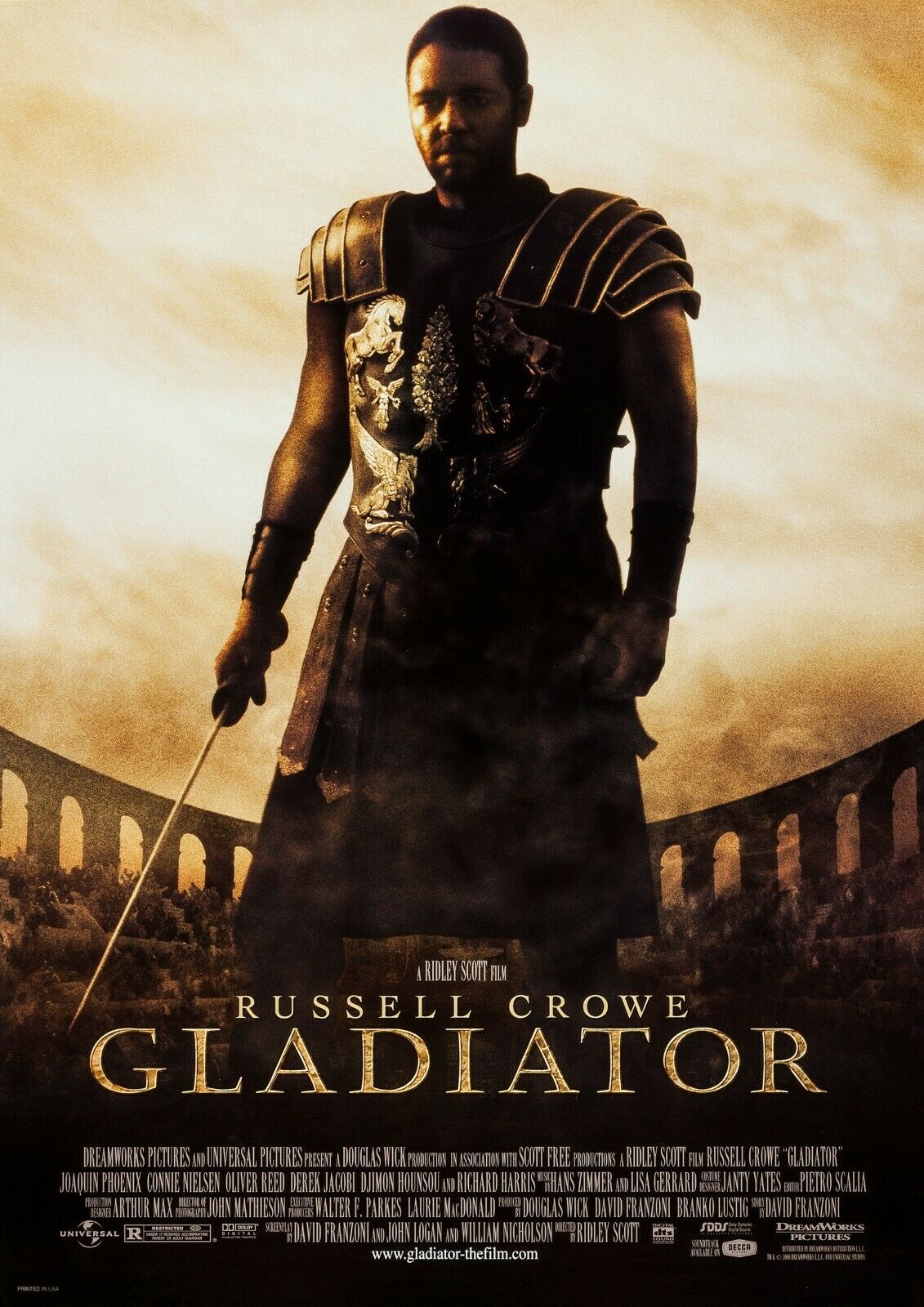
Gladiator (2000) *****

As well as being first in the queue to see The Gladiator on original release over two decades ago and enjoying countless viewings since on DVD and television, the chance to see a big-screen revival (as part of this week’s cinematic triple bill) was not to be missed. There’s always some worry in going back to see a movie you adored that time will have caught up with it or that the big screen will magnify flaws. Instead, this was a pure blast, one of the greatest epics of all time and definitely one of the most brilliant scores.

I always feel kind of sorry for people who’ve only see this kind of picture on a small screen – no matter how big your television it comes nowhere near the cinematic experience. I’m not even sure why it was showing on the big screen – the 20th anniversary has passed so maybe the draw was the upcoming British Father’s Day.

If you’re quick, you will be able to see it until June 17 at the Showcase cinema chain in the U.K. This is a new 4K print. It may run longer if it picks up sufficient demand.

Director Ridley Scott was in something of a career lull after the highs of Blade Runner (1982) and Thelma and Louise (1991) and his previous historical adventures – The Duellists (1977) and 1492: Conquest of Paradise (1992) – had been box office duds, so this was a considerable big-budget gamble for Dreamworks and Universal.

Few historical epics begin with action. Directors tended to want to build up the various characters before any battle got under way. But apart from a few seconds of an idyllic pastoral setting establishing how much Roman General Maximus (Russell Crowe) wants to get back to his Spanish farm, we are immediately, with foot-tapping music by Hans Zimmer, into one of the best battles ever filmed, not just for the tactical detail, and the sense of danger – an emissary is returned missing his head – but the ferocity of the action.

Backgrounding this is politics. Dying Emperor Marcus Aurelius (Richard Harris) distrusts his son Commodus (Joaquin Phoenix) and want to make Maximus the power in Rome. The reaction of Commodus is to smother his father and murder his rival. Maximus escapes but ends up a slave in a gladiator camp in North Africa and eventually returns to Rome plotting revenge.

Into the mix comes Commodus’s sister Lucilla (Connie Nielsen) who had romantic yearnings for Maximus in the distant past and various senators plotting to remove Commodus from office. The story basically shifts from dramatic action in the arena to outside intrigue with Maximus being seen as a man who could potentially unseat the emperor.

But Ridley Scott has such a fine eye for everything, genuine locations mix in brilliantly with CGI, the action sequences are astonishing, and emotions are kept at a peak. Even when the main narrative pauses here and there to allow philosophic and patriotic speeches they are so deftly written they often amount to the best pieces of dialogue in the picture.

Few movies have as many memorable lines. Sample: “what we do in life echoes in eternity;” “death smiles at us all, all we can do is smile back;” “people should know when they are conquered;” “father to a murdered son, husband to a murdered wife, I will have my vengeance in this life or the next;” the “little bee” sequence;  and the lines that ended up as taglines on the advertising posters” a general who became a slave, a slave who became a gladiator, a gladiator who defied an emperor.”

While he could easily have let the action speak for itself and who would not have welcomed more battles with Roman foes or more combat in the arena – and many other movies with a character in a similar predicament have succumbed to that temptation – Scott ensures that the tensions between the characters are never lost. So Commodus is driven both by wishing to please his father and desiring an incestuous relationship with his sister. Lucilla is torn between protecting her son (Spencer Treat Clark), her growing attraction to Maximus and trying to keep her brother at bay while plotting against him. Maximus, who has no head for politics, finds himself involved in intrigue as a way of gaining revenge on Commodus.   

Nor does Scott get bogged down with too much exposition or the intricacies of character as has often been the downfall of epics. The story has been whittled down to essential conflict.

It’s hard to pick a winner from the various action scenes – the opening clash in the forests of Germania with snow beginning to fall; the first gladiatorial combat where Maximus takes control; a small band of gladiators fighting what seems a losing battle against chariots; Maximus being unexpectedly attacked by tigers in the arena; or his climactic fight with Commodus.

And there are substantial cameos for British stars – Richard Harris, Oliver Reed, David Hemmings – who have lost their box office luster but not their acting ability. Connie Nielsen was a revelation.

Russell Crowe became instant superstar with his majestic portrayal. His name had already been on the lips of Oscar voters, having been nominated the previous year for The Insider (1999), but he took the Best Actor Oscar here. Although the film was named Best Picture Ridley Scott lost out – unfairly I felt – in the Best Director category to Steven Soderbergh for Traffic. (How do the two films compare now, I wonder). Joaquin Phoenix and Hans Zimmer were also nominated and the movie also picked up nominations for cinematography and screenplay (David Franzoni, William Nicolson and John Logan.) All told it won five Oscars and seven nominations.

This was the climax to my cinematic triple bill this week and since it also included Nobody and The Father, it could well turn out to be one of the best days I have ever spent at the cinema.

CATCH-UP: I reviewed The Fall of the Roman Empire (1964) a while back and if you compare both pictures you can clearly see how much Ridley Scott owes a debt to the previous film.  

There’s a company called Park Circus – http://www.parkcircus.com – which has the rights to show on the big screen virtually all the old movies made by Hollywood studios and it’s worth checking out whether this might be coming your way soon.

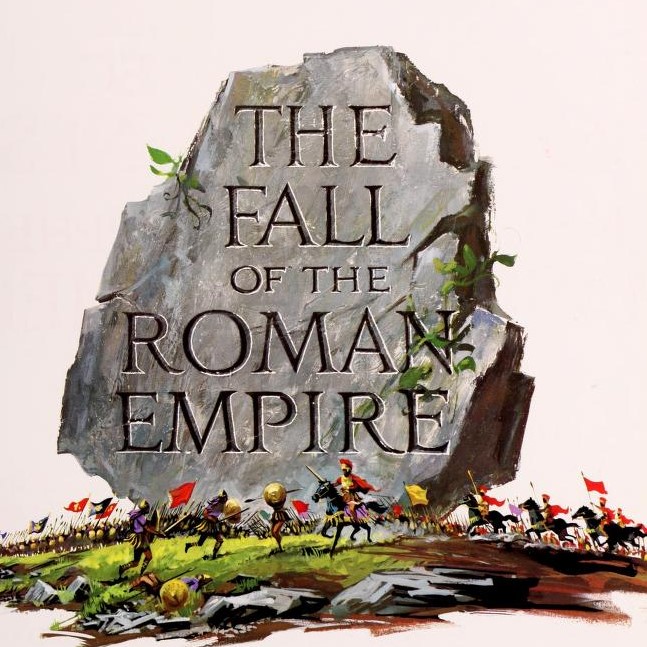
Fall of the Roman Empire (1964) ****

There could not be a more contemporary picture. As an examination of the problems of assimilating different cultures it is hard to beat. As an assessment of the difficulties of the transition of power it is faultless.

In Gladiator Ridley Scott, taking a few liberties with the known facts, re-imagined the circumstances discussed here of the death of Emperor Marcus Aurelius and the ascension to power of his son Commodus. Along the way, Scott stole a few of Anthony Mann’s visual ideas, snow falling on the battlefield, for example, and at the end the phalanx of guards, shields up, blocking in Commodus and the dethroned military chieftain (Stephen Boyd here, Russell Crowe in Gladiator) for their gladiatorial climax.

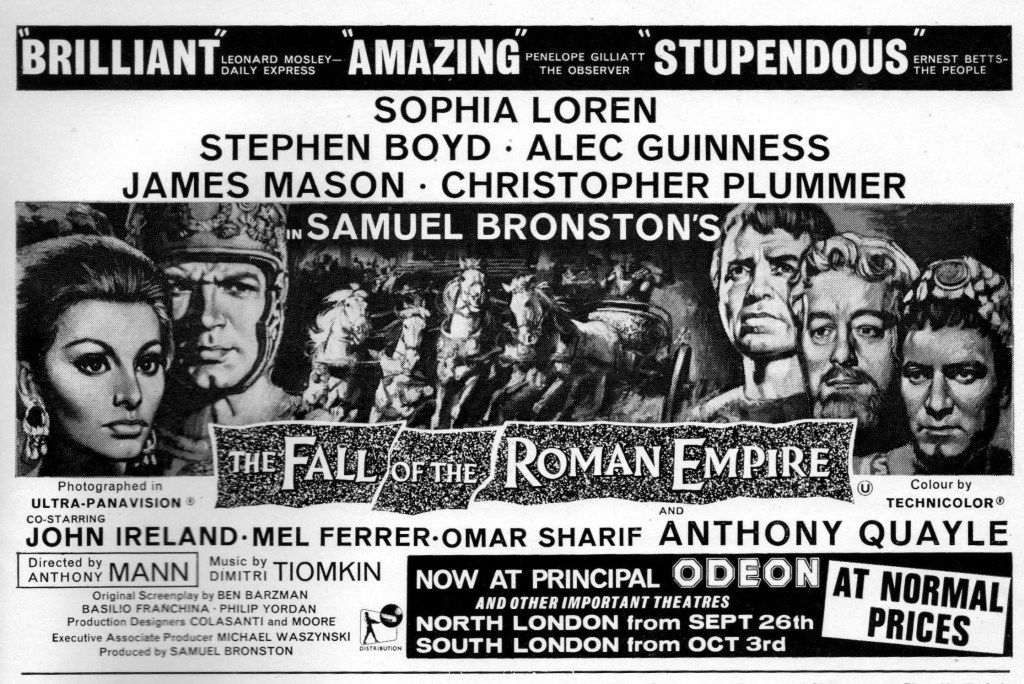
British advertisement for the film about to go on general release after a spell in the more expensive West End. The “normal prices” slogan was very commonly found on movies as they headed towards the more normal kind of cinema. in addition, by the time it was rest go into wider release the critics had delivered their verdicts and these could be tagged onto any advertising.

The title does not refer to an invasion of Rome by vast armies of barbarians but the internal corruption which signals the end of the empire. Audiences, taught Latin and Roman history as a matter of course at school around the time the film was released, would be more familiar with the subject matter, but hardly prepared for the spectacle.

Every extra in the known world must have been employed for several scenes, cities bursting with inhabitants, armies sprawling over vast tracts of land. One standout is the extraordinary chariot clash between the two protagonists, not in the confines of an amphitheatre a la Ben Hur, but on wild terrain, along narrow cliff roads, wheels tipping over the edge, down ravines and forest. The other is the soundless gladiatorial fight, not a whisper of music until there is a victor.

And there should be mention of the torture of James Mason, very well done. There is political intrigue, quite a clever way of poisoning an enemy, and plenty argument over the issue of accommodating different cultures, traditional punishment versus the novel notion of extending the hand of friendship and granting automatic citizenship.

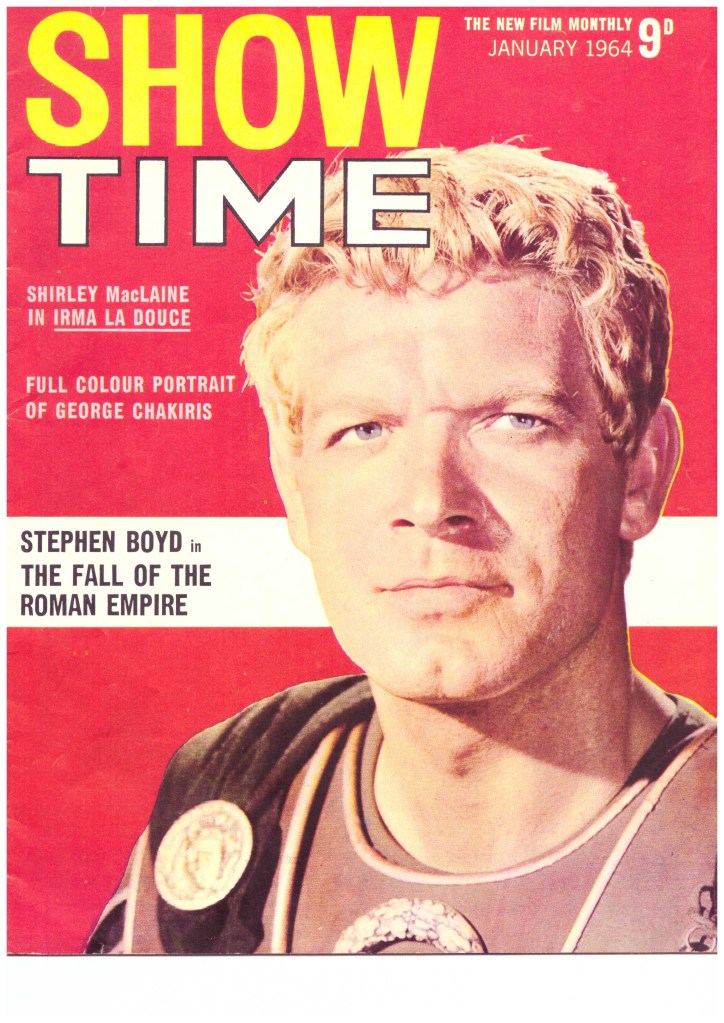
The relatively short-lived “Show Time” fan magazine was launched in Britain as Odeon’s answer to the highly successful “ABC Film Review.” Both magazines were only sold inside cinemas but it was common for cinemagoers to purchase copies without necessarily going into to see a picture. This magazine ceased publication by the end of the decade. This was the launch issue in Janaury 1964.

Loyalty is also tested – is treason a form of loyalty? And how much does loyalty depend solely on payment? Proof is given of how integrating cultures can work, an idea that seems alien to Romans accustomed to beating subjects into submission. In some respects the drama takes second place to the discussion.

Christopher Plummer is the deranged Commodus who embraces and disdains in turn his friend Livius (Stephen Boyd). Sophia Loren, as Commodus’ sister (no incestuous suggestions here), is in love with Boyd and though married off to Armenian king Omar Sharif she manages to spend little time with her husband.

If approached as a political film rather than a traditional epic it has a lot to offer. If you want just battles and thwarted romance then a lot less. The mixture of both strikes a good balance. While there are arguments that it is too long, it could actually do with another twenty minutes or so to iron out narrative inconsistencies.  

Discover WordPress

A daily selection of the best content published on WordPress, collected for you by humans who love to read.

The Atavist Magazine

by Brian Hannan

WordPress.com News

The latest news on WordPress.com and the WordPress community.