Tag: Rosanna Schiaffino
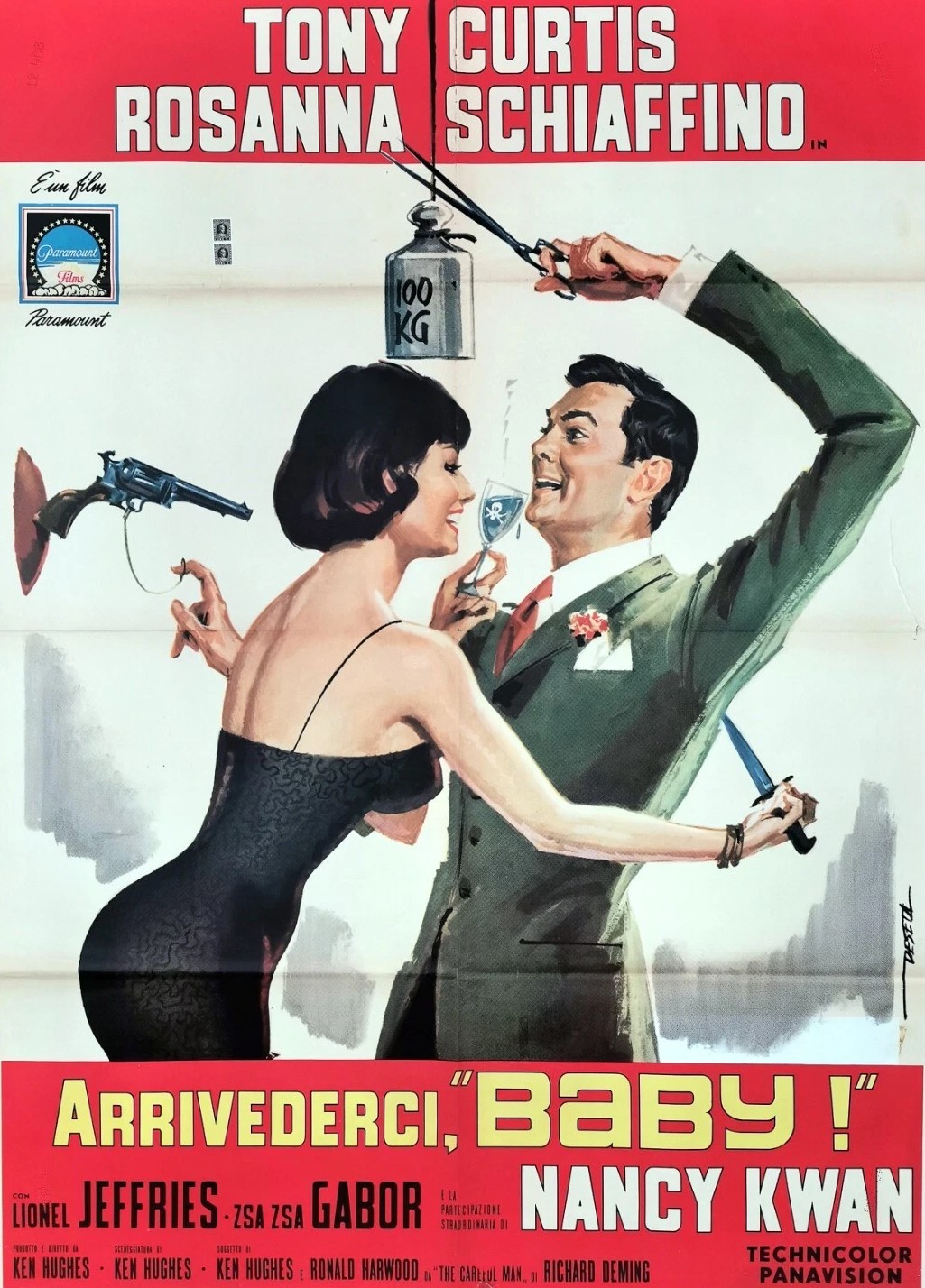
Two Weeks in Another Town (1962) ****

Unholy triumvirate of director Vincente Minelli, star Kirk Douglas and screenwriter Charles Schnee had been here before, eviscerating Hollywood in The Bad and the Beautiful (1952). Now, while the locale has shifted to Rome, Hollywood-on-the-Tiber, the behind-the-scenes battles are, if anything, even more fraught since careers are on the slide.
Burnt-out washed-up star Jack (Kirk Douglas) is duped by washed-up director Maurice (Edward G. Robinson) into thinking he is going to revive his career with a supporting role in a low-budget movie made at Cinecitta. In reality, Maurice wants Jack to oversee the dubbing, time restraints preventing the director doing this. Jack and Maurice have history, good and bad, making some fine pictures together, but inveterate womanizer Maurice bedding Jack’s wife Carlotta (Cyd Charisse).

Carlotta, divorced from Jack, now living in Rome and married to a shipping magnate, wants Jack back, if only to keep her bed warm while her husband is away. Young beauty Veronica (Daliah Lavi) dumps temperamental boyfriend and fading star Davie (George Hamilton), in favour of Jack. Maurice is having an affair with his latest find, the tempestuous Barzelli (Rosanno Schiaffino), so brazen she strokes his legs while he toasts his wife Clara (Claire Trevor) at a dinner to celebrate their tenth anniversary. Clara is prone to attempting suicide.
So far, so melodramatic. But instead of explosive melodrama, it’s more about insecurity and the honing of the cutting line. We know enough about vicious Hollywood in-fighting so none of this will come as a surprise, but it’s still astonishing the depth of self-deception on display that occasionally flowers into genuine insight. Maurice may be ducking and diving in the last chance saloon but he still knows how to disarm a young man with a knife. Not sure Jack giving Barzelli a kick in the pants would be deemed an acceptable method of calming down a screeching star. And you won’t get much kudos for a line like “all women are monster.”

But there are nuggets of Hollywood lore. Barzelli being forced to keep her arms in a certain position for a shot, for example, that actors doing the dubbing require direction, the shifting around of scenes, the producer already guaranteed profit through pre-sales before the movie is released, the endless rewrites, and of course that career rejuvenation brings actors a sudden jolt of power. And there’s a car ride that matches Hitchcock for sheer terror, regardless of the fact it is shot with back projection.
Fame as we all know is an illusion, but so is success. The famous are notoriously lonely. What’s hardest to get your head round is failing to notice when your career is on the slide. Being so wrapped up in your notion of invincible self, to which, while you are successful, all pander. There’s some lovely stuff about the collusion of audience and moviemaker, both hiding from reality.
But it’s a true adult drama, far superior in many ways to Once Upon a Time in Hollywood (2019) or Babylon (2022), avoiding the excesses of both, while homing in on character fragility, weakness exacerbated under pressure. In the end all make concession, some beating a tune of self-awareness. Even Maurice accepts he needs his wife to provide him with grounding and self-belief. The aloof arrogant Davie has to beg Jack not to steal his girl. Jack learns to ignore adulation.
If you like long speeches and elegant camerawork and confident direction this is for you. There’s plenty attendant glamor, but mostly it’s characters coming apart and putting themselves back together again, with or without a side order of bitchiness.
The acting is uniformly top-notch. Kirk Douglas might be auditioning for The Arrangement (1969), in which he essays a similar ambitious talent coming unstuck, but here he underplays, to the picture’s benefit, the early scenes when he’s still working out why he has fallen out of favor, and who he now is, just outstanding. But Edward G. Robinson’s (Seven Thieves, 1960) callous insecure monster runs him close. And the petulant performance by George Hamilton (Angel Baby, 1961) had critics purring and the industry predicting great things.
But it wouldn’t be anything without the believable women, all convinced their version of themselves will win favor. Cyd Charisse (Maroc 7, 1967), the female equivalent of the predatory Maurice, Claire Trevor (The Cape Town Affair, 1967) with suicide the preferred option to divorce, and especially Daliah Lavi (Some Girls Do, 1967) who gives Hollywood splendid notice of what she can do away from the sex symbol persona she was later lumbered with. Rossano Schiaffino has a ball as the sex symbol who views powerful men as playthings.
This was Vincente Minnelli’s fourth film with Kirk Douglas and just like Anthony Mann with James Stewart and John Ford with John Wayne or, more recently, Antoine Fuqua with Denzel Washington, draws a greater maturity from the actor. Charles Schnee wrote the screenplay based on the Irwin Shaw bestseller.
Sure-footed, bitchy as hell, hard-hitting, honest and unmissable.


The Long Ships (1964) ***
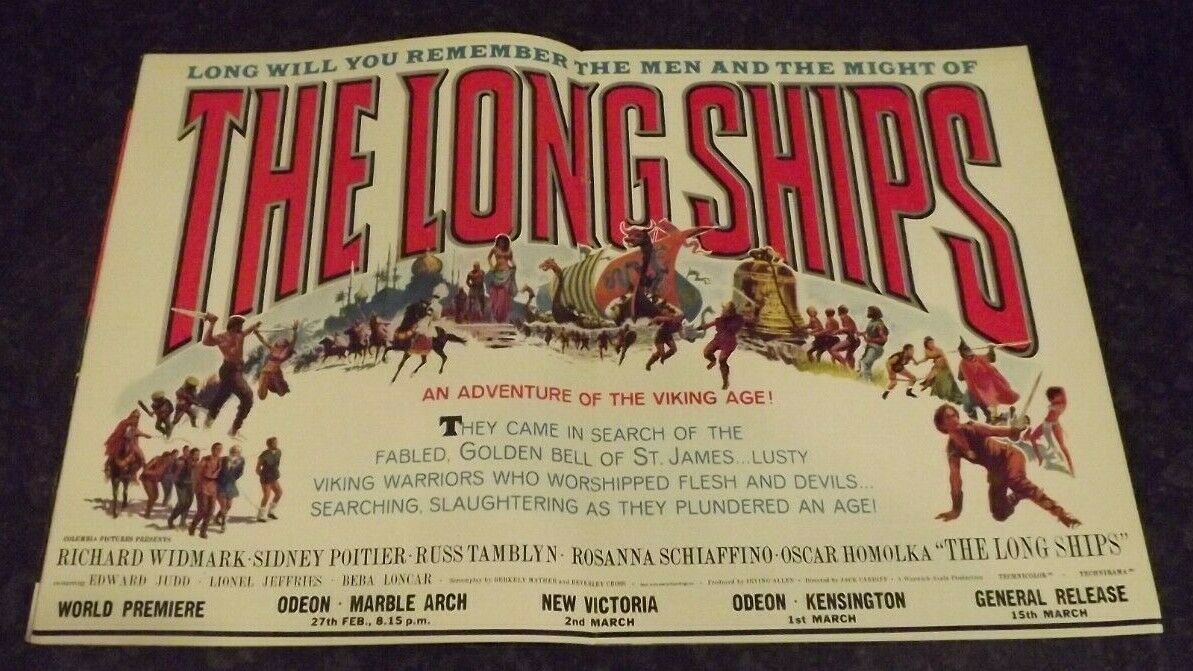
Decent hokum sees Vikings ally with Moors to seek a mythical giant bell made of gold, “the mother of voices.” There are stunning set-pieces: a majestic long ship coming into port, superior battles, the Mare of Steel, the discovery of the bell itself, while a clever ruse triggers the climactic fight. There’s even a “Spartacus” moment – when the Vikings declare themselves willing to die should their leader be executed.
Richard Widmark as a wily Viking, second cousin to a con man, makes the most of an expansive role. Instead of seething with discontent or intent on harm as seemed to be his lot in most pictures, he heads for swashbuckler central, with a side helping of Valentino, gaily leaping from high windows and engaging in swordfights although he does appear to spend an inordinate amount of time swept up ashore after shipwreck. Sidney Poitier, laden down with pomp and circumstance rather than immersed in poverty as would he his norm, is less comfortable as the Islamic ruler. Fresh from winning the Oscar for Lilies of the Field (1963) it surely must have the chance of a big payday that lured him into this role. (Widmark and Poitier re-teamed in The Bedford Incident, 1965, previously reviewed in the blog.) The diminutive Russ Tamblyn, as Widmark’s sidekick, is easily the most athletic of the trio.
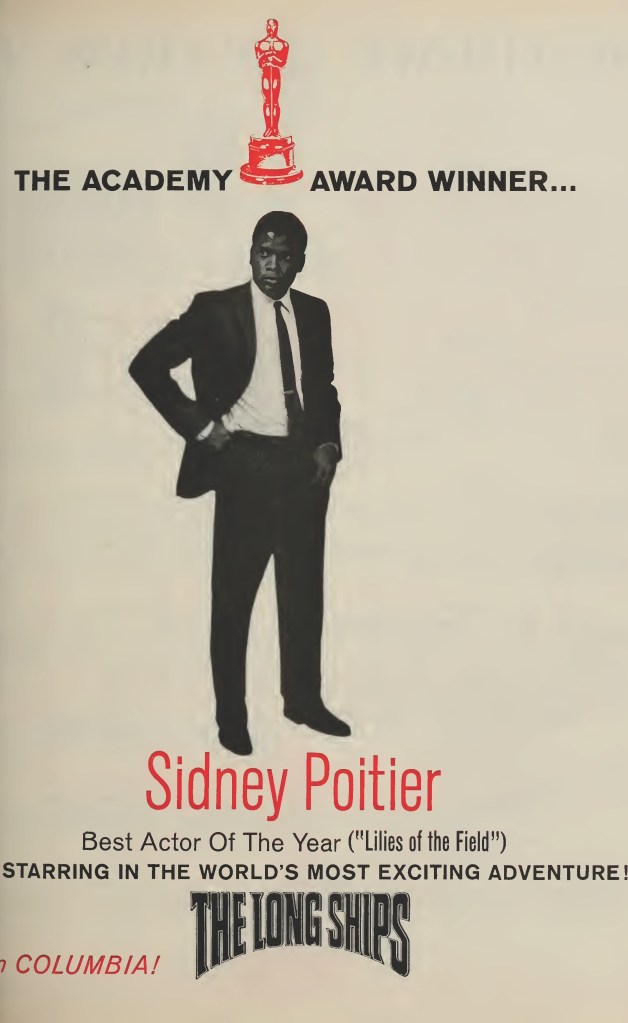
Although handy with a sword, both are equally adept as employing seduction, Poitier making eyes at Viking princess Beba Loncar (in her Hollywood debut) while Widmark targets Poitier’s neglected wife Rosanna Schiafffino (The Victors, 1963). The story is occasionally put on hold to permit the Viking horde to pursue their two favorite pastimes – sex and violence – and they make the most of the opportunity to frolic with a harem.
One of the marks of the better historical films is the intelligence of the battle scenes. Here, faced with Muslim cavalry, the Vikings steal a trick from The 300 Spartans by lying down to let the horses pass over them then rising up to slaughter their riders. But there is also an unusual piece of intelligent thinking. Realising, as the battle wears on, that they are substantially outnumbered and have their backs to the sea, Widmark takes the sensible option of surrendering.
Director Jack Cardiff, Oscar-nominated for Sons and Lovers (1960), brings to bear his experience of working on The Vikings (1958) for which he was cinematographer. He is clearly at home with the action and equally there is some fine composition. However, the story in places is over-complicated, he fails to rein in the mugging of one of the industry’s great muggers Oscar Homolka and there is a complete disregard for accent discipline. Edward Judd (The Day the Earth Caught Fire, 1961), Scotsman Gordon Jackson (The Great Escape, 1963) and Colin Blakely (The Private Life of Sherlock Holmes, 1970) have supporting roles.
Many of the films from the 1960s are to be found free of charge on TCM and Sony Movies and the British Talking Pictures as well as mainstream television channels. But if this film is not available through these routes, then here is the link to the DVD and/or streaming service.
 The Magnificent 60s