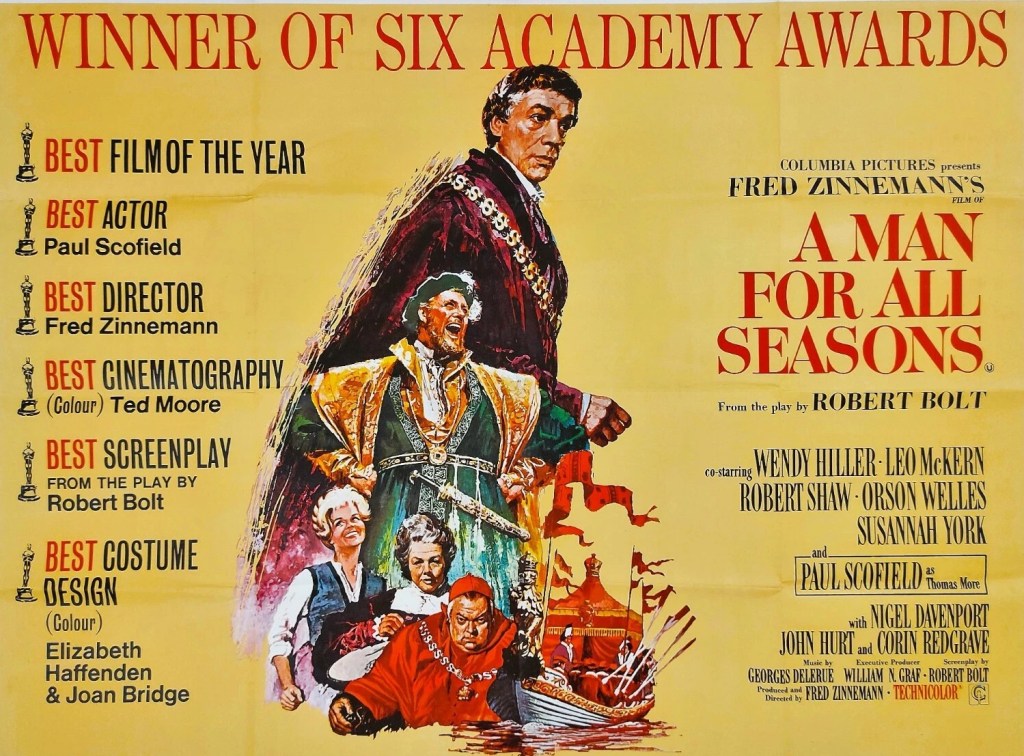
Tomorrow at Ten (1962) ****

Surprisingly hardnosed for a British crime thriller. Surprisingly stylish and when the sting in the tail comes, it’s an emotional one, adding a deeper level to one of the main characters. In most crime picture – wherever they originate, Britain, Hollywood, France, Italy – the detectives may well complain to their colleagues about their superiors but they never take them on head-to-head and again and again. For that element alone, this is well worth watching.

The opening has you hooked, way head of its time, you would be more likely to see this type of approach in a picture from a top-name director, Alfred Hitchcock for example. A man, Marlowe (Robert Shaw) enters a derelict detached house carrying three parcels. He climbs a flight of stairs. With a key he opens a locked door. It might be a bedsit it’s so scarcely furnished except for the child’s bed. He sits down at the table, empties out two bottles of milk and some food. He opens a long parcel wrapped in paper and takes out a stuffed toy. He flips it over on its stomach, cuts open its back, pulls out the stuffing and from his last parcel removes a small bomb which he places in the empty space.

(At this point I have to explain that the toy is a gollywog, an innocent enough toy at the time but which has different connotations now, so is rarely mentioned, but this particular type of toy has a bearing on the plot, so forgive me if I make further mention of it.)

Next time we see him he’s wearing a chauffer’s uniform, picking up a small boy, Jonathan, (Piers Bishop) to take to school. Only, as you’ll have gathered, he has another destination in mind, but takes care not to frighten the child, to keep him distracted to the extent of the child thinking there’s nothing untoward as he is taken upstairs. He’s delighted with the toy, and not, at this point, too worried to be left alone.

Meanwhile, at the boy’s house, nanny Mrs Robinson (Helen Cherry) receives a telephone call from the school asking where the boy is. Just as the perplexed widowed father Anthony Chester (Alec Clunes) is given the news, Marlowe, now dressed in a suit, and carrying a Gladstone bag, appears at the door. Anthony greets him by name.

In the study Marlowe explains he has kidnapped the son, requires £50,000 in ransom, has planted a bomb set to go off the next morning at ten o’clock (hence the title), but will only release details of the child’s whereabouts once he is out of the country. Chester, a millionaire, has no qualms about paying up. Marlow is as cool as a cucumber. He has come up with the perfect crime. He will get off scot-free, become instantly rich and no one will come to any harm.

Except the nanny is listening at the door and dials 999. The local cops call in Scotland Yard. Assistant Commissioner Bewley (Alan Wheatley) assigns the case to Detective Inspector Parnell (John Gregson) quickly revealed as a tough nut, threatening to turn a suspect in a jewel robbery loose so that his pals will think he’s squealed and exact vengeance.

By the time, he reaches the house, Chester has gone off to withdraw the cash from the bank.  Inside, Parnell confronts Marlowe. And so begins a game of cat-and-mouse. Marlowe holds firm, believing that the cop will give in to save the child, Parnell searches for a psychological weakness in the criminal’s makeup that he can use to crack him. Each convinced of their own mental strength in a battle with an innocent life at stake.

Chester returns with the money and is furious to discover the cop. When Parnell refuses to play along with handing over the cash to the kidnapper, Chester pulls out his ace, the old boys network, calling up Bewley, asking for Parnell to be removed from the case. Bewley, happy to do a favor for a wealthy pal, agrees. But Parnell refuses to go.

Bewley goes in person to confront his insubordinate officer. Still, Parnell refuses to budge, verbally attacking his smug superior, threatening to go to the newspapers.

While the pair are arguing, Chester loses his rag, physically attacking Marlowe. In the struggle, Marlowe falls  back, hits his head and falls unconscious. Bewley, who has reluctantly agreed to let Parnell continue, now responds with spiteful glee. The cop will carry the can if the child dies.

Chester, meanwhile, is calling in the top medical experts to save Marlowe, money no object. But Parnell can’t afford to wait and enlarges the inquiry, putting out a public appeal, Marlowe’s face on the front page of the evening newspaper. But every other investigation can’t be halted just for this case, so Parnell is frustrated when various beat cops, originally going door-to-door, are pulled off onto other case.

Meanwhile, we already know Jonathan has worked out something is wrong, But the window is sealed with steel mesh and the door is locked and eventually he goes to sleep cuddling the deadly toy.

Marlowe shows no sign of recovery and dies. Bewley ups the stakes against Parnell. A beat cop looks at the outside of the house in question but walks away. Parnell gets a tip-off that leads him to a nightclub called the Gollywog Club and encounters Marlowe’s parents who run the place. Their name is Maddow. They haven’t seen their son in several months and while they accept he’s a criminal, the mother reminisces about what a loving boy he was.

Eventually, Parnell finds the estate agent who rented the property to Marlowe. By now they have just five minutes to get to the property.

They arrive a few minutes after the deadline.

But Jonathan has inadvertently saved his own skin, and ironically the plan has backfired because of Marlowe’s insistence on hiding the bomb in a stuffed toy of sentimental value rather than secreting it in a cupboard or somewhere the child would not have looked, and even if he found it wouldn’t know what it was.

After waking up Jonathan has washed his face and hands and decides the toy could do with a bit of tidying up the same so dunks it in a sink full of water, thus nullifying the bomb.

Parnell goes home, welcomed by wife and – child the same age as Jonathan.

So, yes, much of the tale is par for the course, several twists to up the tension, but Parnell’s duels with his boss put this on a different level, and the realisation at the end that he has managed to set aside the feelings for his own child. And it’s also elevated by the direction of veteran Lance Comfort (Devils of Darkness, 1965) who takes time out – in an era when such features were usually cut to the bone – to add atmosphere. The first and last scenes are outstanding for different reasons and the two verbal duels make for a fascinating movie.

Stronger cast than most in this budget category – John Gregson (Faces in the Dark, 1960) and Robert Shaw (Jaws, 1975) bring cool steel to the affair.

Though little-know, Tomorrow at Ten has been acclaimed as one of the top 15 British crime pictures made between 1945 and 1970 and I wholeheartedly agree.

Another welcome revival from Talking Pictures TV.

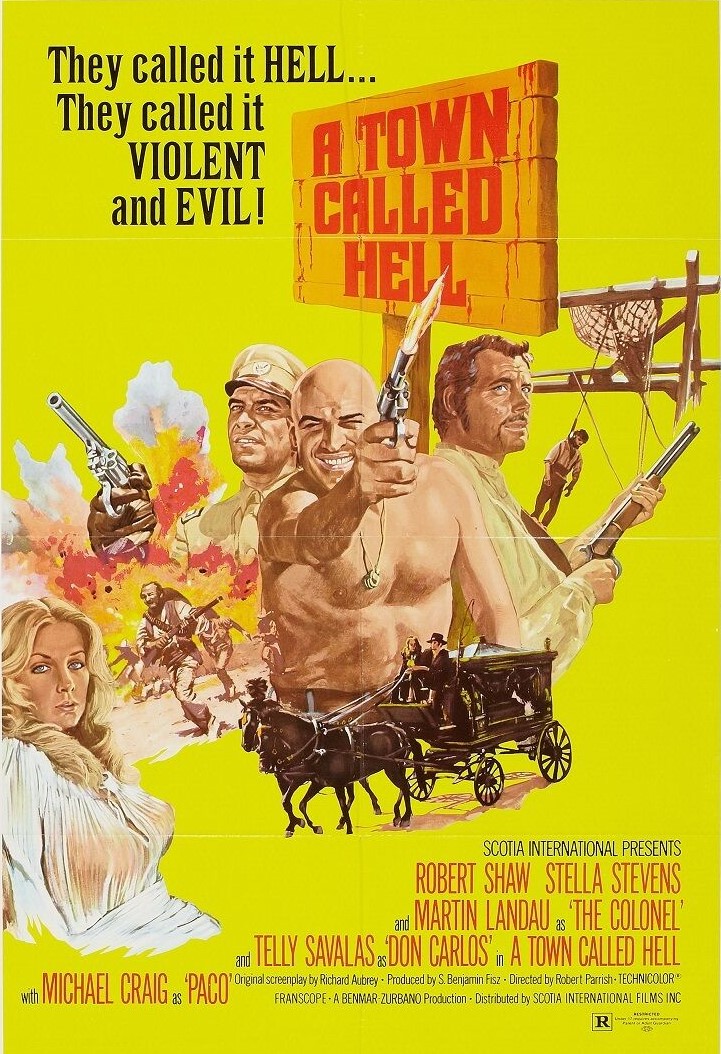
A Town Called Hell / A Town Called Bastard (1970) ***

You think you’re in for something quite stylish when widow Alvira (Stell Stevens) rides into town asleep in a coffin in a hearse. Or when she turns up in a dream as an avenging angel. Or when a rebel, entrusted with funds to buy guns, squanders the cash on women and booze. Or when a Mexican general is so disgusted by informer Paco (Michael Craig) that he refuses to face him. But these are about the only highlights in a bloody, sadistic confusing affair.

And diversity rules. Not only do we have a deaf mute going by the apocalyptic name of The Spectre (Dudley Sutton), there’s also an unnamed blind man (Fernando Rey) who comes in handy because he can recognise people by fingering the contours of their faces.

We begin straightforwardly enough with the massacre in a church of the well-to-do by Mexican rebels led by two unnamed characters (Robert Shaw and Martin Landau). Turns out that’s only the prologue and we cut to a decade later to a town ruled by sadistic sun worshipper Don Carlos (Telly Savalas) who has a tendency to string people up at the drop of a hat. Keeping a low profile is another unnamed character known only as the Priest (Robert Shaw) who may always have been a cleric or who has turned to God after being involved in the massacre. Even so, religion doesn’t prevent him having a mistress.

Alvira is offering a $20,000 reward for the killers of her husband, Montes, a victim of the earlier massacre. To get the money, Don Carlos employs the typical wheeze of framing a couple of villagers, husband and wife, hanging them before their tongues run so loose they can confess it wasn’t them. In a bid to save his own skin, the husband blames his wife.

Don Carlos’s luck turns bad when his sidekick La Bomba (Al Lettieri) decides it might be fun to take over, beginning by shooting off his boss’s fingers before hanging him in the sun. But just when you might think you are getting the hang of what’s going on, the unnamed Colonel (Martin Landau) appears. He’s also looking for information, but not inclined to pay for it. He’s hunting for a rebel leader with, wait for it, an actual name, though this still sounds like a pseudonym, Aguila (Eagle, get it?). For no reason whatsoever, it takes the priest a little while to work out this is his former comrade from the church massacre.

The Yanks were the ones who changed the title from the above. Interesting double bill, though, with Alain Delon as “Le Samourai.” Stella Stevens looks far more provocative
on the poster than she does in the film.

It doesn’t take long for the Colonel to get a grip on the hanging malarkey and with as much relish as Don Carlos, determining to continue hanging the townspeople until they tell him where Aguila is. The two narratives don’t quite mesh, but then what do you expect, this is high on atmosphere, sweating bodies, raw emotions, blazing sun. The Colonel, equally obviously, has given up on being a rebel, presumably because as a government official, he can officially murder people any time he likes without having to round up a gang of rebels to do so.

Every now and then the movie dips into flashback or Paco appears to confuse matters further.

There’s an odd sensibility at work. Maybe this is intended to be one of those down’n’dirty westerns trying to show us how mean the actual West really was (although given it’s set in Mexico, we only need to go as far back as The Wild Bunch, in 1969, to get that point). It doesn’t fit so easily into the spaghetti western canon, either, despite the uniform malevolence.

The oblique tone reminds you more of something that could have been put together by Luis Bunuel, but that would be ranking it far higher than it deserves.

The cast are the biggest plus points, though you might be asking whether Robert Shaw (Battle of the Bulge, 1965) and Stella Stevens (The Mad Room, 1969) were sold a different film entirely. Stevens doesn’t have much to do, except look beautiful and soulful. But Shaw is about the only leading man you’ll come across who so puts his heart into a part that he doesn’t mind being seen actually drooling at the prospect of massacre. In fairness, Telly Savalas (The Assassination Bureau, 1969) and Martin Landau (Nevada Smith, 1966), while not exactly dripping spit, drool in different ways.

There’s enough brooding going on stylistically that you are almost willing it to turn into something not just better but more definable. Alas, no such luck.

Robert Parrish (In the French Style, 1963) does his best with a screenplay  by Robert Aubrey (The One-Eyed Soldiers, 1967) and Benjamin Fisz, in his only writing gig, he was better known as a producer. My guess is they were more script doctors than anything else, the original damage having been done by the uncredited Philip Yordan (Battle of the Bulge).

Could a been something.

https://amzn.to/46Jpk2D

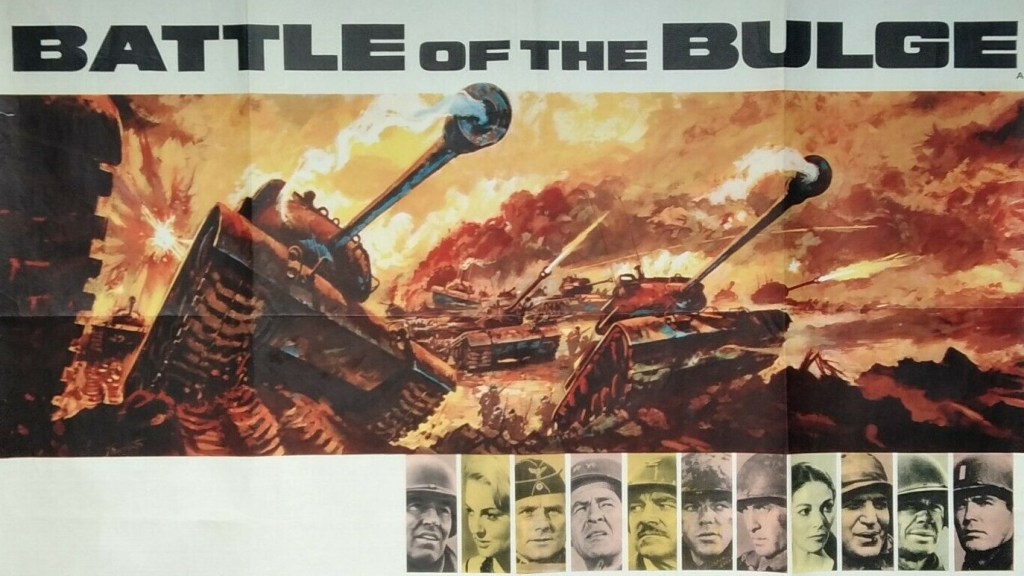
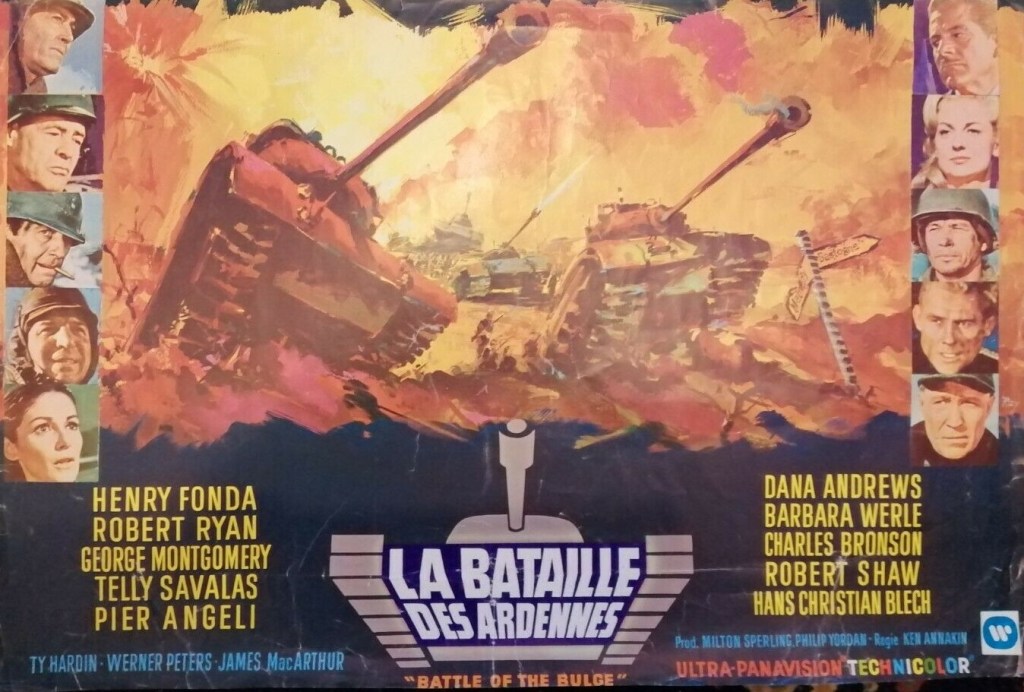
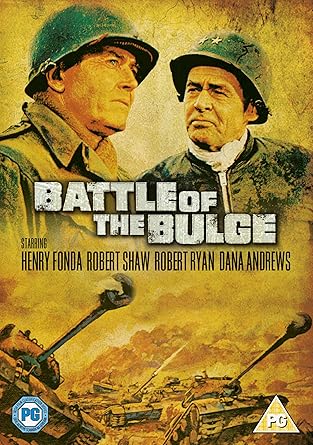
Battle of the Bulge (1965) ***** – Seen at the Cinema in Cinerama and 70mm

Cinerama was the IMAX of the day and far superior in my view in many aspects not least the width of the screen. IMAX goes for height but I’m not convinced that compensates for lack of the widest screen you could imagine. So the chance of seeing this in the original Cinerama print, 70mm and six-track stereo, at the annual Bradford Widescreen Festival yesterday was too good to miss. And so it proved. A thundering experience. Much as I enjoyed it on DVD, this was elevated way beyond expectation.

Superb even-handed depiction of war, far better than I remembered. Most war films of this era and even beyond showed the action primarily from the view of the Americans/British – even the acclaimed The Deer Hunter (1978) and Apocalypse Now (1979) show nothing of the skills of the Vietnam forces that would prove victorious. And while The Longest Day (1962) shows reaction to the invasion, the Germans are revealed as caught on the hop. Given the basis for this picture is the unexpected German offensive in the Ardennes, France, in December-January 1944-1945, you might expect the Germans to be accorded some attention. But hardly, given as much of the picture as this, so that in the early stages the Germans are portrayed as powerful, clever and patriotic while the Americans are slovenly and complacent, their greatest efforts expended on preparing for Xmas.

With tanks the main military focus, Cinerama is deployed brilliantly, the ultra-wide screen especially useful as the unstoppable vehicles rampage through forests and land and allowing true audience involvement when opposing armies meet head-to-head. Of course, it being Cinerama, there are a couple of scenes that play to the strength of this particular screen, a car careening round bends and a train racing along twisting tracks, the kind of scenes that previously would have had the audiences out of their seats with excitement, but here mainly used to raise the tension in the battle.

It’s to the film’s benefit that the all-star cast doesn’t feature a single actor who is truly a star in the John Wayne/Gregory Peck/Steve McQueen mould so that prevents the audience rubbernecking to spot-a-star that afflicted The Longest Day. The biggest name, technically, is Henry Fonda, and although he received top billing in many pictures, you would have to go back to The Wrong Man (1956) to find an actual box office hit. The only previous top billing for Robert Shaw (From Russia with Love, 1963) had been in The Luck of Ginger Coffey (1964), a flop few had seen. And the top-billing days of Robert Ryan (Horizons West, 1952) and Dana Andrews (Laura, 1944). In fact, the actor with the biggest string of hits was Disney protégé James MacArthur (Swiss Family Robinson, 1960). Anybody who had seen The Magnificent Seven (1960) and The Great Escape (1963) would recognise Charles Bronson in a supporting role. So fair is the movie that it’s the blond-haired Shaw who steals the show with a dynamic performance.

So it helped the almost documentary-style of the film that it was filled with familiar faces rather than dominant stars and the director was not bound to give a star more screen time or provide them with one brilliant scene after another, or establish a redundant love story in order to provide them with more emotional heft. In fact, the only romance goes to a sly black marketeer who views his relationship more as a business asset.

Initially, the role of Lt. Col. Kiley (Henry Fonda), a former cop, seems only to be to rile his superiors General Grey (Robert Ryan) and Colonel Pritchard (Dana Andrews), his pessimistic view contrasting with the accepted notion that the Germans are well and truly defeated and the war would be over soon. On airplane reconnaissance he takes a photograph of an officer later identified as Panzer tank genius Colonel Hessler (Robert Shaw). While Grey and Pritchard over-ride his conclusions, the movie concentrates on the German build-up, their discipline, efficiency, leadership and determination juxtaposed to the American inefficiency and sloppiness.

Where the Americans just want to get home, Hessler – more charismatic than any of the dull Yanks – is in his element, wanting the war to never end, convinced at least that a tank-driven assault would drive a wedge between the Allied forces, and reaching the target Antwerp in Belgium in the north would extend the war by another year by which time Germany’s V2 rockets would give them greater firepower. The Germans also have a clever idea, the type that the British were always coming up with and would make a film of its own, of parachuting American-born Germans behind enemy lines, dressed in American uniforms to carry out vital sabotage and hold crucial bridges across the River Meuse.

In one of the best scenes in the film, his tank commanders spurt spontaneously into a patriotic song with much stamping of boots. And while Hessler’s immediate superior (Werner Peters) , ensconced in a superior bunker, can enjoy a comfortable lifestyle, no more illustrated by the fact that he has courtesans to hand, one of whom, offered to Hessler, is furiously dismissed. And the clock is ticking, the Germans have limited supplies of fuel and must reach the enemy’s supply dumps before they run out of gas.

The maverick Kiley manages to be everywhere – the River Meuse bridge, in the air in the fog determinedly hunting for the panzers he believes are hidden, is the one who realises how critical the fuel situation is for the enemy, and at the fuel depot for the movie climax. Otherwise, the picture uses its cast of supporting characters to cover other incidents, the massacre of prisoners of war at Malmedy, the chaos  as the Germans over-run American-held towns.

Best of all is the human element. It would be easy on a picture of this scope to lose emotional connection, as you would say was the prime flaw of The Longest Day. Not only is Kiley the outsider trying to beat the system, but we have the cowardly Lt Weaver (James MacArthur) who would rather give up without a fight than lose his life, the weaselly Sgt. Guffy (Telly Savalas) representing the worst instincts of the grunts, the confused General Grey can’t make up his mind how to respond to the sudden attack, and Hessler’s driver   Conrad (Hans Christian Blech) who is fed up with paying the price of war.

The action scenes are outstanding. If you’ve never been up against a tank in full flight, you will soon get the idea how fearsome these metal battering rams are, as the rear up, crash over trees, race across open fields, and either with machine gun or shells wreak havoc. As with the best war films, you are given very precise insights into the battles, the tactics involved, the ultimate cost. Wolenski (Charles Bronson) is in the thick of the fighting.  

While Robert Shaw is easily the biggest screen personality, Henry Fonda is solid, and holds the various strands of the picture together, while Charles Bronson enjoys a further scene-stealing role. But the pick of the acting, mostly thanks to bits of improvisation, is Telly Savalas (The Slender Thread, 1965) as the thieving Guffy. In one memorable scene he kicks out in resentment at his collection of hens and in another shakes his body at the tanks. No one else, beyond Shaw, comes close to his infusing his character with elements of individual personality.

Pier Angeli (Sodom and Gomorrah, 1962) as Guffy’s mistress and Barbara Werle (Krakatoa, East of Java, 1968) as the courtesan are inexplicably billed above Charles Bronson, Telly Savalas and James MacArthur perhaps in a ploy to deceive audiences into thinking there was more female involvement.

Full marks to British director Ken Annakin (The Biggest Bundle of Them All, 1968) for visual acumen and for simplifying a complicated story and peppering it with human detail. His battles scenes are among the best ever filmed. Credit for whittling down the story into a manageable chunk goes to Philip Yordan (The Fall of the Roman Empire, 1964), Milton Sperling (The Bramble Bush, 1960) and John Melson (Four Nights of the Full Moon, 1963).

A genuine classic, with greater depth than I ever remembered.

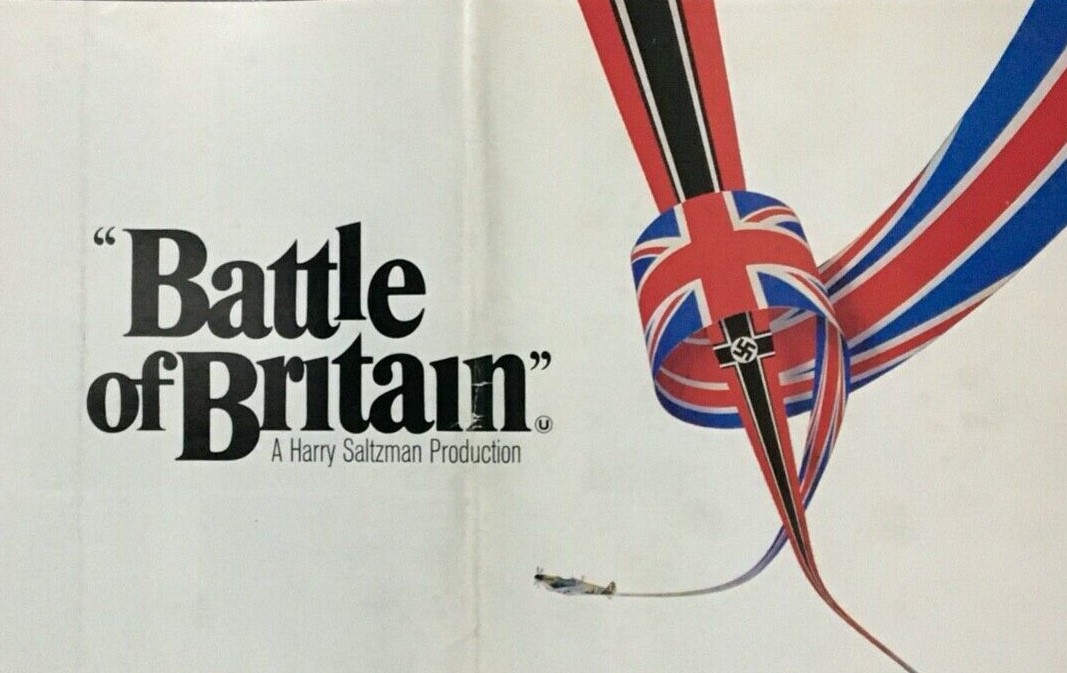
The Battle of Britain (1969) *****

Fabulous aerial sequences countered by grim reality. Like The Longest Day (1962) and Battle of the Bulge (1965) even-handedly doesn’t treat the Germans as the evil enemy, but unlike those films victory is somewhat obscure, no rattling of spears as in Zulu (1964) to announce opposition departure, just clear skies indicating an absence of foe. Anyone going into this – persuaded by Dunkirk (2017) that this retreat was a triumph – and with little knowledge that after Hitler had overrun Europe invasion was imminent might be surprised to discover that this was a campaign lasting over three months rather than one conclusive battle.

That’s to the benefit of the movie, allowing it space to breathe, for characters to develop, rather than everything crammed in pell-mell. Given the situation changed from day-to-day, the one constant, which we’re scarcely allowed to forget, is that the British are heavily outnumbered in the sky. It’s a war of attrition. The Germans can lose hundreds of planes, the British nary a one.

But it’s far from gung-ho, the British coming in for criticism for their unpreparedness, surprised when the Germans bomb airfields, even more astonished when the opponent starts dropping bombs on London. Perhaps, given the relatively short running time for an epic – 46 minutes shorter than The Longest Day, 35 minutes down on Battle of the Bulge – it might have been better to avoid slipping in a section on the impact of the Blitz on Londoners, though that is counteracted by panic in Berlin when that city is also bombed.

But, by and large, it’s an engrossing tale. And bold, too, in the version I saw no subtitles for German dialog, leaving audience reliant on facial and body expressions. To slow down the action, I guess, and add some class, several scenes involve people walking down long corridors.

All the salient points are covered, pilots thrown into battle with barely a few hours experience of flying a Spitfire, the lack of pilots, in-fighting at the top, checkers moved across the board at mission control indicating German aerial advance, the inability of getting aircraft up quick enough or repaired quick enough. Above all, the reality of death is shown in astonishing detail; once the pilot was shot or the airplane destabilized, there was almost no escape, fire enveloped anyone inside, hatches failed to open, planes burst into flame or crashed into the sea. And it was the same death, regardless of nationality. And there were no scenes of  callous Germans shooting down a British pilot parachuting to safety.

The aerial sequences are quite astonishing. I’ve seen this on big screen and small, but even on a small screen, the camerawork is quite extraordinary, even getting this number of workable planes in the air must have been some feat, then flying in formation and peeling off in attack. It is kind of hard from time to time to work out who is shooting at who since the planes are all the same grey color and only distinguished when the camera is close enough to identify  them by RAF roundel or Nazi swastika. But the overall effect is a sense of sorrow rather than triumphalism, young lives of any nationality brought to a brutal close. There is no scene, as in Battle of the Bulge, of the over-zealous Nazi, the singing that made them appear such an implacable foe. Here, there’s no need to play up implacable. Unless they abandon the fight, the Germans, courtesy of superior numbers, will inevitably win. All the British can do is stave off defeat for as long as possible.

The all-star cast is only an all-star cast if you’re British. Without a Hollywood star in the vein of John Wayne, Robert Mitchum and Henry Fonda, and in the absence of British superstars like Sean Connery and Peter O’Toole, it’s an all-star cast by default. The biggest name, Michael Caine (Deadfall, 1968), has one of the smallest parts. But the equality of the cast works in its favor, there’s none of the rubbernecking that got in the way of The Longest Day.

Christopher Plummer (The High Commissioner/Nobody Runs Forever, 1968) has the biggest role as a squadron leader determined to force his wife out of the front line working on the airfields and into a safer position. But the best acting comes from Laurence Olivier as the dry Air Chief Marshal Sir Hugh Dowding who has no truck with interfering politicians. Accused of inflating figures of German casualties he replies that if he is wrong the Germans will be in London in a week.

But it’s a close-run thing between him and Susannah York (They Shoot Horses, Don’t They, 1969) as the aforesaid wife with a growing streak of independence and Ian McShane (The Pleasure Girls, 1965) as a lowly pilot called upon to express grief more than most. There’s certainly a sense of solidarity among the cast, no show-boating from the usual scene-stealing culprits like Trevor Howard (Von Ryan’s Express, 1965) and Robert Shaw (Battle of the Bulge) whose normal determination to bristle at the slightest opportunity is dropped for the good of the cause.

The great and the good appeared to be happy with the slightest role just to take part. The roll-call includes Ralph Richardson (Khartoum, 1966), Michael Redgrave (The Hill, 1965), Kenneth More (Dark of the Sun/The Mercenaries, 1968) and a hatful more.

Guy Hamilton (Goldfinger, 1964) directs with some distinction, his biggest achievement to concentrate on fact rather than flag-waving, no better demonstrated than by my realization that the stirring theme tune that I remembered so well by Ron Goodwin (Where Eagles Dare, 1968) does not make an appearance until the very end. The screenplay by James Kennaway (Tunes of Glory, 1960), Wilfred Greatorex (The High Commissioner) and, in his only movie work,  Derek Dempster, displays more finesse than you might expect.

Almost documentary in tone, a classic.

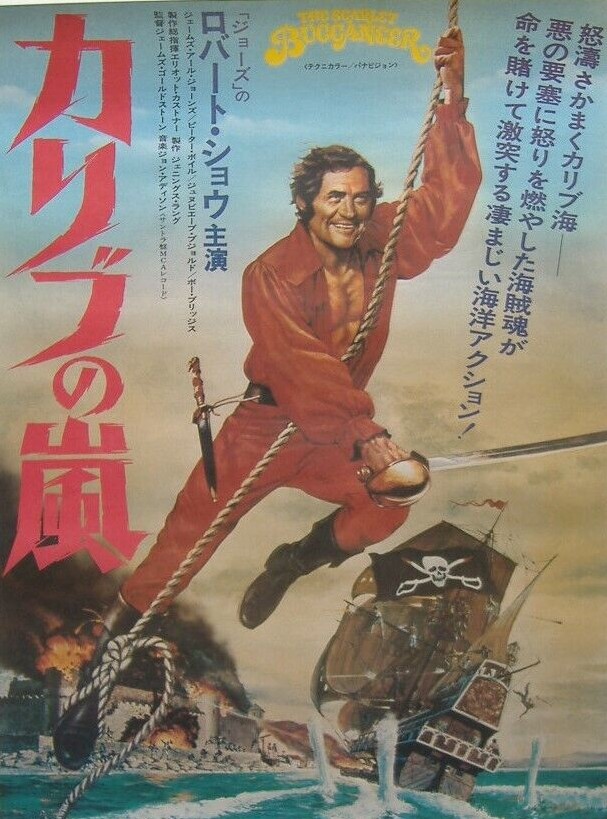
Swashbuckler (1976) **

Red faces all round. Uneasy pirate spoof that misses all its targets, coming close to resembling the kind of movie that gives turkeys a bad name and saved only by a spirited performance by Genevieve Bujold. Uber-producers Jennings Lang (Rollercoaster, 1977) and Elliott Kastner (Where Eagles Dare, 1968) should have known better but were seduced by the tantalizing returns for Richard Donner’s The Three Musketeers (1974) and its sequel which had revived the moribund swashbuckling genre.

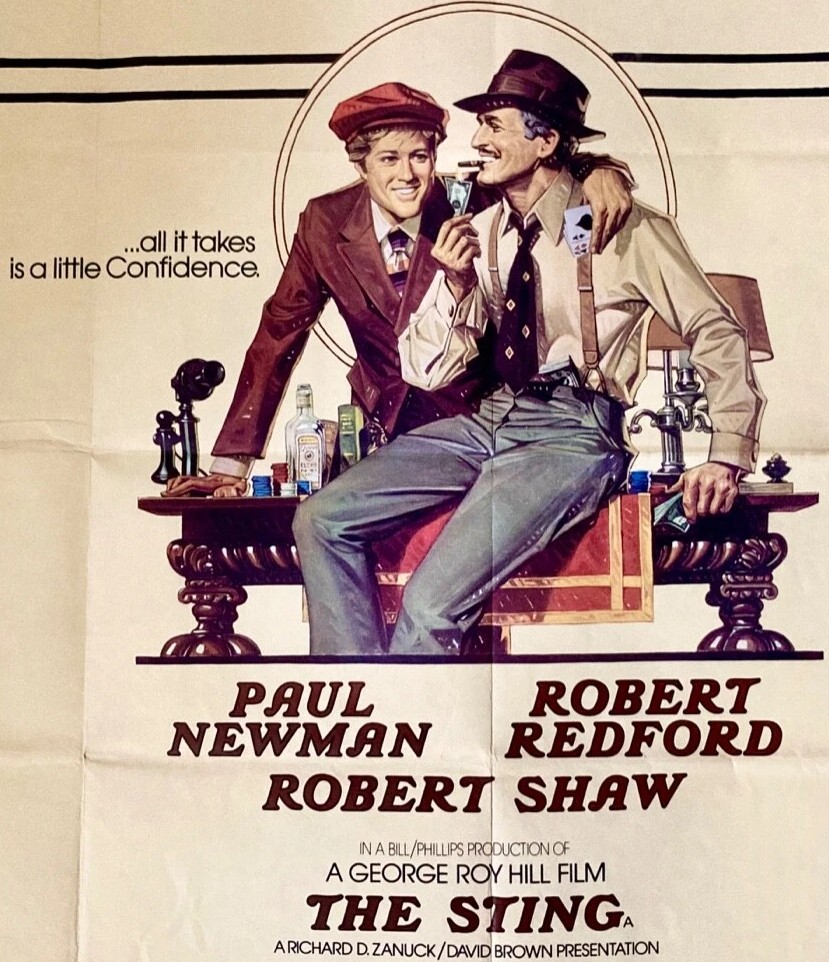
Robert Shaw (Custer of the West, 1967) was nailed-on for the leading role since had made his name playing a pirate in British television series The Buccaneers (1956-1957) and was as hot as he was going to get after the double whammy of The Sting (1973) and Jaws (1975). However, the movie takes its cue from one of the chief supporting actors Major Folly (Beau Bridges).

It’s color-coded. In case we can’t tell a good guy from a bad guy, we’ve got the Man in Red, pirate Ned Lynch (Robert Shaw), shaping up against the Man in Black, unscrupulous Jamaican governor Lord Durant (Peter Boyle). Ned is presented as a seagoing Robin Hood, Durant as the wicked Sheriff of Nottingham, his ruthlessness somewhat undermined by his predilection for playing with toy boats in his bath and for getting his hairy back waxed.

Twin narratives quickly unspool. Ned rescues from being hanged shipmate Nick Debrett (James Earl Jones) while Durant jails island chief justice Sir James Barnet (Bernard Behrens) and steals his treasure.

Stolen treasure being fair game, Ned and Nick hijack a coach-load of it, while Sir James’s on-the-run daughter Jane (Genevieve Bujold) ends up in their hands. Not being as black-hearted as his nemesis, Ned puts Jane ashore, but still a bit black-hearted humiliates her in a swordfight, and is disinclined to help her save her imprisoned father.

However, Jane has a trump card. For reasons unknown, Durant is heading back to England with a cargo of 10,000 dubloons, too tempting a target for any pirate. Naturally, nothing goes as planned but, as you might expect, there is a happy ending.

This might have worked, since all the ingredients are there, the laughing cavalier, the spirited woman, the humorous sidekick, the unprincipled villain. You’ve got an historically-accurate pirate ship for once, unlikely romance between high-born woman and charming scallywag, simple rescue-imprisonment-rescue scenario, and ample scope for swordplay.

Except the dialog is awful, the ship too small to accommodate any fighting so the pirates are landlubbers for the most part, and except for the duels between Ned and Jane and Ned and Durant, the swordfights are all kind of bundled together, and every now and then the action stops so we can hear a verse or two of a sea shanty sung by nobody in particular.

Though Ned and Nick trade cringeworthy, and in one case downright offensive, limericks, the best (only) laugh comes when Ned chucks Jane off a roof onto a canopy and follows up with the line “It worked.”  It doesn’t help that Durant’s pederastic tendences are played as a joke. Everywhere you look people are turning cartwheels or are “blithering idiots” or “pawns” and as you might expect there’s a cat-fight and a monkey around to relieve a jailer of his keys. You are just praying for a shark to come along to put the cast out of their misery.

In the midst of this feast of over-acting along comes Genevieve Bujold (Anne of the Thousand Days, 1969) who must think she’s in a different picture. She is a feisty one all right, not above putting a knife to a man’s cojones, or kneeing them in that region, and, given the lawless state of the island, branded a criminal for wounding a rapist.   At least she takes the whole thing seriously rather than as if being in a Mel Brooks picture.

It’s hard to know who to blame: the stars for acting as if enjoying a holiday from more serious fare; director James Goldstone (Winning, 1969) for failing to get the recipe right and employing a jaunty score that undercut everything, or writers Jeffrey Bloom (11 Harrowhouse, 1974) and Paul Wheeler (Caravan to Vaccares, 1974) for making a mess of the ingredients in the first place.

Of course, I am hardly blameless in drawing your attention to this, a sudden enthusiasm for pirate pictures sending me dashing into the wrong decade.

Watch for: Robert Shaw making a bid for the all-time Golden Raspberry; an unrecognizable Peter Boyle (Taxi Driver, 1976); Beau Bridges (Gaily, Gaily, 1969) doing his best Frankie Howerd impression; James Earl Jones (The Comedians, 1967) sounding normal, minus the deep-throated vocal tic on which he made his name; and so many inanities it falls easily into the So Bad It’s Good category.  

Custer of the West (1967) ****

Far grittier than I expected for a portrayal of one of America’s greatest, if flawed, western heroes. Far darker, with a two-fisted take on the endemic corruption at the highest level that fuelled the Indian Wars. Revisionism with a punch. And bold enough to turn Cinerama tropes on their head.

We should deal with the last first because that reveals the extent of the bitterness that seeps through a biopic in which a soldier’s great skills are put to unwarranted use. You may recall that from its earliest days, Cinerama relied on thrills of a specific nature, one that like 3D put  viewers in the driver’s seat, only to scare the pants off them. You were always racing towards danger, whether that be down the rapids in How the West Was Won (1962) or downhill along twisting roads in The Battle of the Bulge (1965). There always seemed a runaway train to hand. Whatever, it was just a thrill ride, occupants escaping unhurt.

Not so here. The men on the runaway wagon have been tied to it. It careens downhill all right, at one point from an upside down point-of-view, but it ends up over the cliff, no escape for the men. A soldier rides a log river to escape Native Americans. He manages that but is killed on dry land by an arrow all the same. A runaway train falls into a burning bridge. The normal thrills, then, with a realistic edge.

The reward for the great hero, Custer (Robert Shaw), gallant leader of sixty dashing cavalry charges during the Civil War, is a commission with the 7th Cavalry in the Dakotas on a mission described by General Sheridan (Lawrence Tierney) as “plain robbery,” the blatant theft of land from Native Americans.

That’s virtually the first scene, a brutal analysis on the American West, greedy land-guzzling settlers requiring protection, a soldier in obeying orders tacitly agreeing to wage an unholy crusade, not a justified war against slavery.

And Custer doesn’t inherit your John Ford cavalry unit, where every drunk has redeeming features, if only to provide some comedy. His second-in-command, Major Reno (Ty Hardin) is an alcoholic, nearly an entire battalion of malingerers on sick parade. Although later spouting chivalrous nonsense about hating machines, it’s the cannon Custer brings to bear on the enemy that provides initial victory, permitting the boast that 255 men conquered the Cheyenne nation. But, of course, such triumphalism proves premature, the Cheyenne and Sioux taking revenge on defenceless towns.

Custer is presented with ambivalence, but granted something of a free pass given his intolerance of alcohol, antipathy to the war and whistleblowing that points the finger at government officials and corrupt businessmen. On the other hand he is the chief marketeer of his own image, vainglorious, not least in his determination to win the Battle of the Little Big Horn on his own, arriving a day ahead of other assigned forces.

He is both ruthless and comforting. Instead of upbraiding a mutinous soldier for stealing water during a trip over the desert, he tells him to wait till sundown when his thirst will be quenched. But, despite repeated broken treaties, he lacks sympathy for Native American chief Dull Knife (Kieron Moore) for failing to comprehend that a superior power will always win. There’s a bit too much crammed into a relatively short running time. A Russian appears to point out that the United States is negotiating to buy Alaska. Railroads enter the equation and an early version of a tank. An anonymous prospector has gold teeth because he likes “the taste of gold.” Robert Ryan makes a cameo appearance as a deserter.

All that is redundant when the venality confronting Custer is dealt with in one brilliant scene when gold prospectors start digging up the fort in the hope of finding the precious mineral.

I’m no expert on the historical accuracy but by and large whether this portrayal of the life and times of General Custer is actually true it certainly rings true.

British actor Robert Shaw (Battle of the Bulge), with his mean shifty eyes and trademark tight-lipped side-of-the-mouth delivery, doesn’t quite bring enough shade to the characterisation, but possibly that’s the fault of the screenplay, which has cast him, outside of the final calamitous engagement, as even more heroic in the political arena than on the battlefield. As his wife, Mary Ure (Where Eagles Dare, 1968) appears only fitfully and has little to do. Lawrence Tierney (Reservoir Dogs, 1992) is excellent as the self-serving Sheridan. Just like the later Cinerama epic Krakatoa East of Java (1968) this suffers from lack of recognizable stars.

Director Robert Siodmak (The Crimson Pirate, 1952) creates a literate, revisionist, western that ensures intelligence is not swamped by action. Bernard Gordon (Krakatoa East of Java) and Julian Zimet (Circus World/The Magnificent Showman, 1964) are credited with the screenplay.

A worthy attempt to use a legend to explore the greater issues of the day.

Behind the Scenes: Access All Areas at Twentieth Century Fox

No one would have invited journalist John Gregory Dunne to observe the inner workings of Twentieth Century Fox in 1967 had they know how badly the project was going to backfire. The studio was enjoying a commercial peak, The Sound of Music (1965) continuing to set records, the public turning out in droves for the critically-lambasted Valley of the Dolls (1967). Fattening up studio coffers were Von Ryan’s Express (1965), The Blue Max (1966) and spy franchise Our Man Flint (1966) and In Like Flint (1967). By the time Dunne’s book, The Studio, was published however, in 1969, the studio was in financial meltdown.

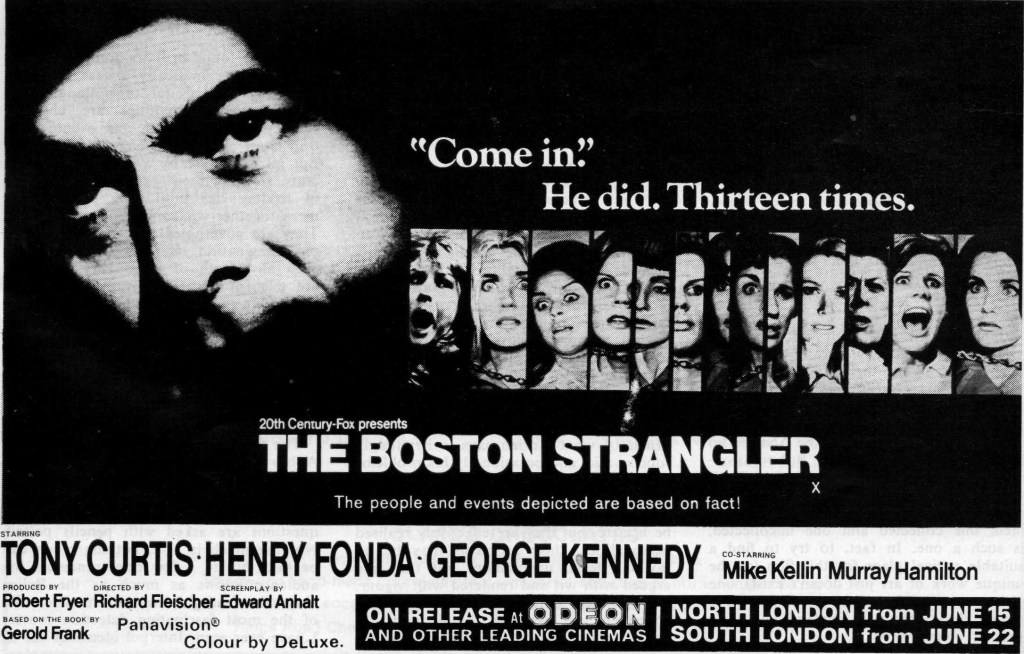
On a hubris high was studio chief Darryl F. Zanuck, who a few years before had saved Fox from bankruptcy. Dunne (later a screenwriter, most notably of A Star Is Born, 1976) had carte blanche to sit in on all sorts of meetings. The studio was going for broke with big-budget musicals, $18 million on Doctor Dolittle starring Rex Harrison (My Fair Lady, 1964) , $12 million for Star! with Julie Andrews (The Sound of Music), both actors considered bankers for their previous work in musicals. There was even $4.5 million allocated to The Boston Strangler which lacked any star commitment.

There were actually two Zanucks. Father Darryl and whizz-kid son Richard who was in charge of production and with whom Dunne had most of his dealings. Dunne observed first-hand how the younger Zanuck whittled down director Martin Ritt’s salary from $350,000 to $200,000 by threat of legal action.  

Script problems had pushed back production on The Boston Strangler, a first attempt by English playwright Terence Rattigan (The VIPs, 1963) rejected and the project now in the hands of Edward Anhalt (Becket, 1964). And it lacked a star.

Robert Shaw was one possibility. He was being paid $300,000 for a picture that would never be made, The Nine Tiger Man, to be directed by George Cukor, deemed too expensive at $7.2 million.  Zanuck could save money if Shaw accepted The Boston Strangler as an alternative. He didn’t. Or another, cheaper, project A Severed Head. He didn’t. Instead, Zanuck dumped A Severed Head (released by Columbia in 1971).

Christopher Plummer also walked away without doing any work. When Rex Harrison quit Doctor Dolittle, Plummer (The Sound of Music) signed up as his replacement for $300,000, Harrison said he hadn’t meant to quit. That wasn’t the only issue Harrison caused. He refused to pre-record his numbers and then mouth the lyrics to a playback. The Harrison, more expensive, method was to be recorded live.  As if producer Arthur P. Jacobs (Planet of the Apes, 1968) hadn’t already been through the mill. Alan Jay Lerner (My Fair Lady) was contracted to do the music. But after 15 months: nada. Jacobs turned to Leslie Bricusse. The budget had risen by 50 per cent, from $12 million to $18 million.

It was hoped the 50-plus companies involving in licensing and contributing $12 million in overall marketing spend would bring in the public. Over 300 items would be sold on the back of the picture, resulting in 45,000 displays in retail stores.  This was a picture you couldn’t miss. Expecting a soundtrack bonanza, the initial print run was set at half a million copies – bigger than that for The Sound of Music. Jacobs was perturbed to learn he would have to pay for window space – retailers paid with free copies.

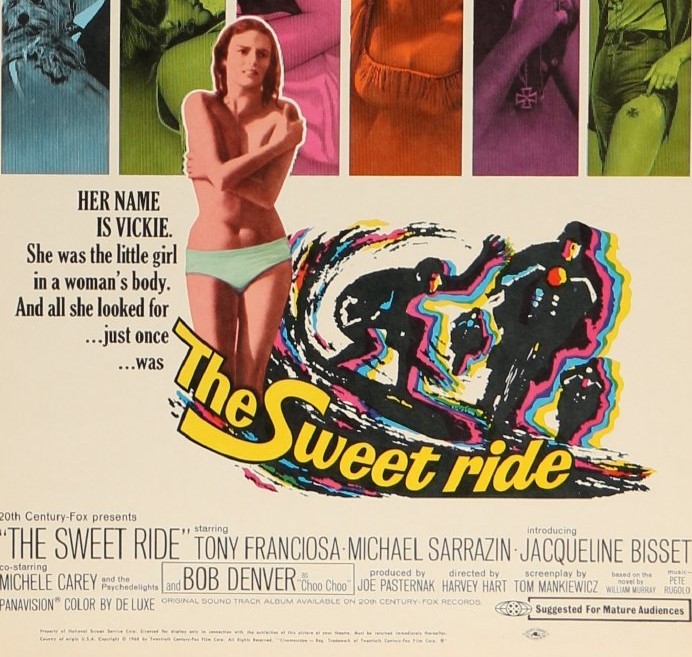
Legendary producer Joe Pasternak was making his 100th movie The Sweet Ride. One of his concerns was that Jacqueline Bisset’s bikini didn’t look tight enough. “It looked baggy in the rushes,” complained Pasternak. Bisset countered, “It fits when it’s dry. It just got a terrible pounding when I was in the water.” She mentions the scene where it got such a pounding in fact that the sea whipped the top off. She reckons that crossing her arms to protect her modesty prevented her tugging the pants on tighter. Once that picture was finished so was Pasternak – he never made another picture.

Another legendary producer Pandro S. Berman was trying to interest English directors John Schlesinger or Lindsay Anderson in Justine (directed by George Cukor in 1969) and on that basis wanted to hire a writer Laurence Marcus (Petulia, 1968) to rewrite the existing Ivan Moffat script in order to entice them. Zanuck’s take: he expected a director to make script changes but couldn’t see the point of altering a script to suit a director you didn’t know would be interested. Nonetheless, Marcus got signed.

All the time agents and directors were pitching movies. Agent Phil Gersh pushed a comedy version of Candy – screenplay by English writing duo Keith Waterhouse and Willis Hall (it ends up minus the Englishmen at Cinerama Releasing). Veteran director Henry Koster’s idea for a musical was nixed. As was the original trailer for Tony Rome, Zanuck hating the voice-over.

On Deadfall (1968), the Michael Caine heist movie directed by Bryan Forbes, actress Giovanni Ralli was having trouble with her English and her contract prevented her being dubbed. It would mean the actress having to lip-synch in post-production. The solution – “tell her she’s got 500 loops and when she hears that maybe she’ll get discouraged and let someone else dub her.” The studio had come up with 14 alternative titles to The Magus (1968) including Seduced by Fate and The Goddess and the Demon.

Fred Zinnemann was priming a $10 million western about Custer. He thought he might save $3 million by shooting in Mexico. The picture was to have no big stars. The only actor who could pull it off was John Wayne and he hated Custer. So Zinnemann planned to go with big names in cameo roles and Toshiro Mifune as Crazy Horse. That picture, too, would be dumped.

Also in the wings, Hello, Dolly! which would get made and Tom Swift, which would be canned despite advance work on building his aeroship, which would not. Nor would another Berman project John Brown’s Body.  

Apart from insights into the way movies are made, marketed and released, Dunne’s book captures the extraordinary Hollywood mix – cynicism and greed coupled with fervor and bone-headed optimism.

Discover WordPress

A daily selection of the best content published on WordPress, collected for you by humans who love to read.

The Atavist Magazine

by Brian Hannan

WordPress.com News

The latest news on WordPress.com and the WordPress community.