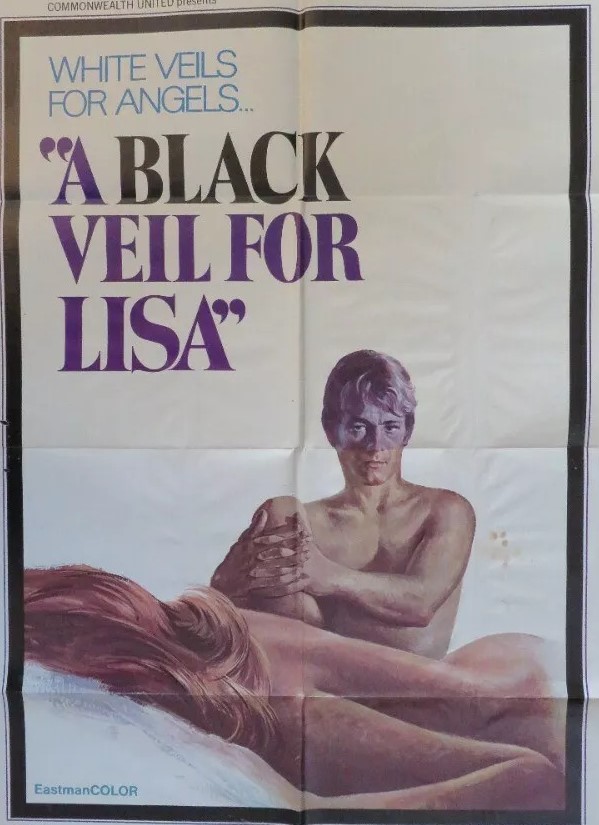
John Mills ventures back into Tunes of Glory (1960) territory as a top official coming apart at the seams. This time it’s not the British Army but the Italian Police where, as Franz Buloff, he heads up the narcotics squad. And this time he’s not the complacent victim but decides to take action against his tormentor.
Closing in on drugs kingpin Scheurermann, he finds that one witness after another is being silenced by an assassin with a deadly knife. He suspects a leak in his department, unaware the traitor is much closer to home. And despite the usual dissatisfied boss Ostermeyer (Tillio Altamura) breathing down his neck, he would be making more headway if it wasn’t for the fact that his head is constantly filled with images of his wife Lisa making love to another man.
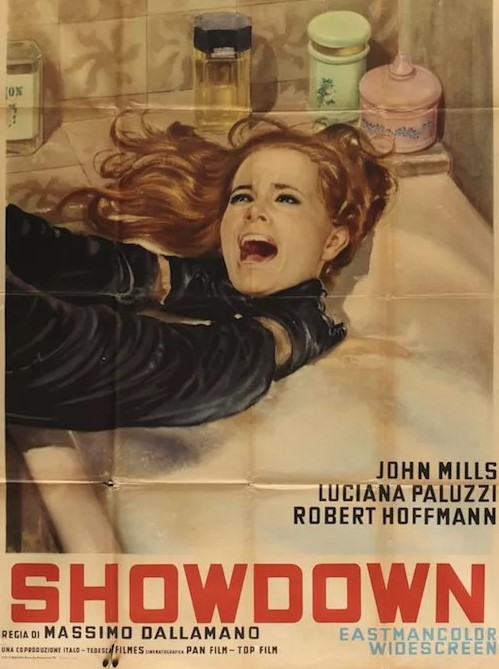
For her part, Lisa seems determined to unhinge her husband, eliciting jealousy at every turn, by never answering the phone at night and always an excuse, when he tracks her down, for not being where was supposed to be. Rather than calming him down, her occasional seduction of her husband only serves to ramp up his fury.
In any case, it’s an odd set-up, he’s much older and the security he offers is not just financial. She was once a suspect herself and being married to a top cop has put a force field between her and suspicion. There’s clearly an unspoken assertion that somehow she has duped the cop, making him fall in love with an apparently innocent woman. They couldn’t be more opposite. “I like danger,” is her mantra.
He breaks open the case after following up a clue dropped at the scene of the crime. After arresting Max (Robert Hoffman), he strikes a deal with the killer. In return for his freedom, the murderer has to take out Lisa. But, of course, it’s not as simple as that. When Buloff realizes the deep water he is treading, he calls off the assassination. But then when he discovers that Max has helped himself to a bonus – beginning an affair with Lisa – he recants and puts the man back on the spot.
So, now, it’s Max who faces the quandary of having to kill his lover. And that puts up square in cat-and-mouse territory.
This isn’t quite giallo, the genre was still in the process of being born, in part because there’s no mystery about the killer, in part because the murders aren’t bloody enough, and in part because the dead aren’t sexy young women. So it’s more a series of character studies, each driven to an edge by an action that otherwise would be out of character.
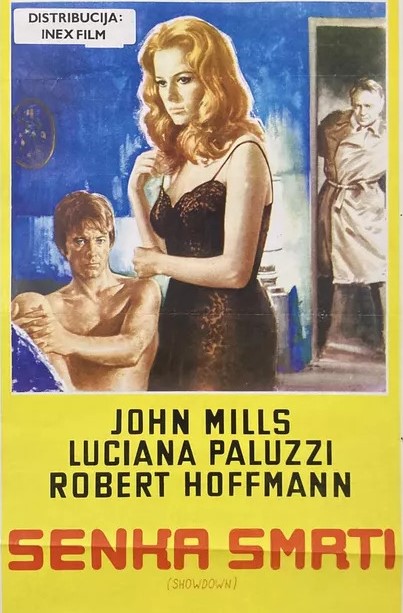
A top cop like Buloff should have been a better judge of character than to fall for Lisa’s wiles in the first place. Lisa, too, should have recognized her penchant for the seedier side of life rather than being as she puts it “too young to be buried alive” in a stifling marriage to a jealous husband. But, she, too, is a poor judge of character, expecting to win back the favor of the drug overlord after she had so openly crossed the tracks to the other side of the law.
And Max, one of the first of a series of killers in movies who wanted out (see The Brotherhood, 1968, and Stiletto, 1969), is trapped into more killing because nowhere is safe. Getting rid of Buloff was never in his plans, as that would draw even more unwelcome attention. But then neither was falling in love with the cop’s wife. There’s still a few twists to go not least when Lisa discovers that the husband she felt she had under control had broken free and was intending to have her killed.
John Mills, a surprising addition to the Brits heading for Italy, is excellent especially as the big flaw in Tunes of Glory was his inability to find the cunning to strike back at his chief tormentor. Here, he might have second thoughts about dispatching his wife, but revenge is always the best weapon.
Luciana Paluzzi (Chuka, 1967, which, incidentally, also featured Mills) gets her teeth into a decent role rather than been saddled in lightweight fare since swanning around in swimwear in Thunderball (1965). Austrian Robert Hoffman (Assignment K, 1968) is given a surprising range of emotions to deal with.
Massimo Dallamano (Venus in Furs, 1969) handles the material well and gets the best out of his cast without taking the bloodier route of the later giallo. He was one of four writers contributing to the screenplay. This was one of the feature films made by new American mini-major Commonwealth United, one of the stack of “instant majors” popping up around this time.
John Mills is always watchable and the twists make this one play.
 The Magnificent 60s