I interrupt the current program to bring you the hugely under-rated Mr Majestyk, now showing on Amazon Prime.
You read any critical assessment of the 1970s and if they talk about male actors at all it’ll be the “new wave” of Al Pacino, Robert DeNiro, Dustin Hoffman, Jack Nicholson, Gene Hackman, Oscar nominees/winners all. There’ll be nary a mention of the actors who kept the box office straight on a consistent basis for most of the decade. Clint Eastwood would come into the equation, but it wouldn’t be for Dirty Harry (1971) or Every Which Way but Loose (1978) but only when he flexed his directorial muscles. Charles Bronson never harbored any ideas of picking up a megaphone so he wouldn’t even have that saving grace.
Yet Eastwood and Bronson saved Hollywood before the big blockbuster like Jaws (1975) or Star Wars (1977) took off and for one specific reason. They attracted a global audience. When foreign receipts started to matter more than ever, these two delivered. And while the critically-adored actors dithered over choices and could scarcely be guaranteed to put out a picture a year, Eastwood and Bronson were dependable, occasionally ramping up output to three a year (1971 and 1973 for Eastwood, 1972, 1974 and 1976 for Bronson). They were old-school reliable performers. .
Mr Majestyk has been somewhat overshadowed because it appeared just before what some ill-informed observers deemed to be Bronson’s breakout picture, Death Wish (1974), and because it was helmed by the under-rated Richard Fleischer (The Boston Strangler, 1968) who never seemed to generate critical traction.
In fact, it’s a cracker – a pair of stunning car chases, full-on blow-away street battle, and the actor is one of his best roles. If anyone could play a farmer convincingly it’s Bronson, who looks as if he knows exactly what it’s like to put in a mucky day’s work (he was a miner). Vince Majestyk (Charles Bronson), in the watermelon line, falls foul of small-time organized crime in the shape of one of the most hapless hoods you’ll come across, Bobby Kopas (Paul Koslo). When Majestyk doesn’t take too kindly to Kopas trying to muscle in on the employment market, the farmer ends up in jail.
During a routine transportation, gangsters try to hijack Mob hitman Frank Renda (Al Lettieri) but despite going in all guns blazing the racketeers haven’t counted on Majestyk, who steals the bus, sees of the pursuing cops and robbers and hides out in a shack in the hills. He trades the mobster for the cancellation of charges against him by Det Lt McAllen (Frank Maxwell). But he’s duped by Renda’s backgammon-playing fashionable moll Wiley (Lee Purcell). On the loose, Renda is determined to get his revenge. The cops are happy to use Majestyk as bait.
Mexican Nancy (Linda Christal), a crop picker and union organizer, also enters the frame, and despite Majestyk, having recognized imminent danger, trying to stifle burgeoning romance, she keeps coming back. She’s a straightforward gal. “You want to go to bed with me, why don’t you just ask?”
But bait becomes bait-and-switch and soon it’s the gangsters who are on a wild goose chase, car passengers driven off the road during a wild chase over dusty mountainous country, others picked off by rifle until it comes down to a showdown at an isolated house.
While Majestyk has the muscle to give Renda an occasional slapping, he’s also got the sucker punch, duping the hoodlum time and again.
One of the elements that distinguishes this is that, apart from Renda, all the characters, good or bad, male or female, are soft spoken. Even Lt McAllen isn’t always chewing someone out.
Although the car chases have been compared to Bullitt (1968) and The French Connection (1971) they have much more in common with Fear Is the Key (1972) where we are miles away from slick city roads. Plenty opportunity for vehicles to sail through the air. Nancy proves something of find behind the wheel, and Vince pretty game in the back of the truck being bounced six ways to Sunday by her driving.
Outside the action, several excellent scenes – the gangsters shooting up the watermelon crop, headlights ominous in the dark, a crop-picker being smashed by a car, Kopas being put in his place by Renda. Not only is the romance in a low register, but Bronson is in a low key, resigned to what he cannot change, but taking charge with blistering speed when he can.
This was a deliberate change of pace in terms of characterization from Bronson following the more action-oriented Chato’s Land (1972), The Mechanic (1972) and The Stone Killer (1973). There’s none of the usual brooding menace. He’s a farmer, not a killer.
Despite a long stretch in The High Chaparral (1967-1971), this was the first movie in six years for Argentinian Linda Cristal who’s effective rather than a scene-stealer which the cool Lee Purcell (Kid Blue, 1973) definitely is in non-showy fashion. By contrast Al Lettieri (The Godfather, 1972) eats the scenery, which is his job, as he turns from cat into mouse.
More than ably directed by Richard Fleischer from an original screenplay by Elmore Leonard (The Big Bounce, 1969).
Controversy breeds controversy. Convicted killer Nathan Leopold was furious when author Meyer Levin reneged on his deal to write a book concentrating only on the murderer’s prison time, instead churning out a fictionalized account of the “crime of the century.” Levin’s novel, published in October 1956 by Simon & Schuster in the U.S., was snapped up by Darryl F. Zanuck for an upfront fee of $150,000 and the same again when the movie appeared.
A play, also ensnared in controversy, preceded the movie. Broadway producer Michael Myerberg was so dissatisfied by Levin’s script that he called in Robert Thom as co-writer. For his efforts Thom was due one-fifth of Levin’s share of the stage royalties. The play opened at the Ambassador in New York on 24 October 24, enjoying a healthy 18-week run.
There was contemporary feel to the cast given that, like now, Broadway was recruiting big names from Hollywood including Rex Harrison, Richard Burton, Walter Pidgeon, Anne Baxter, Joan Blondell, Paulette Goddard and for Compulsion rising star Dean Stockwell (Gun for a Coward, 1956). Actually, there was a heck of cast. As in the movie Stockwell played Judd. Roddy McDowell (Five Card Stud, 1968) played Arthur. But the big sensation was an “obscure actor” understudy Michael Constantine (Beau Geste, 1966), thrown into the limelight by illness, in the key role of the defense attorney. Also in small roles were Ina Balin (The Commancheros, 1961), Barbara Loden (Fade In, 1968), Suzanne Pleshette (Nevada Smith, 1966) and John Marley (The Godfather, 1972).
Levin complained he had been forced “under duress” to take on Thom as a co-writer and refused to pay him. The case went to court. Levin lost but he won a victory of a sort in writing Thom out of the play when it made its London West End debut. Meanwhile, Leopold was intent on his own revenge, on release from prison on parole in 1958 and having published his own autobiography, suing Levin and Zanuck, among others, for $1.5 million. He, too, was a loser in court.
In an early version of the nepo baby, Darryl F. Zanuck gave son Richard a leg-up by assigning him to be producer of the movie.
When director Richard Fleischer entered the equation Orson Welles was already cast as the defense attorney modelled after Clarence Darrow. The director might well have signed up on the strength of the script by Oscar-nominated Frank Murphy (Broken Lance, 1954). “It was the best I ever read,” he said. Among other things, Murphy had tightened up on the action of the play, removing scenes set in prison long after event, and taking a documentary-style approach to the film.
On hearing Welles was involved, “my tongue was hanging out,” admitted Fleischer. Given Welles’ murky finances, time was always going to be of the essence. Tax problems limited the amount of time – ten days exactly – he was available for shooting. And nobody was going to waste any of that valuable time on rehearsals. He arrived from Mexico on the day of the shooting and was booked onto a voyage to China the night filming finished.
Welles always supplied himself with a false nose, and that was the director’s first astonishing encounter with his star, on the first day of shooting. Welles explained his real nose was “just a button” and only once had appeared with it in a movie. He claimed Laurence Olivier was prone to the same insecurity. That wasn’t the actor’s only peccadillo.
He had trouble remembering lines. To cover this up he would claiming he was “reaching” for the words, actorspeak for showing thinking on camera. Fleischer discovered the way to challenge the actor over this was to tell him his reaching was so “realistic” it looked like he had forgotten his lines. In addition, Welles hated having anyone in his eye line, couldn’t cope with eye contact at all. So when it came for his part of a two-person scene he would play it to a blank wall, but with pauses, laughter, “exactly as though there were someone speaking to him.”
In the normal course of filming such a problem could be accommodated. It was a different story when it came to the movie climax, an 18-minute speech, the longest uninterrupted monologue in movie history. It was impossible to film it in one take. Apart from anything else, a movie camera only held ten minutes of film. So it needed broken down into smaller sections, some of which were quite long in themselves. As some of the speech was directed in general terms to the courtroom that didn’t demand eye contact so Welles was safe there.
But other sections had to be directed to the prosecutor (E.G. Marshall) and his team. To get round the problem of maintaining eye contact, Welles had a simple solution. All the other actors had to keep their eyes closed. And that’s what they did. Fleischer recalled as “a ludicrous but memorable sight” seeing all the actors “line up, listening intently, with their eyes closed.”
Only four days were left for the speech. So the director pointed his three cameras in one direction and shot every section of the speech that applied to, then moved the cameras around until he had completed a 360-degree rotation. However, the last section was filmed in one complete, technically complicated, three-minute section. It was rehearsed to fulfil the technical criteria and then Welles was left alone on the set for a couple of hours to do his own rehearsal. He didn’t want Fleischer to see any of his performance beforehand, just come in and film it. In other words, trust the actor. A dangerous proposition given this was the second last day Welles was available. However, Welles delivered a virtuoso performance captured by intricate camerawork.
To save money, the studio had revamped a set from another picture, dressed up with “a little paint, some different trim…a set for almost no cost.” Fleischer had redressed an older that set lacked one wall. Welles, clearly unaware of budgetary problems, wanted to make his exit from the scene through the side that had no wall. Told that was impossible, Welles noted that, if director, he would have stood up to the studio, forced them to build a wall so he could exit in the manner that seemed most appropriate. “That’s why I’m directing this picture and not you,” was the director’s prompt reply.
Needless to say, Welles was not always on his best behaviour. Sometimes, he was playing to the gallery, especially if the producer hove into view, or if he was feeling narked that a director with conspicuously lesser directorial skills was in charge. Among those to receive both barrels were a hapless stills photographer and a publicity man guilty of an imaginary slight. Both these incidents could be brushed off, the collateral of tension on any movie. It was a different story when the director was in the legendary actor’s sights, as occurred when Welles had the opportunity to view dailies. He took the film apart, “a total disaster from beginning to end.” Explanation for the unexpected explosion came from the fact that his salary had been “garnished” by a tax official, meaning he wouldn’t be paid.
At Cannes the three stars shared Best Actor honors. Fleischer was nominated for a Bafta and a DGA. Despite fears that to avoid stirring up old controversy Chicago would be denied a release, that city proved one of the earliest to show the movie. It did well in the big cities, less well elsewhere. Rentals were a disappointing $1.8 million, ranking it 48th for the year. In London, exhibitors exploited the old gimmick of denying patrons entrance once Orson Welles lumbered to his feet for his big speech.
Despite success in the big-budget adventure field with movies like 20,000 Leagues under the Sea (1954) and The Vikings (1958), Fleischer hankered after independence. He set up his own shingle Nautilus but complained that with so many “properties” tied up by the studios, and likewise marquee names, he was reduced to “combing library shelves and finding properties major studios had missed.” He had three projects on his planned indie slate – Willing Is My Lover, an original screenplay by Frank Murphy, an adaptation of Tolstoy’s Resurrection and Trouble in July by Erskine Caldwell. But none ever saw the light of day.
SOURCES: Richard Fleischer, Just Tell Me When To Cry, Carroll & Graf, 1993, p161-175; “Writers Harvest,” Variety, December 5, 1956; “Compulsion Producer,” Variety, September 25, 1957, p1; “Legit Increasingly Recruits Players from Film,” Variety, October 9, 1957, p63; “Shows on Broadway,” Variety, October 30, 1957, p82; “Levin Withholds Thom Royalties for Compulsion,” Variety, December 11, 1957, -p73; “Meyer Must Pay,” Variety, March 12, 1958, p73; “Meyer Levin to London,” Variety, December 28, 1958, p49; “Old Gimmick, New Pic,” Variety, May 13, 1959, p12; “Properties, Stars Monopolized,” Variety, July 22, 1959, p10; “Now-Free Slayer Sues on Privacy,” Variety, October 7, 1959, p21.
One movie that didn’t need Orson Welles to ride in and save the day and in some senses he gets in its way. Not because he’s – as was often his wont if lacking strong direction – over-acting but because his presence shifts the narrative imperative from motive and psychiatric investigation to a plea against passing the death sentence. A fictionalized version of the “crime of the century,” the kidnapping and killing of a young boy by Leopold and Lowe, a pair of intellectually arrogant wealthy young men, in Chicago 1924, it would make ideal fodder for a Netflix true crime slot, especially as there was no contesting the evidence.
Until the arrival of woebegone defense attorney Jonathan Wilks (Orson Welles) – Clarence Darrow in the real case – this has been given a low key docu style treatment even if it only touches upon what might have caused Arthur (Bradford Dillman) and Judd (Dean Stockwell) to embark on their terrible deed. They have intellectualized murder, believing that they are beyond mortals in their cranial superiority and therefore not only capable of committing the perfect crime, but relishing the prospect of getting away with it and rubbing their inferiors’ noses in the dirt.
Cocky sexually confident Arthur is the dominant one, constantly tormenting his friend for his social deficiencies, Judd the more vulnerable, astonished to find that someone can interpret the loss of his mother as impinging on his emotional security. We enter the tale post-crime and the narrative assumes the audience is already familiar with the Leopold and Lowe case, which proves a distraction now because I had to look them up to fill in the blanks.
Setting aside their superiority, the movie brings to the fore aspects of criminal behavior only familiar to us from more recent analysis. For example, Arthur wants to remain close to the investigation, offering the police advice, and taking malicious enjoyment out of pointing out possible suspects. Police procedure, which would still have been in its infancy, nonetheless turns upon tracing 4,200 purchases of a very common type of spectacles which, in an unexpected twist, is suddenly whittled down to three thanks to this particular pair containing an unique advanced design element.
However, alibis only fall apart by accident as the pair stick to their rehearsed stories even in the face of intense interrogation, especially Judd’s contention that his spectacles could have fallen from his jacket pocket close to where the body was discovered by pure coincidence. The pair have already confessed when Wilks rides to the rescue, or at least save them from corporal punishment. Most of this is via a legal trick. He places the onus of deciding their fate on the thoughtful judge who can follow legal argument more easily than a bloodthirsty jury appalled at the crime and out for revenge.
In his deployment of Orson Welles, director Richard Fleischer (The Boston Strangler, 1968) plays a blinder. Audiences expecting to see Welles in full bombastic oratory flow were blindsided by the almost apologetic tone taken. There’s virtually none of the usual courtroom sparring and there’s no last-minute witness final twist as was de rigeur for the genre. But, then, you’ve got Orson Welles, the greatest American actor never to win an Oscar, given what he could do with words, glances, whispers and silence. He’s always going to get the last laugh in an exchange of banter, but with a life a stake this isn’t the time for bluster.
It’s an incredibly well-judged performance. Setting aside the monologue, the kind actors would kill for, it’s his general demeanor, almost self-effacing, nothing swanky in his dress, and yet not resorting either to actor gimmicks like wiping sweat from his head with a handkerchief nor even raising his voice. Compare this to the Oscar-winning performance of Gregory Peck in To Kill a Mockingbird (1962) and you’ll wonder why the Academy chose to overlook Welles.
But he’s not the only standout. Bradford Dillman (Circle of Deception, 1961) has the showiest role, oozing icy charm and indifference, but the more obviously emotionally-crippled Dean Stockwell (Psych-Out, 1968) has the more difficult. Perhaps Diane Varsi (Wild in the Streets, 1968) has the toughest part, convincing as the girl who finds something worth caring about inside a killer.
Richard Fleischer has always been unfairly tabbed as the not-great director who made a number of great films. Whichever way your sympathy falls on this issue, this is one of his great movies, steering clear of the sensational, cleverly keeping Welles out of sight until virtually the final third of the movie and then, courtesy of how well he has managed the material, not allowing the actor to steal the show.
Hardly dated at all given the death penalty is still practised in many U.S. states and countries around the world. The plea for clemency isn’t so much the driving force as the acceptance that money doesn’t buy immunity from psychiatric disorder and may well be its cause. Despite his arrogance, Arthur seeks the approval of “Mumsy”, while Judd has no mother. With a host of servants to carry out the parenting, the actual parents can go off and enjoy themselves, ignorant of the dangers of lack of attachment.
It’s still hard to feel any sympathy for the pair, indulging in a thrill kill because wealth protects them and at the mercy of intellect, and while Fleischer makes no attempt at exoneration or mitigation a contemporary audience would intuit more about the family imperfections or lack of parental care or psychiatric awareness that drove them to this.
It was Hollywood’s worst nightmare. Two major studios – Columbia and Warner Brothers – were competing to make films about the Battle of the Bulge, one of the most famous episodes of the Second World War. Rival movies on similar or the same subject – classic examples You Only Live Twice (1967) vs Casino Royale (1967) or Deep Impact (1998) vs. Armageddon (1998) – risk cannibalising each other, each entry eating into the prospective audience of the opposition.
At first it seemed like the Columbia entry had the upper hand. Writer-producer Anthony Lazzarino had spent four years preparing The 16th of December: The Story of the Battle of the Bulge (the date referring to the start of the battle). Lazzarino’s project was endorsed by the U.S. Department of Defense which offered exclusive cooperation. Advisors were of the top rank – General Omar Bradley, General Hasso E. von Manteufel who had commanded the Panzers during the battle, British generals Sir Francis de Guingard and Robert Hasbrouck and Colonel John Eisenhower plus the cooperation of Eisenhower himself and Field Marshal Montgomery.
With a budget in the $6 million – $8.4 million range, and shooting was set to start in winter 1965, William Holden was lined up to play General Eisenhower and Kirk Douglas for General Hasso. Although initially intending to film in the Ardennes and Canada, ultimately the producers settled for the cheaper option of Camp Drum, one of the largest military installations in the U.S, a remote area in upper New York where the buildings could stand in for Bastogne, around which much of the real battle revolved, production there feasible because the Camp closed for winter. .
But that meant it would already be behind the eight-ball since Battle of the Bulge intended opening at Xmas 1965. Richard Fleischer (The Boston Strangler, 1968) was originally signed to direct. But he had become embroiled in a lawsuit with producer Samuel Bronston (El Cid, 1961, The Fall of the Roman Empire, 1964) whose production outfit had gone bust, killing off a deal for Fleischer to make The Night Runners of Bengal. The director was seeking g $910,000 in compensation.
Warner Brothers had enlisted Cinerama as co-producer, the studio’s first involvement in the stunning widescreen process and the first time war was considered a subject. The process had been utilised in other Hollywood pictures most notably MGM How the West Was Won (1962), but that has been as a supplier of the equipment, and taking a small share of the profits. But now Cinerama planned to enter the production business and had contracted with WB to shoot the film in the single-lens process instead of the more complicated three-camera approach which had led to vertical lies on screens.
Neither company was in great shape. Cinerama had posted a $17.9 million loss in 1964, WB $3.8 million. But whereas WB had My Fair Lady on the horizon, Cinerama was less reaons for optimism. Its income stream relied on sales of its equipment, either for filming or projection, and a levy from every cinema using the process. Expansion was seen as key to renewal. With only 67 cinemas equipped to show Cinerama in the U.S. and only 59 overseas, a major program was underway to reach 230 by 1967. Setting up a production division would ensure there were enough films to feed into Cinerama houses, and since such films were intended as roadshows, they would keep the cinemas product-secure for months on end.
Cinerama planned to spend $30 million on five films – John Sturges western The Hallelujah Trail (1965) budgeted at $5 million, Battle of the Bulge ($.75 million) while $6.5 million had been allocated to an adaptation of James Michener bestseller Caravans, $6 million for Beyond the Stars which became 2001: A Space Odyssey (1968) and $7 million for Grand Prix (1966). Added to the list was epic William the Conqueror, due to film in England in early 1966 with Robert Shaw taking top billing.
The WB-Cinerama project, which had taken a year to negotiate, was to be filmed in Spain under the aegis of producer Philip Yordan, one time associate of Bronston who had built a mini-Hollywood there. Yordan, Bronston’s chief scriptwriter, had written the screenplay along with his co-producer Milton Sperling. Instead of seeking official support or reproduce the battle in documentary detail, Yordan and Sperling aimed for a fictional account that took in the main incidents. The cast would include “ten important stars.”
Just what constituted an “all-star cast,” one of the key ingredients of the roadshow phenomenon of the 1960s, was open to question. While The Longest Day (1962) boasted stars of the pedigree of John Wayne, Robert Mitchum, Richard Burton and Sean Connery, it was also liberally sprinkled with actors of no marquee value. David Lean in Lawrence of Arabia (1962) had loaded his film with the likes of Oscar winners Alec Guinness, Anthony Quinn and Jose Ferrer to offset unknowns Peter O’Toole and Omar Sharif as the leads. While The Great Race (1965) could boast Jack Lemmon, Tony Curtis and Natalie Wood, It’s A Mad, Mad, Mad, Mad World (1963) only had Spencer Tracy amid a host of television comedians.
But none of the stars of Those Magnificent Men in Their Flying Machines (1964) had successfully opened a major picture. Of the Battle of the Bulge contingent only Henry Fonda could truly be called a current star, although his box office star had considerable dimmed since the days of The Grapes of Wrath (1939) and Fort Apache (1948). Former stars Robert Ryan and Dana Andrews were now supporting actors, Ty Hardin was best known for television, Charles Bronson (The Great Escape, 1963) had not achieved top billing and while James MacArthur had done so that was in youth-oriented movies. Initially, Italian prospect Pier Angeli (Sodom and Gomorrah, 1962) was announced as “the only principal female role” – playing a Frenchwoman – for a touching scene showing the effect of war on innocent women caught up in the conflict.
Just before filming was about to start, Fleischer pulled out, citing differences of opinion with the producers. Yordan turned to British director Ken Annakin, who had helmed the British sequences in The Longest Day and Those Magnificent Men in Their Flying Machines. There was soon a double whammy. Realizing he was losing ground, and hoping to sabotage its progress, Larrazino sued WB for $1 million, claiming that “another film, less accurate, would be confused with his picture.” Just as filming of the Battle of the Bulge got underway in January 1965, it was hit by a temporary restraining order. While failing to shut down the production, it imposed a marketing blockade. WB was prevented from publicising its picture, a potentially major blow given how dependent big budget roadshows were on advance bookings which could only be generated by advance publicity.
Annakin’s immediate response to the opportunity was delight. He commented that he had a “lot of toys to play with.” He found inspiration for his approach from an unusual source, the Daleks (“an apparently irrevocable onslaught of metal monsters”) from the BBC television series Dr Who. He decided he would use Cinerama as “a kind of 3D, shooting in such a way that the tanks would loom up as monsters against humans whom I would make small and puny.”
Although he had no influence in the casting, Annakin was already familiar with some of the actors, James MacArthur from Swiss Family Robinson (1960) and Werner Peters and Hans Christian Blech from The Longest Day. He did not receive such a warm welcome from Robert Shaw whom he had rejected for a role in The Informer.
He found Fonda “a remarkable professional…always on time, patient, eager to get to work, and always knew his lines.” He confessed to being a reluctant movie actor, preferring the stage, and had not been a big office draw since his work with John Ford in the 1930s and 1940s. Even critical successes like Twelve Angry Men (1957) had lost money, some of it the actor’s own, and prestige movies like The Best Man (1964) and Fail Safe (1964) failed to attract sufficient audiences. “In the theatre,” he said, “the actor achieves fulfilment from beginning to end. But on a picture you create a minute here and a minute there over a twelve-week period. When it’s finished there’s no recollection of what you did…Films are a director’s medium.” Battle of the Bulge was his 59th picture, after completing a supporting role in Otto Preminger’s In Harm’s Way (1965) and taking second billing to Glenn Ford in modern western The Rounders (1965).
There was a stand-off with Bronson on his first day after the actor kept the crew waiting while fiddling too long with his costume. Ty Hardin (television’s Bronco, 1958-1962) was accident-prone, tumbling into a frozen river in full kit, and whacking the director’s wife in the face with his helmet. Dana Andrews had a drink problem so that in some scenes Fonda and Ryan would be surreptitiously holding him up. But such veteran actors could improvise their way round scenes and “give me hints and lead me into changes.”
Andrews was enjoying career resurgence. His movie career was at a standstill, a ong way from a peak like Laura (1944). But his last significant top-billed parts were over a decade gone. “I was starting to get nothing for a while but offers came swarming in when I told my agent to go ahead and try from Walter Huston parts.” After only televisions roles in the four years since Madison Avenue (1961), Battle of the Bulge would mark his eighth role in 1965, including The Satan Bug and In Harm’s Way.
Winter in Spain was cold which meant it provided the ideal backdrop for the WB version. The chosen location, 4,500ft high in the mountains of Segovia provided identical conditions to the actual battle. Spain had provided 80 tanks including Tigers mounted with 90mm guns and Shermans. Half of the 20-week shoot would be spent in Segovia with interiors filmed at studios in Seville and the Roma facility in Madrid. The WB adviser was General Meinrad von Lauchert, a divisional tank commander during the battle. He hoped the picture would show the German solider “as he was, brave and good” rather than clichéd presentation and not give the “impression that the American Army had nothing to do but walk into Germany.”
He wanted the film to reflect the truth that the “Americans had to pay a high price for every yard.
Extras were drawn from the Spanish village of El Molar, with a population of just 2,400, which specialised in that supply. Locals could earn 200 pesetas a day. A pair of tavern owners had established this lucrative side-line, demand so high at this point that “they can play Russian World War One Deserters for Doctor Zhivago (1965) one day and shipped to World War Two the next for Battle of the Bulge.” Whenever Annakin found himself in trouble with the script he turned to the senior actors, Fonda, Ryan and Andrews who could improvise their way round scenes and “give me hints and lead me into changes.”
For the first scene, a week’s worth of white marble dust, representing snow, had been spread over the ground before 40 tanks emerged from a pine forest. But just as the cameras begun to turn, unexpectedly, against all weather forecasts, it began to snow. While initially a boon, when it continued to fall for five weeks the snow turned into a liability. Nobody was prepared for snow, not to the extent of snowploughs or even salt and it was a three-mile hike uphill to reach the tank location until army vehicles could be used to transport the crew. The tanks churned up so much mud that three or four cameras were required to catch the action.
“It was a director’s feast,” recalled Annakin, salivating about the prospect of a “vast panoramic” employing the entire array of tanks. To speed production, he had two units one hundred yards apart and jumped from one to the other, thus achieving 30-40 set-ups a day while the effects team exploded tubes and burned rubber tyres to create a fog of black battle smoke. A small town, already wrecked and shelled from the Spanish Civil War, added an air of realism when standing in for Bastogne.
Midway through shooting the producers realised the movie lacked a theme and from then on Annakin was faced with daily rewrites as new scenes were added to bring out the humanity implicit in war. Then Cinerama boss William Foreman arrived and demanded the insertion of the type of shot he believed his audiences were expecting, the equivalent of the runaway train and the ride through the rapids in How the West Was Won. He angled for a jeep racing downhill or a plane spinning and diving and happy to stump up any extra costs.
Such a request was more easily accommodated than his insistence that a role be found for his girlfriend Barbara Werle. a bit part actress Tickle Me (1965). While Yordan, wearing his producer’s hat, was willing to keep one of his main funders happy, the director and Robert Shaw were not. Shaw refused to do the scene until Foreman pleaded with both, explaining that in a vulnerable period of his personal life – when, in fact, he had been imprisoned – Werle had helped him out and he owed her a favour.
In Annakin’s opinion Werle was “willing but completely dumb…as though you had picked a girl straight from the cash desk of a supermarket.” Her one scene, as a courtesan offered to Robert Shaw by a grateful superior, was used to mark out the German commander as a man of honour when he rejection such temptation out of hand.
To overcome problems of matching earlier Panzer footage with the climactic battle to be shot on the rolling hills of Campo – in the earlier shots the ground was covered in snow, but now it was summer and the ground was scorched by the sun – Annakin relied on aerial shots, shooting downwards, “keeping as close as possible so as not to reveal what the terrain actually looked like” while on the ground two units shot close-ups of the action. The action was augmented by 30 model shots with miniature explosions.
When shooting was completed, there was a race to get the movie ready for its schedule launch, on December 16, 1965, the 21st anniversary of the start of the battle. There were ten weeks left to do post-production. Four editors had already been working on the material but Yordan asked Annakin, who had not been near a moviola for two decades, to personally edit the climactic battle scene. The director found the experience exhilarating: “matching my location footage with miniature shots; a four-foot helicopter (i.e. aerial) shot cut with a couple of feet of a U.S tank rounding rocks to face a Panzer; a shot of Telly Savalas at his gun site yelling ‘Fire’ intercut with a miniature tank blowing up.” But all his intricate work never made it into the final cut. Another editor fiddled around with the material and since no one had thought to make a dupe of Annakin’s original it was lost.
Although the challenge from Lazzarino had died away, the Pentagon was unhappy with the amount of time allocated to the German perspective. Yordan had the perfect riposte, pointing the finger at Annakin and saying “see what happens when you get a limey director.”
Werle had the last laugh. She was billed sixth in the credits (Angeli came fifth) but in the same typeface as Fonda, Shaw, Ryan and Andrews, and above the likes of Bronson, MacArthur and Hardin who not only all had substantially greater screen experience but had a bigger impact in the movie.
With the smallest part of all the listed stars, nonetheless she managed to turn the experience to her advantage, introduced to the press part of the marketing campaign and attending the world premiere at the Pacific Cinerama on December 16, 1965 in Los Angeles and the New York premiere the following day, brought forward four days, at the Warner Cinerama. In Los Angeles she arrived in true style at the head of a marching brigade of 100 service men.
SOURCES: Ken Annakin, So You Wanna Be A Director (Tomahawk, 2001) p167-181; “Du Pont, Bronston, Co-Defendants,” Variety, July 22, 1964, p4; “Schenck-Rhodes Roll Battle of Bulge at Camp Drum in U.S.” Variety, July 22, 1964, p42; “German Military Sensitivity,” Variety, September 23, 1964, p32; “Columbia Will Distribute Battle of Bulge Film,” Box Office, September 28, 1964, p18; “Plan Battle of Bulge As Cinerama Film,” Box Office, November 23, 1964, p4; “Tony Lazzarino To Produce The 16th of December,” Box Office, December 16, 1964, p4; “Rival Battles of Bulge; Bill Holden Up for Ike in Lazzarino Version,” Variety, December 16, 1964, p5; “Warner Reports Loss of £3,861,00,” Variety, December 23, 1964, p5; “L.A. Court Has Its Battle of Bulge Hearing, 27th,” Box Office, January 25, 1965, pW-2; “Dana Andrews Strategy: Regain Momentum,” Variety, March 10, 1965, p3; “Battle of Bulge Now Being Lensed in Spain,” Box Office, March 15, 1965, pNE2; “Winter in Spain Cold But Correct for Bulge Pic,” Variety, March 17, 1965, p10; “Cinerama Plans Five Films to Cost $30 Mil,” Box Office, April 19, 1965, p13; “For Actor Satisfying Legit Still Beats Pix, Reports Henry Fonda,” Variety, May 3, 1965, p2; “London Report,” Box Office, May 3, 1965, p8; “One Girl in WB Bulge,” Variety, May 5, 1965, p20; “Battle of Bulge Pic May Roll Next Winter,” Variety, May 5, 1965, p29; “El Molar, Spain’s Village of Extras,” Variety, May 12, 1965, p126; “Cinerama Report Loss,” Variety, May 13, 1965, p15; Advert, Box Office, July 12, 1965, p22; “WB To Film Cinerama Epic in England,” Box Office, October 11, 1965, p11; “Introduce Barbara Werle,” Box Office, October 18, 1965, pE3; “Battle of Bulge Opens N.Y. Now Dec 21,” Box Office, October 18, 1965, p10; “Actress To Attend Bows of Bulge in L.A., N.Y.,” Box Office, December 6, 1965, pW4.
In cinematic terms director Richard Fleischer’s work on a Pearl Harbor project had begun in 1962, for a proposed movie called Zackary, the true story of an American spy living in Japan prior to the infamous attack. Fleischer signed a one-year contract with Dino de Laurantiis, the Italian producer behind the director’s previous movie Barabbas (1962). Italian screenwriters had a crack at the tale, then, in a foretaste of things to come, de Laurentiis turned to a Japanese writer whose idea of a screenplay was restricted to a document less than two pages in length. And so began one of the director’s periods in movie purgatory.
After Zackary was abandoned, Fleischer was put to work on four other concepts, none of which made their way to the screen. Worse, the pay-checks stopped coming and Fleischer sued Dino for a million dollars. Next up was The Nightrunners of Bengal from the bestseller by John Master for Samuel Bronston (El Cid, 1961). That, too, ended up in the courts.
If those rollercoasters weren’t enough, Fleischer revived his career with Fantastic Voyage (1966) and nearly sunk it with the financially disastrous Doctor Dolittle (1967), resuscitated his standing again with The Boston Strangler (1968) and dug another commercial hole with Che! (1969).
But he was the first port of call when producer Elmo Williams and his paymaster Darryl F. Zanuck, for whom Fleischer had made The Big Gamble (1961), decided on the biggest gamble in Hollywood history outside of Gone with the Wind (1939) and Cleopatra (1963). In some respects Fleischer was on board as makeweight. For the undeniable directorial star of the show was intended to be legendary Japanese helmsman Akira Kurosawa (Seven Samurai, 1954). Never mind that the vast bulk of the global paying public had never heard of him, let alone pronounce his name, Kurosawa undoubtedly represented a critical coup. American critics responsible for building appreciation of him in academic circles were unlikely to lambast him for working with Hollywood, especially as, in the even-handed manner of this project, Kurosawa would be telling the story of the attack on Pearl Harbor from the Japanese point-of-view.
In fact, it wasn’t so much one epic, as two parallel films, telling the tale from opposing perspective, edited together.
But just getting to the filming stage had required research of Cecil B. DeMille proportions. Dr Gordon Prang of Maryland University had spent years on the subject, interviewing every participant on either side. He broke down the research into a daily accounting of the year prior to December 7, 1961, and a second-by-second analysis of the day before the attack. Every incident used in the film came from this research.
The bigger problem was assembling a Japanese fleet. Only one destroyer remained of the Japanese World War Two taskforce. The rest had been sunk. To do the movie justice, Twentieth Century Fox had to someow conjure up – just from the Japanese side – six aircraft carriers and the 353 aircraft they transported plus another 27 vessels that made up the escort. Whether the U.S. Navy would have been keen on lending a hand, it wouldn’t be much help either in providing the necessary material since most of its fleet from that period had long since been mothballed.
A million dollars was spent on a set that comprised half a battleship that could float and be towed. The rest was miniatures, but given the scale, most of these would come in around the 40-foot mark. There were 19 Japanese miniatures and 10 American.
There were no Japanese Zero planes either. So 28 Vultee AT-6 aircraft were stretched six feet and adapted to resemble the Japanese plane. The production team raided the country for Flying Fortresses, P-40s and VT-13s that could serve the purpose if reconditioned. Dozens of vehicles from the era period were rescued from junkyards and repaired, restored and repainted.
Coordinating the work of the two directors was always going to be the main problem. How would the styles fit? For the scheme to work did one of Fleischer or Kurosawa have to assume supreme commander status? It didn’t help that neither could speak the other’s language. The few meetings held between the two directors were entirely about the Kurosawa section of the screenplay. To Fleischer’s astonishment, at the rather aggressive nudging of Elmo Williams, Kurosawa made concessions.
Fleischer came up with the practical solution to melding the two separate movies. His suggestion was: don’t do it. He intended showing the Americans as sloppy and overly-relaxed while Kurosawa wanted to emphasize the spit and polish of the Japanese Navy. The contradictory approaches would make each section appear such opposites as to make the entire production seamless.
Surprisingly, the studio won some cooperation from the U.S. government in the shape of the loan of an aircraft carrier. But such goodwill did not go unnoticed and the studio was forced to repay the Defense Department $515,000 for its use. But, in general, the Government was not inclined to cooperate, wanting paid for everything they supplied. Off-duty soldiers and sailors were received standard Hollywood fees to act as extras. Every piece of machinery had to be rented. Tugs, Elmo Williams soon discovered, were available only at extortionate cost.
Water explosions were not only time-consuming but if the production encountered too much delay they become waterlogged and didn’t explode. Extras found it hard not to react to the explosions all around and just as difficult to wait for cues.
The biggest, most expensive and most spectacular, scene was the one battleship, the USS Nevada, that somehow managed to escape the harbor only to be attacked by dive-bombers. As mentioned, the only battleship constructed was only half-built. Part of what was missing were the engines. So it needed to be towed into position and allowed to drift on the current past five strategically-placed cameras with dozens of waters explosions synchronized to split-second timing. There were explosions on the deck, too, and stuntmen ready to be blown overboard. The planning and choreography required to show all hell breaking loose was staggering. The sequence was so expensive it would be impossible to re-stage.
Disaster on a movie set does not require everything possible to go wrong. Just one thing. In this case the ship got underway sooner than expected. With everyone on set working to sight cues, naturally they just did what was expected. Except it was unexpected. And the worst kind of unexpected. The water was ripped apart by explosions, the stuntmen were diving into the water, bullets and bombs were raining everywhere.
And the cameras had not turned an inch. The battle was half over before anything was photographed.
Fleischer and Williams had no alternative but to send their footage to the labs anyway. It would be processed overnight and screened the next morning to studio bosses. Fleischer expected to be fired. Luckily, they had filmed sufficient action for Zanuck to send a congratulatory telegram.
But the Fleischer experience – his section of the movie came in ahead of time – was nothing as bad as the Japanese one. Kurosawa hired business tycoons with no acting experience for “all but the leading roles” in the hope they would finance his next picture. He was as obsessive over detail as David Lean, shutting down production to repaint the set or replace a set of books on a wall. Kurosawa’s production also required a fake battleship, at a cost of $1.6 million. He built it wrong. The rate of filming was catastrophically slow. An unhappy atmosphere turned disastrous when the director turned on an assistant. The upshot was the most feted Japanese director of all time was fired.
Fleischer blamed the studio for forcing Kurosawa to work in the Hollywood manner, interfering with the work of a director who had achieved his fame by being autonomous. The only scene filmed by Kurosawa that ended up in the picture was that of the American ambassador in the US embassy in Tokyo.
Unsurprisingly, many took issue with the notion of making the film at all. In the U.S., Representative John M. Murphy called it “an affront to americans fighting in vietname…every ethical standard is besmisrched by the Hollywood-Pentagon hook-up to produce a film glorifying the Japanese attack on Pearl Harbor.2
One of the last 70mm roadshows and erroneously viewed as a financial disaster on account of its performance in the United States, in fact the movie made a reasonable profit from its global release and, of course, a fortune in the course of its lifetime, counting television, DVD and streaming.
SOURCES: Richard Fleischer, Just Tell Me When To Cry, (Carroll and Graf, 1993) p227-233, 273-287; “Controversy Boils Up As Tora! Opens,” Desfret News, September 25, 1970, p8C.
Thankfully devoid of the empty triumphalism that marred In Harm’s Way (1965) and Pearl Harbor (2001) and the gritty backs against the wall heroism and snatching some kind of victory from the jaws of defeat of The Alamo (1960) and Zulu (1964), and with a documentary-style approach much more acceptable these days than then, there is an immense amount to appreciate and absorb in this last-gasp 70mm roadshow from a financially flailing Twentieth Century Fox.
Shorn, too, of the traditional all-star cast bar Jason Robards (Hour of the Gun, 1967) – who might not count – nor the regiment of rising talent stuffed into such epics in the hope one might catch the eye and float to the top. And there’s no room to ram in a distracting romance such as in the previous and future films focusing on the military disaster. Instead, stuffed with dependable supporting players like Martin Balsam (Harlow, 1965), E.G. Marshall (The Chase, 1966) and James Whitmore (The Split, 1968) stops audience rubber-necking in its tracks, unlike producer Darryl F. Zanuck’s previous The Longest Day (1962), in favor of forensic analysis of what went wrong in the defence and what went so brilliant right in the attack.
Like most of the best war epics – The Longest Day, Battle of the Bulge (1965), taking an even-handed approach in presenting both sides of the battle, except here you could argue considerably more time is spent with the Japanese, beginning with the opening credits where the camera floats in and around a giant battleship. Despite the sudden attack which went against all the traditions of war – a timing error apparently – the Japanese are presented as honorable and even arguing against going to war as well as worrying about the consequences of poking the tiger.
And there is none of the endless owing and scraping and not attempting to rise above your station in the traditional Western-view of the Japanese. Here, from the outset, superior officers are questioned possibly in manner that would be permitted among the opposing forces.
The first half is given up to the superb organisation of the attack, including the bold use of using aerial torpedoes – proven to work by the British in an earlier assault on a harbor without the apparent depth of water required – and contrasting it with the general U.S. ineptness, bureaucracy, interdepartmental battles and overall lack of preparation even though several personnel believed an attack imminent. The Yanks had even broken the Japanese codes so could easily have taken heed of obvious omens, had working radar on site though its employment was handicapped by being limited to three hours a day and initially lacking a means of communicating findings. Someone had even worked out that the Japanese would need six aircraft carriers to mount an attack and that the ideal time would be early morning on a weekend, someone even predicting an attack down to the exact time except a week out.
Of course, the U.S. at this point was not at war and so could be excused switching off in the evening or being uncontactable in the morning because they were still out carousing from the night before or sedately riding a horse. While there is a growing sense of alarm, the chain of command is woefully stretched often in the wrong direction and at one point stops before it reaches the President.
Fearful of sabotage, the Americans shift planes away from the perimeter of airfields smack bang into the runway where they can be more easily destroyed. Perhaps the greatest irony is that in shifting the U.S. fleet from its home base in San Diego, the Americans made such an attack possible.
When it gets under way, the battle scenes are superb, especially given none of the CGI Pearl Harbor could call upon, and yet with the U.S. aircraft carriers by luck still at sea failed to deliver a killer blow for the Japanese.
It’s handled superbly by director Richard Fleischer (The Boston Strangler, 1968), Kinju Fukasaku (Battle Royale, 2000) and Toshio Masuda (The Zero Fighter, 1962). The American flaws are dramatized rather than being dealt with by info-dump. Larry Forester (Fathom, 1967) and long-time Akira Kurosawa confederates Hideo Oguni (Ikiru, 1952) and Ryuzo Kikushima (Yojimbo, 1961) fashioned a sharp screenplay from mountains of material.
Long rumored to be a box office flop it turned out to have made a decent profit, albeit not in the U.S.
The documentary approach adds immensely to the movie and it remains one of the all-time greats precisely because of the lack of artificial drama.
It could as easily have been Cecil B. DeMille (The Ten Commandments, 1956) in the director’s chair. And Yul Brynner (The Magnificent Seven, 1960) and Jeanne Moreau (Jules and Jim, 1962) as the stars.
The Barabbas tale had already been plundered before Swedish novelist Par Lagerkvist published his relatively short bestseller – only 144 pages – in 1950. An earlier novel of the same name by Emery Bekessy hit American bookstalls at the height of the mid-1940s religious cycle kicked off by Going My Way (1944) and The Bells of St Mary’s (1945). DeMille – whose portfolio included Biblical epics The Ten Commandments (1923), King of Kings (1927) and The Sign of the Cross (1932) – was in competition with British producer Alexander Korda to buy the rights.
While that production never entered production, just to confuse matters a British film, Now Barabbas, based on a successful West End play and with no Biblical element, was released in 1949.
Swedish director Alf Sjoberg (Miss Julie, 1951), twice winner of the Grand Prix at Cannes, turned the Lagerkvist book into a black-and-white film in 1953, the first Swedish picture to be dubbed into English.
A bigger-budgeted version, piggybacking on the success of Ben-Hur (1959), was the brainchild of Italian producer Dino De Laurentiis who had pacted with Hollywood studio Columbia on a four-picture slate worth $17 million, the bulk of which, $10 million, was to be spent on Barabbas “with a cast of thousands headed by some of the biggest names in motion pictures.”
“Hollywood on the Tiber” was producing movies at a record rate – topping 200 a year – and De Laurentiis, who had shot to fame with Bitter Rice (1949) starring future wife Silvana Mangano and Fellini’s La Strada (1954) was intent on gaining a foothold in America beyond the arthouse market. Producing King Vidor’s War and Peace (1956) for Paramount had not done the trick and the Columbia slate was a last-ditch attempt to break into the Hollywood game.
Hollywood had originally invested in Europe to take advantage of tax breaks or to access monies frozen by countries after the Second World War, but by the 1960s the continent had become more attractive as a cheaper production alternative. While Britain had been a substantial recipient of Hollywood largesse, Italy was fast catching up as the chosen locale for pictures as varied as Cleopatra (1963), The Pigeon That Took Rome (1962) and Jason and the Argonauts (1963).
Director Richard Fleischer’s career was at a curious impasse. The son of world-famous animator Max Flesicher, creator of the Popeye cartoons, Richard had won critical acclaim for low-budget thriller The Narrow Margin (1951), followed up with a pair of stupendous action hits, 20,000 Leagues under the Sea (1954) and The Vikings (1958), both starring Kirk Douglas, and a daring examination of the world’s first “thrill killing” Compulsion (1959) with Orson Welles.
But he was at loggerheads with Twentieth Century Fox, to whom he was contractually tied, having turned down North to Alaska (1960) with John Wayne. As a result, he was relegated to lesser projects, Crack in the Mirror (1960), again with Orson, and The Big Gamble (1961), a picture with virtually no stars unless you count the questionable marquee value of Juliette Greco and Irishman Stephen Boyd trying to capitalize on his success in Ben-Hur (1959).
“Holdover” also meant it was not playing as a roadshow. In the roadshow exhibition situation, a cinema would be required to play a movie for an agreed number of weeks, generally a minimum of eight or thirteen. Non-roadshow films relied on box office performance for the length of their run, the engagement extended week-by-week.
He had been on Dino De Laurentiis’ radar before, approached to helm War and Peace, circumstances dictating otherwise, and a $10 million project, a 70mm roadshow, presented an ideal opportunity to resuscitate his moribund career. As Fleischer put it, “Even if I had loved Darryl (F. Zanuck, the legendary Fox producer of The Big Gamble), I would gladly have jilted him for this assignment.”
Despite the promise of the budget, the reality was off-putting. The De Laurentiis studio was housed in a “dreary industrial slum” and consisted of a two-storey wooden building housing the offices and “three decaying stages.” However, there was little downbeat about De Laurentiis, “an impeccably tailored bundle of raw energy,” according to Fleischer, “the impact of meeting him for the first time is something akin to sticking your finger into an electric light socket.”
The Italian producer possessed a quality that was appreciated in Hollywood, especially among old-school mavens. He was a showman. He could drum up publicity at the drop of a hat. His first publicity coup was hiring French star Jeanne Moreau, at the time considered one of the few foreign actresses who need not rely on buxom figure, as the female lead. Her arrival in Rome for pre-production prerequisites such as costume and make-up testing induced a flurry of front pages. A mob of about 30 reporters almost prevented any testing. “Even though the tests were purely mechanical, she became the character in the script the moment the camera turned,” observed Fleischer.
Unfortunately, De Laurentiis had no intention of hiring her, not when he had wife Silvana Mangano at home. The press reaction to Moreau might have suggested he was backing the wrong horse, despite Mangano’s own marquee appeal, but he appeared delighted to have achieved a publicity coup, no matter that he had manipulated and duped a great actress and the director.
De Laurentiis pursued Yul Brynner for the titular role, a suggestion with which the director was in accord. This was the real thing, attempted recruitment not just a publicity gag. Until Charlton Heston muscled in with Ben-Hur, Brynner was the go-to actor for historical epics, The Ten Commandments (1956) making him an instant star, a position solidified with an Oscar for The King and I (1956) and commanding a $750,000 payday, on a par with john Wayne and William Holden.
Brynner was initially disinclined to play the role but after a day in discussion with Fleischer they shook hands on a deal only to have it torpedoed by De Laurentiis.
Scriptwriters Christopher Fry, famed English playwright but novice screenwriter, Nigel Balchin (The Man Who Never Was, 1956) and Diego Fabbri (The Corsican Brothers, 1961) were recruited with De Laurentiis reporting that they were “currently at work after having studied the material at length.” Later added to the roster was Italian Nobel prize-winning poet Salvatore Quasimodo. Not trusting the producer to stick to the text, Lagerkvist assigned his son as overseer, a tactic that singularly failed to work.
Still lacking a male lead, De Laurentiis announced the movie would start shooting on January 7, 1961, with French pair Jeanne Moreau and Simone Signoret (Room at the Top, 1958) in the top female roles, neither of whom were ultimately involved.
Despite two Oscars as Best Supporting Actor, Anthony Quinn (Guns for San Sebastian, 1968) had failed to reach the top echelons of Hollywood stardom, stuck in the rut of male lead to top-billed female or starring in lower-budgeted pictures. To rectify the situation, he had embarked on a project intended to provide a prestigious showcase for his acting skills. He had signed up to play opposite Laurence Olivier in the Broadway production of Jean Anouilh’s acclaimed play Becket.
He had to be prised away from the Broadway run by De Laurentiis who forked out $37,500 in compensation and guaranteed the actor time off halfway through the shoot to fulfil a commitment to Lawrence of Arabia (1962). In fact, Becket, while attracting good notices, was a Broadway flop, the production only going into the black as a result of the De Laurentiis pay-off.
The all-star cast never materialized. But there was prestige aplenty, three members of the cast Oscar winners, another trio nominees. Vittorio Gassman (Ghosts of Rome, 1961) was at best a rising star, marquee value restricted to Italy. Jack Palance (Shane, 1953), was better known in Italy than the U.S., having spent the previous five years in Italy and now attempting a Hollywood comeback as a director. He was signed to play the notorious gladiator intent on killing Barabbas in combat. Ernest Borgnine (The Vikings) was still clinging on to vestiges of stardom after unexpectedly winning the Best Actor Oscar for Marty (1955). His wife Katy Jurado (High Noon, 1952) remained a starlet. Despite a bout of Oscar nominations in the supporting actor category Arthur Kennedy (Elmer Gantry) and never-nominated Harry Andrews (Solomon and Sheba, 1959) were no more than character actors.
It would have been impossible to make Barabbas on the tiny studio De Laurentiis owned so, encouraged by tax breaks, he invested in hundreds of acres of cheap land to build a new state-of-the art studio. But when Fleischer first saw it, it was nothing but a barren wasteland. Even so it was in these empty fields that production designer Mario Chiari would construct the ancient world.
Over several hours, simply by pointing his finger in vague directions, the pair came up with over 100 buildings, and the sets for Jerusalem and the Praetorium. The movie already had its arena – the 2,000-year-old structure in Verona – which would double for the Rome Colosseum. The complicated gladiatorial spectacle was the first sequence to be shot, with a world-record 9,115 costumed extras, arriving on a fleet on 75 buses from nearby towns. The only obstacle to rolling the cameras: Anthony Quinn’s specially designed gladiator sandals had been left behind in Rome. A temporary pair were mocked up so the first shot could be completed before lunch.
On the second day of shooting occurred a Hollywood fairy story. Looking for good characters to focus on in the crowd “one face truly stood out, that of an eighteen-year-old girl of stunning beauty.” The daughter of an officer at a U.S. military base in Vicenza, her name was Sharon Tate. Shortly afterwards, she moved in with Jack Palance, and not too long after that she was on the Hollywood glory trail prior to her premature death.
Another mishap threatened to spoil the scene where Quinn and Gassman, playing prisoners in the sulphur mine, were going to be chained together. The location was the top of Mount Etna in Sicily. On hand were 500 extras dressed as Roman slaves. It was a Sunday since that was the only day the roads would be clear enough to transport so many people and all the equipment up the two-hour drive from Catania up the twisty route.
The weather was terrible, the sky so black, the volcanic cinder ground a perfect match, with barely enough light to get an exposure. The only section of the scene unrehearsed was the riveting of the chains. And that required charcoal. But someone had forgotten the charcoal. A race down the mountain to bring back the charcoal took till the afternoon. But just as the charcoal arrived there was a break in the clouds and a spot of perfect light. It lasted just long enough for the shot to be taken.
The solar eclipse was no special effect. It was actually taking place on February 15, 1961, and Fleischer had cameras in place to record the phenomenon, the only genuinely ethereal scene in a movie that was more concerned with realism. The burning of Rome was also filmed “in camera,” the sets consumed in one take in one night.
While there were other occasional production errors, Fleischer found the Italian crew as professional as he required. And as accommodating. One day he was informed the crew had to go on strike for one hour. But after consultation with the director, the crew was happy to strike during the lunch break.
Even with a schedule rearranged to include Quinn’s time away filming Lawrence of Arabia (1962), shooting went smoothly with no overages or budget-blowing.
The production faced other threats. The 1953 version, already conveniently dubbed, was being reissued. There was a television production called Give Us, Barabbas, and a new play was launched off-Broadway by Belgian playwright Michel de Ghelderode, all of which could have stolen the limelight.
The movie followed an unusual distribution pattern. Launched in Italy at the tail end of 1961 to big box office it was another six months before it made a mark in London. In June 1962 it was the opening presentation for a new cinema, the Odeon Haymarket in London’s West End, a 600-seat underground emporium set up to take advantage of the demand for hard-ticket roadshow venues. The premises had not operated as a cinema since 1939 when it had been known for a short period as the Gaumont. It was only the second cinema built in London since the Second World War, the other being the Columbia in Shaftesbury Ave which had opened in 1959. In separate-performance advance-booking format, and tickets priced at $1.05-$2.80, Barabbas would remain at the Odeon for over six months.
It didn’t reach the United States – at the DeMille in New York – until October and even then was beaten to the North American punch by the 2,318-seat Odeon Carlton in Toronto, the largest cinema to enter the roadshow arena. And although available as a 70mm roadshow, in most locations it was more likely to be presented in 35mm minus the separate performances that were the hallmark of the prestigious hard-ticket presentation.
Columbia created some enterprising marketing concepts for the U.S. launch, including a touring exhibit by six well-known painters who had all used the film as the basis of artworks. A 41-foot high float including a 10-foot high revolving figure of Barabbas had been seen by 1.2 million people when paraded through Los Angeles. A special 190-page “making of” book was published in hardback. Six months after launch, the film was promoted as a “Special Lenten Presentation” in local cinemas with prices increased by 25 cents.
Although a huge success in native Italy and generally well-received at the international box office, Barabbas came up short in the U.S., rentals barely hitting $3 million, earning a lowly 35th place in the annual chart.
SOURCES: Richard Fleischer, Just Tell Me When To Cry, A Memoir (Carroll & Graf, 1993) p217-226; “Another Religious Picture May Be Barabbas Novel,” Variety, December 4, 1946, p4; “Now Barabbas Was A Robber,” Variety, June 1, 1949, p1; “First Swedish Picture Dubbed Into English,” Variety, June 23, 1954, p4; “Swedish Barabbas,” Variety, June 1, 1960, p4; “Lagerkvist, Nobel Winner, Assigns Son To Rome As Watchman on Barabbas,” Variety, December 14, 1960, p17; advert, Variety, January 4, 1961, p71; “Barabbas Budget over $10,000,000,” Variety, February 15, 1961, p3; “Dino De Laurentiis No 1 Indie Producer?,” Variety, February 15, 1961, p24; “Figure $17,500 for Off-Broadway Barabbas,” Variety, February 15, 1961, p71; advert, Variety, April 26, 1961, p71; “Becket Got 37½G On Quinn’s Exit,” Variety, May 3, 1961, p83; “Becket Folds As 40G Sleeper; Had Seemed Prestige-Only Flop,” Variety, May 31, 1961, p59; “Quinn Back To Work in Barabbas,” Variety, October 11, 1961, p17; “No Time To Fiddle in Rome,” Variety, November 15, 1961, p1; “To Write Barabbas Dialog,” Box Office, November 27, 1961, pW6; “Canada Coin,” Variety, March 21, 1962, p40; “Barabbas Exhibits Start Key City Tour,” Box Office, March 26, 1962, pE8; “Barabbas London Event: New York Date Oct 10,” Box Office, June 11, 1962, p14; “Barabbas Premiere Set For Oct 4 in Toronto,” Box Office, July 23, 1962, pE8; “Hard Cover Book to Ballyhoo Barabbas,” Box Office, July 30, 1962, p10; “Palance Back, Try Directing,” Variety, October 17, 1963, p3; “Big Barabbas Float,” Box Office, January 4, 1963, pA1; advert, Variety, January 23, 1963, p27; “Barabbas at Eight,” Box Office, February 18, 1963, pK2; “Lenten Angle for Barabbas Date,” Variety, March 13, 1963, p17; “Top Rental Features of 1963,” Variety, June 8, 1964, p37.
Brutally ironic ending adds a final twist to this religious epic that sheds a murky rather than heavenly light on the early days of Christianity. Barabbas (Anthony Quinn), in case you are unaware, is the criminal who, in a public vote, is spared crucifixion instead of Jesus Christ. Intent on returning to his lusty life, instead he finds himself drawn to the teachings of the Son of God despite his feverish attempts to deny it. Death might have been preferable to two decades spent imprisoned in the sulphur mines followed by a stint as gladiator only, finally refusing to deny his conversion, he ends up on a cross.
The fate of Barabbas in the Bible is undetermined, only meriting a few lines, but in the imagination of Swedish novelist Par Laverkvist he lived quite an extraordinary life, a criminal vagabond coming to believe in what he originally despised. The religious element is almost an excuse to investigate life at the edge of a pauper’s existence, a world in which faith is possibly the only way to get through the day. It’s an episodic tale with Barabbas as a Job-like peasant on whom constant indignity and humiliation is heaped.
A witness at times to the most exalted elements of Christianity – the eclipse surrounding the crucifixion, the stone rolled away from the tomb – he also sees lover Rachel (Silvana Mangano), a Christian convert, stoned to death. It’s a miracle he survives imprisonment in the mines and that when, thanks to an earthquake, he escapes it’s almost bitter irony that he ends up in gladiator school, facing the demonically sadistic Torvald (Jack Palance). Even when pardoned, he is again arrested for, believing the end of the world is nigh as described in the Christian teachings, helping burn Rome to the ground. Arrest this time sends him back to where he started, heading for crucifixion, though this time willingly.
Anthony Quinn (Guns for San Sebastian, 1968) is excellent as the dumb, mostly mystified peasant, only occasionally rising to the occasion, mostly defeated, or captured, and failing to defend those he should protect. Not entirely cowardly, witness his battle in the arena, but self-serving, and in a sense cursed by events outside his control.
Others are only briefly in the spotlight, Silvana Mangano (Five Branded Women, 1960) good as the converted Christian accepting her fate, ditto Vittorio Gassman (Ghosts of Rome, 1961) as an enemy prisoner in the mines, and Jack Palance (Once a Thief, 1965) over-the-top as the kingpin gladiator. In cameo roles – not exactly the promised all-star cast – you can find Ernest Borgnine (Chuka, 1967), Arthur Kennedy (Claudelle Inglish, 1961), Katy Jurado (A Covenant with Death, 1967), Valentina Cortese (The Visit, 1964) and Harry Andrews (The Charge of the Light Brigade, 1968).
Director Richard Fleischer (The Big Gamble, 1961) does a brilliant job of keeping reverence at bay, turning the potential awe of the eclipse into a moment of personal terror, ensuring that current persecution rather than potential eternal life remains foremost, focusing on the human not the ethereal. He presents Barabbas as constantly mystified at his escape, guilt-ridden that he has done nothing with his life, thwarted in virtually every attempt at redemption.
The big scenes are well-handled, the sulphur mines a pit of Hell, the arena far more realistic than Spartacus (1960), the burning of Rome that initially represents freedom turning into a trap. Filmed in Technirama 70mm, Fleischer makes the most of the widescreen and the historical detail.
In some respects this makes more sense if viewed alongside the director’s crime triptych of Compulsion (1959), The Boston Strangler (1968) and 10 Rillington Place (1970) which concentrate on outsiders coming to national attention through illicit activity.
Far from the usual stodgy religious offerings of the period, more in keeping with a Pasolini-like vision, with a keener eye on history than creed, it’s been rather overlooked and deserves reappraisal.
Christopher Fry (The Bible…in the Beginning, 1966) was credited with the screenplay from the book by the Nobel prize-winning novelist Par Laverkvist.
If this had appeared a couple of years later after Stanley Kubrick had popularised the psychedelic in 2001: A Space Odyssey (1968), and with his budget, it might have been a bigger hit. As it is, the ground-breaking sci-fi adventure, going in the opposite direction from Kubrick, exploring the mysteries of the body rather than the universe, is a riveting watch.
Before we even get to the science fiction, there’s a stunning opening 15 minutes or so, a thriller tour de force, the attempted assassination of scientist Dr Jan Bedes (Jean Del Val), vital to the development of embryonic new miniaturization technology, baffled C.I.A. agent Charles Grant (Stephen Boyd) transported to a futuristic building (electronic buggies, photo ID) where he is seconded to a team planning invasive surgery, entering the scientist’s bloodstream and removing a blood clot from his brain. They only have 60 minutes and there’s a saboteur on board.
Heading the mission are claustrophobic circulation specialist Dr Michaels (Donald Pleasance), brain surgeon Dr Peter Duval (Arthur Kennedy) and lovelorn assistant Cora (Raquel Welch). Backing them are up Captain Bill Owens (William Redfield) who designed the Proteus submarine.
The high concept is brilliantly delivered with ingenious improvisations, of the kind we have come to expect from the likes of Apollo 13 (1995) and The Martian (2015) that save the day. I’ve no idea how accurate the anatomical science was but it sounded very convincing to me. There’s a brilliant sequence when the scientist’s heart is slowed down and the heartbeat is reduced to a low thump but when the heart is reactivated the sub literally jumps.
The bloodstream current proves far stronger than imagined, taking them away from their planned route. After unexpectedly losing air, they need to literally suck air in from the scientist’s body. Swarms of antibodies attack. Claustrophobia and sabotage up the ante, not to mention the anxious team overseeing the operation in the control room, the minutes ticking by.
It’s not a fantastic voyage but a fantastic planet, the visualisation of the human interior – at a time when nobody could call on CGI – is as fascinating as Kubrick’s meditations on outer space. They could have landed on a distant planet judging by what look like rock formations. It’s wondrous. Sometimes the world takes on a psychedelic tone. The special effects rarely fail, the worse that occurs is an occasional flaw in a process shot, and a couple of times the actors have to fall back on the old device of throwing themselves around to make it look like the vessel was rocking. The craft itself is impressive and all the gloop and jelly seems realistic. There’s a gripping climax, another dash of improvisation.
The only problem is the characters who seem stuck in a cliché, Grant the action man, Duval blending science with God, Michaels the claustrophobic, an occasional clash of personality. But given so much scientific exposition, there’s little time for meaningful dialogue and most of the time the actors do little more than express feelings with reaction shots. Interestingly enough, Raquel Welch (Lady in Cement, 1968) holds her own. In fact, she is often the only one to show depth. When the process begins, she is nervous, and the glances she gives at Duval reveal her feelings for him. It’s one of the few films in which she remains covered up, although possibly it was contractual that she be seen in something tight-fitting, in this case a white jump suit.
If you are going to cast a film with strong screen personalities you couldn’t do worse than the group assembled. Stephen Boyd (Assignment K, 1968), five-time Oscar nominee Arthur Kennedy (Nevada Smith, 1966) ), Donald Pleasance (The Great Escape, 1963), Edmond O’Brien (Rio Conchos, 1964) and William Redfield (Duel at Diablo, 1966) aren’t going to let you down.
But the biggest credit goes to Richard Fleischer (The Big Gamble, 1961, which starred Boyd) and his Oscar-winning special effects and art direction teams. While not indulging in wonder in the way of Kubrick, Fleischer allows audiences time to navigate through the previously unseen human body simply by sticking to the story. There are plenty of set pieces and brilliant use of sound. Harry Kleiner (Bullitt, 1968) created the screenplay based on a story by Otto Klement and contrary to myth the only part Isaac Asimov played in the picture was to write the novelization.
A joy from start to finish with none of the artistic pretension of Kubrick. This made a profit on initial release, knocking up $5.5 million in domestic U.S. rentals against a budget of $5.1 million according to Twentieth century Fox expert Aubrey Solomon and would have made probably the same again overseas plus television sale.
It was Hollywood’s worst nightmare. Two major studios – Columbia and Warner Brothers – were competing to make films about the Battle of the Bulge, one of the most famous episodes of the Second World War. Rival movies on similar or the same subject – classic examples You Only Live Twice (1967) vs Casino Royale (1967) or Deep Impact (1998) vs. Armageddon (1998) – risked cannibalizing each other, each entry eating into the prospective audience of the opposition.
At first it seemed like the Columbia entry had the upper hand. Writer-producer Anthony Lazzarino had spent four years preparing The 16th of December: The Story of the Battle of the Bulge (the date referring to the start of the battle). Lazzarino’s project was endorsed by the U.S. Department of Defense which offered exclusive cooperation. Advisors were of the top rank – General Omar Bradley, General Hasso E. von Manteufel who had commanded the Panzers during the battle, British generals Sir Francis de Guingard and Robert Hasbrouck and Colonel John Eisenhower (son of Ike) plus the cooperation of the legendary Eisenhower himself and Field Marshal Montgomery.
With a budget in the $6 million – $8.4 million range, and shooting set to start in winter 1965, William Holden was lined up to play General Eisenhower and Kirk Douglas for General Hasso. Although initially intending to film in the Ardennes and Canada, ultimately the producers settled for the cheaper option of Camp Drum, one of the largest military installations in the U.S, a remote area in upper New York where the buildings could stand in for Bastogne, around which much of the real battle revolved, production there feasible because the Camp closed for winter. .
But that meant it would already be behind the eight-ball since Battle of the Bulge intended opening at Xmas 1965. Richard Fleischer (The Boston Strangler, 1968) was signed to direct. But he had become embroiled in a lawsuit with producer Samuel Bronston (El Cid, 1961, The Fall of the Roman Empire, 1964) whose production outfit had gone bust, killing off a deal for Fleischer to make The Night Runners of Bengal. The director was seeking $910,000 in compensation.
Warner Brothers had enlisted Cinerama as co-producer, the studio’s first involvement in the stunning widescreen process and the first time war was considered a subject. The process had been utilised in other Hollywood pictures most notably MGM How the West Was Won (1962), but that had been as a supplier of the equipment, and taking a small share of the profits. But now Cinerama planned to enter the production business and had contracted with WB to shoot the film in the single-lens process instead of the more complicated three-camera approach which had led to vertical lines on the giant screen.
Neither company was in great shape. Cinerama had posted a $17.9 million loss in 1964, WB $3.8 million. But whereas WB had My Fair Lady on the horizon, Cinerama was less reasons for optimism. Its income stream relied on sales of its equipment, either for filming or projection, and a levy from every cinema using the process. Expansion was seen as key to renewal. With only 67 cinemas equipped to show Cinerama in the U.S. and only 59 overseas, a major program was underway to reach 230 by 1967. Setting up a production division would ensure there were enough films to feed into Cinerama houses, and since such films were intended as roadshows, they would keep the cinemas product-secure for months on end.
Cinerama planned to spend $30 million on five films – John Sturges western The Hallelujah Trail (1965) budgeted at $5 million, Battle of the Bulge ($5.75 million) while $6.5 million had been allocated to an adaptation of James Michener bestseller Caravans, $6 million for Beyond the Stars which became 2001: A Space Odyssey (1968) and $7 million for Grand Prix (1966). Added to the list was epic William the Conqueror, due to film in England in early 1966 with Robert Shaw taking top billing.
The WB-Cinerama project, which had taken a year to negotiate, was to be filmed in Spain under the aegis of producer Philip Yordan, one time associate of Bronston who had built a mini-Hollywood there. Yordan, Bronston’s chief scriptwriter, had written the screenplay along with his co-producer Milton Sperling. Instead of seeking official support or reproduce the battle in documentary detail, Yordan and Sperling aimed for a fictional account that took in the main incidents. The cast would include “ten important stars.”
Barbara Werle seizes her moment – as a courtesan attempting to seduce Robert Shaw.
Just what constituted an “all-star cast,” one of the key ingredients of the roadshow phenomenon of the 1960s, was open to question. While The Longest Day (1962) boasted stars of the pedigree of John Wayne, Robert Mitchum, Richard Burton and Sean Connery, it was also liberally sprinkled with actors of little or no marquee value. David Lean in Lawrence of Arabia (1962) had loaded his film with the likes of Oscar winners Alec Guinness, Anthony Quinn and Jose Ferrer to offset unknowns Peter O’Toole and Omar Sharif as the leads. While The Great Race (1965) could boast Jack Lemmon, Tony Curtis and Natalie Wood, It’s A Mad, Mad, Mad, Mad World (1963) only had Spencer Tracy amid a host of television comedians.
But none of the stars of the hit Those Magnificent Men in Their Flying Machines (1964) had successfully opened a major picture. Of the Battle of the Bulge contingent only Henry Fonda could truly be called a current star, although his box office star had considerable dimmed since the days of The Grapes of Wrath (1939) and Fort Apache (1948). Former stars Robert Ryan and Dana Andrews were now supporting actors, Ty Hardin best known for television, Charles Bronson (The Great Escape, 1963) not achieved top billing and while James MacArthur had done so that was in youth-oriented movies. Initially, Italian prospect Pier Angeli (Sodom and Gomorrah, 1962) was announced as “the only principal female role” – playing a Frenchwoman – for a touching scene showing the effect of war on innocent women caught up in the conflict.
Just before filming was about to start, Fleischer pulled out, citing differences of opinion with the producers. Yordan turned to British director Ken Annakin, who had helmed the British sequences in The Longest Day and all of Those Magnificent Men in Their Flying Machines. There was soon a double whammy from the rival picture. Realizing he was losing ground, and hoping to sabotage the opposition’s progress, Larrazino sued WB for $1 million, claiming that “another film, less accurate, would be confused with his picture.” Just as filming of the Battle of the Bulge got underway in January 1965, it was hit by a temporary restraining order. While failing to shut down the production, it imposed a marketing blockade. WB was prevented from publicizing its picture, a potentially major blow given how dependent big budget roadshows were on advance bookings which could only be generated by advance publicity.
Annakin’s immediate response to the directorial opportunity was delight. He commented that he had a “lot of toys to play with.” He found inspiration for his approach from an unusual source, the Daleks (“an apparently irrevocable onslaught of metal monsters”) from the BBC television series Dr Who. He decided he would use Cinerama as “a kind of 3D, shooting in such a way that the tanks would loom up as monsters against humans whom I would make small and puny.”
Although he had no influence over the casting, Annakin was already familiar with some of the actors, James MacArthur from Swiss Family Robinson (1960) and Werner Peters and Hans Christian Blech from The Longest Day. He did not receive such a warm welcome from Robert Shaw whom he had rejected for a role in The Informers (1963).
He found Fonda “a remarkable professional…always on time, patient, eager to get to work, and always knew his lines.” Fonda confessed to being a reluctant movie actor, preferring the stage, and had not been a big office draw since his work with John Ford in the 1930s and 1940s. Even critical successes like Twelve Angry Men (1957) had lost money, some of it the actor’s own, and prestige movies like The Best Man (1964) and Fail Safe (1964) failed to attract sufficient audiences. “In the theatre,” he said, “the actor achieves fulfilment from beginning to end. But on a picture you create a minute here and a minute there over a twelve-week period. When it’s finished there’s no recollection of what you did…Films are a director’s medium.” Battle of the Bulge was his 59th picture, after completing a supporting role in Otto Preminger’s In Harm’s Way (1965) and taking second billing to Glenn Ford in modern western The Rounders (1965).
There was a stand-off with Bronson on his first day after the actor kept the crew waiting while fiddling too long with his costume. Ty Hardin (television’s Bronco, 1958-1962) was accident-prone, tumbling into a frozen river in full kit, and whacking the director’s wife in the face with his helmet. Dana Andrews had a drink problem so that in some scenes Fonda and Ryan would be surreptitiously holding him up.
Andrews was enjoying career resurgence. His movie career had been at a standstill, a long way from a peak like Laura (1944), his last significant top-billed parts over a decade past. “I was starting to get nothing for a while but offers came swarming in when I told my agent to go ahead and try for Walter Huston parts.” After only television roles in the four years since Madison Avenue (1961), Battle of the Bulge would mark his eighth role in 1965, including The Satan Bug and In Harm’s Way.
Winter in Spain was cold which meant it provided the ideal backdrop for the WB version. The chosen location, 4,500ft high in the mountains of Segovia, provided identical conditions to the actual battle. Spain had provided 80 tanks including Tigers mounted with 90mm guns and Shermans. Half of the 20-week shoot would be spent in Segovia with interiors filmed at studios in Seville and the Roma facility in Madrid.
The WB adviser was General Meinrad von Lauchert, a divisional tank commander during the battle. He hoped the picture would show the German soldier “as he was, brave and good” rather than clichéd presentation and not give the “impression that the American Army had nothing to do but walk into Germany.” He wanted the film to reflect the truth that the “Americans had to pay a high price for every yard.”
Extras were drawn from the Spanish village of El Molar, with a population of just 2,400, which specialised in that supply. Locals could earn 200 pesetas a day. A pair of tavern owners had established this lucrative side-line, demand so high at this point that “they can play Russian World War One deserters for Doctor Zhivago (1965) one day and shipped to World War Two the next for Battle of the Bulge.” Whenever Annakin found himself in trouble with the script he turned to the senior actors, Fonda, Ryan and Andrews who could improvise their way round scenes and “give me hints and lead me into changes.”
For the first scene, a week’s worth of white marble dust, representing snow, had been spread over the ground before 40 tanks emerged from a pine forest. But just as the cameras begun to turn, unexpectedly, against all weather forecasts, it began to snow. While initially a boon, when it continued to fall for five weeks the snow turned into a liability. Nobody was prepared for snow, not to the extent of snowploughs or even salt and it was a three-mile hike uphill to reach the tank location until army vehicles could be used to transport the crew. The tanks churned up so much mud that three or four cameras were required to catch the action.
“It was a director’s feast,” recalled Annakin, salivating about the prospect of a “vast panoramic” employing the entire array of tanks. To speed production, he had two units one hundred yards apart and jumped from one to the other, thus achieving 30-40 set-ups a day while the effects team exploded tubes and burned rubber tyres to create a fog of black battle smoke. A small town, already wrecked and shelled from the Spanish Civil War, added an air of realism when standing in for Bastogne.
Midway through shooting the producers realised the movie lacked a theme and from then on Annakin was faced with daily rewrites as new scenes were added to bring out the humanity implicit in war. Then Cinerama boss William Foreman arrived and demanded the insertion of the type of shot he believed his audiences were expecting, the equivalent of the runaway train and the ride through the rapids in How the West Was Won. He angled for a jeep racing downhill or a plane spinning and diving and happy to stump up any extra costs.
Such a request was more easily accommodated than his insistence that a role be found for his girlfriend Barbara Werle, a bit part actress Tickle Me (1965). While Yordan, wearing his producer’s hat, was willing to keep one of his main funders happy, the director and Robert Shaw were not. Shaw refused to do the scene until Foreman pleaded with both, explaining that in a vulnerable period of his personal life – when, in fact, he had been imprisoned – Werle had helped him out and he owed her a favour.
In Annakin’s opinion Werle was “willing but completely dumb…as though you had picked a girl straight from the cash desk of a supermarket.” Her one scene, as a courtesan offered to Robert Shaw by a grateful superior, was used to mark out the German commander as a man of honor when he rejected such temptation out of hand.
To overcome problems of matching earlier Panzer footage with the climactic battle to be shot on the rolling hills of Campo – in the earlier shots the ground was covered in snow, but now it was summer and the ground was scorched by the sun – Annakin relied on aerial shots, shooting downwards, “keeping as close as possible so as not to reveal what the terrain actually looked like” while on the ground two units shot close-ups of the action. This was augmented by 30 model shots with miniature explosions.
When shooting was completed, there was a race to get the movie ready for its scheduled launch, on December 16, 1965, the 21st anniversary of the start of the battle. There were ten weeks left to do post-production. Four editors had already been working on the material but Yordan asked Annakin, who had not been near a moviola for two decades, to personally edit the climactic battle scene. The director found the experience exhilarating: “matching my location footage with miniature shots; a four-foot helicopter (i.e. aerial) shot cut with a couple of feet of a U.S tank rounding rocks to face a Panzer; a shot of Telly Savalas at his gun site yelling ‘Fire’ intercut with a miniature tank blowing up.” But all his intricate work never made it into the final cut. Another editor fiddled around with the material and since no one had thought to make a dupe of Annakin’s original it was lost.
Although the challenge from Lazzarino had died away, the Pentagon was unhappy with the amount of time allocated to the German perspective. Yordan had the perfect riposte, pointing the finger at Annakin and saying “see what happens when you get a limey director.”
Werle had the last laugh. She was billed sixth in the credits (Angeli came fifth) but in the same typeface as Fonda, Shaw, Ryan and Andrews, and above the likes of Bronson, MacArthur and Hardin who not only all had substantially greater screen experience but had a bigger impact in the movie.
With the smallest part of all the listed stars, nonetheless she managed to turn the experience to her advantage, introduced to the press as part of the marketing campaign and attending the world premiere at the Pacific Cinerama on December 16, 1965 in Los Angeles and the New York premiere the following day, brought forward four days, at the Warner Cinerama. In Los Angeles she arrived in style at the head of a marching brigade of 100 service men.
SOURCES: Ken Annakin, So You Wanna Be A Director (Tomahawk, 2001) p167-181; “Du Pont, Bronston, Co-Defendants,” Variety, July 22, 1964, p4; “Schenck-Rhodes Roll Battle of Bulge at Camp Drum in U.S.” Variety, July 22, 1964, p42; “German Military Sensitivity,” Variety, September 23, 1964, p32; “Columbia Will Distribute Battle of Bulge Film,” Box Office, September 28, 1964, p18; “Plan Battle of Bulge As Cinerama Film,” Box Office, November 23, 1964, p4; “Tony Lazzarino To Produce The 16th of December,” Box Office, December 16, 1964, p4; “Rival Battles of Bulge; Bill Holden Up for Ike in Lazzarino Version,” Variety, December 16, 1964, p5; “Warner Reports Loss of £3,861,00,” Variety, December 23, 1964, p5; “L.A. Court Has Its Battle of Bulge Hearing, 27th,” Box Office, January 25, 1965, pW-2; “Dana Andrews Strategy: Regain Momentum,” Variety, March 10, 1965, p3; “Battle of Bulge Now Being Lensed in Spain,” Box Office, March 15, 1965, pNE2; “Winter in Spain Cold But Correct for Bulge Pic,” Variety, March 17, 1965, p10; “Cinerama Plans Five Films to Cost $30 Mil,” Box Office, April 19, 1965, p13; “For Actor, Satisfying Legit Still Beats Pix, Reports Henry Fonda,” Variety, May 3, 1965, p2; “London Report,” Box Office, May 3, 1965, p8; “One Girl in WB Bulge,” Variety, May 5, 1965, p20; “Battle of Bulge Pic May Roll Next Winter,” Variety, May 5, 1965, p29; “El Molar, Spain’s Village of Extras,” Variety, May 12, 1965, p126; “Cinerama Report Loss,” Variety, May 13, 1965, p15; Advert, Box Office, July 12, 1965, p22; “WB To Film Cinerama Epic in England,” Box Office, October 11, 1965, p11; “Introduce Barbara Werle,” Box Office, October 18, 1965, pE3; “Battle of Bulge Opens N.Y. Now Dec 21,” Box Office, October 18, 1965, p10; “Actress To Attend Bows of Bulge in L.A., N.Y.,” Box Office, December 6, 1965, pW4.
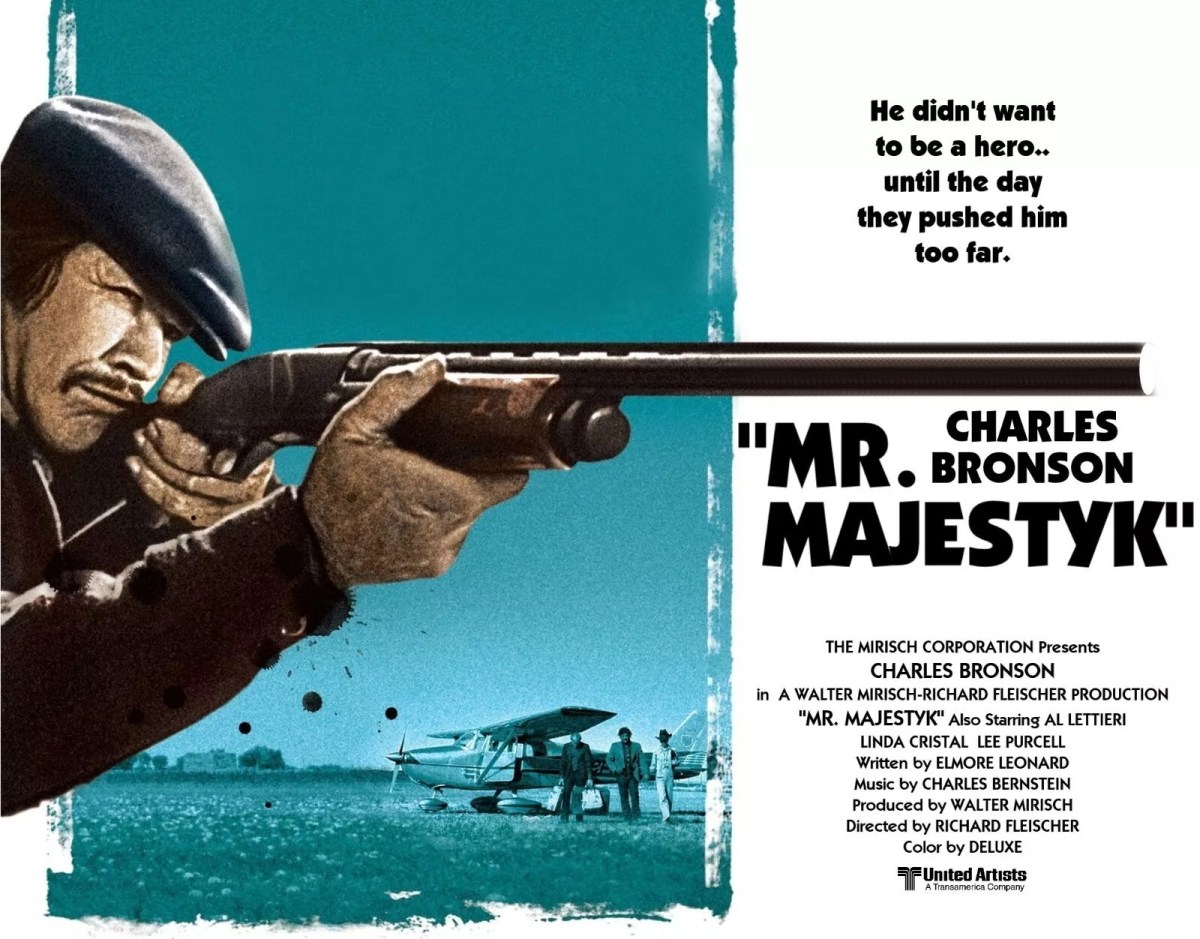
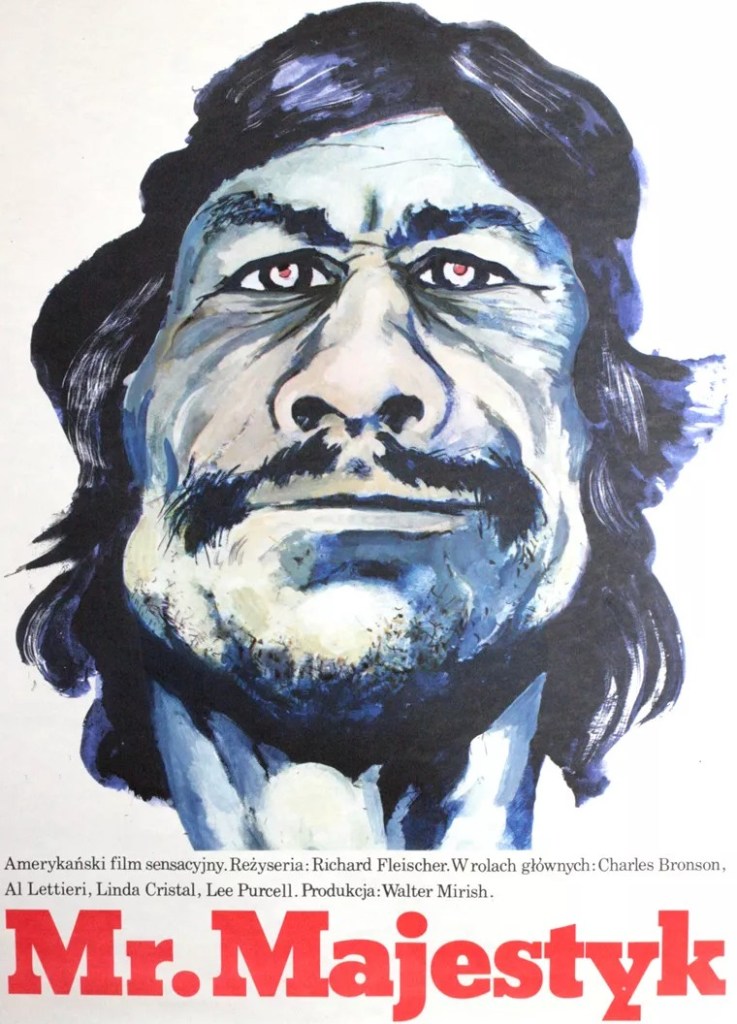
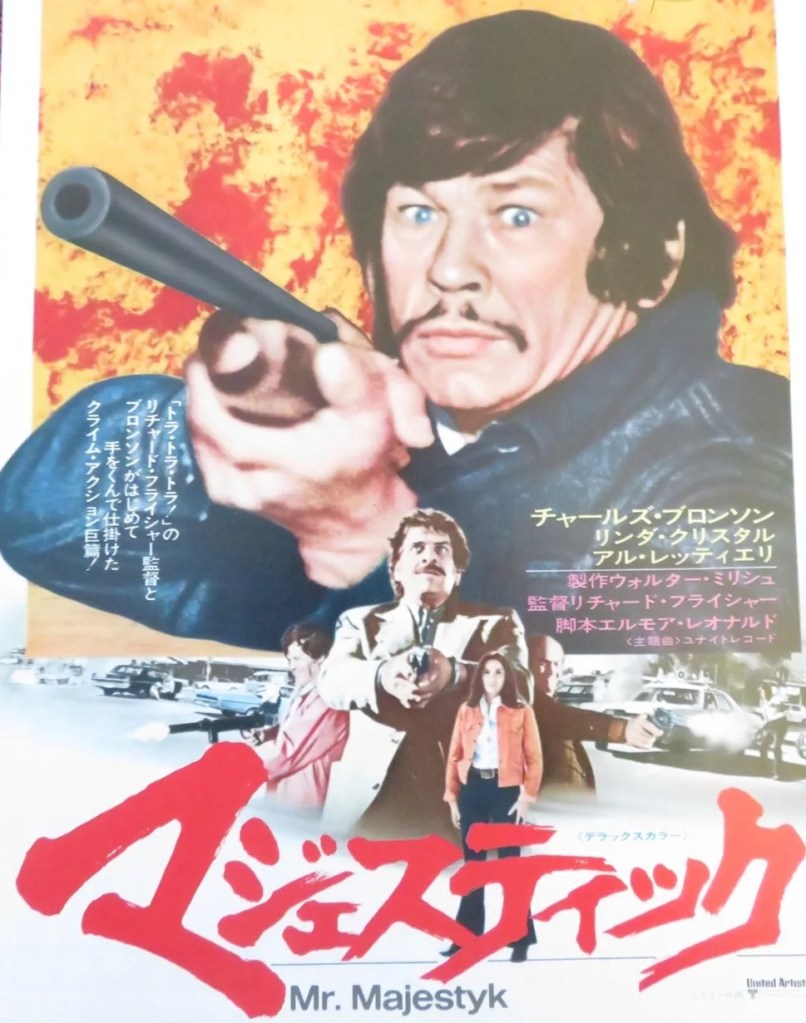
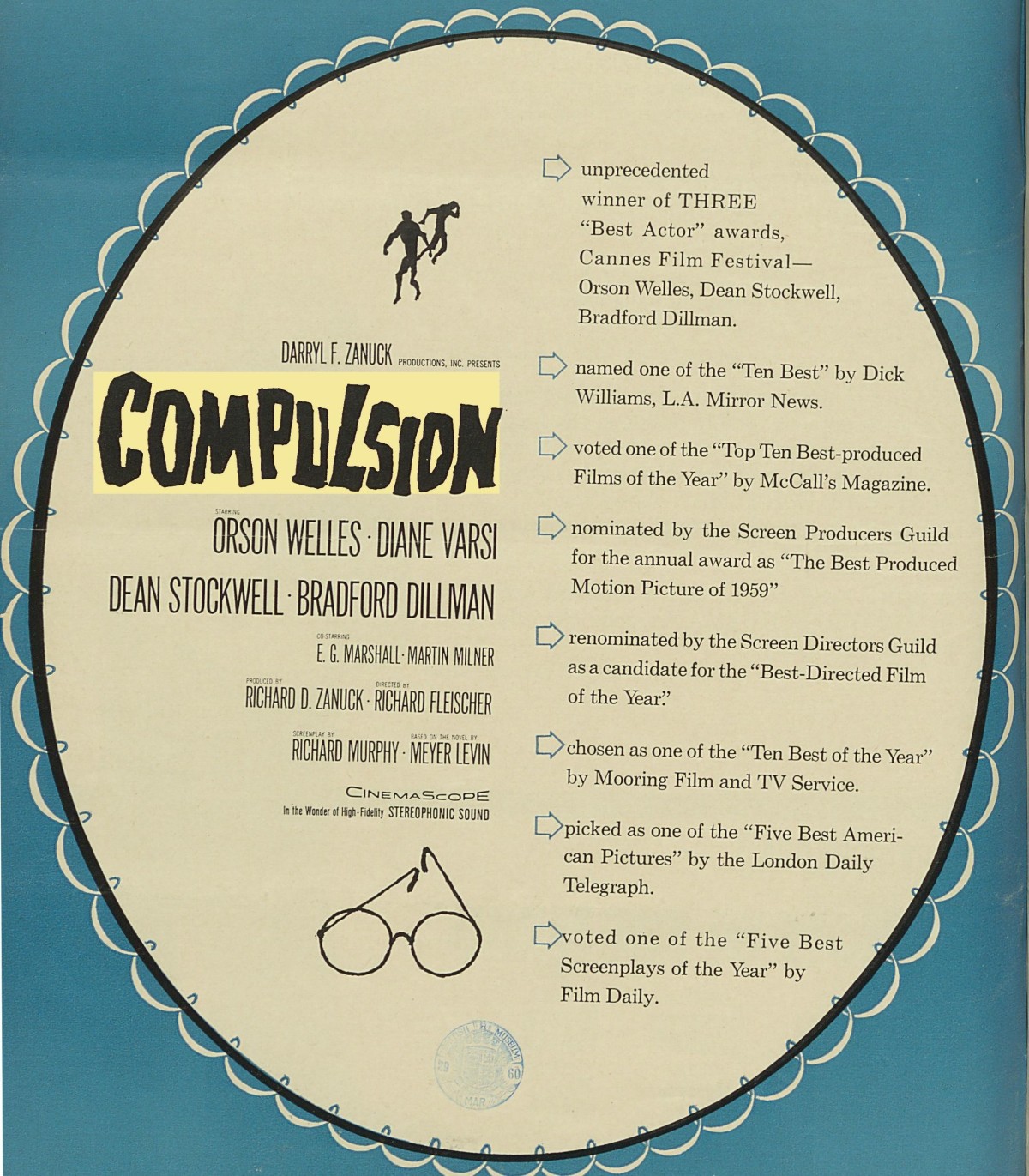


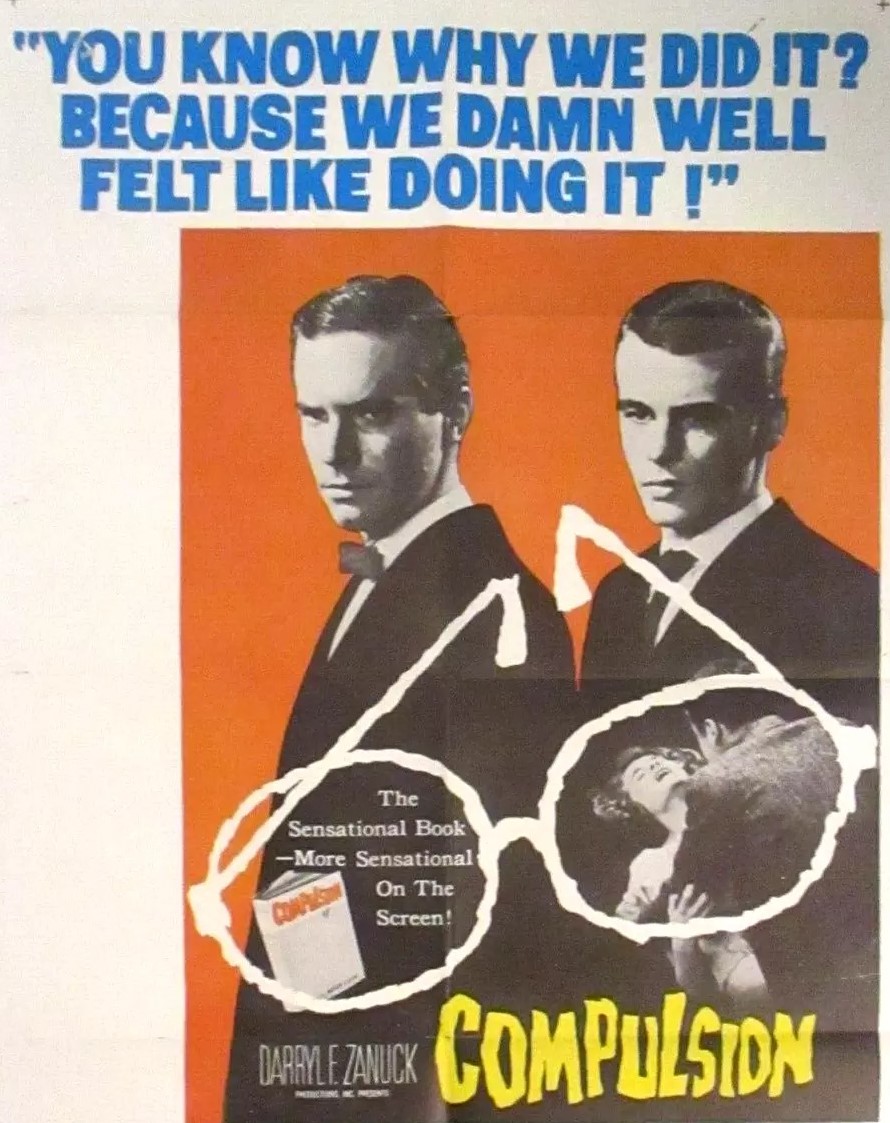
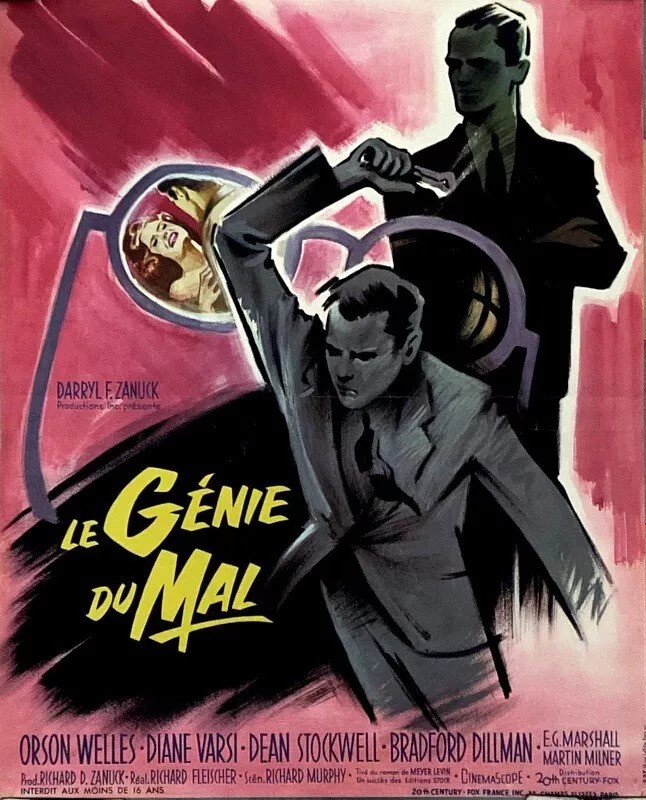


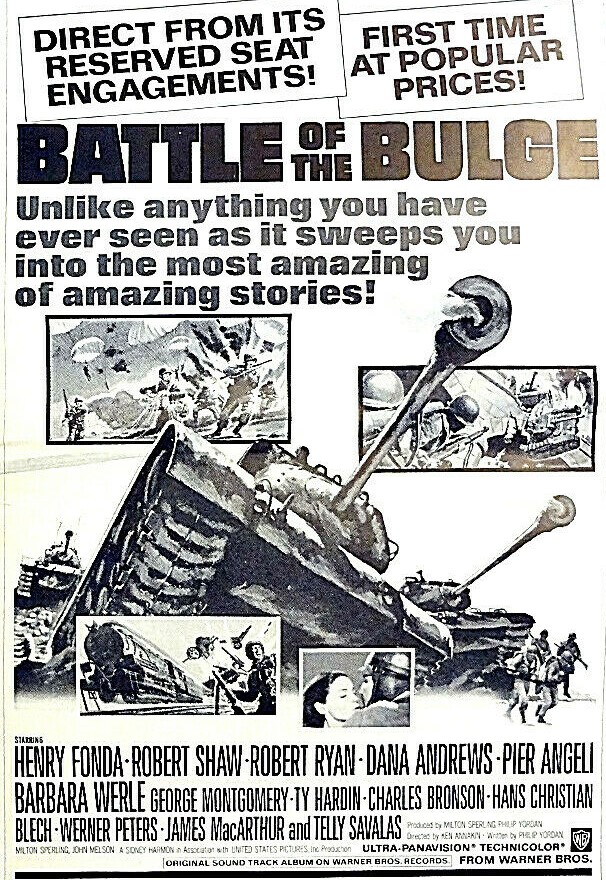
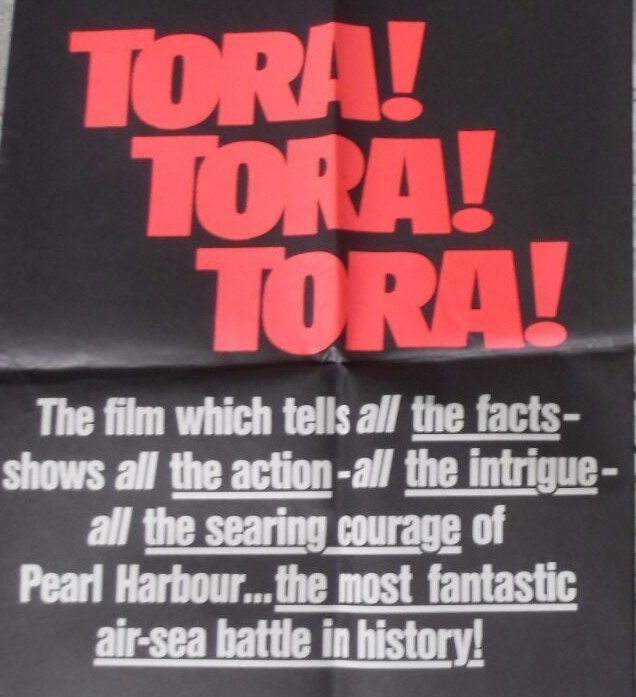
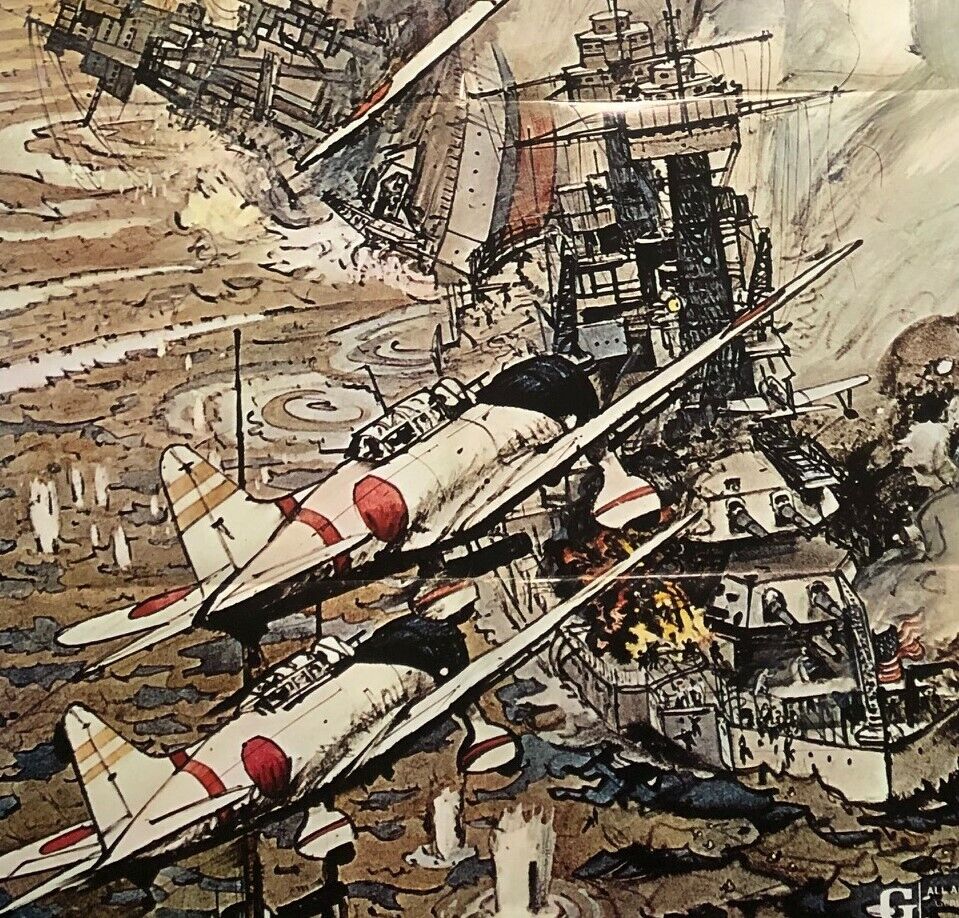
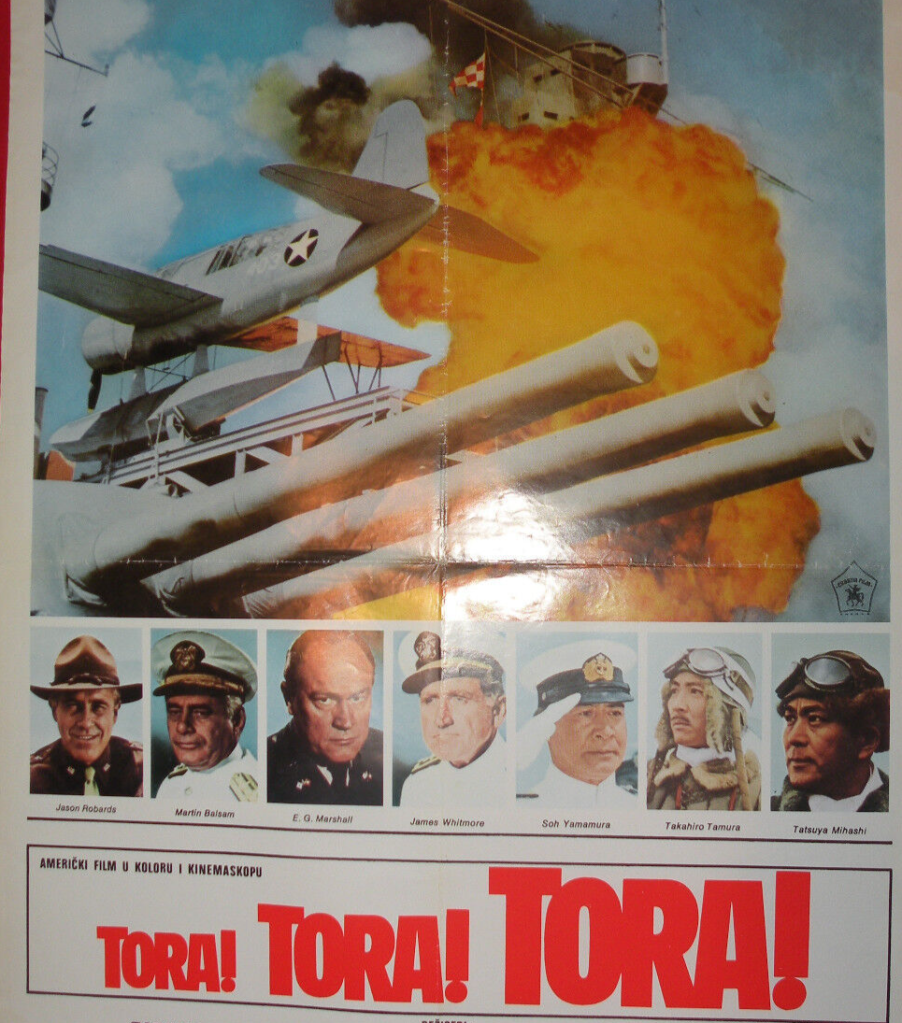
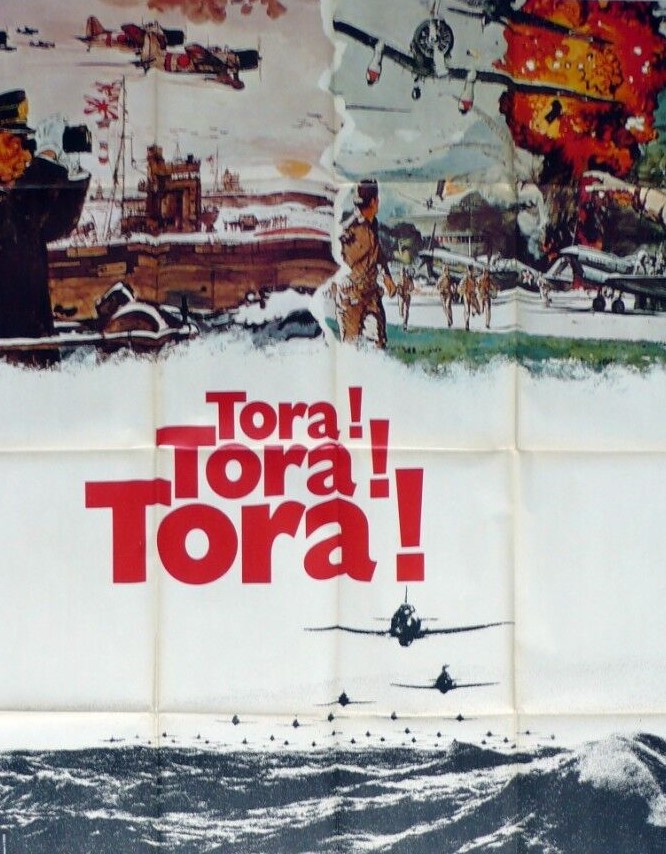
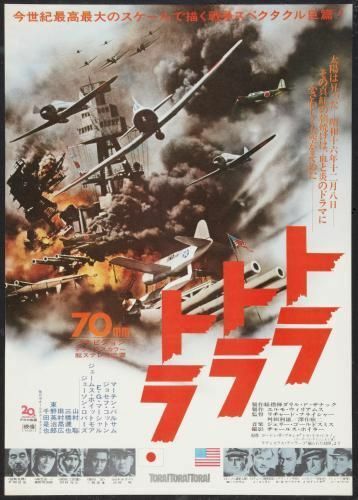
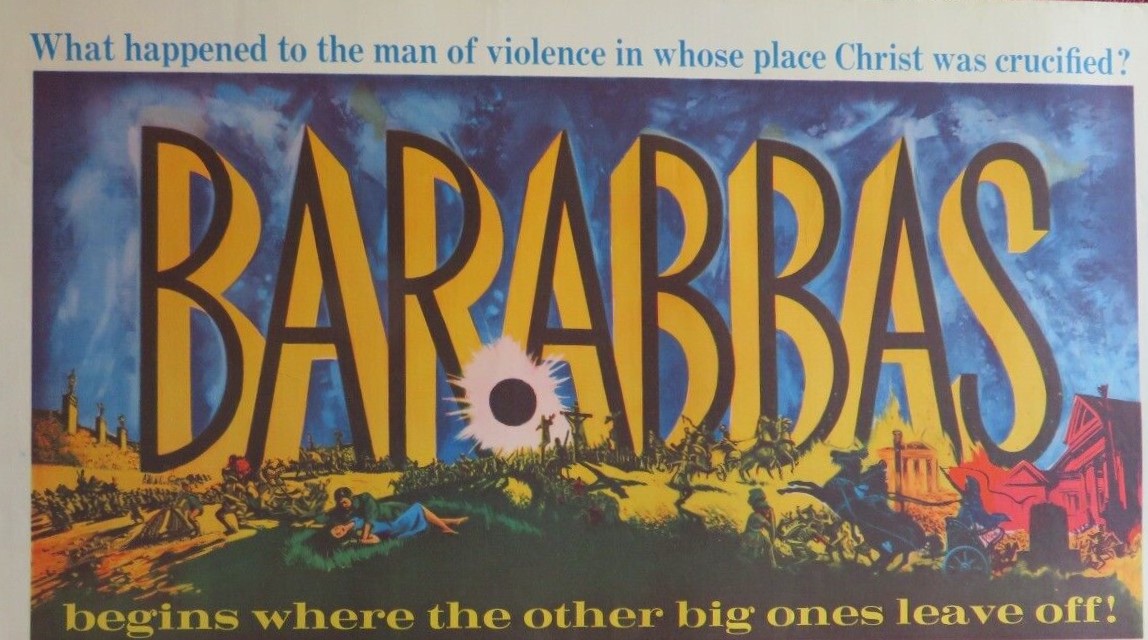
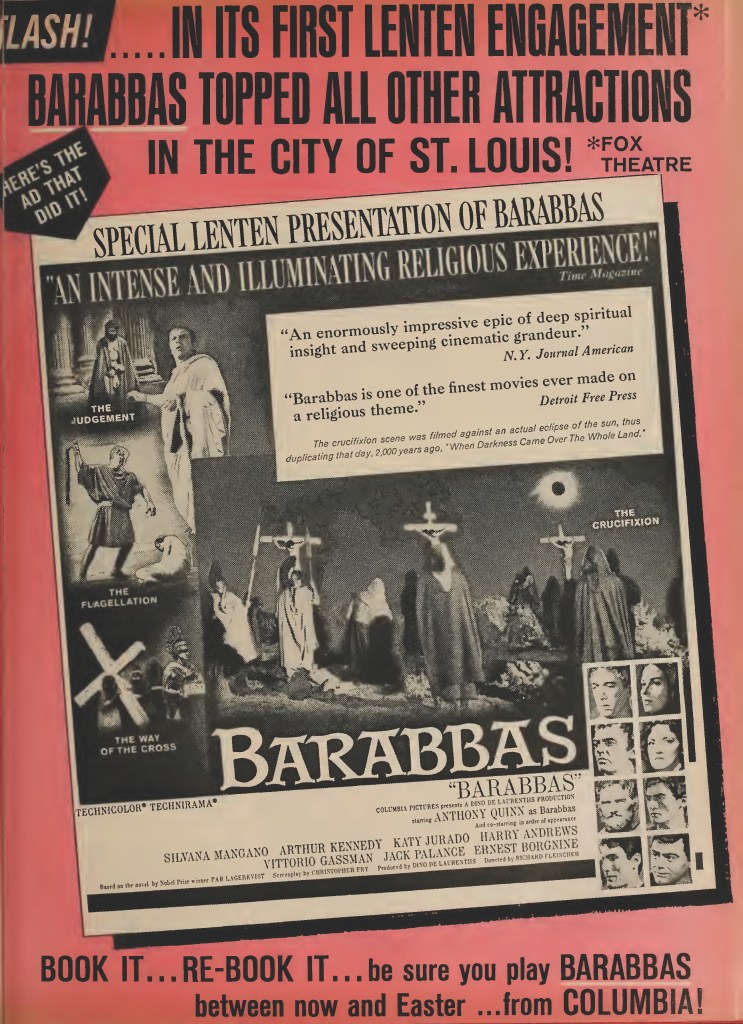
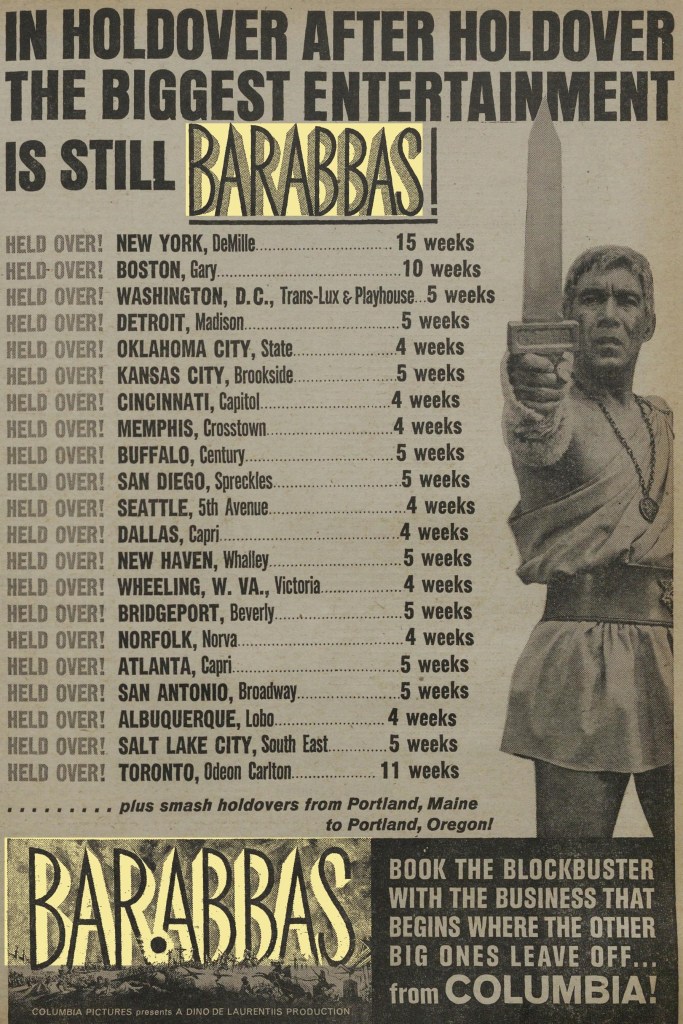
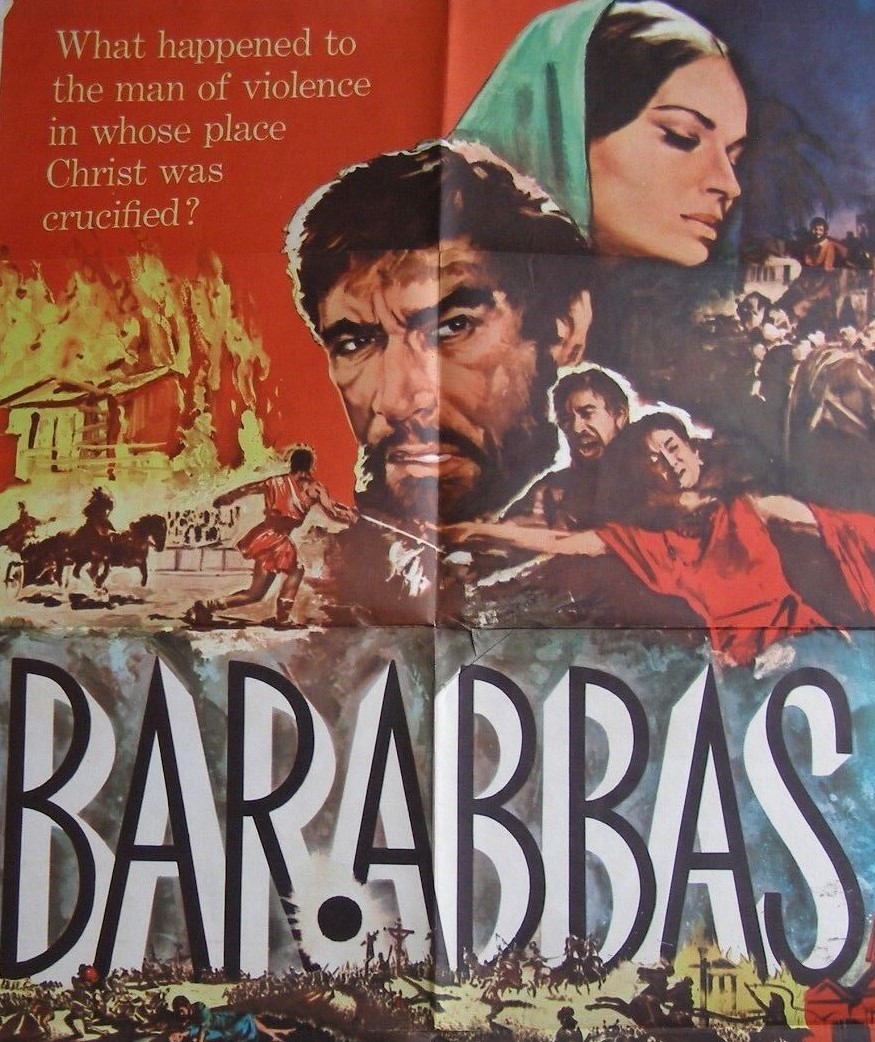
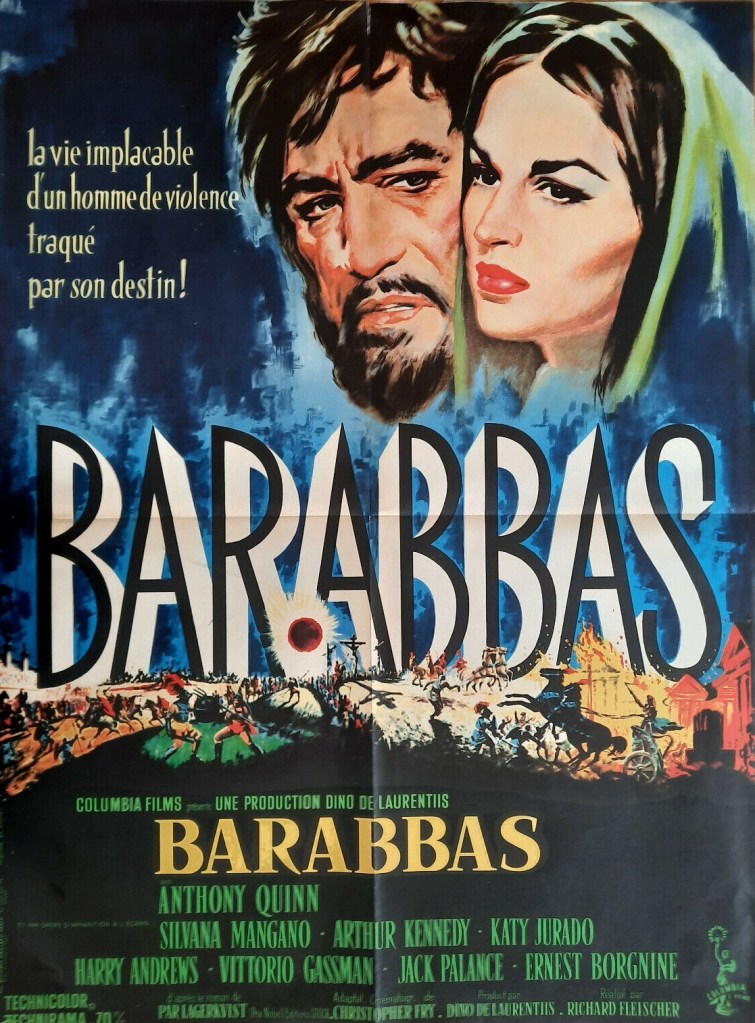
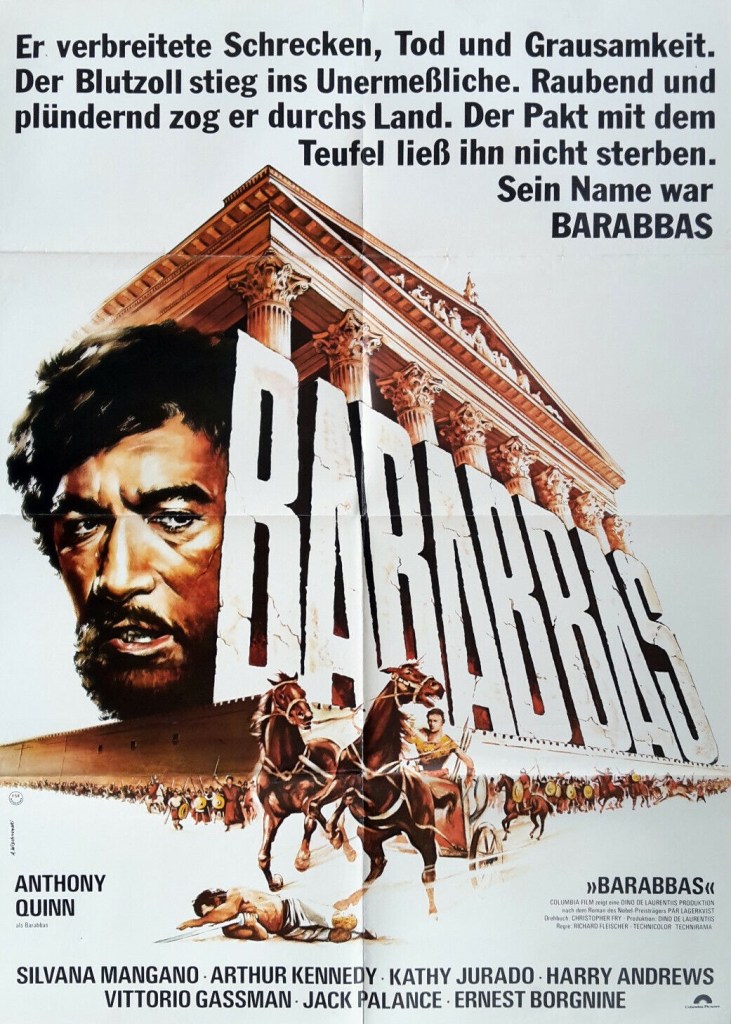
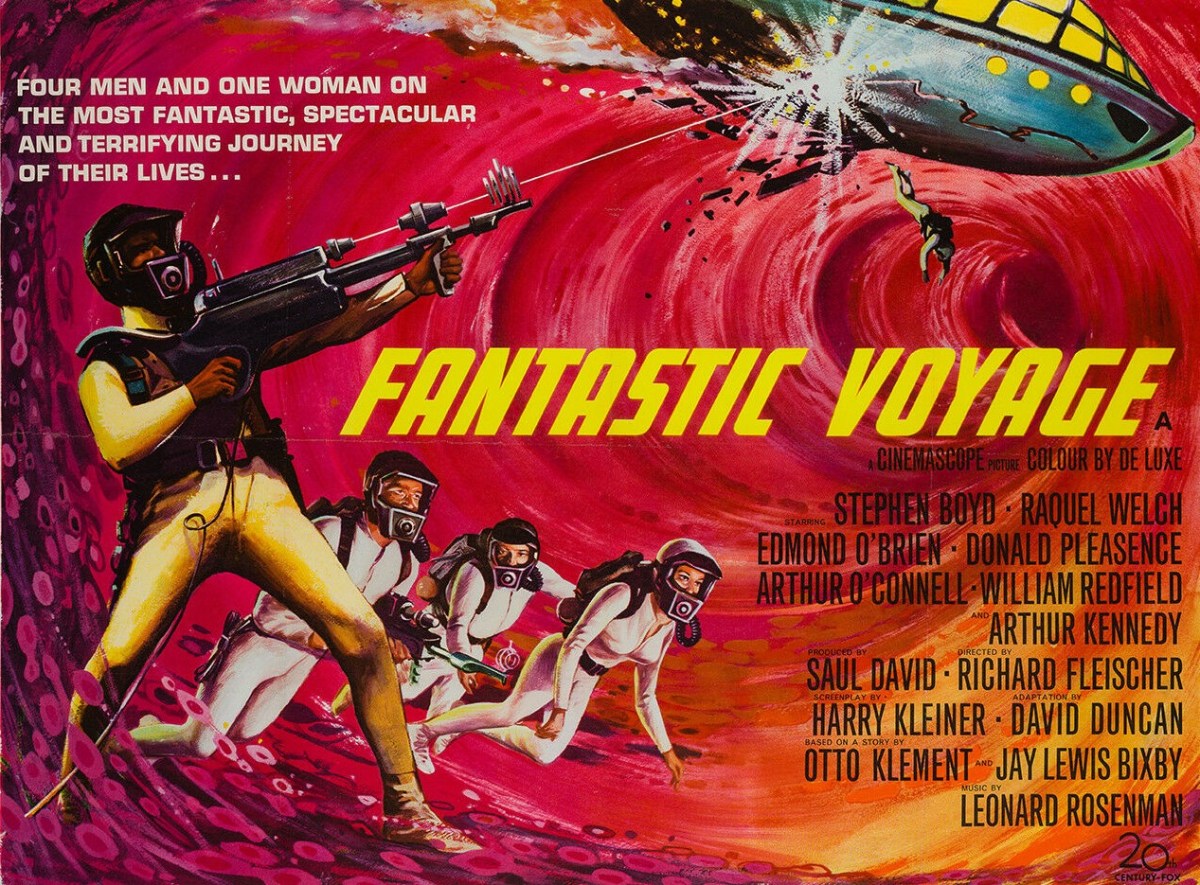
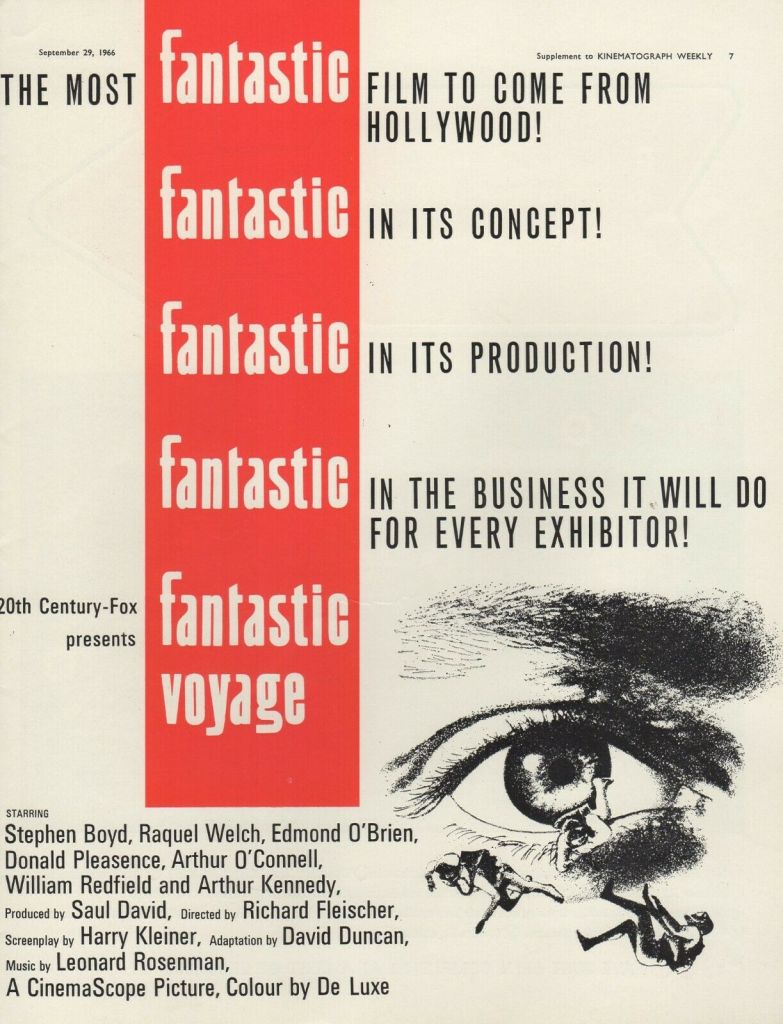

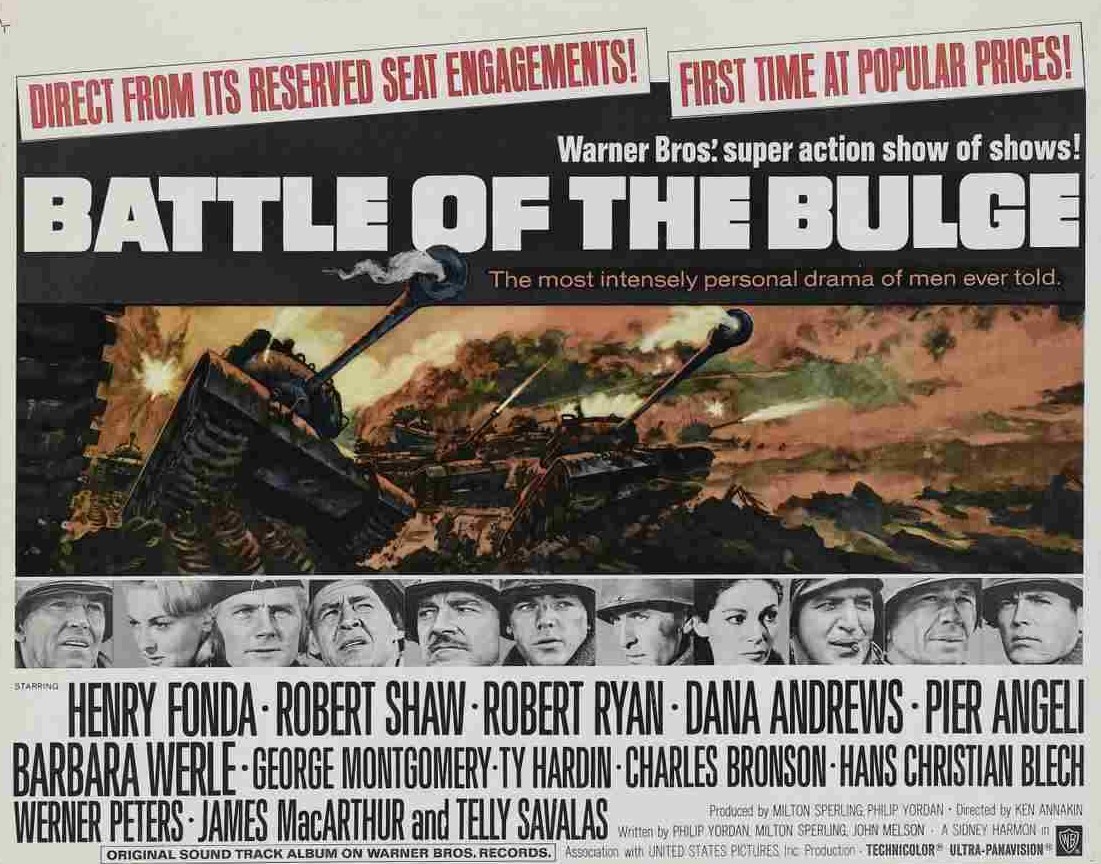

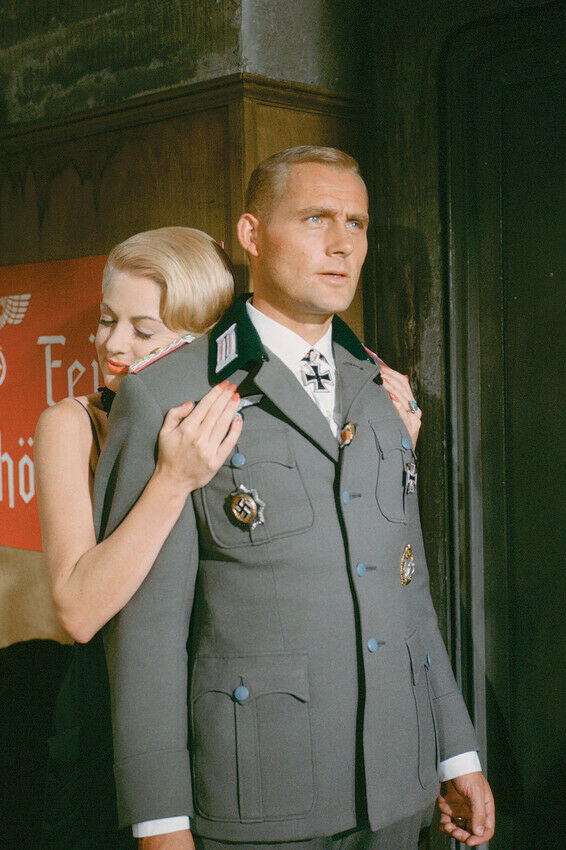
 The Magnificent 60s