Wait Until Dark (1967) ****

You wouldn’t have figured Audrey Hepburn – she of the model looks (Breakfast at Tiffany’s, 1961)  and upmarket twang and belonging to the highest echelons of the movie business – for a Scream Queen. But there were precedents – Doris Day had at times been screaming fit to burst in Midnight Lace (1960) and Lee Remick, though not in either’s marquee league, had been terrified to bits in Experiment in Terror / The Grip of Fear (1962). By this point in pictures, the screen was awash with Scream Queens, courtesy of lower-budgeted efforts from Hammer, AIP and Amicus, so asking a top star to exercise her lungs in similar fashion might have been career suicide.

As it was, which would have come as a surprise to her legion of fans, this turned out to be pretty much the star’s swansong. She wouldn’t make another movie in nearly a decade and only another three after that. But here she certainly hits a dramatic peak.

The story’s a bit muddled and initially requires unraveling. Drug mule Lisa (Samantha Jones) passes a doll packed with heroin to fellow passenger Sam (Efrem Zimbalist Jr.) on a plane. She had been planning to steal the dope and set up on her own with Mike (Richard Crenna) and former cop Carlino (Jack Weston). There’s a bit missing from the tale but you have to assume that somehow Lisa got talking to Sam and he gave her his address and that she has turned up at his apartment looking for the doll, which wasn’t there.

Mike and Carlino turn up and have no luck searching the apartment. They don’t look hard enough because if they’d looked in the closet they’d have found the corpse of Lisa, killed by her employer Roat (Alan Arkin) who arrives to confront the pair and then hire them to help him find the heroin and dispose of the body.

So with all that out of the way we come to the meat of the story. And it follows the same premise as Man in the Dark / Blind Corner (1964) –  though, luckily, so few people saw that it wouldn’t be at the forefront of the audience mind at the time – of not so much a blind person being terrorized in their home but being largely played for a fool. The audience knows more than the blind person does and much of the story is not their vulnerability but just how long it will take for them to twig what’s going on.
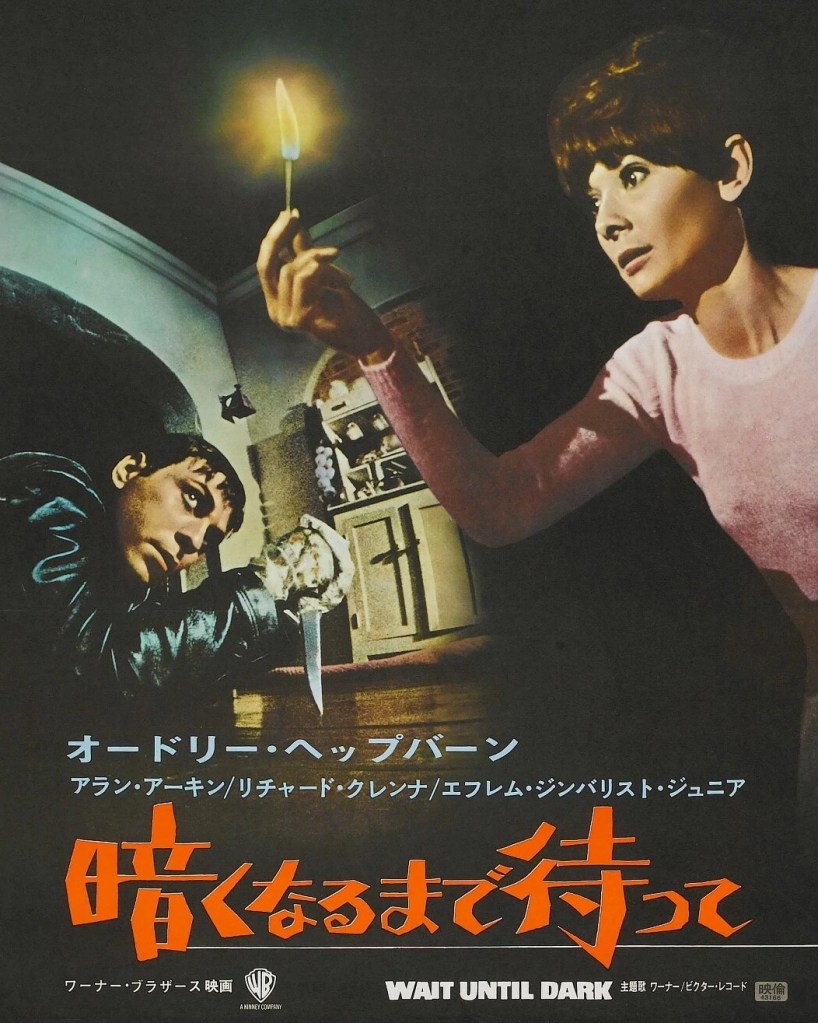
In the case of Susy (Audrey Hepburn), as with the composer in Man in the Dark, her ears are her radar. She is on the alert after hearing the same pair of squeaky shoes on different people and wondering why people are opening and closing her blinds so often. Mike and Carlino masquerade as good guys, cops investigating the murder of Lisa for which her husband Sam is a suspect. She helps them tear apart the apartment looking for the doll.

She trusts Mike implicitly, less so Carlino, and when she starts to put two and two together she has an ally, teenager Gloria (Julie Herrod) who lives upstairs – they communicate like jailbirds by banging on the pipes. Although her eyes are denied sight, they still express her emotions – trust, relief, gratitude, fear.

But there’s not just one game of cat-and-mouse. There’s three. You know damn well that Mike and Carlino plan to squeeze Roat out of the equation just as you know damn well that he is planning to play them for patsies, apt to take revenge when double-crossed.   

Gradually, her suspicions ramp up. She’s pretty smart working out the various clues. And then we hit two dramatic peaks. Firstly, when she discovers Mike is a bad guy. Secondly, when Roat kills Mike and turns on her, splashing petrol about the place, exploiting her terror of fire. She’s still got a couple of moves to turn the tables, at least temporarily but when absolute darkness does descend – she’s smashed all the lights out – and theoretically they are both in the same boat, and advantage her because of her keener hearing, it doesn’t quite work out the way she’s expected because he knows how to exploit sound.

I won’t tell you where the doll is hidden because that’s a very clever twist in itself, but apart from the few plotholes at the outset (how did Lisa manage to break into Susy’s apartment for a start and leave no trace, for example) once the narrative takes hold it exerts a very strong bite.

Audrey Hepburn is on top form. Alan Arkin (The Russians Are Coming, The Russians Are Coming, 1966) and Jack Weston (Mirage, 1965) are a bit too obvious for me, but the smoother Richard Crenna (Marooned, 1969) is excellent.

Directed with both an eye to character and tension by Terence Young (Dr No, 1962) and adapted by Robert and Jane-Howard Carrington (Kaleidoscope, 1966) from the Broadway play by Frederick Knott (Dial M for Murder, 1954).

Top notch.
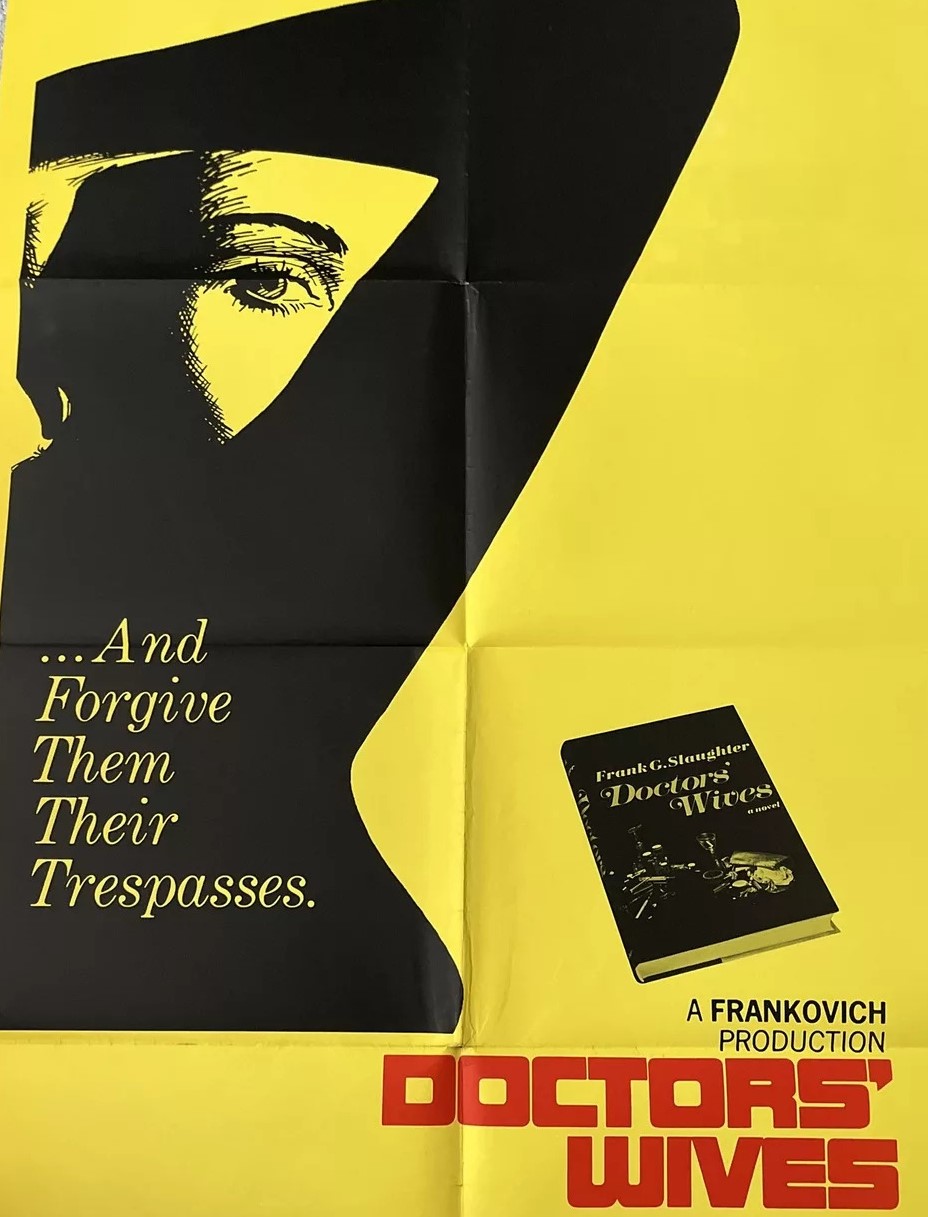
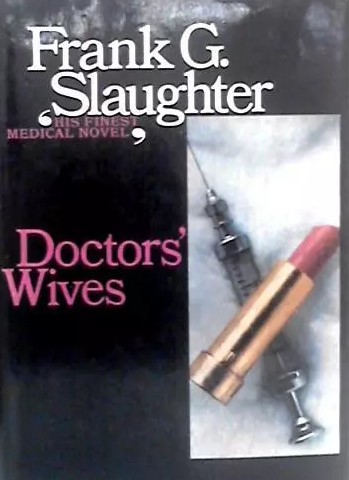
Doctors Wives (1971) ***

Five-star so-bad-it’s-good. Every now and then, especially approaching the annual touting of earnest films for Oscar consideration, we need reminded of just how good Hollywood is at producing hugely enjoyable baloney. Excepting the proliferation of recent MCU disasters, cinematic train wrecks don’t come along nearly often enough. Such botched jobs are always better if they are stuffed full of the worthy – Oscar recipients or nominees. Gene Hackman, Dyan Cannon, Rachel Roberts, Ralph Bellamy and screenwriter Daniel Taradash fulfil that requirement here.

A cross between Sex and the City and ER, with a third act that takes off like a rabbit desperately seizing on any convenient narrative hole. And a first act that pulls the old Psycho number of killing off the star before the picture really gets going. That old murder MacGuffin works every time.

“I’m horny” is about the third line in the movie, announced by sex-mad Lorrie (Dyan Cannon) to a tableful of over-refreshed doctors wives playing sedate poker in a country club at one table while at another table where you would expect the doctor husbands to be telling dirty jokes and whispering inuendoes they are boring each other with shop talk.

Unable to get the others to engage in revealing snippets about their sex lives, Lorrie rounds off the evening by informing the ladies that she plans to have sex with all their husbands to tell them where they are all going wrong, meanwhile gaily proclaiming she’s halfway there already. Which, of course, sets off a round of suspicion and accusations from wives to husbands.

Just to keep you straight on the who’s who: Lorrie is married to Dr Mort Dellman (John Colicos), Dr Peter Brennan (Richard Crenna) to Amy (Janice Rule), Dr Dave Randolph (Gene Hackman) to Della (Rachel Roberts), and Dr Paul McGill (George Gaymes) to Elaine (Marian McCargo) while Dr Joe Gray (Carroll O’Connor) and his ex- Maggie (Cara Williams) still hang around with the group.

As you might expect, every marriage is already in trouble, except, apparently, Lorrie’s because her husband, equally sex-mad Mort, appears to indulge his wife’s whims. Except, he’s not so easy-going, given he puts a bullet in her back when he discovers her making love to one of his colleagues.

Exactly which one remains a mystery for just long enough for the wives to rack up the suspicion level, and all the audience has to go on is the naked arm waving limply trapped under the naked dead weight of the corpse.

You might think, what with Dyan Cannon’s name being top-billed and she quite the rising star after an Oscar nomination for Bob & Carol & Ted & Alice (1969), that we’re going to flip into a series of flashbacks to accord her more screen time. But, no, all we get is that opening risqué scene and her naked corpse.

Before ER’s creator Michael Crichton came calling a couple of decades later, the surgical profession was mostly represented in formulaic soap opera of the Dr Kildare small screen or The Interns (1962) big screen variety. But author Frank G. Slaughter, himself a practising physician,  had made his name with a series of bestsellers that went into the intricacies of surgery and involved genuine medical jargon. So, before the identity of the illicit lover can be revealed, his life has got to be saved – after all he’s got a bullet in his heart. Cue even bloodier surgical shenanigans than kept fans of Mash (1970) hooked.  

By the time we discover the victim was Dr McGill any chance of his wife stomping around in a huff at his infidelity is already off the menu because she’s been dallying with an intern.

I won’t go into all the all-round marital strife – triggered by alcoholism, drug addiction, infertility, ambition – that allows Oscar winners and nominees to try and act their way out of trouble because this picture has another absolute zinger to throw at you.

The murderer blackmails all four doctor pals for having a fling with his wife. To that cool $100,000 he adds quarter of a million from Lorrie’s wealthy dad Jake (Ralph Bellamy) for agreeing to make no claim on his wife’s estate. You kind of wonder what the heck use is all this dosh going to be in the slammer or Death Row. But that’s before you consider the zinger.

Mort’s a specialist and there happens to be a young patient desperate for his surgical skills. Young lad is son to head operating nurse Helen (Diana Sands) who is having an affair with Dr Brennan. So, a deal is done – you can’t wait for this humdinger, can you – wherein the D.A. is agreeable to release Mort from custody so he can perform this emergency operation while Dr Brennan and Jake – wait for it – agree to help him escape abroad.

As everyone knows you can’t tell one masked surgeon from another, so the first part of the plans works and while the cops keep a close eye on the fake Mort as he emerges from the operating theater the real Mort escapes in a parked car with the keys in the ignition. Except Jake isn’t quite a dumb or gullible as Dr Brennan and removes the keys so the killer can’t escape. Which was a shame because this picture could have gone on for another bonkers 20 minutes or so watching Mort outwit the cops.

As it is, there’s more than enough to fill in the time. Amy, something of a clothes horse with an extraordinary array of clothes and especially hats, goes all slinky in what looks like day-glo leggings to perform a bizarre seduction on her husband. Which elicits the movie’s best line, Nurse Helen complaining, “I don’t appreciate you sleeping with your wife.”

Unbeknownst to her, Lorrie has a female disciple who seduces every male in sight for research purposes, tape-recording every moment of the activity, so her victims are pretty much always in the coitus interruptus position.

And I can’t let you go without mentioning that Lorrie was also bisexual and counted among her conquests Della.

Except for the unlikely success of The French Connection later in the year which offered a different route in top-billing, Gene Hackman, had he continued taking on roles like this,  might have ended up a perennial third potato. Bear in mind he already had two best supporting actor nominations in the bank when, third-billed, he took this on. Maybe he never read the whole script. Maybe this was the best offer going.

He’s not even the best thing in it. Too earnest for a start. Husband-and-wife murderer-victim tag team John Colicos (Anne of the Thousand Days, 1969) and Dyan Cannon take the honors. Directed by George Schaefer (Pendulum, 1969) and scripted by Daniel Taradash (Castle Keep, 1969). .

An absolute hoot.

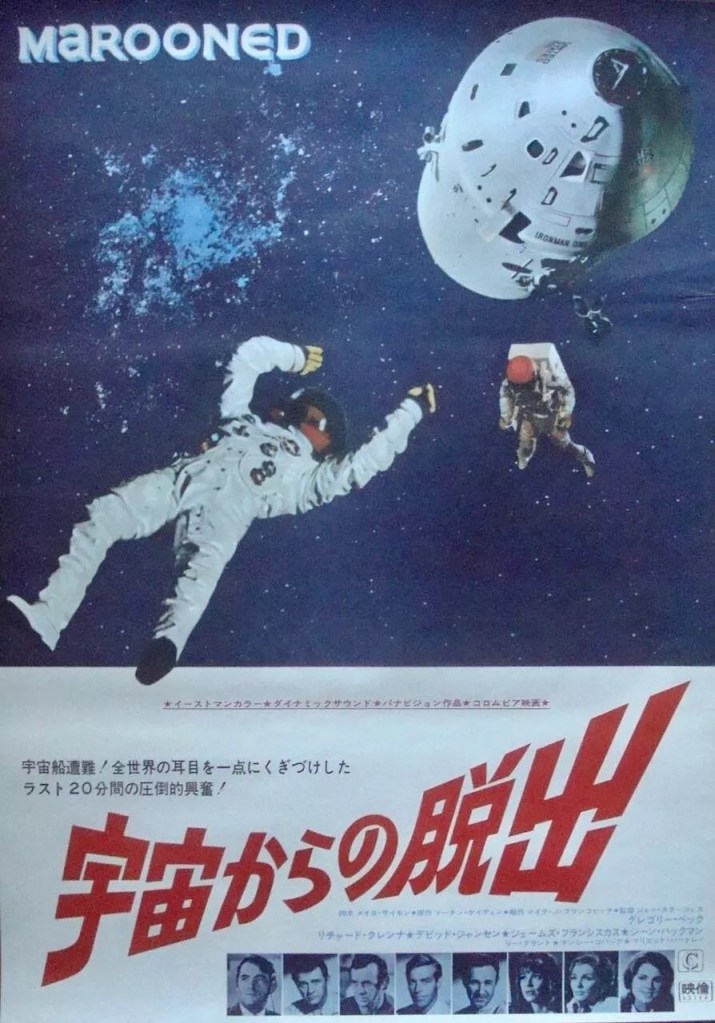
Marooned (1969) ****

The forgotten one. Left out in the cold by audiences and critics alike in the late 60s sci fi boom by the more audacious 2001: A Space Odyssey (1968), Barbarella (1968) and Planet of the Apes (1968). And that’s a shame because it’s by far the most realistic (to the nth degree) of the space movies. Audiences growing up with astronauts saving their own skins with ingenious maneuver – sling shot and whatnot – in Apollo 13 (1995) and The Martian (2015)  might be shocked by the harsh reality of space travel as evidenced here. Astronauts are little more than helpless creatures in a tiny box with ground control in obsessive control. It’s salutary that escape was the audience mindset even after the Challenger Space Shuttle disaster of 1986.

Nobody thought to tell audiences to buckle up because they were in for a hell of a ruthless ride back in the day, but this one really should come with a warning.

Casting makes this work – when it shouldn’t. It’s full of those kind of actors who scarcely move their lips and rarely engage in extraneous facial movement. You can hear director John Sturges issuing instructions: to Gregory Peck, keep those brows knitted; to David Janssen, keep your head lowered and keep with the muttering; to Richard Crenna, don’t move a muscle; to Gene Hackman, limit that trademark chuckle to just once. Why this shouldn’t work is because the big star isn’t in the goldfish bowl of the shuttle cockpit, and since there’s none of the get-to-know-the-crew backstory of The Right Stuff (1983) or Apollo 13 there’s nobody to really root for, especially as the crew is just siting there, doing (by instruction) nothing and awaiting their fate. Which, by the way, which is constantly spelled out, is to suffocate from lack of oxygen.

But there’s a reason Gregory Peck’s on the ground and not in space. Because he’s the one making the life-and-death decisions.

This is by far Gregory Peck’s toughest role. He pulled out of Ice Station Zebra (1968) because he didn’t like the slant of the character, and since then he’d been in typical upstanding heroic mode in The Stalking Moon (1968), Mackenna’s Gold (1969) and The Chairman (1969). Here he’s the king of data management and crisis control, the most ruthless, heartless sonofa you’d ever encounter, not willing to take a risk on greenlighting a rescue mission because the computer says no. The weaselling PR-speak that’s all about saving the space program and making allowance for collateral damage is nothing compared to his terrible delivery of news to one of the wives that her husband is dead. She collapses with emotion, he puts the phone down.

If you’re geek-minded, you’ll give this five stars because there’s information overload. “Go” and “Mark” are the most commonly used words. And in case you can’t judge from the visuals what’s going on, there’s usually some television commentator voice-over to help you out.

So, the Ironman One mission hits trouble when its retro rockets refuse to ignite for return to Earth after several months in space. They’ve got 40 hours or so to effect a rescue before the oxygen runs out for crew members Jim Pruett (Richard Crenna), Buzz Lloyd (Gene Hackman) and Clayton Stone (James Franciscus). The crew are forbidden to try any stunts themselves because any exertion will use up valuable oxygen.

Plan by chief astronaut Ted Dougherty (David Janssen) to mount a rescue operation via an untried spaceship XRV (smaller than a helicopter, by the way) is vetoed as too risky by NASA boss Charles Keith (Gregory Peck) until the President, terrified of public reaction, overrules him. With time running out the impending launch is hindered by an approaching hurricane. But then, in the only nod to ingenuity, someone suggests taking off in the eye of the hurricane, when wind force will be zero.

Meanwhile, up in space, the three stalwarts are slowly coming apart. Buzz, the toughest-looking of the trio, is worst affected, screaming his head off as the prospect of dying looms. Then they are faced with a terrible decision. With the rescue delayed, there’s not enough oxygen to see them through, so one has to sacrifice himself.

I told you it was brutal stuff. About the last 30 minutes are not about whether they can be saved, but who will die and how, the impact of asphyxia on the brain spelled out by resident boffin Clayton. By this point anything they do will almost certain sabotage any rescue and they’re in cloud cuckoo land as Keith tries to keep them in line.

While there’s certainly information overload and a few questionable scientific decisions (can you really open a hatch straight into space?), the reality of the drama more than holds the enterprise together. The realpolitik, the callous use of the wives to go along with the company line as they watch their husbands suffer before their very eyes, the management of potentially bad news, was perhaps a shock for audiences back in the day but would be accepted more easily by contemporary moviegoers.

The acting is first class. Gregory Peck never attempts to lighten his load, to make his character less unattractive and appease his following. David Janssen (Warning Shot, 1966) is as solid as ever. Gene Hackman (The Gypsy Moths, 1969) is the pick of the crew but Richard Crenna’s (Midas Run, 1969) less showy disintegration packs a punch. Lee Grant (The Big Bounce, 1969) is the standout among the wives.

Much as Sturges lets the computerspeak run away with itself, he doesn’t flinch when it comes to the really tough scenes. Written by Mayo Simon (I Could Go On Singing, 1963) from the Matt Caidin source novel.

Under-rated. Worth a look.

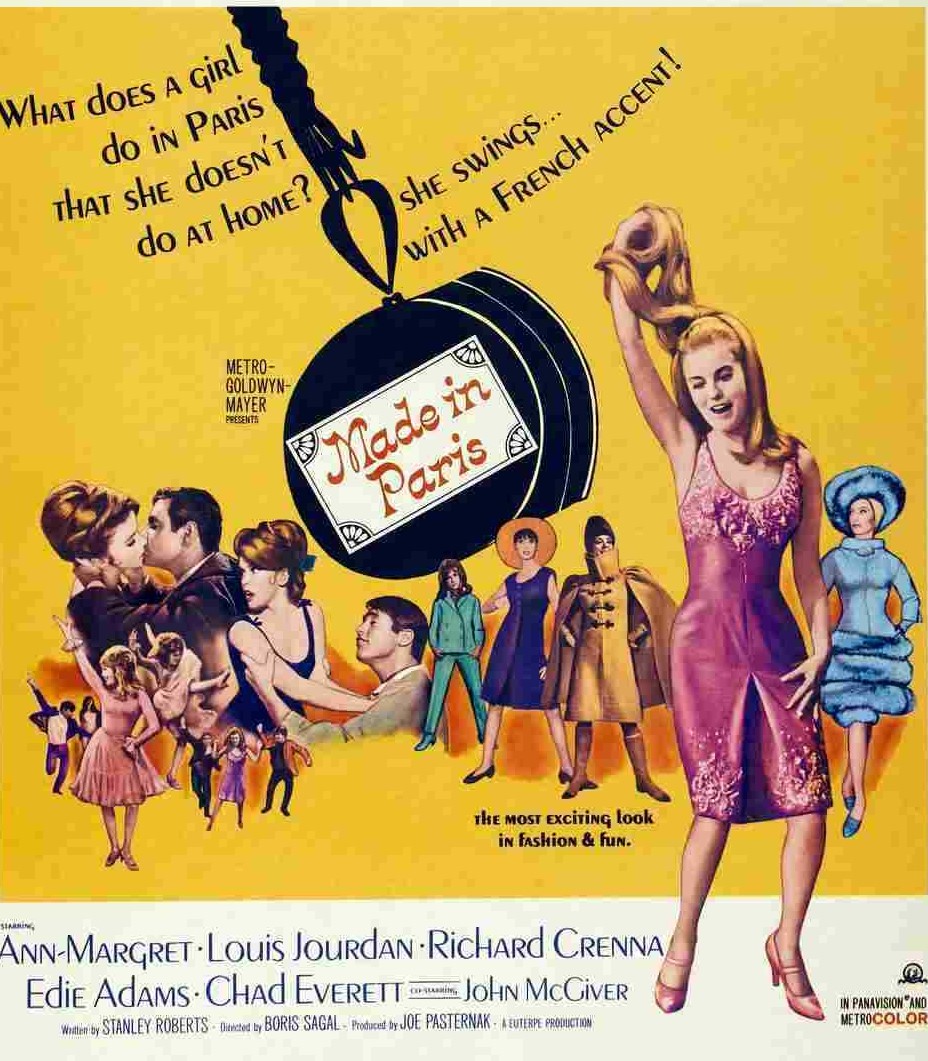
Made in Paris (1966) ***

She sings, she dances, she shakes her booty. What else would you expect from Ann-Margret in light comedic mode (i.e. The Swinger, 1966) rather than serious drama (i.e. Stagecoach, 1966). While appearing as free-and-easy as in The Swinger, she’s actually a dedicated virgin, as was par for the course before the Swinging Sixties kicked in. But the way she lets it all hang out, you’d be forgiven (if you were a predatory male) for guessing the opposite.

Maggie (Ann-Margret) is a career girl, assistant fashion buyer in a New York store, having come up the hard way, small-town-girl then model then salesperson. When the Paris buyer Irene (Edie Adams) quits her job to get married, Maggie is shipped out as her replacement, not as a reward for all her hard work but as punishment because she refuses to sleep with the boss’s cocky son Ted (Chad Everett). The idea is she’ll be so out of her depth, she’ll return humiliated and only too happy to jump into bed.

What do poster designes have against certain colors?
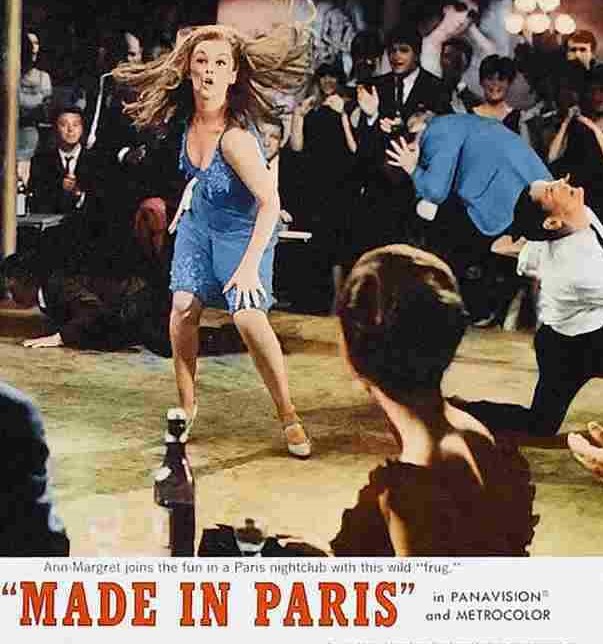
In the movie Ann-Margret dances in blue. In the poster, the dress turns red.

Turns out Irene quit so fast she didn’t have time to tell her Parisian boyfriend and fashion designer Marc (Louis Jourdan) so on Maggie’s first night in the company’s luxurious apartment he turns up. Naturally, he expects a bit of the old-fashioned quid pro quo, je ne sais quoi, whatever they call sex when they are being coy about it, and when she refuses to play ball he cables New York to demand her dismissal. Even when the New York boss (John McGiver) relents, she is banned from Marc’s fashion shows, meaning she can’t buy clothes she is forbidden to view.

Enter Ted’s buddy Herb (Richard Crenna), from the same lothario mold. Just to even things up or add further complication, Ted realizes he is actually in love with a girl who said no after a thousand boring girls who said yes. Trying to win her way back into Marc’s good books, with Herb as her guide she tracks the designer through the night clubs, eventually putting on the kind of sexy wild impromptu dance exhibition that the more staid Maggie could only have achieved if she’d taken lessons from Ann-Margret.

That does the trick and they share an impromptu number (“Paris Lullaby”) on the banks of the Seine although Marc still insists she shed her inhibitions before marriage if she wants to be considered a true Parisienne. The arrival of Mark and then Irene, abandoning her husband on their honeymoon when called in to retrieve the situation, adds fuel to the fire and then it’s one mishap after another, especially when Maggie discovers the pleasures of absinthe and ends up in Herb’s bed (yep, she has a hell of a time wondering not just how she got there but if, Heavens to Murgatroyd as Snagglepuss would say, she committed the terrible deed).

Unbelievably, and just as well perhaps from the narrative perspective, Herb isn’t a love rival. Maggie isn’t his type, its transpires. Shoot that man on sight – doesn’t fancy Ann-Margret?  Lock him up!

You won’t be surprised to learn that it all sorts itself out in the end but you might be a bit taken aback how quickly a dedicated career girl throws away her career once a marriage proposal comes her way.

You might have expected from the title that Maggie would be a model, the best excuse you could find for the actress to cavort in a series of skimpy costumes, as she does in the pre-credit sequence, an exquisite dialogue-free montage with a clever pay-off  that makes you think this is going to be much more stylish – excluding the fashion show of course – than it is.

Ann-Margret has such a dazzling screen persona she makes light work of even the lightest of confections. She does all that her most fervent fans would want but it’s not her fault she’s been cast in a Doris Day comedy that ensures she can only properly express her character by acts of exhibition. Louis Jourdan (Can-Can, 1960) keeps creepy entitlement at bay with lashings of Gallic charm. Despite his character’s playboy tag, Chad Everett (The Impossible Years, 1968) is the squarest of squares.

Richard Crenna (The Midas Run, 1969) spins his normal hard-ass screen persona into something a bit more sympathetic. Edie Adams (The Honey Pot, 1967) and John McGiver (Fitzwilly/Fitzwilly Strikes Back, 1967) add a bit of dash in support.

You’d never guess the director was Boris Sagal of The Omega Man (1971) fame. Stanley Roberts (Come September, 1961) wrote the screenplay.

Ann-Margret at her zingiest. What more could you ask?

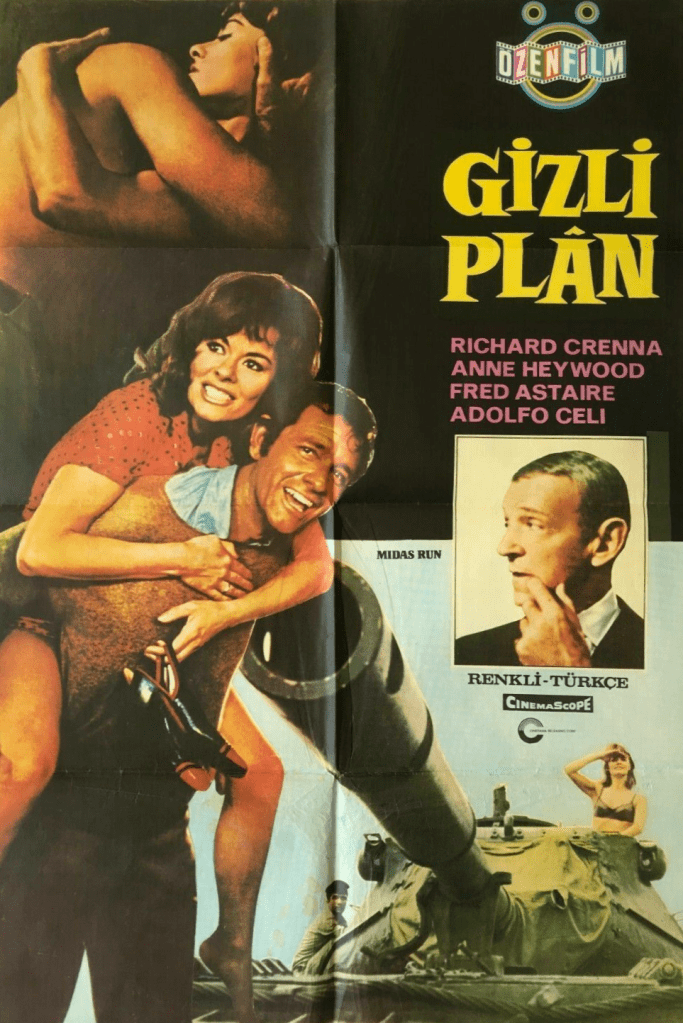
The Midas Run (1969) ***

You ever wonder what triggers criminality? Don’t deny an upper class English civil servant his knighthood, don’t fire an American university lecturer for an anti-war demonstration, don’t humiliate your beautiful wife by making her part of a business transaction. They might all feel robbery is the best revenge.

The highly respected Pedley (Fred Astaire) has talked his superiors in government into the notion that the best way to ship a consignment of gold is by passenger rather than commercial airplane. He recruits wannabe author Mike (Richard Crenna) who, in turn, comes to the rescue of glamorous Sylvia (Anne Heywood) when she is being sold off to sweeten a business deal.

The apparently eccentric casting was based on unfulfilled promise. Fred Astaire, who had not starred in a film for over decade, had made a comeback for Finian’s Rainbow (1968). But that had flopped, putting a dent in his marquee credentials and dramatic roles were hardly the forte of this twinkle-toed dancer. Richard Crenna’s bid for leading man status in Star! (1968) had spectacularly derailed at the box office.

Anne Heywood, the only one of the three principles to have a recent hit, in unexpected sleeper The Fox (1967), found no demand consequently for her services except from lover, future husband and biggest fan, producer Raymond Stross who had bankrolled the lesbian drama, and assigned her female lead here. You could extend your incredulity to the involvement of Swedish director Alf Kjellin,who hadn’t made a picture since Siska seven years before, and like most of his countrymen was seen as producing arthouse fare.

The biggest problem in a gold heist, as anyone watching the current television series The Gold will be aware, is shifting loot that weighs a ton. So Mike and Sylvia hire some Italian crooks to supply a couple of petrol tankers to hide and transport the bullion after the airplane has been forced down over Italian airspace by an Albanian fighter plane, Mike driving the World War Two tank that supplies the ground-based pressure.

As with any heist picture, robbery is only the beginning, double-cross the middle and triple-cross the end. Pedley, who has accompanied the shipment, is delegated by the British secret service to recover the gold, aided by suspicious assistant Wister (Roddy McDowall).  The twist here is that he not only recovers most of the gold, apart from some secreted away by the now romantically-inclined twosome, but points the finger at his accomplices, including the fence General Ferranti (Adolfo Celi).

It then becomes a question of whether the younger crooks can evade his clutches, whether Wister can confirm his suspicions that the investigation has proceeded a tad too conveniently, and discover what the heck the bowler-hatted Englishman is up to. And, of course, whether Mike can trust Sylvia. It wouldn’t be the first – or last (see Perfect Friday, 1970) – grand theft in which the male has been the dupe.

Along the way there is some clever comedy, a play on the British assumption that everyone in the world naturally speaks English, the implicit trust that the upper-classes place in each other, and the stock view that any Italian, law enforcer or crook, can be distracted by a pretty face or comely derriere.

On the downside, the set-up takes too long coming to fruition, especially a mid-movie  interlude that seems intend on channelling the worst romantic notions of the era, idyllic strolls in fields, that I half-expected a burst of slow-motion trotting, or some metaphor for the orgasm. There is some little understood banter about war games. And, for obvious reasons, La Heywood strips down to brassiere in the overheated tank (Mike manages to resist such un-English impulses) though she has previously indulged her innovative ideas about dress, turning a bedsheet into a fashionable toga at a moment’s notice.

There’s nothing particularly new here but Fred Astaire makes a deft impression as a typical upper-class Englishman, accent not found wanting, and successfully reinvents himself as a dramatic actor, that highpoint an Oscar nomination for The Towering Inferno (1974). Anne Heywood, once you realise she is playing all sides against each other, slips easily into the femme fatale role. Richard Crenna’s acting appears limited since his character, despite occasional initiative, is outwitted by all and sundry, and that was scarcely a good look in those days for the leading man to be out-thought by the leading woman.

Effortless, and harmless enough for a matinee.

Discover WordPress

A daily selection of the best content published on WordPress, collected for you by humans who love to read.

The Atavist Magazine

by Brian Hannan

WordPress.com News

The latest news on WordPress.com and the WordPress community.