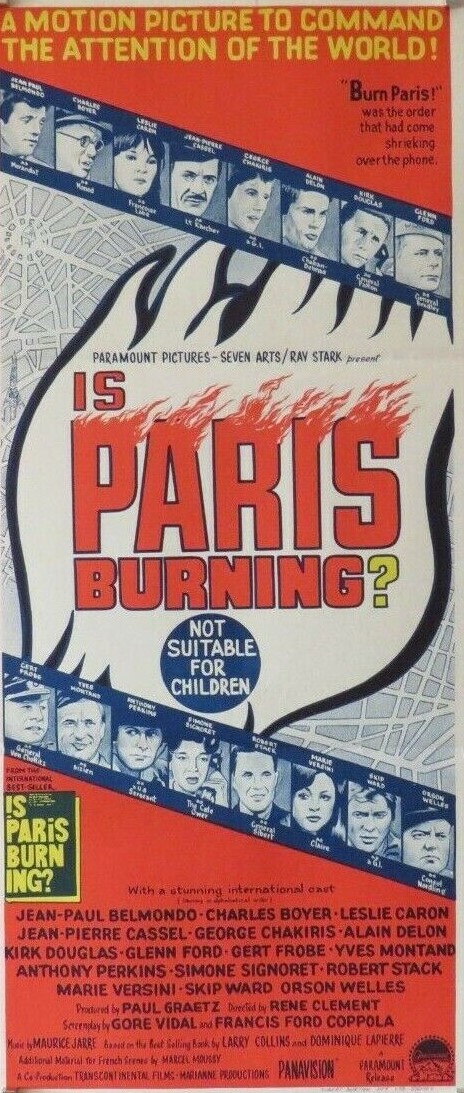
Politics don’t usually play a part in war films of the 1960s but’s it’s an essential ingredient to Rene Clement’s underrated documentary-style picture. Paris has no strategic importance and after the Normandy landings in 1944 the Allies intend to bypass the German-occupied French capital and head straight for Berlin.
Meanwhile, Hitler, in particular vengeful mood after an attempt on his life, orders the city destroyed. Resistance groups are splintered, outnumbered and lacking the weaponry to achieve an uprising. Followers of General De Gaulle, the French leader in exile, want to wait until the Allies send in the troops while the Communists plan to seize control before British and American soldiers can arrive.
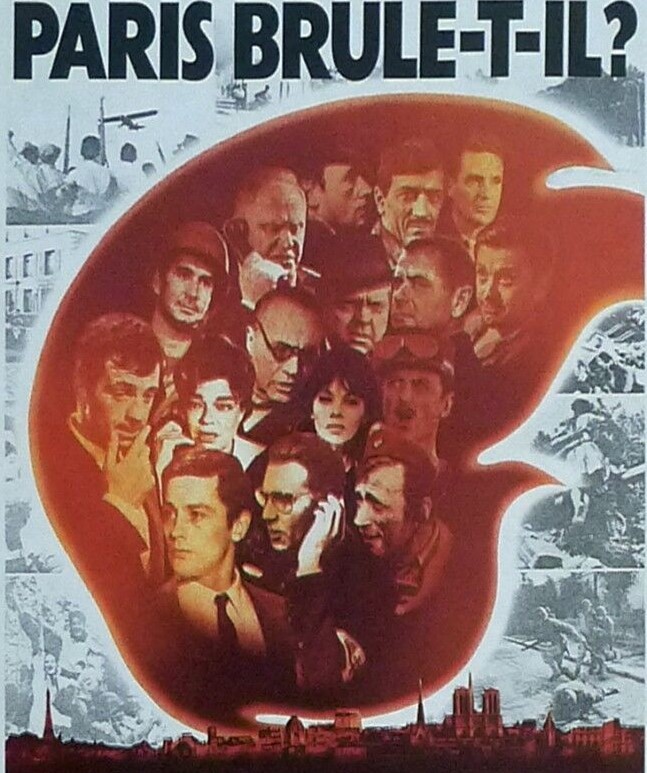
When the Communists begin the fight by seizing public buildings, the Germans retaliate by planting explosives on the Eiffel Tower, the Louvre, and other famous buildings and all the bridges across the River Seine. German commandant Von Choltitz (Gert Frobe), no stranger to slaughter having overseen the destruction of Rotterdam, holds off obeying his orders because he believes Hitler is insane and the war already lost.
The Gaullists dispatch a messenger to persuade General Omar Bradley to change his mind and send troops to relieve the city. Director Clement, aware how little tension he can extract from the question of whether von Clowitz will press the destruct button (history tells us he did not) so he takes another route and documents in meticulous detail the political in-fighting and the actual street battles that ensued, German tanks and artillery against Molotov cocktails and mostly old-fashioned weaponry.
The wide Parisian boulevards provide a fabulous backdrop for the fighting. Shooting much of the action from above allows Clement to capture the action in vivid cinematic strokes. Like The Longest Day (1962) the film does not follow one individual but is in essence a vast tapestry. Scenes of the utmost brutality – resistance fighters thrown out of a lorry to be machine-gunned, the public strafed when they venture out to welcome the Americans – contrast with moments of such gentleness they could almost be parody: a shepherd taking his flock through the fighting, an old lady covered in falling plaster watching as soldiers drop home-made bombs on tanks.
This is not a film about heroism but the sheer raw energy required to carry out dangerous duty and many times a character we just saw winning one sally against the enemy is shot the next. The French have to fight street-by-street, corner-by-corner, bridge-by-bridge, enemy-emplacement-by-enemy-emplacement, tank-by-tank.
And Clement allows as much time for humanity. Francophile Sgt Warren (Anthony Perkins), an American grunt, spends all his time in the middle of the battle trying to determine the location of the sights he longs to see. Bar owner Simone Signoret helps soldiers phone their loved ones.
Like The Longest Day and In Harm’s Way (1965), the film was shot in black-and-white, but not, as with those movies for the simple reason of incorporating newsreel footage, but because De Gaulle, now the French president, objected to the sight of a red swastika.
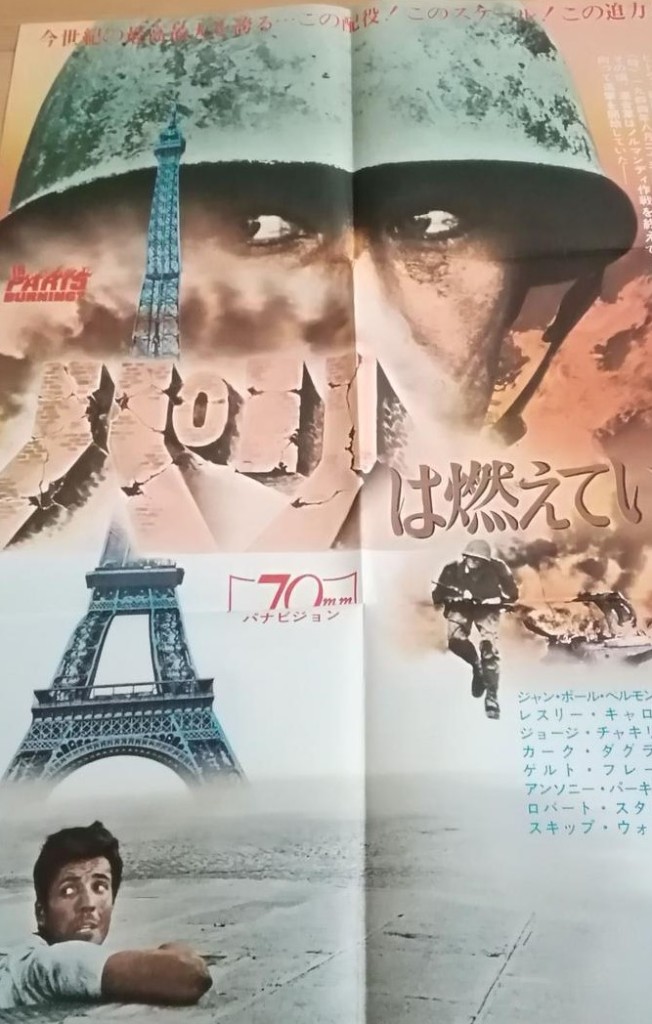
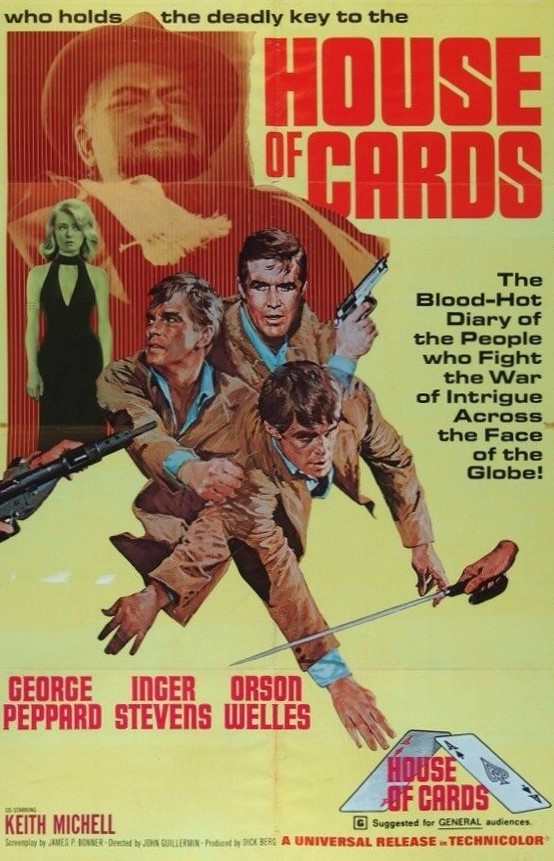
Even so, it permitted the inclusion of newsreel footage, which on the small screen (where most people these days will watch it) appears seamless. By Hollywood standards this was not an all-star cast, only fleeting glimpses of Glenn Ford (Fate Is the Hunter, 1964), Kirk Douglas (A Lovely Way To Die, 1968), Robert Stack (The Corrupt Ones / The Peking Medallion, 1967), Orson Welles (House of Cards, 1968) and George Chakiris (West Side Story, 1961).
But by French standards it was the all-star cast to beat all-star casts – Jean-Paul Belmondo (Breathless, 1960), Alain Delon (Lost Command, 1966), Yves Montand (Grand Prix, 1966), Charles Boyer (Gaslight, 1944), Leslie Caron (Gigi, 1958), Michel Piccoli (Masquerade, 1965), Simone Signoret (Room at the Top, 1959) and Jean-Louis Trintignant (A Man and a Woman, 1966). Director Rene Clement was best known for Purple Noon (1960), an adaptation of Patricia Highsmith’s The Talented Mr Ripley starring Alain Delon
At $6 million, it was the most expensive French film ever made, a six-month shooting schedule, shot on the streets of the city including famous locations like Etoile, Madeleine and the Louvre. Big hit in France, it flopped in the United States, its box office so poor that Paramount refused to disclose it.
 The Magnificent 60s