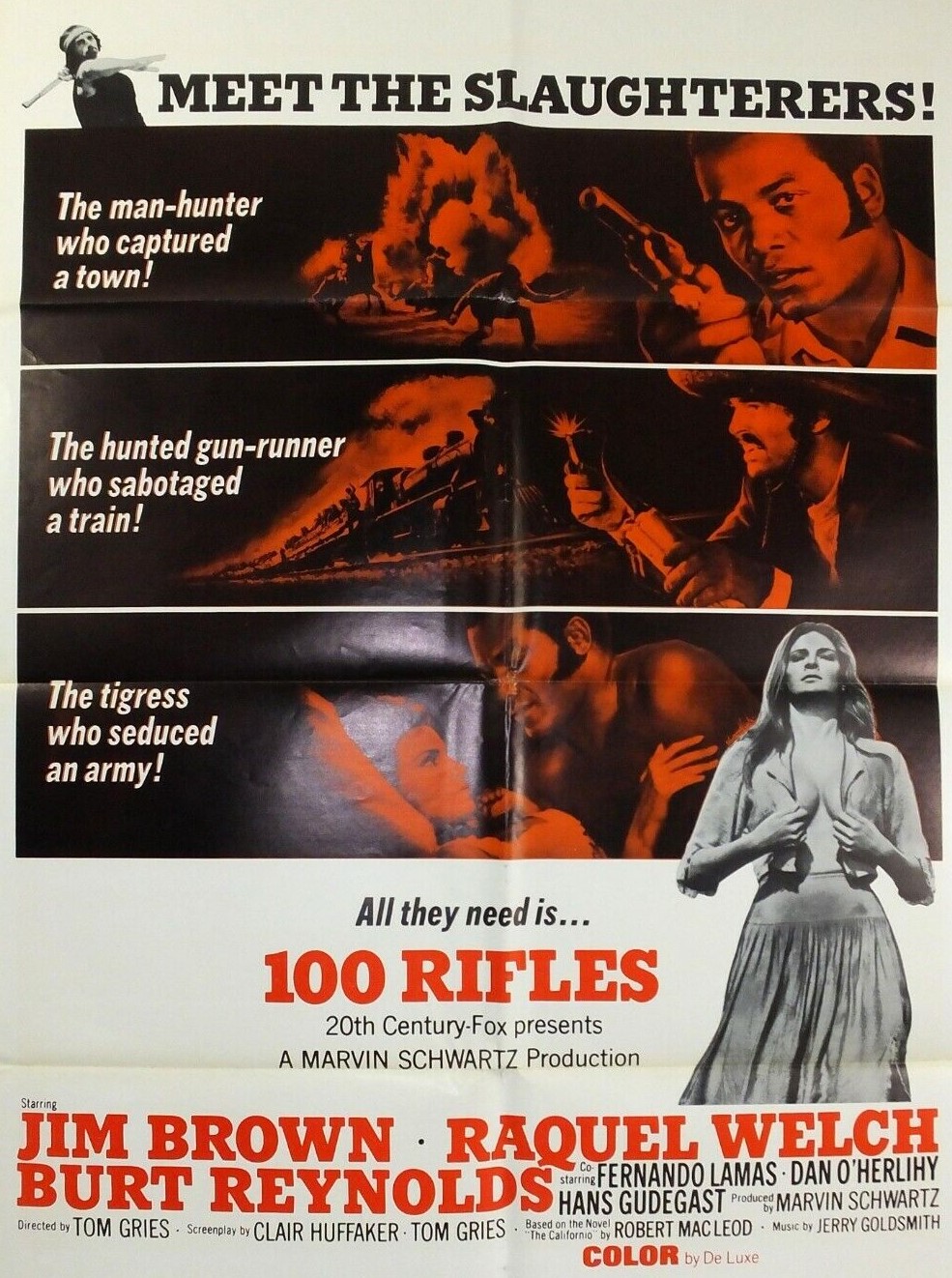
Behind the Scenes: “100 Rifles” (1969)

100 Rifles was easily the most underrated film of the year. Even if the sum of all its parts did not add up to greatness, it had a lot more going for it than has generally been attributed. For a start, there was the attempt to build Jim Brown into a mainstream African American star. Secondly: the return of the bold female character that had largely disappeared since the heyday of Barbara Stanwyck, and Joan Crawford. Thirdly: the conjunction of these first two elements in a sex scene raised the issue of miscegenation that Hollywood had otherwise sought to avoid.

Fourthly, and perhaps most hard- hitting of all: the issue of genocide, the mass slaughter of the Yaqui Indian population providing an uneasy parallel not just to the United States treatment of its own indigenous Native American population but also to its actions in Vietnam.
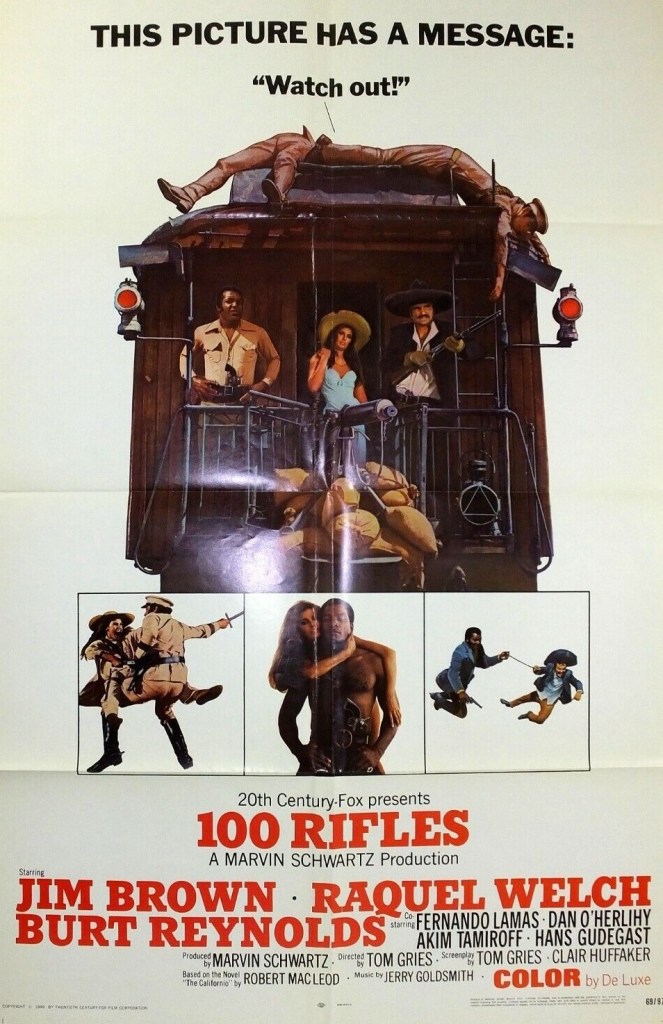
But there was a danger that, without both incisive direction and potent performances, the movie would spiral downwards into another simple case of “When Beefcake (Jim Brown) Met Cheesecake (Raquel Welch).” Since nobody had expected Sidney Poitier to ascend the Hollywood ladder so fast, and in so doing set a trend, the industry had nobody lined up to ride in his wake and exploit what now appeared to be, at the very least, acceptance of African Africans as stars in their own right, with an audience ready to embrace a new kind of hero. Although MPAA president Jack Valenti called for more African Americans in more African American films, the number of highly touted big- budget African American–oriented pictures that offered stardom potential rarely made it out of the starting blocks.

But there was one potential crossover star waiting in the wings: Jim Brown. While lacking Poitier’s acting chops, he had the physique, looks and charisma. Cleveland Browns football legend with strong supporting roles in The Dirty Dozen (1967), Dark of the Sun (1968) and Ice Station Zebra (1968), top-billing had been limited to low-budgeters like Kenner (1968), The Split (1968) and Riot (1969).

But Variety had singled him out at the start of 1969 as one of its “new stars of the year” and judged him “the strongest contender to inherit some of Sidney Poitier’s earning power.” 100 Rifles had double the budget of any of his previous pictures.

Raquel Welch was in a similar situation to Jim Brown regarding Hollywood acceptance. However, she was not in a minority as far as female stars were concerned. The 1960s had been dominated by the likes of drama queen (in more ways than one) Elizabeth Taylor,  comedy queen Doris Day and musical queen Julie Andrews, not to mention Audrey Hepburn, (Breakfast at Tiffany’s, 1961), Italian import Sophia Loren (El Cid, 1961), Jane Fonda (Cat Ballou, 1965), Natalie Wood (Sex and the Single Girl, 1964) and Shirley MacLaine (Sweet Charity, 1968). There was also an overabundance of new talent in Julie Christie (Doctor Zhivago, 1965), Vanessa Redgrave (Blow Up, 1966), Lynn Redgrave (Georgy Girl, 1965), Mia Farrow (Rosemary’s Baby, 1968) and Faye Dunaway (Bonnie and Clyde, 1967).

But those stars had more to offer than mere beauty, whereas Welch, having made her name primarily as a pin- up and as eye candy in movies like One Million Years B.C. (1966) and Fantastic Voyage (1966), had trouble shaking off the idea that she won more parts on the basis of her body than for the acting skills, appearing in a dry bikini in Fathom (1967) and a wet one in Lady in Cement (1968).

However, like Jim Brown, she was actively looking to fill a niche, and set out her stall as a player of dramatic intensity, and she found it in the most unlikely of places: the western. That she chose 100 Rifles was interesting given her other choices. She was offered the Katharine Ross part in Butch Cassidy and the Sundance Kid when the lead roles had been offered to Steve McQueen and Warren Beatty and again when Paul Newman came into the frame. She was also up for the Faye Dunaway role for The Crown Caper (title later changed to The Thomas Crown Affair), again with McQueen, and a film with Terence Stamp (which was never made). But she clearly felt those roles were more decorative.

At one time, the female western star had been a staple. Claire Trevor was the star of Stagecoach (1939) and Texas (1941). Gene Tierney made her name with The Return of Frank James (1940) and Belle Starr (1941). Barbara Stanwyck carved out her own niche as a western icon after taking top billing in Union Pacific (1939), California (1947), The Furies (1950), Cattle Queen of Montana (1954), The Maverick Queen (1956) and Forty Guns (1957). While Maureen O’Hara took second billing in Rio Grande (1950), McLintock! (1963) and The Rare Breed (1965), she was the star of Comanche Territory (1950), The Redhead from Wyoming (1953) and The Deadly Companions (1961). Yvonne De Carlo headlined Black Bart (1948), The Gal Who Took the West (1949) and Calamity Jane and Sam Bass (1949). Rhonda Fleming had the female lead in The Redhead and the Cowboy (1951), The Last Outpost (1951), Pony Express (1953) and Gunfight at the O.K. Corral (1957). Johnny Guitar (1954) achieved classic status largely on the performance of Joan Crawford.
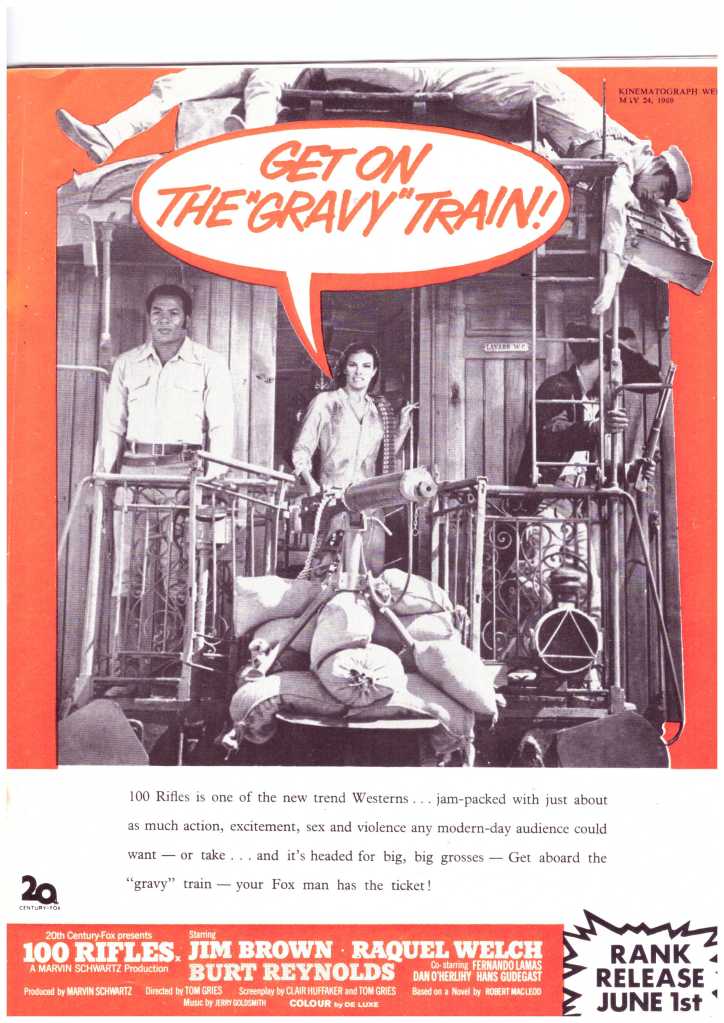
There had even been modern precedent: Inger Stevens had nearly cornered the recent market after A Time for Killing (1967), Firecreek (1968), Hang ’Em High (1968) and 5 Card Stud (1968) while Claudia Cardinale went from a supporting role in The Professionals (1966) to top billing in the forthcoming Once Upon a Time in the West.

Raquel Welch set out to follow suit. In Bandolero (1968) she proved capable not only of holding her own against veterans James Stewart and Dean Martin but as adept on the pistol- packing side of things. While Welch professed herself “no Anne Bancroft,” she was pleased that she was not “running around half- naked all the time.” After that punched a hole in the  box office, she was offered the female lead in 100 Rifles to be directed by Tom Gries who had made his name as a director with his unflinching portrayal of the cowboy in Will Penny (1968).

The basis of the film was Robert MacLeod’s The Californio, published in 1966, and the essence of the story concerned a “reckless stranger” who refused to turn the other cheek while innocent people were being killed. After Clair Huffaker turned in his screenplay, Gries wrote two further drafts. It is safe to assume that the casting of Jim Brown came after the Huffaker script had been handed in. When Huffaker did not like the way his work had ended up on screen, he insisted on using the pseudonym Cecil Dan Hansen, as he had done on The Second Time Around.

For 100 Rifles, he was so upset at the end result that he demanded either his name removed or the pseudonym installed, complaining that the finished product “bears absolutely no resemblance to my script.”

The story of The Californio bears little resemblance to 100 Rifles. Not only is the hero of the book, Steve McCall, white, he is a rawboned young man and not a lawman in his 30s. He is not a gunman either, being more proficient with the lasso. In fact, when forced into bloody action, he discovers that he abhors violence. The book could more aptly be described as a “rite of passage” novel where a young man, sent south “on legitimate business in the interests of the (U.S.) Federal Government,” leaves home for the first time, becomes a man, loses his virginity and kills his first man.
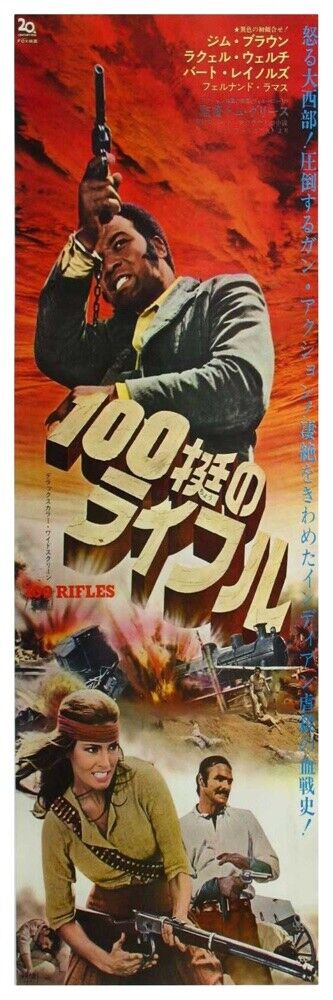
Nor is Yaqui Joe a bank robber in the book, and after meeting up with McCall, they embark on further legitimate business. Maria, named Sarita in the film, is most like her feisty movie counterpart, and although in the MacLeod version she is married, that does not prevent her taking Steve’s virginity. Of the villains, Verdugo (the name means “Hangman”), while not elevated to general, is still as ruthless, but the foreign adviser is not.

Most of the film’s action was invented by the screenwriters, including the concept of the 100 Rifles, Sarita’s sexy shower as a way of stopping the troop train, and the children being taken hostage (although in one episode in the book, children are shot). Trying to reshape the book to suit the new requirements of the characters makes the picture unnecessarily complicated. Burt Reynold’s solution was simpler: “Keep his shirt off and her [Raquel Welch’s] shirt off and give me all the lines,” he reportedly advised producer Marvin Schwartz.

The movie was shot over a ten- week period in Spain beginning in July 1968. Although that country had become a viable alternative for westerns looking to keep budgets low, in part in 1968 due to the devaluing of the peseta against the dollar, the volume of films shot there had declined by nearly a third compared to the previous year.

Despite the popularity of the location, Almeria, the actual area of countryside where most spaghetti westerns were shot, was very small. This resulted in a limited variety of available landscapes compared with films shot in the U.S. such as The Stalking Moon. The actors had to contend with extreme heat, and Gries was laid low for three days after contracting typhus. Gries decided to get the sex scene out of the way on the first day of shooting, probably to ensure that tension about the content was not allowed to linger until later in the shoot. However, it had the opposite effect. Neither Brown nor Welch had been given time to get to know one another nor to adjust to different styles of acting and to understand the perspectives of each other’s characters. Welch was not happy with the scene and tensions between the two stars continued throughout the film, some press reports putting this down to squabbles over close- ups, others to unresolved sexual tension. Welch later complained that scenes edited out of the picture had reduced audience understanding of her motivations. The MPAA also did some judicial trimming, axing Welch’s shrieks during lovemaking.

Critical reception ranged from sniffy to downright hostile. Perhaps like The Stalking Moon, advance publicity, although not this time pointing in the direction of the Oscars, had served to put critics off what sounded like an exploitative film. For the western traditionalist, sex scenes were off- putting, and although naked breasts had started appearing in a handful of movies, there were precious few full- on sex scenes, never mind one that featured miscegenation. Variety judged it a “routine Spanish- made western with a questionable sex scene as a possible exploitation hook.” On the plus side, Welch’s performance was “spirited” as was the Jerry Goldsmith score; Brown and Reynolds were just “okay.” The Showmen’s Servisection took a different view: “Fast pace, fine performances lift western several notches above the ordinary.” Roger Ebert in the Chicago Sun- Times called it “pretty dreary.” Howard Thompson, the New York Times’ second- string reviewer, said it was a “triumphantly empty exercise.”

Twentieth Century–Fox had been affected by recent financial disasters such as Doctor Dolittle (1967) and Star! (1968); the former collecting $6.2 million in domestic rentals on a budget of $17 million, the latter $4.2 million in rentals after costing $14.5 million. To counter mounting exhibitor panic about production being slashed, Fox had drawn up an ambitious program for 1969, promising one new movie every month. The program kicked off with a $7.7 million adaptation of the Lawrence Durrell classic Justine with Dirk Bogarde (January), followed by Michael Caine and Anthony Quinn in the $3.77 million film of the John Fowles bestseller The Magus (February) and the trendy $1.1 million Joanna from new director Mike Sarne (March). British star Maggie Smith in the $2.7 million The Prime of Miss Jean Brodie (April) came next with 100 Rifles (May) and another Marvin Schwarz production, Hard Contract starring James Coburn, costing $4 million (June). Summer highlights were Omar Sharif in the $5.1 million biopic of Che! directed by Richard Fleischer (July) and Gregory Peck in the $4.9 million Cold War thriller The Chairman (August). Come fall it was the turn of Paul Newman and Robert Redford in the western Butch Cassidy and the Sundance Kid coming in at $6.8 million (September), Richard Burton and Rex Harrison as aging homosexuals in The Staircase costing $6.3 million (October) and Warren Beatty and Elizabeth Taylor in George Stevens’ $10 million The Only Game in Town (November). The year ended with John Wayne and Rock Hudson in the $7.1 million Civil War western The Undefeated (December).

The studio needed several box office home runs because the following year it was already committed to three roadshows—Tora! Tora ! Tora!, Hello, Dolly and Patton—costing over $60 million. By spring it was clear that the first two movies in the schedule had been major flops, Justine bringing in only $2.2 million in rentals, The Magus $1 million. Income from Joanna and The Prime of Miss Jean Brodie barely exceeded costs.

By the time 100 Rifles swung into action with two largely untried leads and a director making only his second major picture, the pressure was on. “

At the box office 100 Rifles got off to a great start and Twentieth Century–Fox reported with delight that it had outgrossed Bandolero! by 40 percent in Washington (and by 500 percent in the ghetto areas), and by 300 percent in Philadelphia. In Baltimore it grossed $50,000 from a single theater compared to $80,000 from eight for Bandolero! and in Atlanta first run it had been $61,000 for the new film compared to $38,000 for the previous one. However, while Brown and Welch fans were out in force in certain areas, that did not make up for less interest in regions where westerns were associated with bigger or more traditional names. Ultimately, 100 Rifles fell short of expectations given the budget. U.S. rentals amounted to $3.5 million, and it registered in 29th position on the annual chart— the sixth highest- grossing western of the year and ahead of Mackenna’s Gold, The Stalking Moon, Paint Your Wagon and Once Upon a Time in the West.

But, of course, the domestic performance did not take into account the popularity of westerns overseas and the distinct following Raquel Welch had accumulated. So where some of the studio’s major dramas stumbled in the global market, 100 Rifles hit the ground running.

SOURCES: This is an abbreviated version of much longer chapter devoted to the film that ran in The Gunslingers of ’69: Western Movies’ Greatest Year (McFarland, 2019) by Brian Hannan (that’s me). All the references mentioned can be found in the Notes section of that book.

100 Rifles (1969) ****

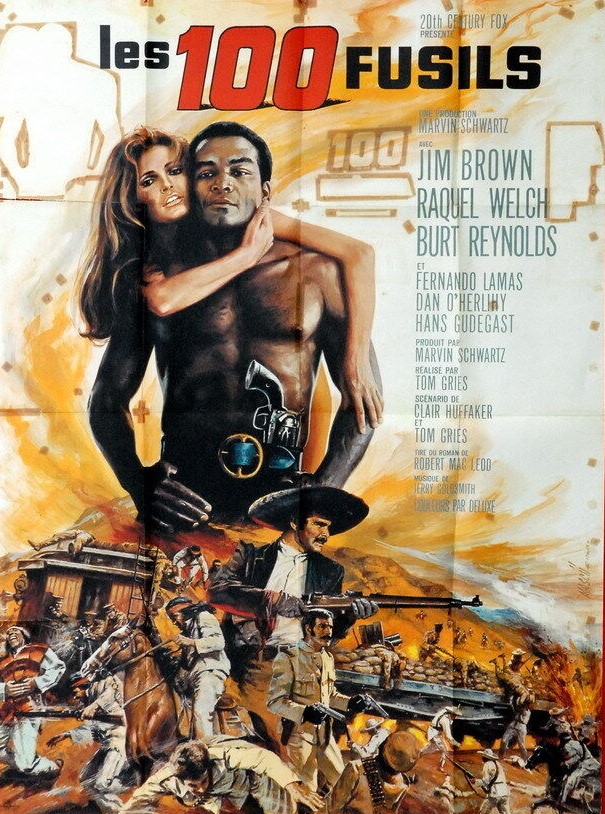
Highly under-rated but effective western that cemented Raquel Welch’s position as the queen of the genre, established Jim Brown as the first African American action star, scored points for its parallels with Vietnam, and provided the only image of the actress to rival that iconic fur bikini.

Arizona lawman Lyedecker (Brown) arrives in Sonora, Mexico, in 1912 on the trail of half- breed bank robber Yaqui Joe (Burt Reynolds). He finds the Mexican army callously executing Yaqui Indian rebels. To prevent further killing, Joe creates a diversion, which, while failing, permits the captured Sarita (Raquel Welch) to escape. The $6,000 Joe stole buys the titular 100 rifles to help the rebel cause.

Most posters played up the action but here the emphasis is on La Welch.

Helped by Lyedecker, Joe escapes, picking up Sarita on the way. Both Lyedecker and the Mexicans are in pursuit, and the Mexicans soon recapture Joe and Lyedecker, who is now viewed as a rebel. Sarita again escapes. Lyedecker and Joe are returned to the garrison where the Mexicans have taken possession of the rifles. Just as the pair are put in front of a firing squad, Sarita, leading a group of rebels, frees them and steals the weapons.

In retaliation, the Mexicans attack a village, slaughtering the inhabitants and taking the children as hostages. At night, Lyedecker, Sarita, Joe and some rebels capture the garrison before the soldiers return, freeing the children. Lyedecker has been injured in the battle; after Sarita binds the wound, they make love.

When they take the rifles to the rebel stronghold, they discover the rebel leader is dead. For no particular reason, the rebels elect Lyedecker their new “generale.” Seizing a Mexican troop train is pitifully easy once Sarita creates a diversion by taking a shower under a water tower. The empty train is sent cannoning into the town and in the ensuing battle Sarita is killed. Yaqui Joe takes over leadership of the rebels while Lyedecker rides home.

While the capture- escape-chase-capture formula is overdone, the movie’s biggest structural problem is Yaqui Joe, clearly turned into a drunk to avoid becoming a romantic encumbrance for Sarita, leaving the way clear for Lyedecker. His other contributions are to brawl with Lyedecker and try to get the American to give up his quest and stay and help the rebels. There are other unnecessary characters and touches. We know it is a modern western because  a motor car is involved as there would be in The Wild Bunch. The sole purpose of a German military adviser Von Klemme (Eric Braeden) is to act as a sounding board for Gen. Verdugo (Fernando Lamas), whose actions in any case speak louder than words. Railroad magnate Grimes (Dan O’Herlihy) represents equally callous big business. When Americans get drunk in westerns, that usually leads to fisticuffs, but when Indians knock back the liquor in 100 Rifles they act like clichéd drunken Indians, tearing up the town, looting and destroying anything in sight.

These reservations apart, the film has a great deal to recommend it. On the whole, it is well directed, although without much of an eye for landscape. Sarita, wearing a red headscarf, thus  continuously color-coded, is accorded the greatest emotional depth, haunted by guilt for sacrificing her father in the name of freedom: “I helped him to die.” But she has another weapon at her disposal: her body. When captured, she distracts a soldier with sight of her breasts before stabbing him, the shock in her eyes suggests this is the first time she has killed a man.

Although the narrative advocates her as feisty leader from the start, this scene, and in particular her reaction, suggests otherwise. More than capable of taking care of herself, it is she, and not the two stronger men, who effects an escape. When she organizes the rescue of the two men, she’s more interested in the guns than them. But when it comes to children, they take precedence.

The genocide theme, pertinent both to American treatment of its own indigenous Native Americans and to the current war in Vietnam, is raised. It is more trouble than it’s worth for Gen. Verdugo to clear the Indians from their lands and ship them elsewhere, as the Americans had done when putting Indians onto reservations. Verdugo has few compunctions. Unlike in The Wild Bunch and Butch Cassidy and the Sundance Kid, here the railroad is a tool of control. Trains loaded with troops and guns (including Gatling guns, also seminal to The Wild Bunch) and artillery can travel with ease across alien territory to keep the inhabitants in check. As exemplified by Grimes, railroads also represent the intrusion of big business into politics and ordinary lives, and the railroad man, while concerned that Lyedecker’s possible execution could jeopardize U.S.- Mexican relationships and, by extension, possible halt the American railroad’s expansion, is ultimately more apprehensive about damage to running stock than the cost in human lives of his partnership with the Mexicans.

There’s a nod to seminal Sidney Poitier picture The Defiant Ones (1958) with Lyedecker and Joe chained together, and the American, initially disinterested in rebellion, only takes up the cause after a child he has befriended is slaughtered.

100 Rifles shares with The Stalking Moon, The Wild Bunch, Mackenna’s Gold, and Butch Cassidy and the Sundance Kid the theme of relentless pursuit, of an implacable enemy, often with justice or morality or power on their side, who will never give up, and, in a twist on this, in True Grit Rooster Cogburn is the one in fearless pursuit.

At the time, in male-dominated society, the sexual centerpiece was Raquel Welch in various states of undress, forgetting that women, too, were apt to be partial to the sight of an unclothed muscular male. It is Jim Brown who is first seen shirtless. And it is Sarita who takes control of the scene, kissing him as a reward “for all the bad things I said to you.” (Another gender twist, for usually it is the man making reparation.) A more tender scene between Lyedecker and Sarita, ostensibly of the more traditional kind, feisty female   transformed into docile housewife by cooking her man a steak invited another reading, more in keeping with her character, not, you may notice, clinging to him, desperate for his love, but happy to enjoy the moment and abandon him when it suits (as Katharine Ross will in Butch Cassidy and the Sundance Kid, departing before the outlaws die).

For many, of course, the highlight is Sarita, the leader in all but name, using her body as weapon. As the train approaches the water tower, the soldiers see Sarita standing underneath dressed in only a man’s shirt, taking a shower. The train shudders to a halt for this voyeuristic delight; the camera too, for the audience’s sake, lingering on Sarita’s curves.

Although 100 Rifles is ponderous and improbable in places, with too much emphasis on escape- and-rescue, it certainly achieves its immediate aims, setting up Brown as an action man, giving Welch a role that’s hardly subordinate, ensuring the combination is as sexy as all get-out, while at the same time supplying enough shoot- outs and battle scenes to keep traditionalists happy. As important, director Tom Gries (Will Penny, 1968) is not afraid of using the film to make points, if sometimes a little heavy- handed, about Vietnam and genocide. Clair Huffaker (The Hellfighters, 1968) wrote the screenplay along with Gries based on a Robert MacLeod novel.

All in all, a movie that deserves a good bit more respect.

This review is an edited version of an article that appeared in The Gunslingers of ’69: Western Movies’ Greatest Year (McFarland, 2019) by Brian Hannan (that’s me).

Wild in the Streets (1968) ***

Far more prophetic than you would have ever thought possible in acknowledging the growing power of the young, the pandering of politicians to them, and the unexpected ability of youth to see through politicians and set their own agenda. Plus, Christopher Jones gives the kind of performance that had David Lean rushing to sign him up for Ryan’s Daughter  (1970).

It was prescient, too, of its time, not just the notion that the young could lead the way in opposition to political forces.   

And what top pop star has not believed they could harness their global following for the greater good – Live Aid the classic example – and once you’ve bedded your way through the known female universe and sampled every drug known to man there has to be something else that’s going to grab your attention. And, for once, a movie star makes a very credible pop star.

Max Frost (Christopher Jones), channelling his inner Jim Morrison, is on top of the world, a phenomenon, the biggest thing since Elvis and The Beatles. His rebellious streak emerges at an early age. And where other nutcases would torture animals or pull the legs off spiders or play with matches, he blows up the family car. But he’s something of a statistician and reacts to the notion that there are more young people than old people – 52 per cent of the population is under 25 – by writing a song about it, a song that turns into a protest that segues into a movement.

Aspiring politician Fergus (Hal Holbrook) thinks he can harness what he perceives as a dumb youngster with fans so dumb they will ape his every command. His vote-winning idea is to campaign on a platform of lowering the voting age from 21 to 18, not that revolutionary an idea since ever since American men were shipped off the Vietnam there had been similar calls along the lines of too young to vote but not too young to die.

Max pretends to back him but instead demands the voting age be reduced to 14. This being politics, there’s negotiation, and the compromise is reducing the age to 15. The ever-read Max has songs covering whatever age is agreed.

Bandmember Sally LeRoy (Diane Varsi) is elected and gets a law passed to lower the voting age. Fearing youth and somehow assuming Max will curb their worst excesses, older politicians support his bid for the Presidency (as you may know, anyone in the U.S. can become President even if they lack political experience) but once he gains power he turns on them and forces through a law making retirement compulsory at 30. And goes about, Heaven help us all, doing good, albeit with a dictatorial agenda.

But the fairly straightforward satire, puffed out with endless scenes of public demonstration, works very well, and not just because the power of youth is demonstrated everywhere today, not least among Hollywood mavens who seem unable to make anything that doesn’t appeal to that age group, but because the brain behind the scheme are actually pretty smart. The group is presented as  clever all round, their excessive income down to the business acumen of Billy (Kevin Coughlin) so the band have no chance of ending up penniless, ripped off by everyone in sight. Sally is a former child star so she’s been taken advantage of already and ain’t going to let it happen again.  There’s a clever sting in the tale that takes the campaign to its logical conclusion.

It’s great fun seeing grizzled politicians being outsmarted by Max and his cohorts and for the older population to, unwittingly, get a taste (no pun intended) of what it’s like to be young. Audiences went for this in a big way since it presented an alternative universe, part sci-fi but also with some imminently achievable aims, some of which came to fruition. Hollywood was brought to heel the following year after Easy Rider, only in retrospect anyone realizing that the rescue from box office oblivion of 2001: A Space Odyssey (1968) by spaced-out hippies was a turning point not a one-off.  The voting age was lowered a couple of years later.  These days, of course, nobody needs elected or has to pass a law for changes to be made, and far quicker than if they had to go through the political process. Developments nobody voted for have been forced through by the court of public opinion, though sometimes by the very minorities that were once outside the existing power base.

Christopher Jones (Three in the Attic, 1968) delivers his best performance in what turned out to be a very short career. Shelley Winters (A House Is Not a Home, 1964) gives another scene-stealing turn and on back-up are Hal Holbrook (All the President’s Men, 1976) , in only his second movie, Diane Varsi in her biggest role to date, Millie Perkins (The Diary of Anne Frank, 1959) and an early showing from Richard Pryor.

Barry Shear (The Karate Killers, 1967) directed from a screenplay by Robert Thom (Death Race 2000, 1975).

You could probably go through this ticking off what predictions have come true and it’s more powerful now than it was at the time.

Swashbuckler (1976) **

Red faces all round. Uneasy pirate spoof that misses all its targets, coming close to resembling the kind of movie that gives turkeys a bad name and saved only by a spirited performance by Genevieve Bujold. Uber-producers Jennings Lang (Rollercoaster, 1977) and Elliott Kastner (Where Eagles Dare, 1968) should have known better but were seduced by the tantalizing returns for Richard Donner’s The Three Musketeers (1974) and its sequel which had revived the moribund swashbuckling genre.

Robert Shaw (Custer of the West, 1967) was nailed-on for the leading role since had made his name playing a pirate in British television series The Buccaneers (1956-1957) and was as hot as he was going to get after the double whammy of The Sting (1973) and Jaws (1975). However, the movie takes its cue from one of the chief supporting actors Major Folly (Beau Bridges).

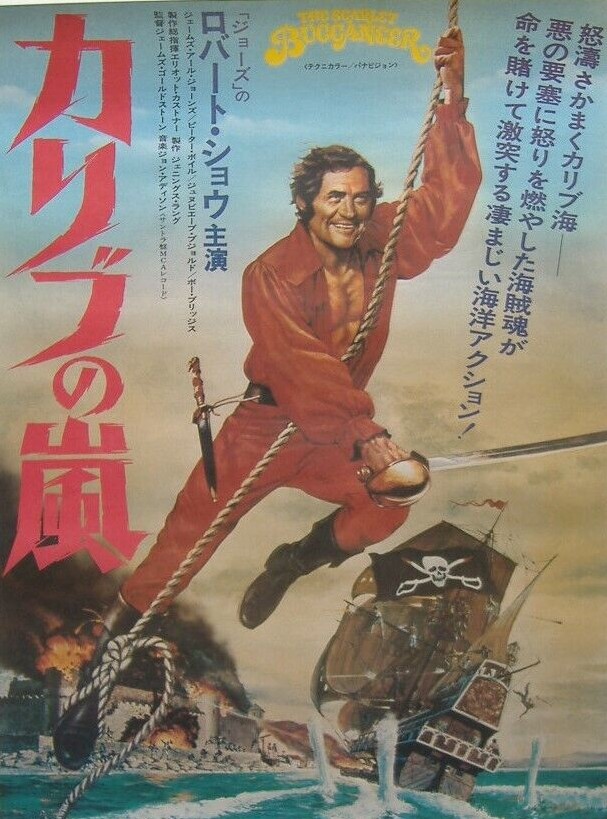
It’s color-coded. In case we can’t tell a good guy from a bad guy, we’ve got the Man in Red, pirate Ned Lynch (Robert Shaw), shaping up against the Man in Black, unscrupulous Jamaican governor Lord Durant (Peter Boyle). Ned is presented as a seagoing Robin Hood, Durant as the wicked Sheriff of Nottingham, his ruthlessness somewhat undermined by his predilection for playing with toy boats in his bath and for getting his hairy back waxed.

Twin narratives quickly unspool. Ned rescues from being hanged shipmate Nick Debrett (James Earl Jones) while Durant jails island chief justice Sir James Barnet (Bernard Behrens) and steals his treasure.

Stolen treasure being fair game, Ned and Nick hijack a coach-load of it, while Sir James’s on-the-run daughter Jane (Genevieve Bujold) ends up in their hands. Not being as black-hearted as his nemesis, Ned puts Jane ashore, but still a bit black-hearted humiliates her in a swordfight, and is disinclined to help her save her imprisoned father.

However, Jane has a trump card. For reasons unknown, Durant is heading back to England with a cargo of 10,000 dubloons, too tempting a target for any pirate. Naturally, nothing goes as planned but, as you might expect, there is a happy ending.

This might have worked, since all the ingredients are there, the laughing cavalier, the spirited woman, the humorous sidekick, the unprincipled villain. You’ve got an historically-accurate pirate ship for once, unlikely romance between high-born woman and charming scallywag, simple rescue-imprisonment-rescue scenario, and ample scope for swordplay.

Except the dialog is awful, the ship too small to accommodate any fighting so the pirates are landlubbers for the most part, and except for the duels between Ned and Jane and Ned and Durant, the swordfights are all kind of bundled together, and every now and then the action stops so we can hear a verse or two of a sea shanty sung by nobody in particular.

Though Ned and Nick trade cringeworthy, and in one case downright offensive, limericks, the best (only) laugh comes when Ned chucks Jane off a roof onto a canopy and follows up with the line “It worked.”  It doesn’t help that Durant’s pederastic tendences are played as a joke. Everywhere you look people are turning cartwheels or are “blithering idiots” or “pawns” and as you might expect there’s a cat-fight and a monkey around to relieve a jailer of his keys. You are just praying for a shark to come along to put the cast out of their misery.

In the midst of this feast of over-acting along comes Genevieve Bujold (Anne of the Thousand Days, 1969) who must think she’s in a different picture. She is a feisty one all right, not above putting a knife to a man’s cojones, or kneeing them in that region, and, given the lawless state of the island, branded a criminal for wounding a rapist.   At least she takes the whole thing seriously rather than as if being in a Mel Brooks picture.

It’s hard to know who to blame: the stars for acting as if enjoying a holiday from more serious fare; director James Goldstone (Winning, 1969) for failing to get the recipe right and employing a jaunty score that undercut everything, or writers Jeffrey Bloom (11 Harrowhouse, 1974) and Paul Wheeler (Caravan to Vaccares, 1974) for making a mess of the ingredients in the first place.

Of course, I am hardly blameless in drawing your attention to this, a sudden enthusiasm for pirate pictures sending me dashing into the wrong decade.

Watch for: Robert Shaw making a bid for the all-time Golden Raspberry; an unrecognizable Peter Boyle (Taxi Driver, 1976); Beau Bridges (Gaily, Gaily, 1969) doing his best Frankie Howerd impression; James Earl Jones (The Comedians, 1967) sounding normal, minus the deep-throated vocal tic on which he made his name; and so many inanities it falls easily into the So Bad It’s Good category.  

Pretty Poison (1968) *****

Faultessly prophetic. Acquiring significantly greater power than at initial release. You can easily imagine Dennis (Anthony Perkins) these days as a conspiracy theorist on social media. You can picture Sue Ann (Tuesday Weld) as the impressionable acolyte learning at his feet. What she picks up most is the art of manipulation. And it’s done with marvelous flair,  disturbing information slipped in at the right moment, and so focused are we on Dennis we scarcely notice Sue Ann’s transformation.

There’s a sense of Big Brother – Dennis evades his probation officer for a year to prevent his activities being overseen – and untrammelled big business, the chemical factory nonchalantly poisoning the local river. And it all takes place in Humdrum U.S.A.: hot dog stands, teenagers practising for parades, evenings at the movies, necking in the woods, mindless jobs in factories, with just a hint of overbearing police wielding a moral big stick.

Classic example of the marketing team getting cold feet. Fox didn’t know how to sell this
in the subtle fashion it required so it came over in the bulk of the advertising
materials as second cousin to “Bonnie and Clyde.”

The 1960s had taken a new line on the wicked women of the 1930s and the femme fatales of film noir. They might be mentally disturbed like Lilith (1964) or scrapheap fodder like Bonnie Parker (Bonnie and Clyde, 1967), but more likely to be cartoon villains decorating spy movies. This follows a completely different path, exploring latent tendency that might have remained hidden forever except for encountering the right spark.

Dennis is an outright oddball, a fantasist who has created for himself another world of being a secret agent intent on thwarting an alien plot. (Less intense than A Beautiful Mind, 2001) Some people, the next door neighbor, for example, who without question drops in spools of microfilm at the chemist for development  under her own name, are easily taken in. Others are not, his employer at the chemical factory itching for an excuse to fire him, Sue Ann’s mother (Beverly Garland) who catches him out too easily.

Dennis snares gullible bouncy blonde Sue Ann in textbook style. He elicits mystery, popping in and out of her life, peppering her with secret codes, tradecraft, warnings, a farrago of information that would appeal to the insecure. She goes from girlfriend to accomplice, an eager participant in Dennis’s admittedly clever plan to cause the plant to shut down. But when he is rumbled by the nightwatchman and rooted to the spot in fear, it’s Sue Ann who comes to the rescue, clubbing the interloper, pushing his body in the river, sitting triumphantly aside her still conscious victim holding his head under the water.

The twist is: reality has paid a visit. Dennis is shocked at the murder. Although his past is now revealed, he is remorseful that it caused unfortunate consequence. Sue Ann’s reaction is the opposite. She wants post-murder sex. Cool to the point of calculating, remorse scarcely entering her vocabulary, taking command, spinning a web Dennis doesn’t see coming.

It plays out brilliantly, even to the point of Dennis taking comfort in the fact that he has spawned a murderess, one who might embark on an endless killing spree, such is the attractive innocent mask she hides behind.

You would put down Anthony Perkins (Psycho, 1960) as warped the minute his lop-sided grin slips into place. But there’s a youthfulness to this nutcase, always sprinting away, and he’s not, like Norman Bates, sitting in a lair awaiting potential victims, and, in a sense, he’s humanized by a beautiful woman falling in love with him. He’s out there like a con man with the practised patter that’s going to snare the pliable. If he was planning to wage war on the chemical polluters we’d be on his side immediately, and although that kind of action wasn’t yet going to turn anyone into an automatic screen hero, it does now, so a contemporary audience would be inclined to view him through an entirely different, and more sympathetic, prism.  

Perkins’s playing is perfectly judged. He takes the mickey out of stuffy superiors, smart enough to elude the probation officer for a year, astute enough to find a job that gives credence to his secret identity, ingenious enough to come up with the perfect crime, and certainly his vulnerability evokes audience sympathy, especially when it transpires he may be the subject of unlawful judgement.

But Tuesday Weld (The Cincinnati Kid, 1965) is this movie’s gift. She is stunningly believable, both as the innocent dupe and the calculating killer. Yet she never emerges from her teenage dream. Even when her actions are clearly more grown-up she remains winsome and youthful. If Perkins is revealed as a child who had never grown up, Perkins becomes an adult in teenager’s clothing.

It’s only at the end you think perhaps this movie should be read back-to-front and that Perkins was the victim all along. (Arthouse filmmakers have been more celebrated for less.) Which would make her the mother (or perhaps daughter) of all femme fatales. There is no limit to what she going to get away with. If it was made today, there would be a sequel a year.

Noel Black (Run, Shadow, Run/Cover Me Babe, 1970) was the cult director’s cult director, eventually making a living in television, and only occasionally managing a big screen effort. This would have been a twisty enough number at the time but has rightly grown into a cult.

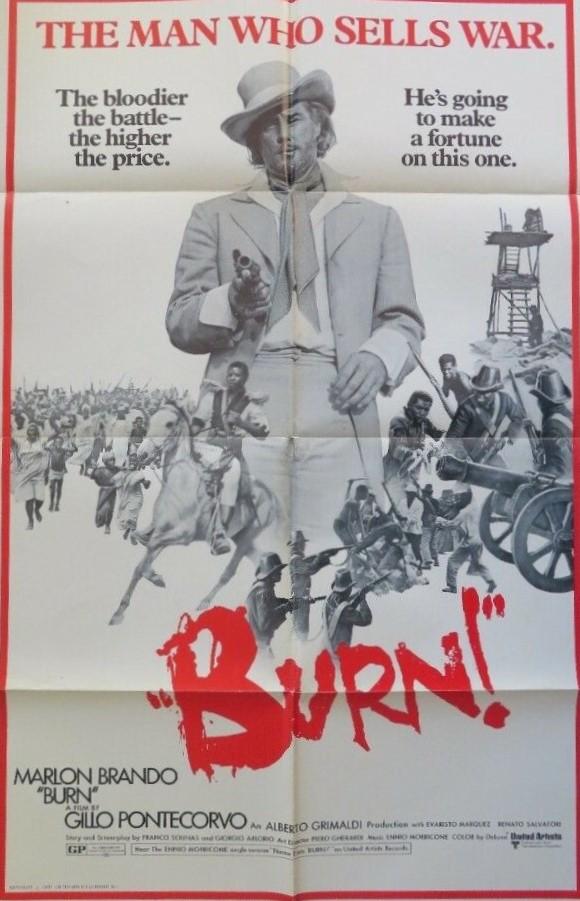
Burn / Quiemada (1969) *****

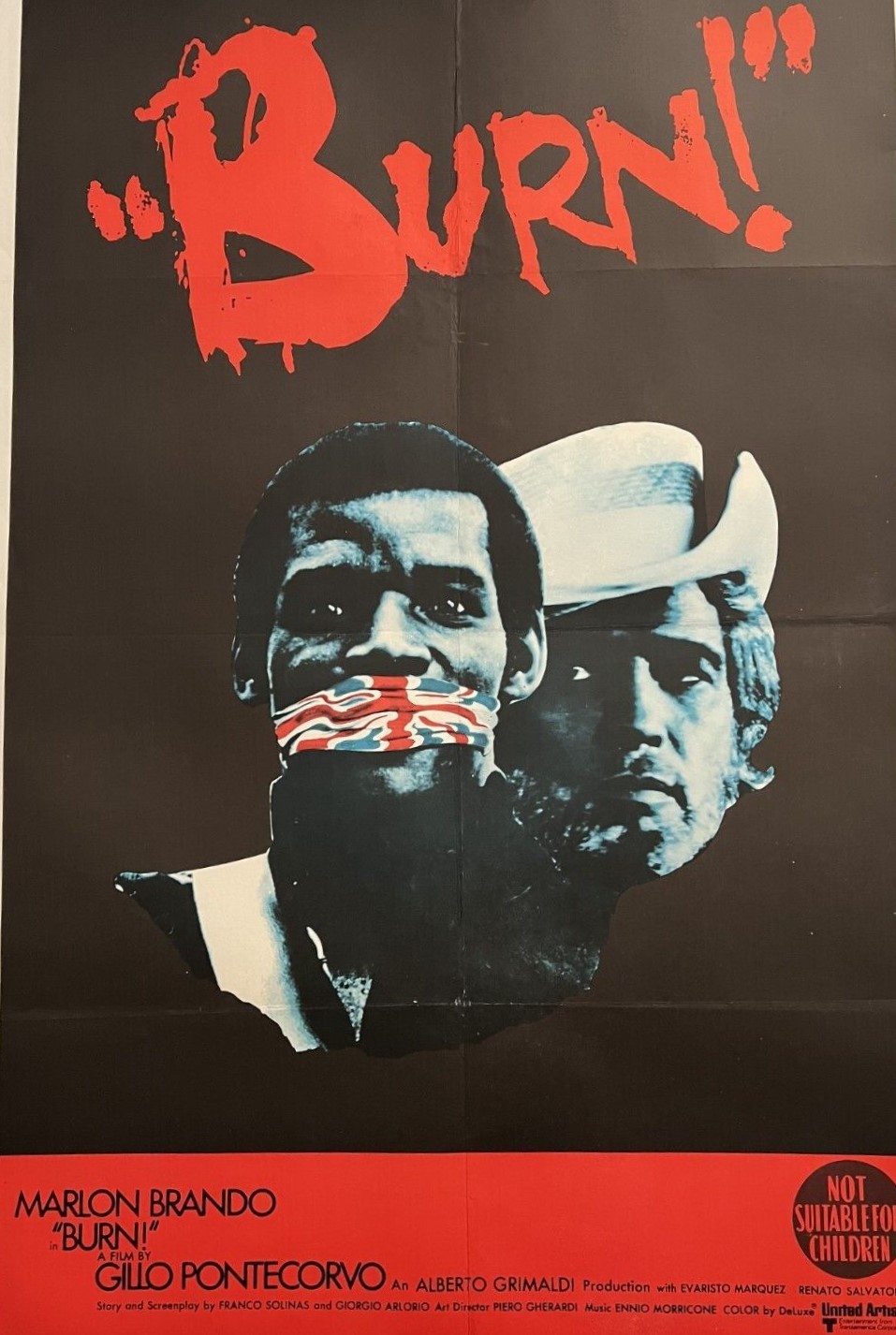
May have lost its allegorical power now that Vietnam is no longer a cause but even more compelling for standing as a generic condemnation of imperialism. The Vietnam connection is invoked immediately as Englishman Sir William Walker (Marlon Brando) on arrival is told that the Portuguese conquered the island hundreds of years before simply by setting fire to it until all the natives had perished or fled and restocking it with slaves from elsewhere. For a 1960s audience, that summoned up images of U.S. military use of napalm and carpet bombing.

The idea must have stuck in Walker’s head because that’s exactly the strategy he devises towards the end of the movie. Beyond his title, and the fact that he looks and talks like an upper-class Englishman of the mid 1800s, Walker is one of these shady characters you often found in the Colonies doing shady work for the British government. While this island is ruled by the Portuguese rather than the British, that’s about to change since the British find Portuguese attitudes to free trade too restrictive.

So Walker sets about creating the spark for an explosion. Having earmarked the local bank for an easy heist, he recruits Jose Dolores (Evaristo Marquez) to head a team of locals. Of course, such a large-scale robbery ensures pursuit. Capture is evaded when Walker produces a cache of rifles aware that in defending themselves the natives will trigger revolution. Walker then goes to work on the upper-classes, explaining how much better off they would be if they could side with the rebellion and overthrow the Portuguese.

Mission accomplished, he scoots off home, only to return when corruption has so destroyed the island, now a British colony, that Jose Dolores is back creating rebellion. Old friend becomes foe and is ruthlessly hunted down.

You can’t help but admire Walker’s guile. To create a large enough distraction to pull off the robbery he simply gets the entire town population drunk on free booze, giving soldiers more than enough rioting to cope with. To provide the circumstances to assassinate the President, he takes advantage of the costuming for a festival, allowing people to sneak past guards in any disguise. But when cunning doesn’t work, it’s down to brute force. The group with the biggest army, more weapons and the greater degree of ruthlessness will always win.

This isn’t one of those movies that sets out to idolise a rebel leader or where a small band of outlaws outwit the ruling power with clever ruses or filled with duels or ambushes or full-on battles. This is about the puppeteers, the men who use violence for their own commercial ends.

Like General Custer, Walker is a man with a job to do, even while he might despise it and certainly is filled with disgust at the ruling party. He claims he is not the author of either group’s misfortune but merely “the instrument.” On his return, he argues, “I didn’t start it; when I arrived you were already butchering each other.” In other words, blameless, just following the orders of either government or employer. But he takes pride in doing his job “well,” no matter the cost.

Every action has consequence. Even attempting to save Jose Dolores’s life, it is with consequence in mind. Let him live and set him free elsewhere and he will be viewed as a traitor. Kill him and he will be seen as a martyr, the most dangerous currency for incipient rebellion.

He knows exactly what buttons to press. In order to convince the ruling band of natives to support revolution in the first place, he makes a comparison with prostitution. You hire a sex worker by the hour to fulfil a need, you are not required, as with a wife, to dress her and feed her and look after her for her entire life. Should the employers free their slaves, that would eliminate the need for a lifetime of care (no matter how little) but could hire them as required.

The brutality is not dwelt upon, no The Wild Bunch-style bloody carnage, just a growing number of corpses on either side depending which group has the upper hand. The difference between the brutal Portuguese and the sedate English is in their approach to execution. The Portuguese rely on the garotte, by which a steel band fixed round the neck is slowly twisted until life is extinguished. The English prefer the speed of the gallows.  

Marlon Brando considered this one of his finest performances and I am inclined to agree. There is no showboating either way, neither inflating a character nor deflating him, as the actor was apt to do when playing a loser. Instead, Walker never loses a grip on his emotions, no temper, no tears, just saying whatever someone wanted to hear, guiding with a hidden hand, a man who might have invented the term “results-based.” It is the calmest you will ever see Brando, and you might catch elements of this portrayal in his Godfather pushing pawns into place. But you won’t see here a single explosion of anger. For a non-actor, Evaristo Marquez gives a superb performance, though mostly he is also restrained, as if he was learning from a master.  

Director Gillo Pontecorvo (The Battle of Algiers, 1966) takes a semi-documentary approach to the subject, concentrating on the machinations, no attempt to pull audience heartstrings with images of poverty. The garotte death does the work of explaining the brutality to come.

But there are three brilliant scenes that showcase the unstoppable character of war. In the best, the rebels, trying to escape an island ablaze, seek shelter on the higher ground. But this arid region is also exposed, no jungle here to provide cover, and scrambling up the naked slopes they are picked off, in long shot, one by one.

In the second example, the closest Walker comes to emotion is waking up one morning to the sound of a gallows being built. He takes a moment, listening, aware perhaps, though unwilling to admit it, that the harvest of a seed sown is about to be reaped. Brando is such a good actor that sadness only appears as a flicker of regret that the rebellion he began took a wrong turn once it was taken over by the wrong hands.

And, technically, his hands are clean. He is never seen firing a weapon. In the last of this trio of scenes, the English introduce hanging to the island. But since no one possesses the expertise to make a noose strong enough to support a head, Walker shows how.

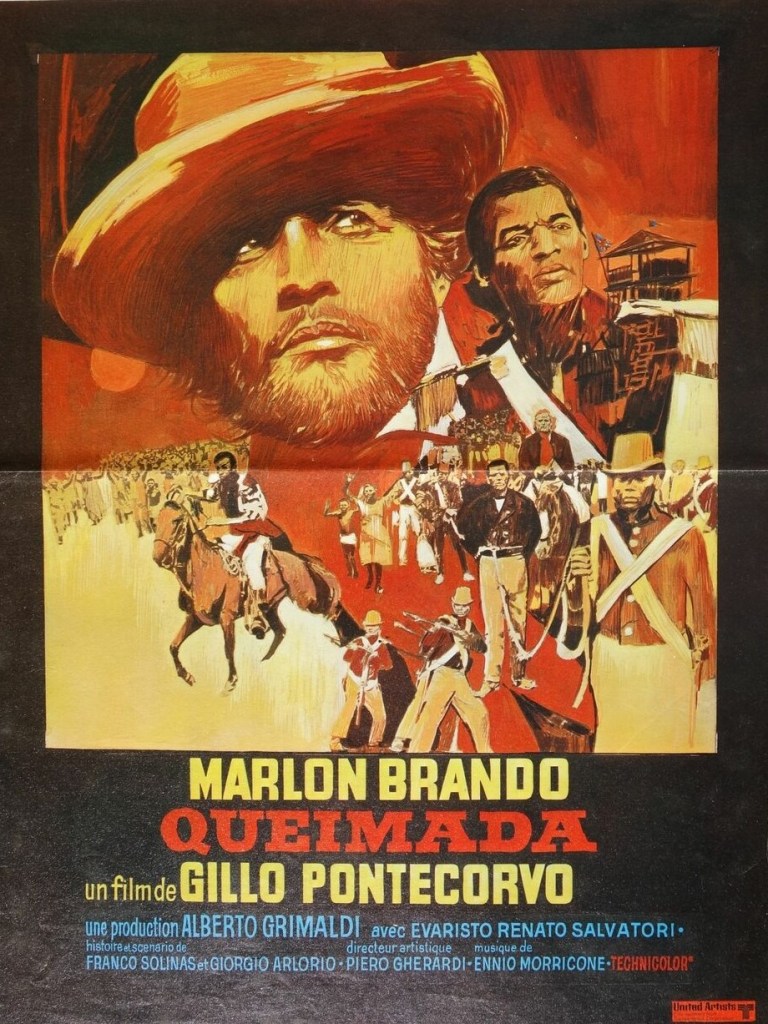
There are two versions of this movie. It was filmed as Quiemada and this version is 17 minutes longer than the one released as Burn! I would urge you to see the far more atmospheric former. Editing down the picture, the distributors took out much of the background material. As a plus, there is a score by Ennio Morricone.

One of the best films ever made about the politics of war and the destructive force of commerce.

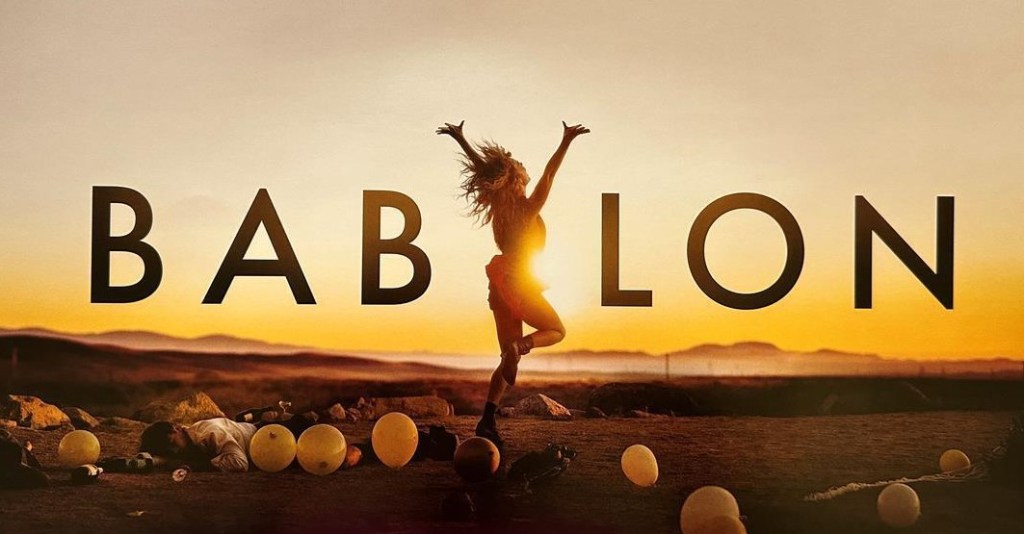
Babylon (2022) **** – Seen at the Cinema

Wild raucous’n’roll rollercoaster that, contrary to expectation, I found totally absorbing, length not an issue. Employing a simple structure of rise and fall, and exploring the upside and downside of Hollywood in the transition from silent to sound, it seemed to me in essence to capture movie-making. A Broadway play could be a hit if seen by 100,000 people, that size of audience constituting a flop for a movie, but the play was viewed by 100,000 of the “right” people, the moneyed elite who could afford the tickets, a movie by the flotsam and jetsam that made up the majority of the American population even when, theoretically, the country was going through the boom times of the “Jazz Age.”

Most films and books concentrate on the downside, the battle to get to the top, the seamy undercurrent, the inevitable collapse, but none capture the giddy heights like this. Silent movies were viewed primarily as technical, nobody had to even talk, much less learn lines or spout Shakespeare. Initially, the stars were drawn from vaudeville so had some proven talent but then it was clear anyone could become a star, such as here Nellie LaRoy (Margot Robbie), or a producer like Manny Torres (Diego Calva) by simply being in the right place at the right time, initiating a gold rush to Los Angeles.

Just as there is no single reason for the camera and audience to turn a person into a star, the same applies when they fall out of favor. In a movie thankfully given little to long lectures on filmmaking beyond aspirations to “form” and wanting to do something good, the best explanation about how/why careers end is delivered in dry tones by columnist Elinor St John (Jean Smart) to disillusioned out-of-favor Jack Conrad (Brad Pitt).

The narrative shuttles between Conrad, LaRoy and Torres, interweaving the lives of trumpet player Sidney Palmer (Jovan Adepo),  Conrad’s multiple wives, LaRoy’s hapless father (Eric Roberts), director Ruth Adler (Olivia Hamilton) studio wunderkind Irving Thalberg (Max Minghella), publishing magnate William Randolph Hearst (Pat Skipper), gangster James McKay (Tobey Maguire) and imperious director Otto (Spike Jonze). Excess is the name of the game whether ostentatious consumption Hollywood-style or the more sedate black tie dinners of caviar and lobster enjoyed by the elite.

The elite looked down their noses on a new class of wealthy individuals who were ill-educated, didn’t talk proper, but had struck gold simply from being able to stand in front of a camera without being able to tell their Ibsen from their Shakespeare and didn’t understand art. 

Surprisingly, this is a pretty good comedy, slapstick sometimes but excelling at setting up visual jokes, though audiences might recoil from a rare reliance on elephant ordure and vomit. Some scenes are pure standout: Nellie’s first talk scene where the sound engineer has tyrannical control; Nellie’s fight with the snake; Manny’s race to find a camera before the director loses the light; the uncontrolled venom of battle scenes; the black Sidney not black enough; and of course the various wild parties although nothing in the Hollywood imagination could match the depravity of one where Manny is the unwilling guest of gangster McKay, as if fiction cannot match reality.

Of course, people who have everything rarely know what they actually want and spend their lives throwing away what they have in pursuit of the unattainable, so Conrad is apt to view wives as disposable, Nellie finds relief in drugs and gambling, Manny’s obsession with Nellie which should lead to ruin paradoxically by happenstance brings him happiness. The rampant unchecked hedonism that runs through the picture could well just be a metaphor for the helter-skelter modus operandi of the movies, enjoy it while you’re hot, cram in as much as you can, because, heaven knows, something from left field (sound, for example) could dramatically upend everything.

Brad Pitt (Bullet Train, 2022) is very good as the often drunk but generally streetwise star. You can hardly take your eyes off Margot Robbie (Amsterdam, 2022), not just for her brazen sexuality, but her ability to cry on cue, awareness of her self-destructive personality, inherited from self-destructive parents, greedy idiotic father, mother committed to an upmarket mental institution. Diego Calva (Beautiful Losers, 2021) is good in a less showy part. Interesting cameos abound.

This has the intensity of Damien Chazelle’s Whiplash (2014) rather than the cleverness of La La Land (2016).

I mentioned in my review of Tar that it could have done with a stronger producer to cut down on the running times and some elements I felt were bound to alienate audiences. I would make the same suggestion here, though not so forcefully. Elephant shit and urination are always, I reckon, going to be a major turn-off for audiences. While I had no trouble with the length, that’s clearly been an issue and it would hardly be a problem for a decent editor to snip chunks out of party scenes or eliminate non-essential characters.

Emotionally and artistically this seems to me to capture the essence of the formative days of Hollywood before the double whammy of the Great Depression and the Hays Code brought about a systematic rethink with studios insisting their stars take more care hiding their proclivities from general view.

Ignore the reviews and check it out.

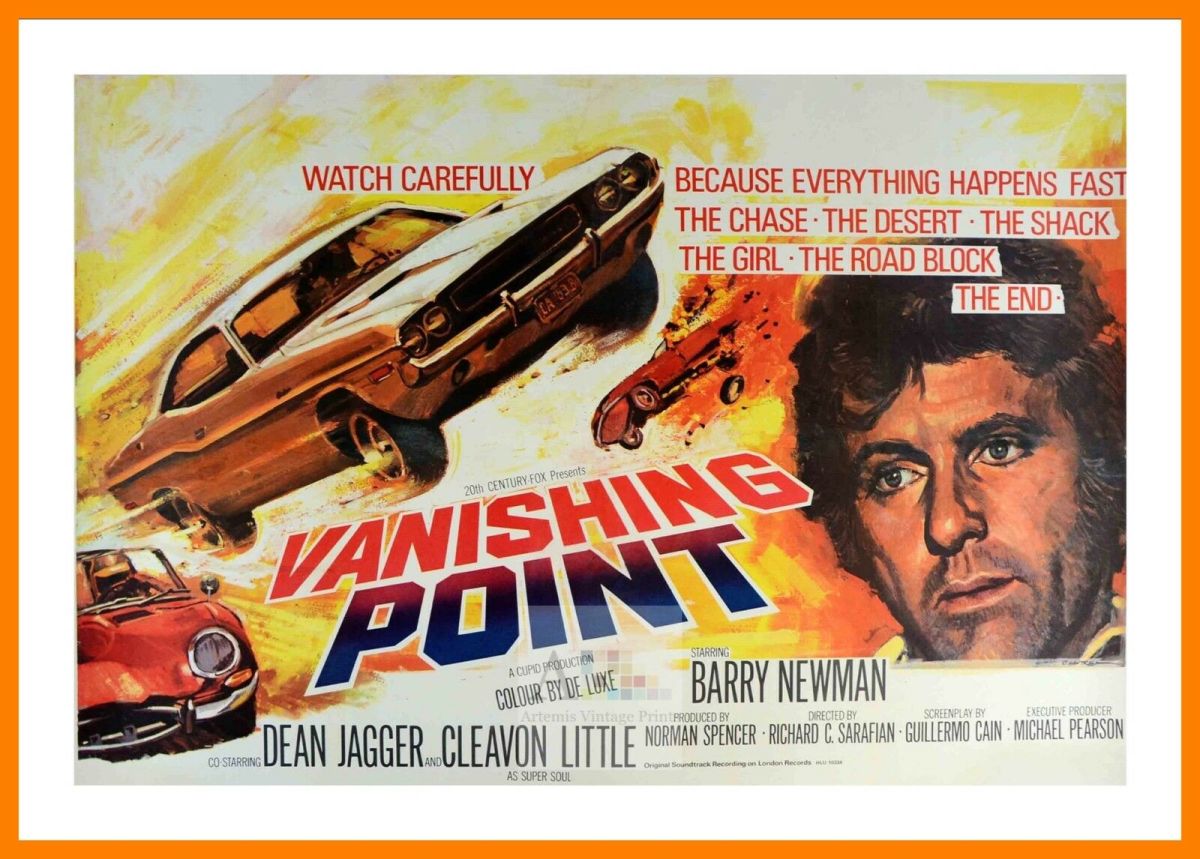
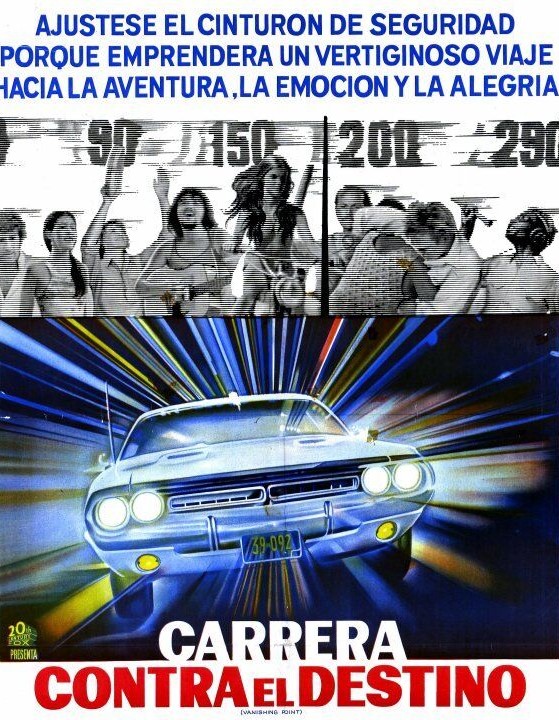
Vanishing Point (1971) *****

There always was an existential element to speed. Destination was another symbolic aspect. A “vanishing point” has an artistic meaning; relating to perspective it’s the place where parallel lines cross. But it also means something so diminished as to be unimportant, and you could argue this movie is a place where the figurative and metaphorical collide. Throw in a couldn’t-care-less driver and you have all you need for a cult film, a cross between the thoughtful paeon to speed of Easy Rider (1969), Sugarland Express (1974) and the camped-up chase characteristics of the later Smokey and the Bandit (1977).

It has less in common with the city-bound Bullitt (1968) and The French Connection (1971), whose protagonists had the excuse of being on the right side of the law. And where Easy Rider is majestically scenic, the route here is through Backwater U.S.A.

With a little bit more planning, Kowalski (Barry Newman), tasked with delivering a car from Denver, Colorado, to San Francisco, could easily have driven the 1250 miles (see Note) roughly within the 16.5-hour deadline he set himself – and very easily within the target set by his employer – without breaking the law. But he’s got no intention of easing his foot off the accelerator. Instead of pulling over, he sends the first pair of speed cops into the ditch.

And that sets the tone. Countless cops set out to stop him, countless cops are driven off the road, the authorities increasingly infuriated by constant humiliation. Kowalski is helped by blind DJ Super Soul (Cleavon Little), who has infiltrated police radio, and whoops up public support.

Director Richard C. Sarafian could have hit the existential mother lode by making Kowalski mysterious, akin to the western’s anonymous lone rider, or to a contemporary audience “the last American hero.” Or he could have dressed him up in more contemporary colors. But instead of being a long-haired drugged-up sex-mad hippie, he’s a decorated war vet, a stock car racer and a cop who exposed corruption and prevented a colleague raping a young girl. Unlike the drug peddlers of Easy Rider or the hostage-takers of Sugarland Express, he doesn’t start out as a law-breaker (setting aside his intake of Benzedrine) and the most he’ll be charged with is a misdemeanor.

Apart from a desire for the freedom of the open road untrammelled by petty rules, we don’t get much of an idea why Kowalski is so intent on risking his life, beyond a hint that an idyllic loved-up beach lifestyle had been shattered. There’s a fatalism that Ridley Scott ripped off for Thelma and Louise (1991).

The awe-inspiring driving across arid country is interrupted by episodes uncovering the underside of the American Dream and the nascent counter-culture. He is almost robbed by a couple of gay hitchhikers, encounters an old man (Dean Jagger) living off the land, trapping rattlesnakes and trading them for supplies, and a youth-oriented revivalist group who make music their mantra. He turns down free sex and marijuana offered by a beautiful nude motorcycle rider (Gilda Texter) while her boyfriend (Timothy Scott), with a stolen police siren, guides Kowalski through roadblocks.

Mostly, though, the focus is on the driving. Kowalski’s white 1970 Dodge Challenger R/T 440 Magnum, souped-up to reach 160 mph, leaves a Jaguar E-Type in the dust, and makes a mockery of the succession of wannabe cop speedsters.

He can leap over gaps, race off-road, charge through the desert, hide from pursuing helicopters, and could probably have hidden out till the heat died down except his blood is up and his eyes are starting to glaze over and he’s got a peculiar smile on his lips.  

Even on a small screen the full-throttle driving hits the spot. But it scores on many other emotional and intellectual levels. It strikes a chord with the disaffected. It’s the ultimate in defiance of authority, innate skills belittling superior forces. The fastest man will always have an audience rooting for him. If you can’t win, choosing how this will end means you remain in control. Speed puts a man in the zone, where you are reduced to an essence of being.

On paper, this should hardly work at all. In the hands of director Richard C. Safarian (Fragment of Fear, 1970) it works like a dream. Barry Newman (The Lawyer, 1970) is superb with very little to go on, nothing but a buttoned-up driving machine. Cleavon Little (Blazing Saddles, 1974) on the other hand goes nuclear as the hippest of the hip disc jockeys. Oscar-winning Dean Jagger (Firecreek, 1968) makes his mark and you might like to know Gilda Texter went on to become a successful costume designer. Depending on what version (not the one I caught) you see, you’ll get a glimpse of Charlotte Rampling (Three,1969).

Stone cold classic. Gets the adrenaline going, but leaves you thoughtful.

The DVD is worth buying just for Sarafian’s commentary.

NOTE: That’s according to Google. Though estimates vary. One reference puts it at 15 hours of non-stop driving, another between 19 and 22 hours. Without breaking the speed limit of 70mph and allowing for not hitting any big cities necessitating curbing your speed, I reckoned he would only cover 1150 miles within his deadline but there are clearly plenty stretches of remote road where you would be able to crank up your speed without any bother. It’s noticeable that Kowalski sets off during the night but we never see him doing any night-time driving, he only attracts the attention of the cops during the day.

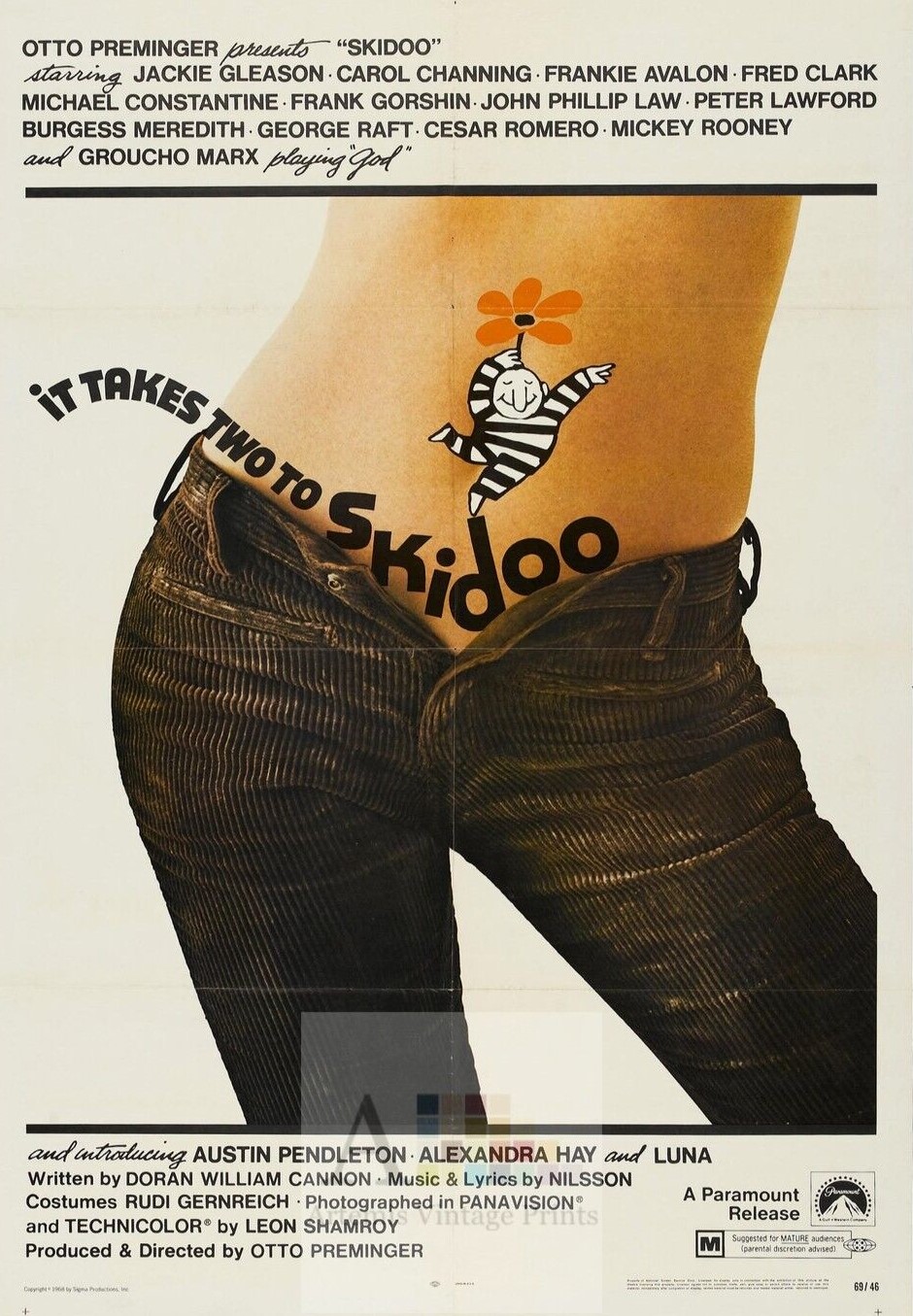
Skidoo (1968) *

Hubris can only get you so far. Unfortunately, it’s all downhill. Whatever possessed Otto Preminger (In Harms Way, 1965) to believe he could deliver a contemporary satirical comedy beats me. And it beat him, too.

Despite the comedic input of Jackie Gleason (The Hustler, 1962) and Groucho Marx there’s nary a single laugh, except, sadly, at the director’s expense as he attempts to shine a coruscating light on social mores and instead ends up fluffing his lines. The highlights (!!) are gangster Tony Banks (Jackie Gleason) having a bad trip, his daughter Darlene (Alexandra Hay) falling in with a bunch of hippies and having her body painted, his wife Flo (Carol Channing) trying to seduce another gangster Angie (Frankie Avalon) and some attempted gags at the expense of technology.

There’s even the old one of kids making out beside a parking meter and when busted complaining they are not getting their allotted time. And there’s an ongoing “joke” of Flo tussling with various men for control of the television set through rival remote controls.

The story, if you can call it that, has Tony infiltrating a prison in order to bump off inmate Packard (Mickey Rooney) who plays the stock market, complete with ticker tape, inside. Flo and Darlene, trying to find his whereabouts, end up at Angie’s hi-tech pad. Then all the hippies go back to the family house where Flo washes their hair.

You can imagine where hippies come into all this, making with the hip talk, and trying to set up an alternative world to the Establishment.

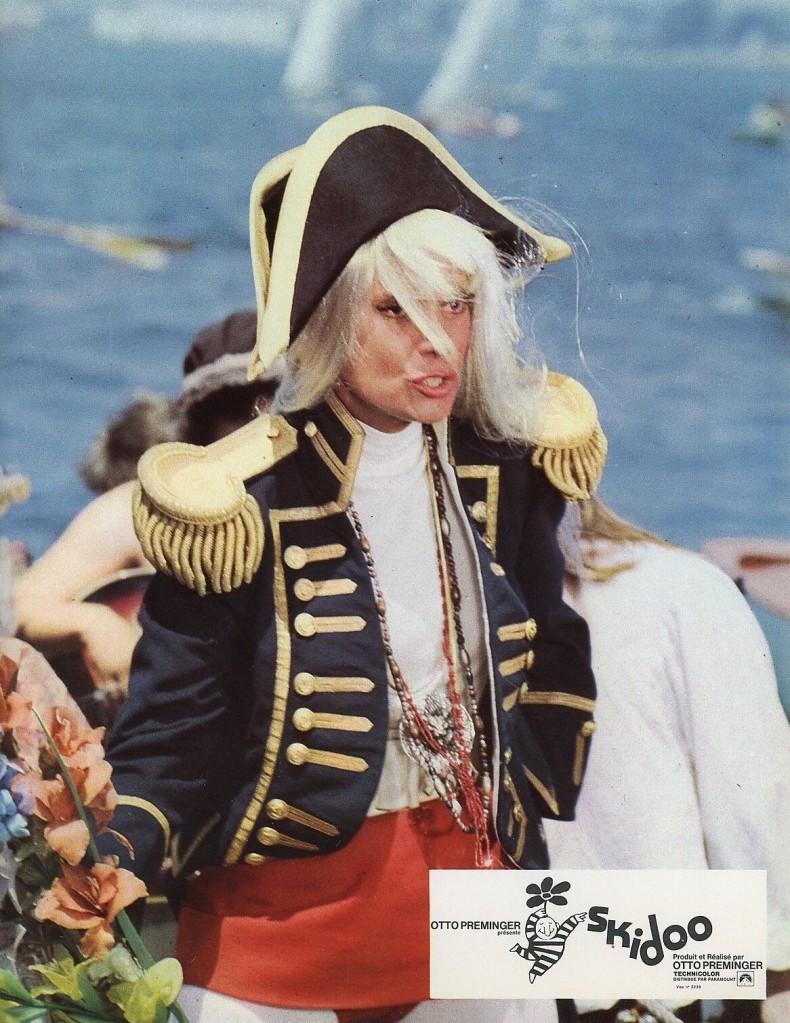
Carol Channing makes her feelings known by donning pirate garb.

In the style of It’s A Mad, Mad, Mad, Mad World (1963) the main attraction are the cameos, Peter Lawford (Ocean’s 11, 1960), John Philip Law (Hurry Sundown, 1967), Burgess Meredith (Rocky, 1976), George Raft (Five Golden Dragons, 1967), Mickey Rooney (24 Hours to Kill, 1965)  and Frankie Avalon (The Million Eyes of Sumuru, 1967). But they will all cringe at their participation.

Channing, only just Oscar-nominated for Thoroughly Modern Millie (1967) makes the worst career choice of her life, Alexandra Hay (Model Shop, 1969) not far behind, though with less marquee value to play around with.

Every acclaimed director has an off day, taking on a project through poor judgement or, more likely, financial necessity. But Preminger was still a Hollywood high-roller and this just looked like a dose of career suicide.

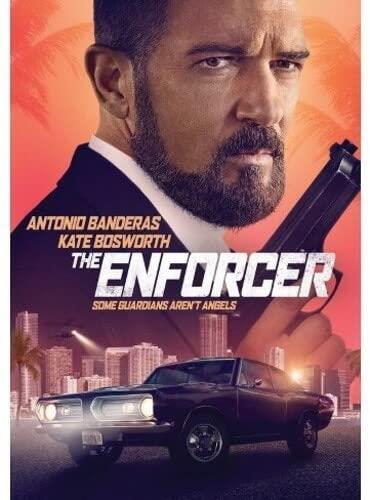
The Enforcer (2022) *** – Seen at the Cinema

After pulling double worthy duty with Empire of Light and Till as the starting points for my Monday multiplex triple bill it was something of a welcome relief to finish with an unpretentious pretty serviceable actioner that traded on Taken, The Equalizer and The Mechanic.

Ex-con Cuda (Antonio Banderas) has taken up his old job of debt collector/enforcer for bisexual mob boss Estelle (Kate Bosworth). Through happenstance he acquires streetfighter  protégé Stray (Mojean Aria). Cuda’s daughter won’t speak to him so he’s partial to coming to the aid of homeless 15-year-old Billie (Zolee Griggs). To get her off the streets he puts her up in a motel. But, of course, no good deed goes un-punished and the motel manager arranges for her kidnap by Freddie (2 Chainz), a rising gangster who threatens Estelle’s dominance.

Meanwhile, Stray falls for dancer/hooker Lexus (Alexis Ren) who works for Estelle and may well be her main squeeze, though the consensuality of that relationship may be in question.

There’s none of the pavement-pounding hard-core detective work or even nascent skill undertaken by the likes of Taken’s Bryan Mills before Cuda tracks down Billie’s whereabouts and it doesn’t take long for the various strands to coalesce, resulting in a variety of fights and shootings.  Given it’s a perky 90-minutes long, there’s very little time for subplots anyway or to find deeper meaning. That’s not to say there aren’t patches of clever dialog – Estelle compares the blood in her veins to that of the marauders in ocean depths whose blood has evolved to be extremely able to withstand parts of the sea where the sun never shines. (She says it a bit neater than that).

And there’s no time wasted on sentimentality either. Neither Cuda’s ex-wife or daughter want anything to do with him and thank goodness we’re spared a scene of him emerging from jail with nobody to greet him. The movie touches on the most venal aspects of modern crime, paedophilia, webcam pornography, kidnap, sexual violence, and of course Freddie bemoans the fact that Estelle is so old-fashioned she wants her tribute paid in cash not cryptocurrency.

It’s straight down to brass tacks, Cuda not seeing the betrayal coming. Thanks for bringing me fresh blood, Cuda, says Estelle, would you like one bullet or two with your retiral package. The only element that seems contrived at the time, that the battered and bloodied Stray can fix Cuda’s broken down car, actually turns into a decent plot point. And where Bryan Mills seems to be living on Lazarus-time, here it’s clear that the ageing Cuda is not going survive these endless beatings and shootings, so if there’s going to be a sequel it will be on the head of Stray.

I had half-expected Antonio Banderas (Uncharted, 2022) to sleepwalk through this kind of good guy-tough guy role but in fact his mostly soft-voiced portrayal is very effective, and his occasional stupidity lends considerable depth to the character.  Kate Bosworth (Barbarian, 2022) has been undergoing a transition of late and is very convincing as a smooth, if distinctly evil, bisexual gangster.

I’ve never heard of Mojean Aria though if I’d kept my ear closer to the ground I might have ascertained he was a Heath Ledger Scholarship recipient. He had a small role in the misconceived Reminiscence (2021) and took the lead in the arthouse Kapo (2022). Judging on his performance here, I’d say he is one to look out for. He has definite screen presence, action smarts and can act a bit too.

And just to show my ignorance I was unaware that Alexis Ren is one of the biggest influencers in the world. This is her second movie and she doesn’t really have much of a part beyond compromised girlfriend. Zolee Griggs (Archenemy, 2020) is another newcomer. But you remember that old Raymond Chandler saying that when the plot sags have a man come through the door with a gun. Well, here, there’s a different twist – it’s a woman, in fact both these women turn up trumps when it comes to rescuing the guys.

This is the directing debut of Aussie commercials wiz Richard Hughes and, thankfully, there’s none of the flashiness than would have drowned a tight picture like this. He keeps to the script by W. Peter Iliff who’s been out of the game for some time but who you may remember for Point Break (both versions), Patriot Games (1992), Varsity Blues (movie and TV series) and Under Suspicion (2000).

Undemanding action fare, for sure, but still it delivers on what it promises. It doesn’t have a wide enough release or a big enough marketing budget to even qualify as a sleeper but I reckon it will keep most people satisfied. I had thought this might be DTV but that’s not so. Although it’s not been released in the States it’s had a wide cinema release in Europe. However, this looks like it’s already on DVD but been thrown into cinemas to coincide with the launch of Puss in Boots.

Discover WordPress

A daily selection of the best content published on WordPress, collected for you by humans who love to read.

The Atavist Magazine

by Brian Hannan

WordPress.com News

The latest news on WordPress.com and the WordPress community.