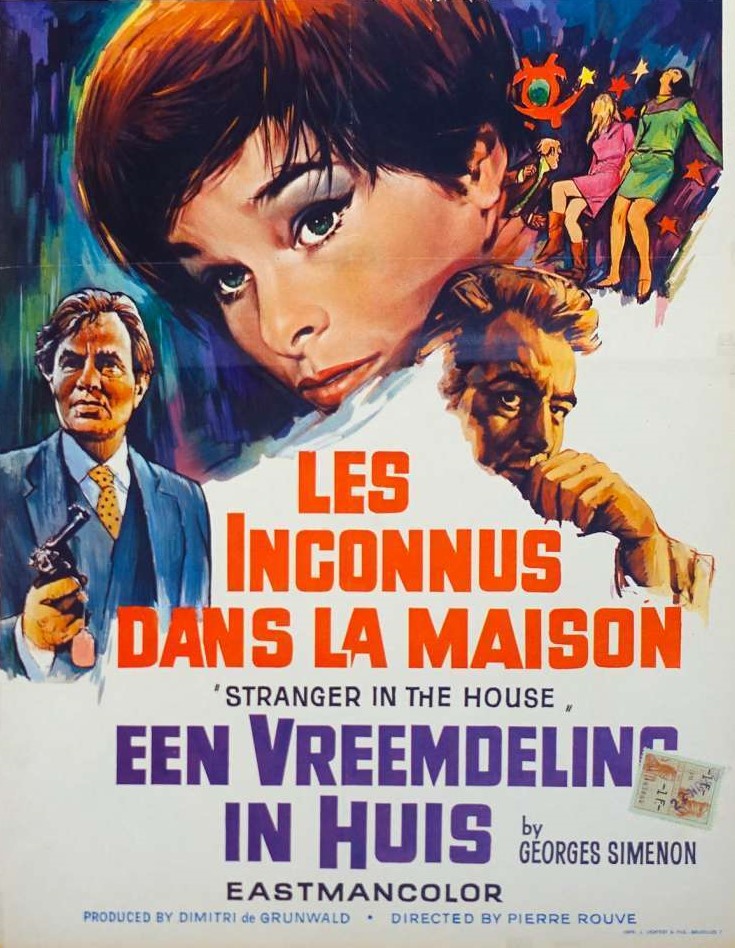
Stranger in the House / Cop-Out (1967) ***

Standout performance by James Mason (Age of Consent, 1969) holds together this curiosity. Based on a novel by Georges Simenon from 1951, it is updated to the Swinging Sixties and transposed from France to the English provincial town of Winchester (possibly chosen thanks to the hit single the previous year). While featuring an investigation, but minus Maigret, it’s essentially a character study.

Given John Sawyer (James Mason) is a depressed, divorced, retired lawyer, it could easily have sunk under the weight of cliché. Realistic portrayals of depression, except amongst those confined to institutions, were rare in this era. The bulk of the audience would probably view him just as a grumpy old man.

Sawyer is not only estranged from everyone, distancing himself from daughter Angela (Geraldine Chaplin), but sliding into oblivion and even when offered potential redemption can scarcely lift his head above a parapet of boredom, almost catatonic in his attitude, overwhelmed by the loss of wife and, presumably, the esteem that came with his career. A member of the upper middle-class, he shows surprising sensitivity to the underprivileged, outsiders, especially migrants, usually dismissed with a racist epithet, and sex workers whom he treats as victims rather than a corrupting influence.

When the corpse of young American ship’s steward Barney (Bobby Darin) is found in his disused attic, suspicion falls on his daughter’s unemployed Greek boyfriend Jo (Paul Bertoya). Turns out Barney is a nasty piece of work, blackmailing Angels and her friends for trespassing on his ship.

As well as being put up initially in an empty warehouse by Desmond (Ian Ogilvy) whose father, a department store magnate who owns the building, a former cinema, and later in Sawyer’s attic, Barney extracts cash and sexually humiliates his victims. Attempted rape of Angela comes with his conviction that she’ll “thank me for it.”  

Eventually, Sawyer is convinced to take on the case and is up against his daughter’s pompous employer and his wife’s lover Hawkins (Bryan Stanion). Maigret would have solved this in a trice but the joy of this is Sawyer’s indifference to the police procedural. He spends most of the time during the trial attempting to make a necklace out of paper clips, asks virtually no questions of witnesses, and makes no pretence of interest in the proceedings.

Among his unusual techniques are summoning up references to Dostoevsky’s Crime and Punishment.  Unusually, the pay-off doesn’t come in a courtroom but at the twenty-first birthday celebration of the entitled Desmond when to attract attention Sawyer whips off a tablecloth, sending glasses and crockery crashing, and introduces a woman in red.

Estrangement from his daughter could easily be his fault, too wrapped up in a high-flying career to pay the child much heed, but that indifference might as easily be ascribed to the possibility, as his wife taunts him, that the girl is not his.

There’s much to admire in the observations of ordinariness, loneliness, a class system filled with puffed-up mediocrities revelling in the slightest sliver of power, female advancement often requiring dispensing sexual favors to predatory employers or some form of begging.

There’s a brief appearance by Eric Burdon and the Animals, a modelling assignment using the cathedral as backdrop, and drugs. Difficult to imagine though that the pistol holstered by a carnival booth operator could be the real thing.

James Mason’s employment of a limp (result of a war wound) probably went against any genuine assessment of the subtlety of his performance. Geraldine Chaplin (The Hawaiians, 1970) builds up her character with action rather than dialog, showing tenderness where you might expect anger. Bobby Darin (Pressure Point, 1962) essays another creepy thug.

Paul Bertoya (Che!, 1969) is underused. Ian Ogilvy (The Sorcerers, 1967) is so smug you want to thump him. Look out for Pippa Steel (The Vampire Lovers, 1970), Moira Lister (The Double Man, 1967) and Yootha Joyce (Our Mother’s House, 1967).

In his sole directorial assignment Frenchman Pierre Louve, who wrote the screenplay, has better luck dissecting English mores than finding the essence of Simenon, whose non-Maigret novels generally concentrated on a man under pressure. While Mason delivers a fine performance, and his depression is obvious, there’s no sense of him teetering on the edge, more a general decline. In fact it’s the opposite, returning to the legal fray provides him with redemption.  

Rise of the Footsoldier: Vengeance (2023) *** – Seen at the Cinema

If a train strike hadn’t forced me to drive to the Bradford Widescreen Weekend and threat of a storm ensured I set off early in the morning, leaving me an afternoon to kill, and if my hotel wasn’t slap bang next to a multiplex, I might not have been tempted. And I guess you could add to this list of possibilities that if cinemas had not been so strapped for product, it might have gone straight to streaming or DVD. So I’m happy to report that the British B-picture is alive and kicking.

Revenge is the order of the day, no surprise there in a crime flick, but here’s the twist: while ostensibly it’s just Tate (Craig Fairbrass) seeking vengeance for the death of a gangster buddy, in fact he’s also got a target on his back, three figures from his past intent on payback.

Previous entrant to the series.

So, the plot is complicated to say the least, but here’s the other twist: it’s the family element that stands out. Not “family” Mafia-style where omerta rules and only women are allowed to shed a tear. But family as in, tough as they are, these criminals have emotions. One particularly hard-boiled specimen bursts into tears in front of his cellmates on hearing of the death of a loved one. A budding gangster, boxer and drag artist (take your pick at which he shows the most talent) Billy the Kid (Ben Wilson) – who, father foolishly uses the same moniker for his stage act as his boxing – is terrified of coming out to trainer father Fergus (Stephen McCole), relying on his aunt Margo (Tara Fitzgerald) for a shoulder to cry on.

Mental and physical scars are on greater display than normal. Every time it looks like the violence quotient is about to up the ante, in sneaks a moment of humanity, a hood with a baby, the aforementioned reactions.

Set in the 1990s drugs scene, the movie has a Point Blank (1967) sensitivity (if that’s the word), Tate constantly confounded by what’s going on. No matter how many people he kills, the situation just gets murkier. To be honest, I’m not surprised, I was confused.

The low-budget dictates we stay pretty well removed from any period detail. The cars and the gentlemen’s club – the movie’s virtually an advert for the real-life Platinum Lace – and the fact that the bright lights of central London conceal a lot, is as far as we go. Hazy backgrounds and longshot keep the past out of sight.The attractions in the club are such that the punters are not diverted by the entrance of  bloodied gun-toting gangsters and the first gunshots pass them by.

Neat touches abound. The young girlfriend Charlotte (Emily Wyatt) of chief crook Hexell (Phil Davis) is in reality a safecracker and at the first opportunity heading off to foreign parts with a hefty haul. When Tate makes the mistake of driving into Fergus’s breaker’s yard he has not taken into account how easily his vehicle, shades of Mickey One (1965), can be scooped up and crushed to oblivion. Faulty information results in a heist being a bust. There’s some comedy with an out-of-date grenade and a machine gun firing blanks. In a more horrific echo of The Long Good Friday (1980) a miscreant is trapped in a car and burned alive.

But the best scene, amidst the carnage necessarily for a revenge picture, is a dying man accepting his son’s right to live his own life. And there is some honor among thieves, or at least an old pals act to fall back on.

There’s plenty violence for your buck. Knife, bullet, gas, grenade, fire, the permutations are endless and would need to be because so many people require to be dealt with. In individual combat, of course Tate wins the day, but given he is constantly outfoxed his fists and guns don’t always achieve their long-term purpose.

While Tate is not in the John Wick/Rambo league, he could certainly sit on a second tier that might encompass the movies of Dolph Lundgren, Steven Seagal, Jean-Claude Van Damme, though he’s not as athletic as the last two.

The marketeers were handed an unlikely bonus in the shape of a three-star review from  normally morally upright British newspaper The Guardian, and my guess it would be for the same reasons as I was impressed, the refusal to toe the DTV line and invest the picture with some humanity.

This series kicked off in 2007 and this is the sixth. The services of original star Ricci Hartnett were dispensed with after the second film. Fairbrass was top-billed for the next pair but ceded that to Vinnie Jones. The original was based on a true-life memoir but has gradually evolved into a more wide-ranging gangster series. Most have gone straight to streaming/DVD.

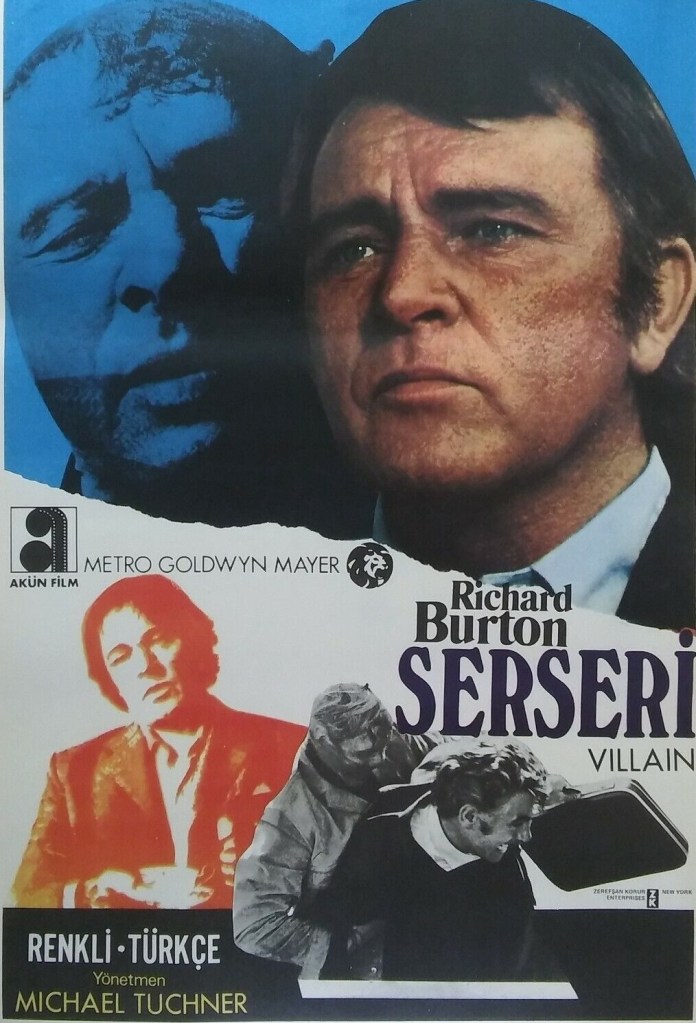
Good performances all round. Craig Fairbrass (Villain, 2020) should get a shot at something bigger. Directed with some elan on a tight budget by Nick Nevern (The Hooligan Factory, 2014) and the screenplay by producer Andrew Loveday (involved in two others in the series) and Jason Maza, also incidentally a producer, in his screen debut, has left an opening for a sequel.

Ukryta Siec /Hidden Web (2023) *** – Seen at the Cinema

What appears a routine conspiracy thriller fleshed out with contemporary hooks about body shaming, victim shaming and the dark web suddenly explodes in the third act as consequence gets personal. If you’re of an arthouse bent you’ll equate Polish cinema with Andrzej Wadja (Man of Marble, 1977), Roman Polanski (Knife in the Water, 1962), Jerzy Kawalerowicz (Pharaoh, 1966) Krysztof Kieslowski (Three Colours Trilogy, 1993-1994) or Pawel Pawlikowski (Ida, 2013) and you’ve probably turned a blind eye to the boom in commercial Polish cinema of recent years, mostly concentrating on corrupt cops, gangsters, the Mafia, and strong-minded women.

Luckily, my local multiplex, which lacks arthouse inclination, has been running the biggest hits from Poland on a regular basis. The latest arrival lacks the bombast and outlandish narrative of previous entries and while following a standard investigative narrative eventually twists into a more personal reflection on crime.

Adapted from this Polish bestseller.

Journalist Julita (Magdalena Kolesnik) investigating the suicide of well-known television presenter Gustaw  (Mariusz Czajka) finds evidence of a murder plot. After publishing her story, she becomes an even bigger story when her sex video is made public. Her outraged editor demands she apologise for embarrassing the news website. When she refuses, she is fired. Widowed father Henryk (Andrzej Sweeryn) – wife committed suicide way back – disowns her, older sister Magda (Wiktoria Gordecka) chucks her out of her flat.

The journalist ploughs on, but hunting down her own hacker puts her back on target to uncover a man who could conceivably possess the computing skills – that once upon a time could have only existed in the fictional James Bond/Fast and Furious universe but now with the driverless car upon us less a figment of the imagination – to force the television presenter’s vehicle over a bridge. She’s more determined than resourceful, tempting a security guard out of his office by setting off a smoke alarm, escaping from another security guard by ramming his hands with a car door.

She is assisted by Chinese chef Emil (Piotr Trojan), a part-time computer whiz, whose Army background makes him a suspect. Eventually, with more digging and a good deal of luck, she finds the hacker. Instead of turning him in, she agrees to give him a stay of execution.

For why? He has evidence Gustaw was part of a child sex abuse ring of which the hacker was an early victim.  He wants to employ more computer wizardry vigilante style to knock off another member of the abuse ring. He promises to stop after that, leaving it to Julita to make a decision on whether to go to the police.

I’m going to have to issue a spoiler otherwise this will just seem too routine a thriller. This is where it gets emotionally harrowing and spins completely on its axis, away from standard investigative journalism and into another realm entirely. The twist is that the hacker’s next victim, murdered by tampering with a dialysis machine, is her father. He was another legendary television figure.  Now her mother’s suicide makes sense as does her sister’s reluctance to let her son anywhere near her grandfather.

Now what? Not enough to be the already humiliated daughter of a sex offender, but to realize the hidden role this has played in her family, and to decide whether further exposure would be in anybody’s interest.

Despite a car chase and being hounded, this doesn’t quite get to the boil in terms of conspiracy thriller as though director Piotr Adamski (Eastern, 2019) knew that the final act would blow everything that went before out of the water. But given this is the director’s sophomore outing and he didn’t want to go the all-out violence-ridden crime route, it’s tense enough and with some interesting news-room background, sniping colleagues, an editor pumping breast-milk at her desk, electronic scorecard ranking journos by the minute. Surprised, to be honest, some of the images that the censor passed.

But Magdalena Kolesnik (Sweat, 2020) plays this just right. Too self-reliant to be out of her box with fear, too independent to let her emotions get the better of her, meaning that when the big reveal hits she can dive into all that repressed emotion.

If you’ve not dipped into modern commercial Polish cinema, this is as good a place to start as any. If you’re already a fan, you’ll know what to expect, and come up somewhat shaken at how this pans out.

Worth a look.

Mercy Falls (2023)

The long tradition of Scottish-made or Scottish-set movies – from Whisky Galore (1949), Brigadoon (1954), The Prime of Miss Jean Brodie (1969) and The Wicker Man (1973) to Local Hero (1983), Highlander (1986), Braveheart (1995) and Trainspotting (1996) – has fallen fallow in recent years. And while Outlander has done its best to fill the gap, the most we can hope is Glasgow or Edinburgh being called upon as brief locales or as substitute locations in blockbusters such as F9 (2021) or Indiana Jones and the Dial of Destiny (2023).

So, as a native Scot, I approached Mercy Falls out of a sense of duty. Anything more meant setting aside the odd notion that a movie set in the wilderness will carry the same dread in a horror scenario as the more usual claustrophobic setting. Or that short of a drug-fuelled bear, speedy surprise will be in short supply. And there’s a struggle in coming to terms with the MacGuffin, that a young lass and her four companions will set off to find a cabin whose whereabouts are largely a mystery and with nobody who can read a map.

Putting aside such misgivings, it’s a refreshing change from the torture porn / mad robots / occult offerings of the more recent Hollywood horror cycle. And since it’s mercifully not funded by government agency Creative Scotland no slavish need to turn backdrops into tourist promotional material. Not a whiff of tartan in sight, much less majestic peaks, and the grass, far from being a sweeping green, is burned an unattractive summer brown, though mists do appear to appear as if by magic and you will wonder how such an accomplished wee folk band just happened to be playing in a remote Scottish pub.

Our cast of potential corpses includes uptight heiress Rhona (Lauren Lyle) and her theoretical boyfriend Donnie (Joe Rising), sex-mad Heather (Layla Kirk) and her definite current Steady-Eddie boyfriend Scott (James Watterson) and opportunistic one-night-stand Andy (Eoin Sweeney).  They are joined by bad-ass hitchhiker Carla (Nicolette McKeown). Tension in the early part is mostly sexual in nature, although you have to wonder if they will ever reach their destination.

As with Shallow Grave (1994) and television series Guilt (2109-2023) accidental death turns the trip into a nightmare. Tell the truth and five people go to jail as culprits or accessories, tell a lie and dump the body under a remote waterfall and everyone gets off scot free. Or that would be the case except ex-soldier Carla has escaped from a mental institution.

Some sequences appear to have escaped from other movies – climbing a cliff-face and crossing a ravine Indiana-Jones-style across a rickety log – but once the gore count rises it’s game on and the meek Rhona channels her interior super-bitch to take on Carla in a winner-takes-all finale.

The men are uniformly useless, the females the sexual or physical predators. And it’s realistic, too. While Carla has honed her killing techniques on the battlefields of Iraq, Rhona has to rely on more basic materials, an axe, knives, and petrol found in the cabin. Rhona, it turns out, is also handy with that Glaswegian thug’s weapon of choice, the bottle, but when she lays out her opponent with it, rather than break open the bottle and slash her opponent’s throat, she scarpers to a convenient cave where she has laid a “trap,” clearly forgetting that with the enemy at your mercy it’s darned foolish to run and give her another chance.

Still, this isn’t the kind of movie where slick characters think straight, otherwise why would the remaining fella, determined to demonstrate his dexterity, just think you could switch on an old-fashioned heavy-duty radio and yell “Mayday! Mayday!” into it and expect to be picked up. Nobody’s going to win an Oscar and the acting is generally at entry-level, eyes steadfastly revealing little of character, but by and large, it’s an acceptable low-budgeter.

Blame or praise Ryan Hendrick (Lost at Christmas, 2020), also co-writer with Melia Grasska in her debut. Nicolette McKeown (Lost at Christmas) is the pick but that’s mostly because she doesn’t have to emote much beyond lust and hatred while Lauren Lyle (Outlander, 2017-2022) is so emotionally drenched she has to occasionally shed a tear.

This will probably quickly end up on a streamer near you so worth a watch for taking a different tack to horror and as a pointer to future Scottish talent.

Secret World (1969) ****

Jacqueline Bisset is the big draw here. After breaking into the Hollywood bigtime with female leads in The Detective (1968) and Bullitt (1968) she put her newfound marquee weight behind a low-budget French arthouse picture.  But ignore the marketeers best efforts to present this as malevolent in the style of The Innocents (1961) or the illicit template of The Nightcomers (1971) or Malena (2000).

No children were corrupted in the making of this picture. Instead, it’s a slow-burn thoughtful exposition of a child coming to terms with loss and a young woman discovering she is more than a mere sexual plaything. Any explosive drama comes from father-son rivalry but mostly it’s a reflective, absorbing movie that follows twin narratives, the attraction of the orphaned introspective 11-year-old Francois (Jean-Francois Vireick) to the English mistress of his uncle Philippe (Pierre Zimmer) and the damage her arrival causes to a fractured household.

The leather glove oveprlays its hand in the poster, suggesting a great deal more sexuality
than is actually the case, but nonetheless – and take this as subtle – creates
an element of ambiquity about the demure Wendy.

Astonishingly, given its arthouse credentials – long takes, glorious cinematography, brooding close-ups – this was the final film for both directors (no idea why there were two) Paul Feyder (in his debut) and a sophomore effort from Robert Freeman (The Touchables, 1968). Given a screenplay by regular Polanski collaborator Gerard Brach (Wonderwall, 1968) and an intrusive heavy-handed score, you get the impression of two separate movies struggling to fit a single canvas.

On the one hand, you’ve got a perfectly acceptable romantic intrigue, Philippe and son Olivier (Marc Porel) fighting, sometimes metaphorically (games of chess etc), sometimes physically (a punch-up), over the woman, passed off as the daughter of a wartime colleague, and a wife Monique (Chantal Goya) refusing to stand on the sidelines, switching hairstyle to blonde and employing various wiles to prevent the affair. While the male rivalry is overt, the wife’s manipulations are more subtle.

On the other hand, you’ve got the lonely boy, who indulges his imagination, spinning tales of monsters in a lake and spies in the vicinity, mostly ignored by his relatives, hiding out with a pet rabbit in a treehouse, occasionally filching small items, creating a crown out of a stolen brooch and pieces of tree bark. There’s a lot that’s presented without explanation. For example, a couple of months after his parents died in a car crash that he alone survived, he mopes around in a jumper full of holes, either a sign how little his adoptive parents care for him, or perhaps the item of clothing he was wearing the day his mother died.

You can view his behavior – creeping into Wendy’s room at night when she’s asleep – as creepy or just the hankering of a small boy after a substitute mother. But mostly, he lives a life of wistfulness, longing for what he once had, unable to fit into a household split by various emotions. When he snips a lock of Wendy’s hair, or snaffles a bottle of her perfume, it’s to add to his little box of mementoes rather than from any underlying sexual motive. And it’s hard to view his growing feelings for Wendy as early stirrings of sexual attraction. When at one point he falls asleep on her bosom, you couldn’t interpret that as anything more than maternal instinct.

That’s not to say there isn’t tension. But that’s almost entirely played out in the context of father, son and wife. Francois is a welcome gooseberry defusing the unwelcome attentions of Olivier, whose overtures Wendy constantly thwarts. Olivier, well aware of the role Wendy plays in her father’s life, mocks his mother’s attempts to hold onto her errant husband. Wendy, meanwhile, abhors the role she is forced to play, the trophy mistress, and reacts in maternal fashion to the lonely child.

Excepting the intensity of the father-son relationship, the screenplay underplays while still developing character more fully than you might expect.. The child is as manipulative as his aunt in finding ways to spend time with the object of his affection.

Mostly, this has been dismissed as a poor example of the French arthouse picture or as a Bisset vanity number or for illicit elements than never catch fire. But, in reality, it’s a superb character study set in an unromanticised French countryside – rats need shooting, for example, massive tray of cheese served up for dessert rather than the grand wine cellar you might imagine a chateau to contain, or clothes or other ostentatious examples of wealth.

There is so much that is incisively ordinary. Philippe insists on measuring the boy’s height.  Monique drops her chilly façade to help the newcomer get rid of a wasp. The arrogant Olivier loses all credibility when he runs away from a gang. The children play out childish rituals. Francois douses the rabbit in Wendy’s perfume so he can keep the smell of her close.  

The secret world here is four-fold, the one Philippe foolishly and brazenly attempts to maintain, the one Olivier hopes to possess, the one Francois enjoys and the idyll from which Wendy is shaken out of.

The direction is very confident, none more so, oddly enough, than in the only sex scene, which takes place primarily off-screen, although with the lascivious involvement of a leather-gloved hand.

Rich in detail, supremely atmospheric, well worth a look.    

Grand Slam (1967) *****

Stone cold classic. An absolutely riveting watch from start to twist-ridden finish. The best heist picture I have ever seen. Although throwing an occasional nod to acclaimed predecessors Rififi (1955) and Topkapi (1964), in my opinion this majestic opus tops both. And for one simple reason. There is no grandstanding, neither from director nor actors.

Although director Giuliano Montaldo (Machine Gun McCain, 1969) tosses in a few Hitchockian moments, these are never long-drawn-out in the manner of the master, because there’s never any let-up in the suspense and therefore to do otherwise would be to indulge himself.  If there is boldness it’s in the muted tone. The marquee names – Edward G. Robinson (The Biggest Bundle of Them All, 1968), Janet Leigh (The Manchurian Candidate, 1962) and Adolfo Celi (Danger: Diabolik, 1968) – are all low-key, non-intrusive.

The title “Carnival of Thieves” had already been used for another heist movie
-” The Caper of the Golden Bulls.”

The bulk of the Rio-set action is carried out against the background of the annual carnival by what appear to be a bunch of unknown supporting stars who seem honor-bound to make no attempt, except as befits character, to steal the limelight, so we are not faced with a Reservoir Dogs (1992) or The Usual Suspects (1995) where everyone is jockeying for position, expecting stardom to beckon.

Fabulous plot is matched by terrific telling, information cleverly withheld until the last moment so that it is a constant railroad of surprise. For example, a church tower plays a critical part in abseiling into the robbery locale, but what we don’t know until it suddenly rings is that there’s a massive bell that, if otherwise there had not been a carnival going on below, might have caused a few to glance up at an inopportune moment. Nor are we shown its clock until the moment when we realize the thieves are running behind schedule.

The memorable stand-alone moments are reserved for the opening. The first shot is of a cherubic choir singing farewell to their retiring schoolmaster Professor Anders (Edward G. Robinson). The next short sequence has him in New York examining in a shop window a display of expensive cigarette lighters (those, it takes us time to realize, also play a crucial role). Then he arrives at a stunning mansion where he passes through what appears to be an upmarket crowd, dinner jackets and cocktail gowns, watching a classical musical concert. You imagine the woman on stage is an opera singer. As Anders is being shown into another room she starts peeling off her clothes to the classical music.

Anders has come to meet childhood buddy Milford (Adolfo Celi), now a big-time gangster, to ask for help in recruiting a team of four experts to carry out the audacious theft of $10 million in diamonds. You might gaze in astonishment as I did at Milford’s superb filing system, a huge alphabetical bank covering every known area of criminal expertise.

Once the crew are selected Anders bows out and we don’t see him again till the end. You keep on expecting a star of Edward G. Robinson’s caliber to turn up again, but that’s part of the clever ongoing bait-and-switch. The team, recruited from European capitals, comprises English safecracker Gregg (George Rigaud), German muscle Erich (Klaus Kinski), meek Italian electronics whizz Agostino (Riccardo Cucciolla) and French playboy Jean-Paul (Robert Hoffman).

Playboy? What the? Who on earth hires a playboy for a multi-million-dollar heist? Well, his area of expertise is seduction. And the plan requires the secretary, Mary Ann (Janet Leigh), to the vault’s general manager to fall into his arms because she possesses a vital key. As per the norm, there’s a bunch of stuff that doesn’t go according to plan, most notably a newly-installed sound detection device in the vault that requires ingenious invention to beat. But what also doesn’t go according to plan is the seduction.

This is one of the cleverest devices I’ve witnessed for ratcheting up suspense, especially since time is so critical. This should be a slam-dunk for the impossibly handsome Jean-Paul, who has beauties hanging off his arm. Especially as Mary Ann is something of a plain Jane, eyes concealed behind thick spectacles, wearing unflattering clothes, a cold fish with a snippy demeanor, rebuffing his every approach. When finally Jean-Paul succeeds and manages to access her purse wherein lies the key, he finds two key-rings. Having successfully managed to filch the key, three times he is foiled getting it safely to his confederate.

Twist upon twist, oh you haven’t seen the half of it. The usual falling out among thieves is restricted to tough guy Erich instinctively taking against the lightweight playboy and there’s an unexpectedly tender scene of the mild Agostino attracting the attention of a young Brazilian Setuaka (Jussara), so poor she is reduced to squatting on an empty yacht, lack of mutual language scarcely hindering prospective romance.

A couple of times the audience reacts to unspoken tension, at one point the crew think Mary Ann has spotted them from her office window, another time you think she has made the connection between the lighters. And there’s just a stunning scene at the end when Jean-Paul leaves Mary Ann and alone in her apartment she switches off the lights. And the subsequent shock on her face as she realizes she is the patsy. And one scene where the rolling of eyes conveys enormity of reaction.

Silly me, I’ve spent so much time going on about the incidentals I’ve given almost nothing away about the heist. Just as well, I guess. The robbery is timed to take 30 minutes and that’s the screen time allocated, so you follow the team minute-by-minute inch-by-inch as their elaborately complex scheme unfolds.

The confidence of the director in dispensing with dialog and during the heist with music speaks volumes about the quality of the production.

But could you imagine either of the Oceans pictures minus stars Frank Sinatra, Dean Martin, Sammy Davis Jr, George Clooney and Brad Pitt. That’s effectively what Montaldo has set out to do here. The major stars don’t dominate. It’s left up to the workers to carry the movie and in sticking to their characters rather than showboating it all turns out splendidly.

Edward G. Robinson is at his quiet best, completely lacking in the intensity you might anticipate, the calmest criminal mastermind if all time. Janet Leigh is just superb – and I can see where her daughter Jamie Lee Curtis – gets that austere prim look from. Theoretically, Klaus Kinski (Five Golden Dragons, 1967) is the pick of the supporting cast, mainly because eventually he gets to be the Klaus Kinski we all expect, but my money is on Riccardo Cucciolla (Sacco and Vanzetti, 1971) as the unobtrusive lovelorn genius and Argentinian George Rigaud (Guns of the Magnificent Seven, 1969) for his spot-on depiction of a cool upper-class Englishman. It took eight writers to put together the screenplay and you can see why, every detail, every nuance of character, finely wrought.

In all the time I’ve been writing this Blog I have never enjoyed such an unexpectedly  enjoyable experience.

This is one film you just can’t afford to miss.

The Adventurers (1970) ***

Class A Trash. Adaptation of Harold Robbins (Nevada Smith, 1966) bestseller goes straight to the top of the heap in the So-Bad- It’s-Good category. Only Alan Badel (Arabesque, 1966) as a double-dealing revolutionary comes out of this with any honors.

The likes of Candice Bergen (Soldier Blue, 1970), Rossano Brazzi (Rome Adventure/Lovers Must Learn, 1962), double Oscar-winner Olivia de Havilland (Hush, Hush, Sweet Charlotte, 1964), Leigh Taylor-Young (The Big Bounce, 1969)  and Ernest Borgnine (The Wild Bunch, 1969) must have wondered how they were talked into this.

And director Lewis Gilbert (Loss of Innocence/The Greengage Summer, 1961) must have wondered how he talked himself into recruiting unknown Yugoslavian Bekim Fehmiu (The Deserter/The Devil’s Backbone, 1970), nobody’s idea of a suave lothario,  for the lead.

One of the taglines was “Nothing has been left out” and that’s to the movie’s detriment because it’s overloaded with sex, violence, more sex, more violence, in among a narrative that races from South American revolution (in the fictional  country of Corteguay) through the European jet set, fashion, polo, fast cars, orgies, and back again with revenge always high on the agenda. At close on three hours, it piles melodrama on top of melodrama with characters who infuriatingly fail to come to life.

Sensitivity is hardly going to be in order for Dax (Bekin Fehmiu) who, as a child after watching his family slaughtered and mother raped, makes his bones as a one-man firing squad, machine-gunning down the murderers. From there it’s a hop-skip-and-jump to life as the son of ambassador Jaime (Fernando Rey) in Rome where he belongs to an indulgent aristocracy who play polo, race cars along hairpin bends, swap girlfriends and, given the opportunity, make love at midnight beside the swimming pool.

His fortunes take a turn for the worse when his father backs the wrong horse, the rebel El Condor (Jorge Martinez de Hoyos)  in Corteguay, and is killed by the dictator Rojo (Alan Badel). In between an affair with childhood sweetheart Amparo (Leigh Taylor Young), life as a gigolo and cynical marriage to millionairess Sue Ann (Candice Bergen), Dax takes up the rebel cause, initially foolish enough to fall for Rojo’s promises which results in the death of El Condor, and then to join the rebels.

But mostly it’s blood, sex, betrayal and revenge. Anyone Dax befriends is liable to face a death sentence. He only has to look at a woman and they are stripping off. It’s a heady mess. It might have worked if the audience could rustle up some sympathy for Dax, especially as he was entitled to feel vulnerable after his childhood experiences. But he just comes across as arrogant and the film-makers as even more arrogant in assuming that because women fall at his feet that must mean he had bucketloads of charm rather than that was what it said in the script. He’s fine as the thug but not convincing as a lover.

Excepting Badel, the best performances  in a male-centric sexist movie come from women, those left in Dax’s wake, particularly Candice Bergen as the lovelorn wife and Olivia De Havilland as the wealthy older woman who funds his lifestyle, aware that at any moment he will leave her for a younger, richer, model. Lewis Gilbert is at his best when he lets female emotion take over, not necessarily wordy intense scenes, because Bergen and De Havilland can accomplish a great deal in a look.

The rest of it looks like someone has thrown millions at a B-picture and positioned every character so that they have nowhere else to go but the cliché.

By this point, Hollywood had played canny with Harold Robbins, toning down the writer’s worst excesses and employing name directors to turn dire material into solid entertainment. Edward Dmytryk (Mirage, 1965) had worked wonders with The Carpetbaggers (1964),  whose inherent salaciousness was held in check by the censor and made believable by characters played by George Peppard (Pendulum, 1969), Alan Ladd (Shane, 1953) and Caroll Baker (Station Six Sahara, 1963). Bette Davis and Susan Hayward contrived to turn Where Love Has Gone (1964) into a decent drama. Even Stiletto (1969), in low-budget fashion, managed to toe the line between action and drama.

But here it feels as if all Harold Robbins hell has been let loose. Rather than reining in the writer, it’s as if exploitation was the only perspective. Blame Lewis Gilbert, director,  and along with Michael Hastings (The Nightcomers, 1971) in his movie debut, also the screenwriter for the end result.

On the other hand, if you can leave your critical faculties at the door, you might well enjoy how utterly bad a glossy picture can be.

Goodbye, Columbus (1969) ****

Despite being made at the opposite end of the decade to Loss of Innocence/The Greengage Summer (1961) this has a number of similarities, in the main the star-making turn, this time from Ali McGraw in her debut and, though playing a slightly older and much wealthier character, she is also a woman in transition, from puppy love to true love, not entirely in control of her emotions and not willing either to accept responsibility for her actions.

Richard Benjamin, in his first starring role, plays the sometimes gauche, much poorer, more responsible, object of her affections. He’s only connected by religious upbringing to The Graduate’s Dustin Hoffman, far more relaxed with women and comfortable in his own persona. The camera loved McGraw the way it did Susannah York, but in these more permissive times, and given the age difference, there was much more the screen could show of the star’s physical attributes.

I was surprised by the quality of McGraw’s performance, expecting much less from a debutante and ex-model (and studio boss Robert Evans’ fiancée) but she is a delight.

Supremely confident Brenda (Ali McGraw) enjoys a life of privilege and engages in witty repartee with the more down-to-earth Neil (Richard Benjamin) who doesn’t know what to do with his life except not get stuck with a money-making job. He would much rather help a young kid who likes art books.

It’s not a rich girl-poor man scenario but more a lifestyle contrast and both families are exceptionally well portrayed. Brenda’s father Ben (Jack Klugman) has sucked the life out of exasperation while her uptight mother (Nan Martin) has to cope with an oddball son (Michael Meyers) and a spoiled brat of a younger sister (Lorie Shelle). It’s somewhat reassuring that money doesn’t prevent family politics getting out of hand.

But in the main it’s a lyrical love story well told. The zoom shot had just been invented so there’s a bit over-use of that but otherwise it zips along. A major plot point provides a reminder of how quickly men took advantage of female emancipation, the invention of the Pill dumping responsibility for birth control into the woman’s lap, leaving the male free to indulge without the risk of consequence.

In other words, it was still a man’s world. Of course, without the Pill, it would be a different kind of story, romance tinged with fear as both characters worried about unwanted pregnancy and stereotypical humour as the man purchased – or fumbled with – a rubber. Acting-wise Ali McGraw is pretty game until the final scene when her inexperience lets her down. I’m not sure I went for the pay-off which paints McGraw in unsympathetic terms and lets Benjamin off rather lightly.

The romantic stakes were considerably lower than in McGraw’s sophomore outing, Love Story (1970) and for both characters it was not the defining moment of their lives, more a rite-of-passage.

Director Larry Peerce (The Incident, 1967) takes time to build a believable background and uses humor to defuse what could have become an overwrought melodrama. Arnold Schulman (The Night They Raided Minsky’s / The Night They Invented Striptease, 1968) was Oscar-nominated for his screenplay based on the Philip Roth bestseller.

No one ever knows why the camera takes to an individual and given this was long after Hollywood had stopped trying to invent stars it was a wonder that Ali McGraw was turned into an marquee attraction. But there was such a lightness to her screen persona it was a surprise she didn’t become a contender for screwball comedy.

Richard Benajmin (Catch 22, 1970), also making his movie debut, does his best but can’t prevent his co-star stealing the show. It must have been galling for the young actor who must surely have believed he was the one being groomed for stardom after the success of television show He and She (1967-1968). He suffered the indignity of his face being reduced to a postage stamp – almost an afterthought – on a poster on which McGraw dominated. He might have taken top billing but in contractual terms that only permitted his name to come first and could not dictate how he was presented.

All in all I was surprised how much I enjoyed it.     

Doctor Faustus (1967) **

Vanity dies hard. It’s not the first time a top-ranked actor was convinced he could show Hollywood how it should be done. A raft of stars in the 1950s and 1960s – from John Wayne and Burt Lancaster to Gregory Peck and Frank Sinatra – had lost their shirts setting up production companies. The notion of the creative hyphenate only made sense as a tax dodge, being able to spread earnings from a big hit over decades rather than paying all your dues in one year. But you could do that anyway, by means of the initial contract, as William Holden had done with Bridge on the River Kwai (1957).

Otherwise, the vanity project was littered with box office and critical disasters. And it’s odd that it took so long for one of the best-known notions in literature – the idea of selling your soul to the Devil in return for earthly reward – to be realized on film. Especially as it had a line – “was this the face that launched a thousand ships?” – to rival “To be or not to be” as the most famous sentence in literature. The Tragical History of Doctor Faustus by Christopher Marlowe, a contemporary of Shakespeare,  was published in 1604.   

Rosemary’s Baby (1968) was a more diabolical and commercial spin on the same theme but it’s not as if the movies had ignored the idea – The Devil and Daniel Webster (1941), Bedazzled (1967) and later Ghost Rider (2007) and Hellblazer (2013) could lay claim to be inspired by the legend, never mind musician Robert Johnson who famously sold his soul to the devil (beware of crossroads).

Presumably, multiple Oscar nominee and theatrical giant Richard Burton believed nobody had done the original play justice. Films made from historical plays were quite the thing in the late 1960s – Romeo and Juliet (1968) might have in retrospect seemed a sure thing, but The Taming of the Shrew (1967), even with Burton and Taylor in tow, was a considerable risk.

Doctor Faustus, Burton’s follow-up to that bawdy Shakespearian romp, was certainly a low-budget affair, with little more than $1 million available, derived from various sources including the pockets of the star and producer Joseph E. Levine (The Carpetbaggers, 1964) , with Columbia on board as distributor to give it the Hollywood seal of approval.

But, critically, Burton also shouldered directorial duties along with academic Nevill Coghill who had no experience either in that arena. It looks good in an old-fashioned costumed-to-the-hilt fashion but all the actor does is speak the lines. Burdened at times with a wig or thick-framed black glasses he comes across more like smutty British comedian Benny Hill than a classical actor, that comparison not helped by the occasional emergence of naked women with conveniently very long hair to hide most of their nudity.

Beyond an occasional scene filmed through the eye of a skull, there’s no discernible style and since Burton is surrounded by amateur actors no detectable drama, except, theoretically, the battle for his soul. There are some woeful images, Faustus, victorious in battle, prancing around with swords sticking out of his body, and even an appearance of Elizabeth Taylor as Helen of Troy, at one point like a silver version of the gold-painted Shirley Eaton in Goldfinger (1964), offers mere diversion rather than dramatic focus.

So, unlike Ice Palace (1960), we’ve got the sonorous growling whisky-sodden voice but not even a whisper of true drama. A touch of melodrama here would certainly not have gone amiss. Just Faustus sauntering around speaking lines in the iambic pentameter of the period to make the tale even harder to understand.

Even sold under the Burton-Taylor brand, it made little headway with audiences, even those turning up at their local arthouse, which was its default destination. Proof, judging from the poster, that you can always find a laudatory critic when you need one.

Theoretically, it should have gained a lease of life in the So Bad It’s Good cult category but  for that to occur you needed an audience to watch it the whole way through and that’s a pretty big ask.   

The Family Way (1966) ****

Nudity was not an option for previous child stars attempting to make the leap into adult roles. Shirley Temple in the 1930s and Margaret O’Brien in the 1940s were kids when they played kids and when they outgrew their cuteness audiences proved indifferent.

Being older when playing younger characters increased the chances of career survival. Silent movie superstar Mary Pickford was 22 when she first tackled child heroine Tess of the Storm Country (1914) and 30 for the remake and she made an absolute fortune from these kinds of roles. Judy Garland was 17 when The Wizard of Oz (1939) appeared and managed another 15 years at the top before drugs and drink took their toll, still worthy of supporting roles after A Star Is Born (1954) and even star billing in her last film I Could Go On Singing (1963). But she was fired from Valley of the Dolls (1967), ironically enough given the film’s subject matter, due to alcohol and drug dependency.

Hayley Mills was 14 when her first Disney picture Pollyanna (1960) was released and for the next five years at that studio never played anyone approaching her true age. She was protected from studio abuse because this was Disney and because her father was actor John Mills, who often appeared in her movies. When the Disney contract ended, Sky, West and Crooked (1966), her father’s directorial debut, attempted to refashion her screen persona with a more challenging role.

But The Family Way forced audiences to set aside all preconceptions. Not only did she show her naked derriere, but this was a film essentially about sex. No sex is actually shown because  newly-weds Jenny (Hayley Mills) and Arthur (Hywel Bennett) have problems consummating their marriage. You can thank the Carry On films for the snigger-snigger British mindset to sex. The promiscuous and often predatory characters of Darling (1965) and Alfie (1965) occupied a different world, almost a foreign country as far as the inhabitants of this solid working-class town were concerned.

They would have looked askance at such permissiveness. Here, at this particular point in history, both sexes were still expected to be virgins when they married. Sex in Darling and Alfie, for example, carries little emotional overtones. The Family Way is novel in treating sex as fundamental to happiness within marriage.

The subject of impotence would not be first on your list when you set out to make a warm-hearted drama. But here screenwriter Bill Naughton (Alfie) in adapting his play All in Good Time uses the theme to explore family values. But where recrimination – and subsequent confrontation – might be the first port of call for another writer, Naughton foregoes that obvious route to concentrate on the way impotence eats at a man’s self-worth. Two secrets drive the plot but the second is preserved right to the end, resulting in possibly the most moving finale you will ever watch.

In documenting working-class life it is superior to the earlier Saturday Night and Sunday Morning (1960). It is life without inbuilt bitterness. Families are still crammed into small houses, a visit to the housing department – to get a new council house or just be put on the waiting list – an invitation to humiliation, but there is full employment and enjoyment to be found in simple pleasures.

Family dynamics are expertly explored. Arthur, with a shelf load of books and penchant for classical music, is diametrically opposed to his down-to-earth but exceptionally obtuse father Ezra (John Mills), and there is a wonderful scene early on where Arthur seeing how badly his father takes defeat allows him to win an arm-wrestling competition.

Ezra is the standout, devoted to the memory of a long-departed childhood pal and struggling with his position as patriarch especially in the face of perennial sniping by wife Lucy (Marjorie Rhodes). Ezra is so expressive of longing and emotion, and it is he who has the heart-breaking final scene.

The older characters are fully rounded, bluff exteriors concealing fragile emotion. Hard-faced Lucy appears almost fey when she recalls a moment of love. Jenny’s burly father (John Comer) cannot cope with her departure from his household, especially as that leaves him at the mercy of his shrewish wife (stand-up comedienne Avril Angers).

Hywel Bennett begins a successful movie career with a difficult part, an introspective role calling for him to contain his emotions – not venting his spleen like the endlessly complaining Arthur Seaton of Saturday Night – until they erupt in a spectacular fist fight that does not go at all the way you would expect.

Barry Foster (Frenzy, 1972) has the showy part as the rough-edged  workmate and Murray Head (later part of the love triangle in Sunday, Bloody Sunday, 1971) also makes his debut in an equally showy role as Bennett’s brother who makes advances to his frustrated sister-in-law.

Even without the nudity, Hayley Mills, the denoted star, makes the transition to movie adulthood with ease. In part, all she had to do was drop the unnatural excitement that appeared essential to her Disney portfolio. Her delivery, her reading of a line, had always been good and she had clearly worked out she was going to be an actress not a sex symbol so there was no exaggerated use of her physicality.

Even the nudity worked in her favor, startled to be disturbed emerging from a bath, genuinely shy, not the mock-shy or reveling in her naked state that was de rigeur in Hollywood. She was also helped by being a light foil to the brooding, gloomy Bennett, her natural bright personality, while affected by their problem, still capable of enjoying harmless pleasures.  

This was a distinct change of pace for the fraternal producer-directing team John and Roy Boulting, stalwarts of British production since the 1940s with a host of well-regarded dramas and comedies, often with Peter Sellers, to their name.  Generally, they took turns about in the director’s chair – the former putting his name to thriller Brighton Rock (1948) and comedies Lucky Jim (1957)  and I’m Alright, Jack (1959), the latter claiming credit for drama Fame Is the Spur (1947), thriller Run for the Sun (1956) and comedy A French Mistress (1960). Occasionally, they shared the directing chore as with thriller Seven Days to Noon (1950), comedy Heavens Above (1963) and in this contemporary drama.

Their approach to The Family Way went against the grain of the gritty working-class dramas in the vein of Saturday Night and Sunday Morning and This Sporting Life (1962). Nobody here has a job they hate or comes home covered in grime. In fact, since the central thrust (pardon the pun) of the movie is about pleasure (sexual, that is), it is set against a background of enjoyment. Both principals have jobs in entertainment, Arthur an assistant projectionist in a cinema, Jenny working in a record store and also seen at a disco and a motocross event. Alcohol plays a role, of course, but not to the extent of over-indulgence, not drinking yourself to oblivion like Arthur Seaton, and its main purpose is to present the father as an amiable host.

What impact the burgeoning affair between Hayley Mills and Roy Boulting (33 years her senior) had on the production is anyone’s guess but possibly it helped steady the star’s nerves when it came to the nude scene. From today’s perspective the nudity appears gratuitous. And certainly back then it was shocking, ensuring an X-certificate (although the subject matter probably already guaranteed that).

Actually, it was social comment. While living in a decent-enough house, the family lacked one particular amenity – an indoor toilet. Washing took place at a communal sink or in the privacy of a bedroom with a bowl of water. A bath was a mobile unit, a zinc item dragged out of the scullery into the living room, filled with endless pots or kettles of hot water.

But for a young woman to take a bath demanded privacy. So when Jenny is interrupted in her ablutions, males and females in the audience had opposite reactions. It would not be unreasonable to suggest that males simply enjoyed the sight of the naked posterior. Women, on the other hand, would wince.

Aversion to nudity may have played a part but more likely women would feel deeply the humiliation at the lack of privacy in such a household, that someone could come upon you at your most vulnerable at any time. Sure, nothing went hidden in such houses, the sounds of any activity would carry through walls, but such a deep personal activity as exposure while taking a bath said far more about the brutal congestion of family life than jokes about hearing someone urinating into a container in the next room.

Paul McCartney contributed a very hummable melody as part of his debut movie score.

American audiences did not respond so well to Hayley Mills’ emergence as an adult actor and the movie failed to click at the box office there. But by that point it was already in profit, a runaway British hit (among the top twelve films of the year) and set the female star up for an adult career, pointed Hywel Bennett in the right direction and gave John Mills one of his most memorable turns.  

Very entertaining with terrific acting.

Discover WordPress

A daily selection of the best content published on WordPress, collected for you by humans who love to read.

The Atavist Magazine

by Brian Hannan

WordPress.com News

The latest news on WordPress.com and the WordPress community.