The Secret War of Harry Frigg (1968) ***

Except for an ingenious escape attempt and Paul Newman spoofing his Cool Hand Luke (1967) persona, this World War Two POW number falls into the “sounded like a good idea at the time” category. Harry Frigg (Newman), the American army’s most notorious escapee (though from British military prisons), is promoted from buck private to two-star general and parachuted into northern Italy to organize a breakout of five one-star generals.

The premise that the war effort is hampered by embarrassment at the generals being captured seems far-fetched as is the notion that the quintet are hopelessly incompetent when it comes to doing anything that sounds like proper army stuff. Adding another offbeat element is that they are being held in effectively a deluxe POW camp, an ancient castle run by Colonel Ferrucci (Vito Scotti), a former Ritz hotel manager with a lapdog attitude to the rich and powerful.

Almost immediately Frigg discovers an escape route through a secret door but is disinclined to go any further since it leads into the boudoir of the Countess Francesca (Sylva Koscina). New Jersey inhabitant Frigg feels out of the place with the high-falutin’ generals and proceeds to get himself a cultural education. Meanwhile, the countess, obtaining her position through marriage rather than birth, trying to bolster his confidence naturally triggers his romantic impulses.

The humor is of the gentlest kind – Frigg taking advantage of his superiority, Italians speaking tortured English – and not much in the way of bellylaffs either. Director Jack Smight, who collaborated so well with Newman in Harper (1966) and manages to achieve a tricky balance in No Way to Treat a Lady (1968), loses his way here, not least structurally, as the movie pingpongs between the generals, the commandant and Frigg and, thematically, issues of power. Crucially, he fails to rein in Newman.

The generals, squabbling among themselves for power, would be caricatures except that their characters are rounded out by the players, Charles Gray (The Devil Rides Out, 1968) as Cox-Roberts and Tom Bosley (Divorce American Style, 1967) as Pennypacker. The other generals are played by Andrew Duggan (Seven Days in May, 1964), John Williams (Harlow, 1965) and Jacques Roux (The List of Adrian Messenger, 1963). Representing the American top brass in England are James Gregory (a repeat role in the Matt Helm series) and Norman Fell (The Graduate, 1967)
After her excellent turn as a mischievous and vengeful villain in Deadlier than the Male (1967), Yugoslavian Sylva Koscina comes down to earth with a less rewarding role as charming leading lady with a sly sense of humor rather than the femme fatale of A Lovely Way to Die (1968). Werner Peters (The Corrupt Ones / The Peking Medallion, 1968) makes a late appearance as a Nazi and you might spot screenwriter Buck Henry (The Graduate) in a bit part.

The screenplay by Peter Stone (Arabesque, 1966) and Oscar-winner Frank Tarloff (Father Goose, 1968) is an odd mixture of occasional sharp dialog and labored story. The set-up takes too long and you keep on wondering when it is going to get to the pay-off.

No doubt looking for some light relief after a quartet of heavier dramatic roles – Harper (1966), Torn Curtain (1966), Hombre (1967) and Harper (1967) – Newman acts like he has escaped the straitjacket of a considered performance and instead indulges in mugging and hamming it up, his body freeing a barrage of mannerisms previously held in check.
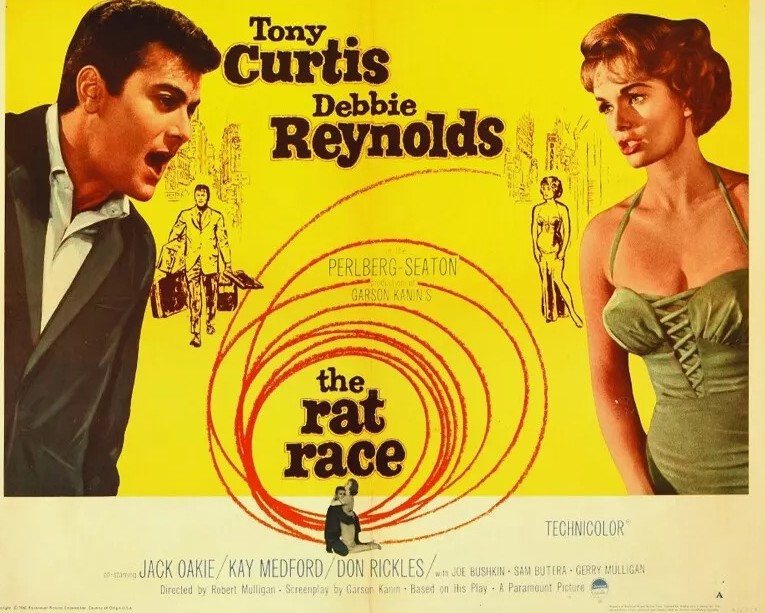
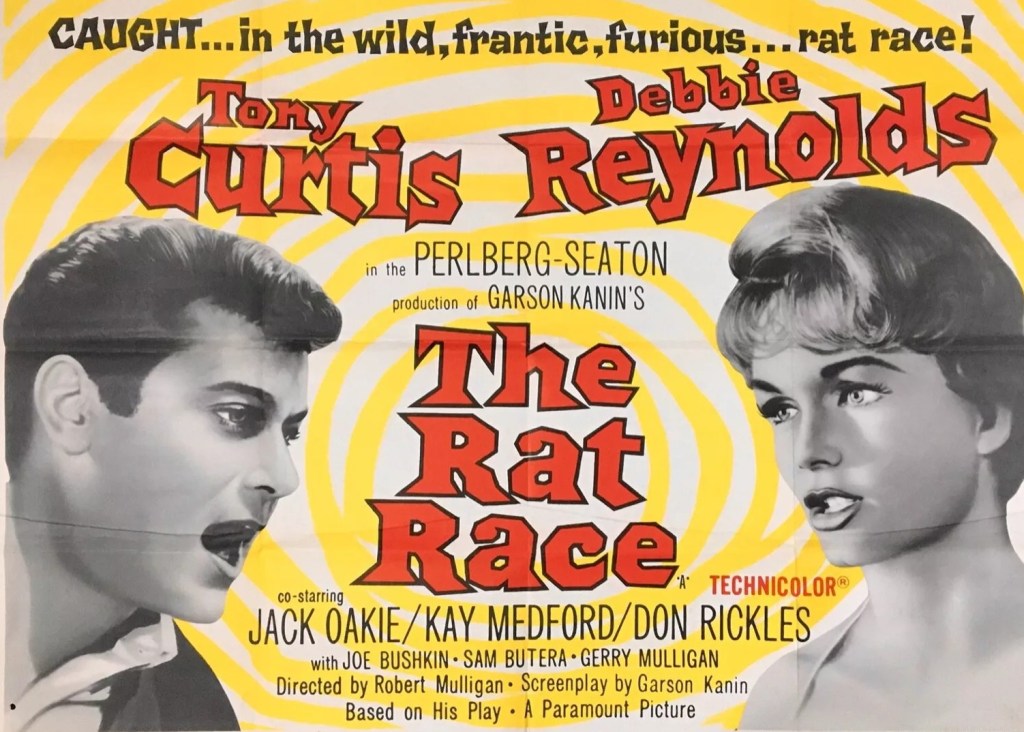
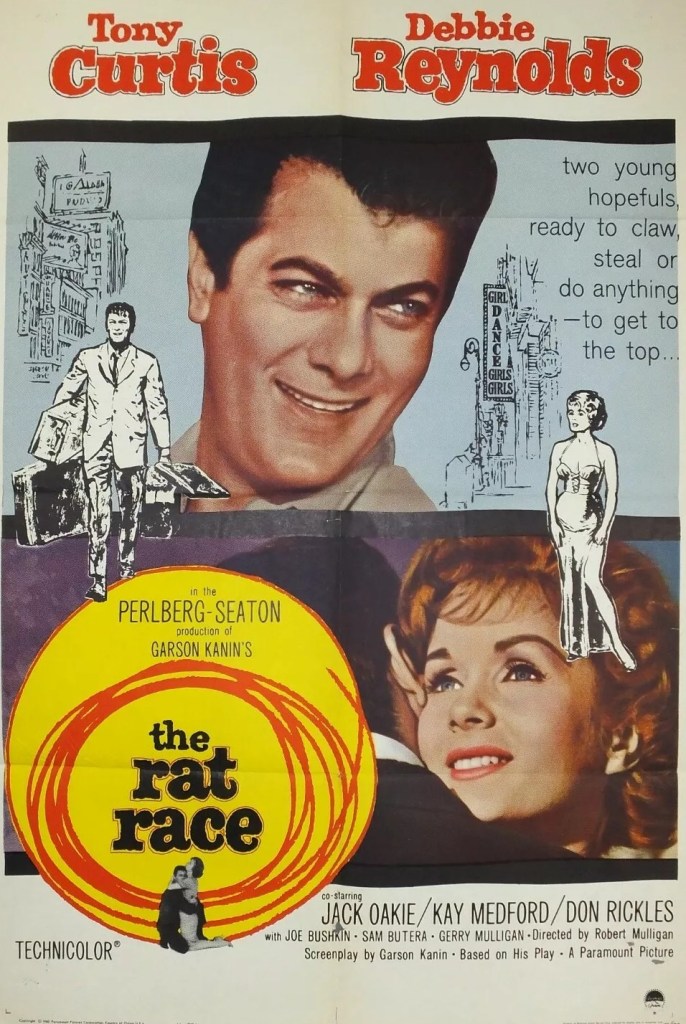
The Rat Race (1960) ****

Surprisingly hard-edged tale with Debbie Reynolds giving the performance of her career and with a steely contemporary relevance. Snookers the audience into thinking it’s a standard romance, mismatched characters thrown together by circumstance, various rows and incidents to keep them apart before the expected happy ending. If screenwriter Garson Kanin had held his nerve, there wouldn’t be the get-out of a happy ending. As it is though, a formidable drama that doesn’t pull its punches.

From the title I expected a movie set in the world of big business, but instead we’re looking down on the lowest tiers of the entertainment business and, effectively, it’s a piece about the price paid for dreams. There are laffs, some good one-liners, but even these have a sourness to them.

Pete (Tony Curtis) leaves Milwaukee for New York seeking fame and fortune as a saxophonist, not realizing he’s more likely to join the thousands of out-of-work musicians already resident, dreams dashed but determined to avoid the ignominy of going home with their tails between their legs, not just to face the mundane life that awaits but seared through with the guilt of failure. Through circumstance he ends up sharing an apartment with model-cum-dancer Peggy (Debbie Reynolds), who’s already given up on her dream once, but couldn’t stand more than a few minutes of the home she’d clearly been desperate to leave.

Peggy is clean out of modelling assignments and hasn’t made it to Broadway, either, not even to a chorus line. Instead, she earns not much of a living as a taxi dancer, more innocent than it would be now in the era of the lap-dancer but still seedy enough with roving male hands. She’s paid to dance with complete strangers, the kind of deadbeats unlikely to ever get on the dance floor with a beautiful woman in the normal course of events.

She’s about to lose her phone, but not above leading on the creepy repairman (Norman Fell) to believe he’s onto a promise should he give her a break. Only pride prevents her solving her financial problems – as well as not making her rent she owes cash to her sleazebag boss Nellie (Don Rickles) – by going down the sex worker route.

Pete thinks he’s got the smarts but in fact he’s afflicted with dumbness and gets ripped off for a mink coat made of cat fur and then loses a complete set of brand-new musical  instruments to another scam. When he’s thrown the lifeline of a gig on a cruise ship, Peggy stumps up to buy him a new sax and the requisite tux. She’s paying for this with a promise to Nellie to enter the prostitution game, not quite spelled out as that but as close to the knuckle as you’re going to get in this era, the kind of soft-soap approach that worked for Butterfield 8 (1960).

When Peggy fails to deliver, Nellie humiliates her in the worst possible way. Beginning with her jewellery he strips her down to undergarments to show how much he owns her and just how good he is at playing hardball. It’s a gut-clenching scene. Sure, you know there’s not going to be any nudity, not in this period before the Production Code got flattened, but even so, it works extraordinarily well, especially as clearly Peggy doesn’t know just how far he will go and that he might not, in his quiet fury, be above turning her out into his club starkers.

Meanwhile, to ensure we get to the ending that audiences expected, Pete, on board the ship, has been ignoring any other romantic opportunities, and sending her a heartfelt letter a day, which she appears determined to ignore, knowing that the “rat race” isn’t the kind of world that accommodates long-term romance.

Suffice to say, when Pete manages to bail her out, that changes her mind, though the genuine Peggy would still have balked, knowing that, with their levels of talent, they were only going to become more wasted by lack of fulfilment.

So, yeah, happy ending, but you feel that’s been grafted on to allow audiences to take the rest of the tougher storyline. The MeToo campaign has exposed the pitfalls of the entertainment business, so what happens to Peggy wouldn’t come as a surprise to a contemporary audience.

By this point Debbie Reynolds (Goodbye Charlie, 1964) wasn’t known for drama, more for a spunky or sparky screen persona in a series of lightweight comedies or romances, this showed Hollywood what it was missing. Tony Curtis (Goodbye Charlie) had proven he could do comedy or drama and here he mostly plays it straight.

Director Robert Mulligan (The Stalking Moon, 1968) is probably responsible for maintaining the harder edge. This was originally a Broadway number, so I doubt if the sharpness would have worked so well in that medium. Garson Kanin (Where It’s At, 1969) and an uncredited John Michael Hayes (Nevada Smith, 1966) knocked out the screenplay based on the former’s play.

Worth it for Reynolds alone.

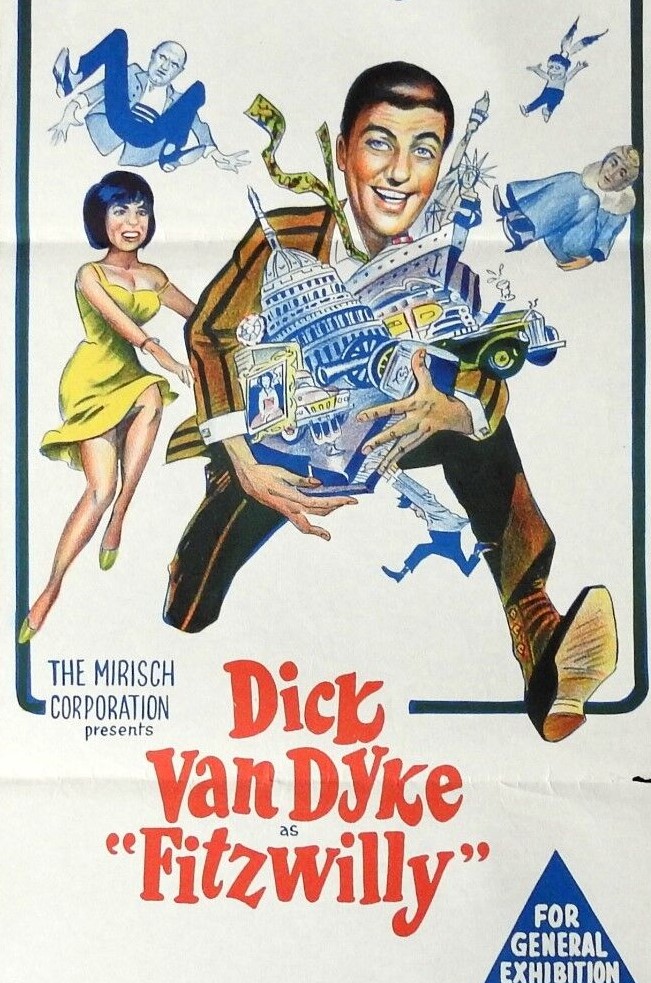
Fitzwilly (1967) ***

Implausibility was not much of a deterrent for the Hollywood screenwriter. It might even prove beneficial when it came to romantic plot ramifications. Suffice to say that this most charming of fey comedies entailing a gang of butlers engaged in a larcenous spree stretches credibility, not least because their intentions are a twist on Robin Hood, stealing from the rich to give to the rich, namely to ensure a dotty old lady maintains her wealthy lifestyle.

The big plus is not the series of heists, which fall into the over-egged pudding category, but the performance of Dick Van Dyke (Chitty Chitty Bang Bang, 1968). It’s somewhat refreshing to see him not falling back on twisting his vowels or his body and looking like an accident waiting to happen. This is Dick Van Dyke – actor.

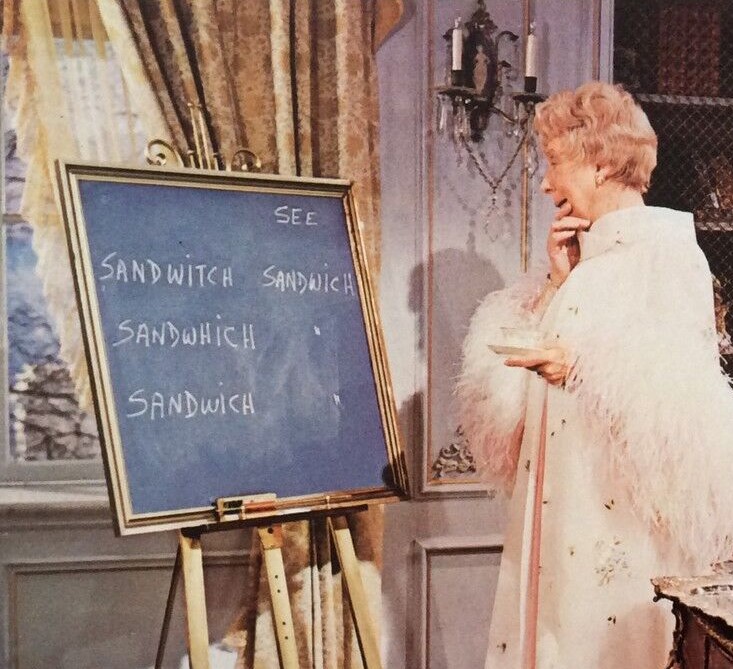
Edith Evans explaining her brilliant concept. although I’m surprised to see her leave in the “D” in Sandwich which is the most common error.

Fitzwilliam – nicknamed Fitzwilly – is the adored and highly-educated head butler in a gigantic New York mansion owned by the eccentric Victoria Woodworth (Edith Evans) who is working on the daftest notion imaginable, writing a dictionary for people who can’t spell. That’s not even the most bizarre element.

While leaving the entire running of the house, and the management of her money, to Fitzwilly, Miss Woodworth goes against this by off her own bat hiring a secretary Juliet (Barbara Feldon) who can’t spell. This is despite Juliet having a degree from a top university and having a professor for a father. But, aha! There’s method in the old bird’s madness. She requires a semi-illiterate to practise her dictionary notions upon.

Having upset Fitzwilly by sneaking in like a cuckoo to his well-oiled nest, Juliet complicates matters firstly by spotting some of the thieving and secondly by falling in love with the butler.  It’s something of a shame, really, that the initial scheme of clever crooks on the make, using wealth as a disguise – who is going to challenge an exceptionally well-spoken butler when he walks off in plain sight with a Steinway piano – is turned on its head when we realise the hoods stand to make no personal benefit. Their largesse merely avoids revealing to Miss Woodworth than she is actually broke.

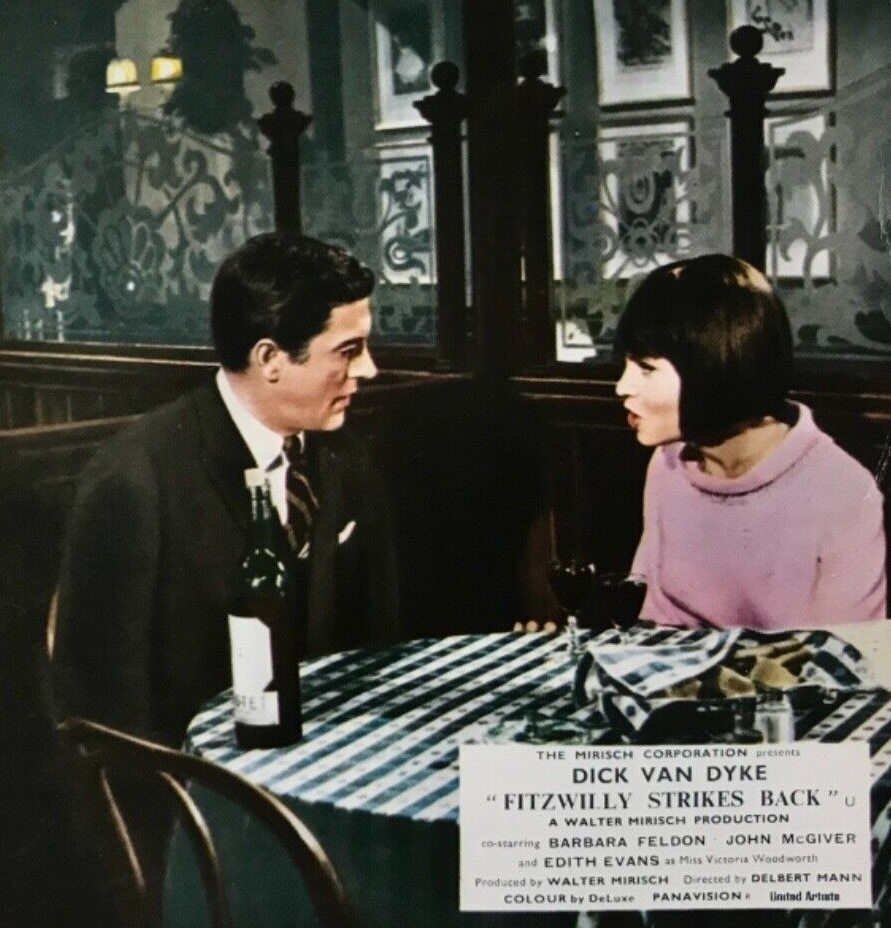
The two stars getting up close and personal.
There are a ton of under-stated elements of Van Dyke’s performance. In this scene,
he delicately explains to a young, inexperienced waiter how to properly pour wine.

Some of the heists are more of the over-egged con variety, too complicated for their own good, but the final robbery – on Xmas Eve – sits fairly and squarely in Marx Bros territory, providing a host of genuine laffs. Though you might wonder at the susceptibility of big-name department stores to smooth-talking criminals.

The romance is gently old-fashioned, and though Barbara Feldon (Agent 99 from Get Smart!, 1965-1970) does possess comedic timing, in hairstyle and delivery resembles Jane Fonda. It could have done with more time spent on her challenging or outwitting the butler, as she does at the start, to build up her character rather than lamely surrender to the romantic urge

Dick Van Dyke and Edith Evans effortless carry the picture. But while you’d expect nothing less of the renowned British actress, Oscar-nominated the previous year for The Whisperers, the biggest stretch in the entire picture is Van Dyke reversing his screen persona to turn into a believable leading actor not dependent on pratfalls, dodgy accents, singing and those limbs that seem to have a life of their own. He exudes charm and class and his character, without the distraction of being so devoted to his boss, could have pursued a highly profitable life of crime with himself as the sole beneficiary, which might have opened the door for his underwritten confederates – including John McGiver (My Six Loves, 1963), Oscar nominee Cecil Kellaway (Guess Who’s Coming to Dinner, 1967), Norman Fell  (Sgt Ryker, 1968) and in his debut Sam Waterston (Three, 1969) – to play a larger part in the dramatic proceedings.

But hey, if audiences were primed to fall for every Doris Day comedy built on a dumb premise and had lined up in the millions for It’s a Mad, Mad, Mad, Mad World (1963), then it’s kind of hard to question the narrative underpinning this picture. Isobel Lennart (Funny Girl, 1968) whipped up the screenplay from the novel A Garden of Cucumbers by Poyntz Tyler.

Once you get over the initial over-egging it’s soon apparent that Delbert Mann (Buddwing, 1966) has stitched together quite successfully a jigsaw of improbability.

Worth seeing for a Dick Van Dyke you never knew existed and another imperial turn from Edith Evans.

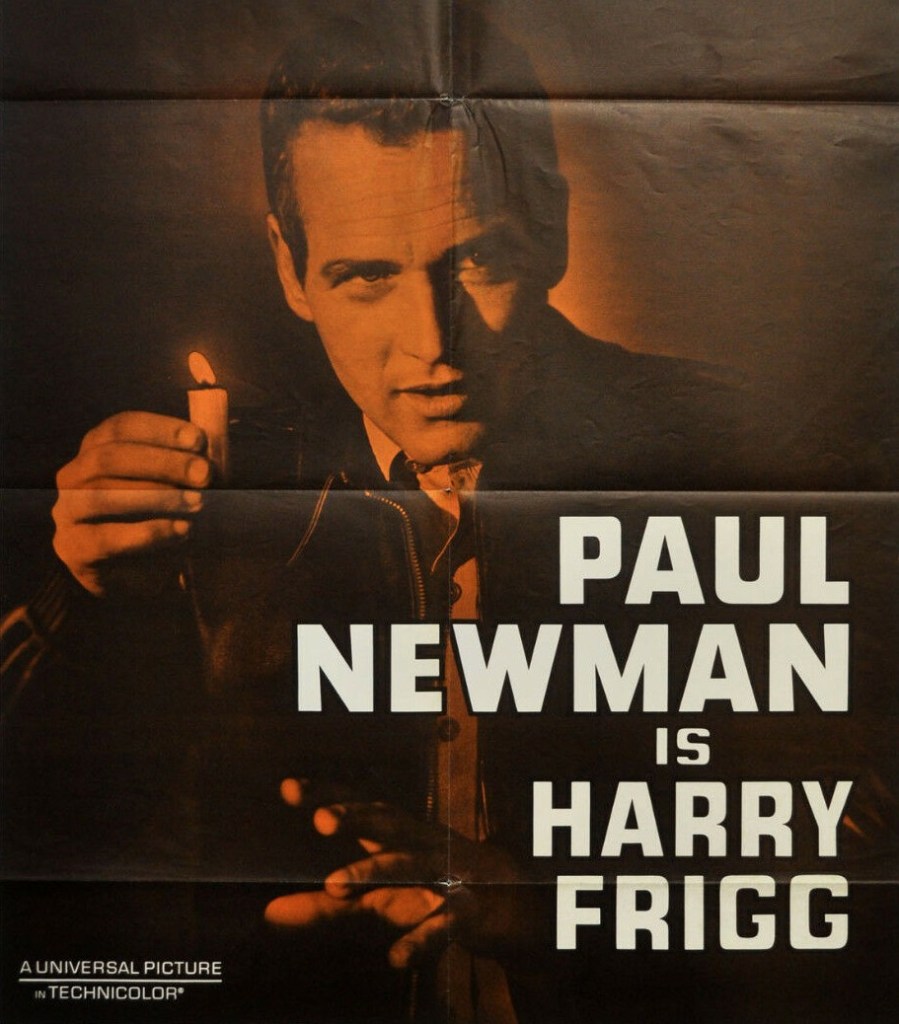
The Secret War of Harry Frigg (1968) ***

Except for an ingenious escape attempt and Paul Newman spoofing his Cool Hand Luke  persona, this World War Two POW number falls into the “sounded like a good idea at the time” category. Harry Frigg (Newman), the American army’s most notorious escapee (though from British military prisons), is promoted from buck private to two-star general and parachuted into northern Italy to organize a breakout of five one-star generals.

The premise that the war effort is hampered by embarrassment at the generals being captured seems far-fetched as is the notion that the quintet are hopelessly incompetent when it comes to doing anything that sounds like proper army stuff. Adding another offbeat element is that they are being held in effectively a deluxe POW camp, an ancient castle run by Colonel Ferrucci (Vito Scotti), a former Ritz hotel manager with a lapdog attitude to the rich and powerful.

Almost immediately Frigg discovers an escape route through a secret door but is disinclined to go any further since it leads into the boudoir of the countess (Sylva Koscina). New Jersey inhabitant Frigg feels out of the place with the high-falutin’ generals and proceeds to get himself a cultural education. Meanwhile, the countess, obtaining her position through marriage rather than birth, trying to bolster his confidence naturally triggers his romantic impulses.

The humor is of the gentlest kind – Frigg taking advantage of his superiority, Italians speaking tortured English – and not much in the way of bellylaffs either. Director Jack Smight, who collaborated so well with Newman in Harper (1966) and manages to achieve a tricky balance in No Way to Treat a Lady (1968), loses his way here, not least structurally, as the movie pingpongs between the generals, the commandant and Frigg and, thematically, issues of power. Crucially, he fails to rein in Newman.

The generals, squabbling among themselves for power, would be caricatures except that their characters are rounded out by the players, the pick being Charles Gray (The Devil Rides Out, 1968) as Cox-Roberts and Tom Bosley (Divorce American Style, 1967) as Pennypacker. The other generals are played by Andrew Duggan (Seven Days in May, 1964), John Williams (Harlow, 1965) and Jacques Roux (The List of Adrian Messenger, 1963). Representing the American top brass in England are James Gregory ( a repeat role in the Matt Helm series) and Norman Fell (The Graduate, 1967).

After her excellent turn as a mischievous and vengeful villain in Deadlier than the Male (1967), Yugoslavian Sylva Koscina comes down to earth with a less rewarding role as charming leading lady with a sly sense of humor rather than the femme fatale of A Lovely Way to Die (1968). Werner Peters (The Corrupt Ones, 1968) makes a late appearance as a Nazi and you might spot screenwriter Buck Henry (The Graduate) in a bit part.

The screenplay by Peter Stone (Arabesque, 1966) and Oscar-winner Frank Tarloff (Father Goose, 1968) is an odd mixture of occasional sharp dialogue and labored story. The set-up takes too long and you keep on wondering when it is going to get to the pay-off.

No doubt looking for some light relief after a quartet of heavier dramatic roles – Harper (1966), Torn Curtain (1966), Hombre (1967) and Harper (1967) – Newman acts like he has escaped the straitjacket of a considered performance and instead indulges in mugging and hamming it up, his body freeing up a barrage of mannerisms previously held in check.
Discover WordPress

A daily selection of the best content published on WordPress, collected for you by humans who love to read.

The Atavist Magazine

by Brian Hannan

WordPress.com News

The latest news on WordPress.com and the WordPress community.