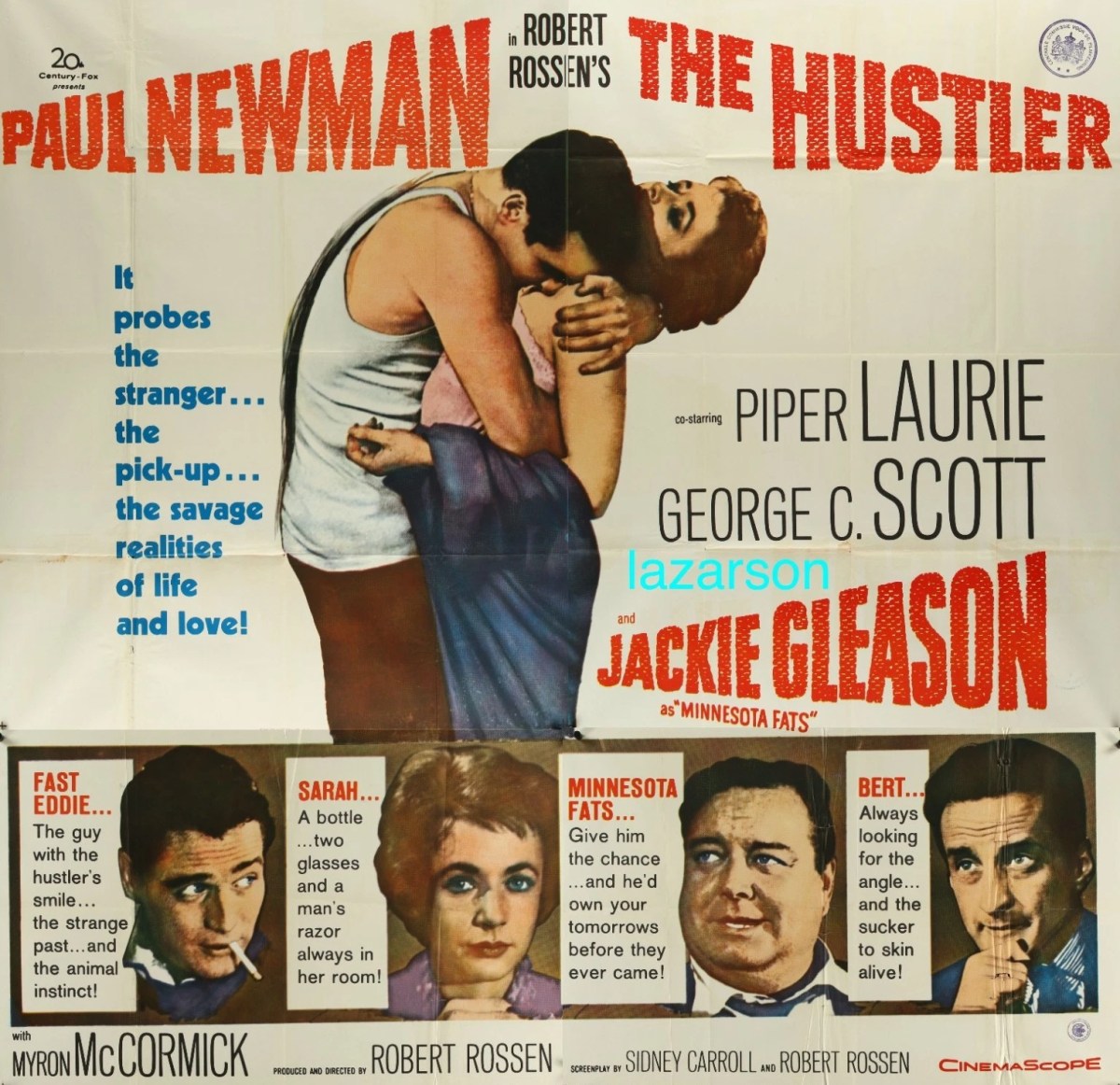
The Hustler (1961) ****

You get the impression this is the kind of movie that contemporary “visionary” directors think they are making when they focus on an unlikeable obsessive character causing chaos all around. It’s not just star quality they are missing – who wouldn’t give their eyeteeth for a Paul Newman to get behind a movie with poor commercial prospects, especially one tackling a sport that is guaranteed to put off the female element of the audience. Without Newman’s involvement you didn’t have a hope in hell of getting anywhere near the female audience.

And this was quite a different Paul Newman. In the first of his iconic roles, he’s far from the traditional hero. He’s an obsessive loner. But you are drawn towards him because of both the intensity and vulnerability of this character. He could as easily be the loser, the last thing an audience wants, he’s often accused of being, the bottler looking for an excuse for not going the extra mile it takes to win. And even when he does win, triumph comes with loss, of love and his avowed profession.
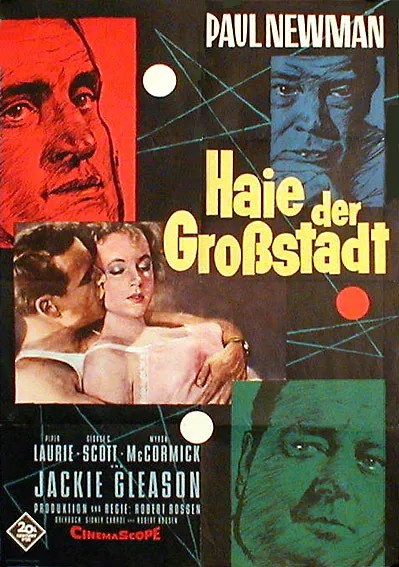
And it takes a heck of a confident director – Robert Rossen (Lilith, 1964) – to lock us into the dark prison of a pool room for virtually the first 30 minutes of the picture. If you don’t know the rules of American pool – as opposed to billiards and snooker – you’re not going to learn them here. “Fast” Eddie Felson (Paul Newman) has spent years on the road, hustling in small town poolrooms, to built up the kind of cash stack he requires to take on the greatest name in pool, Minnesota Fats (Jackie Gleason) whose unbeaten run stretches back a decade and a half.

And the movie should be over in that first half hour – or at the very least turned into a very different kind of picture, the one where the champ squanders his fortune – because Felson has thumped Fats. He’s $18,000 ahead at one point. In any other sport that should be mean he’s not just won but he’s won in style. Except it doesn’t work that way here. Fats has to concede. And Fats won’t concede because this is a marathon and despite his bulk Fats is better built for a 40-hour match than his slimmer opponent. And so it proves.

Felson is back to the beginning, welshing on his business partner Charlie (Myron McCormick) and heading out into the night. Where he meets alcoholic Sarah (Piper Laurie) who’s sitting in a bus station in the early morning sipping coffee until the liquor stores open. She’s not your usual easy pick-up, she knocks him back easily and in an idiosyncratic manner. She nearly does the same again, but relents and they start a relationship that’s built on nothing except ships passing in the night. She’s a lush, he’s a has-been. She’s a bit of a cultured lush, reads, writes short stories, but still booze is her first love.
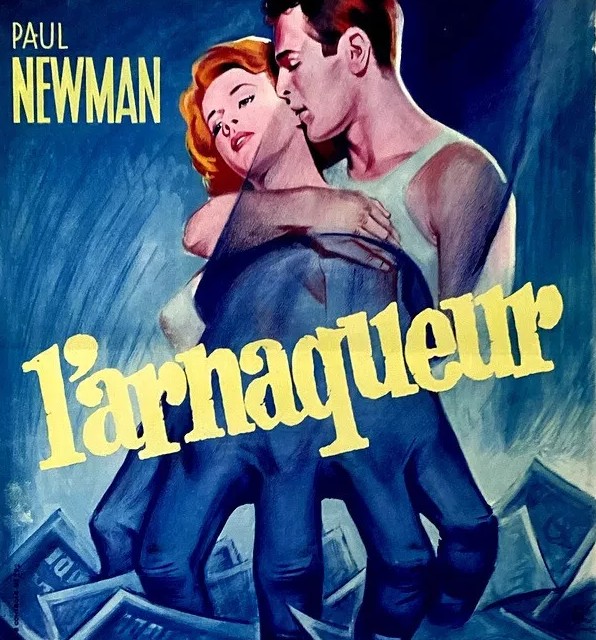
If he’s not down enough, here comes the kicker. Thugs in a poolroom object to being hustled and break his thumbs. But she’s not very maternal and he’s not the kind of man who wants to be looked after in that fashion.

Eventually, he hooks up with another backer, a shady underworld character, Bert Gordon (George C Scott) whose first move is to break up Felson’s relationship, attempting to belittle Sarah, getting her smashed and putting the moves on her as if free sex is part of the deal. Felson gets badly hustled by wealthy Louisville Findley (Murray Hamilton), duped into playing billiards instead of pool, and the potential loss might well have slammed the door on the deal with Gordon. But Gordon gets his pound of flesh, literally, and Sarah, clearly better versed in the ways of the world than Felson, gives in to her lover’s manager and then is so disgusted with herself that she commits suicide.

Felson gains his revenge on both Minnesota Fats and Gordon but at a cost, lover lost, and kicked out of his profession. Victory has never been so negative.

While the acting all round is superb, all four principals plus the director Oscar-nominated, it’s the feel of the piece and the obsessiveness of the characters that resonates. Robert Rossen makes no concessions to the audience. He doesn’t explain the game and he doesn’t, as would be par for the course anywhere else, show how Felson learned how to handle a cue a different way after his thumbs were broken and there’s a distinct lack of the triumphalism that generally comes with the territory.

Behind the Scenes article tomorrow.

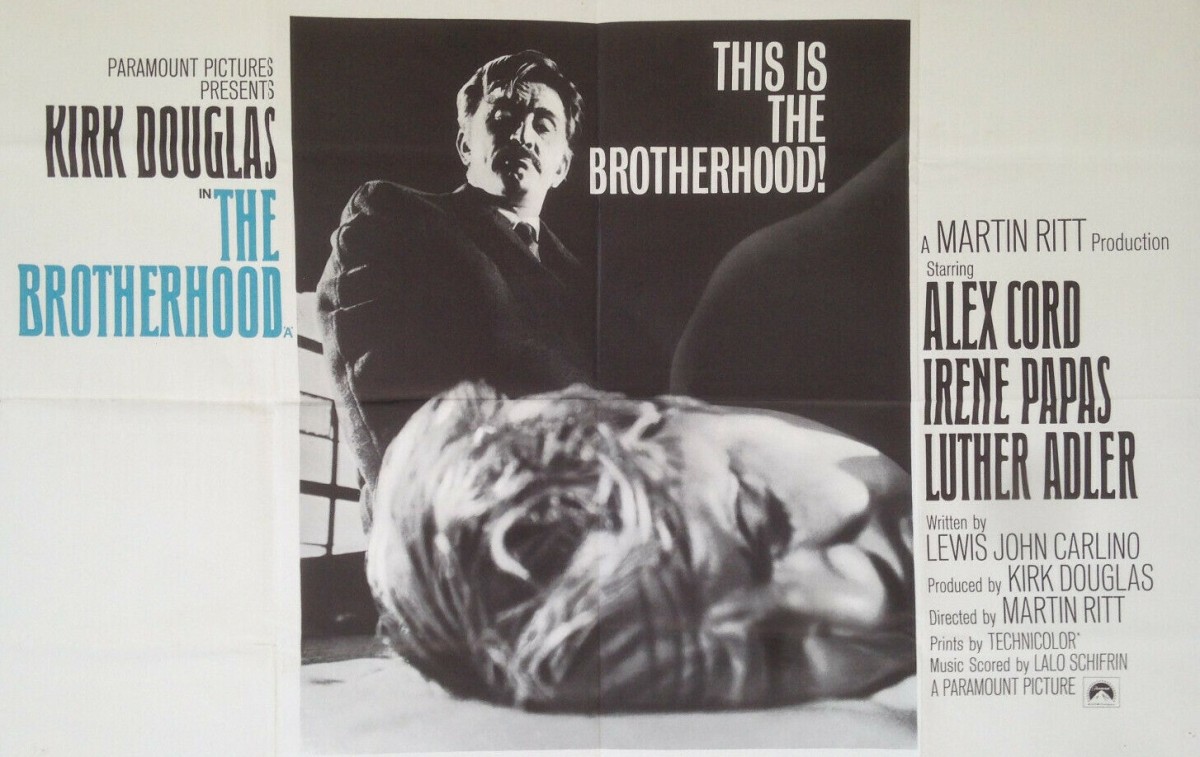
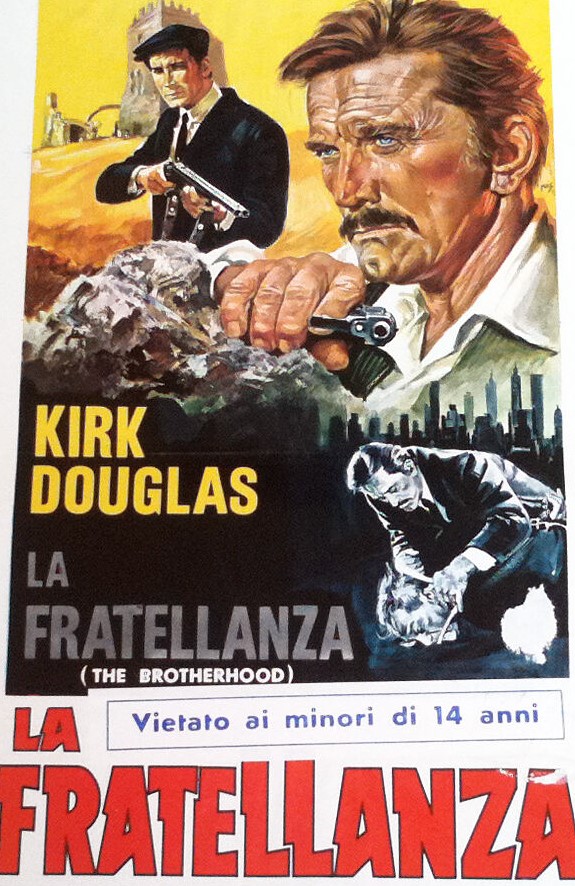
The Brotherhood (1968) ****

Minimal violence and no sex was the wrong recipe for this Mafia picture – as proven at the box office – but this is an absorbing, underrated drama nonetheless.

It bears a surprising number of parallels to The Godfather (1972). Pure coincidence, extraordinary though that may appear, because The Brotherhood premiered in December 1968 while the Mario Puzo novel was printed in March 1969 (and delivered to the printers long before), so no opportunity at all for plagiarism.

The two films could be opposite sides of the same coin. For a start, both begin with a wedding. Vince Ginetta (Alex Cord), brother of Mafia kingpin Frank (Kirk Douglas), is marrying Emma (Susan Strasberg), daughter of another Mafia chief Dominick (Luther Adler). Like Michael (Al Pacino) in The Godfather, Vince is just out of the army, well-educated and primed for a life outside the business. And like Michael is called upon to commit an act of supreme violence. There’s even a hint of Tom Hagen (Robert Duvall) in the relationship between the brothers, Frank having brought up the much younger Vince after his father’s premature death.

And just as Don Corleone (Marlon Brando) refuses to join the other Mafia families in a new business venture (in that case, drugs) so Frank bows out of an incredibly high risk (but amazingly prescient) scheme to invest in electronic firms involved in military work for the government, a deal that not only promises huge profits but a potential hold over the powers-that-be.

Frank’s wife Ida (Irene Papas) is like Don Corleone’s wife, not wanting to know anything about the business, but both Emma and Frank’s daughter Carmela (Connie Scott) are thematic cousins to Kay Adams (Diane Keaton) as initial implicit trust is wiped away. When Frank dances with Carmela at the wedding, that is reflected in Don Corleone dancing with his daughter at her wedding. Like The Godfather our first sight of the other Mafia chieftains – including Jim Hagen (Murray Hamilton) and Don Peppino (Eduardo Cianelli) – is at the feast where they are viewed with suspicion by Frank’s clan. And the scene where Frank uses a banana to tease his nephew will remind you of Don Corleone spooking his grandson with an orange.

However, the twist, if you like, is that, unlike Michael, Vince is desperate to join the Family and is instrumental in developing legitimate enterprises, which is echoed by Michael Corleone’s strategic shift to Las Vegas. In some respects, Frank is more like Sonny (James Caan), happy to take personal command of murders which the other Mafia chiefs now scrupulously delegate to “mechanics” in Los Angeles. He is more old-school whereas the others have assumed the personas of respectable businessmen.

And then it becomes a question of loyalty. Which side the ambitious Vinnie will take is crucial to the story. Frank is under pressure on all sides, from the other Mafia leaders, a government investigation, Vinnie, and the need to exact revenge on the man who caused his father’s death.

There is authentic detail here as well – religious procession in Sicily, Frank playing boccia (the Italian version of the French boules) with his old pals, family dinner, canary stuffed in the mouth of a stool pigeon, but it is less spaghetti-drenched than The Godfather. Screenwriter Lewis John Carlino (The Fox, 1967), also listed as technical adviser, claimed to be drawing on his intimate knowledge of organized crime.

There are only three moments of violence – four if you count a shocking moment of someone spitting on a corpse at a wake – a pair of straightforward murders that bookend the film, plus a scene of Godfather-style brutality in which a man slowly strangles himself to death after being hogtied. Everyone is happily married, Ida very old-school to the extent of removing her husband’s clothes (and shoes) when he returns home drunk, Vince in a good relationship.

Kirk Douglas (Cast a Giant Shadow, 1966) is excellent in a difficult role that presents a fully rounded character, playful with his daughter, loyal to his wife, holding his own against the other mob bosses, enjoying the company of the old-timers who resemble his father, and the changing nature of his relationship with brother Vince. Alex Cord, whose work I initially dismissed (Stiletto, 1969), I have come to more fully appreciate, especially here, where he makes the transition from adoring brother to threat. It is a masterpiece of restraint.

The supporting cast is terrific, a rare Hollywood sojourn for Irene Papas (The Guns of Navarone, 1961), Luther Adler  (Cast a Giant Shadow, 1966) as one of the hoodlums exasperated by Frank’s recalcitrance,  Murray Hamilton (The Graduate, 1967) but, except at the start, Susan Strasberg (The Trip, 1967) is underused.

While director Martin Ritt (Hombre, 1967) is at times guilty of melodrama, his rendering of family life is much more nuanced than Coppola’s. There are very tender moments between Frank and his wife and Frank and his daughter, as well as moments where Ida plays a more maternal role.

For nearly half a century, The Brotherhood has lain in the shadow of The Godfather simply because they both deal with the Mafia. But this is an excellent movie in its own right.

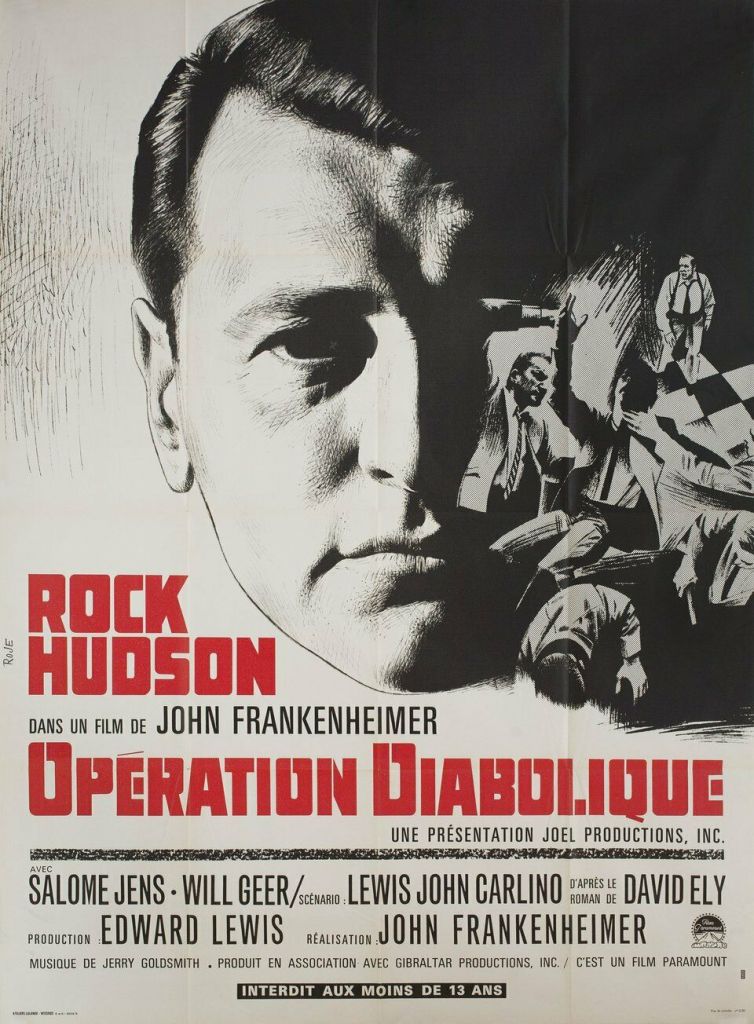
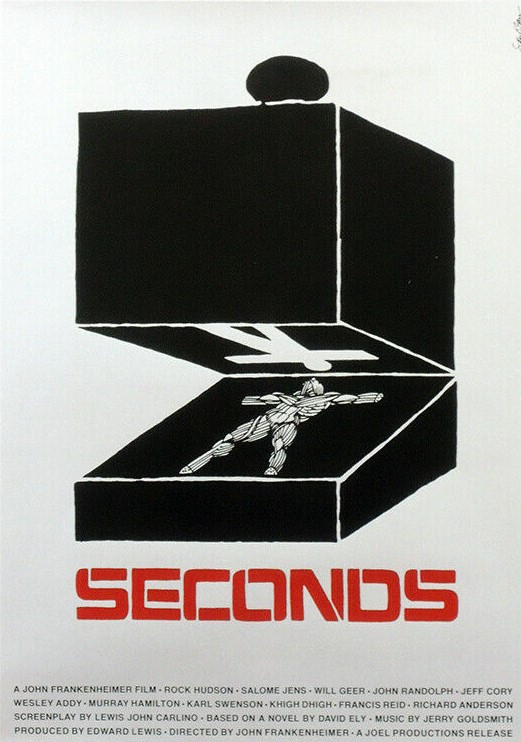
Seconds (1966) *****

John Frankenheimer’s censor-baiting and game-changing paranoia drama was decades ahead of its time – it created the template for Blade Runner (1982), The Swimmer (1968), The Stepford Wives (1975), The Parallax View (1974) and The Truman Show (1998) to mention just a few –  and underneath the sci-fi surface asked deeper questions about identity, reality and depression. And it might well qualify as reaching for the impossible dream. Kafkaesque aspects intrude. It’s as much an essay on hopelessness as it is on hope, a scorching portrayal of the human condition. Unusual camera angles and depth of field make this a visual, if occasionally challenging, delight.

Disillusioned banker Arthur (John Randolph), marriage off-kilter, reacting to a call from someone he believes is dead, gets hooked into a deal which promises rebirth. After plastic surgery and a faked death, he is reborn as a much more handsome figure (Rock Hudson), pursues a new career as an artist, is sexually re-born during an orgy, but finds memories of his old life resurfacing at  inopportune moments and takes against the notion that he has to recruit friends or colleagues to go through the same process.

Although audiences had been treated to some paranoid impulses like The Manchurian Candidate (1962) and films dealing with mental health such as Lilith (1964), this was the first film to touch on paranoia about big business, the unseen conglomerates controlling lives in unseen ways that directors in the 1970s pounced upon. Although a piece of breakthrough technology, the rebirth business is now just that, a business, wherein an anonymous  corporation, known here only as The Company, seeks to maximize profit from human misery.  

You could almost view the men who had more successfully undergone the experiment than Arthur as Stepford Husbands, guys who had created an ideal version of themselves. They could be body snatchers who have stolen a more convenient body. In another respect, the conventional Arthur turns into the rebel in society, refusing to accept this new creed. And he is gullible enough to believe his employers will accommodate his demands.   

On the one hand it is a self-destructive horror story. Arthur willingly gives in to his desire for a better life regardless of the emotional cost and is somewhat surprised to find that the community in which he lives is a construct, almost as fictional as any computer game.

It is an amazing mixture of sci-fi and horror. But the sci-fi has the bleakness of Blade Runner,  the hospital and offices where the future unfolds are drab, while the beach locations have an uncanny unreality. The horror is for the most part confined to two scenes – the new Arthur waking up swathed in bandages and later, strapped to a gurney, realizing too late his destiny.

But mostly what I found resonating was the examination of male psyche and its inability to deal with adversity and depression. Arthur isn’t so much desperate to wake up as a handsome hunk as to enter a new existence where he does not feel so lonely and displaced, where he can discover the humanity he has lost. It is not that he wants to be absolved of all responsibilities but wishes to be free of his current joyless life. While he becomes an improved physical specimen, he finds to his consternation that he has not shaken off the gloominess lurking in his brain.

The futuristic aspects are compounded by brilliant down-to-earth scenes. Company executive Ruby (Jeff Corey) goes into all the details of their contract while eating a chicken dinner, an old friend Charlie (Murray Hamilton) is deskbound, when Arthur arranges in his new skin to meet wife Emily (Frances Reid) he discovers his old true self had been only too apparent, cursed with unspoken longing and divorced from reality. Even romance with the outgoing Nora (Salome Jens) only offers brief reinvigoration after he partakes in an orgiastic grape-stomping event.

This is Frankenheimer’s masterpiece, and given he also directed The Manchurian Candidate, that is some accomplishment. He exercises total control in a film about total control but he is indebted to cinematographer James Wong Howe for developing new techniques to achieve a quite different, often austere, look.

It incurred the wrath of the Production Code – the U.S. censor – with scenes of full-frontal female nudity. These were all cut (though you will find them on the DVD). Whether their inclusion would have turned the film into a hit – rather than being booed at the Cannes Film Festival and a big flop at the American box office – is a moot point since, at that time, films as obscure as Blow Up (1966) had attracted big audiences due their more permissive approach. This should have been a late career transition for Rock Hudson (Strange Bedfellows, 1965) into more mature work but his excellent and brave performance was dismissed by the critics.

The Brotherhood (1968) ****

Minimal violence and no sex was the wrong recipe for this Mafia picture – as proven at the box office – but this is an absorbing, underrated drama nonetheless.

It bears a surprising number of parallels to The Godfather (1972). Pure coincidence, extraordinary though that may appear, because The Brotherhood premiered in December 1968 while the Mario Puzo novel was printed in March 1969 (and delivered to the printers long before), so no opportunity at all for plagiarism.

The two films could be opposite sides of the same coin. For a start, both begin with a wedding. Vince Ginetta (Alex Cord), brother of Mafia kingpin Frank (Kirk Douglas), is marrying Emma (Susan Strasberg), daughter of another Mafia chief Dominick (Luther Adler). Like Michael (Al Pacino) in The Godfather, Vince is just out of the army, well-educated and primed for a life outside the business. And like Michael is called upon to commit an act of supreme violence. There’s even a hint of Tom Hagen (Robert Duvall) in the relationship between the brothers, Frank having brought up the much younger Vince after his father’s premature death.

And just as Don Corleone (Marlon Brando) refuses to join the other Mafia families in a new business venture (in that case, drugs) so Frank bows out of an incredibly high risk (but amazingly prescient) scheme to invest in electronic firms involved in military work for the government, a deal that not only promises huge profits but a potential hold over the powers-that-be.

Frank’s wife Ida (Irene Papas) is like Don Corleone’s wife, not wanting to know anything about the business, but both Emma and Frank’s daughter Carmela (Connie Scott) are thematic cousins to Kay Adams (Diane Keaton) as initial implicit trust is wiped away. When Frank dances with Carmela at the wedding, that is reflected in Don Corleone dancing with his daughter at her wedding. Like The Godfather our first sight of the other Mafia chieftains – including Jim Hagen (Murray Hamilton) and Don Peppino (Eduardo Cianelli) – is at the feast where they are viewed with suspicion by Frank’s clan. And the scene where Frank uses a banana to tease his nephew will remind you of Don Corleone spooking his grandson with an orange.

However, the twist, if you like, is that, unlike Michael, Vince is desperate to join the Family and is instrumental in developing legitimate enterprises, which is echoed by Michael Corleone’s strategic shift to Las Vegas. In some respects, Frank is more like Sonny (James Caan), happy to assume personal command of murders which the other Mafia chiefs now scrupulously delegate to “mechanics” in Los Angeles. He is more old-school whereas the others act as respectable businessmen.

And then it becomes a question of loyalty. Which side the ambitious Vinnie will take is crucial to the story. Frank is under pressure on all sides, from the other Mafia leaders, a government investigation, Vinnie, and the need to exact revenge on the man who caused his father’s death.

There is authentic detail here as well – religious procession in Sicily, Frank playing boccia (the Italian version of the French boules) with his old pals, family dinner, canary stuffed in the mouth of a stool pigeon, but it is less spaghetti-drenched than The Godfather. Screenwriter Lewis John Carlino (The Fox, 1967), also listed as technical adviser, claimed to be drawing on his intimate knowledge of organized crime.

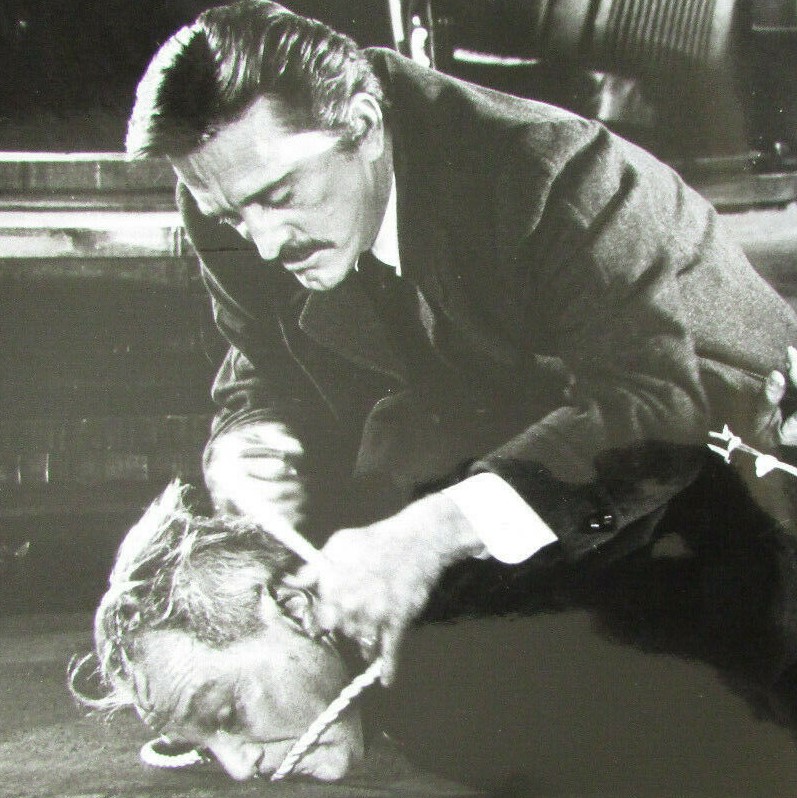
There are only three moments of violence – four if you count a shocking moment of someone spitting on a corpse at a wake – a pair of straightforward murders that bookend the film, plus a scene of Godfather-style brutality in which a man slowly strangles himself to death after being hogtied. Everyone is happily married, Ida very old-school to the extent of removing her husband’s clothes (and shoes) when he returns home drunk, Vince in a good relationship.

Kirk Douglas (Cast a Giant Shadow, 1966) is excellent in a difficult role that presents a fully rounded character, playful with his daughter, loyal to his wife, holding his own against the other mob bosses, enjoying the company of the old-timers who resemble his father, and the changing nature of his relationship with brother Vince. Alex Cord, whose work I initially dismissed (Stiletto, 1969), I have come to more fully appreciate, especially here, where, in a masterpiece of restraint, he makes the transition from adoring brother to threat.

The supporting cast is terrific, a rare Hollywood sojourn for Irene Papas (The Guns of Navarone, 1961), Luther Adler  (Cast a Giant Shadow, 1966) as one of the hoodlums exasperated by Frank’s recalcitrance,  Murray Hamilton (The Graduate, 1967) but, except at the start, Susan Strasberg (The Trip, 1967) is underused.

While director Martin Ritt (Hombre, 1967) is at times guilty of melodrama, his rendering of family life is much more nuanced than Coppola’s. There are very tender moments between Frank and his wife and Frank and his daughter, as well as moments where Ida plays a more maternal role.

For nearly half a century, The Brotherhood has lain in the shadow of The Godfather simply because they both deal with the Mafia. But this is an excellent movie in its own right.

Discover WordPress

A daily selection of the best content published on WordPress, collected for you by humans who love to read.

The Atavist Magazine

by Brian Hannan

WordPress.com News

The latest news on WordPress.com and the WordPress community.