Anyone But You (2023) **** – Seen at the Cinema

Hey, I’m going back to Anyone but You because I went back to see it again. Blame Oppenheimer, or its lack thereof –  the reissue had been scheduled for showing on Monday but was pulled presumably because it was already on streamer and not enough customers showed up over the weekend – so I took a chance on this substitute. If you recall, I’ve already reviewed it and gave it three stars. But on re-view, I’m upping that to four stars. As is often the case on first viewing, you get snagged down by the narrative, but for second viewing, once you know which way it’s headed you can sit back and enjoy the other ingredients.

I’m not alone in thinking this has been under-rated – in the U.S., box office has gone up by over 11 per cent rather than down in the third weekend of release – and, in fact, the take has increased every weekend – indicating strong word-of-mouth.  

The rom-com has kind of faded away from the glory days of Tom Hanks-Meg Ryan / Richard Gere-Julia Roberts / Hugh Grant-A.N. Other  and if you find it at all these days it’s likely to be wrapped in an adventure or thriller. In truth it’s been on a sticky wicket for over five decades when studios preferred straight-out romance or straight-out comedy rather than a hybrid, but more importantly because, for it to work, you need stars of equal importance who can generate that extremely rare onscreen chemistry.

And not either male or female stars so big that nobody cares who plays the leading man or leading female opposite them. While movie pairings ain’t so unusual – think Tracy-Hepburn, Rock Hudson-Doris Day, Burton-Taylor, Bogart-Bacall, Clark Gable-Lana Turner – it’s worth remembering that it’s only the first two of these teamings that fitted the rom-com mold, the rest being more high octane dramas or thrillers.

Most comedies that have hit the contemporary button have been raunchy boozed-up affairs whose characters have been waylaid by self-destructive tendences, insecurity and body shaming. This one is a throwback to Hollywood gloss. Nobody’s out of work, even temporarily, nobody’s poor, nobody’s moaning about their bodies, nobody’s out of their mind on drink or drugs. The male members may have a predilection for displaying torso, ass and, er, members, and the gals are equally fit, prancing about as likely as not in bikinis or even just the bottom half.

It’s woke enough, it’s a gay wedding they’re attending, they all do yoga and are fit enough to undertake a hike into the wilderness, you can take a break (a la Friends) from a relationship and hook up with someone else, and the worst that can be said is that the older guys like an occasional joint while someone takes peppermint tea with sugar and the male lead, despite being buffed-up-to-hell, is scared of flying and swimming. But it’s a very nifty script, with a bucket of little character-defining cameo moments, the brides-to-be compete to place plates in the correct position on a table, one boyfriend too keen on booze, helicopter parents.

And you could say it is as contemporary as they come, pivoting on effectively tittle-tattle, what otherwise might be an indiscreet comment on social media that turns the world upside down is here just overheard. And it’s a pretty intelligent picture that puts the ability to have a decent fight in a marriage above peace and harmony, reality in other words over romantic fiction gibberish.

The basis of any rom-com is of course meet-cute followed by any number of reasons to keep the couple apart. Most of those ideas have been used up already, so the chances of digging up anything original is rare. What they come up with here is pretty fair, and plays on the necessity of a warring couple required to cosy up in order not to cause chaos at the wedding.

But a rom-com ain’t going to work unless the audience takes to the central couple. And my first question after seeing Glen Powell (Top Gun; Maverick, 2022) and  Sydney Sweeney (The Voyeurs, 2021) is when are they going to team up again? They’re far from cloying or schmaltzy, but believable human beings. Individually, they are stars in the making. Together, they are dynamite..

I’m not sure you’d go for the other Sydney (the one in Australia) as your ideal wedding venue unless Australia was helping you foot the movie production bill, and although interesting use is made of the harbor I’d not be keen on a river so shallow that boats can’t turn around in it (a plot point) but if you’re going to stage a Titanic homage (not the sinking I hasten to add but the King of the World malarkey) probably this is as good a place as any.

Anyway, the story focuses on the disgruntled participants of a one-night stand forced to pair up at a wedding where they encounter an abundance of exes and various interfering family members. While skipping the raw rudeness of its immediate predecessors, there are still a couple of slapstick moments centering on the discarding of items of clothing, but mostly the narrative follows the dictat of the will-they-won’t-they scenario, cleverly finding ways to  keep them apart just when they look set.

Apart from Powell and Sweeney, worth looking out for Hadley Robinson (The Boys in the Boat, 2023), Alexandra Shipp (Barbie, 2023), MTA Charlee Fraser in her movie debut, and old-timers Dermot Mulroney (My Best Friend’s Wedding, 1997), Rachel Griffiths (Muriel’s Wedding, 1994) and Bryan Brown (Cocktail, 1988). Directed by Will Gluck (Friends with Benefits, 2011) from a script by himself and Ilona Wolpert (High School Musical: The Musical, 2021-2023) but pretty much drawn from Shakespeare’s Much Ado about Nothing.

Has charm in abundance, and the script has plenty of bite especially when the couple are trading bitter remarks.

An updated version of the old-fashioned enjoyable rom-com.

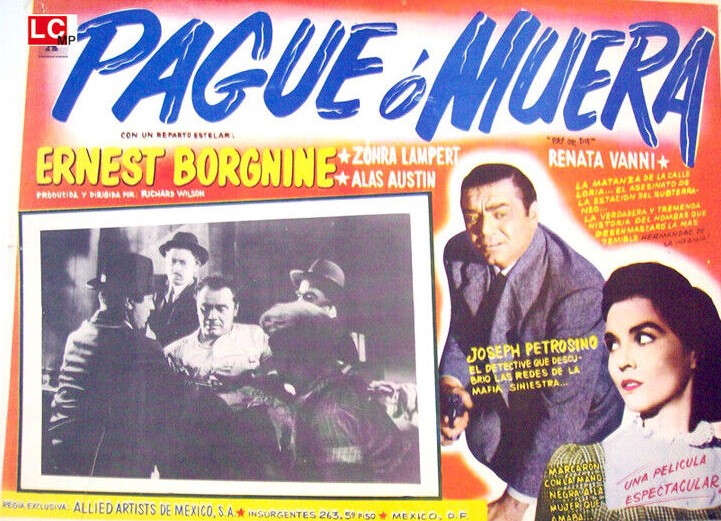
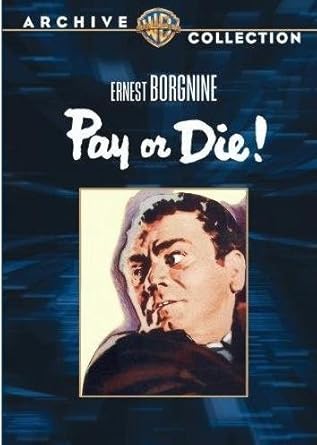
Pay or Die (1960) *****

Hollywood had outlawed the deification of villainy after the gangster gold rush of the 1930s and, before Coppola and Scorsese popped up with self-serving operatic epics, the consensus was that thugs were scum, no matter how well organised or how deep the corruption went. There had been a blast of gangster biopics in the late 1950s/early 1960s, many of them covered on these pages, but, outside of the equally thuggish Clint Eastwood cops, you would have to wait until Serpico (1973) and The Untouchables (1987) before Hollywood decided the cop was actually the hero after all.

I’m guessing Scorsese and Coppola had seen this particular picture which presented an entirely different picture of the Mafia, including its historic importance in America, but decided the bad guys were just more interesting than the good guys and that some kind of mythical Mafia presented better cinematic opportunity.  Now this is just as much a low-budget number as the bulk of the gangster pictures of this particular short-lived era so don’t go looking for any late cycle film noir or the kind of classy mise-en-scene or big stars that comes with the later bigger budgets.

But this is so spot-on, with incredible depth, that it deserves a good bit more attention than the eight critical reviews on imdb and the measly 30 per cent rating on Rotten Tomatoes. In fact, you could point to several scenes where you could imagine Coppola and Scorsese took inspiration, and there are some quite astonishing scenes of brutality, not blood-drenched or lingered-over as was the style in the 1970s but incredibly powerful precisely because they are rendered in such lean fashion.

This is based on the true story of an Italian who took on the Mafia in New York. Only it wasn’t called the Mafia then. If you remember the Robert De Niro section in The Godfather Part II (1974) you’ll recall that the gangster he rubbed out belonged to The Black Hand. That’s what they were called at the turn of the twentieth century in New York and since prohibition didn’t exist they didn’t become bootleg millionaires and then dabble in drugs. Their main businesses were extortion and kidnapping.

Italians in Italy didn’t trust cops for historical reasons. When anyone wanted to keep the populace in line they used the cops as muscle. That was the root reason for the growth of the Cosa Nostra. So when Italians emigrated they were equally inclined not to call the cops when someone put pressure on their businesses or demanded a ransom for a stolen child. And one of the reasons nobody called the cops was because not a single cop in New York spoke Italian. Joe Petrosino (Ernest Borgnine) was the first Italian on the New York police force. He made lieutenant but lack of education prevented him climbing any higher.

But let’s get back to the blistering opening. You’ll be familiar with such openings from Coppola/Scorsese, the religious procession, candles, hymns, music from traditional instruments, priests, robes aplenty. But this one has a difference. They string two kids between the rooftops. Not string them up, string them along ropes attached to their backs and dress up the sweet girls as angels so that they can hover over the procession and utter words of importance as its climax. The kids don’t look terrified, they look delighted to be chosen.

But hood Lupo (Barry Russo) has a different idea of how the ceremony should end. He slices through the rope. Down crash the kids, legs, backs broken, barely surviving the fall. But they survive enough for that calamity to be all that’s required for one parent to cough up the dough  demanded by The Black Hand, despite Petrosino’s entreaty to stand fast against the crooks.

Lupo’s next victim is the baker Saulino (Bruno Della Santino). And when he refuses to pay the thugs bang him up in his own pizza oven, threatening to burn him alive. Petrosino has that Sean Connery Chicago style of dealing with villains and back in the day liberals weren’t going to get in his way and he knows it’s not just a battle of wills but a power struggle. So he batters in Lupo’s door, batters him round the head, drags him down the stairs, pausing only to punch him again so the neighbors can get a good look, carry him on his back outside and dump him in a trash can.

Doesn’t entirely go to plan because a crooked Italian lawyer gets Lupo out and he takes revenge on Saulino by kidnapping his daughter Adelina (Zohra Lampert), cutting off chunks of her hair, ripping half her clothes off, and locking her in a cupboard. When Petrosino finds her she’s got the imprint of a black hand on what remains of her white dress.

Eventually, the police agree with Petrosino’s notion that the only way to beat the thugs is to set up an elite squad composed entirely of Italians, recruited from outside the city, to set out in plain clothes and mix with the local community, getting jobs as barbers and baker assistants, for example, so that they can witness the protection racket at first hand.

Meanwhile, the shy Petrosino has fallen for Adelina, though he has a younger, better educated rival, Johnny (Alan Austin), and in any case the more successful he is in his anti-gangster campaign the more at risk his life (and that of a potential wife) would be. The more successful the squad becomes the more the leaders of the Italian community agitate for it to be run by someone better educated, not a guy who has failed the Captain’s Exams seven times.

Although this is delivered in pretty much documentary style, there are some sensational set pieces. Apart from the falling angels, before thugs chuck Saulino in his own oven they dress him in pizza ingredients, raw eggs, flour, the works, the kind of humiliation a Scorsese gangster would endorse. When Adelina and Petrosino do get it together, every wedding present has to be soaked free of its wrapping first in the bath to ensure parcels don’t contain a bomb.

There’s a tremendous explosion of a car. A thug is captured in a barber’s chair by a cut-throat razor. And in the most horrific scene kids are killed (think The Untouchables) when they get in the way of bomb set to the timing of a big clock, the kind you used to see outside stores that acted as advertising devices.

Most of these sequences would have been delivered with more panache, blood, slow-motion and other gizmos had this picture been made a decade later. But, as I said, they pack a hell of a punch for being stripped of all cinematic artifice.

Within all this there’s time to explain the background of immigrants, the virulent racism they face, the institutional reasons for cling to old ways, the corruption and vote-grabbing politics, and there’s some lovely stuff in the bakery, Adelina not just carrying wood for the pizza ovens on her back but undertaking some of the more skilled baking. And the hunt for the child bomber turns into top-class detective work, down to identifying a wagon by horseshoe and then finding out which merchant was missing a wagon.

There’s some brilliant dialogue. At one point opera superstar Mario Caruso’s life is under threat, his is the car blown to pieces. But outside of his fancy car and voice he holds little attraction for the ladies. When he tries to pick up a beautiful girl by promising to sing for him, she retorts, “promise not to stop singing.” When Petrosino turns down Adelina it’s first on the grounds of danger and then age. “I’m older than you,” he argues. Her answer is to kiss him. “How old do you feel now?”

Ernest Borgnine (Go Naked in the World, 1961) hasn’t had a part this good since Marty (1955) and he’s in his element, two-fisted with criminals, his persuasive powers with his superiors far outranking his exam marks, and entirely believable as a diffident romantic. Zohra Lampert (A Fine Madness, 1966) delivers a winning turn. You might spot John Marley (The Godfather, 1972). Most of the cast appear authentic Italian.

So you get a riveting drama, fascinating backstory, a romance that could have been the main story all on its own, a bit of detection and a terrible twist at the climax.

Taken on its own terms and given the budget limitations director Richard Wilson (the equally under-rated Invitation to a Gunfighter, 1964) presents a multi-layered masterpiece. Richard Collins (Maya, 1967) and veteran Bertram Millhauser (Tokyo Joe, 1949), in his final movie, collaborated on the screenplay.

Minor gem crying out for reassessment.

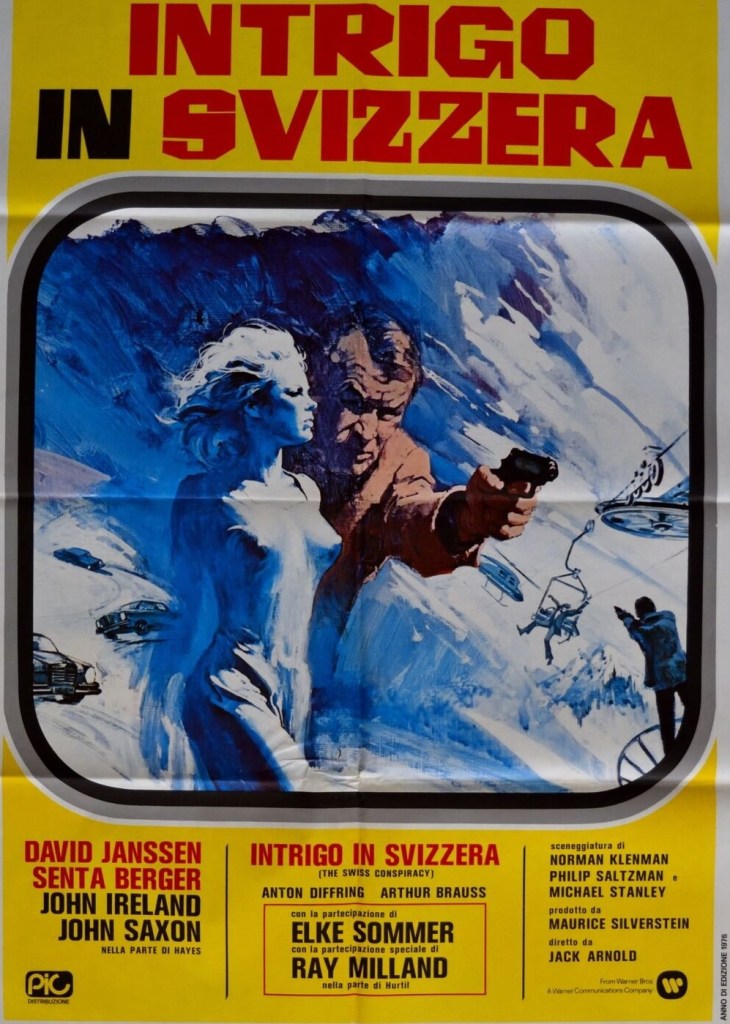
The Swiss Conspiracy (1976) ***

One of those thrillers that only makes sense at the end. Lazy critics, too annoyed to wait or not able to work it out themselves, take out their bafflement on the picture. Or they carp at what they see as overmuch tourist influence instead of admiring the clever use made of Switzerland’s scenic attractions, the twisty cobbled streets, corkscrew highways teetering over ravines, and the apparatus of skiing – the chug-chug trains and lifts.  

Attractive too for the cast. You might put me down as overly fond of leading lady Senta Berger (Bang! Bang! You’re Dead! / Our Man in Marrakesh, 1966) but I’m equally appreciative of the casual charm and realistic qualities brought to the screen by the underrated David Janssen (The Warning Shot, 1967). And that’s before we come to Elke Sommer (The Prize, 1963) and veteran Hollywood star Ray Milland (Hostile Witness, 1969), not to mention character actors John Saxon (The Appaloosa / Southwest to Sonora, 1966) and John Ireland (Faces in the Dark, 1961).

Poster designer gives himself a bit of leeway here, suggesting a lass is going to be striding around the Alps in such clingy clothing.

Former U.S. Treasury Agent David Christopher (David Janssen) is called in by Swiss bank owner Johann Hurtil (Ray Milland) to investigate a threat to expose the clients hiding behind the country’s infamous secret numbered accounts. Five clients, in particular, have been targeted including the glamorous Denise Abbott (Senta Berger), whom David first encounters in what would in other circumstances be deemed a clever meet-cute with the woman getting the upper hand.

One client is already dead, murdered in the opening sequence, as a warning. Of the others, Robert Hayes (John Saxon) is a mobster depositing illicit gains for money-laundering purposes, Dwight McGowan (John Ireland) a shady businessman on his last legs, while Kosta (Curt Lowans) equally operates in the shadows. And all is not well with the bank deputy Franz Benninger (Anton Diffring), involved in an affair with another client, Rita Jensen (Elke Sommer). On top of that, Swiss cops are on the trail of Hayes and hit men are tailing Christopher.

Christopher quickly surmises that the victims have been targeted for their undercover dealings, even the uber-glam Denise is blackmailing a former lover. But Hurtil, fearing a public and media scandal, and for whom the gangster’s demands are a mere drop in the ocean compared to the bank’s overall wealth, decides to meet their terms, which is payment of 15 million Swiss francs (equating to several million U.S. dollars, I guess) in uncut diamonds.

But before that we have a punch-up and shoot-out in a parking garage, a chase on foot on those famous narrow cobbled twisty streets with a speeding car giving the thugs unfair advantage, a race of seduction a la On Her Majesty’s Secret Service (1970) along those aforementioned treacherous mountainous roads, a literal cliffhanger in the vein of The Italian Job (1969), and one of those luscious romances beloved of the upmarket thriller (think The Thomas Crown Affair, 1968).  

While Christopher is painstakingly putting together the clues and keeping the suspicious Swiss police off his back and avoiding being killed, there’s a deadline to meet, the usual race against time, while the audience is having to fend off a surprising number of red herrings.

It’s not only glamorous, it’s short, and there’s more than enough going on, characters played by interesting actors, to keep the viewer involved. And I defy you to guess the ending. So, enough thrills, sufficient mystery, great scenery, and a female contingent (even Christopher’s secretary fits that category) with brains to match their sexiness who appear to have the upper hand in relationships with the opposite sex.

This is David Janssen at his best, that outward diffidence concealing a harder inner core, exuding a guy-next-door appeal that was never properly utilised by Hollywood, who preferred him just to reveal character by squinting. The scene where he takes in the extent of the luxury of Denise’s hotel penthouse is one of those that, while not knocking on Oscar’s door, demands true acting skills. He’s never in your face, and the camera loves him for it.

Of course, Senta Berger, what can you say, another under-rated actress never given her due in Hollywood, here finds a plum role that allows her to switch from confidence to vulnerability at the drop of a hat. John Saxon and John Ireland, as ever, are value for money. And Ray Milland keeps the show on the road.

A modern audience would be more at home with the multiplicity of plot angles and probably worked out in their own heads all that couldn’t find a place on screen, ensuring that what seemed like plot holes were anything but.

Jack Arnold (The Creature from the Black Lagoon, 1953) handles the scheming and dealing with ease. Norman Klenman (Ivy League Killers, 1959), and two television writers in their movie debuts, Michael Stanley and Philip Saltzman, wove the intricate screenplay.

The Mark (1961) ****

Despite an exceptional and Oscar-nominated performance by Stuart Whitman (Rio Conchos, 1964) , I suspect modern audiences will take less kindly to this tale of convicted child molester trying to come to terms with his feelings. At least it’s considerably more honest than the creepier May December (2023) where the criminal steadfastly contended her innocence.

And I suspect, too, that Whitman’s square jaw and muscular physique got in the way of his attracting the parts for which the depths of vulnerability he was able to exhibit were most suited. He came to this straight after an action role, as the charming bad-good-guy of The Commancheros (1961) where, as far as audiences were concerned, what he did with his fists was more important that what he expressed through his eyes.

There’s a bit of a grey area that lends the convicted Jim Fuller (Stuart Whitman) the benefit of the doubt. He was found guilty of intent not of actual molestation and a goodly part of the picture is spend on examining why he went down that route, either in a group exercise in prison or one-on-one with a psychiatrist, chain-smoking Irishman Dr McNally (Rod Steiger) in both instances.

I’m not sure how the psychiatric evidence adds up, but basically, with a dominant mother who bullied his father, he grew up frightened of women, despite being attracted and attractive to them, and sought out someone with whom he felt more comfortable, less challenging, leading him to spend too much time watching children at play and eventually buying a young girl an ice cream and going out on walks with her.

It would have been too much for audiences of the time – as it even was with May December – to go into the technicalities of what he intended to do so we are left to trust his own word that he never intended to instigate anything sexual, though why kidnap a child in the first place. The second element that would fill modern audiences with alarm is that though he manages to begin a sexual relationship with a woman of his own age, secretary Ruth Leighton (Maria Schell), she is a widow with a young daughter. Most people would instantly come to the conclusion he was using mother to groom daughter.

However, the film takes the tack that he’s using the daughter to explore a normal relationship with a child, the joy of having a daughter, and the delight and happiness that a young person can bring into a dour repressed life. Dr McNally keeps on banging on that Fuller is “cured” but it’s a very uneasy watch trying to work out if he is or not.

In the event, the first time he’s alone with the girl he is photographed by a local journalist who sticks the photo on the front page, destroying the life Fuller has carefully rebuilt. He has found employment as an accountant with a sympathetic business owner Andrew Clive (Donald Wolfit), fitting in so well he is promoted, though at odds with another senior employee Roy Milne (Paul Rogers). He is chucked out of his accommodation, loses his job and although Ruth initially stands by him the minute she sees Fuller with her daughter her instincts are hostile.

There would be no point in an actor trying to gain sympathy for such an unsympathetic character by playing to the gallery with bouts of temper or floods of self-pitying tears, but even so, the vulnerable husk Whitman presents, his struggles with his self-contempt, his understanding of the feelings he must invoke, his determination to live as quietly as possible, almost in that determined English manner of never being heard nor seen, is what makes this film. Interestingly, he replaced Richard Burton, who pulled out at the last minute (as did Jean Simmons) and you could easily imagine with those trademark quick intakes of breath and deep growls how that actor would have played the part.

Whitman doesn’t go near any grandstanding. It’s just a heartfelt performance of a man who’s lost his way and knows he might never find his way back, haunted by his past, unable to trust himself, unable to believe that he is, in fact, cured. Probably, the biggest issue is that the movie comes down on his side, especially when he becomes one of the usual suspects in another crime involving children, though he did not commit that, and tries to suggest that a child molester will find salvation through living with a mother and child in the normal fashion. As I said, this is not my subject of expertise, thankfully, and that may be well what’s advocated rather than staying away from children altogether.

While the approach might be considered a shade naïve at the same time it does examine issues surrounding reintegration and avoids the obvious trap of attempting some kind of character redemption.

Apart from Whitman, there are good performances all round. Maria Schell, whose career within a decade would go from roadshow blockbuster Cimarron (1960) to WIP epic 99 Women (1969), subsumes her normal more glamorous persona to play a believable working mother. With his chain-smoking, Rod Steiger (The Pawnbroker, 1964) is allowed to fidget to his heart’s content but even such obvious scene-stealing only places more emphasis on the quieter Whitman. Donald Wolfit (Life at the Top, 1965), too, reins in his usual bluster.

Guy Green (The Magus, 1968) directed from a screenplay by Sidney Buchman (The Group, 1966) and Stanley Mann (The Collector, 1965) from the bestseller by Charles E. Israel.

In this instance, given the Oscar nom, Stuart Whitman could hardly be considered under-rated but over the years seems to have disappeared from sight.

Worth a look to see what he could do with the right material.

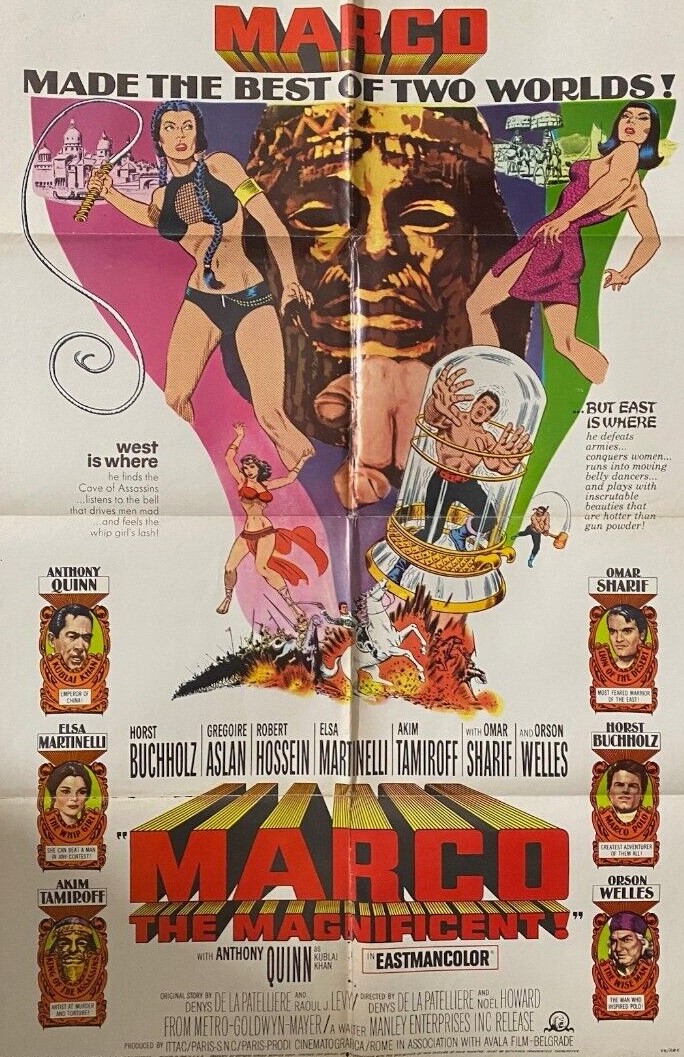
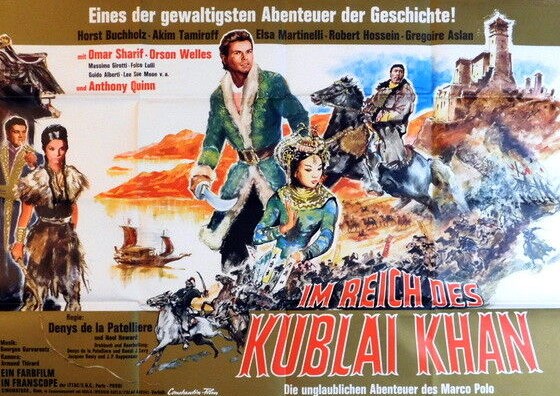
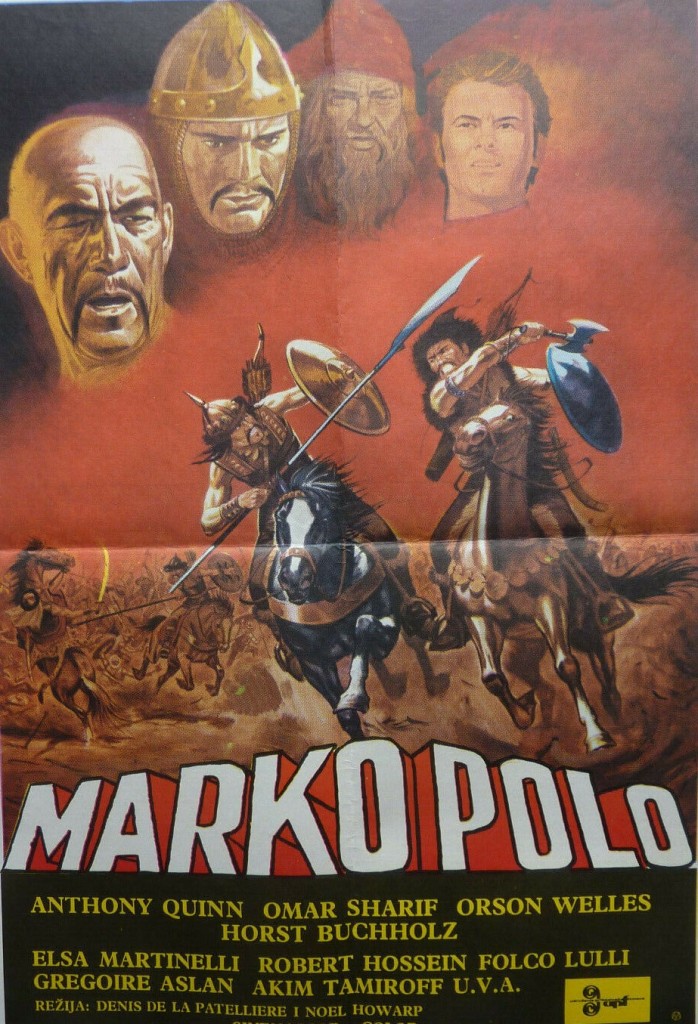
Marco the Magnificent (1965) **

Small wonder this flopped even with the requisite all-star cast of Omar Sharif (Doctor Zhivago, 1965), Anthony Quinn (Zorba the Greek, 1964), Orson Welles (Austerlitz, 1960),  Horst Buchholz (Nine Hours to Rama, 1963) and Elsa Martinelli (Hatari! 1962). Oddly enough, Quinn comes close to saving it. Although initially laughable, presented as a cross between Yul Brynner’s long-lost brother and Ming the Merciless, he tones down the trademark rasp and growl to deliver a powerful performance.

Of course, we also have to take the word of Marco Polos (Horst Buchholz) that he had all these adventures and that he did encounter The Old Man of the Mountains (Akim Tamiroff) and The Lady with the Whip (Elsa Martinelli). The former wore a mask of gold and if you ever saw his face that meant you were in for the chop. And he had a nice line in sonic torture. The latter chooses love above betrayal.

The name of Marco Polo either meant so little to German audiences or the title change was due to the producers hoping to capitalize on the success of “Genghis Khan.”

Love – or sex I guess – is a consistent theme. Marco is chosen for this adventure – whose main aim is to get a message to Mongol overlord Kublai Khan, now the ruler of China, that Italy, the dominant western power at the time, wants peace – in part because he is so handsome. He has no other pedigree that I can see. At the age of 20, he’s best described as an idler. But his father Nicolo (Massimo Girotto) is a renowned trader and has ventured along the Silk road to Samarkand.

But, would you believe it, following that old western genre trope where there’s always someone wanting to sabotage relations between Native Americans and soldiers, the idea of peace doesn’t sit well with everyone. Spies report on Marco’s every move and attempt to stop him completing his mission and when he reaches China discovers that another Mongol warlord Prince Nayam (Robert Hossein) prefers the traditional method of conquest, with the raping and pillaging that goes with it, rather than growing the economy through peaceful means.

Just as well Marco is so good-looking because whenever he is in a tight spot he is rescued by a beautiful woman, including the aforementioned Lady with the Whip, and, would you believe it, Princess Gogatine (Lynne Sue Moon), who has been chosen as a potential wife for Kublai Khan (Anthony Quinn). Multiple romance is the name of the game here – Arab chieftain Emir Alaou (Omar Sharif) has twenty-six wives, one of whom has the temerity to complain at his expanding harem.

Mostly, it’s a travelog – with a bucket of travel cliches thrown in such as Russian dancing – punctuated by occasional peril. But beyond looking handsome and putting his seductive powers to the test, there’s not much else for Marco to do.

The screenplay is so limited and haphazard you get the impression it must have been heavily truncated, that there was a three-hour roadshow covering the ground in a more sensible manner, but that appears not to have been the case. Producer Raoul Levy (who wrote and produced And God Created Woman, 1956, and wrote, produced and directed The Defector, 1966) ) spent so much assembling the cast he scrimped on a workable screenplay and was so intent on ramming it with oddly-named characters (Old Man of the Mountains and Lady with the Whip) that he took his eye off the narrative ball.

The final section with Kublai Khan trying to integrate through his own marriage the conquering Mongols and the conquered Chinese and dispensing with war in favor of peace makes more sense but by then you are so exhausted by the multiplicity of star names contributing nothing and the meandering plot that you have just about given up.

And it wasn’t as if Levy didn’t have time to get a screenplay in place. He’d been working on this since 1962 when an earlier version starring Alain Delon (Once a Thief, 1965) was abandoned when finance ran out. One of the most expensive French movies ever made, and extensively funded by Levy, it proved such a flop, it wiped him out financially and contributed to his suicide.

The inconsistency may have been caused by having three directors – Levy, Denys de la Patellier (Caroline Cherie, 1968)  and Noel Howard (D’Ou Viens-Tu, Johnny, 1963).

All-star cast wasted, promise unfulfilled.

https://m.media-amazon.com/images/I/6161DUBcazL._AC_SY445_.jpg

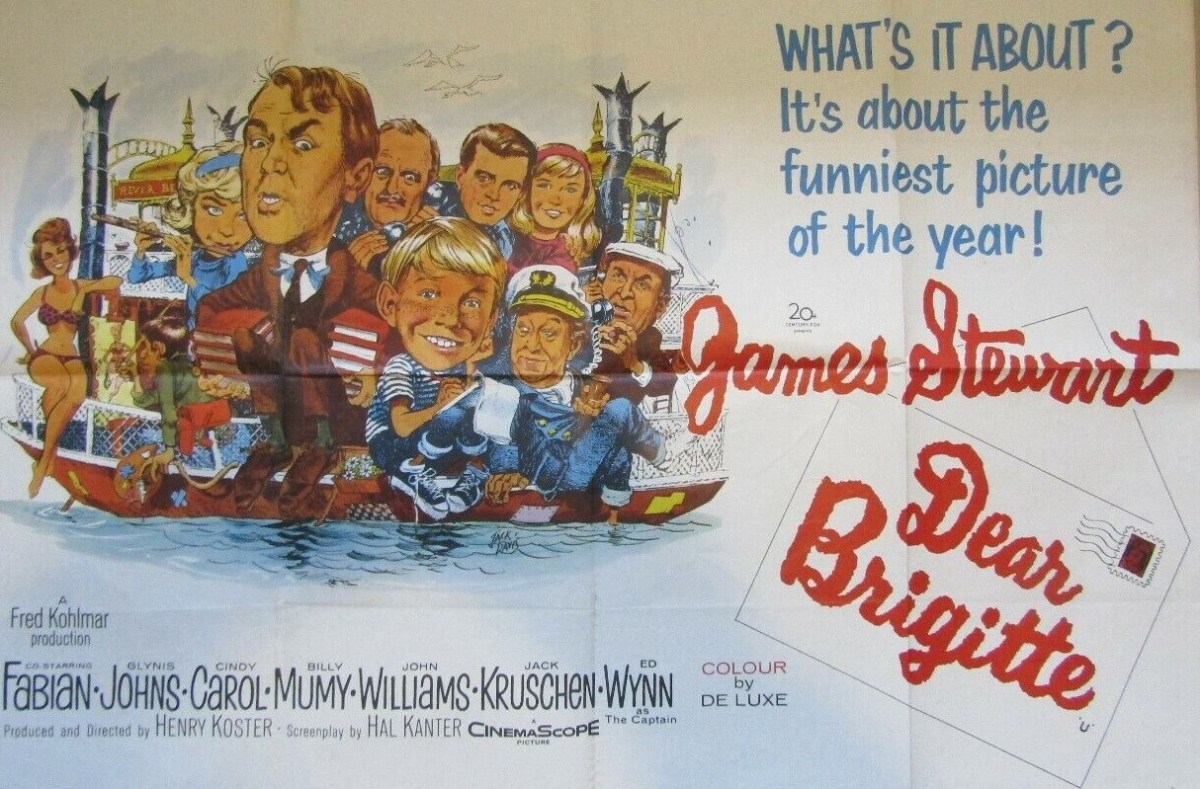
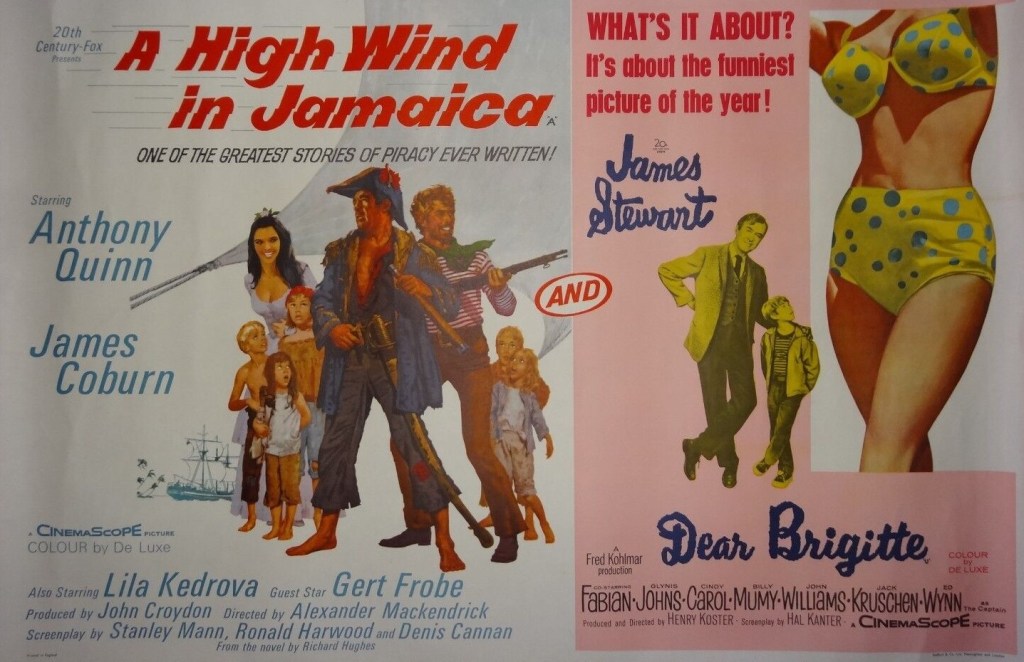
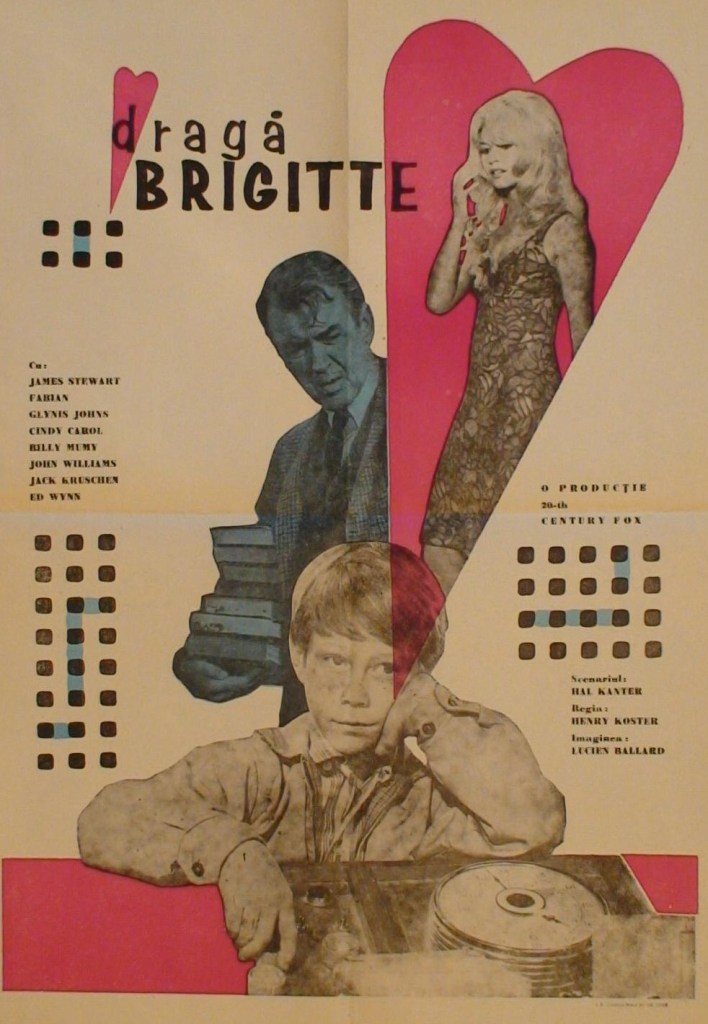
Dear Brigitte (1965) ***

In the same year as his momentous turn in Shenandoah, James Stewart at his exasperating best has the time of his life in this throwback comedy that takes its time getting all its ducks in a row while taking a tilt at nuclear energy, computers and the eternal battle between the arts and science with a fair chunk of whimsy thrown in.

Surprisingly contemporary nod to this whole business of actors speaking directly to the camera, with the ramblings by the Captain (Ed Wynn) in this capacity constantly being interrupted by passersby in the vein of “you talking to me?” or “stop talking to yourself.” Professor Leaf (James Stewart), a distinguished poet constantly at odds with Dean Sawyer (Howard Freeman) at the local college where he teaches – on the few times when he’s not handing in his resignation – and which has a nuclear power station next door, tries to espouse the arts at every opportunity, including a family four-piece outfit playing classical music, only to discover son Erasmus (Bill Mummy) doesn’t have an artistic bone in his body.

Surprisingy, in the UK down-graded to supporting feature in this kid-centric double bill. The marketing men pulled another fast one in the poster, leading audiences to believe that was BB in the bikini when it was only the usually-nude model of an artist neighbour attempting to be decent.

What Erasmus has, for some reason only now coming to the fore although he must be about ten or so, is that he’s a mathematical prodigy, able to work out complicated sums faster than a computer and pointing out errors in the calculations of the local bank. Leaf’s wife Vina (Glynis johns) doesn’t have a great deal to do except rein in the professor but she has a wonderful scene where she brings the local bank manager to book.

Anyway, eventually, Erasmus gets hooked into helping the boyfriend Kenneth (pop singer Fabian) of Leaf’s daughter Pandora (Cindy Carol) guess the winners of horse races as a way of assisting the couple in raising enough money to get married. By this time, Leaf has finally resigned and worked out he won’t pick up easy cash from the Government – another terrific scene – and is hoodwinked by con artist Peregrine Upjohn (John Williams) into setting up a charity to help disadvantaged students by employing his son’s skills.

Anyone familiar with horse racing will be aware how preposterous the conceit that anyone, no matter how scientifically skilled at working out the odds, can consistently pick winners. But this all flies by since it’s that kind of movie, one that not only defies belief, but basically sucks you into believing the whole thing, the way the untalented youngsters always managed in Hollywood times gone by to muster a great stage show or turned any kind of loser into a winner.

Still, all this goes on before we get close to the nub of the title. Erasmus has fallen in love with Brigitte Bardot and because he’s basically the family’s sole breadwinner eventually dad takes son to France to meet the real-life superstar who is far more charming than you would expect, the sexpot on hold for the occasion.

So, mostly, as I said, it’s an old-fashioned confection, the kind you could still get away with in the mid-1960s before the changing times demanded that comedies take on a harder edge. And with James Stewart in top form and husky-voiced English star Glynis Johns (who had her own television series in the U.S.) jumping in now and then to prevent him from making things worse it works a treat. Stewart exaggerates all those mannerism you might have thought mildly irritating before – he’s all limbs and sentences cut off in their prime and telling people to leave their own houses. But if he had toned any of that down, the air would have quickly escaped the balloon, for really he’s the only thing keeping it afloat.

But that’s stardom for you. A vehicle comes along that in total isn’t really worthy of the involvement of a marquee attraction like Stewart, who could be lending his talents to more solid fare like Shenandoah and The Flight of the Phoenix (also released the same year). While he’s crucial to both those other pictures, giving one of his best performances in the former, perhaps surprisingly, U.S. audiences, voting with their dollars, felt his performance here trumped that of the Aldrich picture.

Ir’s usually believable roles that attract the greatest critical plaudits for stars, but actually their most notable contribution is in making fly movies that should never work on paper but somehow with their magical injection not necessarily makes the screen sizzle but turns doughy material into something lighter and more easily digestible.

Henry Koster (Mr Hobbs Takes a Vacation, 1962) directs with occasional flair from a screenplay by Hal Kanter (Move Over, Darling , 1963) and Nunnally Johnson (The Dirty Dozen, 1967) based on the bestseller by John Haase.

As under-rated as The Trouble with Angels (1966) as lightweight comedies of the decade generally were, this is worth a look for Stewart alone.  

https://amzn.to/3RiMcjX

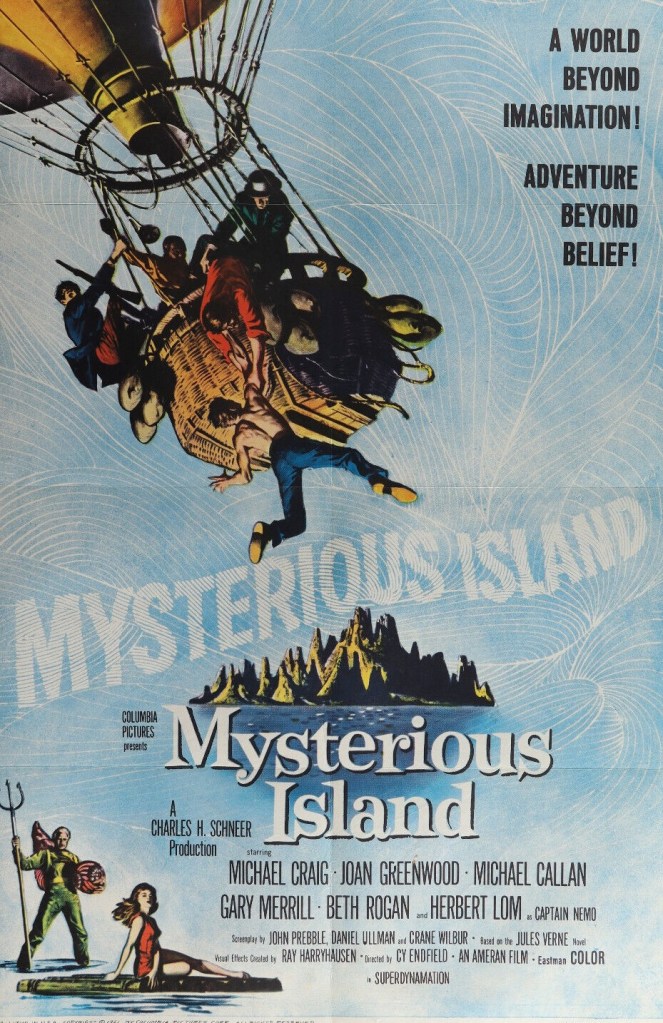
Mysterious Island (1961) ****

It’s the Ray Harryhausen Show. You’re not here for the story, surely, or the characters. You’re just waiting patiently for the monsters to appear. The only element that’s ever wrong with this kind of picture is that in-built delay. The need to set up the story and establish the oddities of the world before the behemoths trundle into view.

Doesn’t matter whether the creatures already live in an accommodating  global ecosystem like Jason and the Argonauts (1963) or One Million Years B.C. (1966). Or whether you are  going to come across them by the simple device, most famously, of dropping through a rabbit hole (Alice in Wonderland) or via a cupboard door (The Lion, the Witch and the Wardrobe) or a  rockface cracking open (Prehistoric Women / Slave Girls, 1967) or a time warp (Wonder Woman, 2017).

Here, it’s a bunch U.S. Civil War soldiers who need to break out of their prison and commandeer a handy hot-air balloon that can fly thousands of miles to the uninhabited volcanic island occupied by giant beasts. So we’ve got a monstrous crab, giant bees, chicken, gigantic octopus. And the success or failure of the picture relies not so much on whether our heroes can overcome these than that they look realistic.

And, boy, they are just brilliant. This is fairly early on the Harryhausen catalogue but if his stop-motion animation was still going through an experimental stage it’s hardly noticeable. Enhanced claws and beaks are just dandy for trapping humans, having them wriggling madly to avoid being split open with one snap. And the bee is pretty cunning, filling in the hole the invading humans have created in the massive honeycomb.

And should, perchance, your mind be wandering director Cy Endfield (Zulu, 1964) has a bout of sequel-itis, throwing in Captain Nemo from author Jules Verne’s 20,000 Leagues under the Sea (1954), and prequel-itis – the pirates from his In Search of the Castaways (1962) – plus, to add the romantic touch, a couple of shipwrecked damsels and, for the climax, volcanic eruption.

No doubt you’re dying to know about the characters you couldn’t really care less about who are encountering this legion of beings. So, we’ve got the grizzled Capt. Harding (Michael Craig), young Herbert (Michael Callan) who will express his romantic side, Sgt. Pencroft (Percy Herbert), Corporal Nugent (Dan Jackson) and Gideon (Gary Merrill). There are joined by posh English lady Mary Fairchild (Joan Greenwood), who happily buckles to and is handy with a rifle, and her niece Elena (Beth Rogan) who decides laziness is the better option when she’s not canoodling with Herbert.

Their job is to squabble, beat off the monsters, adapt a local geyser for cooking purposes, set to building a boat to escape, and await the next monster/person who’s going to upset their plans.

Captain Nemo certainly makes an impression, his ship, the Nautilus, stranded under the volcano and the man himself taking a break from the world since he doesn’t believe he is such a good fit. Turning up out of the waves in an improvised aqualung isn’t quite an entrance on a par with Ursula Andress in Dr No (1962), but it runs it close, though bikini tops rubber-suit all the time.

The pirates are just a menace and I wouldn’t be surprised if you came away with the notion that they are rammed into the tale just so their sunken ship, scuttled by Nemo, can miraculously rise from the waves thanks to the sailor’s ingenuity.

Time has been kind to Harryhausen. What was once viewed as appealing only to children and the childish wondrous aspects of adults has now become cult viewing. And no wonder. In the age of CGI, it’s quite astonishing what he has managed to achieve with what appears the most rudimentary of techniques.

Of the actors, British star Michael Craig (Doctor in Love, 1960) has his hands full to stop the picture being stolen by rising American actor Michael Callan (The Interns, 1962), a grumpy Gary Merrill (A Girl Named Tamiko, 1962), an almost avuncular Herbert Lom (The Frightened City, 1961) and a delightful turn by plummy-voiced Joan Greenwood (The Moon-Spinners, 1964).

You wouldn’t think this was the ideal movie to set you up for Zulu, but Cy Endfield does a good job of keeping the story moving and keeping out of the way during the Harryhausen sections. Screenplay by John Prebble (Zulu), Daniel B. Ullman (the television writer’s only movie of the decade) and veteran Crane Wilbur (The George Raft Story, 1962).

Huge fun. All hail King Ray.

https://amzn.to/3Rmb76d

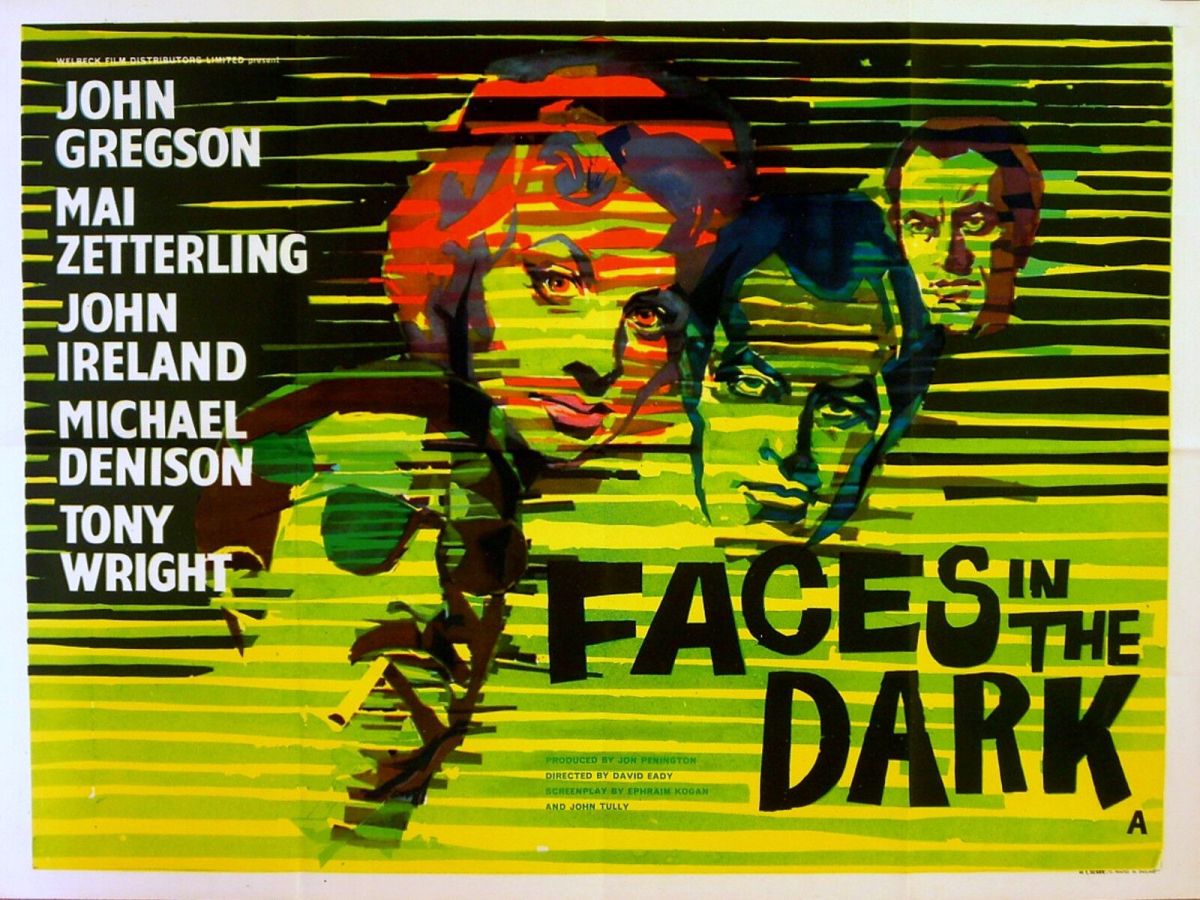
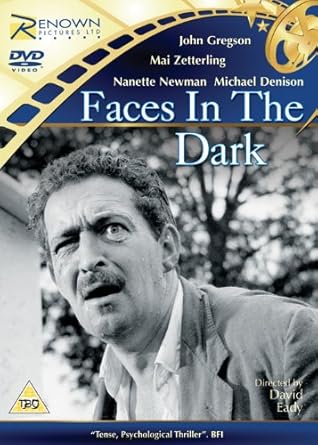
Faces in the Dark (1960) ***

Had his been tagged “From the Makers of Vertigo”, it might have immediately attracted a greater immediate audience and been treated these days with more critical reverence. But Vertigo wasn’t the cult film it is now, so the names of the authors of the source book, Pierre Boileau and Thomas Narcejac, would have no promotional value.

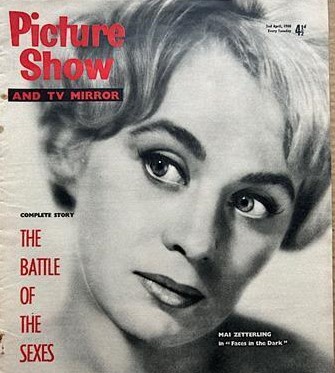
Throw in a stunning score by Mikis Theodarakis (Zorba the Greek, 1964) and a top-line cast including Swedish bombshell Mai Zetterling (Only Two Can Play, 1962), cult character actor John Ireland (The Ceremony, 1963) and an early role for Nanette Newman (The Wrong Box, 1966) plus a gender switch on the traditional gaslighting plot and you have makings of a classy little number.

When an experiment goes wrong, ambitious arrogant businessman Richard Hammond (John Gregson) is blinded. To help him recuperate wife Christiane (Mai Zetterling) flies him off to their luxurious Cornwall retreat where, to ensure is mind isn’t overloaded with business concerns, she switches off the phone. Along for the ride are his sponging brother Max (John Ireland), business partner David (Michael Denison), housemaid Janet (Nanette Newman) and chauffeur Clem (Tony Wright).

When things are not what they seem – the cat has suddenly lost its tail, a peach plant has disappeared from the garden, he smells pine, hears church bells – he believes he is going insane. Doesn’t take long before he realizes this is not a haven, but a trap. Sounds providing the greatest clues, he hears a giveaway clicking, indicating the presence of David, in his wife’s bedroom when the partner is meant to be a hundred miles away.

His brother has also disappeared, believed dead, and when his wife gives the help the night off and he is left in the house with the lovers is convinced they are trying to poison him and refuses to eat any food. Given sounds are so important, there’s one brilliant scene, where, having escaped, he discovers none of the locals can understand what he’s saying, and not because he’s gabbling either. But that’s such a clever plot point, I wouldn’t be a spoiler.

So you’ve got tension fairly climbing the walls .

The only downside is that Richard is such an unlikeable character – not a poor soul like Audrey Hepburn in Wait until Dark (1967) – that it’s hard to summon up the sympathy an audience requires for such a story to properly work. Theoretically, he’s just a driven man, whose genius is being blocked by the cynical bankers, but from the outset he’s full of bluster and nasty put-downs, and has everyone in the factory he owns on edge.

Anger at his condition and fear that insanity or failure lies ahead puts him in a constant rage and, heavily sweating for no particular medical reason, he’s not the most charismatic of screen characters. Even though his reaction would fit with a successful businessman failing to come to terms with the calamity, those elements, which might have evoked greater sympathy, are somewhat adrift when they get tangled up with the plot.

Director David Eady (The Verdict, 1964) does his best to compensate. The music, as mentioned, helps, throbbing piano rather than screaming violins. And there a couple of neat visuals, the swirling smoke of the credit sequence reappearing to devastating effect in one sequence. But, mostly, he lines up reasons for Richard to begin to question his sanity and believe he is being duped – he can’t read documents he must sign and as the only part of his handwriting that stands up is his signature suspects his impoverished brother will write a larger sum on a cheque he signs.

And since most of this unfolds through the mind of Richard, the director plays fair with the audience. There are no nods and winks about the nature of the relationship between wife and partner. Even though she confides in David that she’s planning to leave Richard, there’s no indication that it’s for the partner.

So this is more like a detective story and, as with Vertigo, featuring an obsessive character driven mad by obsession, both led on by the devious, and having to piece together a strange amalgam of clues.

John Gregson (The Frightened City, 1961), normally essaying more stoical characters, overacts, but the others do the opposite. Mai Zetterling is convincing and former British matinee idol Michael Denison plays against type (he wouldn’t make another movie for 30 years). Nanette Newman shows promise while John Ireland reins in the surliness. Ephraim Kogan (in his sole movie credit) and John Tully (who didn’t get another movie credit for the decade) wrote the screenplay.

Effective thriller ripe for a remake.

Catch it on Amazon Prime or DVD.

https://amzn.to/3RoBDfb

Riot (1969) ***

Stand-Off might be a more apt title but that’s not going to sell many tickets. After taking over the wing of a prison, not a great deal happens except for character development. As it turns out the threat of a riot is intended merely as a ruse to cover an attempted break-out.

Inmate Cully (Jim Brown) is the first to point out to escape mastermind Red (Gene Hackman) the deficiencies of his plan. For a start, they are in the middle of the desert and without transportation and food, neither of which is handy or arranged, they are likely to find the wilderness a worse prison. Secondly, there’s a hell of a lot of digging to do, a tunnel long enough to allow them to emerge on the other side of the walls.

And thirdly, and most presciently, most of the prisoners don’t give a fig about organizing a break-out. They are simpler souls, wanting to enjoy a brief moment, even if still incarcerated, of freedom, happy to glug down gallons of home-made brew, watch drag acts for entertainment and slit the throats of the guards taken hostage.

It’s ironic that Cully and Red begin acting like prison warders, defending the hostages against the most vicious of the inmates, guarding them as they take a walk of shame to a hideout, and chucking into solitary the most depraved of the prisoners. The prison break, when it finally comes, is exceptionally well done by director Buzz Kulik (Villa Rides, 1968) .

A small hole in the sun-parched earth becomes bigger until a furry head like a groundhog appears and the outside of the prison walls is viewed from the perspective of a potential escapee.

The ultimate sex’n’violence double bill.

But, mostly, it’s a long haul of tension. Red holds the officials at bay with not just the hostages but a set of demands for better treatment, triggering a bout of negotiation and talking to the media. As in female-starved male-dominated pictures like The Flight of the Phoenix (1965) and The Dirty Dozen (1967), women are shunted in by devious means, in the former via a mirage, in the latter through the sex workers smuggled in prior to the mission. Here, Cully dreams of landing by helicopter beside a pool of beautiful bikini-clad women who rush to worship him.

Although Cully and Red don’t exactly see eye-to-eye and for the picture to work of course must bury their differences and work together, the pair don’t rack up the confrontation required for this movie to zing. Cully is somewhat laid-back and Red uses his fingers rather than his fists or loud voice to make points. You kind of wished there was more sign of imminent explosion.

Sure, there are setbacks, and having to change plan and improvise on the spot. The stakes are only really raised when the vacationing prison governor returns and dumps the softly-softly approach of his stand-in, telling the prisoners in no uncertain terms that he will happily murder ten prisoners for each hostage killed, storm the wing and gas them all. The end shows exactly what level of brutality he is capable of.

But, meanwhile, we are left dancing around a bunch of fairly cliché characters, the prisoners in for short terms who don’t want to participate, the lifers wanting brief respite, the killers denied the opportunity to kill, the men who hide their sexual desires under the more acceptable cross-dressing.

Rioting is actually thin on the ground. In fact, Red has to do the opposite. Prevent everyone getting out of line because that will precipitate assault by the prison guards. Keeping everyone happily penned up for the time it takes to complete the tunnel is more Red’s plan than letting the prisoners loose to run riot.

That said, both Jim Brown (100 Rifles, 1969) and Gene Hackman (The Gypsy Moths. 1969) are impressive. Brown reins in the tough-guy act, holding sway in soft-spoken manner, while Hackman brings out more elements of the screen persona that would win him an Oscar a couple of years later for The French Connection.  Naturally, Hackman, in retrospect, attracts the kudos but in reality I think this is a step-up for Brown and he is not acted off the screen. (The pair had appeared together in The Split, 1968).

One of the flaws, I would hazard, is that this kind of picture should have been the break-out vehicle for rising stars – as with The Magnificent Seven (1960), The Great Escape (1963), and The Dirty Dozen – but in that department it’s sorely lacking and I think the picture overall suffers as a result.

Given he knows more than the audience where the story is headed Buzz Kulik (The Warning Shot, 1967) does well to concentrate on the friction between Brown and Hackman. James Poe  (The Bedford Incident, 1965) wrote the screenplay from the Frank Elli book.

Men under pressure are not under enough pressure to make it zing.

https://amzn.to/3tjAHAG

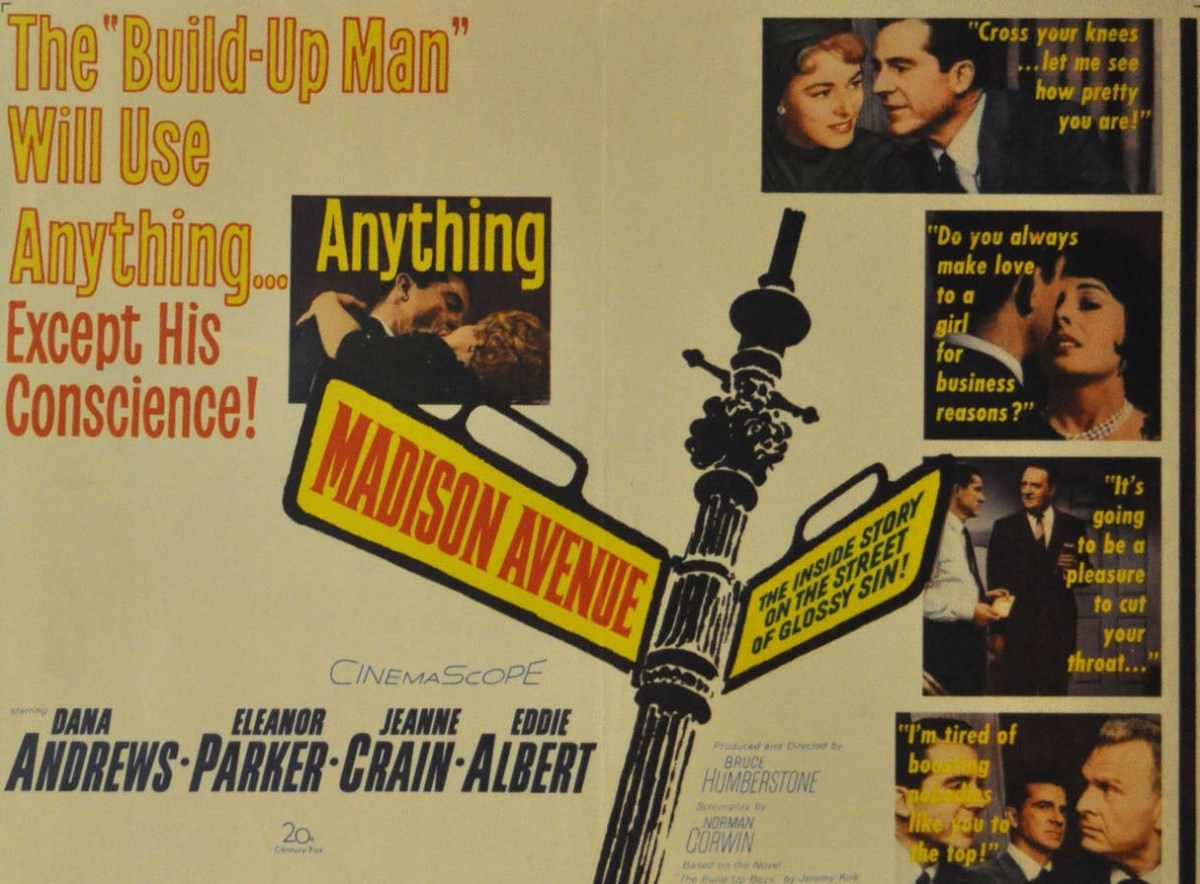
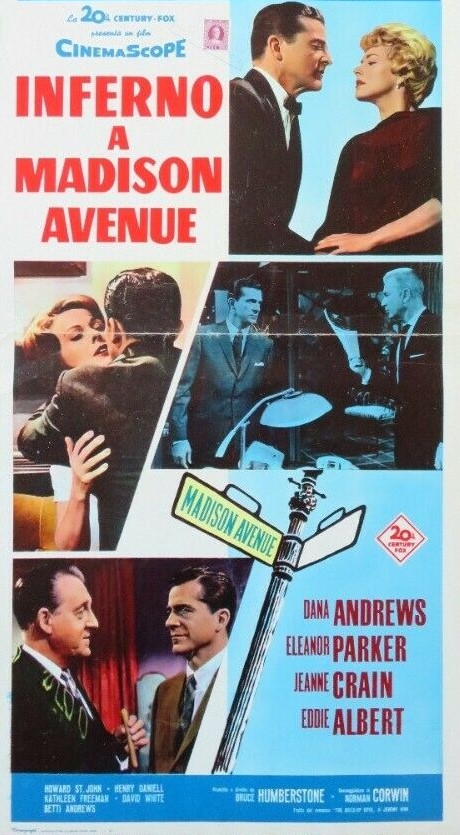
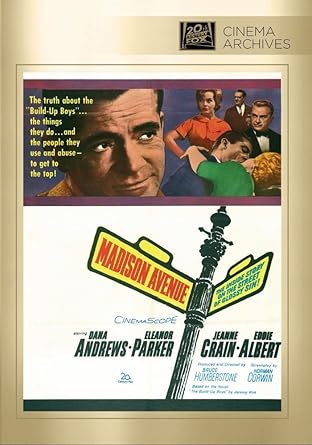
Madison Avenue (1961) ***

Surprisingly effective feminist angle. Unusual for the suave salesman to get his come-uppance from two vulnerable women, but that’s the case here, in an expose of the “build-up” (what we’d call “hype” these days) techniques of the public relations business, an area of advertising generally considered one step below the Mad Men of popular television. Fancy bars and cocktail dresses put in an appearance but, mostly, this deals with the grittier end.

This was pretty much the end of the mainstream Hollywood career for Dana Andrews. Still best-known for Laura (1944) and The Best Years of Our Lives (1946) and for some key film noir titles, this was his last major top-billed role. He wouldn’t make another movie for four years and anyone coming to him in this decade would associate him with supporting roles in the likes of The Satan Bug (1965) and Battle of the Bulge (1965).

So this is, possibly unexpectedly, a performance to savor, for he is hardly the hero, more the kind of character who might turn up in a contemporary movie, with questionable motives to go along with his decided charm (look no further than Leonardo DiCaprio in Killers of the Flower Moon). Though hardly murderous, he is ruthless and doesn’t care who he brings down in achieving his objectives.

After losing his job for purportedly (an accusation unproven but going with the territory) trying to steal the major client, Associated Dairies, of his boss, J.D. (Howard St John), top executive Clint (Dana Andrews) plans to get his revenge in rather sneaky fashion, by turning round its poorly-performing subsidiary Cloverleaf. He targets the dowdy owner, Anne Tremain (Eleanor Parker), of its failing advertising firm, promising her client a big editorial splash in a big newspaper courtesy of journalist girlfriend Peggy (Jeanne Crain).

Anne’s the first beneficiary of his PR skills, reinventing her as a glamorous, power-dressing, more confident advocate of the persuasion industry. He inveigles himself into her arms, at the expense of Peggy. He aids the idiotic owner of Cloverleaf, Harvey (Eddie Albert), who spends all his time in the office playing with model airplanes. (From today’s perspective, he’s something of a savant, predicting these machines – think drones – could one day form part of the delivery contingent.)  

To show just how damn clever he is, Clint “builds up” Harvey into the kind of self-made-man that has politicians purring, and brings Clint back into the winners circle. Unfortunately, the only way to get right in is through deviousness, a bit of back-stabbing here and there, dropping anyone who’s outlived their usefulness. But he’s not as clever as he thinks, lacks the business acumen of Anne, who’s denied him a share of her growing business, and therefore any real power base.

The women take unkindly to being used, Anne now the one doing the tossing-aside. For her revenge, Peggy writes an article that digs the dirt on him. Neither of these women would fall into the femme fatale category, though once all glammed-up Anne could pass for one had she required violence rather than business dexterity to exact her revenge.

Though both, unusually for the times, hold top positions in their businesses – Peggy’s a high-flying journalist working the Washington beat – they are presented initially as easy meat for a man capable of exploiting their vulnerabilities. Clint keeps Peggy on the back foot by failing to turn up for dates or presenting Anne as a rival for his affections.

This is an era where, purportedly, all women wanted was a ring on their finger, and to hang with being landed with an unsuitable man. But both Anne and Peggy upend that stereotype, seeing through the creature who’s come calling. In a western, audiences would have the satisfaction of seeing this kind of despicable character being shot. Here, they get to see him cringe, and be humiliated by women who have come to their senses. Albeit there’s a “happy” ending, that only occurs after some begging by the predator.

It suffers from too many long sequences, and by its determination to go down the satire route in exposing the seamier side of the public relations business. But there are some classic moments, such as when Harvey, tumbling through a prepared speech, has to suddenly wing it and finds his real voice.

But watching Anne get the measure of Clint and seeing him brought to heel by both women suggests the kind of ahead-of-its-time come-uppance that sets this up as an early feminist venture.

Eleanor Parker (The Sound of Music, 1965) and Jeanne Craine (Queen of the Nile, 1961) are both superb as women coming to their senses and this is a quite superb last top-billed hurrah from Dana Andrews. This was also the final outing for director H. Bruce Humberstone (Desert Song, 1953). Former newspaperman Norman Corwin (The Story of Ruth, 1960) and Richard P. Powell (Follow That Dream, 1962) based the screenplay on the best seller by Jeremy Kirk.

Resonates on the feminist front.

Discover WordPress

A daily selection of the best content published on WordPress, collected for you by humans who love to read.

The Atavist Magazine

by Brian Hannan

WordPress.com News

The latest news on WordPress.com and the WordPress community.