They Shoot Horses, Don’t They (1969) *****

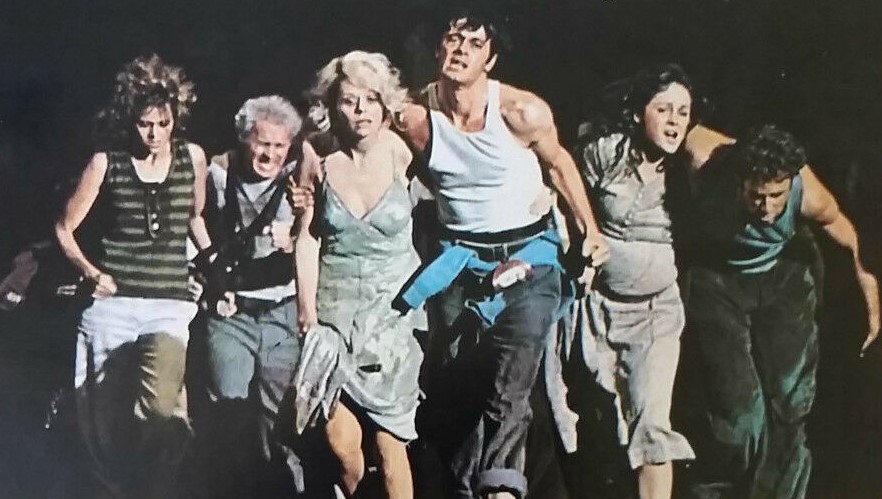
Fans of reality television shows will be only too aware how participants volunteer for ritual humiliation, but swallowing a few locusts and being stuck with a couple of snakes has nothing on the realities facing individuals during the Great Depression who would literally dance non-stop for days on end with a ten-minute break every two hours. It’s impossible to imagine that anybody could think of dreaming up such a degrading circus to take advantage of the desperate. But then this is America, land of opportunity and the MC Rocky  (Gig Young) continues to spout aphorisms and continues to promote the American Dream even as it disintegrates in front of him.

When the partner of Gloria (Jane Fonda), out-of-work actress and one of the more physical and cynical of the candidates hoping to scoop the $1,500 first prize (no prizes for coming second, of course), is ruled out through bronchitis – in case he passes it on to others rather than more any humane consideration – she pairs up with dreamer Robert who initially wanders in as spectator rather than participant. Glamorous platinum blonde aspiring actress Alice (Susannah York) is already coming apart. Sailor (Red Buttons) is a former war hero and James (Bruce Dern) drags his heavily pregnant wife (Bonnie Bedelia) around the dance floor.

There is not a great deal of story except to watch everyone grow mentally and physically incapacitated. There is betrayal and lust and survival instinct leads characters into sexual situations. When Alice seduces Robert, in retaliation Gloria dumps him and then has sex with Rocky, while attempting to retain control of that situation, but clearly needing at the very least consolation and confirmation of her attractiveness and at best some sign of favoritism.

As well as non-stop dancing, Rocky throws in stunts to keep the audience, who can sponsor a pair, interested. So there are 10-minute races, the last three to be eliminated. So determined are some of the competitors they will even lug their dead partner over the finishing line. Another of Rocky’s wheezes is to have Gloria and Robert marry, worth $200 in terms of the gifts they will receive from a sentimental audience, in the middle of the dance floor.

They are literally dancing for hours, over 1,000 in over 40 days so gradually the dance floor becomes less crowded as dancers collapse from exhaustion or cannot take it anymore. The spectators, we are reminded, are only there because “they want to see someone worse than them.” Just when you think nothing can shock you any more, it is revealed that the first prize is minus the cost of feeding, sheltering and looking after the winner.

Those who think they are tough find that the demands of mental and physical endurance are beyond them. This is a shocking film and there’s no doubt it will stay with you for a long time. I saw it first when it came out but not again until now and thank goodness for forgetfulness otherwise I doubt if I would have chosen to sit through it again.
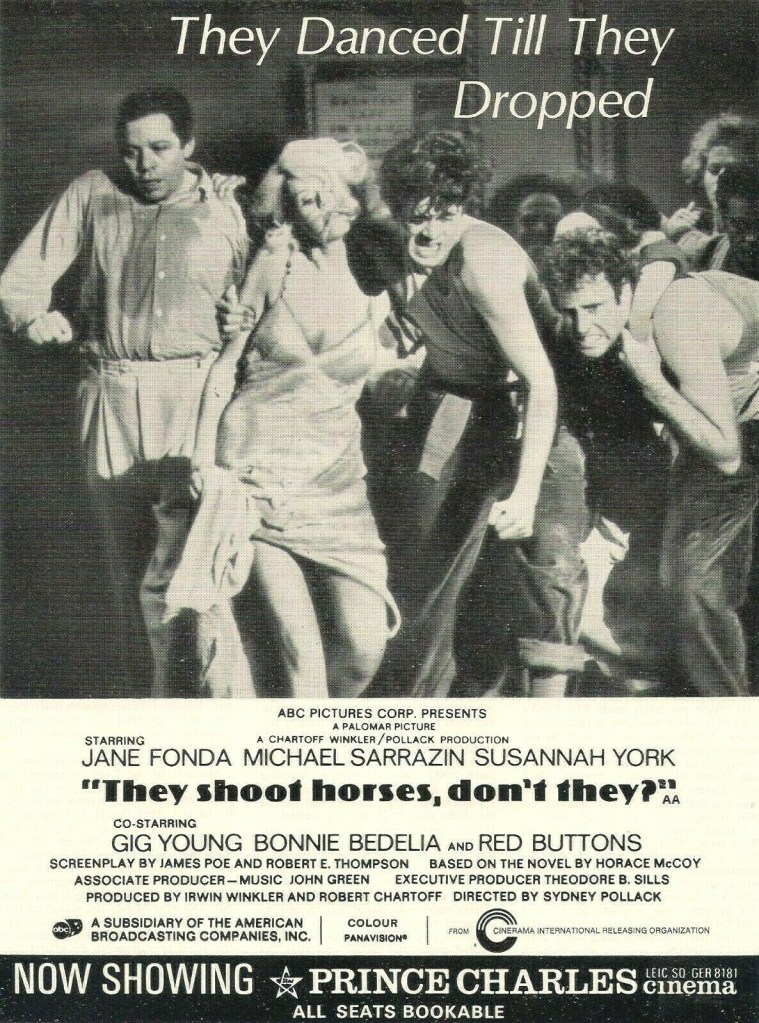
It’s doubtful if any actress had achieved such a speedy transition from glamorous leading lady to serious actress as Jane Fonda. From stripping in space in Barbarella (1968) to stripping away the last vestiges of her humanity here. Suddenly, she appears in a brand-new screen persona with the grating voice, the chip on the shoulder, the feistiness and worthy inheritor of father Henry’s acting genes. It’s also a bold role for Susannah York, in an extension of the weak character she essayed in Sands of the Kalahari (1965) but far more delusional, believing in a rainbow that will never appear. Michael Sarrazin (In Search of Gregory, 1969) initially appears out of his league but his character calls for a gentle innocence that is well within his scope.

Gig Young steals the picture, offered the opportunity to bring alive a multi-faceted character, as big a spiel-merchant who ever crossed the screen, but engaging in a marathon of optimism, and at some points, such as when coaxing a demented Alice out of the shower, earning our sympathy.  Red Buttons (Stagecoach, 1966), Bruce Dern (Castle Keep, 1969) and Bonnie Bedelia (Die Hard, 1988) also put in sterling work.

The movie received nine Oscar nominations but was ignored in the Best Picture category. Only Gig Young won for Best Supporting Actor.  Jane Fonda and Susannah York both received their first Oscar nominations, for Fonda the first of many, for York the one and only. It was also a debut nomination for Pollack, a future winner.

Sydney Pollack directs with simplicity, concentrating on the indignities of the event and focusing mostly on the personalities draining away, and even the drama is undercut, most of those scenes directed in straightforward style. However, Pollack plays around with the innovative fast forward – flashes into scenes that have not yet taken place. James Poe (Lilies of the Field, 1963), at one time down to direct, and Robert E. Thompson, a television writer making his first venture on the big screen, wrote the screenplay from the Horace McCoy novel.

Check out the Behind the Scenes article on this one.

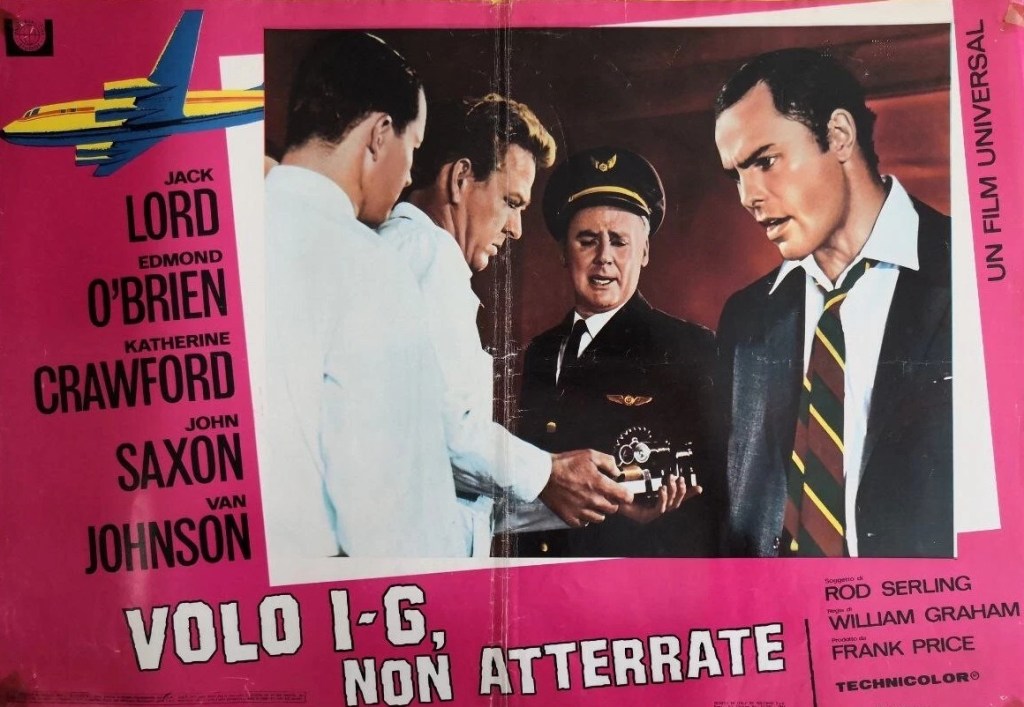
The Doomsday Flight (1966) ***

Early entry to the hijack subgenre – this one pivoting on the bomb-on-a-plane. Could almost deem it a template for what to do and not do in this particular field. Airport (1970) was the most obvious beneficiary although Speed (1994) could be reckoned to be something of a homage. And though “what if” was largely the preserve of sci fi, this posed very scary questions for audiences only beginning to enjoy the benefits of cheaper international travel. A quartet of excellent twists and three examples of men under pressure heat up the concept.

Unusually, the writer was the main selling point, Rod Serling (Seven Days in May, 1964) being more famous than most screenwriters thanks to The Twilight Zone (1959-1964) scaring the pants off viewers in ways that nobody thought television would dare to do.

Propped up by an interesting cast – Jack Lord (The Name of the Game Is Kill!, 1968), former major league movie star Van Johnson (Wives and Lovers, 1963), Edmond O’Brien (Rio Conchos, 1964), John Saxon (The Appaloosa, 1966), Ed Asner (The Satan Bug, 1965) and Michael Sarrazin (They Shoot Horses, Don’t They, 1969).

Unusual in that the two main characters lose it and the movie is probably the first to touch upon PTSD in Vietnam. While Special Agent Frank Thompson (Jack Lord), leading the task force on the ground, appears to be in complete control, in fact he’s hidden the fact that his wife is on the hijacked plane. That’s only revealed in the final climactic twist, so you have to cast your mind back over the movie and reassess Jack Lord’s apparently unflappable performance.

The anonymous hijacker (Edmond O’Brien) is a pretty cunning individual. He’s set a bomb to explode on the plane’s descent and removed the easy option of making a speedy landing by forcing the jet to remain above a certain height otherwise an altitude-sensitive trigger will blow the passengers to kingdom come. He demands a $100,000 ransom which the airline is only too willing to pay.

Meanwhile, Capt Anderson (Van Johnson), who had appeared the insouciant handsome epitome of the airline pilot of the kind you saw in advertisements, is sweating profusely under the pressure as the cabin crew begin to search for the bomb. The passengers are not quite as terrified as you’d expect, most sitting in their seats, and i’ts left to celebrity George Ducette (John Saxon) to kick up a ruckus until put in his place by an anonymous army corporal (Michael Sarrazin) who has a distinct aversion to bombs and so far has sat rigid in his seat.

The hijacker keeps everyone on their toes by constantly moving from phone to phone. There’s a hiccup when the delivery van carrying the ransom has an accident and the cash is obliterated. By this point the hijacker, in a bar, is getting drunk and his iron control is tested by the news. The plane, meanwhile, is running out of fuel and Capt Anderson has long run out of patience.

Turns out the bomber isn’t the evil genius you expect. He’s been cast aside by the American dream, his considerable talents overlooked, and he wants everyone to know that he’s worth more. Unfortunately, he doesn’t get his moment in the sun, either literally having made off with the money, or by having his face splashed over the front pages of newspapers.

When he dies of a heart attack, the plane still circling and fuel levels dangerously low and now unable to locate the bomb, that’s a heck of a fabulous twist. But what Rod Serling takes away with one hand, he gives with the other, and the pilot soon works out that if he lands at a high altitude airfield he’ll prevent the bomb exploding.

Safely on the ground, we come to the third twist. The hijacker had deposited the bomb in Capt Anderson’s flight bag, carelessly left lying around at the airport. The final twist is the revelation that Thompson’s wife was on board.

What had every opportunity of becoming a run-of-the-mill thriller, especially since we are light on passenger drama (no pregnant women about to give birth, no kids or nuns to claw at our sentiments), segues into something more interesting as it delves into the cracking up of the hijacker and intimation that soldiers returning from Vietnam do not feel like heroes.

Edmond O’Brien is the pick, but Van Johnson possibly the most courageous in filleting his screen persona. You wouldn’t have predicted Michael Sarrazin’s later success from this performance, nor that Jack Lord would hit a home run in television’s Hawaii Five-O (1968-1980).

Ably directed by William Graham (Waterhole #3, 1967) and although, technically, all he has to do is point the picture in the direction of the twists, he brings more by allowing Edmond O’Brien to humanize his character.   

I saw this as the supporting feature to Carry On Doctor and as a youngster never came out of a cinema more scared. Originally it was a made-for-television number though yanked after only one screening after airlines, not surprisingly, objected, so, as with many hard-to-find pictures it entered the cult zone in the USA.

As YouTube is often the curator of cult you can find it there.

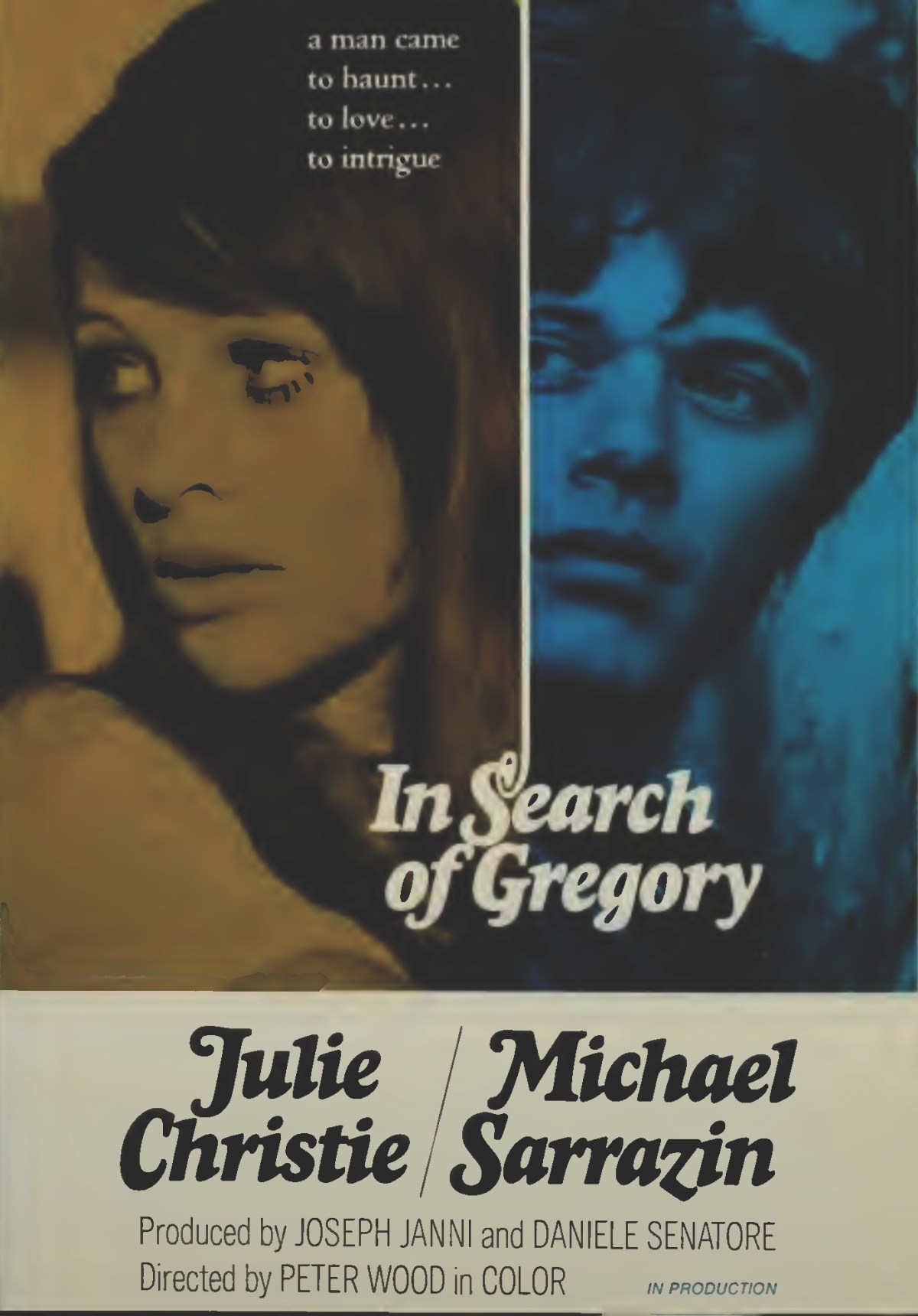
In Search of Gregory (1969) ***

Off-beat examination of the fantasy vs. reality conundrum with an ever-watchable Julie Christie as the woman on the titular hunt. The only film of acclaimed British theater director Peter Wood is a more whimsical cousin to the more deliberately obscure works of Alain Resnais (Last Year at Marienbad, 1961) and Michelangelo Antonioni (Blow-Up, 1966) which pivoted upon the question of whether events presented actually occur or exist only in the head of the leading character.    

Catherine (Julie Christie) is enticed to Geneva by her father (Adolfo Celi) for his latest wedding on the basis that she will meet the impossibly handsome Gregory (Michael Sarrazin). On arrival she discovers the agoraphobia of younger brother Daniel (John Hurt) has been temporarily lifted by Gregory. Catherine appears set to meet Gregory on a number of occasions, but either he does not turn up (the wedding) or somehow, they miss each other, even at one point occupying adjoining phone booths. And it would have been a pretty dull picture if that was all that was going on. But whether the result of reality or Catherine’s imagination, the Gregory we see is a vivid screen presence. The world the characters inhabit is unusual to say the least, so unique that it is either obviously real or fake, but virtually impossible to determine which.

The best Gregory sequence, of which Steve McQueen would be proud, involves the character moving by means of the windscreen from one side to the other of a car driven at high speed. In another scene Gregory plays the equally perilous game of Autoball, a kind of polo with stock cars. As convincing is Gregory’s avant-garde orchestra consisting of two guitars, bottles, a bicycle wheel, a waste bin and coins in a glass. 

The detail is so extraordinary that it must be real. The brother seems real enough, too real if anything, close to enjoying (or pining for) an incestuous relationship with his sister. But for every moment that appears questionable – did she really witness Gregory making love to her future mother-in-law – there are others where doubts are immediately quelled (an address which appears non-existent is not). And long before anybody came up with the idea of selling bottled water, Gregory is apparently in the business of selling tinned Alpine air. Other moments she does not witness – Daniel riding a Lambretta/Vespa with feet on the handlebars – add to the prospect of genuine reality.

Catherine might even have met Gregory except that in going to bed with the man who looks very much like what we believe Gregory to look like she determines that he shall remain anonymous. So it’s anybody’s guess whether Gregory is a figment or phantom of her imagination. And why, of course, should such invention be necessary? Does it mean that her father and brother do not exist either?

It’s an entertaining mystery. There’s no great angst. Antonioni had the sense or cunning to ensure that consequence mattered in Blow-Up – a murderer escaping justice. But there’s no such tension here. While Catherine is tabbed a nympho by her brother (who never questions her father’s predilection for multiple marriages), the suggestion that she’d fly from Rome (where she lives with her boyfriend) to Geneva is the hope of a hook-up seems too far-fetched.

Despite the presence of Julie Christie – who can certainly carry even as slight a picture as this – and a quixotic turn from John Hurt (Sinful Davy, 1969) it’s neither obscure enough to be arthouse nor sufficiently plot-driven to be mainstream and remains an oddity. If you are going to be irritated beyond belief that will occur in the first fifteen minutes or so, but if you stay the course, you may find it a worthwhile watch rather than a cinematic car crash. Written by Bonnie Golightly (her only screenplay), Oscar-nominated Tonino Guerra (Blow-Up, 1966), and  Lucile Laks (The Black Belly of the Tarantula, 1971).

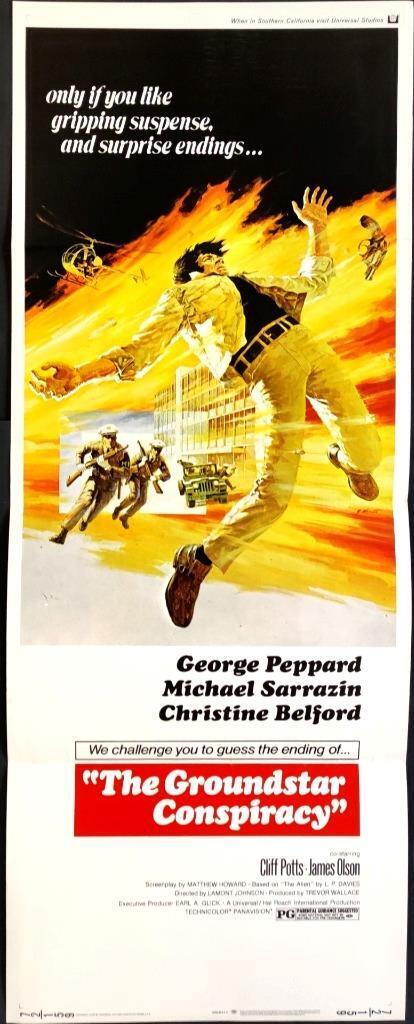
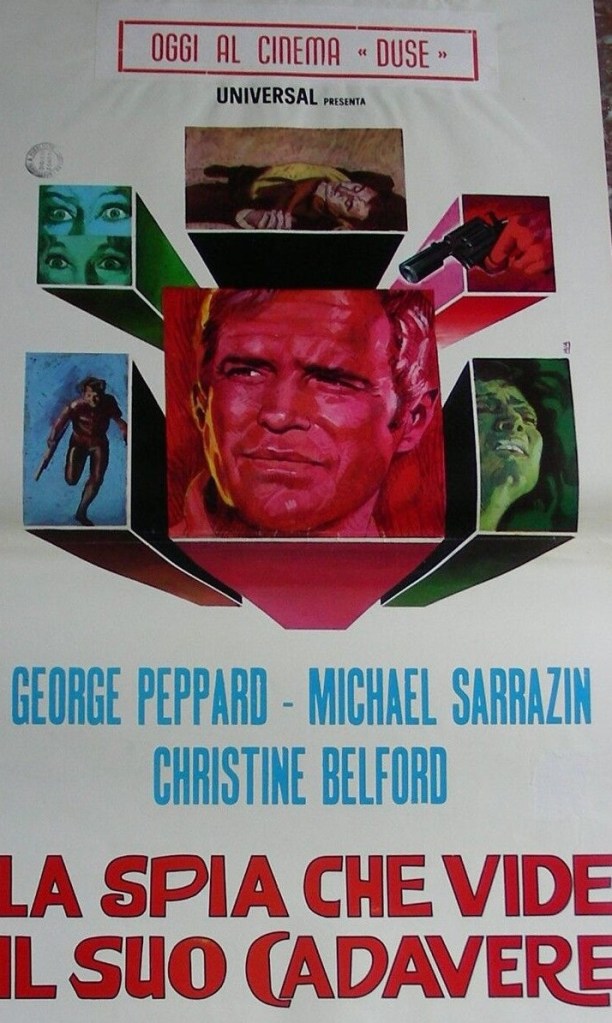
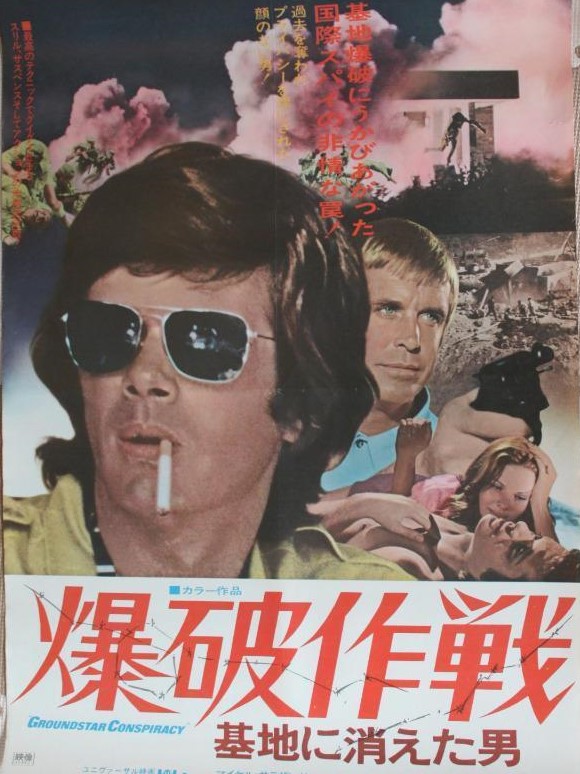
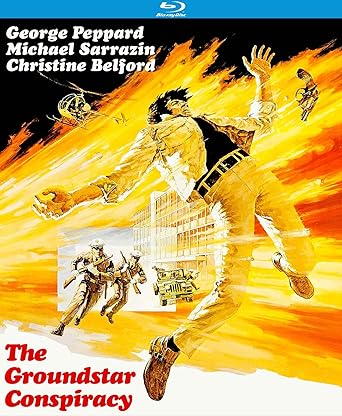
The Groundstar Conspiracy (1972) ****

Gripping thriller that set up the template for the decade’s later conspiracy mini-genre exemplified by The Conversation (1974), The Parallax View (1974) and Three Days of the Condor (1975). Under-rated compared to that trio, and considerably less cinematically self-conscious, it nods in the direction of The Manchurian Candidate (1962), The Mind Benders (1963) and Seconds (1966) while clearly influencing Memento (2000), The Bourne Identity (2002) and Inception (2010).

Touches on themes of surveillance, brainwashing, amnesia, invasion of privacy and government control,  and for good measure may even have invented water boarding. Brilliantly structured with superb twists right to the end and peppered with red herrings. Audiences these days will be more easily misled than back in the day by references to an alien. Innovative and extensive aerial footage, and like Figures in a Landscape (1970) helicopters play a major part in pursuit.

A series of explosions at a secret government facility kills six men. One other, Welles (Michael Sarrazin), badly disfigured, escapes, potentially with vital secrets. Security chief Tuxan (George Peppard) leads the investigation. From the off the case is shrouded in mystery, not least because Tuxan refuses government high-ups access to the site and the ongoing probe, instead relying on government PR man Carl (Cliff Potts) as a conduit.

Of course, if Welles was innocent he’d hand himself in rather than running away to the house of Nicole (Christine Belford).  Naturally, although she calls an ambulance, she is deemed guilty, too, for providing just too handy a hideout. Under extreme interrogation, Welles, claiming complete amnesia, refuses to talk.

Without the benefit of a trial Welles is shipped out to a maximum-security unit but the transportation is driven off the road and he escapes, returning to Nicole. Passion ensues, but even she, conceivably from the audience perspective a government plant, fails to elicit much information from him beyond that he speaks Greek and had some unnamed life-changing experience in that country, possibly involving water.

Turns out Welles is bait. Tuxan has arranged the escape. Nicole’s house is bugged – for sight and sound and nobody has the decency to cringe when watching the couple make love. Tuxan reckons that at some point Welles’ co-conspirators will surface. But when they do, they are a good bit smarter than Tuxan anticipates. The plot thickens when, even to them, Welles sticks to his story of being an amnesiac.

And the plot continues to twist and turn right to the very end which contains a just fantastic twist, two actually. Audiences these days more accustomed to the clever climax might guess the twist, but I really doubt it.

By this stage both George Peppard (Rough Night in Jericho, 1967) and Michael Sarrazin (The Sweet Ride, 1968) were finding a perch at the top of the Hollywood tree hard to hold onto, the fact that the movie, not notably highly budgeted, featured two supposed top stars proof of that. But it wouldn’t work unless Welles was played by an actor whose screen persona would make an audience both question his innocence and guilt. Sarrazin wouldn’t be the first actor to play on audience expectation to portray a bad guy.

In fact, both are excellent. Sarrazin is able to drop the fey aspect of his character and the narrative helps enormously, puzzlement and confusion an ingenious assist, to depict him as a person of more depth. The disfiguring of a handsome movie idol shifts audience expectation from the off.

I’ve become a bigger fan of George Peppard than I ever imagined after watching a series of quite different portrayals that tossed around his screen persona from The Third Day (1965) through The Blue Max (1966) and the unsettling mystery trilogy of P.J / New Face in Hell (1967), House of Cards (1968) and Pendulum (1968).

Directed with considerable assurance and occasional elan by Lamont Johnson (A Covenant with Death, 1967), this avoids the cinematic indulgence of  The Conversation (1974), The Parallax View (1974) and like Three Days of the Condor (1975) sticks more to narrative. Water, more normally associated with tranquility, takes on a disturbing quality. Sometime writer-director Douglas Heyes (Beau Geste, 1966) discarded half that hyphenate to turn in a slick screenplay based on the bestseller by Leslie P. Davies.

Minor gem.

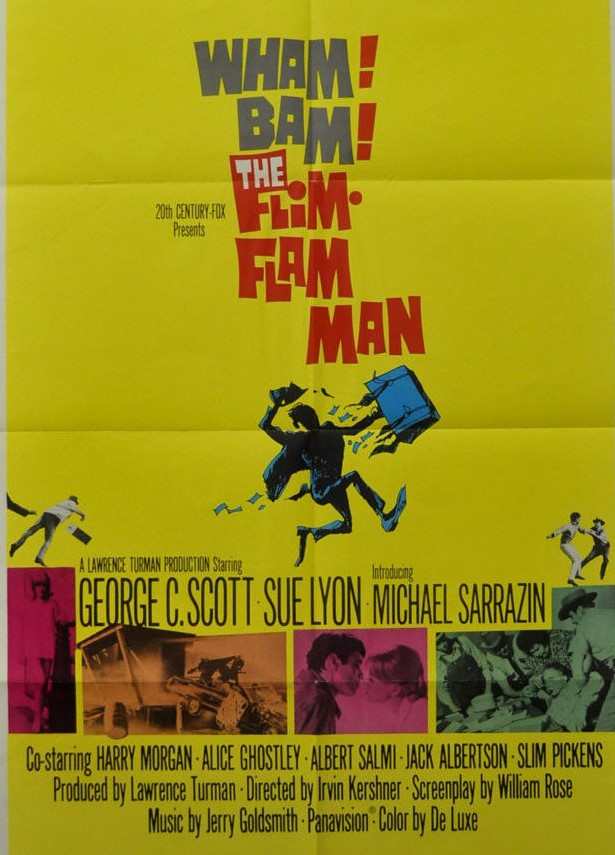
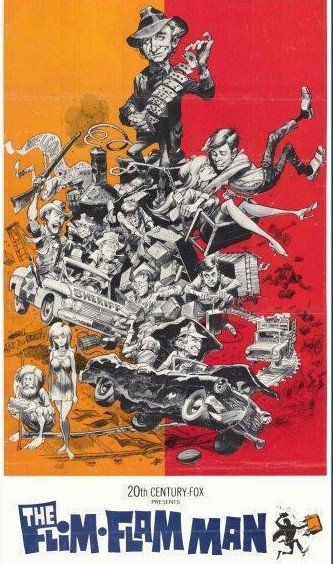
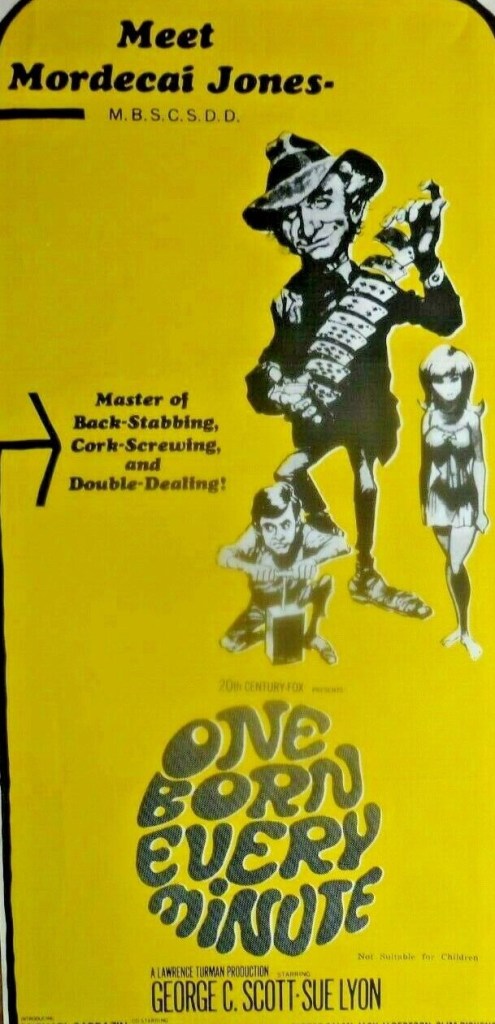
The Flim Flam Man / One Born Every Minute (1967) ***

Throwback to It’s A Mad, Mad, Mad, Mad World (1963), prelude to Smokey and the Bandit (1977) and in the middle of the car chases and town wrecking a character study of a pair of grifters, one veteran, the other his pupil.

U.S. Army deserter Curley (Michael Sarrazin) teams up with veteran con man Mordecai (George C Scott) who teaches him the tricks of the trade. There’s nothing particularly innovative about the older man’s techniques – Find the Queen, The Lost Wallet, selling hooch as genuine whiskey – and the rewards are not particularly rewarding unless you are living at scavenger level in whatever run-down habitat you can find.

The dumb cops, Sheriff Slade (Harry Morgan) and Deputy Meshaw (Albert Salmi), aren’t quite so stupid otherwise they wouldn’t occasionally happen upon their quarry. And the larcenous duo offer nothing more clever by way of escape except to hijack vehicles.

So once you get past the aforementioned car chases and town wrecking it settles down into a gentle old-fashioned drama. Luckily all the good ol’ boy shenanigans are limited to the police, and neither main character is afflicted by over-emphatic accents.

Mordecai ain’t no Robin Hood nor a criminal mastermind who might have his eyes on a big- money heist. His ethos is stealing not so much from the gullible but the greedy. All his suckers think they can make an easy killing from a guy who appears a harmless old duffer.

He’s not looking for a big score because he’s got nobody to settle down with and because, although on a wanted list (as “The Flim-Flam Man” of local legend) he’s not going to exercise the authorities except cops with very little otherwise to do. He is as laid-back a drifter as they come.

Curley offers the drama. He starts to have qualms not so much about stealing from the greedy but about the repair bills for the cars they wrecked, especially one belonging to the young innocent Bonnie Lee (Sue Lyon), to whom he takes a fancy. While she reciprocates it’s only up to a point, having the good sense not to hook up with a criminal, so eventually he has to choose between giving himself up and serving time in the hope Bonnie Lee will hang around and severing his links with Mordecai, whom he treats as a father figure.

How he works that out is probably the best scene, especially given his temporary profession. Whether this is the first picture to feature so prominently incompetent cops rather than either the tough or corrupt kind I’m not sure but Slade and Meshaw take some beating.

In his first starring role, Michael Sarrazin (Eye of the Cat, 1969) is the cinematic catch. All the more so because director Irvin Kershner doesn’t take the easy route of focusing on his soulful eyes, permitting the actor to deliver a more rounded performance. He’s certainly more natural here than any future movie where he clearly relied far more on the aforementioned soulful eyes.  

While I’m not sure the ageing make-up does much for him, George C. Scott (Petulia, 1968), in his first top-billed role, tones down the usual operatics and makes a convincing loner who can make one good romantic memory last a lifetime. He switches between completely relaxed to, on spotting a likely victim, sharp as a tack. The harmless old man guise falls away once he smells greed, replaced by cunning small-time ruthlessness.

Sue Lyon (Night of the Iguana, 1964) has little to do except not be the sex-pot of her usual screen incarnation and that’s to the good of the picture. By this stage of his career Harry Morgan was more likely to be found in television so it’s a treat to see him make the most of a meaty supporting part. Look out for Strother Martin (Cool Hand Luke, 1967) and Slim Pickens (Rough Night in Jericho, 1967).

Irvin Kershner (A Fine Madness, 1966) appears on firmer ground with the drama than the wild car chase/town wrecking but I suspect it takes more skills to pull off the latter than the former where the actors can help you out. Though I notice Yakima Canutt is down as second unit director so he might be due more of the credit. Screenwriter William Rose had already plundered the greed theme and, to that extent the car chase, for his seminal It’s A Mad, Mad, Mad, Mad World.

The outlandish elements, fun though they are, give this an uneven quality that gets in the way of a tidy little picture.

The Sweet Ride (1968) ***

Unusual drama mainlining on Californian surf, sex, bikers, a mystery of Blow-Up (1966) dimensions and the best entrance since Ursula Andress in Dr No (1962). Displays a 1960s vibe with a 1950s pay-off as the “hitchhiker” of responsibility rears its ugly head.

A woman thrown out of a car narrowly escapes being run over. The cops jack in the investigation after television actress Vickie (Jacqueline Bisset) refuses to explain why she’s been badly beaten up.  And so we enter flashback mode to supposedly find out. She makes a glorious entrance, emerging from the sea, minus bikini top, into the lives of surfer Denny (Michael Sarrazin), jazz pianist Choo-Choo (Bob Denver) and ageing beach bum and tennis hustler Collie (Tony Franciosca). From the off, she’s enigmatic, gives a false address, won’t explain bruises on her arm, has something clandestine going on with television producer Caswell (Warren Stevens) and like Blow-Up we are only privy to snippets of information.

She’s half-in half-out of a relationship with Dennis, with Collie hovering on the periphery hoping to pick up the pieces to his sexual advantage. Contemporary issues clog the background, Choo-Choo tries a camp number complete with pink dog to avoid the draft, a neighbor threatens to shoot Parker for wandering around in shorts and habitually stealing his newspaper, epithets like “degenerates” are tossed around, Choo Choo’s girlfriend Thumper, while appearing in movies with titles like Suburban Lust Queen acts den mother, there’s not much actual exciting surfing, and a biker called Mr. Clean is somehow involved.

The romance plays out well, Vicky unsure, Denny convinced but without a livelihood to offer and unable to get a straight answer out of her. Choo-Choo gets the gig of his dreams in Las Vegas and there’s an rape scene, more unsettling because it’s committed by Denny with the bizarre justification of getting “just for once something on my terms.”  And there’s the equally disquieting sense that the only explanation for Vickie’s behavior is to tab her a nymphomaniac, walking out of an argument with a mysterious man in a beach house to drop her clothes for a bout of sex with Mr Clean.

I must have seen a different picture from everyone else. A good few critics at the time and reviewers since appear to think Vickie was also victim of a gangbang by the bikers, but I can’t see why. When he sees Vickie coming down from the beach house, Mr. Clean shouts “everybody split” and his buddies clear the beach. However, Mr. Clean, ironically, gives the best indication of her state of mind, explaining that Vickie “kept staring back at the house and moaning about how she wanted to die” while he enjoyed the best night of his life sex-wise.

Denny and Collie prove not to be the pussycats they appear, bearding the bikers in their den and beating up Mr. Clean while Denny goes on to deliver a hiding to Caswell. But what this film turns out to be is an examination of vulnerability, how easily those with a new sense of freedom are trapped. An examination of contemporary mores, perhaps, but in not resolving the mystery of Vickie ultimately fails to deliver, especially as it does not, from the outset, carry the kind of artistic credentials of Antonioni in Blow-Up.

Perhaps the mystery needs no resolution, it’s just same old-same old dressed up in the novelty of sexual freedom. There’s no idea of why Vickie was beaten up, and essentially abandoned on the road to become accident fodder, and no hint really of why she fell foul of someone so badly she needed disposed of, no notion that she was a threat to anyone. (Or, for that matter, no explanation of what happened to her bikini top and why, if she was so apparently free with her charms, she was so shy about being seen half-naked.) On the other hand, victim may well have been Vicky’s destiny from the get-go, that kind of innocence only waiting to be defiled.

In any 1960s contemporary picture there’s always the temptation to accept as truthful or reject as phony the lives shown. The idea that sexual freedom bestows actual freedom is usually the issue until consequence (i.e. old-fashioned Hollywood morality) comes into play. This is less heavy-handed than, for example, Easy Rider (1969) or Bob & Carol & Ted & Alice (1969). The characters make decisions to grow up or to stay locked in a world of easy sex, dope and money. There’s no grand finale, just a more realistic drifting apart, and it’s only Vickie who comes apart, although that process had begun long before she met the drifters.  

Jacqueline Bisset (The Detective, 1968), in her divinely posh British accent, comes over well as an attractive screen presence and complex character. In fact, she has a bigger part here than in Bullitt (1968) or The Detective (1968). If you wanted anyone to portray a soulful hippie you need look no further than tousle-haired Michael Sarrazin (In Search of Gregory, 1969) and normally if you required someone on the sly, despicable side, Tony Franciosca (Fathom, 1967) might well be your first port of call, but Franciosca proves the surprise here, classic wind-up merchant and predator who exhibits considerable vulnerability when he realizes he is losing the worship of the idealistic young.

Former British matinee idol Michael Wilding (A Girl Named Tamiko, 1962) and Norma Crane (Penelope, 1966) appear as Vickie’s parents.  Bob Denver (Who’s Minding the Mint, 1967) and Michele Carey (The Spy with My Face, 1965) are solid support. Director Harvey Hart (Fortune and Men’s Eyes, 1970) tries to cover too much ground and could have done with narrowing the focus. Future Bond screenwriter Tom Mankiewicz (son of Joseph L.) made his screenwriting debut adapting the book by William Murray.

The DVD is a bit on the pricey side, but if you just want to check it out, YouTube has a print.

Eye of the Cat (1969) ***

If I hadn’t watched The Woman Who Wouldn’t Die (1965) I wouldn’t have been so well up on the intrigue of the modern film noir so I guessed where this was going pretty quickly but that did not detract from the enjoyment of watching it reach its stylish denouement. A perfect antidote to the cute cats as personified by Disney in The Three Lives of Thomasina (1963) and That Darn Cat! (1965). 

Realizing that wealthy client Danny (Eleanor Parker), suffering from emphysema, might only need a nudge or two to hasten her death, hairdresser Kassia (Gayle Hunnicutt) enrolls the sick woman’s wayward nephew Wylie (Michael Sarrazin) in a plot to kill her off and inherit her money. There are two obstacles, possibly three.  Danny has a houseful of cats, close to a hundred at the last count, and Wylie, after a childhood feline encounter, is terrified of the four-legged creatures. Upset at his previous behavior, Wylie has been cut out of the old lady’s will and needs reinstated pronto. The last element is that Wylie has a younger brother, Luke (Tim Henry) who acts as Danny’s gofer, who may take exception to the scheme.

Needless to say, the otherwise imperious Danny is so delighted at the return of the prodigal nephew that she demands her lawyer Bendetto (Linden Chiles) amend the will immediately. She sleeps in an oxygen tent and simply switching off her supply will be enough. But, of course, it would be foolhardy to murder her before the will is signed, sealed and delivered. Unfortunately, Wylie is a high-spirited selfish young man and comes close to offing her unintentionally.

While Wylie takes up residence in Danny’s vast house, Kassia is kept in the cellar and there is a suspicion that he will blackmail her into having sex with him since she sees their relationship as strictly business. Wylie has a whole string of abandoned girlfriends and seems to have capacity for preying on the most vulnerable if “Poor Dear” (Jennifer Leak), the nickname he assigns one is anything to go by.

Meanwhile, Wylie’s childhood fears return. He doesn’t need to see a cat, or even smell it, just sensing its presence is enough. His terrified reaction makes him want to abandon the scheme, despite the amount he might inherit. Desperate to prevent him from leaving, Danny agrees to get rid of her army of cats. Unfortunately, Luke is not as assiduous as he ought to be and a couple escape the round-up.

As the deadline for her demise nears, the tension is ratched up, seeds of suspicion sown among the conspirators, complications with the will and of course the cats hidden from Wylie’s view – but not ours. A fabulous scene with a runaway wheelchair nearly puts paid to the entire endeavor.

The under-rated Michael Sarrazin (In Search of Gregory, 1969), given a more complex character than before, switches through the gears of terror, charm and predation. Gayle Hunnicutt  (P.J./New Face in Hell, 1968) is a less obvious femme fatale, relying far more on brain than obvious physical attributes. And what a delight to see 1950s box office queen Eleanor Parker (Warning Shot, 1967) handling a much larger role than was normal at this point in her career. Tim Henry made his movie debut. You might also spot Laurence Naismith (Jason and the Argonauts, 1963) and one of Judy Garland’s husbands Mark Herron (Girl in Gold Boots, 1968).

From the atmospheric credit sequence featuring silhouettes of cats through a rash of twists and turns director David Lowell Rich (A Lovely Way to Die, 1968) guides this unusual thriller with considerable expertise, knowing just when to add another layer to the suspense, and drawing excellent performances from the two principals. The original screenplay is by a master of the macabre Joseph Stefano of Psycho (1960) fame. Unlike me, who had a head start, this chiller will keep you guessing.

Behind the Scenes: “They Shoot Horses, Don’t They” (1969)

Dream Team Number One: Clark Gable and Jean Harlow. This was of course a good 30 years before the movie actually got made. The Horace McCoy novel was purchased in 1935 by MGM as a big-budget project teaming Clark Gable and Jean Harlow. This was despite Variety proclaiming it was “not screen material.” The premature death of Harlow put paid to the idea. Next, actor Wallace Ford (Freaks, 1932) bought it with Broadway in mind. A production was scheduled to open in 1939, but never did.  

Dream Team Number Two: Charlie Chaplin and Marilyn Monroe. When the comedian purchased the rights in the early 1950s he intended Marilyn Monroe to play the leading female. Although she was a mere starlet Chaplin had form in building up newcomers. Author McCoy had by that point become an accomplished screenwriter with over 30 credits including Gentleman Jim (1942), film noir Kiss Tomorrow Goodbye (1950) and The Lusty Men (1952) That concept fell by the wayside when Chaplin was effectively banished from America while launching Limelight (1951) in Britain.

It was another 14 years before interest in the novel was revived by screenwriter James Poe, who purchased the rights from the McCoy estate. Although most famous within the trade for being accused of fraudulent behaviour in relation to his screenplay for Around the World in 80 Days (1956). Despite an Oscar for the film he was sued for $250,000. However, he had a sterling body of work including Cat on a Hot Tin Roof (1958), Sanctuary (1960), Lilies of the Field (1963), The Bedford Incident (1965) and Riot (1969) and two other Oscar nominations.

In 1965 he had signed a multi-picture writer-director deal with Columbia. He was either going to make his directorial on The Gambler or They Shoot Horses, Don’t They. It turned out to be the latter. Failing to get the movie off the ground with Columbia or under his own steam, he turned to new studio Palomar, which was a production entity set up by the ABC television network, which bought over his rights as well as his script but kept Poe on as director.

Dream Team Number Three: Faye Dunaway. Yep, one big star, not two. Poe’s screenplay, while not eliminating the male lead, spun on a female star. Dunaway, hot after Bonnie and Clyde (1967), was offered $600,000 to play the role. Mia Farrow was also in contention, for $500,000. The only problem was, the budget could not remotely stretch to that. As helmed by Poe, it was to cost no more than $900,000. The film was scheduled to begin shooting in spring 1968 but a month later the start date shifted to June.

Two relative newcomers Robert Chartoff and Irwin Winkler were brought in as producers to move the project along. Later they would be responsible for such classics as Rocky (1976), The Raging Bull (1980), The Wolf of Wall Street (2013) and The Irishman (2018), but at this point they had just three pictures under their belt, although that included Point Blank (1967), Their first task: persuade Poe to rewrite the script. They felt the third act needed work with restructuring elsewhere to make the pay-off work.

But Poe, believing his position was sacrosanct, refused to discuss a rewrite. He refused to discuss anything, period, treating the producers as his assistants rather than people with some power within the studio. According to Irwin Winkler, “Poe seemed unaware of the of the normal process of preparation, even though he’d been around movie sets for decades.”

Realising that getting a star on their budget was impossible, Chartoff and Winkler changed tack and talked to good actors, but even then few were interested. A less dramatic star than Jane Fonda you could not imagine, her resume filled with light comedies, French films that utilised her sexuality or the extravaganza that went by the name of Barbarella (1968). But the pregnant Fonda was keen on change. The film was delayed until after she had given birth. Michael Sarrazin should have been out of the equation. John Schlesinger had lined him up for the Jon Voigt role in Midnight Cowboy (1969) but Universal, to whom he was under contract, asked too much to send him out on loan.

With no sign of the rewrites, the producers became antsy about the director. However, they showed their true mettle as producers, convincing Palomar there was no way the original budget would cover the ballroom set, huge number of extras, live orchestra and salaries. It would need to at least triple.

In a picture of one predicament following another, there was one crisis the producers had not foreseen. They were going to be fired. Apart from anything else, they were only executives on the picture with any experience, it being not only Poe’s first movie but that of Chartoff and Winkler’s superiors at the studio. The outcome – the guy who had told the pair they were being fired was shown the door instead.

Susannah York was cast after the producers saw a sneak of The Killing of Sister George (1969) at the Robert Aldrich studios. She had committed to Peter O’Toole vehicle Country Dance/Brotherly Love (1970), written by her cousin James Kennaway (Tunes of Glory, 1960). After too many delays on They Shoot Horses she planned to pull out in favour of the other film. Although Sally Kellerman (Mash, 1970) was set as a last-minute replacement, the issue was resolved by asking MGM to delay the start on the rival picture.

Believing Poe was in no position to helm such a big-budget picture enterprise, Chartoff and Winkler began the process of removing him only for Jane Fonda to dig her heels in. She changed her mind after witnessing first-hand Poe’s directorial skills – or lack of them – when she took part in a screen test for Bonnie Bedelia. Winkler recollected, “On the set Jane asked Poe questions about the blocking of the scene, why she moves in one direction rather than another, why in front of a sofa rather than behind it etc. He couldn’t answer her questions and told her to talk to the cameraman.” Exit Poe.

In terms of a replacement, Chartoff and Winkler set their sights of Sydney Pollack (The Scalphunters, 1968) with whom they had previous dealings, and William Friedkin, then being hailed for The Homecoming (1968) – luckily The Night They Raided Minsky’s (1968) had yet to be released. But studio executives had a third director in mind, Jack Smight (No Way to Treat a Lady, 1968). Friedkin should have been in pole position, having only received $75,000 for The Homecoming. His agent, sensing an opportunity, demanded $200,000. Jack Smight’s agent also got greedy and wanted $250,000. Pollack’s agent was happy with the $150,000 on offer.

When Poe was eased out, filming was announced as beginning on February 17, 1969, the budget having now increased to $3.2 million – including $400,000 for extras. However, acoustic issues – seawater had eaten away the bottom of the pier – prevented use of the old Aragon ballroom in Santa Monica. That set was constructed on the Warner lot.

Pollack then turned it down. He had reservations about the script, which had still never been rewritten. When Robert E. Thompson, a television writer but “a Horace McCoy expert,” was mooted, Pollack changed his mind. The new script contained the “flash forward” scenes that prepared audiences for the shock ending. However, the new scenes and delays in starting increased the budget which now ballooned to $4.7 million.

It turned out the director was the best actor of all. “I was impressed with Sydney Pollack’s ease on the set,” recalled Irwin Winkler. “He never seemed to be working hard and yet was able to get marvelous performances out of the actors. Everybody in the company adored him.” Asked by Winkler how he remained so calm dealing with the actors and all the extras and the complicated camera set-ups, he replied, “it was really quite easy.” That same afternoon he collapsed on set and was diagnosed with “nervousness.”

The studio, the stars, the producers, all seemed confident about the picture. All they had to do was convince the audience. But at the first preview in San Francisco the audience roared with laugher at the climactic scene. That shocked the studio to the core until the producers were able to reassure the head honchos that the “fast forwards” would smooth over that problem. Which they did.

It was nominated for nine Oscars – Best Director, Best Screenplay, nods for Jane Fonda, Gig Young and Susannah York among others. Only Gig Young won.  

SOURCES: Irwin Winkler, A Life in Movies, (Abrams Press, New York, 2019) p34-47;  “Tough Stuff,” Variety, August 7, 1935, p59; “Ford Buys for B’Way,” Variety, September 11, 1939, p42; “Dance Marathon Reprise,” Variety, August 3, 1966, p24;  “IT&T In No Way Slowing Down Theatrical Feature Program of ABC,” Variety, January 10, 1968, p4; “Crowded Slate for Palomar,” Variety, February 28, 1968, p18; “Bob Evans Chips-Service To Writers As Stars At Paramount,” Variety, May 1, 1969, p19; “Jane Fonda Gets Top Role in Palomar’s Horses,” Box Office, July 22, 1968, pW1; “Palomar Horses on W7 Space,” Variety, October 23, 1968, p3; “Jan 6 Filming Date for They Shoot Horses,” Box Office, December 16, 1968, pW5; “Cheery Side of Delay on Horses,” Variety, January 15, 1969, p21; “Winkler Wants Films With Social Comment,” Box Office, January 19, 1970, pW1.

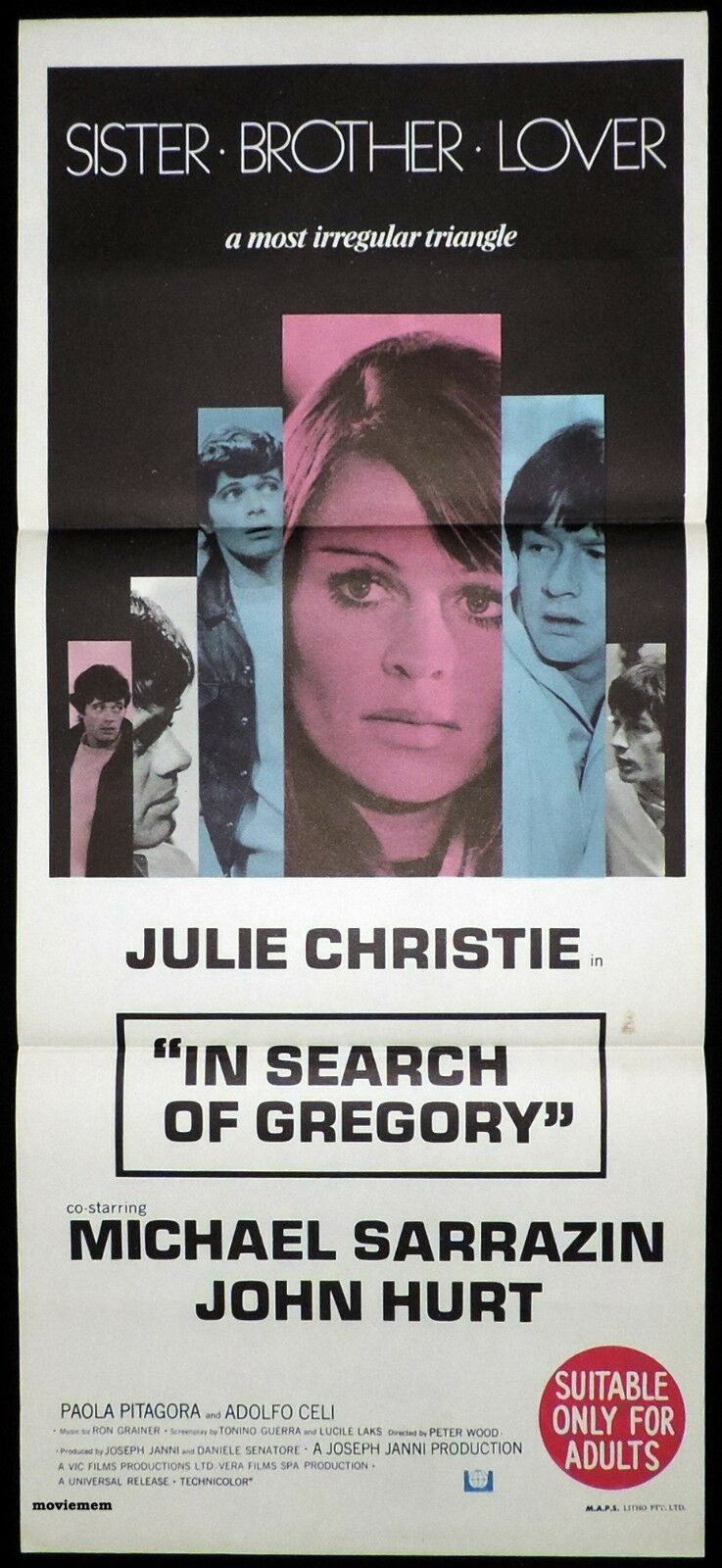
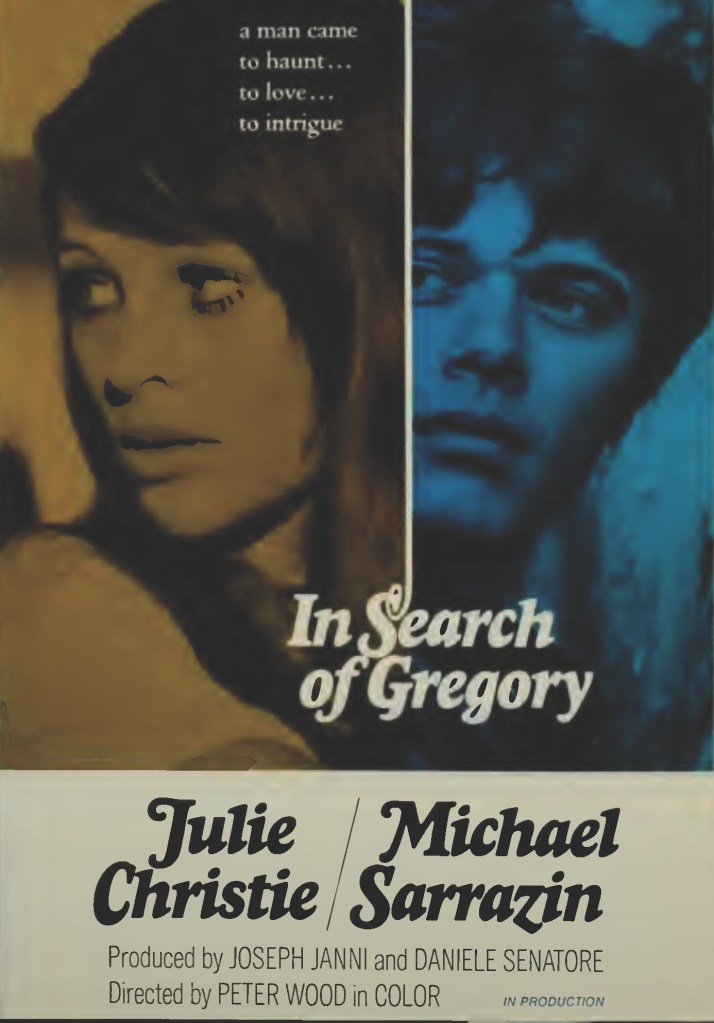
In Search of Gregory (1969) ****

Off-beat examination of the fantasy vs. reality conundrum with an ever-watchable Julie Christie as the woman on the titular hunt. One of the great lost pictures – the only film of acclaimed British theater director Peter Wood is a more whimsical cousin to the more deliberately obscure works of Alain Resnais (Last Year at Marienbad, 1961) and Michelangelo Antonioni (Blow-Up, 1966) which pivoted upon the question of whether events presented actually occur or exist only in the head of the leading character.    

Catherine (Julie Christie) is enticed to Geneva by her father (Adolfo Celi) for his latest wedding on the basis that she will meet the impossibly handsome Gregory (Michael Sarrazin). On arrival she discovers the agoraphobia of younger brother Daniel (John Hurt) has been temporarily lifted by Gregory. Catherine appears set to meet Gregory on a number of occasions, but either he does not turn up (the wedding) or somehow they miss each other, even at one point occupying adjoining phone booths. And it would have been a pretty dull picture if that was all that was going on. But whether the result of reality or Catherine’s imagination, the Gregory we see is a vivid screen presence. The world the character inhabits is unusual to say the least, so unique that it is either obviously real or fake, but virtually impossible to determine which.

The best Gregory sequence, of which Steve McQueen would be proud, involves the character moving by means of the windscreen from one side to the other of a car driven at high speed. In another scene Gregory plays the equally perilous game of Autoball, a kind of polo with stock cars. As convincing is Gregory’s avant-garde orchestra consisting of two guitars, bottles, a bicycle wheel, a waste bin and coins in a glass. 

The detail is so extraordinary that it must be real. The brother seems real enough, too real if anything, close to enjoying (or pining for – the poster promises more than the picture delivers) an incestuous relationship with his sister. But for every moment that appears questionable – did she really witness Gregory making love to her future mother-in-law – there are others where doubts are immediately quelled (an address which appears non-existent is not). And long before anybody came up with the idea of selling bottled water, Gregory is apparently in the business of selling tinned Alpine air. Other moments she does not witness – Daniel riding a Lambretta/Vespa with feet on the handlebars – add to the prospect of genuine reality.

Catherine might even have met Gregory except that in going to bed with the man who looks very much like what we believe Gregory to look like she determines that he shall remain anonymous. So it’s anybody’s guess whether Gregory is a figment or phantom of her imagination. And why, of course, should such invention be necessary? Does it mean that her father and brother do not exist either? These days the unreliable narrator is a common literary device but that was not the case at the tail end of the 1960s, so in some senses this was way ahead of its time.

It’s interesting, of course, to attach logic to the idea that it all takes place in Catherine’s imagination. You can kind of understand that maybe she thinks her father’s latest bride is going to betray him at the slightest opportunity. But it’s some imagination that sends Gregory into devilry in the car with Daniel. And it begs the question if none of it is real why does she keep on missing Gregory all the time? Does that relate to an even deeper psychological feeling that she is always going to miss out?

It’s an entertaining mystery. There’s no great angst. Antonioni had the sense or cunning to ensure that consequence mattered in Blow-Up – a murderer escaping justice. But there’s no such tension here. While Catherine is tabbed a nympho by her brother (who never questions her father’s predilection for multiple marriages), the suggestion that she’d fly from Rome (where she lives with her boyfriend) to Geneva is the hope of a hook-up seems too far-fetched. Despite the presence of Julie Christie – who can certainly carry even as slight a picture as this – and a quixotic turn from John Hurt (Sinful Davy, 1969) it’s neither obscure enough to be arthouse nor sufficiently plot-driven to be mainstream and remains an oddity.

If you are going to be irritated beyond belief that will occur in the first fifteen minutes or so, but if you stay the course, you will find it a highly rewarding watch rather than a cinematic car crash.

Your best bet to catch this film is Ebay or other secondhand routes.

Discover WordPress

A daily selection of the best content published on WordPress, collected for you by humans who love to read.

The Atavist Magazine

by Brian Hannan

WordPress.com News

The latest news on WordPress.com and the WordPress community.