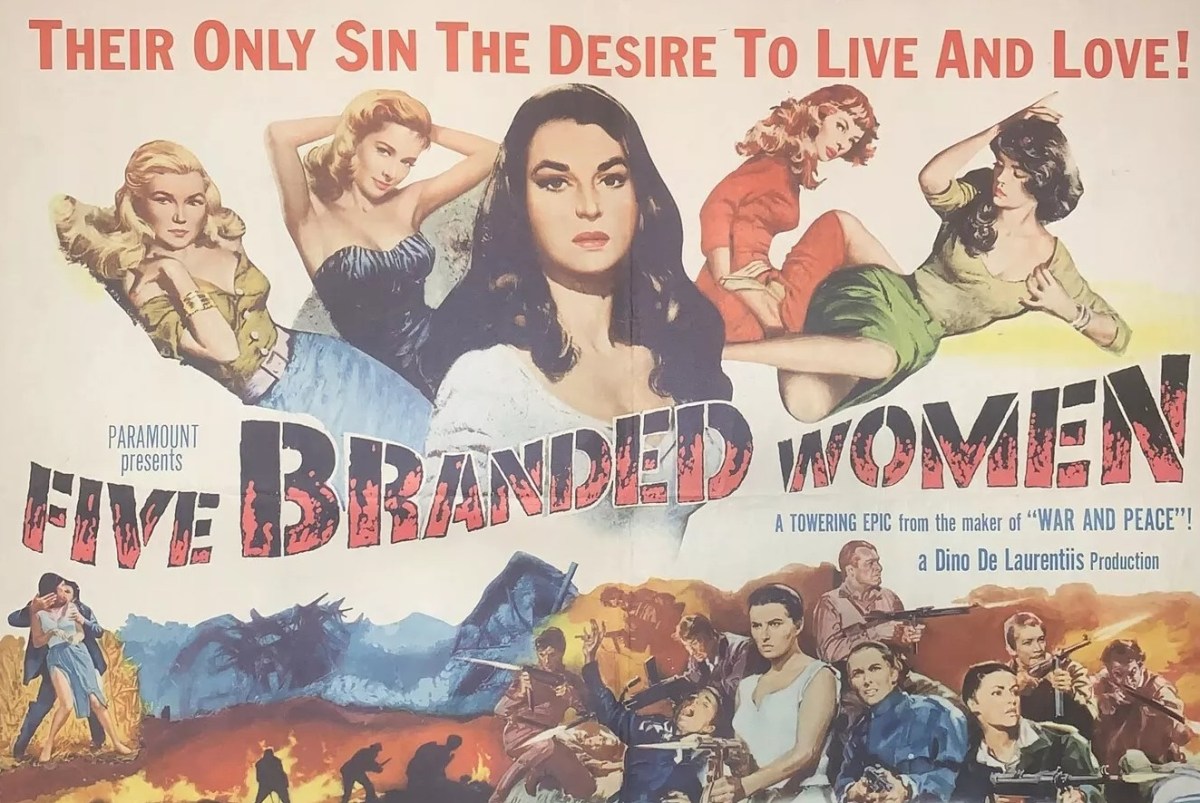
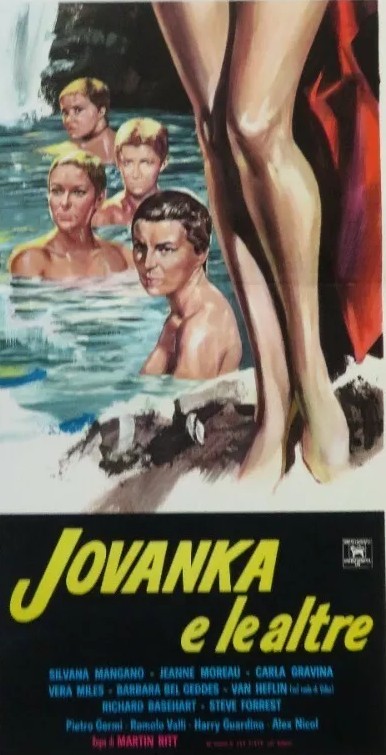
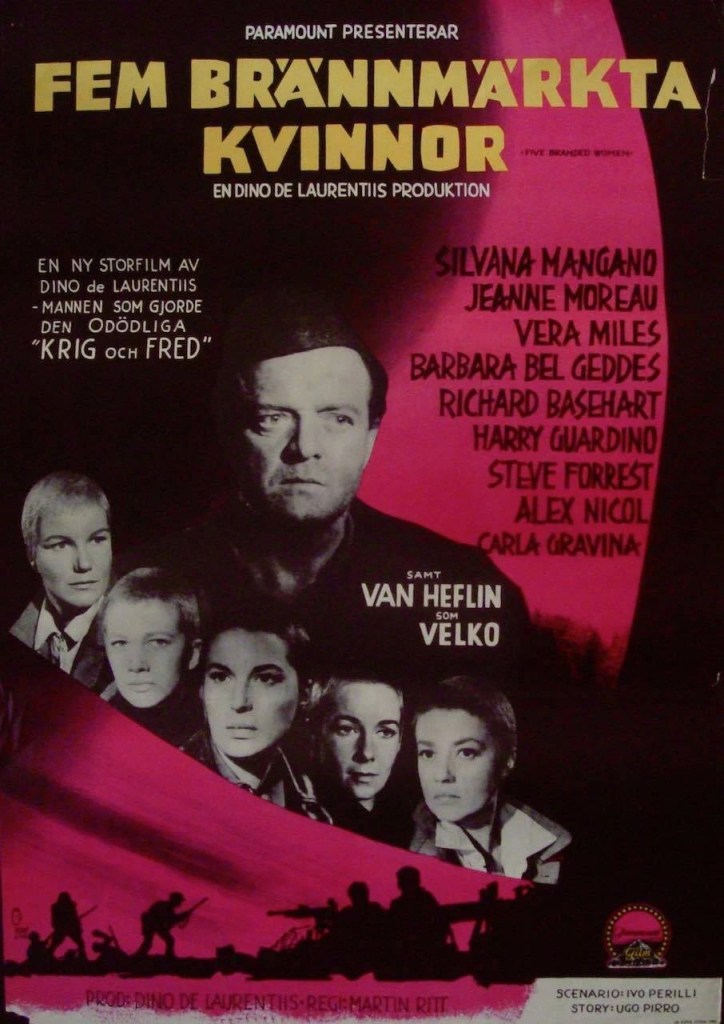
Should have qualified as that rare thing – an all-star female cast. Italian Silvana Mangano had led the arthouse revolution and kickstarted the importing of sexy Italians in international hit Bitter Rice (1949), Jeanne Moreau was a leading light in the French New Wave (and another sexy import to boot) as star of Les Liaisons Dangereuses/Dangerous Liaisons (1959), Vera Miles was hot after Psycho (1960), rising star Barbara Bel Geddes (Vertigo, 1958) another Hitchcock protegee. Never mind that the story was a serious one, the redemption of female collaborators in Yugoslavia in World War Two, there was still time for what had become very much a western genre cliché, the inability of any woman not to strip off at the sight of a waterfall – here all five go skinny dipping.
The narrative should have been clearcut as redemption tales generally are: miscreant finds salvation. But this one is pretty muddled up and the moral confusion gets in the way. While some of the women such as Ljubo (Jeanne Moreau) have sex with the occupying Germans to prevent a brother being sent to a work camp, others such as Jovanka (Silvana Mangano) simply fall in love or like widow Marja (Barbara Bel Geddes) are desperate for a child. All five have been conquests of German lothario Sgt Keller (Steve Forrest) who is castrated by the partisans. The women are humiliated by the partisans who shave their heads and the Germans cast them out of the town, Daniza (Vera Miles) part of the quintet though she denies having sex with Keller.
Like “Deadly Companions” the marketeers major on the promise of female nudity in a pool.
But it’s not just the Germans who are apt to have predatory notions about women. A pair of armed collaborators consider them fair game and attempt to rape Jovanka and Ljubo. Partisan Branko (Harry Guardino) – ostensibly in the category of good guy – attempts to rape Jovanka then seduces Daniza. The lovers are later executed by the partisans for breaking the rule not to have sex with each other. And this is where it gets mixed up. The pair were meant to be on guard when they started having sex. In consequence, three Germans sneaked into their camp and nearly caused disaster. Despite that, Jovanka, who believes she was unfairly treated in the first place in being denied love just because there was a war on, still insists that they shouldn’t be condemned for ordinary human desire.
The movie works best when it sticks to straightforward redemption or is character-driven. Given the chance Jovanka turns into an effective partisan, cutting down Germans with a machine gun, preventing rape of herself and Ljubo by shooting the attackers with a captured pistol. But she rejects an attempt at reconciliation by partisan leader Velko (Van Heflin), the one who had cut off her hair, blaming him for her unnecessary humiliation. He later tries to make amends, by trying to keep her out of brutal action.
Despite taking up arms, the women remain vulnerable to smooth-talking men. Ljubo takes prisoner Capt Reinhardt (Richard Basehart), who might fall into the “good German” category since he isn’t like Keller, was a professor of philosophy and generates sympathy because his wife died in an air raid. Taking his word of honor, Ljubo unties him. She thinks he will be exchanged for a partisan prisoner. But he knows the truth – there are no partisan prisoners available for exchange because the Germans kill them. So he tries to escape, and she machine guns him in the back.
By this point Ljubo is far from a soft touch, not likely to prattle on about women being free to love the enemy or their compatriots, and is the one who shoots Daniza as part of a firing squad when it is left to her or Jovanka to do so.
What saves it is the brutal realism of war, this predates the vengeful citizens who at war’s end would take revenge on local women who slept with any occupying Germans (Malena, 2000, showed this repercussion in Italy and it was the same throughout France). There’s certainly an innocence about female desire and Jovanka defending her right to have sex, though, surely, there would have been shame involved in having sex with even a Yugoslavian before marriage in what would still have been a devout country. So a complex defiant woman, refusing to bow down to male-enforced rules. But there’s a male corelative. Branko equally refuses to obey any rules, and his actions cause harm.
In terms of acting, Silvana Mangano and Jeanne Moreau are streets ahead of their American counterparts, and complement each other, Mangano loud and outspoken, Moreau quiet and brooding. Harry Guardino (Madigan, 1968), Richard Basehart (The Satan Bug, 1965) and Van Heflin (Once a Thief, 1965) are the pick of the males.
Martin Ritt (The Spy Who Came in from the Cold, 1965), who liked to back a cause, has chosen an odd one here, and after a slow start it picks up. Written by Ivo Perilli (Pontius Pilate, 1962) from the book by Ugo Pirro.
Easily leads the pack of the women-in-wartime subgenre and despite, or bcause of, the moral confusion still well worth a look.
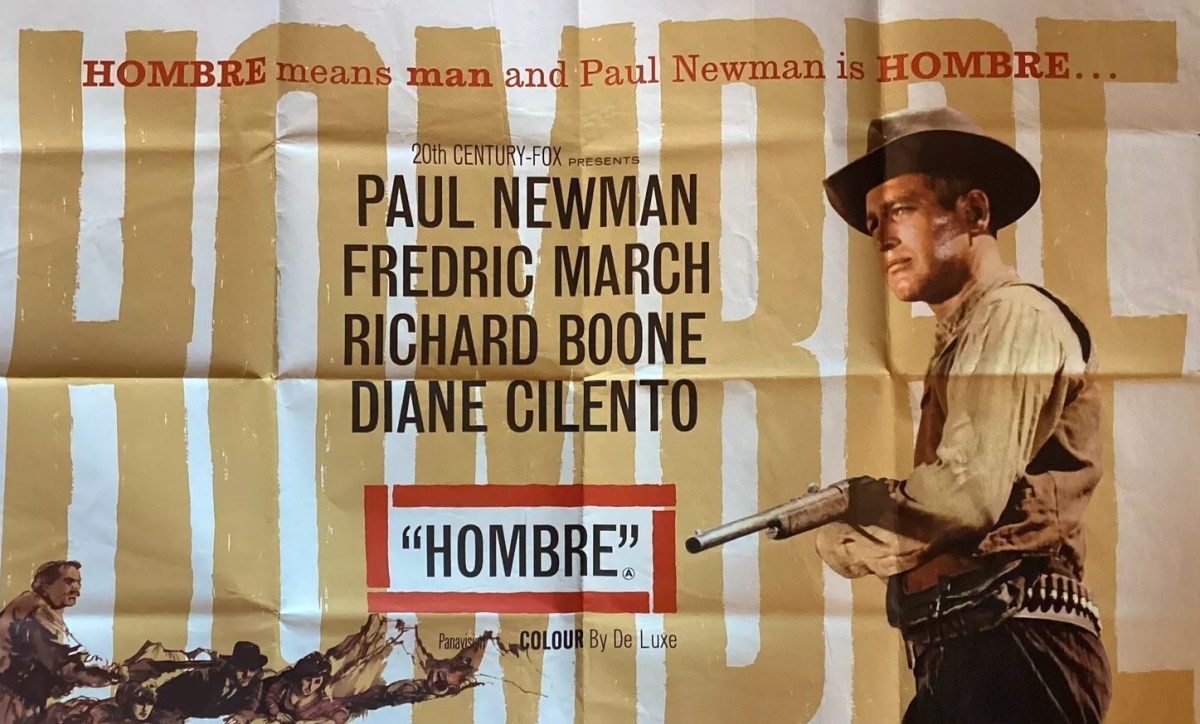
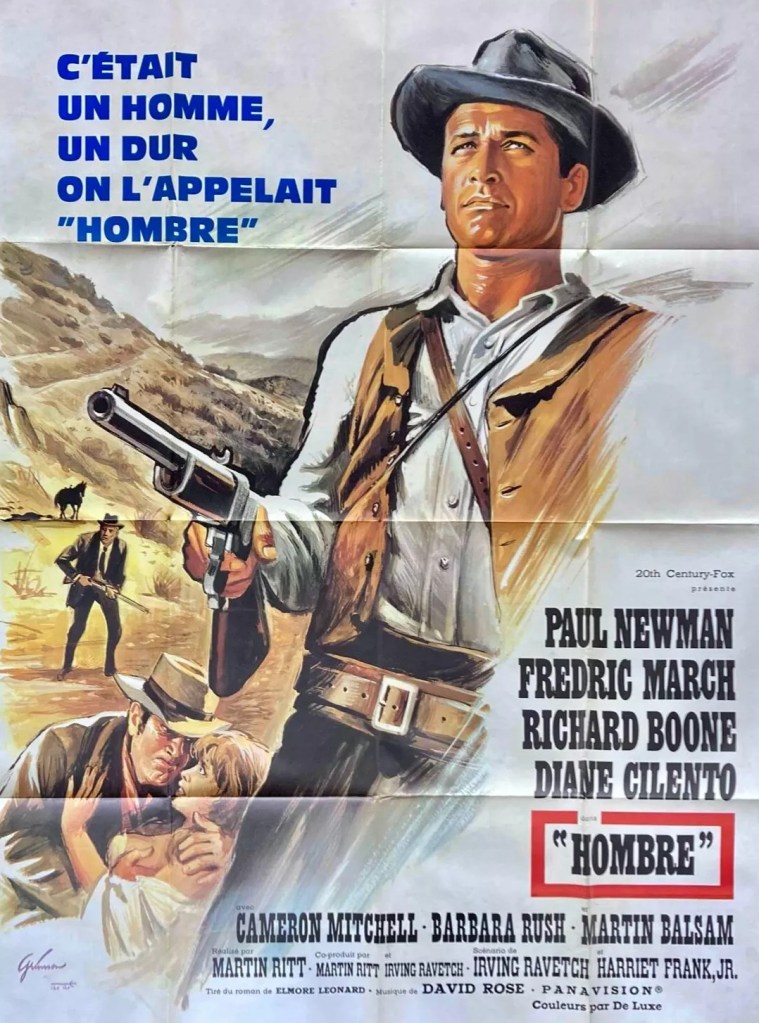
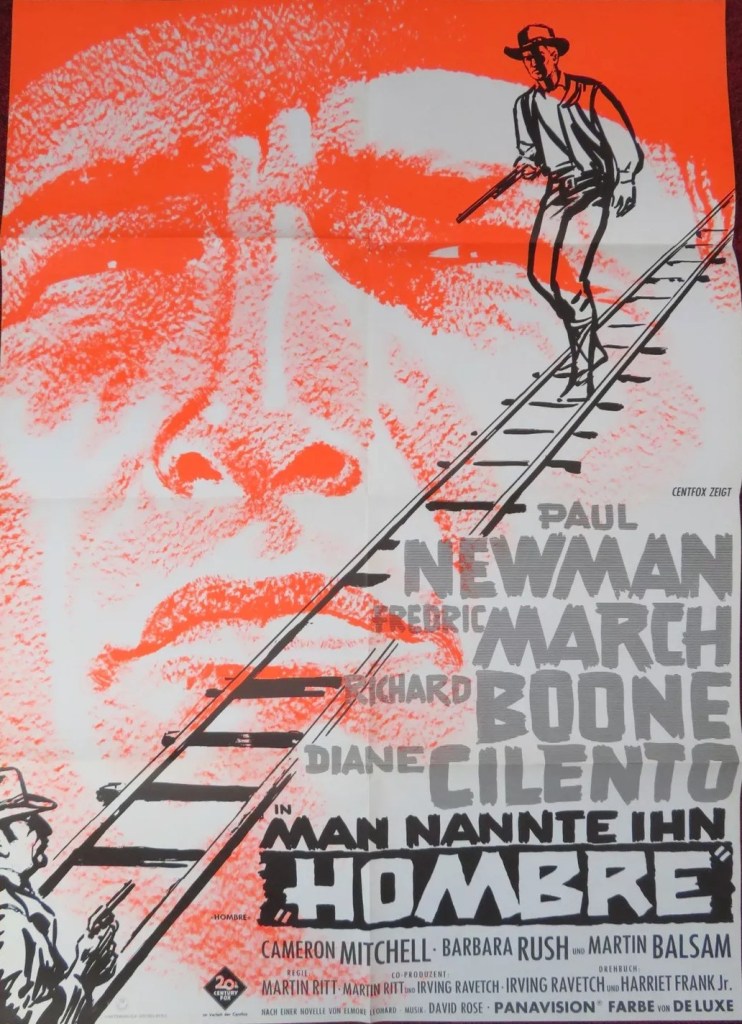
Shock beginning, shock ending. In between, while a rift on Stagecoach (1939/1966) – disparate bunch of passengers threatened by renegades – takes a revisionist slant on the western, with a tougher look at the corruption and flaws of the American Government’s policy to Native Americans. Helps, of course, if you have an actor as sensitive as Paul Newman making all your points.
The theme of the adopted or indigenous child raised by Native Americans peaked early on with John Ford’s The Searchers (1956) but John Huston made a play for similar territory in The Unforgiven (1960) and, somewhat unexpectedly, Andrew V. McLaglen makes it an important element of The Undefeated (1969).
This begins with a close-up of a very tanned (think George Hamilton) Paul Newman complete with long hair and bedecked in Native American costume. Apache-raised John Russell (Paul Newman) returns to his roots to claim an inheritance – a boarding house – after the death of his white father. That Russell is a pretty smart dude is shown in the opening sequence where he traps a herd of wild horses after tempting them to drink at a pool. He decides to sell the boarding house to buy more wild horses.
That puts him on a stagecoach with six other passengers – Jessie (Diane Cilento), the now out-of-work manager of the boarding house, retired Indian Agent Professor Favor (Fredric March) and haughty wife Audra (Barbara Rush), unhappily married youngsters Billy Lee (Peter Lazer) and Doris (Margaret Blye), and loud-mouthed cowboy Cicero (Richard Boone). Driving the coach is Mexican Henry (Martin Balsam).
Getting wind that outlaws might be on their trail, Henry takes a different route. But the cowboys still catch up and turns out Cicero is their leader. He takes Audra hostage, though she appears quite willing having tired of her much older husband, steals the thousands of dollars that the corrupt Favor has stolen from the Native Americans, and, also taking much of the available water, leaves the stranded passengers to die in the wilderness.
The passengers might have lucked out given Russell is acquainted with the terrain but they’ve upset the Apache by their overt racism, insisting he ride up with the driver rather than contaminate the coach interior. And the outlaws, having snatched the loot, and Cicero his female prize, should have galloped off into the distance and left it to lawmen to chase after them.
But Russell, faster on the uptake than anyone expects, manages to separate the gangsters from the money, forcing them to come after it. Russell wants the cash to alleviate the plight of starving Native Americans as was originally intended, but he has little interest in doing the “decent thing” and shepherding the others to safety. Ruthless to the point of callous, he nonetheless takes time out from surviving to educate the entitled passengers to the plight of his adopted people.
A fair chunk of the dialog is devoted to Russell explaining why he’s not going to do the decent thing and giving chapter and verse on the indignities inflicted on his people, and that alone would have given the picture narrative heft, especially as the corrupt Favor is more interesting in retrieving the money than his wife.
But in true western fashion, Russell is also a natural tactician and manages to pick off the outlaws when they come calling, impervious to the cries of Audra staked out in the blazing sun as bait. Eventually, against his better judgement, Russell gives in to the entreaties of Jessie and attempts to rescue the stricken women only to be cut down by the gunmen. I certainly didn’t expect that.
So, it’s both action and character-led drama. Paul Newman (The Prize, 1963) is superb (though not favored by an Oscar nod), especially his clipped diction, and oozing contempt with every glance, and the whiplash of his actions which is countered by shrewd judgement of circumstances. But Diane Cilento (Negatives, 1968) is also better than I’ve seen her, playing the foil to Newman, sassy enough to deal with him on a male-female level, but with sufficient depth to challenge his philosophy. Strike one, too, for Martin Balsam (Tora! Tora! Tora!, 1970) in a lower-keyed performance than was his norm. Richard Boone (Rio Conchos, 1964) and the oily Fredric March (Inherit the Wind, 1960) are too obvious as the bad guys. Representing the more calculating side of the female are Barbara Rush (The Bramble Bush, 1960) and movie debutant Margaret Blye.
The solid acting is matched by the direction of Martin Ritt (The Spy Who Came in from the Cold, 1965). Prone to preferring to make picture that make a point, he has his hands full here. But the intelligent screenplay by Irving Ravetch and Harriet Frank Jr. (Hud, 1963), adapting the Elmore Leonard novel, make the task easier, offsetting the potentially heavy tone with some salty dialog about sex and married life.
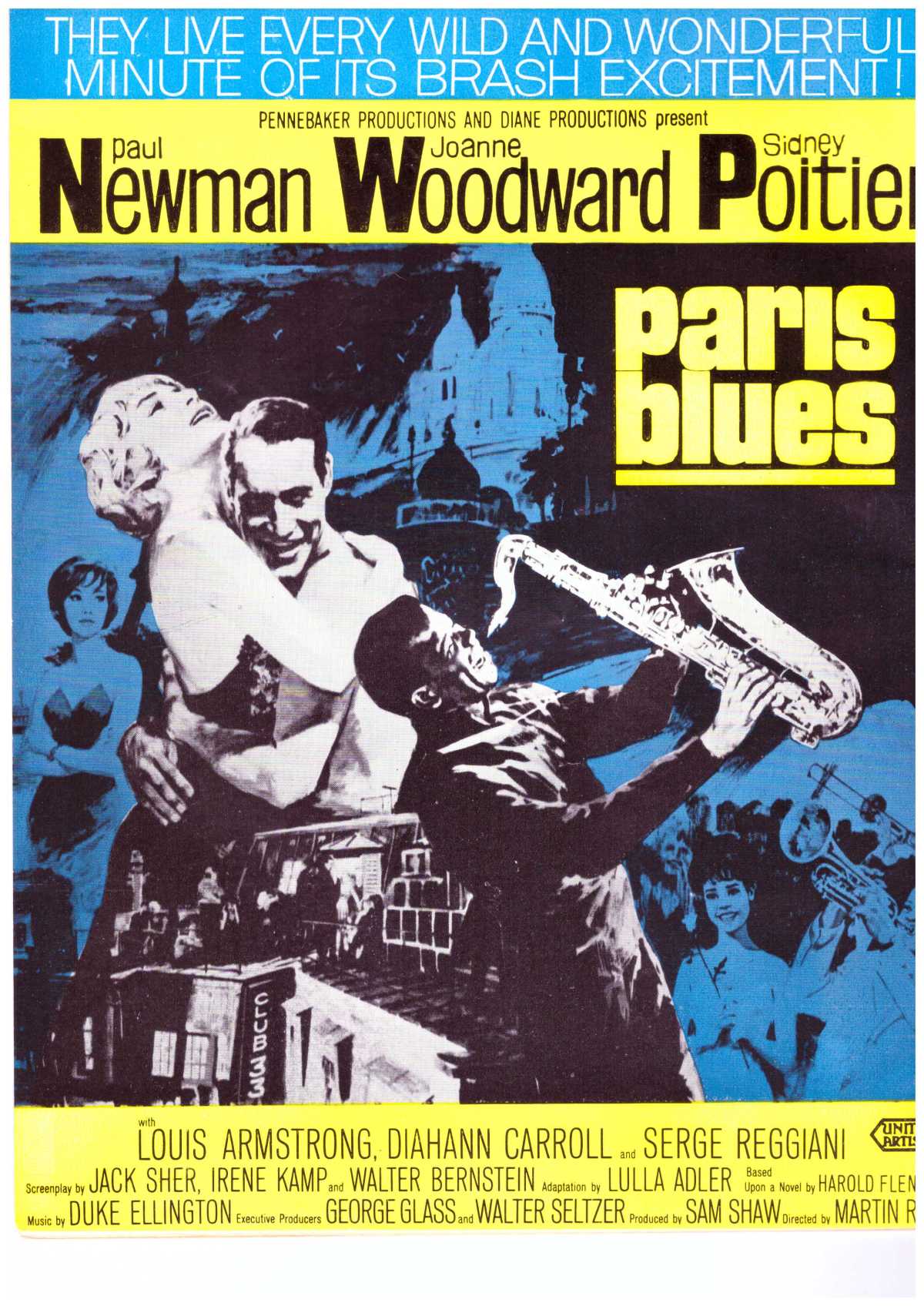
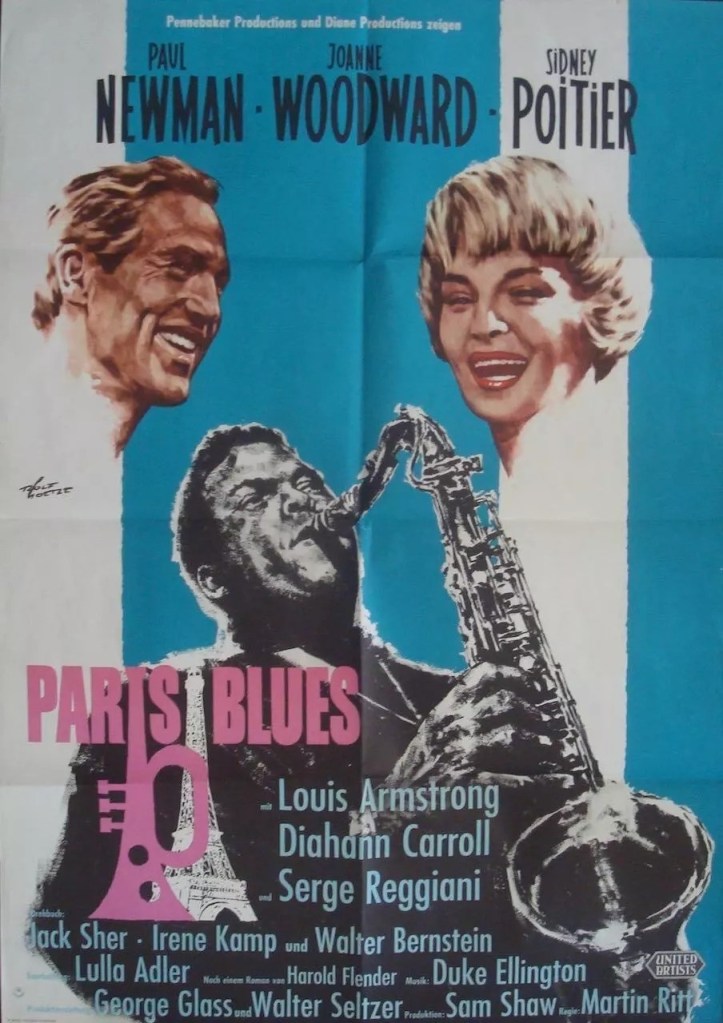
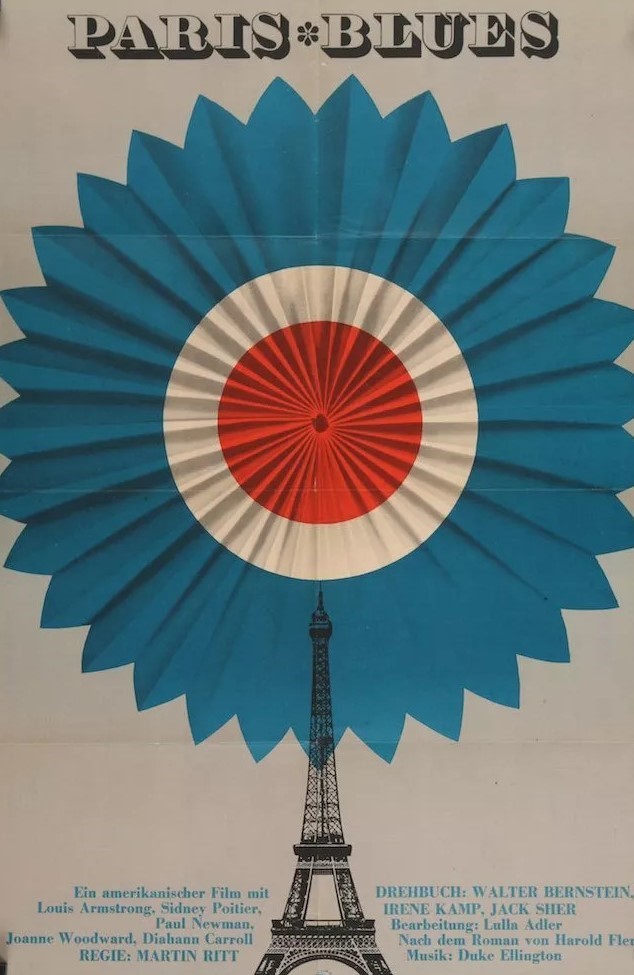
Sometimes the stars just do align. Issue-driven drama played out against scenic Paris and host of jazz greats in support. The Walter Newman script gets quickly to the nub of a drama that focuses squarely on racism and creativity.
Jazz trombonist Ram (Paul Newman) lives for his music and fancies himself a composer as well as a player and expects women to fall in with his creative lifestyle until he comes across single mother tourist Lillian (Joanne Woodward) who ups the romantic ante by hopping into bed right away. Ram’s buddy, saxophonist Eddie (Sidney Poitier), falls for Lillian’s pal Connie (Diahann Carroll) but not only is she less promiscuous but a civil rights activist who rails against him for abandoning the cause and hiving off to Paris.
There’s a good twist on the will-she-won’t-she trope as this time around it’s the men (no surprises there) who have trouble committing. While the guys are both smitten, and at various times ready to throw up their Parisian lives and head for home, it doesn’t work out that way, so mostly what we get is argument, making up, repeat. But that’s not to suggest this falls into any kind of trap.
While Lillian uses seduction to try and winkle Ram out of his refuge, Connie, on the other hand, depends on guilt. Although Eddie’s able to verbalize the benefits for a black musician playing in Paris, he hardly needs to point it out, it’s plain to see that the innate racism he suffers at home is entirely absent in his adopted city.
If you’re a jazz enthusiast you’ll probably be more aware of the central musical conflict, the older-fashioned New Orleans style versus the modern be-pop. There’s no shortage of jazz. Duke Ellington was Oscar-nominated for the score, Louis Armstrong turns up, mobbed at the train station by fans, and every time the movie’s not cutting away to a Parisian backdrop it’s indulging in some great jazz tunes in the traditional smoky night club.
What’s really attractive here is the assured acting. Paul Newman was in the middle of a hot spurt, both at the box office and from the critics, successive Oscar noms on the way for The Hustler (1961) and Hud (1962) and endorsing his marquee credentials with From the Terrace (1960) and Exodus (1960). This is a lively performance, one in which he doesn’t have to carry the weight of the world on his shoulders or the deadweight of expectation. He’s not a snarling rebel, he doesn’t need to be, not with nightly improvisation, recognition from his peers, and a toehold on the next stage of creativity, composition. If he’s tussling with anybody it’s himself and his spats with Lillian are little more than arguments with himself about the road to take and the sacrifices that might be essential along the way.
Sidney Poitier (The Long Ships, 1964) snags a great career break, like Newman deprived of heavy duty, able to display his great charisma and charm with such a light touch. Joanne Woodward (Big Hand for a Little Lady, 1966) as ever brings a wide range to her role, sassy at times, pragmatic, not inclined to the lovelorn. Diahann Carroll has the hardest part, since she’s the evangelist for modern America, one where equality is going to be a given, so her scenes with Poitier end up mostly being argument rather than pure romance.
This would have been a lot edgier had it gone down the originally planned route of Ram falling for Connie, and that’s hinted at when they first meet, but I guess Hollywood wasn’t ready for that.
This was the second (of five) of director Martin Ritt’s collaborations with Paul Newman – they had formed a production company – and shows the pair’s preference for movies bearing social comment. Ritt (The Spy Who Came in from the Cold, 1965) marries all the various elements to produce an entertaining picture on a serious subject.
Walter Bernstein (The Money Trap, 1965), Jack Sher (Move Over, Darling, 1963) and Irene Kemp (The Lion, 1962) collaborated on the screenplay from the novel by Harold Flender.
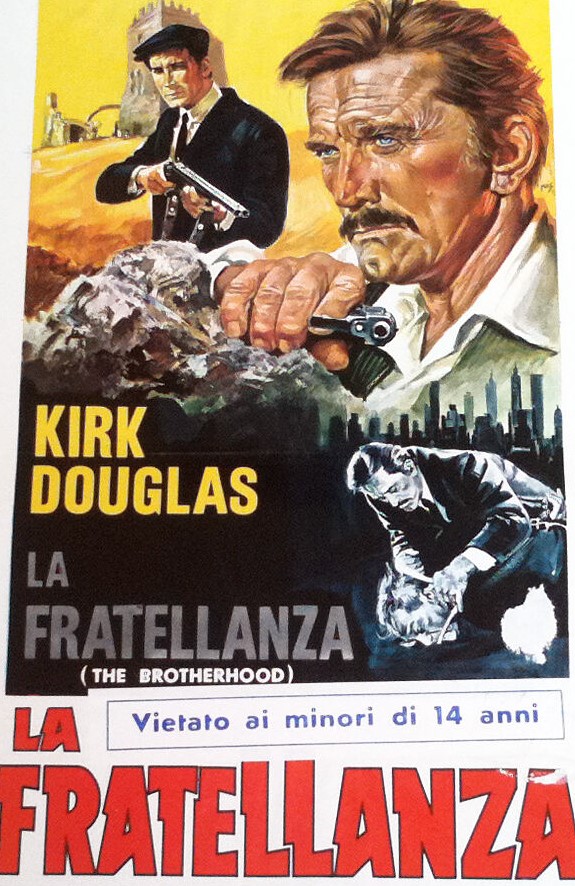
Minimal violence and no sex was the wrong recipe for this Mafia picture – as proven at the box office – but this is an absorbing, underrated drama nonetheless.
It bears a surprising number of parallels to The Godfather (1972). Pure coincidence, extraordinary though that may appear, because The Brotherhood premiered in December 1968 while the Mario Puzo novel was printed in March 1969 (and delivered to the printers long before), so no opportunity at all for plagiarism.
The two films could be opposite sides of the same coin. For a start, both begin with a wedding. Vince Ginetta (Alex Cord), brother of Mafia kingpin Frank (Kirk Douglas), is marrying Emma (Susan Strasberg), daughter of another Mafia chief Dominick (Luther Adler). Like Michael (Al Pacino) in The Godfather, Vince is just out of the army, well-educated and primed for a life outside the business. And like Michael is called upon to commit an act of supreme violence. There’s even a hint of Tom Hagen (Robert Duvall) in the relationship between the brothers, Frank having brought up the much younger Vince after his father’s premature death.
And just as Don Corleone (Marlon Brando) refuses to join the other Mafia families in a new business venture (in that case, drugs) so Frank bows out of an incredibly high risk (but amazingly prescient) scheme to invest in electronic firms involved in military work for the government, a deal that not only promises huge profits but a potential hold over the powers-that-be.
Frank’s wife Ida (Irene Papas) is like Don Corleone’s wife, not wanting to know anything about the business, but both Emma and Frank’s daughter Carmela (Connie Scott) are thematic cousins to Kay Adams (Diane Keaton) as initial implicit trust is wiped away. When Frank dances with Carmela at the wedding, that is reflected in Don Corleone dancing with his daughter at her wedding. Like The Godfather our first sight of the other Mafia chieftains – including Jim Hagen (Murray Hamilton) and Don Peppino (Eduardo Cianelli) – is at the feast where they are viewed with suspicion by Frank’s clan. And the scene where Frank uses a banana to tease his nephew will remind you of Don Corleone spooking his grandson with an orange.
However, the twist, if you like, is that, unlike Michael, Vince is desperate to join the Family and is instrumental in developing legitimate enterprises, which is echoed by Michael Corleone’s strategic shift to Las Vegas. In some respects, Frank is more like Sonny (James Caan), happy to take personal command of murders which the other Mafia chiefs now scrupulously delegate to “mechanics” in Los Angeles. He is more old-school whereas the others have assumed the personas of respectable businessmen.
And then it becomes a question of loyalty. Which side the ambitious Vinnie will take is crucial to the story. Frank is under pressure on all sides, from the other Mafia leaders, a government investigation, Vinnie, and the need to exact revenge on the man who caused his father’s death.
There is authentic detail here as well – religious procession in Sicily, Frank playing boccia (the Italian version of the French boules) with his old pals, family dinner, canary stuffed in the mouth of a stool pigeon, but it is less spaghetti-drenched than The Godfather. Screenwriter Lewis John Carlino (The Fox, 1967), also listed as technical adviser, claimed to be drawing on his intimate knowledge of organized crime.
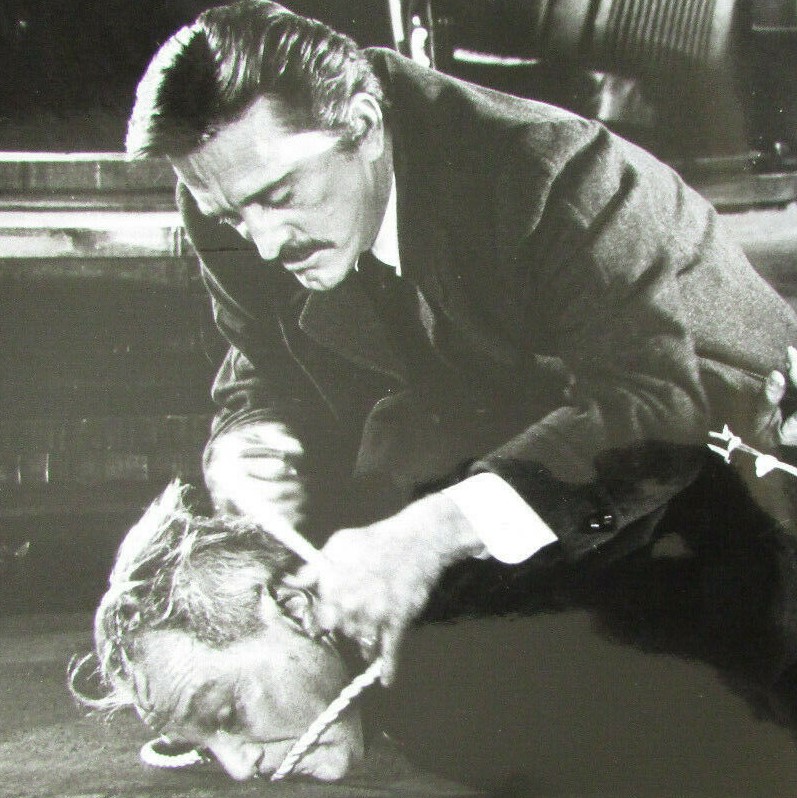
There are only three moments of violence – four if you count a shocking moment of someone spitting on a corpse at a wake – a pair of straightforward murders that bookend the film, plus a scene of Godfather-style brutality in which a man slowly strangles himself to death after being hogtied. Everyone is happily married, Ida very old-school to the extent of removing her husband’s clothes (and shoes) when he returns home drunk, Vince in a good relationship.
Kirk Douglas (Cast a Giant Shadow, 1966) is excellent in a difficult role that presents a fully rounded character, playful with his daughter, loyal to his wife, holding his own against the other mob bosses, enjoying the company of the old-timers who resemble his father, and the changing nature of his relationship with brother Vince. Alex Cord, whose work I initially dismissed (Stiletto, 1969), I have come to more fully appreciate, especially here, where he makes the transition from adoring brother to threat. It is a masterpiece of restraint.
The supporting cast is terrific, a rare Hollywood sojourn for Irene Papas (The Guns of Navarone, 1961), Luther Adler (Cast a Giant Shadow, 1966) as one of the hoodlums exasperated by Frank’s recalcitrance, Murray Hamilton (The Graduate, 1967) but, except at the start, Susan Strasberg (The Trip, 1967) is underused.
While director Martin Ritt (Hombre, 1967) is at times guilty of melodrama, his rendering of family life is much more nuanced than Coppola’s. There are very tender moments between Frank and his wife and Frank and his daughter, as well as moments where Ida plays a more maternal role.
For nearly half a century, The Brotherhood has lain in the shadow of The Godfather simply because they both deal with the Mafia. But this is an excellent movie in its own right.
No one would have invited journalist John Gregory Dunne to observe the inner workings of Twentieth Century Fox in 1967 had they know how badly the project was going to backfire. The studio was enjoying a commercial peak, The Sound of Music (1965) continuing to set records, the public turning out in droves for the critically-lambasted Valley of the Dolls (1967). Fattening up studio coffers were Von Ryan’s Express (1965), The Blue Max (1966) and spy franchise Our Man Flint (1966) and In Like Flint (1967). By the time Dunne’s book, The Studio, was published however, in 1969, the studio was in financial meltdown.
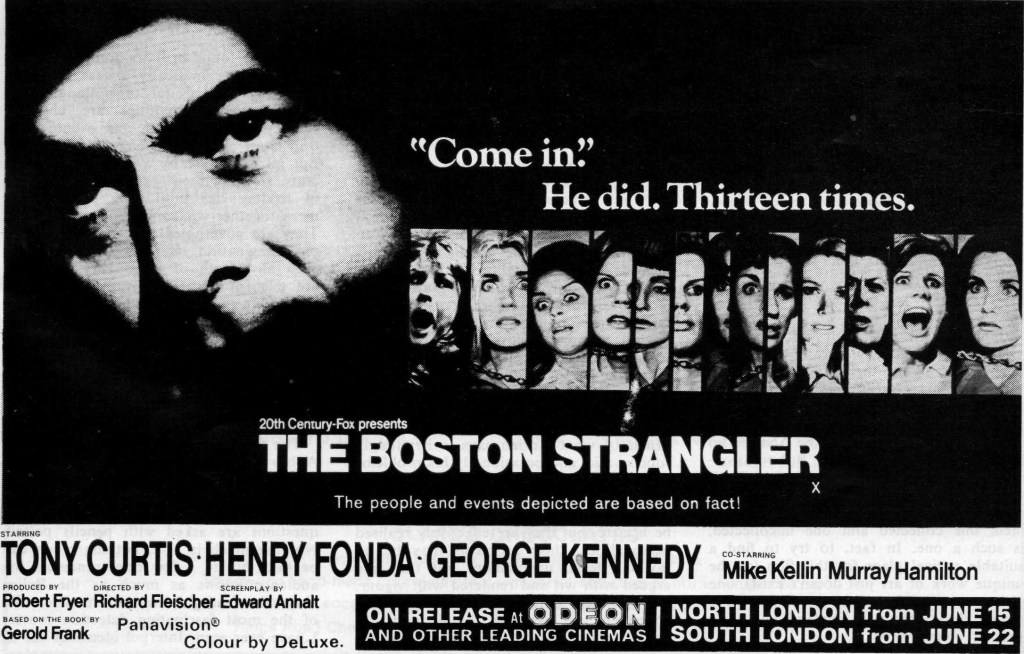
On a hubris high was studio chief Darryl F. Zanuck, who a few years before had saved Fox from bankruptcy. Dunne (later a screenwriter, most notably of A Star Is Born, 1976) had carte blanche to sit in on all sorts of meetings. The studio was going for broke with big-budget musicals, $18 million on Doctor Dolittle starring Rex Harrison (My Fair Lady, 1964) , $12 million for Star! with Julie Andrews (The Sound of Music), both actors considered bankers for their previous work in musicals. There was even $4.5 million allocated to The Boston Strangler which lacked any star commitment.
There were actually two Zanucks. Father Darryl and whizz-kid son Richard who was in charge of production and with whom Dunne had most of his dealings. Dunne observed first-hand how the younger Zanuck whittled down director Martin Ritt’s salary from $350,000 to $200,000 by threat of legal action.
Script problems had pushed back production on The Boston Strangler, a first attempt by English playwright Terence Rattigan (The VIPs, 1963) rejected and the project now in the hands of Edward Anhalt (Becket, 1964). And it lacked a star.
Robert Shaw was one possibility. He was being paid $300,000 for a picture that would never be made, The Nine Tiger Man, to be directed by George Cukor, deemed too expensive at $7.2 million. Zanuck could save money if Shaw accepted The Boston Strangler as an alternative. He didn’t. Or another, cheaper, project A Severed Head. He didn’t. Instead, Zanuck dumped A Severed Head (released by Columbia in 1971).
Christopher Plummer also walked away without doing any work. When Rex Harrison quit Doctor Dolittle, Plummer (The Sound of Music) signed up as his replacement for $300,000, Harrison said he hadn’t meant to quit. That wasn’t the only issue Harrison caused. He refused to pre-record his numbers and then mouth the lyrics to a playback. The Harrison, more expensive, method was to be recorded live. As if producer Arthur P. Jacobs (Planet of the Apes, 1968) hadn’t already been through the mill. Alan Jay Lerner (My Fair Lady) was contracted to do the music. But after 15 months: nada. Jacobs turned to Leslie Bricusse. The budget had risen by 50 per cent, from $12 million to $18 million.
It was hoped the 50-plus companies involving in licensing and contributing $12 million in overall marketing spend would bring in the public. Over 300 items would be sold on the back of the picture, resulting in 45,000 displays in retail stores. This was a picture you couldn’t miss. Expecting a soundtrack bonanza, the initial print run was set at half a million copies – bigger than that for The Sound of Music. Jacobs was perturbed to learn he would have to pay for window space – retailers paid with free copies.
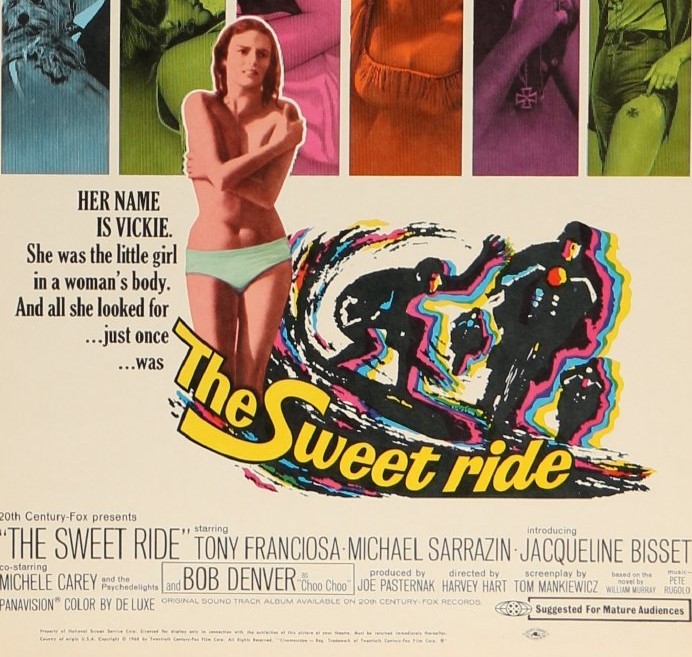
Legendary producer Joe Pasternak was making his 100th movie The Sweet Ride. One of his concerns was that Jacqueline Bisset’s bikini didn’t look tight enough. “It looked baggy in the rushes,” complained Pasternak. Bisset countered, “It fits when it’s dry. It just got a terrible pounding when I was in the water.” She mentions the scene where it got such a pounding in fact that the sea whipped the top off. She reckons that crossing her arms to protect her modesty prevented her tugging the pants on tighter. Once that picture was finished so was Pasternak – he never made another picture.
Another legendary producer Pandro S. Berman was trying to interest English directors John Schlesinger or Lindsay Anderson in Justine (directed by George Cukor in 1969) and on that basis wanted to hire a writer Laurence Marcus (Petulia, 1968) to rewrite the existing Ivan Moffat script in order to entice them. Zanuck’s take: he expected a director to make script changes but couldn’t see the point of altering a script to suit a director you didn’t know would be interested. Nonetheless, Marcus got signed.
All the time agents and directors were pitching movies. Agent Phil Gersh pushed a comedy version of Candy – screenplay by English writing duo Keith Waterhouse and Willis Hall (it ends up minus the Englishmen at Cinerama Releasing). Veteran director Henry Koster’s idea for a musical was nixed. As was the original trailer for Tony Rome, Zanuck hating the voice-over.
On Deadfall (1968), the Michael Caine heist movie directed by Bryan Forbes, actress Giovanni Ralli was having trouble with her English and her contract prevented her being dubbed. It would mean the actress having to lip-synch in post-production. The solution – “tell her she’s got 500 loops and when she hears that maybe she’ll get discouraged and let someone else dub her.” The studio had come up with 14 alternative titles to The Magus (1968) including Seduced by Fate and The Goddess and the Demon.
Fred Zinnemann was priming a $10 million western about Custer. He thought he might save $3 million by shooting in Mexico. The picture was to have no big stars. The only actor who could pull it off was John Wayne and he hated Custer. So Zinnemann planned to go with big names in cameo roles and Toshiro Mifune as Crazy Horse. That picture, too, would be dumped.
Also in the wings, Hello, Dolly! which would get made and Tom Swift, which would be canned despite advance work on building his aeroship, which would not. Nor would another Berman project John Brown’s Body.
Apart from insights into the way movies are made, marketed and released, Dunne’s book captures the extraordinary Hollywood mix – cynicism and greed coupled with fervor and bone-headed optimism.
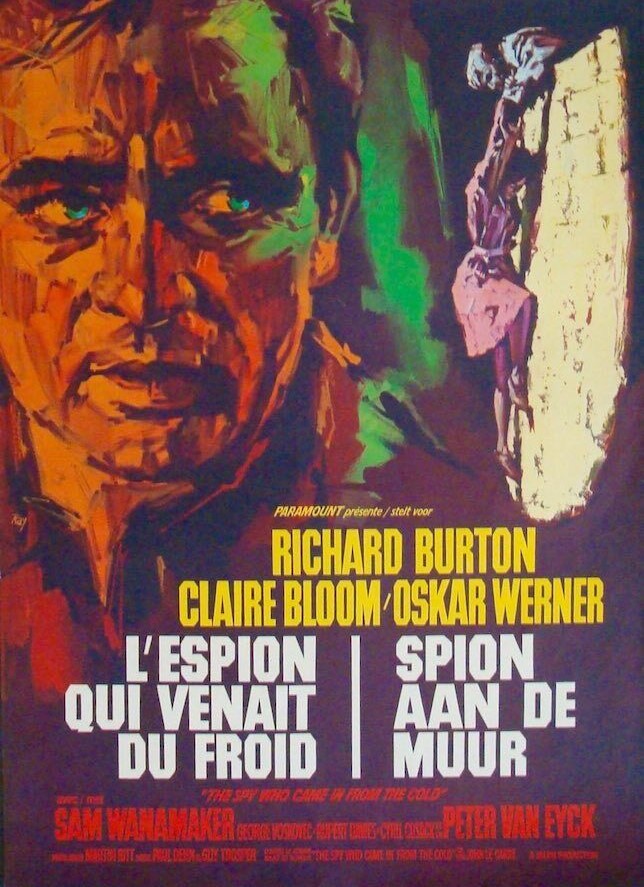
Shooting might have been less stressful and cheaper if director Martin Ritt had stuck to his initial schedule but when the shoot start-date was pushed back from late fall 1964 to January 1965 he lost original star Burt Lancaster (planning to play the original Englishman as a Canadian). At relatively short notice, Richard Burton stepped in, but for an eye-watering fee of $750,000, at that time the biggest salary paid in Hollywood. (Due to Ritt’s involvement there had been rumors Paul Newman would star.) And although Burton pushed for his wife Elizabeth Taylor for the small role of Nan, he was overruled on the issue of cost, and that audience expectations would be unfairly raised.
It didn’t matter, though, if Ritt refused to cast Elizabeth Taylor. He got her anyway, and her vast entourage, generally happy to remain out of the way but occasionally arriving on location in the middle of Dublin in her white Rolls-Royce sending fans into convulsions. There were two schools of thought as to which woman caused more disruption: the jealous wife exerting 24-hour surveillance on a husband with a wandering eye or one of his previous lovers, Claire Bloom, who was playing Nan. (The name changed from Liz in the book.)
“It was not a happy picture and the central reason fort that was: Claire Bloom,” averred Burton’s biographer Melvyn Bragg. “The real problem was not from Bloom but from Elizabeth Taylor’s jealousy,” claimed Sam Kastner. That Burton incurred Bloom’s wrath was not without doubt. But it wasn’t the first time. Prior to Taylor, but while he was married to Sybil, Burton and Bloom had been lovers.
Burton was “not prepared for Bloom and found it very difficult to handle.” The pair had met on a touring production of The Lady’s Not for Burning in the 1940s but their romance remained unconsummated. A few years later in the early 1950s the affair began in earnest and continued on and off for five years. When both were cast in Look Back in Anger (1959), Bloom expected them to pick up where they had left off. But that notion was dashed when Burton appeared, still married, on the arm of Susan Strasberg (Sisters, 1969).
The other elephant in the room was, of course, Burton’s alcohol intake. A very heavy drinker, verging on the alcoholic, his hand had begun to tremor until he received liquid sustenance. If Burton had an equally boisterous co-star as in Peter O’Toole in Becket (1964) or a very indulgent director as with John Huston in The Sandpiper (1965), his drinking would not attract comment. But “Martin Ritt did not approve of Burton’s heavy drinking and Burton resented that.”
Never mind Burton’s issues with ex-lover and wife, he was having difficulty delivering the performance Ritt demanded. The director wanted a stripped-down character, minus the oratory which had made the actor famous, the acting so flattened as to “make him anonymous.” Author John le Carre would have preferred James Mason or Trevor Howard for the “embattled” personas they presented, and which would have fit more into the director’s perception of the character. “For Burton this time there would be no strong sex, no oratory, no action, no charm.” The director wanted that Burton intensity, but coiled, not sprung. As the production wore on, director and star were barely speaking. “Ritt had come to despise Burton whom he saw as a spoiled and self-indulgent actor who had dissipated his talent.”
The initial screenwriter Guy Trosper made changes that seemed out of kilter with the book, for instance sending Leamas to psychiatric hospital rather than jail for punching the grocer. When he became ill he was replaced by Paul Dehn who did not veer so far from the book. Le Carre was brought in at the last minute at Burton’s insistence to do rewrites. But that merely added to the existing aggravation. While waiting for nightfall to shoot the escape sequence, Le Carre was obliged to keep the actor company, trying to consume most the available whisky so that Burton did not go on set drunk. While little of Le Carre’s rewrites found their way into the finished product, he did provide a new scene for Fiedler (Oskar Werner).
Ritt had a revolutionary picture in mind, not just filming in black-and-white to downplay the glamor of the espionage business as evidenced by James Bond, but to employ “a point of view that’s never been found before.” He was not a believer in the end justifying the means nor of depicting the enemy as rabid. “Most of the time,” he explained, “you have actors playing Communists as if they’d just switched over from playing Nazis in World War Two pictures…the Communists in this picture are people and one of them at least …is an honest, ethical man.”
While the decision to film in black-and-white was a creative decision, intended to give the film a realistic edge, he knew it would not necessarily go down so well with the end user, the exhibitor. “The needs of creative people and the needs of exhibitors are completely different. Exhibitors want pictures and creators want to express themselves and those two factors don’t always satisfy each other.” Although the movie was Oscar-nominated and critically well-received and did well in key city first-run, it was condemned by exhibitors in small towns, one of whom discouraged others from booking it and complained that the black-and-white aspect made the film impossible to view on old projectors.
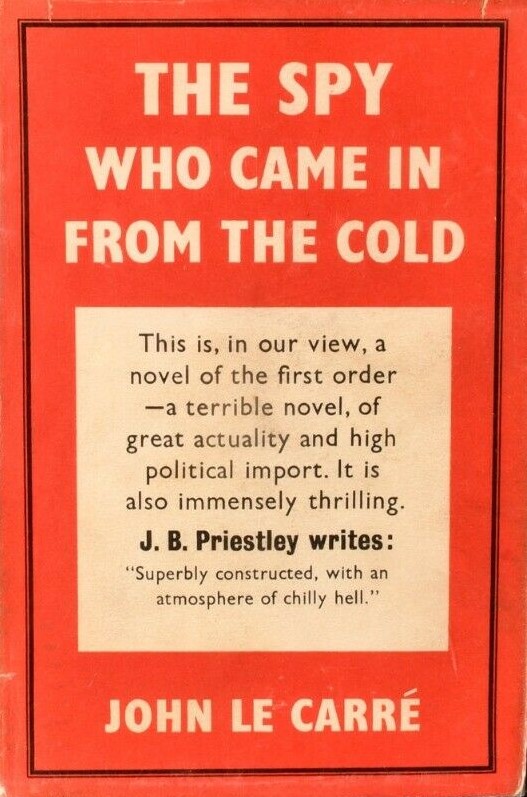
Author John le Carre was an unknown, two previous books published to no great sales. But The Spy Who Came in from the Cold proved a phenomenon. Debuting in the number spot in February 1964, the book spent 35 weeks topping the hardback bestseller chart. It ended up the hardback number one title in the U.S. during 1964, a quarter of a million copies sold, winner of the Edgar Award for Best Mystery, initial paperback order topping two million copies, five million books in print by the time the film appeared. So it seemed all the more astonishing that the movie rights had been snapped up for a mere $21,000 (with escalating clauses based on sales that took it up to $38,000). Martin Ritt claimed glory for that astute purchase, making a bid to a hard-up author when the book was in galley form. “When I bought it nobody else was running to buy it,” claimed Ritt. But it turned out the real star was Kay Selby, a Paramount story editor, who had dug it out of a pile of novels submitted. Le Carre did not make the same mistake again, movie rights for his next book The Looking GlassWar were sold for $400,000 and the paperback rights for the same
When the film had still been a relatively low-budget production, Paramount planned to film exteriors in London and interiors in Hollywood. But Ritt wanted “to capture the full brunt of the winter atmosphere for dramatic emphasis” and there was very little Hollywood could bring to the party to recreate an actual bleak British weather.
The bulk of the film was shot in Ireland at the defunct Ardmore studios in Bray – Ritt rented them from the Official Receiver, the first production there since November 1963 – and on location in Dublin, the historic Cornmarket standing in for Checkpoint Charlie while with the addition of breezeblock, barbed wire and an iron ladder, Dublin Square was transformed into the Berlin Wall, though some scenes set in East Berlin were shot in the London Docklands.
However, shooting kicked off in London, at Shepperton studios on January 9, 1965, before switching for two months to Ardmore, wrapping up there a week early, heading for location filming in Amsterdam (briefly) and 9-10 days in Garmisch (Germany) before returning to Shepperton in April. Ritt brought the picture in under budget.
Paramount launched a teaser campaign in November 1965 New York – the idea stolen by United Artists for A Fistful of Dollars the following year – with a 1,000-strong two-sheet poster campaign in the city’s subway, promoting the film but missing out the opening date and the cinemas it would play, that information supplied closer to the launch which took place over the lucrative Xmas period in 1965, coincidentally just in time to qualify for Oscar consideration.
And also in time to face a spy box office tsunami called Thunderball and the roadshow epic Doctor Zhivago among the 20-plus movies launched for the festive season. In fact, the Bond films had triggered a resurgence of spy pictures. As the Ritt picture got underway, others on the starting grid include “The Matt Helm Project,” The Ipcress File, James Garner in Welcome Mr. Beddoes (A Man Could Get Killed) and Masquerade starring Cliff Robertson. In addition the potential line-up also included female spy Christy O’Hare, Aaron Rosenberg’s Smashmaster and Strangers on a Bridge; the first two were never made, the last one taking over half a century to hit the screen as Steven Spielberg’s Bridge of Spies.
Burton was Oscar-nominated, but in the year when Thunderball (1965), Torn Curtain (1966), The Silencers (1966) and Our Man Flint (1966) all featured in the top ten films of 1966, The Spy Who Came in from the Cold did not prove a counter-programming smash, sitting at 32nd in the annual chart with $3.1 million in rentals. Although the movie was critically well-received and did well in key city first-run, it was a bust in smaller towns. Don Stott of the Calvert Drive-In in Prince Frederick, Md, complained “it was one of the lousiest pictures I’ve ever had my displeasure to exhibit and lose my shirt on…the print was so dark…it was barely visible.” Added Arthur K. Dame of the Scenic Theater in Pittsfield, N.H., “it comfirms the fact that we are not going to do well with spy films.”
SOURCES: Adam Sisman, John Le Carre, The Biography (Bloomsbury, 2013) p258, 266, 273, 277-280; The Richard Burton Diaries (Yale University Press, 2012), p79-80; Melvyn Bragg, Rich: The Life of Richard Burton, (Hodder and Stoughton, 2012) p200-203; Sam Kashner, Furious Love (Harper Perennial, 2019) p120-131; “Burt Lancaster Plans More Pix Of His Own,” Variety, January 1, 1964, p27; “Bestseller at $20,000,” Variety, March 25, 1964, p15; “Broadway,” Box Office, April 20, 1964, pE5; “Director Martin Ritt: Big Dig Is Scripts You Can Sell to Producers,” Variety, May 13, 1964, p13; “Six for Paramount in Alien Locales,” Variety, July 15, 1964, p18’“Richard Burton Receives Role in Spy by Martin Ritt,” Box Office, August 24, 1964, pW1; “Voices in the Diplomatic Pouch,” Variety, December, 9, 1964, p7; “Ritt Starts Spy Who Came in from the Cold in London,” Box Office, January 18, 1965, pE5; “Spy Success Sires Speedy Sequel, Le Carre Learning Loot Lesson,” Variety, February 17, 1965, p3; “Martin Ritt May Wind Berlin Wall Episodes on Spy This Month,” Variety, February 24, 1965, p28; “Paperbacks Up their Covers and Advance $,” Variety, March 3, 1965, p1; “Burton Winds Irish Shooting Spy Film,” Variety, April 14, 1965, p20; Maxwell Sweeney, “Harassed Irish Studio Revives,” Variety, May 12, 1965, p54; “Kay Selby’s Coup,” Variety, August 11, 1965, p3; “Subway Posters First Step in Promoting The Spy,” Box Office, November 29, 1965, pA2; “Review,” Box Office, December 20, 1965, 1965, pA11; “Three Paramount Pix To Open in N.Y. Dec 23,” Box Office, December 20, 1965, pE16; “Martin Ritt Is Promoting His Spy for Paramount,” Box Office, December 20, 1965, pE12; “Espionage Shown in Its Dirty Clothes,” Variety, December 22, 1965, p4; “The Exhibitor Has His Say,” Box Office, June 13, 1966, pA4 and October 10, 1966, pB4; Big Rentals of 1966,” Variety, January 4, 1967, p8.
The perfect riposte to the James Bond phenomenon. By comparison, a kitchen sink spy drama that challenges the glamorous version of espionage promoted by 007. Had the film been made as soon as the source novel by John Le Carre hit the bestseller charts in 1963 it might have stopped the Bond bandwagon, which didn’t really kick off until Goldfinger (1964), in its tracks. Realistic to the point of cynicism, the innocent are sacrificed in a ruthless chess battle for espionage supremacy.
Alec Leamas (Richard Burton) infiltrates the East German counter-espionage system after purportedly becoming a defector. His intention, however, is to stitch up Mundt (Peter van Eyck), the head of the East German unit, so that he is overthrown. Mundt has been causing too much grief to the British spy network in East Germany, the film opening with Leamas at the Berlin Wall watching an escaping agent being shot trying to pass through Checkpoint Charlie. At the behest of Control (Cyril Cusack), the head of the British spy organization, Leamas pretends to quit the outfit, and playing the embittered card, ends up in prison for assault, on release being surreptitiously recruited by the East Germans as a potential defector.
Initially, the British appear almost too gentlemanly for the vicious spy game, Control almost apologizing (over endless cups of tea) about having to take such ruthless steps. Leamas has a tale he hopes will incriminate Mundt largely through the envy of his subordinate Fiedler (Oskar Werner). But once Leamas falls into the enemy’s hands, the game does not go according to plan. After initial gentle interrogation by Fiedler, the arrival of Mundt causes Leamas to be arrested and then tried for treason. Along the way, Leamas’s naïve girlfriend Nancy (Claire Bloom) is implicated and Leamas realizes he is a patsy, forced into quite a different role, that tests his beliefs.
The British, portrayed in Bond films and every other spy film up till then, as being on the side of the angels, are revealed as being just as heinous as the enemy. All through his defection Leamas is able to snigger at the abominable way the Communist superiors treat their underlings, simple demonstrations of power intended to humiliate at every opportunity, but it is soon apparent that the British are every bit as heartless. There is a very telling scene when Leamas realizes he may well be walking into a trap when his face appears on the front pages of a British newspaper. The look in Leamas’s eyes suggests he knows he has been betrayed.
If you remember Le Carre’s most famous creation George Smiley (Rupert Davies) as a humble man from the Tinker, Tailor, Soldier, Spy (1979) television series, you will be surprised to discover what depths the man will sink to here.
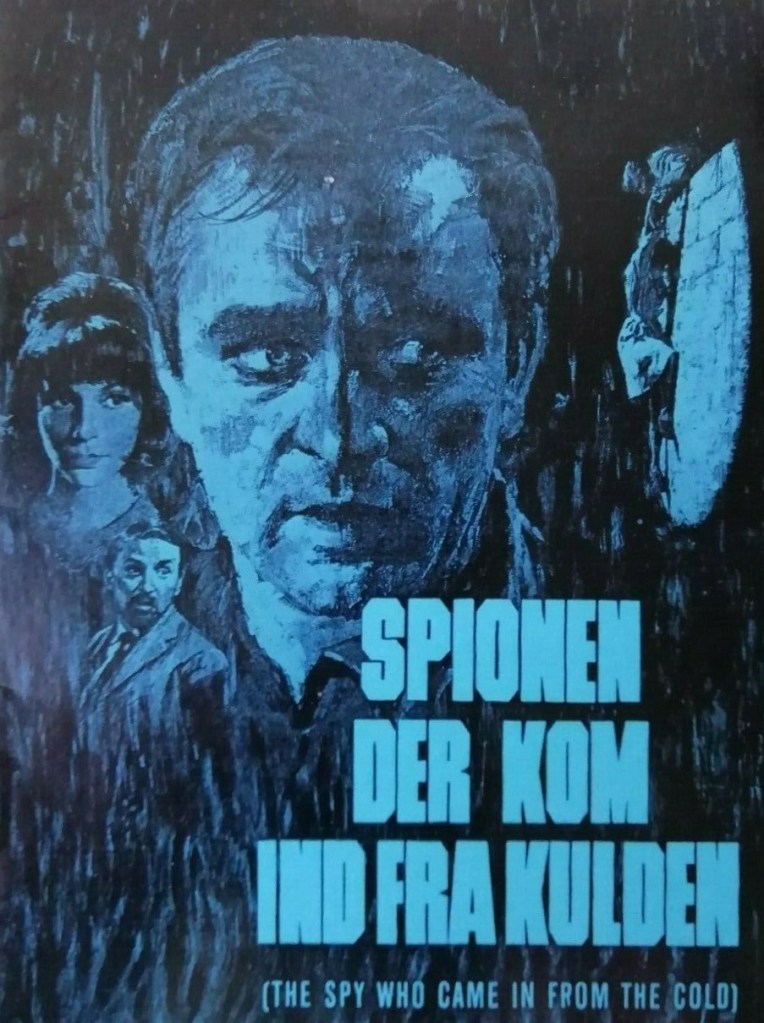
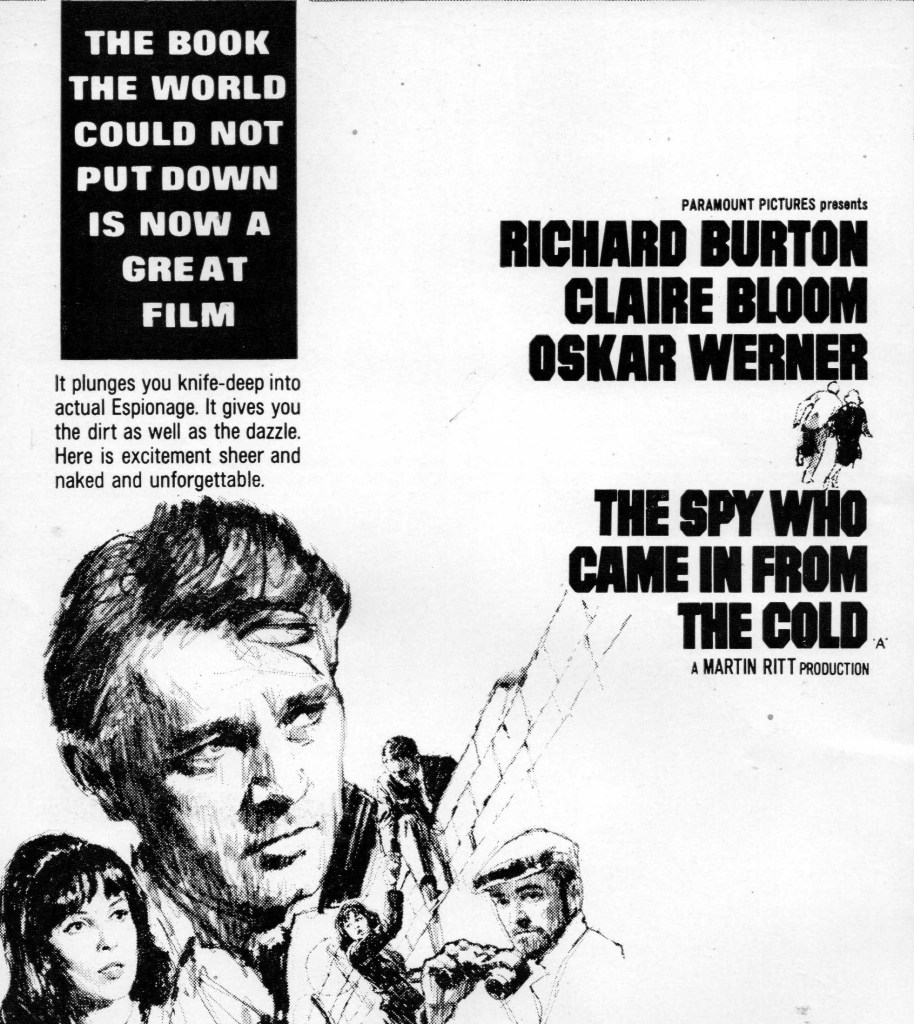
Oscar-nominated American director Martin Ritt (Hud, 1963) filmed this in black-and-white – even the advertising material was in mono – to remove all sense of glamour. There are no gadgets or girls in bikinis. This is the down-and-dirty version of espionage. And while the British top brass clearly regarded any staff lost as collateral damage, Leamas had a more human, more emotional, response.
Richard Burton (Where Eagles Dare, 1968) is superb, received a well-deserved Oscar nomination (his fourth), as a character destroyed by “minor human error” in a world where humanity is the last thing on anyone’s mind. Oskar Werner (Interlude, 1968) presents his character is such a way that he comes across as anything but a villain, even his costume has a little bit of the beatnik about it, and he treats his captive with courtesy. Peter van Eyck (Station Six Sahara, 1963) is a more standard German villain, complete with blond hair. Claire Bloom (Three into Two Won’t Go, 1969) has a small but pivotal role as a sweet librarian.
And there’s strength in depth in the supporting cast beginning with Cyril Cusack (Fahrenheit 451, 1966) in a deftly underplayed part. Sam Wanamaker (Warning Shot, 1967) and Michael Hordern (Khartoum, 1966) are among those routinely humiliated by their paymasters. Also watch out for Rupert Davies (television’s Maigret), Bernard Lee, moonlighting from James Bond duties, Beatrix Lehmann (Psyche ’59) and Robert Hardy (All Creatures Great and Small series 1978-1990).
Also taking time off from Bond duties was screenwriter Paul Dehn (Goldfinger, 1964) who adapted the novel with the help of Guy Trosper (Birdman of Alcatraz, 1962).
Paramount boldly opened around the same time as Thunderball in December 1965 and although the fourth Bond proved a box office tsunami, the Martin Ritt picture survived the onslaught and did pretty well.
The Spy Who Came in from the Cold was the number U.S. hardback bestseller of 1964, according to the Publishers Weekly annual chart. That year You Only live Twice by Ian Fleming came eighth, the first time a Bond had appeared in the annual top ten. The following year Le Carre’s The Looking Glass War took the number four spot while The Man with the Golden Gun was seventh. It was the beginning of a mini-boom in spy novels among hardback buyers, and although neither Le Carre nor Fleming featured again during the decade Helen MacInnes placed fifth in 1966 with The Double Image and third with The Salzburg Connection in 1968 while Leon Uris’ Topaz was fourth in 1967.
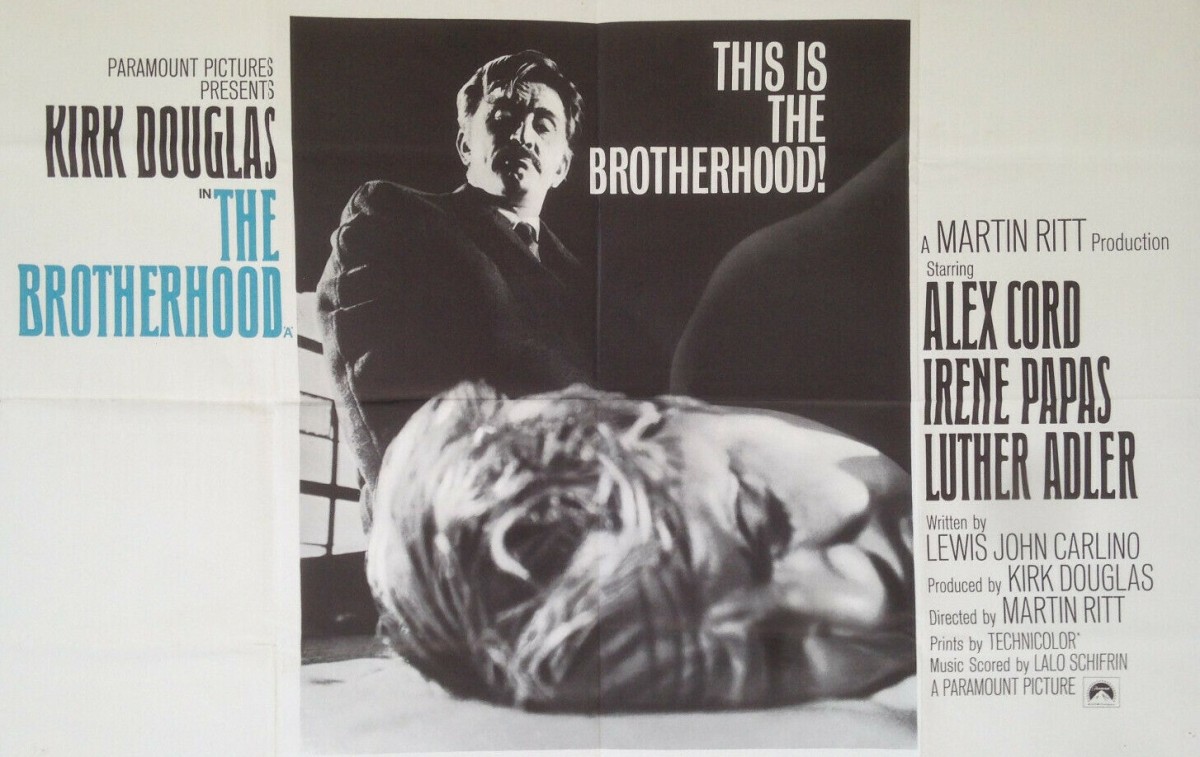
Minimal violence and no sex was the wrong recipe for this Mafia picture – as proven at the box office – but this is an absorbing, underrated drama nonetheless.
It bears a surprising number of parallels to The Godfather (1972). Pure coincidence, extraordinary though that may appear, because The Brotherhood premiered in December 1968 while the Mario Puzo novel was printed in March 1969 (and delivered to the printers long before), so no opportunity at all for plagiarism.
The two films could be opposite sides of the same coin. For a start, both begin with a wedding. Vince Ginetta (Alex Cord), brother of Mafia kingpin Frank (Kirk Douglas), is marrying Emma (Susan Strasberg), daughter of another Mafia chief Dominick (Luther Adler). Like Michael (Al Pacino) in The Godfather, Vince is just out of the army, well-educated and primed for a life outside the business. And like Michael is called upon to commit an act of supreme violence. There’s even a hint of Tom Hagen (Robert Duvall) in the relationship between the brothers, Frank having brought up the much younger Vince after his father’s premature death.
And just as Don Corleone (Marlon Brando) refuses to join the other Mafia families in a new business venture (in that case, drugs) so Frank bows out of an incredibly high risk (but amazingly prescient) scheme to invest in electronic firms involved in military work for the government, a deal that not only promises huge profits but a potential hold over the powers-that-be.
Frank’s wife Ida (Irene Papas) is like Don Corleone’s wife, not wanting to know anything about the business, but both Emma and Frank’s daughter Carmela (Connie Scott) are thematic cousins to Kay Adams (Diane Keaton) as initial implicit trust is wiped away. When Frank dances with Carmela at the wedding, that is reflected in Don Corleone dancing with his daughter at her wedding. Like The Godfather our first sight of the other Mafia chieftains – including Jim Hagen (Murray Hamilton) and Don Peppino (Eduardo Cianelli) – is at the feast where they are viewed with suspicion by Frank’s clan. And the scene where Frank uses a banana to tease his nephew will remind you of Don Corleone spooking his grandson with an orange.
However, the twist, if you like, is that, unlike Michael, Vince is desperate to join the Family and is instrumental in developing legitimate enterprises, which is echoed by Michael Corleone’s strategic shift to Las Vegas. In some respects, Frank is more like Sonny (James Caan), happy to assume personal command of murders which the other Mafia chiefs now scrupulously delegate to “mechanics” in Los Angeles. He is more old-school whereas the others act as respectable businessmen.
And then it becomes a question of loyalty. Which side the ambitious Vinnie will take is crucial to the story. Frank is under pressure on all sides, from the other Mafia leaders, a government investigation, Vinnie, and the need to exact revenge on the man who caused his father’s death.
There is authentic detail here as well – religious procession in Sicily, Frank playing boccia (the Italian version of the French boules) with his old pals, family dinner, canary stuffed in the mouth of a stool pigeon, but it is less spaghetti-drenched than The Godfather. Screenwriter Lewis John Carlino (The Fox, 1967), also listed as technical adviser, claimed to be drawing on his intimate knowledge of organized crime.
There are only three moments of violence – four if you count a shocking moment of someone spitting on a corpse at a wake – a pair of straightforward murders that bookend the film, plus a scene of Godfather-style brutality in which a man slowly strangles himself to death after being hogtied. Everyone is happily married, Ida very old-school to the extent of removing her husband’s clothes (and shoes) when he returns home drunk, Vince in a good relationship.
Kirk Douglas (Cast a Giant Shadow, 1966) is excellent in a difficult role that presents a fully rounded character, playful with his daughter, loyal to his wife, holding his own against the other mob bosses, enjoying the company of the old-timers who resemble his father, and the changing nature of his relationship with brother Vince. Alex Cord, whose work I initially dismissed (Stiletto, 1969), I have come to more fully appreciate, especially here, where, in a masterpiece of restraint, he makes the transition from adoring brother to threat.
The supporting cast is terrific, a rare Hollywood sojourn for Irene Papas (The Guns of Navarone, 1961), Luther Adler (Cast a Giant Shadow, 1966) as one of the hoodlums exasperated by Frank’s recalcitrance, Murray Hamilton (The Graduate, 1967) but, except at the start, Susan Strasberg (The Trip, 1967) is underused.
While director Martin Ritt (Hombre, 1967) is at times guilty of melodrama, his rendering of family life is much more nuanced than Coppola’s. There are very tender moments between Frank and his wife and Frank and his daughter, as well as moments where Ida plays a more maternal role.
For nearly half a century, The Brotherhood has lain in the shadow of The Godfather simply because they both deal with the Mafia. But this is an excellent movie in its own right.
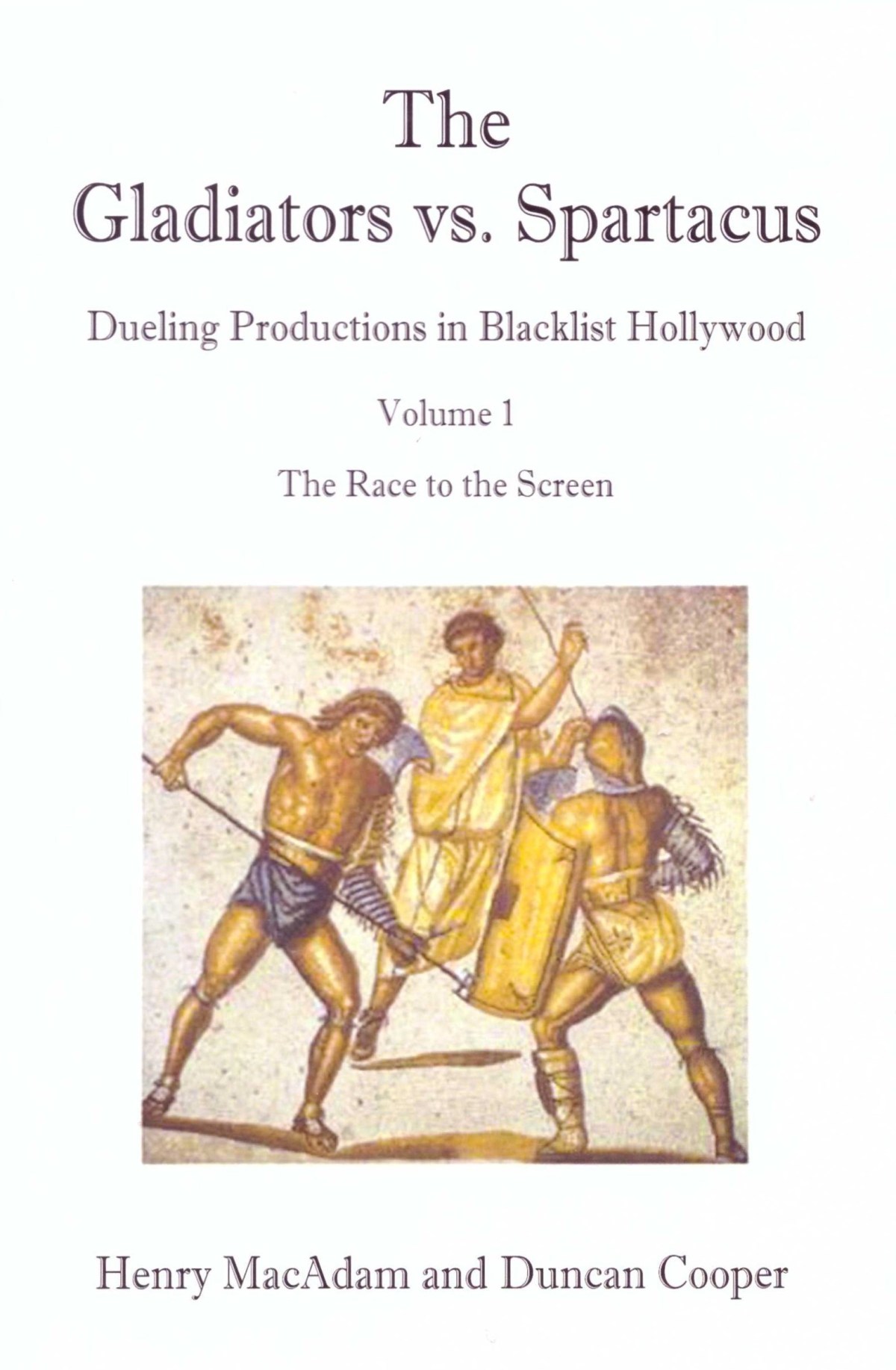
When I wrote my book some years back on the making of The Magnificent Seven (1960) I was aware that Yul Brynner had attempted to set up a project called The Gladiators in direct opposition to rival Kirk Douglas venture Spartacus. What I didn’t know until I came across this fascinating new book, telling the untold story of The Gladiators vs. Spartacus, Dueling Productions in Blacklist Hollywood by Henry MacAdam and Duncan Cooper, was just how close Brynner came to derailing the Douglas production. Indeed, at first it appeared Brynner’s The Gladiators, based on the novel by Arthur Koestler (Darkness at Noon, The Ghost in the Machine), was a cinch to be first past the post. After winning the Best Actor Oscar for The King and I (1956) and starring in box office behemoth The Ten Commandments (1956), Brynner was set to become a movie mogul after being handed a record $25 million – $230 million at today’s prices – from United Artists for 11 pictures. His first project was The Gladiators on a $5.5 million budget, Meanwhile, Douglas, rejected for the title role in the forthcoming Ben-Hur, his picture Paths of Glory (1957) producing dismal returns, struggled to find funding for Spartacus, based on the book by Howard Fast.
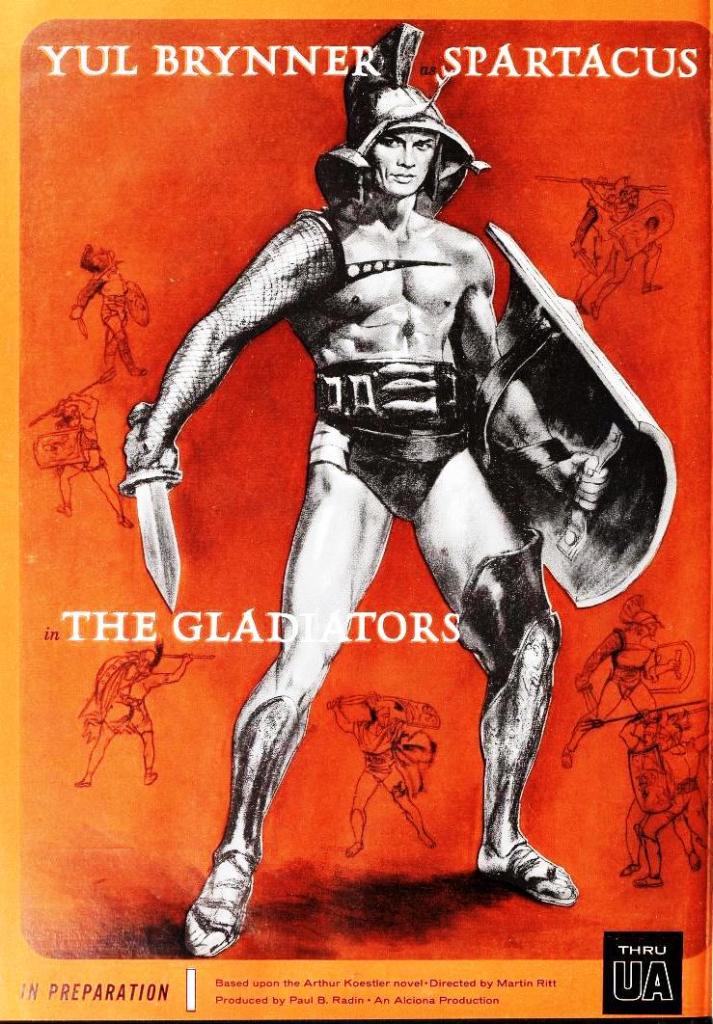
Promotional ad in 1958 for Yul Brynner as Spartacus in ‘The Gladiators.’
There are instances of two studios embarking on similar projects at the same time – sci fi adventures Deep Impact and Armageddon appeared within months of each in 1998 but Warner Bros and Twentieth Century Fox decided to combine competing movies about a skyscraper on fire into The Towering Inferno (1974). Here, as much as efforts were made to combine the projects both actors were determined to continue the battle despite the potential competition. At another point, Brynner sought to recruit Douglas for The Magnificent Seven. The race to the screen went back and forth for a couple of years, Brynner unable to choose between the historical drama and the western, while Douglas had the luck to have as his agent Lew Wassermann, in the process of buying up Universal who determined that Spartacus would be the ideal prestige vehicle to relaunch the studio.
What gives this volume special significance is that the films were being produced against the backdrop of the blacklist, the anti-Communist hysteria stirred by HUAC in the late 1940s/early 1950s. Screenplays for both films were the work of blacklisted writers, Abraham Polonsky on the Brynner side and Dalton Trumbo for Douglas. Polonsky was writer-director of Force of Evil (1948) as well as writer of another quintessential film noir Body and Soul (1947), for which he was Oscar-nominated, before his career was prematurely interrupted. Trumbo was held in even greater esteem, Oscar-nominated for Kitty Foyle (1941), and with A Guy Named Joe (1943) under his belt. While blacklisted, both wrote under “fronts”, Trumbo responsible for the Oscar-winning screenplays for Roman Holiday (1953) and The Brave One (1956), Polonsky successfully switching for a time to television. Both productions proceeded with the need to keep secret the real screenwriters, Ira Wolfert fronting for Polonsky, author Howard Fast unknowingly doing the same for Trumbo.
The parallel tales of two ambitious producers dueling for supremacy and of two blacklisted writers fighting for survival make a thrilling read. At any moment, either production could be killed by revelations about the screenwriters, while the planned films faced a succession of what seemed sometimes insurmountable obstacles. Both movies pursued, for example, the same three stars – Laurence Olivier, Charles Laughton and Peter Ustinov. Martin Ritt, initial director for The Gladiators, dropped out while Anthony Mann, in the same position for Spartacus, was fired. Script problems dogged both pictures. Rivalry was conducted openly in the trade press while the productions clashed over the title. Even when Spartacus nudged ahead in the production process, the spiraling budget almost put paid to the endeavor, while The Gladiators hovered in the background, intent on capitalizing should, as appeared for a long time the most likely outcome, the Douglas film flop at the box office.
The third riveting element of this book is a scoop. The authors have located the original Polonsky screenplay for The Gladiators, believed lost for over 60 years, and so are able to contrast the different approaches to the subject of the Spartacus revolution. (In a separate volume, the entire screenplay has been published with annotations and critical commentary by Fiona Radford and background essays by MacAdam and Cooper). Koestler was a cult figure, far better known than Howard Fast, and has remained in the literary consciousness ever since his suicide in 1983. With The Gladiators failing to reach the screen, Polonsky remained under the Hollywood radar for several years before his career revived with the screenplay for Madigan (1968) and as writer-director of modern western Tell Them Willie Boy Is Here (1969) starring Robert Redford. The revelation that Trumbo had written Otto Preminger’s Exodus (1960) and the involvement of Polonsky in The Gladiators helped break the blacklist. Trumbo went on to enjoy a successful official comeback, biopic Trumbo (2105) depicting the tribulations he suffered as a blacklistee.



 The Magnificent 60s