The Killing of Sister George (1968) ***

Somewhere between camp classic, hilarious comedy and bitchiness-on-speed, loaded down with a May-December narrative, too much of the genuine soap opera element of the filming of a soap opera but lifted up by some very touching moments. This started life as a black comedy and its stage antecedents are only too obvious, many scenes running way too long for a movie, and in the unlikely hands of director Robert Aldrich – at this point best known for male actioner The Dirty Dozen (1967) rather than the equally bitchy Whatever Happened to Baby Jane (1962) – asks audiences to ingest a great deal more seriousness.

The sex scene was so shocking in its day that, in the reformed U.S. censorship system, earned one of the first mainstream X-certificates, thus torpedoing its box office potential as newspapers routinely refused to accept adverts for such. Yet while it is tender, and to some extent galvanized by the astonishment of older lesbian Mercy Croft (Coral Browne), a high-ranking television executive, at having such a young and adorable lover as Alice (Susannah York), it is sabotaged by Alice’s gurning.

Whereas Beryl Reid’s performance as aging soap opera actress June (aka Sister George) about to be cut adrift by the television production which has made her name is pretty much spot on as a drunken, insecure, needy, dominant, older lover. Susannah York (They Shoot Horses, Don’t They, 1969) just seems out of control as the bonkers dumb blonde. While same sex relationships between men had only just become legal in England, and the specter of blackmail, public scandal or imprisonment that had hung over many generations now removed, there had never been a correlative for women. Though a newspaper headline might well kill a career.

The best sequence in terms of the harmonious gay relationship comes in the gay club where women hold each other for a slow dance and it seems so normal and touching. Of course, relationships, straight or gay, don’t necessarily run smoothly, but the longstanding affair between June and Alice belongs to the Who’s Afraid of Virginia Woolf (1966) playbook. Alice may well be a gold-digger for all she does, but since the May-December aspect of male-female relationships was a standard Hollywood trope it seems fair enough to apply the same rationale to a single-sex partnership.
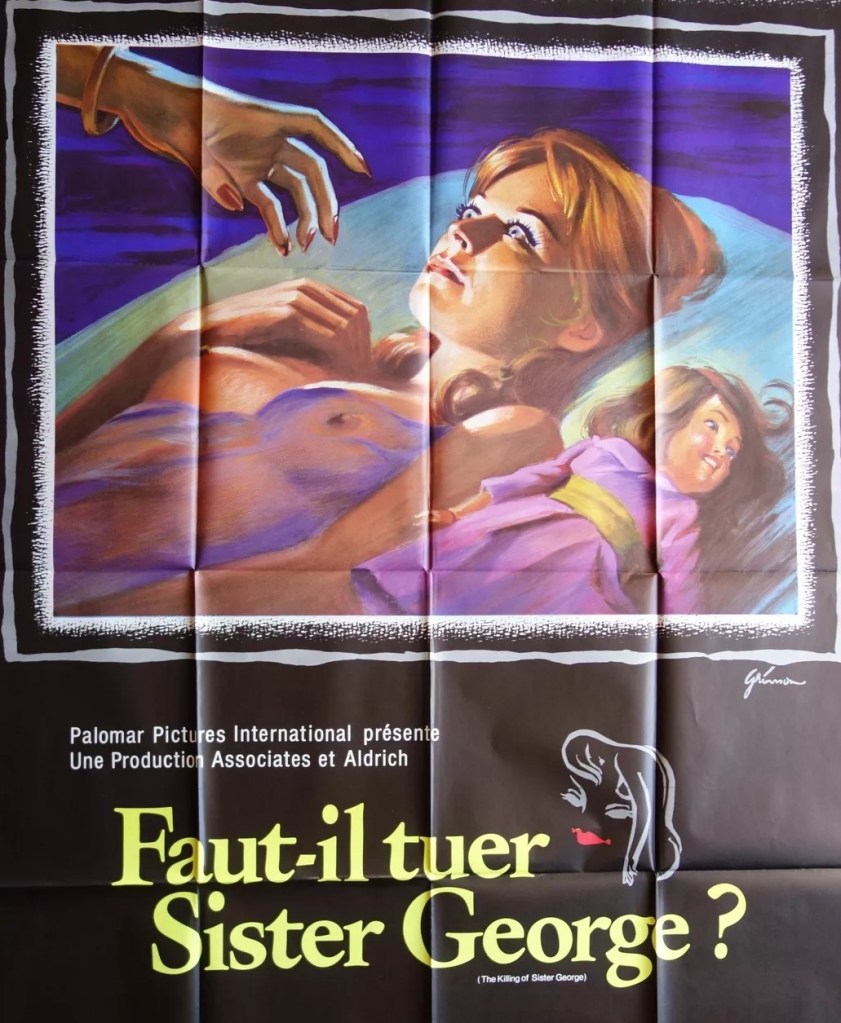
There’s some uncomfortable sadism when, as punishment for mild misdemeanor, Alice is forced to eat a cigar butt and told in no uncertain terms just how stupid she is. There had been a recent rash of on-set bitchiness, star tantrums and studio power struggles from pictures like The Carpetbaggers (1964), Harlow (1965), Inside Daisy Clover (1965), The Oscar (1966) and Aldrich’s own The Legend of Lylah Clare (1968), so none of production shenanigans bring anything new to the table.

However, when June lets rip, embarrassing management or forcing her fellow actors to laugh during a tragic scene, this is comedy gold. Her alcohol intake and arrogance aside, it seems a step too far for June to attempt to sexually assault two nuns in a taxi – this unseen sequence key to her downfall. You might be inclined to question how Alice came into the sexual orbit of June and Mercy in the first place, and wonder if the two older women are not guilty of what would be termed these days inappropriate behavior in taking advantage of clearly a vulnerable young woman.

Beryl Reid (The Assassination Bureau, 1969) walks a fine line between self-indulgence and character insight. I felt Susannah York’s over-acting got in the way. The tight-lipped Coral Brown (The Legend of Lylah Clare) was too close to the cliché for my liking.

Robert Aldrich just about gets away with it. Lukas Heller (The Dirty Dozen) adapted Frank Marcus’s play.
The Ipcress File (1965) *****

Stylish take on the espionage genre when it was still in its infancy and could accommodate stylish directors like Sidney J. Furie (The Appaloosa, 1966). Eschewing the bombastic effects and villains of the James Bond series, relying more on intrigue and the elements of betrayal that other practitioners of the dark arts such as John Le Carre espoused, this is as much a character study and presents in some cases a fairer picture of the class struggle in Britain than most kitchen-sink dramas. So it’s either going to put you off entirely or make you appreciate the film more when I tell you that my favorite scene is the fistfight between Harry Palmer (Michael Caine) and shaven-headed thug Housemartin (Oliver MacGreevy) outside the Royal Albert Hall in London that is shot entirely through the windows of a traditional red telephone box. You can’t say bolder than that.

The credit sequence, more famously ripped off by William Goldman for private eye saga Harper/The Moving Target (1966), is equally inspired. An alarm clock wakes Palmer, he reaches out for the girl who shared his bed last night to discover she is gone and then punctiliously and as if time-shifted to the twenty-first century when it would be the norm proceeds to grind fresh coffee beans, fill a cafetiere with only as much liquid as would constitute a small espresso, dresses and last but not least searches among the disturbed bedclothes for his gun.

Palmer is transferred from dull surveillance duties to a team hunting for missing scientists. Given both his insolent and insubordinate manner, he is not expected to fit in to a service riddled with the upper-classes. His new superior Dalby (Nigel Green), a “passed-over major,” owes his present situation to Palmer’s former boss Colonel Ross (Guy Doleman) and both sport three-piece suits, bowler hats and umbrellas and speak in those clipped tones that invariably carry undertones of menace. Where James Bond’s front, the import-export business, is rather more upmarket, here the background is considerably downmarket, Dalby masquerading as the owner of an employment agency and distributor of fireworks. It is insatiably bureaucratic, reams of forms to be filled in. What Palmer has in common with James Bond, beyond fisticuffs, is the ability to think outside the box and in this case picks the brains of a policeman friend to track down the wanted villain, code-named Bluejay (Frank Gatliff)  

As in the best post-Bond espionage, there are traitors everywhere, and the departments employing spies tend to employ other spies to spy upon them, though in this case Palmer has the luck to draw the sexy Jean (Sue Lloyd). When Palmer picks up the trail of Ipcress, the plot thickens. There is no shortage of action, a gun battle, fisticuffs, but it presents a different approach to modern espionage, with a properly rounded hero – one who can cook (as did author Len Deighton who wrote a cookery column) for a start – while the ladies, with whom he shares a roving eye with Bond, are not required to turn up in bikinis.

There is deft employment of that favorite British cultural emblem – irony – and one wonderful scene takes place in a park where Dalby taps his cane in appreciation of a brass band. Throw in a bit of brainwashing and it’s a completely different proposition to Bond who could escape such a dilemma in a trice. There is a clever ending.

Michael Caine (Hurry Sundown, 1967), complete with spectacles, is superb as Palmer, making enough of an impression that the series ran for another  four episodes. The stiff-upper-lip brigade have a field day in Nigel Green (Jason and the Argonauts, 1963) and Guy Doleman (Thunderball, 1965), the latter shading it with his purported sense of humor. Sue Lyon (Corruption, 1968) is excellent as the seemingly unattainable gal who falls within Palmer’s purvey but not entirely due to his charm. The villains, too, are not from the James Bond school of cut-outs, but come across as equally human, and the chief rascal you could argue has the most finely developed sense of humor of the lot. Throw in Gordon Jackson (Danger Route, 1967) and Freda Bamford (Three Bites of the Apple, 1967) as the bureaucratic attack-dog Alice and you have a very well cast movie.

Sidney J. Furie divided critics. Some believed he was ahead of his time, others that he was in thrall to arty French directors, and a reasonable number who didn’t give a stuff as long as he delivered the goods. But his predilection for odd angles here proves a strength, his  compositional excellence also spot-on, one scene in particular where in a library Palmer looks down on the villain with Housemartin on a landing between. And he takes great delight in emphasizing the class distinctions, both bosses have huge offices with a small desk in the corner, and when Ross places briefcase, umbrella and bowler hat on the desk of Dalby it could not be a more clear invasion.

And you can’t forget the score by espionage doyen John Barry (Goldfinger, 1964). W.H. Canaway (A Boy Ten Feet Tall, 1963) and James Doran, making his movie debut, adapted Len Deighton’s classy bestseller but a fair amount of polish was added by thriller writer Lionel Davidson (Hot Enough for June, 1964), Johanna Harwood (Dr No, 1962), Lukas Heller (The Dirty Dozen, 1967) and Ken Hughes (Arrivederci, Baby, 1966).    

A spy classic.

Book into Film – “Hot Enough for June”/ “Agent 8 3/4” (1964)

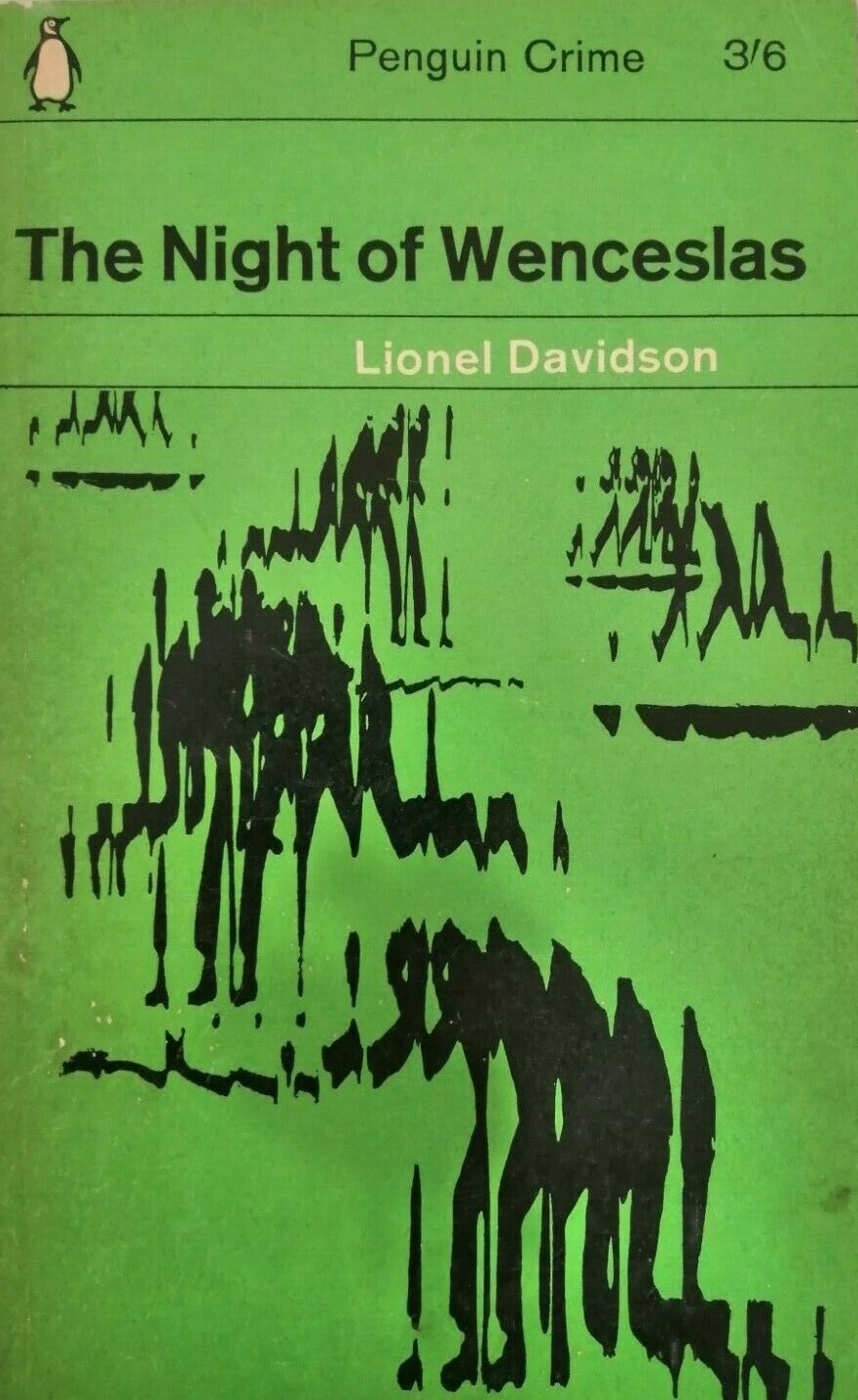
Timing is everything in the movie business. Had British film studio Rank shifted into top gear to adapt the best-selling thriller The Night of Wenceslas by Lionel Davidson soon after its publication in 1960 it would probably have been a completely different film to Hot Enough for June which took four years to reach the screen. Davidson had produced a ground-breaking espionage thriller that had critics reaching for the superlatives and putting him in the same bracket as Graham Greene and Eric Ambler. A film appearing, for example, in 1961 would not have been lost in the box office tsunami, in Britain at least, that greeted Dr No on its movie debut in 1962.

But by the time Hot Enough for June was released a second Bond – From Russia with Love (1963)- had changed public attitudes to spy films and in addition readers were reeling from two blockbuster spy novels, Len Deighton’s The Ipcress File (published in 1962) and John Le Carre’s monumental bestseller The Spy Who Came in from the Cold (published 1963). In preproduction in May 1963, minus any cast, the projected film was still being known as The Night of Wenceslas. Star Dirk Bogarde dithered so much about his involvement that at one point he was replaced by the considerably younger Tom Courtenay (Billy Liar, 1963).

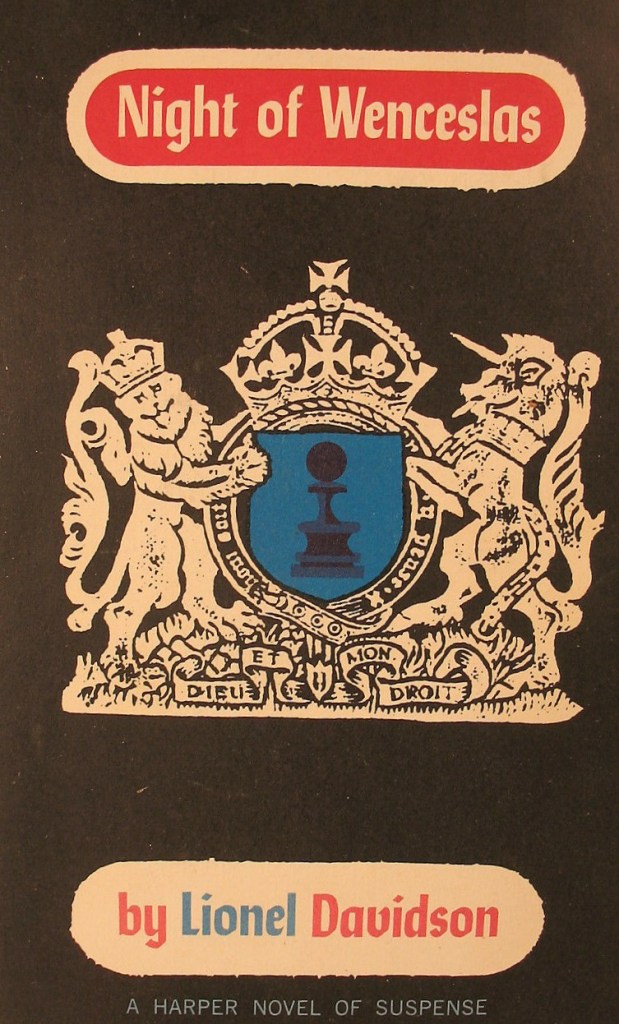
U.S. cover of the Davidson novel.

As was often the case in adaptations of best sellers, the screenwriter, in this instance Lukas Heller (Whatever Happened to Baby Jane, 1962) both added to and subtracted from the original material. For example, the Nicholas of the Lionel Davidson novel was not a particularly attractive character, truculent, snippy, with a bad case of self-entitlement, a bit of a ne’er-do-well, scrounging to pay bills, with expensive tastes and far from charming in his relationship with his girlfriend. He is also employed, rather than unemployed and with hankerings to be a writer as in the film, and comes into the orbit of Cunliffe (Robert Morley in the film) who dupes him into thinking an uncle has left him an inheritance.

Sensibly, Lukas Heller dispenses with Nicholas’s back story which posits him as a Czechoslovakian exile, albeit leaving his native land at the age of six, and various other complications concerning that country. He is sent to collect a formula for unbreakable glass. The “hot enough for June” password is a Heller construct and feels as if belongs to an earlier era of spy pictures. In the book all Nicholas has to do is leave his guide book lying around in the factory for the contact to write there the formula. However, rather than discovering he is working for the British Secret Service, the novelist employs a different twist, that the young man is, unknowingly, in the pay of foreigners plotting against Britain.

Davidson envisaged a different kind of Czech girl, more of a Valkyrie, statuesque (“her breasts stood out like bombs”) rather than the slimmer Sylva Koscina. It is Heller who adds the complication of her father heading up the secret police. In the book, her father is merely a musician and conveniently absent for most of the time, freeing up his house for romantic interludes. And the book has none of the James Bondesque features since the first of the series had not been written when The Night of Wenceslas was published.

However, the film having established the alternative world of rival secret agencies, of the girl being under suspicion and of her father being a senior official in the espionage business, the screenwriter then follows the bulk of the novel’s romance and the thrilling episodes involving Nicholas on the run. The swimming pool, cigarette burn, the parade and the milkman can all be found in the book.

There is one element that had to be changed. In the book, Nicholas makes two trips to Prague. But it is a golden rule of screenwriting that a character visits a location only once. Davidson ends his book with a touch of irony: Nicholas is swapped for Cunliffe.

At whose behest, it was decided to insert the comedy is anybody’s guess. Possibly the feeling that the book as written would be too unsophisticated for audiences accustomed to the rattling action and glamour of a James Bond. The Bond-style connections at the beginning of the film are clunky and the later references to espionage at the highest level also seemed to have been slotted in with no regard to retaining the essence of the book.

Discover WordPress

A daily selection of the best content published on WordPress, collected for you by humans who love to read.

The Atavist Magazine

by Brian Hannan

WordPress.com News

The latest news on WordPress.com and the WordPress community.