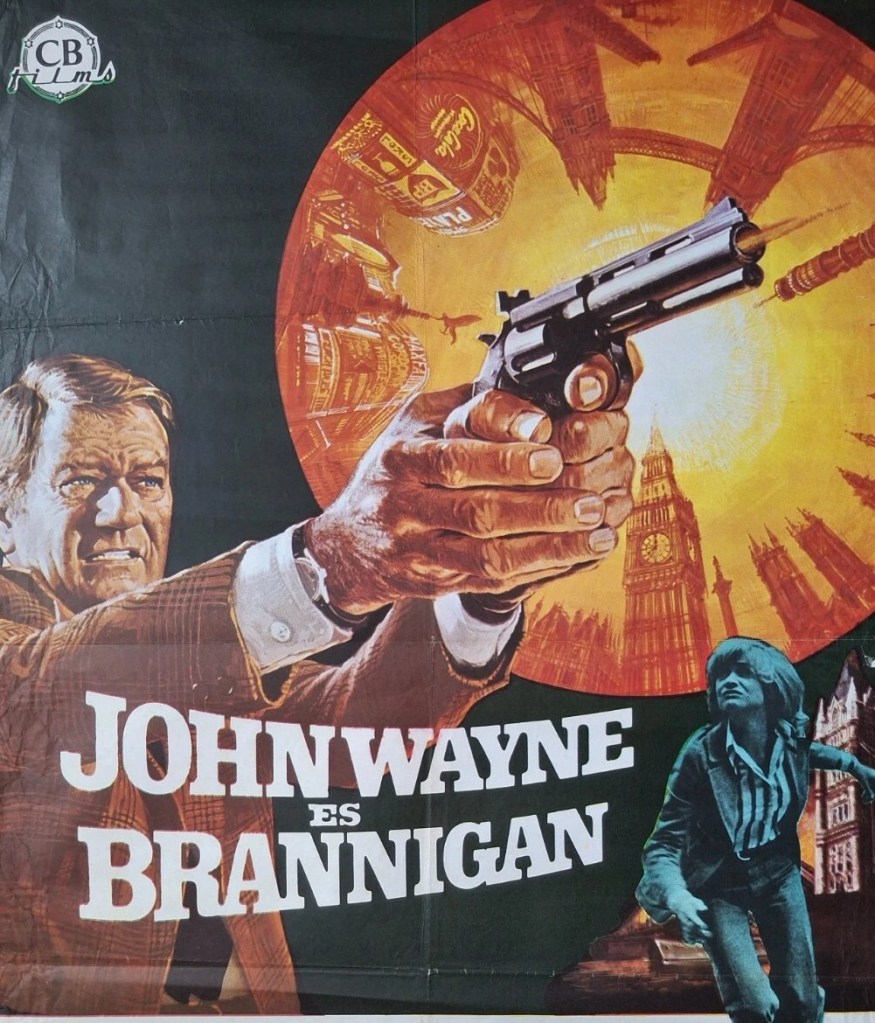
Brannigan (1975) ***

File under guilty pleasure. And bear in mind in the early 1970s there was no such thing as the police procedural, certainly not as we know it today, when cops have the benefits of DNA, increased forensics and computer technology. Hollywood in this era didn’t waste time with endless knocking on doors or collecting massive amounts of minutiae in the hope of uncovering a clue.

Generally speaking, cops of this period had two things in common. They were mavericks and they constantly fought authority usually represented by some dumb superior. Normally the narrative consisted of the character taking on the  persona of a bull in a china shop and thundering towards a main objective, the more set pieces to demonstrate said bullish tendencies the better, and if in the course of apprehending a criminal he can deliver a catchphrase such as “make my day” or, as here, “knock, knock,” so much the better.

John Wayne had made eight westerns in a row and having turned down Dirty Harry (1971) ventured into the cop genre with McQ (1974) and came straight back for seconds here.

Brannigan (John Wayne) has been shipped over to London to bring back under the extradition treaty Mob gangster Larkin (John Vernon) which would be pretty straightforward except the Brits don’t keep such prisoners in custody – Larkin swans around in a white Rolls Royce – and in any case he’s in custody of another kind, having been kidnapped by some British hoods.

In terms of authority Brannigan battles the sappy Brits who won’t allow him to carry a gun and do things the Chicago way. Luckily, for the picture, top cop Commander Swann (Richard Attenborough) is not the standard stiff-upper-lip buffoon but as likely to pitch in when the fisticuffs begin. There are a couple of excellent car chases and one stunt of French Connection (1971) quality when two cars go sailing over the gap in a raised Tower Bridge. This is a London mixing glory and grit, posh residences and ancient buildings share screen time with rundown docklands. And the movie has the sense not to go all May-December on us and while a certain affection builds up between the U.S. cop and his driver Jennifer (Judy Gesson), it doesn’t teeter into unlikely romance.

The plot’s clever. While in a sauna having a massage Larkin is knocked out cold and bundled into a sweatbox by two apparent delivery guys and then smooth attorney Fields (Mel Ferrer) acts as the go-between, delivering Mob ransom money to the kidnappers, the price increasing with every failed rescue attempt, until the kidnappers are sitting on a cool million. Naturally, there’s some double-crossing and the cops have one tiny magic bullet to use to their advantage.

So mainly the fun is watching Brannigan charge around in a British china shop, mostly bypassing British rules. There’s a subplot involving a hitman hunting Brannigan and even when in a normal cop movie you might think, fair’s fair, the policeman should be able to defend himself with a weapon, that doesn’t equate with the British rules, so you have our hero able to point out that if he wasn’t armed to the teeth Jennifer would be dead, while Swann does his best to insist that it would be better for the young lass to end up on a mortuary slab than British cops go rampaging around with guns.

There’s some gentle fun in poking at British tradition – the obligatory wearing a tie in certain upmarket establishments – and in Swann having to translate to a waitperson Brannigan’s breakfast order.

Except when standing up for rules, Swann is great value, a good match for the American, both in tempering his ruthlessness, and matching him punch-for-punch in a brawl.

Apart from the action sequences, John Wayne is permitted to grow old gracefully, his dialog rarely filled with barbed retorts or salty words and there’s quite nice acting on the Duke’s part when he’s called upon to demonstrate his special skill, which is “reacting”.

Richard Attenborough (Only When I Larf, 1968) has a ball, and not before time, able to let some of the usual repressed intensity burst out. Judy Geeson (The Executioner, 1970) must have been delighted to find a part that didn’t involve her taking off her clothes and she’s afforded some of the best lines. John Vernon (Topaz, 1969) is his usual hardass but Mel Ferrer (The Fall of the Roman Empire, 1964) has a good stab at a bad guy.

Not in the same league as director Douglas Hickox’s Sitting Target (1972). Written by Christopher Trumbo (The Don Is Dead, 1973), William McGivern (The Wrecking Crew, 1968), Michael Butler (The Gauntlet, 1977) and William Norton (The Scalphunters, 1968).  

Erroneously tabbed as a box office disappointment, this was made on a budget of $2.6 million but cleared $7 million in rentals (the studio share of the box office) plus another $1.5 million from television.

Obviously, if you’re in the Clint Eastwood camp this falls short, but otherwise it’s enjoyable stuff.

Secret Ceremony (1968) ***

Few stars were as willing to trade their glamorous screen persona for a decent role as Elizabeth Taylor, here eschewing the trademark hip swivel, low cut dresses and elegant costumes for a clumping walk, frumpy look and eating with her mouth full. After a chance meeting on top of a bus with rich waif Cenci (Mia Farrow) middle-aged prostitute Leonora (Elizabeth Taylor) swaps a dingy bedsit for life in a massive mansion, cupboards stuffed full of furs, all her needs met. Cenci seeks a mother; Leonora, whose daughter drowned aged ten, seeks a child substitute.

Soon Leonora is prisoner to a fantasist, her own identity swamped by Cenci’s needs, accepting the role of “mummy” as the price of a life of luxury until she learns that what appears so freely given can be as easily taken away. This cloistered life is creepy. Cenci has rape fantasies. To a pair of interfering and thieving aunts, Leonora pretends to be Cenci’s dead mother’s cousin.

The fantasy conjured is threatened by the presence of Cenci’s poet stepfather Albert (Robert Mitchum) who intends to become the girl’s legal guardian. He talks like a child molester, “the extraordinary purity of my longings,” but given the depth of Cenci’s fantasies Leonora initially discounts inappropriate behavior on his part especially when Cenci wishes to become inappropriate with her. If Leonora stands in Albert’s way it is only to have the girl – and her wealth – to herself.  

A psychological drama that appears more like a stage play in structure, skirting around core issues in favor of later revelation, and in essence making a good effort at dealing with behavioral problems which would find greater currency today – inherited mental illness, PTSD, low self-esteem, abuse, and incest. Though the last area is hard to specify, on the basis that, technically, Albert is a stepfather rather than a father, underage sex would appear to be more likely.

In an era when permissiveness virtually ensured audience shock, director Joseph Losey makes a decent stab at presenting the impact of sex on the vulnerable, despite her apparent steely exterior Leonora damaged by life as a sex worker, Cenci pretending to be younger as if that can sustain her innocence, not realizing how appealing that would be to a predator.

At once hypnotic and impenetrable, this is director Joseph Losey (The Servant, 1964) at his best, a story that by its subject matter must remain obscure, a mother-daughter relationship that should be twisted but reveals nothing but tenderness, ending for a time the torment of the  emotionally unfulfilled, but when bonds appear to be strengthened they are fragmenting. However, the film is let down by the script and the somewhat grand guignol setting. Losey is wonderful at times with nothing to say just a prowling camera, only two lines of dialog exchanged in the first 15 minutes. You would certainly file it under “eclectic.”

The two main performances are electric. This is Taylor at her powerhouse best, her profession not glamorized as in Butterfield 8 (1968) and no male to bring to heel, and her last scene with Cenci is extremely touching. This was a bold role, too, for Mia Farrow after the success of Rosemary’s Baby (1967) turned her into a box office star. She brings believability to a difficult role, especially as she is far from the spoiled child one might expect.

Robert Mitchum fans must have received the fright of their life to see their hero not just with uncomely beard but portraying a sinister character, not an out-and-out villain which would have been acceptable, but fast forward a couple of years and you can see evidence here of the kind of portrayal he would evince in Ryan’s Daughter (1970). Look out for Peggy Ashcroft (The Nun’s Story, 1959) in a smaller role, her first film in nearly a decade.

Check out the “Behind the Scenes” article for this film.

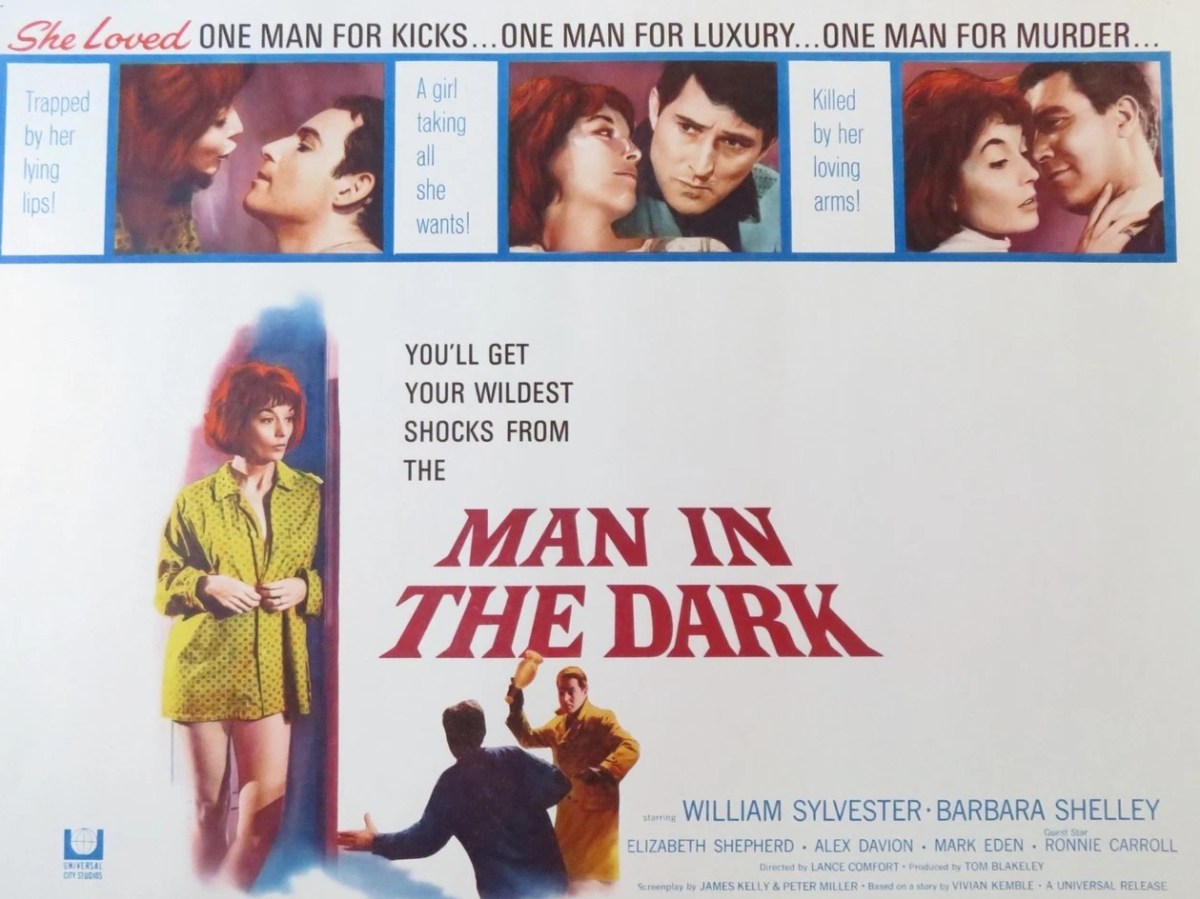
Man in the Dark / Blind Corner (1964) ***

Hammer Scream Queens rarely make an impact outside the genre, so it comes as something of a surprise to find Barbara Shelley effortlessly making the transition from The Gorgon (1964) to a slinky femme fatale spinning a deadly web around three men. While British femme fatales tend not to go all-out full throttle in terms of seduction and revenge, that suits the set-up here which is distinctly slow-burn. In fact, you might be persuaded to accuse the production of time-wasting or padding-out the story with its occasional diversions into song numbers (though that is a trope of these B-features) until you discover later on that there’s a very good reason for listening to the dulcet tones of pop singer Ronnie Carroll.

While there are echoes of Faces in the Dark (1960), blind composer Paul (William Sylvester) here is a far more sympathetic character especially once audiences latch on to what he as to put up with. And where Wait until Dark (1967) majors on terror, here the approach is much more subtle. And while audiences might wince at Audrey Hepburn’s predicament, here they will be appalled to see Paul’s wife Anne (Barbara Shelley) virtually taunt him by not just parading her secret lover Ricky (Alexander Davion), a penniless artist, but caressing him and pecking his cheek with kisses as if to test her husband’s radar.

Not only is Paul the forgiving type – turning a blind eye to his wife’s regular late nights – but he is devoted to Anne and considers himself lucky that she has stuck by him and it never occurs to him that his wealth plays a significant part in that bargain, Anne, a little-known former actress, unlikely to enjoy such bounty any other way. He’s so in love with his wife that he knocks back his secretary Joan (Elizabeth Shepherd) who has a good idea her employer is being played for a fool.

Under the guise of Ricky painting her portrait, Anne manages to legitimately spend a considerable amount of time with her lover and fine-tune her plans to rid herself of Paul. There’s a fairly easy option. Paul is an alcoholic and given to standing in an open balcony. He could easily lose his footing and topple over should there be someone around to give him the initial nudge.

Ricky is pencilled in as the murderer. And though he initially baulks at the idea, the prospect of both losing Anne and resolving at the same time his financial problems is too tempting. By now, Paul is aware of the tryst, having been alerted to the couple smooching in a restaurant, by his best pal and manager Mike (Mark Eden). Once we realize that Paul has been taping his wife’s telephone conversations, you are misdirected into thinking he will be better prepared. But this isn’t America or even sleazy Soho and there’s not a gun to hand or even a knife so Paul is vulnerable to an assailant and even as weak-minded an individual as Ricky seems to grow in confidence the minute the tussling begins.

Even then Ricky is so incompetent Paul needs to coach him into how to get away with the perfect murder and once we get to this stage it’s clear there’s something else going on and we’re in for a torrent of twists, delectably delivered. Ricky is informed that he’s a patsy, that Anne is in love with Mike and that in a courtroom she will act her socks off as the innocent victim of an overzealous lover – “a choked sob will escape her –  she did that in The Act of Cain” or “she might fall into a crumpled but not unattractive faint” as she did in Murder Undaunted.”

When Anne arrives, accompanied by Mike, to check on Ricky’s handiwork, the game is clearly up. But Paul has police hidden in the bedroom to hear what amounts to Anne’s confession. All three are locked up and Paul heads off into the sunset with his secretary.

Barbara Shelley creates a sizzling tension of her own and is a superb femme fatale, dangling three men on a string. Alexander Davion (Paranoiac, 1963) and Mark Eden (Curse of the Crimson Altar, 1968) don’t get a look-in though simply by being stoic and then clever William Sylvester (Devils of Darkness, 1965) manages to hold his own.

Quite a different proposition to Tomorrow at Ten (1963), also helmed by Lance Comfort, where the tension is upfront. You’d say this was a weighted piece of direction, with much of the pressure in the early stages reliant on whether Paul will see through his wife. Those scenes where she toys as much with her lover as her husband are unique. Written by the team of James Kelly and Peter Miller (Tomorrow at Ten) plus Vivian Kemble (Olympus Force, 1988).

Takes a while to come to the boil but well worth the wait.

Catch it on Talking Pictures TV under the title Blind Corner.

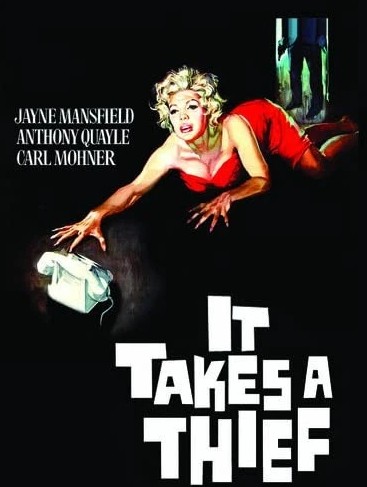
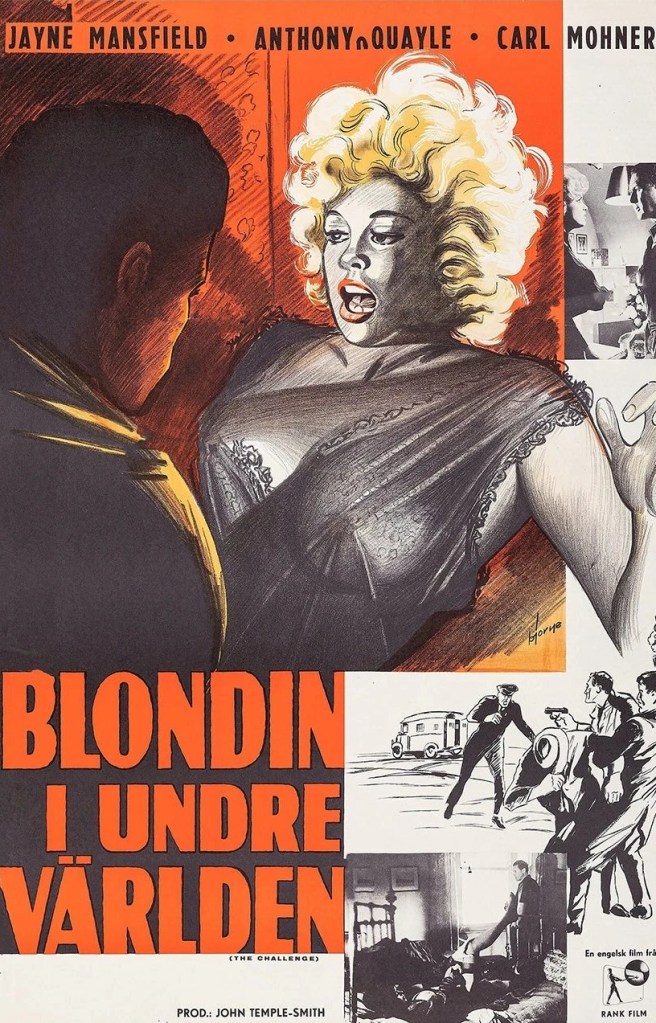
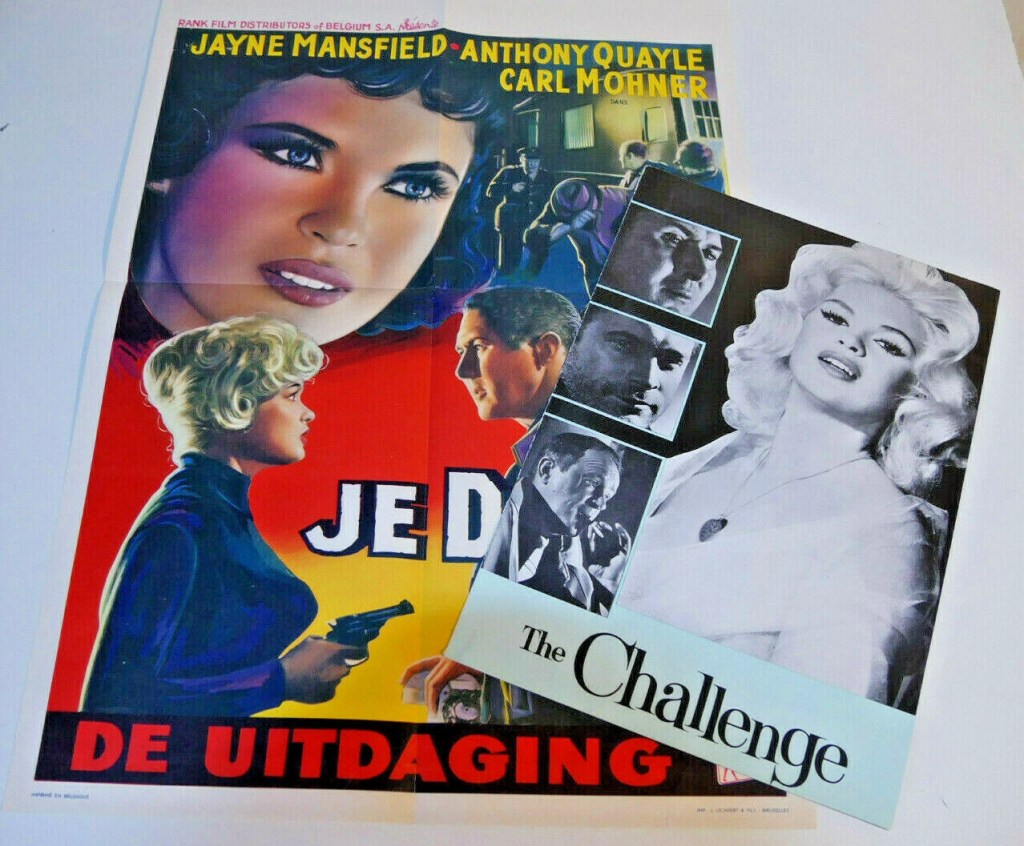
It Takes a Thief / The Challenge (1960) ****

Extremely dark-edged thriller at least a decade ahead of its time. Absolute corker of a sting in the tail. Instead of being the gangster’s moll, Jayne Mansfield – following on from another British-made thriller Playgirl After Dark / Too Hot to Handle (1960) – turns the genre on its head by playing the smart leader of a gang of bank robbers constantly evading detection by the police. Anthony Quayle (East of Sudan, 1964) drops his good guy stiff upper lip screen persona in favor of a villain.

Most heist movies either fall into the category of mostly heist (Topkapi, 1964) and half-heist and half-aftermath. Here the heist is dealt with pretty quickly and then we’re into a complicated aftermath with double cross the order of the day. Even the supposed good guys – a cop and a union leader – have a distinctly mean streak. And on top of that we have a whole load of car chases. Just one would be unusual at the time for this budget category, but here we have three, complete with crashes and cars totaled off the road. And on top of that there’s an exceptionally creepy attempt at getting an inconvenient young child to commit suicide by playing chicken on a railway line.

Widowed lorry driver Jim (Anthony Quayle), who has dreams of owning a farm, is seduced into acting as the driver for the latest bank heist organized by Billy (Jayne Mansfield). While his van loaded with the loot tootles off unimpeded, she acts as bait in another car to snooker the cops into pursuing the rest of the gang. As proof of her love for him, she entrusts him with burying the loot in a place of his choosing.

He doesn’t get the chance to dig it up again because someone’s snitched on him, most likely Billy’s ex Kristy (Carl Mohner). And since he can’t snitch on the gang to save his own skin he ends up doing a five-year stretch. When he comes out, he finds the cops shadowing his every move, and Kristy taking his place in Billy’s bed. Det Sgt Gittens (Edward Judd) decides to play dirty by suggesting that Jim is intent on double-crossing her.

The gang, determined on recovering the loot as soon as possible, have their own arsenal of dirty tricks, beating up Jim’s mother and kidnapping his son.  You’d think that with his mum black and blue and his son in the hands of the crooks that Jim would give up the loot. But, as I said, he’s not a good guy and is willing to risk all he supposedly holds dearly to get his hands on the dosh.

There’s a twist that Thunderbolt and Lightfoot (1974) later down the line exploit. Instead of someone building a school over the hiding place as with the Clint Eastwood picture, here it is hidden under dozens of barrels of high explosive encased in barbed wire. With the deadline approaching for killing his son, Jim attempts to enlist a bunch of local laborers only to be stopped in his tracks by the bureaucracy of a union shop steward.

Meanwhile, the couple, and despite all the motherliness of the childless wife (Barbara Mullen), forced to hide the child aren’t making the slightest attempt to help him escape. Instead, we watch with incredulity as one of the hoods, stumbling upon an easy way to get rid of a body, tempts the child into playing the aforementioned game of chicken.

Tension remains at a peak all the way through, in part because audiences are expecting Anthony Quayle to rouse himself from the depths of criminality and do the right thing, but mostly, in the template that Christopher Nolan would follow, three sets of narrative constantly come together.

There are two stings in the tail. Firstly, the burial site is obliterated when the barrels of high explosive shoot sky high. Secondly, with decided relish, Sgt Gittens informs Billy that the cops recovered the loot years before, so he’d risked mother and son for nothing. You can’t get blacker irony than that.

Jayne Mansfield was a much bigger attraction than Anthony Quayle and she puts in a superb performance as the mastermind and the practical woman, not willing to put career or love life on hold while Jim does his time. And while she’s slinky enough and occasionally brazen, she’s also decidedly human, but no more inclined than Jim to allow anybody to get in the way of the rewards of crime.

Like the crime pictures Britain showed a distinct aptitude for in the 1970s – Get Carter (1971), Villain (1971) and Sitting Target (1972) – this stays resolutely on the wrong side of the fence with not a single redeemable character.

Written and directed by John Gilling before he shifted into horror (The Reptile, 1966), this is a more than able piece, pulling no punches and resisting the temptation to sneak in any sentimentality.

Minor gem.

Catch it on Talking Pictures TV.

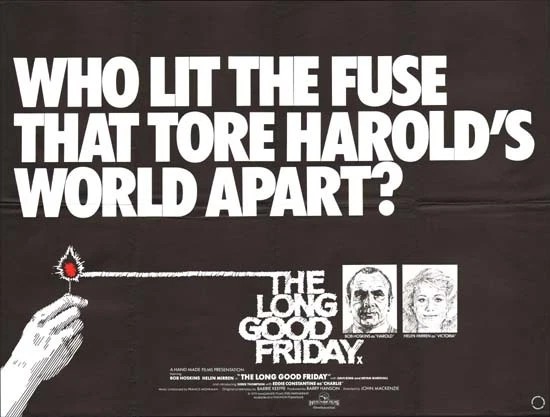
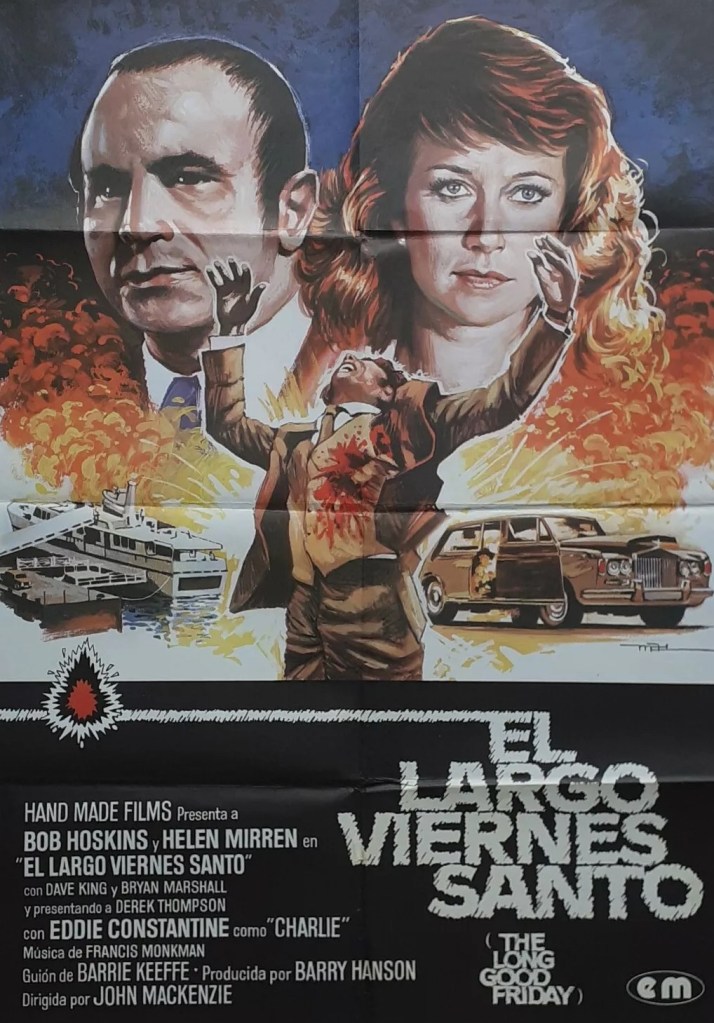
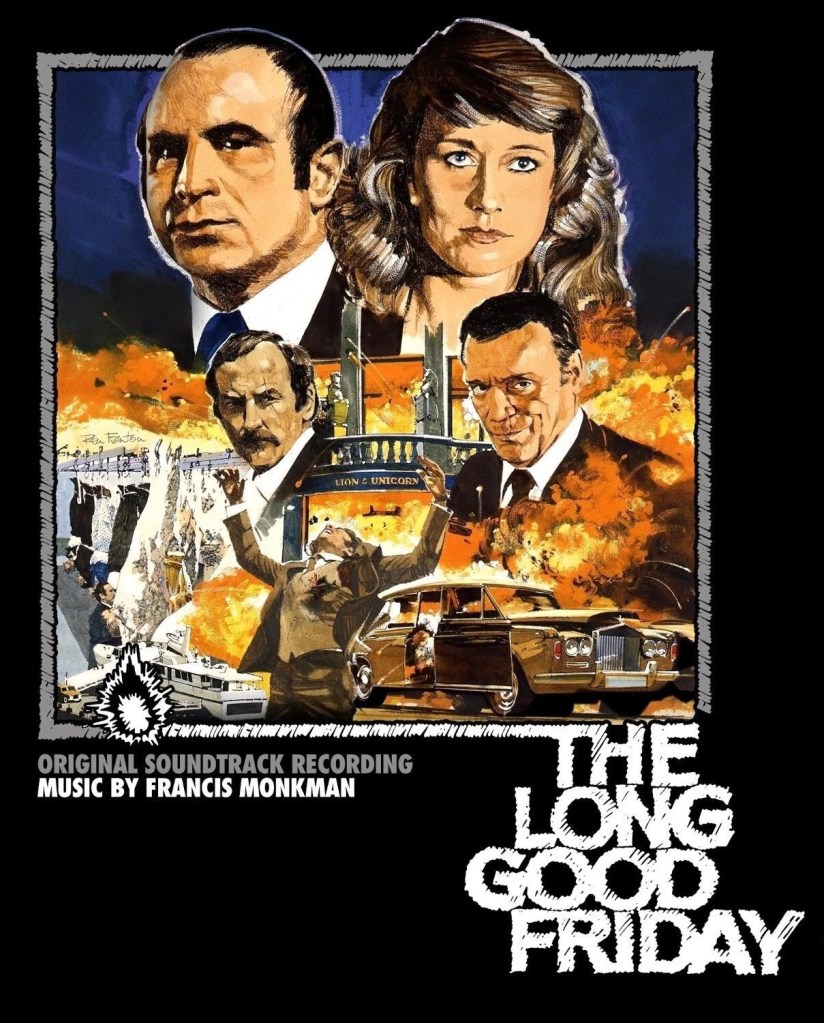
The Long Good Friday (1980) *****

Got two predictions correct – that the conversion of London Docklands into upmarket housing was a potential goldmine and that London would become the beating financial heart of Europe. Though I would have thought everyone, even as arrogant a character as gangster Harold Shand (Bob Hoskins), would have known not to tangle with the IRA. Of course, he hasn’t done this deliberately, that’s just the sting in the tail, unravelling the complex mystery of who’s got it in for him.

This would be a fitting addition to the 1970s trilogy of British gangster pictures par excellenceGet Carter (1971), Villain (1971) and Sitting Target (1972) –  except you could argue it’s better than the lot. Here we’re on The Godfather Part II territory, the big-time hood who’s gone legit. Harold already owns a casino, upmarket restaurant and pubs, and swans around in a luxury yacht but he’s got his eye on bigger game, investment in the Docklands, an ideal money-laundering concept, and he’s hooked a potential partner in American Mafia chief Charlie (Eddie Constantine).

Much as Harold would like to show off his svelte businessman side, his attempts to ooze class disappear at the first sign of trouble and soon he is working those teeth so hard he could be auditioning for Jaws. We’ve got an inkling of what’s going on but it takes a good while for everything to add up and even then Harold is convinced someone’s got their sums wrong since he’s ruled the London underworld for a decade and nobody with any sense would take him on.

The businessman façade falls away when his close aide and longtime buddy Colin (Paul Freeman) is murdered and his Rolls Royce and a pub are blown up. And it takes virtually the whole picture for Harold to discover just why a woman on her way to a funeral stopped the car long enough to spit in the face of one of Harold’s top henchmen, Jeff (Derek Thompson).

So mostly what we’ve got is Harold reverting to old-style violence, presumably using the methods that got him to the top in the first place, as he tortures and terrifies everyone in sight. Some of the brutality is inventive stuff as movie torture goes, one fellow having his naked backside sliced open by a machete, the rest of the top gang leaders rounded up in an abattoir as if they were sides of beef awaiting slaughter.

Meanwhile, wife Victoria (Helen Mirren), a version of what used to be known as “posh totty”, tries to keep the deal active by charming the pants off every male who comes within a sniff of her, some so driven by temptation they declare they “want to lick every inch of her.”

So, on the one hand, it’s big business and all the jiggery-pokery that goes in the legitimate world even among illegal contenders, and on the other hand it’s all the jiggery-pokery that goes on in the illegal world among all the illegal contenders.

Incredible score by Francis Monkman. Why he wrote so few is a mystery.

While there are many standout moments – and you’d be hard put to beat the climactic scene of Harold in the back of a taxi facing his demise – and director John MacKenzie wields his camera with considerable verve, his ace in the hole is always the expressive face of Harold. Whether he’s practising his bonhomie, or stiffening at the latest outrage, or letting loose physically and verbally it’s a fabulous acting tour de force as if James Cagney had met Al Pacino. And like Oliver Reed in Sitting Target, simmering rage is smoothed over by feminine companionship, the close bond between Harold and Victoria one of the key ingredients.

Turned Bob Hoskins (Zulu Dawn, 1979) into a star and had the British end of the industry been in better shape he had might made a smoother transition to the top echelons instead of waiting for Mona Lisa (1986) to polish his credentials.

Although we Brits like to think the acting of “national treasure” Helen Mirren was always being recognized on the domestic front, long before she achieved unquestionable credibility from pocketing an Oscar for The Queen (2006), in truth by this point her movie career was in limbo. Hardly any screen work since her breakthrough in Age of Consent (1969) and three of her last four pictures – Caligula (1979), S.O.S. Titanic (1979) and The Fiendish Plot of Fu Manchu (1980) – counting as calamities. This was a fresh take on an actress who, too often for her own good, had been seen as better naked than clothed.

It was almost a homage to cult to employ Eddie Constantine (S.O.S. Pacific, 1960) but it was surprising how many of the supporting cast came good including future James Bond Pierce Brosnan as a gay killer, Paul Freeman (Raiders of the Lost Ark, 1981), Derek Thompson (nearly 40 years on BBC series Casualty), and future director Dexter Fletcher (Rocketman, 2019).

Original screenplay by Barrie Keefe on his debut.

Still stands up as a gangster great.

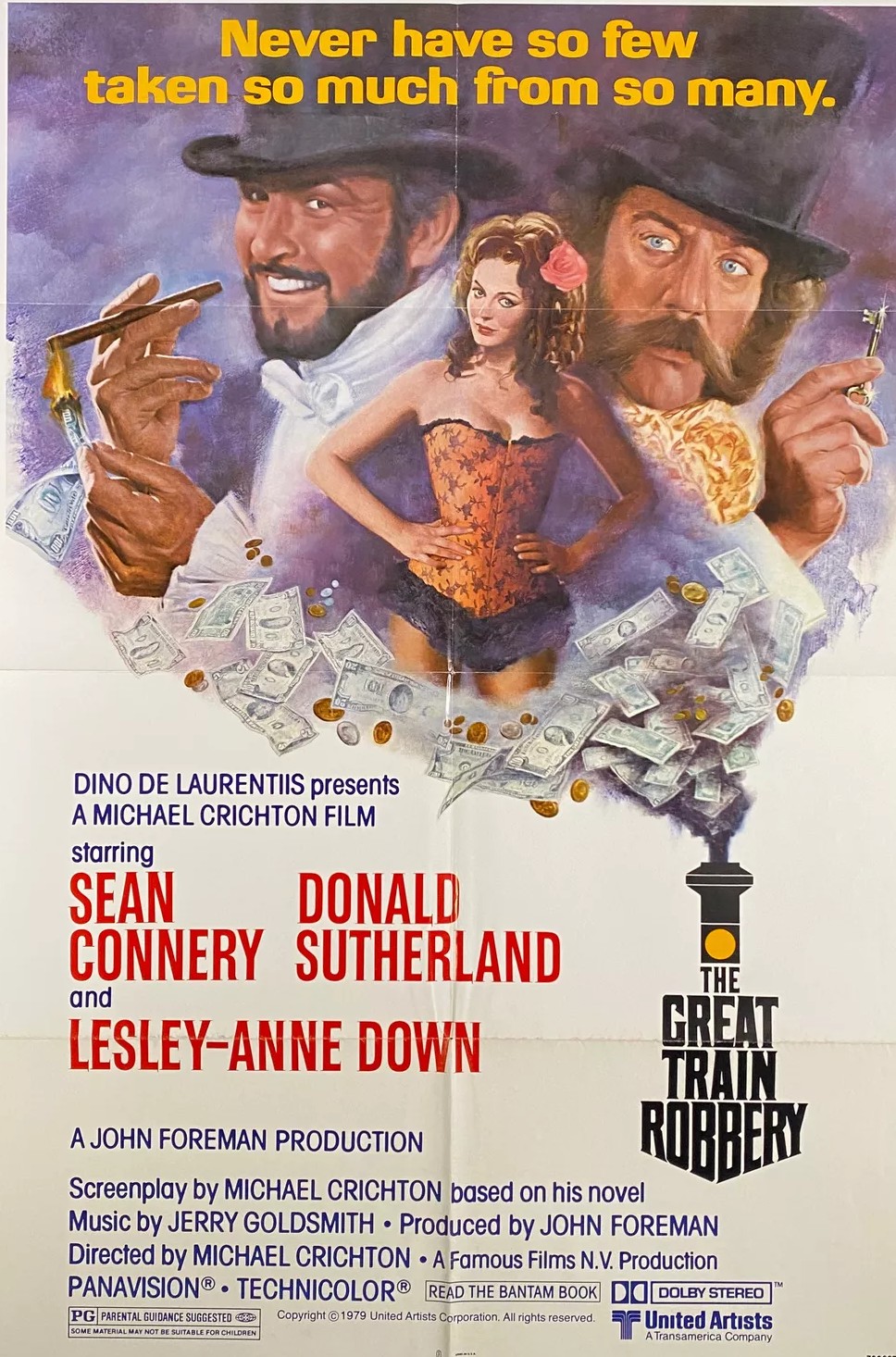
The Great Train Robbery / The First Great Train Robbery (1978) ****

Back in the day your IP was the star. And here Sean Connery (The Hill, 1965) is the essence of that belief. The camera homes in on him. He steals every scene with an effortlessness that takes your breath away even as co-star Donald Sutherland (Don’t Look Now, 1973), complete with bizarre sideburns and winks to the audience, is huffing and puffing to compete.

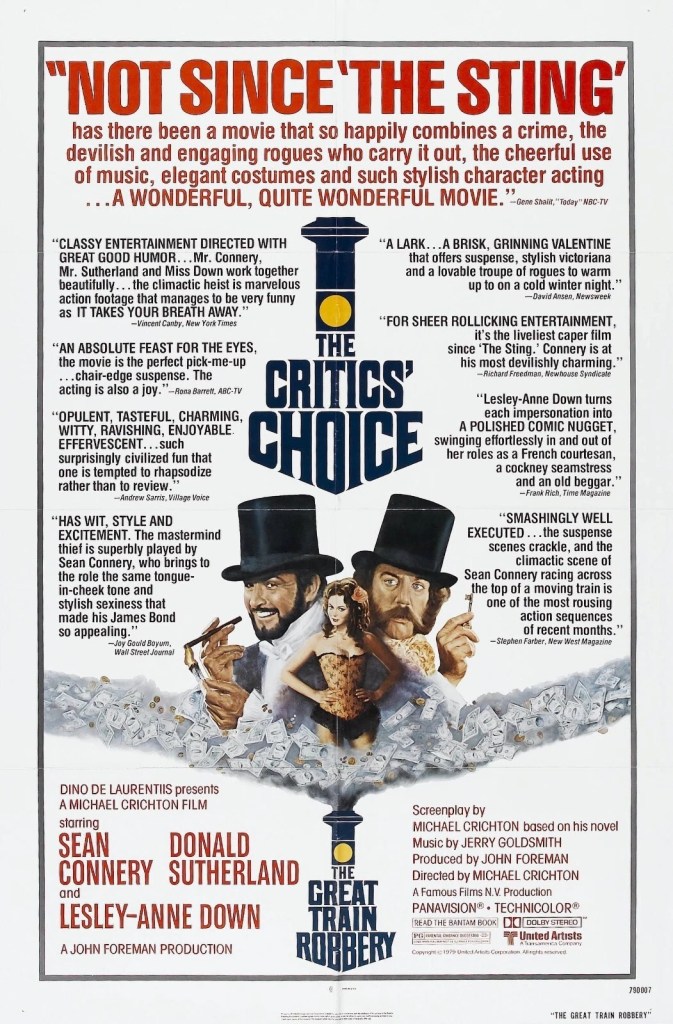
Come at it as the standard heist movie and you will struggle to enjoy it because it is made up of too many different components. But approach it from a different perspective, that of The Sting (1973) as one critic suggests, and it takes on a different complexion and the getting there becomes a whole lot of fun. The background, Victorian England of the 1850s, doesn’t help so much as the sets look like they’ve been plundered from Oliver! (1968) and dirtied up a bit.

It’s worth remembering that in an era when the Mission Impossible series has been constantly sold on Tom Cruise undertaking his own stunts that Sean Connery did something much more dangerous than anything attempted by Cruise which was to race along the top of a train travelling at 55 miles an hour.  

And if you need some contemporary analogy, look no further than the rich get richer and mostly through plundering. The ending presents the notion of a Robin Hood outwitting the forces of law and order to the acclaim of the public. But that would be to overlook the fact that chief thief Pierce (Sean Connery) is already so wealthy from previous nefarious dealings that he hobnobs with the rich, so accepted in their world of male clubs and high society that, like a financial trader, he is able to pick their pockets of vital information.

Though it’s not quite that easy. The target is a trainload of gold bullion heading for the Crimean War. And the two safes containing the dosh require four keys, each under the control of a different high-up official, requiring several separate audacious thefts. This involves some play-acting from the principals, dressing up in the main from female accomplice Miriam (Lesley Anne Down), clever duping by Pierce and old-fashioned burglary from pickpocket Agar (Donald Sutherland) who waves his fingers around like a demented Fagin, and whose main job is make wax impressions of stolen keys.

So Pierce pretends to be the ardent wooer of the daughter of one of the key holders, and Miriam essays a prostitute to relieve a key holder of the precious possession he wears around his neck. But the other two keys require a more professional approach which involves first of all the springing from prison of cat burglar Clean Willy (Wayne Sleep) to break into the guarded railway premises in a time-dependent operation.

But the cops get wind of the plan and increase security on the train, including adding a new padlock to the outer door. “Find me a dead cat!”, while not quite in the league of “The name’s Bond, James Bond” might well count as one of the best lines ever uttered by Sean Connery.      

Said deceased animal is brought in to supply the necessary stink for a corpse should the cops consider opening the casket containing Agar which is to travel on the train, providing the team with the necessary inside man. But Agar and Miriam as the weeping widow of the supposed dead man have very little to do compared to Pierce who has to climb on top of the train, racing along the speeding top, drop down the side in an improvised harness and pick the padlock, then do the whole thing in reverse.

I may be wrong, and I’m sure someone will correct me if I am, but if this wasn’t the first time running along the top of a moving train was employed in a movie it certainly set a new standard, especially in the willingness of the actor to carry out his own stunts.

Pretty much all that remains after that is the twists that see Pierce captured and then escape. You could pick a few holes in it if you wish. The fact that after Pierce swapping coats (the one that had lain beside a dead cat for hours and provided sufficient stink to convince the lawmen) with Agar, nobody noticed the smell seems unlikely. The same would apply to bank manager Fowler (Malcolm Terris) who fails to spot that the widow he shares a compartment with for the entire journey is the prostitute who duped him, though that prospect does increase the tension.

If you’re expecting a standard heist movie then this takes way too long to come to the boil, but if you go along with the conceit and enjoy the playing especially of Sean Connery and ignore the mugging of Donald Sutherland it is in the forefront of the best robbery pictures.

And it’s worth noting the little gems in Connery’s acting. There’s a scene where Lesley Anne Down is berating him for making her become a prostitute (implicit is her fear she might actually need to have sex with the client). He’s eating an orange. Ignoring her complaints as just part of the job, he offers her some of his fruit as if his main worry is being seen to be rude hogging the fruit to himself.

Connery proves exactly why you hire a star. He carries the picture. There’s a lightness to his overall performance, notwithstanding the few times he needs to take a tougher line, that makes the film a joy. Whereas Donald Sutherland is either too heavy-handed or overacting. This proved a breakthrough role for Lesley Anne Down (British television’s Upstairs, Downstairs, 1973-1975).

Director Michael Crichton (Westworld, 1973) cuts himself too much slack in the first half of the picture which could have been considerably tightened up but comes into his own with the tension and twists of the heist and he has the good sense to rely on Connery’s interpretation of Pierce. He also wrote the script based on his own novel, a fictionalization of the actual original robbery attempt.

There already had been an incredibly famous Great Train Robbery in Britain in 1963, hence the need to differentiate this from that by inserting the prefix “First” to the advertising in Britain.

Great fun and worth a watch.

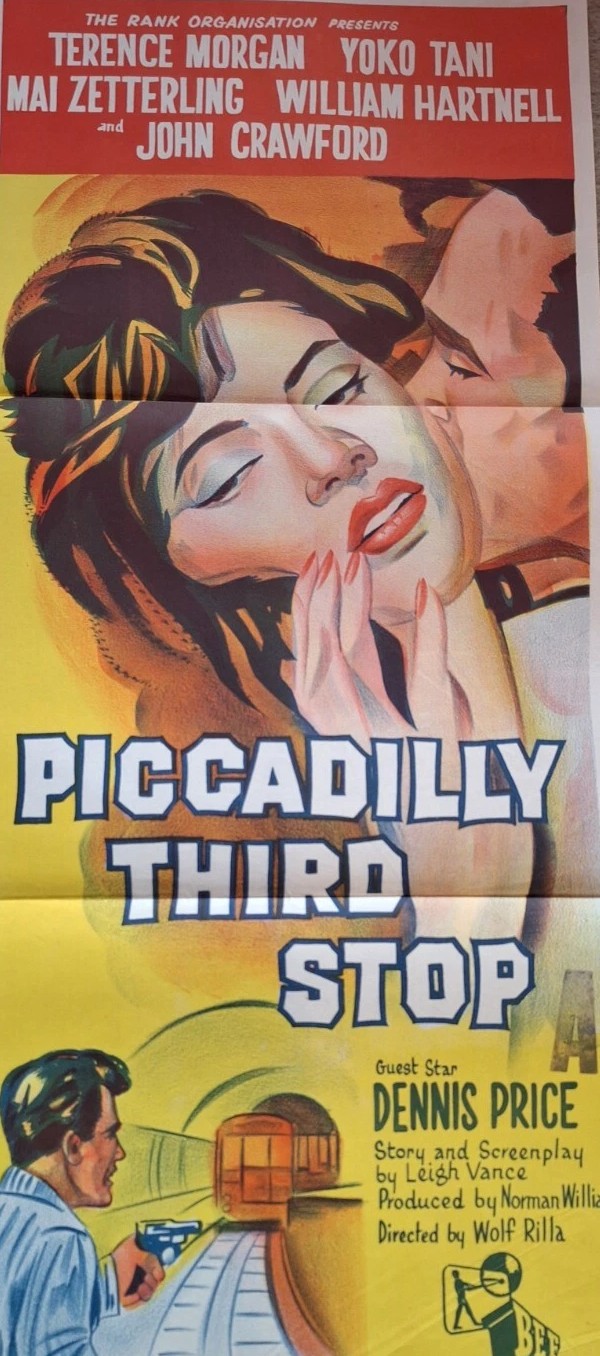
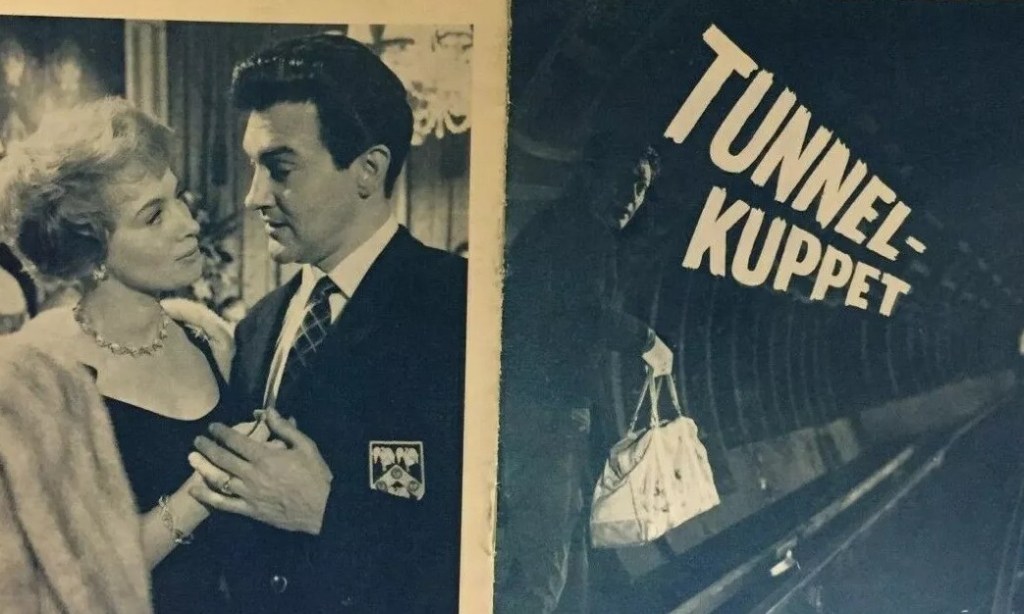
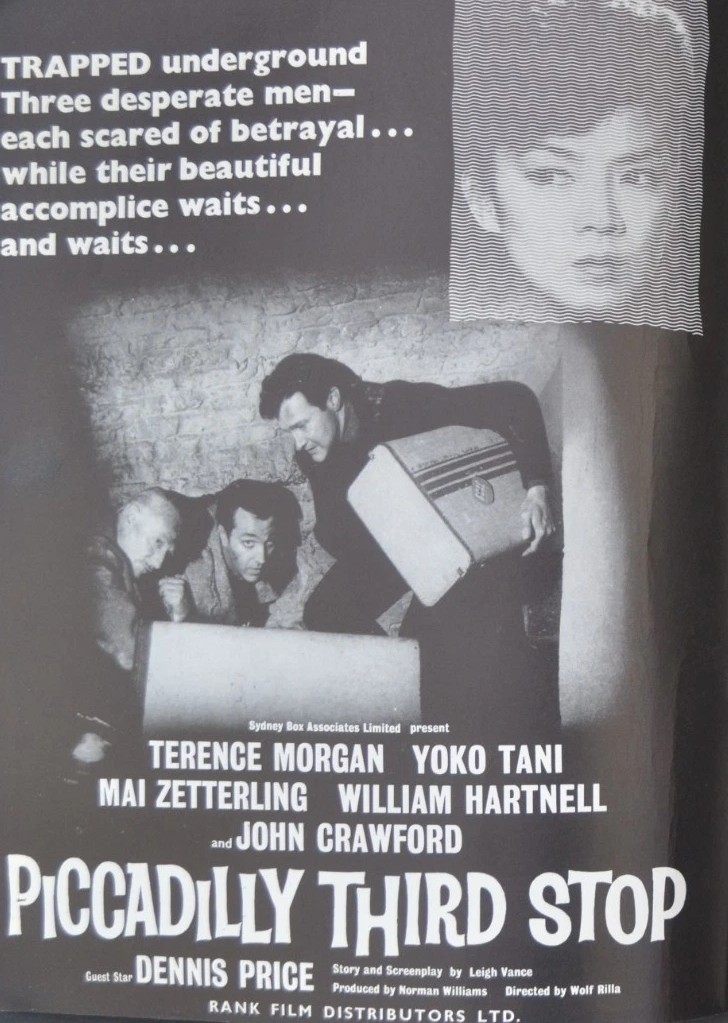
Piccadilly Third Stop (1960) ***

Well-worked full length British thriller that goes against the grain of presenting sympathetic hoods in the vein of Ocean’s Eleven or The League of Gentlemen both out the same year in which audiences largely align with the gangsters in part because they come across as charming and in part because their aims appear thoroughly reasonable.

Unlike the shorter efforts under the Renown umbrella this has time to develop several narrative strands, with deceit the main motivation, and spends a goodly time on the mechanics of robbery, the planning, the percentage split accorded each member, and the heist itself, which is an arduous one, involving digging through a brick wall.

Dominic (Terence Morgan) isn’t exactly a petty thief not when he can dress himself up to the nines, infiltrate a society wedding and make off with an expensive piece of jewellery, which he hides in an unusually clever fashion. But working on his own account is far more lucrative than being an employee in a watch-smuggling ring run by Joe Preedy (John Crawford) who has a classy wife Christine (Mai Zetterling) and life and has so much dough lying around that he’s easy pickings for Dominic who has a side hustle bring dupes to the gambling tables of the pukka Edward (Dennis Price).

Dominic happens to be bedding Christine but that still leaves him time to romance Fina (Yoko Tani), daughter of an ambassador, who casually reveals the embassy safe contains £100,000. She’s so helplessly in love she falls for his tale of them running off together and becomes an accomplice.

With the assistance of Edward, Dominic snookers Joe into supplying the readies to pay for the robbery set-up costs, the tools, gelignite etc. The plan involves digging a hole through the tunnels of the London Underground into the basement of the embassy.

Joe’s share of the spoils will hardly cover his debts so he’s intent on making off with the full amount. As it happens, Dominic has precisely the same idea. Christine is roped in, unknown to her husband, to act as getaway driver.

There’s a hefty dose of characterization unusual in these movies, more than just information dumps about characters. Dominic could easily fund the caper with the cash he would get from selling the stolen diamond, but he holds out for a larger amount from a fence. Joe should easily be able to afford the money, but he’s in dire financial straits because he lost a packet at the gambling tables and his own astuteness in ferreting away all he owns in his wife’s name. That puts his gains well beyond the long arm of the law but leaves him illiquid (I guess is the technical term) and he has to beg Christine to pawn her mink coats.

She’s a smooth operator, an amateur artist, happily living off Joe’s nefarious activities while running around with Dominic and planning to run away with him at robbery end. Joe’s desperate to be seen as a major player, hence his attendance at the casino, and kicking off when he doesn’t get his way, and raging against all the toffs born with a silver spoon in their mouths.

Two of the subsidiary characters are interesting studies. Safecracker the Colonel (William Hartnell) has too much of an eye for the pretty lady and too great a capacity for alcohol, but he’s been careful with his loot, spreading it around in various investments, very secure in his old age, and confident enough in his own abilities that he’s able to negotiate a higher share of the loot. But the prize supporting character is Mouse (Ann Lynn), girlfriend of Dominic’s sidekick Toddy (Charles Kay), who is considered so dumb and harmless that the crooks discuss their plans within her earshot. Except, she’s not concentrating and doesn’t quite get the hang of things and feeds Toddy the wrong information at the wrong time which nearly puts a spoke in the works.

As if the robbery required any more tension. Just how much work is involved in digging a hole through a wall is pretty clear here, should anyone in the audience have ideas of their own. You know double-crossing is also on the cards, not just the Dominic vs Joe and Christine vs Joe but the lovelorn Fina is also due her come-uppance.

And there’s a very nice touch at the end which proves that amateurs are a distinct liability. Any notion Christine has harbored that she would, if only given the chance, prove an ideal getaway driver are misplaced.

Directed by Wolf Rilla (Village of the Damned, 1960) not just with occasional style notes but with a determination to allow his characters room to move from a screenplay by Leigh Vance (Crossplot, 1969). You can catch it on Talking Pictures TV.

All in all a very entertaining little picture strong on tension with a host of interesting characters.

Enter Inspector Duval (1961) ***

The first piece of sleight-of-hand is the title, setting audiences up for the opener in a crime series featuring the eponymous French character. A terrific twist at the climax shows exactly why this would not be turned into a series, though one critic who clearly didn’t watch the whole picture thought otherwise. And you can see why because it’s old-fashioned enough to provide you, Agatha Christie style, with a string of suspects, adding in and leaving out enough information that it’s hard to work out who the criminal mastermind might be.

For four years, a burglar has been terrorizing Europe, stealing diamonds almost at will. The expert on his methods is French cop Duval (Anton Diffring), a debonair confident chap with a distinct Gallic charm, who happens to be in London when the thief – known only as Mr March – strikes again. Only this time, taken by surprise, he murders socialite Alice (Angela McCann). British detectives Insp Wilson (Mark Singleton) and Sgt Hastings (Patrick Bedford) are only too happy to welcome Duval’s assistance, especially as he appears to have the keener eye.

In short order we are introduced to Alice’s maid Doreen (Susan Halliman) who discovers the body. She’s recently entered into a relationship with the disreputable Charley (Charles Roberts) and may have deliberately or inadvertently given away the secret of where Alice hid her diamonds – and it wasn’t in the safe. Alice’s friend Jackie (Diane Hart) enters the equation because her boyfriend Mark (Aiden Grennell) has been trying to tempt Alice into investing in a property deal. And may have been sufficiently annoyed with the brusque way she gave him the brush-off to have killed her. Mark has an alibi for the time of the murder, which took place in the middle of the night. But it’s an odd one. He claims he chose that time of night to pay a visit to his lawyer to discuss a business deal. And his manservant Brossier (Charles Mitchell) is an odd fish.

Jackie is revealed as grasping and only too happy to do Mark’s bidding, which includes some unusual instructions. Doreen is too trusting and somewhat dim. Charley is definitely dodgy and has been paid to provide information extracted from Doreen as to the jewels’ whereabouts.

There’s another complication. Because of the murder, the diamonds are now too hot to handle and can’t be quickly shifted by a dealer in stolen goods.

You can wallow in the nostalgia, pipe-smoking cop, nothing wireless about the telephones, a couple of scenes set in a milk bar with youngsters dancing to a record. There’s even a car chase.

The initial sequence is stylish, with a strong hint in the play of light and shadow of film noir, and though it tends to stick to police procedural there are enough twists and characters with hidden agendas to keep the plot wheels turning, with Duval turning his nose up at the ineptitude of the British copper.

With his haughty features and blond hair Anton Diffring (Counterpoint, 1967) had been typecast as the arrogant Nazi or German officer – so this was something of a career break and I guess if a series had developed he might have found a different niche. This proved to be Diane Hart’s (The Crowning Touch, 1959) only movie of the decade, and Angela McCann’s sole picture.

With an abundance of red herrings and twists, director Max Varnel (A Question of Suspense, 1961) keeps the action moving at a clip. Written by J. Henry Piperno (Breath of Life, 1963).

Worth it for the suave Anton Diffring and the twists.

Catch it on British streamer Talking Pictures TV.

Black Bag (2025) *** – Seen at the Cinema

Explain to me how this cost anything like the reported $50 million. Unless the cost of a nightclub scene has gone through the roof. Or someone has slapped an almighty tariff on shooting in Zurich. Or such middling box office attractions as Cate Blanchett and Michael Fassbender, against the laws of marquee valuation, are pulling down salaries in the region of $10 million apiece.

Because this is nothing but a glorified chamber piece, most scenes shot indoors or in secluded locations. There’s no car chase, one minor explosion (drone-triggered), not even a pursuit on foot. Some clever marketing oik has dressed up what’s no more than a BBC TV film as an expensive espionage picture in the hope of hooking a larger audience.

It’s short, little more than 90 minutes, so that’s on the plus side. But the plot’s full of holes, you’re scarcely going to swallow Fassbender and Blanchett, faces welded to stiff upper lip,  as a hot middle-aged couple, and I wouldn’t have been at all surprised to see  Hercule Poirot or more likely Miss Marple lurch into view for the grand finale with all the potential culprits being set to rights around a dinner table.

Fassbender is so impassive at the best of times his character hardly needs to be expanded to include some OCD, and the most expressive he becomes is, wait for it, hand shaking when he pours a glass of water. The theme, wait for it, is that people who lie for a living are not to be trusted in their domestic lives. And just to polish the virtue-signalling credentials there’s still running amok in MI5/MI6/Black Ops/CIA some rogue top dog who thinks he can stop the unnamed war – presumably Ukraine – by causing a nuclear power plant meltdown in Russia.

And when Pierce Brosnan steals the show in a small supporting role you know your movie’s in trouble.

That said, there’s enough going on to keep you entertained. Top British agent George (Michael Fassbender) begins to suspect – or does he really – that his wife, also a top British agent, Kathryn (Cate Blanchett), is up to no good. So he begins to investigate. Mirror is piled upon mirror, complicated by the occasional murder, so that we are soon knee-deep in the kind of narrative where you don’t know who trust – but, equally, unfortunately, don’t much care because none of the characters is remotely attractive.

At least one them, Freddie (Tom Burke), would have been considered a security risk. So  often does he stray he would be catnip for any passing honeytrap. But you might also have asked questions about his current squeeze, analyst Clarissa (Marisa Abela), paranoid as a posse of schizophrenics, who knows exactly how to pass a polygraph test (clenching the anal sphincter one of the tricks in case you’re interested), and as likely as not to ram a carving knife into unfaithful boyfriend Freddie’s hand at the dinner table. Naturally, it doesn’t do much harm, because Freddie is back at work next day with bandaged hand and not investigated by cops over a knife wound that could hardly be covered by the old slipping the shower routing.

Then we’ve got straitlaced psychiatrist Dr Zoe Vaughan (Naomie Harris) with a penchant for erotic fiction, sex in the office (including breaking the cardinal rule of her profession, sex with a patient), and stringing along two men at once, both of whom, Freddie and Col James Stokes (Rege-Jean Page), are engaged in other affairs.

George soon realizes he’s being played as a patsy, and that his investigation has compromised another operation, and facilitated the handover of a top secret document to the Russians.

In the current dearth of movies for the over-40s, make that over-30s not yet suffocating in superheroes and multiverses, this is what passes for entertainment aimed at an adult audience. And it is short, as I said, but this is exactly the kind of low-budget movie with a decent cast that traditionally ends up on a streamer.

For once, director Steven Soderbergh (Magic Mike’s Last Dance, 2023), whose career is littered with self-indulgence, sticks to the knitting, and it’s a more than passable espionage thriller, but the kind that would be more at home on the small screen. Written by David Koepp (Indiana Jones and the Dial of Destiny, 2023).

Neither Fassbender (Next Goal Wins, 2023) nor Blanchett (Tar, 2022) do the most basic task required of a marquee name, which is to set the screen alight, and all the rest, excepting the much-in-demand Pierce Brosnan (Black Adam, 2022) – seven pictures in the last two years –  merely trundle along in their wake, saddled with scenes where they express alarm at their deepest secrets being revealed like they have drifted in to some shopworn melodrama.

For all the actual investigation that takes place you could have set this in the kind of remote spot favored by Agatha Christie and played it out in traditional Poirot/Marple fashion.

Interesting but ultimately disappointing.

And the big question remains – where did the $50 million go? And, did it exist in the first place?

Echo of Diana (1962) ***

Minor British B-picture gem, though more for the exquisite narrative and tsunami of twists than the acting. And while not being one of those devious arthouse farragoes spins the starting point as the climax. Also, very prescient, heavily reliant of the espionage tradecraft that would later become de rigeur.

On the day she learns of her husband’s death in a plane crash in Turkey, Joan (Betty McDowall) finds an intriguing reference to the dead man in the “Personal Column” of The Times newspaper signed by “Diana.” Suspecting a mistress or skulduggery, her friend Pam (Clare Owen), a former fashion editor, investigates and triggers trouble. Joan’s flat is burgled, they are accosted by dubious police, the dead man’s effects are foreign to Joan, the receptionist at a newspaper makes a mysterious phone call.

Fairly quickly, Joan and Pam fall in the purlieu of British espionage chief Col Justin (Geoffrey Toone) who puts them in touch with suave journalist Bill (Vincent Ball), an old colleague of the husband, whose apartment has also been tossed, and who has taken a shine to Pam. The women are somewhat surprised when a murder is hushed up but that’s the least of the espionage malarkey. Mysterious contacts, equally odd points of contact, disguises (though mostly this runs to a blonde wig), code names, double agents, phone tapping and mail drops leave the women somewhat befuddled but they play along and with that British bluffness, not quite aware they are acting as decoys to draw out a crew of foreign spies headed by a rough fella called Harris (Basil Beale).

Halfway through it seems her husband might not be dead after all, but, according to the Turkish ambassador, Joan might need to head off to Turkey or thereabouts and certainly other interested parties want her out of the country.

And it being British, and nobody wanting to take the whole thing seriously, especially since the James Bond boom had not begun in earnest, the drama is offset by some pointed comedy: the proprietor of an accommodation address business has a side hustle in porn mags, one of the contacts is annoyingly punctilious, one promising lead turns out to be a very grumpy old man, another lead results in a race horse called Diana in a grubby betting shop where they are rooked by another old guy.

But it’s lavished with twists: double-crossers double-crossed, misleading clues, bad guys far cleverer than good guys, the wrong person in the right car, kidnap, unexpected occurrence. Pretty contemporary, too, with much of the action driven by telephone calls. But something of an ironic climax, the notice in the newspaper having legitimate espionage purpose.

The action is so pell-mell, Joan and Pam scarcely have time to draw breath, never mind give vent to heavy emotion, the best we are afforded is a moment when Joan doesn’t know “whether she’s wife or widow.” But that’s just as well. We are in B-movie land with a B-movie class of actors, probably recognizable to audiences then as the kind of actors who never managed a step up.

Vincent Ball did best, a long-running role in BBC TV series Compact (1962-1965), male lead in skin flick Not Tonight, Darling (1971) and decades of bit parts. You might have caught Betty McDowell in First Men in the Moon (1964) or The Omen (1976). Clare Owen was female lead in Shadow of Fear (1963) and had a part in ITV soap Crossroads (1965-1972).

Directed by Ernest Morris (Shadow of Fear) from a script by Reginald Hearne (Serena, 1962). You’d say a better script than a movie, and with better casting might have taken off, but, still, very satisfying supporting feature for the times.

Discover WordPress

A daily selection of the best content published on WordPress, collected for you by humans who love to read.

The Atavist Magazine

by Brian Hannan

WordPress.com News

The latest news on WordPress.com and the WordPress community.