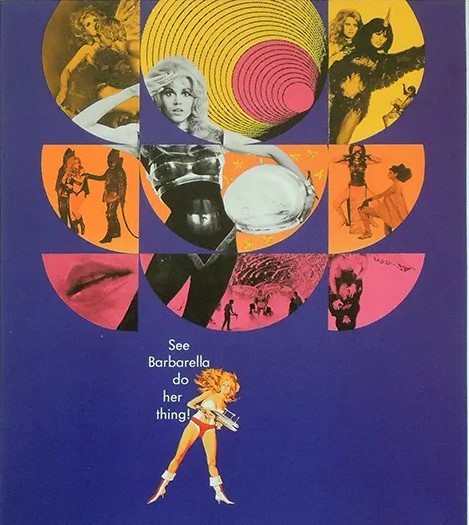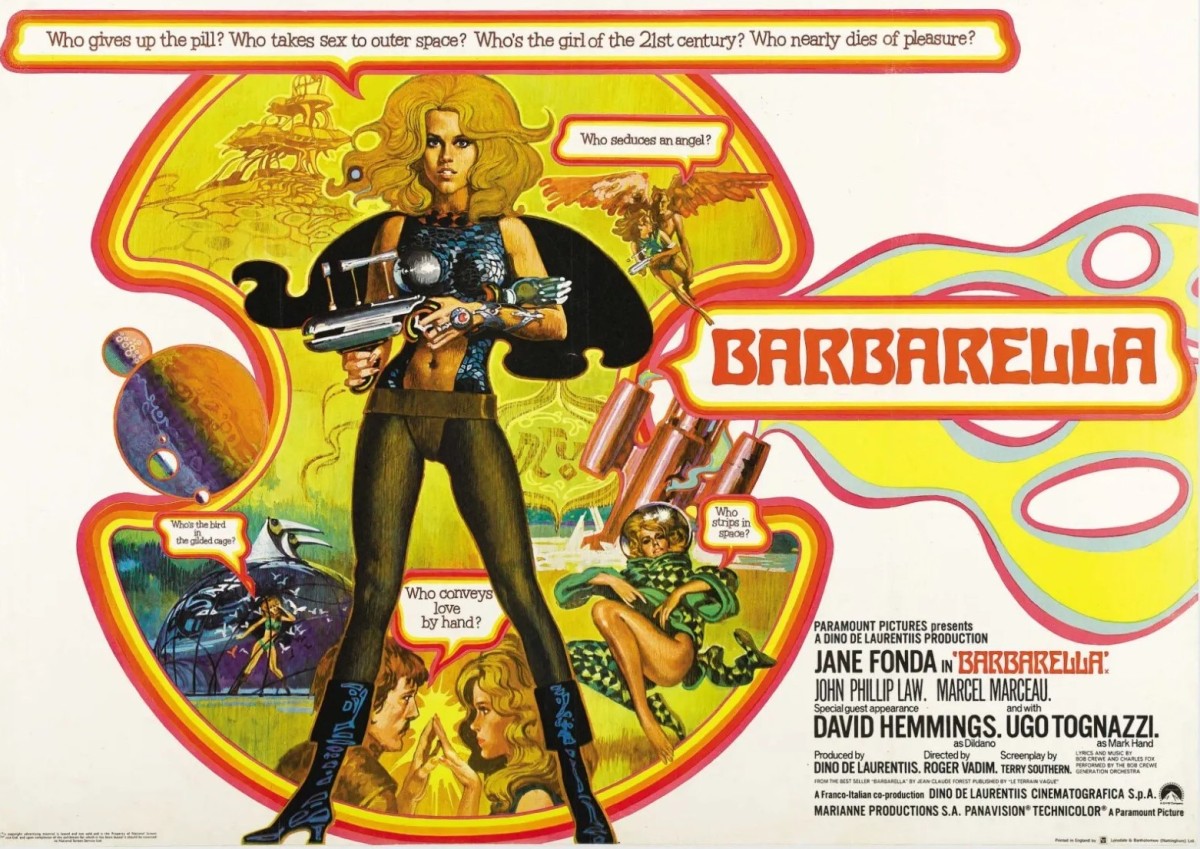
Behind the Scenes: “Barbarella” (1968)

Two trends came together to create the ideal climate for the movie. The first was a fashion for filming comic books. By the mid-60s, Italy was at the forefront of this development thanks to the fumetti craze.

Mandrake, created in 1934 and first filmed in 1939, was being prepped by Duccio Tessari (My Son, the Hero, 1962). Though that stalled on the starting grid Dino De Laurentiis had bought the rights to Jean-Claude Forest’s Barbarella. He was also prepping Diabolik – at that point to be directed by Brit Seth Holt (Station Six Sahara, 1963) and fronted by Catherine Deneuve (Belle de Jour, 1967). Monica Vitti was being lined up to play Modesty Blaise (1966). For Barbarella De Laurentiis initially favored Franco Indovina (The Oldest Profession, 1967) in the director’s chair and Brigitte Bardot as the star.
The other element driving forth the venture was the involvement of Hollywood major Paramount in European production. Paramount had turned to Europe to “replenish its dwindled film vaults.” Formerly almost exclusively committed to U.S. production, by 1967 the studio was in the middle of a $60 million European spending spree, the cash spread over 30 movies made in the U.K. or mainland Europe where Italy took the lion’s share. Paramount struck a deal with De Laurentiis for Barbarella and Danger: Diabolik (1968) – eventually helmed by Mario Bava with John Philip Law and Marisa Mell – plus Arabella (1967) and Anzio (1968).

Paramount’s involvement should have excluded Vadim. He was persona non grata with the studio, having reneged on a previous three-picture deal, which he was paying off in $20,000 instalments. The budget of $3 million should have put the picture out his league. The Game Is Over had cost only $900,000 and none of his previous work suggested he might have the necessary skill to handle the special effects. And he was well known for declaring his opposition to studio interference.

But in terms of delivering sexy fare Vadim was in a class of his own. And God Created Women (1956) was the top-earning foreign picture in the U.S. He had made stars of Brigitte Bardot and Annette Stroyberg (Dangerous Liaisons, 1959) and he was in the process of turning the earnest Jane Fonda (In the Cool of the Day, 1963) into a sex symbol after plastering her nude body over billboards promoting La Ronde/ Circle of Love (1964) and stills from La Curee/The Game Is Over in Playboy.

Still, she was far from first choice. Following Bardot’s refusal, De Laurentiis approached Sophia Loren, but she was pregnant, and he did a screen test of Ira von Furstenberg (Matchless, 1967). Fonda was not as nailed-down a star as you might expect. Her affair with Vadim kept her out of the country, making the kind of picture that was generally perceived as salacious arthouse material and not likely to raise her marquee value in the U.S. Cat Ballou (1965), which should have propelled her to the very top, instead performed that trick for Lee Marvin after he won an Oscar for the dual role. After meaty roles in The Chase (1966) and Hurry Sundown (1967) and top-billed in comedy hit Barefoot in the Park (1967), she should have been able to write her own ticket. But she did demonstrate independence in choosing to align with Vadim for Barbarella and though it didn’t win her any acting accolades it smoothed the path towards They Shoot Horses, Don’t They (1969) and Klute (1971), for which she won the Oscar.
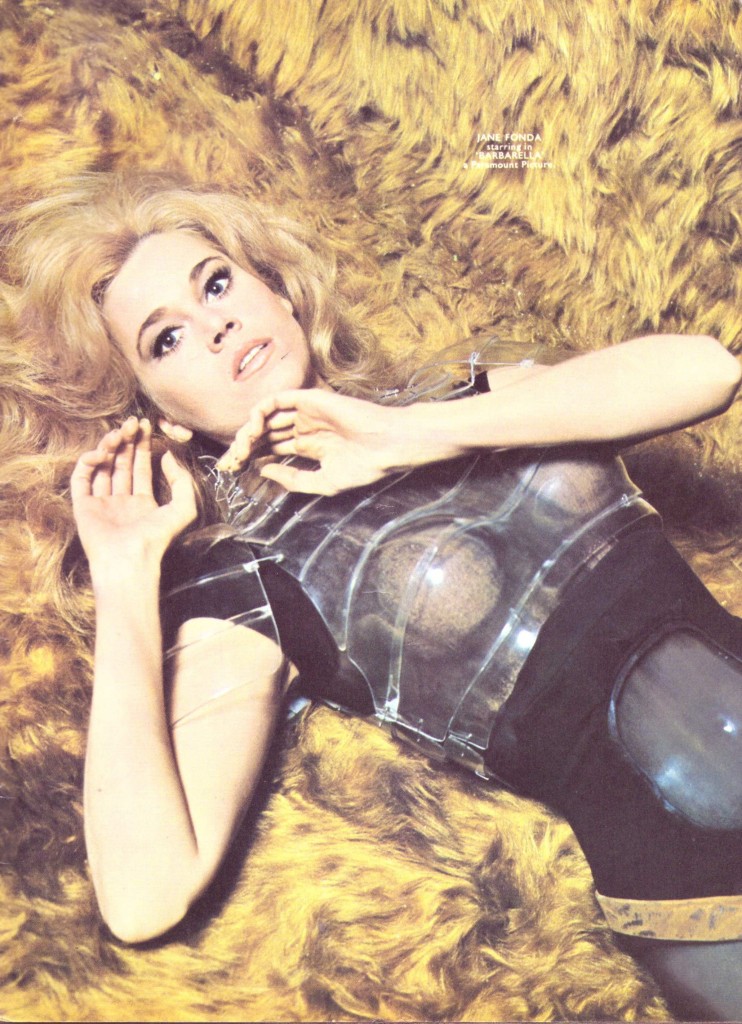
Vadim was smarting from damage done to his reputation by censors and the authorities. “I have become a black sheep for censors and I’m paying the penalty in everything I make. Anything I direct is automatically suspect. I believe I’m the only director who must get censor clearance before I can begin filming.” He wasn’t – technically, this applied to every director working Hollywood since all scripts had to be cleared in advance of filming by the Production Board. But in Italy even when films like The Circle of Love (1964) and The Game Is Over (1966) cleared censorship obstacles, the films were seized by the police and threats laid of obscenity charges.

However, he believed this time round he would be immune from threat since the film would contain “no reference whatsoever to moral concepts as we know them. We’re dealing with life in the year 40,000. It would be difficult in the realm of science fantasy for any censor to discover objectionable scenes.” Clearly, he assumed mere nudity would not raise eyebrows.

Vadim admitted, “When I made Barbarella, I found the most difficult thing was the detail.”

Attracted by the “wild humor and impossible exaggeration” of the original material, he “wanted to make something beautiful out of eroticism” and intended to film it as if “a reporter doing newsreel…as though I had just arrived on a strange planet.” And had a camera on his shoulder. He viewed the character as a “lovely average girl” though not so average in that she possessed “a lovely body.”

Fonda was determined to keep her character “innocent,” rejecting the idea of playing her as a vamp, “her sexuality was not measured by the rules of our society,” and neither “promiscuous” or “sexually liberated.”  Vadim interpreted her role somewhat differently, viewing it through the prism of a “shameless exploitation of her sexuality.”

With multiple writers on the project, the question of who wrote what has been open to argument. Impressed by their work on Danger: Diabolik – which employed a total of eight screenwriters – De Laurentiis parachuted in British pair Tudor Gates and Brian Degas. Original writer Terry Southern (Candy, 1968) claimed responsibility for the opening striptease and the doll robots.  Uncredited screenwriter Charles B. Griffiths (The Wild Angels, 1966) came up with the notion of the millennia of peace, Barbarella’s clumsiness and the suicide room. Even co-star David Hemmings got in on the act, claiming he inspired the nonsense Fonda spouted during their sex scene.

Southern suggested Anita Pallenberg for the role of the Black Queen after encountering her while working with The Rolling Stones – her voice was dubbed by plummy English actress Joan Greenwood. Jane Fonda brought John Philip Law into the equation after working with him on Hurry Sundown (1967).

The director employed some sleight-of-hand. Just like the later Ridley Scott on Alien, he didn’t inform his actors in advance what was about to happen in some critical scene, such as those involving the Excessive Pleasure Machine. Vadim wanted a natural response from Fonda and Milo O’Shea so omitted to tell them “what a big explosion there would be. When the machine blew up, flames and smoke were everywhere, and sparks were running up and down the wires.” Fonda was “frightened to death” and O’Shea was convinced he “was being electrocuted.

And Vadim summoned his inner Hitchcock for the scene when Fonda was attacked by the hummingbirds (actually, substitute wrens and lovebirds). Not getting the effect he wanted,  Vadim used a powerful fan to blow the flock onto the actress whose outfit was peppered with birdseed.  There was an unexpected two-week hiatus between filming the bird attack and the striptease. Fonda contracted a fever, forcing the movie to shut down halfway through its 12-week schedule. On her return, Vadim filmed the striptease to be shown over the credits which was intended to “camouflage censorable flesh.” The set for the strip was upside down, Fonda performing on a pane of glass facing a camera in the ceiling.

The sensational aspects of the movie had attracted exceptional media interest. Over 200 journalists visited the set including representatives from Vogue, Playboy, Time, Life, McCall’s, Seventeen, Paris Match and UPI and AP. Paramount kept the pot boiling with some advertisements that were exceptionally full-on for the times: “It’s the year 40,000 A.D. A scantily-clad space adventuress battles 2,000 hummingbirds who rip off her clothes, two dozen shark-toothed dolls who rip off her clothes, 100 purple rabbits who don’t rip off her clothes and an army of leather giants who attempt to whip her to death. In between she makes love a lot.”

By the time the movie appeared, Paramount had invested in another development. It was the first studio to set up a marketing department, not just a catch-all under which promotional and advertising efforts were undertaken, but a unit that took a systematic, research-based, approach to release strategy. As a result Barbarella was one of the first movies to achieve a global simultaneous release, the bulk of movies taking a step-by-step approach, U.S. first and then major countries overseas, following a pattern that could take up to 18 months to complete.

According to research undertaken by the marketing department it was “judged as a picture which would have a sensational first few weeks everywhere it played because of the impact of the subject matter, star (Jane Fonda) and promotional pizzazz. But research indicated word-of-mouth might be poor. The decision was made to open the picture everywhere at once – and that meant worldwide since there was fear that any ‘bad word’ on such a highly-touted pic could spread from country to country. Here, too, the prognosis proved letter-perfect. As any exhibitor will confirm, Barbarella was the film this fall which started out great then dropped off. In view of this Paramount is thought to have maximized its gross via the global saturation playoff pursued.”

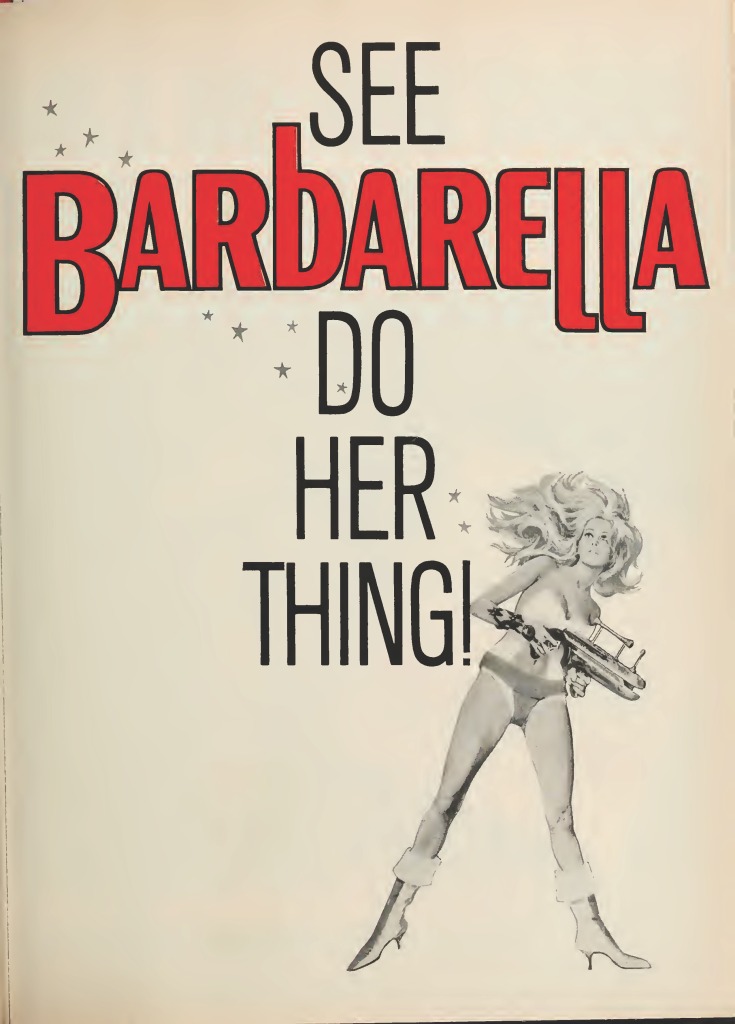
In the U.S. Paramount ordered a record number of trailers and space age fashion shows, like one at Alexanders Department Store in New York, were the order of the day. In Britain, there was a phenomenal ad spend (the second-highest ever), Mary Quant boots, tie-ins with shoe stores, and both a hardback and paperback book.

But Barbarella proved to be a slow-burn at the box office. Initially, it was deemed to have ranked a lowly 46th in the annual U.S. rentals chart with just $2.5 million in the kitty, falling far short of Paramount’s box office smashes that year – The Odd Couple (ranked fifth) with $18.5 million in rentals and Rosemary’s Baby (ranked seventh) on $12.3 million. But, in fact, it more than doubled its rentals the following year and ended up with a highly-respectable $5.5 million at the U.S. box office. (And I hereby apologize to anyone whom I challenged on these figures).

The global release paid off. It ranked eighth in France, seventh in Switzerland, third in  Britain, 14th in Hong Kong and a big hit in Italy. However, the content denied it a sale to U.S. television. The movie was reissued in 1977 in the wake of Star Wars, and took a “handsome” $175,000 gross from 65 houses in New York. It was revived again after Flash Gordon (1980) and the following year when Paramount entered the laserdisk business among the first 30 oldies released it was the only one from the 1960s.

A sequel’s been on the cards since the film opened. Possibly rather tongue-in-cheek and with an element of the risqué sauce of the times, Paramount’s Robert Evans planned to trigger a second episode called Barbarella Goes Down, the title apparently relating to underwater adventures. Terry Southern was asked to write a sequel in 1990 while in the aftermath of Sin City (2005) director Robert Rodriguez came close to an $80 million version and Nicolas Winding Refn toyed with a television series. As of now, Sydney Sweeney (Anyone But You, 2023) appears most likely to hit the sequel button.

SOURCES: Patrick McGilligan, Backstory 3: Interviews with Screenwriters of the 60s, (University of California Press, 1997); Lisa Parks, “Bringing Barbarella Down to Earth”. In Radner, Hilary; Luckett, Moya (eds.). Swinging Single: Representing Sexuality in the 1960s, (University of Minnesota Press, 1999); Gail Gerber,and Gail Lisanti, Gail (2014). Trippin’ with Terry Southern: What I Think I Remember. McFarland, 2014);  Roberto Curti,  Diabolika: Supercriminals, Superheroes and the Comic Book Universe in Italian Cinema (Midnight Marquee Press, 2016); .Brian Hannan, Coming Back to a Theater Near You, A History of Hollywood Reissues 1914-2014 (McFarland 2016) p252; “Comic Strip Character Film Trend,” Variety, June 9, 1965, p23; “Vadim’s Autonomous Views,” Variety, August 24, 1966, p2; Gerald Jonas, “Here’s What Happened to Baby Jane,” New York Times, January 22, 1967;  “Paramount Getting 6 Pix from Italy in Bid to Build Prod,” Variety, February 1, 1967, p16;  “Par O’Seas Hatch By Dozen,” Variety, April 26, 1967, p5; “Italo Film Boom,” Variety, June 7, 1967, p20; “Barbarella Laid Low By Jane Fonda Virus,” Variety, August 16, 1967, p2; “I’ve Been A Black Sheep To Censor,” Variety, July 19, 1967, p22;  Marika Aba, “What Kind of Supergirl Will Jane Fonda Be as Barbarella?” Los Angeles Times, September 10, 1967; Roger Ebert, “Interview with Jane Fonda,” October 15, 1967; “Paramount Stressing Sex and Visual Fantasy,” Variety, October 18, 1967, p26; “Space Age Fashion Show,” Box Office, September 2, 1968, pA2; “Record Teaser Trailer,” Box Office, September 9, 1968, p13; “Eyebrows Up – Here’s Barbarella,” Kine Weekly, October 19, 1968, p23; “Big Box Office Winners of 1968,” Kine Weekly, December 14, 1968, p6; “What Makes a Director?”, Variety, January 8, 1969, p26; “Big Rental Films of 1968,” Variety, January 8, 1969, p15; “Swiss B.O. Race,” Variety, January 15, 1969, p41; “Shaws Dominate HK,” Variety, January 15, 1969, p41 “Par Puts the Science into Sell,” Variety, February 5, 1969, p33; “Int’l Filmgoing Tastes Tres Complex,” Variety, February 5, 1969, p35; “CBS Bid for Baby Doll,” Variety, October 29, 1970, p78; “All-Time Film Rentals,” Variety, January 7, 1970, p27; “New York Showcases,” Variety, November 2, 1977, p8; “Paramount’s Home Video to Market Viddisks,” Variety, April 29, 1981, p54.
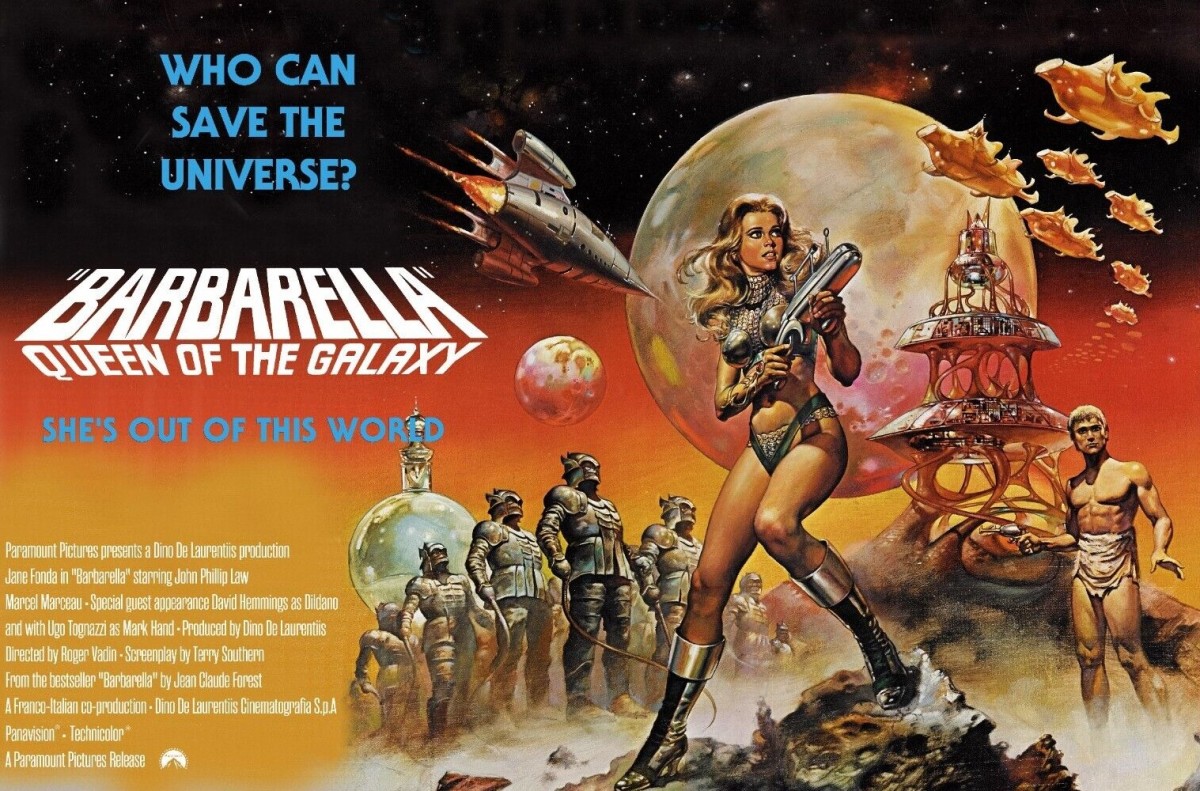
Barbarella (1968) ****

While sci-fi was being viewed through a serious glass darkly what with Fantastic Voyage (1966), 2001: A Space Odyssey (1968) and Planet of the Apes (1968) along came Roger Vadim’s little number to set up an alternative universe of camp fun. Had this been a box office smash in the nature of The Odd Couple ($18.5 million in U.S. rentals) rather than under a third of that there might have been less of the po-faced doomladen sci fi in the following decade.

But if you wonder where Star Wars got its vibe, setting aside the overt sexiness portrayed here, this is as good a place to start. Naïve adventurers, check. Ice planet, check. All sorts of weird creatures in strange otherworldly locales, check. A doomsday weapon, check.

It’s kind of newsworthy to be rewatching this given that star du jour Sydney Sweeney (Anyone But You, 2023) is going to be donning the Barbarella costume for a remake next year. And who knows to what Oscar-winning fare that might lead, if she were to follow the Jane Fonda template, given it was La Fonda’s follow-up that brought her serious attention from the Academy.

But it would be remiss of me if I didn’t bring up the testy matter of director Roger Vadim’s uncanny obsession with getting his myriad girlfriends to shed their clothes for the movies, Fonda being the latest example, and in no uncertain terms, the striptease performed during the opening credits certainly rivaling Kubrick and Spielberg for the most jaw-dropping opening to a sci-fi movie.

Whether it was Fonda or someone else and whether it was Vadim or someone else you couldn’t get away from the fact that Barbarella as a sci-fi icon was most definitely on the sexy side as determined by her creator Jean-Claude Forest, sharing like British comic strip heroine Jane a predilection for losing her clothes.

Barbarella shares something of the same innocent abroad personality, the kind who gets into one unexpected scrape after another, after being despatched from peace-loving Earth to save the world by finding Durand Durand (the pop band making homage to the movie dropped the final letter of this character’s name) and his doomsday machine.

So mostly, it’s one imaginative character or scene after another, delivered in disconnected episodic manner, and it sometimes has the feel of a jukebox movie, of the greatest hits of the comic strip writer strung together, with an occasional comment on the problems created by sex and a climactic gender-spinning twist. You’d have to remember what Pop Art was to chuck it into that short-lived category but if you think it belongs on the same planet as the more earthbound Modesty Blaise (1966) and Danger: Diabolik (1968), think again.

The best sections are truly terrific. The sharp-teethed menacing robot dolls are exceptionally scary as they nip chunks out of our heroine’s flesh and leave her blood-soaked. There’s a homage to The Birds (1963) where our plucky heroine is trapped in a cage with a flock of sparrows. You’ve also got the The Catchman, performing the same function but considerably scarier than the same year’s Child Catcher from Chitty Chitty Bang Bang. But no wonder the kids need caught because they are full of evil intent.

You’ve got a blind angel (John Phillip Law) who can’t fly, a problem mysteriously solved by sex with the ever-gracious Barbarella who, previously, has discovered, courtesy of The Catchman, the immense pleasure of the art of making love the old-fashioned way rather than just popping a pill. The angel also has no memory, permitting an ironic twist ending. You’ve got an incompetent rebel (David Hemmings). Sex is pretty much top of everyone’s agenda, even the villain (Milo O’Shea) who uses it to kill people via his own invention, which proves not much cop, since rather than murdering Barbarella with excessive pleasure, she makes it blow up.

Along the way there’s any number of interesting inventions: a manta-ray acts as the skis for a futuristic sailing ship, hollow robotic soldiers, a labyrinth.

Some of the special effects wouldn’t pass muster these days, but that’s a minor flaw compared to the rest of what’s on show. It’s not exhilarating in the real sense, but if you’re unfamiliar with the source material, it retains an endless fascination, more like a sexed-up version of the Ray Harryhausen world than anything that would have interested Kubrick. And, heck, just fun. What’s not to like.

Jane Fonda (They Shoot Horses, Don’t They, 1969) holds it all together, innocent rather than naïve, even her sexuality is innocent not exploitative, and possibly for a film deemed sexy makes greater comment on the dangers of lust than many a more self-important movie.

Great supporting cast with David Hemmings (Blow-Up, 1966), John Philip Law (Danger: Diabolik), Anita Pallenberg (Performance, 1970), Milo O’Shea (Ulysses, 1967) and Marcel Marceau.

Roger Vadim’s best film. Written by a huge squad of writers, nine in total, headed up by Vadim and Terry Southern (Candy, 1968).

Will probably be yanked out of circulation at the approach of the remake so now’s your chance to catch up on a fun sci fi.

The Hawaiians / Master of the Islands (1970) ****

Contemporary audiences will find much to admire. Perhaps unintentionally, certainly unusual for the era in which it was made, this is driven by a strong feminist streak and the problems of  fusing different new cultures – Chinese and Japanese – on an island already dominated by white immigrants. In some respects a companion piece to Diamond Head (1962), which also starred Charlton Heston, but in reality a sequel to epic roadshow Hawaii (1966).

Nyuk Tsin (Tina Chen) has been kidnapped from her village in China with the intention of selling her into a brothel in Honolulu. But when her gender is discovered on board the ship, captained by Whip Hoxworth (Charlton Heston), transporting Chinese laborers to Hawaii, a fight breaks out, her owner is killed and she is taken over by Mun Ki (Mako). He fully intends, on making land, to sell her and keep the money but at the docks Whip’s wife Purity (Geraldine Chaplin) intervenes and the couple are offered jobs as husband-and-wife.

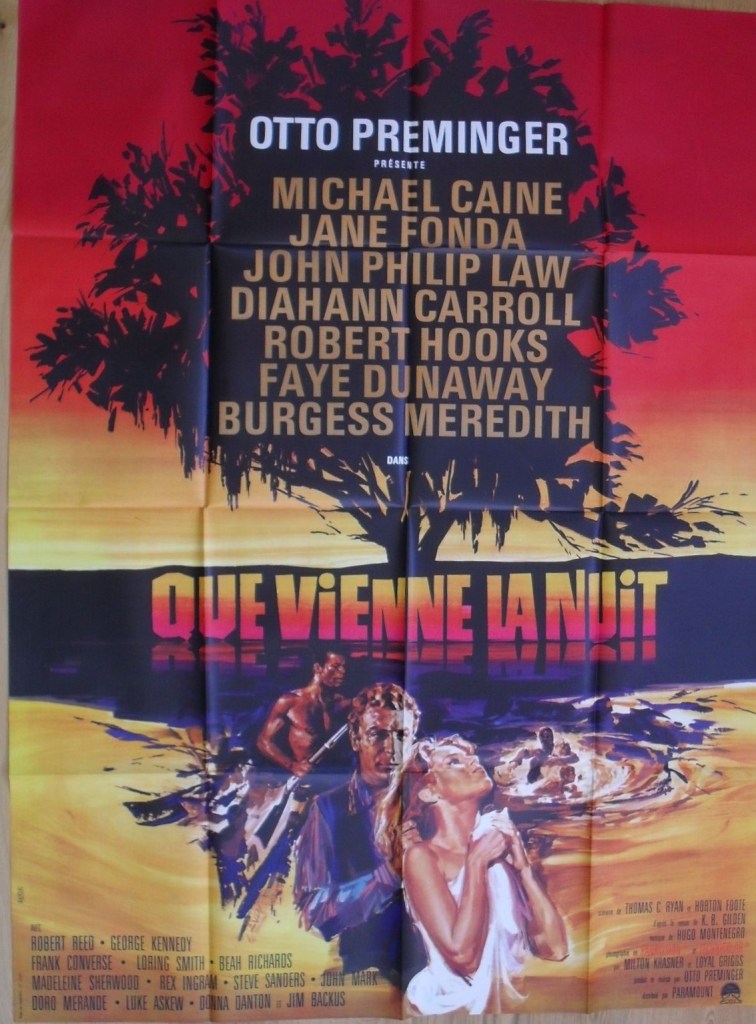
“Hawaii” (1966) was not such a big box office hit abroad as it was in the United States
hence the decision not to rely on the U.S. title “The Hawaiians” for the sequel.
In fact, unlike the U.S. poster the novel is not so upfront.

Mun Ki’s entrepreneurial spirit is obvious from the minute she reaches Whip’s plantation, as she starts planting seeds in a tiny area in front of the hovel that is their dwelling. That turns into a vegetable garden and eventually she has a side business feeding laborers. Her gardening skills encourage Whip to entrust to her to grow the seed pineapple plants he has stolen from French Guiana, a continent away in South America.

When that proves successful, and Whip manages to find an artesian well through the lava bed, he embarks on a career as a pineapple farmer, and as a reward, deeds her land.

Meanwhile, Nyuk Tsin discovers she is wife only in terms of procreation. Mun Ki already has a wife back home, so Nyuk Sin can only officially become an aunt to the five children she bears him, each named after a continent (Asia, Africa etc) and who do, it must be said, come in handy for her farming business. She is wealthy enough that attempts are made, as much from envy and fury at her success as anything else, to steal her property.

While officially disbarred from the position of wife, her feelings for her husband are so strong that when he contracts leprosy she accompanies him to the island of Molokai and looks after him until rescued by Whip. Now with a prosperous farm, and remaining unmarried, she is rich enough, and clever enough, to send one son to America to train as a lawyer. Through her own endeavors and willpower she becomes not the slavish wife, dependent on her husband and his whims, but a strong independent wealthy woman, and leader of her expanding clan.

Theoretically, this is a subplot in the film, but in reality director Tom Gries (Number One, 1969) affords it as much time as the supposedly main narrative which, in contrast to Diamond Head, sees Whip as the black sheep of the family, disinherited and left only with land that is useless until the cultivation of pineapples makes it viable. His wife, while ostensibly weak, is also of a feminist disposition, abandoning her husband after the birth of her only son Noel (John Philip Law) to return to her Hawaiian roots.

When the Japanese arrive on the island Whip takes as a mistress the educated self-sufficient Fumiko (Miko Mayama). The circle of interbreeding and cultural infusion is complete when Noel marries Mei Lei (Virginia Lee), Nyuk Tsin’s only daughter.  

It’s a lot more melodramatic than that, to be sure, Whip at odds with his family, Purity sending him bananas by denying him sex after Noel’s birth, and then withdrawing from his life. Various characters flit in and out, like the alcoholic well-digger Overpeck (Don Knight), and the tale embraces, like Diamond Head, the period when the United States annexed Hawaii.

Allotting so much screen time to Nyuk Tsin can’t have been accidental, maybe it was just visionary, but taking her as the focal point pivots more on her single-minded nature than the haphazard character of Whip, who achieves success through luck, theft and brutality. It’s remarkable that Nyuk Tsin has understood its importance of land ownership, the bedrock of any country’s institutional hierarchy, and strives so hard to achieve that footing and becomes in essence the family breadwinner. If the foreign title had been changed to Mistress of the Islands it would not have gone far wrong.

Fans of the second-billed John Philip Law (Hurry Sundown, 1967) will perhaps be disappointed that he appears so late in the proceedings, essentially to ensure the narrative can embrace the generations, but also to show how attitudes can change for the good from one generation to another.

I’m aware I’m asking you to watch the movie from a different perspective from that advertised but it’s far more rewarding.

Charlton Heston is good, especially when transitioning from commander of all he surveys while on board ship to a mere family footnote on dry land. He can rant with the best of them, for sure, but underneath the fury you can detect the pain, cast aside by family and wife. The scenes where he fails to reignite sexual relations with Purity reveal how great an actor he is. We more often associate Heston with the lower half of his face, the jutting jaw, the flashing teeth, the dominance of his words, rather than the upper half where his eyes are so revealing of inner torment. There’s a sea-change in the standard Heston performance that runs through Planet of the Apes, Number One and here of a powerful man drained by circumstance.

But Tina Chen (Three Days of the Condor, 1975) is the standout, moving from humiliation to pride, often called upon to mutely absorb pain, but fiercely protecting husband and brood, and clever enough to calmly negotiate her way past husband and Whip to potential success.

Tom Gries, in his third picture with Heston, manages to create an epic feel to a picture whose limited running time sabotages that aim. His sweeping tracking shots provide the bravura but that is underpinned in the more intimate moments by sensitivity to character emotion shown in a look rather than expressed in dialog.

Screenwriter James R. Webb (How the West Was Won, 1962) had the job of chiselling another cinematic chunk from James Michener’s door-stopper of a novel and turning this  sub-plot into a gem.

Well worth a look.

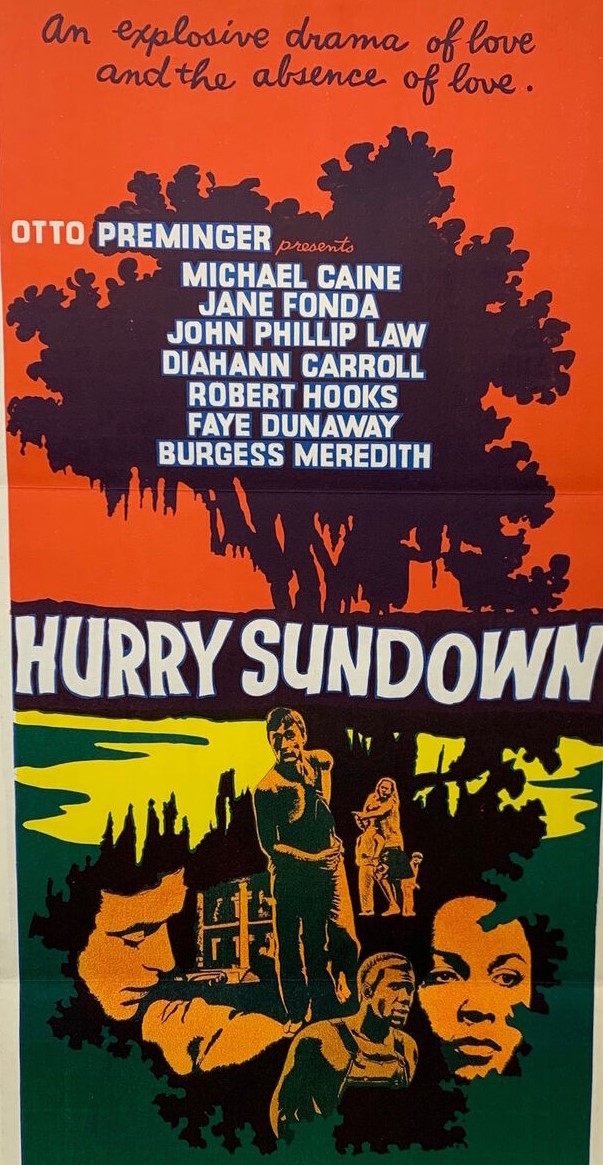
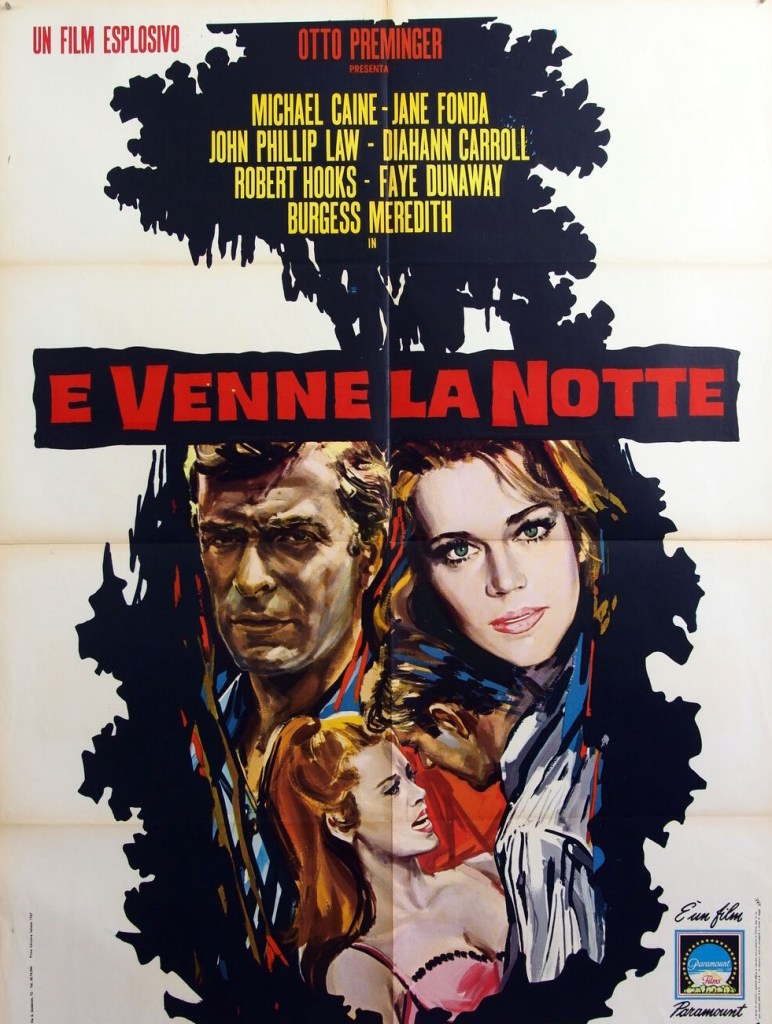
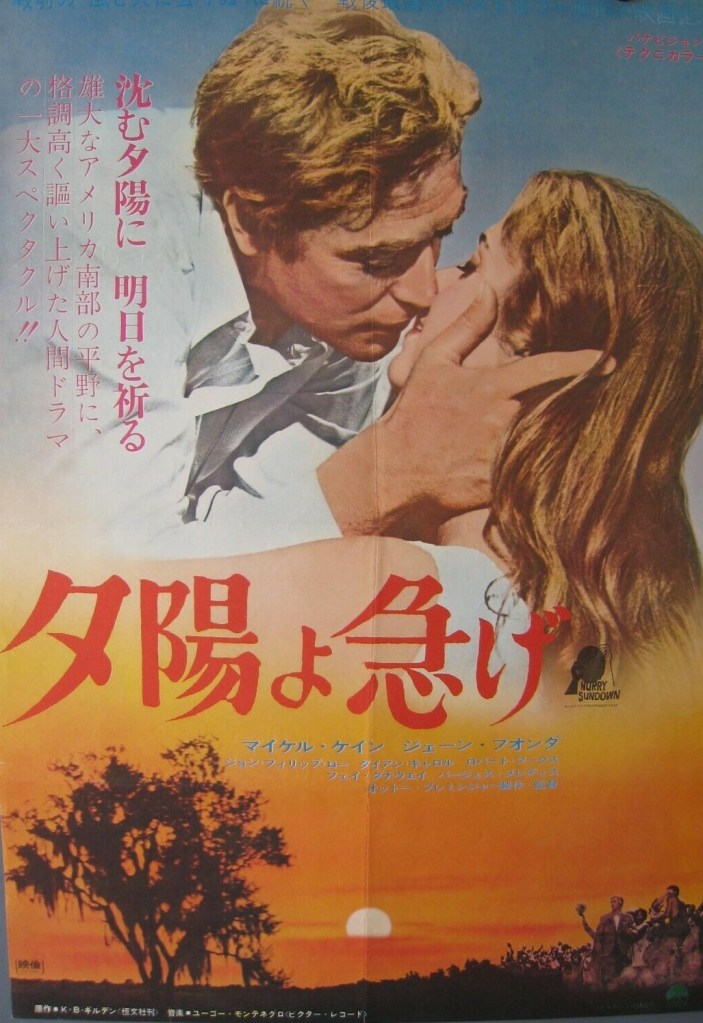
Behind the Scenes: “Hurry Sundown” (1967)

It was rare for Otto Preminger to make a miscalculation on the business aspects of moviemaking.  But when in 1964, in the middle of shooting In Harm’s Way (1965), he purchased for $100,000, pre-publication, the rights to K.D. Gilden’s epic novel (1046 pages) he anticipated filming a bestseller of Gone With the Wind proportions. Buoyed by the projection of book sales in the millions, he anticipated making the longest-ever commercial movie, running, in roadshow, for an unprecedented 270 minutes, with admission prices set at a record high.

That notion was scuppered when sales scarcely broached 300,000, the alternative, non-roadshow, was a slimmer picture that would come in at under 150 minutes. If you were going to make a picture set in the Deep South the obvious choice for screenwriter was Horton Foote, Oscar-winner for To Kill a Mockingbird.

The writer spent his months on the project, breaking down the unwieldy novel into manageable basic plot and structure. Although describing Preminger as “wonderful,” Foote’s vision clashed with the director’s and he was replaced by the less-experienced Thomas C. Ryan (The Pad and How To Use It, 1965).

The husband-and-wife principals were initially cast as Michael Caine – enjoying a golden period at the U.S. box office as explained in a previous article When Caine Was King – and Candice Bergen (Soldier Blue, 1967). When the latter dropped out, Jane Fonda (The Chase, 1966) was her replacement. Faye Dunaway was signed to a six-picture deal after Preminger saw her on Broadway in Hogan’s Goat and gave her a screen test. He also signed up, to a three-picture deal, John Philip Law (The Russians Are Coming, The Russians Are Coming, 1966). After  Sidney Poitier turned down the role of Reeve, he was replaced by Robert Hooks. The rest of the casting was relatively plain sailing, Burgess Meredith as a bigot, Diahann Carroll as a teacher.

Initially, Preminger planned to shoot in Georgia but, put off by union demands, switched to an area around Baton Rouge, Louisiana. As production designer Gene Callahan hailed from that town his local knowledge and connections helped overcome other obstacles. The house inhabited by Caine and Fonda was an actual Baton Rouge residence while the farms shown in the picture were on land rented from the state prison farm at St Gabriel. St Francisville provided the courthouse, hardware store, and various other locations.

Shooting began on June 6, 1966. For the first third of the shoot, Oscar-winning Loyal Griggs (In Harm’s Way) was director of photography, thereafter it was Milton Krasner (The Venetian Affair, 1966). The New York Times ran a story that Griggs had been fired, but was forced to print a rebuttal to the effect that he had asked to be taken off the picture following a back injury.

This being a Preminger production there was no shortage of tension, the director tending to weigh in on the less experienced or weaker actors. Michael Caine (Gambit, 1966) had accepted the role without reading the script because he was “so flattered and excited” to be asked. He learned to speak with a Southern accent. He received a tip from Vivien Leigh, who told him she recited the phrase “four door Ford”  until it came out as “Foah Doah Fohd.”

Aware of Preminger’s reputation, Caine, at the outset, told Preminger that he was very shy and “if anybody ever shouted at me, I would burst into tears and go into my dressing room and not come out for the rest of the day.” Whether Preminger took this seriously, or understood the actor’s little joke, is unknown, but the director responded gently with, “I would never shout at Alfie.”

Others were not so lucky. John Philip Law received “merciless” treatment. This was in spite of the actor liking the director and believing the feeling was mutual, based on the notion that Law “was interested in European culture and other film-makers.” Nonetheless, the actor made few overtures. “He was intimidating enough that he wasn’t a guy I would seek out for a conversation.” Even so, Law appreciated his direction, often minor technical tips like not moving so fast or not to bend down.

In one scene Preminger turned on Law, “tearing him apart and the words were stinging.” Not content with that, he brought wrath to bear on the hapless hairdresser. When Dunaway raced to his defence, “Otto turned on me like a mad dog…I didn’t say anything, I just watched him…it was the only time I’ve really looked into the face at somebody’s who’s just gone into that sort of complete state of rage…I just froze.”

Her kissing scene with Law went to 16 takes, the director only getting the passion he required by literally banging their faces together, resulting in the actress receiving a fat lip. “She just went berserk,” said Law, “I was livid too (but) just gritting my teeth because if you added fuel to the fire he’d just blow.”

Enraged, Dunaway complained that she never wanted to work with him if he was going to behave like this, he muttered that was all right with him, words that she clung onto and sued as the basis for a court suit to end her contract.

But the numerous takes demanded were not confined to Dunaway. The kissing scene between Carroll and Hooks took longer – 20 takes. A scene in the judge’s house required 23 takes, and the scene in the diner a further six. (Though sometimes, the faulty takes were the result of actors not giving the correct line reading rather than Preminger’s imperiousness.)  

But there was an overt tension that could not dismissed as the result of a director inclined to bullying. The racism the crew experienced was not an undercurrent. “You can cut the hostility here with a knife,” noted Diahann Carroll. “Down here the terror has killed my taste for going anywhere.” Robert Hooks observed, “You can feel the eyes watching you behind lace curtains…like they could cut your heart out.

Matters were not helped by the cast, ignoring the traditional perspective, jumping into the swimming pool at the motel. That an African American had deigned to join in resulted, according to Jane Fonda, in “reverberations all the way to New Orleans.”  Preminger rented out the entire motel to minimize upsetting the locals. Even so, a bomb exploded one night in the pool and trailers were shot at.

Other incidents brought out the notorious Preminger temper. When the soundman switched off the air conditioning during a scene shot in a real hospital the sprinklers drenched the entire cast. Recalled Caine, “I have near seen anyone so near apoplexy. His eyes bulged out of his head.”

For Faye Dunaway, the role of a dirt farmer’s wife waiting for her husband to return from war, resonating too strongly. Her mother had done exactly the same. Dunaway felt “caught in this time warp from my past.”

The last day of shooting was August 13. The critics, almost in revenge for Preminger’s treatment of his actors, were venomous and he received some of the worst notices of his career.

SOURCES: Chris Fujiwara, The World and Its Double, The Life and Work of Otto Preminger (Faber and Faber, 2008), p342-349; Foster Hirsch, Otto, the Man Who Would Be King (Alfred A Knopf, 2007) p410-424; , Michael Caine, What’s It All About? (Arrow Books, 2010), p269-280; Faye Dunaway with Betsy Sharkey, Looking for Gatsby, My Life (Simon and Schuster, 1995) p28, 109, 113-114; Thomas Kiernan, Jane (GP Putnam and Sons, 1973) p200;  “Preminger buys Sundown novel,” Film Daily, November 18, 1964, p3; “Conversations with Horton Foote,” On Writing 15, May 2002, p3.

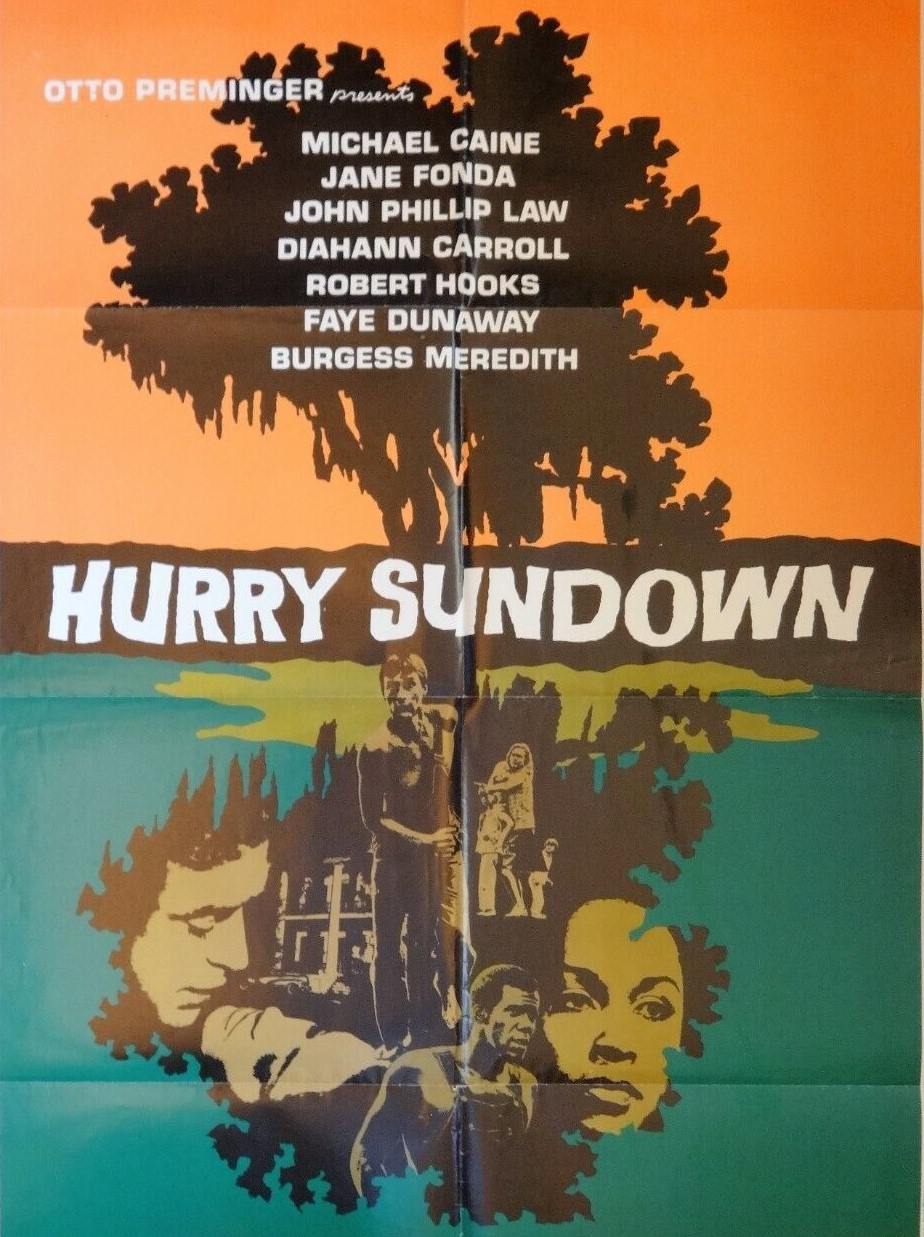
Hurry Sundown (1967) *****

Otto Preminger’s drama was the first of a trio of heavyweight films in 1967 – the others being In the Heat of the Night and Guess Who’s Coming to Dinner – that took African American issues seriously. In post-war Georgia land-grabbing by ambitious Henry Warren (Michael Caine) pits him against World War Two vet Rod (John Philip Law) and African American farmer Reeve (Robert Hooks) who team up. Throw in a quintet of feisty women – Henry’s wife Julie Ann (Jane Fonda), Rod’s wife Lou (Faye Dunaway), schoolteacher Vivian (Diahann Carroll) – Reeve’s love interest – Henry’s lover Sukie (Donnie Banton) and Rod’s mother (Beah Richards) – and emotional confrontation comes thick and fast.

Preminger had spent most of the decade making films about big subjects – Exodus (1960), the politics behind the formation of Israel; Advise and Consent (1962), just politics; The Cardinal (1963), politics within the Roman Catholic Church; and In Harm’s Way (1965), Army politics and bluster around Pearl Harbor

Preminger is both economic and elegant. From opening dialogue to climactic court scene, the picture races along, and continuous use of tracking shots ensures the movie never gets bogged down. While there is no lynching, racist abuse, whether direct or indirect (through patronizing attitude) is never far from the surface. Corrupt Judge Purcell (Burgess Meredith) is by far the most vicious, his unrestrained language making you wince. But even those with more measured approaches have to play the game, Reeve gives a lift to Rod but has to let him off before they reach town in case anyone spots this, Rod forbidden, for example, to buy dynamite.

But the racists do not get it all their own way. Julie Ann stands up to the judge and her position in the community is so strong that others boycott the judge’s daughter’s wedding leading to the judge receiving a tongue-lashing from his wife. Weak Sheriff Coombs (George Kennedy) coming to arrest Rod is bamboozled by his female relatives while  Vivian charms her way past the judge.

The women are uniformly strong. Julia Ann goes from seductive wife to distraught mother, but in between capable of defrauding Rod’s mother, her childhood nanny, out of her inheritance. Lou resents her husband’s return after in his absence taking on a full-time job while running the farm and now resisting the idea of selling up to Henry. Rod’s mother, beholden to white men all her life, now turns against them. The judge’s daughter (Donnie Banton) makes no bones about the fact that she is marrying her “dull” fiancé for his money. This is no spoiler because you will have guessed some similar outcome but at the end it is Vivian who takes the initiative in her relationship with Rod and  marches into his house with her baggage, declaring she has come to stay.

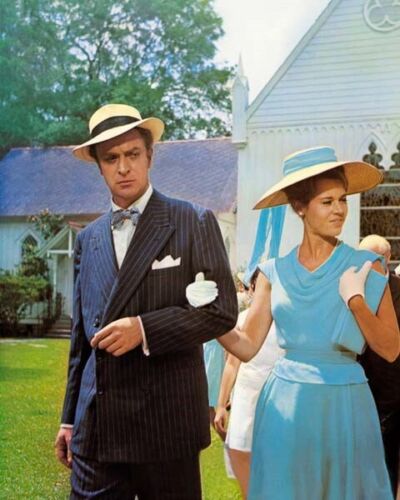
Caine and Fonda.

And although the ruthless Henry is the bad guy, he, too, is afforded insight, soothing himself by playing a musical instrument, a man with talent who had “distracted” himself by pursuit of money. And there is another touching moment when he takes in a runaway child. Acting-wise, Michael Caine (Gambit, 1966) is a revelation. Gone is the trademark drawl and the laid- back physical characteristics. Here he talks snappily – and no quibbles with his Southern accent either – and strides quickly. That we can believe he is brutal, gentle, remorseful and ruthless is testament to his performance.

Similarly, this is a massive step forward in Jane Fonda’s (Cat Ballou, 1965) career, away from Hollywood comedies and sexed-up French dramas, and her internal conflict springs from being forced to choose between husband and son, between her innate sexiness that oozes out in every intimate scene and maternal longing to comfort her disturbed child. Her usual shrill delivery is tempered somewhat by the deeper emotions she is forced to bear. While her attempt to defraud Rod’s mother comes from a desire to keep her husband, her eyes tell you she knows that is no excuse.

What’s perhaps most surprising of all is the tenderness. There are wonderful, gentle love scenes between Caine and Fonda and Law and Dunaway.

Children, too, also unusually, play a central role. Henry’s callousness is no better demonstrated than in his earlier treatment of his son. Reeve’s eldest son also resents his father’s return and, viewing Henry as a more suitable adult, betrays his father. The Judge is obliged to drop one of the worst aspects of his racism in order to appease his daughter.  

The acting throughout is uniformly good. Dunaway’s debut won her a six-picture contract with Preminger. Singer Diahann Carroll’s role as a confident young woman led to a television series. Robert Hooks would also enjoy small-screen fame. The surprisingly effective John Philip Law would partner Fonda in sci-fi Barbarella (1968) and link up with Preminger again in the ill-fated Skidoo (1969). Horton Foote (To Kill a Mockingbird, 1962) and Thomas C. Ryan (The Heart Is A Lonely Hunter, 1968) wrote the screenplay based on the bestseller by K.B. Gilden.

Unfairly overlooked by Oscar votes, who preferred the other Poitier films, Hurry Sundown, despite the rawness of the language and the innate brutality meted out to African-Americans, has been vastly under-rated. It is worth another look because at its core is not just racism but big business which scarcely cares about the color of those it exploits. It is as much about the power shift in relationships and ambition.  

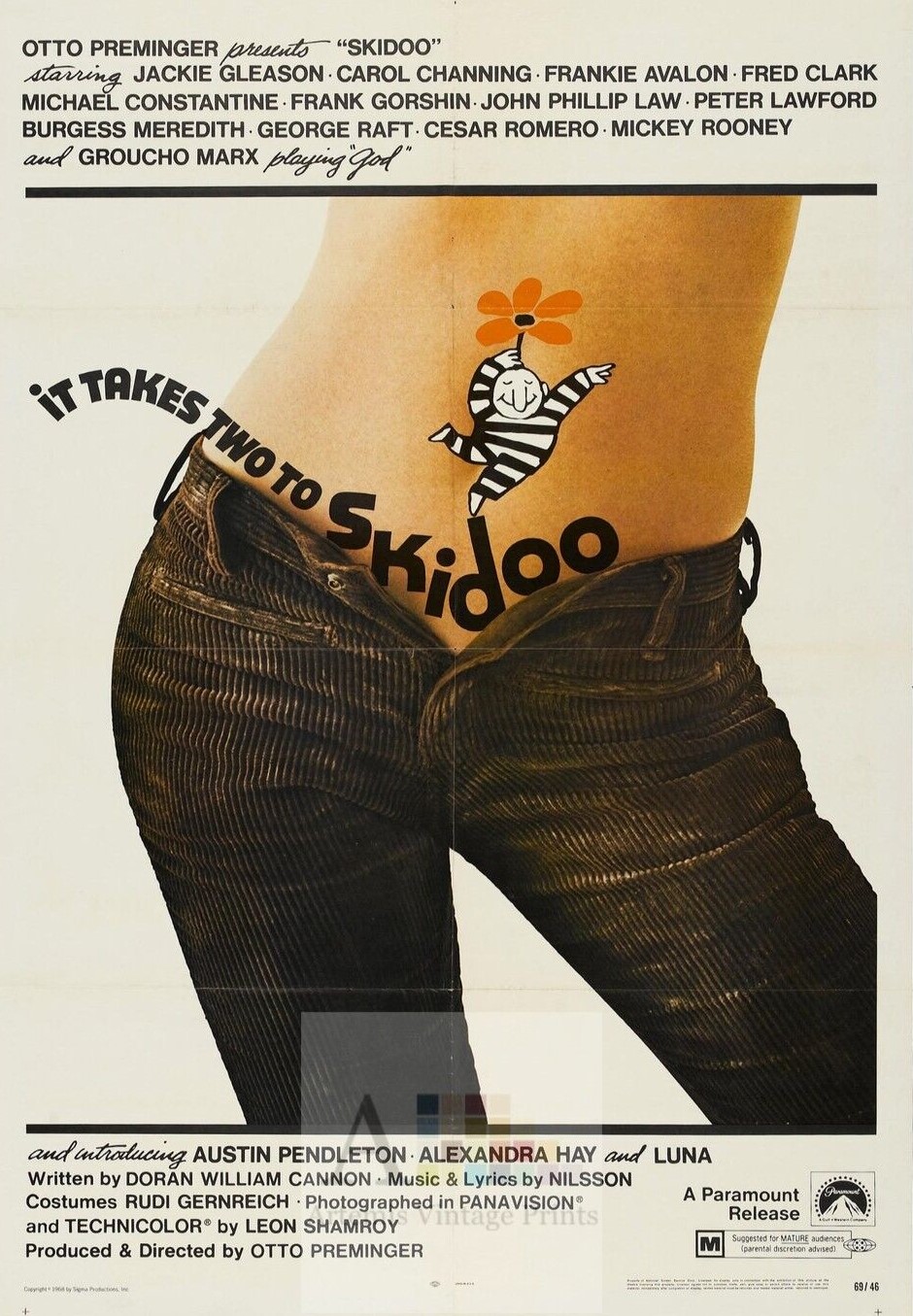
Skidoo (1968) *

Hubris can only get you so far. Unfortunately, it’s all downhill. Whatever possessed Otto Preminger (In Harms Way, 1965) to believe he could deliver a contemporary satirical comedy beats me. And it beat him, too.

Despite the comedic input of Jackie Gleason (The Hustler, 1962) and Groucho Marx there’s nary a single laugh, except, sadly, at the director’s expense as he attempts to shine a coruscating light on social mores and instead ends up fluffing his lines. The highlights (!!) are gangster Tony Banks (Jackie Gleason) having a bad trip, his daughter Darlene (Alexandra Hay) falling in with a bunch of hippies and having her body painted, his wife Flo (Carol Channing) trying to seduce another gangster Angie (Frankie Avalon) and some attempted gags at the expense of technology.

There’s even the old one of kids making out beside a parking meter and when busted complaining they are not getting their allotted time. And there’s an ongoing “joke” of Flo tussling with various men for control of the television set through rival remote controls.

The story, if you can call it that, has Tony infiltrating a prison in order to bump off inmate Packard (Mickey Rooney) who plays the stock market, complete with ticker tape, inside. Flo and Darlene, trying to find his whereabouts, end up at Angie’s hi-tech pad. Then all the hippies go back to the family house where Flo washes their hair.

You can imagine where hippies come into all this, making with the hip talk, and trying to set up an alternative world to the Establishment.

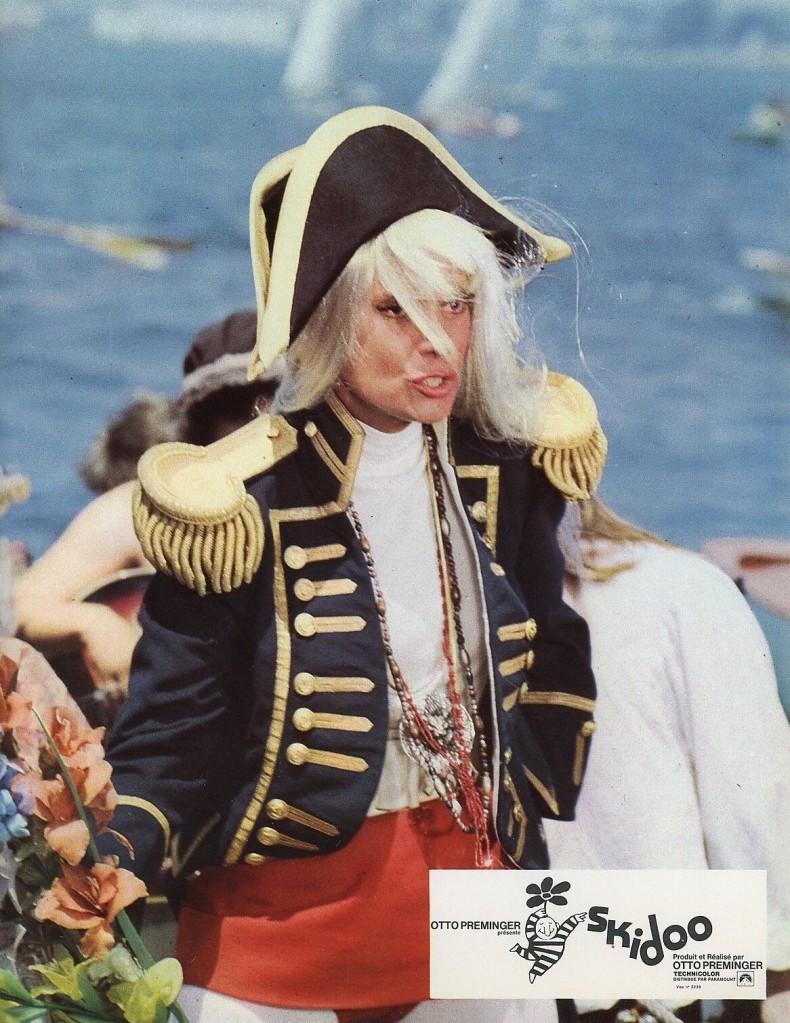
Carol Channing makes her feelings known by donning pirate garb.

In the style of It’s A Mad, Mad, Mad, Mad World (1963) the main attraction are the cameos, Peter Lawford (Ocean’s 11, 1960), John Philip Law (Hurry Sundown, 1967), Burgess Meredith (Rocky, 1976), George Raft (Five Golden Dragons, 1967), Mickey Rooney (24 Hours to Kill, 1965)  and Frankie Avalon (The Million Eyes of Sumuru, 1967). But they will all cringe at their participation.

Channing, only just Oscar-nominated for Thoroughly Modern Millie (1967) makes the worst career choice of her life, Alexandra Hay (Model Shop, 1969) not far behind, though with less marquee value to play around with.

Every acclaimed director has an off day, taking on a project through poor judgement or, more likely, financial necessity. But Preminger was still a Hollywood high-roller and this just looked like a dose of career suicide.

Danger: Diabolik (1968) ****

Super-fun slick cult thriller as uber-villain Diabolik (John Philip Law) and sidekick Eva (Marisa Mell) outwit cops – and robbers – in a series of cunning heists. When not thieving they’re making love or pranking officialdom. Diabolik, hiding out in an underground cavern, out-Bonds James Bond in the fast-car and gadget department while Eva, smarter than the average Bond girl, leads the world in fashion or lack of it, her opening outfit looking as if it has either been cut to ribbons or made up of ribbons. Diabolik’s mask is cool and Eva is dressed to kill. Crime was never so fun, stylish, sexy – or lucrative.

Heist number one is the biggest shipment of dollars – $10 million – ever transported through Italy with a  massive convoy of outriders and an official plan to outwit the master thief. Already one step ahead, Diabolik, a master of the magnetic, whisks away the money in plain sight. Heist number two, an emerald necklace worn by the British ambassador’s wife high in an impregnable castle, involves Spiderman-type maneuvers. Heist number three: a 22-ton gold ingot.

A crackdown on criminal activity so endangers the Mafia that top cop Inspector Ginko (Michel Piccoli) finds a surprise recruit in the hunt to capture Diabolik – Mafia boss Ralph Valmont (Adolfo Celi). The criminal network proves more potent than the cops and Valmont hatches a plan to snare Diabolik and exact revenge. And so ensues an elaborate chess game as criminals chase criminals with cops hoping to pick up the pieces.

John Philip Law (Hurry Sundown, 1967) was the coolest villain by a mile until challenged by Steve McQueen in The Thomas Crown Affair the same year. His classic good looks are matched by a fabulous brain as he cooks up brilliant scheme after brilliant scheme. Marisa Mell (Masquerade, 1965) is sexy as hell and a worthy companion in the thieving stakes. Adolfo Celi (Thunderball, 1965) and Michel Piccoli (Belle du Jour, 1967) are clumps in comparison, even though they do their ingenious best and Celi has his own harem.

Although Mario Bava (Black Sabbath, 1963) was better known for horror, this is a cult tour-de-force that employs the outlandish to set the tone, from go-go dancers and face-painted nightclubbers to the psychelic, the uber-fashionable, gadgets decades ahead of their time and the outrageous heists. The whole picture, coated in a sheen of glamour, is irresistible. The couple make love on a bed of dollars, airplanes have trap doors, there is a parachute jump twist, suspended animation, psychedelia, radioactive tracking devices, high-speed chases and a fiendish statuesque climax. And where not bedecked in fabulous fashion or one-piece cat-suits, the pair scamper about naked or as close as.

Bava captures the spirit and the look of the comic books by Angela and Luciana Giussani that provided the film’s inspiration. But that eight names including Britain’s Tudor Gates (creator of television’s Vendetta, 1966-1968) were involved in the screenplay shows the work this required. Ennio Morricone created a superb score. All-time cult classic.

Discover WordPress

A daily selection of the best content published on WordPress, collected for you by humans who love to read.

The Atavist Magazine

by Brian Hannan

WordPress.com News

The latest news on WordPress.com and the WordPress community.