The Misfits (1961) *****

A knockout. Stone cold five-star gold label classic. It’s rare for a non-western to turn into one of the greatest westerns of all time. Forget The Wild Bunch (1969) and Once Upon a time in the West (1969) and every other paean to the dying of the Old West. This is all you need. A true insight into just what is left for the cowboy once civilization and modernization have run their course.

What’s perhaps most astonishing is that three major Hollywood stars plus a top director and  one of the three greatest American playwrights of all time combined to make an indie. There’s no high drama of the kind Hollywood usually requires, no love dashed, no death or murder, nothing dramatic enough to be called narratively gripping. Made today, it would be the kind of picture that would traipse from film festival to film festival, hoping for a break at Sundance. The cast would be no-namers unless a star, fed-up with actioners, wanted to gain some artistic credibility.

This is as misleading a tag line as you could get. Admittedly, selling the movie’s core sadness
in the early 1960s would have been tough.

By some freak of Hollywood magic this was greenlit. There’s plenty good dialog but nothing that’s going to make it into the Classic Line Hall of Fame and there’s only a handful of finely wrought scenes. So beyond the astonishing mustang sequence, what reverberated was the acting, with each big star producing a scene of the highest quality, for pure emotional impact possibly unsurpassed in their entire careers.

The story itself is pretty slim. Roslyn (Marilyn Monroe) in Reno to get a divorce hooks up with washed-up cowboy Gay (Clark Gable) and grieving car mechanic Guido (Eli Wallach). They repair to Guido’s cabin in the country, unfinished after his pregnant wife died because he didn’t have a spare tire. They are joined by hard-drinking man-hungry Isabelle (Thelma Ritter). Roslyn shacks up here with Gay, brightening up the place with decorative ideas and planting vegetables.

At the rodeo they stake drunken Perce (Montgomery Clift), a tough guy with mother issues, self-destructing one rodeo at a time. At various times the trio nurse and console each other, but mostly they get drunk. The three men take Roslyn along to show off their cowboy skills, catching wild mustangs. This is less old-fashioned than you might imagine. It’s more like tracking down the great white shark in Jaws (1975), a primeval battle between man and beast. Man has the advantage of being able to use Guido’s biplane to drive the horses down to Gay and Guido waiting with lassoes.

And tires.

What are the tires for you might well ask? Well, they fulfil the same function as the barrels in Jaws, to weight down the animals so they are easier to track, perhaps exhausting them so much they might just topple over and die. So the odds are not exactly even.
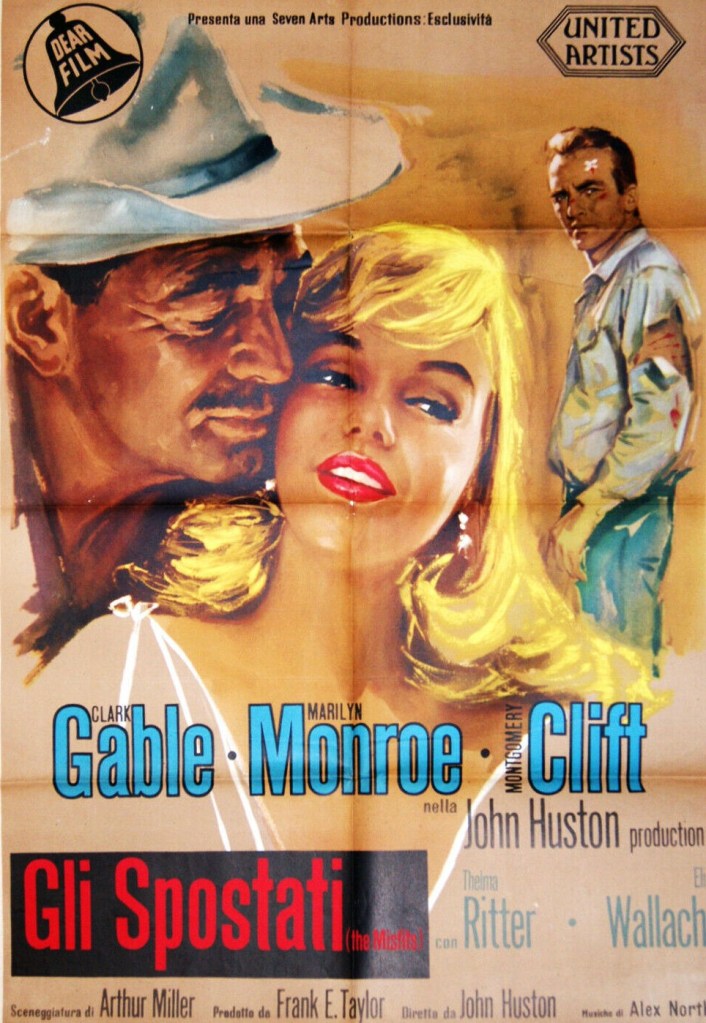
The guys are further disadvantaged by Roslyn’s presence. When she learns of the horses’ fate – not as you might expect to become working horses on a ranch like current television series Yellowstone – she is horrified. The critters will end up as pet food. So much for the Wild West.

This is an absolutely fantastic sequence and I’m surprised it doesn’t turn up on critical lists at all as one of the great western segments of all time. It says more about the end of the West than all the violence of The Wild Bunch or operatic fervour of Once Upon a Time in the West. And it’s a companion piece to The Old Man and the Sea, man, for all his endeavors, ending up with virtually nothing.

There’s a few twists and turns to this sequence so I won’t spoil it for you except to say it is one of the very few sections in movies where character plays out in action.

And this isn’t even Gable’s greatest scene. The moment when, drunken out of his skull already, he bleats in the street about his kids carries awesome power. What he’s saying doesn’t even make a great deal of sense, which is the beauty of it, because what drunk ever makes sense, most of the time he’s effectively addressing the demons inside.

Clift has a horrifically comic scene. His brain is as washed away as his body. He wakes out of a drunken stupor and can’t remember why he has a huge bandage round his head and proceeds to unravel it, again with a monologue that reveals his inner catatonic state.

Monroe is mute in her best scene. She just stares in horror at the mustang incident unfolding. And she has another terrific scene, probably the most ordinary thing she ever did in her screen career, battering a ping-pong.

The title is actually a rodeo term apparently for, unsurprisingly, a horse that was too small or weak to work. I would have preferred something less obvious because it’s quite clear from the outset all the characters are misfits.

This is probably the closest Monroe got to playing a character who reflected her inner turmoil. Roslyn’s beauty brightens up lives but mostly she is depressed, thinking that even when you win you lose, too fragile to cope with reality, and inclined to need consoled as much as she is willing to nurse the others. Gay is a superb creation, who despises men who earn “wages,” that is have a regular job and lose their freedom. Even if freedom means no female companionship and being reduced to catching horses for the few bucks they will bring in from pet food manufacturers, he would rather do that. Perce is just so battered by life he hasn’t a clue what he’s doing. The self-serving Guido whines.

Put all these characters together and they still live in world of their own, and although they occasionally cross the border into another’s existence by and large it is without understanding.

Without John Huston’s empathetic direction it would be unbearably sad, but with virtually nothing in the way of real plot he draws us inexorably in to their small lives. Given its budget and the box office potential of the stars, it was a flop on release. Now it’s a masterpiece.    

However tragic or premature, few Hollywood stars could have gone out at the top with a picture of this quality as did Gable and Monroe. Possibly as a result of his exertions on the film, Gable died a few days after shooting completed, Monroe eighteen months later, but what a final legacy.
Humphrey Bogart: 1960s Revival Champ

When Billy Wilder’s Sabrina (1954) was reissued in 1963 the star attraction was undoubtedly Audrey Hepburn, hot after Breakfast at Tiffany’s (1961) and Charade (1963), rather than William Holden, tumbling down the box office charts, or Humphrey Bogart, six years deceased. When the film was reissued two years later on the back of an even hotter Hepburn after My Fair Lady (1964), Bogart was assuredly the star. What happened in between was one of the oddest twists in motion picture history and one that would turn the actor into the biggest revival star of the 1960s.

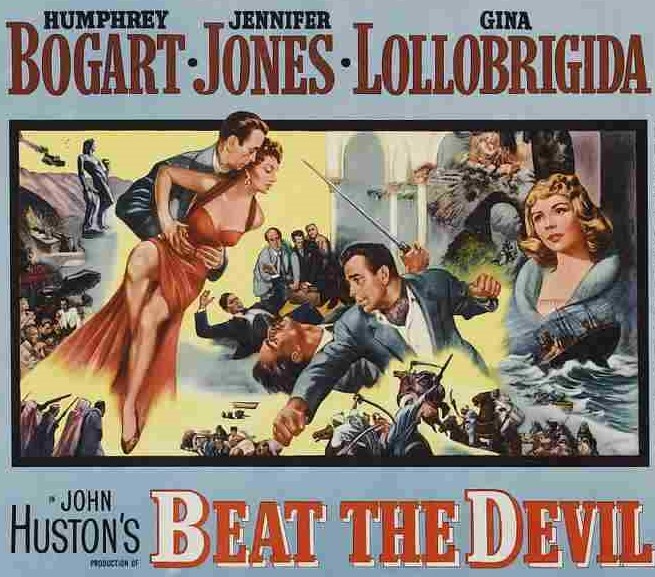
But if you were to select the Bogart picture most likely to reignite public interest in the star, it would not be John Huston’s Beat the Devil (1953), a flop on initial release and by 1965 for legal reasons never shown on television. But in one of those quirks of programming the old Bogart found a new lease of life. Opening in spring 1964 at the 250-seat Avenue Cinema in New York it racked up $7,000 – equivalent to $65,000 today, totting up $30,000 ($279,000 equivalent) in a six-week run – phenomenal amounts for such a small venue. It shifted over to the 55th St Playhouse where it remained for another four weeks. The Art Cinema chain picked it up for wider release, sending it out in its thirty-six houses with, once again, outstanding results ($7,000 in one week in Boston, $5,000 in Washington). In Philadelphia it ran simultaneously in two houses.

In 1965 Dominant Films, part of United Artists, reissued a package of nineteen Bogart oldies, available on a rental rather than fixed price basis, and bookings were conditional on cinemas undertaking a two-week engagement, one film for the whole fortnight or the entire supply over the period, or any kind of program arrangement in between. There was no shortage of takers, especially after it became known that the 8th St Playhouse in New York, generally a second-run arthouse, and the 495-seat Carnegie in Chicago had each seen receipts hit the $10,000 ($93,000 equivalent) mark. The former double-billed fourteen pictures from the selection available, switching programs every two days.

Demand for the program was so high, prints were rationed. In the next fourteen cinemas on the release schedule, venues were allocated a maximum of six movies over the two-week period, sometimes limited to just two. When it became obvious that this gold mine was being given away too cheaply, a new strategy emerged: weekly double bills. In what amounted to a Humphrey Bogart greatest hits package the Carnegie in Chicago cleared nearly $15,000 ($139,000 equivalent) over three consecutive weeks with the following programs: The Petrified Forest (1936)/Key Largo (1948), Treasure of the Sierra Madre (1948)/Casablanca (1942), and The Maltese Falcon (1941)/High Sierra (1951).

These grosses were even more astonishing in light of the fact that nearly all his seventy-five pictures were available on television, free of charge, on constant rerun, demand highest in the late-late slot. In 1966, United Artists Associates, a division of UA TV, referred to its portfolio of forty-five Warner Brothers features as “the most significant phenomenon of this era of entertainment history” It was estimated that screenings of his movies totalled two hundred per year.

Although there had been sporadic screenings of golden oldies in the U.S., exhibitors did not appear to share the same penchant for classics. Certainly, the U.S. lagged behind Europe in that respect. Wuthering Heights (1939), a huge rerun favourite in Europe, in 1963 in Paris attracted 30,000 admissions in three days in a trio of cinemas. In February 1963 half the cinemas in the French capital were given over to classics.

The most successful classics operator in the U.S. was MGM which in the early 1960s set up the Perpetual Program Plan. Investing in new prints of MGM oldies and a distinct marketing plan, the studio offered a package on an innovative basis. Rather than tying cinemas down to one-week or two-week contracts, as would be standard for arthouses, and therefore limiting potential bookings over fears that audience demand would peter out after a few days, MGM had hit on the idea of showing the films once a week on the same day of the week – Wednesday the most popular – for a season of six-eight weeks. Patrons could book a “season ticket” to see all the films. This approach made it far more appealing to the ordinary cinema, rather than the arthouse specialist, since a special showing could lift the midweek quiet period.

The first offerings from the Perpetual Program Plan were “Golden Operettas” – Rose Marie (1936), The Merry Widow (1934), The Great Waltz (1938), Sweethearts (1938), The Chocolate Soldier (1941) and The Student Prince (1954). The package played in over 3,500 cinemas. Expecting little more than $60 for their Wednesday income, cinemas found themselves taking in $300-$900 a night. The Chocolate Soldier could bring in as much as $2,200 a night, The Student Prince $1,500. MGM followed up with a program of films based on famous books such as Little Women (1949) and a third package revolved around musicals like Singing’ in the Rain (1952) and The Bandwagon (1953).  

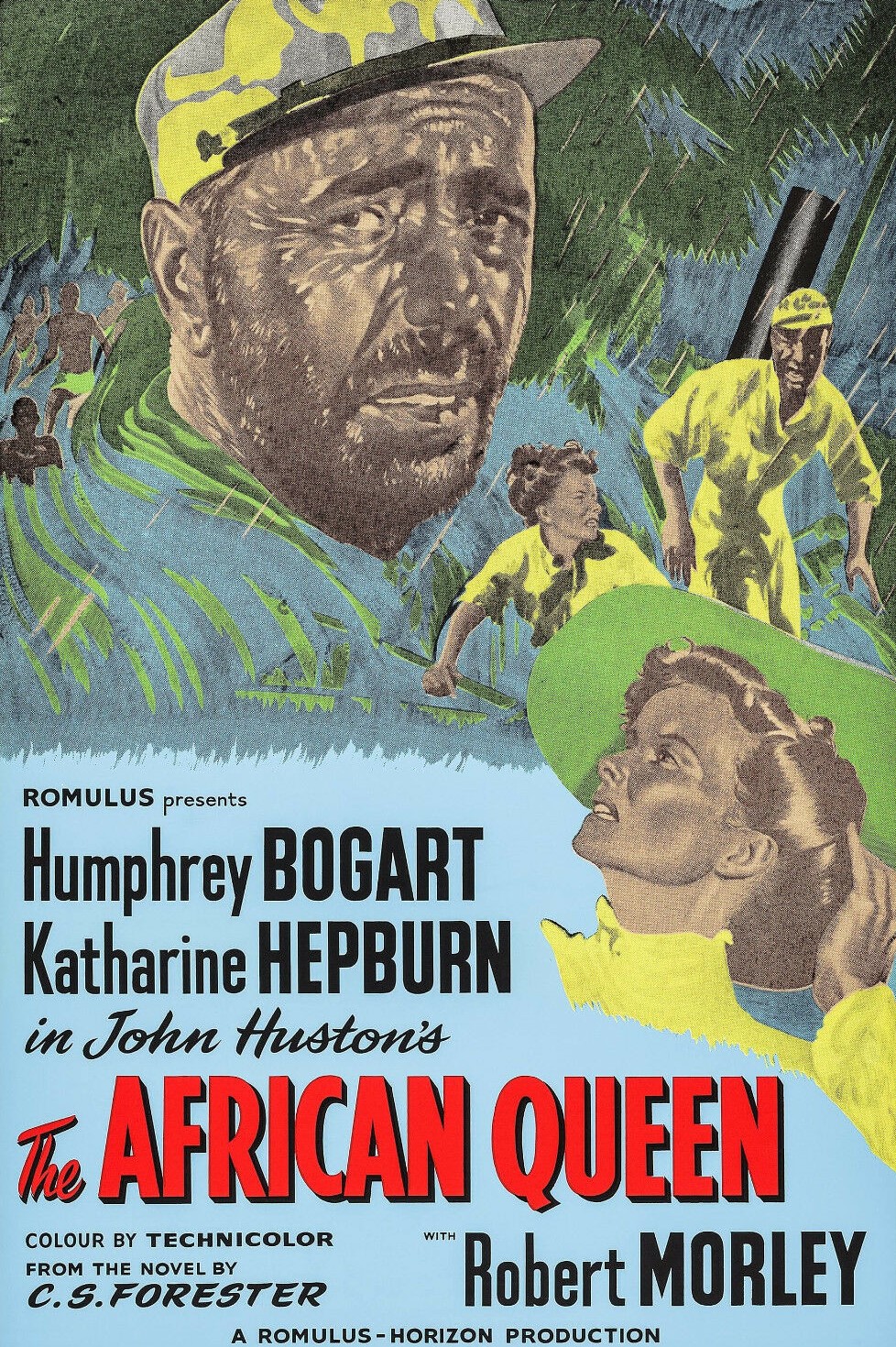
The Humphrey Bogart concept was a considerable step up from this once-a-week program. The Bogart craze reached its commercial height in 1967. But there was one Bogart picture that audiences had been denied a showing for a decade. The African Queen (1952) had been made by British company Romulus and distributors had been put off taking up an option to show it due to a technical issue with the color prints. The impetus for its revival was the tenth anniversary of Bogart’s death, an event that stimulated an avalanche of newspaper articles and books. Producer Sam Spiegel sold reissue rights for The African Queen to Trans-Lux, a small arthouse chain in expansion mode planning to move into distribution. When the Los Angeles Times held a poll to identify the oldie most moviegoers wanted to see, The African Queen topped the poll. The buzz surrounding Guess Who’s Coming to Dinner (1967) created massive interest in the picture’s co-star Katharine Hepburn.

It was no surprise that The African Queen launched – in November 1967 – at a New York arthouse, the 600-seat Trans-Lux East, but the box office blew the industry away. An opening week of close on $20,000 ($186,000 equivalent) put the oldie into the cinema’s all-time top ten. What was astonishing was that it received as many bookings outside the expected release route of arthouses and the college circuit and was taken up by local theaters all over the country, shown in four houses in San Mateo, for example. It formed double and triple bills with other Bogart films, as well as The Quiet Man (1952) and topped bills that included films like Waterhole 3 (1967). After the first flush of first run and nabes, it turned up as support to contemporary pictures like Dark of the Sun (1968) and underwent another revival in 1969 before being sold to television in 1970.

SOURCE: Brian Hannan, Coming Back To A Theater Near You; A History of Hollywood Reissues, 1914-2014 (McFarland, 2016) p127-133, 198-206.

Behind the Scenes: “Waterloo” (1970)

As dramatic a box office flop as this movie scarcely deserves a book as superb.

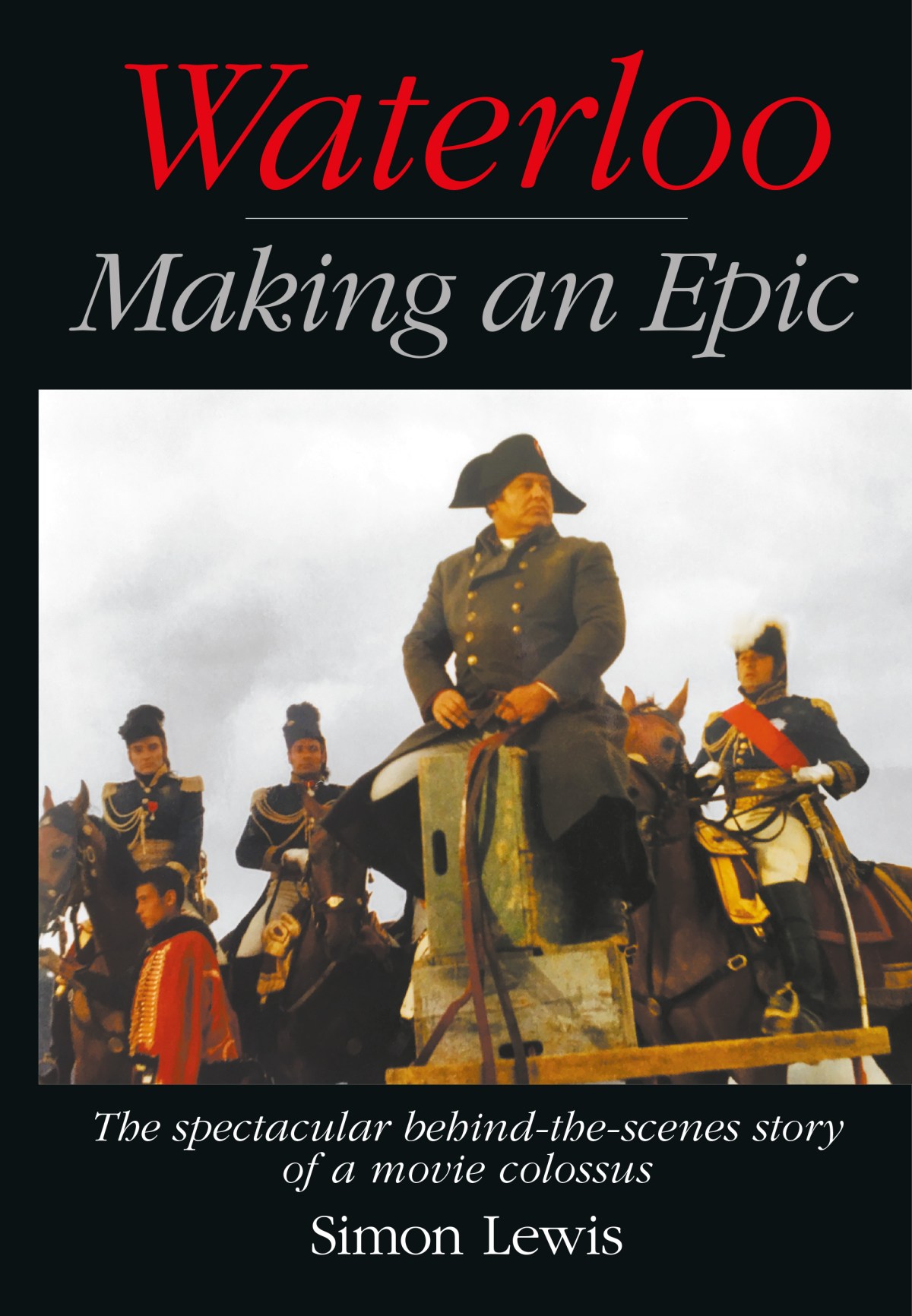
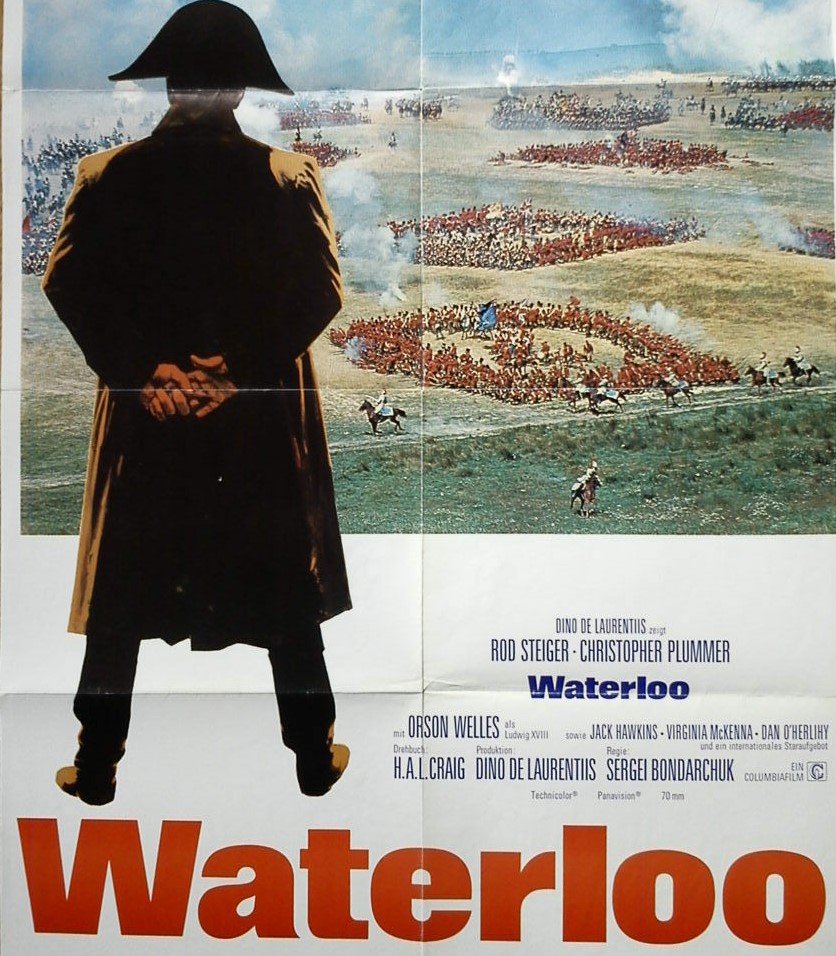
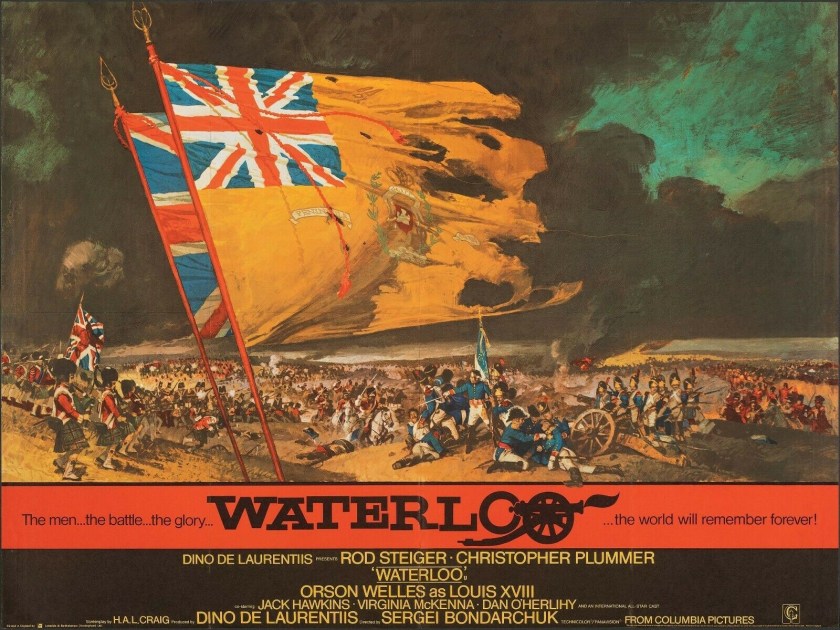
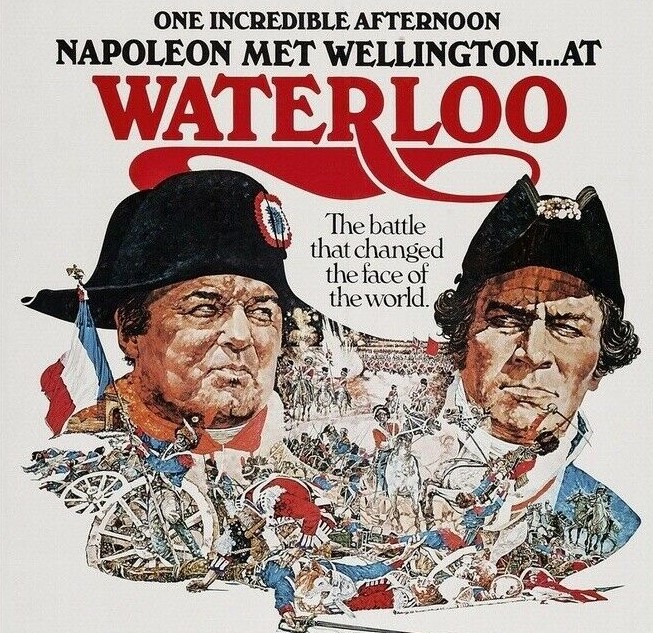
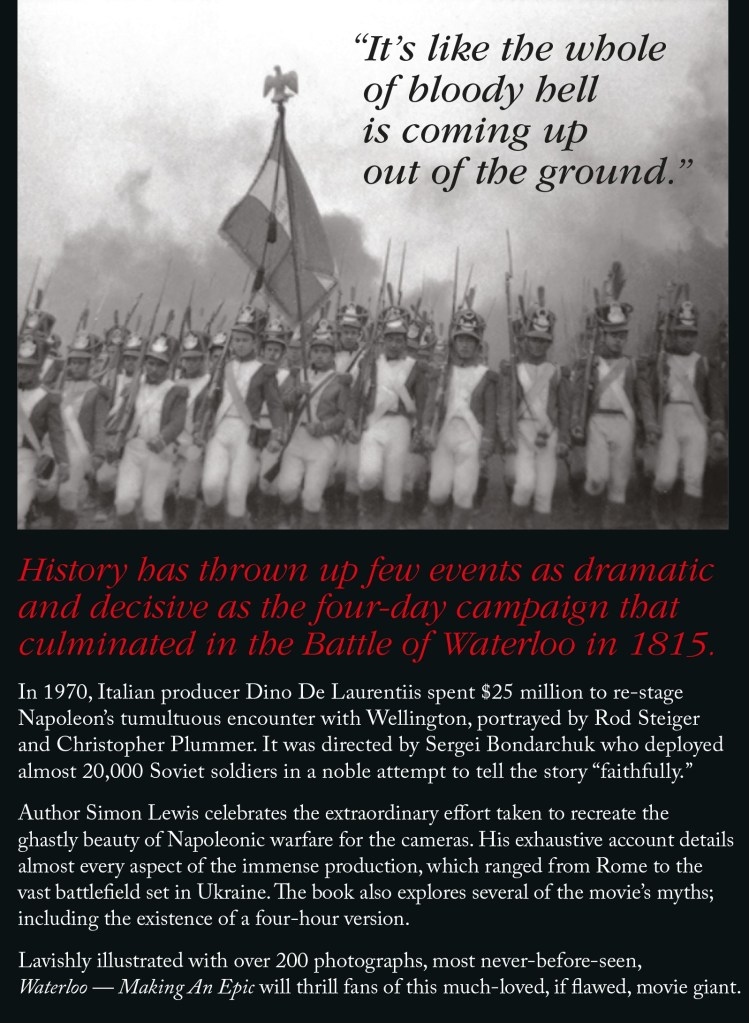
In quite extraordinary detail, author Simon Lewis discusses every aspect of the making of the film, from initial set-up to release, by way of analysis of dozens of separate scenes through to rarely discussed elements like the editing and mixing, and even the myth of the missing longer version and the importance of wooden boxes (as illustrated by the front cover).  It might have helped the movie’s commercial chances, and not put too much of a dent in the ultimately massive budget of $26.1 million, if producer Dino De Laurentiis has snagged original dream team of Richard Burton (Napoleon) and Peter O’Toole (Wellington), both of whom carried much greater box office marquee than Rod Steiger and Christopher Plummer.

Burton was never really a possibility but by 1968 O’Toole was “practically set” although turning it down because he thought it would flop. John Huston, who had just completed The Bible (1966) for De Laurentiis, was original choice for director and got so far as being involved in the screenplay being written by H.A.L Craig (Anzio, 1968). When he dropped out, Gilles Pontecorvo (The Battle of Algiers, 1966) was briefly in the frame. However, a six-hour version of War and Peace (1965) put Sergei Bondarchuk in pole position.  

Requiring thousands of properly trained and preferably “celluloid-seasoned” troops to carry out disciplined manoeuvres rather than extras, De Laurentiis was in negotiation with Turkey, Hungary, Yugoslavia and Bulgaria before plumping for Russia, whose production arm Mosfilm pumped in $8 million (later rising in line with budget increases). Paramount and Columbia contributed a combined $7 million with worldwide rights selling for a total of $25 million. Once filming began, Paramount chiefs Charles Bludhorn and Robert Evans, watching elements of shooting, were so taken with what they saw they wished they had invested more. Evans was reportedly “enthralled by hours of film material.” Craig’s screenplay was augmented by the director and Vittorio Bonicelli as well as uncredited contributions by Jean Anouilh (Becket, 1964), Samuel Marx and Edward O. Marsh, not to mention additions by the two main actors. Steiger pocketed $385,000, Plummer $300,000, Craig $121,000 but Anouilh only $21,000. Gordon Highlanders pipers and drummers picked up £7 a day.

Lewis is at his best when forensically examining particular scenes, for example, the Duchess of Richmond Ball which used 4,000 candles inserted into candelabras, the slightest draught causing these to melt and drip wax on performers, a carpet used to get camera shots from a very low level.

Steiger played Napoleon almost as a dead man walking, having got hold of a copy of the French Emperor’s autopsy which revealed advanced cirrhosis and gonorrhoea. Steiger and Bondarchuk met the night before to iron out ideas for the following day but Steiger was not above forcing the director’s hand by in one instance the actor removing his trousers to ensure he could only be shot in close-up. Orson Welles matched Steiger in trickery. Only hired for two days, Welles extended his employment by insisting on doing his own make-up which of course was never up to scratch and required amendment. And in terms of movie trickery, Steiger was required to sit on a wooden box on his horse to ensure he could be kept in focus. Jack Hawkins dispensed with the horse altogether – he was either atop a box or on top of stilts, as he was unsteady on an animal.

In the absence of CGI of the kind Ridley Scott could employ for his battle scenes, the real soldiers were occasionally augmented by mannequins. Five thousand were made, two real soldiers at either end of a row held eight mannequins in place by the use of a single wooden plank which “allowed all regiments to march forward.” Among the many wonderful candid pictures in this lavishly illustrated tome – 200 photographs, many never seen before – is one of three girls staring at the mannequins as well as photos of Steiger and Hawkins on their boxes.

The Waterloo battlefield had one of the biggest sets ever built. A total of 17,000 soldiers, mostly from Siberia and  including 2,000 cavalry, lived in a tented city a mile away. Steiger noted: “It would have taken assistant directors three days to put untrained men, mere extras, into position. When they broke for lunch it would be another three days to arrange them again. These guys are superb.” Real soldiers working with their actual commanders was the difference between waste and superb. Having a general in charge of the troops often created issues. Bondarchuk would select the horses he wanted based on the effect he wished to achieve with the light, demands often obstructed by the commander if it meant the chosen horses had not been properly fed. “I will order soldiers – but how do I order animals?” was the dry comment from the army chief. .

Although the battlefield was primarily authentic  – mud for one scene created by pumping two days’ worth of water into the soil before cavalry churned up the area – there were occasions when filming conformed to the Hollywood norm. “The use of fiery explosions had been cinematic shorthand for battle scenes long before Waterloo” when in reality these would be minimal. “Most ammunition that was fired comprised large iron balls and so low was its speed it was possible to watch their progress.”

 The famous charge of the Scots Greys was described thus in the script: “they came straight into camera – like centaurs in their magnificence.” The sight of 350 Arabian mounts travelling at breakneck speed was captured by use of a specially constructed railway powered by a diesel locomotive. Five cameras were sited in different positions on the train. The famous slow-motion effect – possibly the most exhilarating moment in the picture – was achieved by over-cranking the camera at 100 frames per second which slowed down what you saw by a factor of four.

Perhaps the best reveal regarding movie trickery was the moon above Wellington as he rode past the carnage. It comprised “special silver paper for front projection – 3M – like shark skin. You put one light on it and it reflects ten times brighter.” The moon was shown as one quarter less than full since the effect of a full moon would be harder to carry off. “Blue ink made some spots as moon craters.” The fake moon was suspended with one wire on top and two left and right to prevent it from moving, then one light was projected onto it.

Back cover of the book.

Lewis rebuts the myth of the missing longer version. He reckons this probably came about because over 300,000 feet of film – 55 hours – was shot and the first rough cut was five hours long. The final cut was 133 minutes – not much longer than if you had worked out the length by counting the pages of the screenplay – and release cuts varied because, for example, the British censors cut out 28 seconds of horse falls and the ending includes 50 seconds of music over the credits. It was never shown with the intermission which was de rigeur at the time for longer roadshows and would have, artificially, inflated the running time.  There was some confusion over the final print because a novelisation by Frederick E. Smith included some scenes that didn’t make it into the final print, and Smith’s book, written of necessity before the film appeared, would have used as its main reference tool the screenplay. But Lewis spends a whole chapter explaining why a longer cut never existed.

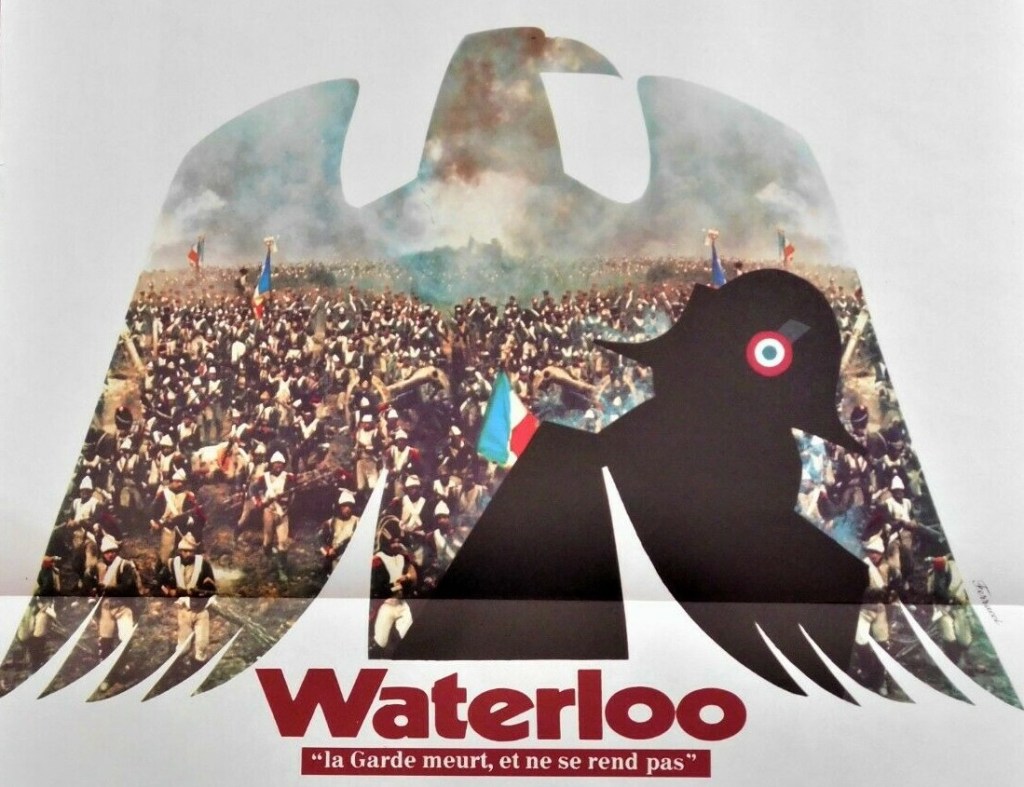
The world premiere was held on 26 October 1970 in London where the movie released as a roadshow (i.e. separate performances) was a huge success. It ran for a few weeks short of an entire year in the London West End, breaking box office records at the Odeon Leicester Square and the Metropole where it opened on December 3rd, 1970, before shifting to the Columbia on June 17, 1971, and then a final week at the Odeon Kensington from September 30 1971. But audience appeal in the United States was at the other end of the spectrum. It went from a strong opening week of $25,436 at the Criterion in New York to just $1,775 in its fourth week, and nationwide racked up only $1.4 million in rentals (the studio share of the box office). It was derided in France in part because the film was about the defeat of a legend and the French could not come to terms with the idea that it was directed by a Russian.

Where most “making of” books concentrate on the stars and the director, Lewis goes into fantastic detail about all aspects of the production, the chapter on editing and mixing an education in itself. There’s a chapter on how historically accurate the film actually was. The author was helped by the discovery of a diary kept during production by actor Richard Heffer who played the small part Mercer. But Lewis also managed to make contact with Dino De Laurentiis’s daughters, Raffaella and Veronica, and around two dozen people connected with the film in some way, and clearly examined every scrap of information available on the picture. The Notes are another mine of information.

Even if the film is not at the top of your must-watch list, this book should go to the top of your must-read list.

Waterloo, The Making of An Epic, The Spectacular Behind-the-Scenes Story of a Movie Colossus  by Simon Lewis is published by Bear Manor Media, 534 pages, illustrated (B&W), Hardback, Paperback & Ebook, ISBN  978-1-62933-832-3 .

In the News: July 1960

ADVANCE BOOKING REACHES NEW HEIGHTS

When these days you casually book your movie tickets online for a screening a week or a month ahead, you might not be aware it was not always so easy to book in advance. Sixty years ago it was a rarity. You had to wait in line outside the theater like everybody else.

The emergence of the roadshow at the tail end of the 1950s changed all that. Then you could book by mail (snail mail not email), filling out a booking form with your choice of seating and date and send it off with a check or money order to the theater and wait for tickets to come back a week later. Advance bookings quickly become a measure of how well a roadshow would perform.

So in summer 1960 United Artists were cock-a-hoop in reporting that Exodus, not due out for another six months, had racked up a record $700,000 advance. At first this cash just rolled around in the bank accounts of the designated theater, but in the 1970s studios realized that it was in large part their money and that was when they started demanding upfront guarantees.

STILLS GO UPMARKET

A new trend in stills photography took root. Studios began hiring world-famous snappers. Heading up the trend, United Artists sent nine photographers from international agency Magnum Photos to Reno, Nevada, to provide atmospheric pictures during the shooting of John Huston’s The Misfits. The big names included Eve Arnold, Henri Cartier-Bresson and Inge Morath. They were paid substantial amounts, far more than regular stills photographers. The best known earned $5,000 a week. This was an investment in a name since the idea was that top-class magazines would be more likely to feature a photographic spread on a movie should the pictures come with the cachet of a recognised name. It proved a genius marketing idea. Top magazines took the bait. As an offshoot, and attracting another sizable slice of publicity, the work went on display at Loew’s Capitol movie house in New York as a prelude to presentation in other first run houses.

IN OTHER NEWS

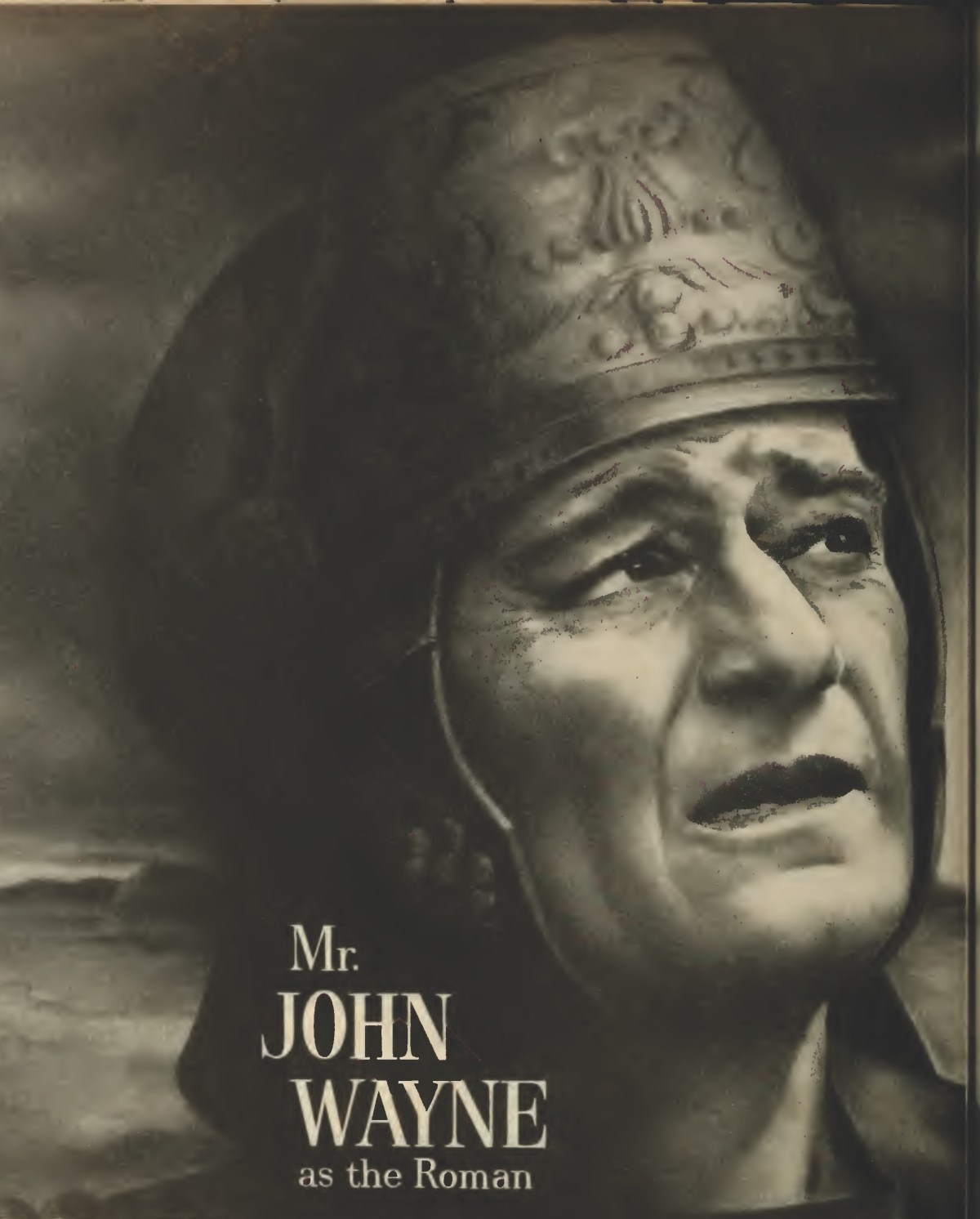
Charlie Chaplin was omitted from the Hollywood Walk of Fame…The premature death at the age of 51 of Twentieth Century Fox head of production Buddy Adler opened the door for the return of Darryl F. Zanuck, thus paving the way a few years later for the legendary producer to save the studio when it almost went bust thanks to gigantic overruns on Cleopatra… Studios considered pulling back on newspaper advertising when they discovered not only were some newspapers censoring movie  ads but around 35 per cent of them refused to run reviews…In the first push in what would turn out to be a long-term marketing campaign for The Greatest Story Ever Told director George Stevens hired an international head of public relations and shortly after issued an advertisement that will forever be a blot on the copybook of John Wayne, who was the first star to be signed.   

Sources: Variety – Jul 6, July 13, Jul 20, Jul 27, 1960; “Photographic Exhibition for The Misfits,” Box Office Showmandiser section, Jan 16, 1961, 10.

Discover WordPress

A daily selection of the best content published on WordPress, collected for you by humans who love to read.

The Atavist Magazine

by Brian Hannan

WordPress.com News

The latest news on WordPress.com and the WordPress community.