Behind the Scenes: “The Learning Tree” (1969)

I am indebted to one of my regular correspondents, who goes by the name of “Fenny100,” for the following “Behind the Scenes” report:

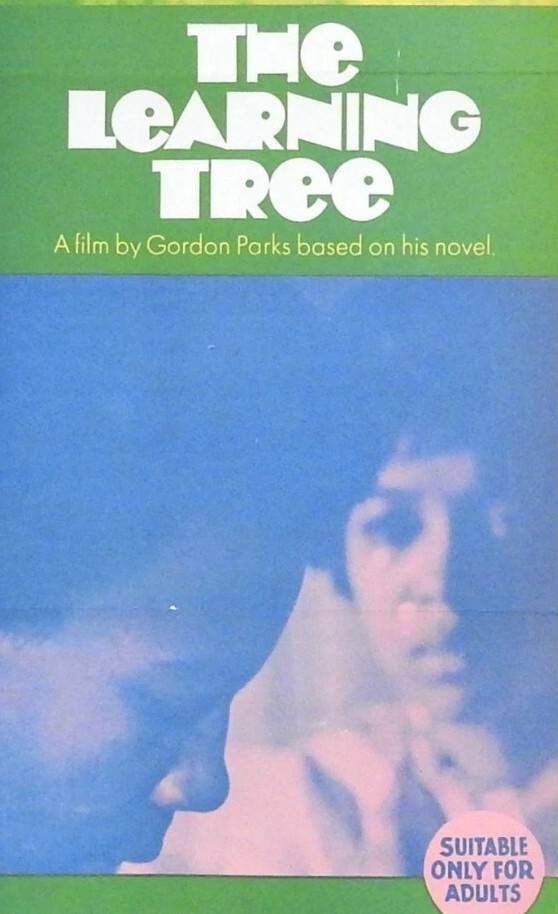
 The working title of the picture was Learn, Baby, Learn. Based on his 1963 autobiographical novel, The Learning Tree, it marked the feature film debut of Gordon Parks, who was the first African American staff photographer for Life magazine. With the making of The Learning Tree, Parks became the first African American to direct a major theatrical motion picture. Parks had previously directed “several short film subjects and two one-hour features for National Education Television” (New York Times, 2 April 1968). The project was five years in the making (Variety, 17 April 1964), the writer-director in talks with producers interested in optioning his book. Two independent producers first acquired film rights (New York Times, 17 August 1969) but they were unable to raise the necessary funds. Another producer allegedly offered Parks $75,000 to adapt the script, with the stipulation that he must rewrite the black characters as white. Parks declined.

At some point, Bob Hope’s daughter, Linda Hope, was interested in producing the adaptation, (Variety, 7 November 1968). Parks’ friend, filmmaker John Cassavetes (Shadows, 1958), introduced his work to Kenneth Hyman, an executive at Warner Bros.—Seven Arts, Inc., which ultimately funded the production, although Cassavetes accidentally gave Hyman a copy of Parks’ 1966 memoir A Choice of Weapons rather than The Learning Tree. Hyman became enthusiastic about working with Parks and reportedly struck a four-picture deal with him within a fifteen-minute meeting. The Warner Bros.—Seven Arts deal (Variety, 1 April 1968) referred to Parks as “the first negro in film history to direct a major feature for a major film company.”
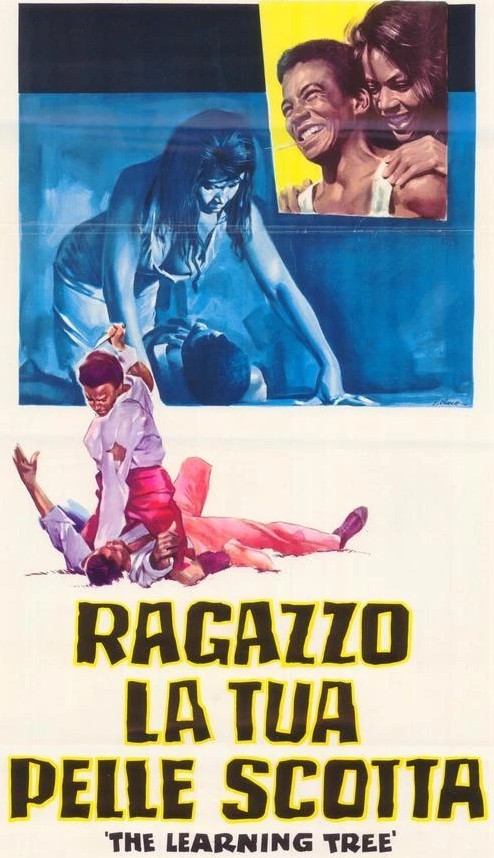
 Also a well-respected musician, Parks was set to write the score, which (Variety, 12 July 1968) entailed a four-movement symphony. The production budget was set at slightly less than $2 million (Variety, 25 June 1969) and Parks was slated to receive twenty-five per cent of any profits (Los Angeles Times, 19 October 1969).


Principal photography was scheduled to begin on 30 September 1968 in Parks’ hometown of Fort Scott, Kansas, (“Production Chart,” Variety, 27 September 1968). Problems arose when the film crew, including six African Americans, began shooting in the town (Variety, 7 November 1968), a report which implied that the difficulties arose from racial tension. A later article (Variety, 25 June 1969) noted that there were twelve black crew members, not six, and blamed the tension between locals and filmmakers on the fact that Fort Scott residents wrongly assumed The Learning Tree was a “dirty film.” Parks said that shooting there eventually worked well, and that the local Elks Club admitted African Americans for the first time at a party thrown for the cast and crew. Parks was given a key to the city by local officials, and “Gordon Parks Day” was declared in early November 1968.


Following five-and-a-half weeks in Fort Scott, cast and crew moved to the Warner Bros.—Seven Arts studio lot in Burbank, California, where another two-and-a-half weeks of principal photography was scheduled, beginning in mid-November 1968. On 11 December 1968, Variety confirmed that filming had been completed.


Although William Conrad acted as executive producer throughout the shoot, his name was removed from the credits (Variety, 19 June 1969), though it was later explained that Conrad had agreed to help but wanted no credit, since The Learning Tree was “Gordon’s story.”


In discussing the small contingent of African Americans on his crew, Parks said (New York Times, 17 August 1969), “I hired 12 Negroes to work on the production. It was a fight, because the Hollywood unions are all white, but I got enormous cooperation from Warners.” The studio hired a black electrician, Gene Simpson, for the first time in its history (Los Angeles Sentinel, 13 March 1969), while publicist Vincent Tubbs – the only black union head as the president of the Hollywood Publicists Guild – worked on the film. Parks’ son, Gordon Parks, Jr., acted as still photographer. Seven African American craftsmen worked on the film (Box Office, 28 October 1968).


The Learning Tree was first screened on 18 Jun 1969 at a Warner Bros.—Seven Arts press junket held in Freeport, in the Bahamas (Variety, 18 June 1969). Following its debut there, Variety (25 June 1969) suggested that Parks’ “viewpoint on America and its racial problems” in the 1920s-set film might be negatively received by “black militants and other radical types.” Parks contended that black militants had been purposely planted in preview screenings, and although they had sometimes laughed at inappropriate times, they had generally congratulated him for his accomplishment. Parks stated, “But actually, I don’t care what they think. This is my story. I believe that in the black revolution there is a need for everyone.”


Despite the film’s perceived innocence, it received an M-rating (suggested for mature audiences) from the Motion Picture Association of America (Variety, 16 July 1969). It was due to have its world premiere on 6 Aug 1969 at the Trans-Lux East and West arthouses in New York City (Variety, 30 July 1969). Early reviews were mixed. Although the studio had initially planned a slow rollout of the film in arthouse theaters, its success at the more commercial Trans-Lux West – and relative failure at the Trans-Lux East – indicated the picture would play better at larger, inner-city theaters (Variety, 10 September 1969). A new “playoff pattern” was devised to take advantage of its box-office potential at theaters known for action films and other commercial fare.

Within seventeen weeks of release,  cumulative box office gross topped $1.327 million from just 27 theaters (Variety, 5 November 1969).

At Los Angeles at Grauman’s Chinese Theatre, where The Learning Tree opened on 20 August 1969, a large fiberglass sycamore tree  – which the studio planned to donate to the Crippled Children’s Society of Los Angeles County once the film’s run was complete  – was built around the box office (Variety, 18 August 1969)

The Learning Tree was the U.S. entry at the Edinburgh Film Festival running 24 August – 7 September 1969. It won the Blue Ribbon Award from the National Screen Council in the U.S. for the month of September. The film went on to garner accolades including the National Association for the Advancement of Colored People (NAACP) Image Awards for Best Picture (in a tie with Joanna, 1968) Best Director, Best Actress in a Feature (Estelle Evans), and Most Promising Young Actor and Actress (Kyle Johnson and Alex Clarke).

Parks received an Annual Achievement Award from the Foundation for Research and Education in Sickle Cell Disease of New York City; an Achievement Award from the city of Cleveland, Ohio, presented by Cleveland Mayor Carl Stokes on the 24 September 1969 Cleveland premiere; and a Certificate of Merit from the Southern California Motion Picture Council, which also named the film a “Picture of Outstanding Merit.”

On the commercial front, the picture was a solid hit, raking in $1.5 million in rentals (what the studio earns after cinemas have taken their cut) in the annual box office chart (“Big Rental Films of ’69,” Variety, 7 January 1970).

Parks received  honorary degrees from Boston University and Fairfield University in Connecticut. A week-long Gordon Parks Festival, also featuring Shaft (1971) and Shaft’s Big Score (1972), ran at Kansas State University in 1973.

Twenty years after its release, in 1989, it became one of the first twenty-five films selected for inclusion in the Library of Congress’ newly founded National Film Registry.

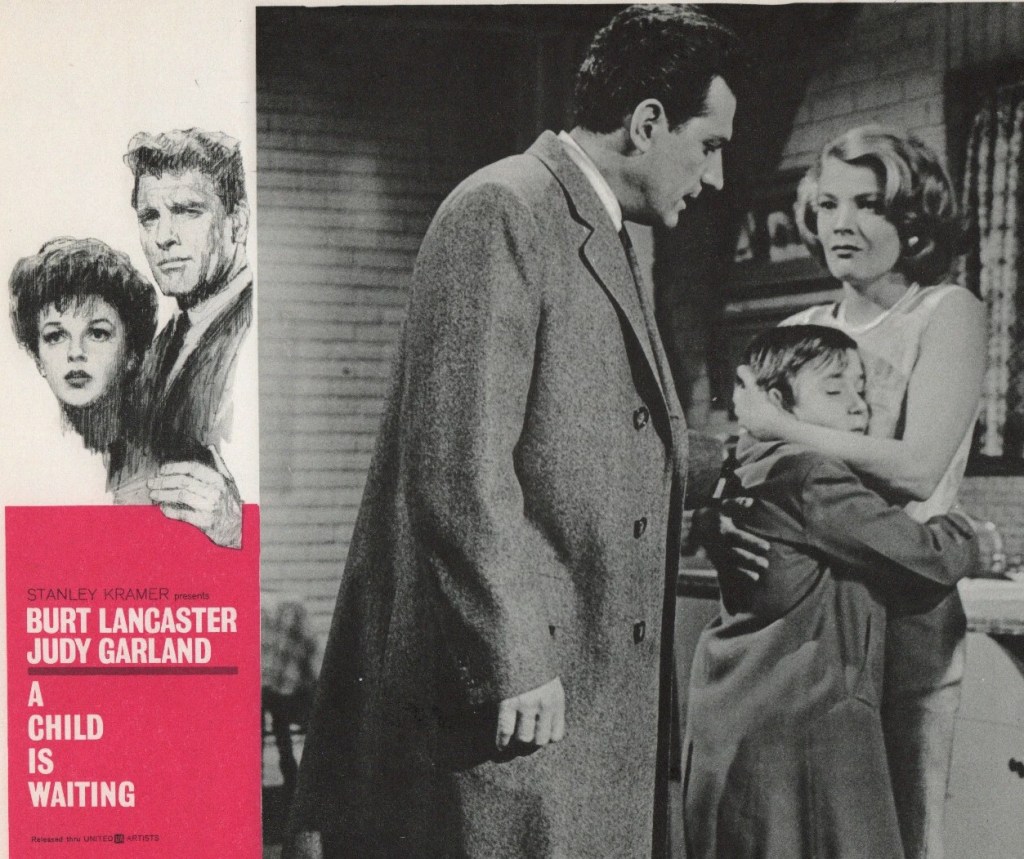
Behind the Scenes: Selling Judy Garland – “A Child Is Waiting” (1963) Pressbook

This proved the impossible sell. And Judy Garland was no help. The star was well past her best and if she wasn’t singing it was difficult to attract audience interest. So beyond her name above the title, United Artists did very ittle to use her presence as a distinct marketing tool.

Just like I Thank a Fool the previous year, the subject matter of A Child is Waiting did not lend itself to cross promotion. That did not prevent marketeers doing their level best. However, it was a rather bold suggestion to assume banks would be a natural port of call even under the guise that every child was waiting for their parents to start a savings account to see them through college. 

The title seemed to incite temporary madness in the marketing department. How about this for a tie-in approach to a toy department? “A child is waiting for the most exciting game ever devised – Monopoly.”

Groups most likely to respond were identified as psychiatrists, teachers and PTA members but cinemas were warned to avoid giving the “impression that the film is a clinical or documentary one.”

By far the easiest avenue for promotion was a book tie-in. Popular Library had issued a paperback novelization by Abby Mann of his original screenplay with stars Burt Lancaster and Judy Garland on the cover and at the very least that would receive window displays in bookstores and on the carousels of drugstores.

Also limited were the number of taglines on a poster. In those days a movie could be advertised with as many as a dozen different taglines appealing to different market sectors. United Artists stuck to three main taglines with two subsidiary ones. Sometimes both subsidiaries were on the same poster, other times only one.

“Burt Lancaster and Judy Garland ignite a motion picture that gives so much…goes so far…looks so deep into the feelings of man and woman.” This alternated with “Burt Lancaster and Judy Garland take an untouched theme – and make it touching and unforgettable” and “Only Burt Lancaster and Judy Garland could take this untold story…and make your heart tell it over and over again.”

The subsidiary taglines ran to: “If this were flesh of your flesh – would you hold it close…Protect it…Love it…Or would you turn your back and run” and “A child can be so many things, warmth…love…laughter…and sometimes a child can be heartbreak!”

Mainly what marketeers were asking of Lancaster and Garland was a miracle, as if their names alone could drag audiences into theaters.

Even though the Pressbook was relatively small – eight pages A3 – two-thirds of the space was allocated to repeating the adverts, just in different sizes.

The section normally aimed at getting editors to carry snippets of news about the movie provided scant material. There was little to catch the journalistic eye, nothing new about either of the stars, just a rehash of careers. Usually, cinema managers would scour this section looking for a titbit to offer to a reporter, an unusual hobby, something odd that occurred during filming, details about the location or an element that went wrong during shooting.

If you were relying on this Pressbook to fuel demand from exhibitors, you would be sorely disappointed.

A Child Is Waiting (1963) ****

While once the main interest in this piece would have come from fans of Judy Garland, lapping up her penultimate movie appearance, the prevalence of mental illness these days especially among the young, in part due to Covid and the scourge of social media, should switch audience attention – especially among contemporary viewers – back to the subject matter.

Garland’s stock had risen somewhat after her performance in Judgement at Nuremberg (1961), her first movie in seven years, but, given the travails of her private life, would most likely have been sympathetic to anything that cast a light on mental illness. The bulk of movies covering this ground tended towards the lurid, as exemplified by Shock Corridor (1963) and Shock Treatment, (1964) rather than the more tragic Lilith (1962). Whatever the approach, they focused on adult conditions. Here it’s the treatment of children.

Appreciation of the social conscience of star Burt Lancaster has largely gone unnoticed but this was the era when his movies touched upon crooked evangelism (Elmer Gantry, 1960), teenage gangs (The Young Savages, 1961), the Holocaust (Judgement at Nuremberg, 1961) and the effects of long-term imprisonment (The Birdman of Alcatraz, 1962). He was even an animal rights protester in The List of Adrian Messenger (1963).

Parental attitude to offspring with mental conditions is encapsulated in the opening sequence. Outside a hospital a young boy is tempted out of an automobile. Once out, the driver (the father) races off so fast the car door is still swinging open. Mentally or emotionally disturbed children were dumped, ostracized or abandoned by society, sometimes shut up in institutions along with adults, with treatment belonging to the Dark Ages.

Drawing on the ground-breaking approach of Vineland Training School in New Jersey and the Pacific Hospital in Pomona, California (pupils from the latter played the students in the film), the movie attempts to cast a light on the forgotten and to show that, with proper care and education, they need not be such victims of their circumstances.

The movie focuses on Dr Clark (Burt Lancaster), head of the Crawthorne State Training School, whose pioneering work combines tender encouragement with firm application, and the new music teacher Jean (Judy Garland) who challenges his approach. Instigating this crisis is 12-year-old Reuben, the child we see offloaded at the start, for whom Jean develops an unhealthy bond. She thinks Dr Clark is too strict and that his methods don’t work with someone as vulnerable as Reuben. Clark’s aim is to make the children so self-sufficient they are not condemned to a life in an adult institution.

Jean’s intervention creates a crisis in the child’s life but also brings home the unwelcome truth of the difficulties parents have of dealing with their children.

And while the tale is essentially confected to make the necessary points and Dr Clark and Jean epitomize opposite attitudes to handling the treatment of children, the story is really a documentary in disguise, bringing to light advances in care, and with the children not played by actors, brings a greater reality to the work.

Burt Lancaster, as ever, is good value and Judy Garland steps up to the plate. Gena Rowlands (Machine Gun McCain, 1969) and John Marley (Istanbul Express, 1968) also feature.

While this fits neatly into Lancaster’s portfolio, it stands out for the wrong reasons in the pantheon of critically-acclaimed actor-turned-director John Cassavetes (Faces, 1968). In fact, what he produced went against what producer Stanley Kramer (better known as a director – Judgment at Nuremberg, for example) wanted and the version we see is the one Kramer recut. Written by Abby Mann (Judgment at Nuremberg) from his original teleplay.

You might expect this to be awash with sentimentality but that’s far from the case.

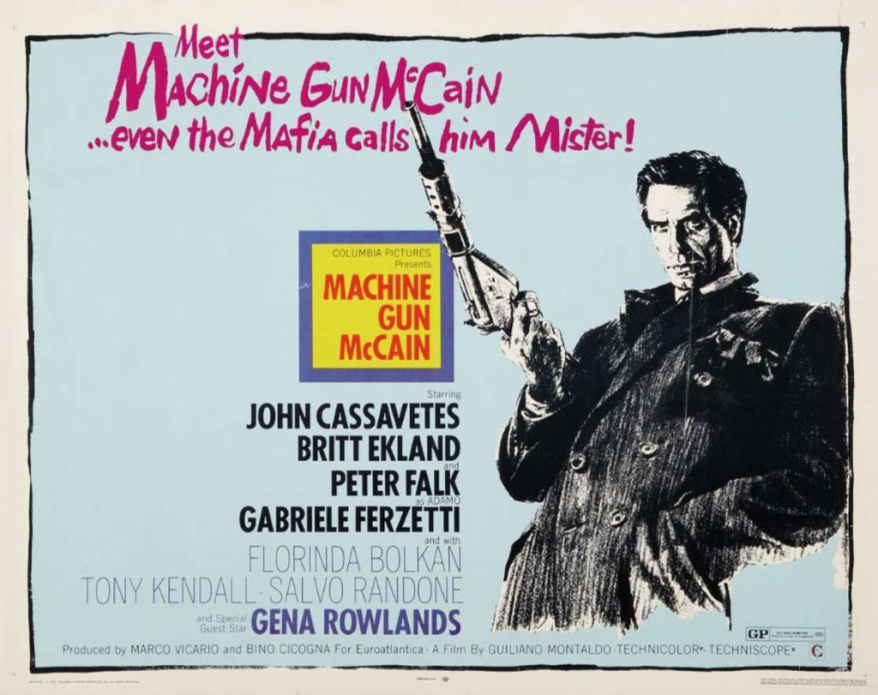
Machine Gun McCain (1969) ***

Armed robbers lack the finesse of a jewel thief or burglar when it comes to pulling off a major heist. Rather than resorting to the weaponry of the title, they are more inclined, as John Cassavetes does here, to plant bombs, both as a diversionary tactic and within the target building, in this case a Las Vegas casino.

Although boasting Hollywood leads in Cassavetes and Peter Falk and rising Swedish leading lady Britt Ekland (The Double Man, 1967) and wife of star Peter Sellers, this was an Italian-made gangster thriller with the usual abundance of location work. Without the romantic complications of A Fine Pair (1968) it concentrates on the machinations of the central characters.

And it is a pretty lean machine. The robbery takes place against the background of warring Mafia chieftains, West coast boss Charlie Adamo (Peter Falk) trying to muscle in on a Vegas casino without being aware it is controlled by the New York hierarchy. Hank McCain (John Cassavetes) does not realize the robbery has been set up by his naïve son Jack (Pierluigi Apra) on behalf of Adamo. Irene Tucker (Britt Ekland) is on board as a kind of mostly mute magician’s assistant, helping out Hank.

Little dialogue comes Cassavetes’ way, either, which plays to his strength, that glowering intense unpredictable weasel-face, whose reactions are less likely to be emotional than violent. Falk gets the dialog and little help it does him, his goose is cooked when he has the temerity to shout at the New York kingpin. 

Yet this slimmed-down documentary-style hard-nosed picture in the vein of Point Blank (1967) manages several touching moments, even more effective for completely lacking sentimentality. When Hank’s son is knifed in the back, the gangster finishes him off with a burst from the titular machine gun rather than see him suffer. His old flame Rosemary (Gene Rowlands), making too brief an appearance, has a wall covered in newspaper headlines of herself with Hank celebrating her life as his moll and she accepts without enmity the new woman in his life and she proves the toughest moll of all when confronted with Mafia gunslingers.. 

The planning of the heist is well done, no explanatory dialog, just action on screen; there’s a car chase; and the gangster dragnet is unexpectedly powerful. Gabriele Ferzetti (the railroad baron in Once Upon a Time in the West, 1968) is excellent as the calm authoritative New York boss, Falk a bit too excitable, and Florinda Balkan (The Last Valley, 1971), in her third screen role, has a small part as a traitorous moll. Ekland is surprisingly good with not much to play with, a couple of lines here and there but still emoting with her face.

Cassavetes, who always claimed he was only acting to fill in the time between directing  (Faces, 1968), and as a means of financing them, was at a career peak, Oscar-nominated for The Dirty Dozen (1967) and male lead in Rosemary’s Baby (1968). He had just appeared in another Italian gangster movie Bandits in Rome (1968). Cassavetes and Falk would go on to have a fruitful partnership over another five films. Falk and Ekland had played opposite each other in Too Many Thieves (1967). Falk also had an Oscar nod behind him for Murder Inc. (1961) but his career was about to go in a different direction after the TV movie Presciption: Murder (1968) that introduced Columbo.

Trivia trackers might also note a score by Ennio Morricone. Though not one of his best, a few years later he would deliver one of his most memorable themes for Sacco and Vanzetti (1971) for the same director Giuliano Montaldo.

Machine Gun McCain (1969) ***

Armed robbers lack the finesse of a jewel thief or burglar when it comes to pulling off a major heist. Rather than resorting to the weaponry of the title, they are more inclined, as John Cassavetes does here, to plant bombs, both as a diversionary tactic and within the target building, in this case a Las Vegas casino.

Although boasting Hollywood leads in Cassavetes and Peter Falk and rising Swedish leading lady Britt Ekland (The Double Man, 1967) and wife of star Peter Sellers, this was an Italian-made gangster thriller with the usual abundance of location work. Minus the romantic complications of A Fine Pair (1968), it concentrates on the machinations of the central characters. And it is a pretty lean machine. The robbery takes place against the background of warring Mafia chieftains, West coast boss Falk trying to muscle in on a Vegas casino without being aware it is controlled by the New York hierarchy. Cassavetes does not realize the robbery has been set up by his naïve son on behalf of Falk. Ekland is on board as a kind of mostly mute magician’s assistant, helping Cassavetes.

Little dialogue comes Cassavetes’ way, either, which plays to his strength, that glowering intense unpredictable weasel-face, whose reactions are less likely to be emotional than violent. Falk gets the dialogue and little help it does him, his goose is cooked when he has the temerity to shout at the New York kingpin. 

Yet this slimmed-down documentary-style hard-nosed picture in the vein of Point Blank (1967) manages several touching moments, even more effective for completely lacking sentimentality. When Cassavetes’ son is knifed in the back, the gangster finishes him off with a burst from the titular machine gun rather than see him suffer. His old flame Gene Rowlands, making too brief an appearance, has a wall covered in newspaper headlines of herself with Cassavetes when she was his moll and she accepts without enmity the new woman in his life and she proves the toughest moll of all when confronted with Mafia gunslingers.  

The planning of the heist is well done, no explanatory dialogue, just action on screen; there’s a car chase; and the gangster dragnet is unexpectedly powerful. Gabriele Ferzetti (the railroad baron in Once Upon a Time in the West, 1968) is excellent as the calm authoritative New York boss, Falk a bit too excitable, and Florinda Balkan (The Last Valley, 1971), in her third screen role, has a small part as a traitorous moll. Ekland is surprisingly good with not much to play with, a couple of lines here and there but still emoting with her face.

Cassavetes, who always claimed he was only acting to fill in the time between directing  (Faces, 1968), and as a means of financing them, was at a career peak, Oscar-nominated for The Dirty Dozen (1967) and male lead in Rosemary’s Baby (1968). He had just appeared in another Italian gangster movie Bandits in Rome (1968). Cassavetes and Falk would go on to have a fruitful partnership over another five films. Falk and Ekland had played opposite each other in Too Many Thieves (1967). Falk also had an Oscar nod behind him for Murder Inc. (1961) but his career was about to go in a different direction after the TV movie Presciption: Murder (1968) that introduced Columbo.

Trivia trackers might also note a score by Ennio Morricone. Though not one of his best, a few years later he would deliver one of his most memorable themes for Sacco and Vanzetti (1971) for the same director Giuliano Montaldo.

Discover WordPress

A daily selection of the best content published on WordPress, collected for you by humans who love to read.

The Atavist Magazine

by Brian Hannan

WordPress.com News

The latest news on WordPress.com and the WordPress community.