Two for the Road (1967) ***

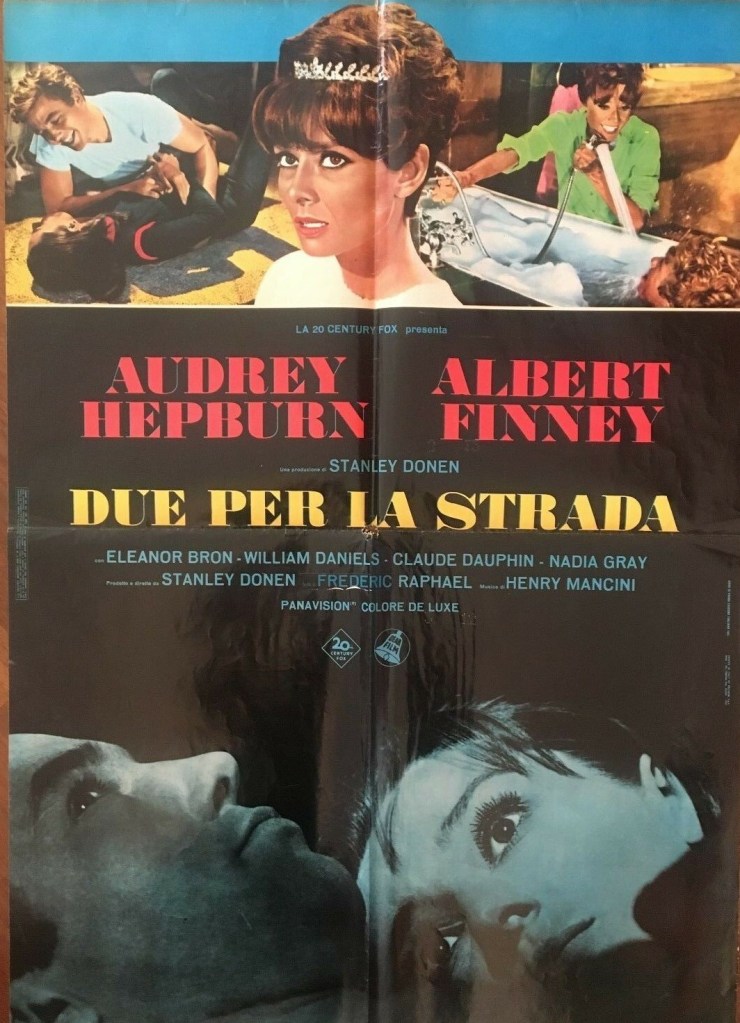
This film had everything. The cast was pure A-list: Oscar winner Audrey Hepburn (Breakfast at Tiffany’s, 1961) and Oscar nominee Albert Finney (Tom Jones, 1963). The direction was in the capable hands of Stanley Donen (Arabesque, 1966), working with Hepburn again after the huge success of thriller Charade (1963). The witty sophisticated script about the marriage between ambitious architect Mark Wallace (Albert Finney) and teacher wife Joanna (Audrey Hepburn) unravelling over a period of a dozen years had been written by Frederic Raphael, who had won the Oscar for his previous picture, Darling (1965). Composer Henry Mancini was not only responsible for Breakfast at Tiffany’s – for which he collected a brace of Oscars – but also Charade and Arabesque. And the setting was France at its most fabulous.

So what went wrong? You could start with the flashbacks. The movie zips in and out of about half a dozen different time periods and it’s hard to keep up. We go from the meet-cute to a road trip on their own and another with some irritating American friends to Finney being unfaithful on his own and then Hepburn caught out in a clandestine relationship and finally the couple making a stab at resolving their relationship. I may have got mixed up with what happened when, it was that kind of picture.

A linear narrative might have helped, but not much, because their relationship jars from the start. Mark is such a boor you wonder what the attraction is. His idea of turning on the charm is a Humphrey Bogart imitation. There are some decent lines and some awful ones, but the dialog too often comes across as epigrammatic instead of the words just flowing. It might have worked as a drama delineating the breakdown of a marriage and it might have worked as a comedy treating marriage as an absurdity but the comedy-drama mix fails to gel.

It’s certainly odd to see a sophisticated writer relying for laughs on runaway cars that catch fire and burn out a building or the annoying whiny daughter of American couple Howard (William Daniels) and Cathy (Eleanor Bron) and a running joke about Mark always losing his passport.

And that’s shame because it starts out on the right foot. The meet-cute is well-done and for a while it looks as though Joanna’s friend Jackie (Jacqueline Bisset) will hook Mark until chicken pox intervenes. But the non-linear flashbacks ensure that beyond Mark overworking we are never sure what causes the marriage breakdown. The result is almost a highlights or lowlights reel. And the section involving Howard and Cathy is overlong. I kept on waiting for the film to settle down but it never did, just whizzed backwards or forwards as if another glimpse of their life would do the trick, and somehow make the whole coalesce. And compared to the full-throttle marital collapse of Who’s Afraid of Virginia Woolf (1966) this was lightweight stuff, skirting round too many fundamental issues.

It’s worth remembering that in movie terms Finney was inexperienced, just three starring roles and two cameos to his name, so the emotional burden falls to Hepburn. Finney is dour throughout while Hepburn captures far more of the changes their life involves. Where he seems at times only too happy to be shot of his wife, she feels more deeply the loss of what they once had as the lightness she displays early on gives way to brooding.

Hepburn as fashion icon gets in the way of the picture and while some of the outfits she wears, not to mention the sunglasses, would not have been carried off by anyone else they are almost a sideshow and add little to the thrust of the film.

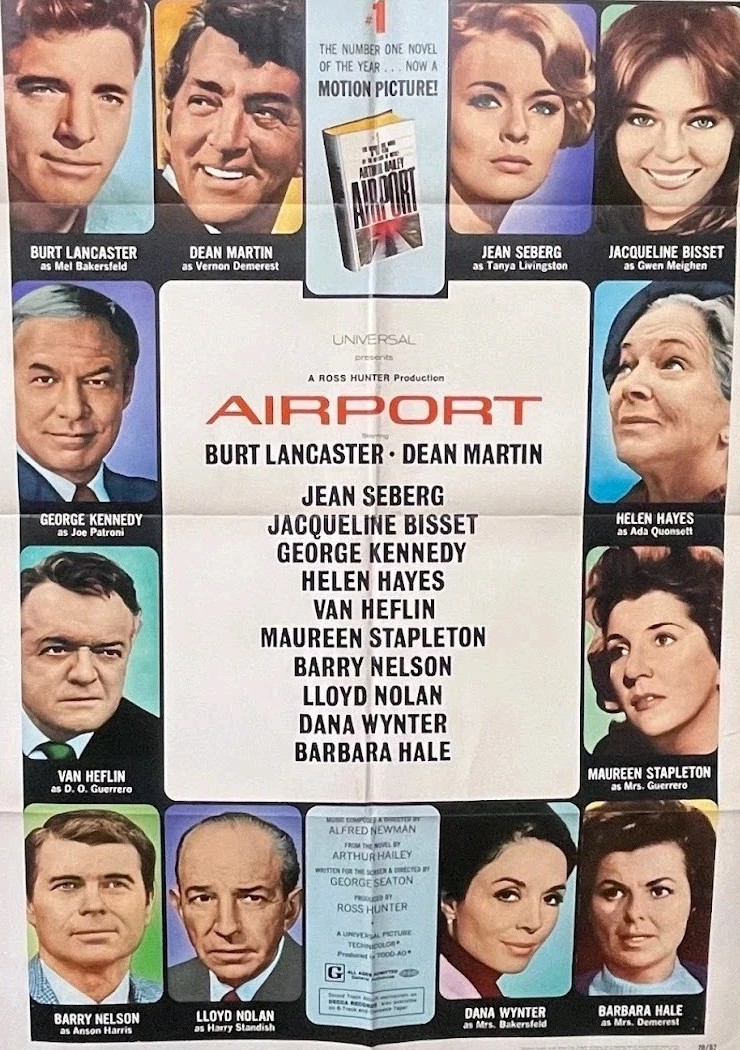
If you pay attention you can catch a glimpse, not just of Jacqueline Bissett (The Sweet Ride, 1968) but Romanian star Nadia Gray (The Naked Runner, 1967), Judy Cornwell (The Wild Racers, 1968) in her debut and Olga Georges-Picot (Farewell, Friend, 1968). In more substantial parts are William Daniels (The Graduate, 1968), English comedienne Eleanor Bron (Help!, 1965) woefully miscast as an American, and Claude Dauphin (Grand Prix, 1966).

Hepburn’s million-dollar fee helped put the picture’s budget over $5 million, but it only brought in $3 million in U.S. rentals, although the Hepburn name may have nudged it towards the break-even point worldwide.

An oddity that doesn’t add up.

The Mephisto Waltz (1971) ****

Jacqueline Bisset’s good looks often got in the way of her acting. Or, more correctly, in the way of producer perception about what she could do.  Too often she was the female lead that simply hung on the arm of the male lead. But, here, to my surprise, she is not only the narrative fulcrum, but steals the show from Alan Alda, mostly remembered these days for TV’s M*A*S*H (1972-1983) but at the start of the 1970s being heralded in Hollywood as the next big thing and top-billed.  

Alda’s character here is little more than his screen persona in embryo – glib, wise-cracking, cocky. In an earlier Hollywood he would have been the smooth-talking gangster beefing up B-pictures.

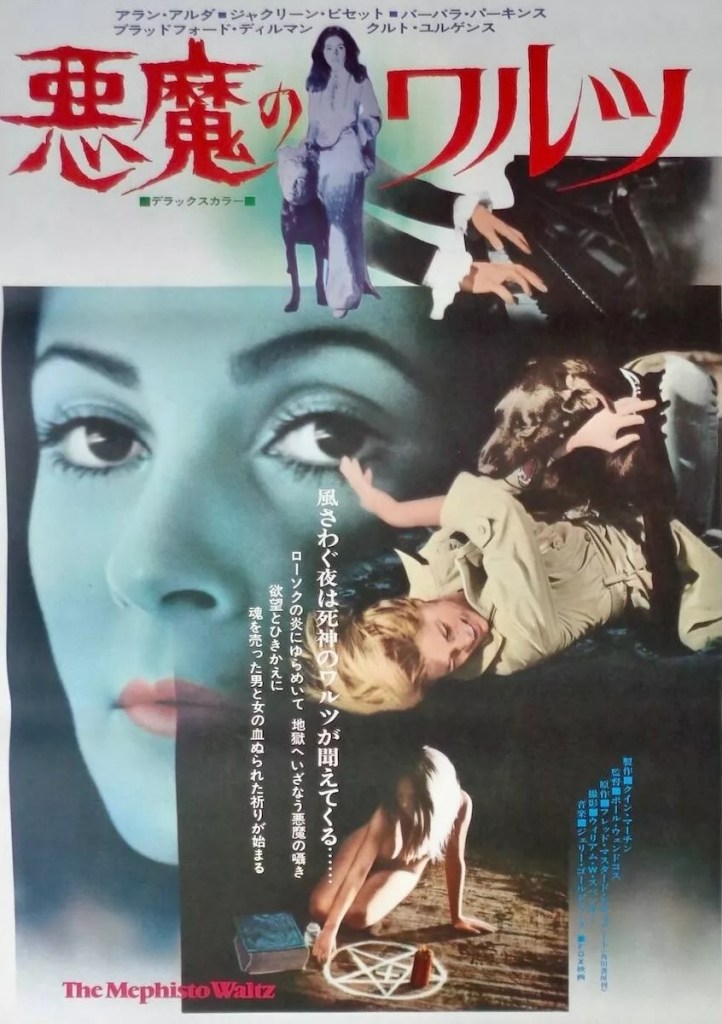
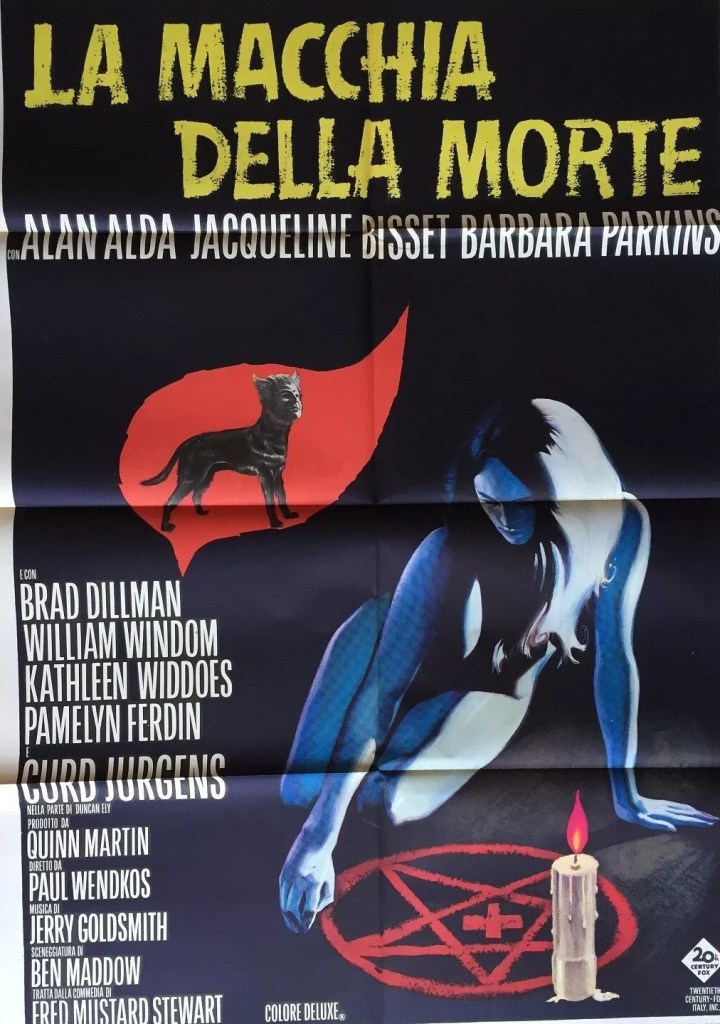
Appearing between the demonic high-spots of Rosemary’s Baby (1968) and The Omen (1976), director Paul Wendkos (Cannon for Cordoba, 1970) escapes his journeyman roots to suffuse the picture with nightmarish scenes, and clever use of the fish-eye lens, treating Satanism with the most subtle of brushes, restricted to a mark daubed in a forehead and a pentagram on the floor but minus any chorus of witches or warning from priests or sundry other holy persons.

Myles (Alan Alda), piano prodigy who never made the cut, now a journalist, is encouraged by interviewee, concert pianist Duncan Ely (Curt Jurgens), to take it up again. Under the older man’s tutelage, he thrives, promising career beckons, plus an entrée into quite a heady world of parties, sex and wealth. Wife Paula (Jacqueline Bisset) is more sceptical especially once Duncan and his buddies start buying up everything in sight in her new antiques emporium. She’s especially perturbed to see Duncan sharing an intimate kiss with his married daughter Roxanne (Barbara Parkins) never mind wondering whether her husband is going to fall prey to the daughter’s seductive technique.

Just what’s going on is never entirely obvious, making the audience work rather than bombarding them with shock scenes. I’m not sure what you’d call it in demonic terms, some kind of transference, body and soul. Once Duncan dies, Myles’s life is transformed, not just thanks to an extremely generous bequest in the old man’s will, but a dramatic increase in his piano-playing prowess, plus, almost as a bonus, the increased attentions of Roxanne.

True scares are limited, mostly a huge drooling black mastiff who may or may not be a killer, and so the tale remains more subtle and eventually boils down to whether Paula will follow her husband on his satanic journey or lose him to the wiles of Roxanne and, perhaps more importantly, never enjoy him as the personality he once was.

We all know that, where money and career is concerned, Myles has a cynical bone in his body and has already demonstrated a capacity for the finer things in life, whether they be animate or inanimate. So his character carries little dramatic tension. And so Paula carries the dramatic burden and she bears that, too, with surprising subtlety.

There’s almost a reverse Gaslight vibe to the whole exercise, Paula convincing herself that she must take this step into what would otherwise be considered madness. It’s worth noting that nobody’s pushing her. She makes the decision herself, although takes you a while (that subtlety again) before you cotton on to consequence. And while we’re on the subject of subtlety, full marks to Wendkos for treating two scenes in particular of Bisset nudity with commendable restraint.  

Quite where Satan’s apparent mission to bring classical music to the masses fits into his plans for global domination is never made clear, leanings of such an esoteric nature rarely a prerequisite of the evil mastermind.

Still, a much classier feast than I was expecting, Bisset (The Sweet Ride, 1968) the standout. Her performance served to give Hollywood notice of a classier star than merely the barely seen girlfriend of Steve McQueen in Bullitt (1968). From here on in she would catch the eye of a better grade of director, including Francois Truffaut in Day for Night (1974) though it can be arguedthat it was her looks that sent her into the stratosphere after the wet t-shirt modelling in The Deep (1977).

Alda, meanwhile, jumped straight into M*A*S*H and didn’t resurface as a creditable movie marquee name until California Suite (1978) and The Seduction of Joe Tynan (1979).  Curt Jurgens (Psyche ’59) as ever is good value, Barbara Parkins (Puppet on a Chain, 1970) his rather slinky associate and Bradford Dillman (The Bridge at Remagen, 1969) also pops up.

Wendkos in top gear. Screenplay by Ben Maddow (The Way West, 1967) from the Fred Mustard Stewart bestseller. Excellent Jerry Goldsmith score.

Well worth a look.

The Detective (1968) ****

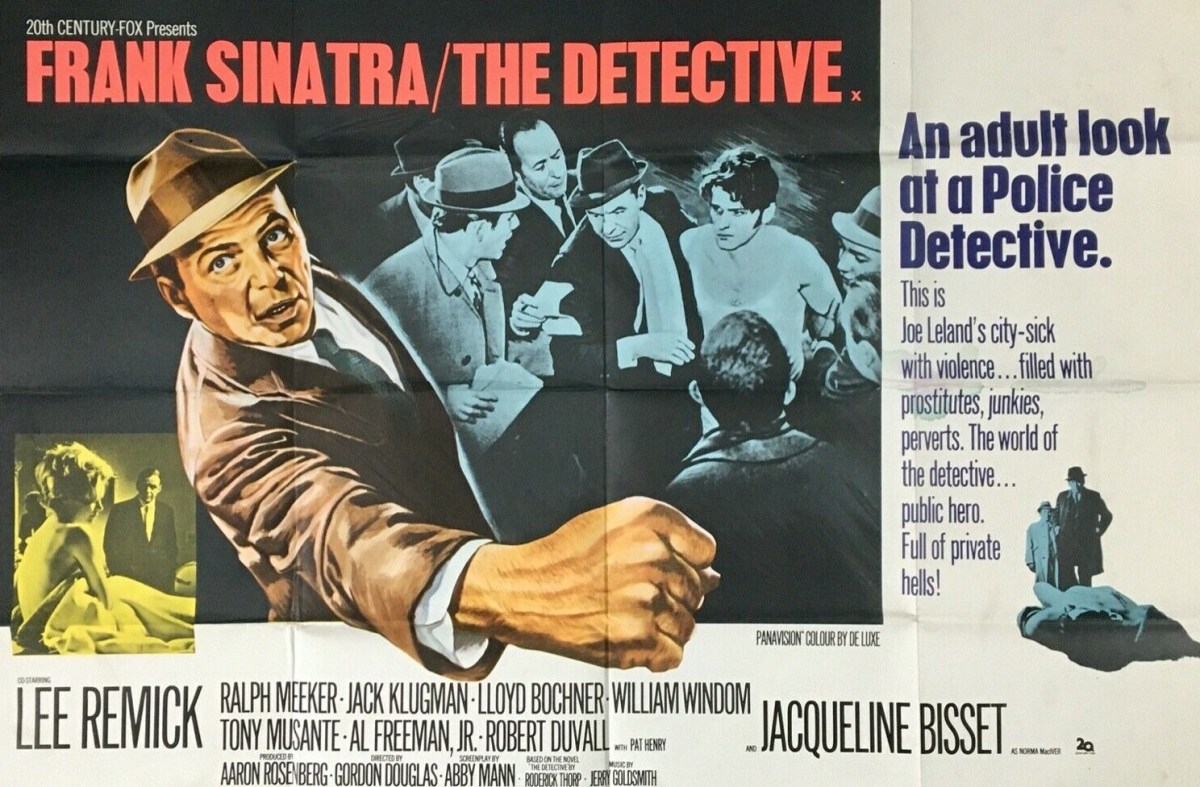
Perhaps the boldest aspect of this raw look at the seamier side of life as a New York cop is that perennial screen loverboy Frank Sinatra plays a cuckold. Prior to what is always considered the more hard-hitting cop pictures of the 1970s – Dirty Harry (1971), The French Connection (1971), Serpico (1973) – this touched upon just about every element of society’s underbelly. Despite an old-school treatment, more a police procedural than anything else, homosexuality, nymphomania, corruption, police brutality, and a system that ensured poverty remained endemic all fell into its maw. And, for the times, several of these issues were dealt with in often sympathetic fashion.

Joe Leland (Frank Sinatra), an ambitious but principled detective gunning for promotion, investigates the murder of a prominent homosexual while dealing with the disintegration of marriage to Karen (Lee Remick) and colleagues on the take. When other cops want to beat confessions out of suspects or strip them naked to humiliate them, Leland intervenes to prevent further brutality. He is not just highly moral, but takes a soft approach to criminals, not just playing the “good cop” part of a good cop/bad cop double-act but genuinely showing sympathy. Not only does Leland leap to the defense of those he feels unfairly treated, but he trades punches with those meting out unfair treatment. In addition, he clearly feels guilt over sending to the electric chair a man he believes should be treated in a mental institution.

Although at first glance this appears a homophobic picture, it is anything but, Leland showing tremendous sympathy towards homosexual suspect Felix (Tony Musante) – whom his colleagues clearly despise – to the extent of holding his hand and gently cajoling him through an interview. Later, rather than condemn a bisexual the film shows empathy for his torment. Certainly, some of the attitudes will appear dated, especially the idea of sexual expression as a brand of deviancy, but the film takes a genuinely even-handed approach.  Through the medium of Leland’s perspective, it is clearly demonstrated that it is other police officers who have the warped notions.  

Having solved the first murder, Leland takes up the case of an apparent suicide at the behest of widow Norma McIver (Jacqueline Bisset), only for this to lead not only to civic corruption on a large scale but back to the original investigation. Leland also has a wider social perspective than most cops and there is a terrific scene where he berates civic authorities for creating a system that perpetuates poverty. The ending, too, casts new light on Leland’s character.

By this point, most screen cops were defined by their alcoholism and ruined domestic lives, but this is altogether a more tender portrait of an honest cop. Leland’s relationship with Karen is exceptionally well done. Normally, of course, it is the man who strays. This reversal in the infidelity stakes adds a new element. Karen has more in common with an independent woman like the Faye Dunaway character in The Arrangement (1969).

While playing the good cop would come relatively easy to an actor like Sinatra, carrying off the role of the hurt husband is a much tougher ask. Coupled with his sensitive approach to criminals, this is acting of some distinction.  This is the last great Hollywood role by Lee Remick (No Way to Treat a Lady, 1968) and she brilliantly portrays a woman trapped by her self-destructive desires.

Jacqueline Bisset leads an excellent supporting cast that includes Jack Klugman (The Split, 1968), Ralph Meeker (The Dirty Dozen, 1967), Robert Duvall (The Godfather, 1972), Lloyd Bochner (Point Blank, 1967) and Al Freeman Jr. (Dutchman, 1966).

While Gordon Douglas (Claudelle Inglish, 1961) was viewed very much as a journeyman director, he brings an inventive approach and some surprising subtleties to the picture. He opens with a very audacious shot. It looks like you are seeing skyscrapers upside down, as if a Christopher Nolan sensibility had entered a time warp, until you realize it is the city reflected off a car roof. There are some bold compositions, often with Sinatra appearing below Remick’s sightline, rather than the normal notion that the star must be taller or at least the same height as everyone else.

Oscar-winning Abby Mann (The Judgement at Nuremberg, 1961) adapted the bestseller by Roderick Thorp who achieved greater fame much later for writing the source novel for Die Hard (1988). Nothing Lasts Forever was a sequel to The Detective. For the Bruce Willis film Joe Leland became John McClane. Sinatra, although 73 at the time, was offered that role first as part of his original contract for The Detective.

Sinatra’s wife Mia Farrow was initially contracted to play the part of Norma McIver but pulled out when Rosemary’s Baby (1968) overshot its schedule. Partly in revenge, Sinatra sued her for divorce.

The Thief Who Came to Dinner (1973) ****

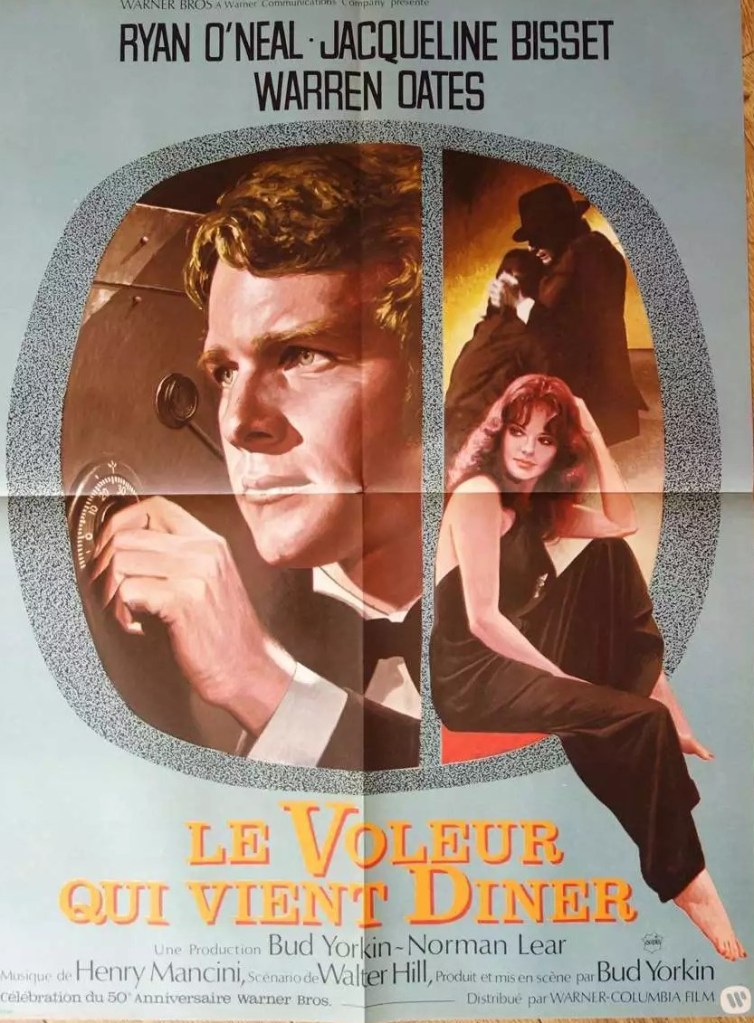
Very unusual entry into the cat burglar subgenre since it plays like a bromantic version of The Thomas Crown Affair (1968), investigator and investigated striking up some sort of relationship, though with an elegant dame on the sidelines to take care of the jewel thief’s sexual needs. Might be surprised to see Bud Yorkin – better known at the time for comedy – helming this classy thriller and Walter Hill, not yet known for tough thrillers, relegated to screenplay duties.

Webster (Ryan O’Neal) quits his job as a computer geek to go into the thieving business. He’s pretty business-like about it, too, setting up a deal with fence Deams (Ned Beatty) before he gets started, and none of this no honor among thieves nonsense. The first break-in, to the house of politician Henderling (Charles Cioffi),  delivers a handy bonus of uncovering documents relating to corruption so Webster’s able to blackmail the victim into providing him with an entrée into high society where he can scope the jewellery on show at various parties, and where he meets Laura (Jacqueline Bisset) who appears to be in the same line of work, if at a much lower level.

We never see Laura at work and mostly she hovers in the background, there’s no angst in this relationship, she’s the kind of thief who steals because she’s the bored kind of rich gal looking for kicks. Most of the thieving is interesting one way or another. On his first gig, though Webster had invested in one of those devices that hold onto the glass once you’ve nefariously released it from the frame, he’s so inexperienced the glass breaks.

Instead of quieting guard dogs with doped meat, he sends in a bitch to distract them. He has to deal with illicit lovers turning up in the middle of a robbery. And, of course, with an amazing diamond on show, he just has to organize a way of stealing it.

So with Laura not providing any of the tension, not the usual refusal to become entangled with a criminal, not just the normal lovers’ tiffs, it’s left to insurance investigator Dave (Warren Oates) to provide the friction. He’s not the confident, cocky, kind of detective and it’s diligence that leads him to consider Webster his main suspect. And so begins the cat-and-mouse element, the cat often subverted since Webster knows when he’s being tailed and can lead Dave a merry dance. But, mostly, Webster seems to enjoy the battle of minds.

Webster, and a psychiatrist would have a field day here, leaves a calling card at every robbery in the shape of a chess move, guaranteed to get him the headlines he presumably craves of “The Chess Burglar Strikes Again” variety, which only serves to ratchet up the pressure on the supposed incompetence of his pursuers.

Dave has the bright idea of getting a chess expert Zukovsky (Austin Pendleton) to take the thief up on the game, thus introducing a splendid subsidiary character primarily for comic effect, Zukovsky unaware that Webster’s moves are plotted by computer.

Dave and Webster do spend a lot of time together one way or another, Webster even visiting the detective when he’s hospitalized, and an element of mutual respect evolves. Once their relationship is established, Laura has less to do than be an accomplice, arranging ingenious escapes and so forth, so she’s not entirely out of the picture.

But the most interesting relationship is certainly between thief and ersatz cop. There are some excellent individual scenes, most of the thefts contain some unique element, the confrontations between the two principals play out like a low-key chess game, while the originally cocky Zukovsky, initially relishing the publicity, is reduced to fury at being beaten by an amateur. Webster’s ex-wife (Jill Clayburgh) relishes the change in his personality.

But mostly this is Ryan O’Neal (The Big Bounce, 1969) at the top of his game. No smirking and no screwball comedy. He’s given a well-developed character to play – physically fit, able to hold his own in the boxing gym, capable of cutting a deal with underworld figures – and the screenplay cleverly withholds the one element that all crime movies fall down on, the explanation of why anyone would turn to crime, so Webster weaves a sense of mystery. Jacqueline Bisset (The Detective, 1968) makes an excellent partner. And this is a stripped-down Warren Oates (The Wild Bunch, 1969), eliminating the meanness or exuberance that were his screen trademarks. Jill Clayburgh (An Unmarried Woman, 1978) has a cameo.

Bud Yorkin, who at the time was producer of the top three television comedies on U.S. television, foregoes comedy for tension and thrills. Walter Hill (48 Hrs, 1982) sneaks in some of the elements that would later become trademarks.

Great watch.

When Time Ran Out (1980) / Earth’s Final Fury ***

The Director’s Cut, can you believe? Or less pompously, The Expanded Version. An extra 30 minutes added to the general release version that traveled the world to general disfavor. (The original 121-minute cut was edited to 109 minutes and this version clocks in at 144 minutes.) Was it a sense of disgruntlement – or sheer opportunism – that led to the Director’s Cut, so many of which scarcely improved on the original version. How many versions can an audience take of The Exorcist (1973) or Blade Runner (1982)? And even where extra length definitely added depth to Kingdom of Heaven (2005) that couldn’t overcome its major flaw, in a massive case of hubris, director Ridley Scott believing he could get away with casting Orlando Bloom instead of waiting till Russell Crowe became available.

When Time Ran Out killed off the disaster cycle and the Hollywood career of uber-producer Irwin Allen who had started that particular ball rolling with The Poseidon Adventure (1972), upped the ante with The Towering Inferno (1974) and dropped the ball with The Swarm (1978) and Beyond the Poseidon Adventure (1979).

This doesn’t feel so much like a disaster movie as a picture tying up all the knots, various relationships coming asunder, and having to accommodate a bunch of well-known supporting actors of dubious all-star-cast status before they suddenly spring into dramatic narrative view.   Audiences had never been particularly keen on volcanic pictures, after all what can the trapped characters do but dodge a sludge of soup and hope they don’t run straight into a tidal wave or, worse, have to negotiate a rickety/rope bridge. The chances of you having a tightrope walker coming to the rescue would generally be remote but that’s what we have here (step forward Burgess Meredith).

I had thought from the title and some guy in a hazmat suit wandering over a desolate area that this might be a prophetic eco-disaster, but excepting that there’s, for reasons best known to the scriptwriters, an oil well being drilled close to a volcano and that hotel investor Shelby (William Holden) has the bright idea of using the volcano as a marketing prop, there’s nothing much going on. The special effects are okay on the small screen, but even if they had been spectacular on the big screen their effect on the much smaller environs of DVD would in any case have been diminished.

So, basically, it’s reliant on working up sufficient audience interest in the relationships to make us care for the characters. We’re offered a pair of two-timing teams. First up, we’ve got Shelby’s secretary and marketing guru Kay (Jacqueline Bisset) who’s just turned down the offer to become his sixth “or seventh” wife, but who, presumably is enjoying, this being the 1980s and not the 1930s, some kind of sexual dalliance with him. When Kay meets up with oil driller old flame Hank (Paul Newman), they rekindle their romance, although with doom impending there’s not much time to take it forward beyond a picnic on the beach.

Next up, hotelier Bob (James Franciscus) is cheating on wife Nikki (Veronica Hamel), Shelby’s god-daughter, with staff member Iolani (Barbara Carerra) who is due to be married to childhood sweetheart hotel manager Brian (Edward Albert). To flesh out the tale, both Shelby and Bob have daddy issues, Tom (Ernest Borgnine) is a New York cop on the tail of swindler Francis (Red Buttons), and no doubt audiences will be desperate to find who wins a  cockfighting contest being held in a local saloon.

Modern transport proves no match for an eruption, so in quick succession we see a car and a helicopter tumbling down the mountainside. The tsunami wipes out a good chunk of the actors that didn’t make it into the all-star-cast bracket and everyone else takes to the hills, no doubt hoping they won’t encounter a rickety/rope bridge. Disaster turns enemies into pals, Tom and Francis, for example, though it’s only now that Nikki comes across her husband’s infidelity.

And this would be a disaster all round except that having hooked myself into watching this, courtesy of a freebie on YouTube, and nothing of real dramatic interest going on, I found myself, oddly enough, concentrating on the three principals and was treated, even more odd I guess, to fine examples of just what these stars do to earn their crust. Paul Newman (The Prize, 1963) in particular, with very little to react to, does very little but with incredible facial agility, to genuine effect, portraying emotion with infinitesimal gesture. Sure, he’s always had the shrug and the walk, both far more suggestive of inner turmoil than any other actor I can name, but here, with very little dialog coming to his aid, you can tell exactly what’s going on in those baby blues.

Jacqueline Bisset (The Cape Town Affair, 1969), too, dressed a good bit less suggestively than in the posters, essays a confident woman coming unstuck when confronted with a romantic error. The scenes between the pair are not meant to be scorching, so there’s none of the screen charisma audiences might feel they’ve been sold, but instead it’s a slow-burn, a couple trying to come to terms with each other, passing through disappointment and hopefully onto something better. And you can’t find anyone better to carry disillusion than William Holden (The Devil’s Brigade, 1968).  

Abject swansong for director James Goldstone (Winning, 1969) and Oscar-nominated screenwriter Carl Foreman (The Guns of Navarone, 1961) but Oscar-winning co-writer Stirling Silliphant (Marlowe, 1969) carried on longer. Who wrote the most effective scenes, Shelby’s engagement ploy and Hank’s initial rejection of Kay, is anybody’s guess but there is some quality writing here. Probably the strangest part of the whole debacle was that the source was a piece of non-fiction, The Day the World Ended by Gordon Thomas and Max Morgan Witts, about a 1902 eruption on Martinique that had nothing to do with oil wells or hotel construction.   

There’s always something wrong with a disaster picture if you suggest watching it for the acting, but happily, this is the case.

Secret World (1969) ****

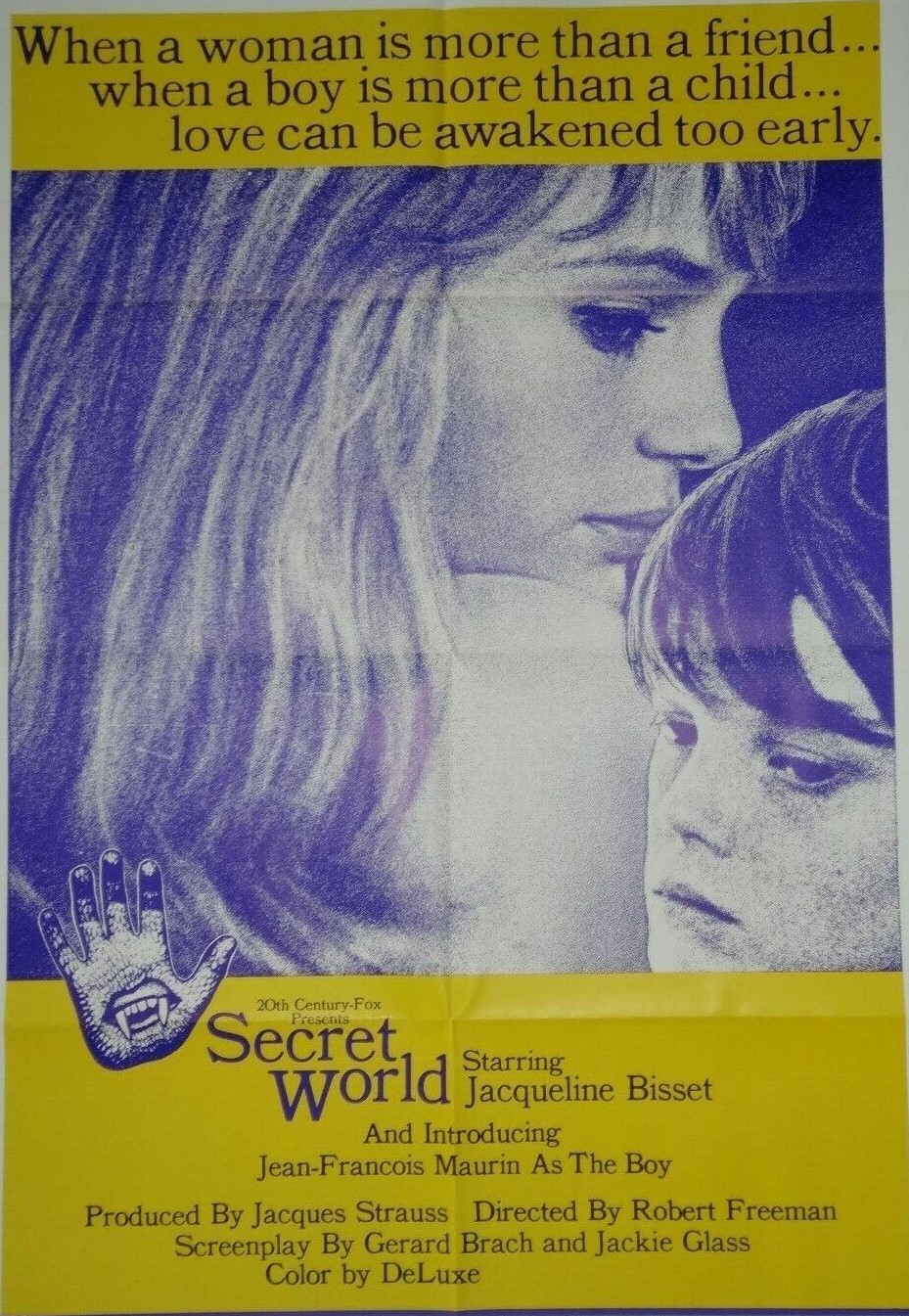
Jacqueline Bisset is the big draw here. After breaking into the Hollywood bigtime with female leads in The Detective (1968) and Bullitt (1968) she put her newfound marquee weight behind a low-budget French arthouse picture.  But ignore the marketeers best efforts to present this as malevolent in the style of The Innocents (1961) or the illicit template of The Nightcomers (1971) or Malena (2000).

No children were corrupted in the making of this picture. Instead, it’s a slow-burn thoughtful exposition of a child coming to terms with loss and a young woman discovering she is more than a mere sexual plaything. Any explosive drama comes from father-son rivalry but mostly it’s a reflective, absorbing movie that follows twin narratives, the attraction of the orphaned introspective 11-year-old Francois (Jean-Francois Vireick) to the English mistress of his uncle Philippe (Pierre Zimmer) and the damage her arrival causes to a fractured household.

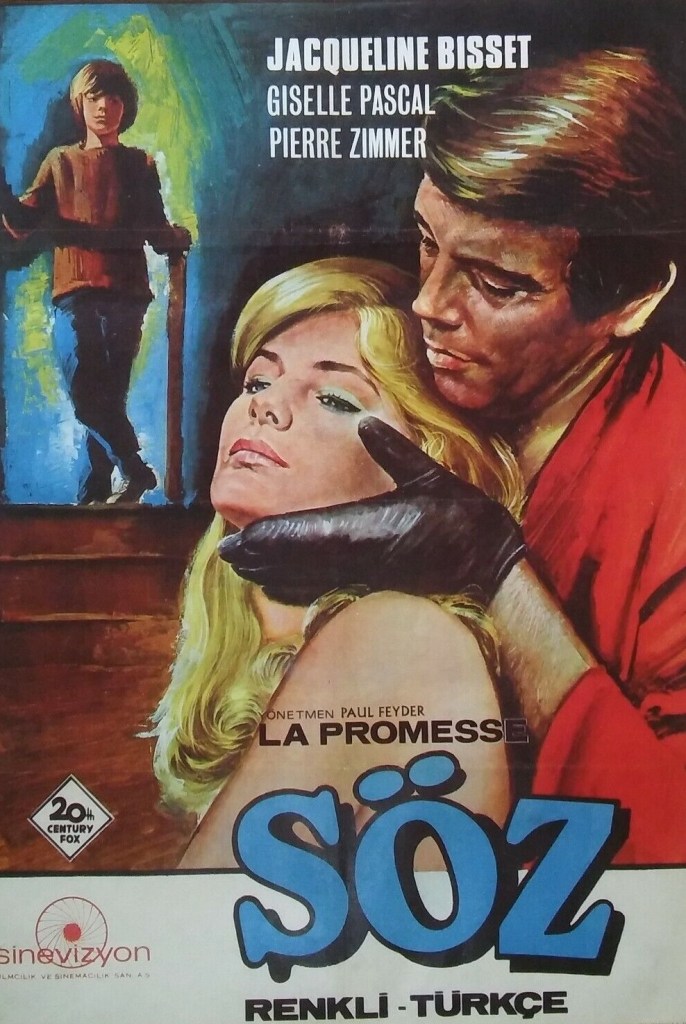
The leather glove oveprlays its hand in the poster, suggesting a great deal more sexuality
than is actually the case, but nonetheless – and take this as subtle – creates
an element of ambiquity about the demure Wendy.

Astonishingly, given its arthouse credentials – long takes, glorious cinematography, brooding close-ups – this was the final film for both directors (no idea why there were two) Paul Feyder (in his debut) and a sophomore effort from Robert Freeman (The Touchables, 1968). Given a screenplay by regular Polanski collaborator Gerard Brach (Wonderwall, 1968) and an intrusive heavy-handed score, you get the impression of two separate movies struggling to fit a single canvas.

On the one hand, you’ve got a perfectly acceptable romantic intrigue, Philippe and son Olivier (Marc Porel) fighting, sometimes metaphorically (games of chess etc), sometimes physically (a punch-up), over the woman, passed off as the daughter of a wartime colleague, and a wife Monique (Chantal Goya) refusing to stand on the sidelines, switching hairstyle to blonde and employing various wiles to prevent the affair. While the male rivalry is overt, the wife’s manipulations are more subtle.

On the other hand, you’ve got the lonely boy, who indulges his imagination, spinning tales of monsters in a lake and spies in the vicinity, mostly ignored by his relatives, hiding out with a pet rabbit in a treehouse, occasionally filching small items, creating a crown out of a stolen brooch and pieces of tree bark. There’s a lot that’s presented without explanation. For example, a couple of months after his parents died in a car crash that he alone survived, he mopes around in a jumper full of holes, either a sign how little his adoptive parents care for him, or perhaps the item of clothing he was wearing the day his mother died.

You can view his behavior – creeping into Wendy’s room at night when she’s asleep – as creepy or just the hankering of a small boy after a substitute mother. But mostly, he lives a life of wistfulness, longing for what he once had, unable to fit into a household split by various emotions. When he snips a lock of Wendy’s hair, or snaffles a bottle of her perfume, it’s to add to his little box of mementoes rather than from any underlying sexual motive. And it’s hard to view his growing feelings for Wendy as early stirrings of sexual attraction. When at one point he falls asleep on her bosom, you couldn’t interpret that as anything more than maternal instinct.

That’s not to say there isn’t tension. But that’s almost entirely played out in the context of father, son and wife. Francois is a welcome gooseberry defusing the unwelcome attentions of Olivier, whose overtures Wendy constantly thwarts. Olivier, well aware of the role Wendy plays in her father’s life, mocks his mother’s attempts to hold onto her errant husband. Wendy, meanwhile, abhors the role she is forced to play, the trophy mistress, and reacts in maternal fashion to the lonely child.

Excepting the intensity of the father-son relationship, the screenplay underplays while still developing character more fully than you might expect.. The child is as manipulative as his aunt in finding ways to spend time with the object of his affection.

Mostly, this has been dismissed as a poor example of the French arthouse picture or as a Bisset vanity number or for illicit elements than never catch fire. But, in reality, it’s a superb character study set in an unromanticised French countryside – rats need shooting, for example, massive tray of cheese served up for dessert rather than the grand wine cellar you might imagine a chateau to contain, or clothes or other ostentatious examples of wealth.

There is so much that is incisively ordinary. Philippe insists on measuring the boy’s height.  Monique drops her chilly façade to help the newcomer get rid of a wasp. The arrogant Olivier loses all credibility when he runs away from a gang. The children play out childish rituals. Francois douses the rabbit in Wendy’s perfume so he can keep the smell of her close.  

The secret world here is four-fold, the one Philippe foolishly and brazenly attempts to maintain, the one Olivier hopes to possess, the one Francois enjoys and the idyll from which Wendy is shaken out of.

The direction is very confident, none more so, oddly enough, than in the only sex scene, which takes place primarily off-screen, although with the lascivious involvement of a leather-gloved hand.

Rich in detail, supremely atmospheric, well worth a look.    

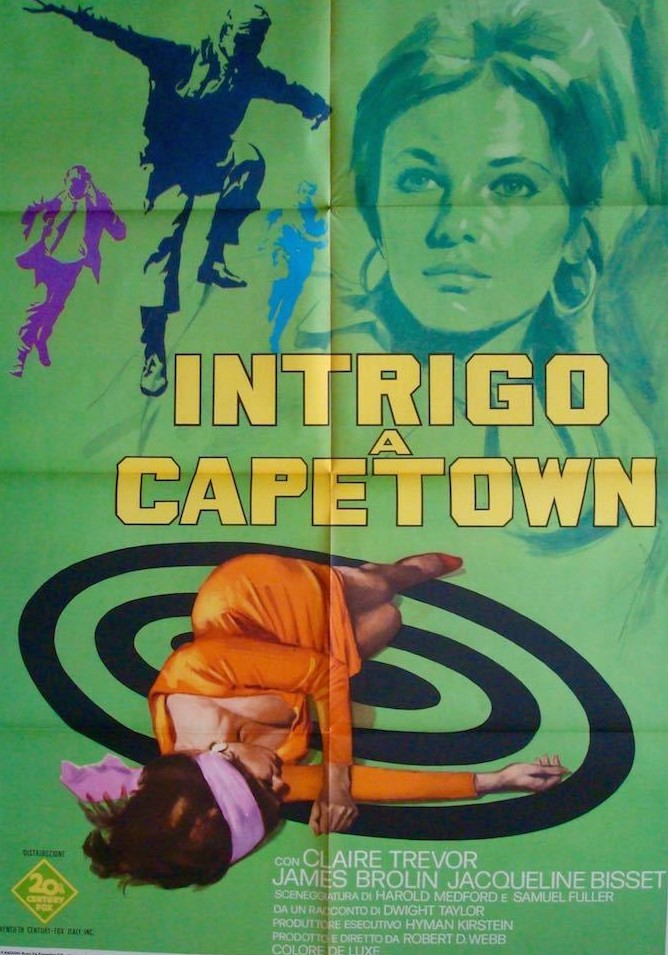
The Cape Town Affair (1967) **

It was too much to hope that a remake of Sam Fuller’s Pickup on South Street (1953) could match the original. Universal had made a decent job of a second bash at Beau Geste (1966) and Madame X (1966) and Twentieth Century Fox should be applauded for having the cojones to even attempt a reimagining of the John Ford classic when it tackled Stagecoach (1966). Generally speaking, remakes were seen as opportunities to feature up-and-coming talent rather than established marquee names.

So it was no surprise that Fox opted for rising stars in James Brolin (The Boston Strangler, 1968) and Jacqueline Bisset (The Detective, 1968), graduates of its talent school, though perhaps more of a stretch to relocate the Fuller classic to South Africa’s  Cape Town. Interestingly, the key role of the informer went to Claire Trevor, star of the original Stagecoach (1939). But while she is a decent replacement for six-time Oscar nominee Thelma Ritter (Move Over, Darling), Brolin was no match for the snarling Richard Widmark (The Bedford Incident, 1964) and Bisset pales when set against Jean Peters (Viva Zapata, 1952).

It’s really the acting that lets it down because it’s virtually the same plot as Pickup on South Street. On a bus in Cape Town pickpocket Skip McCoy (James Brolin) steals a wallet from the purse of Candy (Jacqueline Bisset). Unknown to him, she’s a courier, the wallet containing microfilm of a state secret. Unknown to her, she’s working for the Communists. Unknown to either of them she’s being tailed.

Sometime tie salesman, sometime hooker, sometime police informant Sam (Claire Trevor) identifies Skip as the most likely suspect. Secret service agents investigating his beach shack find nothing. Candy has better luck, Skip a sucker for a pretty face – and a sucker punch. She’s a bit quick in falling in love, he’s a bit too ready to ask for money, but eventually they work together to sniff out the Commies, not that that takes much. The fights are somewhat desultory and the only decent twist comes at the end when, by now loved-up, he is treating her to a romantic dinner, but still up to his pickpocketing tricks purloins the cash to pay from her handbag.

Brolin doesn’t do much but shout and come over like a male model while Bisset turns on the waterworks at the drop of a hat. If it wasn’t for the title, you wouldn’t even know this was set in Cape Town, no focus on city landmarks. There doesn’t look as if there was any budget to speak of.

Robert D. Webb (Pirates of Tortuga, 1961) directed without a hint of the comedy he injected into the swashbuckler. You can’t really blame Harold Medford (Fate Is the Hunter, 1964) for the actors messing up his screenplay.

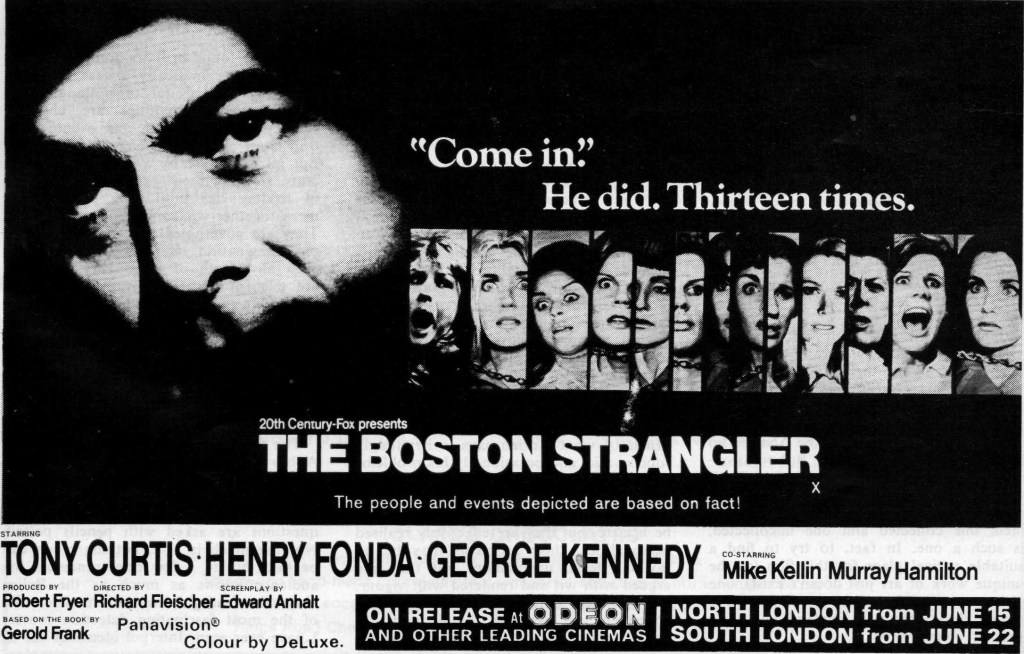
Worth seeing if you want an example of how a rising star can surmount a debacle. Bisset went straight from this into The Sweet Ride (1968), The Detective (1968) and Bullitt (1968). But Brolin had no such luck. After a supporting role in The Boston Strangler he wouldn’t make another picture for four years and not win another starring role until Gable and Lombard (1976).

I had come at it, as is the undoing of many a movie fan, with the idea of finding a hidden gem, the long lost film of stars at the outset of the careers. Beyond the fact that Bissett looked classy and had a steal of a voice, and Brolin had at least looks, there was little worth finding. But, hey, you might be a completist and think this worth the effort.

Behind the Scenes: Access All Areas at Twentieth Century Fox

No one would have invited journalist John Gregory Dunne to observe the inner workings of Twentieth Century Fox in 1967 had they know how badly the project was going to backfire. The studio was enjoying a commercial peak, The Sound of Music (1965) continuing to set records, the public turning out in droves for the critically-lambasted Valley of the Dolls (1967). Fattening up studio coffers were Von Ryan’s Express (1965), The Blue Max (1966) and spy franchise Our Man Flint (1966) and In Like Flint (1967). By the time Dunne’s book, The Studio, was published however, in 1969, the studio was in financial meltdown.

On a hubris high was studio chief Darryl F. Zanuck, who a few years before had saved Fox from bankruptcy. Dunne (later a screenwriter, most notably of A Star Is Born, 1976) had carte blanche to sit in on all sorts of meetings. The studio was going for broke with big-budget musicals, $18 million on Doctor Dolittle starring Rex Harrison (My Fair Lady, 1964) , $12 million for Star! with Julie Andrews (The Sound of Music), both actors considered bankers for their previous work in musicals. There was even $4.5 million allocated to The Boston Strangler which lacked any star commitment.

There were actually two Zanucks. Father Darryl and whizz-kid son Richard who was in charge of production and with whom Dunne had most of his dealings. Dunne observed first-hand how the younger Zanuck whittled down director Martin Ritt’s salary from $350,000 to $200,000 by threat of legal action.  

Script problems had pushed back production on The Boston Strangler, a first attempt by English playwright Terence Rattigan (The VIPs, 1963) rejected and the project now in the hands of Edward Anhalt (Becket, 1964). And it lacked a star.

Robert Shaw was one possibility. He was being paid $300,000 for a picture that would never be made, The Nine Tiger Man, to be directed by George Cukor, deemed too expensive at $7.2 million.  Zanuck could save money if Shaw accepted The Boston Strangler as an alternative. He didn’t. Or another, cheaper, project A Severed Head. He didn’t. Instead, Zanuck dumped A Severed Head (released by Columbia in 1971).

Christopher Plummer also walked away without doing any work. When Rex Harrison quit Doctor Dolittle, Plummer (The Sound of Music) signed up as his replacement for $300,000, Harrison said he hadn’t meant to quit. That wasn’t the only issue Harrison caused. He refused to pre-record his numbers and then mouth the lyrics to a playback. The Harrison, more expensive, method was to be recorded live.  As if producer Arthur P. Jacobs (Planet of the Apes, 1968) hadn’t already been through the mill. Alan Jay Lerner (My Fair Lady) was contracted to do the music. But after 15 months: nada. Jacobs turned to Leslie Bricusse. The budget had risen by 50 per cent, from $12 million to $18 million.

It was hoped the 50-plus companies involving in licensing and contributing $12 million in overall marketing spend would bring in the public. Over 300 items would be sold on the back of the picture, resulting in 45,000 displays in retail stores.  This was a picture you couldn’t miss. Expecting a soundtrack bonanza, the initial print run was set at half a million copies – bigger than that for The Sound of Music. Jacobs was perturbed to learn he would have to pay for window space – retailers paid with free copies.

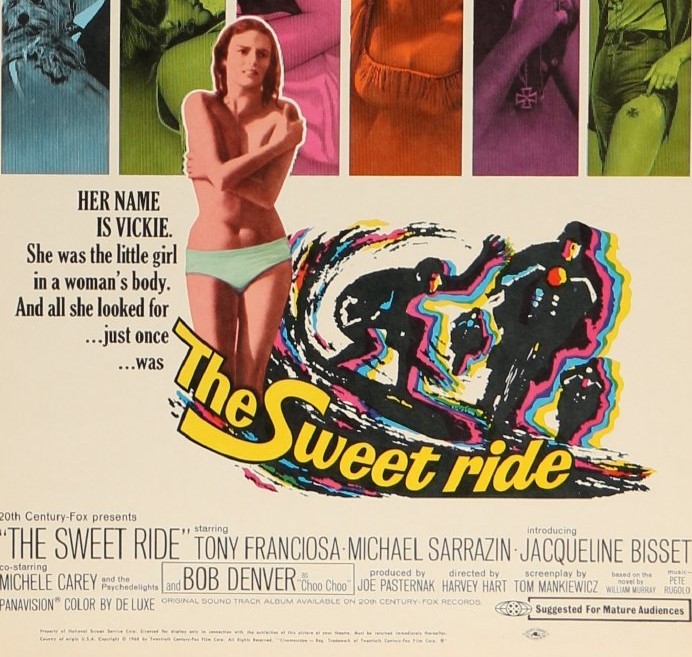
Legendary producer Joe Pasternak was making his 100th movie The Sweet Ride. One of his concerns was that Jacqueline Bisset’s bikini didn’t look tight enough. “It looked baggy in the rushes,” complained Pasternak. Bisset countered, “It fits when it’s dry. It just got a terrible pounding when I was in the water.” She mentions the scene where it got such a pounding in fact that the sea whipped the top off. She reckons that crossing her arms to protect her modesty prevented her tugging the pants on tighter. Once that picture was finished so was Pasternak – he never made another picture.

Another legendary producer Pandro S. Berman was trying to interest English directors John Schlesinger or Lindsay Anderson in Justine (directed by George Cukor in 1969) and on that basis wanted to hire a writer Laurence Marcus (Petulia, 1968) to rewrite the existing Ivan Moffat script in order to entice them. Zanuck’s take: he expected a director to make script changes but couldn’t see the point of altering a script to suit a director you didn’t know would be interested. Nonetheless, Marcus got signed.

All the time agents and directors were pitching movies. Agent Phil Gersh pushed a comedy version of Candy – screenplay by English writing duo Keith Waterhouse and Willis Hall (it ends up minus the Englishmen at Cinerama Releasing). Veteran director Henry Koster’s idea for a musical was nixed. As was the original trailer for Tony Rome, Zanuck hating the voice-over.

On Deadfall (1968), the Michael Caine heist movie directed by Bryan Forbes, actress Giovanni Ralli was having trouble with her English and her contract prevented her being dubbed. It would mean the actress having to lip-synch in post-production. The solution – “tell her she’s got 500 loops and when she hears that maybe she’ll get discouraged and let someone else dub her.” The studio had come up with 14 alternative titles to The Magus (1968) including Seduced by Fate and The Goddess and the Demon.

Fred Zinnemann was priming a $10 million western about Custer. He thought he might save $3 million by shooting in Mexico. The picture was to have no big stars. The only actor who could pull it off was John Wayne and he hated Custer. So Zinnemann planned to go with big names in cameo roles and Toshiro Mifune as Crazy Horse. That picture, too, would be dumped.

Also in the wings, Hello, Dolly! which would get made and Tom Swift, which would be canned despite advance work on building his aeroship, which would not. Nor would another Berman project John Brown’s Body.  

Apart from insights into the way movies are made, marketed and released, Dunne’s book captures the extraordinary Hollywood mix – cynicism and greed coupled with fervor and bone-headed optimism.

The Sweet Ride (1968) ***

Unusual drama mainlining on Californian surf, sex, bikers, a mystery of Blow-Up (1966) dimensions and the best entrance since Ursula Andress in Dr No (1962). Displays a 1960s vibe with a 1950s pay-off as the “hitchhiker” of responsibility rears its ugly head.

A woman thrown out of a car narrowly escapes being run over. The cops jack in the investigation after television actress Vickie (Jacqueline Bisset) refuses to explain why she’s been badly beaten up.  And so we enter flashback mode to supposedly find out. She makes a glorious entrance, emerging from the sea, minus bikini top, into the lives of surfer Denny (Michael Sarrazin), jazz pianist Choo-Choo (Bob Denver) and ageing beach bum and tennis hustler Collie (Tony Franciosca). From the off, she’s enigmatic, gives a false address, won’t explain bruises on her arm, has something clandestine going on with television producer Caswell (Warren Stevens) and like Blow-Up we are only privy to snippets of information.

She’s half-in half-out of a relationship with Dennis, with Collie hovering on the periphery hoping to pick up the pieces to his sexual advantage. Contemporary issues clog the background, Choo-Choo tries a camp number complete with pink dog to avoid the draft, a neighbor threatens to shoot Parker for wandering around in shorts and habitually stealing his newspaper, epithets like “degenerates” are tossed around, Choo Choo’s girlfriend Thumper, while appearing in movies with titles like Suburban Lust Queen acts den mother, there’s not much actual exciting surfing, and a biker called Mr. Clean is somehow involved.

The romance plays out well, Vicky unsure, Denny convinced but without a livelihood to offer and unable to get a straight answer out of her. Choo-Choo gets the gig of his dreams in Las Vegas and there’s an rape scene, more unsettling because it’s committed by Denny with the bizarre justification of getting “just for once something on my terms.”  And there’s the equally disquieting sense that the only explanation for Vickie’s behavior is to tab her a nymphomaniac, walking out of an argument with a mysterious man in a beach house to drop her clothes for a bout of sex with Mr Clean.

I must have seen a different picture from everyone else. A good few critics at the time and reviewers since appear to think Vickie was also victim of a gangbang by the bikers, but I can’t see why. When he sees Vickie coming down from the beach house, Mr. Clean shouts “everybody split” and his buddies clear the beach. However, Mr. Clean, ironically, gives the best indication of her state of mind, explaining that Vickie “kept staring back at the house and moaning about how she wanted to die” while he enjoyed the best night of his life sex-wise.

Denny and Collie prove not to be the pussycats they appear, bearding the bikers in their den and beating up Mr. Clean while Denny goes on to deliver a hiding to Caswell. But what this film turns out to be is an examination of vulnerability, how easily those with a new sense of freedom are trapped. An examination of contemporary mores, perhaps, but in not resolving the mystery of Vickie ultimately fails to deliver, especially as it does not, from the outset, carry the kind of artistic credentials of Antonioni in Blow-Up.

Perhaps the mystery needs no resolution, it’s just same old-same old dressed up in the novelty of sexual freedom. There’s no idea of why Vickie was beaten up, and essentially abandoned on the road to become accident fodder, and no hint really of why she fell foul of someone so badly she needed disposed of, no notion that she was a threat to anyone. (Or, for that matter, no explanation of what happened to her bikini top and why, if she was so apparently free with her charms, she was so shy about being seen half-naked.) On the other hand, victim may well have been Vicky’s destiny from the get-go, that kind of innocence only waiting to be defiled.

In any 1960s contemporary picture there’s always the temptation to accept as truthful or reject as phony the lives shown. The idea that sexual freedom bestows actual freedom is usually the issue until consequence (i.e. old-fashioned Hollywood morality) comes into play. This is less heavy-handed than, for example, Easy Rider (1969) or Bob & Carol & Ted & Alice (1969). The characters make decisions to grow up or to stay locked in a world of easy sex, dope and money. There’s no grand finale, just a more realistic drifting apart, and it’s only Vickie who comes apart, although that process had begun long before she met the drifters.  

Jacqueline Bisset (The Detective, 1968), in her divinely posh British accent, comes over well as an attractive screen presence and complex character. In fact, she has a bigger part here than in Bullitt (1968) or The Detective (1968). If you wanted anyone to portray a soulful hippie you need look no further than tousle-haired Michael Sarrazin (In Search of Gregory, 1969) and normally if you required someone on the sly, despicable side, Tony Franciosca (Fathom, 1967) might well be your first port of call, but Franciosca proves the surprise here, classic wind-up merchant and predator who exhibits considerable vulnerability when he realizes he is losing the worship of the idealistic young.

Former British matinee idol Michael Wilding (A Girl Named Tamiko, 1962) and Norma Crane (Penelope, 1966) appear as Vickie’s parents.  Bob Denver (Who’s Minding the Mint, 1967) and Michele Carey (The Spy with My Face, 1965) are solid support. Director Harvey Hart (Fortune and Men’s Eyes, 1970) tries to cover too much ground and could have done with narrowing the focus. Future Bond screenwriter Tom Mankiewicz (son of Joseph L.) made his screenwriting debut adapting the book by William Murray.

The DVD is a bit on the pricey side, but if you just want to check it out, YouTube has a print.

Book into Film – “The Detective” (1968)

Screenwriter Abby Mann (Judgement at Nuremberg, 1961) had his work cut out adapting Roderick Thorp’s tombstone of a novel that ran to over 500 pages. The first job was to make the book – set mostly in the 1940s – contemporary. The book’s fictional locations of Port Smith and Manitou were transposed to New York. Joe Leland was younger in the book – in his mid-30s compared to the 50-plus Frank Sinatra.

And while the principals remained the same, the screenwriter employed some distinctive structural sleight of hand to keep apart the two investigations occupying Leland, the murder of a homosexual and the apparent suicide of a businessman. In the book the first investigation takes place in the past and is told in a long, detailed, flashback, while the suicide case takes up the present. For the film Mann relocated both crimes to the same timeframe, with the suicide simply following on to the murder.

But there was one distinct change. When Leland in the book investigates the suicide, he is doing so as a private eye, not a cop. He had resigned from the force after seeing a criminal sent to the electric chair. A minor alteration was also involved in the suicide case in that the widow Norma (Jacqueline Bisset in the film) was six months pregnant in the book.

More significantly was the swapping over of the sexual characteristics of Leland’s estranged wife (Lee Remick in the film) and the widow. In the film Remick is the nymphomaniac. In the book, it is the other way round, although Norma, after marriage, has that tendency under control.

Although Leland is a decent enough policeman, he makes none of the overt pitches for decency that occur in the film. That is all Abby Mann’s invention. And the scene in the picture where Leland objects to the stripping of a suspect is lifted from another episode in the book, one in which Leland has no involvement. While incorporating minor aspects from the book such as the annoying politician and civic corruption, Mann invented the atmosphere of the police station, the friction between the various cops and Leland’s ruthless ambition.

As I noted in my Blog on the novel A Cold Wind in August (published in 1960), fiction writers had far greater flexibility as regards sexuality than movie makers and Thorp’s 1966 novel reflects that trend. Although the book falls into the category of police procedural, and Thorp himself worked for his father’s detective agency, the sprawling canvas offers as much insight into human relationships as crime and investigative processes.

In some respects this is a textbook adaptation, stripping away the various layers of a dense book to focus on the essential narrative, then both trimming and expanding the main relationships to suit the new plotline. Virtually unspoken in both book and film are Leland’s reaction to the situations that have arisen as a result of his action, not because the writer in either circumstance was dodging the issues, but because both reader and moviegoer could work it out for themselves without introducing melodrama where it was not required.

Discover WordPress

A daily selection of the best content published on WordPress, collected for you by humans who love to read.

The Atavist Magazine

by Brian Hannan

WordPress.com News

The latest news on WordPress.com and the WordPress community.