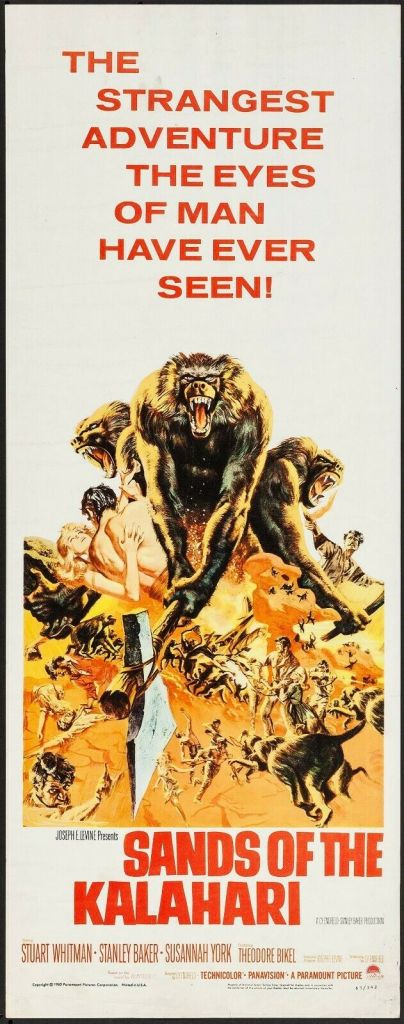
Sands of the Kalahari (1965) ****

You know the score: plane crashes in inhospitable territory (in this case a desert), personalities clash as food/water is rationed, tempers run high and/or depression sets in as attempts to attract attention fail, someone goes for help, someone else has an ingenious idea and eventually everyone rallies round in common cause. That template worked fine in The Flight of the Phoenix (1965).

It doesn’t here. This is not quite as inhospitable. There is water. Caves offer shelter from the blazing sun. There is food – lizards trapped, game hunted with telescopic rifle. But the food is lean, not fattened through farming for human consumption.  And you have to watch out for marauding baboons not to mention scorpions. And this group is split, two alpha males intent on exerting dominance with little interest in common cause.

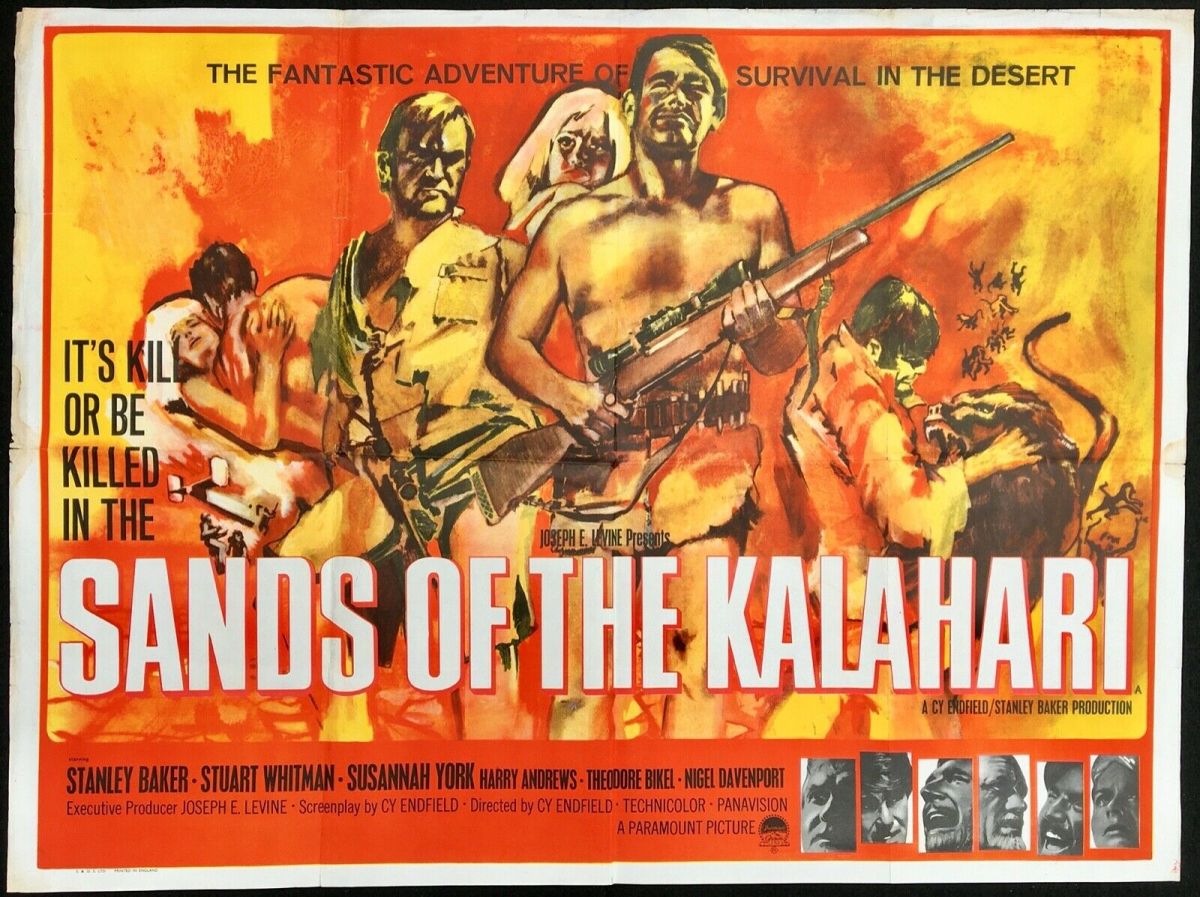
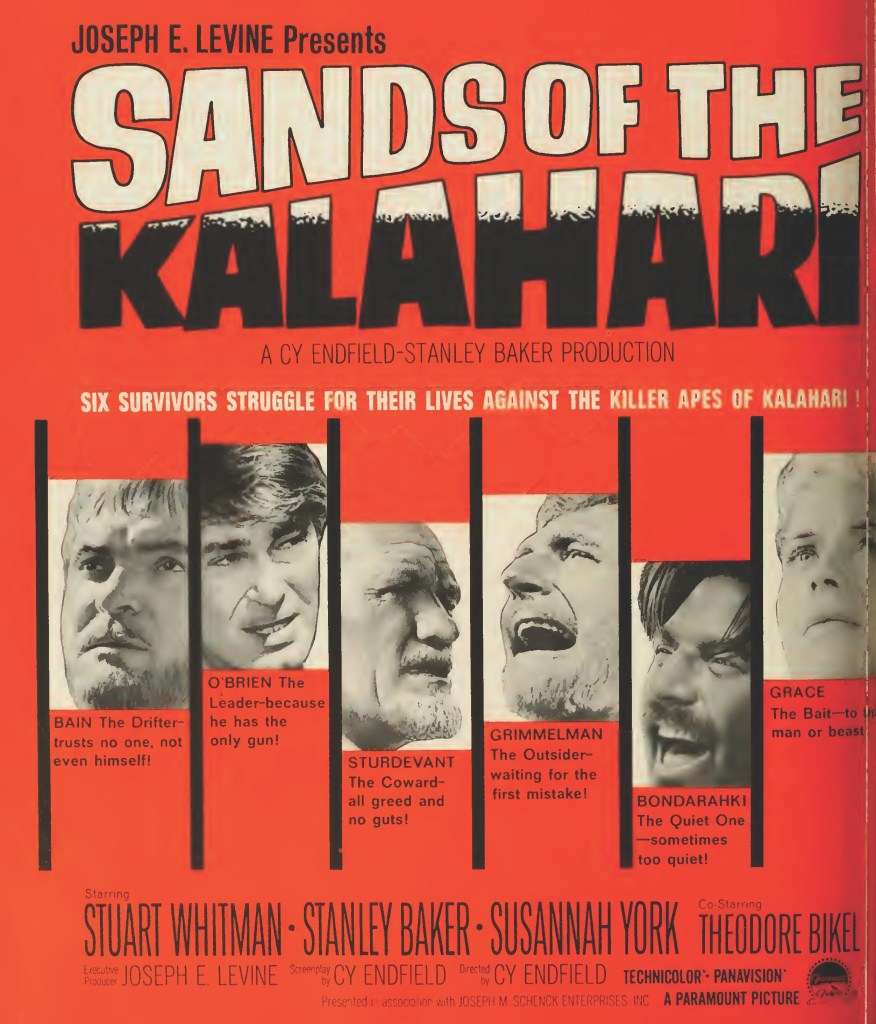
Producer Joseph E. Levine came up with the poster
without close examination of the picture’s content.

Of the six survivors of this crash, Sturdevan (Nigel Davenport) decides his leadership status entitles him to sole claim over the only woman, Grace (Susannah York). But when he accepts the genuine responsibilities of leadership, he sets off across the desert to get help. That leaves Grace to fall into the hands of O’Brien (Stuart Whitman), so alpha he could be auditioning for Tarzan, shirt off all the time.

It soon transpires O’Brien has a rather unusual idea of survival – getting rid of his companions so that he will have no shortage of food until rescue arrives. It takes a while for the others to catch on to his plan. And then rather than common cause and camaraderie, it becomes every man/woman for himself, a battle for individual survival, a return to the primeval.

The most likely challenger to O’Brien’s authority is Bain (Stanley Baker), but he has been badly injured in the crash and no match for the other man’s brawn or his weapon. So it becomes a game of cat and mouse. Except it’s in the desert, it’s the law of the jungle and the rule of autocracy brought home with sudden force to people accustomed to the comforts of civilization and democracy.  

The movie’s structure initially takes us down the obvious route of common purpose – Grimmelman (Harry Andrews) knows enough survival lore to devise a method of water transportation that would permit the group to escape the desert, Dr Bondrachai (Theodore Bikel) formulates  a method of trapping lizards, and O’Brien, at least at first, appears willing to take on the role of protector, warding off baboons with his gun.

The change into something different is subtle. While the others are desperate to escape, it becomes apparent that O’Brien has found his metier. We discover little about the lives of each individual prior to being stranded. Whatever O’Brien’s standing in society, it would not have been as high as here, where his superior skills stand out. Reveling in his supremacy, he doesn’t particularly want to go home.

Like any psychopath Bain knows how to manipulate so at first it seems his decisions are for the greater good. And only gradually does it emerge that he blames others for his own mistakes and intends to eliminate his rivals for the food supply one by one. Because he is so handsome, it is impossible to believe he could be so devious or so evil.

The three principals all play against type. Stanley Baker (Zulu, 1963) and Stuart Whitman (Murder Inc., 1960) made their names playing heroic types. Here Baker is too ill for most of the picture to do any good and Whitman plays a ruthless killer. But Susannah York (Sebastian, 1968) is the big revelation. Audiences accustomed to her playing glamorous, perhaps occasionally feisty, gals will hardly recognize this portrayal of a coward, not just abjectly surrendering to the alpha male but seeking him out for protection and guilty of betrayal.

Even though this picture is set in the days before gender equality and the independent woman was a rarity, Grace’s acquiescence to the powerful male is disturbing, in part because it takes us back to the days when a woman was impotent in the face of male dominance. Such is York’s acting skill that rather than despise this woman, she earns our sympathy.

While for the most part Harry Andrews (Danger Route, 1967) and Nigel Davenport  (Sebastian, 1968) appear in their usual screen personas of strong males, here their characters both are changed by the circumstances. Theodore Bikel (A Dog of Flanders, 1960) has the most interesting supporting role, the only one who takes delight in the adventure.

Director Cy Endfield (Zulu) – who also wrote the screenplay based on the William Mulvehill novel – delivers a spare picture. There is virtually no music, just image. Aerial shots show tiny figures in a landscape. The absence of character background frames the story in the present. As a reflection on the animal instinct, how close to the primordial a human being still operates, no matter how enlightened, this works exceptionally well, and melds allegory with thriller.

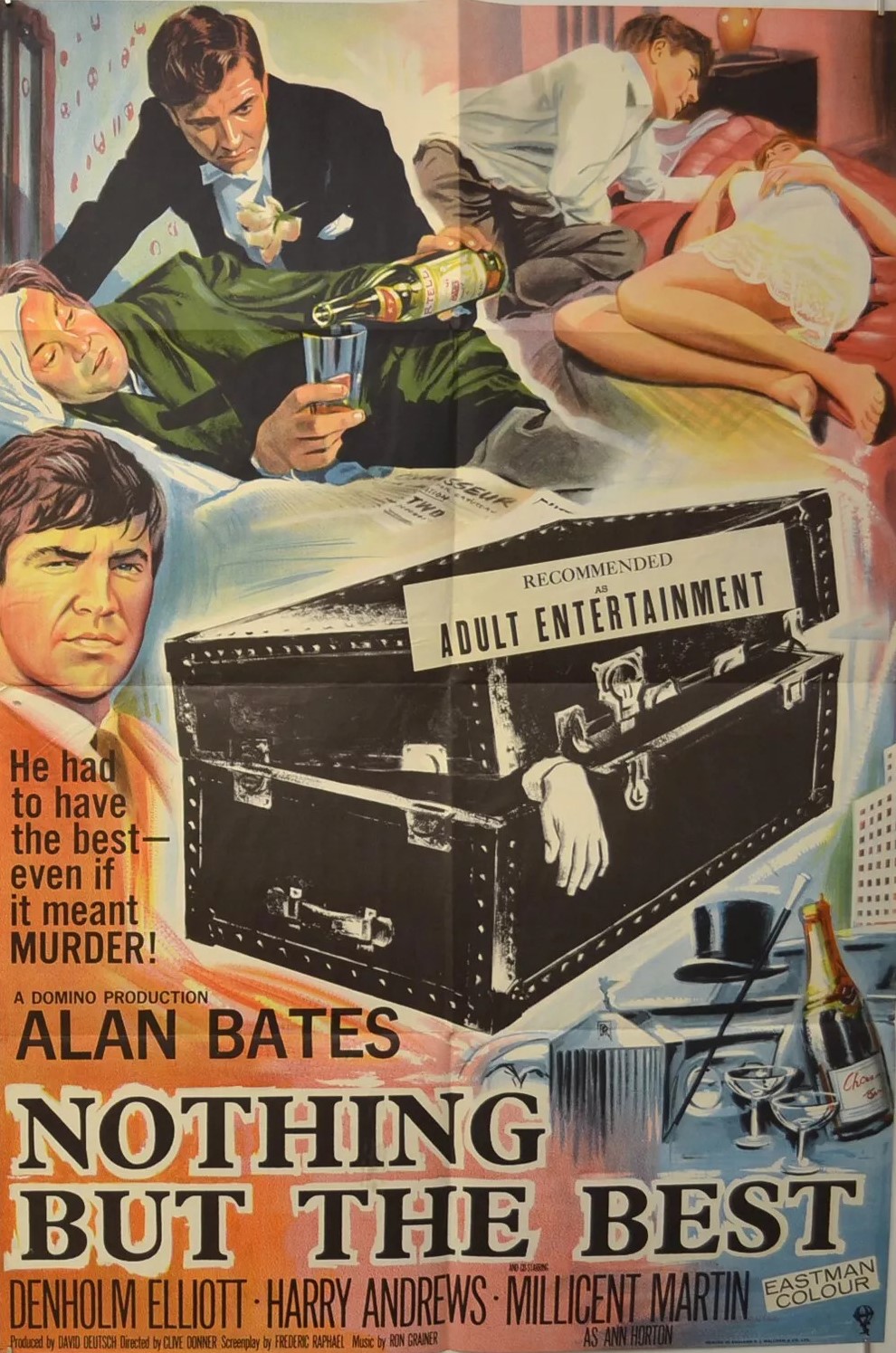
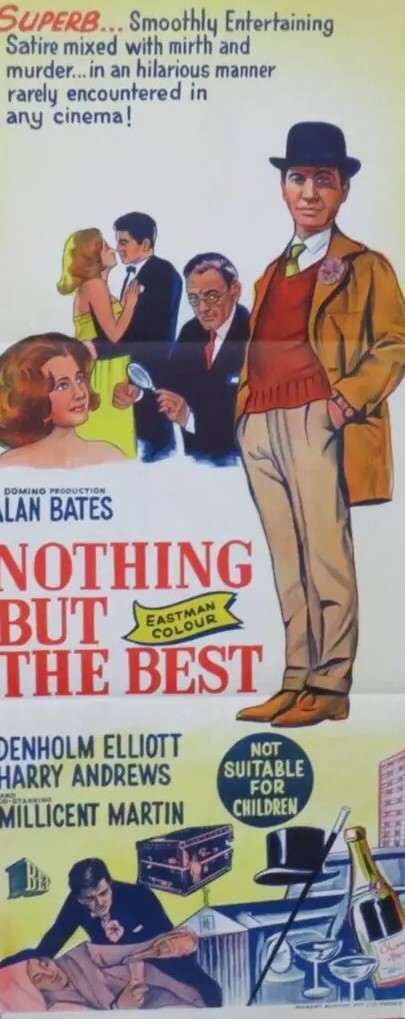
Nothing but the Best (1964) ***

Hardly surprising Denholm Elliott comes a cropper in this delicious British upper class black comedy – he steals the show from denoted star Alan Bates. Had he kept going any longer you would hardly have noticed Bates even featured, such was the clever impact of Elliott’s insiduous playing.

The toff version of Room at the Top (1958) meets Alfie (1966) as “ambitious young yob” Jimmy Brewster (Alan Bates) manipulates his way to the top. Too many people not coming up to scratch for his upwardly mobile purposes are cast aside – or strangled. Arrogance and bluff are the key to getting ahead in the upper-class world towards which he pivots. Doing absolutely nothing at all also works wonders in high society as does dismissing one’s hugely expensive education.

Jimmy is initially helped on his way, given an insider’s guide, by dissolute layabout toff Charles (Denholm Elliott) with a marked predilection for forgery, and other minor criminal schemes, but whose chief skill appears to be sponging off everyone else. Jimmy is a lowly executive in an upmarket estate agent, fighting for promotion against people with silver spoons rattling around every part of their anatomy and who have the genuine class their business appears to call for.

Every now and then the satire still contains contemporary bite, the difference between universities still relevant, as is that most people are not swayed by actual knowledge but by the fact that you can toss out the names of various academics. But, mostly, it’s bluff that opens the doors. Jimmy misses an appointment with an important banker, a dereliction that should have scuppered his chances of negotiating a better deal for his client. But, in fact, the banker takes this as Jimmy having gone elsewhere and immediately offers a better deal.

When confronted by a colleague for ignoring another appointment, Jimmy merely vaguely waffles on about being detained by “Sir Charles,” true identity left shrouded in mystery, contentious colleague silenced by either not being on speaking terms with the person mentioned or unwilling to admit his ignorance.

Having seduced every secretary within reach – none of whom meet his lofty standards – Jimmy manages to wangle his way into catching the eye of wealthy boss Horton (Harry Andrews) and his attractive daughter Ann (Millicent Martin), whom he marries.

While this would have been sharp as a tack in satirical terms back in the day, most of that weaponry is now out-dated. Suffers because none of the upper-class characters show any sense whatsoever – they can’t all be duffers and most seem to have tumbled out of central casting’s idea of an upper class twit. Charles is the exception, but even he is something of an innocent, not quite aware of what ruthlessness he has unwittingly set afire.

The lower classes aren’t much better. Secretaries and switchboard girls fall at Jimmy’s feet, handsome beggar that he is, though his landlady Mrs March (Pauline Delaney) appears to have his measure and is not above indulging in hypocrisy.

The voice-over works to the detriment of the picture. Because that device is doing so much of the heavy lifting, filling in the audience on Jimmy’s true feelings, the actor doesn’t have to do much acting and we’re presented with a kind of wooden figure who hides behind a mask. Of course since he’s masking his feelings, you might be inclined to give Alan Bates the benefit of the doubt.

And it would work very well if there wasn’t Denholm Elliott giving a master class in duplicity. He exhibits genuine charm.

I’m guessing that the voice-over was already there in Frederic Raphael’s script and not added to compensate for Alan Bates’s one-note performance. So if it was, that certainly presented a problem for the actor since most of what made his character interesting was at one remove, not presented in dialog or confrontation as would be the norm.

Alfie solved the problem by breaking the fourth wall – all the rage these days – and having the character directly address the audience, which allowed Michael Caine to present his own case.

So, if Alan Bates felt limited in what he could show on screen, he certainly does a good job of maintaining the façade. But Denholm Elliott (Station Six Sahara, 1963) steals the show. Harry Andrews (The Charge of the Light Brigade, 1968) is permitted no nuance to his normal bluff persona, singer Millicent Martin (Alfie, 1966) sparkles, and a bunch of British character actors including James Villiers (Some Girls Do, 1969) and Nigel Stock (The Lost Continent, 1968) put in an appearance.

Directed with some glee by Clive Donner (Alfred the Great, 1969) from a script by Frederic Raphael (Darling, 1965) adapted from a short story by Stanley Ellin (House of Cards, 1968).

Not as coruscating now as originally intended.

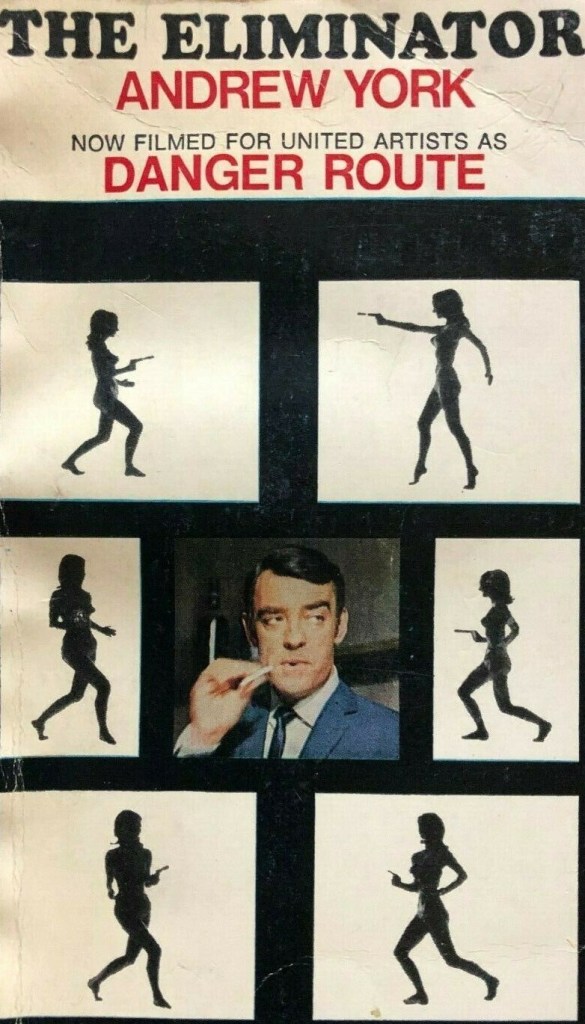
Danger Route (1967) ***

If the producers had not signalled Bond-style ambitions with a big credit sequence theme song by Anita Harris, moviegoers might have come at this with more fitting expectations in the Harry Palmer and John Le Carre vein. So although slipping into the late decade spy boom flourish don’t expect villains planning world domination, gadgets or a flotilla of bikinis.

Seth Holt’s bread-and-butter espionage thriller sets government agent Jonas Wild (Richard Johnson) – on his “last assignment” no less after eight licensed murders in five years – to kill off a defector in the far from exotic location of a Dorset country house not realizing that he is also being set up. That his liquidator will be a woman puts the mysterious Mari (Barbara Bouchet) in pole position.  

Wild gains access to the heavily-guarded mansion by seducing housekeeper Rhoda (Diana Dors) but after completing his mission is captured and tortured by Luciana – pronounced with a “k” – (Sam Wanamaker) who explains he is a patsy and that there is a mole in M.I.5. When his boss Tony Canning (Harry Andrews) disappears and another friend is murdered, Wild goes on the run with Mrs Canning (Sylvia Syms) and eventually makes his way back to his bolt-hole in Jersey to solve the mystery.

There is a decent amount of action, including a fight with a guard dog and a battle on a fog-bound yacht. Clever maneuvers abound – a bug is planted in a bandage. Treachery is always just round the corner and there is no shortage of suspects.

The film’s down-to-earth approach is somewhat refreshing after half a decade of spy thrillers and spoofs. Wild doesn’t employ anything more hi-tech than masquerading as a brush salesman to win over Rhoda. And although that relationship ends up in bed, there is no sex, Wild having drugged her to avoid that complication. Tony Canning is nagged by his wife. Wild’s girlfriend (Carol Lynley) is a sweet girl, sexy in a languid rather than overt fashion.  And Luciana takes enormous pride in telling Wild just how stupid he has been.

But that comes with a caveat. The plot doesn’t quite hang together and the movie sometimes fails to connect.

That said, Johnson (Deadlier than the Male, 1967) is excellent, quite an accomplished actor rather than a brand name. Both Barbara Bouchet (Casino Royale) and Carole Lynley (Harlow, 1965) play against type while Sylvia Sims (East of Sudan, 1964) and Harry Andrews (The Hill, 1965) present variations to their normal screen personas. Sam Wanamaker (The Warning Shot, 1967) has a peach of a role and Gordon Jackson (The Long Ships, 1964) and Maurice Denham (The Long Duel, 1967) are afforded small but critical parts. 

Seth Holt (Station Six Sahara, 1963) directs from a script by Meade Roberts (In the Cool of the Day, 1963) and Robert Banks Stewart (Never Mention Murder, 1965) based on the bestseller by Andrew York.

Competent with interesting touches.

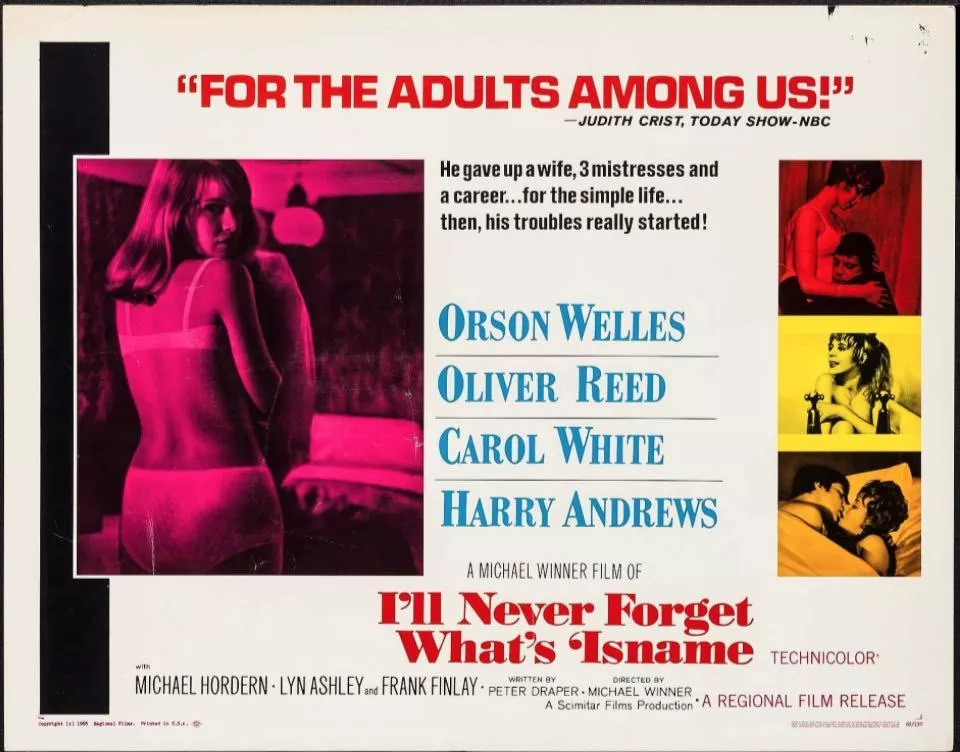
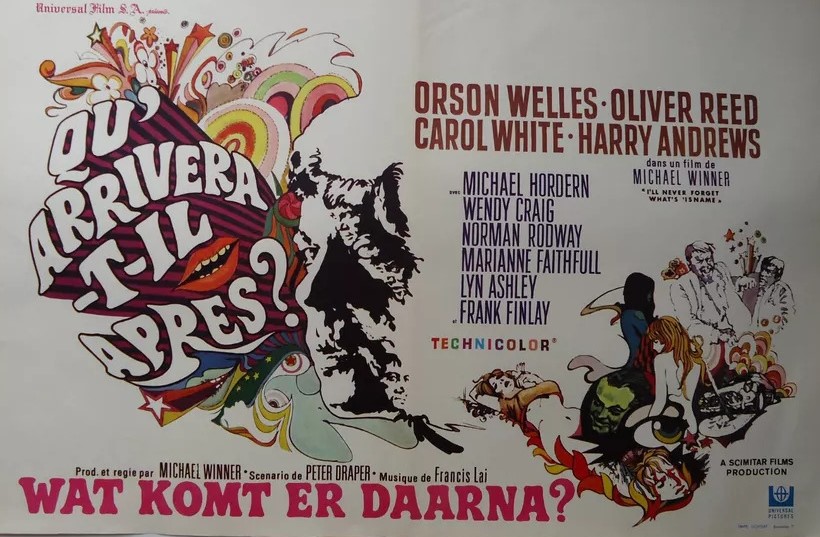
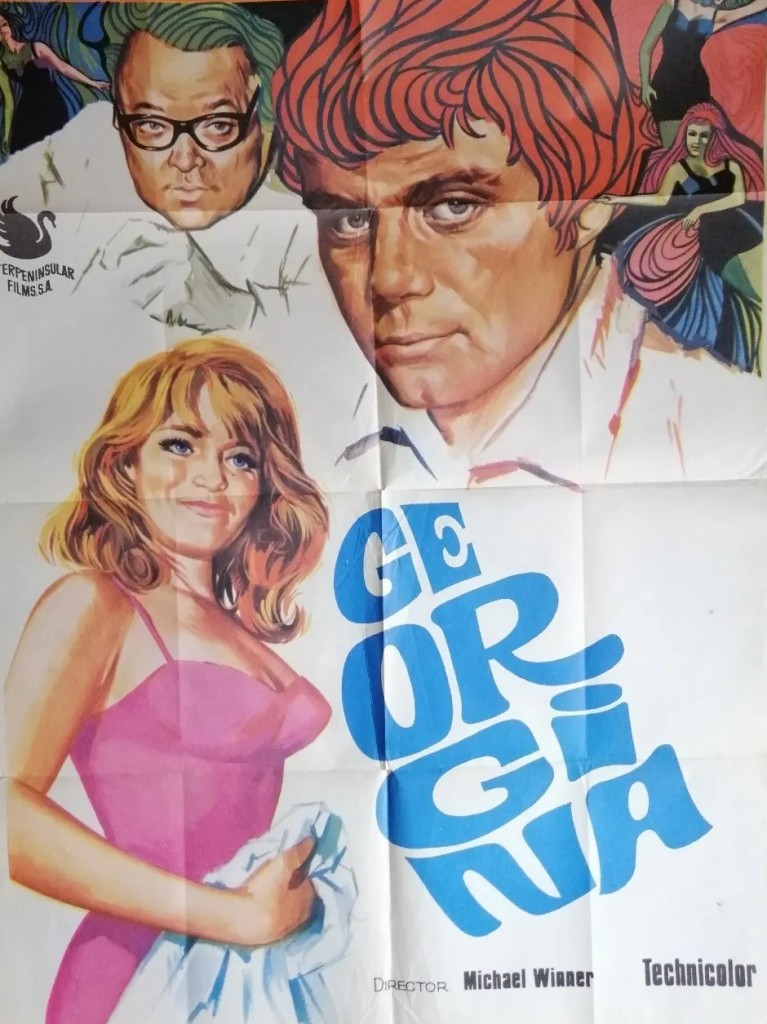
I’ll Never Forget Whatsisname (1967) ****

Director Michael Winner’s proudest moment – from a critical perspective. Rave reviews all round and hailed as a rising star of British cinema. Such adulation didn’t last long, of course, Hannibal Brooks (1968) and The Games (1970) elicited little critical reposnse and whatever kudos he achieved from a couple of westerns was soon blown away once he went down the Death Wish (1974) brutal revenge route. So this fits into the anomaly department in his canon and, although pretentious in spots, it does show a fine intelligence at work and a singular prophetic quality that should have contemporary reverberation.

For a start, he highlights the creativity of the advertising world that became the training ground for such British directorial talents as Ridley Scott (Alien, 1979), his brother Tony (Top Gun, 1986), Alan Parker (Midnight Express, 1978) and Adrian Lyne (Fatal Attraction, 1987) as well as producers in the vein of David Puttnam (Chariots of Fire, 1981). Perhaps more interesting are the ecological aspects, predicting the importance of waste both as an issue and a financial opportunity.

And although If… (1969) was viewed as the pre-eminent depiction of public school immorality, this provided a much shorter introduction to the prevalence of public school attitudes in society. You might also suggest, should you be so bold, that Winner envisioned the boom in reality televison, when the camera is not used to create illusion but to pick at the scabs of society. And we might also fast forward to Jaws (1975) whose meanest character shares the same surname as our hero here, whose personality defects are what drives the picture.

Within all this there’s a fair chunk of satire. And it’s rare for this director to so obviously poke fun at his heroes.

The narrative follows disillusioned advertising ace Quint (Oliver Reed) as he tries to extricate himself from various romantic entanglements in order to concentrate on first playing a more meaningful role via literary creativity and then, when that option is pulled out from under him, exposing the hypocrisy from which he has made his fortune.

The movie opens with a stunning image. Quint wielding an axe. Despite this being in the  middle of London, he scarcely receives a second glance – as if this might be construed as typical English eccentricity – as he marches towards his posh headquarters, proceeds to smash his office and hand in his notice to boss Lute (Orson Welles). He finds work in a literary magazine with old school chum Nicholas (Norman Rodway) where, unfortunately given he already has a wife and several mistresses, he falls for virgin secretary Georgina (Carol White).

But despite his success he is tormented by his schooldays, which instead of toughening him up made him more vulnerable to abuse from a teacher and to bullying from fellow pupils led by entitled thug Maccabee (Harvey Hall). The nightmarish glimpses of school are sharply brought into focus when he encounters Maccabee again and witnesses the savage hounding of another innocent man.

Meanwhile, Lute keeps popping up, either to try and seduce Quint back to his job or to sabotage his existing one. When a fight breaks out at one of Lute’s parties he wants it stopped before another of his precious artworks is broken rather than before a participant ends up in hospital. Lute takes English eccentricity to the extreme, enjoying a massage while playing Scalextrix, the epitome of avuncular decency except that he’s twisting the rules.

Even with his diabolical childhood, it’s hard to sympathize with Quint. He’s little more than a charming lout, but I suspect his is a more universal condition, those who have so much easy wealth inclined to poke at the foundations of success, and seek a more worthwhile profession. The ending is contrived, but, then, the fun has to stop somewhere.

That said, Oliver Reed (The Assassination Bureau, 1969) presents a more rounded character than in many of his later films. From the confidence of his delivery you get the impression that Orson Welles (House of Cards, 1968)  – top-billed ahead of Reed – improvised many of his lines. He’s certainly having some fun with his role, but then that is the seductive part of his character. Carol White (Daddy’s Gone A-Hunting, 1969) is the big surprise, bringing a genuine freshness to her role, before she conformed to the Hollywood dictat. And you won’t forget the malicious Harvey Hall (The Games, 1970).

The quite amazing cast includes Edward Fox (Day of the Jackal, 1973),  Michael Hordern (Where Eagles Dare, 1968) as a demented headmaster, Marianne Faithfull  (The Girl on a Motorcycle, 1968), Harry Andrews (The Long Duel, 1967) as a writer with a creepy hobby, Wendy Craig (TV series Not in Front of the Children, 1967-1973), Ann Lynn (Baby Love, 1969) and Frank Finlay (The Shoes of the Fisherman, 1968).

It’s entirely possible that it was pure coincidence that Winner covered so many topics relevant to today but I’m giving him the beenfit of the doubt. Written by Peter Draper (The System / The Girl-Getters, 1964).

Great – and meaningful – fun.

The Hill (1965) ****

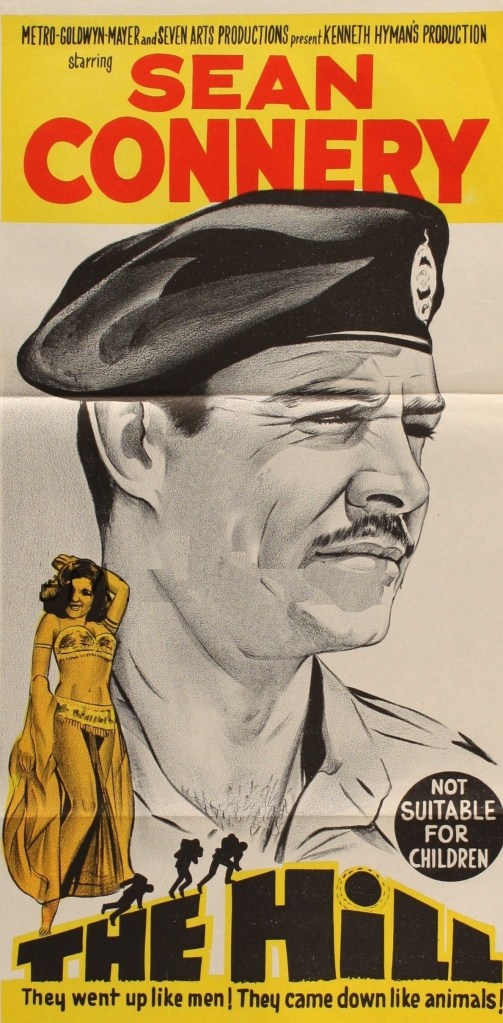
Set in a British Army prison camp in North Africa during World War Two ruled by sadistic Sgt Wilson (Harry Andrews) who believes himself above the regulations he forces others to follow, The Hill is a parable about the hypocrisy of totalitarian rule. And much of what is shown would be offensive to modern sensibilities.

Although the commandant and medical officer (Michael Redgrave) are his superior officers, Wilson runs the unit by force of personality. He believes his ruthless treatment of the prisoners turns them into proper soldiers. Into his fiefdom come five new prisoners including coward Joe Roberts (Sean Connery), spiv Monty Bartlett (Roy Kinnear), African American Jacko King (Ossie Davis) – a “different colored bastard” – another Scot Jock McGrath (Jack Watson) and weakest link George Stevens (Alfred Lynch).

Most films about prisons emphasize imprisonment, most scenes taking place in cells or other places of confinement. Sidney Lumet (The Pawnbroker, 1964) directs this film as though it is a paeon to freedom with incredible shots of the vista within which the men are contained. He uses some of the most bravura camerawork you will ever see outside of David Lean.

The film opens with a two-minute crane shot credit sequence that pulls back from a prisoner collapsing on the titular hill to reveal the entire encampment and follows with a one-minute reverse tracking shot of Wilson striding through his domain. And while the camera controls what we see, our ears are constantly assailed by the constant drumbeat of other marching prisoners. 

Climbing the hill in full pack would break any man and those who collapse are roused by buckets of water. The first to crack is Stevens who is constantly tormented by homophobic jibes. Continuous racist abuse is heaped on Jacko King “you blacks don’t have brains – you got it downstairs, we got it upstairs” until driven to the point of madness he begins to behave like a gorilla which frightens the life out of his superiors.

Obeying orders, says Joe Roberts, is “like a dog picking up a bone.”  RSM Wilson is out of control, the commandant spending his nights with a prostitute, the medical officer clearly sent here as punishment for some previous misdemeanor. Of the senior staff only Harris (Ian Bannen) comes away with any dignity, constantly trying to thwart the worst bullying.

When Stevens dies suddenly, the film changes tack and becomes a battle for survival among those who could be blamed for causing his death and those who dare to point the finger.  Wilson has no problem stitching up his colleagues and blackmailing the medical officer while Roberts is beaten up for his effrontery in standing up to authority.

But the astonishing presence and self-confidence and, it has to be said, courage of Wilson lords it over everyone, and there is an extraordinary scene where he forces the entire battalion of prisoners to back down when they are on the brink of open rebellion.

Connery is superb in what is his first dramatic role in a bread-and-butter dramatic production rather than the glossier Marnie (1964) and Woman of Straw (1964) and while he has his moment of defiance he gives enough glimpses of vulnerability and fear to ensure we do not mistake him for his alter ego James Bond. Ian Bannen delivers a touching, assured, performance, far removed from the nasty sarcastic personalities he portrayed in his other desert pictures, Station Six Sahara (1963) and the Flight of the Phoenix (1965). 

Ossie Davies (The Scalphunters, 1968), as defiant as Connery, is brilliant as the man who works out a way to beat the enemy by confusing them; the scene in the commandant’s office where he treats the officer as his inferior is a tour de force.   

Although the Army is meant to run according to established regulation, where obedience to a superior is paramount, it is equally apparent that it can also become a jungle if those who are the fittest assume control. Sgt Wilson demands unquestioned discipline even as he is breaking all the rules in the book. But he retains his authority not just by bullying, but by intelligence, exploiting weakness, coolness under pressure and by welcoming confrontation, his personality as dangerous as any serial killer.   

Harrowing, superb, true.

A Touch of Larceny (1960) ****

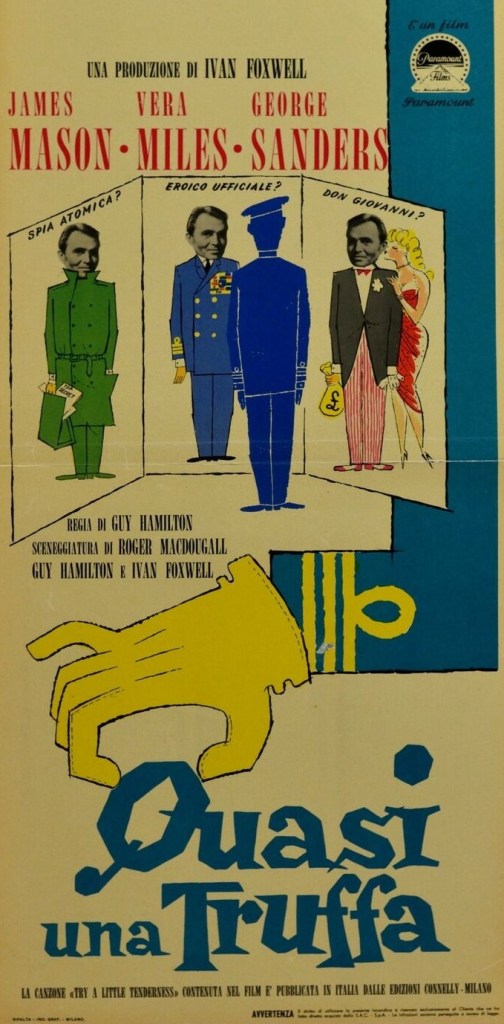
Magically fits into the “lost” film category that I’ve been banging on about recently, films, for a variety of reasons, denied cinematic release. Or at least that’s according to Rotten Tomatoes which declares “there are no featured reviews…because the movie has not (been) released yet” despite the fact that it was a big hit in cinemas over six decades ago.

Happening upon this nugget of information in a casual trawl of RT I thought I’d see if this “lost” movie was as good as The Appointment (1969) perhaps or Fade In (1969) or whether it should never be seen.

Imagine my surprise to find a highly entertaining picture best described as a one-man caper that takes aim at the Establishment and the Media, wrapped in a very witty rom-com, and helped along by the kind of Whitehall characters making a meal out of doing nothing as lampooned in BBC TV series Yes, Minister

The central conceit sounds so lame from the outset that you think this confection is going to collapse the minute it is put into practice, but, in fact, a good few twists inflate the idea until it floats along quite merrily towards a happy conclusion. And if you only remember James Mason from dour turns in The Deadly Affair (1967) or as the smarmy villain in North by Northwest (1959), you’re in for a treat.

For this is the actor at his most winning, so charming he almost edges into the adorable class, and this while playing a rake, the seducer’s seducer, but with the quickest of quick wits to get him out of any scrape. We begin and end with a demonstration of such speedy thinking.

Surprised by the return of his latest conquest’s husband, Commander Max “Rammer” (the nickname nothing to do with sexual prowess) Easton simply dons his naval uniform, whisks up the woman’s dog, his presence explained as delivering a poor creature lost in the street. As easy as pie.

His life is one of ease. When he says he works at the Admiralty, “working” might be a stretch, although “lolling about” would hardly be in the job description, the sole purpose of his desk somewhere to lay his feet, and has an airy dismissal at hand for any Whitehall buffoon inclined to pepper their language with Civil Service gobbledegook.

Bumping into an old war chum Sir Charles Holland (George Sanders), now an ambassador,  they were submarine commanders in World War Two, allows him brief acquaintance with American widow Virgina (Vera Miles). Naturally, he snaffles one of her gloves so as to have an excuse to return it. Realizing his game, she bats him back with effortless repartee, saving for the last the fact that she is engaged to be married to Sir Charles.

Given he is so practised at this game, he manages to inveigle his way into her life – Sir Charles away on urgent business – determines that her fiance’s main attraction is his dosh, and comes up with a barmy scheme to put himself in the wealthy category. His notion is to pretend to be a spy, drop a top secret document down behind a filing cabinet, vanish to a remote Scottish island, wait for his colleagues to raise the alarm, someone discover the document is missing, and the newspapers to brand him a traitor, at which point he will pop back up and sue the media for libel, and become rich enough to suit Virginia.

Yep, it seems a crazy notion, especially as Virginia, though clearly enjoying his company, has kept him at a decided arm’s length. Unfortunately, once the hue-and-cry is raised, Virginia makes the mistake of telling her husband it’s all a big con. But that puts Sir Charles in a bind, because to fess up might put his fiancé, and by extension himself, in a difficult position.

So they do nothing. Meanwhile, on his deserted tiny island off the coast of Scotland, Easton is living it up, dining off his ample supplies, occasionally catching a fish or a lobster, certainly enough booze to keep up his spirits, tuning into the radio to keep up with the news, waving half-heartedly at any passing ship, rehearsing his lines for when he is rescued. He’s even brought along a canister of petrol so he will have no trouble lighting damp driftwood and seaweed to make the bonfire he will require to attract attention.

So far, so barmy. But now the first twist. He chucks into the sea all evidence of his high living. He slips on a rock, falls into the water and the precious fuel sinks to the bottom. Now, he is a genuine castaway, soaked, starving, freezing. Second twist, the passengers on the boat that turns up to rescue him greet him by name.

So now we’re in for a devilish third act, the cops tipped the nod without getting the full story, Virginia the obvious culprit, Easton, back to the wall, requiring some fiendish ingenuity to get himself out of the mess. After a bundle of twists coming quick and fast, the romantic entanglement is disentangled, Easton still set to be rich by selling his tale (“the real true story” i.e. fictional hogwash) to the media who no doubt toss in a sweetener in gratitude for not being sued.

Not only is it delivered in effortless style by director Guy Hamilton (The Battle of Britain, 1969), and Mason at the top of his game, matched by Vera Miles (Psycho, 1960), but it is very short, clocking in at just over 90 minutes.  Roger MacDougall (The Man in the White Suit, 1951), Ivan Foxwell (Tiara Tahiti, 1962) and the director concocted the screenplay from the novel by Paul Somers.

Great fun, the repartee and the final third an absolute treat while poking gentle fun at the Establishment.

Rather than belonging to the “lost” category, it sits comfortably in the “they don’t make ‘em like that anymore” section.

55 Days at Peking (1963) ***

Imperialism is hard to stomach these days but at the start of the twentieth century it was rampant and not restricted to the main culprit, the British. China was Imperialism Central, round about a dozen nations including the USA and Russia claiming control of sections of the country or its produce. So they had all set up diplomatic shop in Peking. And the film begins with an early morning roll call of national anthems before this domination by outside interests is shattered by rebellion.

Just as hard to stomach, of course, was the movie mainstream notion in those days that all rebellions must perforce be put down regardless of how put-upon the peasant classes were. Audiences had to rally round people in other circumstances they would naturally hate. So one of the problems of 55 Days at Peking is to cast the rebels (known as Boxers) and the complicit Chinese government in a bad light while ensuring that those under siege are not seen as cast-iron saints. There’s no getting round the fact that the rebels are shown as prone to butchery and slaughter while the Chinese rulers are considered ineffective and traitorous.

So it’s left to the likes of Major Mark Lewis (Charlton Heston) heading up the U.S. Marines stationed in the city to bring some balance to proceedings. “Don’t get the idea you’re better than these people because they can’t speak English,” he expounds. British Consul Sir David Robertson (David Niven) tries to keep this particular league of nations onside while negotiating with one hand tied behind his back – “we must play this game by Chinese rules” – with the Chinese Dowager Empress Tzu-Hsi (Flora Robson) while knowingly endangering his wife Lady Sarah (Elizabeth Sellars) and two children. Unscrupulous Russian baroness Natalie Ivanoff (Ava Gardner) exhibits little loyalty to her home country.

The picture is one-part action, one-part politics and one-part domesticity, if you include in the last section the major’s romance with the baroness, the consul’s guilt when his son is wounded in an attack and Lewis’s conflict over a young native girl fathered by one of his own men who is then killed. Two of the best scenes are these men coping with parental obligation, Sir Arthur managing a wounded son, Lewis finding it impossible to offer succor to the child.

The action is extremely well-handled. The siege goes on longer than expected when the expected troops fail to arrive, tension rising as casualties mount and supplies fall low. As with the best battle pictures, clever maneuvers save the day. Two sections are outstanding. The first has Lewis marshalling artillery to prevent the Chinese gaining the high ground. The second is a daring raid – Sir Arthur’s idea, actually – through the city’s sewers to the enemy’s ammunition dump. Personal heroism is limited – Lewis volunteers to go 70 miles through enemy territory to get help but has to turn back when his men are wounded or killed.

There’s a fair bit of stiff upper lip but while Lewis, in familiar chest-baring mode, has the baroness to distract him, Sir Arthur is both clever, constantly having to outwit the opposition and hold the other diplomats together, and humane, drawn into desperation at the prospect of his comatose son dying without ever having visited England.  The baroness  moves from seducer to sly traitorous devil to angel of mercy, wapping glamorous outfits for a nurse’s uniform, at the same time as changing her outlook from selfish to unselfish.

Charlton Heston (Diamond Head, 1962), David Niven (Eye of the Devil, 1966) and Ava Gardner (The Angel Wore Red, 1960) acquit themselves well as does Flora Robson (Eye of the Devil) in a thankless role. In supporting roles are John Ireland (The Swiss Conspiracy, 1976), Harry Andrews (The Charge of the Light Brigade, 1968) and Leo Genn (Ten Little Indians, 1965).

This was the third of maverick producer Samuel Bronston’s big-budget epics after King of Kings (1961) and El Cid (1961) with a script as usual from Philip Yordan – sharing the credit with Robert Hamer (Kind Hearts and Coronets, 1949) and Bernard Gordon (Custer of the West, 1967) – and directed by Nicholas Ray (King of Kings) who also had assistance from Guy Green (Diamond Head).and Andrew Marton  (Africa: Texas Style, 1967)

All in all it is a decent film and does not get bogged down in politics and the characters do come alive but at the back of your mind you can’t help thinking this is the wrong mindset, in retrospect, for the basis of a picture.

Modesty Blaise (1966) ***

You might well enjoy this if a) you are in a very good mood, b) you love psychedelia, Pop Art and the Swinging Sixties, c) you fancy a spy film spoof or more likely d) you are a big fan of one or all concerned. Otherwise, you might be well advised to steer clear because it either takes the mickey out of a number of genres, not just espionage, or plays merry hell with narrative and character and is only loosely based on the source material by Peter O’Donnell.

Bear in mind it originated in a comic strip – later turned into a series of novels – that had more in common with the likes of Danger: Diabolik than the more straightlaced adventures emanating from DC Comics or Marvel. In particular, Modesty had a neat habit of distracting the villains by appearing topless in moments of crisis – a trick adopted in movies like 100 Rifles (1969) and El Condor (1970).

Fans of the comic strip/book may have been left indignant by the audacity of the filmmakers to introduce romance between Modesty and her sidekick Willie Gavin since in the book their relationship was strictly platonic. There was no place, in either comic strip or book, for the musical numbers that pepper the movie. And – check out The Swinger (1966) – for the notion of a character acting out a fictionalized version of herself.

You should be aware that Modesty is a very rich version of the gentleman sleuth, an idea that belonged to the old school, of a person, such as The Saint, bored with wealth, who takes on dangerous assignments in the eternal battle between good and evil.

Anyways, on with the story.

Modesty Blaise (Monica Vitti) is hired by the British government in the shape of MI5 chief Sir Gerald Tarrant (Harry Andrews), in return for immunity for her previous crimes, to deliver a secret shipment of diamonds, part-payment for oil imports, to Sheik Abu Tahir (Clive Revill). Modesty happens to be the sheik’s adopted daughter. Meanwhile, criminal mastermind Gabriel (Dirk Bogarde), believed to be dead, has his eyes on the consignment.

Meanwhile (again), Modesty upsets current lover Hagen (Michael Craig), Tarrant’s aide, by hooking up with old flame Willie Garvin (Terence Stamp). Meanwhile (again again), Garvin hooks up with another of his old flames, magician’s assistant Nicole (Tina Marquand), who has information on Gabriel.

Various assassins employing a variety of methods are sent to kill Modesty so a good chunk of the picture is her avoiding her demise. Gabriel is a pretty touchy employer, so upset by failure that he assigns his Amazonian bodyguard Mrs Fothergill (Rosella Falk) to eliminate all such assassins. Gabriel, however, is something of a contradiction, very sensitive to violence. And just in case you are not keeping up with the plot, conveniently, the bulk of the conversations between Tarrant and his superior (Alexander Knox) will fill you in.

Through a whole bunch of clever maneuvers on Gabriel’s part, Modesty and Willie are forced to steal the diamonds themselves. And, meanwhile, Hagen is on their tail, infuriated at being jilted.

In between the umpteen shifts in plot, which basically lurches like a ship in a storm, the screen is ablaze with color. Nobody complained much when Raquel Welch found it necessary to change her bikini ever few seconds, or that a musical required continuous costume changes, and Modesty here seems to have fallen into the same pattern, the changes in outfit often so swift you imagine she has a disorder.

And be warned, this is a poster film for Pop Art, so if it’s not clothes that are being swapped, it’s décor. You might put Terence Stamp’s blond barnet in the discordant category. You can’t really complain about the plot because espionage storylines are usually something of a conjuring trick with the impossible little more than a standard mission. There’s much to enjoy if you’re of a mind and subscribe to one of the four ideas outlined in the opening paragraph and like the idea of the otherwise critical darling Joseph Losey (Accident, 1967) giving way to stylistic overkill.

Monica Vitti (Girl with a Pistol, 1968) inhabits the role with the necessary verve though Terence Stamp (The Collector, 1963) looks as if he has walked into a spoof and Dirk Bogarde (H.M.S. Defiant / Damn the Defiant!) appears still in experimental mode, having dumped the British matinee idol, unsure of what his screen persona should be. Evan Jones (Funeral in Berlin, 1966) is generally to be blamed/praised for the screenplay.

A movie for which the word confection was invented.

Play Dirty (1969) ***

Heroism is a handicap in this grimly realistic, brutally cynical, ode to the futility of war. David Lean would have struggled to turn this stone-ridden desert into anything as romantic as his Lawrence of Arabia (1962) though he might have recognized the self-serving glory-hunting superior officers.

There’s a murkiness at the outset that is never quite clarified. You could easily assume that the long-range bunch of saboteurs led by Captain Leach (Nigel Davenport), with the peculiar habit of losing new officers, was involved in something more nefarious rather than doing its utmost to disrupt Rommel’s supply lines in North Africa during World War Two.

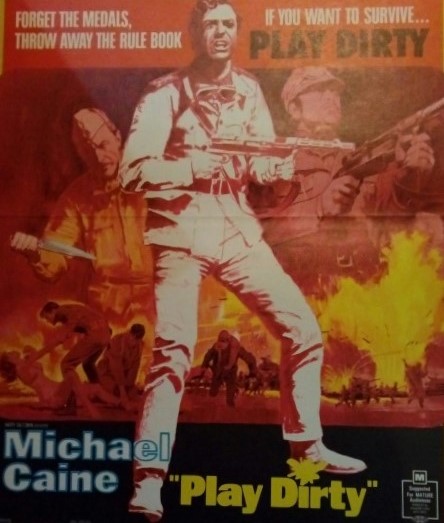
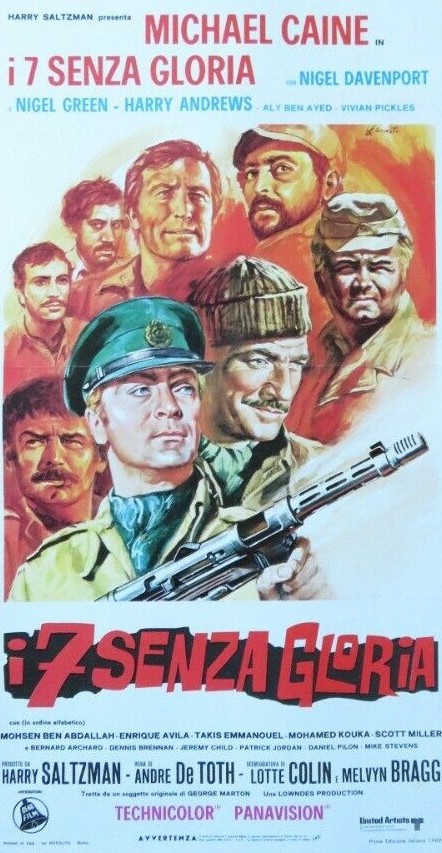
Brigadier Blore (Harry Andrews) appoints raw officer Captain Douglas (Michael Caine) to take charge of the next mission – a 400-mile trek to blow up a fuel dump.  Col Masters (Nigel Green), in overall charge of the commandos, bribes Leach to ensure Douglas comes back alive. Blore is using this small unit as a decoy before deploying a bigger outfit to complete the mission with the singular aim of snaffling the glory for himself.

Leach proves insolently disobedient, forcing Douglas at one point to draw his weapon on his crew. But when it comes down to a question of heroism vs survival, Leach takes control at knifepoint, preventing Douglas going to the aid of the larger outfit when ambushed by Germans.

It’s mostly a long trek, somewhat bogged down by mechanics of desert travel. You’ll be familiar with the process of rescuing jeeps buried in sand dunes and of personnel sheltering from sandstorms, so nothing much original there. What is innovative is the terrain. Stones aren’t conveniently grouped together, edges softened by time, as on a beach. They’re jagged- edged and less than a foot or so apart so as to more easily shred tires. So there’s a fair bit of waiting while tires are replaced.

Some decent tension is achieved through sequences dealing with mines – threat removed in different fashion from Tobruk (1967) or, for that matter, The English Patient (1996) – and in crawling under barbed wire.  But that’s undercut by the sheer brutality of the supposed British heroes slaughtering an Arab encampment and viewing a captured German nurse as an opportunity for rape.  

A couple of twists towards the end raise the excitement levels but it’s less an action picture than a study of the ordinary soldier at war. Captain Douglas, the only character worth rooting for, soon loses audience sympathy by foolish action and behavior as criminal as his charges.

A few inconsistencies detract. For a start, there’s no particular reason to assign Douglas to this patrol. Primarily a backroom boy, he’s put in charge because he was previously an oil executive. But it hardly takes specialist knowledge to lob bags of explosives at oil drums. And the ending seems particularly dumb. I can’t believe Douglas and especially the canny Leach, both dressed in German uniforms, would consider walking towards the arriving British forces waving a white flag rather than stripping off their uniforms and shouting in English to make themselves known to the trigger-happy British soldiers.

And a good chunk of tension is excised by the bribery. Why not leave the audience thinking that at any moment the bloody-minded Leach would dispatch an interfering officer rather than offering him a huge bounty (£75,000 at today’s prices) to prevent it?

It suffers from the same affliction as The Victors (1964) in that it sets out to make a point and sacrifices story and character to do so. That individuals will be pawns in pursuit of the greater good or glory is scarcely a novel notion.

Having said that, I thought Michael Caine (Gambit, 1966) was excellent in transitioning from law-abiding officer to someone happier to skirt any code of conduct. There’s no cheery Cockney here, more the kind of ruthlessness that would emerge more fully grown in Get Carter (1971). Nigel Davenport (Life at the Top, 1965) adds to his portfolio of sneaky, untrustworthy characters.  Equally, Harry Andrews (The Charge of the Light Brigade, 1968) has been here before, the kind of upper-class leader who behaves like a chess grandmaster.

In his first picture in half-a-decade Andre de Toth (The Mongols, 1961) produces a better result than you might expect from the material – screenplay courtesy of Melvyn Bragg (Isadora, 1968) and in her only known work Lotte Colin, mother-in-law of producer Harry Saltzman – and creates some exceptionally tense scenes and the occasional stunning image.

Anti-war campaigners line up here.

Circle of Deception (1960) ***

What the enemy do to an Allied spy is nothing compared to his friends. Blood brother to The Spy Who Came in from the Cold (1965) and The Quiller Memorandum (1966) where agents are mere pawns in a bigger game, this is set on the eve of D-Day. The old trope of sending a spy in with misleading information is turned upside down in that this isn’t a corpse as in The Man Who Never Was/Operation Mincemeat, but live bait.

Except the agent doesn’t know he’s being used and has been chosen because he is deemed to have sufficient courage to stand up to initial torture but not hold out forever so that when he inevitably breaks the secrets he spills are believable.

As you might expect, being accustomed now to misleading posters, Suzy Parker, given top-billing here, is nothing like as wanton, nor for that matter as bosomy.

Ruthless Capt Rawson (Harry Andrews) who devises the cunning plan employs psychiatric assessment and the romantic wiles of his secretary Lucy (Suzy Parker) to select the correct victim, Paul Raine (Bradford Dillman). “A perfectly good man is exactly what we don’t want,” expounds Rawson.

War is gender-neutral. Although from the off, Rawson is unscrupulous, with only a modicum of conscience, Lucy is more human, and when she is drawn into the deception, initially just to report on Raine’s qualities, she proves as ruthless, though afflicted more by conscience, a factor her boss dismisses as making women “singularly unsuited” for war, despite the fact that she is making greater sacrifice, having fallen in love with Raine.

Orphaned, Raine covers up the emotional instability detected by psychiatrists with derring-do, battling through terror out of fear that he will be consumed by fear. A Canadian who speaks French he is the right “wrong man” for the job. 

Considerable effort goes into ensuring he won’t be caught out by detail. His French-bought watch has an English strap, for example. And although, once on enemy territory, his innate skills mean he evades capture for longer than intended. He slips off a train, passes himself off as a woodcutter’s temporary assistant.

Unaware of the plot against him, when captured and brought before “good” German Capt Stein (Robert Stephens), who respects a gentleman officer, he refuses to give up his secrets, undergoing a whipping, electrocution and a primitive though equally effective form of water-boarding. At the very last, courage long gone, he aims to deprive his captors of victory by biting on a cyanide pill hidden in his tooth only to discover this is missing.

After that, all that is left is irony. He is treated as a hero, officially accorded a medal, but post-war hiding behind a bottle in Tangiers because he can’t face the truth. Lucy, scarred by her experience, knowing she is as guilty as her superior in destroying a man, tries to retrieve an irretrievable situation.

After only really knowing Bradford Dillman as often a one-note supporting actor, I’ve been surprised to discover he has a greater range of acting skills to offer. A Rage To Live (1965) provided one insight and Sgt Ryker (1968) another but this is on a different plane, mean-budgeted B-picture though it is.  It’s a difficult part to pull off, afraid that his bold exterior hides a cowardly personality, and that in the final analysis his soul will be laid bare. There’s not much help in the script. He doesn’t get to explore his fears with Lucy except in the most basic fashion. He has to rely on facial expression, rather than screaming his head off, to get across the rest of it. And he is pretty exemplary on that score. And since he’s Canadian that can hardly be put down to having learned the British stiff-upper-lip.

Suzy Parker (The Interns, 1962) , formerly the world’s highest-paid model (and soon to be Mrs Dillman), has mastered her stiff-upper-lip as well as a passable British accent. She’s not permitted much in the way of anguish script-wise, and lacks Dillman’s acting skills in presenting interior feelings. But, equally, her character is a subordinate and a well brought-up English lass, as she would need to be to qualify for such a post, would not make her feelings known too forcefully to her commanding officer.

A Richard Burton or a Peter O’Toole might have injected more into the part, but Dillman does more than enough. It’s a shame Hollywood failed to recognize his talent. In his final picture Jack Lee (A Town Like Alice, 1957) directs admirably, though I could have done without the flashback structure, it might have added more tension to not know the outcome, and the rescue sequence seemed an anomaly.

Otherwise, crisply told and a precursor to the cold-blooded spy stories to come. 

Discover WordPress

A daily selection of the best content published on WordPress, collected for you by humans who love to read.

The Atavist Magazine

by Brian Hannan

WordPress.com News

The latest news on WordPress.com and the WordPress community.