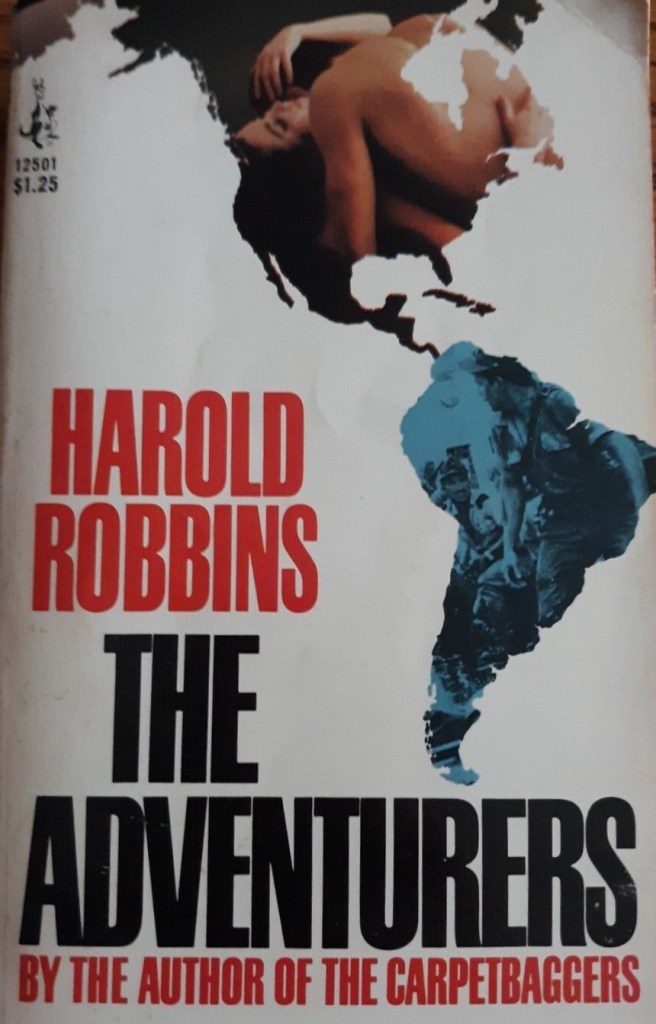
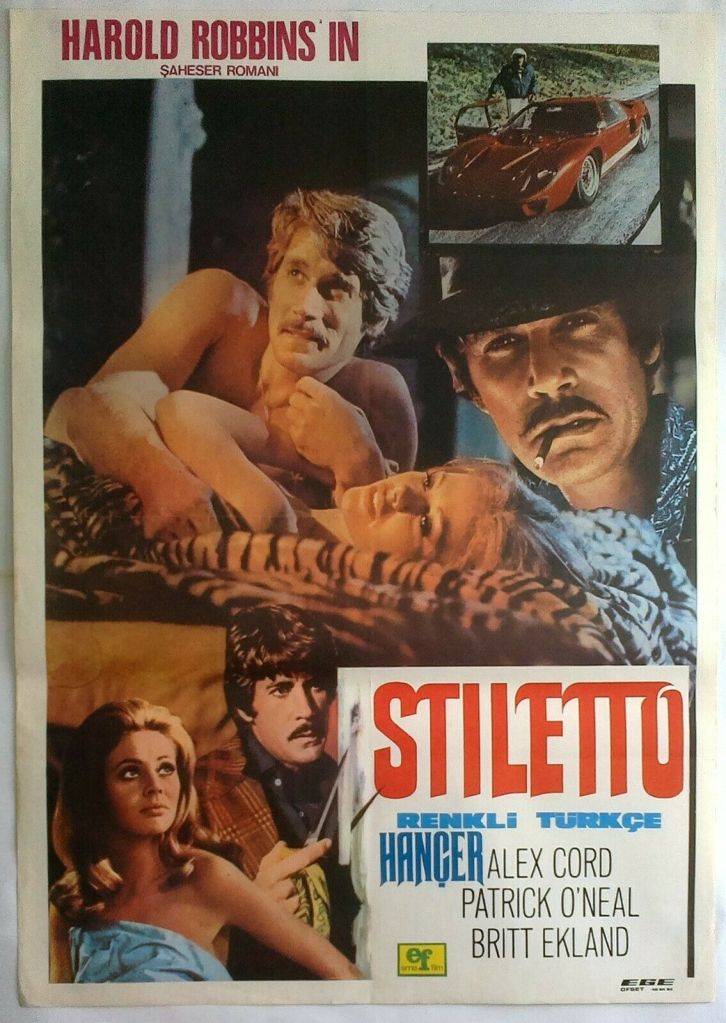
Stiletto (1969) ***

The bursting of the B-movie bubble dealt a death blow to the careers of the two stars here. In the past, rising talent who failed to make the marquee grade could find almost a lifetime of contentment in low-budget westerns, neo-noir thrillers and down’n’dirty exploitationers with the hope of an occasional supporting role in a bigger picture to ease their path. By the end of the decade, just about the only option were Roger Corman biker flicks or spaghetti westerns. Especially if they had gone down the tough guy route, B-pictures might have provided an exemplary move for both Alex Cord and Patrick O’Neal. As it was, this was their last shot at the big time. And it was lean pickings.  

Retirement can be a tough call any time for a high-flying businessman. But when you’re at the top of your profession in the Mafia, loosening such ties can prove problematic. Count Cesare (Alex Cord) is a part-time assassin, spending the rest of his time as a fun-loving playboy with a string of women, fast cars and racehorses. Only problem is, he wants to retire from the Family – and not in normal fashion, weighted down by a block of cement. Unfortunately, his dilemma doesn’t solicit sympathy from boss Matteo (Joseph Wiseman).

Adding to his problems is tough cop Baker (Patrick O’Neal) on his tail who fastens onto illegal immigrant Illeana (Britt Ekland), Cesare’s girlfriend when he’s not pursuing Ann (Barbara McNair). A strictly by-the-numbers thriller it’s enlivened by two underrated tough screen hombres. Alex Cord (The Brotherhood, 1968) isn’t given enough of a character here to  tug at audience heartstrings although elsewhere he had proved better-than-expected value. If anything, he’s an existential kind of hero.

Cord made a brief splash as an action hero in the monosyllabic Clint Eastwood/Charles Bronson mold after debuting in the John Wayne role of the Ringo Kid in the remake of Stagecoach (1966) and didn’t have more than half a dozen stabs at making his name on the big screen before disappearing into the television hinterlands. So he’s something of an acquired taste, maybe the small output enough to qualify him for cult status. Here, he’s a decent fit for the violence but saddled with a role that makes little sense.

Patrick O’Neal (El Condor, 1970) followed a similar career trajectory, swapping television with the occasional movie and even managing a screen persona as a snarky type of villain/supporting character. A few more tough-guy roles and he might well have built a stronger footing in the business.

This is another thankless role for Britt Ekland (Machine Gun McCain, 1969), there to add glamor, but, surprisingly, she manages to bring pathos to the part. Barbara McNair (If He Hollers Let Him Go, 1968), always worth watching and who had made an auspicious debut the year before, hardly gets any screen time. 

Director Bernard L. Kowalski (Krakatoa, East of Java, 1968) proves better at the action than the characterization, though, luckily nobody needs to be anything other than tough. Three scenes, in particular, are well handled – the opening murder in a casino, a shoot-out a penthouse and the climax on a deserted island which has more than a hint of a spaghetti western. Joseph Wiseman (Dr No, 1962) rustles up another interesting performance and collectors of trivia might note Roy Scheider (Jaws, 1975) putting in an appearance.

This old-style tough-guy thriller would have been better off had the Cord vs. O’Neal set-up taken center stage, with the assassin on murderous overkill hunted down by the zealous cop. As it is, it’s a missed opportunity for Cord to develop an Eastwood/Bronson persona and enter the action star hall of fame.

Based on a thin Harold Robbins bestseller, the screenplay by W.R. Burnett (The Great Escape, 1963) and A.J. Russell (A Lovely Way to Die, 1968) doesn’t take any prisoners.

Doesn’t quite deliver what it says on the tin, but interesting to see Cord and O’Neal battle it out.
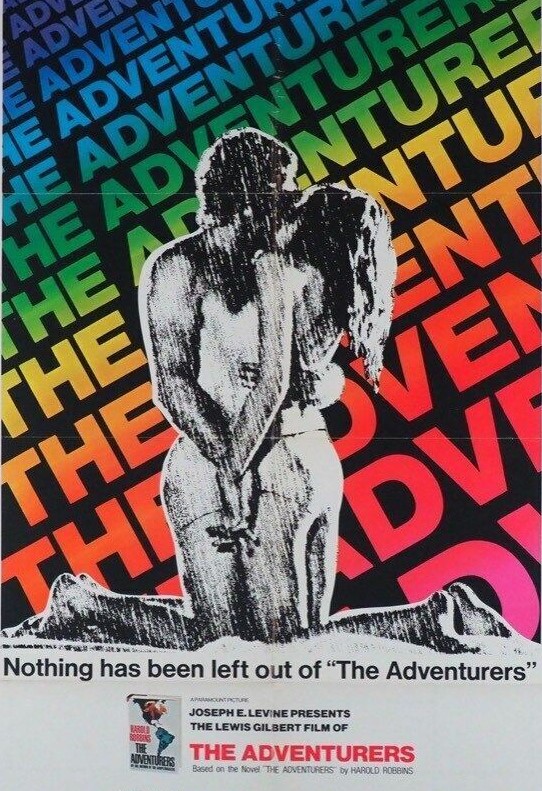
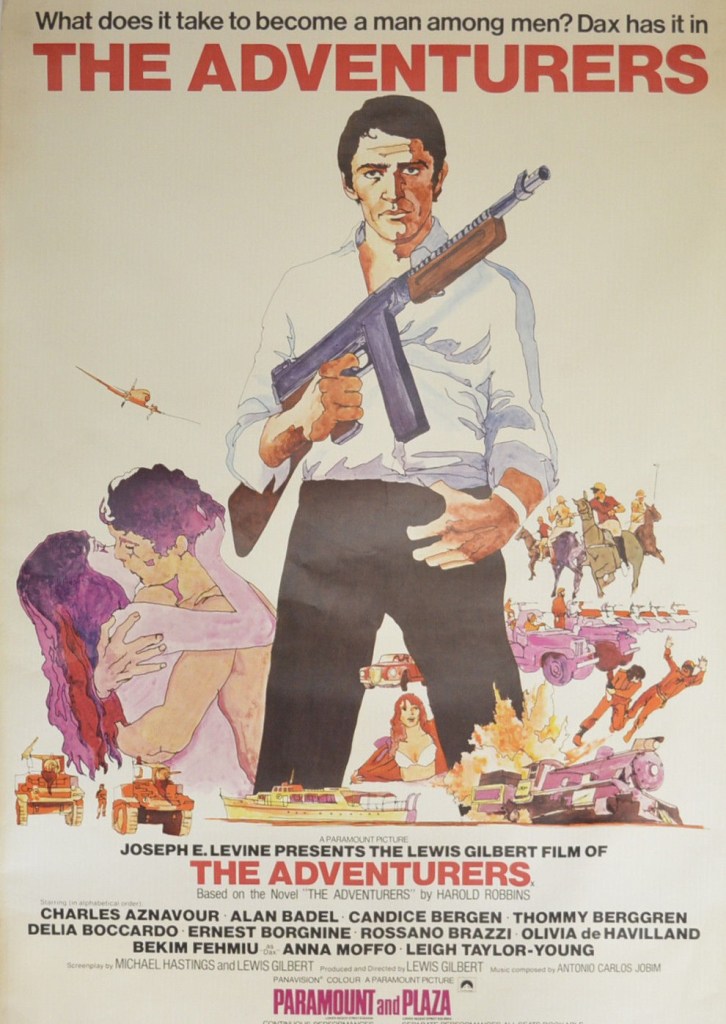
Behind the Scenes: “The Adventurers” (1969)

Lewis Gilbert was on a career high. After a string of flops – Loss of Innocence/The Greengage Summer (1961) and The 7th Dawn (1964) – he had bounced back with the critically-acclaimed and Oscar-nominated box office hit Alfie (1965), cementing his commercial standing with You Only Live Twice (1967).

Next up was Oliver!, the adaptation of the Lionel Bart musical. Gilbert had bought the rights to the songs after its debut in 1960 – from British singer Max Bygraves of all people who owned a music publishing company – but was prevented from filming it until it had completed its Broadway and London runs, as was standard with hit musicals. In the wake of Alfie he was prepping the musical, turning down the likes of Richard Burton and being forced to consider Julie Andrews and Dick Van Dyke for the leading roles. But he had also signed a very beneficial contract with Paramount chief Charles Bluhdorn.

Gilbert took it as read that he had Bluhdorn’s agreement to make Oliver! first. By now, he had co-written the script with Vernon Harris, was in the process of finalizing costumes, choreography, musical arrangements and sets, and was all set to make the movie “he had been born to direct.”

Bluhdorn had other ideas. He had taken over Harold Robbins’ big, brash bestseller The Adventurers from Joseph E. Levine who had bought the rights for $1 million in 1963. A script by John Michael Hayes (Nevada Smith, 1966) had been scrapped, but Bluhdorn had made little headway and with the studio under the cosh after investing too much in flops, was desperate for a safe pair of hands. Gilbert soon realised that in Hollywood a person’s word was not their bond. Bluhdorn knew all about contracts and had signed an unhelpful one himself, which set him a tight deadline to deliver a picture.  

Gilbert threw away the unwieldy screenplay written by Robbins and settled down with playwright Michael Hastings (The Nightcomers, 1971) to condense the equally unwieldy novel down to a two-hour running time. But once again Bluhdorn had other ideas. After Gilbert had begun pruning, Bluhdorn demanded a three-hour roadshow. Then he sprung another surprise. “Stars are out of date,” he announced, “We don’t need them.”

That was a blow to Gilbert who had envisioned Alain Delon (Once a Thief, 1965) for the leading role of a cold-hearted but suave playboy. The actor’s personal reputation for squiring many of the most beautiful women in France meant he was viewed by an audience as a man with abundant charm. And his films roles had proved he could easily pass for cold-hearted. So it was with reservations that Gilbert turned instead to unknown Bekim Fehmiu from Bosnia Herzegovina who had attracted critical plaudits for I Even Met Happy Gypsies (1967), winner of the Palme D’Or at Cannes.

Initially, production was going to be split between Paris and Colombia until the 1968 riots put the French capital out of commission. French actors like Louis Jourdan (Can-Can, 1960) already cast were dumped. Rome proved a good substitute, but the four main studios were already occupied, forcing the production to take whatever space remained available in all of them. Venice and New York City were also briefly used.

To speed up production, and switch the locales from France to Italy, Gilbert employed other writers, Clive Exton (10 Rillington Place, 1971) and Jack Russell (Friends, 1971), as well as Hastings, each working independently of the other, the whole being coordinated by Vernon Harris.

The cast mixed experience with newcomers. As well as Fehmiu, Gilbert recruited relative beginners Candice Bergen (The Magus, 1968) in her fifth film, Swede Thommy Bergrenn (Elvira Madigan, 1967)  making his Hollywood debut, Leigh Taylor-Young, only known at this point for her debut I Love You, Alice B. Toklas (1968) and Italian Delia Boccardo, leading lady in Inspector Clouseau (1968).

Heading up the veterans were double Oscar-winner Olivia De Havilland, Oscar-winner Ernest Borgnine, a supporting player in items like Ice Station Zebra (1968), and Italian Rossano Brazzi (Krakatoa, East of Java, 1968) who had fallen a long way down the credits since the heights of South Pacific (1958). As makeweights – essential for an “international all-star cast” – were Spaniard  Fernando Rey (Villa Rides, 1968), French singer Charles Aznavour and British character actor Alan Badel (Arabesque, 1966).

At the end of the Rome shoot, Gilbert declared himself “surprisingly optimistic.” Colombia killed that off. The only way to reach many remote locales was on horseback. Actors whose contracts dictated travel by luxury transport found their vehicles could not negotiate steep narrow pathways. Six thousand extras recruited from dozens of small villages had to get up at 3am to walk, in the absence of transport and roads, to a main location in a small town where catering for such numbers was in itself a major logistical exercise.

Accommodation for the stars was difficult to find. One location only had one hotel and that with only four rooms. Gilbert tore ligaments in his foot, making walking impossible. He directed all future outdoor scenes atop a horse like a “great old-time director in the days of silent films.”

The South American scenes, pivoting on blood-thirsty violence and revenge, were at odds with the ones filmed in Rome that showcased high society and seductive sex. The two halves were an uneasy mix at best. And the actor who was meant to bind them was not working out.  As the movie wore on, Gilbert realized Fehmiu was miscast. While Fehmiu could match Delon’s exploits with women, Brigitte Bardot reputedly among his conquests, he lacked the Frenchman’s easy manner on screen and never convinced as a romantic playboy.

“One thing you know in films,” said Gilbert, “is that you always end up with what you begin with. If you begin with a piece of s*** that’s what you’ll end with, doesn’t matter how you change things or what you try. The story couldn’t be told in under three-and-a-quarter hours…it had been deliberately structured for a certain type of audience” which didn’t really exist back then.

Paramount virtually committed publicity suicide by holding the press show on a Boeing 747. Even a Jumbo Jet could not present the movie on anything except a tiny screen which made nonsense of the movie’s 70mm credentials. While projected on one screen, it was only shown in 16mm, people at the back could hardly see it  and the sound was terrible. Gilbert considered it “the worst experience of my life.” Worse, few people had ever flown a 747 before so to quell nerves, the journalists were tanked up, which didn’t help their mood when they came to write scathing reviews.

After the press screening, it was heavily cut. And with roadshow on the way out, it received few 70mm bookings in the U.S. though that format was more welcomed in Europe. (In my local city of Glasgow, in Scotland, it ran for 10 weeks in roadshow presentation at the ABC Coliseum, a decent stint).

Oddly enough, it was relatively well-received by audiences. It pretty much made its money back which was a big achievement given the budget and certainly did not fall into the category of being a loser.

SOURCES: Lewis Gilbert, All My Flashbacks,(Reynolds and Hearn, 2010) p279-288, p295-304; “Interview with Lewis Gilbert,” British Entertainment History Project, August 13, 1996, Reel 13; Brian Hannan, Glasgow at the Pictures, 1960-1969, (Baroliant, due later this year).

Nevada Smith (1966) ****

Half breed Max Sand (Steve McQueen) has little truck with the notion that revenge is a dish best served cold. But he’s too young and raw, far from Lee Marvin’s callous killer in Point Blank (1969), to properly avenge the slaughter of his family by three outlaws.

This is a coming-of-age tale with a distinct difference. Max’s development includes, apart from initiation into sex of course, learning to read and write so he can make sense of signposts in order to track down the murderers and receiving tuition from gunsmith Jonas Cord (Brian Keith) so that he can at least loose off some shots without doing himself damage. Vengeance burns so deep that he even stages a bumbled robbery so he can be sent to the prison where the second of his targets is incarcerated. Now that’s dedication for you. And along the way he learns the most important lesson of all, how to live, and not destroy himself through vengeance.

Even so, all Cord’s tuition counts for nought when Max needs a knife to dispatch his first victim Coe (Martin Landau). And he’s not yet so slick with a weapon to avoid serious injury himself. Kiowa saloon girl Neesa (Janet Margolin) nurses him back to health at her tribe’s camp. They become lovers but he rejects the wisdom of the elders and the opportunity to make a life with her.

Unfortunately, Bowdre (Arthur Kennedy)  is a jailbird. And worse, held prisoner in a swamp. Probably the worst bank robbery ever committed sends Nevada there. Max enrols another woman, Cajun Pilar (Suzanne Pleshette) working in nearby rice fields – fraternisation between the jailbirds and these women permitted – to steal a boat to help him and Bowdre escape. Bowdre gets his and this time it’s Pilar who is the collateral damage.

A genuine outlaw now, Max has no trouble joining a band of robbers headed by Fitch (Karl Malden), the final prey. By now calling himself Nevada Smith, Max’s plans are thrown into confusion when it becomes apparent Fitch is aware of his true identity. A surprise ending is on the cards whichever way you cut it, and especially thrilling since it occurs during a well-planned gold bullion robbery.

It’s a film of two parts but divided into three if you like, the unusual swamp setting fitting in between two sections of more straightforward western. Though in the hands of director Henry Hathaway (True Grit, 1969), there is little that’s so straightforward given his mastery of the widescreen and his hallmark extreme long shot. He’s capable of moving from the extreme violence of the vicious murder and rape of Max’s mother to the son’s discovery of the bodies shown just through Max’s physical reaction. And there’s some irony at play, too: gold triggers slaughter and climax; mental dereliction not as feared as its physical counterpart.

Although Hathaway was a true veteran, he was not best known for westerns in the manner of John Ford, more at home with film noir (Kiss of Death, 1947), war (The Desert Fox, 1951) and big-budget pictures like Niagara (1954) with Marilyn Monroe and Legend of the Lost (1957) teaming John Wayne and Sophia Loren. In a 30-year career he had only made three westerns of note – The Trail of the Lonesome Pine (1936), Rawhide (1951) and Garden of Evil (1954). So it was something of a surprise that in the 1960s over half his output was in the western genre. And unlike Ford and Howard Hawks who stuck to the formula of action within a defined community, Hathaway tended towards films of adventure, where the main character, often of a somewhat shady disposition, wandered far and wide.

Steve McQueen (The Cincinnati Kid, 1965) carries the picture with some aplomb, moving deftly from the wet-behind-the-ears youngster to a clever and calculated killer and still retaining enough humanity to enjoy a romantic dalliance. There’s enough action here to satisfy McQueen’s fans spoiled by The Magnificent Seven (1960) and The Great Escape (1963) and for those who had come to appreciate his acting plenty to enjoy. This and The Cincinnati Kid, where perforce as a poker player, he had to do a great deal of brooding, solidified his screen persona, a star you can’t keep your eyes off, wondering what on earth is going on in his mind. As much as he’s playing a character finding his feet, this is McQueen at very nearly the top of his game.

Brian Keith (The Rare Breed, 1966) is the pick of the support, adding a little softness to his usual more hard-nosed screen characters. The villains – Karl Malden (The Cincinnati Kid), Martin Landau (The Hallelujah Trail, 1965) and Arthur Kennedy (Claudelle Inglish, 1961) – are all good in their own different ways, and in the hands of excellent actors, easily differentiated. Suzanne Pleshette (Fate is the Hunter, 1964) shines in a too-brief role.

The sterling supporting cast includes Janet Margolin (Bus Riley’s Back in Town, 1965), Pat Hingle (Sol Madrid, 1968) and Raf Vallone (The Secret Invasion, 1964). John Michael Hayes (Harlow, 1965) fashioned the screenplay from The Carpetbaggers by Harold Robbins. 

Although Hollywood had been prone to sequels – Father’s Little Dividend (1951) following Father of the Bride (1950), Return to Peyton Place (1961), Return of the Seven (1966) etc – there had been no perceived market for prequels, so this was something of a first, Alan Ladd having essayed an older and considerably more sophisticated Nevada Smith in the 1964 film of Harold Robbins bestseller. 

Stiletto (1969) ***

Tough talking Patrick O’Neal (Castle Keep, 1969) whose “hello” is usually accompanied with a fist enlivens this adaptation of a slim bestseller by Harold Robbins as cop George Baker on the trail of Mafia hitman Count Cesari Cardinali (Alex Cord ). Unusually, Cord was the go-to star for producers of Mafia pictures, his previous movie being The Brotherhood (1968). Equally unusual, Cardinali is a part-time assassin, spending the rest of his time as a fun-loving playboy with a string of women, fast cars and racehorses. Only problem is he wants to retire – and not in normal fashion, weighted down by a block of cement. Unfortunately, his dilemma is hardly one to solicit sympathy from an audience much less Mafia boss Emilio Matteo (Joseph Wiseman) and Cord isn’t enough of an actor in any case to tug at the heartstrings.

Cord made a brief splash as an action hero in the monosyllabic Clint Eastwood/Charles Bronson mold after debuting in the John Wayne role of the Ringo Kid in the remake of Stagecoach (1966) and Italian-made A Minute to Pray, A Second to Die (1967). But didn’t have more than half a dozen stabs at making his name on the big screen before disappearing into the television hinterlands. So he’s something of an acquired taste, maybe the small output enough to qualify him for cult status. Here, he’s a decent fit for the violence but saddled with a role that makes little sense and sure enough he soon discovers that Wiseman doesn’t consider him a candidate for a pension while O’Neal bullies witnesses into providing the legal ammunition to bring the gangster down.

One such person is illegal Polish immigrant Illeana (Britt Ekland), Cardinale’s girlfriend when he is not chasing Ahn Dessie (Barbara McNair). This is another thankless role for Ekland (Machine Gun McCain, 1969), there to add glamour, but, surprisingly, she manages to bring pathos to the part. McNair, who is always worth watching and had made an auspicious debut the year before in If He Hollers, Let Him Go, hardly gets any screen time.  But it’s O’Neal (Alvarez Kelly, 1966) as the ruthless cop who holds it all together.

Director Bernard L. Kowalski (Krakatoa, East of Java, 1968) proves better at the action than the characterization, though, luckily nobody needs to be anything other than tough. Three scenes, in particular, are well handled – the opening murder in a casino, a shoot-out at a penthouse and the climax on a deserted island which has more than a hint of a spaghetti western. Wiseman (Dr No, 1962) rustles up another interesting performance and Roy Scheider (Jaws,1975) also appears.

This old-style tough-guy thriller would have been better off had the Cord vs. O’Neal set-up taken center stage, with the assassin on murderous overkill hunted down by the zealous cop. As it is, it’s a missed opportunity for Cord to develop an Eastwood/Bronson persona and enter the action star hall of fame. This was the seventh adaptation of the books of bestseller writer Harold Robbins after Never Love a Stranger (1958), A Stone for Danny Fisher (filmed as King Creole in 1958), The Carpetbaggers (1964) – which also resulted in Nevada Smith (1966) – and Where Love Has Gone (1966).

This isn’t easy to get hold of but you are more likely to find it will find it on Ebay (new) than Amazon.

Discover WordPress

A daily selection of the best content published on WordPress, collected for you by humans who love to read.

The Atavist Magazine

by Brian Hannan

WordPress.com News

The latest news on WordPress.com and the WordPress community.