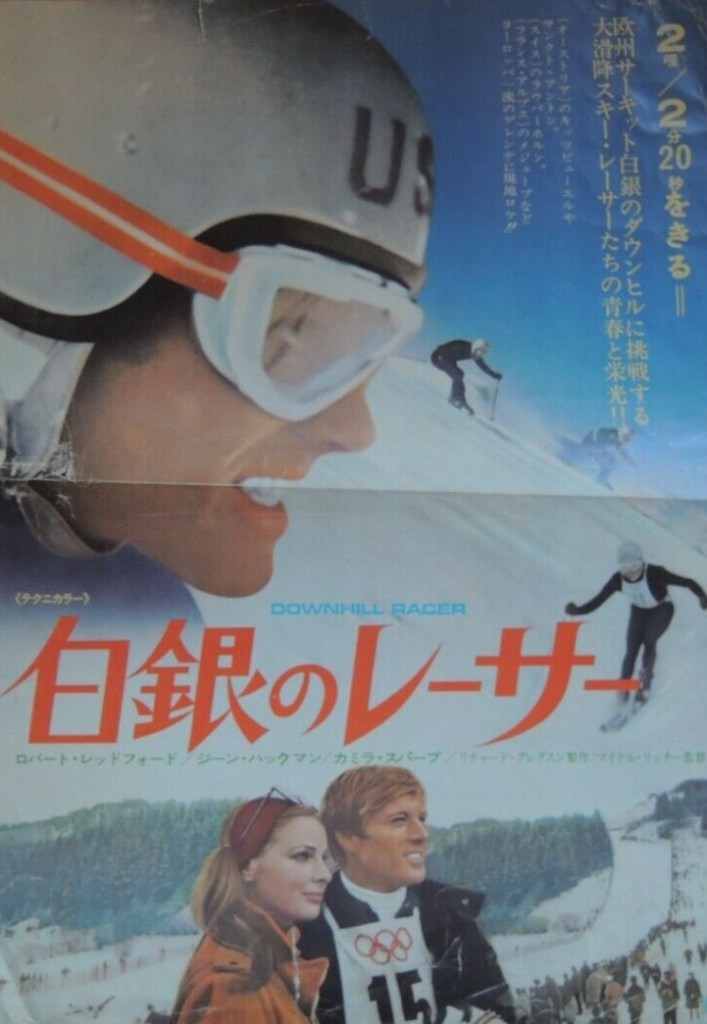
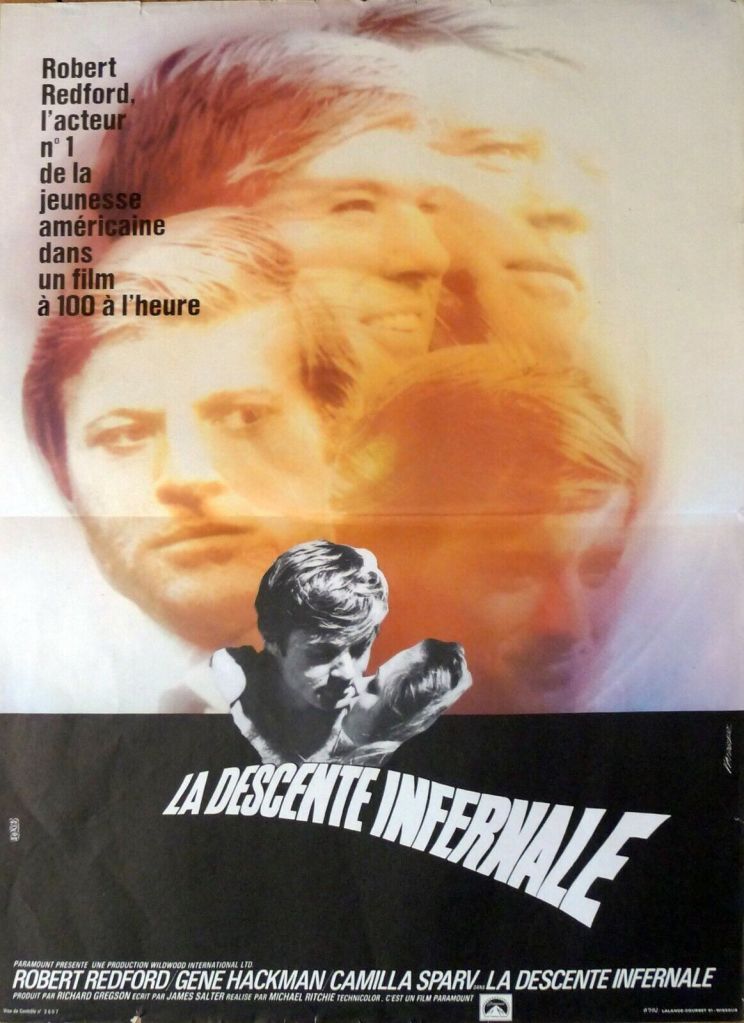
Downhill Racer (1969) ***

Robert Redford rarely took the easy option. Even his big romantic number, The Way We Were (1973), with Barbra Streisand had a serious center, Jeremiah Johnson (1972) focused on ecology and he used his star power to get studio backing for All the President’s Men (1976). Even starting out, and before Butch Cassidy and the Sundance Kid (1969) anointed him a star, when he could, or should according to some observers, have been capitalizing on his good looks he did not shrink from playing unlikeable characters.

Idealizing heroes is endemic. Most films which portray sport stars with feet of clay generally begin with an attractive personality who presses the self-destruct button through alcohol, sex or drugs (or all three) such as Number One (1969) with Charlton Heston. The general consensus is that this approach to the sports movie was not rescinded until the brutal boxer exposed in Scorsese’s Raging Bull (1980).

But it turns out Scorsese was not the first. In this ski drama Chappellet (Robert Redford) is a loner who cares for no-one but himself. Alienated from his father (Walter Stroud), his girlfriend at home little more than a sex object, the obsessed skier proves a constant source of friction for his national team manager Claire (Gene Hackman) and not above the kind of dirty tricks as typified in Slap Shot (1977). He sees nothing wrong with making no bones about the fact that he is in the game for fame.

Totally lacking in self-delusion, he’s a farm boy and few steps up from being illiterate. The world of the professional skier was hardly the obvious subject for a sports drama. There’s certainly an excitement in the action that couldn’t be captured on television, but the essential competitive element, the race against the clock, is not so riveting as the last-minute touchdown or winning home run.

Pretty much Chapellet’s only attractive feature is that he is played by Robert Redford, and the film plays upon the conceit that as handsome a man as this will at some point turn into a good guy.  There’s an interesting debate – and one that would last decades – about whether Redford’s looks got in the way of the characters he portrayed. Imagine Robert Duvall in the part, for instance, and relentless determination would not be called into question.

This leaves the film with only pity as a way to provide the character any sympathy, the sense that if he turns into a loser the audience will warm more to him than if he is a champion, but that arrives outside the competitive circle, and perhaps is even more touching, when his hopes of genuine romance with top-notch blonde Carole (Camilla Sparv) are dashed. 

Michael Ritchie (The Candidate, 1972), making his directing debut, opts for a documentary-style approach, so minimalist it’s almost perfunctory. This is a decent option given there’s very little going on beyond lonely hotel rooms, and an endless round of competitions and an occasional outburst from the manager. The skiing scenes, sensational at the time, are boosted by Blu Ray. Although it gained good reviews, audiences failed to respond although Redford was on a career high after Butch Cassidy and the Sundance Kid (1969).

While it was a brave choice for the actor, the script by James Salter (Three, 1969), based on the Oakley Hall bestseller, doesn’t bring enough insight, though you could argue it was intended to keep the character at arm’s length.  A novel can be engaging enough just by opening up an unusual world, but a movie needs to do more. This is pre-chuckle Gene Hackman (The Gypsy Moths, 1969)   and at this point you would probably have bet on him remaining a supporting player.

Redford, the thinking man’s actor, in embryo.

https://amzn.to/3MonLzM

The Gypsy Moths (1969) *****

Unsung masterpiece. In the same year, director Jphn Frankenheimer went from the career nadir of The Extraordinary Seaman to an absolute gem. Beautifully paced, exquisitely observed, with five heart-wrenching performances of naked repression. For star Burt Lancaster a companion piece to The Swimmer (1968), for leading lady Deborah Kerr better work than even The Arrangement (1969), for supporting actor Gene Hackman (Downhill Racer, 1969) a wake-up call to Hollywood. Sparked by thrilling aerial sequences. And like Easy Rider (1969) interprets transience as freedom.

And in the most stunning piece of directorial bravura since Alfred Hitchcock despatched Janet Leigh halfway through Psycho (1960), here John Frankenheimer, four-fifths of the way through, leaves the others to pick up the pieces after the star’s apparent suicide.

A trio of sky divers – Mike (Burt Lancaster), Joe (Gene Hackman) and Malcolm (Scott Wilson) – on a barnstorming tour of small town USA board with Malcolm’s estranged Aunt Elizabeth (Deborah Kerr) and Uncle John (William Windom) in the small Kansas town where he was born and orphaned at age ten. John clearly resents the intrusion, Elizabeth finds it impossible to even hug her nephew, but a single glance between Mike and Elizabeth says it all. She is the bored housewife, he the conqueror.

But for all the subsequent revelations that would be melodramatic meat-and-drink to the likes of Elia Kazan’s The Arrangement, the entire tone is low-key. While fuelled on regret, this is not a movie that feasts on it.

And quite astonishingly, there is a whole pile of information dumps that serve to add tension to the tale. The stars of the show are all involved in the nitty-gritty, penning dates and times on posters, sewing their kit, the bombastic Joe acting as marketing guru and cheerleader. In a talk to women’s group, while purportedly explaining how a parachute works, Mike gives his audience a whiff of danger. For the whole enterprise depends on coming close to death. The longer a sky diver takes to open his parachute, hurtling to the ground at 200 mph, the more the crowd soaks it up.

The sky divers are long past the days of thrill-seeking, this is just a job, they are itinerants with nobody meaningful in their lives. Sky diving is “not only a way to live but also a way to die as few things are.”

Except when the performer, Mike is so reserved he might almost have disappeared into a void except silence seems to fill out his personality. He embarks on an affair with Elizabeth with scarcely a word spoken.

The screenplay has an amazing structure, each character exposed in novel fashion. The extremely realistic Mike finds himself in the deep waters of imagination. The overly-confident Joe speaks of his fears to the topless dancer (Sheree North) he has picked up but only when she’s safely asleep. He beats his chest in Church as he recites the “I am not worthy” section of the old Catholic Mass. Even the dancer gets a couple of great lines, confiding in a friend that Mike would have been her first choice to bed but Joe proved a decent substitute.

And there’s just a wonderful, initially mystifying, set of scenes, that could easily have been cut, but left in display the director’s utter mastery. A cranky conductor is rehearsing a marching band for, we learn later, the Fourth of July parade, picking, as is the way of cranky conductors, on some innocent in the band. Come The Fourth of July the marching band turns into main street – and finds it empty. The entire town, in a demonstration of ghoul-ness, has decamped to watch Malcolm attempt the stunt that cost Mike his life.

Returning home, Malcolm finds no homecoming despite his childless aunt desperate for a surrogate son. If she was any more buttoned-up she would explode. “I just wasn’t very observant,” she observes, explaining how her sister stole away her lover. And when that couple died in a car accident, John, who married Elizabeth on the rebound, forbade his wife to adopt Malcolm because he didn’t want to be daily faced with the son of her true love.

So many scenes are wordless observation. We focus on the dead eyes of John, pretending to be asleep, when his adulterous wife returns. Elizabeth watches her husband in a mirror. Virtually every shot of Elizabeth reveals the torment of a woman desperately clinging on to sanity. Every shot of Malcom reveals rejection.

Characters are viewed in long-shot, through doors, or from the sky, and then in bold extreme close-up, but not in a kind of experimental fusion of style, but through careful directorial consideration. You feel that every shot is just the correct shot for the moment.

For once, Frankenheimer has no conspiracy theory to peddle, but oddly enough this bears similarity to the car crash of The Extraordinary Seaman in that it is riddled with ghosts, of choices not taken, of regrets taken root.

And there is something quite remarkable in the character construction. Both Mike and Malcolm are melancholic, sapped of energy. Into this gap bursts Joe, a vibrant personality, the one gets every party going and always ends up with a bottle in one hand and a girl in the other. It’s quite a stunning performance from an, at this point in his career, a scene-stealer of some style.

In previous films Gene Hackman was always doing something, the hallmark chuckle still in embryo, but his performance often got in the way. Here, the screenplay by William Hanley – based on the novel by James Drought – effectively places him center stage, taking up the slack from the other pair and Hackman responds by proving how he could carry a picture if he was in fact the star.

Scott Wilson (In Cold Blood, 1967) takes the opposite approach, drawing us in with his soulful eyes and a demeanor calling out for affection. He dominates the final section as he, too, contemplates suicide, a pretty tall order given at this point he is in the sky and his eyes are masked by goggles.

When Deborah Kerr asks Burt Lancaster, “Why are we so contemptible to you?” it’s the question she’s asking of herself and that self-loathing guides her repressed performance, occasional bouts of adultery her only release, but unable, as with her early lover, to charge headfirst into happiness.

Lancaster’s role is central but not over-dominant in the way of The Swimmer. While seemingly the picture’s anchor, Frankenheimer is duping the audience in the manner of Hitchcock. Lancaster is not the unshakeable monolith he appears, but a fragile heart.  

Critics, possibly still confounded by The Extraordinary Seaman and feeling Frankenheimer had shot his bolt, were pretty dismissive of this at the time. It doesn’t score highly on any of the current critical aggregate charts.

But I find that simply astonishing. If ever there was a movie demanding reappraisal, it’s this.

Just stunning.

Go see.

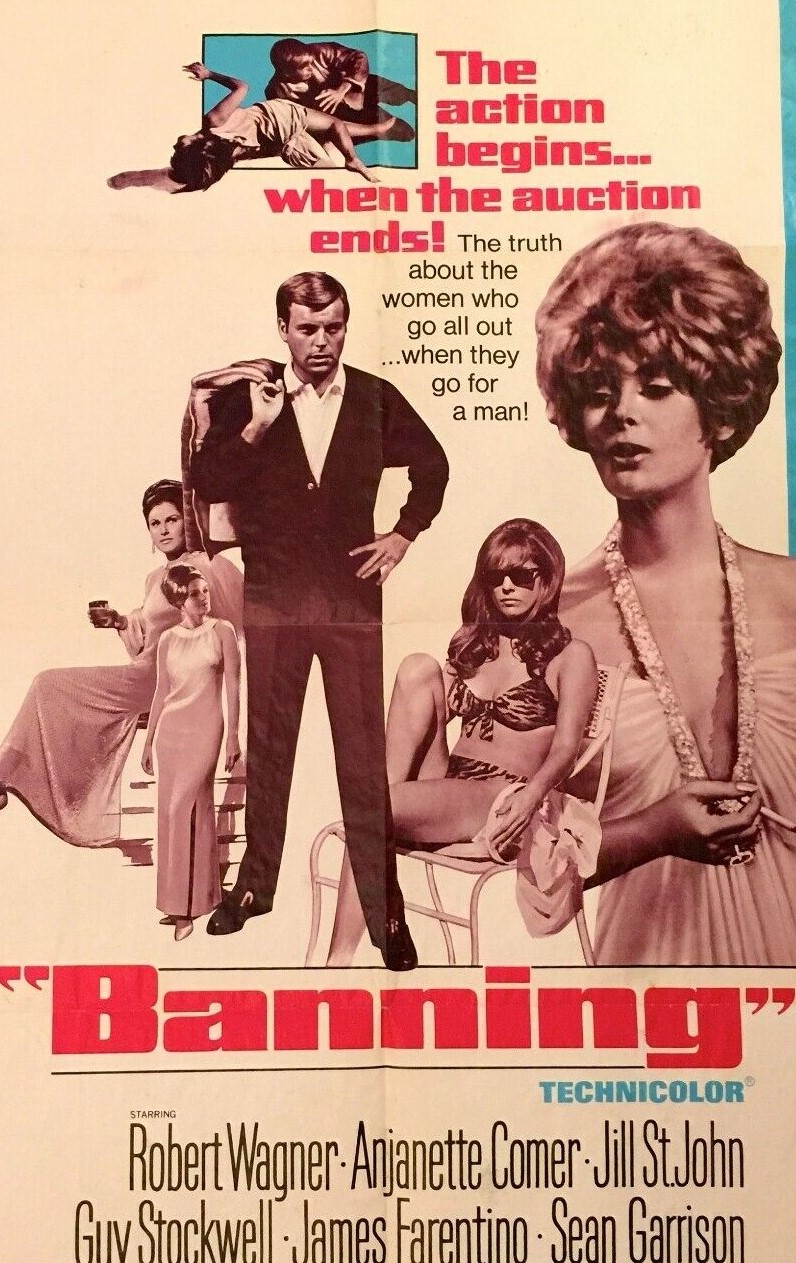
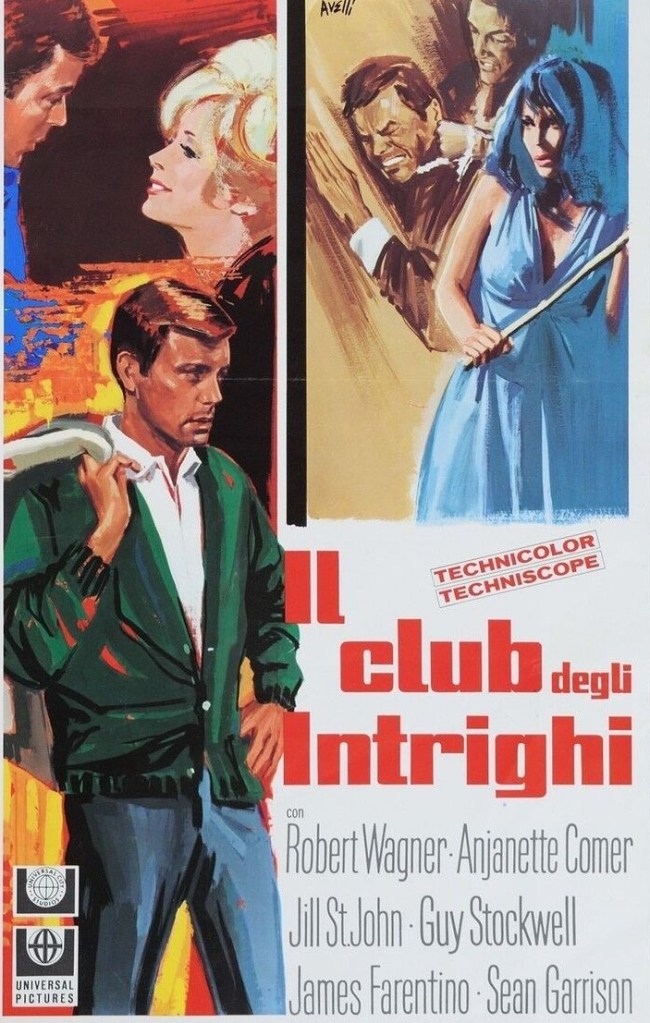
Banning (1967) ***

Robert Wagner’s bid for stardom is scuppered by a limp plot set in the overheated world of the country club set where a posse of sexually predatory women operate. It doesn’t help that the main narrative thrust finds trouble just hanging in there.

Ex-professional golfer Banning (Robert Wagner), a “moral diabetic” on the run from a loan shark, pitches up at an upmarket country club where he finds work as the assistant golf pro to Jonathan (Guy Stockwell). His most arduous task appears to be picking his way between the toned bikini-ed bodies lounging around the pool and avoiding the advances of Angela (Jill St John) and Jonathan’s wife Cynthia (Susan Clark) while coming on strong to overpaid secretary Carol (Anjanette Comer).

There’s an element of Life at the Top (1965) here, with Jonathan married to the boss’s daughter, resenting their close relationship while not making the executive advances he would like. Every now and then bits of what sound like a complicated past implicating Jonathan and the alcoholic Tommy Del Gaddo (Gene Hackman) pop up and around the halfway mark a subplot kicks in, involving something called a “Calcutta,” a golf tourney which looks like it’s being rigged.

Given that it’s organised by a club boss (Howard St John) who claims every gimme going and feigns drunkenness to skin members at poker, it’s almost a given that Banning is going to come out worst. I have to tell you you probably couldn’t care less, since most of the action, and all of the fun, is off course, and not so much in the bedroom stakes as the war between women for available men.

“I bought you,” purrs Angela in her  most seductive attire after she has made it possible for Banning to find a way to pay off his debts. “I want you,” snaps single mother Carol, making a forthright play after spending most of the picture fending off his advances. Standing on the side-lines, watching Angela making her moves, Cynthia observes, “I’d say Angela’s had at least a dozen husbands,” pause for the punchline, “including mine for all I know.”

Predatory moves are not all one way. Turns out the price Carol pays for a salary five times the going rate and a nice house and private schooling for her daughter is setting aside Thursday afternoons for Jonathan. But in the pragmatic manner that appears inbred in the country club, she states, “No apologies, no excuses.”

And before Carol works out just how attractive Banning actually is she had to cut him dead a couple of times and, in a scene guaranteed to put off the modern audience, prevent him drunkenly raping her. It was almost a throwback to the 1940s and 1950s when, it appeared, a woman just needed a good smack on the chops before she could submit and start billing and cooing.

Robert Wagner (The Biggest Bundle of Them All, 1968), tanned within an inch of his life, doesn’t so much miss the target as not being given a target worth hitting. There’s very little sense danger, of a man on the run from the mob or whichever gangster has picked up the tab for his debt, and he’s not a lounge lizard. Acting-wise, he relies on a raised eyebrow, an eye swivel and that scene-stealing trick, copyright Robert Vaughn, of raising his lowered head to open his closed eyes, a neat device for a supporting star but hardly required when you are top-billed.

Anjanette Comer (Guns for San Sebastian, 1968) doesn’t snatch the brass ring either, relying on a tremulous lower lip to evoke emotion. In fact, it’s a toss-up between the classier Jill St John (The King’s Pirate, 1967) and Susan Clark (Tell Them Willie Boy Is Here, 1969) as to who steals the most scenes, both winging it with striking dialog, emanating power, regarding men as weak and playthings.

Gene Hackman (Lilith, 1964), generally a prime contender for scene stealing, especially with trademark chuckle now in full swing, unfortunately does himself no favors by over-acting.  You might also spot James Farentino (Rosie, 1967) and Sean Garrison (Moment to Moment, 1966).

Ron Winston (Ambush Bay, 1966) directed from a screenplay by James Lee (Counterpoint, 1967). It would have worked better to concentrate more on the bitchy women than the sub-plots.

I’m sorry to say you’ll have a hard job finding this since I purchased my DVD on the second-hand market. Worth the hunt if you’re a fan of St John and Clark or to discover why Wagner’s promising screen career never took off.

Lilith (1964) *****

You couldn’t make this now. What top-ranked actor would be willing to play a character who takes sexual advantage of a vulnerable young woman? You’d find it even harder to get a marquee name to play a female with paedophiliac tendencies, predatory sexual instincts and thinks it fine to drive a lovelorn young man to suicide.

That it was feasible back in the day was largely due to the restraints imposed by the much-maligned Production Code. Most of the issues are delicately probed, the problematic themes only touched upon, so that the result is quite amazing, the director turning to the lyrical,  rendered by its intensity a metaphor for internal conflict.

War veteran Vincent (Warren Beatty) takes a job as an occupational therapist at an upmarket mental institution, the kind that looks more like a country club or grand hotel with extensive manicured grounds. Few of the inmates are of the type found in the normal hospitals for the insane, the worst cases a woman with a maniacal laugh and another who treats a doll like a baby, but he is warned insane women are more “sinister” than crazy men.

One of his charges is the withdrawn Lilith (Jean Seberg) whom he gradually coaxes out of her shell, soon believing that it is his innate skill that brings about the possibility that such a high-risk individual could possibly achieve something akin to cure, or at least a greater degree of normality. You can hardly blame him for missing the obvious – that Lilith is using him – for the young woman is every inch the winsome innocent seeking guidance from the more mature responsible male.

It’s mostly shorn of obvious metaphor but there is one scene, compelling in itself, where Vincent plays the knight on horseback, complete with lance, winning a contest of skills for his lady, that completes his idealisation in her eyes. But he is already halfway there, with unexpected dexterity he frees her hair caught in loom, the kind of scene that in an otherwise more romantically-inclined movie would be the meet-cute.

And this isn’t one of those films about a madwoman in an attic or an apparently sane person turning demented. Instead, considerable time is spent analysing the condition of the schizophrenic, either through clinical lead Dr Lavrier (James Patterson) expounding his theories or through Vincent discussing individual patients with his boss Dr Brice (Kim Hunter). The idea of opening up a new realm to an audience is crystallised in one scene where Lavrier explains that even spiders go mad, resulting in asymmetrical webs rather than the typical formations to which we are more accustomed.

And by using one of the oldest tricks in the book, an inexperienced young man negotiating a new world, disbelief is suspended. But just when we think we are seeing everything from Vincent’s perspective, we are thrown into a heightened intensity linked to the lyrical – a river, a waterfall – the madness of ecstasy, what used to be called rapture, as Lilith stares and stares at nature.

But there are warnings about the personality of both characters. Lilith bears a startling resemblance to Vincent’s dead mother. He has difficulty committing, lack of communication while away at war resulting in girlfriend Yvonne (Anne Meacham) marrying someone else.

And there is plenty that is disconcerting about Lilith that only the besotted would overlook. She leads on lovelorn Stephen (Peter Fonda) to potential disasters he cannot foresee. Angry at Vincent, “I show my love for all of you and you despise me,”  she seduces vulnerable older patient Laura (Jessica Walter). But the worst aspect of her character is that she perceives no boundaries to behavior. She exhibits inappropriate attitudes to young boys, inviting one to rub his finger along her lower lip.

However, for most of the film the skilful direction of Robert Rossen (The Hustler, 1961) has you rooting for the young lovers. Even while never falling back on the cliché of the doctor-type saving the ill person, there is enough in Vincent’s earnestness and Lilith’s innocence to make that a distinct possibility, were it not for the other discordant elements of her character.  The picture is wrapped in natural sound – the river, waterfall, a flute playing mournful tune, ping-pong ball hitting bat, reeds or branches parting, rain, footsteps, a ticking clock, and the bulk of the music emanates from Stephen’s radio. And then he will twist it slightly, reflections are seen upside-down in the river, or a shot of the waterfall is held for too long, the sound of water increasing, or Lilith standing in the river bends down to kiss the surface, or at a picnic she eats a leaf irrespective of whether it might be poisonous.

Usually, when you get so much detail it’s a surfeit, and ends up drowning the viewer. But that’s not the case here. Either it builds or expands. And there is even a throwaway that mocks the notion of containing madness in an institution. The best, most revealing, line in the  picture is not spoken by either of the two principals, but secondary character Yvonne, seen only at the beginning and end. When for unspecified reasons Vincent turns up at her house and her husband (Gene Hackman) leaves them on their own, she says, “I told you I’d never really let you make love to me until I was married,” (pause), “well, I’m married now.”

Jean Seberg (Moment to Moment, 1966) is just superb, coming across as a young woman entering adulthood full of fears and insecurities, only suggesting the darker side of her character, and never giving in to the temptation of overplaying. Warren Beatty (Kaleidoscope, 1966) can’t quite match her for subtlety or kick those acting mannerisms – lowered head, looking away – but his stupefied expression towards the end as he realizes just what he has taken on is priceless.

There’s an outstanding cast of rising stars. Peter Fonda (Easy Rider) as the preppy insecure victim is excellent while Jessica Walter suggests the qualities that would make her the prime candidate for the femme fatale in Play Misty for Me (1971). Gene Hackman, in his movie debut and still working on his trademark chuckle, provides early evidence of his immense talent.  

Robert Rossen, who wrote the screenplay (from the novel by J.R. Salamanca) and also produced, couldn’t have wished for a better epitaph. This was his final film in a relatively short career – he only directed 10 films.

Despite contemporary reservations about the content this is a beautifully observed piece and well worth a look.

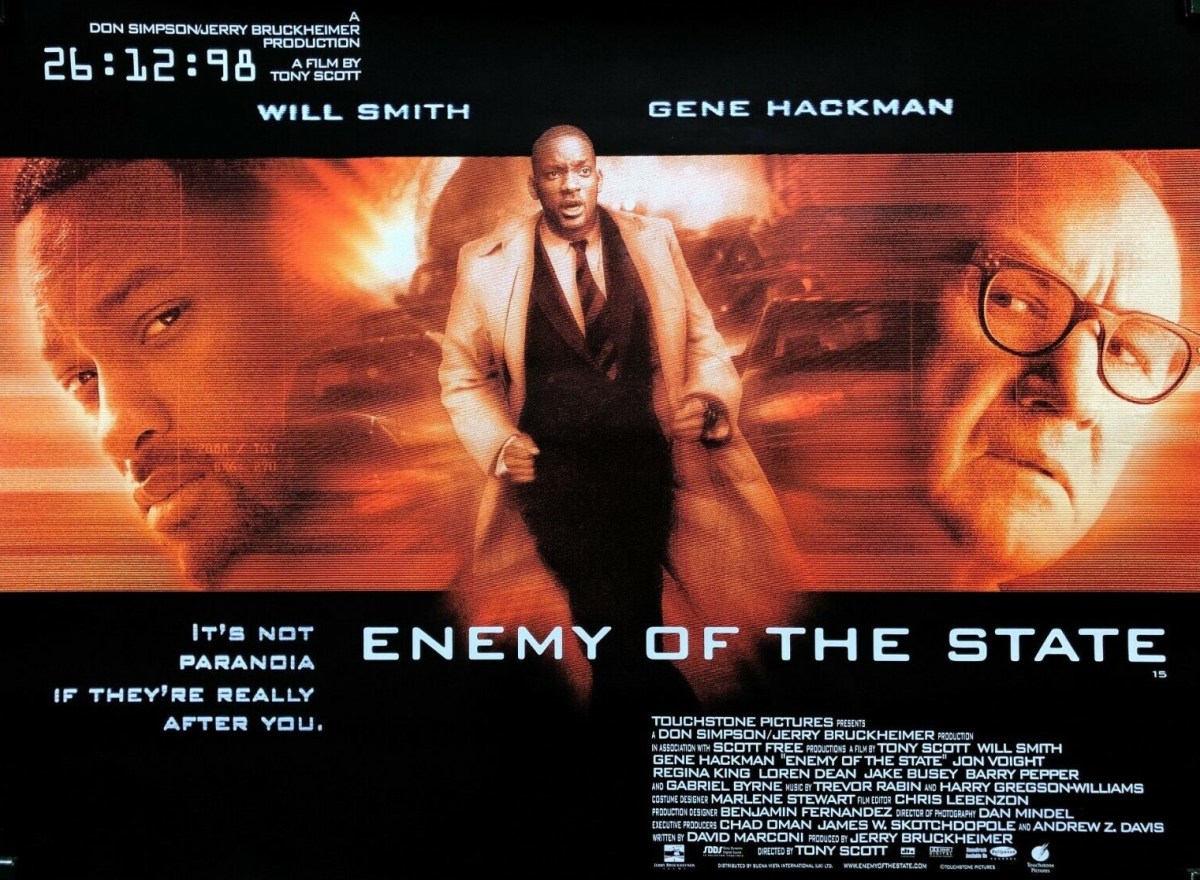
Enemy of the State (1998) ****

You are the star of the show so the last thing you want is to team up with a scene-stealer, but if you want to work with such an renowned talent, what can you do but let him steal.

It says a lot for Gene Hackman’s legendary status that, long past his box office peak in this fast-paced surprisingly contemporary paranoia thriller, his appearance late in the day turns up the heat on Will Smith at an early career pinnacle and at his charming best. You need someone as easy on the eye as Smith to lead the audience through a tortuous plot, centering on the collusion of big business and government to push through a commercially-motivated U.S. Government Act promoting greater surveillance, and someone as inherently gutsy as Hackman to carry the film over the line.

Ironically, the McGuffin is surveillance of the most benign kind, a camera trained on ducks at a river inadvertently picking up evidence of corrupt politician Reynolds (Jon Vogt) overseeing the murder of Representative Hammersley (Jason Robards) who stands in his way. The tape finds its way to an investigative reporter who, pursued by Hammersley’s goons, drops it into the shopping bag of labor lawyer Robert (Will Smith).

Unaware of the reasons why, Robert’s life unravels, Hammersley’s guys fabricating evidence that he has revived an affair with former lover Rachel (Lisa Bonet) and  is involved in Mafia money-laundering, resulting in wife  Carla (Regina King) throwing him out and being fired from his job. Bank accounts frozen (natch!), Robert turns to Rachel for help and she puts him in touch with her source Brill a.k.a Edward Lyle (Gene Hackman), an undercover communications expert who has been feeding Rachel information. When Rachel is eliminated, Lyle teams up with Robert and together they come up with a daring plan to incriminate Reynolds and absolve Robert.

Although brim-full of twists and turns, and a relentless government hit squad, the real joy of the picture is Tony Scott’s direction. Using his trademark speedy cuts, and scaring the life out of the audience regarding the depth of available surveillance, this is a thriller tour de force. The Top Gun (1986) director is at the top of his game, seamlessly shifting keys, racketing up the tension, the NSA’s encroachment on civil liberty so extensive it appears nobody can escape a web that is inexorably drawn tighter.

And it’s a fabulous double act, the innocent but slick Robert coupled with the world-weary but clever Lyle, the non-stop-talker versus the virtually silent. It’s the cat and mouse game where the mice turn out to hold the aces. Just brilliantly done and at such a speed. A plot that could easily become convoluted is superbly handled.

Will Smith (Independence Day, 1996) is given free rein and he’s good value for money, holding audience attention seamlessly, and until Gene Hackman (Crimson Tide, 1995) enters the frame he is running away with the picture. Their acting styles are completely different and you shouldn’t really be comparing them but when it comes to the crunch Hackman nails it every time and with hardly doing anything. Lisa Bonet (Angel Heart, 1987) makes a welcome return to the big-budget Hollywood scene. Jon Voigt (Midnight Cowboy, 1969) enjoys one of his better supporting roles.

The screenplay by David Marconi (The Dark Side of the Moon, 2015) is quite superb, not just with a whole series of riveting set-pieces and some terrific dialogue, but also with more humane touches, such as Robert’s encounter with his kids or his embarrassment shopping for lingerie in Victoria’s Secret.

And if there were not bonuses enough, there’s a virtual smorgasbord of talent in the supporting cast starting with 26-year-old Regina King (Boyz in the Hood, 1991) through Barry Pepper (Saving Private Ryan, 1998), Scott Caan (Ocean’s Eleven, 2001), Jake Busey (Starship Troopers, 1997), Jason Lee (Vanilla Sky, 2001) and Jamie Kennedy (Scream, 1996)  all the way to Gabriel Byrne (The Usual Suspects, 1995), Ian Hart (Backbeat, 1994) and Jack Black (School of Rock, 2003).

Stone cold classic not to be missed and worth another watch if you have viewed it already.

The Split (1968) ***

You could not have a more explosive start. In the wake of the seismic slap Sidney Poitier delivered to an arrogant white man in In the Heat of the Night (1967) heist mastermind McClain (Jim Brown) bursts out of the traps by: picking a down-and-dirty knuckle-duster of a fight with hardman Bert (Ernest Borgnine); ramming a limo driven by Harry (Jack Klugman); locking technical wizard Marty (Warren Oates) in an electronic cell; and bracing marksman Dave (Donald Sutherland). It turns out these are all auditions for a $500,000 robbery from the Los Angeles Coliseum during a football match. Nonetheless, the point is made. Despite explanation for the ferocity it scarcely masks the fact that here was a hero unwilling to take any crap from anybody.

The Split follows the classic three acts of such a major crime: recruitment, theft, fall-out. Gladys (Julie Harris) sets up the daring snatch, entrusting a down-on-his-luck McClain –   attempting reconciliation with divorced wife Ellie (Diahann Carroll) – with pulling together a gang with particular sets of skills. The clever heist goes smoothly, the cache smuggled out in a gurney into a stolen ambulance, itself hidden in a truck, and spirited away to Ellie’s apartment until the ruckus dies down.

But someone else has a different plan. The stolen money is stolen again. McClain, responsible for its safekeeping, is blamed for its loss, while he suspects all the others. Adding to the complications is a corrupt cop (Gene Hackman). So it’s cat-and-mouse from here on in, McClain dodging bullets as he attempts to clear up the mess, find the loot and evade the cops.  

British release in a double bill with “Woman without a Face
originally released in the U.S. as “Mister Buddwing.”

The title refers to the way the way the money is intended to be shared out but it could as easily point to a film of two halves – recruitment/robbery and fall-out. The first section has several stand-out moments – a split-screen credit sequence, Marty’s desperate strip inside the cell to prevent the electronic door closing, an asthma attack mid-robbery, the beat-the-clock element of the heist, Dave’s targeting of tires to create the massive gridlock that facilitates escape. Thereafter, the tension grows more taut, as the thieves fall out with murderous intent.

One of the joys of the picture is watching a bunch of actors on the cusp. Jim Brown (The Dirty Dozen, 1967) was in the throes of achieving a stardom that would soon follow for Hackman (Bonnie and Clyde, 1967), Sutherland (also The Dirty Dozen) and Oates (Return of the Seven, 1966). Brown is tough and cynical in the Bogart mold, a loner with lashings of violence in his locker. Of the supporting cast, Sutherland’s funny maniac, complete with mordant wit, is the pick and he has the movie’s best line (“The last man I killed for $5,000. For $85,000 I’d kill you seventeen times.”) Hackman reveals an intensity that would be better showcased in The French Connection (1971) and Borgnine, Oscar-winner for Marty (1955) reverts to his tough guy persona. Having said that, you only get glimpses of what they are capable of.

Making the biggest step-up is Scottish director Gordon Flemyng whose last two pictures were Dr Who and the Daleks (1965) and Daleks’ Invasion Earth A.D. 2150 (1966). He helms the picture with polish and confidence, allowing the young bucks their screen moments while wasting little time in getting to the action and pulling off a mean car chase.

Crime writer Richard Stark’s (pseudonym of Donald E. Westlake) was careful to sell the rights to his books one-by-one so that no single studio could acquire his iconic thief Parker. That accounted for him being renamed Walker in Point Blank (1967), Edgar in Pillaged (1967) and McClain in The Split, which was based on Stark’s The Seventh (that fraction being the character’s share of the loot).

Downhill Racer (1969) ***

Idealising heroes is endemic. Most films which portray sport stars with feet of clay generally start off with an attractive personality who presses the self-destruct button through alcohol, sex or drugs (or all three) such as Number One (1969) with Charlton Heston. The general consensus is that this approach to the sports movie was not rescinded until the brutal boxer exposed in Scorsese’s The Raging Bull (1980). But it turns out Scorsese was not the first.

Downhill Racer is a character study of a loner who cares for no-one but himself. Alienated from his father, his girlfriend at home treated as little more than a sex object, a constant source of friction for his national team manager (a pre-chuckle Gene Hackman) and not above the kind of dirty tricks as typified in Slap Shot (1977) he sees nothing wrong with making no bones about the fact that he is in the game for fame. He has no illusions, he’s a farm boy and few steps up from being illiterate.

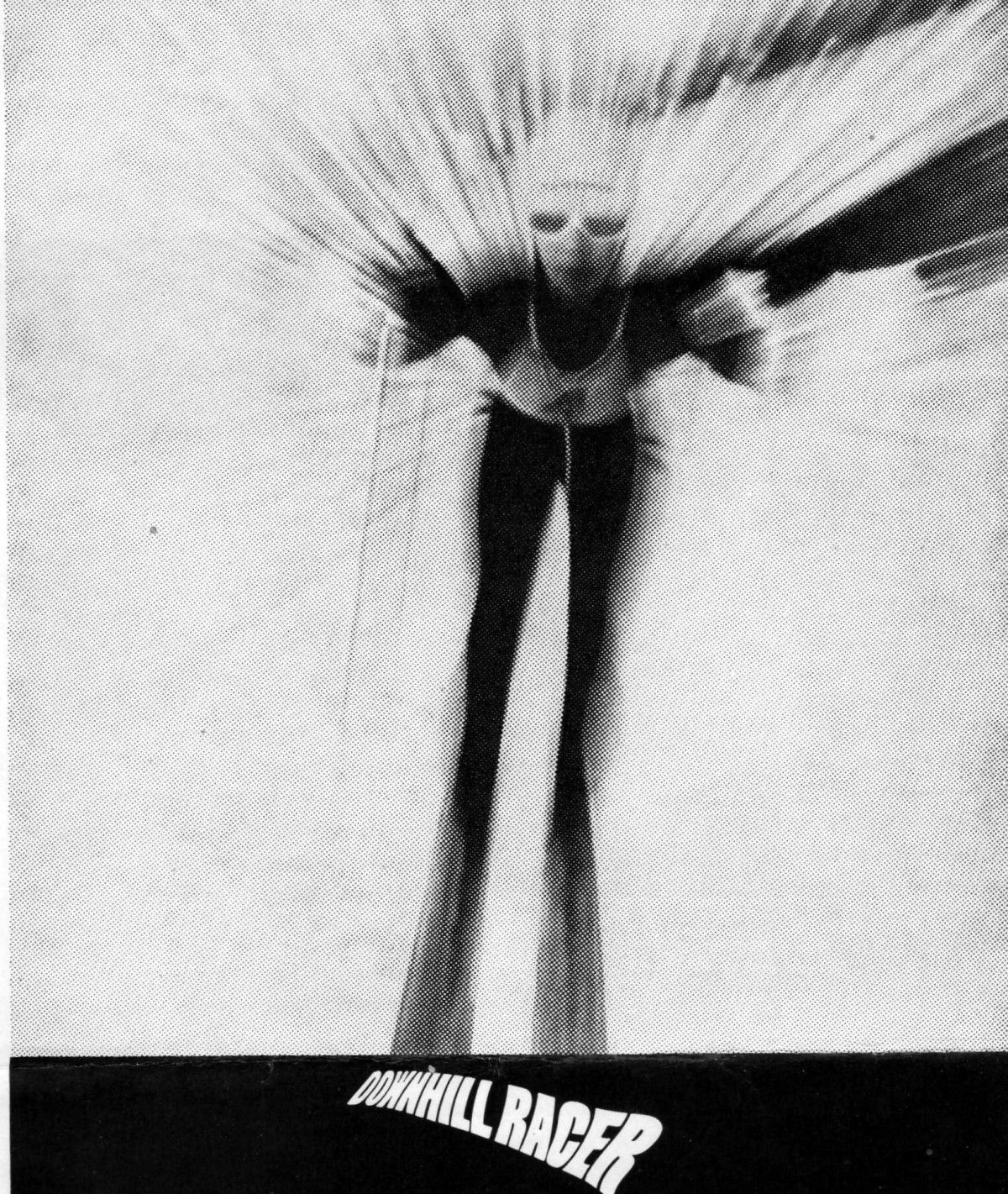
That Paramount had little faith in the project was shown by the Pressbook. It was a mere eight pages long when 16-plus pages were devoted to other pictures. There was no mention of the startling success of “Butch Cassidy and the Sundance Kid” released a few months before. Its limited appeal was shown by the fact there were only two adverts, both very artistic, whereas most movies had at least half a dozen different variations to help cinemas market the movie to their specific audiences. And there was but a single tag-line “how far must a man go to get from where he’s at.” Studio marketeers had managed to drum up just two promotions, both fashion-led, a six-page section in “Glamour” magazine and five pages in “Ski” magazine. A better bet was the accompanying two-page advertising supplement showing the movie had scored excellent reviews from “Time”, “Life”, “Newsweek” and the “New York Times.”

His only attractive feature is that he is played by Robert Redford, and the film plays upon the conceit that as handsome a man as this will at some point turn into a good guy.  There’s an interesting debate – and one that would last decades – about whether Redford’s looks got in the way of the characters he portrayed. Imagine Robert Duvall in the part, for instance, and relentless determination would not be called into question. This leaves the film with only pity as a way to give the character any sympathy, which duly occurs when his hopes of genuine romance with a top-notch blonde (Camilla Sparv) are dashed. 

Michael Ritchie, making his directing debut, opts for a documentary-style approach, so minimalist it’s almost perfunctory. This is a decent option given there’s very little going on beyond lonely hotel rooms, and an endless round of competitions and an occasional outburst from Hackman. Less welcome is his decision to fall back on television commentators to fill us in on exactly where we are geographically and specifically regarding individual competitions.

The film’s biggest drawback is that the skiing scenes, sensational at the time, offer little on the small screen. But at least they were competently done. Ritchie drew on a number of experts in that department: German racer Heini Schuler, Swiss team members Peter Rohr and Arnold Alpigger and ski instructors Marco Valli and Rudi Gertsch. Former U.S. Olympic team member Rip McManus turns up as an on-camera commentator. Although it gained good reviews, audiences failed to respond although Redford was on a career high after Butch Cassidy and the Sundance Kid (1969). But it was a brave choice for the actor.

And it was the start of his producing career. The film had been a stop-start project at Paramount and when the studio continued to dither Redford set up Wildwood with Richard Gregson, husband of Natalie Wood with whom Redford had appeared in Inside Daisy Clover (1965) and This Property Is Condemned (1966).

Discover WordPress

A daily selection of the best content published on WordPress, collected for you by humans who love to read.

The Atavist Magazine

by Brian Hannan

WordPress.com News

The latest news on WordPress.com and the WordPress community.