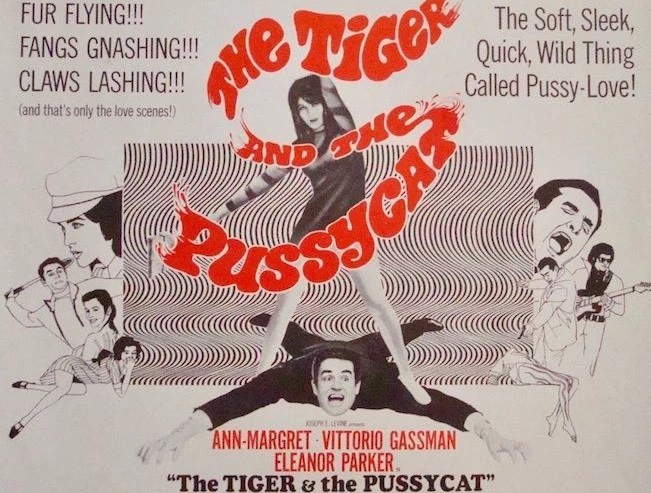
The Tiger and the Pussycat (1967) ***

Ann-Margret was taking a leap into the unknown when she decided, temporarily, to turn her back on Hollywood and revive her fading fortunes – and buttress her bank account – by heading to Italy. By the time she made that decision, Clint Eastwood would not have been deemed to set a sparkling template since his spaghetti westerns were not released in the USA until after she had departed for Italy. She may well have had her head turned by such critically acclaimed fare as the Oscar-nominated Marriage Italian Style (1964) or perhaps the prospect, like Burt Lancaster in The Leopard (1963), of being taken up by critically-acclaimed director.

At one point she had easily been the fastest-rising star in Hollywood, with contracts for movies from rival studios, at one time balancing the demands of around a dozen movies. Had she been born in the previous decade she would have headlined any number of pieces of fluff that attracted box office. Even so, after making a number of pictures that scarcely challenged her – from Bye, Bye Birdie (1963) to The Swinger (1966) by way of a couple efforts that stretched her screen person (Once a Thief and The Cincinnati Kid, both 1965) – she had discovered that she was still perceived as little more than a Bond Girl, or the Matt Helm equivalent in Murderers’ Row (1966).
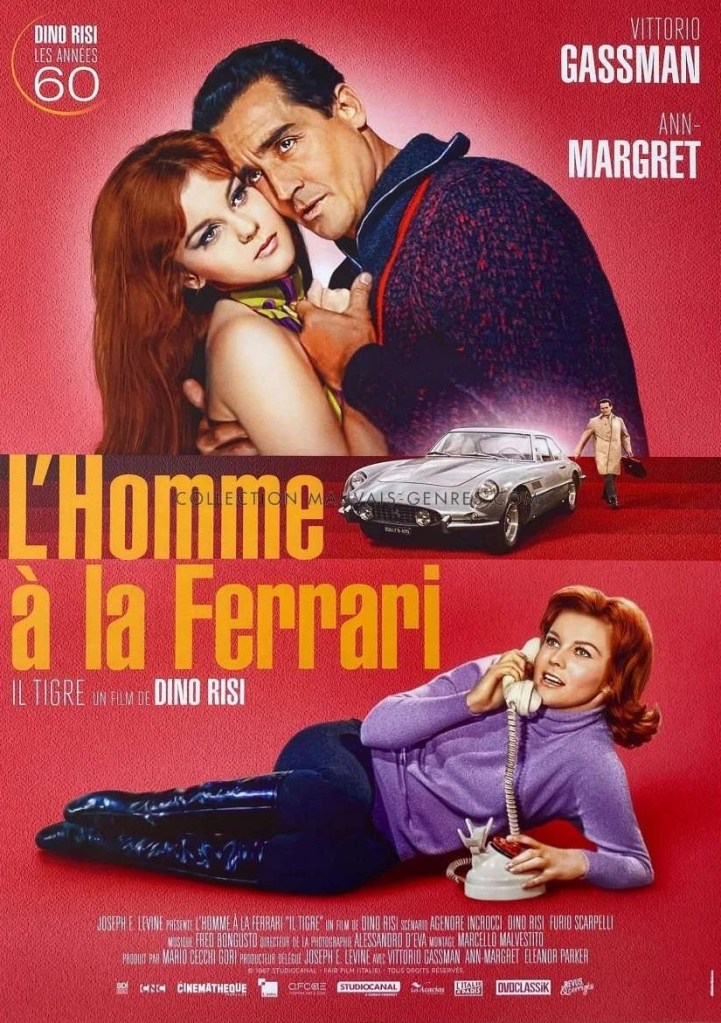
Quite what she expected to find in Italy is anybody’s guess. Probably not a standard Italian comedy. Nor to be playing second banana to Italian star Vittorio Gassman (A Virgin for the Prince, 1965) – three-time winner of a David (the Italian equivalent of the Oscars) – who knew how to frame his performance for an Italian audience. But while a huge star in his homeland he had not crossed-over like Marcello Mastroianni to win international favor.

Top executive Francesco (Vittorio Gassman), alarmed at becoming a grandfather at the age of 45, and believing life has now passed him by, begins a relationship with Carolina (Ann-Margret), an art student less than half his age. She makes a good bit of the running, being attracted to older men.

So a fair chunk of the picture is Francesco unable to make up his mind, or then suffering guilt from an illicit affair, worrying that his wife will find out and at the same time considering running away with the decidedly energetic girl.
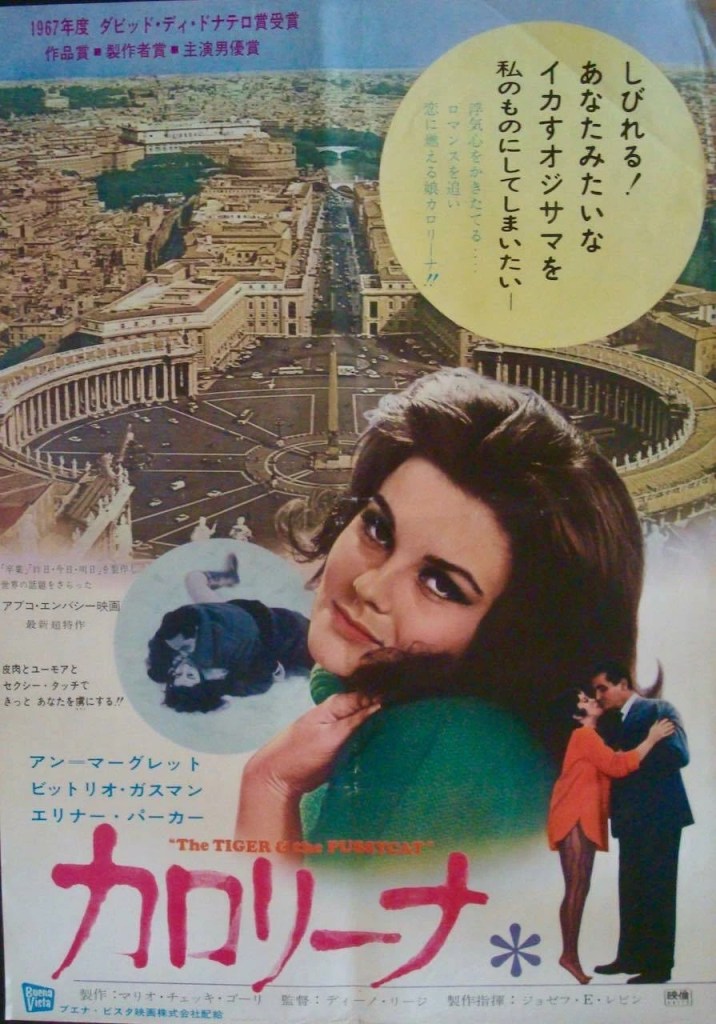
The scenario will be more familiar to Italian audiences than American. Affairs were often seen as opportunities for comedy rather than, as in Hollywood, drama and angst. Francesco has the example of his friend Tazio (Fiorenzi Fionrentina), brought to financial ruin by an affair, and all the friends of his wife Esperia (Dorothy Parker) are divorcees after their husbands have run off with younger women.

Despite his excuses for being away from home mounting up, Esperia is not suspicious. You would have thought his colleagues would have more of an inkling given the number of times he dodges work commitments.

If you are a fan of Italian comedy, this will be right up your street, a number of sequences where Gassman falls back on physical comedy or stretches his features every which way but loose and gives the impression of not being able to follow his dreams at the same time as being suffocated by them.

If you’re here for Ann-Margret, you’ll be baffled. Sure, she has the occasional opportunity to shake her trademark booty, and she has lost none of her screen presence, but the role, effectively of second banana to the male lead, could have been played by a dozen other actresses, and Ann-Margret doesn’t bring anything particularly innovative or exciting to the role.

She went into Italian exile for three years and the movies she made all bombed at the American box office so in effect, as far as Hollywood and American audiences were concerned, she had inexplicably disappeared and there wasn’t exactly a long queue seeking her signature when she returned.

Directed by Dino Risi (Treasure of San Gennaro, 1966) from a script by himself, Enni De Concini (A Place for Lovers, 1968), Adriano Baracco (Treasure of San Gennaro) and Nino Manfredi (Treasure of San Gennaro).

A decent enough comedy. Gassman runs off with the picture but Ann-Margret completists will find little to enjoy.
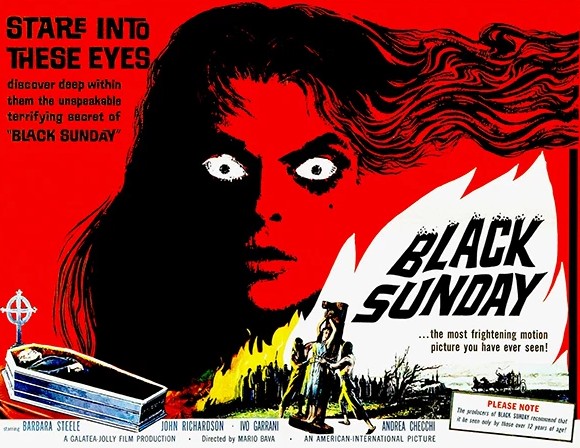
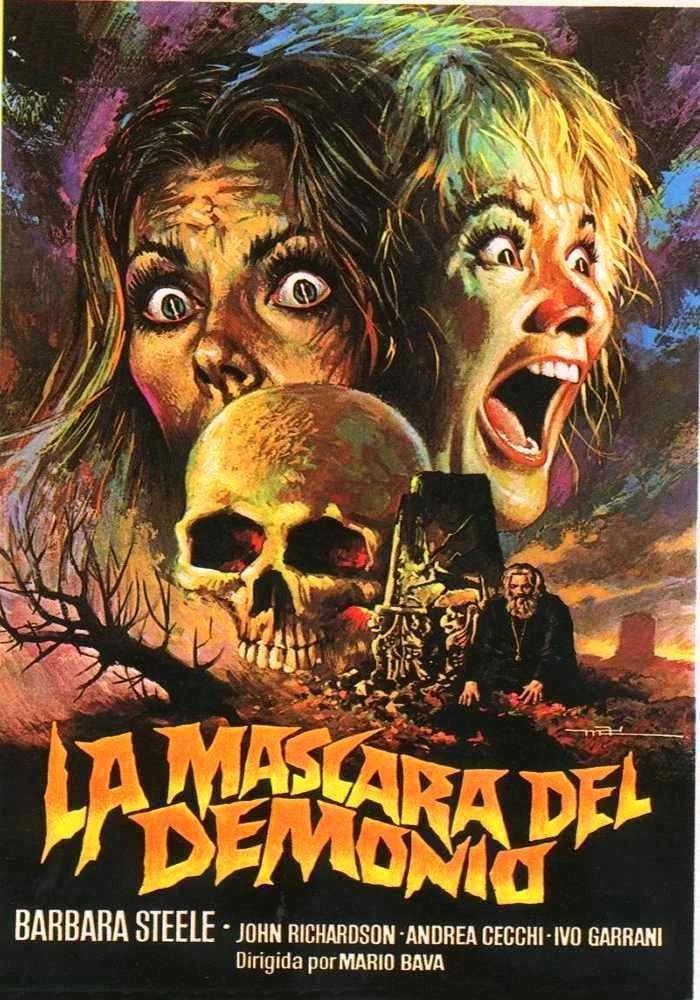
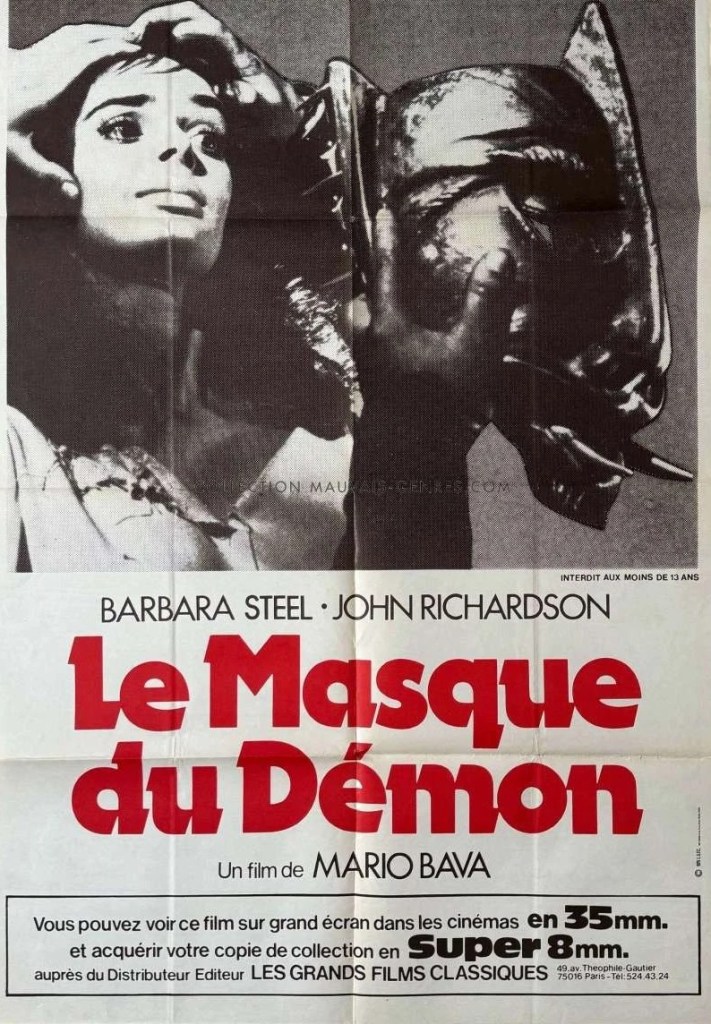
Black Sunday / Mask of Satan / Mask of the Demon (1960) ****

Impressively atmospheric. Cast in a cloud of fog and immersed in sound effects – bells, door swinging shut, echoing footsteps, screams, howls – and conspicuously devoid of the blood that was a Hammer hallmark. Effectively invents the Scream Queen but with a twist. With the likes of Christopher Lee, Peter Cushing and Vincent Price to accommodate, for the decade’s major purveyors of horror – Hammer, AIP and Tigon – women played a subsidiary role, mainly there to be helpless victims and scream. Here, as Hammer would later emulate, the female of the species took central stage and, therefore, screaming was at a minimum.

For that reason although Hammer sold Veronica Carlsen (Dracula Has Risen from the Grave, 1968) and Caroline Munro (Dracula A.D. 1972, 1972) as Scream Queens, they were not in the same league as Barbara Steele, who added mystery to glamor, and who took center stage rather than operating on the periphery, driving the narrative rather than required to be constantly rescued. Hammer took the Black Sunday template, more or less filched the story, and translated it into its Karnstein trilogy (The Vampire Lovers, 1970, Lust for a Vampire, 1971, and Twins of Evil, 1972) that allowed women to run rampant, and swapped relatively tame cleavage for nudity and sex.

As a showcase for the horror talents of British actress Barbara Steele (Castle of Blood, 1964) – in a dual role as both predator and victim –  and Italian director Mario Bava (The Whip and the Body, 1963) we are entering horror masterpiece territory. Bava brings more imagination to the table than Hammer. The steel needles of the mask affixed to witches is a fabulous invention. Victims are not drained of blood but surrender through a gentle kiss. The contents of paintings change. Rising from the dead is an explosive business rather than the traditional slow entrance.

Dr Kruvajan (Andrei Cecchi) , traveling through Moldavia with assistant Dr Gorobec (John Richardson), inadvertently triggers the resuscitation of the corpse of Princess Asa (Barbara Steele), a witch executed two centuries previously, but, crucially, avoiding being burnt to death when a sudden thunderstorm extinguished the pyre. She is able to revive, telepathically, her lover Javutich, also condemned as a witch, and together they prey on the descendants of those who put them to death, namely Prince Vadja, his daughter Katia (Barbara Steele) and son Constantin. A crucifix saves the prince first time round but soon he is slaughtered.

Kruvajan, smitten by the beauty of Asa, submits to her power and becomes her willing accomplice assisting Javutich in his killing spree. Gorobec, meanwhile, has fallen for Katia, and together with Konstantin is on hand to initially prevent the worst. But Asa has her eyes on Katia, planning to drain her of her blood and take over her body.

There are plenty close calls and the usual quota of violence, though the cleavage quotient is almost nil. That the movie climaxes in a terrific twist and an awesome visual demonstrates that Bava was a cut above the usual directors working in the genre. By the time Gorobec traces the missing Katia to the haunt of Ava, the damage has been done, although the audience doesn’t realize it. The now revived and stunningly beautiful Ava points out Katia as the witch who requires killing. And it’s only when Gorobec notices the crucifix on Katia’s neck that he realizes the bodies have been switched. Beneath her robes, Asa is a skeleton. Horror specialists spent a decade trying to top that image and it took the big-budget The Exorcist (1973) to come close.

Barbara Steele is mesmeric, exuding an exotic mysterious appeal that no other Scream Queen could match. Screenplay by Ennio De Concini (A Place for Lovers, 1969) and Mario Serandrei, better known as an editor, based on the story by Gogol.

The AIP redubbed and recut version released in the U.S. in 1961 differs significantly from the original. It was banned in Britain until 1968.

Brilliant opening, brilliant finish, all hail the two new stars of the genre

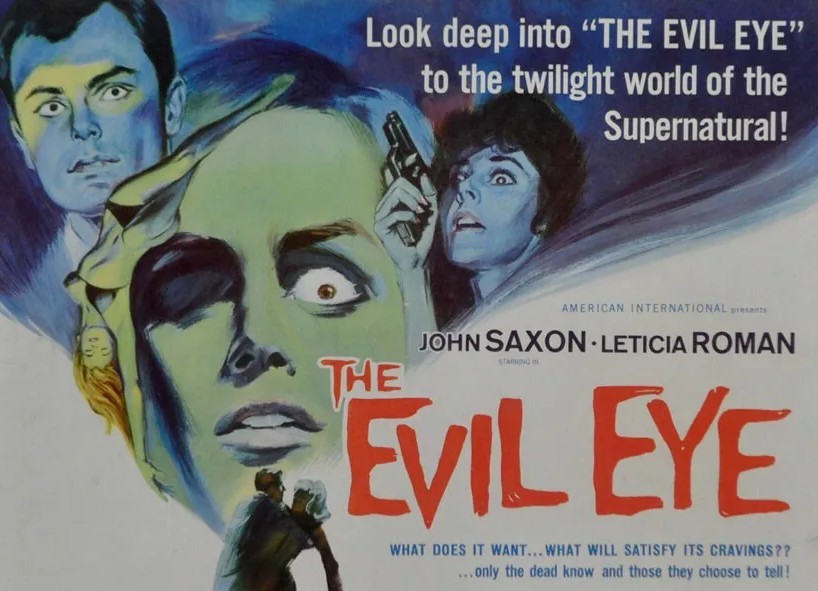
The Evil Eye / The Girl Who Knew Too Much (1963) ***

Don’t be taken in by claims that, since it was directed by Mario Bava, it kicked off the giallo sub-genre. More of the tropes come from mainstream horror – windows banging shut, locked doors, disembodied voices, stalkers, gaslighting, mysterious phone calls, premonition, retrocognition. And just for good measure, striking compositions that wouldn’t be out of place in an arthouse picture. But essentially it’s neo-noir – a woman can’t prove she’s witnessed a murder.

The Evil Eye was the American title, which makes little sense, although eye-popping eyes were in fashion from movies like Village of the Damned (1960), but in fact the original title of The Girl Who Knew Too Much is much more appropriate. This film is about a female character and what she discovers that threatens her life. The American version was chopped about by the distributor but, apparently, copies of that have gone astray so if locate a copy of the picture what you are likely to see if the Italian original.

American tourist Nora (Leticia Roman) is knocked out by a robber in Rome. On waking up she sees a murderer sticking a knife into a woman’s back. Only problem is – there’s no corpse to be found. But, strangely, a murder was committed on that spot a decade ago. So she might be having a vision of the past. But the murderer Straccianeve was caught.

The victim was the sister of Laura (Valentina Cortese), a new friend, whose apartment Nora temporarily occupies. There, Laura discovers newspaper clippings relating to the “alphabet killer”, a serial murderer whose victims’ surnames began with A, B, and C. Once Nora begins her investigations, it looks like she’ll be next on the list since her surname begins with “D”.  Meanwhile, she has struck a romantic vibe with Dr Marcello Bassi (John Saxon). But, of course, he might be not what he seems, sneaking off for assignations with strange women, following her.

Much of this is played out on deserted streets where the tourist sites acquire a dangerous veneer.

The finger points at journalist Landini (Dante DiPaulo), who has been following her. But he is as much a basket case as a potential murderer. He was instrumental in collecting the evidence that trapped the murderer but now believes Straccianeve was innocent.

In due course, after some more deaths, Nora traps the murderer, who comes out of left field, one of those where you think the writer has decided to pin the blame on the least likely suspect and come up with a spurious reason for the murders, so the twists pile up in helter skelter fashion at the end, including one which suggests Nora might well have the gift of seeing into the future.

Leticia Roman, in her debut, is mostly called upon to look baffled or frightened, there’s rather too much of the pop-eyes, and John Saxon (The Appaloosa, 1966) has the rare opportunity to play a hero. Valentina Cortese (Barabbas, 1961) drifts in and out of the tale. Written by future director Sergio Corbucci (Django, 1966), Oscar-winner Ennio De Concini (Divorce, Italian Style, 1963) and Eliana De Sabato (Marco Polo, 1962).

If it hadn’t been directed – and occasionally so stylishly – by Mario Bava (The Whip and the Body, 1963), it would have attracted considerably less contemporary attention. One of this main themes – the conflict between illusion and reality – is given a good airing. You can well believe that Nora is going mad. But it’s atmospheric enough and the director makes unusual use of the standard Rome tourist traps and this picture gives notice that he will move onto greater movies.

Discover WordPress

A daily selection of the best content published on WordPress, collected for you by humans who love to read.

The Atavist Magazine

by Brian Hannan

WordPress.com News

The latest news on WordPress.com and the WordPress community.