I’m assuming MGM adjudged that a film about a playwright, no matter how famous, and even if directed by John Ford (Cheyenne Autumn, 1964), would not be enough to attract an audience. And that a better physical match for said writer would have been a weedy actor of a Tom Courtenay disposition. So, I came to this with no idea it was about world-famous Irish playwright Sean O’Casey since his name is never mentioned and the main character is called John Cassidy (Rod Taylor).
Which was just as well because I was wondering what kind of lad Cassidy was when despite his obvious brawn he was an inept labourer, requiring instruction on how to properly use a spade. That this working-class fellow has any inclination towards authorship is not obvious until halfway through the picture, by which time he has demonstrated qualities more appropriate for brawling, revolution and sex.
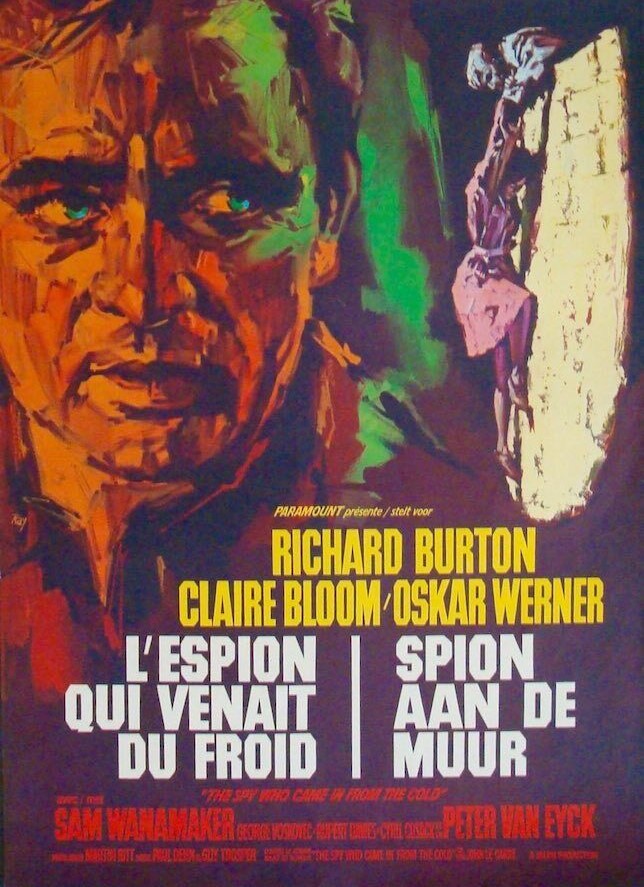
Technically, this was a John Ford film as he was the producer. The French chose not to point out he was not the director.
It probably says a lot about me that I was unaware of the significance of the title of O’Casey’s most famous play – The Plough and the Stars (1926 and, incidentally, filmed a decade later by Ford). By the time I was cogniscent of the country – early on, I assure you, as my grandfather was an Irish immigrant – the Irish flag was the tricolor made up of green, white and orange. I hadn’t known that the flag created by rebels two years before the Easter Uprising of 1916 was a representation of the plough and the stars, hence public outrage when O’Casey blithely adopted it as the title for his breakthrough play.
But you only need a vague idea of history to appreciate the movie. A couple of stunning scenes provide the background of dissent and poverty. The brutality of soldiers and police in quelling a riot is matched by striking transport workers tossing a scab into the river, his drowning ensured by the wagon that follows him in. Cassidy’s true position in the hierarchy is best shown when he is given a cheque rather than cash from a publisher. Lacking a bank account, not only does he fail to cash the cheque but is treated dismissively by clerks at the bank. His joy at rising above his station in receiving such a payment is immediately destroyed by feeling out of place and unwelcome in a bank.
Because, otherwise, Cassidy is quite the confident young fellow, winning over almost any young woman who falls within his compass, varying from upmarket prostitute Daisy (Julie Christie) to meek bookshop assistant Nora (Maggie Smith) and casual acquaintances.
Writing isn’t presented in the romantic manner of David Lean in Doctor Zhivago out the same year (with Julie Christie in a much bigger role), no stunning imagery and no close-up of soulful eyes, just Cassidy sitting at a table working through the night. But there is no indication as to why he chose plays as his metier, especially when the main theatre in Dublin, the Abbey, was the fiefdom of the middle- and upper-classes.
Ironically, Cassidy is tested more when his situation improves than as a downtrodden worker joining the revolutionary cause. As a worker his fists, brawn, brain and looks see him through. But once he steps up into the intellectual class, he is adrift, his new occupation driving a wedge through relationships.
Not aware that this was a biopic of a playwright, I had little need to question the narrative, and just took each incident as it came. I never had the impression of a condensed biopic, crammed full of cameos. More of an interesting story set against the background of rising Irish nationalism.
There’s a certain amount of “Oirishness” to contend with – the accents vary – the poverty is never as bleak as you might expect, and once the story heads out of Dublin you might think it’s going to go all the way to The Quiet Man country. But then you have to bear in mind that working-class poverty, as long there was employment available, was not quite of the slum kind, and that once you get out of Dublin you do indeed hit beautiful countryside.
Rod Taylor is good as the brawler-turned-playwright. In the duel of the rising stars, Maggie Smith (The Prime of Miss Jean Brodie, 1969) wins by a nose from Julie Christie, but then, though further down the credits, she has the bigger role. Michael Redgrave (Assignment K, 1968) as poet W.B. Yeats (responsible for the phrase “a terrible beauty is born”) makes the most of choice lines, Edith Evans (The Chalk Garden, 1964) is a quirky, mischievous Lady Gregory, co-founder of the Abbey. It’s top-heavy with talent including Sian Philips (Becket, 1964), Flora Robson (55 Days at Peking, 1963), Jack MacGowran (Age of Consent, 1969) and T.P. McKenna (Perfect Friday, 1970).
Turns out John Ford was too ill to direct more than few minutes and that role fell to Jack Cardiff (Dark of the Sun, 1968) and I would have to say he does an agreeable job. John Whiting (The Captain’s Table, 1959) drew from O’Casey’s autobiography to write an intelligent script.
Shooting might have been less stressful and cheaper if director Martin Ritt had stuck to his initial schedule but when the shoot start-date was pushed back from late fall 1964 to January 1965 he lost original star Burt Lancaster (planning to play the original Englishman as a Canadian). At relatively short notice, Richard Burton stepped in, but for an eye-watering fee of $750,000, at that time the biggest salary paid in Hollywood. (Due to Ritt’s involvement there had been rumors Paul Newman would star.) And although Burton pushed for his wife Elizabeth Taylor for the small role of Nan, he was overruled on the issue of cost, and that audience expectations would be unfairly raised.
It didn’t matter, though, if Ritt refused to cast Elizabeth Taylor. He got her anyway, and her vast entourage, generally happy to remain out of the way but occasionally arriving on location in the middle of Dublin in her white Rolls-Royce sending fans into convulsions. There were two schools of thought as to which woman caused more disruption: the jealous wife exerting 24-hour surveillance on a husband with a wandering eye or one of his previous lovers, Claire Bloom, who was playing Nan. (The name changed from Liz in the book.)
“It was not a happy picture and the central reason fort that was: Claire Bloom,” averred Burton’s biographer Melvyn Bragg. “The real problem was not from Bloom but from Elizabeth Taylor’s jealousy,” claimed Sam Kastner. That Burton incurred Bloom’s wrath was not without doubt. But it wasn’t the first time. Prior to Taylor, but while he was married to Sybil, Burton and Bloom had been lovers.
Burton was “not prepared for Bloom and found it very difficult to handle.” The pair had met on a touring production of The Lady’s Not for Burning in the 1940s but their romance remained unconsummated. A few years later in the early 1950s the affair began in earnest and continued on and off for five years. When both were cast in Look Back in Anger (1959), Bloom expected them to pick up where they had left off. But that notion was dashed when Burton appeared, still married, on the arm of Susan Strasberg (Sisters, 1969).
The other elephant in the room was, of course, Burton’s alcohol intake. A very heavy drinker, verging on the alcoholic, his hand had begun to tremor until he received liquid sustenance. If Burton had an equally boisterous co-star as in Peter O’Toole in Becket (1964) or a very indulgent director as with John Huston in The Sandpiper (1965), his drinking would not attract comment. But “Martin Ritt did not approve of Burton’s heavy drinking and Burton resented that.”
Never mind Burton’s issues with ex-lover and wife, he was having difficulty delivering the performance Ritt demanded. The director wanted a stripped-down character, minus the oratory which had made the actor famous, the acting so flattened as to “make him anonymous.” Author John le Carre would have preferred James Mason or Trevor Howard for the “embattled” personas they presented, and which would have fit more into the director’s perception of the character. “For Burton this time there would be no strong sex, no oratory, no action, no charm.” The director wanted that Burton intensity, but coiled, not sprung. As the production wore on, director and star were barely speaking. “Ritt had come to despise Burton whom he saw as a spoiled and self-indulgent actor who had dissipated his talent.”
The initial screenwriter Guy Trosper made changes that seemed out of kilter with the book, for instance sending Leamas to psychiatric hospital rather than jail for punching the grocer. When he became ill he was replaced by Paul Dehn who did not veer so far from the book. Le Carre was brought in at the last minute at Burton’s insistence to do rewrites. But that merely added to the existing aggravation. While waiting for nightfall to shoot the escape sequence, Le Carre was obliged to keep the actor company, trying to consume most the available whisky so that Burton did not go on set drunk. While little of Le Carre’s rewrites found their way into the finished product, he did provide a new scene for Fiedler (Oskar Werner).
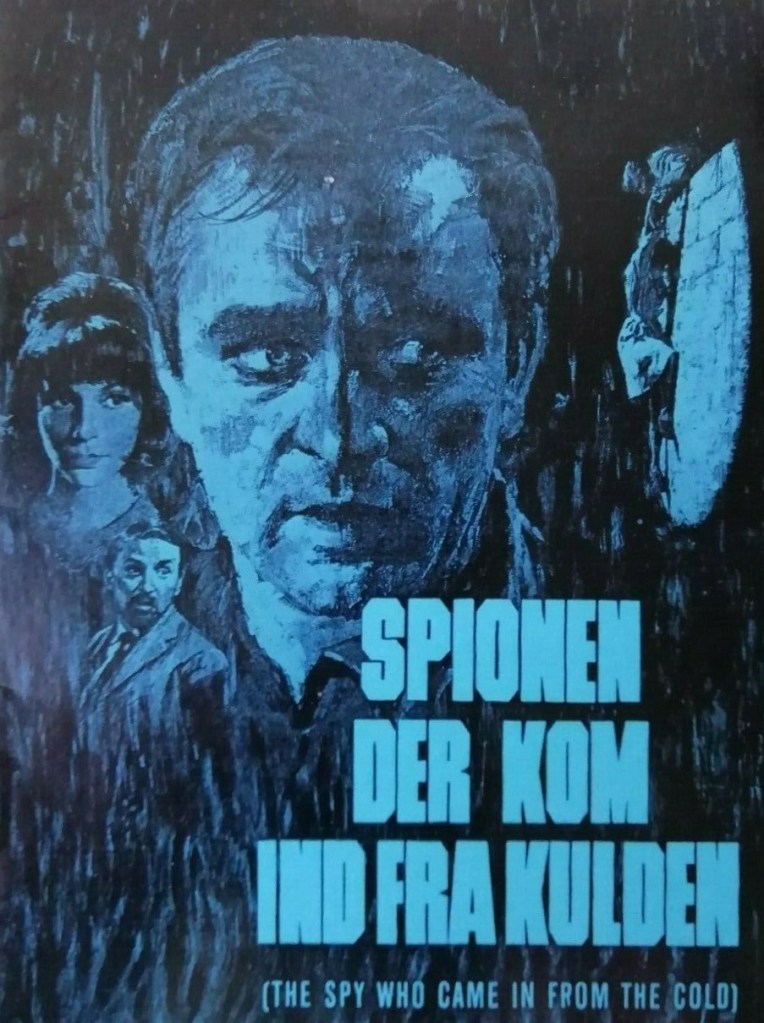
Ritt had a revolutionary picture in mind, not just filming in black-and-white to downplay the glamor of the espionage business as evidenced by James Bond, but to employ “a point of view that’s never been found before.” He was not a believer in the end justifying the means nor of depicting the enemy as rabid. “Most of the time,” he explained, “you have actors playing Communists as if they’d just switched over from playing Nazis in World War Two pictures…the Communists in this picture are people and one of them at least …is an honest, ethical man.”
While the decision to film in black-and-white was a creative decision, intended to give the film a realistic edge, he knew it would not necessarily go down so well with the end user, the exhibitor. “The needs of creative people and the needs of exhibitors are completely different. Exhibitors want pictures and creators want to express themselves and those two factors don’t always satisfy each other.” Although the movie was Oscar-nominated and critically well-received and did well in key city first-run, it was condemned by exhibitors in small towns, one of whom discouraged others from booking it and complained that the black-and-white aspect made the film impossible to view on old projectors.
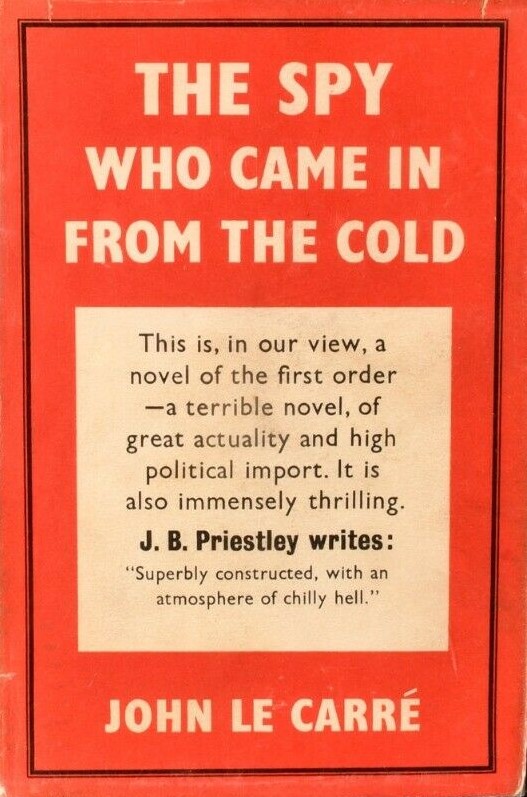
Author John le Carre was an unknown, two previous books published to no great sales. But The Spy Who Came in from the Cold proved a phenomenon. Debuting in the number spot in February 1964, the book spent 35 weeks topping the hardback bestseller chart. It ended up the hardback number one title in the U.S. during 1964, a quarter of a million copies sold, winner of the Edgar Award for Best Mystery, initial paperback order topping two million copies, five million books in print by the time the film appeared. So it seemed all the more astonishing that the movie rights had been snapped up for a mere $21,000 (with escalating clauses based on sales that took it up to $38,000). Martin Ritt claimed glory for that astute purchase, making a bid to a hard-up author when the book was in galley form. “When I bought it nobody else was running to buy it,” claimed Ritt. But it turned out the real star was Kay Selby, a Paramount story editor, who had dug it out of a pile of novels submitted. Le Carre did not make the same mistake again, movie rights for his next book The Looking GlassWar were sold for $400,000 and the paperback rights for the same
When the film had still been a relatively low-budget production, Paramount planned to film exteriors in London and interiors in Hollywood. But Ritt wanted “to capture the full brunt of the winter atmosphere for dramatic emphasis” and there was very little Hollywood could bring to the party to recreate an actual bleak British weather.
The bulk of the film was shot in Ireland at the defunct Ardmore studios in Bray – Ritt rented them from the Official Receiver, the first production there since November 1963 – and on location in Dublin, the historic Cornmarket standing in for Checkpoint Charlie while with the addition of breezeblock, barbed wire and an iron ladder, Dublin Square was transformed into the Berlin Wall, though some scenes set in East Berlin were shot in the London Docklands.
However, shooting kicked off in London, at Shepperton studios on January 9, 1965, before switching for two months to Ardmore, wrapping up there a week early, heading for location filming in Amsterdam (briefly) and 9-10 days in Garmisch (Germany) before returning to Shepperton in April. Ritt brought the picture in under budget.
Paramount launched a teaser campaign in November 1965 New York – the idea stolen by United Artists for A Fistful of Dollars the following year – with a 1,000-strong two-sheet poster campaign in the city’s subway, promoting the film but missing out the opening date and the cinemas it would play, that information supplied closer to the launch which took place over the lucrative Xmas period in 1965, coincidentally just in time to qualify for Oscar consideration.
And also in time to face a spy box office tsunami called Thunderball and the roadshow epic Doctor Zhivago among the 20-plus movies launched for the festive season. In fact, the Bond films had triggered a resurgence of spy pictures. As the Ritt picture got underway, others on the starting grid include “The Matt Helm Project,” The Ipcress File, James Garner in Welcome Mr. Beddoes (A Man Could Get Killed) and Masquerade starring Cliff Robertson. In addition the potential line-up also included female spy Christy O’Hare, Aaron Rosenberg’s Smashmaster and Strangers on a Bridge; the first two were never made, the last one taking over half a century to hit the screen as Steven Spielberg’s Bridge of Spies.
Burton was Oscar-nominated, but in the year when Thunderball (1965), Torn Curtain (1966), The Silencers (1966) and Our Man Flint (1966) all featured in the top ten films of 1966, The Spy Who Came in from the Cold did not prove a counter-programming smash, sitting at 32nd in the annual chart with $3.1 million in rentals. Although the movie was critically well-received and did well in key city first-run, it was a bust in smaller towns. Don Stott of the Calvert Drive-In in Prince Frederick, Md, complained “it was one of the lousiest pictures I’ve ever had my displeasure to exhibit and lose my shirt on…the print was so dark…it was barely visible.” Added Arthur K. Dame of the Scenic Theater in Pittsfield, N.H., “it comfirms the fact that we are not going to do well with spy films.”
SOURCES: Adam Sisman, John Le Carre, The Biography (Bloomsbury, 2013) p258, 266, 273, 277-280; The Richard Burton Diaries (Yale University Press, 2012), p79-80; Melvyn Bragg, Rich: The Life of Richard Burton, (Hodder and Stoughton, 2012) p200-203; Sam Kashner, Furious Love (Harper Perennial, 2019) p120-131; “Burt Lancaster Plans More Pix Of His Own,” Variety, January 1, 1964, p27; “Bestseller at $20,000,” Variety, March 25, 1964, p15; “Broadway,” Box Office, April 20, 1964, pE5; “Director Martin Ritt: Big Dig Is Scripts You Can Sell to Producers,” Variety, May 13, 1964, p13; “Six for Paramount in Alien Locales,” Variety, July 15, 1964, p18’“Richard Burton Receives Role in Spy by Martin Ritt,” Box Office, August 24, 1964, pW1; “Voices in the Diplomatic Pouch,” Variety, December, 9, 1964, p7; “Ritt Starts Spy Who Came in from the Cold in London,” Box Office, January 18, 1965, pE5; “Spy Success Sires Speedy Sequel, Le Carre Learning Loot Lesson,” Variety, February 17, 1965, p3; “Martin Ritt May Wind Berlin Wall Episodes on Spy This Month,” Variety, February 24, 1965, p28; “Paperbacks Up their Covers and Advance $,” Variety, March 3, 1965, p1; “Burton Winds Irish Shooting Spy Film,” Variety, April 14, 1965, p20; Maxwell Sweeney, “Harassed Irish Studio Revives,” Variety, May 12, 1965, p54; “Kay Selby’s Coup,” Variety, August 11, 1965, p3; “Subway Posters First Step in Promoting The Spy,” Box Office, November 29, 1965, pA2; “Review,” Box Office, December 20, 1965, 1965, pA11; “Three Paramount Pix To Open in N.Y. Dec 23,” Box Office, December 20, 1965, pE16; “Martin Ritt Is Promoting His Spy for Paramount,” Box Office, December 20, 1965, pE12; “Espionage Shown in Its Dirty Clothes,” Variety, December 22, 1965, p4; “The Exhibitor Has His Say,” Box Office, June 13, 1966, pA4 and October 10, 1966, pB4; Big Rentals of 1966,” Variety, January 4, 1967, p8.
If only there had been some serious money put behind this picture it would have been an absolute cracker, custom-made for the likes of Cinerama which didn’t go down the dramatic route until a few years later. It’s a bit “Hell Drivers or Wages of Fear Goes to Africa” but with some really quite stunning sequences.
Whatever French chanteuse Juliette Greco (Crack in the Mirror, 1960) had to offer on stage and in a personal capacity – lovers included Miles Davis and this film’s producer Darryl F. Zanuck – never seemed to translate to the screen in this particular role and the most we get is a kind of tomboyish perkiness. It’s a medium-grade cast, the lead taken by Northern Irishman Stephen Boyd (here playing a Dubliner). David Wayne (The Three Faces of Eve, 1957) is the sad sack brother who joins the other two in a bold plan to set up a haulage business on the Ivory Coast in Africa.
The opening sequence demonstrates the dreary Irish life Boyd is trying to escape with a sparkling cameo from Sybil Thorndike (Shake Hands with the Devil, 1959) as the family matriarch before the African sequences kick in. Apart from scenes shot at Ardmore Studios in Bray, Ireland, the rest is clearly filmed on pretty dangerous locations if the unloading of a lorry onto what looks like little more than a large canoe is anything to go by. After an unpromising start, the intrepid trio (well, two are bold, Wayne is not) set off into the wilderness.
There are two edge-of-the-cliff sequences that would have The Italian Job fans frothing at the mouth, a runaway lorry in the best Cinerama tradition and an astonishing section crossing a swollen river where clearly the actors did their own stunts (and Boyd was in reality saved from drowning by his co-star). In between we have snippets of genuine Africa, especially canoeists braving the surf and an African funeral party. Emotionally, beyond Boyd sticking out his chin as much as possible, the main drama focuses on fraternal rivalry with Wayne trying to pull himself together in the face of a mission he believes doomed to failure. Their plans are further hit by sabotage by the German Kaltenberg (Gregory Ratoff in his final role).
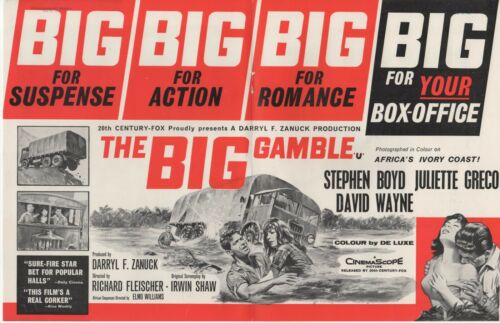
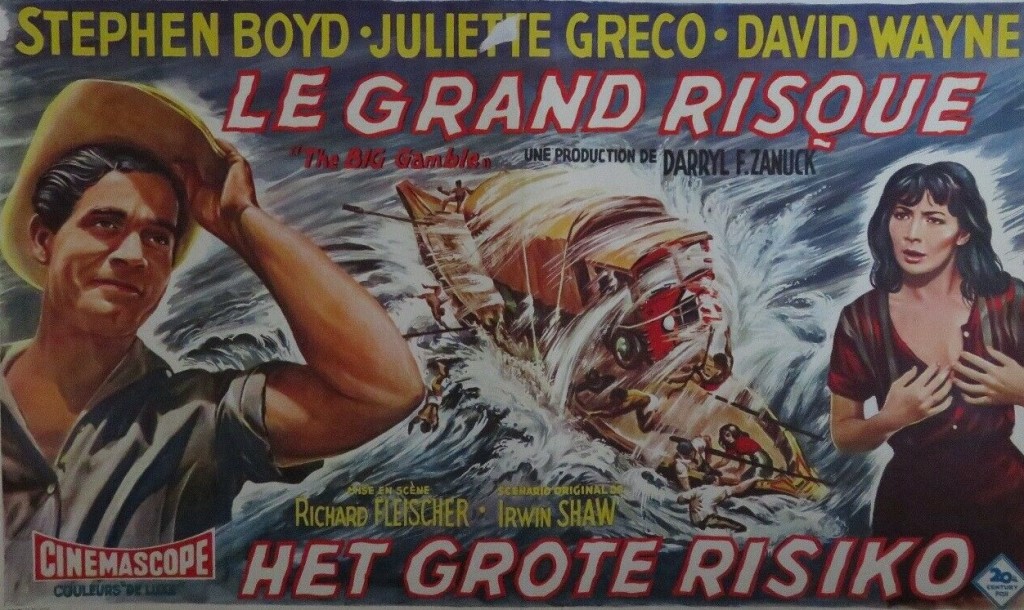
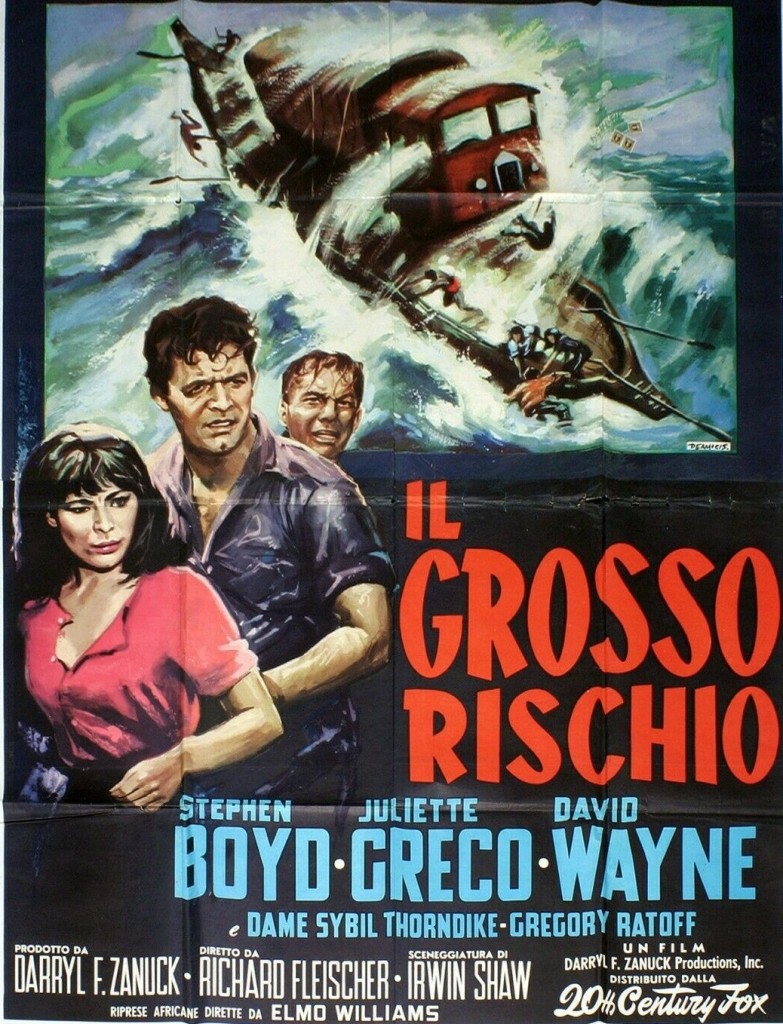
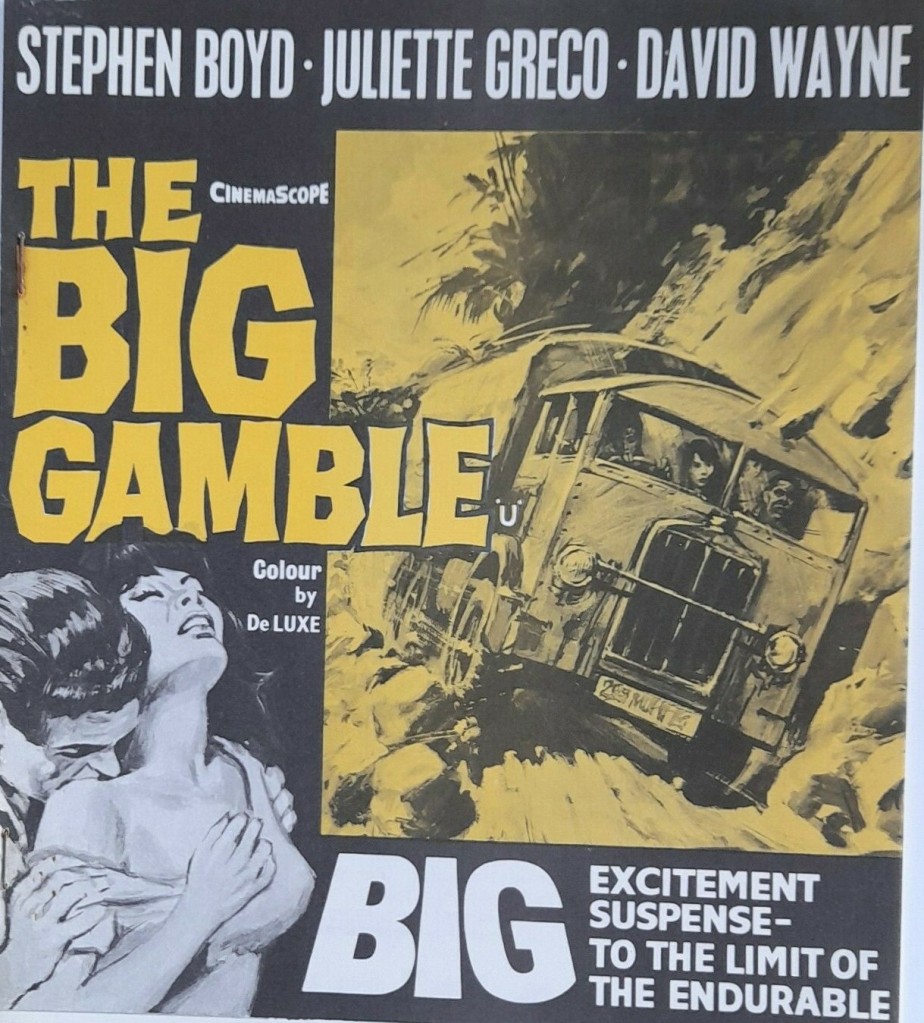
While some of the posters highlight the river crossing, others focus on the cliff-top sequences.
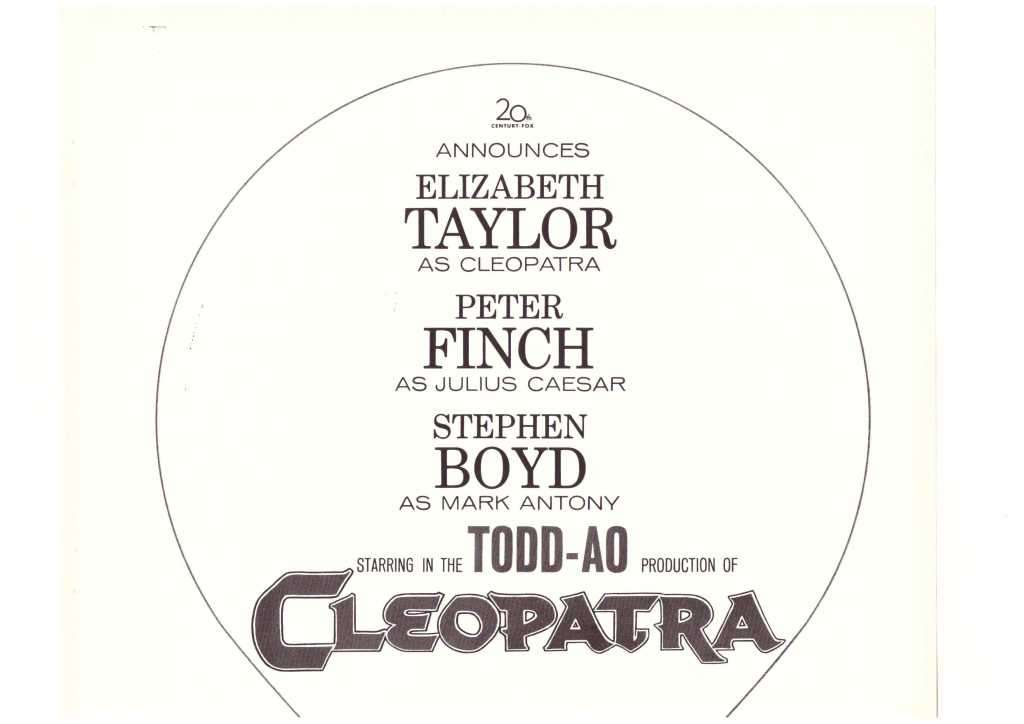
This was Boyd’s bid for stardom. Five years into a seven-year contract with Twentieth Century Fox, he had worked his way up the ranks at that studio to become male lead to top-billed females like Susan Hayward (A Woman Obsessed, 1959) and Hope Lange (The Best of Everything, 1959) before his career received a massive boost after a loan-out deal to MGM for Ben-Hur (1959). He might have been hotter yet had Fox not abandoned its first Rouben Mamoulian-directed version of Cleopatra in which he played Mark Anthony, a role that later brought Richard Burton worldwide fame and a new wife. Boyd would be hot at various times during his short-lived career (he died at 45) while equally never making the transition to major star.
One of the great Hollywood what-ifs – how would Boyd’s career have developed if he had followed up “Ben-Hur” with “Cleopatra.”
Directed by the underrated Richard Fleischer, best known for 20,000 Leagues under the Sea (1954), Compulsion (1959), Crack in the Mirror (1960) and later The Boston Strangler (1968) and here with some help for the African sequences from Elmo Williams (The Longest Day, 1962) – the nerve-wracking clifftop sequences and river crossing were actually shot in France – it has a decent enough script from novelist Irwin Shaw (The Young Lions).
All-in-all this tight little film more than does justice to its miserable budget with some genuinely exciting sequences. Filmed in CinemaScope, this is one of the films of the era which does justice to the widescreen. As a wee bonus, if you listen hard to Maurice Jarre’s score you will hear strains of some themes that turned up in Lawrence of Arabia.


 The Magnificent 60s