The Fixer (1968) ***

Stunning opening section thrown away by shifting tone and despite excellent performances by the Oscar-nominated Alan Bates and Dirk Bogarde drifts into Kafkaesque virtue-signalling.

But let’s get the title out of the way first. I had assumed a “fixer” was a manipulator, an underworld type of character who could, for a price or future favor, sort out problems or find someone a job or act as an intermediary between politicians or businessmen. Not so. Yakov (Alan Bates) is nothing more than a handyman, who can fix broken windows or railings and turn his hand to anything such as wall-papering or basic accountancy.

In the credit sequence he demonstrates his skills by fashioning with wood, a couple of screws and some steel, a razor, with which to remove the hair and beard that would identify him as a Hassidic Jew. He is, as soon becomes apparent, afflicted by dogs. As he departs his remote cottage in a cart, a vicious dog so disturbs his horse that it bolts, resulting in the loss of a wheel. He continues his travels on horseback, arriving in a small town in time to witness a parade and Cossacks rampaging through the streets.

As it’s set in Czarist Russia, his journey is accompanied by melancholy violin with, for some reason, a disturbing undercurrent of military drum. As the credits end, we cut to the Russian flag and a marching band. He hides in terror as the horsemen drag people along by the ear, slash with sabers, hang others. It’s a pogrom, the type of attack commonly experienced by Jews living in ghettoes.

Up to now, it’s just outstanding. Then it tips into the picaresque. Yakov helps an old drunk Lebedev (Hugh Griffiths) who’s fallen down in the snow in the street. As reward he is offered work wall-papering a room. He has a prick of conscience when he realises that Lebedev is an anti-Semite. Lebedev’s daughter Zinaida (Elizabeth Hartman) seduces him. But, on spotting some blood on a cloth, he refuses to go through with the act.

Luckily, my reading of crime novelist Faye Kellerman has alerted me to the fact that it is an act of faith for Jews not to make love when a woman is menstruating. Luckly, Zinaida isn’t so up on her Bible (Leiticus 15: 19-23 in case you were interested) that she catches on to this revealing fact, for, as has been pointed out earlier, minus the distinctive curl, Yakov doesn’t have the physical characteristics associated in those times with a Jew. In fact, you would say Lebedev would more easily pass for one.

Anyway, Lebedev gives him another job, of counting the loads leaving his brickworks because he suspects he is being swindled. But the foreman, who has been rumbled, and suspects Yakov of being a Jew, calls in the Secret Police, it being a crime for Jews to leave the ghetto.

Now we tip into Kafka. The initial charge against Yakov is that he harbored another Jew during Passover. But then things spiral out of control. He is accused of passing himself off as a Gentile (non-jew), attempted rape of Zinaida and then of ritual murder, killing a small child.

Investigating magistrate Bibikov (Dirk Bogarde) is sympathetic and manages to avoid the rape charge much to the fury of prosecutor Grubeshov (Ian Holm) but once the other charges mount, he is nailed, everyone determined to prove an innocent man guilty.

This is based on a true case and clearly was a case of persecution and Yakov’s transition from worker happy to hide his ethnicity to gain work to a man who rediscovers his religion is a piece of great acting from Alan Bates. But the points are hammered home endlessly and where director John Frankenheimer (The Train, 1964) so deftly dispensed with dialogue in the superb opening sequence, now he more than makes up for it with leaden speeches, and a film that would worked better for being considerably shorter.

It feels like Hollywood is hard at work. After some moments of mild happiness Yakov’s cinematic chore is to invoke sympathy for an entire nation rather than taking on the Holocaust directly. Dalton Trumbo’s (Lonely Are the Brave, 1962) screenplay is filled with brooding lines. But providing Yakov with an interior monologue when he dithers over having sex doesn’t work at all, certainly not next to the more effective use of that technique in John and Mary (1969).

At the outset, Frankenheimer treats violence with discretion. We don’t see the dog being impaled on a saber, just its corpse thrown at Yakov. We witness a rope being wound round a man’s neck, as innocent of any crime as Yakov, but not the actual hanging. So what begins as highly-nuanced turned into a battering ram of a picture and characters forced into lines like “the law will protect you unless you are guilty” and “I am man who although not much is still more than nothing.”

Alan Bates (The Running Man, 1963) certainly deserves his Oscar nomination and Dirk Bogarde (Modesty Blaise, 1966) might feel aggrieved he missed out on a Supporting Actor nomination. But too many of the rest of the cast over-act. It’s an all-star cast only if you’re British. But check it out if you’re a fan of Hugh Griffith (The Counterfeit Traitor, 1962), Elizabeth Hartman (The Group, 1966),  David Warner (Perfect Friday, 1970), Ian Holm (in his sophomore movie outing), Carol White (Daddy’s Gone A-Hunting, 1969) and Georgia Brown (Lock Up Your Daughters!, 1969).

Frankenheimer at his best when he lets the action play without the overload and there’s one almost Biblical scene, lit only by candlelight, that demonstrates his cinematic virtuosity. But  otherwise it’s drowned in the verbal rather than the visual. Trumbo based his screenplay on the Pulitzer Prize winner and bestseller by Bernard Malamud.

Some effective moments, but too long drawn-out to make the impact expected.

Modesty Blaise (1966) ***

You might well enjoy this if a) you are in a very good mood, b) you love psychedelia, Pop Art and the Swinging Sixties, c) you fancy a spy film spoof or more likely d) you are a big fan of one or all concerned. Otherwise, you might be well advised to steer clear because it either takes the mickey out of a number of genres, not just espionage, or plays merry hell with narrative and character and is only loosely based on the source material by Peter O’Donnell.

Bear in mind it originated in a comic strip – later turned into a series of novels – that had more in common with the likes of Danger: Diabolik than the more straightlaced adventures emanating from DC Comics or Marvel. In particular, Modesty had a neat habit of distracting the villains by appearing topless in moments of crisis – a trick adopted in movies like 100 Rifles (1969) and El Condor (1970).

Fans of the comic strip/book may have been left indignant by the audacity of the filmmakers to introduce romance between Modesty and her sidekick Willie Gavin since in the book their relationship was strictly platonic. There was no place, in either comic strip or book, for the musical numbers that pepper the movie. And – check out The Swinger (1966) – for the notion of a character acting out a fictionalized version of herself.

You should be aware that Modesty is a very rich version of the gentleman sleuth, an idea that belonged to the old school, of a person, such as The Saint, bored with wealth, who takes on dangerous assignments in the eternal battle between good and evil.

Anyways, on with the story.

Modesty Blaise (Monica Vitti) is hired by the British government in the shape of MI5 chief Sir Gerald Tarrant (Harry Andrews), in return for immunity for her previous crimes, to deliver a secret shipment of diamonds, part-payment for oil imports, to Sheik Abu Tahir (Clive Revill). Modesty happens to be the sheik’s adopted daughter. Meanwhile, criminal mastermind Gabriel (Dirk Bogarde), believed to be dead, has his eyes on the consignment.

Meanwhile (again), Modesty upsets current lover Hagen (Michael Craig), Tarrant’s aide, by hooking up with old flame Willie Garvin (Terence Stamp). Meanwhile (again again), Garvin hooks up with another of his old flames, magician’s assistant Nicole (Tina Marquand), who has information on Gabriel.

Various assassins employing a variety of methods are sent to kill Modesty so a good chunk of the picture is her avoiding her demise. Gabriel is a pretty touchy employer, so upset by failure that he assigns his Amazonian bodyguard Mrs Fothergill (Rosella Falk) to eliminate all such assassins. Gabriel, however, is something of a contradiction, very sensitive to violence. And just in case you are not keeping up with the plot, conveniently, the bulk of the conversations between Tarrant and his superior (Alexander Knox) will fill you in.

Through a whole bunch of clever maneuvers on Gabriel’s part, Modesty and Willie are forced to steal the diamonds themselves. And, meanwhile, Hagen is on their tail, infuriated at being jilted.

In between the umpteen shifts in plot, which basically lurches like a ship in a storm, the screen is ablaze with color. Nobody complained much when Raquel Welch found it necessary to change her bikini ever few seconds, or that a musical required continuous costume changes, and Modesty here seems to have fallen into the same pattern, the changes in outfit often so swift you imagine she has a disorder.

And be warned, this is a poster film for Pop Art, so if it’s not clothes that are being swapped, it’s décor. You might put Terence Stamp’s blond barnet in the discordant category. You can’t really complain about the plot because espionage storylines are usually something of a conjuring trick with the impossible little more than a standard mission. There’s much to enjoy if you’re of a mind and subscribe to one of the four ideas outlined in the opening paragraph and like the idea of the otherwise critical darling Joseph Losey (Accident, 1967) giving way to stylistic overkill.

Monica Vitti (Girl with a Pistol, 1968) inhabits the role with the necessary verve though Terence Stamp (The Collector, 1963) looks as if he has walked into a spoof and Dirk Bogarde (H.M.S. Defiant / Damn the Defiant!) appears still in experimental mode, having dumped the British matinee idol, unsure of what his screen persona should be. Evan Jones (Funeral in Berlin, 1966) is generally to be blamed/praised for the screenplay.

A movie for which the word confection was invented.

H.M.S. Defiant / Damn the Defiant! / The Mutineers (1962) ****

Had the audacity to take on Mutiny on the Bounty (1962) at the ticket wickets, beating that much-delayed production into cinemas in both Britain (where it was hugely successful, the ninth biggest film of the year) and the U.S. (less so). While in some respects young officer Lt Scott-Pagett (Dirk Bogarde) fits the Fletcher Christian template as the arrogant upstart, he is actually more of a Captain Bligh, mercilessly flogging his crew.

While Scott-Pagett is loathed by all, he is not the real cause of a mutiny. That had been a long time coming, thanks to inflation, poor conditions and a change in equipment that kept sailors at sea far longer than before.

Set in 1797 at the beginnings of the Napoleonic War, Captain Crawford (Alec Guinness) is tasked with escorting ships from Italy to England. He abhors unnecessary punishment and will even reduce the number of strokes to minimize human damage for a miscreant. But in taking his young son along on his first trip to sea, he becomes a hostage to fortune as Scott-Pagett finds any excuse to beat the lad.

Crawford has to tread carefully for his junior officer has powerful friends in London and been responsible for ensuring his previous commanders fell foul of the Admiralty. Even so, Scott-Pagett continually over-steps the mark, challenging his superior’s decisions, even disobeying orders, until he is finally brought to heel, humiliated and confined to quarters. That makes him even more determined to get his own way and bring down the captain. When Crawford is wounded in a battle with an enemy ship, Scott-Pagett takes over, only to unleash the wrath of the crew.

Never shying away from exposing the harsh life aboard – the actually mutiny sparked by a sailor forced to eat food riddled with worms – it also in mellower moments offers a fascinating glimpse of life at sea, the racing up the rigging, the dancing to a hornpipe. The sea battles, especially in the absence of CGI, are exceptionally well done, Captain Crawford’s men enduring terrific fusillades as they draw close enough to inflict damage.

Oddly enough, the situation only escalates into mutiny after a lesser rebellion, the equivalent these days of a strike, with a call for the entire Navy to down tools, fails to materialize. Rebel ideas clash with patriotism when the mutiny prevents delivery of vital information about a French invasion of England.

But the film also depicts the uneven power struggle. Sailors are completely impotent, on board a ship there’s no appeal to a higher power, while a captain hesitates before over-ruling an officer for fear it sends out the wrong signals about hierarchy and obedience to the general recruits.

The crux of the film is the duel between captain and lieutenant. Crawford can be undermined as long as his son is under the command of Scott-Pagett. Fellow officers would think twice about upsetting a man of such high breeding who has the ear of the powerful ashore.    

The role was a very bold choice for British matinee idol Dirk Bogarde (The High Bright Sun, 1964). Having rid himself of his Rank contract, he had determined to act against type, a role as a sadistic officer, face twisted in constant sneer, was so far from the dashing heroes of previous films that there was a fair chance it would alienate his legion of fans as much as its predecessor Victim (1961) in which he played a blackmailed homosexual.

It was a bit of a swap for Alec Guinness who in Tunes of Glory (1960) had played the arrogant bully determined to bring down a superior officer. Both are excellent and the scenes between them are superb, one of the few times when two British actors of the highest caliber were affordable in  a non-roadshow picture. But there’s also a rich supporting cast. Anthony Quayle (East of Sudan), more normally associated with officer roles, tones down the bombast to play an ordinary seamen, split between fomenting agitation and keeping his own supporters in check.

A bunch of rising stars making the most of the opportunity include Nigel Stock (The High Bright Sun), Ray Brooks (The Knack, 1965), Tom Bell (Lock Up Your Daughters!, 1969) and Johnny Briggs (The Devil-Ship Pirates, 1964) – all of whom would make bigger career strides in British television through, respective, Owen M.D. (1971-1973), Big Deal (1984-1986), Out (1978) and Coronation Street (1974-2006).

Lewis Gilbert (The 7th Dawn, 1964) directed from a screenplay by Edmund North (Patton, 1970) and Nigel Kneale (Quatermass and the Pit, 1967) based on Mutiny by Frank Tilsley and completed by his son Vincent Tilsley. With a wealth of material, Gilbert proves adept at moving through the gears while not losing sight of the main drama.

Well worth a watch.

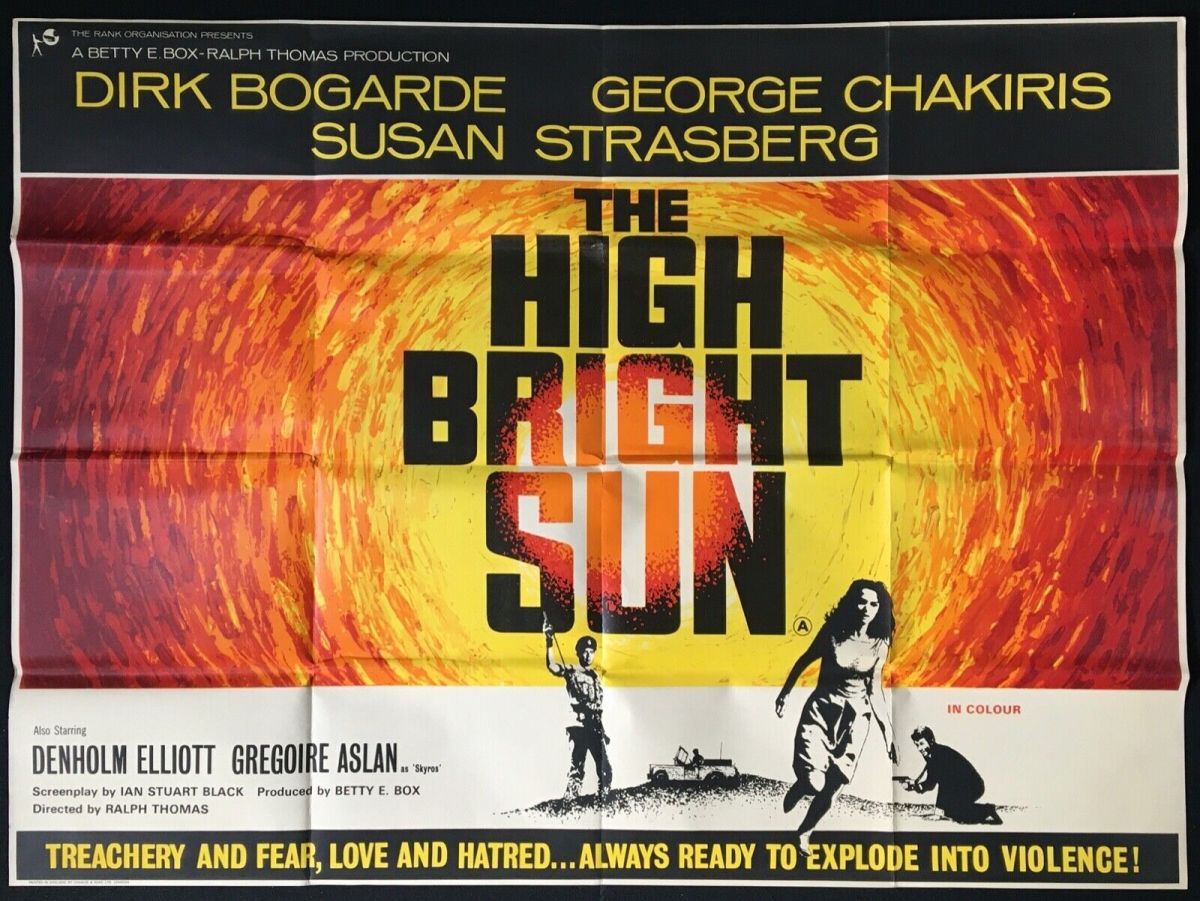
The High Bright Sun / Maguire, Go Home (1964) ****

Surprisingly good thriller about loyalties in war time. Elevated above the norm by a series of stunning scenes often turning on the psychological. And taking a helluva bold risk as far as the billing is concerned. In dramatic and structural terms top-billed British star Dirk Bogarde (Justine, 1969) and rising American star George Chakiris (Diamond Head, 1962) take second place to the third-billed Susan Strasberg (The Sisters, 1969), although Bogarde’s stiff upper lip is tested in just about the most despicable fashion.

Also derives an interesting agency from differing audience perspectives. The British audience will view Major Maguire (Dirk Bogarde) as a hero trying to keep the peace in terrorist-racked Mediterranean island Cyprus. But virtually everyone else will side with Haghios (George Chakiris) and his bunch of freedom fighters in what was effectively a war of independence. Stuck in the middle, and expecting to be given a free pass, is Juno (Susan Strasberg), a young geologist staying with family friends named Andros but who, as an American, would be viewed as a neutral.

However, she has witnessed the arrival at the Andros home of terrorists, not just Haghios but General Skyros (Gregoire Aslan), leader of the Resistance. Not wanting to get her friends in trouble, and assuming they are not involved in terrorism, she resists the attempts of Maguire to get her to name names. But it’s only the cooler head of the general and the youngest member of the Andros clan, son Emile (Colin Campbell), that prevents her being shot dead on the spot.

Bluff and double bluff are the order of the day. She’s a prisoner – and a shocked one at that having witnessed British soldiers murdered by terrorists – but if she is seen to be prevented from leaving the house it will give the game away. So Maguire comes up with an acceptable ploy to get her out so that, in a calmer situation, he can gently interrogate her.

Unfortunately taking her out to dinner backfires, as they are spotted by Haghios who, assuming they are romantically involved, realises she can’t be trusted and signs her death warrant.

But she’s far from the plucky female and no good at playing the game of being hunted. In a brilliant sequence she takes all the wrong actions and it’s only happenstance and sacrifice that prevent her capture. And this is followed by an even edgier scene when she hitches a ride late at night with a lascivious local. But that’s nothing to her treatment by Maguire who, furious at her refusal to talk, parades her in the streets “like a sitting duck.”

There’s a whole strata of soldiers in open rebellion of a different kind. Maguire mocks his commanding officer, the inept Col Park (Nigel Stock), and he in turn is mocked by his junior, Lt Baker (Denholm Elliott) who taunts him about the affair he had with Maguire’s wife. And there are any number of stings in the tail. Believing she has finally escaped, Juno is confronted by Haghios and no Maguire in sight to come to her aid.

But the central tale is given over to Juno, the innocent caught up in bloody warfare, forced to witness barbarity at first hand, and unless she hankers after personal sacrifice inevitably  induced to take sides.

Susan Strasberg is simply superb. At no time is she the feminine hero springing into reluctant action in some espionage or wartime drama. Instead, she is the innocent bystander who at any moment will turn into collateral damage. And she’s too confused even to summon up outrage at betrayal by both sides.

Dirk Bogarde looks as if he is playing your standard British officer of high breeding who can trade barbs and bullets with the enemy but mostly tries to extract information by gentler means. But he turns out to be just as savage in his ideals as the opposition. And his armour is pierced not only by having an adulterous wife but having to take abuse from her lover.

It was a typical Hollywood ploy to stick an innocent American in a war zone in order to expose a situation or attract audience sympathy either for the underdog or the oppressors – think Jack Lemmon in Chile in Missing (1982) or Sally Field in Iran in Not Without My Daughter (1991) – but I doubt if director Ralph Thomas was as naïve or politically-inclined to attempt that here and instead he treads a finer line of personal decision as he would later do in The High Commissioner/Nobody Runs Forever (1968).  Sticking to the storyline and relying on actors who never resort to emotional extremes pretty much does the trick.

George Chakiris is wasted and I can only assume this was a sign of his career going downhill.

Not just far better than I expected, but bordering on the excellent.

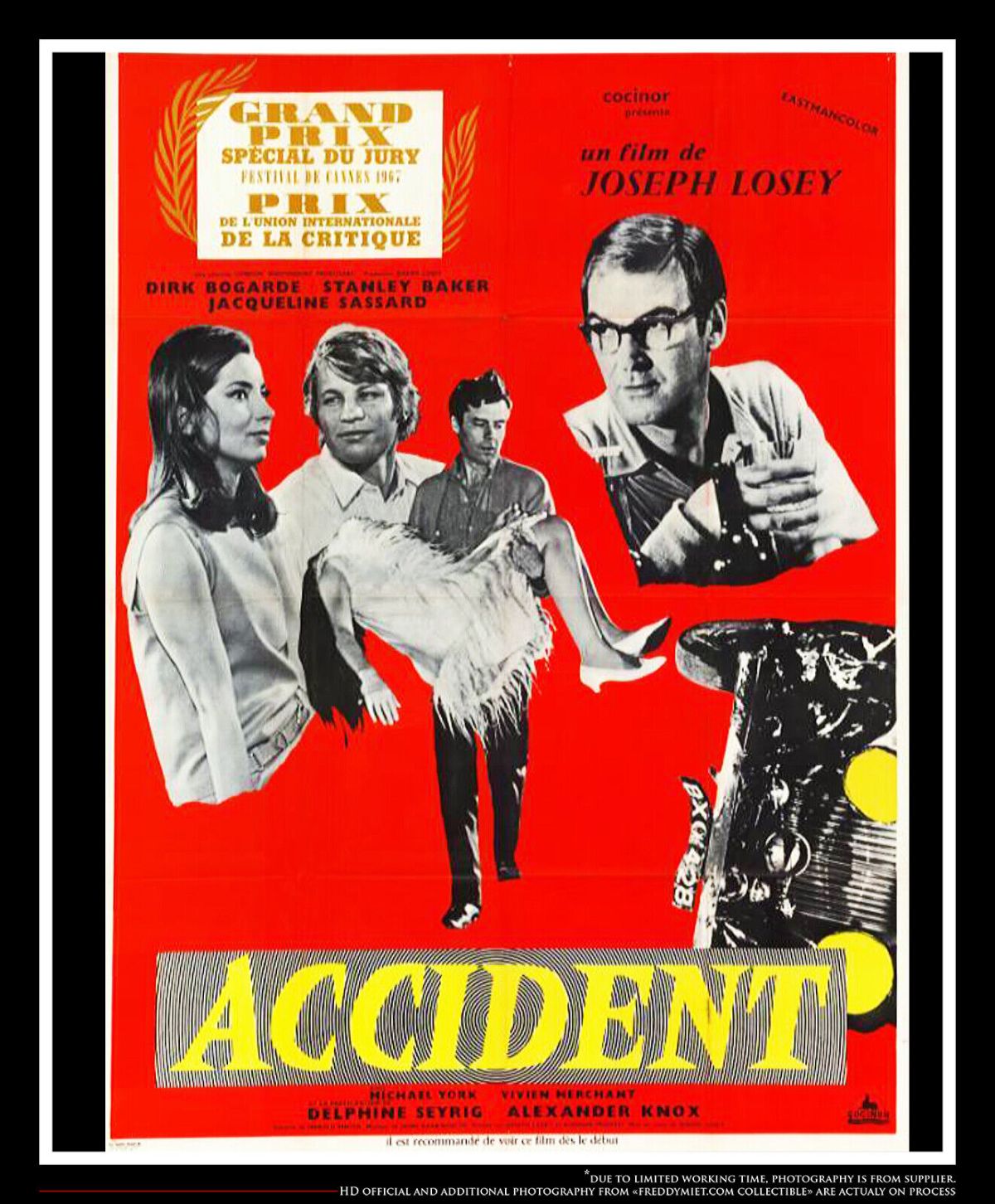
Accident (1966) ****

Intellect can present as powerful a sexual magnetism as wealth. And for young women, unlikely to come into the orbit of powerful movie magnates or wealthy businessmen, they are most likely to experience abuse of power in academia, especially in top-notch universities like Oxford and Cambridge or Harvard and the Sorbonne.

Young students, unsure of their place in the world, depend on praise for their self-esteem. To be on the receiving end of flattery from a renowned scholar, a young person (males included) might be willing to overlook other unwanted attention. For young women and men accustomed to being assessed on looks alone this might be a drug too powerful to ignore.

The British system ensured that potential prey was delivered to potential predators. As well as attending lectures, each student was allocated a tutor and could spend a considerable amount of time with them in private in congenial surroundings behind closed doors. And since essays marked by tutors played a considerable element in an overall mark, there was plenty of opportunity for transactional sex.  

And it was easy for women to think they wielded the sexual power. I once employed a woman who boasted that she had seduced her university tutor, little imagining that that took any opposition on his part, and that, in reality, she was just another easy conquest.

So you might be surprised to learn that when this movie about inappropriate behavior in a university of the caliber of Oxford appeared, nobody gave a hoot about the grooming and exploitation of young Austrian Anna (Jacqueline Sassard) by two professors, Stephen (Dirk Bogarde) and Charley (Stanley Baker).

The story is told in flashback in leisurely fashion. Hearing a car crash outside his substantial house in the country, Stephen finds inside the vehicle an injured Anna and her dead boyfriend William (Michael York). Then we backtrack to Anna’s arrival in Oxford, and how the love quadrangle is created. The presence of William suggests Anna has predatory instincts, but there is no sign of sex in their relationship, rather that he is forever frustrated at being kept on a leash and clearly suspecting he is losing out to others.

Stephen, a professor of philosophy, no higher calling in academe, endless discussion on the meaning of life manna to every student, has a purported happy home life, wife Rosalind (Vivien Merchant) pregnant with their third child. He’s no stranger to infidelity, reviving an affair with the estranged daughter Francesca (Delphine Seyrig) of a college bigwig (Alexander Knox).

But he can’t quite make his move on Anna, despite idyllic walks in the fields and their hands almost touching on a fence. The uber-confident Charley, novelist and television pundit in addition to academic celebrity, has no such qualms and seduces her under the nose of his friend and sometime competitor.

When opportunity does arise for Stephen it does so in the most horrific fashion and, that he takes advantage of the situation, exposes the levels of immorality to which the powerful will stoop without batting an eyelid.

The web Stephen is trying to weave around his potential victim is disrupted by William and Charley and if any anguish shows on Stephen’s face it’s not guilt at the grief he may cause or about his own errant behavior but at the prospect of losing a prize.

Director Joseph Losey (Secret Ceremony, 1968) sets the tale in an idyllic world of dreaming spires, glasses of sherry, tea on the lawn, glorious weather, punting on the river, old Etonian games, the potential meeting of minds and the flowering of young intellect.  The action, like illicit desire, is surreptitious, a slow-burn so laggardly you could imagine the spark of narrative had almost gone out.

Stephen is almost defeated by his own uncontrolled desire, taking advantage of his wife entering hospital for childbirth, the children packed off elsewhere, to have sex with Francesca, not imagining that Charley will take advantage of an empty house.

And the young woman as sexual pawn is given further credence by the fact that at no point do we see the events from her perspective.

Anguish had always been a Dirk Bogarde (Justine, 1969) hallmark and usually it served to invite the moviegoer to share his torment. So it’s kind of a mean trick to play on the audience to discover that this actor generally given to playing worthy characters is in fact a sleekit devious dangerous man. Of course, the persona reversal works very well, as we do sympathise with him, especially when relegated to second fiddle in the celebrity stakes to Charley and humiliated in his own attempts to gain television exposure.

Stanley Baker (Sands of the Kalahari, 1965) was the revelation. Gone was the tough guy of previous movies. In its place a charming confident winning personality with a mischievous streak, a far more attractive persona when up against the more introspective Bogarde.

Jacqueline Sassard (Les Biches, 1968) is, unfortunately, left with little to do but be the plaything. There’s an ambivalence about her which might have been acceptable then, but not now, as if somehow she is, with her own sexual powers, pulling three men on a string. In his debut Michael York (Justine, 1969) shows his potential as a future leading man.

You might wonder if Vivien Merchant (Alfred the Great, 1969) was cast, in an underwritten part I might add,  because husband Harold Pinter (The Quiller Memorandum, 1966) wrote the script and Nicholas Mosley, who had never acted before, put in an appearance because he wrote the original novel.

Losey, a critical fave, found it hard to attract a popular audience until The Go-Between (1971) and you can see why this picture flopped at the time despite the presence of Bogarde and Baker. And although it is slow to the point of infinite discretion, it’s not just a beautifully rendered examination of middle class mores, and a hermetically sealed society, but, way ahead of its time, and possibly not even aware of the issues raised, in exploring abuse of power, a “Me Too” expose of the academic world.

The acting and direction are first class and it will only appear self-indulgent if you don’t appreciate slow-burning pictures.


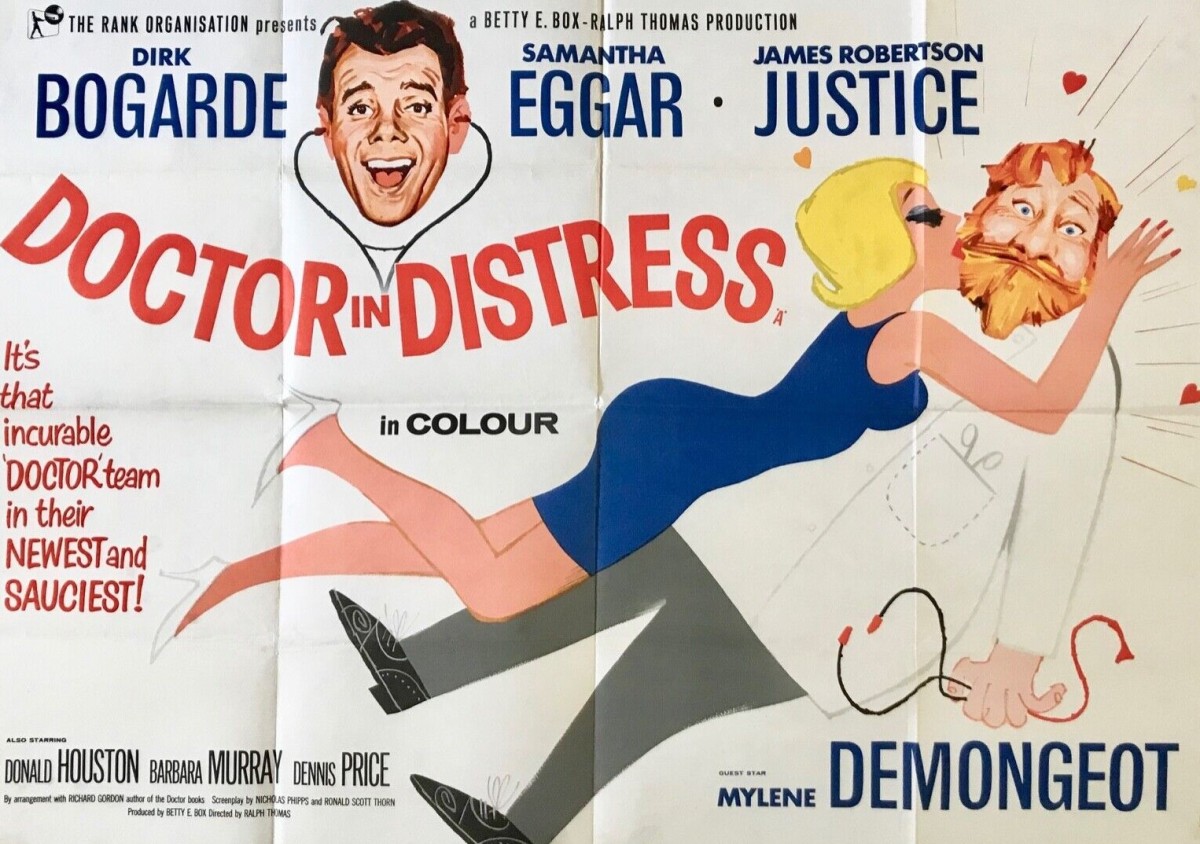
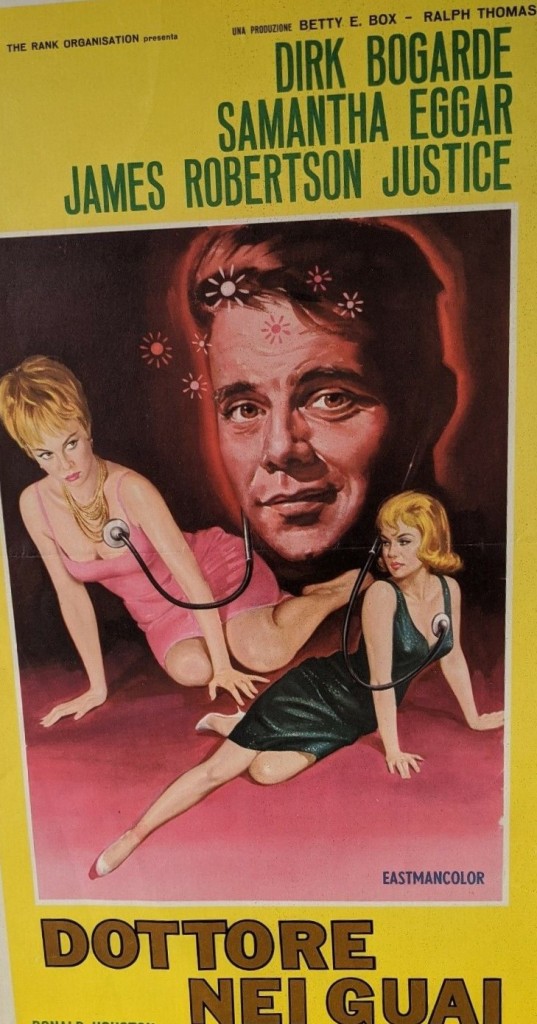
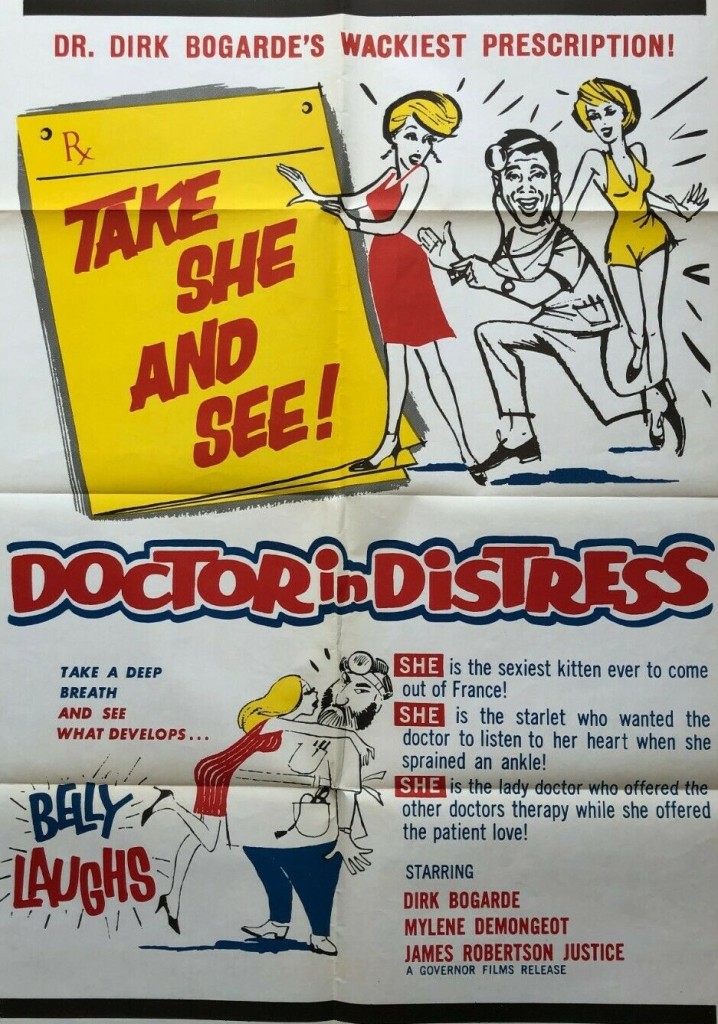
Doctor in Distress (1963) ***

Bait-and-switch as the romantic complications of the grumpy Dr Spratt (James Robertson Justice) take precedence over the by-now pretty competent Dr Sparrow (Dirk Bogarde). Just about getting by on Bogarde’s charm in his fourth and final outing in a role that had made him a British box office star and possibly more notable as his final film as an out-and-out matinee idol before he shifted into the arthouse arena.

Dr Sparrow has come a hell of a long way since being a shy junior doctor, mercilessly bullied by Spratt and a love life that was filled with tangle. Here, he not only stands up to Spratt, but is something of a lothario, happily ditching new love Delia (Samantha Eggar), a model, albeit temporarily, in favor of French masseuse Sonia (Mylene Demongeot).

There is very little of the traditional rom-com-love-on-the-rocks in Bogarde’s relationship with Delia, who arrives as a patient with a sprained ankle at the hospital and is whisked home by Sparrow for a spot of practised seduction. Spratt, on the other hand, has fallen for physiotherapist Iris (Barbara Murray) and in trying to win her hand undergoes weight loss treatment at a health clinic, endures the indignity of wearing a corset, hires a private detective to get the lowdown on her, and finally, donning a disguise of dark glasses and hiding his bulky frame behind an umbrella, proceeds to attempt to discover who is his rival for her affections.

Sparrow is left to occasionally swat out of the way the interfering Spratt and alternatively offer him advice or a shoulder to cry on while trying to prevent Delia pursuing a movie career. So it’s just a series of situations, none of which are particularly funny, apart from the idea of Spratt getting his come-uppance.

It’s worth noting that for a British sex comedy, the females are in charge. Iris knocks back her various suitors, Delia refuses to let romance interfere with her career, jetting off to Rome over Sparrow’s objections, and the diminutive and muscular Sonia is more than a match for any man and just as predatory.

What’s most surprising is that a genial comedy like this can get away with so much permissiveness. This was opposite of the in-your-face snigger-snigger Carry On series so for Sparrow to be successfully spreading his wild oats seemed somewhat out of character. But you can see most of the jokes a mile off though probably in a packed cinema these would provoke more laughter than watching it at home on the small screen.

It’s probably worth it to see Leo McKern (Hot Enough for June, 1964) as a movie producer who envisages Sparrow as his new star and Frank Finlay as a corset salesman, a completely different role to his part in Robbery (1967). Fenella Fielding (Lock Up Your Daughters, 1969) has a cameo as a neurotic passenger on a train and Dennis Price (Tunes of Glory, 1960) as a sadistic health clinic manager while Donald Houston (A Study in Terror, 1965) has a larger part as another of Iris’s suitors.  

Dirk Bogarde (Justine, 1969) can essay this kind of character in his sleep but there is no doubting his screen charisma or charm. But I doubt if James Robertson Justice (Mayerling, 1968) varied his character much from picture to picture, perhaps louder and more bumptious here but unlikely to attract audience sympathy. Samantha Eggar (The Collector, 1965) doesn’t get enough to do and has her thunder stolen by the late arrival of Mylene Demongeot (Fantomas, 1964).

Director Ralph Thomas had made more than a half-a-dozen films with Bogarde including more dramatic ventures like Campbell’s Kingdom (1957) and The Wind Cannot Read (1958) and makes the most of this undemanding feature. You would have thought this was the end of the line for the series but with Leslie Phillips (Maroc 7, 1967) as Bogarde’s replacement it soldiered on for another couple of episodes.

Proof that a true star can always help a film rise above its material.

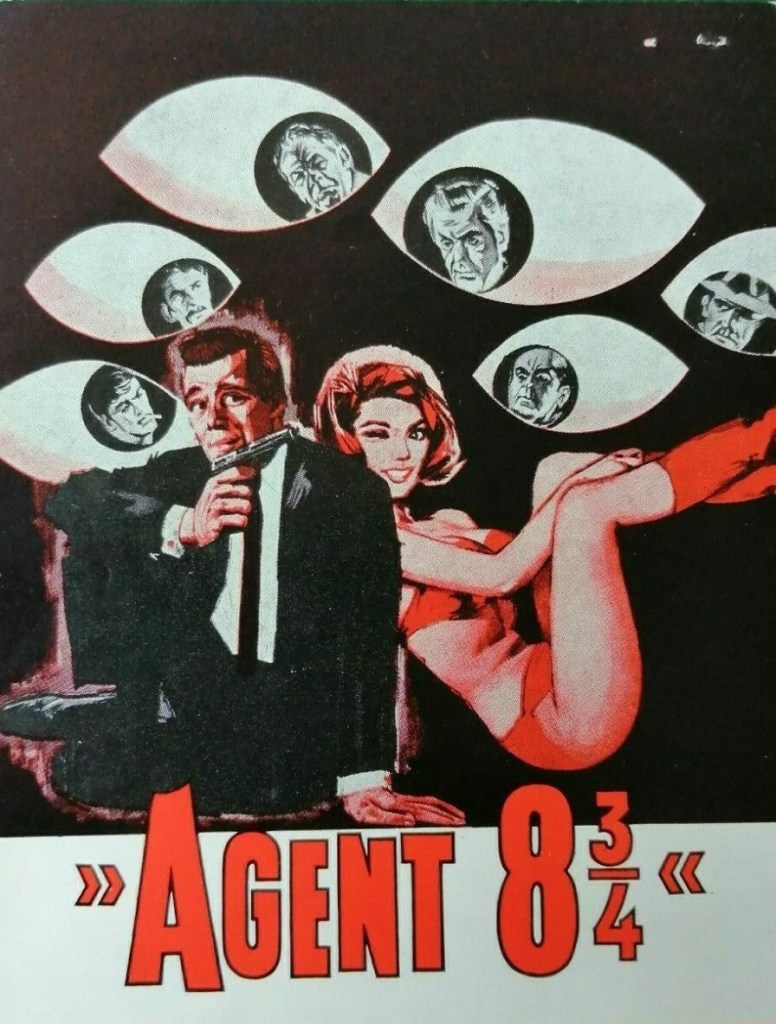
Book into Film – “Hot Enough for June”/ “Agent 8 3/4” (1964)

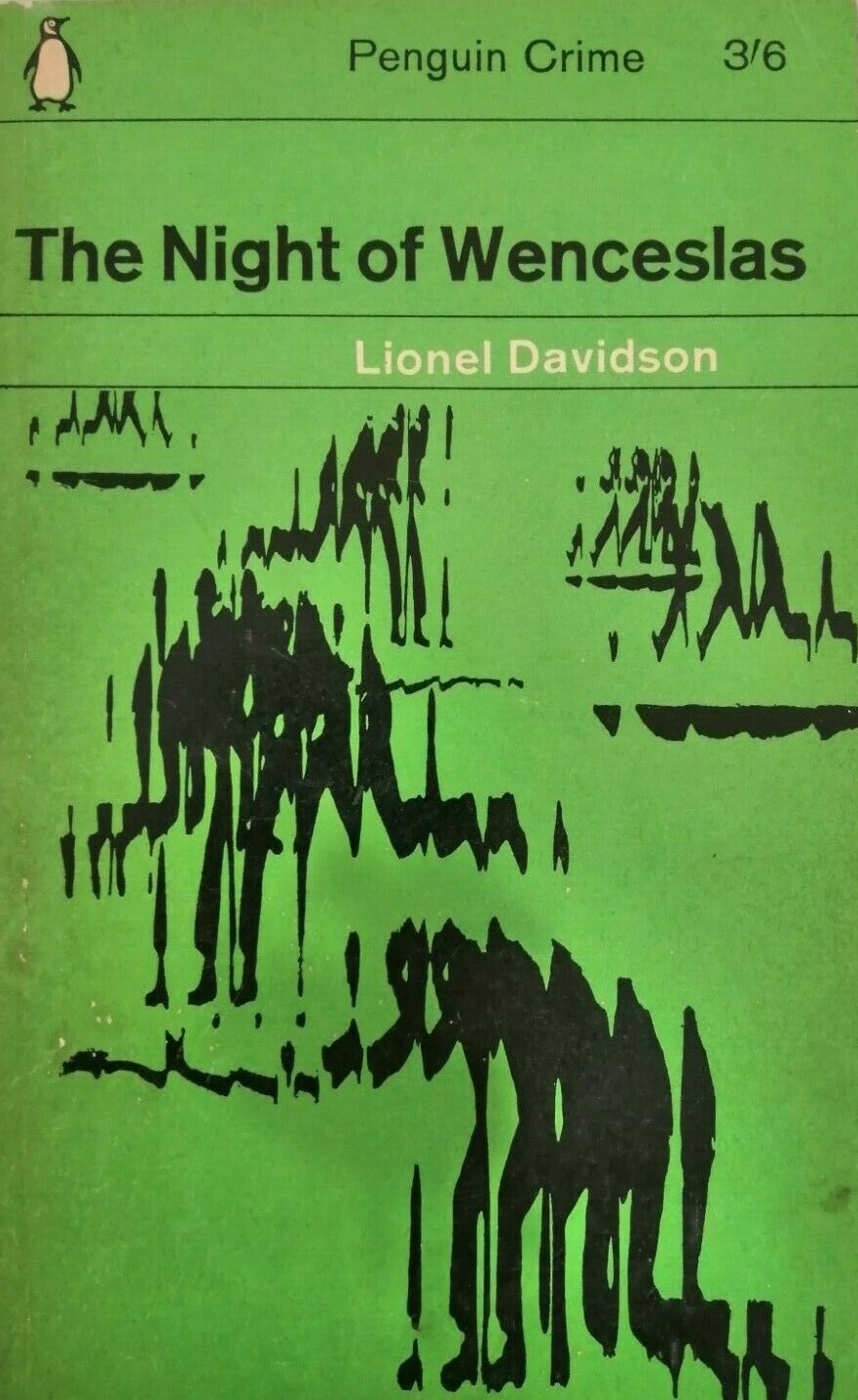
Timing is everything in the movie business. Had British film studio Rank shifted into top gear to adapt the best-selling thriller The Night of Wenceslas by Lionel Davidson soon after its publication in 1960 it would probably have been a completely different film to Hot Enough for June which took four years to reach the screen. Davidson had produced a ground-breaking espionage thriller that had critics reaching for the superlatives and putting him in the same bracket as Graham Greene and Eric Ambler. A film appearing, for example, in 1961 would not have been lost in the box office tsunami, in Britain at least, that greeted Dr No on its movie debut in 1962.

But by the time Hot Enough for June was released a second Bond – From Russia with Love (1963)- had changed public attitudes to spy films and in addition readers were reeling from two blockbuster spy novels, Len Deighton’s The Ipcress File (published in 1962) and John Le Carre’s monumental bestseller The Spy Who Came in from the Cold (published 1963). In preproduction in May 1963, minus any cast, the projected film was still being known as The Night of Wenceslas. Star Dirk Bogarde dithered so much about his involvement that at one point he was replaced by the considerably younger Tom Courtenay (Billy Liar, 1963).

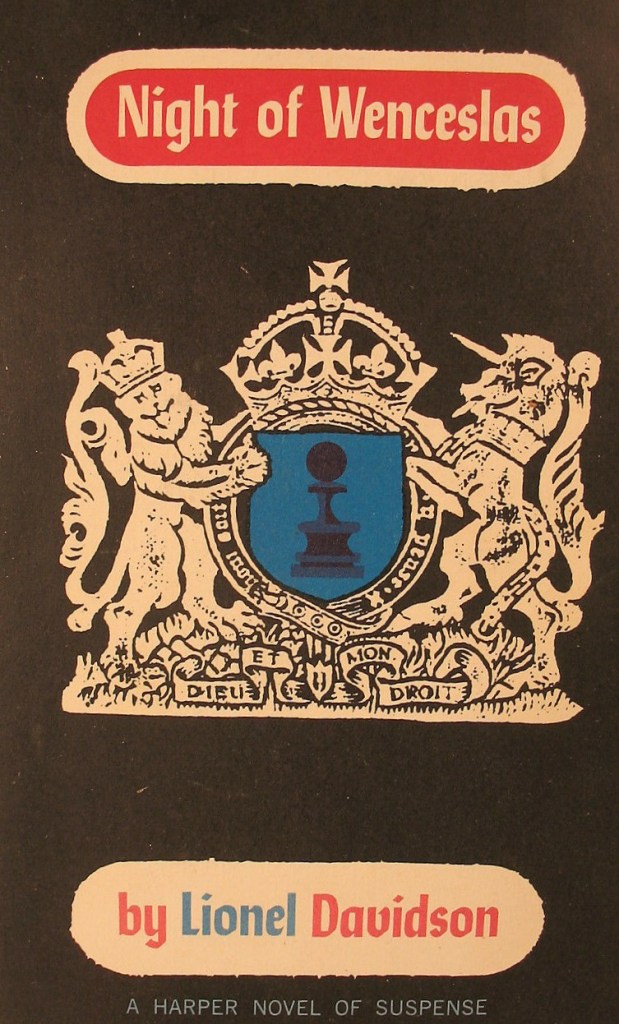
U.S. cover of the Davidson novel.

As was often the case in adaptations of best sellers, the screenwriter, in this instance Lukas Heller (Whatever Happened to Baby Jane, 1962) both added to and subtracted from the original material. For example, the Nicholas of the Lionel Davidson novel was not a particularly attractive character, truculent, snippy, with a bad case of self-entitlement, a bit of a ne’er-do-well, scrounging to pay bills, with expensive tastes and far from charming in his relationship with his girlfriend. He is also employed, rather than unemployed and with hankerings to be a writer as in the film, and comes into the orbit of Cunliffe (Robert Morley in the film) who dupes him into thinking an uncle has left him an inheritance.

Sensibly, Lukas Heller dispenses with Nicholas’s back story which posits him as a Czechoslovakian exile, albeit leaving his native land at the age of six, and various other complications concerning that country. He is sent to collect a formula for unbreakable glass. The “hot enough for June” password is a Heller construct and feels as if belongs to an earlier era of spy pictures. In the book all Nicholas has to do is leave his guide book lying around in the factory for the contact to write there the formula. However, rather than discovering he is working for the British Secret Service, the novelist employs a different twist, that the young man is, unknowingly, in the pay of foreigners plotting against Britain.

Davidson envisaged a different kind of Czech girl, more of a Valkyrie, statuesque (“her breasts stood out like bombs”) rather than the slimmer Sylva Koscina. It is Heller who adds the complication of her father heading up the secret police. In the book, her father is merely a musician and conveniently absent for most of the time, freeing up his house for romantic interludes. And the book has none of the James Bondesque features since the first of the series had not been written when The Night of Wenceslas was published.

However, the film having established the alternative world of rival secret agencies, of the girl being under suspicion and of her father being a senior official in the espionage business, the screenwriter then follows the bulk of the novel’s romance and the thrilling episodes involving Nicholas on the run. The swimming pool, cigarette burn, the parade and the milkman can all be found in the book.

There is one element that had to be changed. In the book, Nicholas makes two trips to Prague. But it is a golden rule of screenwriting that a character visits a location only once. Davidson ends his book with a touch of irony: Nicholas is swapped for Cunliffe.

At whose behest, it was decided to insert the comedy is anybody’s guess. Possibly the feeling that the book as written would be too unsophisticated for audiences accustomed to the rattling action and glamour of a James Bond. The Bond-style connections at the beginning of the film are clunky and the later references to espionage at the highest level also seemed to have been slotted in with no regard to retaining the essence of the book.

Hot Enough for June / Agent 8 3/4 (1964) ***

Thanks to his language skills unemployed wannabe writer Nicholas (Dirk Bogarde) is recruited as a trainee executive on a too-good-to-be-true job visiting a Czech glass factory  only to discover that while engaged on what appears a harmless piece of industrial espionage is in fact considerably more serious.  Complications arise when he falls in love with his chauffeur Vlasta (Sylva Koscina) whose father, Simenova (Leo McKern), is head of the Czech secret police.

Eventually, it dawns on Nicholas that he is in the employ of the British secret service headed by Colonel Cunliffe (Robert Morley). Soon he is on the run. Adopting a variety of disguises including waiter, Bavarian villager and milkman he evades capture and makes a pact with Vlasta that neither of them will participate in espionage activities.

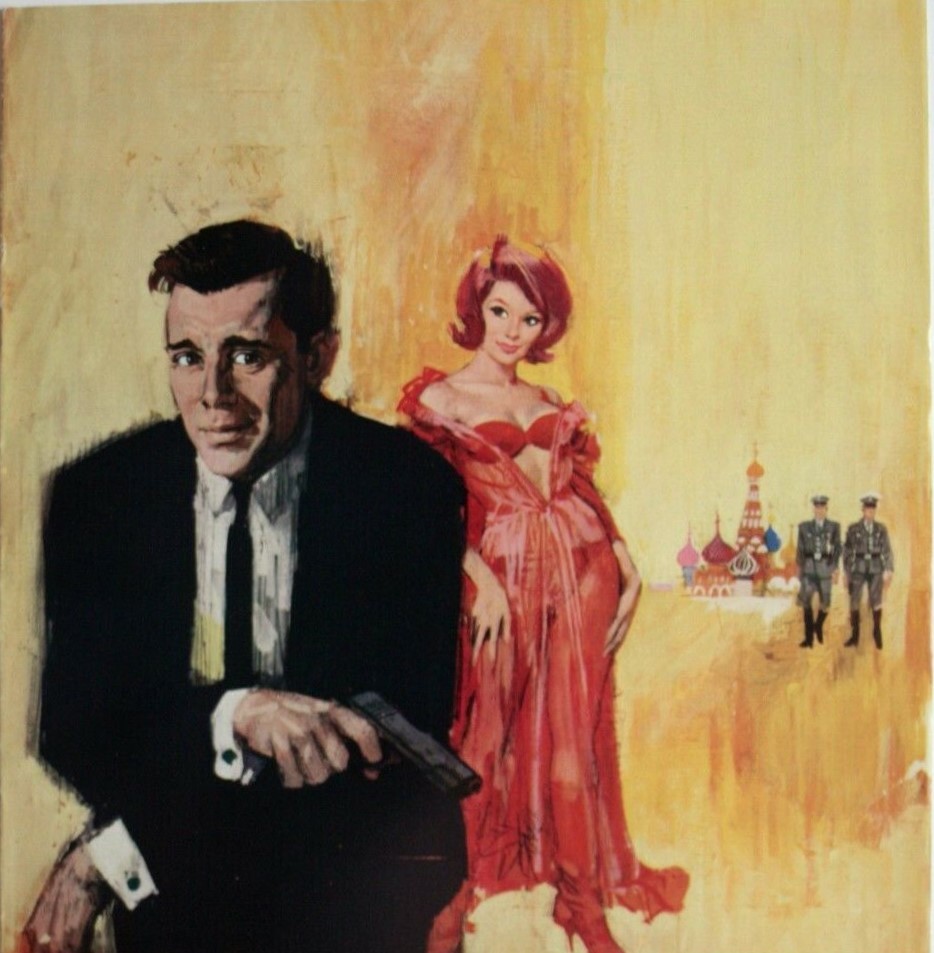
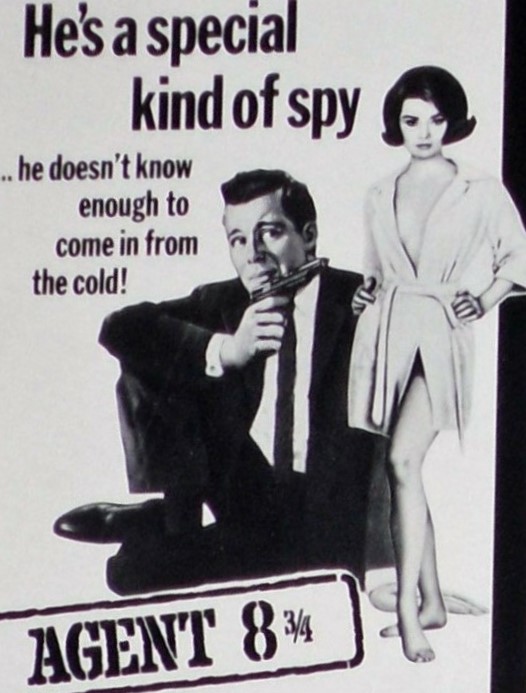
The slinky clothing and the image of Bogarde with a gun played up to the James Bond persona,
which is of course completely lacking in the film. While Sylva Koscina is seductive
at the correct moment she is not overtly so.

A chunk of the comedy arises from misunderstandings, Iron curtain paranoia, the destruction of indestructible glass, password complications, Nicholas’s contact turning out to be a washroom attendant, and from the essentially indolent Nicholas being forced into uncharacteristic action. Soon he is adopting the kind of ruses a secret agent would invent to outwit the opposition, including burning the hand of a man with his cigarette and stealing a milk cart.

The romance is believable enough and Vlasta has the cunning to shake off the secret agent shadowing her, although the ending is unbelievable and might have been stolen from a completely different soppy picture. Although Nicholas is clearly in harm’s way several times that is somewhat undercut by the espionage at a higher level being presented as a gentleman’s game.

There are unnecessary nods to 007 and the kind of gadgets essential to Bond films, although none come Nicholas’s way. But these attempts to modernise what is otherwise an old-fashioned romantic comedy largely fail. Taking a middle ground in comedy rarely works. You have to go for laughs rather than plod around hoping they will miraculously appear. And in fact the comedy is redundant in a plot – innocent caught up in nefarious world – that has sufficient story and interesting enough characters to work.

As well as James Bond, the movie tagline referenced “The Spy Who Came in
from the Cold” (1965). The American version of “Hot Enough for June”
appeared with a new title a year after the British release and was
able to take advantage of the film adaptation of the John Le Carre novel.

That the movie is in any way a success owes everything to the casting. Dirk Bogarde, though well into his 40s, still can carry off a character more than a decade younger. He can turn on the diffidence with the flicker of an eyelash. And yet can call on inner strength if required. He is the ideal foil for light comedy, having made his bones in Doctor in the House (1954), reprising the character for Doctor in Distress (1963), while dipping in and out of serious drama such as Victim (1961) and the acclaimed The Servant (1964), released just before this.

In some respects it seems as if two different pictures are passing each other in the night. The Bogarde section, excepting some comedy of misfortune, is played for real while in the background is a bit of a spoof on the espionage drama.

Sylva Koscina (The Secret War of Harry Frigg, 1968) is excellent as the beauty who betrays her country for love. Robert Morley (Topkapi, 1964) and Leo McKern (Assignment K, 1968), although in on the joke, are nonetheless convincing as the secret service bosses.  Look out for a host of lesser names in bit parts including Roger Delgado (The Running Man, 1963), Noel Harrison (The Girl from U.N.C.L.E. 1966-1967), Richard Pasco (The Gorgon, 1964) and stars of long-running British television comedies John Le Mesurier, Derek Fowlds and Derek Nimmo.  

This was the eighth partnership between director Ralph Thomas and Dirk Bogarde, four in the Doctor series but also three serious dramas in Campbell’s Kingdom (1957), A Tale of Two Cities (1958) and The Wind Cannot Read (1958). In themselves the comedies and the dramas were successful, but mixing the two, as here, less so. Lukas Heller (The Dirty Dozen, 1967) wrote the screenplay based on the Lionel Davidson bestseller.

American distributors were less keen on this picture and it was heavily cut for U.S. release and retitled Agent 8¾ presumably in an effort to cash in on the James Bond phenomenon. I’ve no idea what was lost – or perhaps what was gained – by the editing.

The end result of the original version is a pleasant enough diversion but not enough of the one and not enough of the other to really stick in the mind.

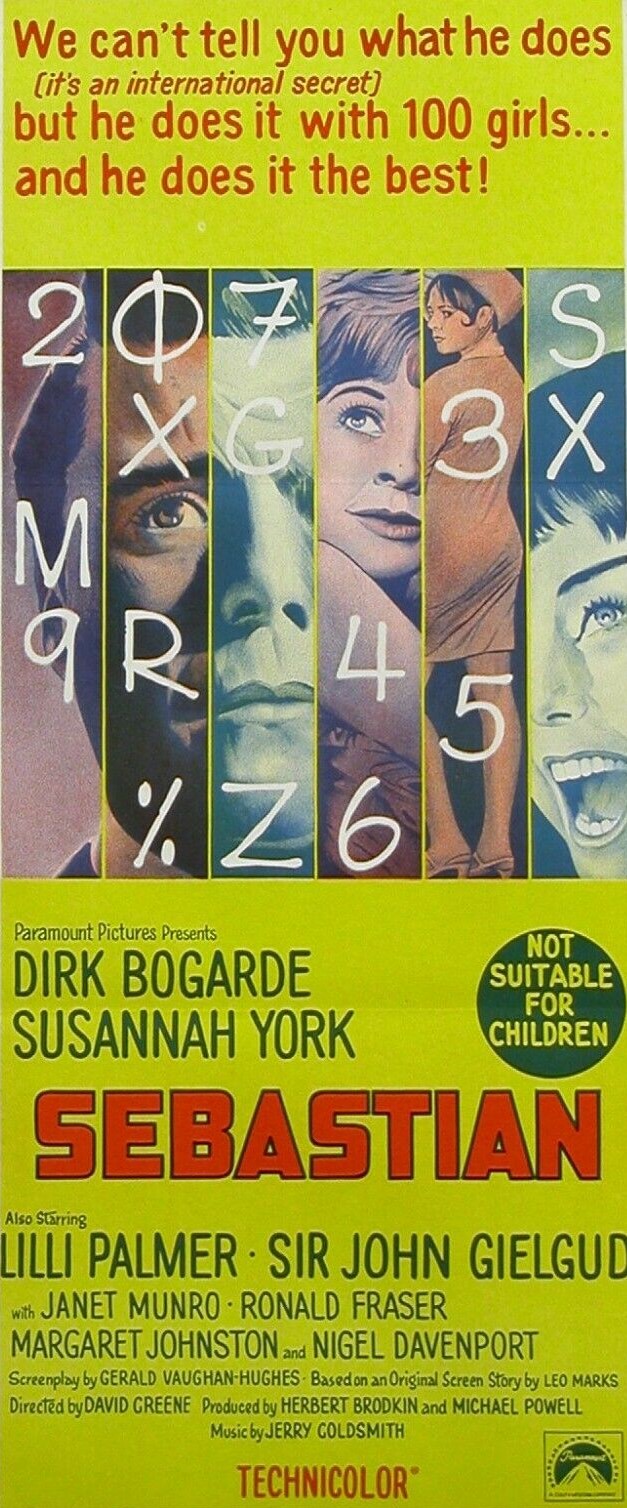
Sebastian (1968) ***

Decoding the emotional life of mathematics professor Sebastian (Dirk Bogarde) lies at the heart of a spy thriller mainlining on loyalty and trust. The presence of a flotilla of potential Bond girls has opened this picture up to charges of being a spoof, but I saw the mini-skirted incredibly-bright lasses as being a reversal of the standard secretarial pool. And a supposed  representation of the “Swinging Sixties” would hold true if shot in the environs of Carnaby St  rather than the bulk of locations being arid high-rise buildings. 

In roundabout fashion, intrigued after literally bumping into him in Oxford, Rebecca (Susannah York) is recruited into an espionage decoding department staffed entirely by gorgeous (but brainy) women. Among the older employees is chain-smoking left-winger Elsa (Lili Palmer) whom security chief General Phillips (Nigel Davenport) suspects of passing on secrets. When romance ensues with Rebecca, Sebastian dumps dumb pop singer girlfriend Carol (Janet Munro) who is already having an affair and spying on Sebastian.

Sebastian and girlfriend.

Although there is no actual beat-the-clock codes to be unraveled, tensions remains surprisingly high as in the best Alan Turing/Bletchley manner, breakthroughs are slow. There’s an undercurrent of electronic surveillance, eavesdropping on recruits, bugs planted in the houses of even the apparently most trusted personnel, seeds of distrust easily sowed, codes shifting from numbers to sounds.  The occasional nod to the contemporary, a disco, pop songs, Rebecca doing a fashion shoot in the middle of traffic, is background rather than center stage.

Sebastian, though worshipped by is female staff, is “more whimsical than predatory.” Nonetheless, introspective and often morose, unable to deal with emotions, it falls to Rebecca to take on the task of sorting him out which naturally leads to complications.

Most reviewers at the time complained it was a victory of style over substance, but somehow they managed to overlook the essential questions about trust the picture asked. That said, it does follow an odd structure, the third act dependent on directorial sleight-of-hand.

Rather unique meet-cute: Sebastian, all set to attend a function at Oxford University,
gives Rebecca a word-game test.

Dirk Bogarde (Accident, 1966) is always highly watchable and Susannah York (The Killing of Sister George, 1968) Rebecca catches the eye with an  impulsive, slightly kooky character who turns out to be down-to-earth. Nigel Davenport (The Third Secret, 1964) bring his usual cynical malevolence to the party but with the twist of not knowing whose side he is really on. John Gielgud (The Shoes of the Fisherman, 1968) is a delight. There’s a brief appearance by a pipe-smoking Donald Sutherland (The Dirty Dozen, 1967). Janet Munro (Bitter Harvest, 1963) decidedly rids herself of her Disney persona. Miss World Ann Sidney is one of “Sebastian Girls”

In his second picture after The Shuttered Room (1967) David Greene’s direction is mostly competent but the opening aerial tracking shots set the precedence for occasional bursts of style.  Jerry Fielding supplied the score.

Another freebie on Youtube.

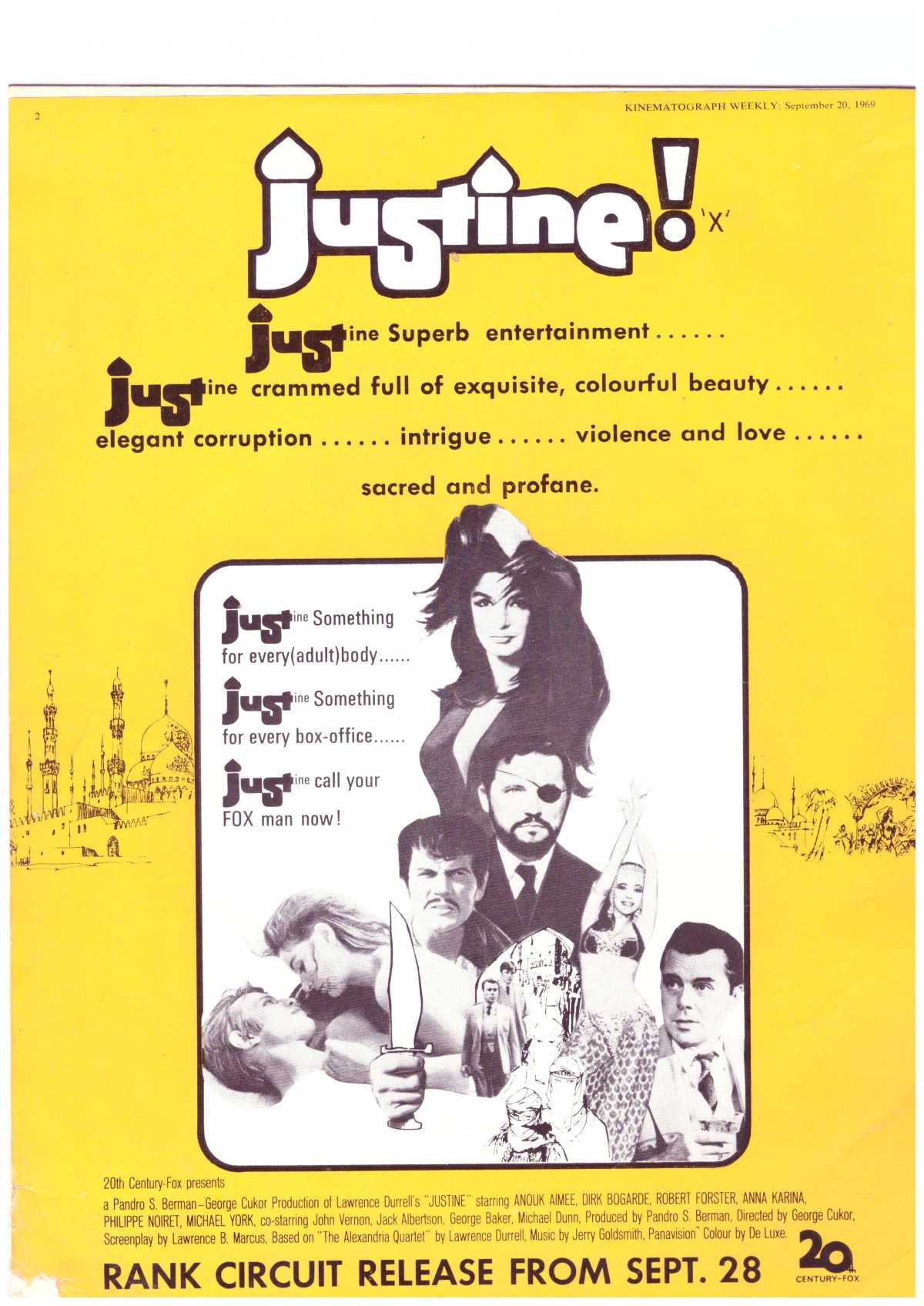
Justine (1969) **

In pre-WW2 Alexandria in the Middle East with the British on the point of departing, impoverished young poet Darley (Michael York) becomes the latest plaything for Justine (Anouk Aimee), wife to Egyptian banker Nessim (John Vernon) who encourages her multiple relationships in order  to smooth the path for his gun-running activities. Matters are complicated since Darley is having an affair with belly dancer Melissa (Anna Karina) and some of Justine’s other lovers float in and out of the picture. Political intrigue which might have anchored the movie also shifts in and out of view. In this cross-cultural hotchpotch various groups – Jews, Moslems, Coptic Christians – look to seize control.

Cluttered is the best way to describe this. Despite excellent performances by Anouk Aimee and Dirk Bogarde it is still a mess. Whatever story there was has been buried by “atmosphere” and too many characters adding too little to the overall outcome. Entangled lives end up being just that – wrapped around each other with nowhere to go. Over-emphasis is placed on the louche background, nightclubs featuring cross-dressing belly dancers and a  massive carnival. Luckily, we can’t entirely blame venerated Oscar-winning director George Cukor (My Fair Lady, 1964). He was picking up the pieces after Twentieth Century Fox fired Joseph Strick (Ulysses, 1967) but was stuck with a lot of footage that had already been shot and a screenplay that didn’t make much sense.

When you realize the movie encompasses religious prejudice, racism, same sex arrangements, incest, child prostitution, nymphomania, revolution, and police and political corruption and is hardly able to give any of these themes more than a fleeting glance you soon realize this is one of those films that is just going to go on and on until sudden conclusion rears up and all is revealed. And that would be fine since many movies of this decade meander at length and sometimes appear to be completely lacking in plot or logic, but whose flaws are more than compensated by outstanding direction or performances. Alas, even the stunning evocation of this city and period cannot save the day.  

And it would have worked if Justine had been a femme fatale of the film noir school or if the politics been more grounded, but that doesn’t occur either and although Justine does have many influential men in her clutches you could hardly say that Darley is one of them. His role is merely to act as narrator and apologist.

One last point which has little to do with the film. In this film and in the same year’s Topaz, John Vernon gives very good dramatic performances, in both cases, coincidentally, wounded emotionally. So what happened that he is mostly remembered for villainous tough-guy roles from the following decade?

Discover WordPress

A daily selection of the best content published on WordPress, collected for you by humans who love to read.

The Atavist Magazine

by Brian Hannan

WordPress.com News

The latest news on WordPress.com and the WordPress community.