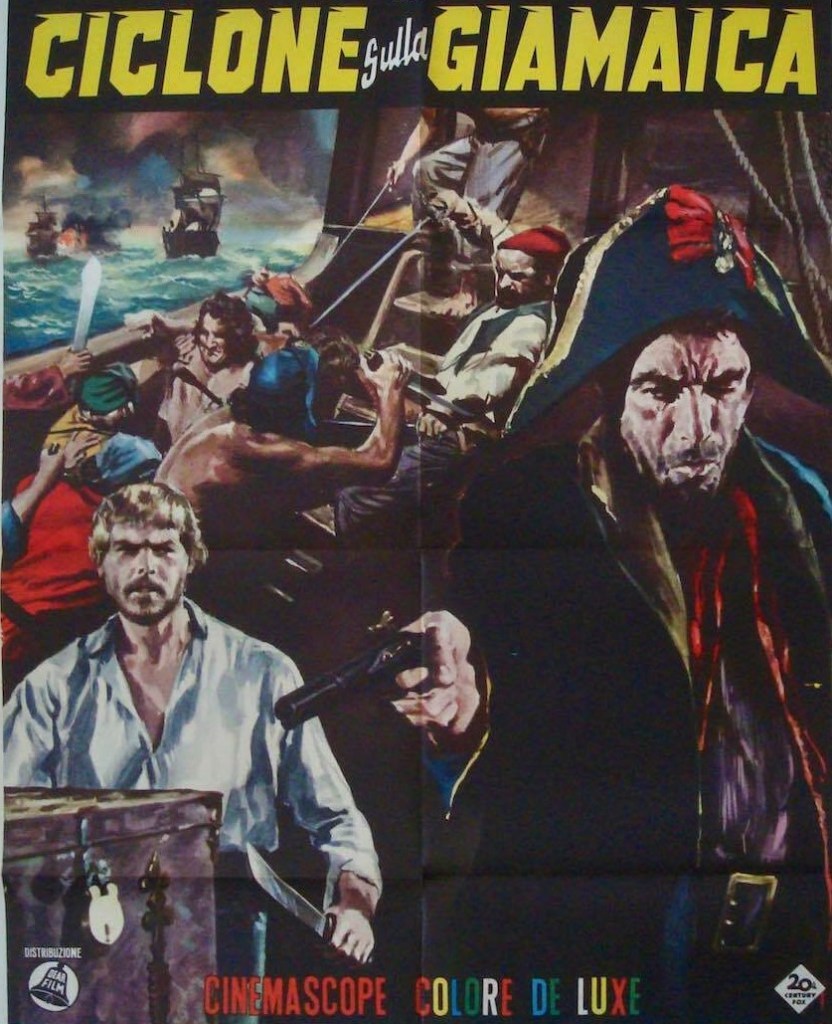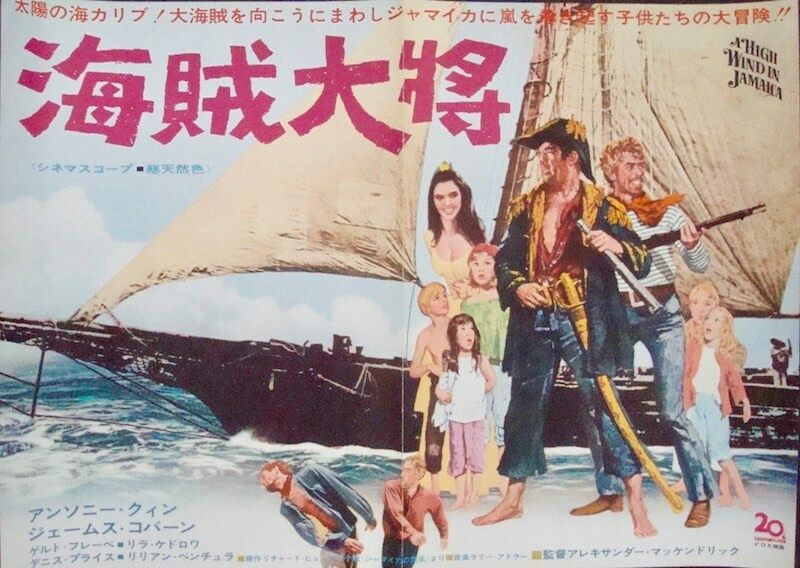
Tamahine (1963) ****

Columbia sold this as if Nancy Kwan was a Bond girl with massive images of the star in a bikini (see above) – the advert in the trade magazine comprised a drop-down A2 pull-out i.e. three times the size of a normal page. But anyone expecting a salacious time would have been in for surprise. For although Kwan swam underwater during the credits (not Helen Mirren style as in The Age of Consent, 1969) and did reveal a naked posterior, you could not have imagined a more innocent, joyous, movie.

Tahitian teenager Tamahine (Nancy Kwan) wreaks havoc on the British stiff upper lip when after the death of her father she is sent to the all-male English public school run by his cousin Poole (Dennis Price), a widower. But it’s not a sex comedy with all the misunderstandings and double entendres that genre normally entails. Instead, it’s a clash of cultures, free love and expression versus prudery and repression. Poole has trouble enough on the female front, his daughter Diana (Justine Lord) inclined to enjoy a gin-soaked afternoon and in the middle of an affair with art master Clove (Derek Nimmo).

The advertising department, however, could not resist the temptation
to stick a double entendre in the poster.

Without mischievous intent, Tamahine causes chaos, assuming an artist’s model would be naked she scandalizes the petrified Clove and egged on by a gaggle of schoolboys whose hormones are off the scale she jams a chamber pot on the school weather vane. The plot, if there is one, is mostly Tamahine fending off suitors, Clove and Poole’s son Richard (John Fraser), and attempting to persuade Poole to take a paternal interest in her well-being.

But mostly it’s about how a sweet-hearted woman struggles to survive in a world where attitudes to sex remain Victorian and in which the avowed aim of education is to build character through manly pursuits such as beating the living daylights out of each other rather than teaching them to express emotion. And certainly the movie takes a more benevolent view of public schools than the later, brutal, If…(1968).

While endorsing free love, Tamahine draws the line at crossing the line in the matter of Richard, whom she deems a relation, no matter how distant. Challenging all conventions, she takes part in sports day.

But the comedy is so gentle and Tamahine so charming that this is best described as a delight. I found myself chuckling throughout and I felt I had just watched a genuine feel-good movie. On paper it certainly doesn’t sound so potentially good, especially when you consider the clichéd portrayals you might expect from the supporting cast, but in reality it exerts an extraordinary appeal.

Hardly off-screen, Kwan (The World of Suzie Wong, 1960), in only her fourth film, easily carries the movie as if she scarcely felt the weight of stardom on her shoulders and is a revelation as the imparter of tender wisdom. What aids the film enormously is that Dennis Price and Derek Nimmo play more interesting parts than their movie personas suggest. Price (Tunes of Glory, 1960), in a far cry from his Ealing comedy heyday, dispenses with his wry delivery and cynical demeanor. Unusual for a character actor, his character actually has a story arc and turns what could have been a stereotypical role into a moving performance. Before his strangulated vowels got the better off him, Derek Nimmo (The Liquidator, 1965), too, delivers probably his best performance.

Justine Lord (Night after Night after Night, 1969) is good as the rebellious daughter but James Fox offers none of the intensity he brought to the screen a year later in The Servant (1964) and neither does John Fraser (El Cid, 1961) light up the screen. In small parts you can spot Michael Gough (Batman, 1985) and Coral Browne (The Killing of Sister George, 1968).

Full marks to director Philip Leacock (The War Lover, 1962), himself a former public school boy, for not taking the easy way out with loutish comedy but instead crafting a film full of sensitivity and sensibility. Denis Cannan (Why Bother to Knock, 1961) based his screenplay on the Thelma Nicklaus novel.

You might be surprised at the four-star rating and I do confess it is a shade optimistic but it is worth more than three stars. It’s worth taking a moment to examine the whole issue of ratings. You might be asking how can Tamahine be given four stars, the same as The Battle of the Villa Florita and a tad below the very few I deem five-star pictures. The answer is I compare like with like. If the best films in your opinion must concern social comment or excel technically, then there will be little place in your world for a sheer confection like Tamahine. But if you watch a wide variety of films and recognize those that contain a high enjoyment factor then you will want to draw attention to such. Hence, the rating.

It’s true that sometimes we do want movies to tackle difficult issues or take us into other worlds, but other times there is nothing to beat an old-fashioned good-hearted picture like this.

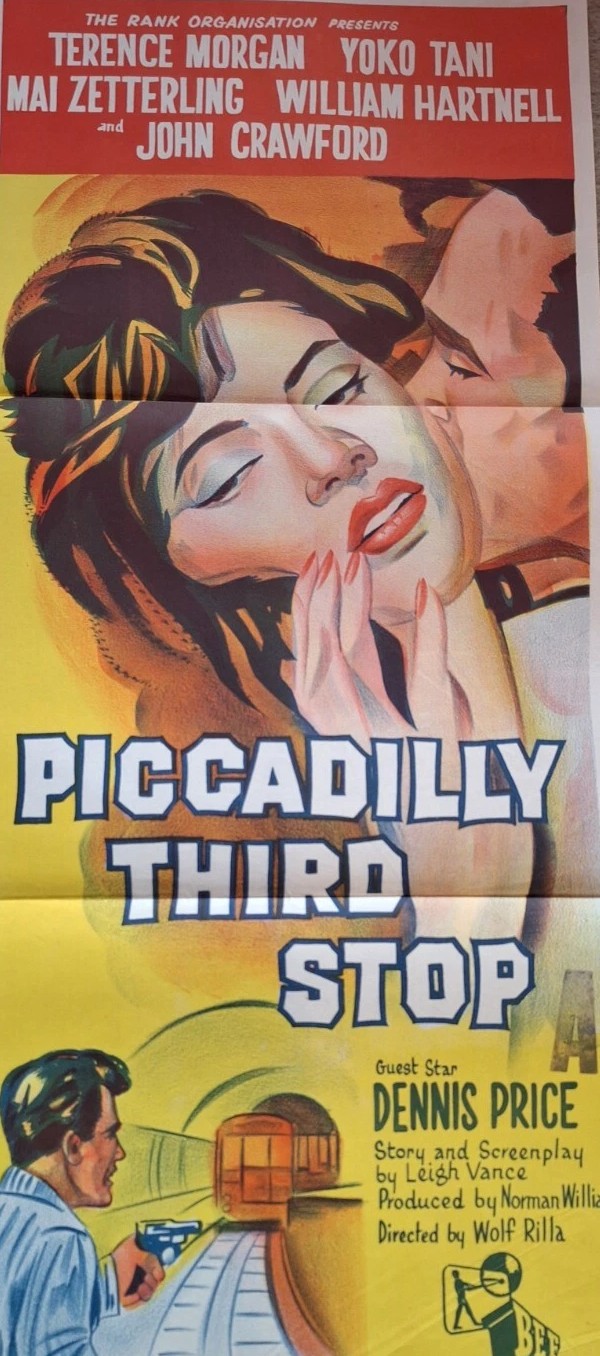
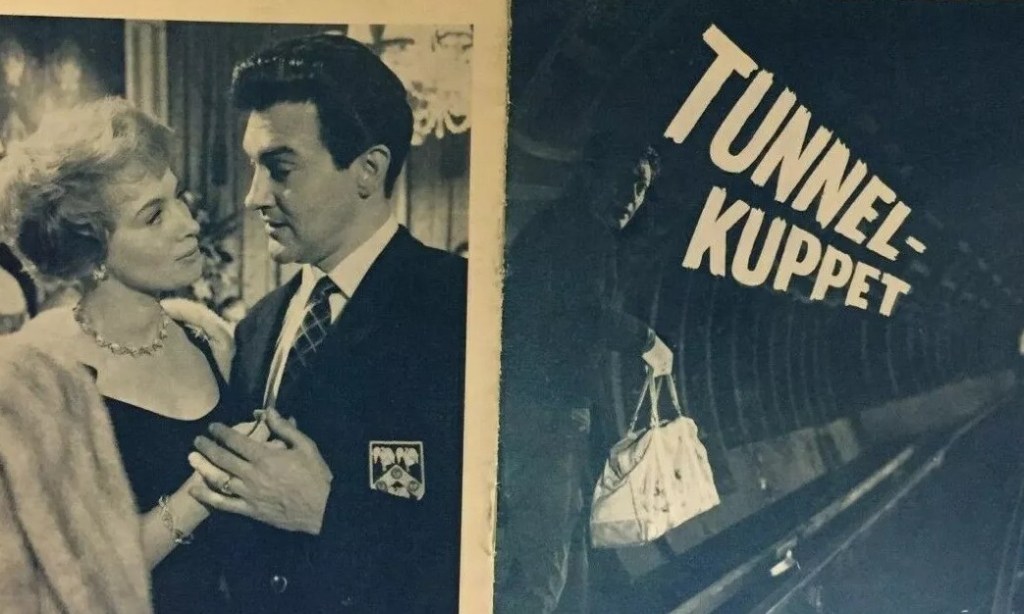
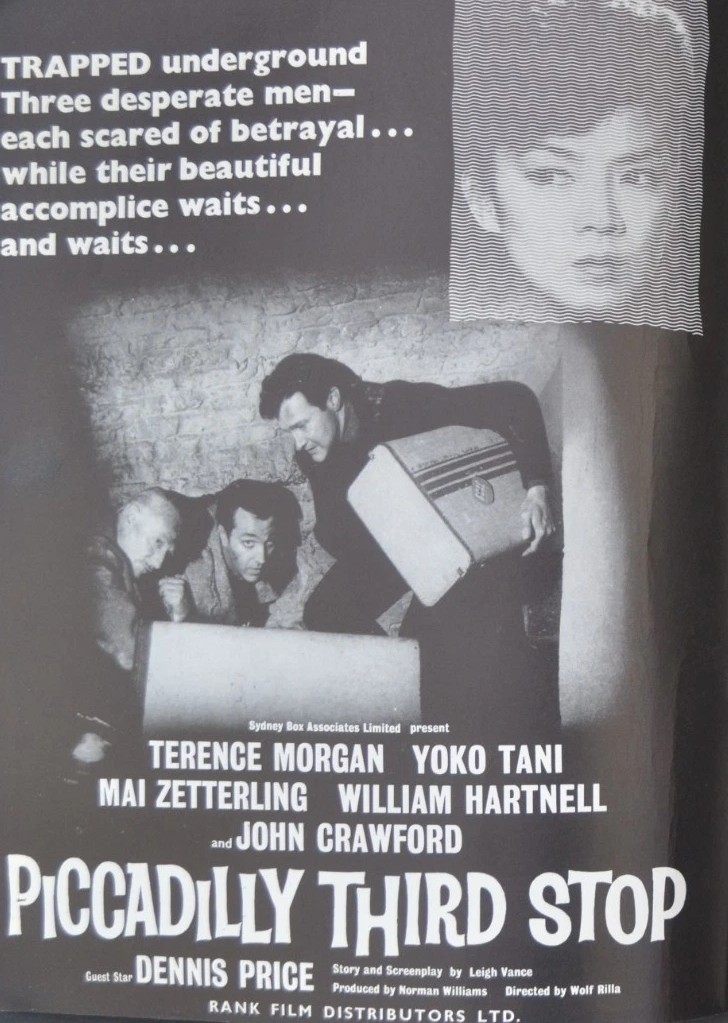
Piccadilly Third Stop (1960) ***

Well-worked full length British thriller that goes against the grain of presenting sympathetic hoods in the vein of Ocean’s Eleven or The League of Gentlemen both out the same year in which audiences largely align with the gangsters in part because they come across as charming and in part because their aims appear thoroughly reasonable.

Unlike the shorter efforts under the Renown umbrella this has time to develop several narrative strands, with deceit the main motivation, and spends a goodly time on the mechanics of robbery, the planning, the percentage split accorded each member, and the heist itself, which is an arduous one, involving digging through a brick wall.

Dominic (Terence Morgan) isn’t exactly a petty thief not when he can dress himself up to the nines, infiltrate a society wedding and make off with an expensive piece of jewellery, which he hides in an unusually clever fashion. But working on his own account is far more lucrative than being an employee in a watch-smuggling ring run by Joe Preedy (John Crawford) who has a classy wife Christine (Mai Zetterling) and life and has so much dough lying around that he’s easy pickings for Dominic who has a side hustle bring dupes to the gambling tables of the pukka Edward (Dennis Price).

Dominic happens to be bedding Christine but that still leaves him time to romance Fina (Yoko Tani), daughter of an ambassador, who casually reveals the embassy safe contains £100,000. She’s so helplessly in love she falls for his tale of them running off together and becomes an accomplice.

With the assistance of Edward, Dominic snookers Joe into supplying the readies to pay for the robbery set-up costs, the tools, gelignite etc. The plan involves digging a hole through the tunnels of the London Underground into the basement of the embassy.

Joe’s share of the spoils will hardly cover his debts so he’s intent on making off with the full amount. As it happens, Dominic has precisely the same idea. Christine is roped in, unknown to her husband, to act as getaway driver.

There’s a hefty dose of characterization unusual in these movies, more than just information dumps about characters. Dominic could easily fund the caper with the cash he would get from selling the stolen diamond, but he holds out for a larger amount from a fence. Joe should easily be able to afford the money, but he’s in dire financial straits because he lost a packet at the gambling tables and his own astuteness in ferreting away all he owns in his wife’s name. That puts his gains well beyond the long arm of the law but leaves him illiquid (I guess is the technical term) and he has to beg Christine to pawn her mink coats.

She’s a smooth operator, an amateur artist, happily living off Joe’s nefarious activities while running around with Dominic and planning to run away with him at robbery end. Joe’s desperate to be seen as a major player, hence his attendance at the casino, and kicking off when he doesn’t get his way, and raging against all the toffs born with a silver spoon in their mouths.

Two of the subsidiary characters are interesting studies. Safecracker the Colonel (William Hartnell) has too much of an eye for the pretty lady and too great a capacity for alcohol, but he’s been careful with his loot, spreading it around in various investments, very secure in his old age, and confident enough in his own abilities that he’s able to negotiate a higher share of the loot. But the prize supporting character is Mouse (Ann Lynn), girlfriend of Dominic’s sidekick Toddy (Charles Kay), who is considered so dumb and harmless that the crooks discuss their plans within her earshot. Except, she’s not concentrating and doesn’t quite get the hang of things and feeds Toddy the wrong information at the wrong time which nearly puts a spoke in the works.

As if the robbery required any more tension. Just how much work is involved in digging a hole through a wall is pretty clear here, should anyone in the audience have ideas of their own. You know double-crossing is also on the cards, not just the Dominic vs Joe and Christine vs Joe but the lovelorn Fina is also due her come-uppance.

And there’s a very nice touch at the end which proves that amateurs are a distinct liability. Any notion Christine has harbored that she would, if only given the chance, prove an ideal getaway driver are misplaced.

Directed by Wolf Rilla (Village of the Damned, 1960) not just with occasional style notes but with a determination to allow his characters room to move from a screenplay by Leigh Vance (Crossplot, 1969). You can catch it on Talking Pictures TV.

All in all a very entertaining little picture strong on tension with a host of interesting characters.

Rocket to the Moon / Those Fantastic Flying Fools (1967) ***

The Jules Verne express grinds to a halt in part because the promise of outer space adventure fails to materialize and in part because the treatment is comedic in the manner of  The Great Race (1965). A series of sketches with a shifting array of characters rarely works. Occasionally it hits the mark in a laugh out loud fashion but too often the jokes are labored  although as a tribute to a maze of inventive invention it’s a treat.

Unusually for such an all-star cast venture, we are, long before the titular action  and a race (of sorts) commences, treated to the greatest hits from the book of all-time failures. So we have electricity setting on fire the first country house, belonging to the Duke of Barset (Dennis Price), to be so illuminated; a new-fangled suspension bridge, courtesy of Sir Charles Dillworthy (Lionel Jeffries), that collapses when Queen Victoria cuts the ribbon; and a new type of explosive invented by German von Bulow (Gert Frobe) that proves a tad overpowering. Meanwhile, making possible the idea of sending a man to the moon is the arrival in Britain of the diminutive General Tom Thumb (Jimmy Clitheroe) accompanied by the bombastic and greedy Phineas T. Barnum (Burl Ives).

Combining the various scientific advances of propulsion and engineering have the flaw of not being able to bring a manned rocket back home. And sinister forces are at work, spies and fraudsters.

As with all these all-star comedies you spend half the time wondering how your favorite star is going to be worked into the equation and, having been squeezed into the narrative, justify their ongoing involvement. Daliah Lavi (Old Shatterhand, 1964), not particulary known for her comic gifts, is a case in point. On her wedding day she (as Madelaine) jilts French groom Henri (Edward de Souza) in favor of balloonist Gaylord (Troy Donohue) who has, literally, appeared on the horizon. Henri trying to down said balloon triggers an awful joke about a shotgun wedding.

To gain revenge, Henri funds the project on the basis of Gaylord being the moon pilot, and, in anticipation of the craft’s failure, that he will regain his bride. Madelaine, having been sidelined by all the developments, suddenly rushes back to center stage when she uncovers the devious plot and is shipped off to a home for wayward girls, run by the very wayward Angelica (Hermione Gingold). But that requires she escape and find her way back to her beloved, that aspect complicated because she loves both men (it transpires).

As the script is in the invidious position of having to place the participants into similar frying pans in order to effect similar rescues it’s as much a game of ping-pong as a movie. But there are some nice gags, a rocket attached to a helmet, the ruination of a teleprinter and the criminally-inclined Washington-Smythe (Terry-Thomas) who rooks billiard players with a magnet. And there’s a very contemporary financial element in that large wagers are placed on failure rather than success, the equivalent of betting on stocks going down rather than up  (short selling in the modern idiom)

The rocket is launched, with rather a different crew than originally anticipated following further skullduggery, and although it’s something of a cosmic joke that it only gets as far as Russia it’s rather a disappointing ending for fans of Verne who anticipated a more rigorous approach. Verne’s novel From the Earth to the Moon was surprisingly accurate in imagining how a projectile would achieve its aims. The novel had even more of a contemporary feel since it left the crew floating in space, a daringly artistically inconclusive climax, leaving the way open – again the contemporary flair – for sequel Around the Moon that explained their fate.

Oddly enough, Daliah Lavi, as the bride who can’t make up her mind, has one of the better parts, more fleshed out than most of the other flimsy characterizations. The likes of Troy Donohue, caught between heroism and doing nothing much at all, often looks flummoxed. Terry-Thomas (How To Murder Your Wife, 1965) in wily mode is the pick of the rest.

Director Don Sharp (The Brides of Fu Manchu, 1966) proves that comedy is not his metier. Screenplay by Dave Freeman (British TV sitcom writer making his movie debut) after Harry Alan Towers (Five Golden Dragons, 1967) altered the author’s original premise. While it could be skewered for taking such liberties with the august author, it is far better than you might expect, but not as good as it could, or should, be.

Ten Little Indians (1965) ***

This is more like it. Classic Agatha Christie mystery told in classic fashion but devoid of either of her major sleuths, Hercule Poirot or Miss Marple, and set in the grander equivalent of the country house locale that had become something of a trademark. Here it’s the kind of castle perched atop a mountain, accessible only by cable car unless you have mountaineering skills, that you would need the combined services of Clint Eastwood and Richard Burton to affect a rescue, and as with Where Eagles Dare (1968) the conditions are distinctly wintry.

Ten strangers, including the two servants, have been invited to this retreat by the mysterious Mr Owen. They soon learn they are cut off, telephone lines down, cable car out of commission for a couple of days, nearest village a straight drop 15 miles down a perilous cliff.

All they have in common, as they discover via a taped message delivered by their host, is that they all got away with murder or at the very least a dubious death. There is a private eye on hand, former cop Blore (Stanley Holloway), but he’s lacking in the little grey cells that Poirot put to such clever use in such circumstances. So, like a troupe of actors let down by some stage entrepreneur, they have to get the show on the road themselves, a combined effort to solve the problem.

Not so much why they are gathered here, but why they keep on getting bumped off, and rather in the fashion of the titular song. The movie business wasn’t awash with serial killers though this decade would see nascent interest in this sub-genre, witness Psycho (1960) and The Boston Strangler (1968). But Ms Christie mysteries never really seemed to get going until the death toll had reached multiple figures.

The good element of this kind of movie with a large cast is that each character gets a moment in the sun, here that spotlight largely concerned with what crime they committed for which they were never truly punished. Pop singer Mike (played by pop singer Fabian) gets the ball rolling, explaining that his only punishment for killing someone while driving under the influence was a temporary withdrawal of his license.

And so it goes on, everyone wondering who will be next to be despatched and going from the initial conclusion that Owen is responsible and is hidden somewhere in the house to the obvious one that Owen is one of them. I have to confess I’m easily gulled by the murder mystery and I hadn’t reached that conclusion myself.

The movie’s not necessarily filled with that kind of twist – although there certainly are a good few, some people not as guilty as they might appear, not quite who they appear to be –  more you glancing at the cast list and wondering, by dint of billing or box office pull, who will be next for the chop and unless the director has got the Hitchcock vibe it’s not going to be one of the leads.

So it’s a choice of Hugh Lombard (Hugh O’Brian), secretary Ann Clyde (Shirley Eaton), actress Ilona Bergen (Daliah Lavi), General Mandrake (Leo Genn), Judge Cannon (Wilfrid Hyde White), Dr Armstrong (Dennis Price) and the aforementioned Blore plus servants the Grohmanns (Marianne Hoppe and Mario Adorf). And this isn’t your standard serial killer either with a constant modus operandi that will eventually, through standard detection, trap him or her. Instead, variety is the key. Death by fatal injection, knife, poison, slashed rope.

As the numbers whittle down, and you even feel sorry for the actions of some, the actress, for example, whose husband committed suicide when she left him, the tension mounts. You won’t be on the edge of your seat because there are just too many characters involved for you to become overly concerned with their plight but it’s still has you on the hook. You do want to know whodunit and why and you can be sure Ms Christie, as was her wont, will have some clever final twist.

At least, unlike the later variations on the genre, nobody’s been bumped off because they are too fond of sex, and the violence itself is restrained, almost dignified, and there’s no sign of gender favoritism.

All in all, entertaining stuff, though since by now this kind of murder mystery, given we’ve been through various iterations of Poirot – Albert Finney, Peter Ustinov, Kenneth Branagh et al, not to mention numerous Miss Marples – a lot of this feels like cliché (though that’s a bit like a contemporary audience considering John Ford’s Stagecoach old hat, not realizing this was where many of those western tropes were invented or polished to a high level). And I had to say I had a sneaky hankering for some of the out of left field goings-on of The Alphabet Murders (1965).

Sad to see Hollywood not taking advantage of Daliah Lavi’s acting skills, under-estimated in my opinion after her terrific work in The Demon (1963) and The Whip and the Body (1963). But then this wasn’t Hollywood calling but our old friend producer Harry Alan Towers (Five Golden Dragons, 1967) who specialized in dropping a biggish American name into a B-list all-star-cast.

George Pollock, who helmed this decade’s four Miss Marple movies, enjoys keeping the mystery alive without resorting to a central know-it-all. Everyone cast does what they’re expected to do. Towers wrote the screenplay with his usual partner Peter Yeldham.

Worth considering alongside The Alphabet Murders, but stands up well on its own.  

PREVIOUSLY REVIEWED IN THE BLOG: Hugh O’Brian in In Harm’s Way (1965), Texas: Africa Style (1967); Daliah Lavi in The Demon (1963), The Whip and the Body (1964), Lord Jim (1965), The High Commissioner (1968), Some Girls Do (1969).

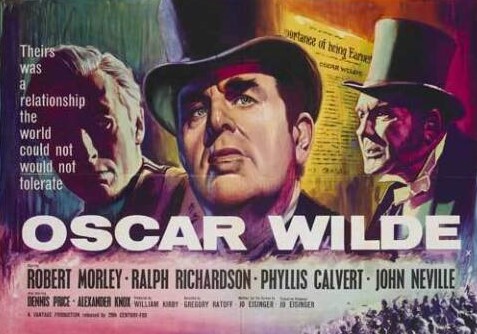
Oscar Wilde (1960) ****

You might be surprised to learn there were two Oscar Wildes. Not the famed writer and a doppelganger of course but two films on the same subject that were released in the same month. This is the low-rent version, costing a fraction of the rival The Trials of Oscar Wilde directed by Ken Hughes. It’s easy to be disdainful of the cheaper effort, with little cash available for scenery and costumes, but somehow it rises above budget limitations. Structurally, both movies focus on the trial – or in the case of The Trials of Oscar Wilde the three trials he endured – but the glossier pictures it has to be said glosses over a great deal.

While I enjoyed it at the time, I now find that in trying to make a modern martyr out of Oscar Wilde, the Ken Hughes picture built him up so much that it was difficult to find any flaw in his character. We never find out what was the actual slur the Marquis of Queensbury made on Wilde, resulting the playwright taking him to court for libel. And that version begins with Wilde and Alfred Lord Douglas (“Bosie”), son of the Marquis, already deep into their affair.

On the other hand, Oscar Wilde, the final film of Hollywood veteran director Gregory Ratoff (Intermezzo, 1939), starts at the beginning of their relationship with greater emphasis on Wilde’s practicality rather than his wit and Bosie’s (John Neville) tortured relationship with  his hypocritical father (Edward Chapman) who, while taking the moral high ground, keeps a mistress. On Wilde (Robert Morley) being described as a sodomite by the Marquis, Bosie’s desire to see his father humiliated in court verges on revenge. “You weren’t looking for a friend,” Wilde astutely tells his lover, “You were looking for a weapon.” Bosie is big on humiliation – he is the one to break the news of Wilde’s duplicity to the author’s wife (Phyllis Calvert). So determined is he on the court case that he fails to tell Wilde that his father has private detectives scouring London to find evidence.

While in court Wilde can keep the jury in stitches with his epigrams, he soon comes up against the Marquis’s formidable lawyer Sir Edward Carson (a quite stunning performance by Ralph Richardson). From Carson we learn a great deal more of Wilde’s practices, some of which nowadays would be termed grooming. Essentially, Carson paints a portrait of a predator, an older man (Wilde was 41) whose uses his wealth and wit to court many lovers, mostly aged around 20, but some as young as 16, barely the age of consent.. And when he felt his secret life was in danger of being exposed, he went so far as to pay for the passage to America of one of his lovers, Alfred Woods, to get him out of the way.

No matter that Wilde at the start can gloss over his promiscuity, complaining that Carson is misinterpreting innocent gestures of friendship, the cunning attorney soon has the author tied in knots as he wheels out one by one information regarding the various lovers.

It’s quite odd to realise that The Trials of Oscar Wilde in presenting the more accurate truth – that the author underwent three trials – fails to provide little more than a surface treatment of  the man’s real-life affairs. Oscar Wilde perhaps delves too deeply for audiences brought up to consider the author a martyr who deserves the free pass allocated all writers of genius. I found Oscar Wilde the more riveting watch because, of course, I already knew the outcome, but the sight of the famed writer, encouraged by the vengeful Bosie,  hung out to dry by his own hubris, and for a man of such wit to be outwitted in the courtroom by Carson was an exceptional watch.

Of course, the imprisonment of Wilde for the crime of being a homosexual is detestable. Even at the point this film was made homosexuality was a crime. So it’s fascinating to see how much The Trials of Oscar Wilde skirts round issues that Oscar Wilde had little problem in spelling out.

I was surprised how much I enjoyed Robert Morley’s performance. I may be wrong, but I think this was the only time he was accorded leading man status. Mostly, he was a supporting actor (The African Queen, 1951, say, or Genghis Khan, 1965) and often just playing a version of his self. Of course, he is outshone by a simply brilliant Ralph Richardson (Khartoum, 1966). John Neville (A Study in Terror, 1965) presents a more in-depth performance than in the rival picture. One-time British box office star Phyllis Calvert (The Golden Madonna, 1949) does well in a small but pivotal role. You might also spot Dennis Price (Tunes of Glory, 1960) and Alexander Knox (Mister Moses, 1965).

Lacking a budget to do much more, Gregory Ratoff sticks to the detail and draws out two superb performances, aided by a tight script by Jo Eisinger (Gilda, 1946; Cold Sweat, 1970) based on the play by Leslie and Sewell Stokes and the work of Frank Harris. As swansongs go, this is hard to beat.

Vastly underrated.

Catch it on YouTube.

NOTE: Oscar Wilde appeared in first run in Glasgow at the La Scala cinema in June 1960 one week ahead of The Trials of Oscar Wilde at the first run ABC Regal and ABC Coliseum.

The Millionairess (1960) ***

The movies lost a brilliant comedienne when Sophia Loren was lured (by a million-dollar fee no less) into historical drama. Having previously demonstrated her flair for comedy in Houseboat (1958), turning Cary Grant’s life upside down, she repeated the formula here. Cultural appropriation by Peter Sellers is the main issue getting in the way of full appreciation, not just the actor essaying an Indian, but the fact that this is a very cliched  attempt.

The narrative runs along two parallel twists and coming from the politically-aware mind of George Bernard Shaw contains a streak of social commentary. Beautiful millionairess Epifania (Sophia Loren) can only marry a man able to demonstrate business acumen. Dr Kabir (Peter Sellers), who caters to an impoverished clientele, must marry a woman capable of existing in poverty, eking out an existence for 90 days on the daily equivalent of less than a couple of pounds sterling.  

At the foot of the poster note the advance warning of the initial stab at “Cleopatra” that was to star Feter Finch and Stephen Boyd rather than Richard Burton and Rex Harrison.

Epifania, presented in that generation as somewhat imperious but to today’s generation would be viewed as the epitome of the independent woman resisting the notion that she choose a mate based on someone else’s criteria, is not above a bit of jiggery-pokery to win the man of her dreams. Technically, all said lover has to do is turn £500 into £15,000 and since no detailed information needed accompany those transactions, Epifania feels justified in simply handing over the dosh to her lover to fulfil the requirements.

She falls into Dr Kabir’s orbit after attempting suicide by drowning following the discovery of her feckless lover Alistair’s (Gary Raymond) affair with Polly (Virginia Vernon). Kabir, mind on other more important matters, fails to rescue her. But when she ends up in the water again, this times as rescuer, he is more responsive especially when she manages a physical connection.

However, he is not going to be bribed into love, not even when she modernises his dilapidated surgery. Naturally, she is viewed as headstrong and controlling rather than a philanthropist and so they enter into the double bargain.

This splits the narrative, as Epifania returns to Italy to work in a sweatshop. And although she reveals not just newfound humanity, defending her exploited fellow workers, and demonstrates the business skills to reverse the factory’s declining productivity, this still isn’t enough for Kabir who, with no head for money and no inclination to go through any rigmarole to please Epifania, manages to insult her, thus triggering the normal romantic comedy breakup.

In the meantime, wily attorney Julius Sagamore (Alistair Sim) and opportunistic psychiatrist Dr Adrian Bland (Dennis Price) muddy the waters.

Mostly, the film gets by on old-fashioned charm – and while, as noted, Sellers’ performance is outmoded in his impersonation of an Indian he is quite believable as an honorable man unlikely to fall for the first beautiful woman to come his way.

Sophia Loren (Arabesque, 1966) carries the picture with her exquisite comedy timing and even when the posters emphasized her various states of undress there is much more to her ability, as audiences were already aware, than taking off her clothes. She is an absolute delight, both as the demanding haughty heiress and the spurned lover and in any other movie her romantic enterprise would be applauded and just as with Houseboat she drives the narrative, the object of her affection not quite putty in her hands, and with the bonus of a song, a duet this time (“Goodness Gracious Me”) rather than the two solos of the previous picture.

Peter Sellers (The Pink Panther, 1963) was still in search of his screen persona and to some extent is blown off the screen by Loren who seems much more comfortable with the material, extracting humor without needing to rely on funny voices. Sellers changed the character of the doctor in the original play from an Egyptian to an Indian for no particular reason and in fact the nationality of the doctor would have made little difference to the story, it was a character, disinterested in woman and contemptuous of wealth, that provided the narrative impetus. Oddly enough, although at the time the deceased George Bernard Shaw was considered one of the world’s greatest playwrights the 1936 play on which this is based had never been a big success, reception so lukewarm on its out-of-town opening that it did not reach the West End,  Broadway run delayed till 1949 and then only lasting 13 performances (i.e less than two weeks).  

Director Anthony Asquith had made a huge success out of the author’s Pygmalion (1938) (the source material for musical My Fair Lady) and specialised in bringing stage plays to the cinema – The Browning Version (1951) and The Importance of Being Earnest (1952) – so was acquainted with handling big stars and opening up plays for cinema audiences. He shows a sure grip on the action and allows Loren to build up a beguiling character so that audience sympathy for her dilemma never runs dry. Wolf Mankowitz (The Two Faces of Dr Jekyll, 1960) and the debuting Riccardo Arragno wrote the screenplay.

The material would have more suited the colder, sharper tongue of a Katharine Hepburn (who did at one time play the character on stage) but Loren’s portrayal avoids the temptation of adopting a more spinsterish approach.

Watch it for Loren and the clever Alistair Sim and try not to cringe at Peter Sellers.

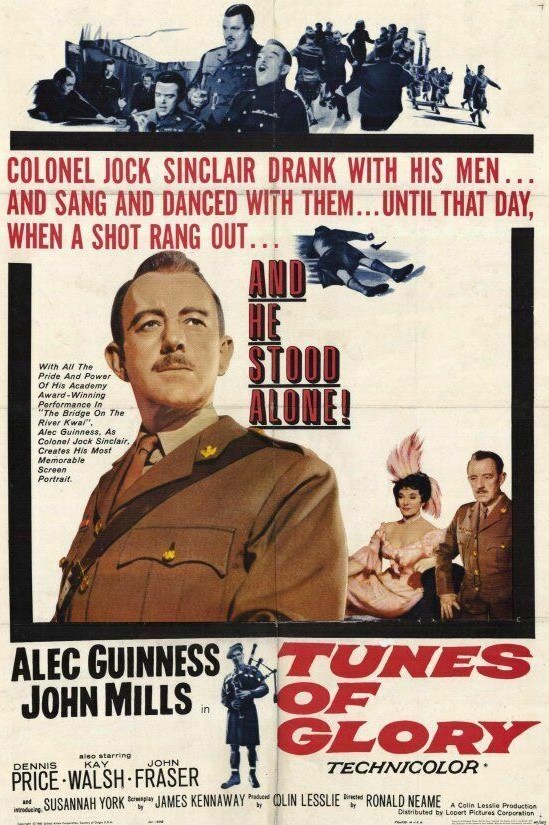
Tunes of Glory (1960) ****

Fans of Succession will appreciate this power struggle in a Scottish army regiment set in 1948. In a reverse of The Godfather (1972) where the Corleones complain about needing a “wartime consigliore,” here the powers-that-be have decided this unnamed distinctly Highlander company requires a commanding officer with skills more appropriate to peace time.

Major Jock Sinclair (Alec Guinness) has been in charge of the battalion since the North Africa campaign in World War Two when the original commander was killed. But he has never been promoted to full Lt. Col. Naturally, having been in charge for six years, he feels the job should be his. At a time when the currency of command was wartime experience he’s less than pleased when he loses out to Col. Barrow (John Mills) who spent most of the war as a Japanese POW.

It doesn’t help that they are complete opposites. Sinclair is a tough, hard-drinking, attention-seeking Scotsman who enlisted as an ordinary soldier and rose through the ranks winning two medals for courage during the conflict. Barrow is Oxford-educated English upper-class, a lecturer at Sandhurst Military Academy, and recalls his war experience with terror rather than the braggadocio of Sinclair. Worse, he doesn’t drink.

It doesn’t take long for the pair to clash. Sinclair, who has ruled as much by preying on weakness as force of personality, is quick to start to look for flaws in his opponent’s make-up. Barrow feels discipline has been slipping and enforces tougher measures. That might make him unpopular but an army is built on discipline so soldiers can hardly complain.

But Barrow slips up by misreading the men. He chooses the worst of all issues to make a stand. For the first post-war official barracks party, Barrow insists the soldiers embark on traditional Highland dancing in regulation fashion rather than in their normal exuberant, not to say rowdy, manner. The soldiers are infuriated when Barrow insists they take lessons.

He has just lit the fuse. Naturally, nothing goes according to plan. Barrow is humiliated, Sinclair triumphant. But victory does not turn out the way Sinclair expected.

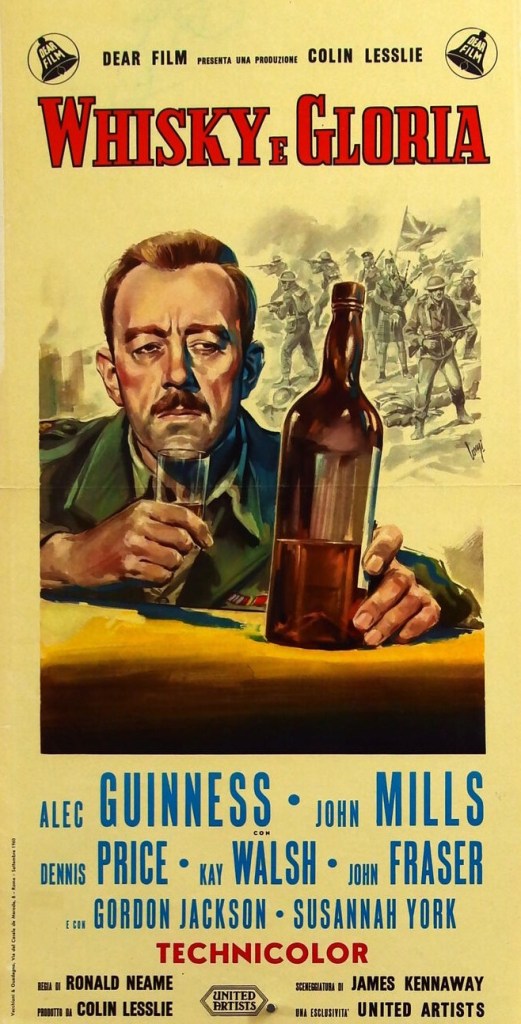
Somewhat cynical rebranding of the film in Italy as “Whisky and Glory,” possibly trying to cash in on the success of “Whisky Galore” and also misleading in suggesting actual conflict with the fighting in the background.

The main thrust of the narrative, as you might expect, is the stand-off between Sinclair and Barrow and the tensions felt all round, as would be the case in any business (Succession, now, of course the classic example) when a new boss takes control. While everyone might expect, and perhaps fear, change, in the military (as in the navy) there is always the danger, should the new broom try to sweep too clean, of mutiny.

This might not amount to a raising of arms. But there are other effective methods of mounting opposition – laxity, questioning or outright refusal to obey orders – or giving the new chief the cold shoulder. Here, in the background, are other simmering tensions. Not everyone is comfortable with Sinclair’s very laddish approach to command, the back-stabbing and double-dealing Major Charles Scott (Dennis Price) ready to pounce at any opportunity.

Sinclair is also having to deal with his daughter Morag (Susannah York) asserting her independence, having the temerity not just to take a boyfriend, Corporal Fraser (John Fraser), but one from the ranks rather than the officer class. And he feels the harsh tongue of his own paramour Mary (Kay Walsh).

Emotional isolation is rarely commented upon in matters of the armed forces and yet it is so much a driving force. If not adequately compensated by camaraderie, a man at the top can be very lonely indeed, and prone to the most vicious self-torment.

Director Ronald Neame (The Prime of Miss Jean Brodie, 1969) superbly invokes an army atmosphere away from the more usual battleground backdrop. The picture is anchored by brilliant performances all round and a roll-call of strong supporting characters. An unflinching look at power, especially leadership and the personal toll it takes. And it was astonishing that the movie could hit the target so well without relying on the usual round of sex, violence or that old stand-by the comic subordinate. It also probes the issues of what happens – in any industry – when the wrong person is put in charge. No less an authority than Alfred Hitchcock called it “one of the best films ever made.”

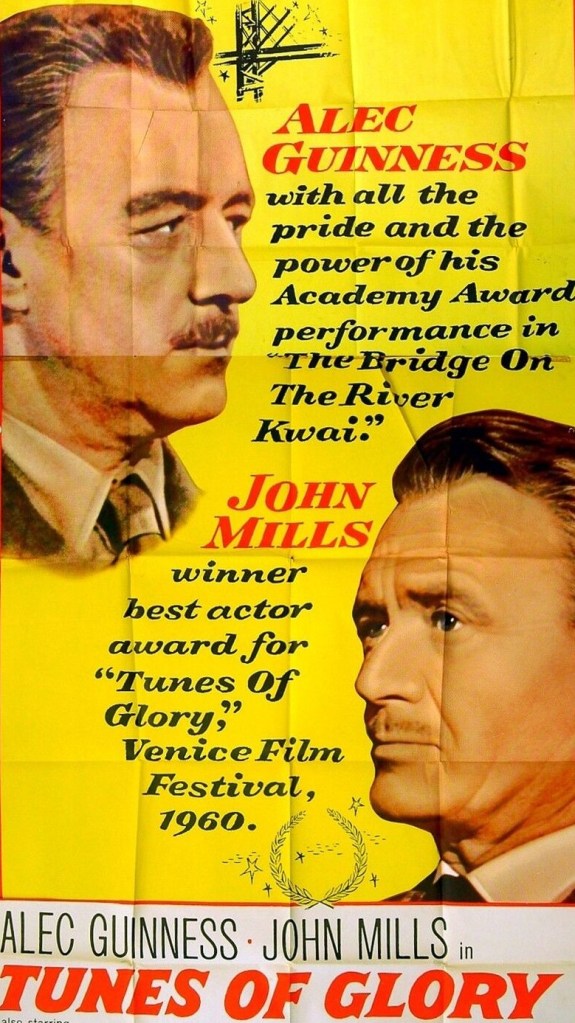
The sparring between Oscar-winning Alec Guinness (The Quiller Memorandum, 1966) and John Mills (The Family Way, 1966), who won the Best Actor Award at the Venice Film Festival for this role, is of the highest quality. Dennis Price (The Comedy Man, 1964) is the pick of the support while Susannah York (Sands of the Kalahari, 1965) makes an auspicious debut.

Few films could boast a better supporting cast: former British leading lady Kay Walsh (A Study in Terror, 1965), Gordon Jackson (The Ipcress File, 1965), Duncan Macrae (Best of Enemies, 1961), John Fraser (Tamahine, 1963), Gerard Harper (Adam Adamant Lives!, 1966-1967, TV series) and Peter McEnery (The Moon-Spinners, 1964).

James Kennaway (The Shoes of the Fisherman, 1968) wrote the screenplay based on his own novel.

Discover WordPress

A daily selection of the best content published on WordPress, collected for you by humans who love to read.

The Atavist Magazine

by Brian Hannan

WordPress.com News

The latest news on WordPress.com and the WordPress community.