For the first four decades of the Hollywood business, success in markets other than domestic was random. Many countries restricted the number of U.S. films that could be shown, others like Britain prevented American studios for a long time taking out of the country money earned at the box office. There was always the chance it could be less profitable if a dominant foreign cinema chain or distributor demanded a larger slice of the box office. In addition, some genres that worked in America stiffed abroad – musicals and comedies found it hard to translate.
Except in extremely sporadic fashion, foreign box office was not reported in the trade media until the 1990s. So there was no such thing as worldwide grosses available on any real scale. These days for many films overseas receipts bring in more than domestic – Zootropolis a current example with around 70 per cent of takings coming from abroad – but that was virtually never the case until the arrival of the James Bond pictures, which acquired a genuine global brand, in the 1960s.
However, the United Artists archives held by the University of Wisconsin provide some fascinating insights into the growing power of the foreign box office in the 1950s. Movies released into the foreign market would make a percentage of their domestic take. But that varied enormously. Even the star-studded Around the World in 80 Days (1956), the second-biggest blockbuster of the year Stateside, with a colossal $16 million in domestic rentals took in less than a quarter of that abroad, just $3.9 million.
For some films, the percentage was better. Controversial William Holden drama The Moon Is Blue (1953) notched up $1.3 million abroad compared to $3.5 million at home. War picture Beachhead (1954) starring Tony Curtis bundled up $1 million overseas as against $1.4 million in domestic. The Barefoot Contessa (1954), boasting Humphrey Bogart and Ava Gardner, added $2.2 million in foreign coin to its domestic tally of $3.25 million.
Richard Burton as Alexander the Great proved the breakthrough, domestic’s $2.5 million matched by the exact same amount abroad. Robert Mitchum in Foreign Intrigue (1956) went one further, reversing the usual situation, foreign of $1.14 million ahead of domestic’s $1 million.
But the UA star with the biggest consistent pull overseas was Burt Lancaster. Robert Aldrich’s Apache (1954) knocked up $1.75 million abroad compared to $3.25 million at home. Vera Cruz, (1954) also directed by Aldrich and coupling Lancaster with Gary Cooper, hit a home run – the $3.94 million abroad being just short of the $4.5 million at home. The actor’s first venture into directing The Kentuckian (1955) kept up the pace with $1.97 million overseas versus $2.6 million at home.
While these were all action pictures, it was acrobatic drama Trapeze (1956), with Lancaster and Tony Curtis fighting over Italian sex symbol Gina Lollobrigida, that made Hollywood wake up. In the U.S, it came third on the annual box office charts with $7.5 million in rentals. If that took the industry by surprise that was nothing compared to foreign where the movie racked up $7.4 million.
Lancaster remained potent. Submarine war picture Run Silent, Run Deep (1958), co-starring Clark Gable, did virtually as well abroad as at home – $2.42 million overseas compared to $2.5 million at home.
Perhaps learning from the experience of Trapeze, UA went for broke with historical actioner The Vikings (1958) starring Kirk Douglas and Tony Curtis. Domestic of $7 million, enough for fifth place in the annual box office league, was beaten by an overseas count of $7.34 million.
For the first time it appeared that Hollywood could count on overseas to swell the box office in sizeable fashion, thus allowing studios to invest more, especially in historical movies with an action angle, thus opening the door for the spate of 1960s roadshows. Such results also cemented star salaries. If a Burt Lancaster picture could make the same again abroad as at home that put him in a new category of dependable stars and allowed studios to gamble on increasing his salary.
That Charlie Chaplin proved a better draw overseas than in the U.S. was largely by default. The actor-producer-director had fallen foul of American politics with the result that his latest release Limelight (1952) flopped. Abroad it was a different story and Limelight hit a tremendous $5.1 million. With the U.S. reissue market also showing resistance to Chaplin oldies, it was left to overseas audiences to show what cinemas were missing as Modern Times (1936) racked up $2.1 million and The Gold Rush (1925) $1.25 million. For comparison the reissue of Red River (1948) pulled in just $19,000 overseas.
Other notable leaders in the overseas market included: Frank Sinatra, Cary Grant and Sophia Loren in The Pride and the Passion (1957) with $3.17 million ($5.9 million domestic); Billy Wilder’s Agatha Christie adaptation Witness for the Prosecution starring Tyrone Power and Marlene Dietrich on $2.81 million ($3.75 million domestic); and Love in the Afternoon (1957) with $2.7 million ($2 million domestic) starring Gary Cooper and Audrey Hepburn.
Also making a noise overseas were: Stanley Kramer medical drama Not As a Stranger (1955) toplining Olivia De Havilland, Frank Sinatra and Robert Mitchum on a $2 million haul ($7.1 million domestic): Sinatra again in Otto Preminger’s study of addiction The Man with the Golden Arm (1953) on $1.87 million ($4.35 million domestic); Sinatra in war picture Kings Go Forth (1958) on $1.83 million ($2.8 million domestic) and Kirk Douglas as The Indian Fighter (1955) with $1.84 million ($2.45 million domestic).
Bob Hope went against the grain when his overseas tally for Paris Holiday (1958) at $1.8 million bested the $1.5 million of domestic while John Wayne and Sophia Loren’s foreign engagements for Legend of the Lot (1957) counted as a disappointment with just $1.66 million compared to $2.2million domestic.
Low-budget Oscar-winner Marty (1955), produced by Burt Lancaster’s company, was as big a surprise abroad as at home, sprinting to $1.43 million ($2 million domestic). Others worth noting included: Bandido! starring Robert Mitchum on $1.42 million overseas ($1.65 million domestic); David Lean’s romantic drama Summertime (1955) with Katharine Hepburn on $1.3 million ($2 million domestic); Anthony Mann’s Korean War venture Men in War (1957) on $1.26 million ($1.5 million domestic); and Clark Gable in The King and Four Queens (1956) hauling in $1.24 million ($2.5 million domestic).
Olivia De Havilland as The Ambassador’s Daughter (1956) tabbed $1.1 million overseas ($1.5 million domestic) and Gary Cooper in Mark Robson’s Return to Paradise (1953) tallied $1.1 million ($1.8 million domestic). Slow burners numbered Dale Robertson in Sitting Bull (1954) with $1.1 million ($1.5 million domestic) and Stanley Kubrick’s anti-war picture Paths of Glory (1957) with Kirk Douglas shooting up $1 million ($1.2 million domestic).
SOURCE: “Foreign Distribution Gross Estimates,” United Artists Archives, Box 1, Folder 8, University of Wisconsin. Note that in this case “gross” means “gross rentals” not “box office gross.”
That Italian producer Carlo Ponti owned the rights to Boris Pasternak’s worldwide bestseller – beating out a bid by Kirk Douglas and Stanley Kubrick – made it easier for David Lean to sever links with Sam Spiegel, producer of his two previous Oscar-winning blockbusters, Bridge on the River Kwai (1957) and Lawrence of Arabia (1962). Ponti lined up a deal with MGM who not only gave Lean carte blanche but the biggest ever salary handed to a director plus a generous profit share. Max von Sydow (The Quiller Memorandum, 1966) was Lean’s first suggestion for the leading role while MGM wanted Paul Newman (Cool Hand Luke, 1967) and Ponti was keen on Burt Lancaster (The Train, 1964).
Peter O’Toole (Lawrence of Arabia), fearing another exhaustive shoot, reportedly turned it down. Michael Caine (The Ipcress File, 1965) read for it. Omar Sharif (Lawrence of Arabia), all set to play the smaller role of Pasha, stepped in. Marlon Brando (The Chase, 1966) and James Mason (North by Northwest, 1959) were considered for Komatovsky – the former not replying to Lean’s offer, the laterr dropping out after accepting the role – before that went to Rod Steiger (The Pawnbroker, 1964).
Front cover for the roadshow launch in the UK in 1966.
Jeanne Moreau (Viva Maria, 1965), Jane Fonda (Barbarella, 1968, who turned it down, then, recanted, by which time it was too late) Yvette Mimieux (Dark of the Sun, 1968), Sarah Miles (Lean’s Ryan’s Daughter, 1970), and, inevitably Ponti’s wife Sophia Loren (dismissed as “too tall” by Lean), were in the running for Lara until, on the recmmendation of John Ford who had directed Julie Christie in Young Cassidy (1965), the part went to the British actress. Audrey Hepburn (Charade, 1963) was Lean’s choice for Tonya until he was bowled over by the screen test by Geraldine Chaplin, the waif-like daughter of Charlie Chaplin, who, in the run-up to release, received the bulk of the advance publicity. Contrary to received wisdom, this was not her debut, she played opposite Jean-Paul Belmondo in Lovely Summer Morning (1965).
So, effectively, Lean was launching MGM’s biggest-ever productions with a cast headed by unknowns, Sharif’s marquee value not up to the mark, every film he had been in since Lawrence of Arabia had flopped and he had never received top billing – and would not here either.
Initially, Lean considered shooting in 70mm in black-and-white but 70mm equipment was deemed too cumbersome and monochrome too risky for such a big film so it was made in 35mm with the intention of blowing it up to the larger format for roadshow release. Ponti reckoned the movie could be made in the Soviet Union or Yugoslavia for $5 million. After switching to the eventual location, Spain, with some sequences filmed in Finland, it cost much more, over $11 million.
The shoot lasted 33 weeks but the production actually took two years and involved 800 craftsmen in three countries. . Original cinematographer Nicolas Roeg dropped out after “creative differences”, replaced by Freddie Young (Lawrence iof Arabia), adding two weeks to the schedule to reshoot Roeg’s scenes.
And for the general release three years later.
Much of what appeared on the screen was illusion. The Red Army charged across an apparently frozen lake at the height of summer, the lake itself non-existent, just a field covered in cement with sheet iron topped with thousands of tons of crushed white marble ironed out by steamrollers so when the horses slid it looked realistic. To complete the picture, a rowing boat was moored at the edge.
Other effects combined direcotrial genius with practicality. Prior to the scne featuring a huge field of daffodils, Lean had filmed three minutes of Zhivago and Lara against a freezing background, everything sprayed gray to remove any hint of color so that the sudden appearance of of the golden flowers cast a spell of spring. To prevent the flowers – 4,000 of them imported from the Netherlands – blooming too early, they had been dug up and put in pots to control their growth and replanted when required. To make snow glisten in another scene, cellophane was spread over wintry bushes and trees.
The sleighs had little wheels fitted to the runners, icicles were made from polystyrene, the balalaika was created by the props team and the interior of the Ice Palace made from cellophane crushed into thousands of creases, paraffin wax and salicylic acid powder creating fantastic shapes. The floor was fashioned from a layer of soap flakes. The train journey went through Spain and in places where there were no railroad tracks, these were built.
Moscow, ten acres of it, rebuilt on a Spanish lot, took 18 months to construct and included 800 yards of cobbled street, the Kremlin, trolley cars and 60 houses and shops. Pasha’s armored train was an authentic replica. Even with the props trickery, Lean wanted to capture the different seasons so that was partly responsible for the long schedule. Sharif has his eyes taped back and his hairline shaved and straightened.
The aftermath of the dragoon charge down the steeets of Moscow was seen through the eyes of Zhivago – Lean’s advice to the actor was to imagine the moment before orgasm – and it was just as well it worked because Lean had filmed no alternative.
The film intially struggled to attract public attention despite a $3 million publicity budget. Lean was not as marketable as Hitchcock or DeMille. The female leads were unknown, Darling (1965) not yet setting the box office buzzing except in arthouses. Sharif, as I mentioned, had not yet capitalized on Lawrence of Arabia.
“Lara’s Theme” was not yet in the shops – the soundtrack album sold 600,000 copies in a year becoming MGM’s biggest soundtrack seller – and designer Phyllis Dalton’s furs were a long way from setting a fashion trend. Advance sales for the roadshow openings were poor, only $200,000 compared with $60,000 for Exodus (1961) and $500,000 for Cleopatra (1963). There was even speculation that the Capitol in New York where the film premiered had massaged the opening week’s figures. However, this kind of trickery would have been anathema in the industry, telling the truth about receipts to Variety every week considered the right thing to do, even if they fell short of expectation.
Historical epics had been long out of fashion. Lord Jim (1965) and The Agony and the Ecstasy, also roadshow numbers, were among the year’s box office casualties while a completely different type of movie, bouncy musical The Sound of Music (1965), was cleaning up. It didn’t help that Doctor Zhivago opened at the same time as Thunderball, the fourth Bond, which surpassed expectations with collosal initial box office. Nor did reviewers help. While Variety hailed its “soaring dramatic intensity” and the New York Daily News called it a “haunting emotion-charged drama,” the more influential New York Times slammed its “painfully slow-going and inevitable tedium” and it was condemned by the New York Herald Tribune as a “soap opera.”
In fact, if audiences had been slow to latch on, that was only during the first week, for soon it turned into a phenomenon, ending the decade as the $38.2 million in rentals. Lifetime rentals topped $60 million.
SOURCES: Kevin Brownlow, David Lean (Faber and Faber, 1996); Eddie Fowlie, David Lean’s Dedicated Maniac (Austin & Macauley, 2010); Pressbook for Doctor Zhivago; “Metro Plots Two Features for Geraldine Chaplin,” Variety, February 24, 1965, p5; “Zhivago LP Soars Over 6000,000 Units,” Variety, August 17, 1966, 43; “All-Time Champs,” Variety, 1993.
There was always money involved. For an author whose string of bestsellers made him a fortune, Alistair MacLean found it particularly hard, in part due to poor investment and advice, to hold on to his millions. Victimhood was his default position for he tended to view himself as underpaid, not to mention ripped-off, by filmmakers, especially when the likes of The Guns of Navarone (1961) and Where Eagles Dare (1968) scored so highly at the box office.
That Puppet on a Chain arrived in cinemas the way it did was the result of the financial complications inherent in the novelist’s life. He had been too busy to write a screenplay for When Eight Bells Toll (1971) mostly because he was consumed with unravelling his finances and setting up a more lucrative template for his movie ventures.
He planned to form a partnership whose sole aim was the production and exploitation of his books as vehicles for films. To this end, MacLean alighted on budding director Geoffrey Reeve, then merely a highly sought-after helmer of commercials and promotional films for industry.
You might accuse Reeve of a bit of double-dealing himself since at the time he met MacLean he was working for the author’s nemesis Carl Foreman, producer of The Guns of Navarone. Foreman had adapted that book for the screen, considerably altering the source material in the process. Excluding MacLean from the party, Foreman had his eyes set on a sequel with the dull and very un-MacLean title of After Navarone.
But the instigator of the Reeve-MacLean partnership came from an unusual source, London wine merchant Lewis Jenkins, who in alliance with the other two formed the equally un-MacLean-named Trio Productions.
Jenkins was more than a wine seller. He was a high-flier who moved with a grace the grumpy Scotsman envied in the kind of classy circles that were, despite his fame, closed off to a mere novelist. He had come across details in a trade paper of MacLean’s deal for Ice Station Zebra (1968) and felt the author was being underpaid and, in a letter, he said so.
You couldn’t get MacLean’s attention more easily than plugging into his sense of victimhood. But it wasn’t movie talk that first made Jenkins indispensable. Horrified at the state of the author’s financial affairs, Jenkins put MacLean in touch with international tax lawyer Dr John Heyting who in turn handed him over to David Bishop, one of whose first tasks was to upbraid Foreman about his temerity on jumping the gun on Navarone and excluding the author.
While the triumvirate’s first notion was of approaching Columbia to fund a sequel, soon they were dealing with a much bigger fish. As unlikely as it sounds, David Lean (Doctor Zhivago, 1965) had expressed considerable interest in turning the threesome into a foursome. But the tantalizing possibility of a Lean-MacLean movie fell at the first hurdle as the director was tied up in developing Ryan’s Daughter (1970)..
It cost MacLean £100,000 to extricate himself from a financial muddle in which his advisers raked in more money than the man they supposedly represented. But it wasn’t just money that was wreaking havoc with his life. Though married, MacLean had a complicated love life and was a very heavy drinker, so it was testament to his discipline that he got any writing done at all.
The idea for Puppet on a Chain originated from a trip to Amsterdam with Reeve, who had mooted the notion of a thriller with a drugs background, during which by chance MacLean alighted on the image that sparked the title. What the author saw was harmless enough, a puppet dangling like a toy from a warehouse in the docks, its purpose probably nothing more than advertising the goods inside. It took an imagination like MacLean’s to turn it into something more sinister.
Once MacLean had written Puppet on a Chain, published in 1969 to commercial and critical acclaim, he handed the rights over to Reeve to negotiate a deal with a major studio. And it says something for the solidity of their partnership that it hit the screens one year later, quicker than When Eight Bells Toll, published in 1966, which took five years to be turned into a film.
Although critics tended to argue that little altered from one book to another, most failed to comprehend that Puppet on a Chain represented a subtle evolution. “It was a change of style from the earlier books. If I went on writing the same stuff, I’d be guying myself,” he said.
But the New York Times noticed and in a lengthy review elevated him to stand comparison with Graham Greene and Eric Ambler, the doyens of the literary thriller. “It’s a top-drawer effort,” commented critic Thomas Lask “If you have any red corpuscles in your blood, you will find your heart pumping triple time…The writing is as crisp as a sunny winter morning and MacLean has provided a travelog for a part of Amsterdam the ordinary tourist is not likely to go.”
But to his intense disappointment, the author discovered that his name alone, while it opened doors, did not unlock sources of funding. One of the two top British studios, ABC, its film arm trading as the Associated British Picture Corporation, which also owned the country’s largest cinema circuit (a state of affairs outlawed in the U.S, since 1948), was interested. ABPC wasn’t entirely avowed of MacLean’s potential, having purchased his debut novel H.M.S. Ulysses but left the project on the shelf.
MacLean was so keen to get the green light he sold the project, including the screenplay and Reeve’s fee, for $60,000, a substantial drop from the $100,000 (plus significant profit share) he received for screenplay alone for Where Eagles Dare. There was a caveat. If the rushes didn’t appeal, ABPC could replace Reeve.
Since advertising scarcely qualified as filmmaking at all, the number of directors who made the jump from making commercials (itself in its infancy) to making movies was virtually nil. This was long before the Scott Brothers, Ridley (Blade Runner, 1982) and Tony (Top Gun, 1986), and Adrian Lyne (Fatal Attraction, 1987) established commercials as a feeder route for Hollywood,
Having purchased the script for a bargain basement price, ABPC’s Robert Clark sought to offset the costs by involving an American partner. After softening up MGM’s Maurice Silverstein over lunch about the prospects of a joint production, Clark sent him a rough script of Puppet on a Chain. Silverstein was not impressed. The plot was too familiar. “Thanks ever so much for letting us have a look at the script,” wrote Silverstein. But that was as far as he went. No enthusiasm, no money.
But the MacLean name was sufficient to interest independents. Israeli Kurt Unger, former United Artists European production chief, whose father had been a distinguished producer, was in the market for a prestigious production, having cut his teeth on Judith (1966) starring Sophia Loren and Jack Hawkins. His sophomore effort was less successful, The Best House in London (1969) starring David Hemmings, a feminist comedy set in a brothel.
But he set up the picture, albeit with a good bit less funding than had been available for Where Eagles Dare and unlikely to even approach the $1.85 million it cost to make When Eight Bells Toll.
Lack of finance limited the talent available. There was no question of approaching a Richard Burton, much less a Clint Eastwood. And it’s more likely that Swede Sven Bertil-Taube was approved as a name with European appeal and following The Buttercup Chain (1970) could easily be sold as the next big thing in America, bearing in mind that espionage had paved the way in the previous decade for stars like Sean Connery and James Coburn.
Barbara Parkins (Valley of the Dolls, 1967) would also help guarantee media attention in the U.S. You might be surprised to learn rising British star Suzanna Leigh (The Lost Continent, 1968) was also on board. Her part was cut from the final film. Supposedly, she played a villain, but it’s more likely she was hired for the role of Belinda, one of the hero’s sidekicks in the book.
While hardly a big name, Brit Patrick Allen (The Devil Rides Out, 1968) brought dependable support and was well-known enough in the home market. Pole Vladek Sheybal (Women in Love, 1969) was always good copy, having twice escaped concentration camps in World War Two. Another Pole, Ania Larson, was making her movie debut and is still working – you might have caught her in The Witcher (2021) mini-series. A maiden movie outing for Greek actress Penny Casdagli was also her last.
One of the names in the aforementioned David Bishop’s contact book was Piet Cleverings, Amsterdam’s police chief, so permission for use of locales and, more importantly, the city’s extensive canals, was readily granted. Unusually, and presumably due to his backing of the partnership, MacLean intended to spend time in Amsterdam observing the filming. He brought over quite a party including his brother and wife and publisher Ian Chapman and wife plus Bishop.
But any sense of triumph at his role in putting the picture together was dashed by the news that his protégé Reeve had been replaced. “It was Geoff Reeve’s first film on this scale,” reported Unger, “and there some things not right. We brought in Don Sharp as a second unit director responsible for such scenes as the motor-boat chases.”
Unger had already taken steps to re-shape the script, calling on television writer Paul Wheeler and Sharp to add an extra dimension. In the producer’s view, MacLean “was a good writer but he was not a screenwriter. And what he wrote as a screenplay for Puppet on a Chain, I’m afraid, had to be rewritten.”
Understandably, MacLean was incandescent with rage at this “rubbishy travesty of what I wrote.” You could almost feel his spleen dripping onto the page as he wrote to Unger, complaining about Wheeler’s involvement. “If he can improve on practically everything I write and is clearly of the opinion that he is so much the better writer, why is it I’ve never heard of him?”
He went on: “I feel like a doctor who has been called in after a group of myopic first-year medical students with hacksaws have completely misdiagnosed and performed major surgery on a previously healthy patient.”
It was a poor introduction to the role of co-producer, although clearly MacLean didn’t think he had to protect his screenplay in the way that someone like Foreman would. If surrendering the rights for a low price furnished him with any power, he didn’t know how to use it.
Sharp was an unusual addition. Rather than being a go-to second unit director he was an experienced director in his own right, a favorite of Hammer and independent producer Harry Alan Towers, for whom he had helmed such films as, respectively, The Devil-Ship Pirates (1964) and Our Man in Marrakesh / Bang! Bang! You’re Dead (1966).
Unfortunately, his movie career had turned turtle, film work drying up after The Violent Enemy (1967) – television (episodes of The Avengers and Champion in 1968) paid the bills – and again after the lackluster Taste of Excitement (1969). In fact, aside from Puppet on a Chain, he remained in movie limbo for another four years.
Sharp argued that the script for the boat chase was “not good enough,” especially if it was to be the highlight of the film. “I chose the location,” recalled Sharp, “I talked to the police, got the boats and worked with a wonderful bloke there called Wim Wagenaar, who ran a restaurant.” As well as driving one of the boats, Wagenaar orchestrated jumping the boats in the canal.
“We sketched out a whole sequence, and some of the things, other boatmen said you can’t do this. I wanted his boat to run up on to the back of another boat and push it along. They said it won’t… I said, all right, let’s try it. And it did work. And we ran into bridges and came spinning round the corner.
“One time we had to wait for a little while because I had broken, I think it was, four boat hulls and smashed about eight Mercury engines. And they couldn’t get another one, they had to fly them in from Canada. It got a bit expensive.”
Part of what made the chase so thrilling was the unusual manner in which it was shot. Rather than shooting it in small sections and then editing it all together, Sharp took the advice of his camera operator Skeets Kelly. “(He) said to me, don’t cut it into pieces if you can do it all in one. . . . I had considered doing it in a couple of cuts, and Skeets talked me out of it. He said no, there’s so much more impact if you don’t because the audiences are very intelligent these days, so au fait with cinema, that they will know . . . But to go and do it in the one [shot], it’s absolutely for real.
Four weeks had been allocated for the boat chase and once it was complete Sharp received another call from Unger who was dissatisfied with the Reeve version. Sharp met with Unger and Lenny Lane, who had provided American funding. His opinion was: “bit of a mess.” Unger was a bit more forthright. “We’ve either got to spend more money and fix it or we’ve got to cut our losses and not release it.”
Sharp’s response was: “It’s a great shame because the boat chase is good and there are some good things in it. So I said, first of all, give me a couple of days in the cutting room with it, to look at it and make some notes, then I’ll tell you whether I think you can save it.”
After spending time in the cutting room, Sharp drew up a list of amendments. Unger talked to the financiers, sorted out the extra cash and commissioned Sharp to reshoot certain sequences, alter the plot and change the ending. Working with a Moviola of the original footage, Sharp could ensure new footage matched whatever was in the can.
He noted that Reeve “didn’t have a story sense then, as a director…and each set-up…looked like part of a television commercial and wasn’t there for the drama of it or just to let the audience know what was going on.”
For example, Sharp had to re-edit and re-film parts of the nightclub sequence. “Seventy-five per cent of it was fine…I did have to go and reshoot it because to shoot a couple of really good, important, dialog lines to do with the plot (were shown) in a shot between the legs of a dancer… done for a visual effect” rather than to tell a story.
MacLean went off in the huff to the extent that he failed to show up for a press conference in Amsterdam only to be later found to be so inebriated that addressing the world’s media would have proved an embarrassment.
MacLean, however, had the last laugh. The movie was a huge hit in Britain on initial release, “making a mint of money,” an automatic candidate in 1973 for a reissue double bill with When Eight Bells Toll.
You couldn’t get higher praise that a James Bond producer finding inspiration in your picture. Added Sharp, “The funny thing was that, when it came out, Harry Saltzman and Cubby Broccoli, who knew Kurt Unger, said, how did you do that boat chase? Because they’d never thought of one, and from that they did Live and Let Die. And they spent on the boat chase in Live and Let Die more than we spent on the whole film, both units and the reshoot, on Puppet. They did it marvellously, there’s no doubt about it, but cut, cut, cut . . .”
SOURCES: Jack Webster, Alistair MacLean, A Life (Chapmans Publishers, paperback, 1992) p142-145, 152-157; Dean Brierley, “The Espionage Films of Alistair MacLean Part 2,” Cinema Retro, Issue 14, p36-38; Thomas Lask, “End Papers,” New York Times, November 4, 1969, p43; Barry Norman, “Alistair MacLean, Occupation: Storyteller,” Daily Mail, April 27, 1970; Eddy Darvas and Eddie Lawson, Don Sharp, The London History Project, November 1993; John Exshaw, “Don Sharp, Director, An Appreciation,” Cinema Retro, Issue 20.
Although Billy Wilder had written a script based on The Life of Sherlock Holmes, he was not considered as its director. Mirisch was looking at a budget in the region of $2 million, which would rule out any big star. However, there were issues with the Conan Doyle Estate which was in the process of firing up other movies based on Sherlock Holmes, A Study in Terror (1965) being the most recent. That had been the brainchild of Henry Lester and perhaps to general astonishment these days Mirisch had agreed Lester would be allowed to make more Sherlock Holmes pictures as long as they remained very low-budget, on the assumption, presumably, that the marketplace would treat them as programmers rather than genuine competition.
However, Mirisch and UA retained the upper hand as regards the Conan Doyle Estate and “could cut him (Lester) off at such time as we have made definite plans to proceed.”
There was another proviso to the deal. The Estate would agree to forbid any further television productions unless Mirisch decided it wished to go down the small screen route itself. It was odd that Mirisch had eased Billy Wilder out of the frame given the mini-major had enjoyed considerable success with the director on Some Like it Hot (1959) and The Apartment (1960), a commercial partnership that would extend to The Fortune Cookie (1966).
Instead, Mirisch lined up British director Bryan Forbes who would be contracted to write a screenplay based on the Wilder idea. The sum offered – $10,000 – was considered too low, but it was intended as enticement, to bring Forbes into the frame as director. If Forbes refused to bite, “the only other name suggested and agreed upon was that of John Schlesinger.” Although David Lean was mooted, UA were not in favour. Mirisch didn’t want to risk paying for a screenplay before there was a director in position.
The offer of the Sherlock Holmes picture was seen as a sop to Forbes. At this meeting, Mirisch had canned The Egyptologists, a project which Forbes believed had been greenlit. And why would he not when he was being paid $100,000 for the screenplay. In bringing the project to an untimely close Mirisch hoped to limit its financial exposure to two-thirds of that fee. Should Forbes balk at Sherlock Holmes, he was to be offered The Mutiny of Madame Yes, whose initial budget was set at $1.5 million, plus half a million for star Shirley Maclaine. Another Eady Plan project, this was aimed to go before the cameras the following year. If Forbes declined, then Mirisch would try Norman Jewison with Clive Donner and Guy Hamilton counted as “additional possibilities.”
As for Billy Wilder he had much bigger fish to fry. He was seeking a budget of $7.5 million to adapt into a film the Franz Lehar play The Count of Luxembourg to pair Walter Matthau and Brigitte Bardot. Should Matthau pass, Wilder would try for Cary Grant (whose retirement had not yet been announced) or Rex Harrison. Both sides played negotiation hardball. UA currently in the hole for $21 million for The Greatest Story Ever Told (1965) and Mirisch, having pumped $13 million into the yet-to-be-release Hawaii (1966), didn’t want to commit to another unwieldy expensive project. So Mirisch insisted the project advance on a “step basis” allowing UA to reject the project after seeing the screenplay. Wilder countered by insisting that if it went into turnaround he, rather than the studio, would have the right to hawk it elsewhere (generally, studios tried to recover their costs if a movie was picked up by another studio). But Wilder was also in placatory mood and even if UA rejected this idea he was willing to work with the studio on a Julie Andrews project called My Sister and I.
However, UA and Mirisch were all show. “After Billy left the meeting,” read the minutes, “it was agreed we would not proceed with The Count of Luxembourg since we did not want to give Billy the right to take it elsewhere if United Artists did not agree to proceed.” Harold Mirisch was detailed to give Billy the bad news, but use a different excuse.
Mirisch was also on the brink of severing links with Blake Edwards. Negotiations for a new multiple-picture deal were to be terminated, which would mean the director would only earn his previous fee of $225,000 for What Did You Do in the War Daddy? It was also sayonara for Hollywood agent Irving Swifty Lazar, whose current deal was not working out to the studio’s satisfaction.
Other long-term deals with directors were under discussion. While its previous John Sturges movie, The Hallelujah Trail (1965), had flopped, UA was still keen on the Mirisches pursuing a long-term deal with the director, feeling that he was a “good picture-maker with the right project.” To that end, it was suggested Mirisch reactivate Tombstone’s Epitaph, but emphasising Stuges had to bring the cost down.
At this point nobody knew Norman Jewison was embarking on all almighty box office roll – The Russians Are Coming, The Russians Are Coming set to hit the screens, In the Heat of the Night at screenplay stage, so Mirisch was prescient in trying to put together a long-term deal with the director. Wind on Fire and Garden of Cucumbers were seen as tentpoles for a multi-picture deal. Mirisch had already agreed a $50,000 producer’s fee for Wind of Fire, payment of one-third of which was triggered for supervising the screenplay.
The meeting also gave the greenlight to Death, Where Is Thy Sting-A-Ling, a project that would be later mired in controversy with shooting ultimately abandoned. The go-ahead was given with the proviso the Mirisches secured the services of Gregory Peck or an actor of his stature. Budget, excepting Peck’s fee, was just over $3 million and it was another one hoping to take advantage of the Eady Plan.
This kind of production meeting was probably more typical than you would imagine, studios trying to keep talent sweet while not committing themselves to dodgy product. It’s perhaps salutary to note that of the projects under discussion, only a handful found their way onto cinema screens. Garden of Cucumbers (as Fitzwilly), How To Succeed in Business, having met budget restraints, and Tombstone’s Epitaph (as Hour of the Gun) with James Garner all surfaced in 1967 and Inspector Clouseau the following year. Neither of the Steve McQueen projects survived nor the pair proposed by Billy Wilder. High Citadel, Saddle and Ride, The Narrow Sea, The Great Japanese Train Robbery, and The Cruel Eagle failed to materialize. Billy Wilder eventually made The Private Life of Sherlock Holmes under the Mirisch auspices but not until 1970.
As unlikely as it sounds, John Wayne was once the leading contender to play Lawrence of Arabia. On January 14, 1953, the trade newspaper Variety reported that Cinerama, only known at the time for travelogs, was planning to move into feature filmmaking with productions of the hit Broadway musical Paint Your Wagon and Lawrence of Arabia, the latter with Wayne in the frame. Cinerama, as discussed in a previous Blog, was the sensation of the 1950s, the saviour of a movie industry eroded by television, prompting the boom in big-budget widescreen movies that were the hallmark of the next two decades.
It was a three-screen process, which meant filming with three cameras, somewhat unwieldy for working with actors. But This Is Cinerama, its first film, was the top earning film of 1952, even though it only played in a handful of cinemas. The driving force behind the idea was assistant board chairman Lowell Thomas, who, more than 30 years before, had single-handedly created the legend of Lawrence of Arabia.
Thomas had been a journalist covering the Middle East during the First World War. He had photographed the triumphant entry into Jerusalem in 1918 of the British forces led by General Allenby. The following year Thomas spun this event into a lecture that was launched in August in London to sensational results. Originally it was entitled ‘With Allenby in Palestine’, but after sensing the public was more interested in the unknown T E Lawrence, who he had photographed in Arab headdress, he changed the name to ‘With Allenby in Palestine and With Lawrence in Arabia’.
The show was so successful that when it came to the end of its run at the Covent Garden theatre, the owners offered 70% of the box office receipts to keep it on. Eventually, over five million people in Britain and the United States paid to see the lecture. And the Lawrence of Arabia industry was born. Thomas turned his lecture into a book which appeared in 1924 followed three years later by A Boy’s Life of Colonel Lawrence. Lawrence himself contributed to the legend with the publication of The Seven Pillars Of Wisdom (1926) and a shortened, easier-to-read, version called Revolt In The Desert (1926). Various best-selling biographies followed including Lawrence Of The Arabs (1928) by Robert Graves (Goodbye To All That), two tomes by military historian Capt Basil Liddell Hart, T E Lawrence: In Arabia And After (1934) and Colonel Lawrence, The Man Behind The Legend (1934) and Reginald H Kiernan’s Lawrence of Arabia (1935).
The first film on the subject was announced in 1929 by director Sydney Olcott for Supremacy Films, but the project came to nothing. In 1933 there was a US four-part serial by Jock Lawrence (no relation) called Flying Lawrence In Arabia, based on the exploits of Lawrence’s pilot during the war, Capt John H Norton. Two full-length feature films were announced the same year. First out of the gate was The Uncrowned King from RKO to feature top Hollywood star John Barrymore. Director Ernest Schoendanck spent several months in Mesopotamia shooting background material and by the time he returned the film had a new name, Fugitive From Glory.
In Britain movie magnate Alexander Korda’s London Films put Lawrence Of Arabia into production with Walter Hudd in the lead. Korda had acquired the rights to the biographies by Graves, Liddell Hart and Kiernan as well as Revolt In The Desert and an agreement from Lawrence’s trustees to use incidents from The Seven Pillars of Wisdom. After seeing British actor Walter Hudd in the George Bernard Shaw play The Apple Cart, Lawrence had declared Hudd was his personal choice for the part. But Korda agreed to delay production until after Lawrence’s death.
That came sooner than anyone expected, in a motorcycle accident in 1935 and generated such enormous public demand in the adventurer that publisher Doubleday Doran printed a limited edition of only a dozen copies of Lawrence’s last unpublished 76,000-word book The Mint for sale at an astonishing $500,000 each. U.S. producer Sherman S. Krellberg planned a serial based on Lawrence and a play was written by Mary K. Brookes. Korda moved quickly, getting financial backing from the Bank of America, acquiring the rights to the Thomas book and taking on the author as a technical adviser. The film was to be directed by Korda’s brother, Zoltan, who spent months in Jerusalem scouting locations, with a $400,000 budget. It was going to be momentous for another reason – it was planned as the first British film in color. In preparation, Korda sent to Hollywood for 8,000 items of color make-up and Natalie Kalmus of Technicolor was dispatched from the U.S. to supervise the process.
But it took another two years before Korda received the go-ahead from the UK government to film in Palestine, where there was political unrest. In the meantime, the first British color film had been released, Wings Of The Morning starring Henry Fonda. Hudd had been replaced by movie star Leslie Howard and Zoltan by U.S. director William K. Howard and the film was now being produced for Paramount. By then The Uncrowned King, produced now by Transamerica, had reached the screen, but only as a 10-part serial starring Lionel Atwill and with a 16-voice choir instead of an orchestra supplying the music. More importantly, the delay also allowed other U.S. studios to catch up.
Twentieth Century Fox dispatched director Otto Brower to Britain to begin a rival production and MGM was planning a film to star either Clark Gable or Paul Muni. In the end a Fox subsidiary New World became involved in the Korda film, but the project was called off after, it was rumored, severe government pressure. In 1938, the situation changed again. The sensation of the year was a claim by an Egyptian woman Nour Dahabi in Cairo to have found 3,500ft of film showing Lawrence on maneuvers in Arabia. MGM teamed up with Gaumont-British. And it was all change for Korda. His Paramount deal hit the rocks and he switched to United Artists, returned later in the year to the original studio, only to go back to UA who promised an increased budget. But, of course, in 1939 the beginning of the Second World War scuppered everyone’s plans.
After the war. Korda’s rights to Revolt In The Desert lapsed and he did not renew them. The American studios also gave up. John Sutro, who had helped found London Films, took over and, resurrected the project in 1947 at Rank under the banner of his Ortus Films. Although Rank was the biggest film company in Britain, involved in film production and exhibition, the film languished in development hell until 1953 when Cinerama appeared on the scene. Lowell Thomas had been instrumental in setting up the company in conjunction with Michael Todd. Thomas was the public face of the process and when projectors broke down in the middle of a Cinerama film, a short starring Thomas would fill the screen until the problem was solved.
But, as ever, the minute one company announced a Lawrence project, more popped up. David Rose claimed he was close to concluding a deal for the rights to Revolt In The Desert. British-based Anatole De Grunwald had a script by top British playwright Terence Rattigan who had written David Lean’s The Sound Barrier (1951).
In 1953 De Grunwald did a deal with Paramount who wanted Gary Cooper or Gregory Peck, who bore a likeness to Lawrence, in the lead, while De Grunwald pressed for Richard Burton. In the end the John Wayne project was shelved. By 1956 De Grunwald had approached American director King Vidor, and the film was due to roll in March 1957 but Vidor pulled out, Rank re-entered the equation, investing £2 million in a De Grunwald production with Anthony Asquith as directing Dirk Bogarde. In April 1958, Rank pulled the plug. Re-enter Twentieth Century Fox with Mark Robson helming.
But in July 1959 Columbia made a deal with Sam Spiegel and David Lean who had turned Bridge On The River Kwai (1957) into the studio’s biggest hit. Meanwhile, Rattigan had turned his screenplay into the play Ross with Alec Guinness in the title role. Spiegel targeted Marlon Brando for Lawrence with a start date of summer 1960.
Spiegel had hired blacklisted screenwriter Michael Wilson, incurring the wrath of Columbia. Lean hired playwright Robert Bolt (A Man For All Seasons) to rewrite it. Meanwhile, Rank announced it had Alec Guinness for the lead.
In July 1960 Brando pulled out. While Spiegel scoured Hollywood for a replacement, British producer Herbert Wilcox spent $364,000 on the rights to Ross with Laurence Harvey (Butterfield 8, 1960) to star. Lean went after British actor Albert Finney (Saturday Night And Sunday Morning, 1960) but the actor baulked at a long-term contract. His replacement was unknown Irishman peter O’Toole. Just as unknown, Omar Sharif was fifth choice for the pivotal role of Sherif Ali.
Filming was delayed until April 1961. Oscar-winner Alec Guinness, albeit in a supporting role, was crucial to bring cachet to the picture. The presence of two other Oscar winners, Jose Ferrer and Anthony Quinn, bolstered the marquee.
Finally, filming got underway in May in Jordan, despite an incomplete script. But conditions were horrific. Swarms of locusts hampered transport, temperatures hit 116 degrees Fahrenheit, the nearest water was 150 miles away. After a break, filming resumed in Spain on December 15 but Seville, chosen for its distinctive Arabian heritage, had just suffered the worst floods in a century, delaying production. The final location was Morocco and in July 1962 four planes flew 104 cast and crew there. Conditions there were as bad as in Jordan. After a few weeks in England, filming on the 313-day schedule ended on September 21, 1962. But with the world premiere set for December 10, it was panic all the way, especially after original composer Richard Rodgers of South Pacific fame quit.
Worse, ticket sales for the roadshow were poor, in part caused by the absence of a female in the cast. By mid-October sales for the U.S. opening stood at a paltry $11,424, compared to an advance of $700,000 for Exodus and $500,000 for How the West Was Won.
The world premiere of Lawrence Of Arabia took place in front of Her Majesty the Queen on December 10 at the flagship Odeon Leicester Square in London’s West End. The American premiere occurred on December 16 at The Criterion in New York.
But the public and the critics responded. On its first Saturday in London with only two performances, it set a new one-day record of $7,200. The Criterion’s opening week in New York was $46,000 which Variety described as ‘little short of amazing.’ The film was edited shortly after launch, the original prints cut by 20 minutes.
In the end it was both a box office and critical powerhouse, winning seven Oscars including Best Picture and Best Director, making stars out of O’Toole and Sharif, and for the past 60 years being acclaimed as one of the greatest films ever made.
From attending to director Michael Winner’s parking meter and falling foul of the British film censor to interviewing David Lean at the National Film Theatre in London, Tony Sloman’s autobiography casts a fascinating light on the British film industry. A marvellous string of anecdotes relating to Othello (1965), One Million Years B.C. (1966), Chitty, Chitty, Bang, Bang (1968), Wonderwall (1968), De Sade (1969) and cult television series The Prisoner (1968) are augmented by insights into the less well-known aspects of how movies are made.
Most commonly associated with the sound and editing departments, he also directed two British sex films Sweet and Sexy (1971) and Not Tonight, Darling (1971). In addition, he is also a walking encyclopaedia on film – he later lectured on the subject – and a riveting part of the book involves how he fell in love with the movies. I’ve read countless biographies of actors and directors who made it big in pictures and rarely, if ever, do their stories focus on their love of the medium, of the films they saw when growing up and the experiences that entailed. So the first part of this book plays off to the soundtrack of inveterate filmgoing in the 1950s at his local cinema in London and then up to the West End, one expedition to view a revival of Gone with the Wind ending up instead with the saucier Femmes de Paris (1953).
Getting into the business was very difficult for a tailor’s son from Streatham and, having determined to become a film editor, even attending evening film classes failed to open any doors until he responded to a newspaper advert and became a dispatch boy and soon after an editor for a small suite of cutting rooms in Soho in the same building as Private Eye magazine, thus beginning a long apprenticeship in this particular discipline, working in all the British studios from biggies like Shepperton, Elstree and Pinewood to smaller outfits such as Merton Park.
Except for this book I would be unaware of the how menial are some of the tasks essential for a film to be made. One of his earliest jobs was to attend the screening of rushes and “tick the selected takes in the rushes notebook…and then after numbering them break them out in script order for the editor to assemble the next day in the cutting copy.” He learned not to count frames or measure length when dictating a particular cut but to put himself in the position of the character and the audience, how much of what they see needs to be shown to register.
One of the refreshing elements of this biography is that the author is happy to own up to professional and personal mistakes. As he didn’t drive he was unable to synchronise car engine sounds in the correct manner. He got into trouble for labelling cans containing film in pen and not stencil. As a result of personal mishap, he learned the hard way never to film anything without a continuity person present.
His second directorial effort“Not Tonight Darling” was renamed “Frustrated Wives.”
And he has a fan’s delight at meeting stars in the flesh, walking down the street with a David Niven determined to be swamped by fans, recounting that Maximilian Schell is shorter than expected, James Mason taller. He reveals that Dana Andrews’ favorite of his own films is not a Hollywood classic like Laura (1944) or The Best Years of Our Lives (1946) but the lesser known Three Hours to Kill (1954) because when the producer ran out of cash he paid the actor in Mexican artefacts that came to be worth a quarter of a million dollars. Former silent film star Bessie Love tried to convert him to Christian Science when the author would have rather she reminisced about her days in early Hollywood. Eating in a restaurant in Cannes he watched at another table Federico Fellini and Luchino Visconti share a bowl of bouillabaisse and later bumped (literally) into Graham Greene and encountered in the hills working as barman a former camera operator for Jean Renoir.
He met the entire Dirty Dozen at lunch in the studio canteen, heard Maggie Smith swear and enjoyed an up-close-and-personal encounter with Raquel Welch over the moviola “pressing closer to me in that tiniest of bikinis.” Working with Ray Harryhausen on One Million Years B.C. (1966) “my main function with him was to be his own personal soundstage at Elstree with the moviola…to see where his newly-shot material would go into the sequence as cut…Ray needed to see them over and over and do frame counts before shooting his effects.” On the same film he was responsible for writing “dialogue” – in other words” a series of grunts and sounds that would match up with the actor’s mouth movement.”
There are other fascinating nuggets. He played an unsung part in the success of The Prisoner, coming up with the ideal piece for the beginning of the Arrival episode – the “Radetzky March.” He had an unusual job title, too, “Film Librarian,” which consisted of getting all the back projections which had already been filmed ready for the actual set. Supplying library material as and when, shooting inserts, and matching new film to location work. “The secret of finding music for mute material was not merely finding music that was appropriate but to find music that would positively enhance the image to which it would be matched.”
There are other fascinating nuggets. Donald Sutherland was revoiced in his role in Oedipus the King (1968) but after the success of Mash (1970) his original voice was put back in. The first screening of Wonderwall (1968) was for the Beatles because George Harrison had expressed an interest in writing the score. In the course of this when his Indian-style slippers were ruined by rain someone on the set whipped up for him a “customized pair of cardboard shoes made from Technicolor delivery boxes.” Composer John Barry was set to co-finance a film called The Jam but the screenplay was shown to Jean-Luc Godard who promptly went out an made Weekend (1967).
“Sweet and Sexy” was renamed “Foursome” for the U.S. market, even though no such activity takes place. At one point Scottish actress Quinn O’Hara had been engaged to U.S. pop star Fabian.
He shared a flat with Michael Billington (Alfred the Great, 1968) – who holds the record for most auditions for the role of James Bond. Billington was a lover of Liza Minelli, Barbara Broccoli and Quinn O’Hara and was slated to direct Sloman’s first film but when he was offered a starring role in the UFO series (1970-1971), Sloman took over the directorial reins and recruited as leading man Billington’s UFO stand-in Robert Case. Quinn O’Hara (Cry of the Banshee, 1970), Billington’s girlfriend, had the female lead. It began life with the relatively harmless title of City Suite.
But when it was funded by Miracle Films, the title changed to City, Sweet and Sexy and finally plain old Sweet and Sexy (though it goes by the name of Foursome on imdb). What the Americans called “sexploitation.” The initial budget only ran to £15,000 but was increased to £20,000. But when submitted to the British Board of Films Censors in October 1970, it was refused a certificate unless 40 minutes were cut. After nearly 18 months of wrangling it was finally granted an X-certificate – minus 21 offensive minutes – and the 69-minute picture finally opened at the Cameo Royal in London in March 1972.
Sloman had better luck with his second feature, Not Tonight Darling (1971) – also known as Frustrated Wives. Luan Peters (Lust for a Vampire, 1971) came on board as star and Sloman had the good luck to snare pop band Thunderclap Newman, who had enjoyed a big hit with “Something in the Air”, for the score. There were also appearances by Jason Twelvetrees, who had also been in Sweet and Sexy, Fiona Richmond (Let’s Get Laid, 1978) and James Hayter (A Challenge for Robin Hood, 1967).
The book ends in the early 1970s and I can only hope Tony Sloman is hard at work on a second volume as his memoirs are a welcome antidote to the raft of books about big stars which are often far less entertaining. An excellent read, especially if you are interested in the behind-the-scenes aspects of movie making.
EXTRA: This is not in the book but I did a bit of digging on my own account to see if any of his movies were ever screened in the U.S. I found out, as noted in the article above, that “Sweet and Sexy” was released in the U.S. as “Foursome”. Despite the concerns of the British film censor, it was not that out of line otherwise it would not have received an “R” rating when it could easily have been rated “X.” I couldn’t find any sign of a review, either in “Variety” or “Box Office,” the two main trade magazines. But I did find some evidence that it had been screened in some big cities.
It was distributed by AIP in the U.S, and C-P in Canada. “Variety” and “Box Office” had different methods of measuring revenue. The former simply listed the gross. But the latter employed a different approach. It related the receipts for each film according to the average weekly take of a particular cinema. This was in some senses a better idea. Strong figures might not necessarily mean a good result if that cinema was used to movies knocking up big numbers.
In January 1972 “Foursome”, playing solo, had a “sexy” opening week, according to “Variety,” at the 1,200-seat Midtown in Philadelphia (tickets priced at $1.50-$3.00) with $14,000 (equivalent to $96,000 today) followed by s second week of $9,500. The same month, supported by “Freedom to Love” (1969), a documentary about sexual behavior, “Foursome” ran for three weeks at the 609-seat World (tickets $1.25) in Chicago. The first and third weeks both accounted for $3,800 but the second week was tops with $4,000. In April there was a “lusty” (presumably intended ironically) $3,100 at the 2,809-seat Loews Downtown (tickets $2.00-$2.50) in Dayton where it played solo.
In August at the 676-seat Suburban World (tickets $2.25) in Minneapolis it scored a “fair” $4,000, again the only film on the program. In December it turned up at the 250-seat Playhouse (tickets $2.50) in Washington, as the supporting feature this time to “Together” (1971) starring Marilyn Chambers and directed by Sean S. Cunningham, later responsible for the first “Friday the 13th ” (1980). The outcome was a “sharp” $4,500. By comparing seating capacity and ticket prices you can get a better idea of the film performed.
Box Office magazine marked performance on a percentage basis against a basic mark of 100, which represented an average week. According to this magazine, the movie was also to be found in Hartford where it scored 175 (i.e. almost double the average week’s takings), New Haven (175), Boston (150) and Buffalo (100). The takings in Minneapolis were no great shakes according to this method of analyzing results, reaching only 100 on the magazine’s measuring system.
Box Office also noted a couple of outings in Canada, where it played as the supporting feature to “Love Me Like I Do” (1970) starring Dyanne Thorne, later immortalised as “Ilsa”. However, Canada appeared not to subscribe to the percentage system. Instead, in Winnipeg at the Downtown in March 1972 it was judged “very good” while in Toronto at the Coronet in November 1972 it was judged “fair.”
SOURCES: “Variety” – January 12, 1972, p8; January 26, 1972, p10; April 5, 1972, p14; August 30, 1970, p14; December 6, 1972; p14. “Box Office” – September 11, 1972, pB4; “Box Office Barometer,” September 18, 1972 pB4; November 6, 1972, p16; November 13, 1972, pK2; March 5, 1973, pK3.
Regular readers will know that I don’t just write movie reviews but pick up on “Other Stuff” relating to the 1960s. This will take the form of articles about interesting aspects of the decade, book reviews and analyses of how particular movies were sold to the exhibitor via the studio’s Pressbooks / Campaign Manuals.
In addition, I have become especially interested in how works of fiction were adapted for the screen and these go out under the general heading of “Book into Film.” And, lastly, I have written a number of Behind The Scenes posts on the making of specific pictures.
So given I have been highlighting those movies that were the most highly regarded either by myself or my readers during the year, I thought it only fair to include some mention of the “Other Stuff.”
So these are my Top Ten posts of “Other Stuff”- as measured by reader response – during my inaugural year as a movie blogger. It’s worth pointing out that had the “Other Stuff” been included in the same chart as the Top 30 Readers’ pictures, five would have made the Top 20.
“Box Office Poison 1960s Style” highlighted the stars whose attraction was beginning to fade.
The Gladiators vs Spartacus was a two-volume book that I reviewed about the ill-fated production launched by Yul Brynner against the Kirk Douglas production of Spartacus (1960).
Behind the Scenes of “Genghis Khan” (1965) related the battle to bring this Omar Sharif vehicle to the screen
Behind the Scenes of The Night They Raided Minskys (1968) produced a surprising amount of interest given the film, directed by William Fredkin and starring Britt Ekland, was a notorious flop.
The Pressbook for “The Dark of the Sun” / “The Mercenaries” (1968) identified the efforts of the MGM marketing wizards to sell the Rod Taylor-Jim Brown action picture to the wider public.
Behind the Scenes of “The Guns of Navarone” (1961) was based on my own successful book The Making of The Guns of Navarone which had been reissued with additional text and illustrations to celebrate the film’s 60th anniversary.
Behind the Scenes of “The Girl on a Motorcycle” tracked how director Jack Cardiff beat the censor and cajoled a decent performance from Marianne Faithful even though it was yanked form U.S. release.
Book into Film – “The Venetian Affair” explained how screenwriter E. Jack Neumann took the bare bones of the Helen MacInnes thriller and turned it into an excellent vehicle for Robert Vaughn trying to escape his The Man from Uncle television persona.
Selling “Doctor Zhivago” (1965) examined the media campaign run by MGM for the London launch of the David Lean blockbuster.
Book into Film – “A Cold Wind in August” demonstrated how screenwriter John Hayes toned down the sexy novel by Burton Wohl to escape the wrath of the censor while turning it into a touching vehicle for Lola Albright.
Yesterday was the 55th anniversary of the launch of the European premiere of Doctor Zhivago (1965) in London and would you believe it the English weather came to the promotional aid of the David Lean epic with an unseasonal snow shower as fur-clad models took to the streets on a sleigh. As was common in the 1960s, there was no such thing as a global release date. The film had been launched in the U.S. in December 1965 but only a couple of countries since then, the main drawback being the lack of available prestigious cinemas for a big budget roadshow. The delay was also caused by hope of major success at the Oscars – given Lean’s two previous films had won Best Picture – held in March.
Doctor Zhivago launched at the 1,330-seat Empire, Leicester Square, in the heart of the capital’s West End in the presence of Princess Margaret and with the director and five stars in attendance. The first public demonstration of colour television in Europe was a feature of the launch, a large screen set up in the theater foyer to relay the arrival of royalty and celebrities to the audience already seated in the cinema.
Typical advert with booking form.
MGM had pulled out all the publicity stops, the massive advertising campaign beginning on February 1, twelve weeks prior to the opening, with the switching-on of a 40ft by 20ft electric sign in Piccadilly Circus. That triggered an advertising campaign in the press about two weeks later announcing the premiere. That served only to stoke up interest, another two weeks elapsing before tickets went on sale. Advertisements ran virtually non-stop in national daily newspapers and London evening papers as well as entertainment and film magazines.
Roadshows benefitted from press advertising more than normal pictures. The bulk of the adverts for Doctor Zhivago carried a booking form so money started rolling in to the cinema long before the first screening. Selling tickets in this way was also a bulwark against sudden changes in weather – torrential rain or glorious sunshine as equally likely to deter moviegoers – whereas if you had already booked your ticket well in advance it did not matter whether you turned up or not, and most people would attend even in sweltering heat rather than forego their ticket.
MGM also undertook the biggest advertising campaign in its history in Britain. Unlike today, when there is one universal advertisement, in those days a film might have half a dozen different pieces of artwork. Doctor Zhivago boasted fifteen. Four weeks ahead of the opening 8,000 double-crown posters were plastered over the city. One-third of the entire London bus fleet carrying such artwork, while 50 Underground stations had 48-sheets (three times the size of the normal posters) on train platforms. In addition, closer to the launch, double quads were posted in a thousand locations. A special mobile box office toured the city advertising the film and selling tickets.
A special “Background to Doctor Zhivago Exhibition” was set up in the Garringes department store opposite Victoria Station, one of the capital’s biggest travel hubs, by the Historical Research Unit and including many costumes from the production. Tie-ins were far more numerous than for the New York launch. Mansfield Fashion launched a range of popular-priced clothing based on the film promoted by a sleigh-ride through London with a bevy of models against the unexpected background of snow on April 14. A more upmarket manufacturer Sidney Massin was promoting a more expensive fur coat.
Among the other fashion tie-ins were: a white coat of Kalgan lamb with a Mongolian lamb collar from Swears and Wells, long black wool coat with white fox fur hood and collar from Femina Furs, fur hats for men and women from Edmund Mann, evening dresses from Berkertex and fur-lined fabrics from Clarewood Fashions. Hardy Amies designed male fur coats for Hepworths department stores and range of gloves for either sex for Dent Allcroft. Worldwide the Zhivago look had been reflected in collections designed by St Laurent, Dior, Cardin, Chanel and Rabanne.
Unseasonal snow in London in mid-April helped the fashion launch.
Outside of fashion, there was a tie-up with Cossack Vodka. There was also a Cossack hair cream while Waddingtons produced a jigsaw puzzle. As well as hardback and paperback editions of the famous Boris Pasternak novel, there was also a hardback of the Robert Bolt Oscar-winning screenplay. The music also provided promotional crossover, the theme tune and original soundtrack already big hits. BBC2 aired a documentary on the filming of the movie and the stars and director appeared on numerous television and radio talk shows.
BBC News, Pathe newsreel cameras and CBS America all covered the premiere. Stars in attendance were Geraldine Chaplin, Julie Christie, Siobhan McKenna, Ralph Richardson and Rita Tushingham as well as Lean, Bolt and producer Carlo Ponti.
Although the movie failed to win any of the main Oscars, it still took home six: screenplay (Robert Bolt), color cinematography (Freddie Young), color art direction (John Box, Terence Marsh and Dario Simoni), set decoration (also Box, Marsh and Simoni), color costume design (Phyllis Dalton) and music score (Maurice Jarre). MGM promoted these accomplishments in its advertising and revamped its pressbook. And the studio was also able to take advantage of the fact that Julie Christie had been named Best Actress at that year’s Oscars for Darling (1965). Noted the new-look Pressbook: “probably no other motion picture actress has achieved the meteoric success and worldwide fame accorded Julie Christie.”
The Pressbook mainlined on awards of one kind or another. As well as Oscars, the Russian epic had picked up five Golden Globes included Best Dramatic Picture, Best Director and Best Dramatic Actor (Omar Sharif). It was named best film by the New York Daily News and was named one of the year’s top ten by the National Board of Review, and received awards from magazines as diverse as Seventeen, Parents and Scholastic.
Also contained in the Pressbook were snippets that might appeal to local journalists such as: six tons of nails were used in constructing the ten-acre set, Phyllis Dalton created 5,000 costumes and John Box 117 settings, rats in one scene were tested for infections, rumors of Omar Sharif shaving off his normal curly hair were false, movie livestock was donated to a local church at the end of filming.
Separately, a 32-page “Fact Booklet” was compiled for journalists.
As ever, exhibitors were bombarded with promotional ideas by MGM publicists via the Pressbook. One idea was to ask female members of the audience whether they preferred Omar Sharif clean shaven or with a moustache with the intention of interesting the local women’s editor in the results of the informal survey. Cinema owners were encouraged to send bottles of vodka to entertainment editors with a message in Russian. Empty shop windows were often available “for the asking” from rental specialists and could be used for advertising. Since Zhivago has a son in the film, one aspect encouraged was a “father and son” competition and of course it was a no-brainer to dress doormen and ushers as Cossacks.
MGM had also made special efforts to promote the movie to younger audiences and combined that with marketing the music. More than million copies of the soundtrack album had been sold and “Somewhere My Love,” a single by Teddy Randazzo incorporating lyrics to “Lara’s Theme,” had also caught fire. The combination of records and sheet music plus general publicity material could encourage record store window displays.
One of the taglines I most remember is “one man…two women…and a nation ablaze.” But it was certainly not one of the initial official taglines when the movie was originally launched. Many of the British posters had no tagline at all beyond perhaps “the entertainment event of the year.” The post-Oscar Pressbook went with either “A love caught in the fire of revolution…Turbulent were the times and fiery was the love story of Zhivago, his wife…and the passionate, tender Lara” or “The story of Zhivago – a man torn between his love for his wife and the passionate and tender Lara…told against the flaming background of revolution.”
SOURCES: Supplement to Kine Weekly, May 5, 1966; MGM Pressbook.
You might think David Lean in Lawrence of Arabia (1962) had cornered the market in startling transitions involving light (from Peter O’Toole’s match to the rising sun) and gut-wrenching scenes involving quicksand but nearly six months prior Anthony Asquith (The Millionairess, 1960) in the less-heralded Guns of Darkness had adopted similar techniques. He cuts from a nightclub singer blowing out a candle to a man lighting a candle in a church and since his film is in black-and-white it cannot hope to match Lean’s fabulous color transition. However, the quicksand scene in the Asquith, I would argue, lacking color or not, is far superior to that of the desert epic.
Thanks to Pygmalion (1938) and The Winslow Boy (1948) Asquith was one of a handful of British directors – Lean, Powell/Pressburger and Carol Reed the others – with an international reputation. Stars David Niven and Leslie Caron had topsy-turvy careers. Niven’s box office cachet had almost disappeared in the mid-1950s before an unexpected Oscar for Separate Tables (1958) and a starring role in The Guns of Navarone (1961). Although Caron had An American in Paris (1951), Lili (1953) and Gigi (1958) on her dance-card she was not an automatic big-name star. It reflects their respective positions that Caron has star billing.
Niven and Caron are an unhappily married couple caught up in a revolution in a fictional South American country. His boyish charm has long worn thin, his employment record is spotty and he is inclined, when drunk, to insult bumptious boss (James Robertson Justice). On New Year’s Eve while an enclave of pampered Brits is counting down to the bells, rebels are preparing to storm the presidential palace and seize power. Niven seems the last person to give shelter to a fugitive from the revolution, especially when the runaway turns out to be the ex-president Rivero (David Opatoshu, Exodus, 1960). Caron, who has been planning to leave Niven the next day, finds herself involved in the escape.
The couple are both quickly disabused of notions of the saintliness of presidents and peasants, Rivera nearly strangling a child who discovers his hiding place, Caron stoned by villagers, pacifist Niven forced into a horrific act of violence.
If you ever wondered what screenwriters do to earn their money, this film is a good place to start. It was based on a book “Act of Mercy” by British thriller writer Francis Clifford, who also wrote “The Naked Runner,” also later filmed. The screenwriters changed the David Niven character from the happily married committed businessman of the book to the dissatisfied dilettante of the film. As a happy couple, there are none of the marital tensions in the film. The revolution in the book has already started but in the film it is moved to New Year’s Eve and about to begin. The quicksand scene is a screenwriter’s invention as is the incident with the boy and the massacre in the village.
The pace is brisk from the outset, Asquith cross-cutting between revolutionaries and the Brits and as the manhunt steps up a gear the three escapees face a succession of perilous incidents. Not least is a river that has turned to quicksand. This six-minute scene is a standout, the mud closing in on their heads, Niven having to crawl back to rescue Rivera. As you would expect with this kind of picture there is a fair bit of philosophizing, moralizing and sheer brutality. As the couple flounder towards reconciliation, the script spends some time trying to ascertain Niven’s motives. Had the film stuck to the source book’s title, Act of Mercy, that would not have been necessary.
A taut film with, once the revolution has begun, the British put in their place rather than acting as imperialist overlords. There are a couple of unexpected twists at the end and Asquith finished with a technical flourish of his own, the camera tracking back from people walking forward. Both Niven and Caron are excellent, James Robertson Justice at once cuddly and ruthless, and the picture comes out as a tidy character-driven thriller.
Many of the films from the 1960s are to be found free of charge on TCM and Sony Movies and the British Talking Pictures as well as mainstream television channels. But if this film is not available through these routes, then here is the link to the DVD and/or streaming service.
Rather than write about the best films I have seen this year, I thought I would look at the four best books about films that I have read over the last twelve months. However, I’m beginning with an older book. I was so taken with Kirsten Stewart’s portrayal of actress Jean Seberg in the biopic Seberg (2019) that I sought out Garry McGee’s Jean Seberg – Breathless, Her True Story first published in 2007 and reprinted in 2018 in time for the movie.
The film concentrates on Seberg’s mental disintegration as she discovers she is on J. Edgar Hoover’s hit list. But the biography has a far wider remit.
This is a startling and ultimately a very sad book of the star as an American tragedy who shot to the heights in her first film and spent the rest of her life with a couple of exceptions falling earthwards. She took her own life, aged 40, in 1979. She was seen as both calculating and a victim, a woman of great strength and immense vulnerability, who used her popularity to espouse unpopular causes.
Her career followed no pattern anyone could understand, least of all Hollywood. Thrust into the limelight as a teenager when hand-picked as Saint Joan (1957) by director Otto Preminger – an experience that scarred her physically and mentally – she quickly shifted to France where she was enshrined in Jean-Luc Godard’s New Wave masterpiece Breathless (1960), but remained in France too long appearing in less prestigious productions. She was a vivid Lilith (1964) in Robert Rossen’s dissection of mental illness, but disappeared off the Hollywood map again until reappearing at the end of the decade in roadshow musical Paint Your Wagon (1969) – in which she stole the show from Lee Marvin and Clint Eastwood. After blockbuster Airport (1970) and western Macho Callahan (1970) she departed Hollywood for good, her final films being made in Europe.
Why her career was so apparently topsy-turvy is explored in this excellent biography, the final departure from America propelled by the discovery that she was under investigation by the FBI.
Chinatown (1973) is one of the greatest noir thrillers ever made but with its director Roman Polanski now persona non grata in Hollywood, it remains to be seen whether the film will retain its high status. Sam Wasson’s The Big Goodbye, Chinatown and the Last Years of Hollywood leaves any discussion of the director’s sexual mores until the last chapters when the shock of the allegations against him threaten to overwhelm the entire book. That said, up till then, it is a riveting book, not just the convoluted process of making this particular movie, but especially fascinating when discussing the screenplay, the working methods of writer Robert Towne, and the tangled dealings with agents.
After The Godfather (1972), Paramount was on a high and studio boss and wunderkind Robert Evans was apparently untouchable – the studio had given him his own production company – but his wife Ali McGraw had run off with Steve McQueen and he was at war with studio president Frank Yablans. Jack Nicholson, however, was approaching a box office peak. Polanski was hot and if his touch was anywhere as good as Rosemary’s Baby (1968) it would be a slam dunk. But as the movie approached its premiere, it was looking more like a stinker. Preview audiences hated it. The original score was dumped, Jerry Goldsmith brought in to make the music more evocative of the period.
The author takes a wider view than the normal “making of” book and his portrayal of Hollywood at a time of massive change and the corrosive and often self-destructive nature of many of the personalities involved gives the subject material greater bite. A film of this book is being greenlit with Ben Affleck’s involvement.
According to Stephen Rebello, Valley of the Dolls (1968) is in a class of its own. It was top of the class in Bad Movies We Love, the book he co-wrote with Edward Margulies. Rebello has now accorded to his “making of” one of the longest book titles in history – Dolls! Dolls! Dolls!, Deep Inside Valley of the Dolls, The Most Beloved Bad Book and Movie of All Time. Rebello, of course, is famous for his opus on Psycho. Valley of the Dolls was based on the bitchy bestseller by Jacqueline Susann and the movie itself fell into a similar category. Director Mark Robson had been twice Oscar-nominated, once for his adaptation of Peyton Place, a novel occupying the same trashy ground as Valley of the Dolls. Although Natalie Wood, Lee Remick, Bette Davis and Kim Novak were at various times in the running, the book was such a huge bestseller that Twentieth Century Fox thought it would get away with a less-than-stellar cast. The best known of the stars Judy Garland was fired over her alcoholism. Rebello has an irreverent style, but a forensic eye for detail and has produced a highly-readable book of a film now termed a camp classic.
If Valley of the Dolls was in a class of its own, then so too was Ryan’s Daughter (1970), filmed on location in Ireland. In the David Lean canon, none of his pictures have been so maligned. While not approaching the sensational box office of Doctor Zhivago (1965) it was still a massive audience favorite. In Glasgow, where I lived, it ran as a 70mm roadshow presentation at the first-run ABC2 for an entire year. But it was mauled by the critics who felt it was clearly within their rights to dole out to Lean a public humiliation after inviting him to a meeting of the National Society of Film Critics where Pauline Kael and Richard Schickel in particular tore his film to shreds.
Quite why the book has taken so long to be published is another mystery given the author says he did the bulk of the research in 1999-2003. Maybe the publishers were counting on a 50th anniversary revival. Certainly, he has no shortage of material from the drunken and pot-smoking shenanigans of star Robert Mitchum to the miscasting of Christopher Jones and the director’s own haphazard personal life. MGM, which was going through a financial tsunami, backed the director to the hilt even as the budget continued to soar -it ran 135 days over schedule. Because of the overages Jones took home more than this £200,000 contracted salary and John Mills nearly double his original $200,000. Lean’s legendary perfection endangered the lives of the crew and actors during the storm sequence while the sex scene between Jones and Sarah Miles caused particular problems. The author alleges that Jones’ food was spiked. For some reason the author has dubbed this “one of the great movie follies” and while I would not agree with that estimation it remains an interesting read.
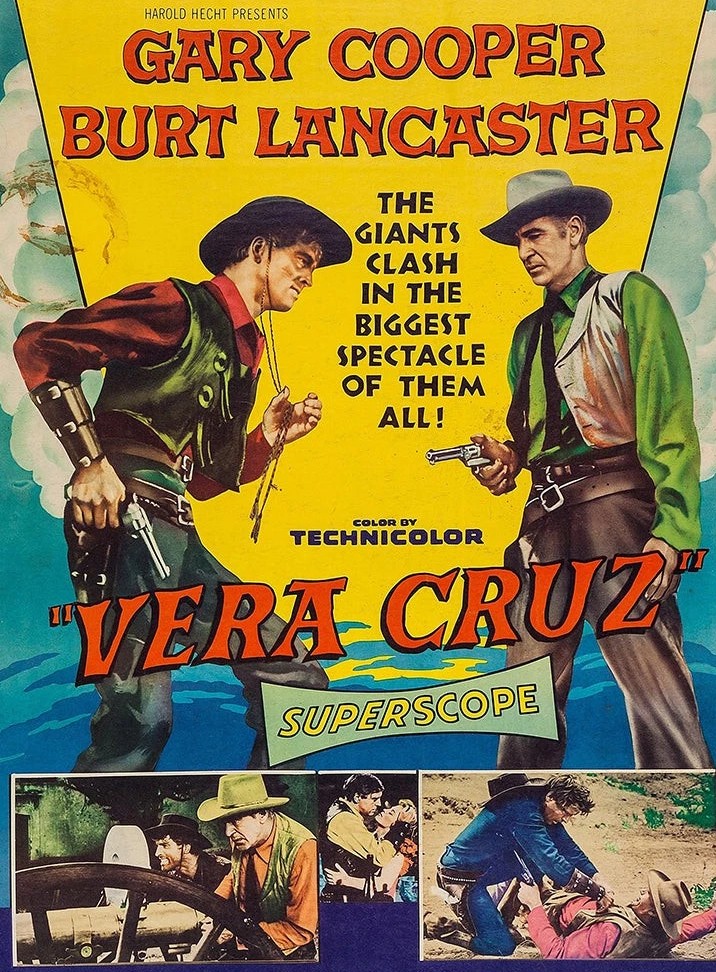
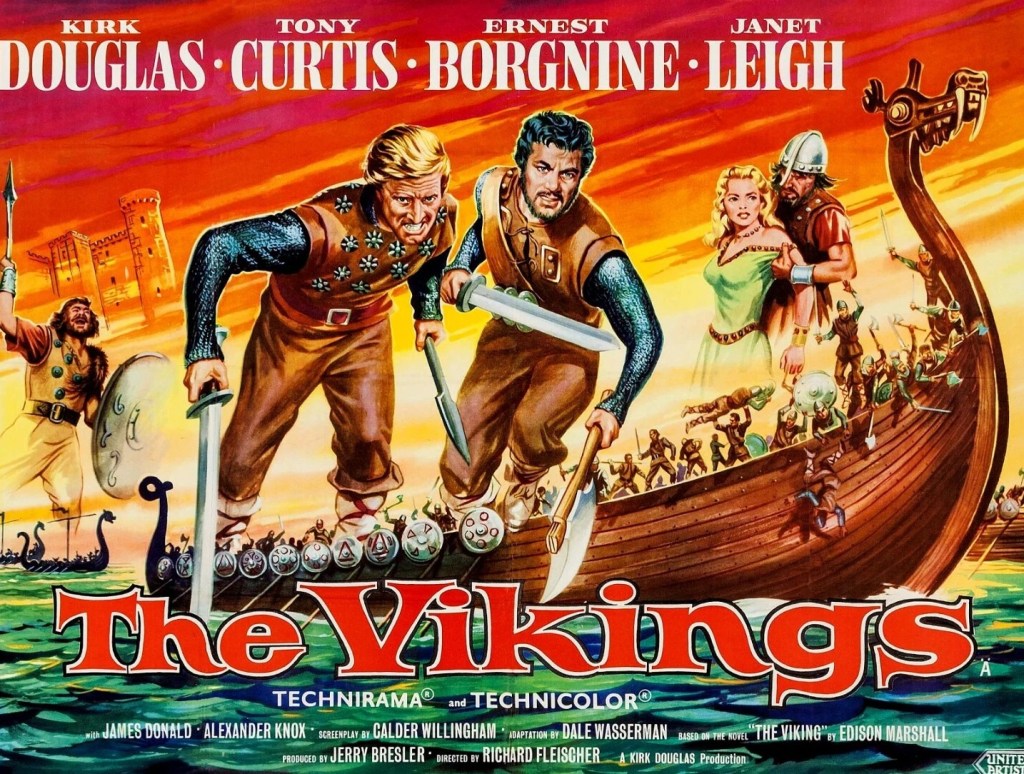
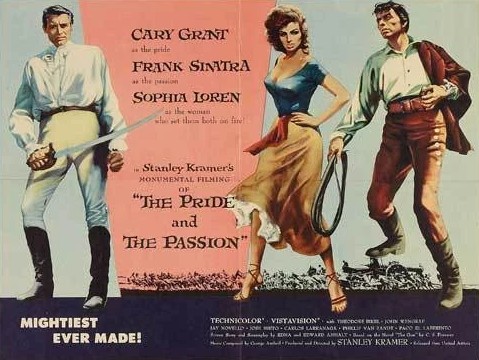
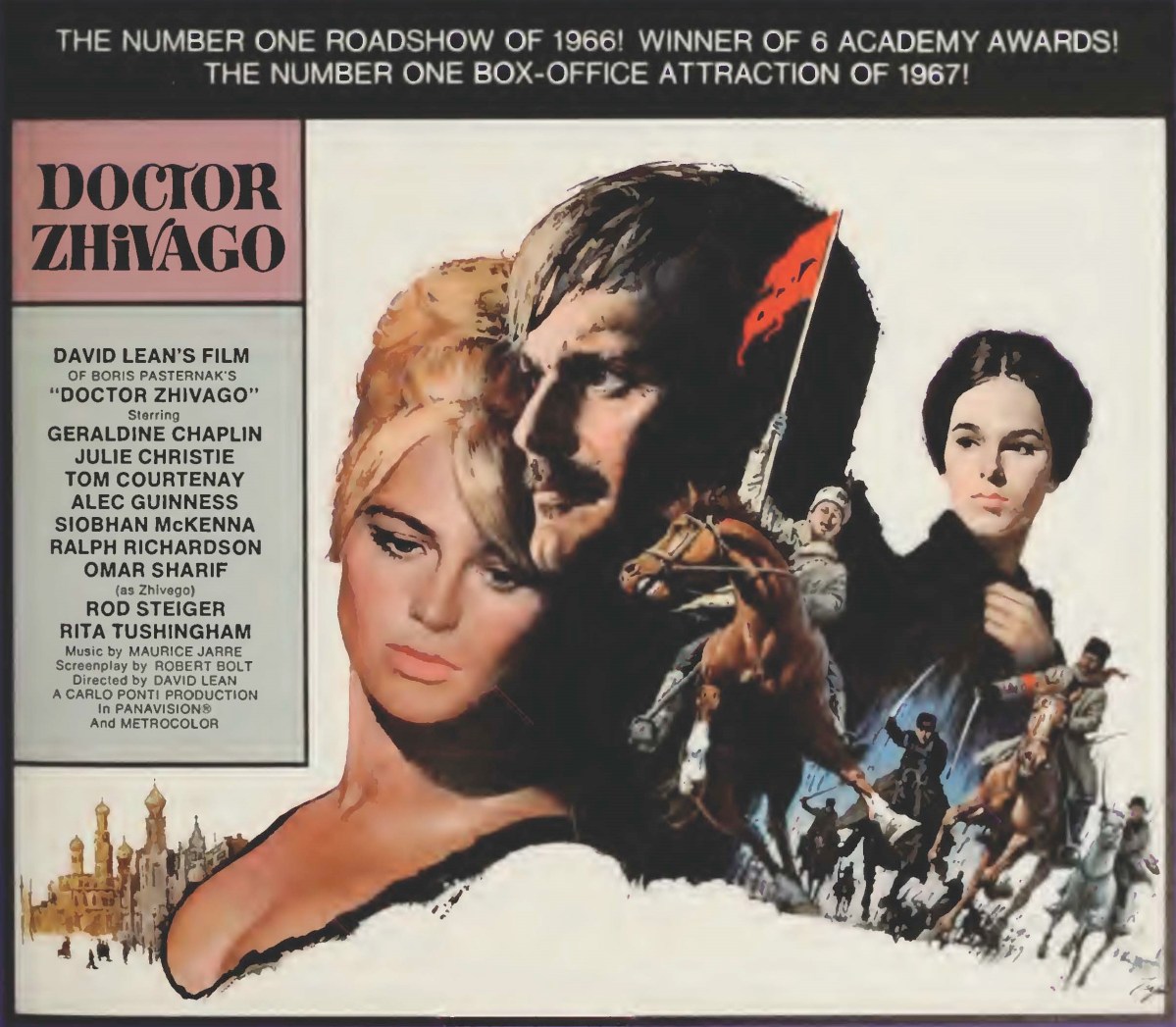

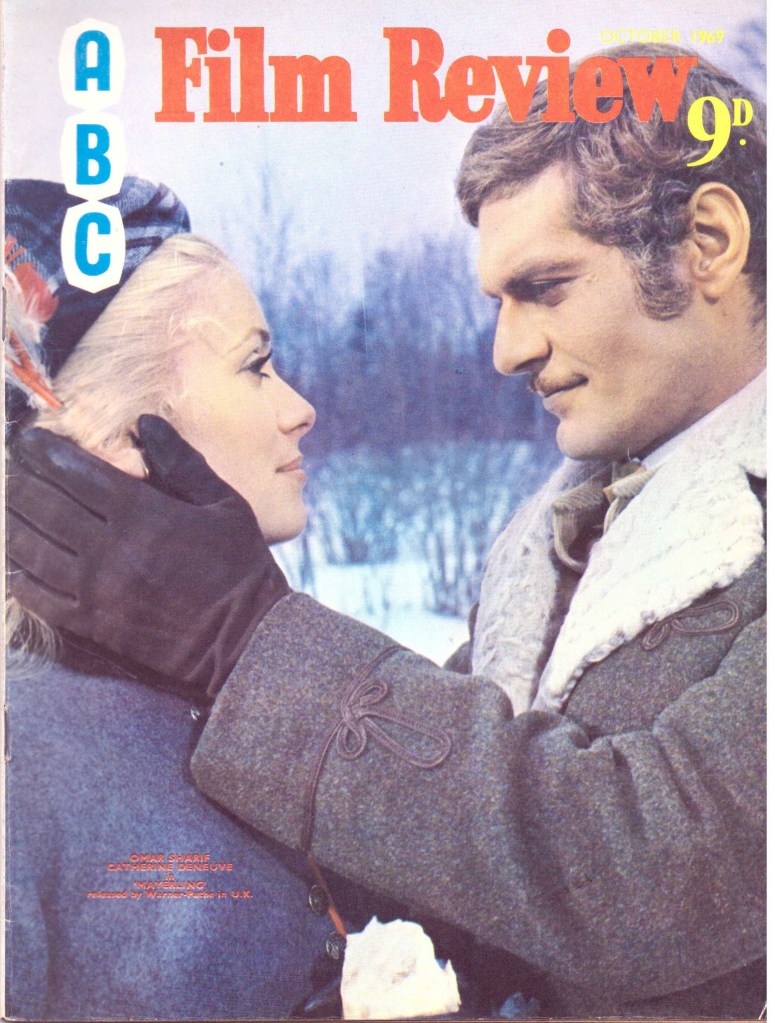
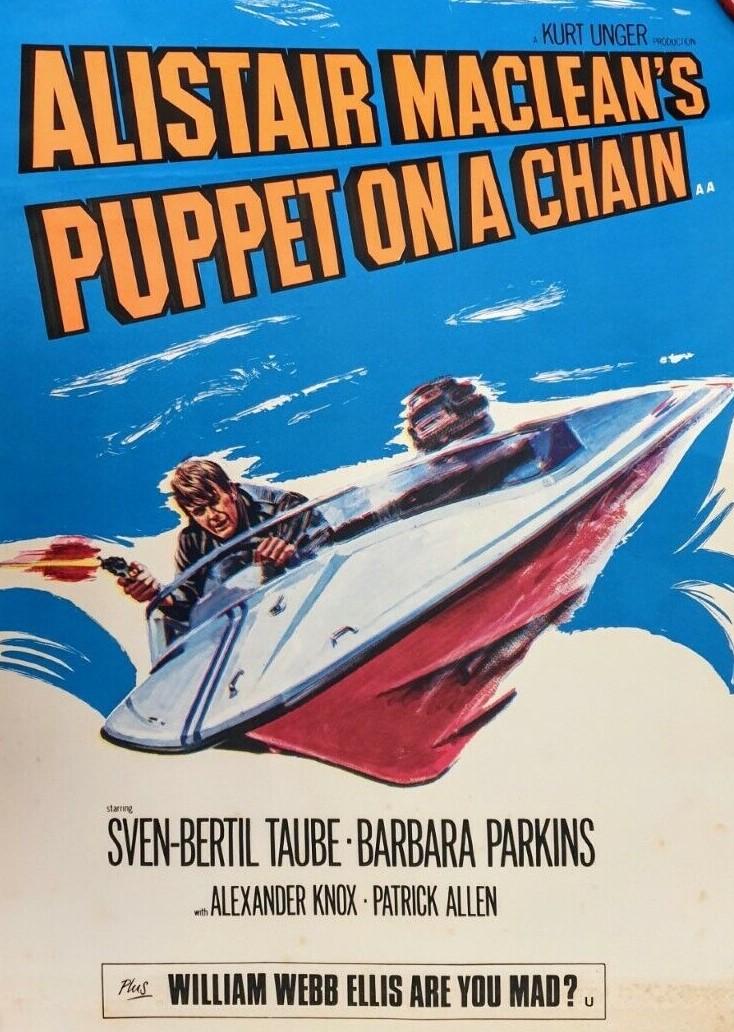
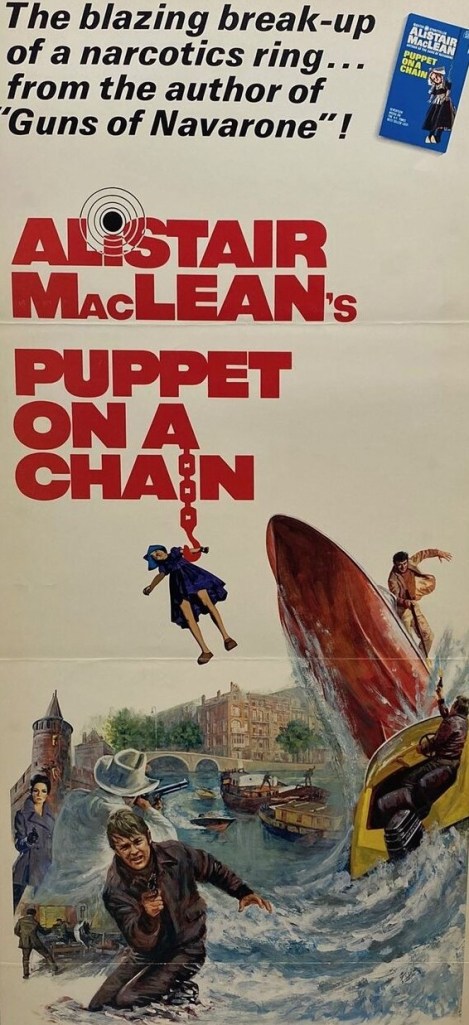
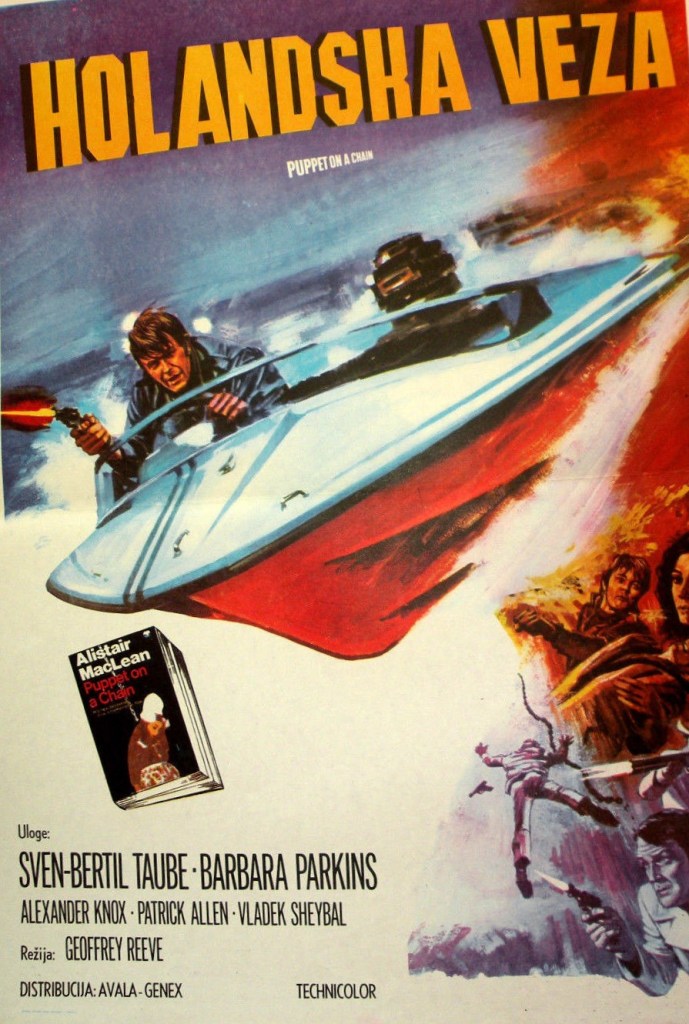


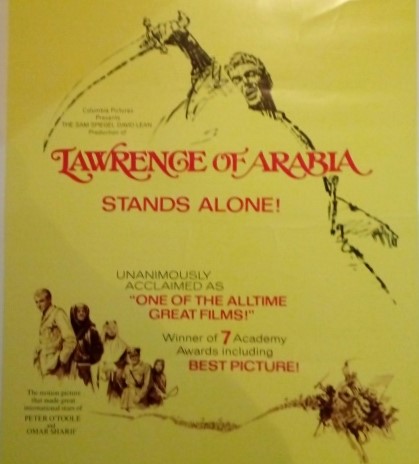
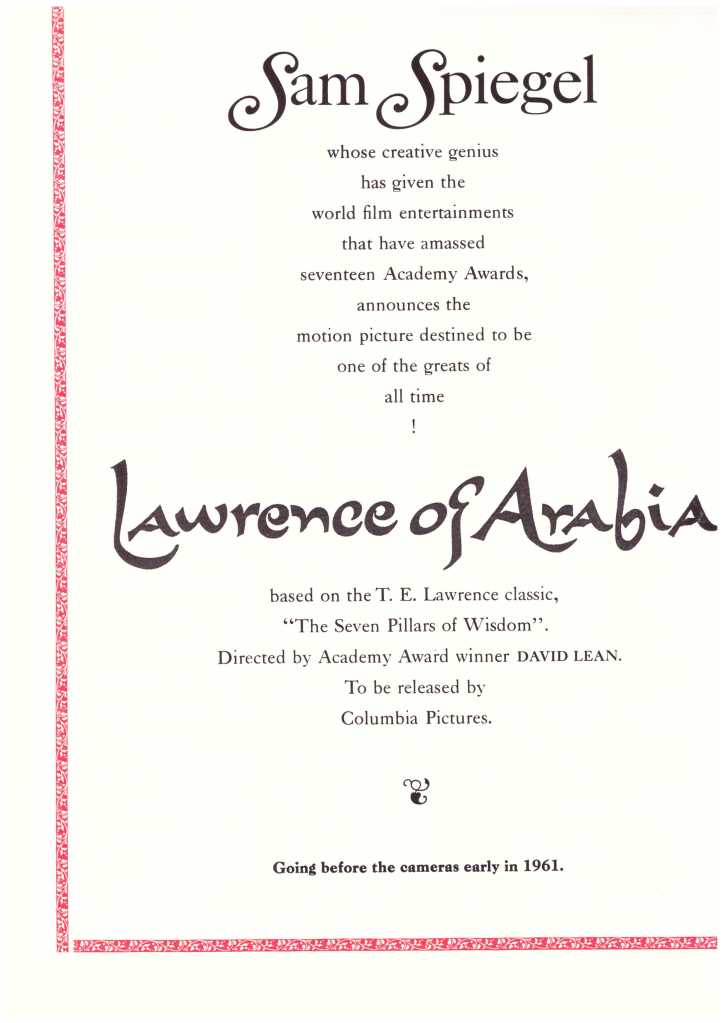
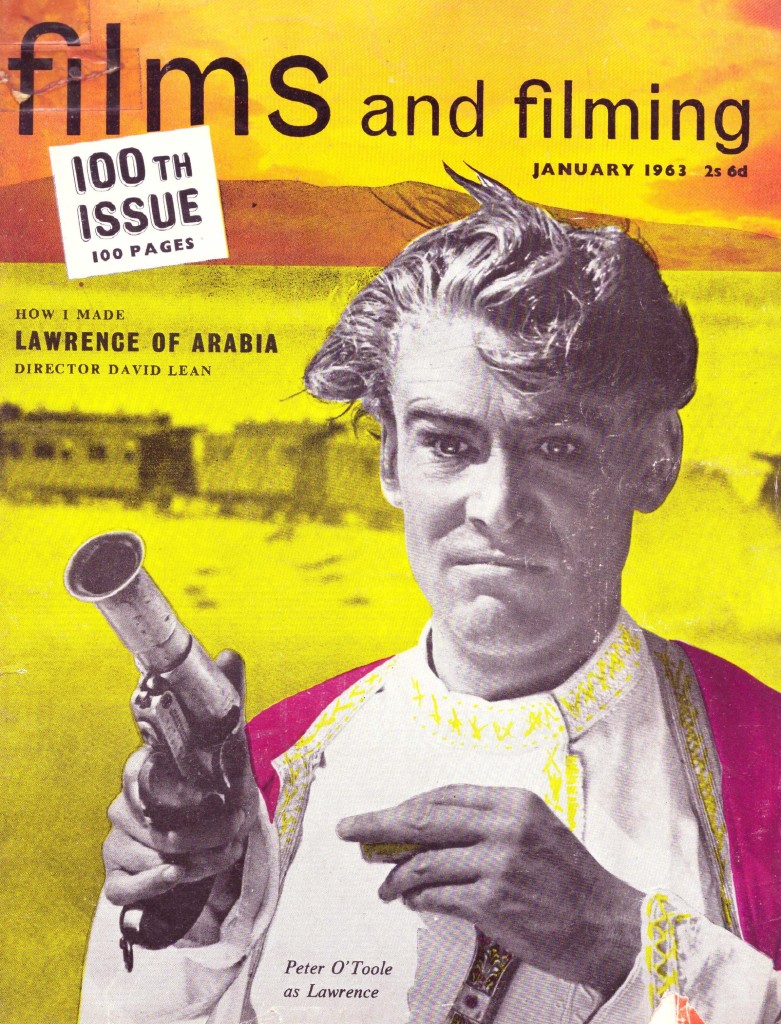
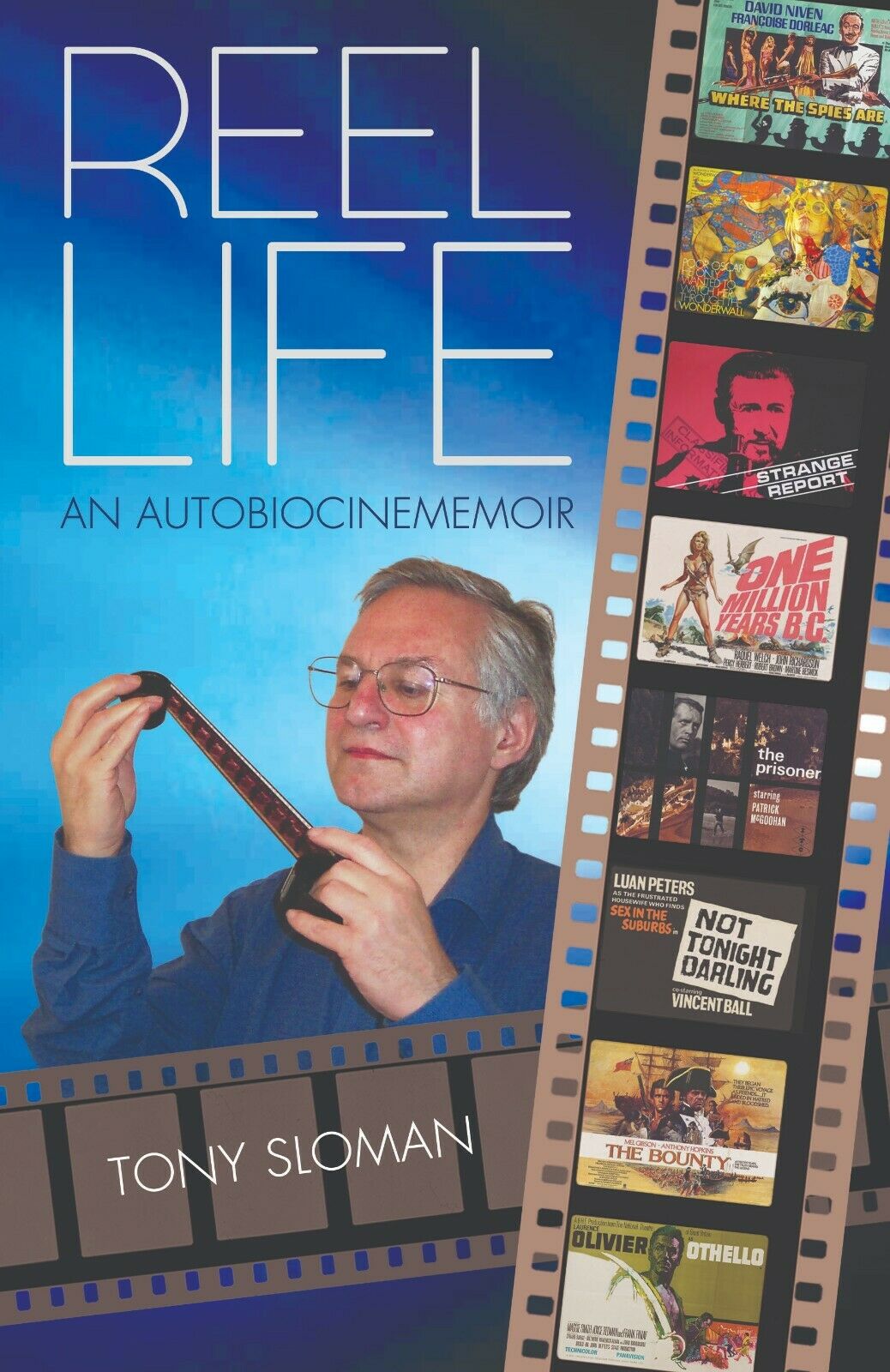
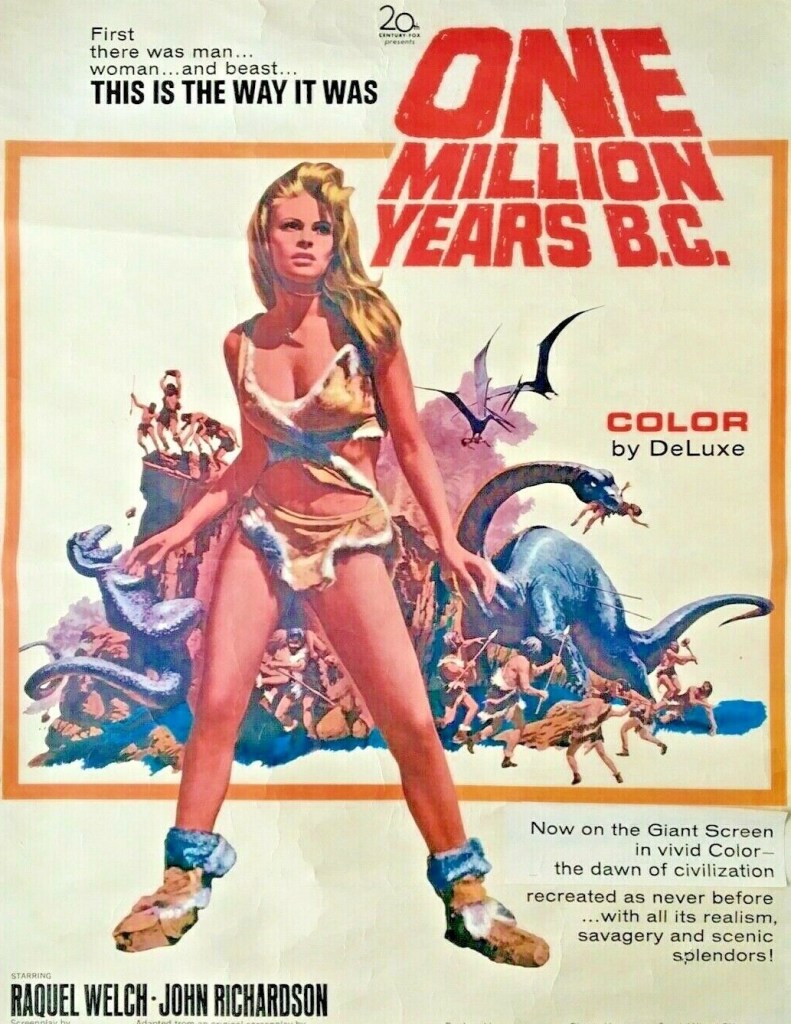
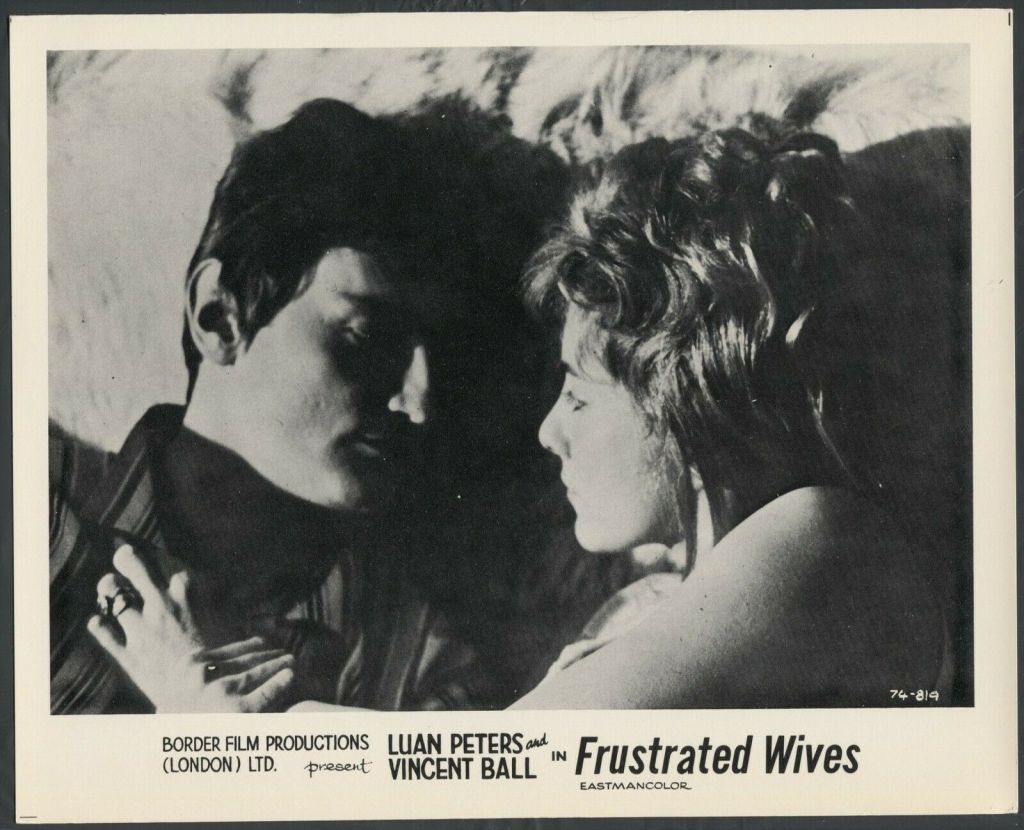
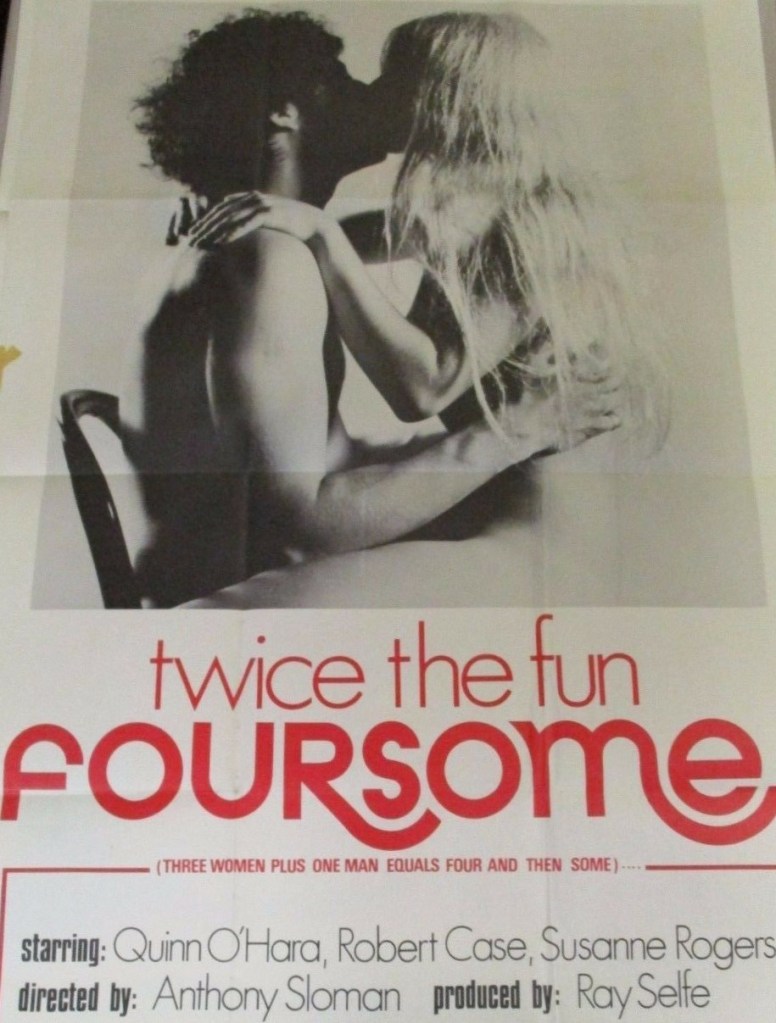


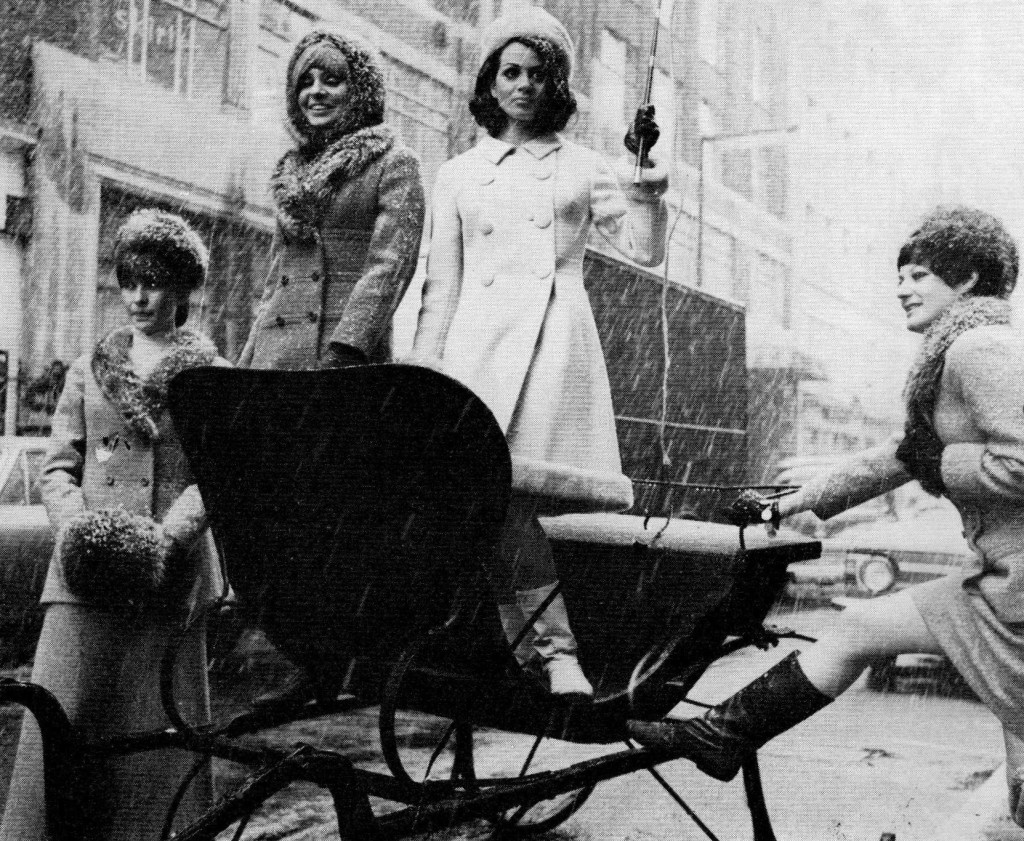


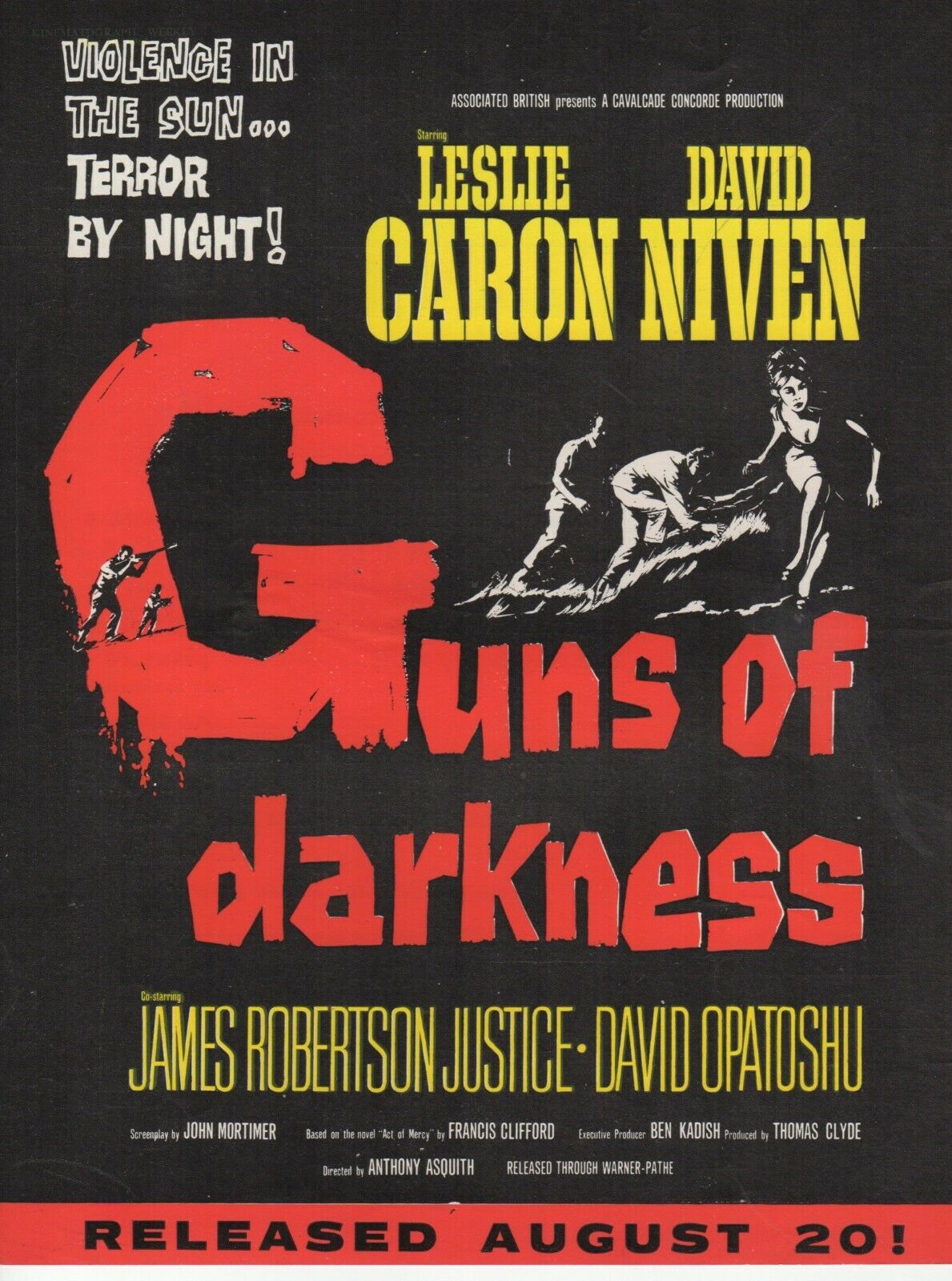
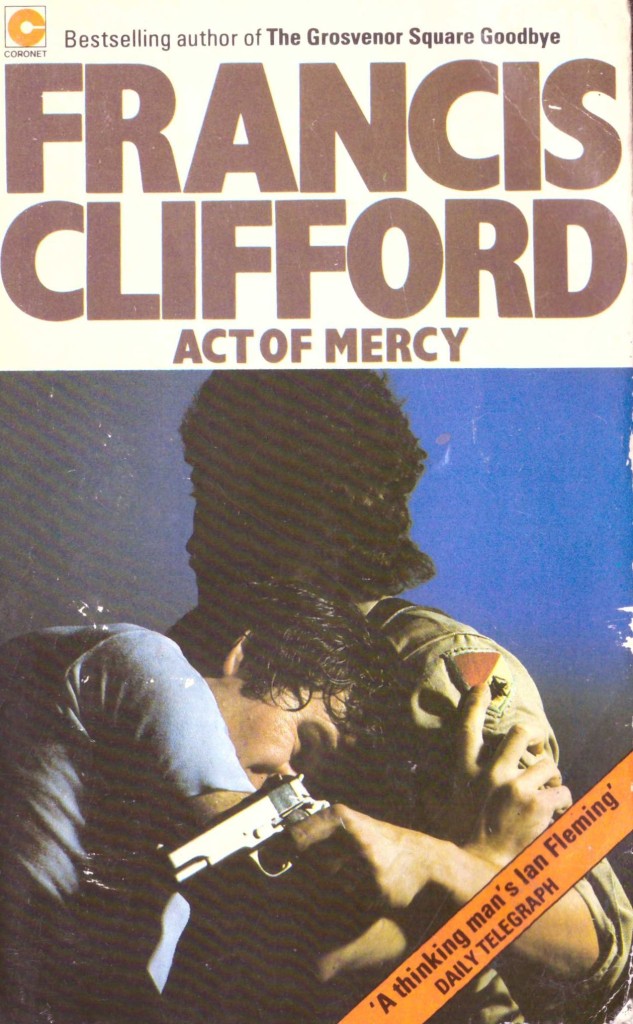


 The Magnificent 60s